Budget Hardscape Guide: The Hidden Layers & Material Calculator
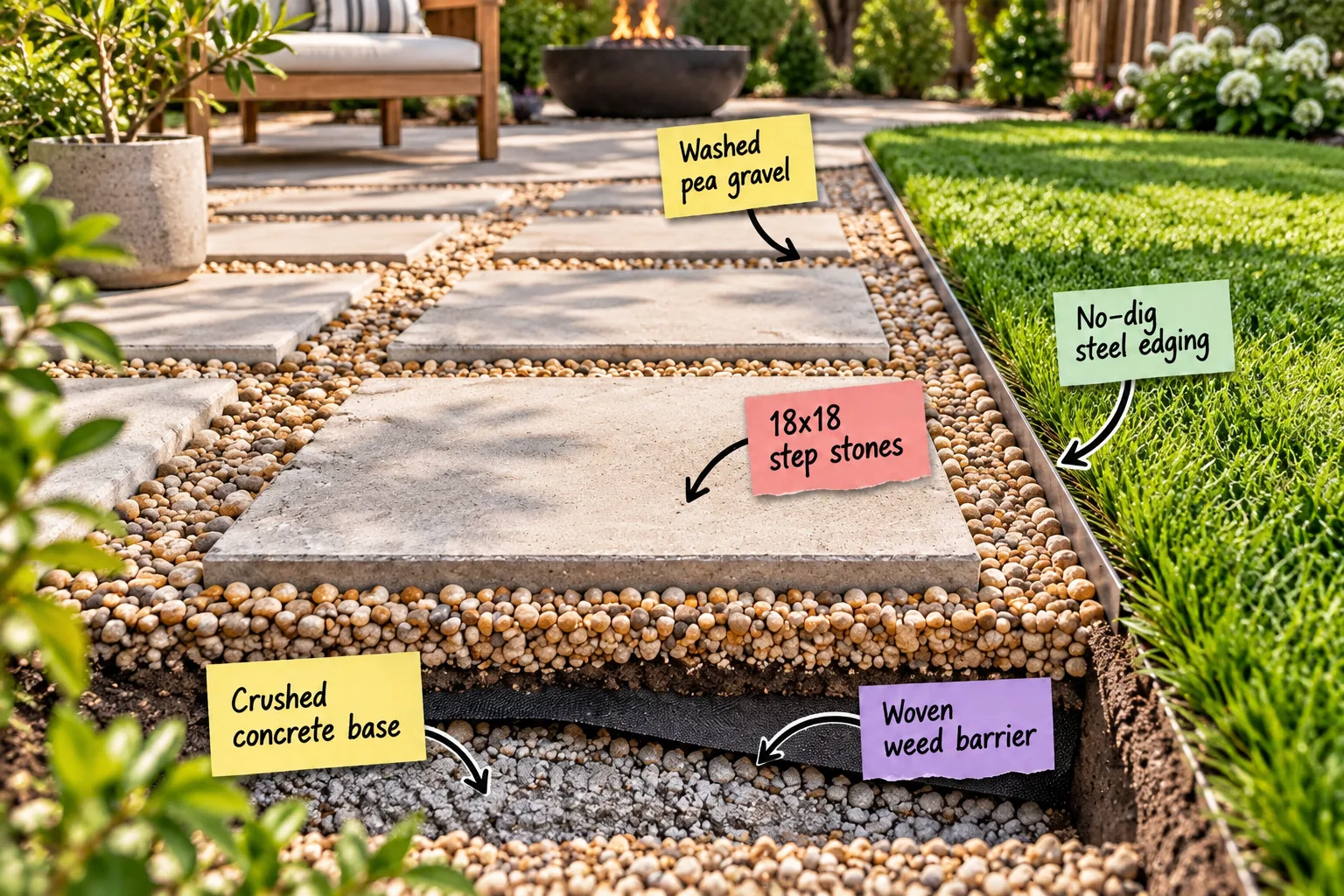
If you want to build a stunning stone and gravel patio on a budget, you need to master the exact foundation layers hidden beneath the surface. Grab my budget hardscape material calculator and layer guide below to lay down a professional-grade space that won’t sink or shift.
The Foundation: Crushed Concrete Base
A properly compacted sub-base is the hidden secret to a flat, stable finished surface that survives changing seasons without heaving. You will need a standard depth of 2 to 4 inches of crushed concrete, depending entirely on your backyard soil’s natural drainage capacity.
Stopping the Weeds: Woven Weed Barrier
To achieve that visual reward of a pristine, weed-free gravel surface, roll out a commercial-grade woven landscape fabric directly over your compacted base. I skipped overlapping the barrier seams on my first Austin backyard project, and pulling aggressive Bermuda grass out of pea gravel is a nightmare!
The Border: No-Dig Steel Edging
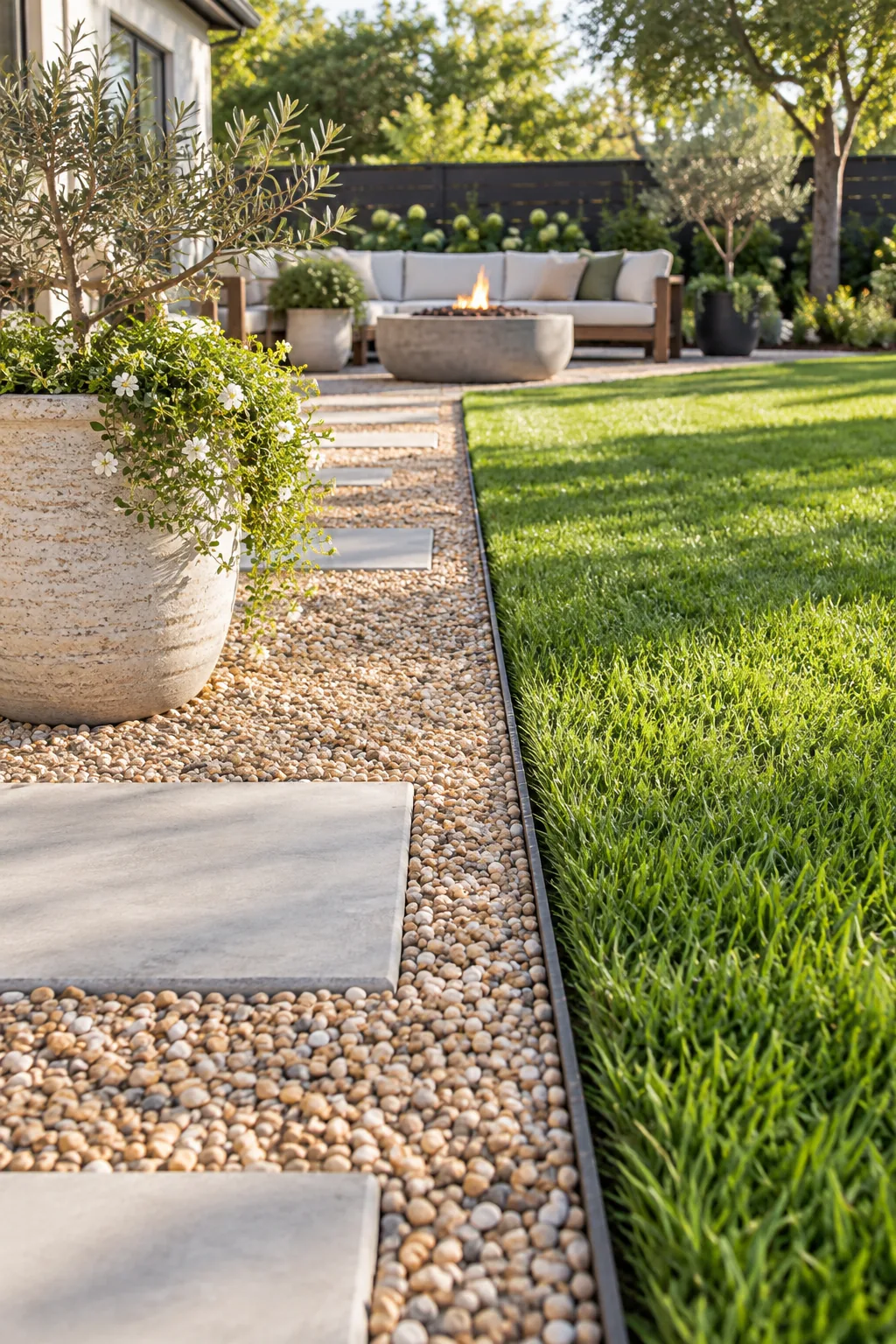
Ultra-thin steel edging keeps your gravel perfectly contained while maintaining a crisp, modern line against the surrounding lawn. Secure this sleek border with metal spikes every 3 to 4 feet so it easily withstands heavy foot traffic and the occasional lawnmower bump.
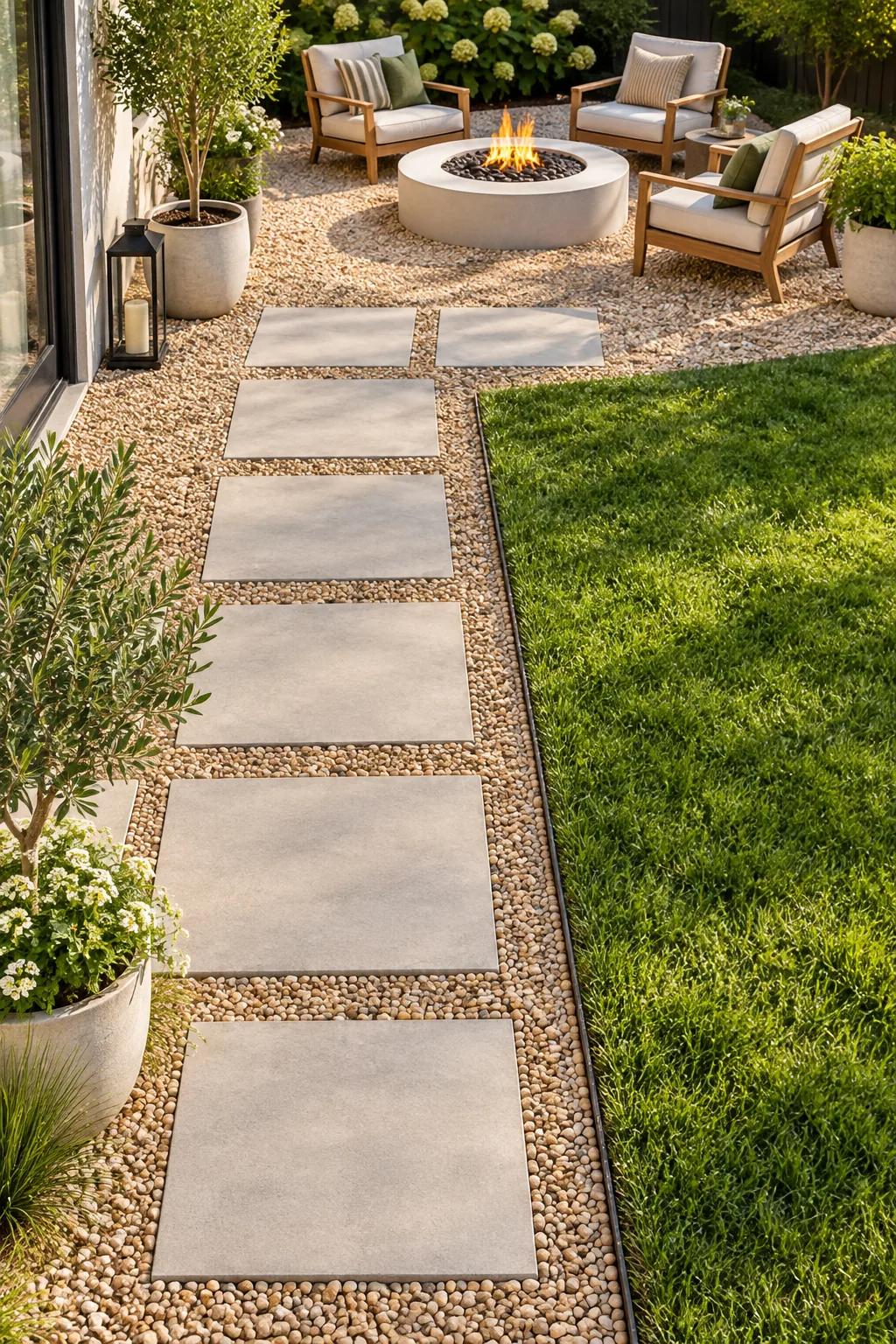
Even the best edging will fail over time if it isn’t installed with the right tension and depth. Avoid these common border errors to keep your gravel locked securely in place season after season.
The Walkway: 18×18 Step Stones
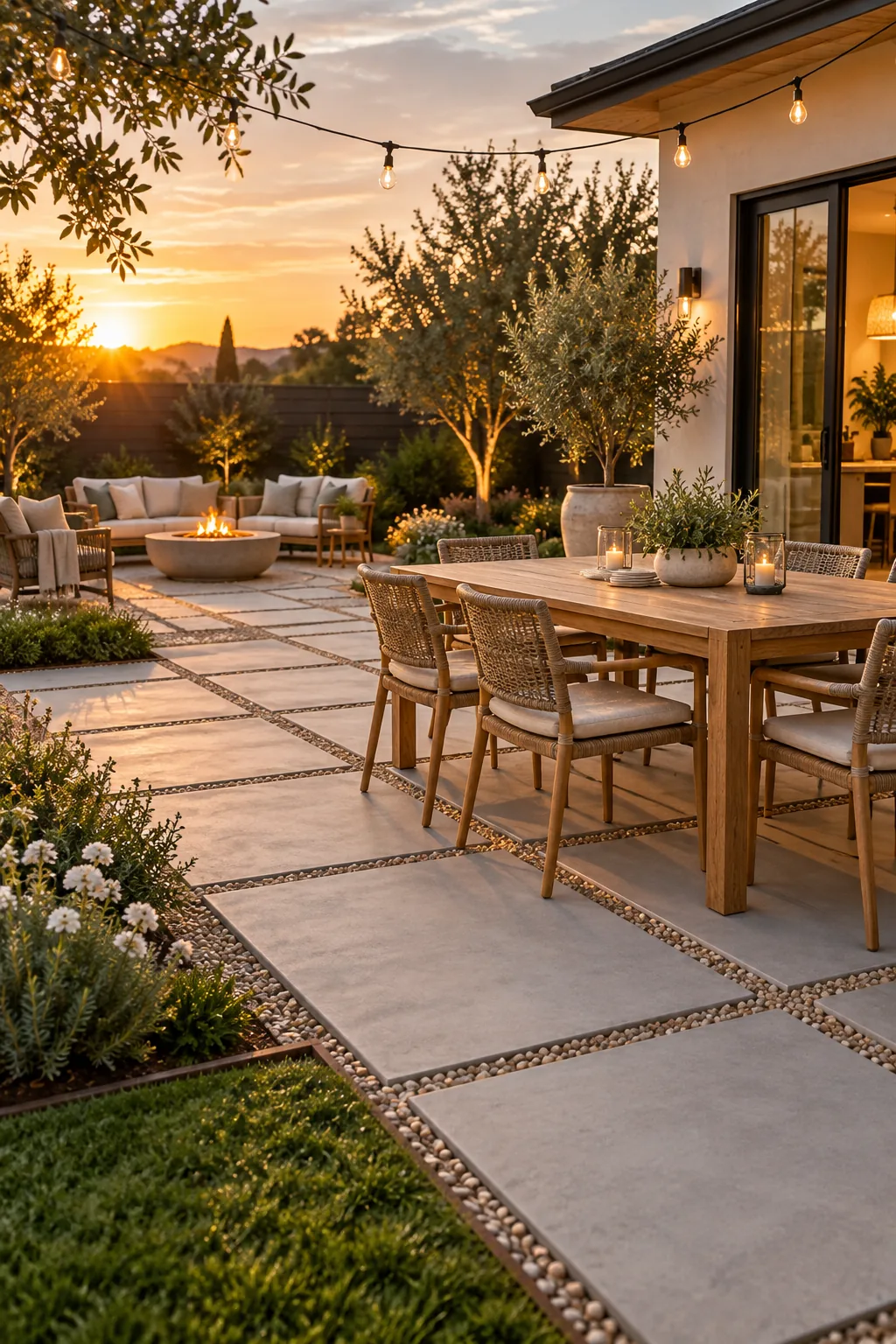
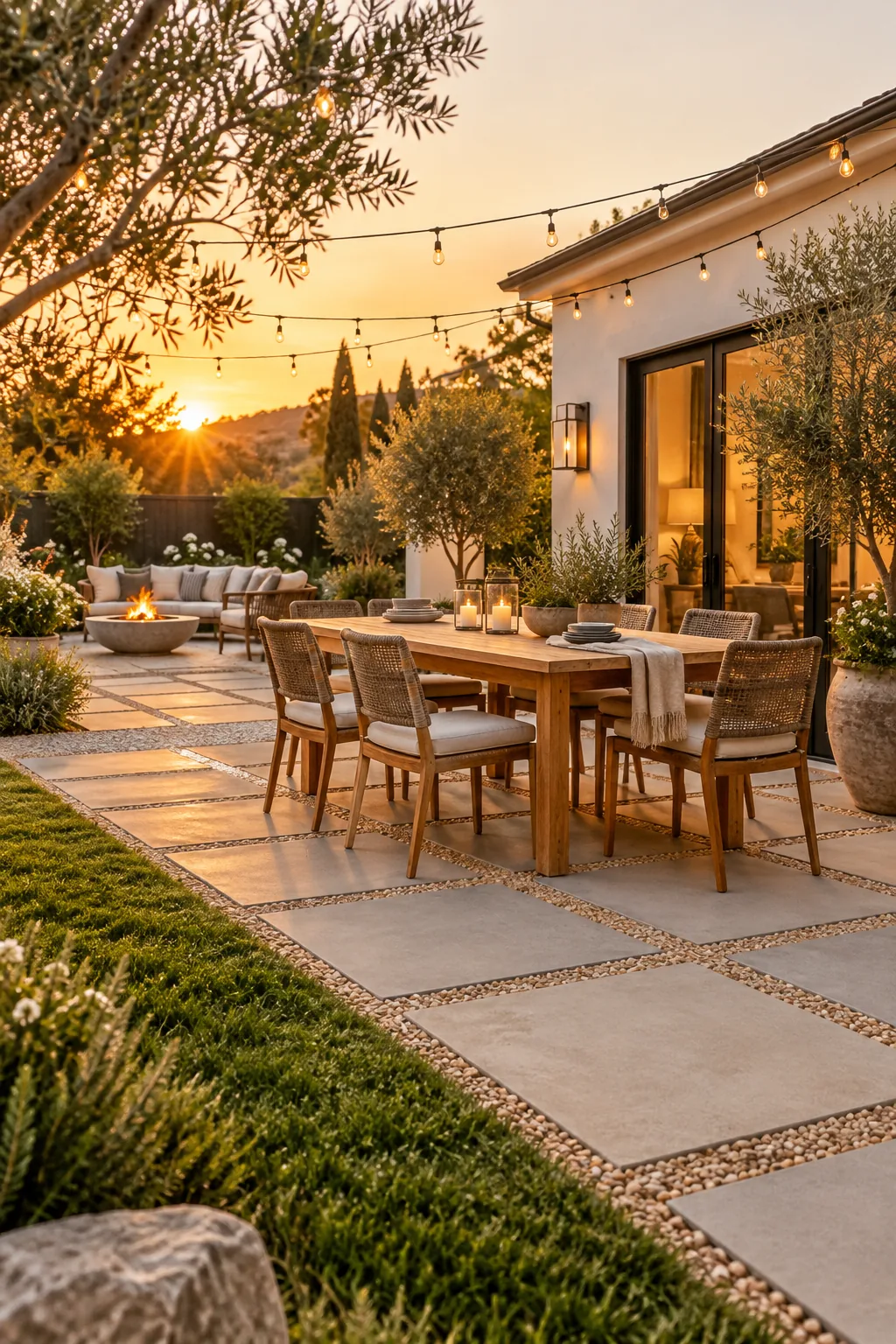
Laying out your large concrete pavers creates the primary walking and seating surface, anchoring the entire backyard design. Space the stones exactly 4 to 6 inches apart to accommodate a comfortable natural walking stride while leaving plenty of room for the gravel filler.
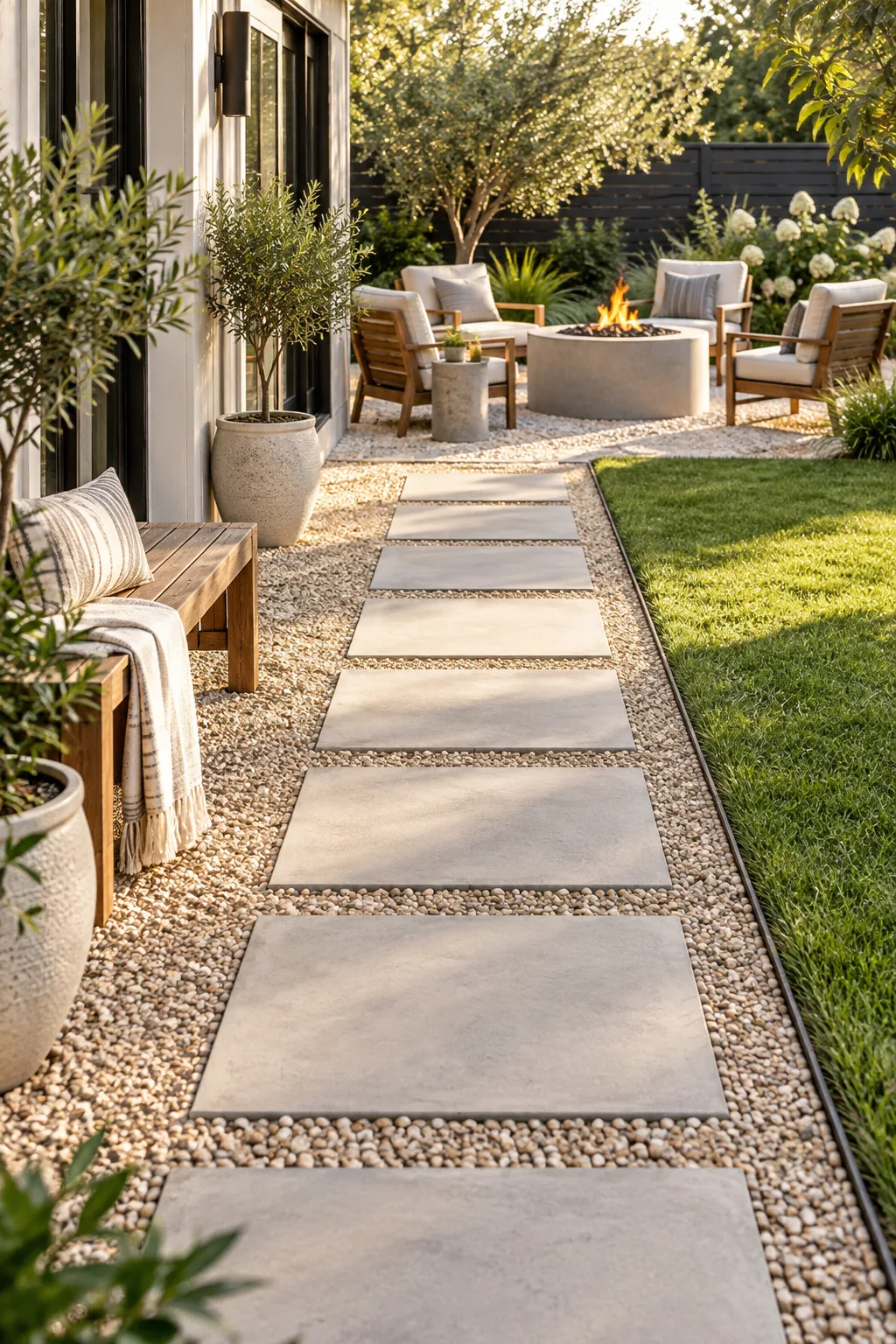
The Filler: Washed Pea Gravel
Sweeping washed pea gravel into the gaps between your stones locks the grid together and prevents dusty residue from tracking indoors after a rainstorm. Maintain a gravel depth of about 2 inches so it sits just below the paver surface without spilling over the edges.
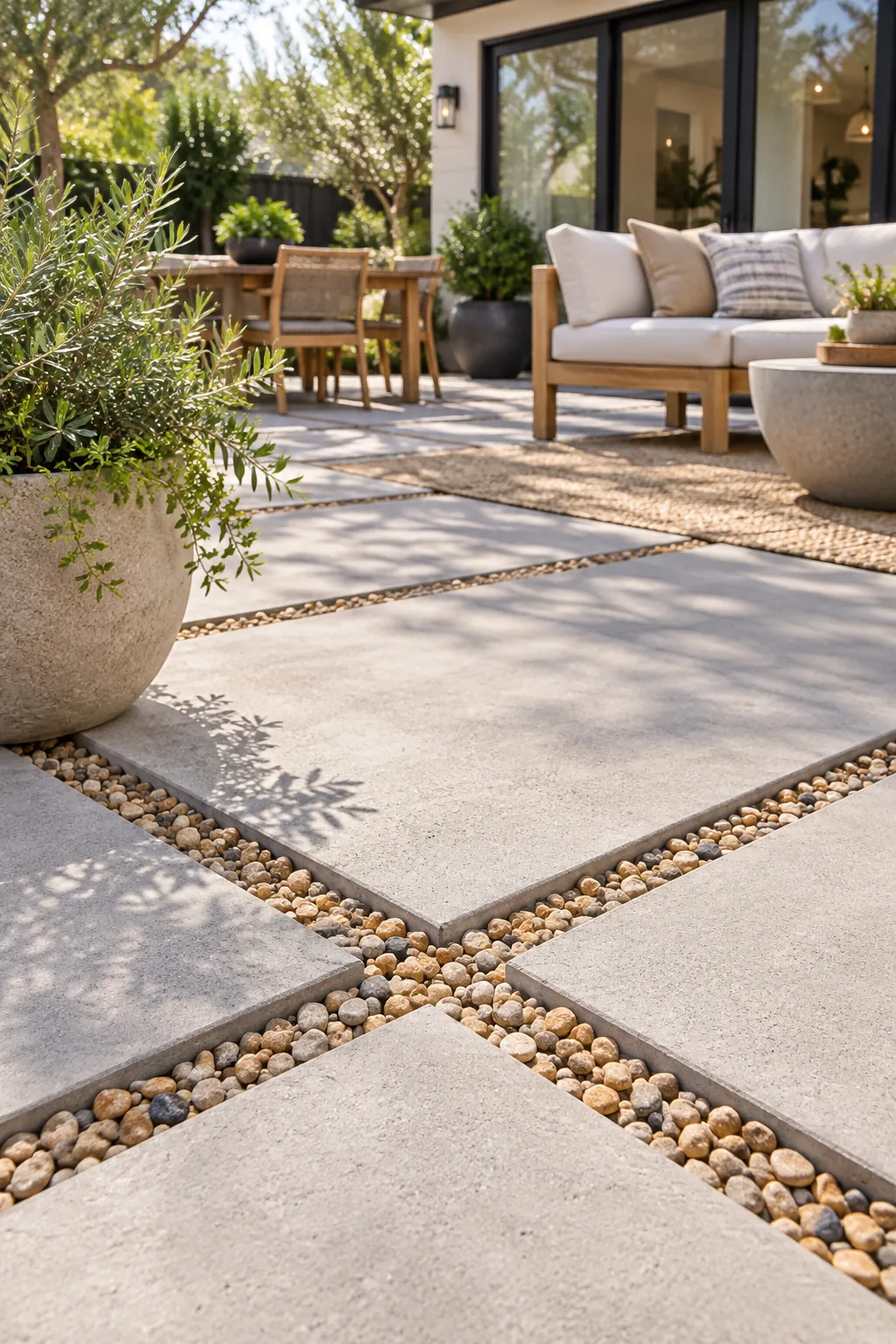
Spacing and Layout Rules
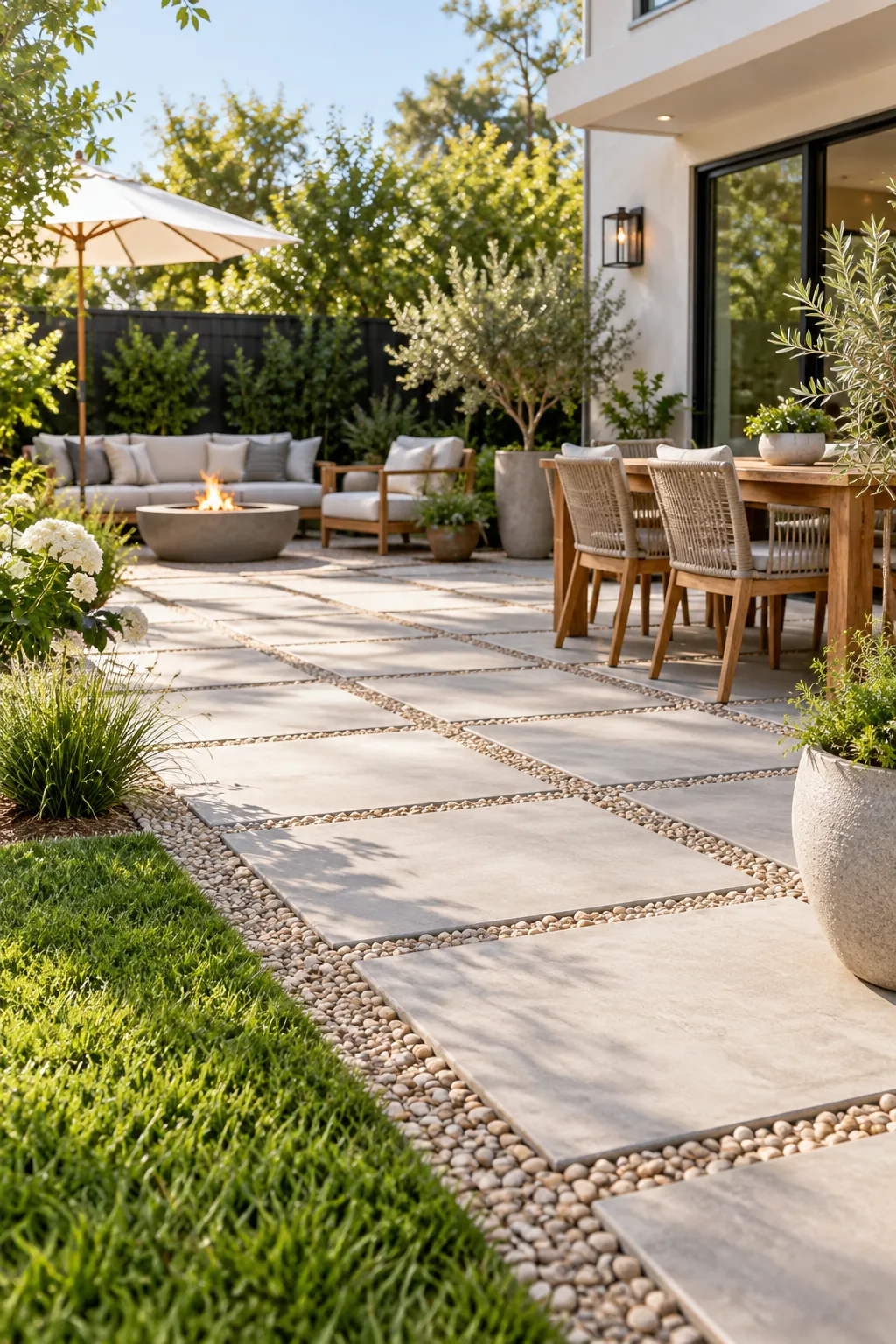
You can achieve a perfectly square, professional-looking patio grid by using a simple string line and a large framing square. Align the outer edges of your 18×18 stones perfectly along the taut string before you start filling any of the interior gaps.
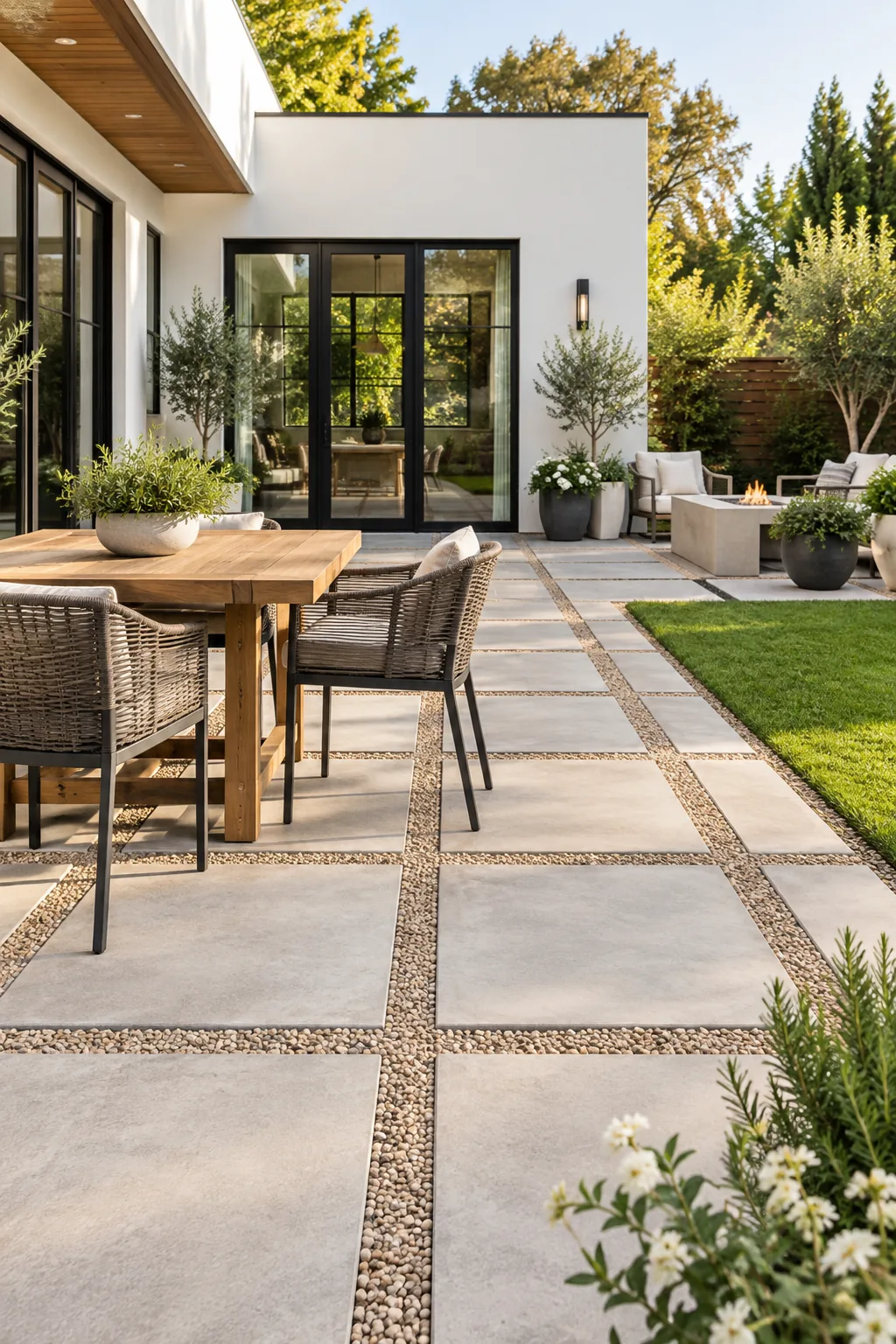
Drainage and Leveling Checks
A slight, controlled slope is critical to ensure water flows safely away from your home’s foundation without making your outdoor furniture feel tilted. The golden rule is to slope your hardscape 1/4 inch per foot to guarantee proper runoff during heavy summer storms.
Budget Hardscape Material Calculator & Layer Guide
Calculating your exact material quantities gives you the confidence to enjoy your completed space without facing costly mid-project shortages. When we built our current fire pit area, I measured everything twice and ordered exactly what we needed, making delivery day completely stress-free.
Before calling the local landscape supply yard, run your final measurements through this quick checklist to ensure your order is absolutely perfect.
5 Ways to Style a Budget Stone & Gravel Patio
Swap out the paver colors and gravel textures to match your home's unique exterior style.
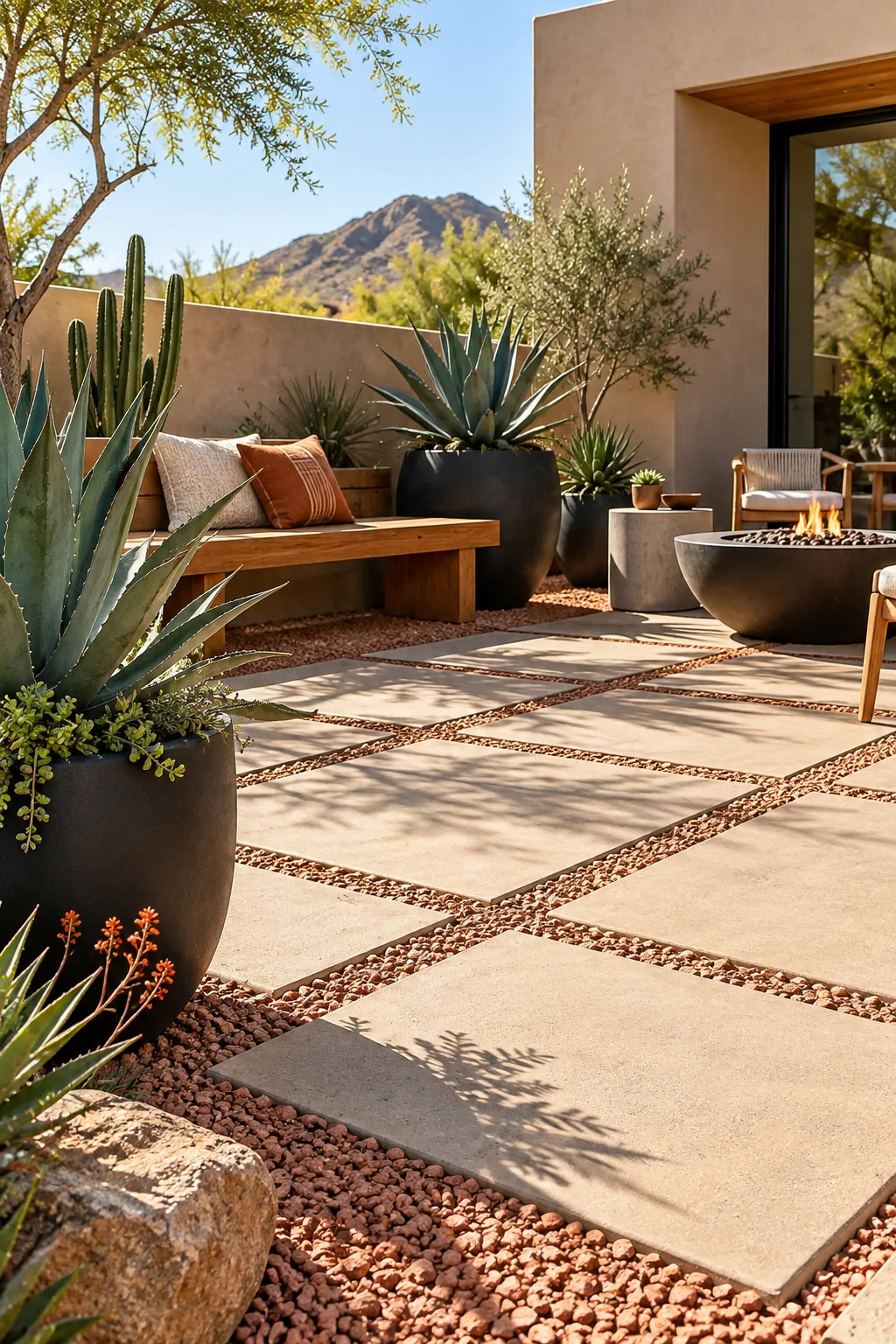
Warm Modern Desert: Swap standard gray for sand-toned pavers and terracotta gravel to create a striking, drought-tolerant desert oasis.
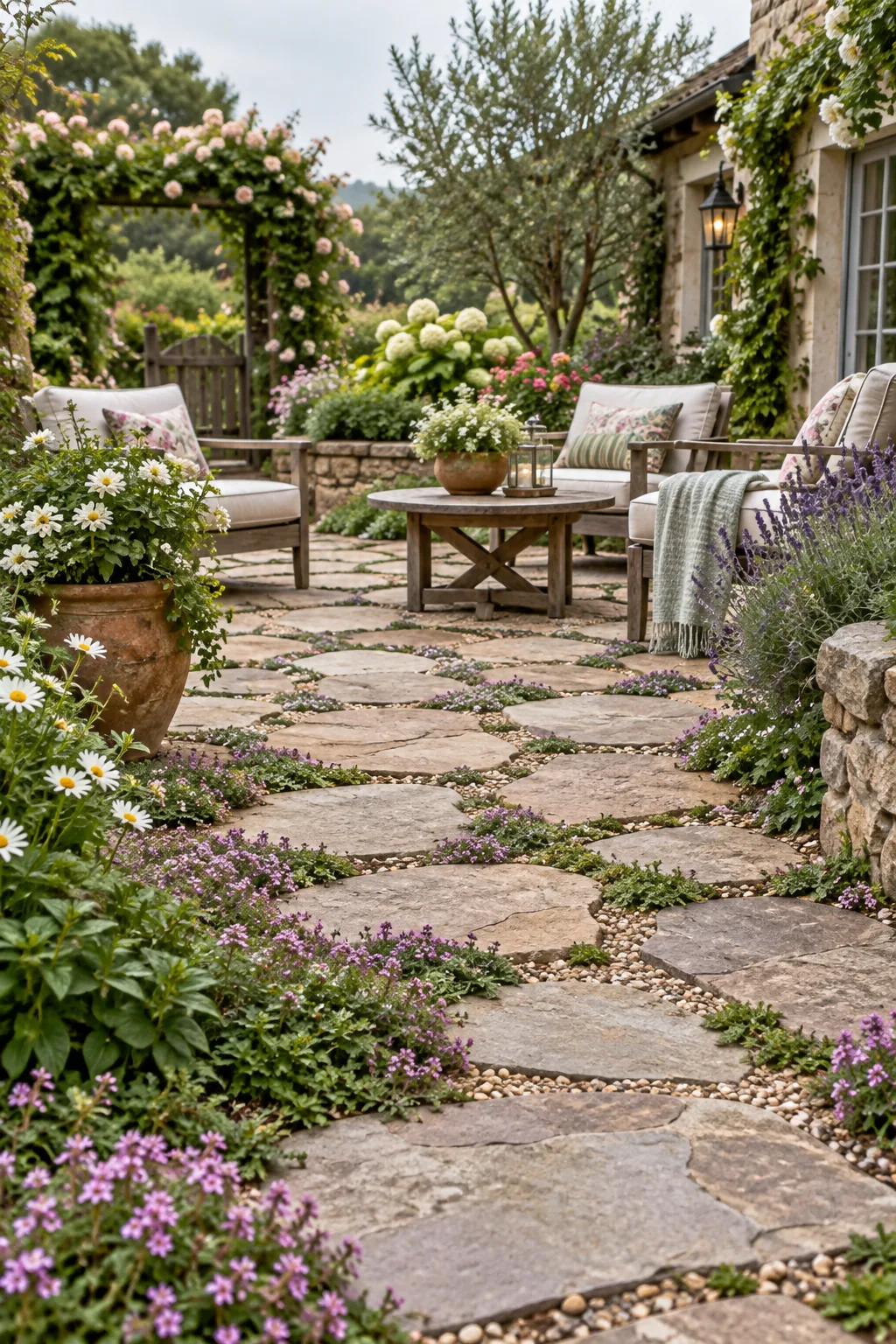
Lush English Cottage: Use irregular flagstones and plant creeping thyme in the gaps for a romantic, lived-in cottage garden feel.
Minimalist Zen Garden: Contrast dark charcoal slate pavers against bright white river rock for a calming, minimalist meditation space.
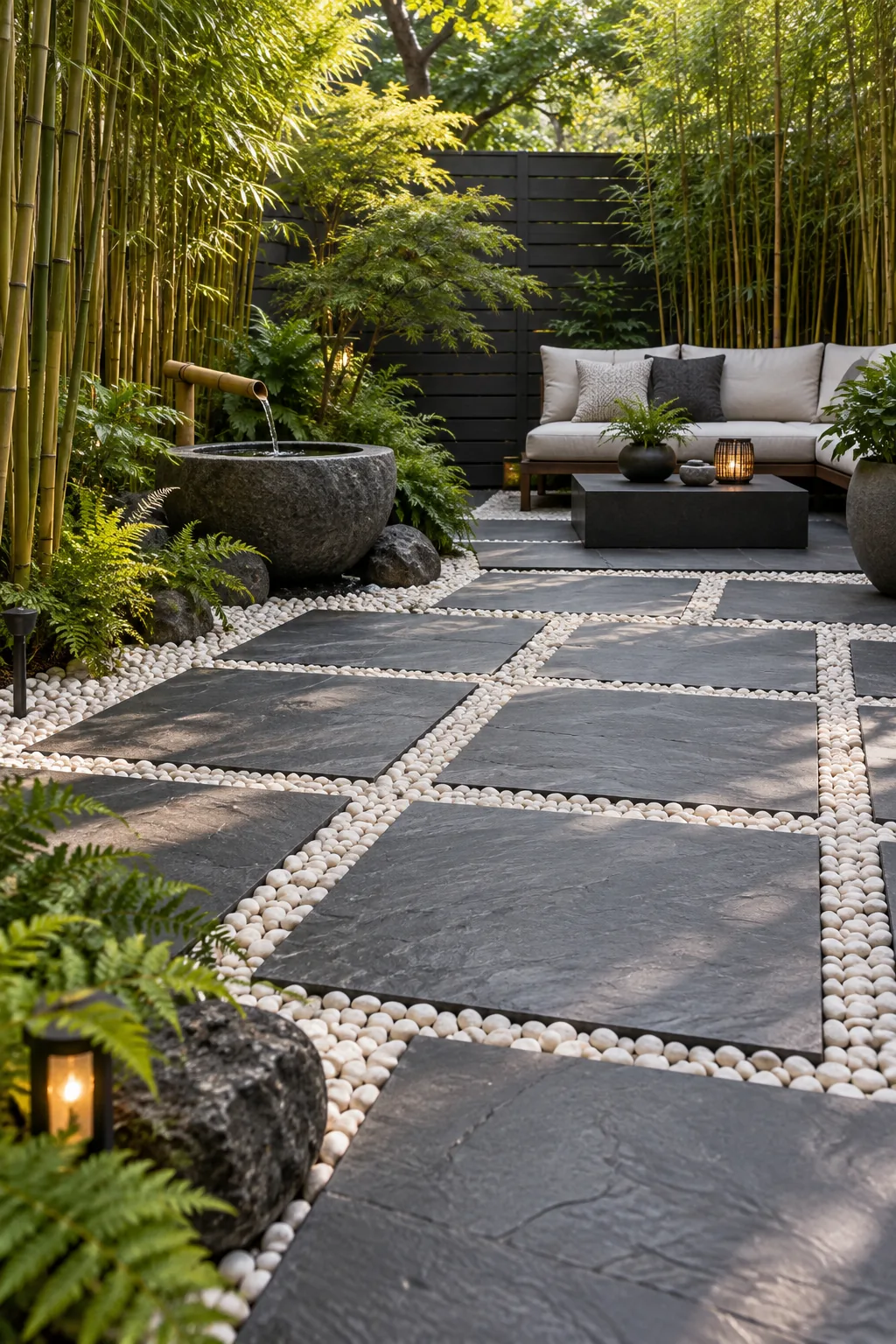
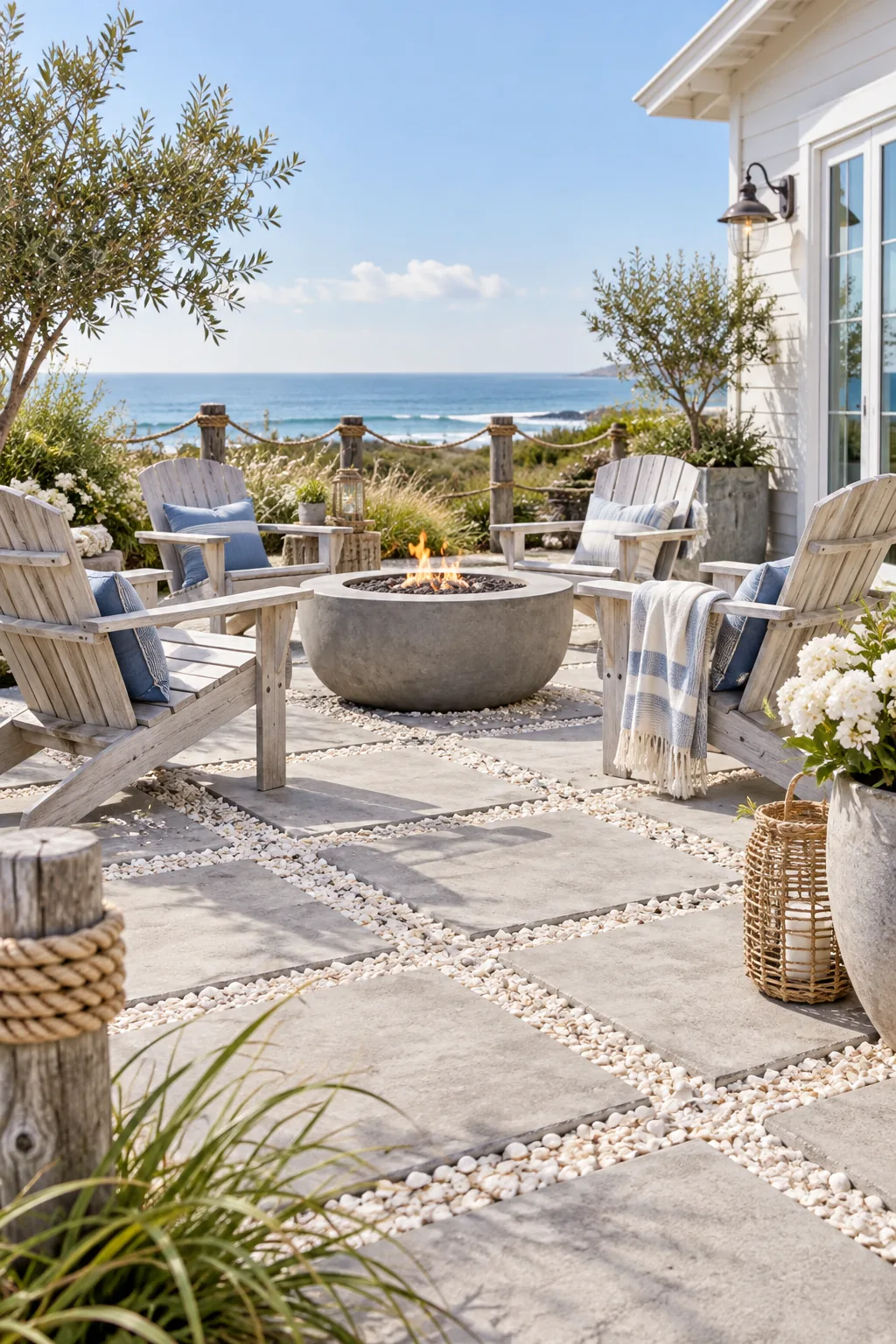
Breezy Coastal Retreat: Fill the gaps with crushed oyster shells instead of gravel to bring a distinct, beachy texture to your backyard.
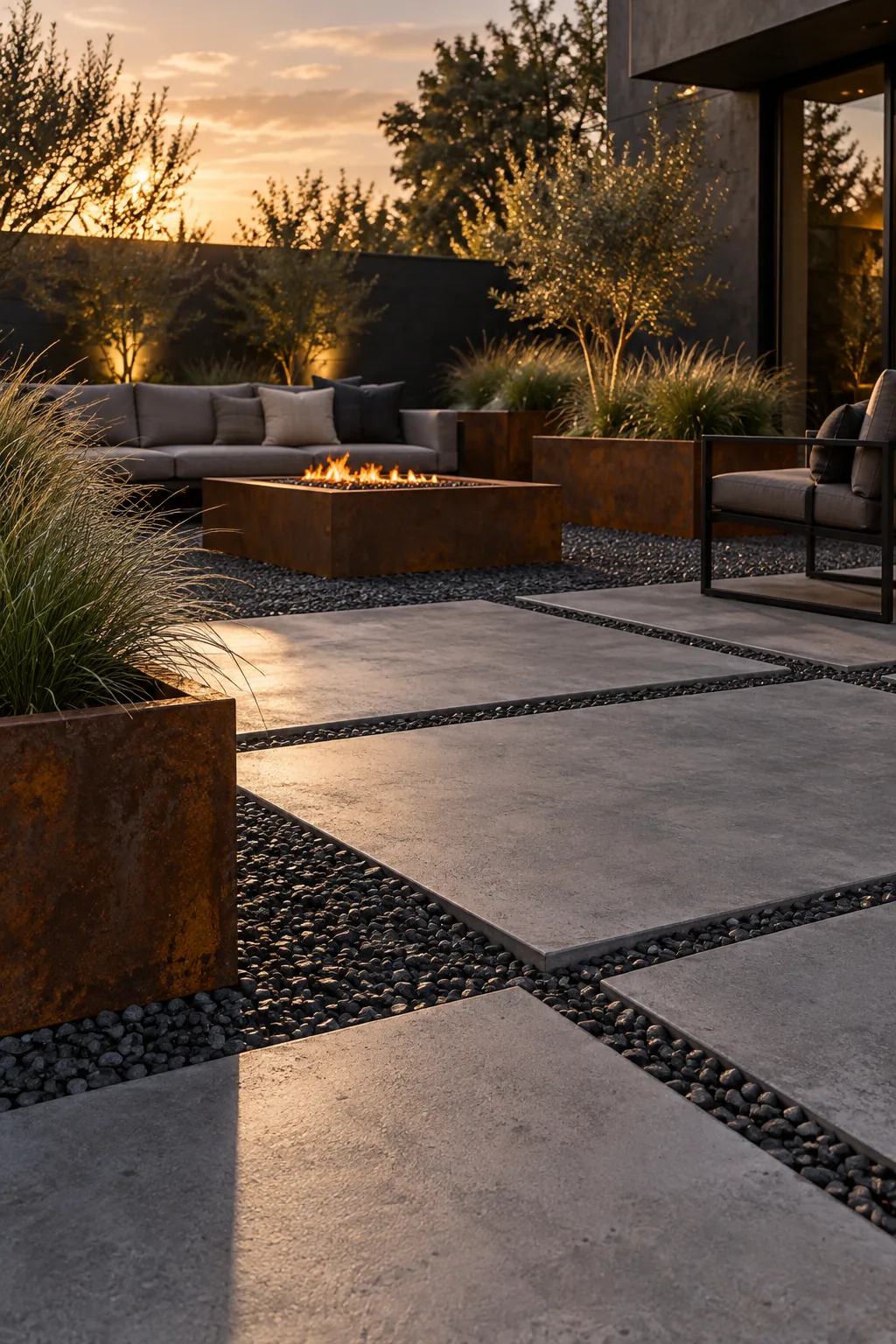
Edgy Urban Industrial: Pair oversized concrete slabs with stark black basalt gravel and corten steel planters for a bold, architectural statement.