
10+ Beautiful Handicap Shower Ideas for Your Home
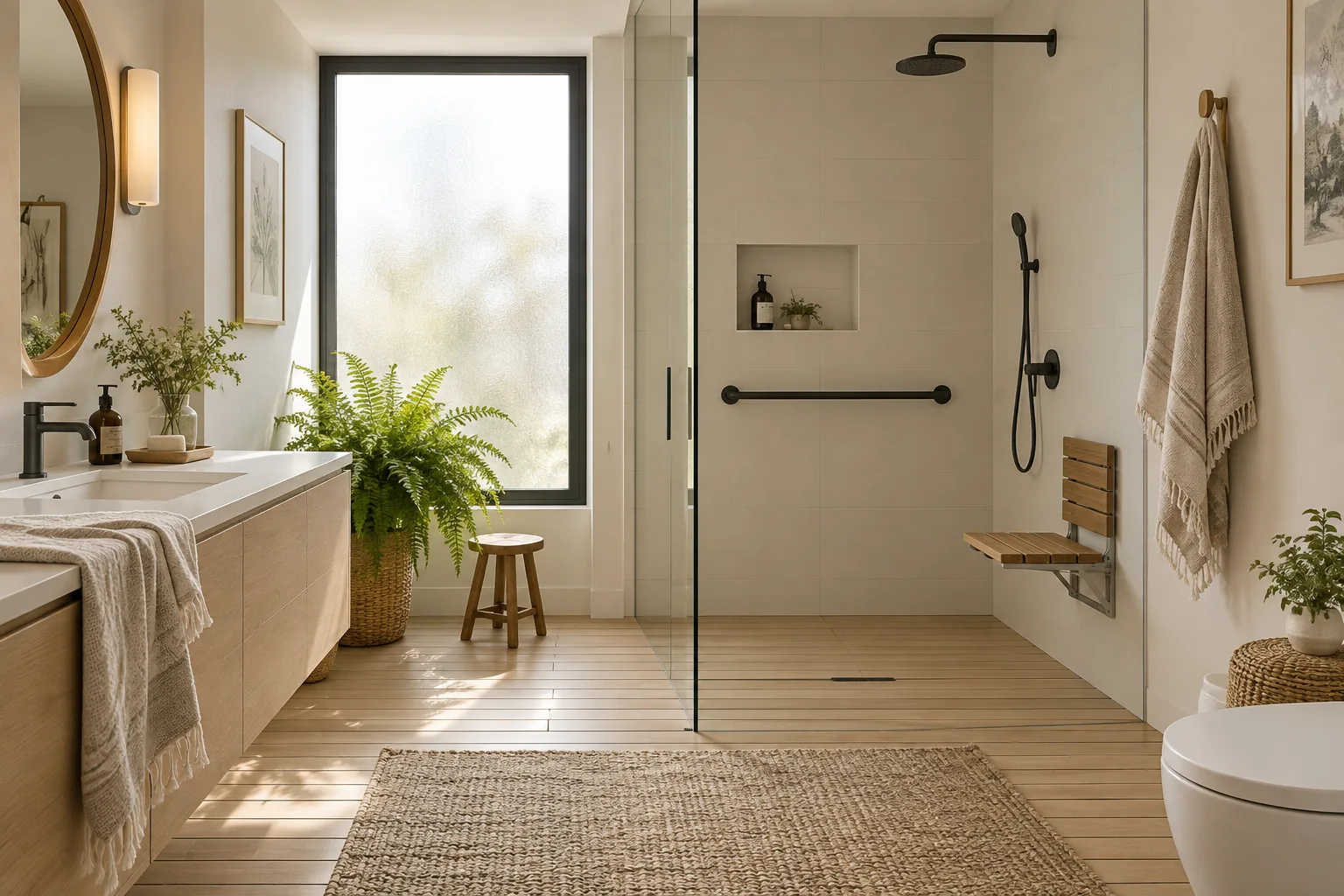
Designing an accessible space does not mean you have to sacrifice your personal style or settle for a clinical look. You can easily build a stunning handicap shower that feels like a high-end spa while keeping everyone safe.
1. Seamless Zero-Entry Floors
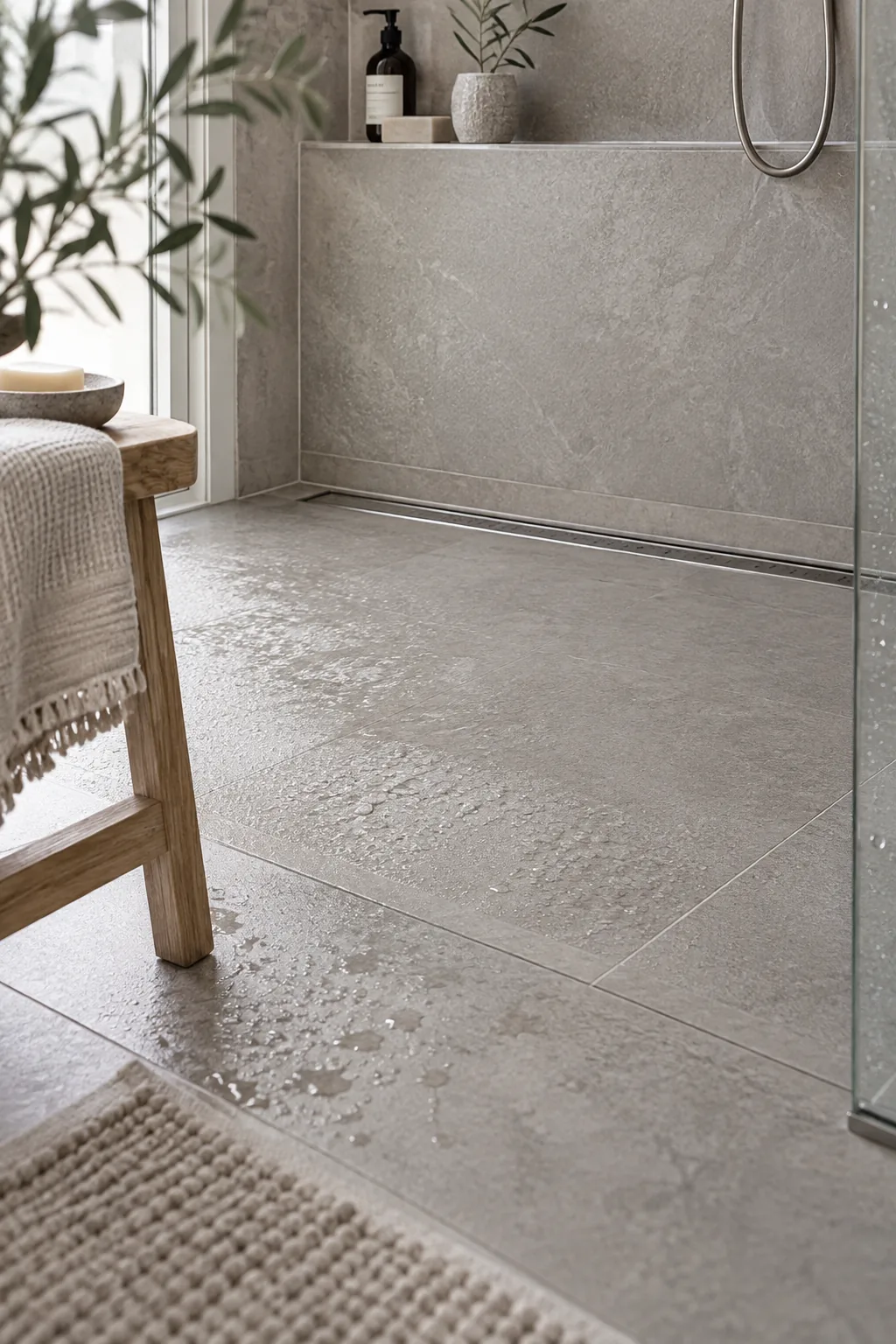
Standard curbs create a massive tripping hazard for anyone with limited mobility. Dropping the floor level allows you to run the bathroom tile straight into the shower pan for a seamless transition. This zero-entry approach instantly makes the whole room look twice as big.
A linear drain placed at the back wall keeps the water exactly where it belongs.
2. Stylish Designer Grab Bars
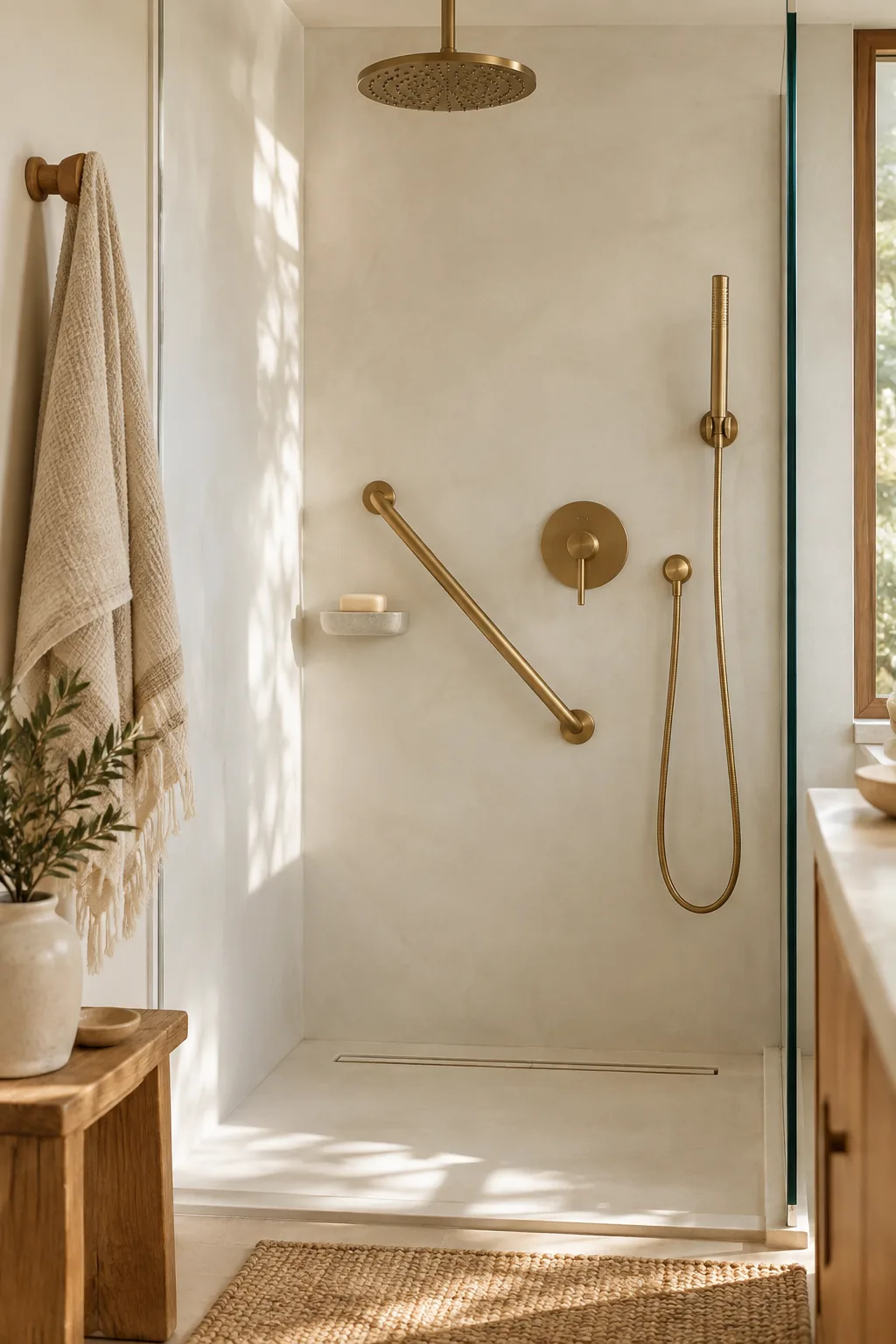
Grab bars now come in at least a dozen different finishes beyond standard hospital chrome. You can match your safety bars perfectly to your existing plumbing fixtures for a cohesive, intentional design. Look for modern profiles that blend right in:
Mounting them at an angle actually provides better leverage when pulling up from a seated position.
- Matte black square bars
- Brushed brass knurled handles
- Oil-rubbed bronze textured grips
3. Floating Solid Stone Bench
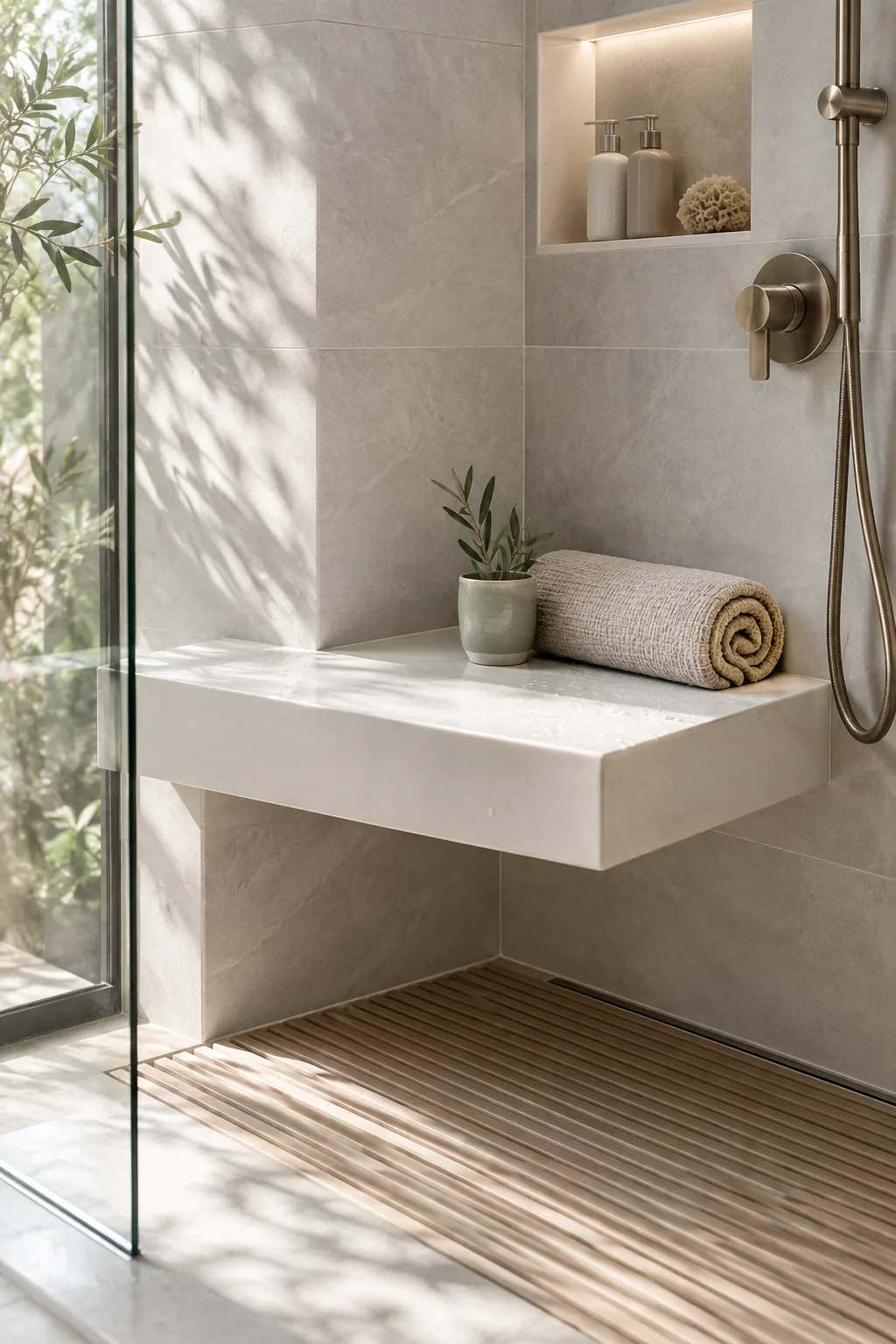
You secure the seat directly to the wall studs before adding your waterproofing membrane. Covering it in a solid slab of quartz or granite prevents uncomfortable grout lines from digging into your skin. Make sure to pitch the top slightly forward so the water sheds off immediately. It looks incredibly sleek and gives you plenty of room to tuck your feet under when standing up.
Why it works: A built-in floating bench works because it provides sturdy support without trapping soap scum underneath.
4. Adjustable Sliding Handheld Sprayers
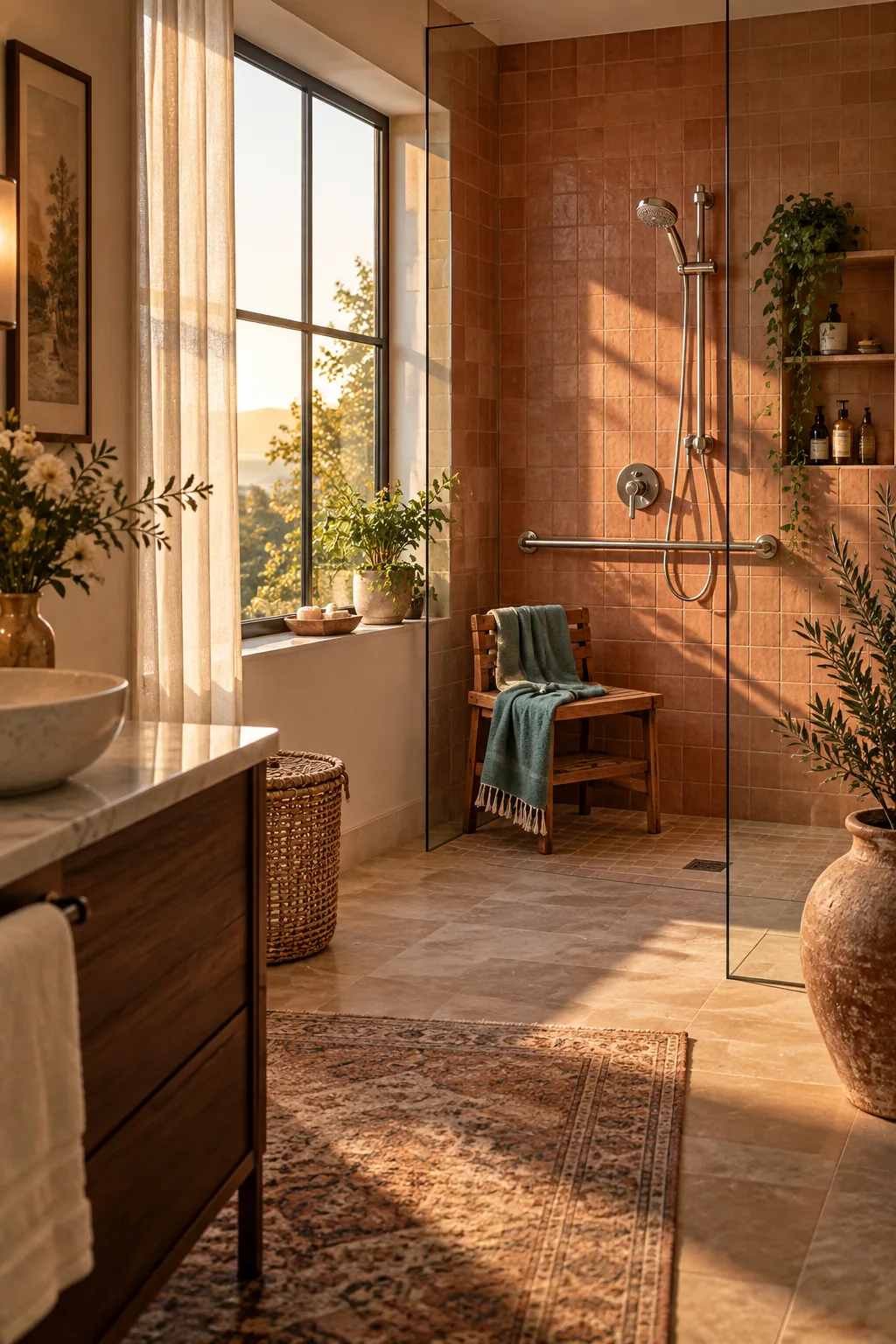
I always try to include a handheld showerhead on a sliding bar in my bathroom remodels. It allows you to adjust the water height instantly whether you are standing up or sitting down on a shower chair.
5. High-Traction Mosaic Floor Tiles
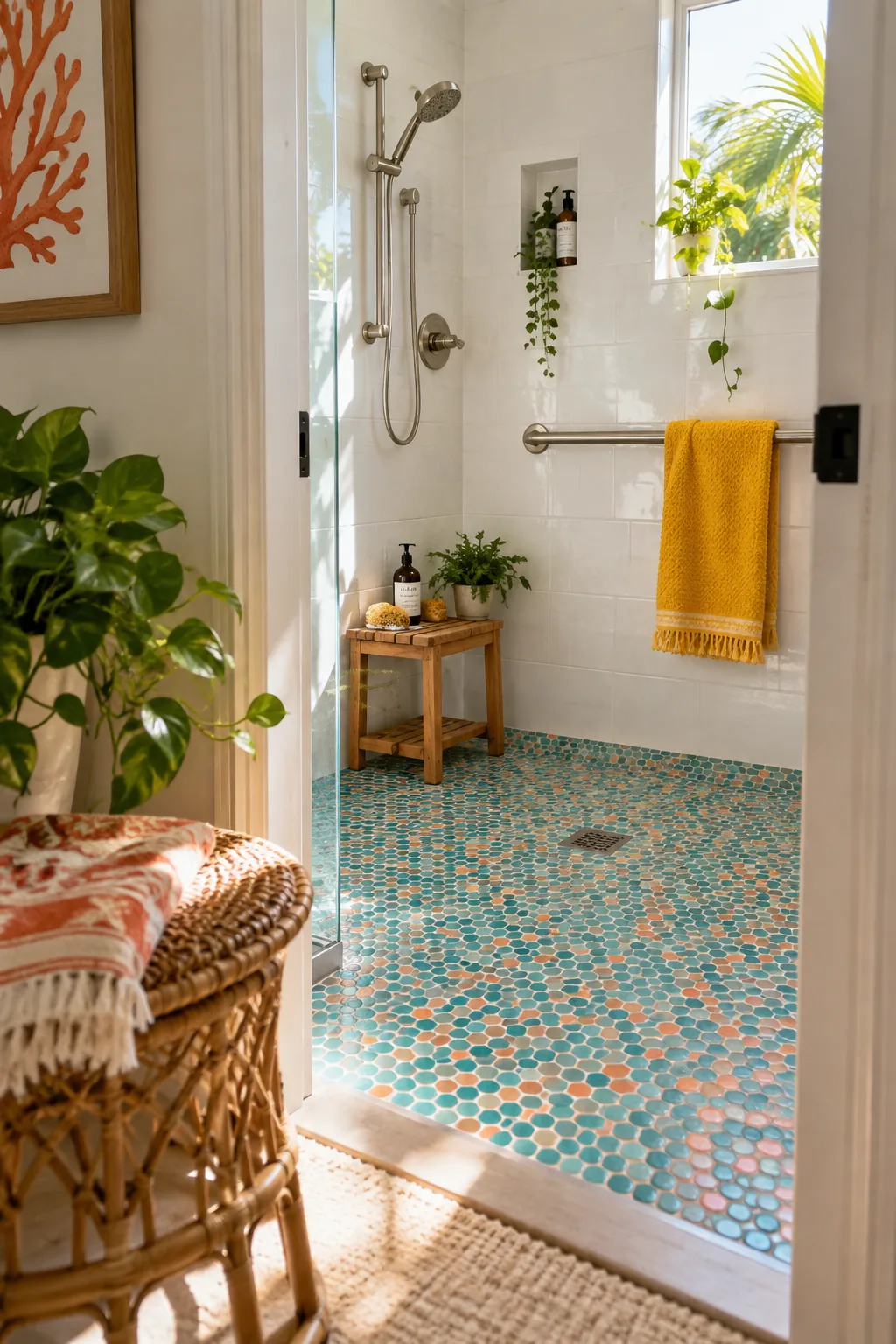
Tiny mosaic tiles offer way more traction than large format slabs. The extra grout lines act like natural tread for wet feet.
You want a slip-resistant floor that feels secure even when covered in shampoo. Matte finishes are always safer than polished stones.
Stick to tiles smaller than two inches for the actual shower pan.
6. Lowered Accessible Shampoo Niches
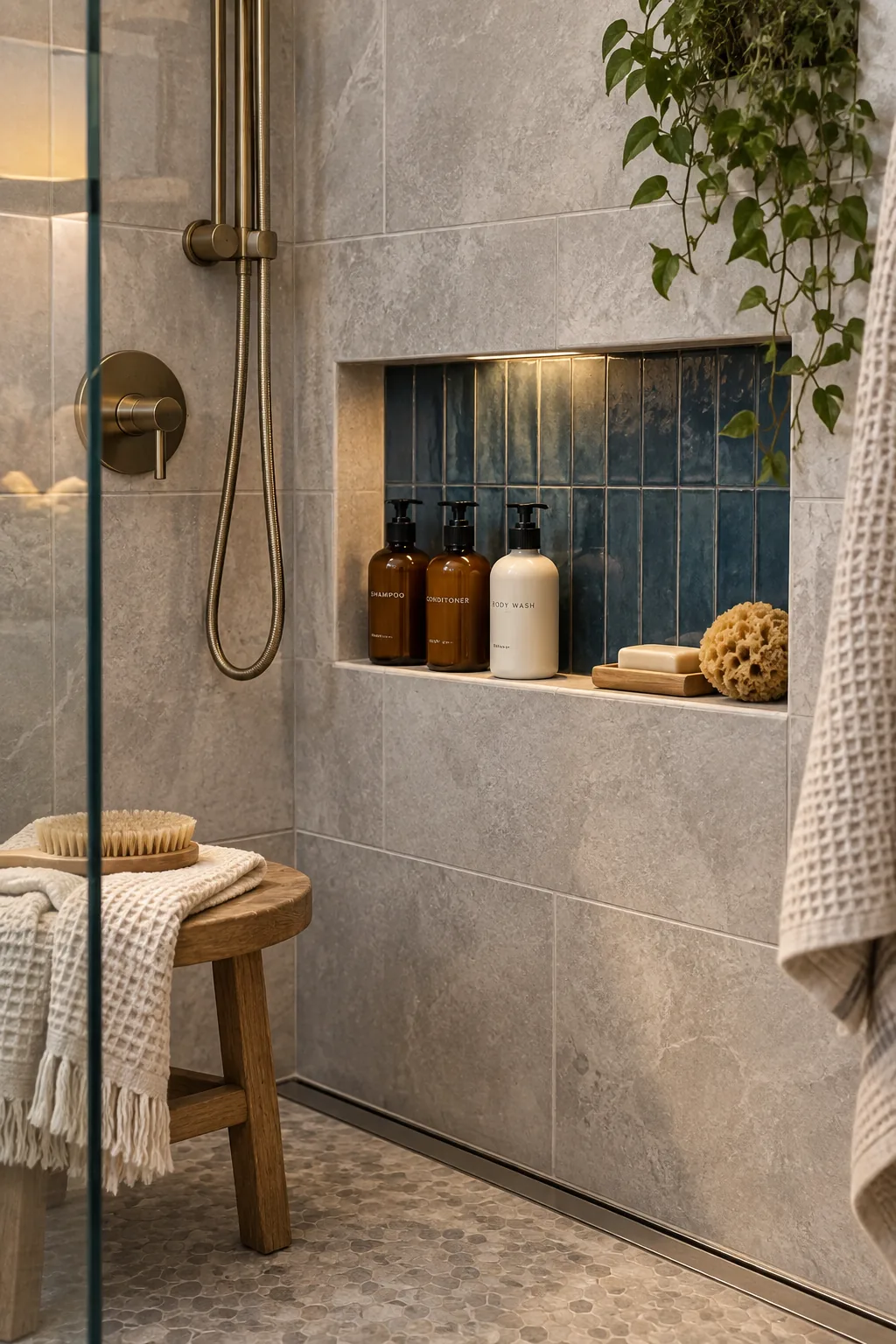
Recess your shampoo niches much lower than you normally would in a standard bathroom. Placing the storage shelves around waist height means you never have to reach up or stretch awkwardly while wet. It keeps all your heavy bottles perfectly accessible from a seated position.
Adding a contrasting tile inside the niche helps people with low vision spot their products easily.
7. Extra Wide Entryways
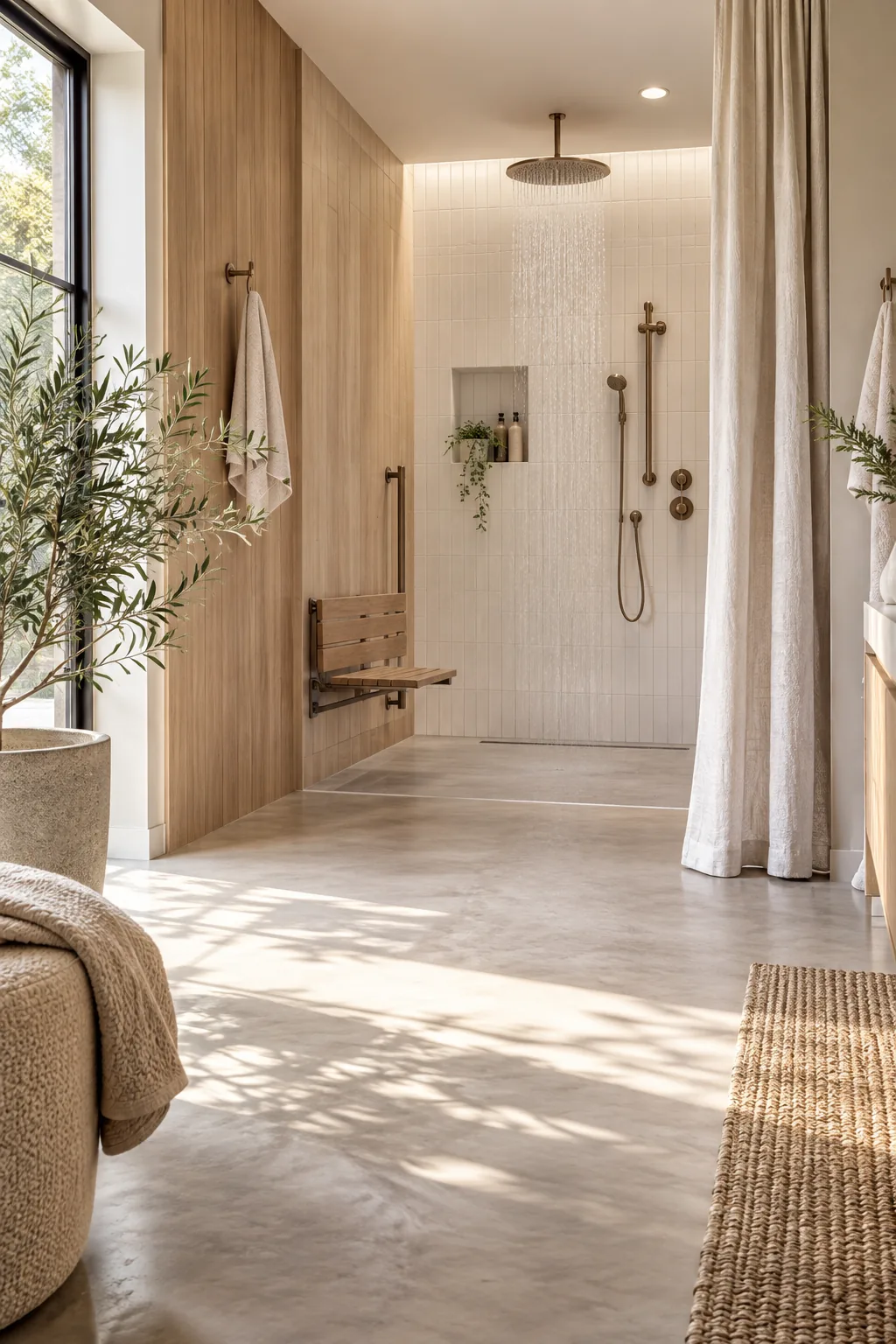
You need a minimum clearance of thirty-six inches to make a shower opening truly accessible. Ditching the heavy glass door entirely in favor of a wet-room layout is often the smartest move. If you do want a glass enclosure, stick to these setups:
A doorless entry completely removes the struggle of maneuvering handles with wet hands.
- Double swinging French doors
- A single fixed glass panel
- Trackless sliding screens
Why it works: Widening the entrance works because it accommodates walkers and wheelchairs without scraping the doorframes.
8. Hidden Under-Bench Lighting
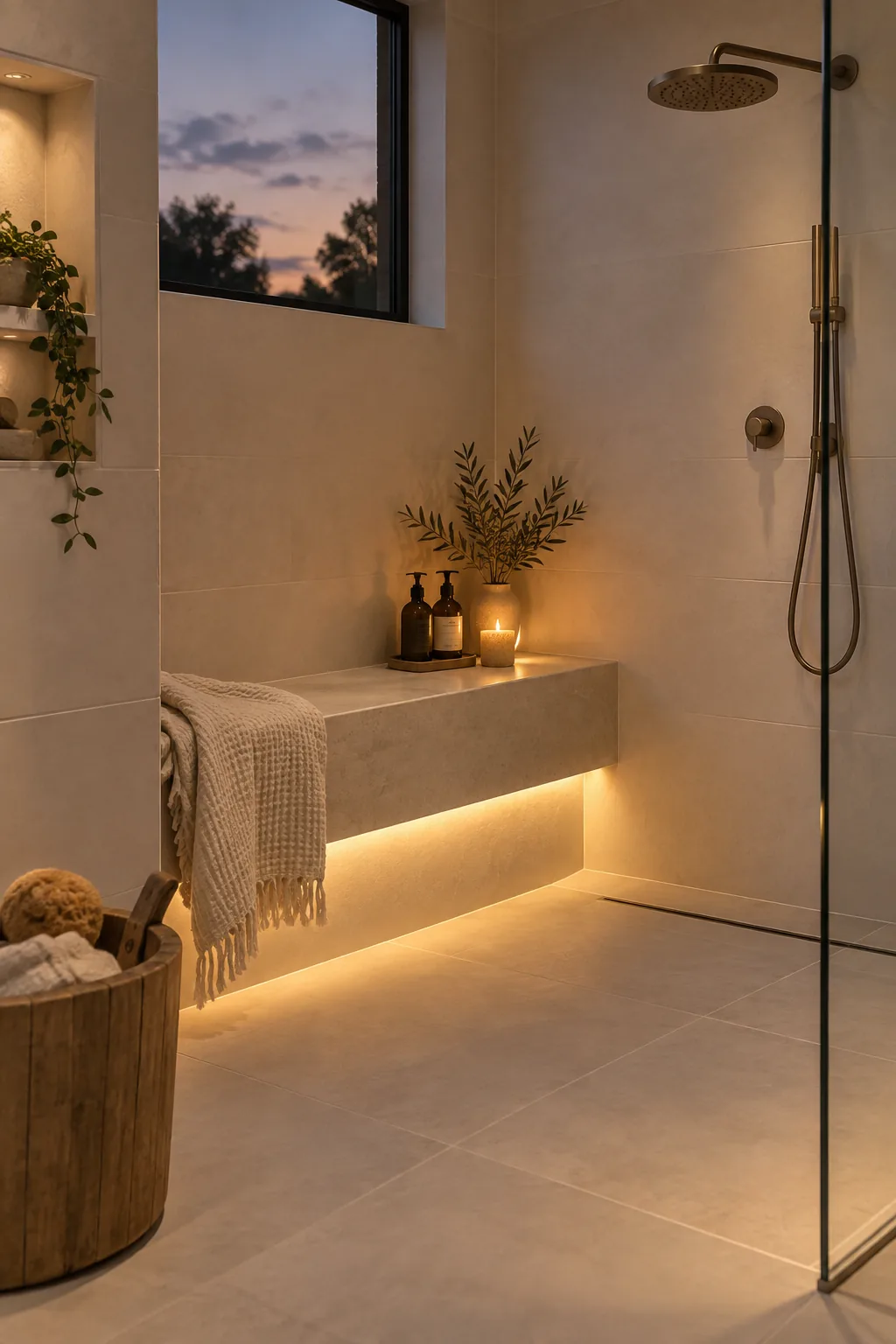
My favorite trick for dark bathrooms is adding waterproof LED strips under the built-in bench. This hidden ambient lighting prevents shadows on the floor and helps you see exactly where you are stepping.
9. Easy-Grip Lever Shower Controls
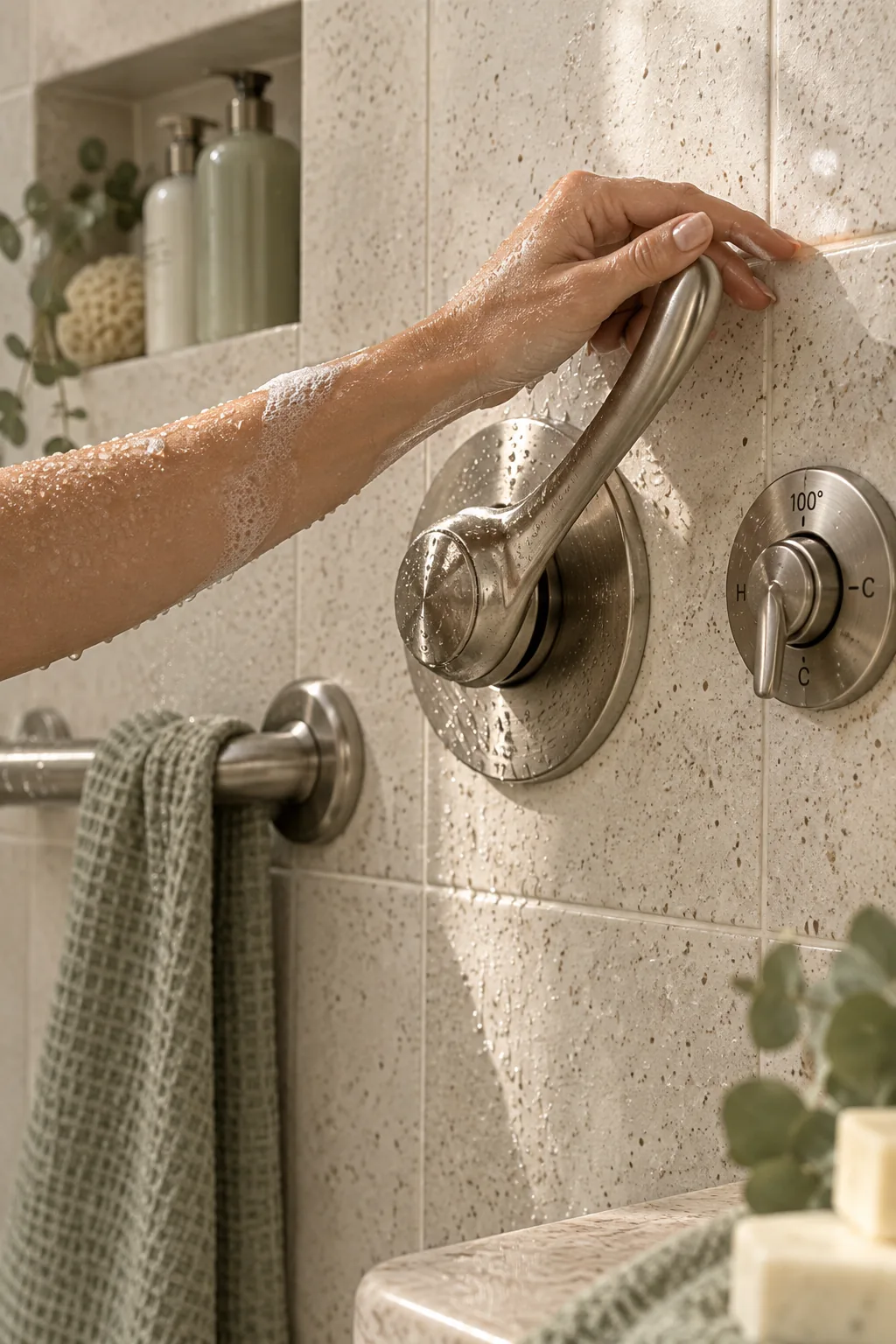
Traditional shower valves are notoriously difficult to grip with soapy hands or stiff joints. Swapping out round knobs for lever-style shower controls makes a world of difference for daily use. You can operate a long lever with just the side of your hand or your elbow if necessary. Pushing a handle is always easier than twisting a tight dial.
10. Anti-Scald Thermostatic Valves
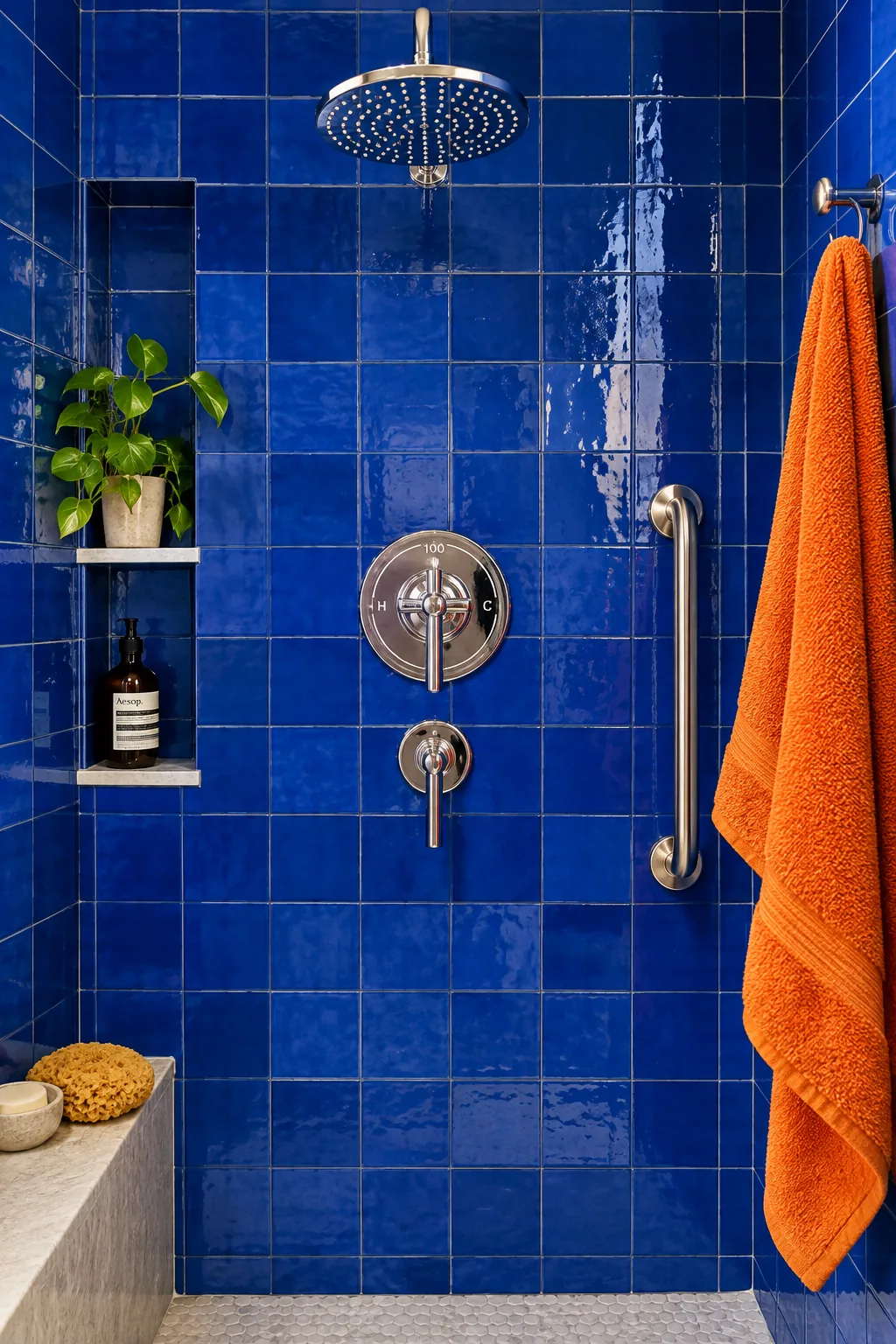
I recently installed a thermostatic mixing valve in a client's home and they absolutely love it. This device locks in your preferred water temperature so you never get blasted with freezing or scalding water. It is a crucial safety feature if your reaction time is a bit slower than it used to be.
You just set the dial once and use a separate handle to control the pressure.
11. Optimal Chair-Height Seating
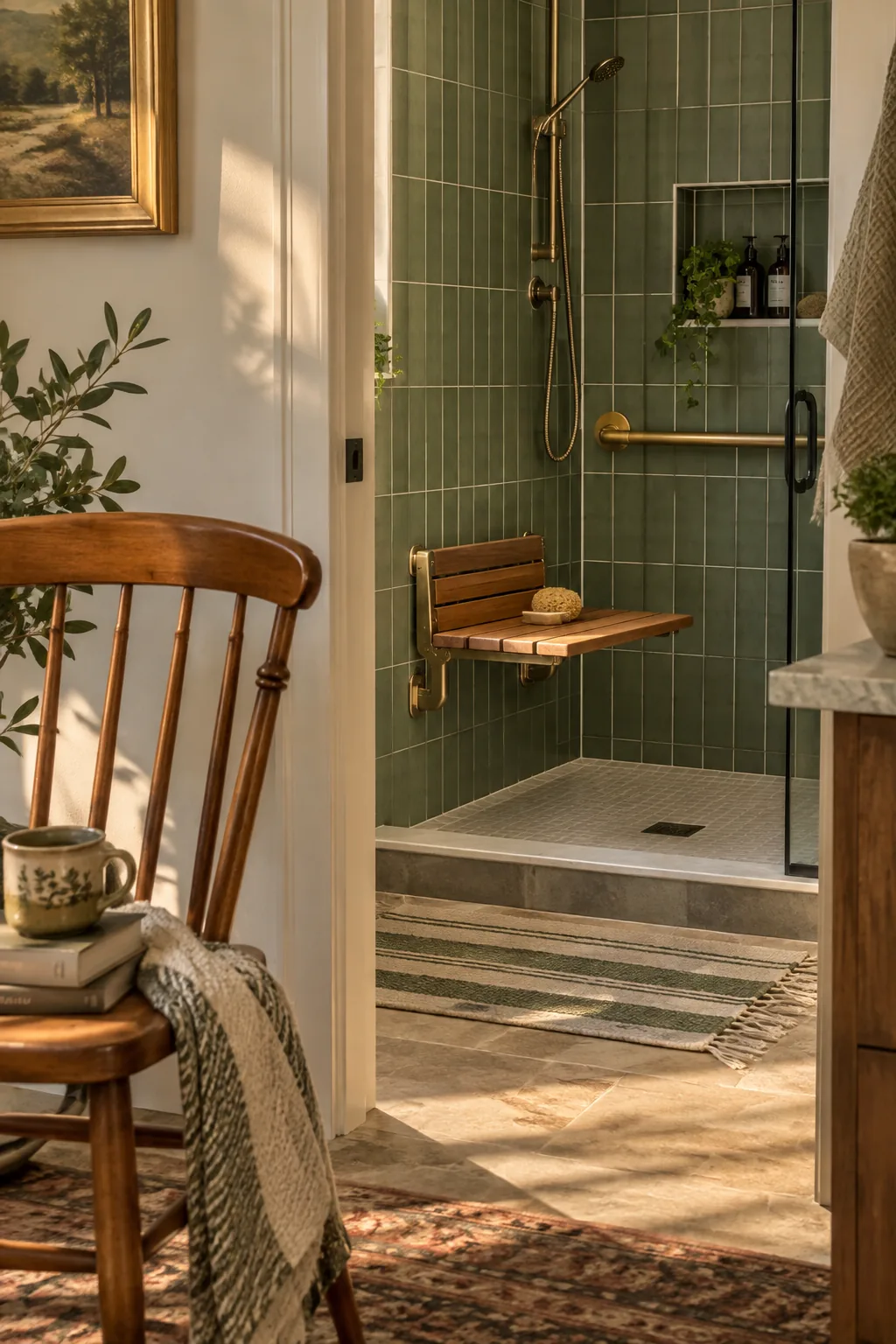
The ideal height for a shower seat is between seventeen and nineteen inches from the floor. This exact bench height mirrors a standard dining chair, making the transfer process feel completely natural. Anything lower makes it incredibly hard on your knees when trying to stand back up.
Leaving a slight overhang on the edge of the seat gives your heels a place to grip.