
Drop-Leaf Table Transformation: Bleached Pine and Matte Black
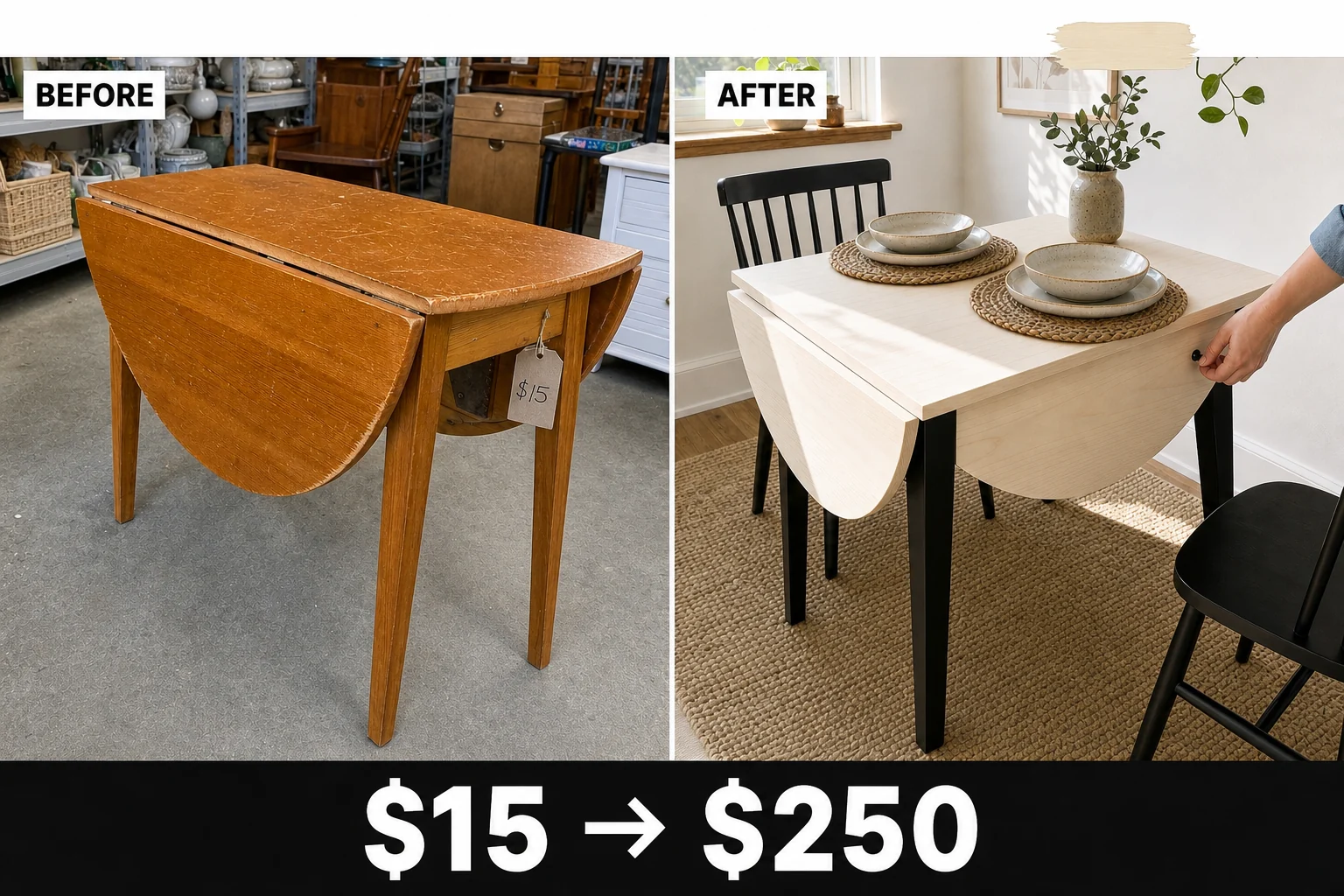
Tucked in a crowded thrift store aisle, this drop-leaf table featured a scratched orange finish and seized hinges. We modernized it with a Scandinavian-inspired two-tone transformation, using two-part wood bleach on the veneer and matte black paint on the base.
Condition Audit: Assessing the Thrifted Table
Found tucked between mismatched dining chairs and crowded metal shelving full of donated lamps, this 1950s piece was priced at just $15 due to its neglected state. The pine veneer top over a solid wood core showed distinct damage, while the folding drop-leaf functionality was completely compromised by stiff metal mechanisms.
- Thick, amber-tinted topcoat with deep surface gouges across the veneer, hiding the natural wood grain.
- Flaking brown oxidation on the metal joints underneath the leaves, preventing smooth movement.
- Dark streaks and chipped clear coat on the tapered legs, making the base look neglected.
Step 1: Detach Rusted Hinges
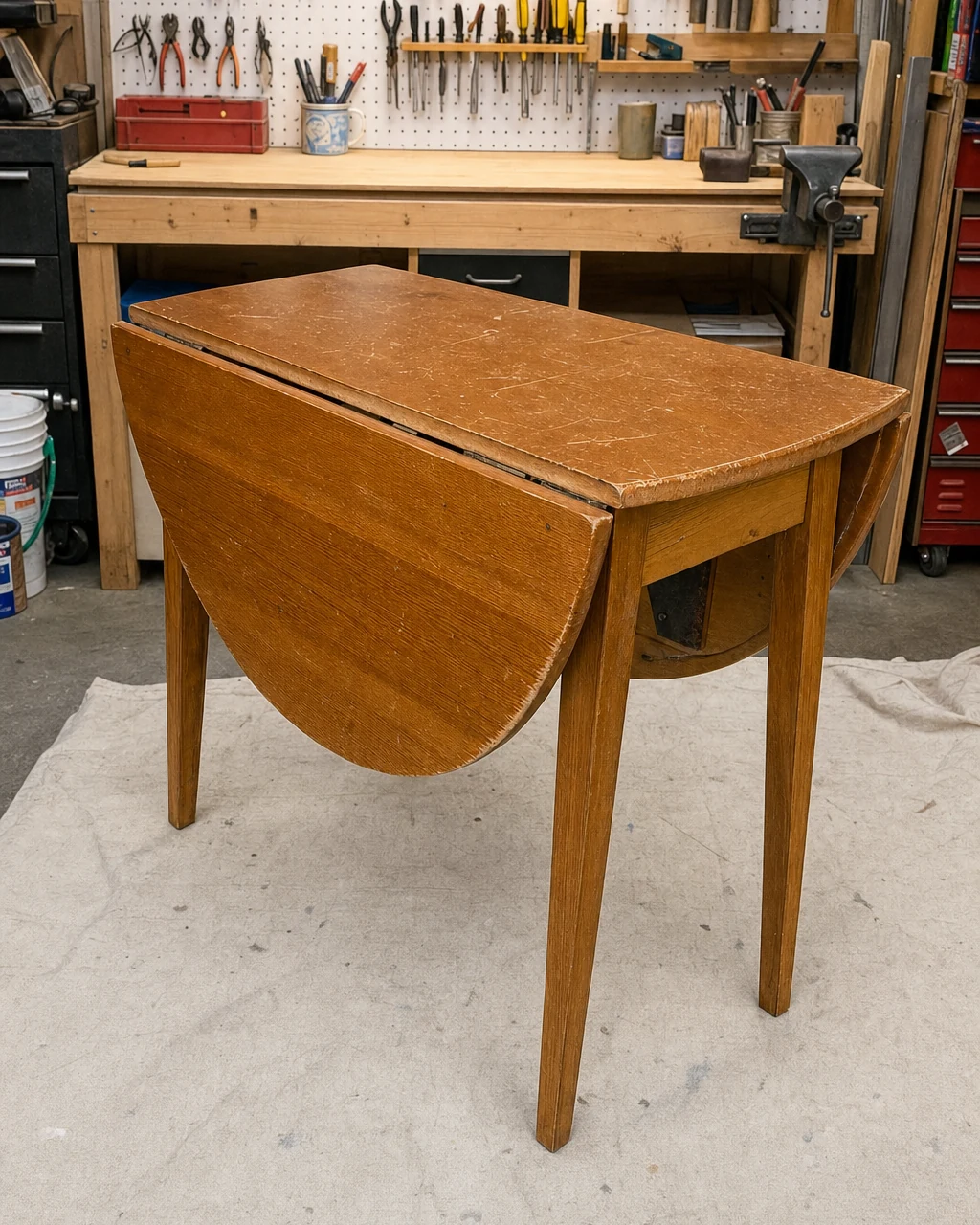
Place the table upside down on a workshop drop cloth to access the rusted hinges. Use a screwdriver to remove the old metal hardware from the underside, safely separating the two drop leaves from the main rectangular center top.
Preparing the Surface
Removing the leaves allows the veneer to be stripped on a flat surface without damaging the delicate folding mechanisms or risking a sudden drop. Wear work gloves to protect hands from sharp, rusted metal edges during this disassembly phase.
Step 2: Strip Orange Finish
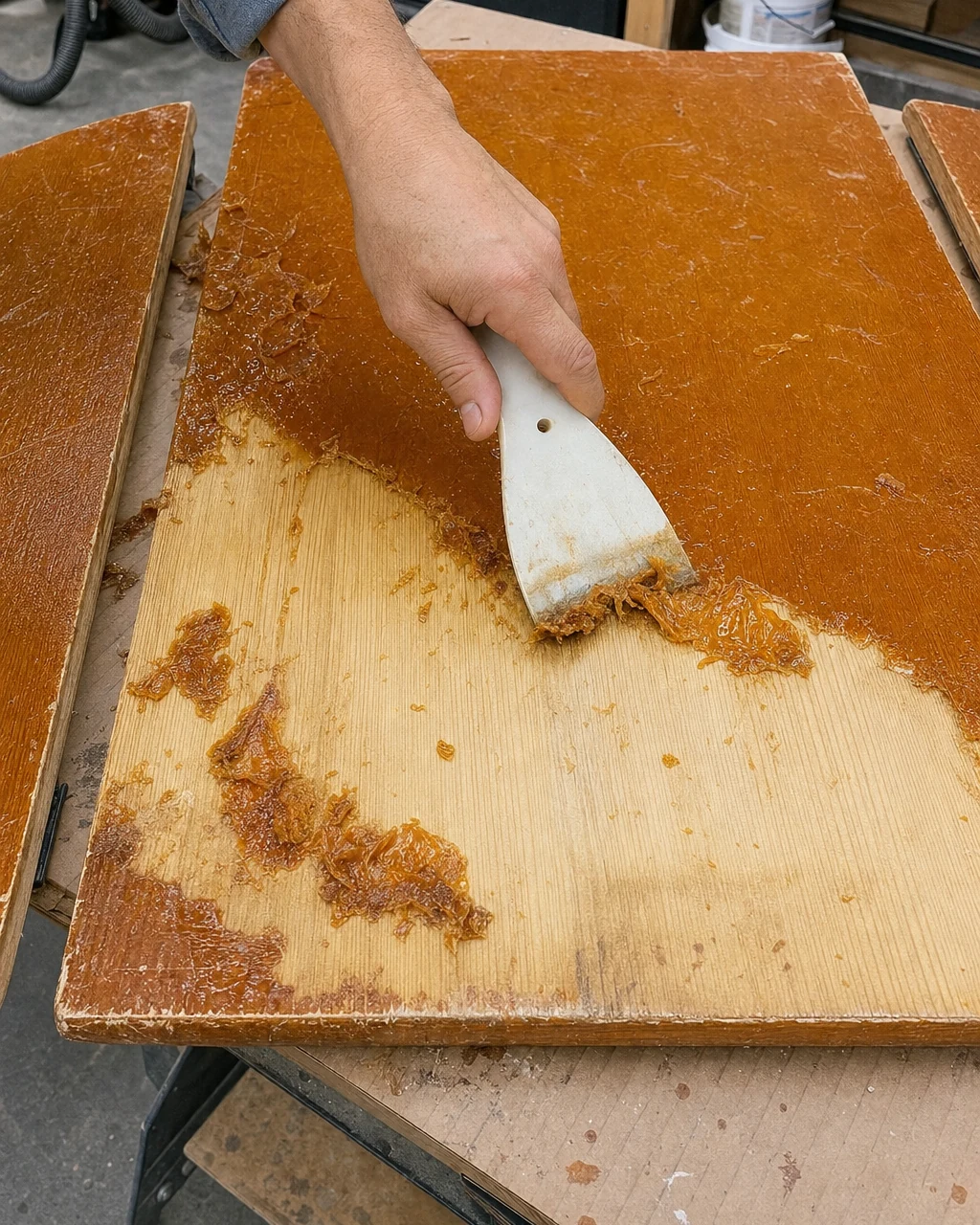
Lay the detached leaves and center top flat on a protected workbench. Apply a thick layer of chemical stripper to the veneer using a chip brush, and wait for the old finish to blister completely before attempting to remove it.
Gently push a plastic scraper across the chemical-soaked pine veneer to peel away the bubbled orange topcoat. This exposes the bare, raw pine beneath the scraped sludge. Work in a well-ventilated area and wear chemical-resistant gloves and a respirator.
Step 3: Apply Wood Bleach
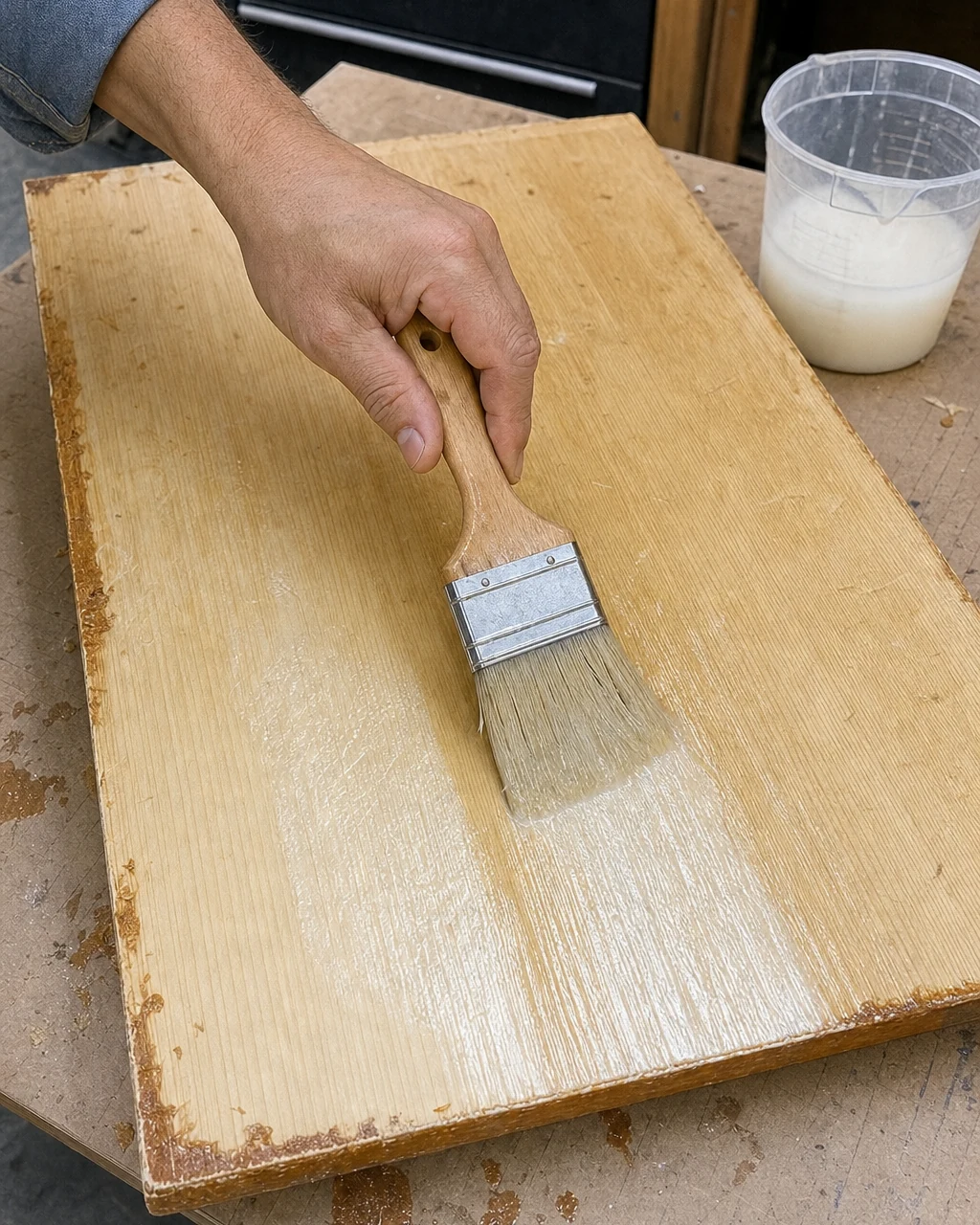
Once the pine veneer is completely stripped, cleaned, and dry, mix the two-part peroxide wood bleach in a dedicated cup. Brush the mixture evenly over the raw pine using a synthetic bristle brush to begin the lightening process.
| Item | Cost |
|---|---|
| Thrifted Table Purchase | $15 |
| Chemical Paint Stripper | $15 |
| Two-Part Wood Bleach | $22 |
| Matte Black Furniture Paint | $18 |
| Water-Based Matte Polyurethane | $16 |
| Matte Black Drop-Leaf Hinges | $12 |
| Total Investment | $98 |
| Estimated Resale Value | $250 |
| Value Gain | $152 |
The chemical reaction lifts the natural pigments and remaining stains from the bare pine. The wet veneer will appear significantly lighter immediately where the bleach has been applied. Wear safety goggles and gloves; peroxide bleach can cause severe skin irritation.
Step 4: Paint Table Base
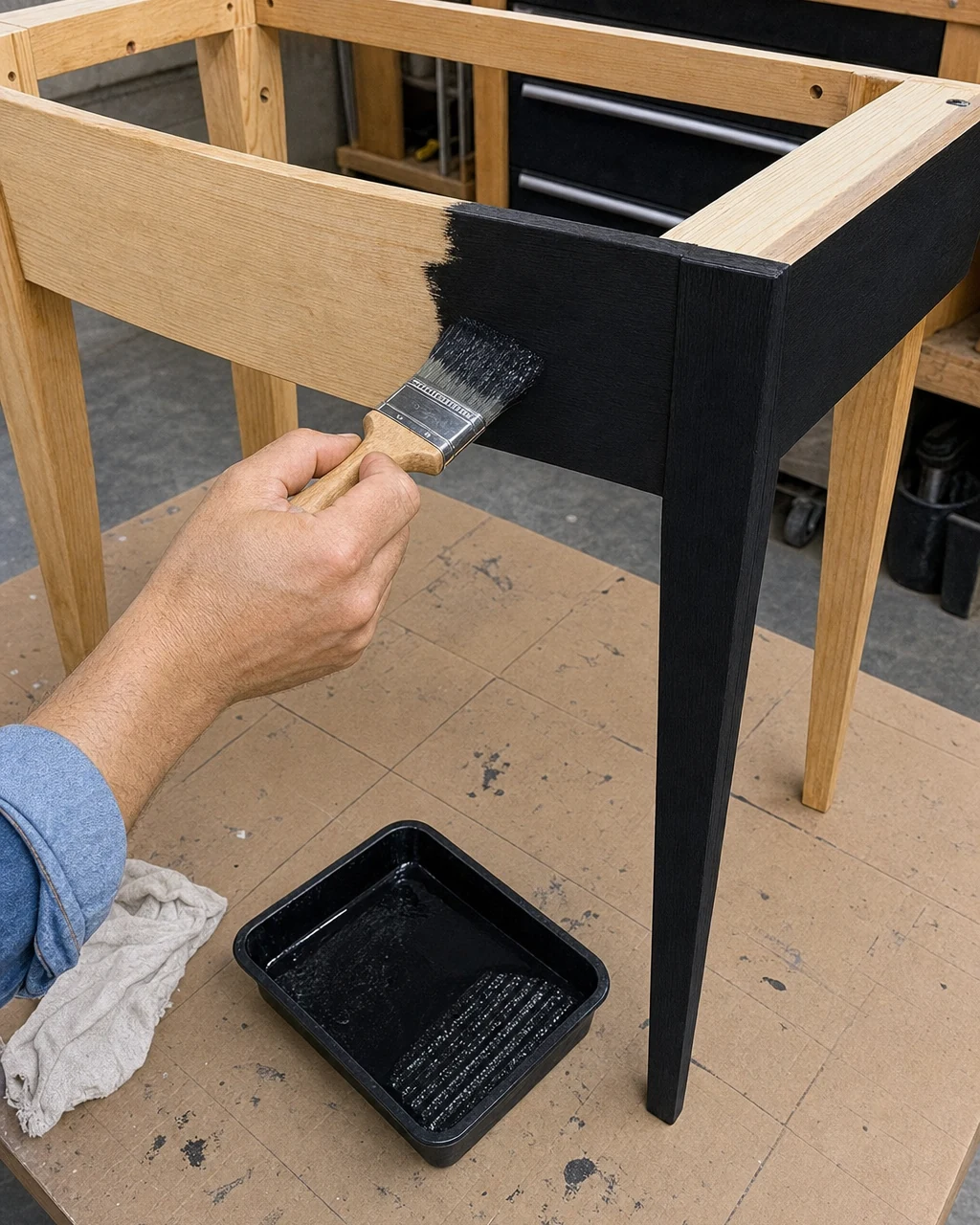
Lightly sand the solid wood table base and wipe it clean of any lingering dust. Use a paintbrush to apply matte black acrylic enamel paint onto the solid wood table apron and tapered legs, placing a drop cloth underneath.
Materials checklist
Apply two full coats to ensure opaque coverage. The matte black finish modernizes the traditional leg silhouette and creates a stark, striking contrast against the pale bleached top, completely transforming the lower half of the thrifted table.
Step 5: Seal Bleached Veneer
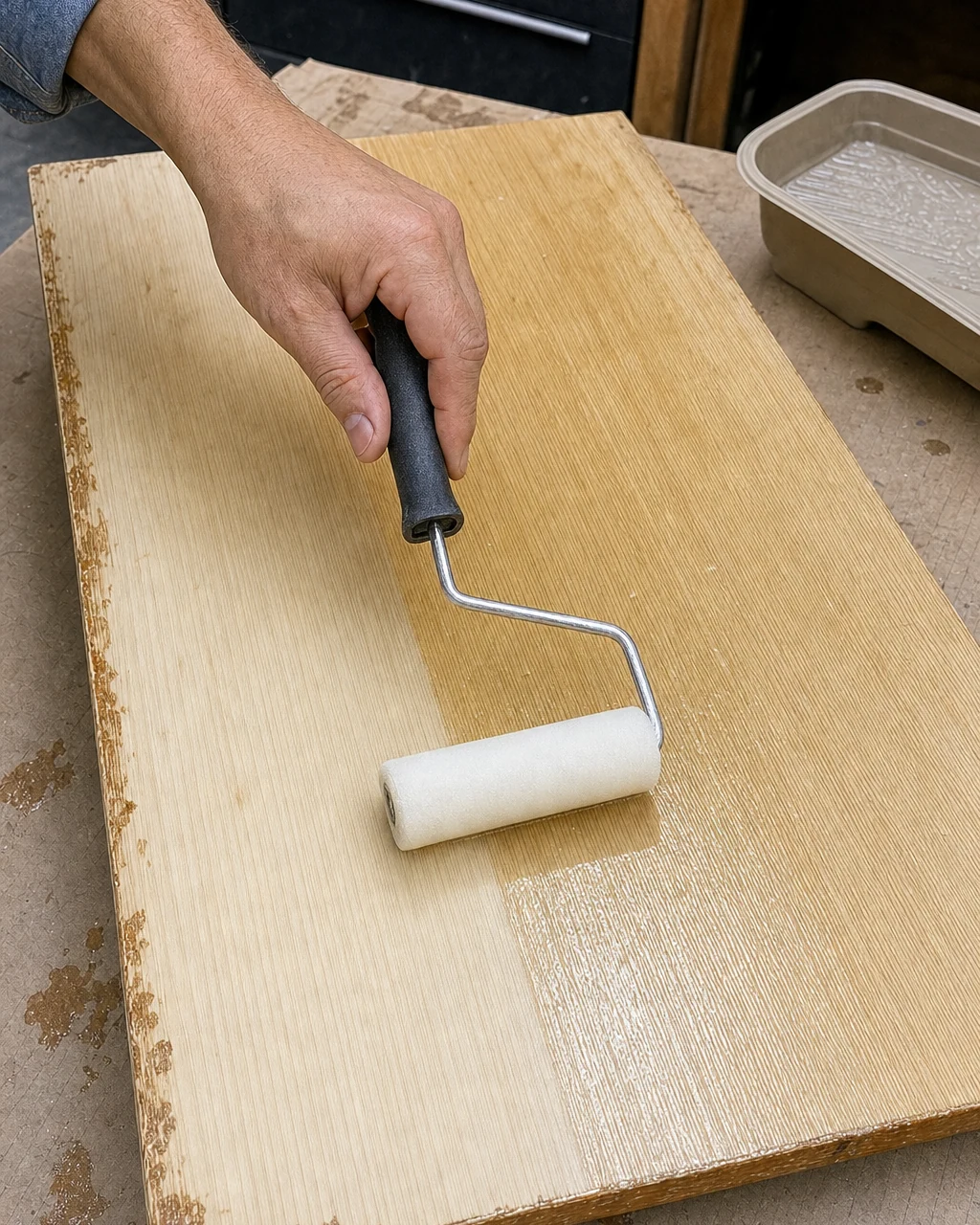
Ensure the bleached veneer is fully dry, neutralized with a water wipe-down, and lightly sanded smooth. Pour the finish into a paint tray and roll clear water-based matte polyurethane over the sanded pine using a high-density foam roller.
This clear topcoat protects the raw wood finish from daily dining spills without altering or yellowing the pale color achieved during the bleaching process. Ensure the bleach is fully neutralized and dry before sealing to prevent chemical reactions.
Step 6: Install New Hinges
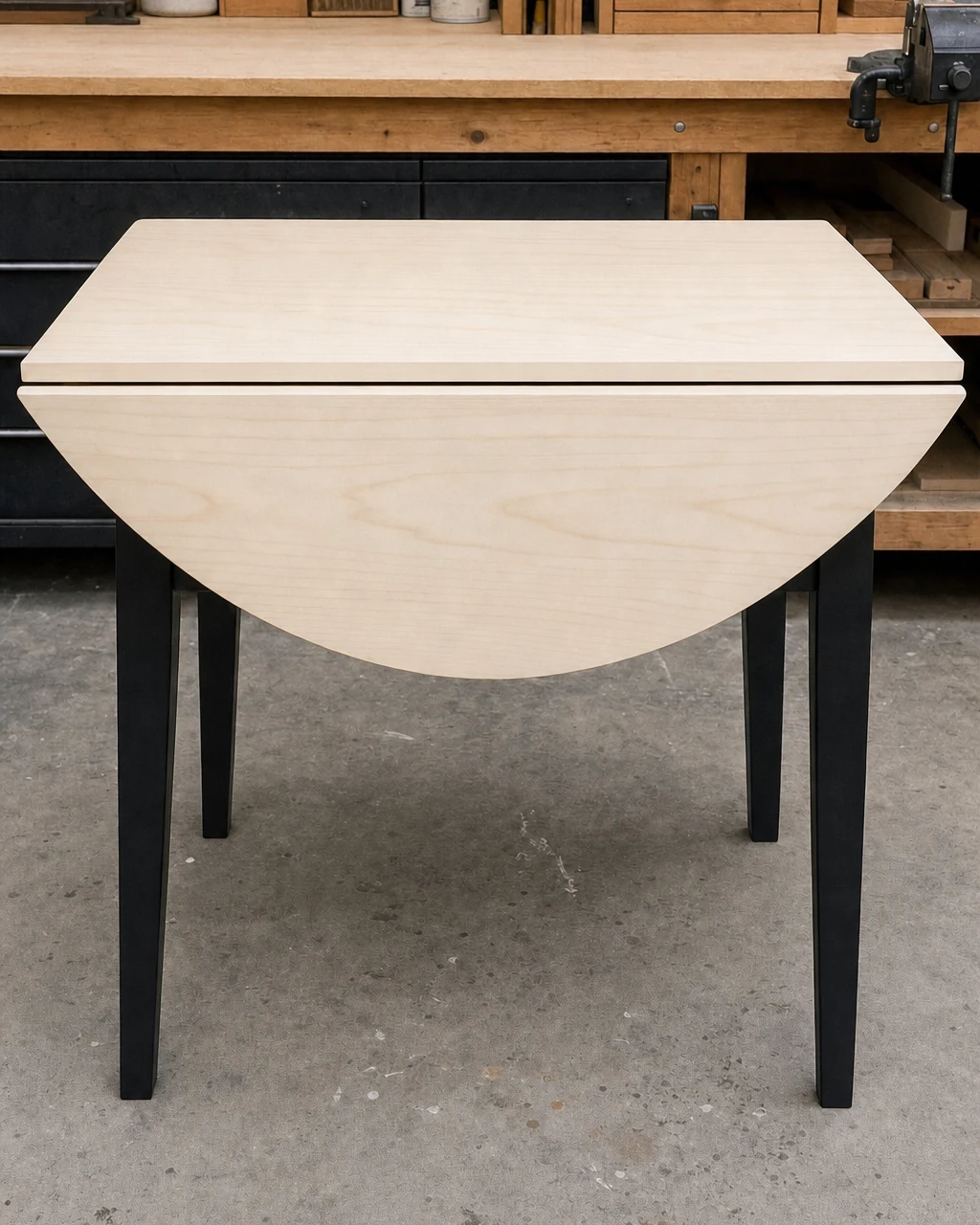
Once the painted base and sealed top components are fully cured, position them upside down on a clean blanket. Align the drop leaves carefully with the center top to prepare for the new hardware installation.
Restoring Functionality
Use a drill to pre-drill holes, then drive screws through the new matte black hinges to reattach the sealed drop leaves to the painted table base. Always pre-drill screw holes to prevent the vintage wood from splitting during reassembly.
Step 7: Style the Table
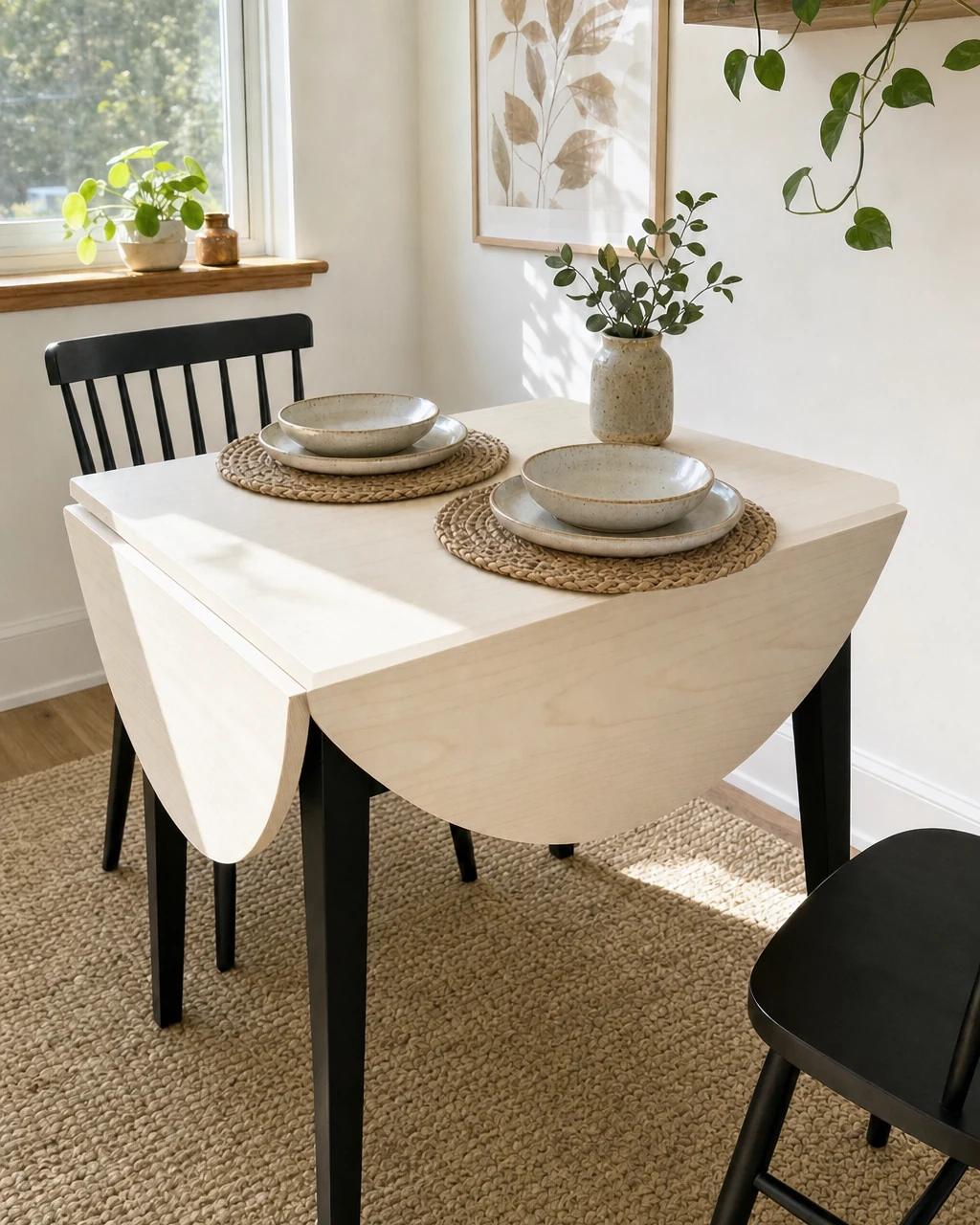
Move the fully assembled table into a bright dining nook, open the drop leaves, and set it for a meal. The crisp, ultra-pale bleached pine top contrasts beautifully with the opaque matte black legs in a home setting.
Final Presentation
Arrange the table with handmade ceramic plates and woven placemats to showcase its restored functionality and Scandinavian-inspired aesthetic. Always lift the table by the sturdy apron, not by the hinged drop leaves, when moving it into position.
Valuation Rationale: Why the Value Increased
The dramatic two-tone finish elevates this piece from a neglected thrift store find to a highly desirable, Scandinavian-inspired design. Replacing the rusted hardware restored the space-saving drop-leaf functionality, making it highly practical for modern, compact dining spaces.
Understanding the Estimate
This estimated resale value reflects the current market demand for modernized vintage furniture, distinguishing it from an actual guaranteed sale. The stark contrast between the bleached wood and matte black base creates a premium aesthetic that buyers actively seek.