
Skater Meets Aztec: Living Room
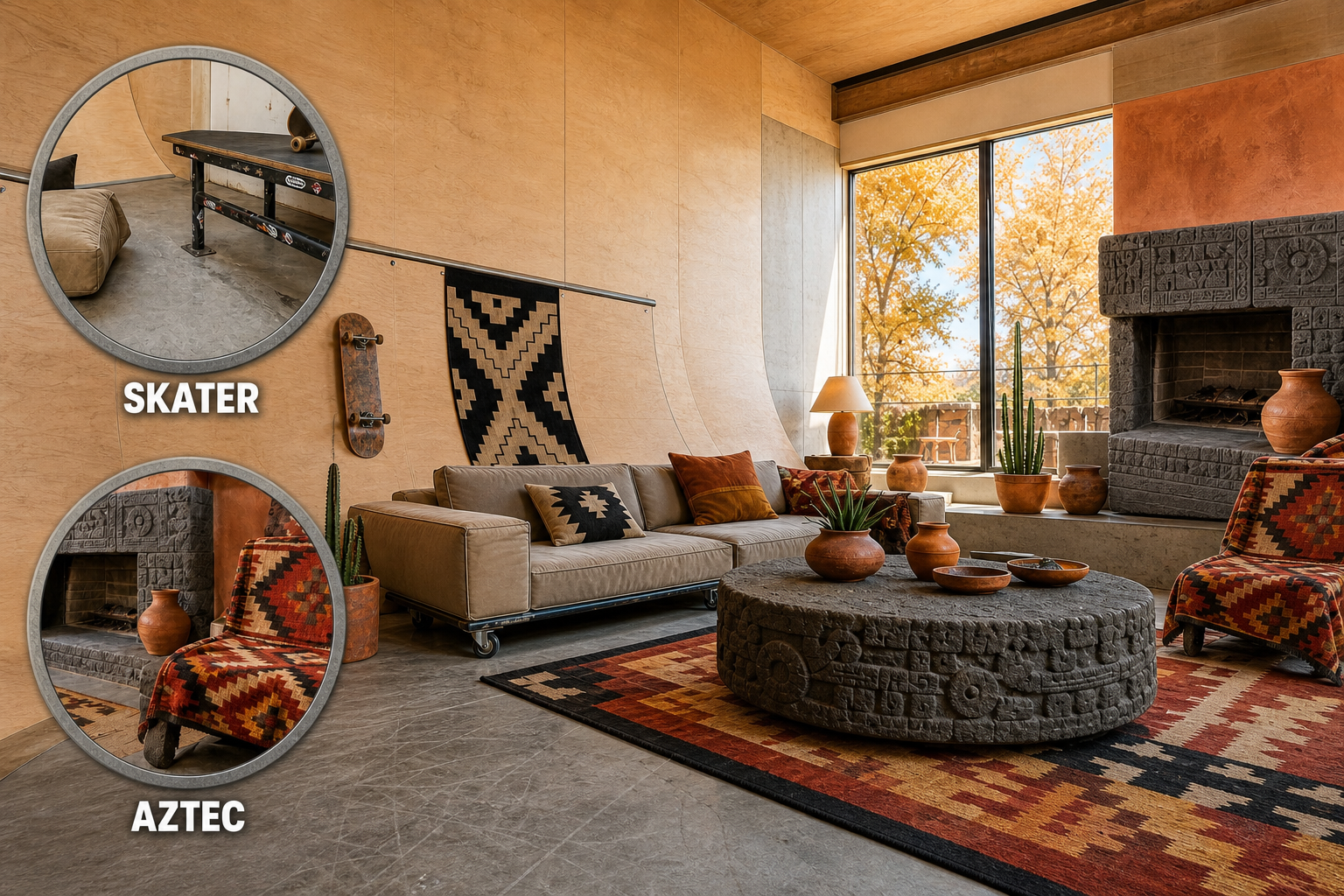
The transient, raw energy of DIY skate culture violently clashes with the monumental, heavily crafted weight of Aztec history. Yet, by letting fluid plywood architecture frame heavy volcanic stone and geometric textiles, this living room achieves an unexpected, deeply grounded.
Style A language
The foundation of this room relies entirely on the fluid, low-slung architecture of skate culture. Raw Baltic birch plywood and scuffed concrete floors establish an unapologetically urban, transient baseline that dictates the entire physical envelope and momentum of the space.
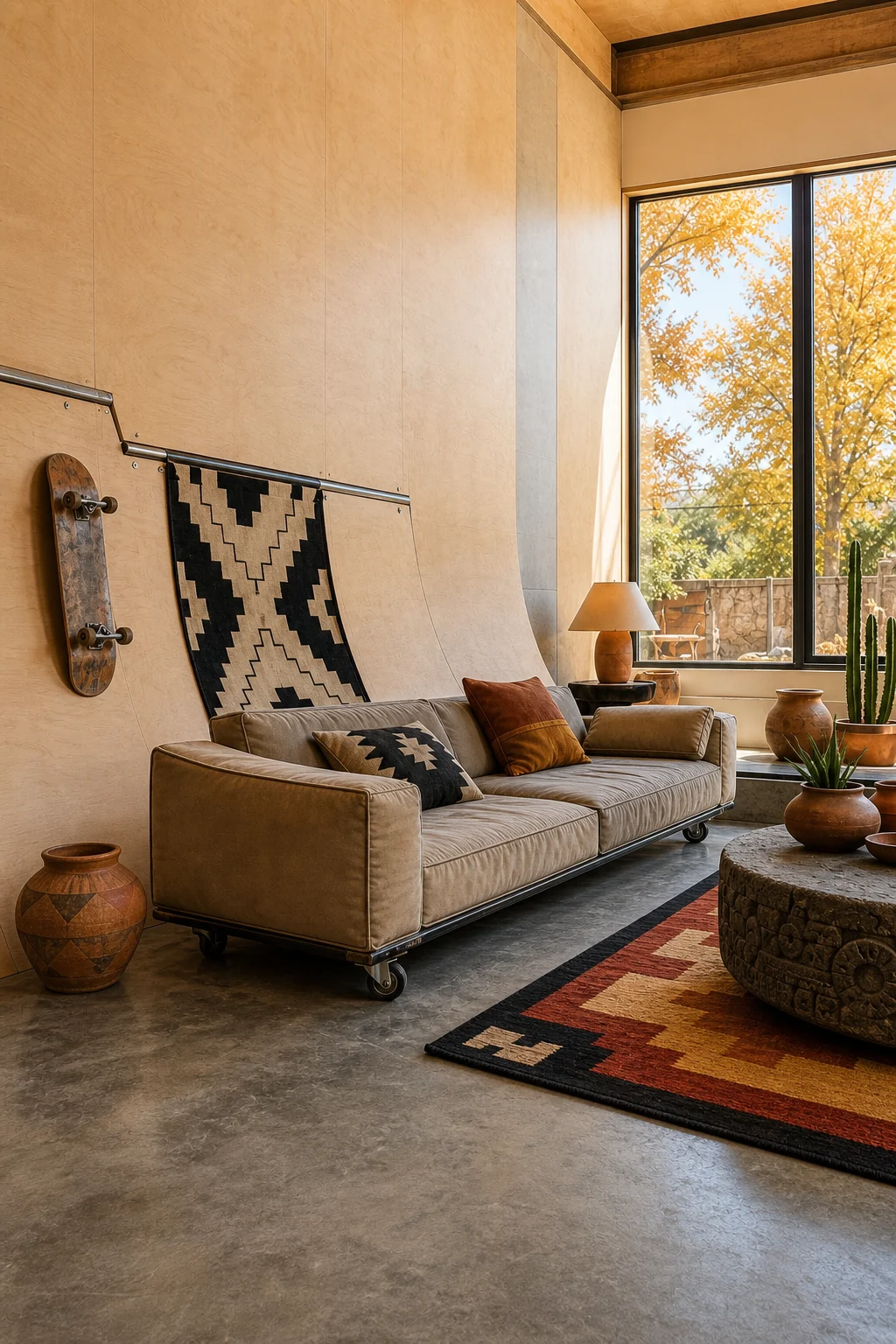
Notice how sweeping plywood curves perfectly frame the rigid terracotta accents. This architectural shell mimics a half-pipe, generating a continuous sense of momentum that prevents the heavy indigenous artifacts from feeling static, trapped, or overly museum-like in their daily display.
To fully commit to this urban baseline, seating must remain extremely close to the floor. By keeping the center of gravity low, you leave ample vertical breathing room for monumental stone anchors to dominate the upper sightlines and command attention.
- Source low-slung modular canvas seating to maintain a casual, highly grounded posture throughout the entire room.
- Mount heavy sofas on heavy-duty industrial casters to ensure agile utility and effortless spatial reconfiguration.
- Embrace subtle polyurethane wheel scuffs on raw concrete floors as genuine, hard-earned architectural patina.
- Leave Baltic birch panels entirely untreated to celebrate their natural, rugged, and unrefined wood grain.
Style B language
To anchor that sweeping momentum, the space demands monumental, undeniable weight. Carved volcanic basalt and heavy, hand-woven wools introduce an ancient, earthy gravity that stops the room from floating away into purely transient, youthful urban energy and chaotic movement.
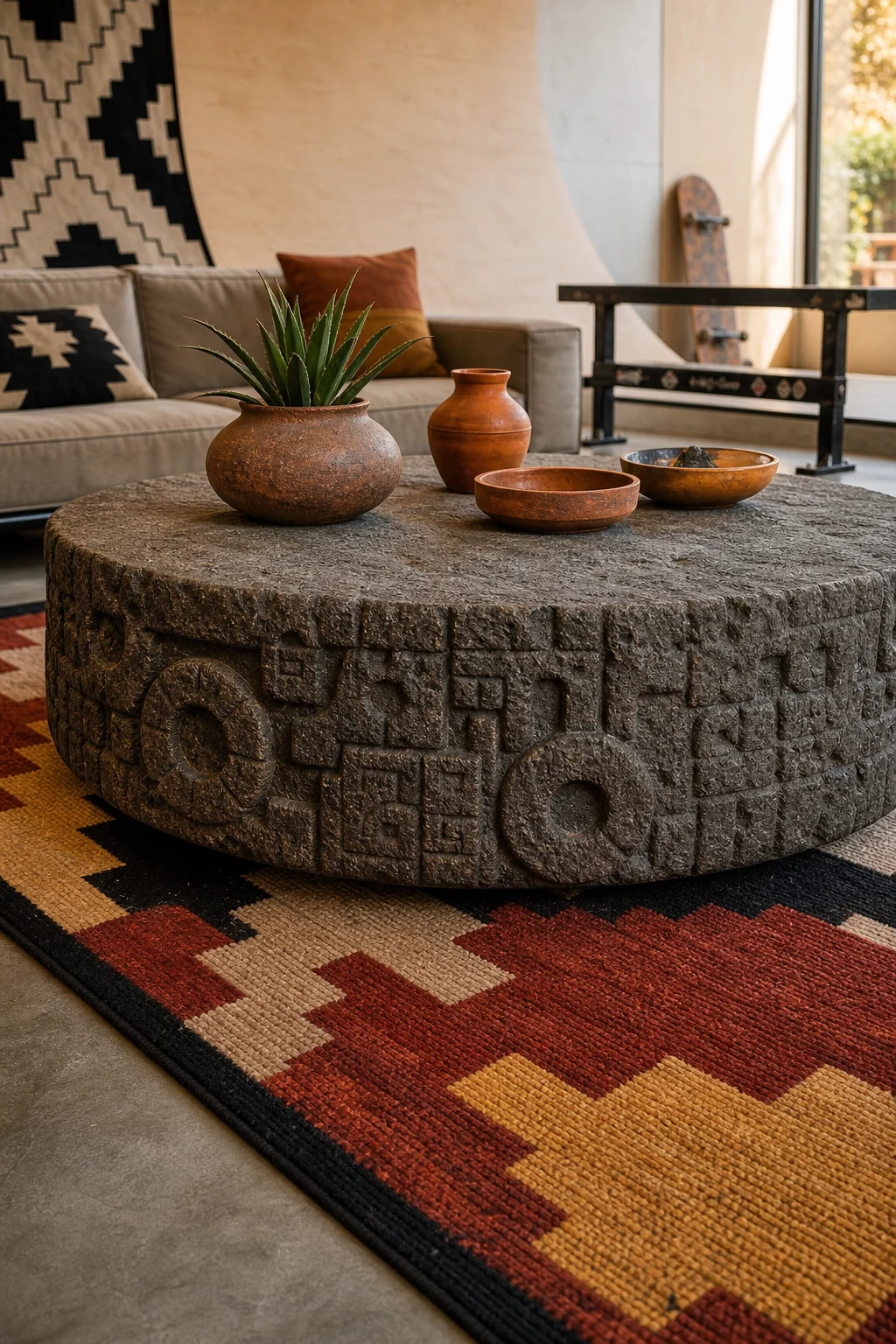
Observe the sheer density of the carved volcanic stone against the slender metal rail. This heavy central anchor commands the layout, forcing the agile canvas seating to orbit around its immovable, deeply textured, and historically resonant physical presence.
The textile selection is equally critical for establishing historical weight. Heavy wool throws featuring stepped geometric fretwork provide a rigid, mathematical counterpoint to the fluid, sweeping arcs of the plywood walls, grounding the visual field entirely in ancient tradition.
The bridge
The tension resolves through a shared, uncompromising rejection of polish. When porous volcanic rock meets unfinished birch, both materials communicate a rugged, tactile honesty that bridges centuries of divergent design history without compromising their distinct, highly specific cultural identities.
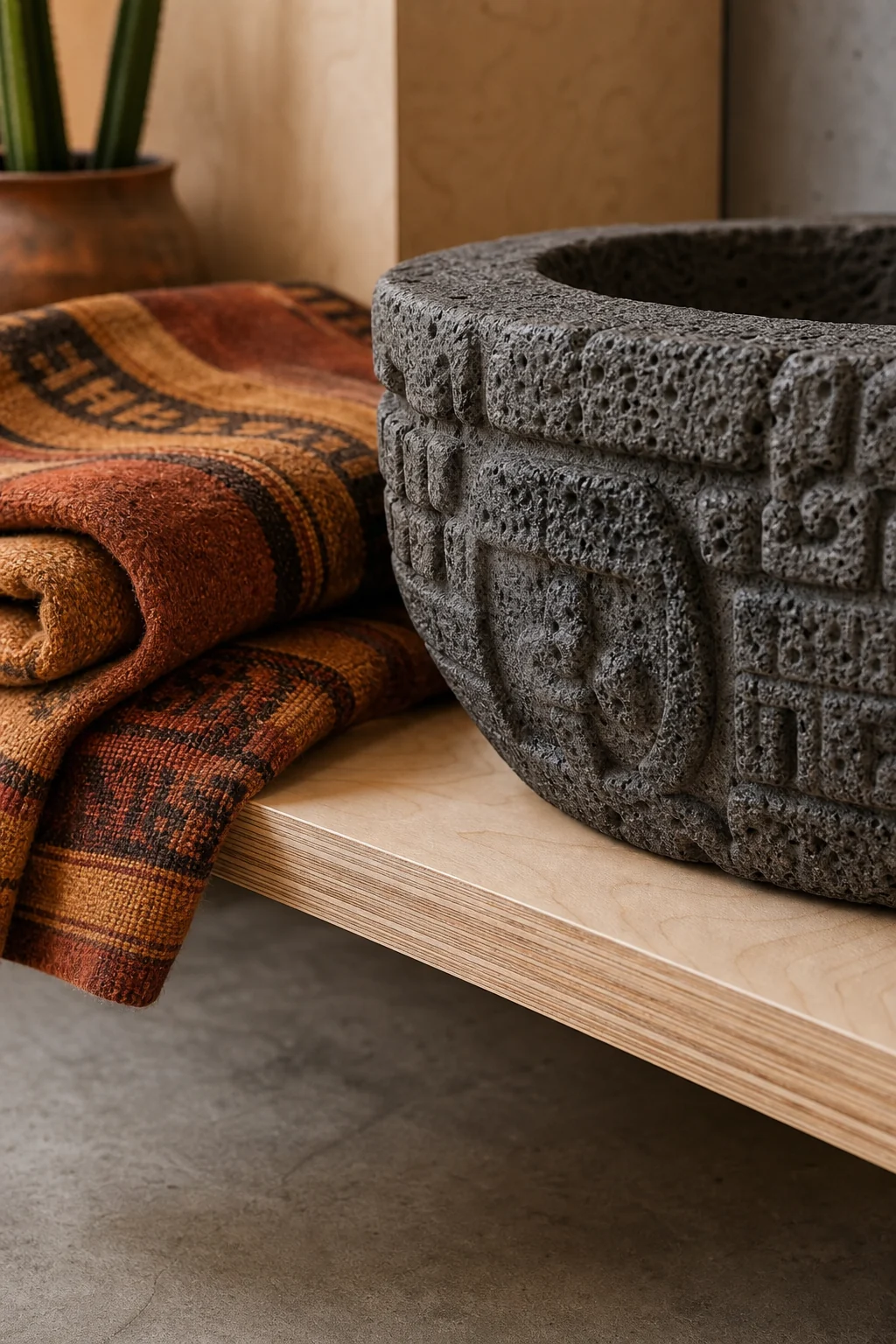
Look closely at where the raw wood grain meets the carved basalt bowl. The success of this pairing relies entirely on their shared matte finish, proving that contrasting eras can harmonize beautifully through a unified, unrefined, and highly tactile texture profile.
- Eliminate all glossy, reflective, or heavily varnished surfaces from the primary architectural design palette entirely.
- Select porous, matte materials that proudly display their natural imperfections, wear, and structural honesty.
- Pair fluid, sweeping architectural curves directly against rigid, mathematically stepped geometric Aztec textile motifs.
- Utilize warm, earthy terracotta color tones to soften the harshness of the industrial concrete shell.
Build the room
Furniture placement must respect the low center of gravity inherent to both cultures. Modular canvas seating provides agile utility around the immovable stone hearth, creating a dynamic yet highly grounded living environment that feels effortlessly cohesive and intentionally designed.
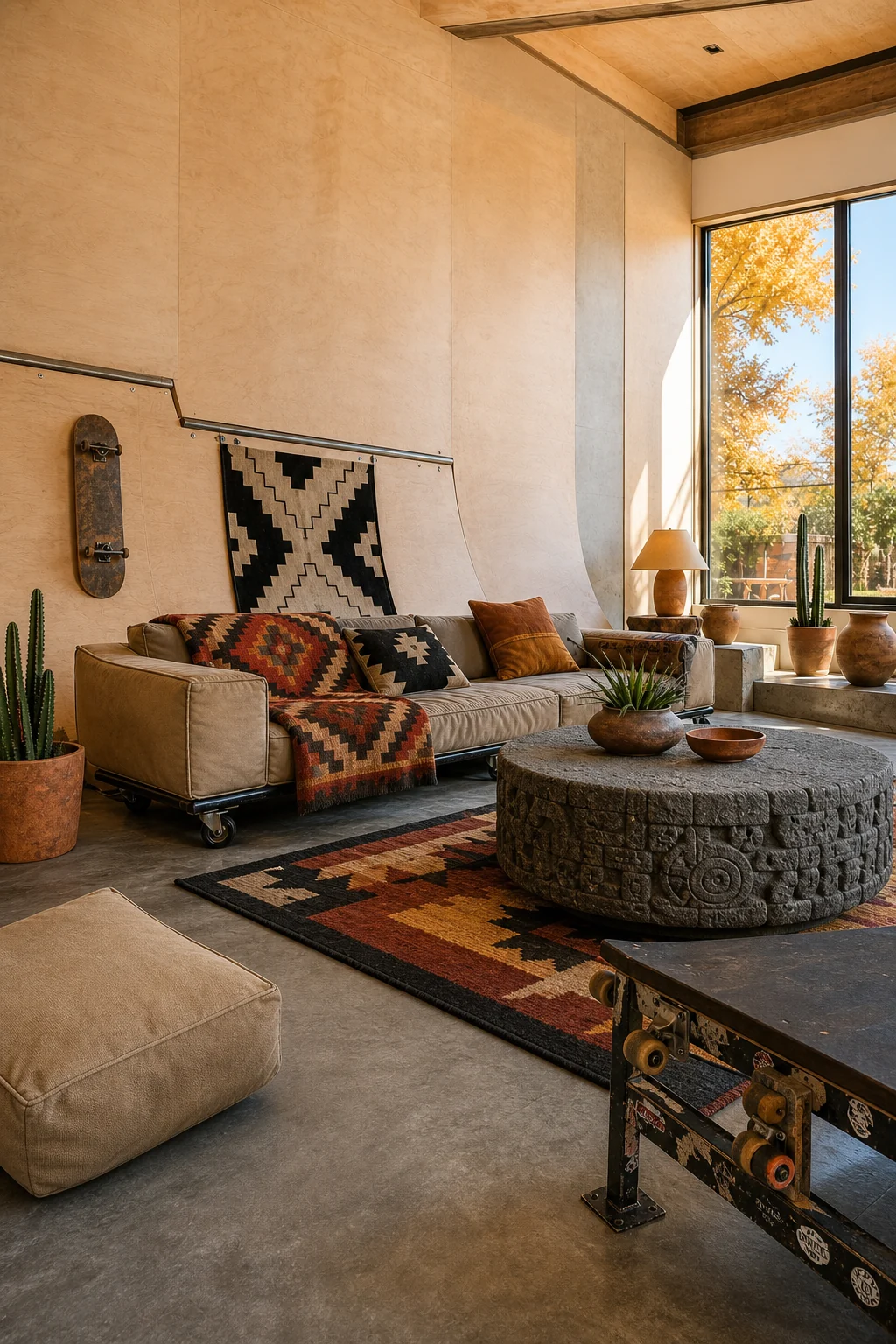
See how the canvas sofa on casters faces the heavy basalt table. This arrangement allows the lightweight, transient seating to adapt instantly, while the monumental stone core remains permanently fixed in place as the room’s undeniable gravitational anchor.
| Design layer | Style A role | Style B role | Bridge decision |
|---|---|---|---|
| Shell | Sweeping Baltic birch plywood curves and raw, scuffed concrete floors. | Rich terracotta clay tones and warm, earthy architectural colors. | Unpainted, unpolished matte surfaces throughout the entire space. |
| Furniture | Low-slung modular canvas seating mounted on heavy-duty industrial casters. | Monumental carved basalt stone tables offering immense physical weight. | Heavy, floor-grounded profiles and exceptionally low seating arrangements. |
| Textiles | Durable, utilitarian canvas upholstery designed to withstand heavy daily wear. | Heavy woven wools featuring intricate, stepped geometric fret motifs. | Thick, tactile, unrefined natural weaves that absorb ambient light. |
| Lighting | Bare bulbs or utilitarian industrial metal cages offering raw illumination. | Earthy ceramic or heavy stone lamp bases grounding the light. | Warm, diffused, low-angle illumination emphasizing deep material textures. |
| Accents | Repurposed metal grind rails and subtle black grip tape details. | Unglazed terracotta vessels and heavily crafted architectural pottery pieces. | Functional, highly textured artifacts completely devoid of artificial polish. |
By strictly following these material assignments, you prevent either aesthetic from overpowering the other. The skater elements provide the agile, fluid shell, while the Aztec artifacts deliver the necessary historical gravity to ground the entire composition in ancient permanence.
Light and architecture
Warm, directional sunlight acts as the final, crucial architectural material. Golden autumn rays soften the cold concrete and highlight the intricate weave of indigenous textiles, unifying the disparate palettes into a single, cohesive, and deeply inviting atmospheric living space.
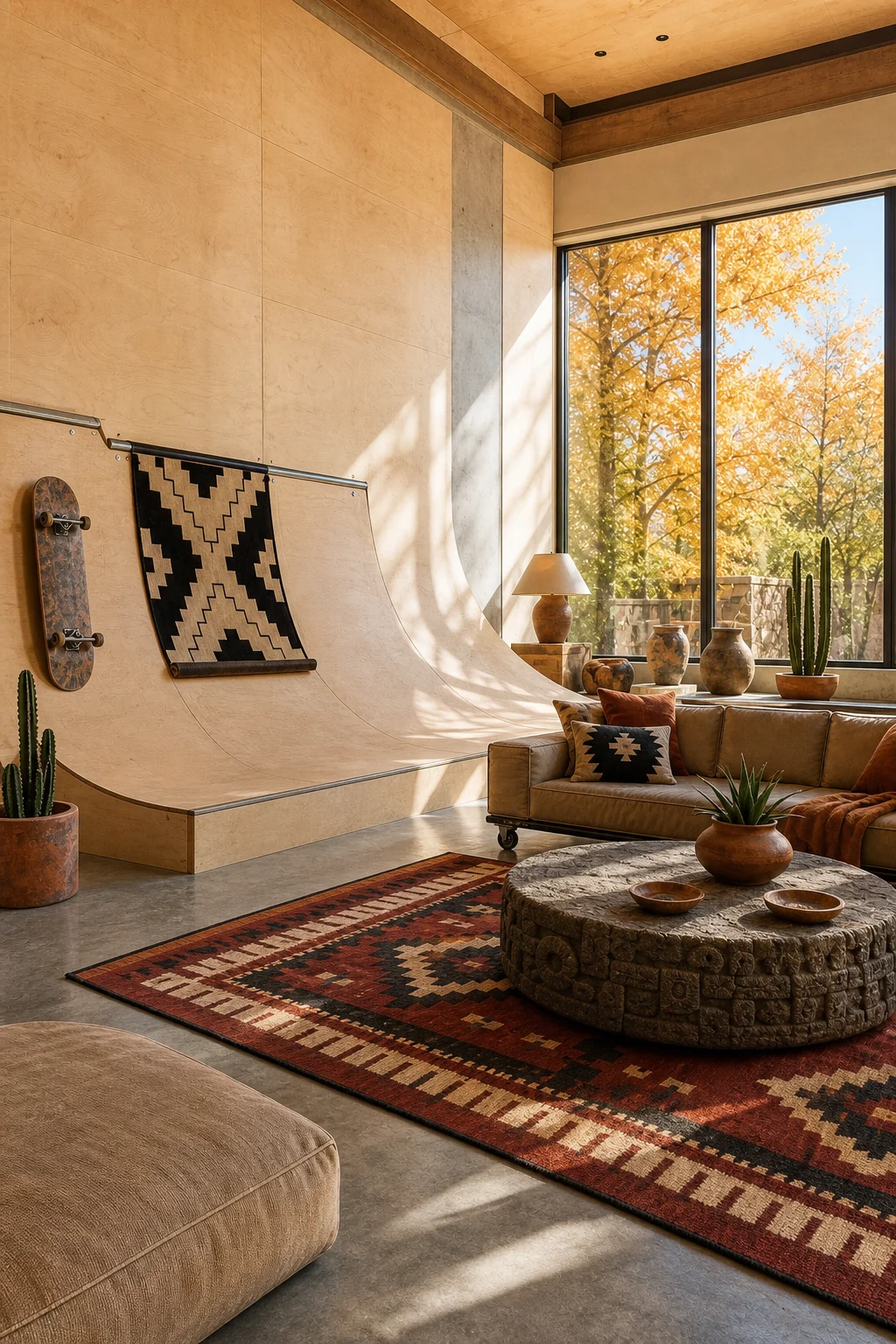
Notice how the sunlight washes across the curved plywood and deep red rug. This warm illumination lifts the midtones, revealing clear details in the dark basalt while softening the harshness of the raw industrial concrete floor and metal rails.
Without this golden, directional warmth, the concrete and metal would feel overly sterile and uninviting. The interplay of light and shadow remains absolutely essential for highlighting the heavy, tactile weaves of the geometric wool throws and porous terracotta vessels.
Style the details
Surface styling requires a careful, deliberate balance of transient youth and ancient history. Group highly textured, earthy artifacts alongside utilitarian, street-level objects without letting either category dominate the specific focal vignette you are trying to build within the room.
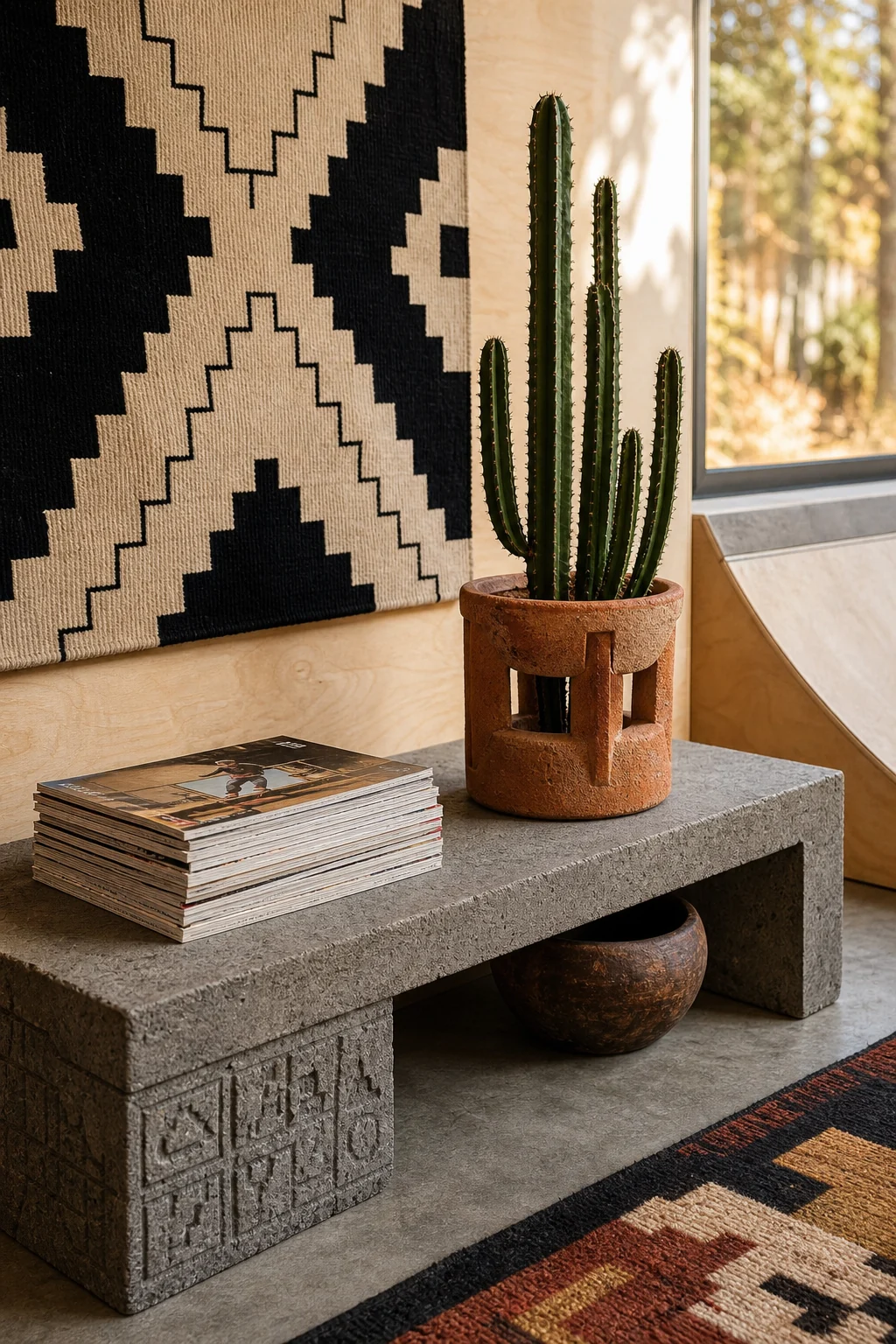
Examine the low concrete console where skate magazines meet architectural pottery. This deliberate styling choice forces a direct, uncompromising dialogue between disposable street culture and permanent, heavily crafted indigenous art forms, bridging the temporal divide perfectly through shared textures.
- Collect unglazed terracotta architectural pottery to introduce essential earthy textures to the industrial concrete shelving.
- Drape heavy woven wool geometric throws casually over utilitarian canvas sofas to soften their edges.
- Repurpose metal grind rails as subtle, highly structural side tables that blend into the background.
- Display structural, architectural cacti in raw clay vessels to add organic life to the vignette.
Adapt it
This aesthetic scales down easily for transitional spaces or smaller rental homes. A simple birch bench paired with a terracotta threshold introduces the cultural dialogue without requiring a massive, expensive architectural intervention like a custom-built plywood half-pipe wall.
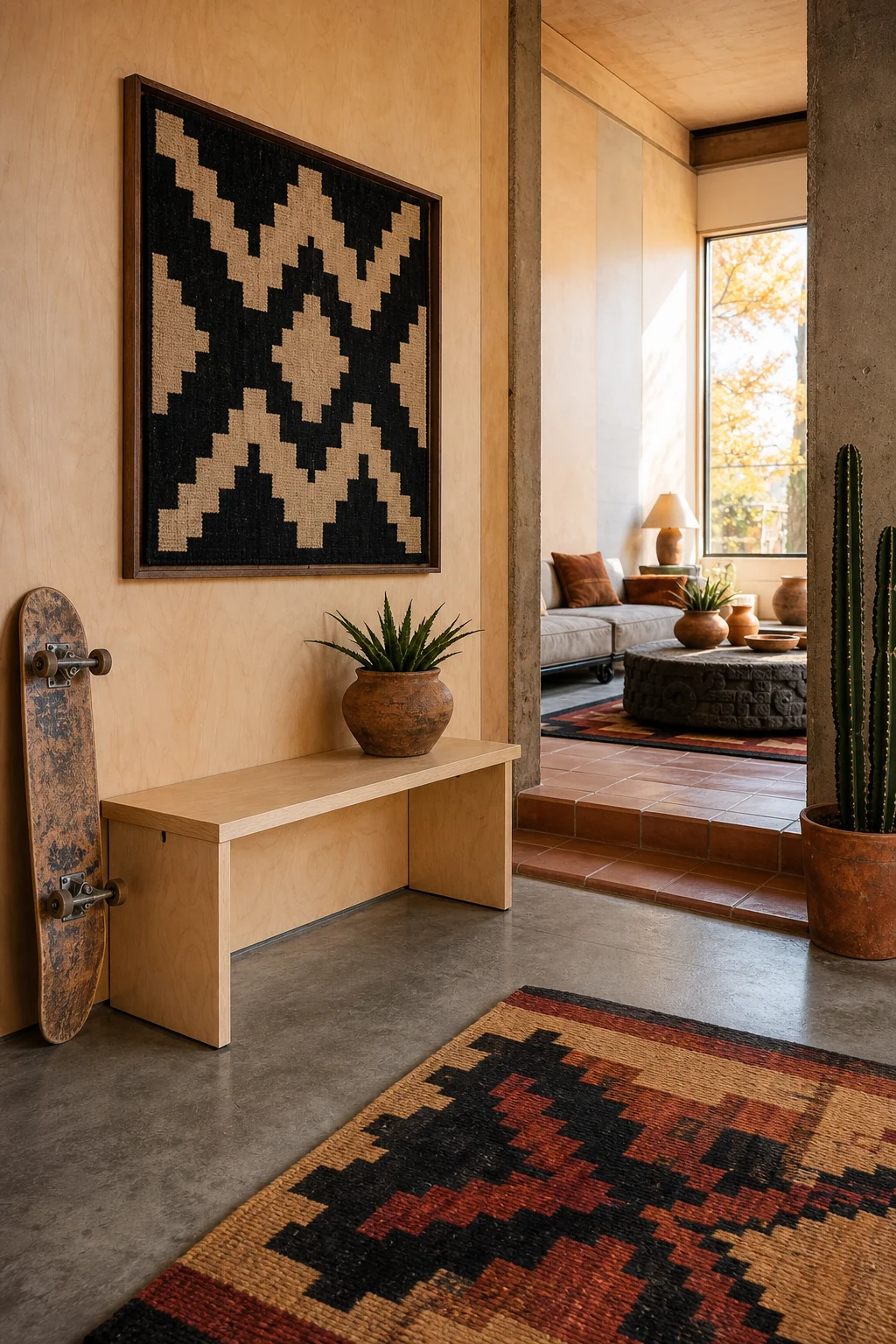
Observe how seamlessly the raw concrete floor meets the stepped terracotta tile. Even in a narrow hallway, the fundamental material clash delivers the exact same conceptual tension as a full-scale, heavily styled primary living room, proving the concept’s versatility.
- Skip the sweeping half-pipe wall and focus entirely on executing the core material clash perfectly.
- Introduce raw Baltic birch through simple, low-profile benches or open shelving units against neutral walls.
- Use smaller unglazed terracotta vessels to establish the earthy Aztec color palette without overwhelming space.
- Anchor the smaller transitional space with a single, highly textured geometric wool rug for gravity.
Avoid the costume
The greatest risk is creating a split personality where two themes sit awkwardly apart. Success requires total material commitment, ensuring every piece feels functionally necessary and structurally honest to its distinct cultural, historical, and utilitarian origins without compromise.
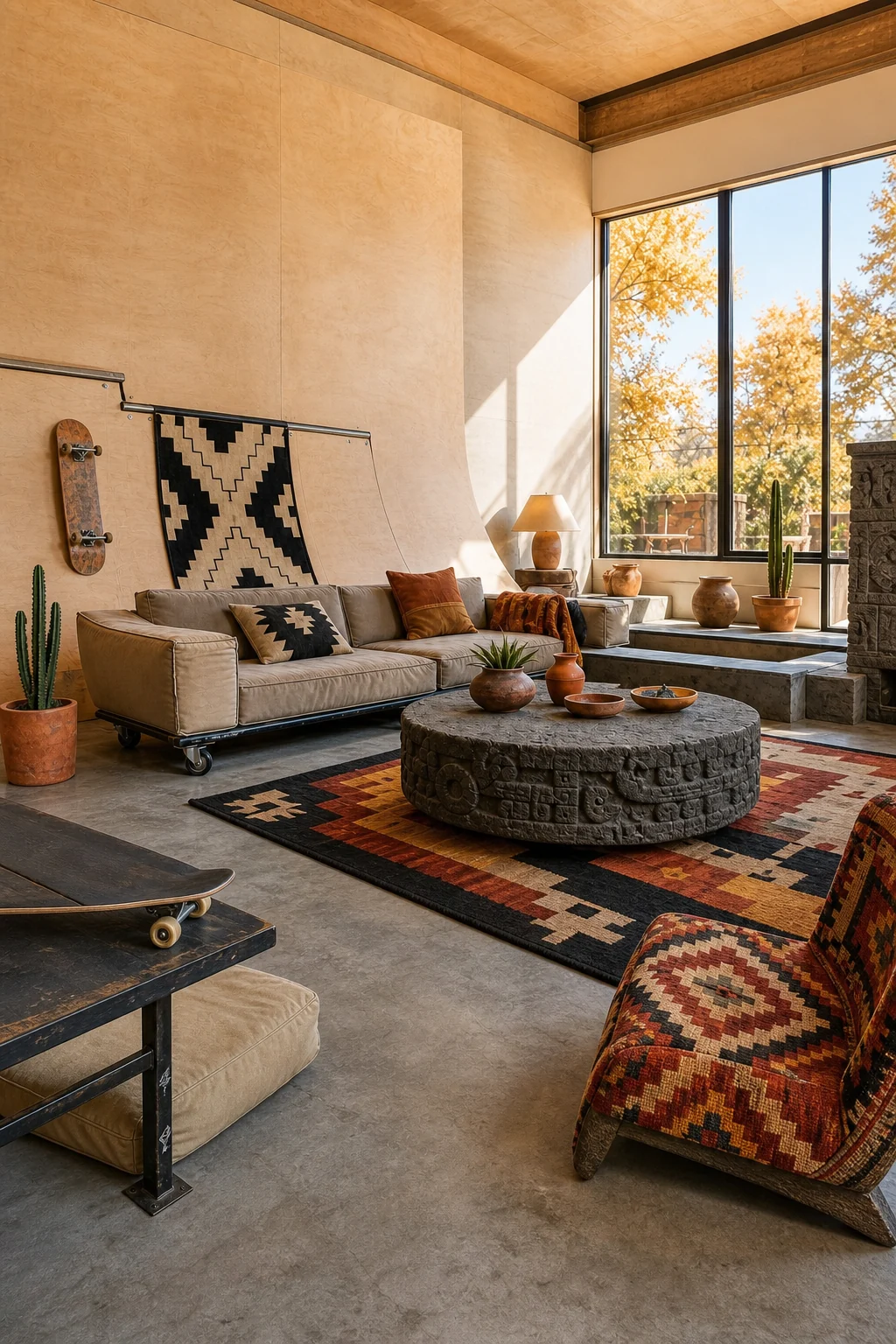
This generous view proves the cohesive integration of both styles. By strictly adhering to unpainted matte surfaces and rejecting artificial polish, the room avoids feeling like a themed set, achieving a genuine, unified, and deeply grounded architectural permanence.