
Federal Meets Indochine: Entryway
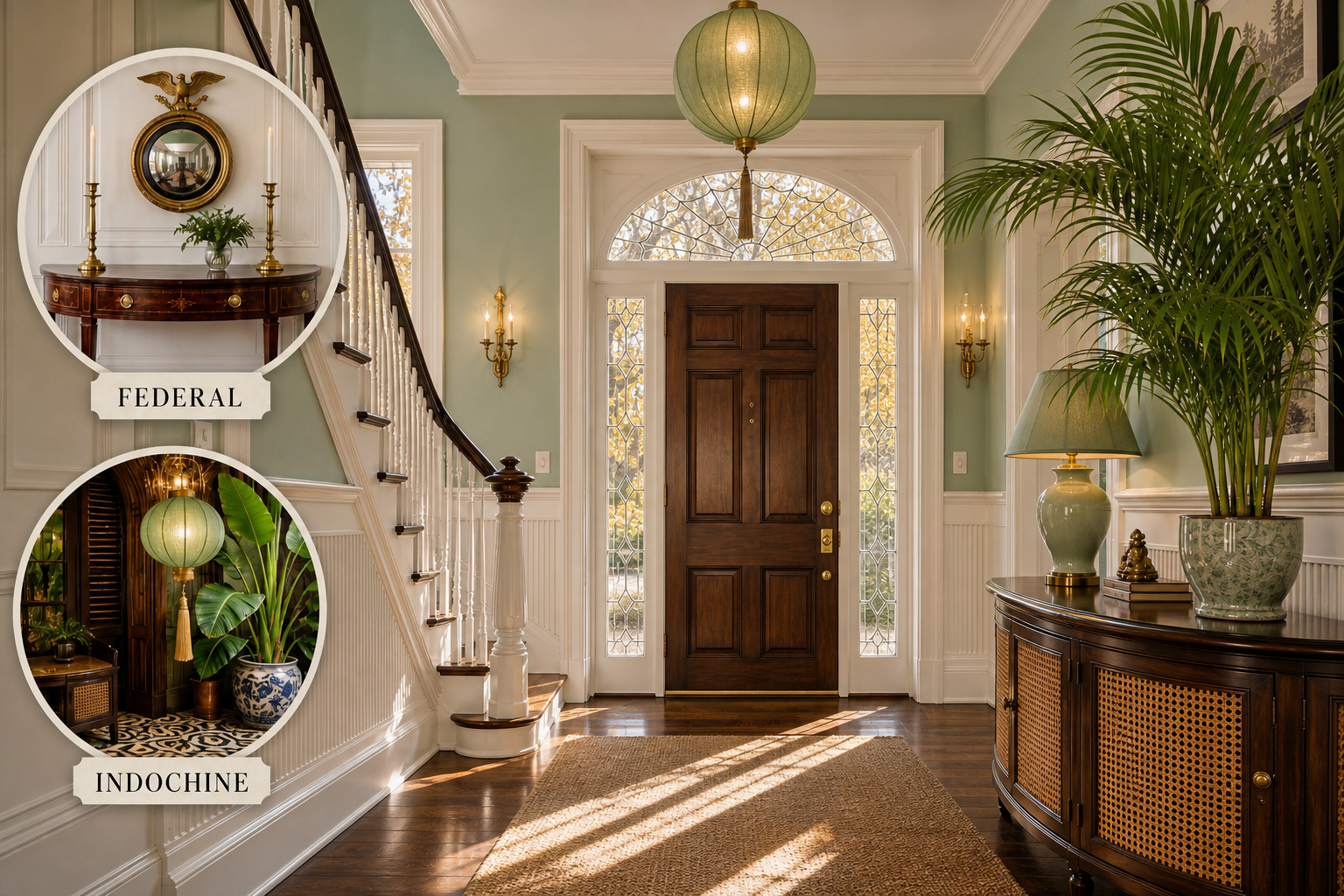
The rigid, symmetrical formality of early American neoclassical architecture naturally clashes with the languid, heavily textured ease of French-Vietnamese colonial design. This entryway resolves the tension by using a strict Federal shell to frame lush Indochine tropical materials.
Establishing the Federal Shell
The rigid, symmetrical formality of early American neoclassical architecture requires strict boundaries to succeed. A crisp ivory reeded wainscoting and a grand symmetrical front door establish this necessary structural discipline, creating an unyielding perimeter for the softer elements to come.
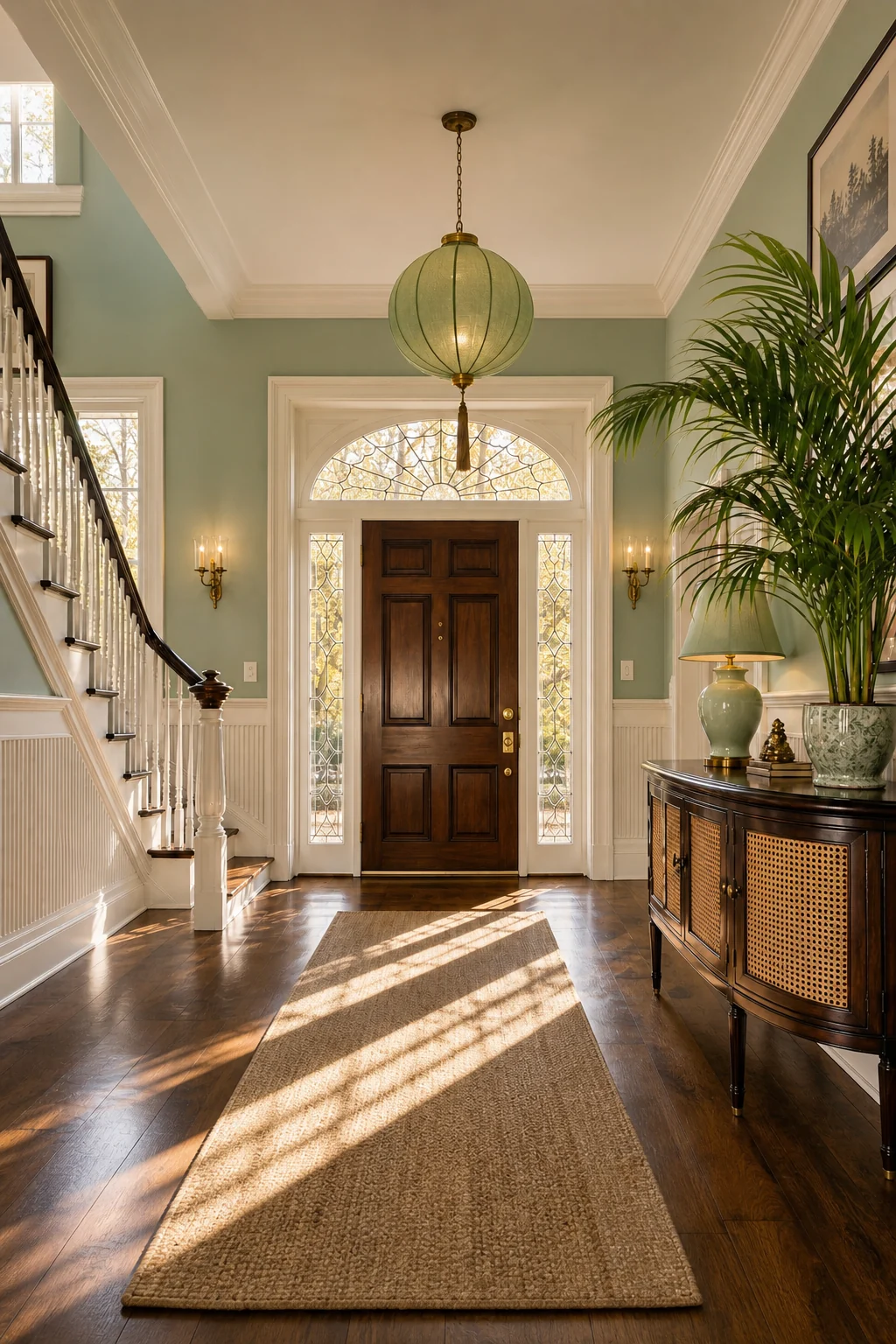
Federal design thrives on absolute symmetry, dictating the entire spatial layout of the entryway. You must center your primary furniture directly aligned with the fanlight and sidelights, honoring the heritage proportions before introducing any relaxed, tropical materials into the space.
By locking the floor plan into a symmetrical grid, the room can absorb heavier textures without losing its grand proportions. This architectural discipline provides the necessary counterbalance to the humid, organic atmosphere that the imported furnishings will soon introduce.
Introducing Indochine Textures
To prevent the historical architecture from feeling sterile, introduce the languid, heavily textured ease of French-Vietnamese colonial design. Dark tropical woods and woven natural fibers immediately soften the rigid shell, bringing an inviting, humid-climate warmth into the formal interior.
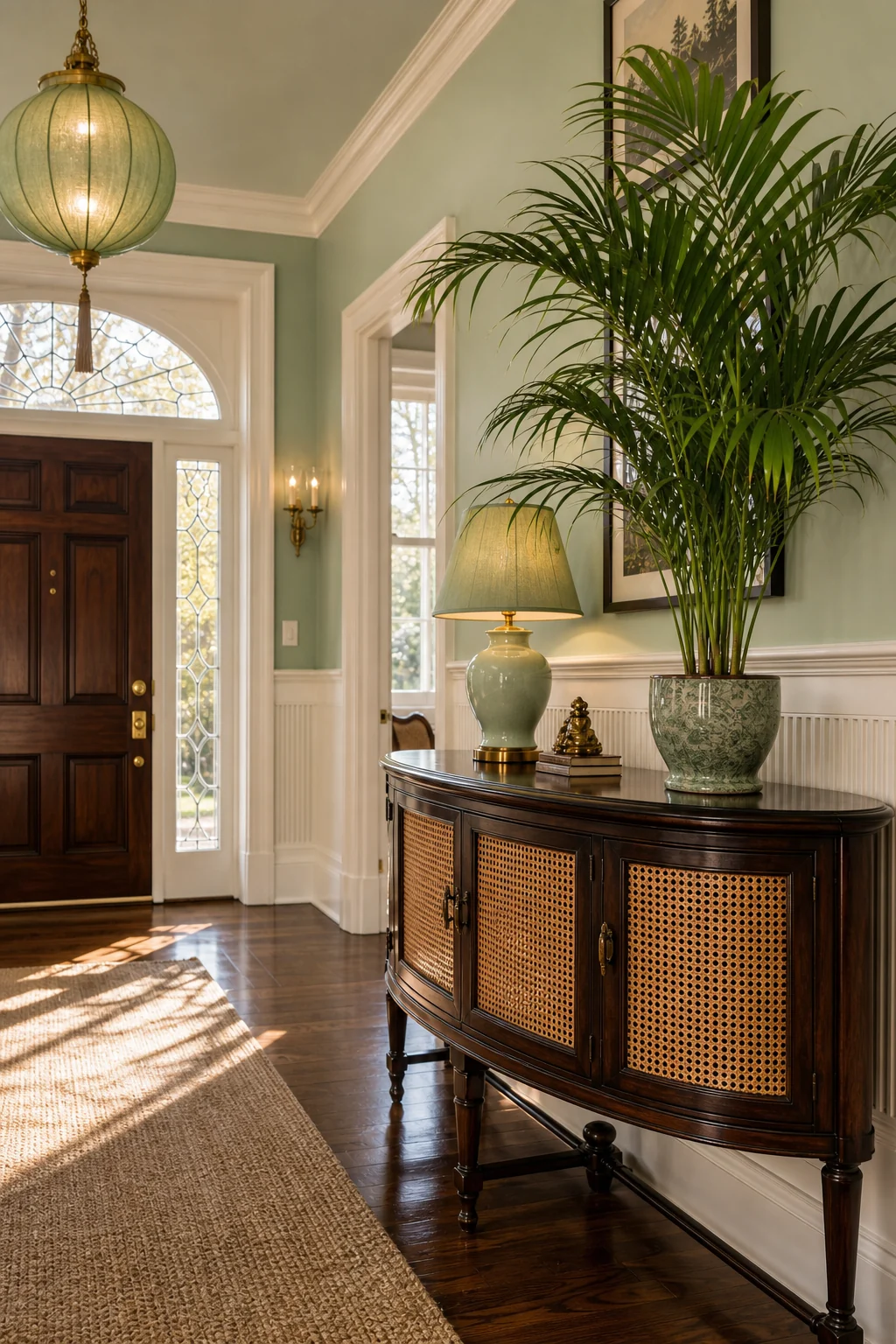
This tactile warmth transforms the entryway from a rigid museum exhibit into a deeply welcoming living space. Focus entirely on organic, highly textured materials that contrast sharply against the crisp ivory woodwork, breaking up the visual severity of neoclassical moldings.
When selecting these tropical pieces, prioritize substantial silhouettes that can hold their own against grand staircases. The furnishings must feel heavy and grounded, utilizing rich materials that command attention without disrupting the carefully established symmetry of the architectural envelope.
- Anchor the space with a substantial dark teak console table.
- Incorporate woven rattan cane webbing to add essential tactile warmth.
- Introduce a lush, sweeping potted Kentia palm for organic height.
- Select unpainted natural fibers to contrast the crisp wainscoting.
Bridging the Historical Divide
Successful integration requires a shared visual language rather than competing focal points. The geometric grid of woven cane perfectly echoes the delicate tracery of a leaded glass fanlight, creating an unexpected but deeply satisfying dialogue between the two distinct eras.
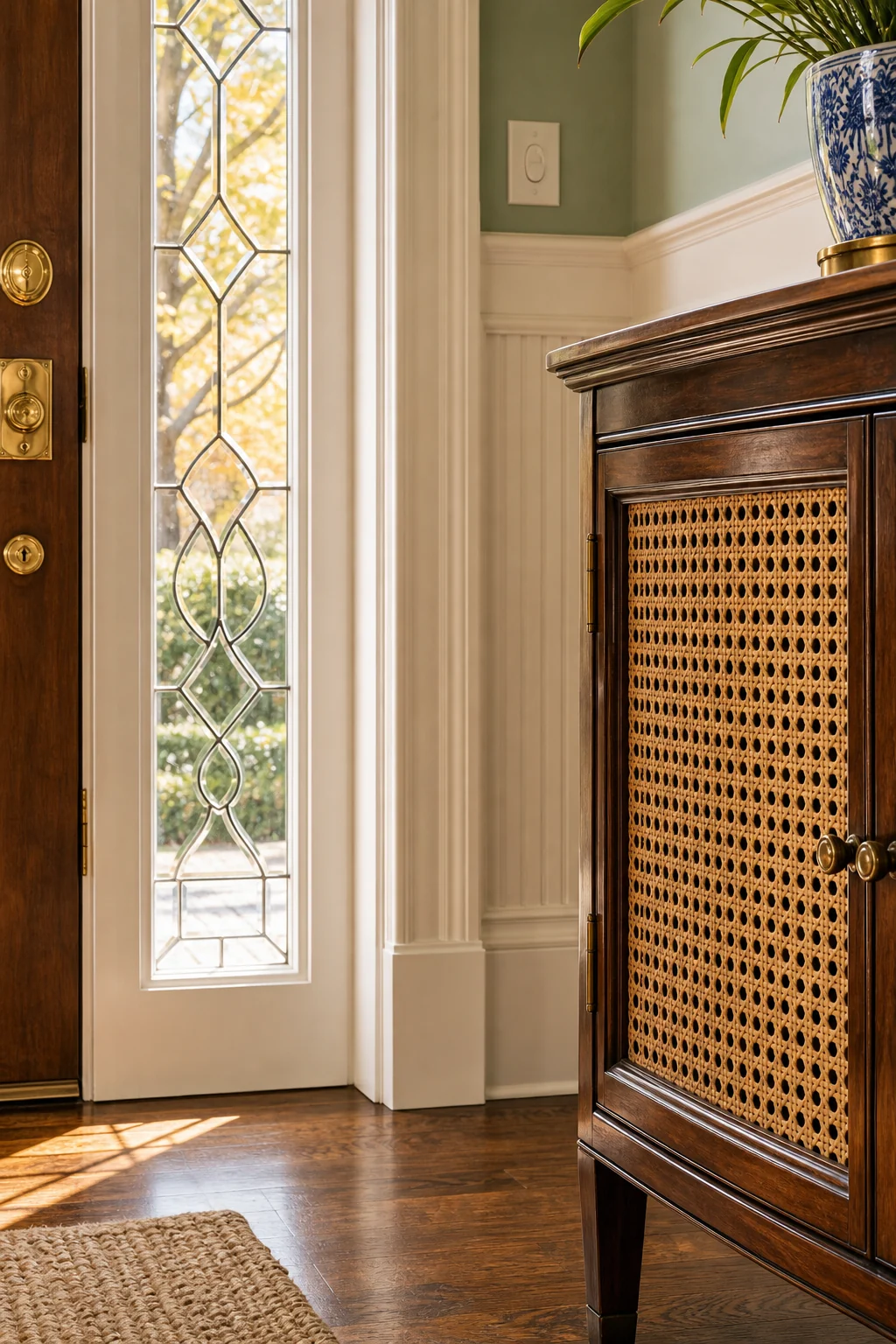
A carefully chosen palette further unites these distinct historical periods. A soft, historic celadon green binds the walls to the furnishings, reading simultaneously as a traditional Federal pastel and a lush Indochine tropical hue, effectively blurring the stylistic boundaries.
By identifying these overlapping characteristics, you prevent the room from feeling like a random assortment of artifacts. The shared emphasis on polished dark woods and geometric grids ensures that every addition feels inevitable rather than forced into the historic space.
Assembling the Entryway
Balancing these distinct aesthetics requires deliberate material placement across every single design layer. The architectural envelope must remain strictly traditional, while the carefully chosen furnishings introduce an inviting tropical languor that softens the formal edges of the historic room.
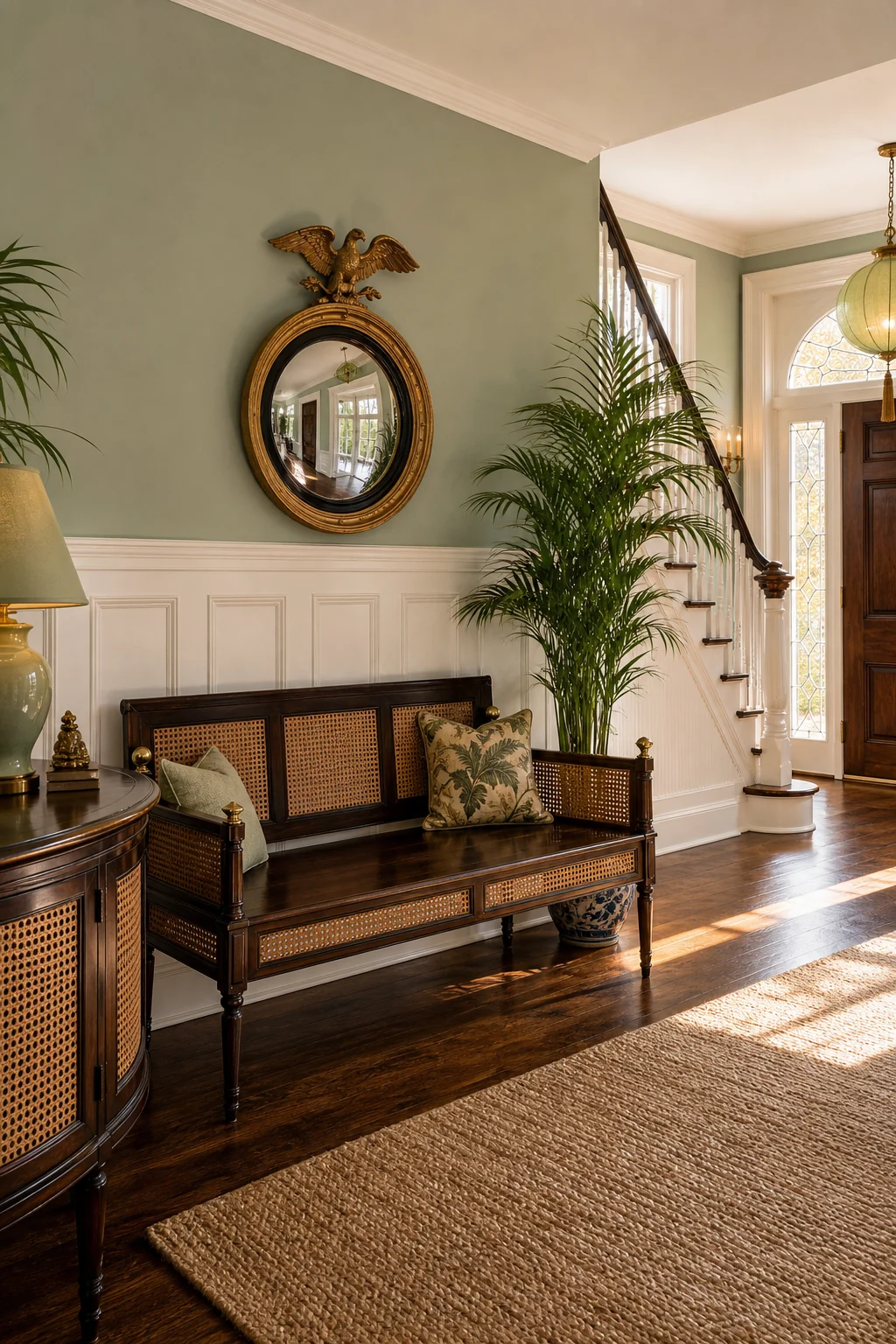
By assigning specific, non-overlapping roles to each era, the core contradiction is beautifully resolved. The resulting vignette feels culturally rooted, deeply intentional, and entirely cohesive, proving that strict architectural discipline and relaxed tropical textures can coexist in perfect harmony.
| Design Layer | Federal Role | Indochine Role | Bridge Decision |
|---|---|---|---|
| Shell | Crisp ivory reeded wainscoting and symmetrical moldings | Broad-leafed tropical plants and humid atmosphere | A historic celadon green wall color |
| Large Furniture | Symmetrical placement and demilune shapes | Dark tropical teak wood and woven rattan cane | Shared dark mahogany and teak wood tones |
| Textiles | Tailored, restrained historical fabrics | Glowing silk and tactile natural fibers | A celadon green palette spanning both eras |
| Lighting | Polished unlacquered brass sconces | Glowing celadon-green silk lantern pendants | Warm, golden ambient light highlighting materials |
| Accents | Polished brass candlesticks and convex mirrors | Lush sweeping potted Kentia palms | Geometric grids shared by glass and cane |
This strict division of labor ensures neither style overwhelms the other. The table above demonstrates how to distribute the visual weight, keeping the heavy tropical textures contained within the furniture layer while the architecture maintains its crisp, formal clarity.
Illuminating the Architecture
Lighting serves as the ultimate atmospheric bridge between rigid formality and humid tropical ease. Replacing a traditional crystal chandelier with a glowing celadon-green silk lantern completely transforms the spatial mood, bathing the rigid architecture in a soft, diffused tropical warmth.
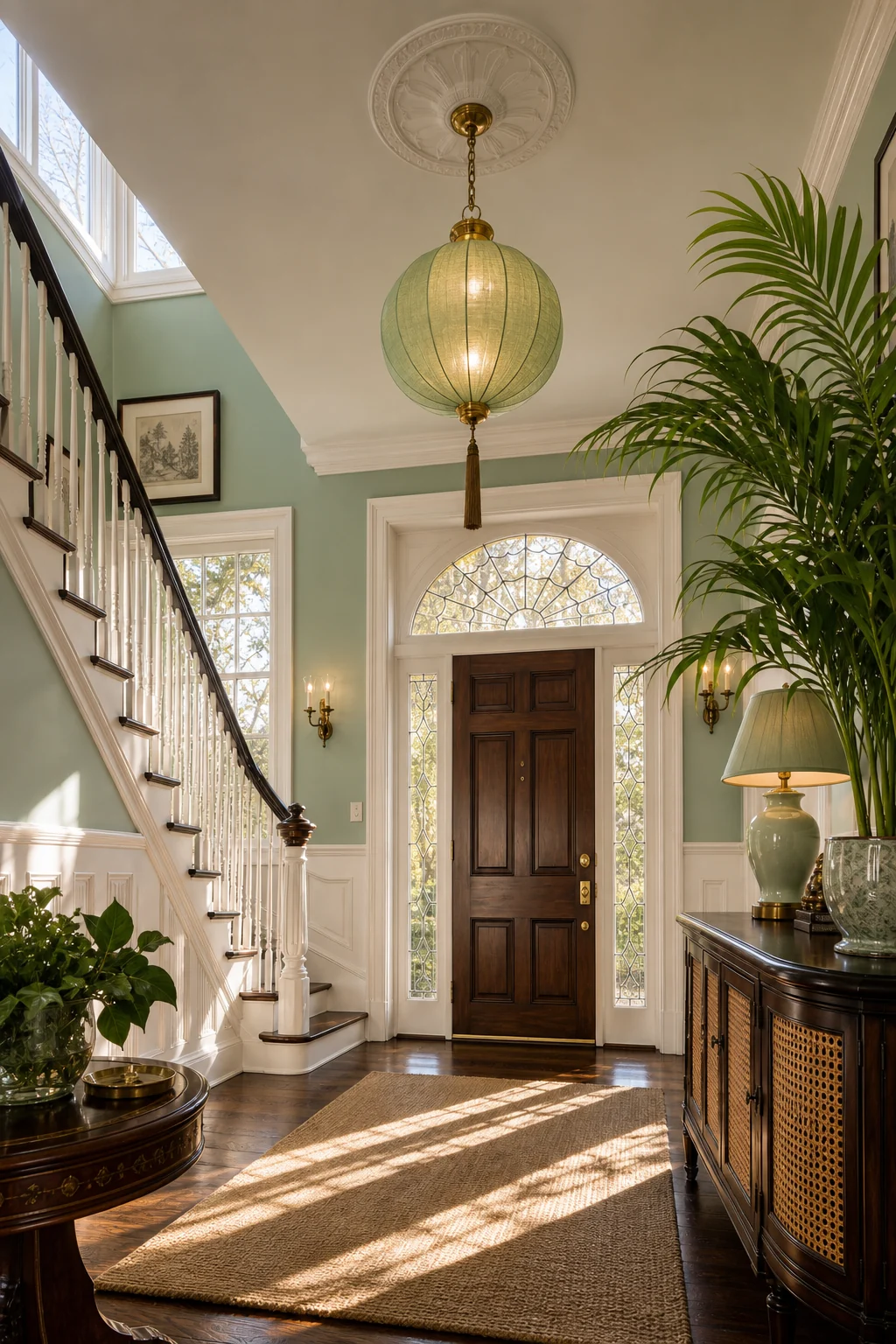
This soft overhead glow highlights the rich material contrast happening below. The interplay between humid tropical light and classical restraint is absolutely essential for visual harmony, softening the crisp ivory woodwork while drawing out the deep tones of the teak.
- Install warm-toned bulbs to mimic golden autumn low-country sunlight.
- Dim the overhead silk lantern to emphasize the surrounding wall sconces.
- Verify that the polished unlacquered brass sconces gleam in the shadows.
- Adjust the fixture height so the geometric cane grid catches the light.
Curating the Console
Tabletop styling offers the safest, most controlled zone to experiment with this cultural blend. A celadon silk table lamp resting directly on a mahogany surface bridges both worlds instantly, requiring absolutely no permanent structural changes to the historic architectural shell.
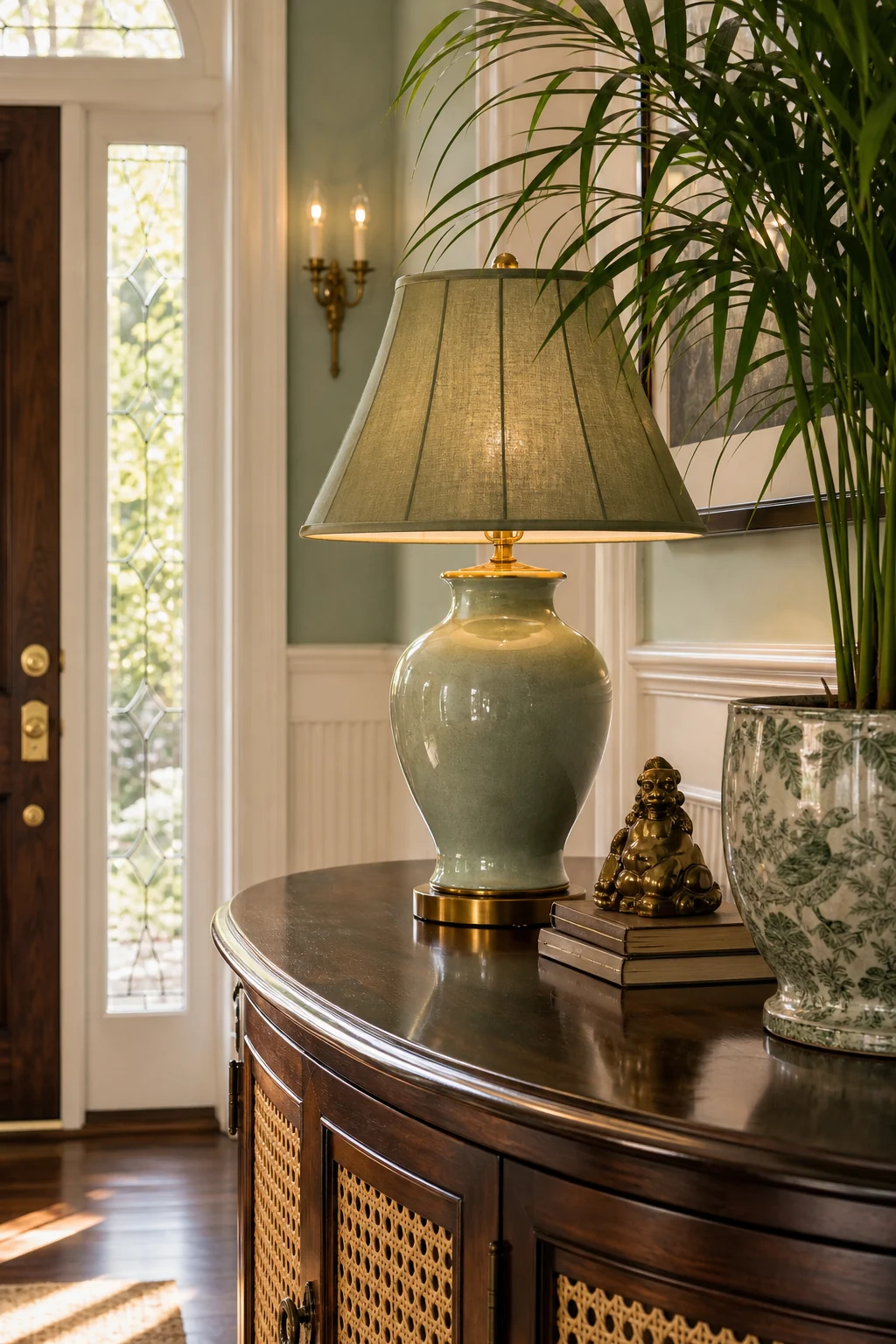
To merge the styles successfully on a micro level, you must maintain rigorous symmetry. When sourcing pieces, ensure every single object either highlights the crisp neoclassical geometry or introduces a necessary layer of languid, tactile warmth to the heavily structured entryway composition.
- Source dark teak demilune console tables with woven cane detailing.
- Find glowing celadon-green silk lantern pendants for overhead ambient warmth.
- Install polished unlacquered brass sconce backplates to reflect the light.
- Purchase large sweeping potted tropical palms to soften the rigid corners.
Adapting the Threshold
You can easily translate this aesthetic logic to smaller passages that lack grand sweeping staircases or delicate leaded glass. Focus entirely on the fundamental interplay between crisp wall moldings and dark woven textures to achieve the same resolved stylistic contradiction.
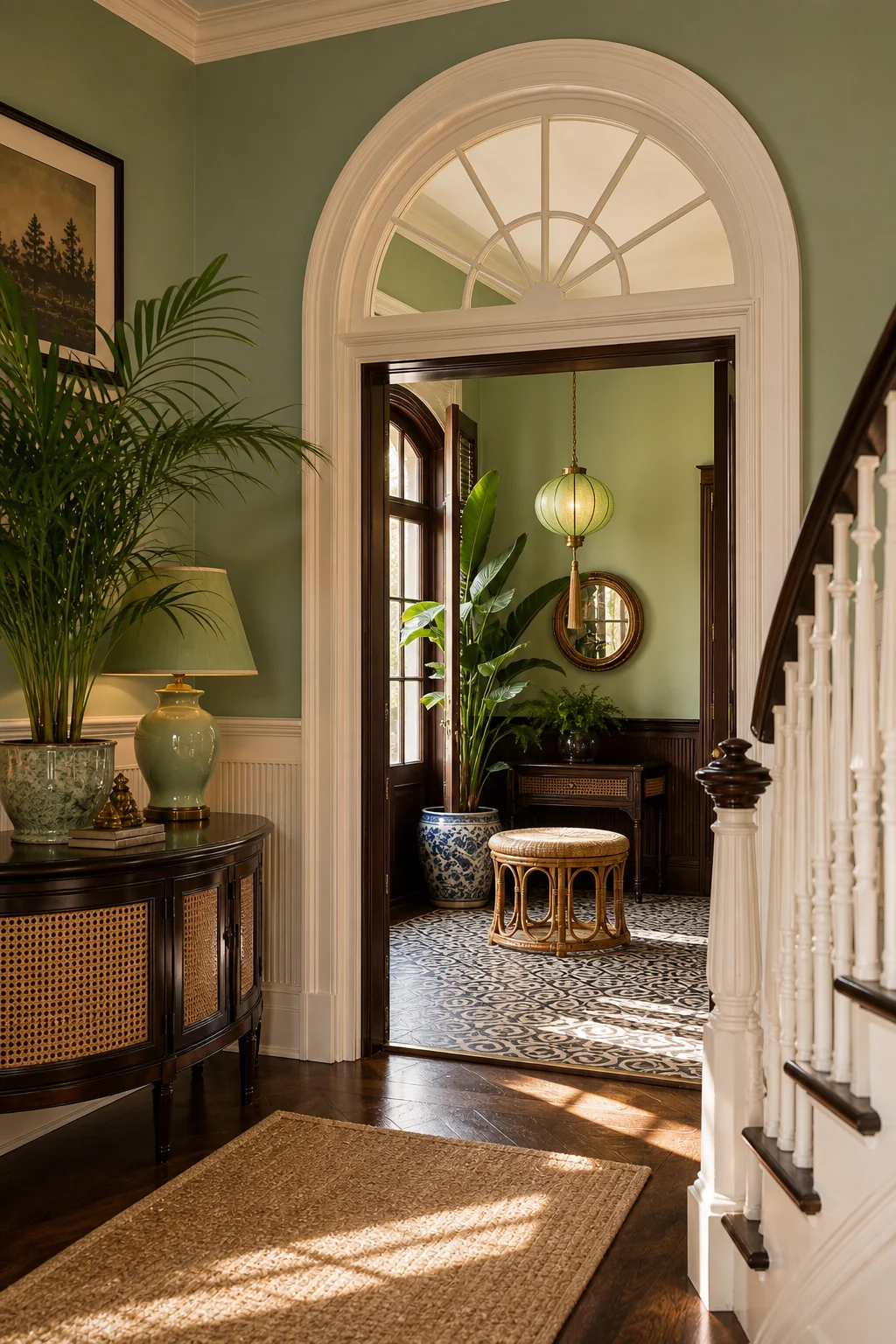
Even a modest, narrow hallway can successfully capture this unique atmosphere. Rely on specific paint applications and compact furniture selections to recreate the necessary tension between strict heritage frameworks and relaxed, tropical ease without ever overwhelming the limited available square footage.
- Paint standard builder-grade wainscoting in a crisp, warm ivory finish.
- Apply historic celadon green paint to the upper hallway walls.
- Add a narrow dark rattan bench to introduce essential tropical texture.
- Hang a small Federal convex mirror to establish immediate focal symmetry.
Avoiding the Historical Costume
The greatest failure mode in this design is creating a split personality where one style completely dominates the other. If the tropical elements overwhelm the symmetrical layout, the space immediately loses its grand proportions and devolves into a themed set rather than a historic home.
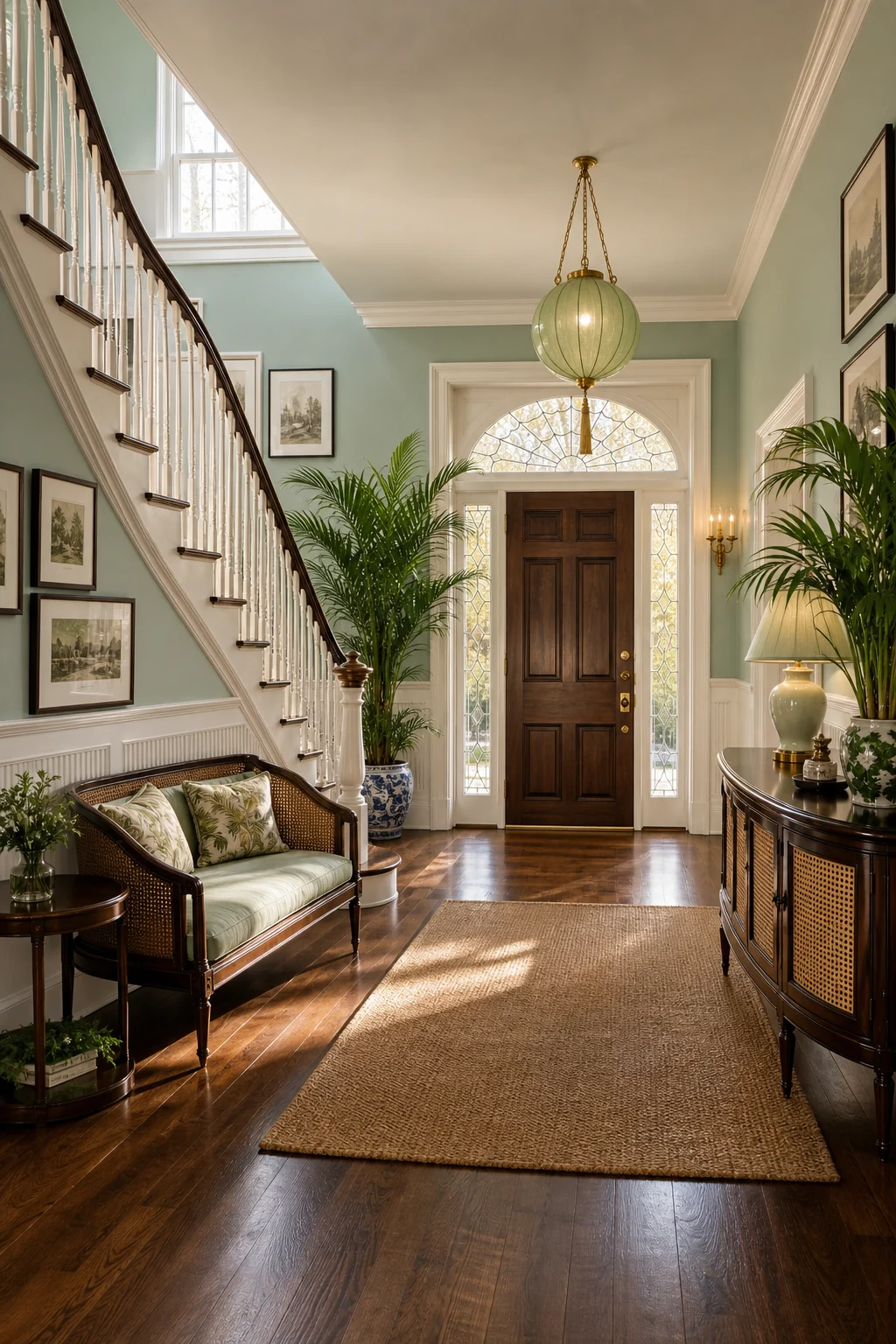
Maintain absolute visual balance by keeping the architectural shell pristine and entirely uncluttered. By honoring the rigid neoclassical boundaries while embracing the languid warmth of French-Vietnamese colonial design, you create an enduring, highly curated interior that transcends simple historical reproduction entirely, achieving perfect harmony.