
Vintage Revival Meets Biophilic Modern: Living Room
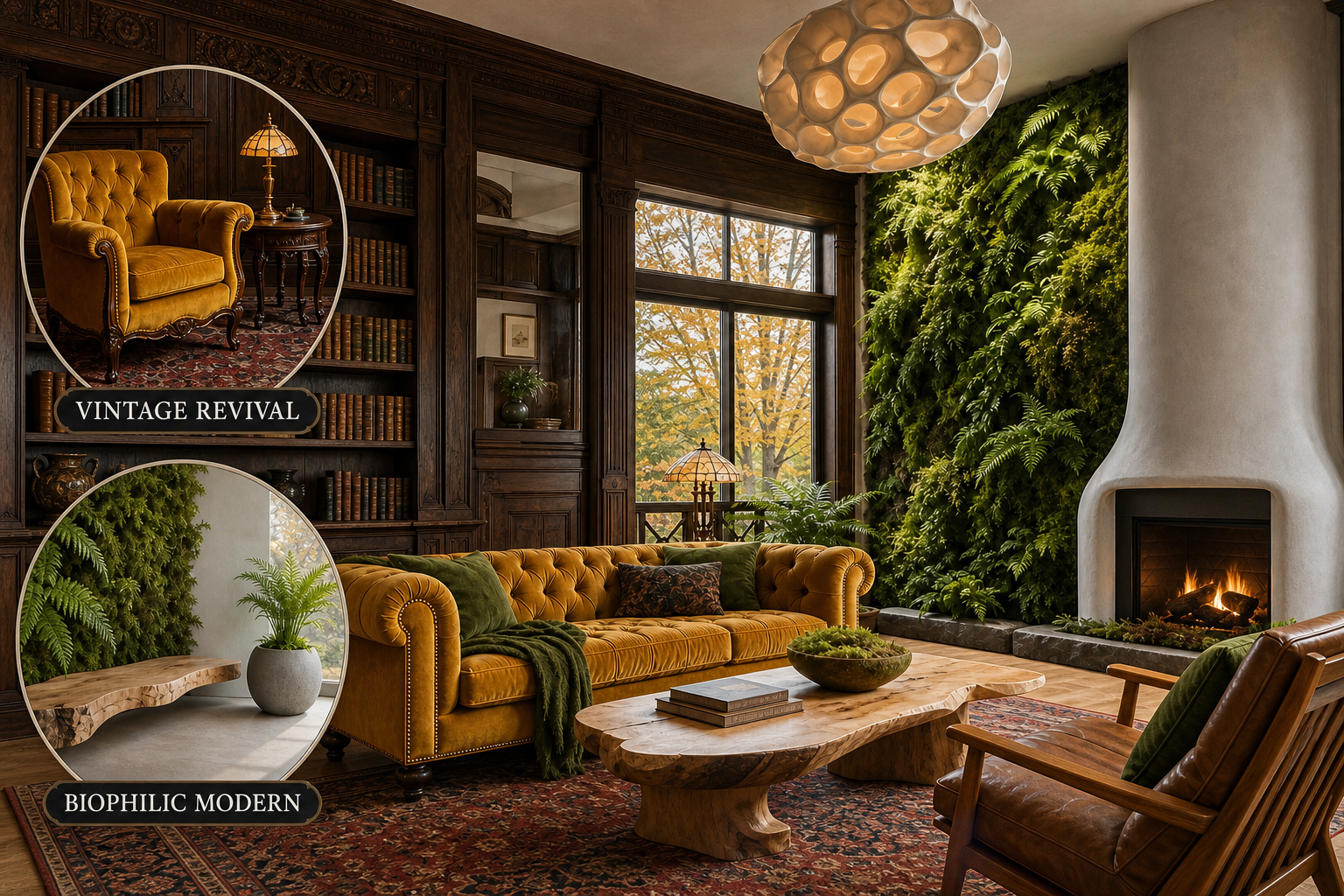
The heavy, curated nostalgia of historical antiques clashes with the raw, forward-looking vitality of organic modernism. We resolved this contradiction by letting vintage revival control the architectural shell, while biophilic modern drives the organic silhouettes and living plant installations.
Grounding the Room in Vintage Revival
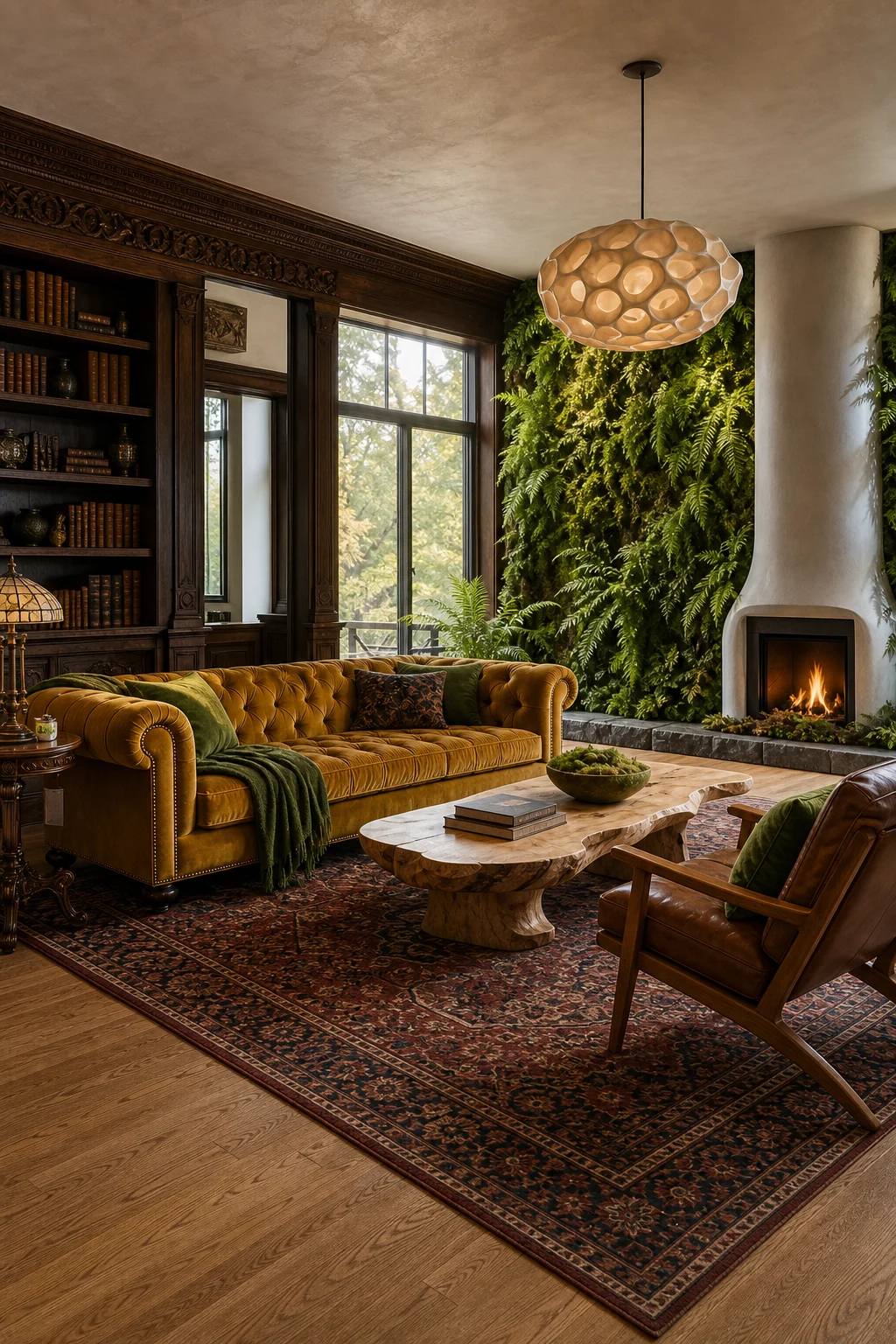
Historical weight requires a remarkably strong architectural foundation to avoid feeling flimsy or temporary. Dark walnut craftsman wainscoting and built-in bookshelves provide the necessary gravity to anchor this living room, establishing a deeply traditional framework for the entire space.
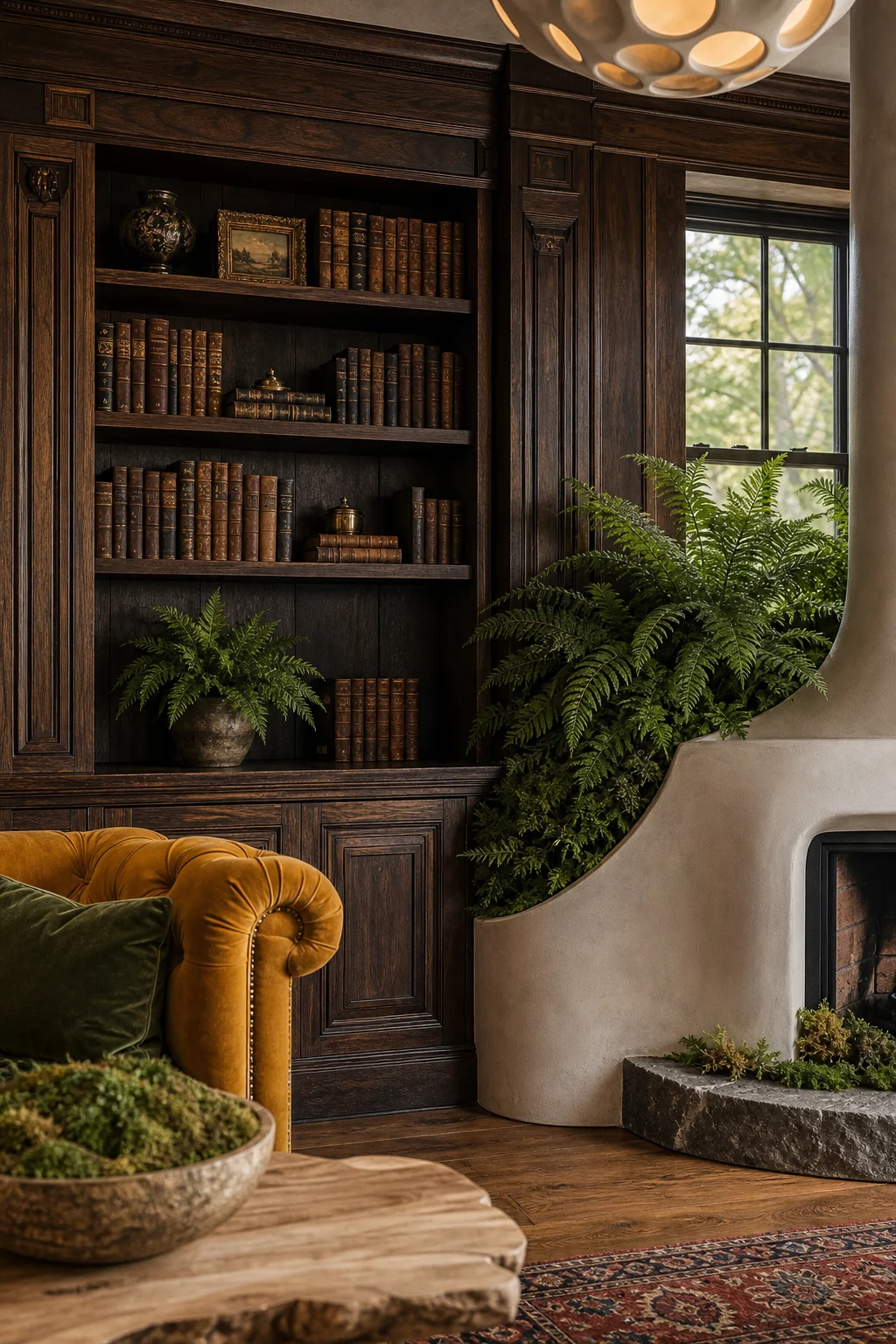
These heavy, dark wood elements deliberately set up a rigid, historical boundary for the organic features to push against. The curated nostalgia of antique books and carved mahogany details demands a sturdy perimeter to contain the incoming wildness.
Maintaining this strict separation between the outer architectural envelope and the inner furnishings ensures the room retains its historical dignity. The dark walnut paneling acts as a protective vessel, holding the vibrant botanical energy safely within its classic borders.
Introducing Biophilic Modern Vitality
A massive floor-to-ceiling living wall of ferns and moss completely shatters the traditional library aesthetic. This bold organic installation breathes raw, forward-looking vitality into the heavy historical envelope, introducing a vibrant energy that redefines the entire living space.
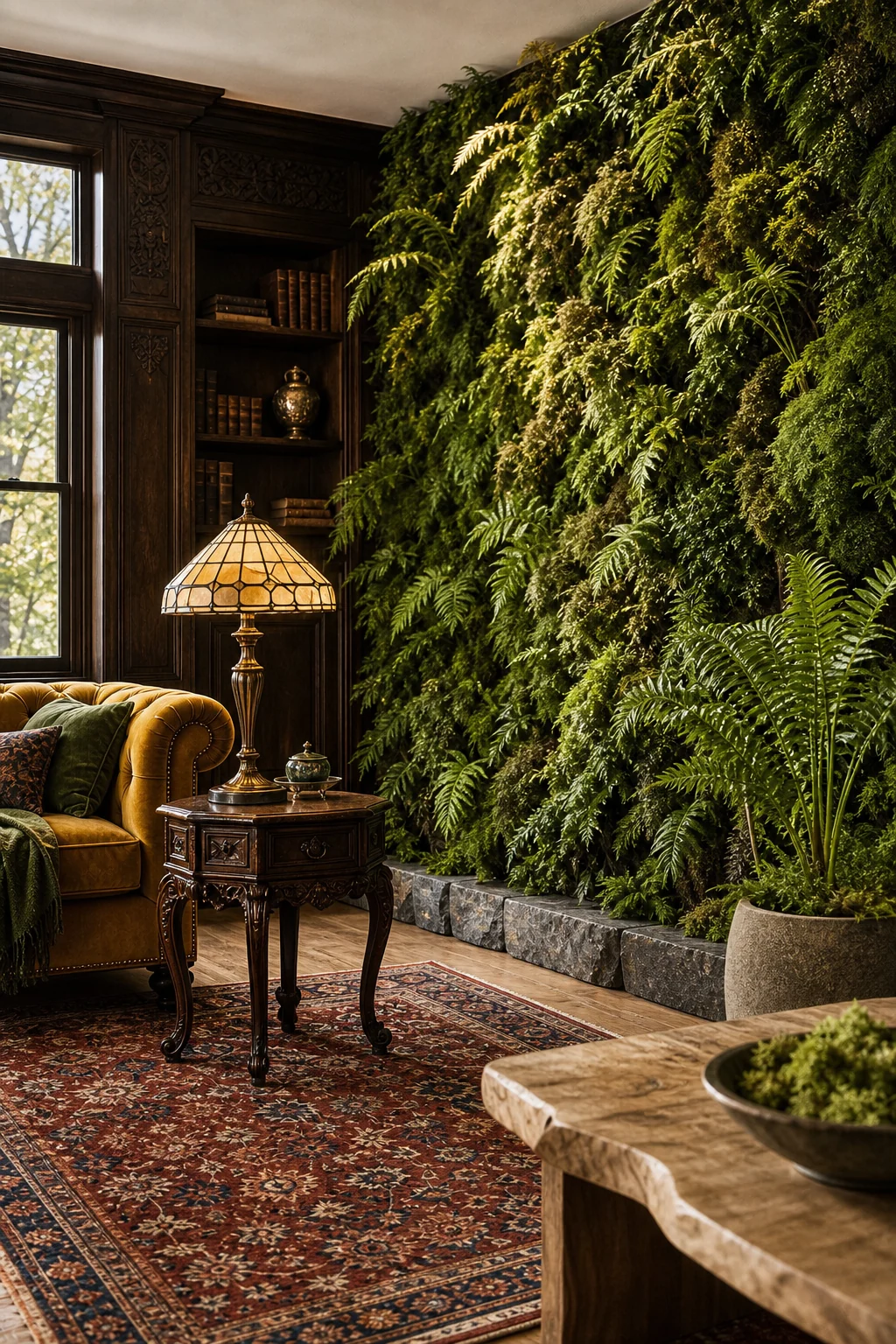
Integrating structural plant life directly into the smooth white plaster prevents the greenery from feeling like a temporary afterthought. The foliage becomes a permanent, intentional architectural feature rather than mere decoration, demanding the same respect as the vintage woodwork.
- Commit to a massive integrated living wall rather than scattering small, disconnected potted plants around the room.
- Select smooth river stone planters to provide a stark, tactile contrast against the intricately carved historical mahogany furniture.
- Incorporate sleek, organically curved raw-edge ash wood pieces to introduce fluid, forward-looking silhouettes into the rigid traditional framework.
Bridging the Eras with Color and Form
The inherent tension between carefully curated antiques and wild, untamed foliage requires a highly deliberate transitional palette. Deep forest greens and warm mustard ochres serve to connect the heavy antique textiles directly to the vibrant living plant installations.
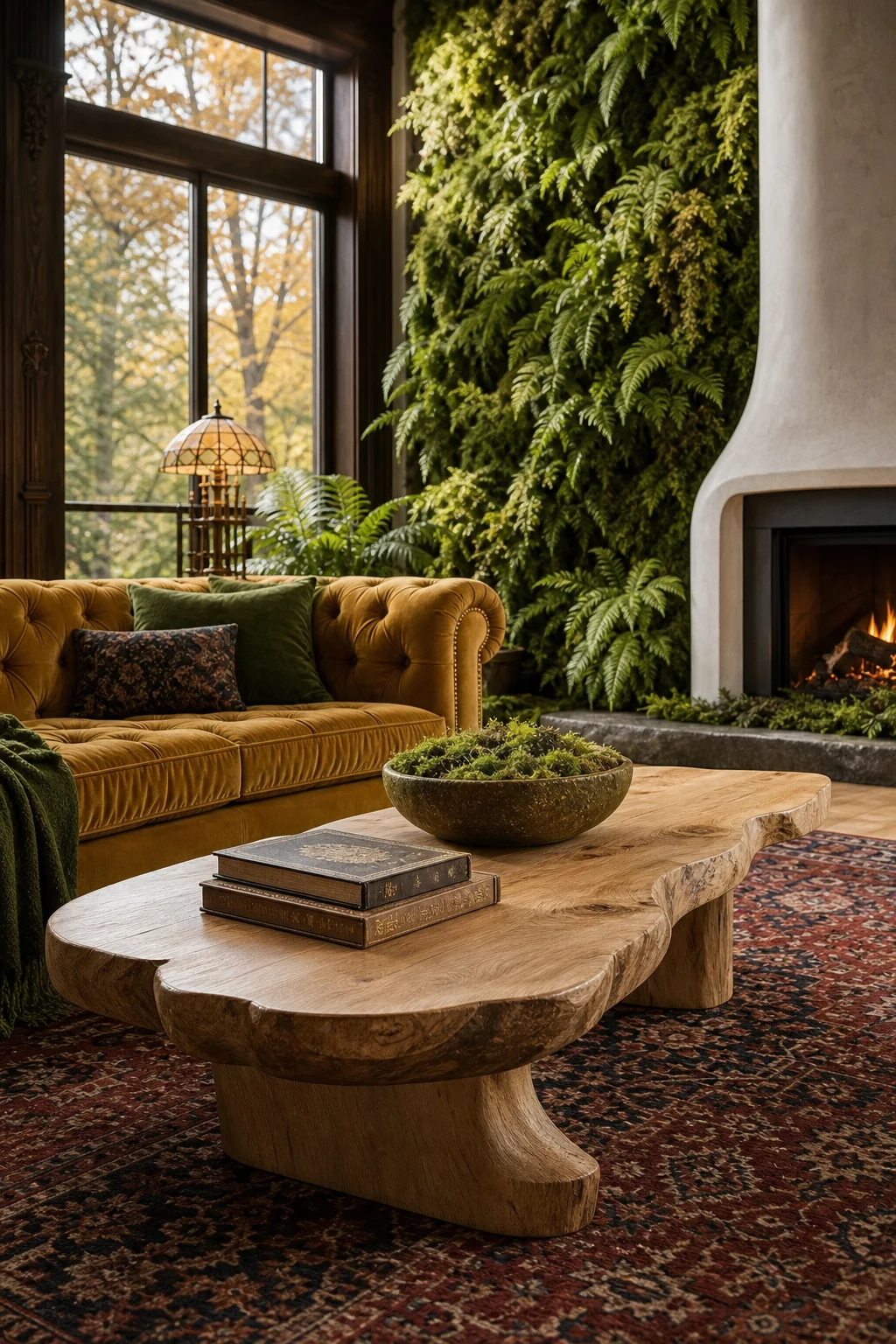
Echoing the golden amber autumn leaves visible through the windows, a mustard velvet Chesterfield sofa bridges the seasonal gap. The carved floral motifs found in the vintage woodwork subtly mimic the actual living ferns, creating subconscious visual harmony.
By intentionally matching the green velvet throw pillows directly to the living fern fronds, the boundary between furniture and flora dissolves. This precise color matching forces the heavy historical upholstery to participate actively in the room’s organic modern narrative.
Assembling the Complete Seating Area
Balancing these opposing design forces requires strict role assignment across your primary furnishings. The central seating arrangement must feel deeply historically grounded, yet it must incorporate organically shaped elements to successfully bridge the gap between the two eras.
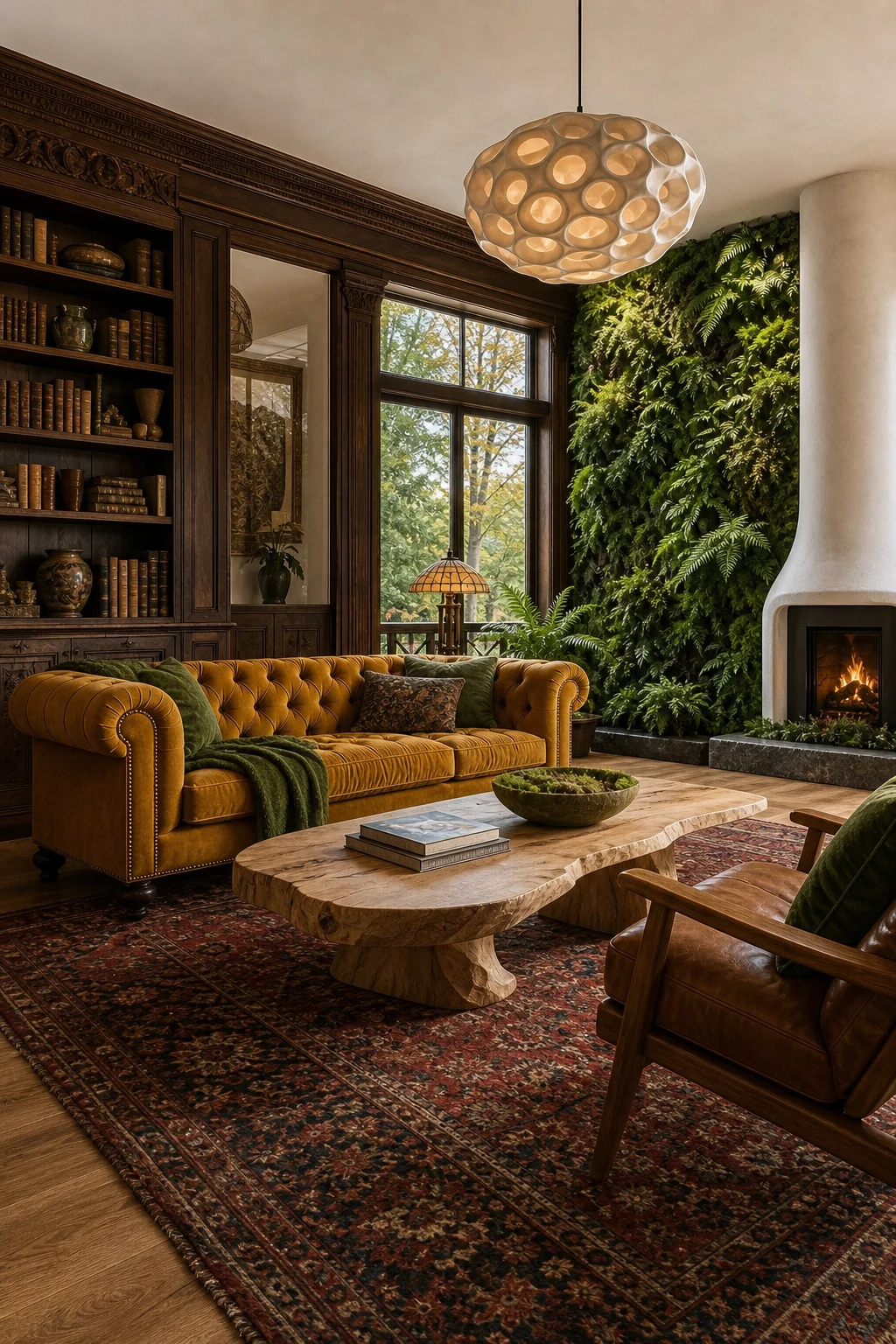
A tufted mustard velvet sofa anchors the historical side, while a sleek organically curved coffee table introduces modern vitality. This deliberate pairing creates immediate visual harmony, ensuring neither the vintage revival nor the biophilic modern aesthetic dominates the conversation.
| Design Layer | vintage revival Role | biophilic modern Role | Bridge Decision |
|---|---|---|---|
| Architectural Shell | Dark walnut wainscoting and built-in bookshelves | Floor-to-ceiling integrated living wall of ferns | Shared woodland palette of deep forest greens |
| Large Furniture | Tufted mustard velvet Chesterfield sofa | Sleek organically curved raw-edge ash wood table | Highly tactile surfaces that invite physical touch |
| Soft Textiles | Faded antique Persian rug in crimson and navy | Minimalist window treatments maximizing natural daylight | Warm ochre tones connecting rugs to sunlight |
| Room Lighting | Ornate brass reading lamps on side tables | Sculptural modern pendant mimicking cellular structures | Soft, diffused ambient glow without harsh shadows |
| Small Accents | Antique books and carved mahogany details | Smooth river stone planters and raw moss bowls | Carved floral motifs echoing actual living plants |
Distributing these specific roles prevents the styles from blurring into a confusing mixture. The heavy crimson Persian rug grounds the seating area, allowing the cellular modern pendant light to float above without making the room feel top-heavy or unmoored.
Unifying Through Light and Architecture
Soft, diffused Pacific Northwest autumn daylight is absolutely crucial for successfully merging dark historical woods with bright modern greenery. This generous daylight-balanced fill prevents the heavy traditional elements from feeling overly gloomy or oppressive in the changing seasonal light.
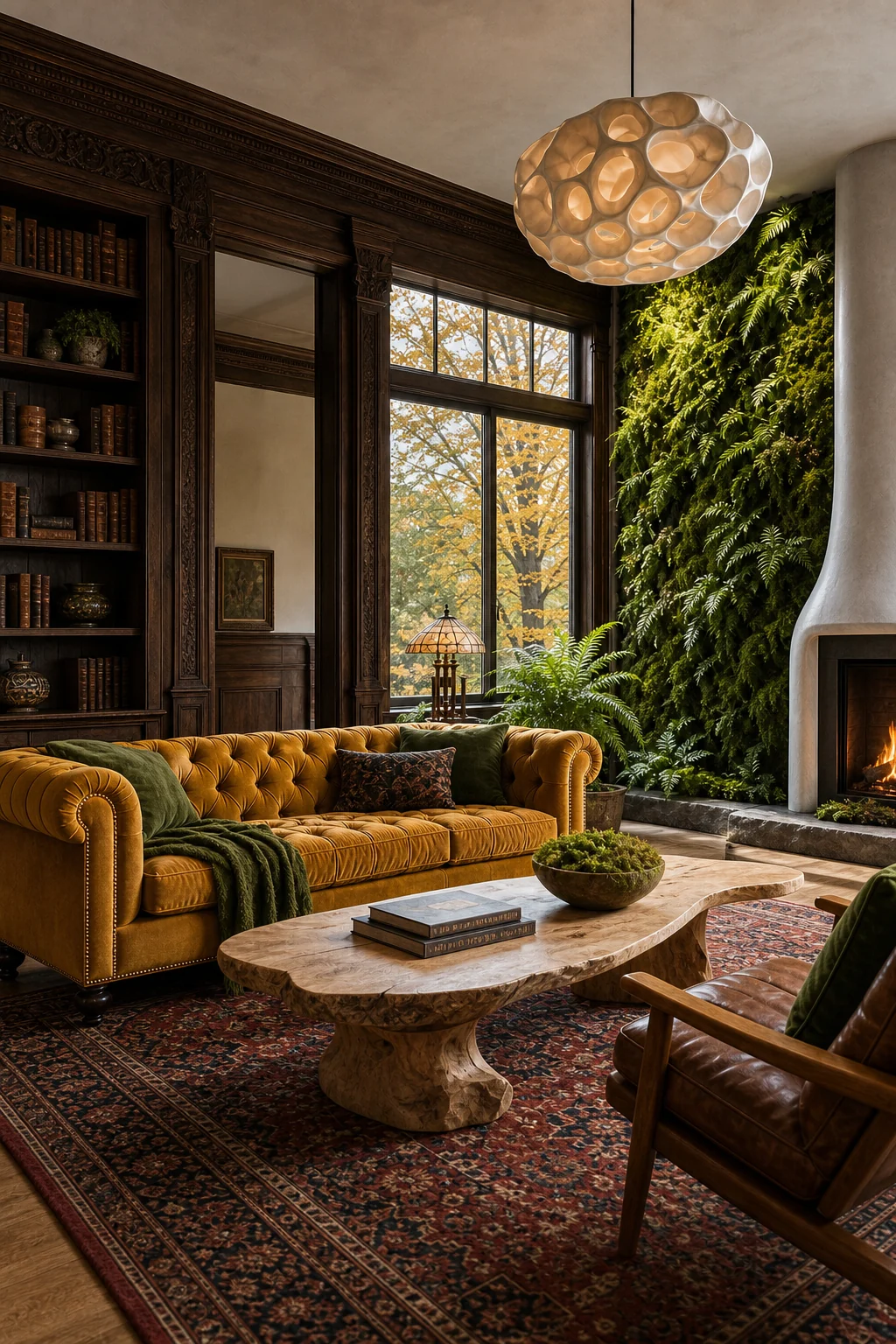
Maintaining clear, crisp detail in every dark surface ensures the room feels intentional rather than muddy. Generous ambient light lifts the midtones while keeping the shadows open, allowing the intricate vintage carvings and the delicate fern fronds to coexist beautifully.
Proper illumination highlights the tactile differences between the eras, emphasizing the contrast rather than hiding it. The bright, even lighting ensures the raw ash wood benches and the faded antique rugs both receive the precise visual attention they deserve.
Curating the Smaller Surfaces
Tabletop styling is exactly where this broad stylistic contradiction becomes a highly intimate experience. Mixing ornate brass reading lamps with smooth stone planters forces the two distinct eras into a close, tactile conversation that rewards careful, up-close visual inspection.
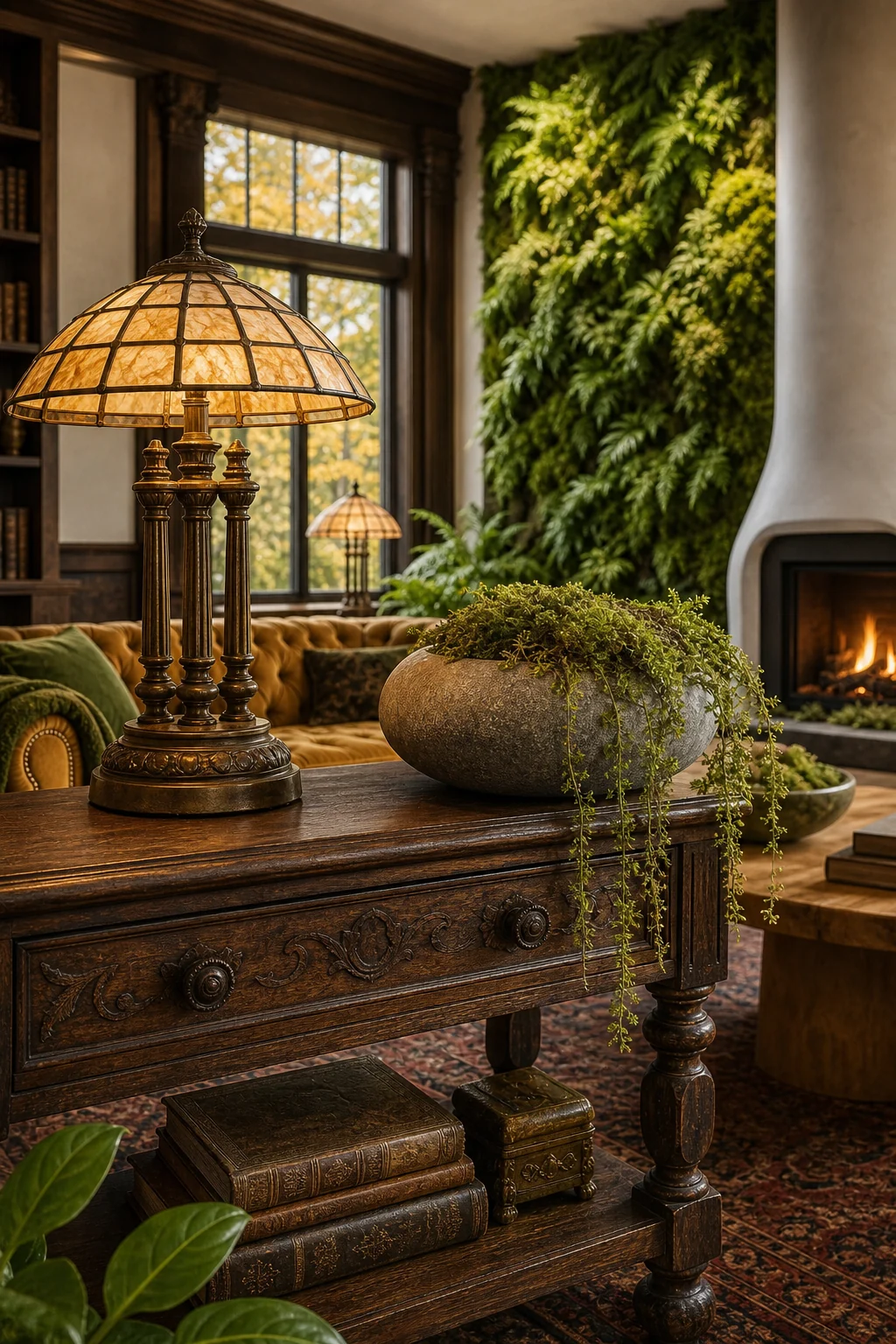
Rely heavily on highly tactile textures that actively invite touch. Smooth white plaster planters and raw moss bowls provide a much-needed visual break from the intricate, heavy mahogany carvings, giving the eye a quiet place to rest between historical details.
- Source a deeply tufted mustard velvet Chesterfield to serve as the primary historical anchor for the seating area.
- Select a sleek, raw-edge modern wood table to introduce fluid, organic lines into the rigid traditional layout.
- Ground the entire arrangement with a faded Persian rug to provide a rich, historically weighted foundation.
Translating the Look Beyond the Living Room
You can easily scale this ambitious concept down for transitional spaces without building a massive living wall. Focus your efforts entirely on the stark material contrast at thresholds and passages to maintain the design narrative throughout the broader home.
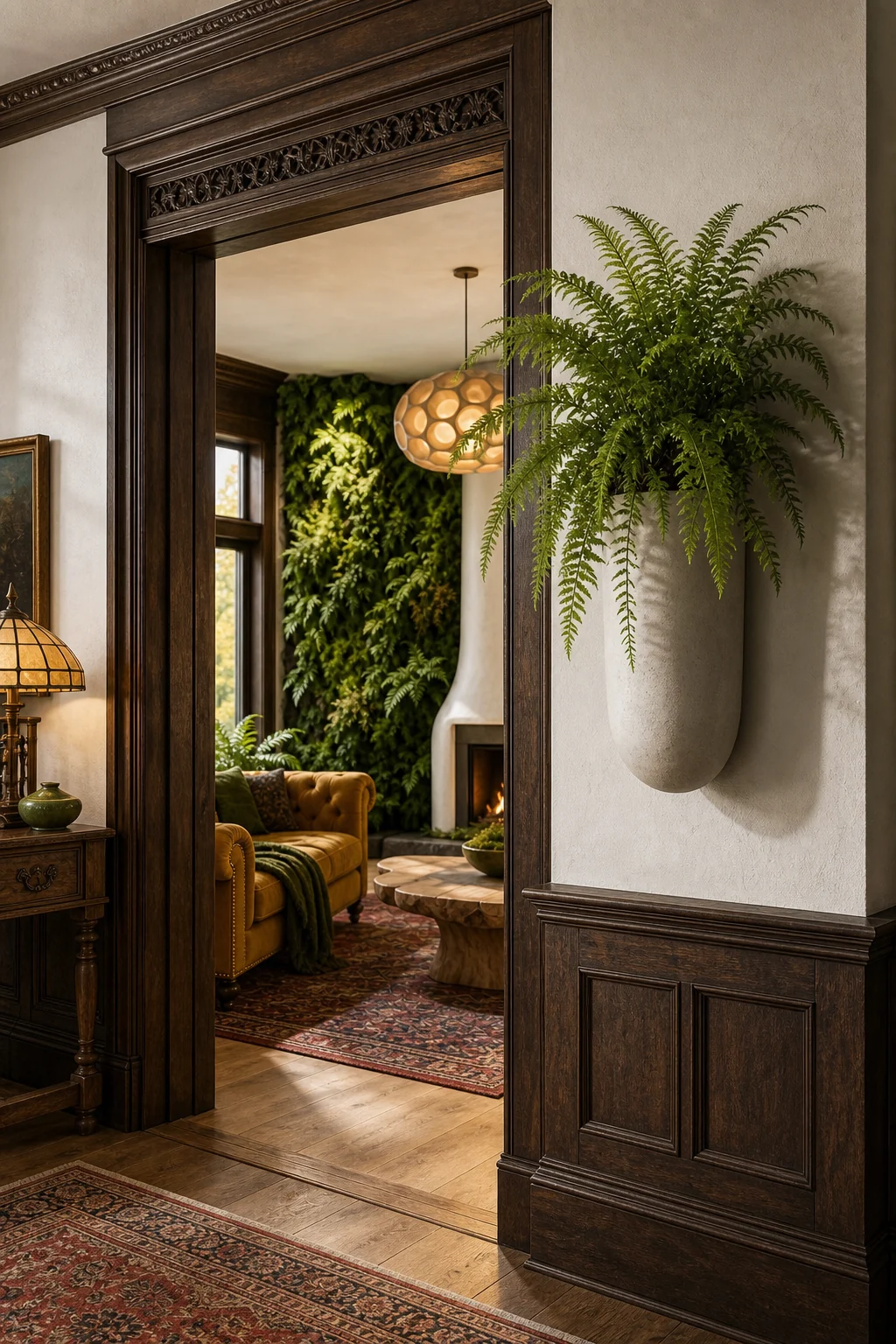
A single oversized fern placed in a sleek modern vessel set against traditional dark paneling delivers the exact same visual impact. This streamlined approach works beautifully on a much smaller budget while keeping the core stylistic tension completely intact.
- Install a modern hanging planter directly against traditional wainscoting to create immediate, high-impact contrast in narrow hallway passages.
- Use a sleek pale ash wood bench to break up the visual weight of heavy historical corridor architecture.
- Ensure hallway lighting remains bright and diffused to prevent the dark wood paneling from feeling like a closed tunnel.
Avoiding the Overgrown Library Trap
Without enforcing strict stylistic boundaries, this complex mix easily devolves into a chaotic, overgrown greenhouse or a stuffy museum exhibit. The ultimate key to success is maintaining decisive, sharp contrast rather than allowing the elements to form a muddy blend.
Keep the traditional architectural shell entirely distinct from the vibrant organic center. By rigidly separating the historical framework from the living vitality, the resolved contradiction remains sharp, intentional, and endlessly fascinating for anyone who steps into the living room.
- Avoid scattering tiny potted plants across your vintage shelves; commit entirely to one massive, structural living wall installation.
- Do not use traditional floral prints on your upholstery; rely strictly on actual living greenery for botanical patterns.
- Never mix mid-century furniture into this space; stick exclusively to heavy historical antiques and sleek organic modernism.