
Tool Box Fabric Upcycle: Tailored Tweed and Leather Storage
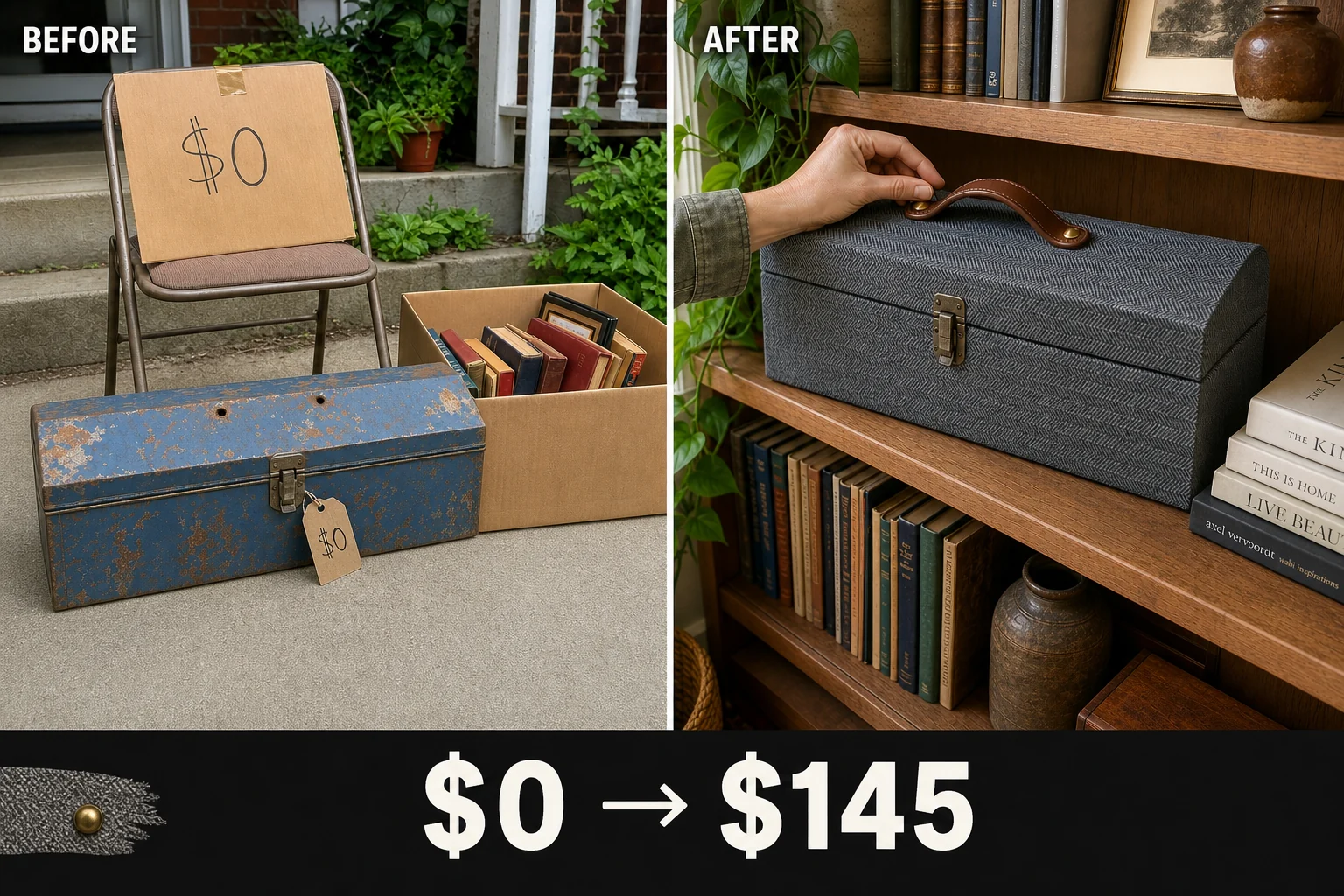
Spotted in a curbside free pile, this rusted steel tool box was structurally sound but cosmetically ruined. Wrapping it in heavyweight menswear tweed and adding saddle leather hardware transforms the garage castoff into a tailored, library-ready storage trunk.
Step 1: Assess the Tool Box Condition
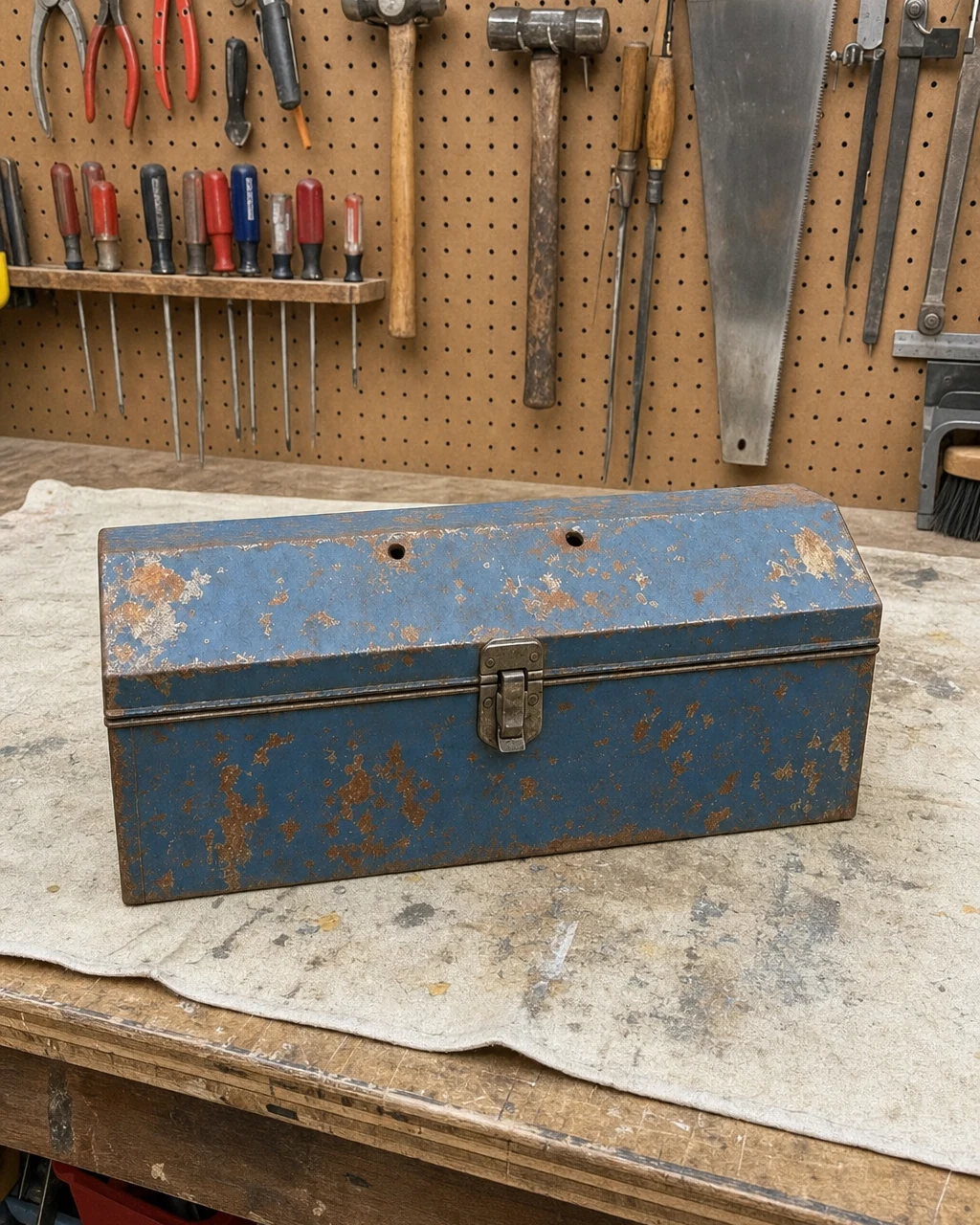
Found at the end of a driveway during a neighborhood cleanout, this heavy-duty 1970s hip-roof steel tool box sat abandoned beside a handwritten free sign. The stamped and spot-welded heavy-gauge sheet steel silhouette remained structurally sound, but severe cosmetic flaking ruined the exterior. Measuring 19 inches long, the pitched lid featured an uneven surface that would cause applied fabric to bubble.
- Surface rust oxidation: Orange patches bled through where the original baked enamel paint chipped away. This oxidation threatens to ruin light-colored textiles or adhesives if the metal is not properly sanded and sealed before wrapping the exterior panels.
- Missing top handle: Two empty, slightly rusted mounting holes sat on the top ridge of the lid. This damage left the top profile looking unfinished while rendering the heavy box difficult to carry around the workshop or home.
Step 2: Prep the Metal Surface
Sand the entire exterior with a coarse sanding block to remove all loose paint flakes and surface rust. Scrubbing the rusted steel lid creates a smooth, scuffed metal substrate with feathered paint edges, ensuring the heavy fabric bonds permanently. Always wear a dust mask and safety glasses when sanding old paint and rust to protect yourself from airborne particulate matter.
Project Investment Breakdown
Reviewing the material costs helps contextualize the transformation. The necessary adhesives, sealers, and textiles remain highly affordable, proving that high-end interior decor does not require a massive budget when upcycling structurally sound vintage items.
| Item | Cost |
|---|---|
| Purchase Price | $0 |
| Heavyweight Tweed Fabric | $15 |
| Spray Adhesive | $12 |
| Matte Decoupage Sealer | $10 |
| Leather Strap Handle | $18 |
| Brass Machine Screws | $4 |
| Total Investment | $59 |
| Estimated Resale Value | $145 |
| Value Gain | $86 |
Step 3: Measure and Cut Tweed
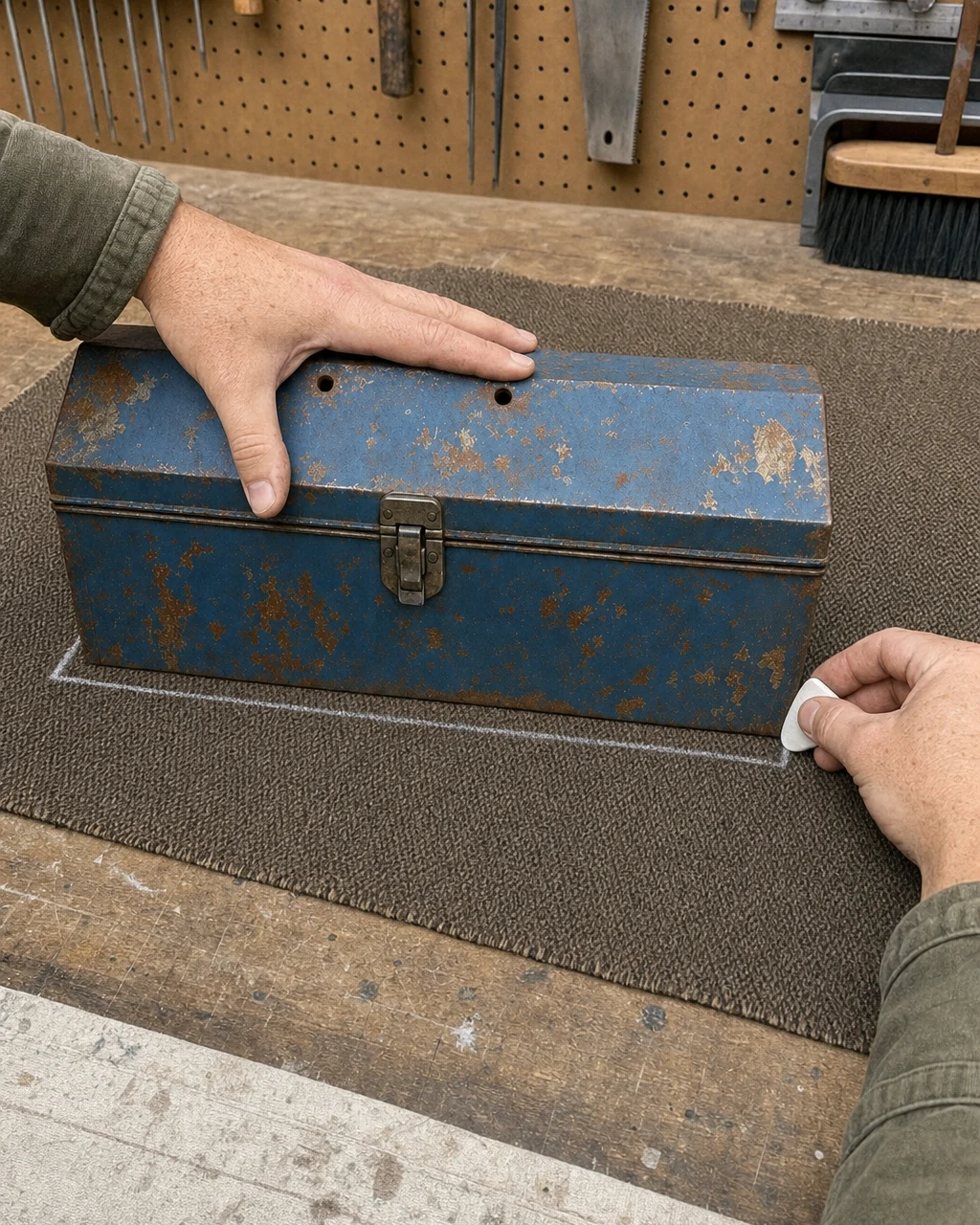
Measure and cut the heavyweight tweed fabric into individual panels matching the sides and lid of the tool box. Keep sharp fabric shears away from the edge of the workbench while tracing dimensions onto the reverse side of the textile using tailor’s chalk. Leaving a small allowance for folding over the edges guarantees a seamless, tailored appearance that hides the stamped metal construction.
Selecting the Right Textile
Look for a heavyweight menswear or upholstery tweed that can hide minor dents in the steel. A thick, textured weave provides excellent coverage and instantly softens the harsh industrial lines of the original 1970s garage castoff.
Step 4: Glue Fabric to Steel
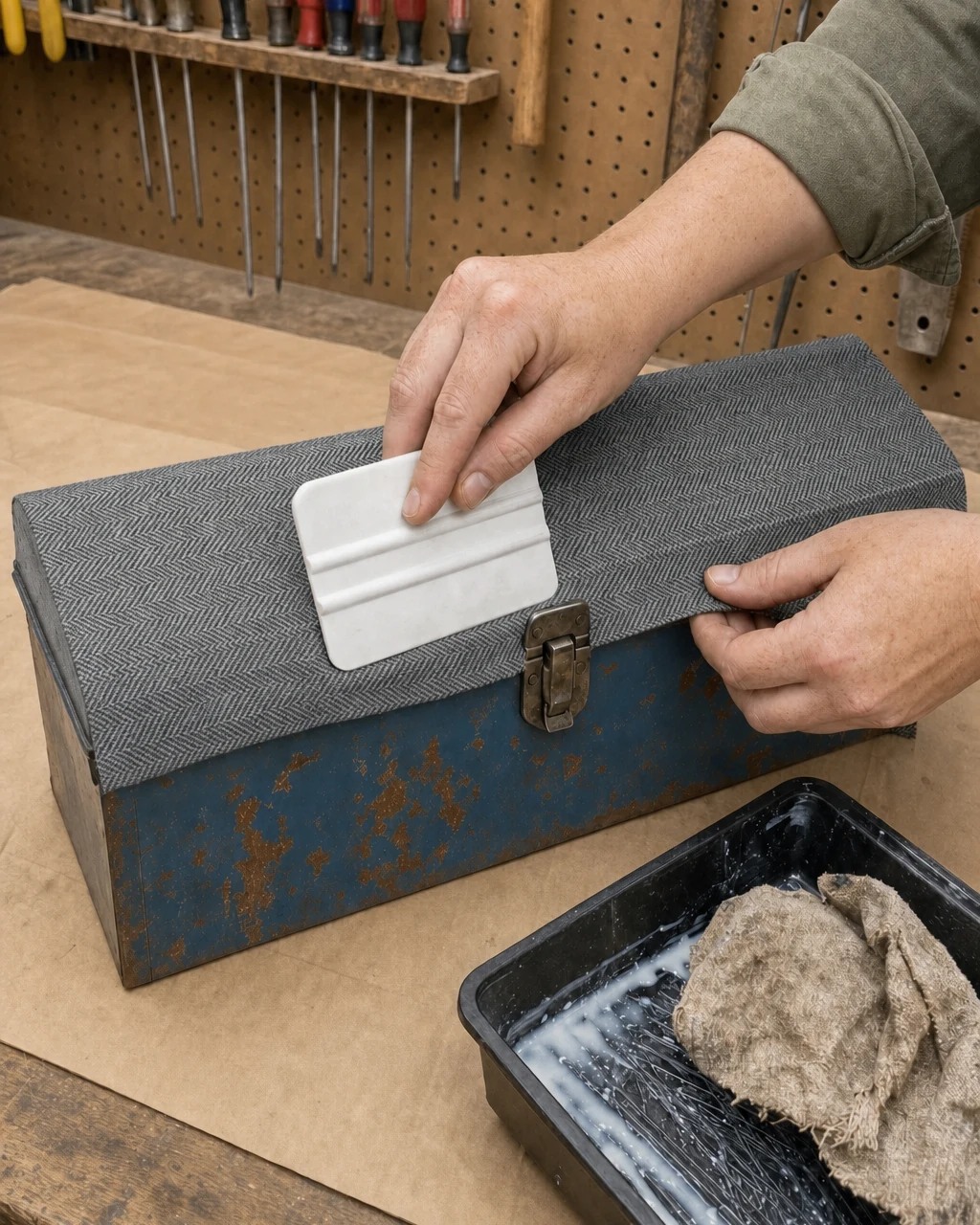
Coat the steel panels with heavy-duty spray adhesive, wait one minute until tacky, and press the cut tweed panels firmly onto the metal. Smooth out any air bubbles with a flat smoothing tool to ensure the fabric bonds flawlessly to the tool box lid. Use spray adhesive only in a well-ventilated area or outdoors to minimize fume exposure while working.
Materials checklist
Step 5: Waterproof the Fabric
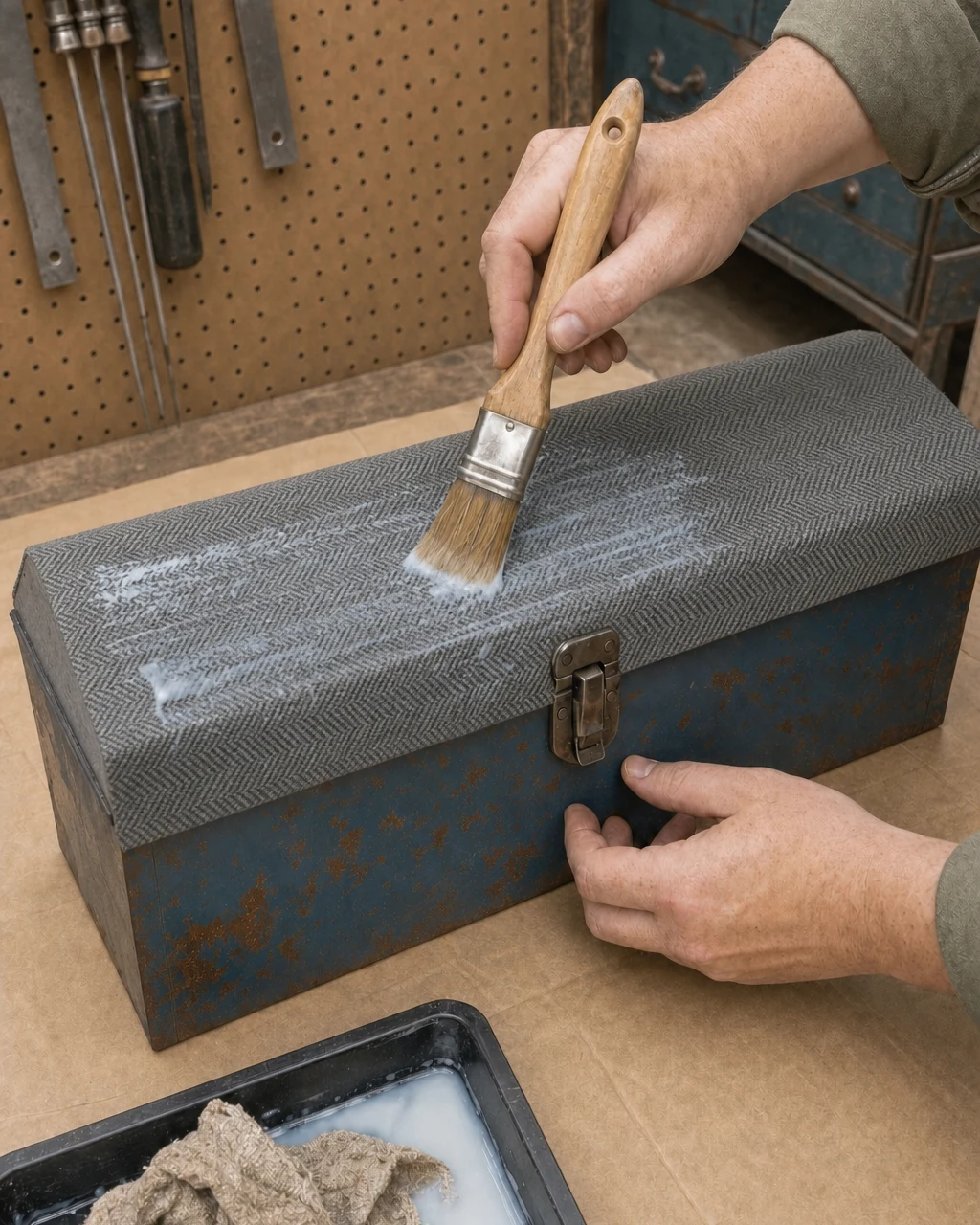
Brush a generous coat of matte decoupage sealer over the entire fabric surface using a wide bristle brush. This waterproofs the tweed, prevents fraying, and protects the textile from dust without adding an artificial gloss. Place a protective sheet under the box to catch sealer drips, and allow the wet, milky sealer at least two hours to soak in and dry completely.
Curing the Protective Finish
Patience during the drying phase ensures the exterior-grade mediums fully harden. A properly cured matte finish protects the textile from daily wear and moisture, transforming a delicate fabric wrap into a durable, library-ready storage surface.
Step 6: Add a Leather Handle
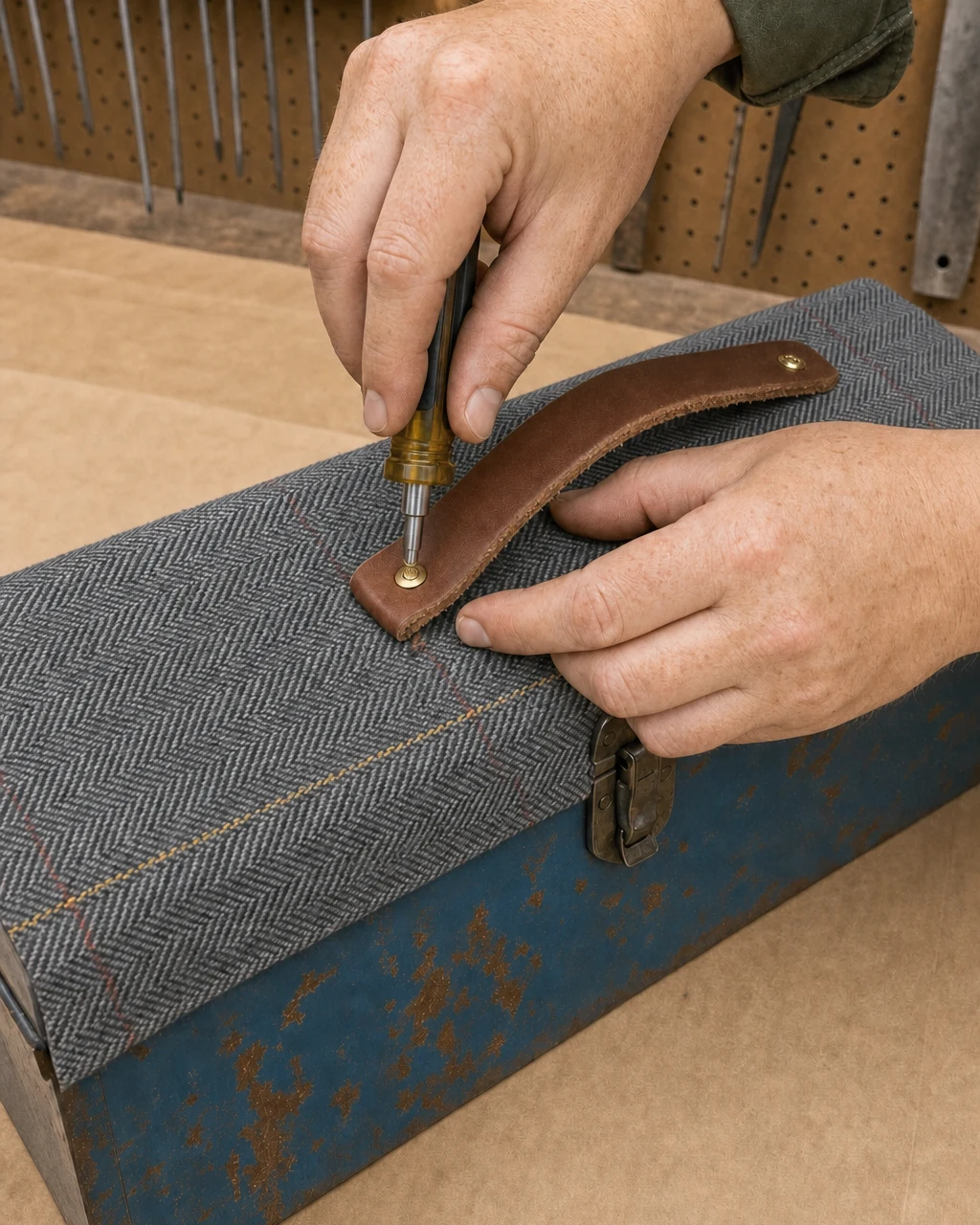
Align the new saddle leather strap with the original mounting holes on the pitched roof lid. Secure it tightly from the inside using brass machine screws and nuts, which prevent future rust stains on the leather. Ensure the nuts are tightened securely so the replacement handle can bear weight safely when lifting the heavy-gauge sheet steel trunk.
Inspect the Finished Exterior
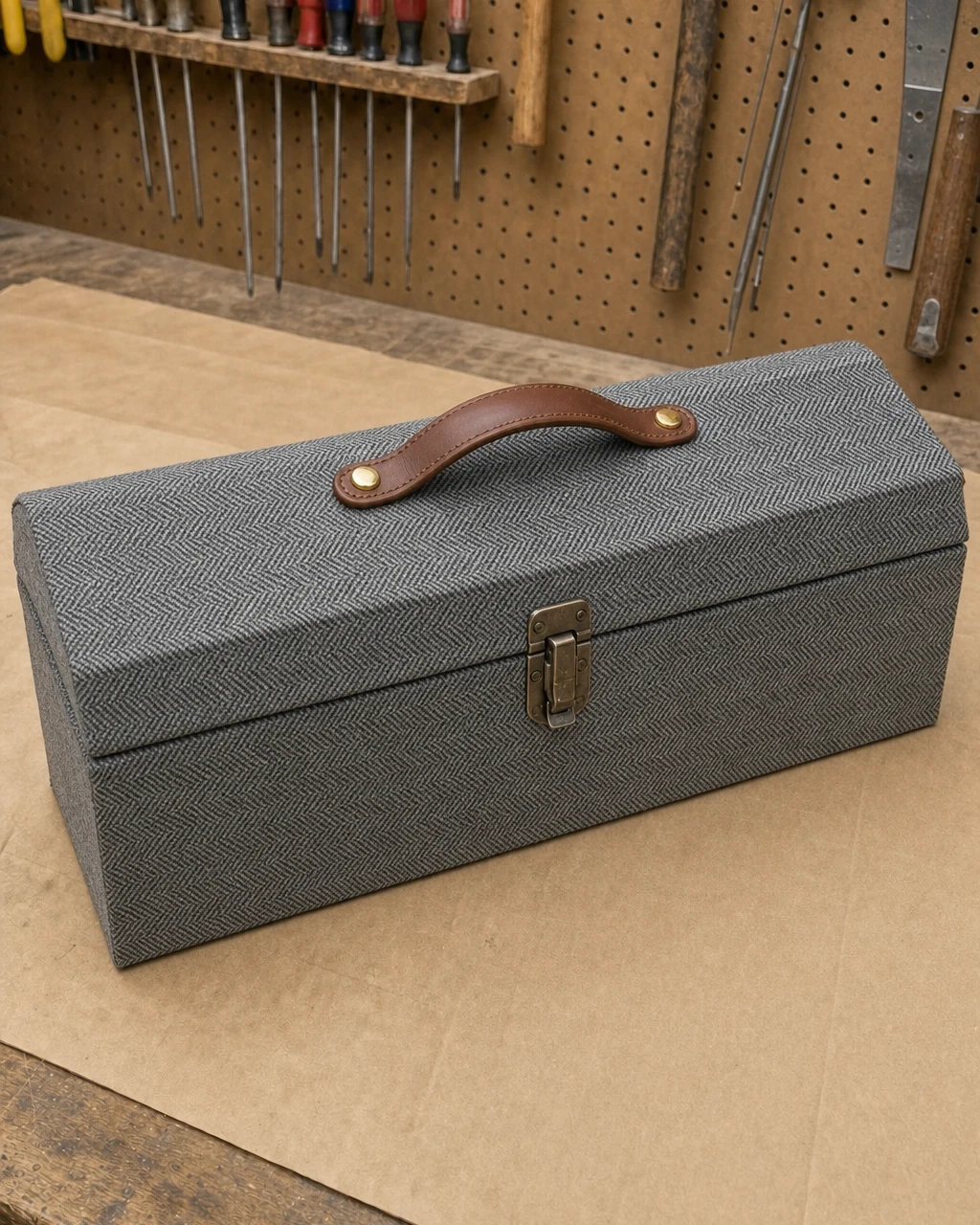
Check all fabric edges for secure adhesion around the hip-roof profile and the full-length rear piano hinge. Test the new leather handle for weight-bearing stability before moving the piece indoors. Verify the matte decoupage sealer is completely dry to the touch before handling the completed tweed and leather tool box resting on the workbench.
Step 7: Style in Your Home
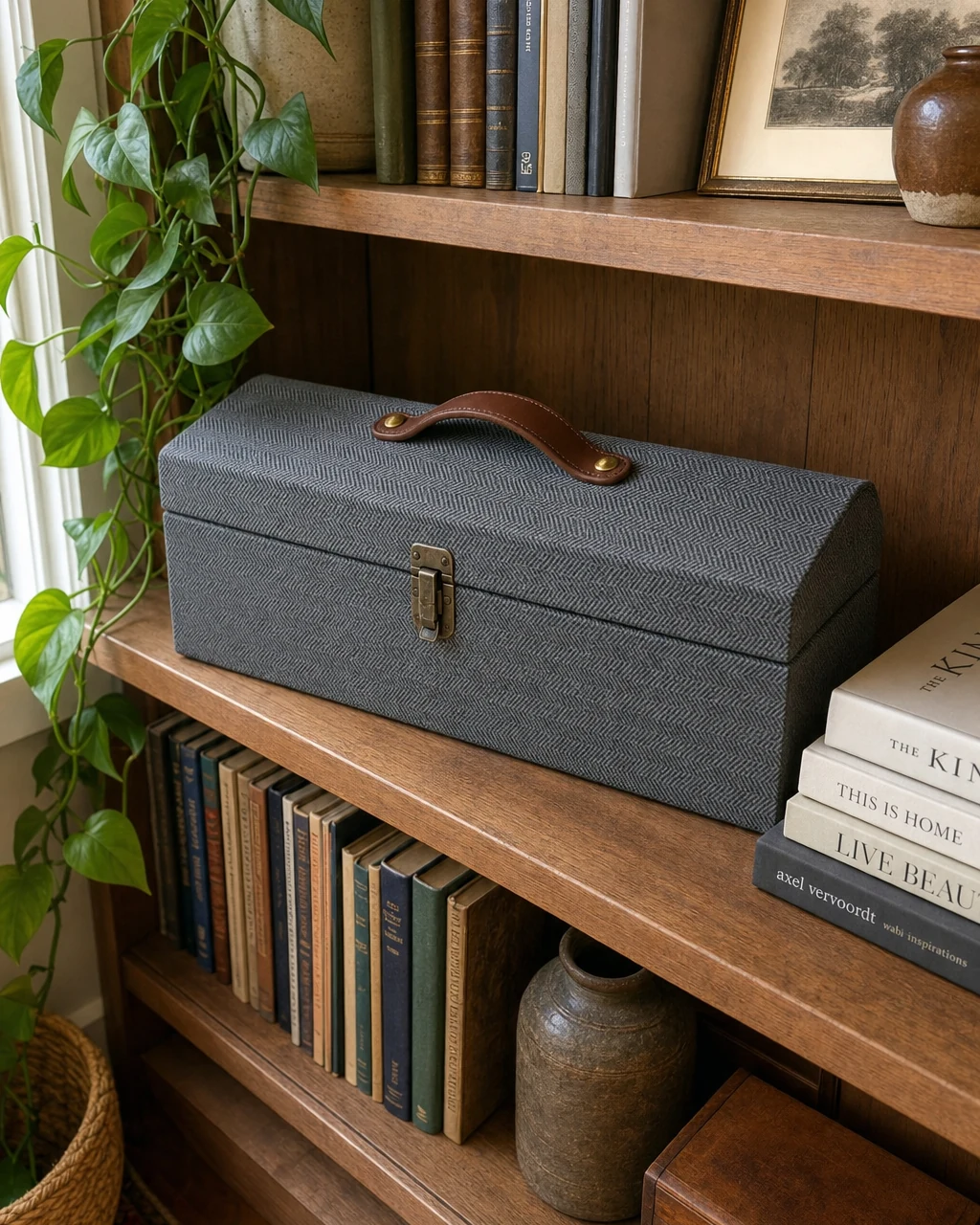
Bring the tailored tool box inside and place it on a home office shelf next to a potted trailing plant and design books. It now serves as stylish, concealed storage for stationary and cables, completely hiding its industrial past. Always ensure the wooden shelf can support the weight of the steel box before loading it with heavy interior items.
Valuation and Resale Potential
While this curbside find cost nothing to acquire, the minimal material investment yields an estimated resale value of $145. This represents a significant value gain, though actual sale prices remain an editorial estimate. Boutique home retailers sell fabric-wrapped storage boxes at a premium, making this classic menswear tweed upcycle a highly desirable, high-end organizational piece.