
This Pumpkin Lantern Became an Entryway
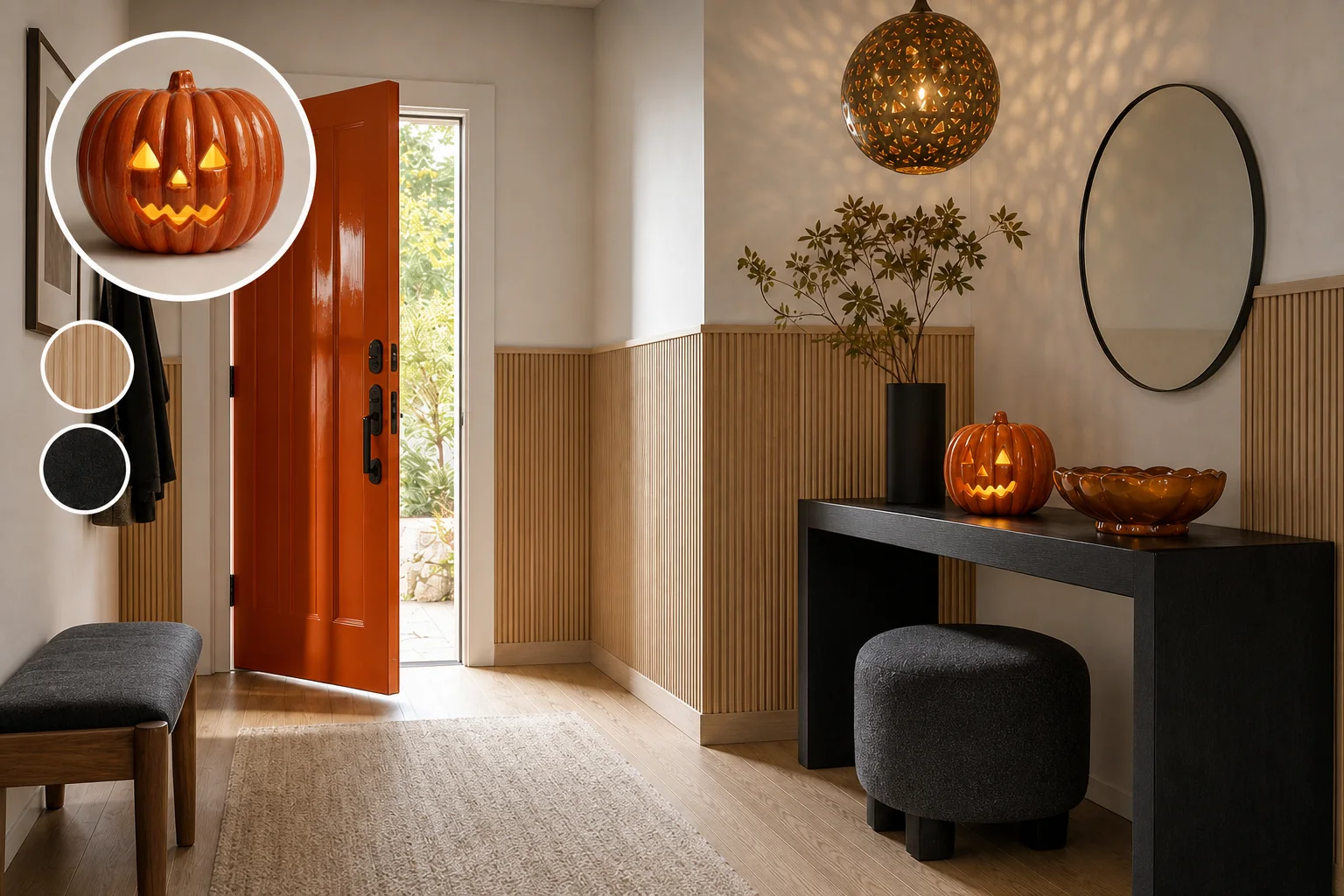
Transforming a ribbed ceramic pumpkin lantern into a permanent entryway requires looking past literal shapes to find its underlying design language. By isolating the lantern’s structured vertical rhythm and warm, glowing accents, we can build a sophisticated transition space where high-gloss finishes are anchored by expansive, neutral matte surfaces.
Grounding the space with vertical rhythm
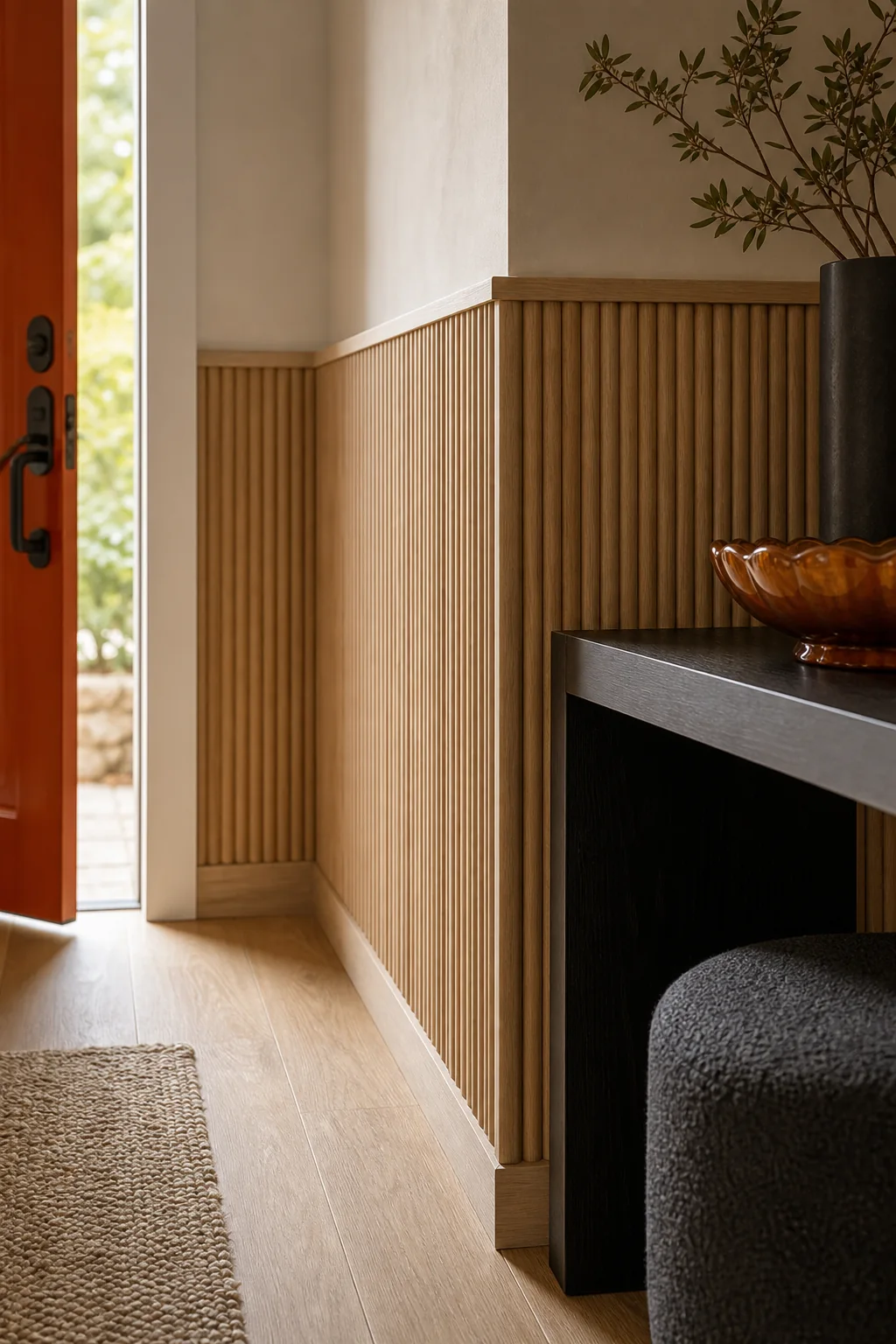
Establishing a repeating convex texture on the lower walls provides a calm, structured base that grounds the room’s bolder elements. Fluted oak wainscoting mimics the pumpkin’s repeating ribs, translating the organic, seasonal shape into a sophisticated architectural feature. Using natural white oak keeps the texture earthy rather than formal, ensuring the entryway feels approachable. Capping the wainscoting with a simple, flat trim maintains a modern aesthetic, allowing the tactile wood grain to shine. To execute this foundation, gather these essential architectural materials from our curated selection below.
Anchoring the room with glossy warmth
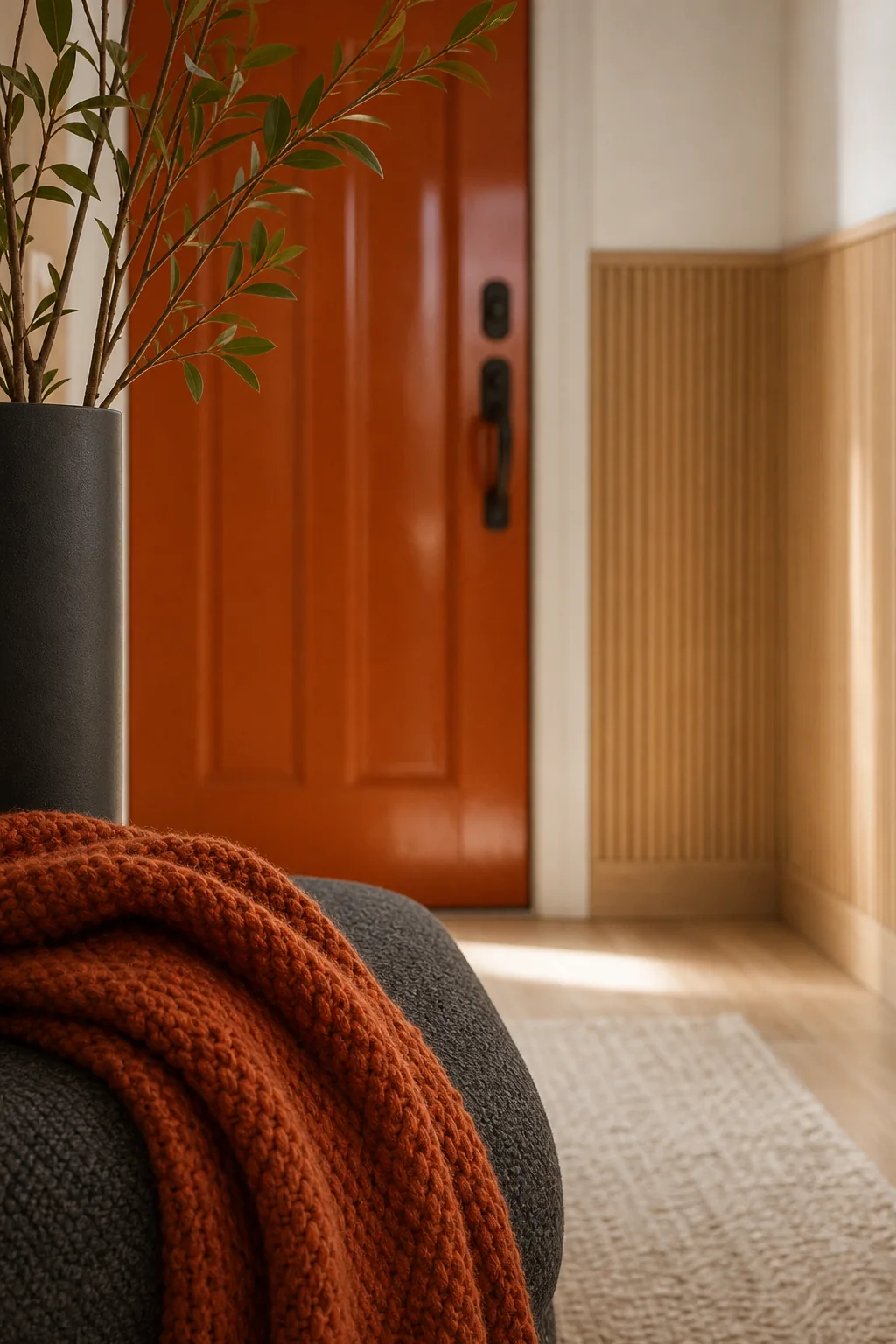
Concentrating the vibrant orange into a single, highly reflective architectural element brings energy to the entryway without turning it into a literal theme. A high-gloss persimmon door captures the lantern’s vibrant glaze, acting as a striking reflective color anchor that draws the eye immediately upon entering. Keeping the surrounding walls in a matte plaster finish allows the door to stand out beautifully while preventing visual clutter. By reviewing our visual-DNA mapping guide below, you can see exactly how these seasonal traits translate into permanent fixtures.
| Source trait | Visible evidence | Room move |
|---|---|---|
| Vertical segmentation | The deep, repeating vertical ribs that give the pumpkin its structural shape | Natural white oak fluted wainscoting wrapping the lower half of the entryway walls, providing a calm, repeating convex rhythm |
| Glossy warmth | The vibrant burnt orange ceramic glaze that reflects light | The interior of the front door painted in a high-gloss persimmon enamel, acting as a striking, reflective color anchor against the quiet plaster walls |
| Pooling glaze | The way the liquid ceramic glaze pools thickly in the crevices of the pumpkin’s ribs | A heavy, deeply glazed amber ceramic catchall bowl on the console table, offering a highly tactile, wet-look surface |
| Carved illumination | The sharp geometric cutouts that allow internal candlelight to cast patterned shadows | A spherical, pierced brass pendant light suspended above the console, casting warm, geometric shadow patterns across the ceiling and walls |
The contrast of gloss and plaster
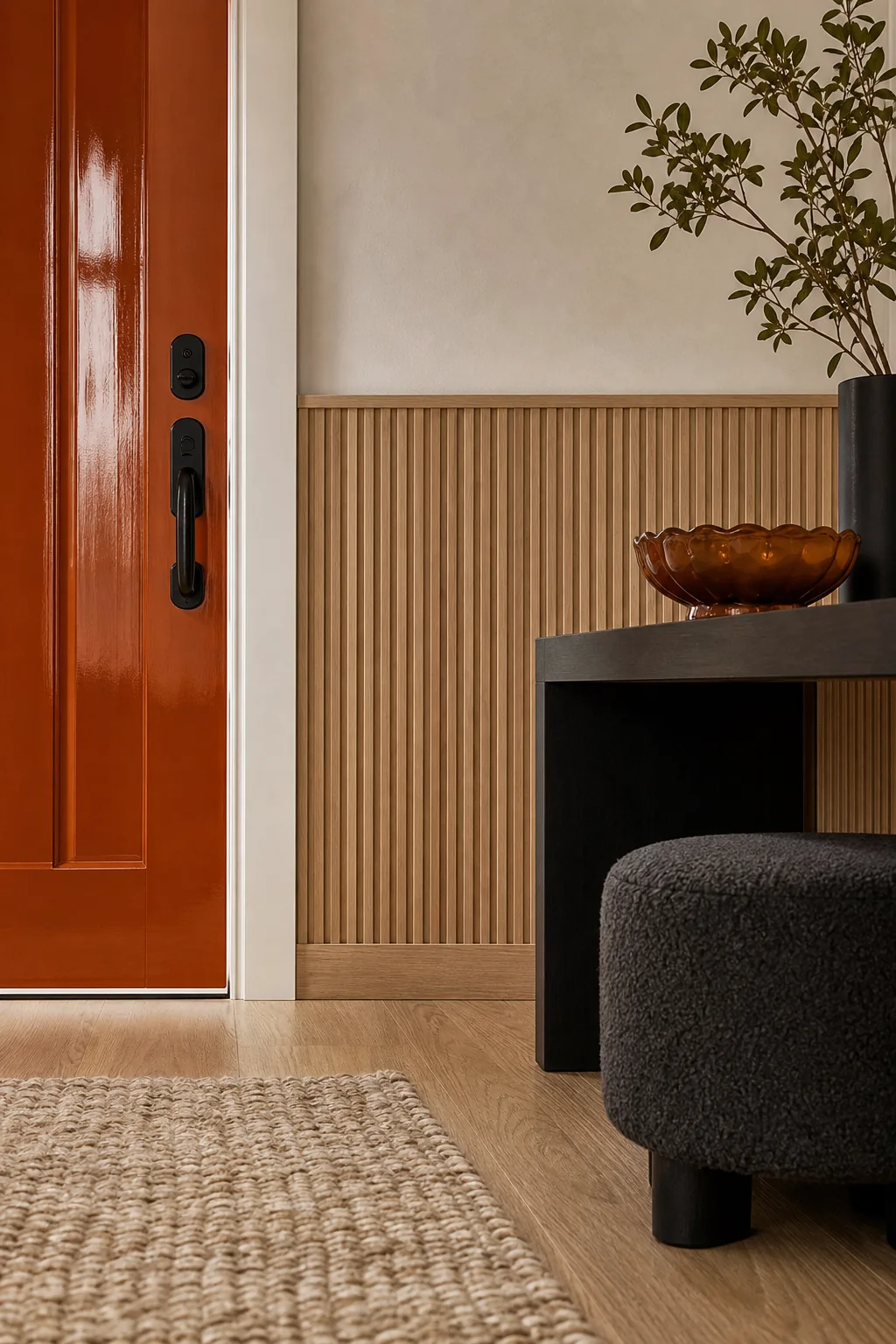
Matte plaster walls balance the door’s reflective enamel finish, ensuring the bright hue does not overwhelm the small space. This careful balance of high-gloss finishes against expansive, neutral matte surfaces is essential for creating a sophisticated year-round look. For a subtle approach, limit the persimmon color to small accessories like the ceramic bowl, keeping the door a neutral white oak. A balanced design paints the interior door high-gloss persimmon, while a bold execution might extend the high-gloss paint onto the ceiling, creating a dramatic, enveloping color block.
Translating tactile glazes into functional decor
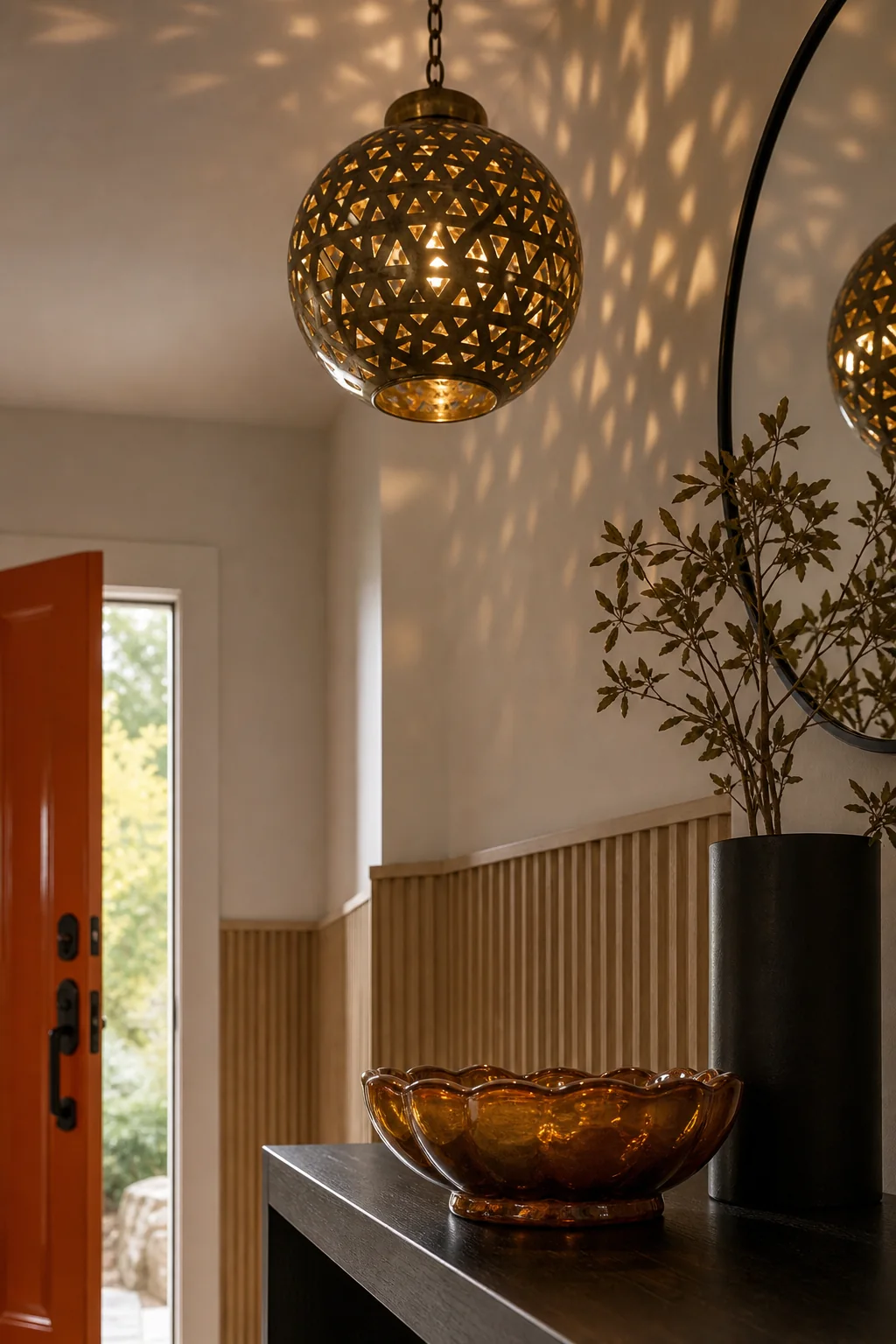
Introducing heavy, glazed ceramics on the console table provides a functional drop zone while directly referencing the source object’s wet-look surface. An amber catchall bowl echoes the lantern’s pooling ceramic glaze, offering a highly tactile element right at the entry. Pairing this high-gloss accessory with a matte charcoal console emphasizes its texture and grounds the warm tones with sharp contrast. Look for bowls with deep, undulating crevices where the glaze naturally darkens. Follow these precise implementation steps to successfully bring this layered entryway to life.
- Install fluted white oak wainscoting to ensure the lower walls feature a continuous, repeating convex wood texture.
- Apply warm matte plaster above the trim so the upper walls absorb light and contrast with the textured wood base.
- Paint the interior front door high-gloss persimmon to create a vibrant, reflective focal point.
- Mount a pierced brass pendant light so the ceiling fixture casts geometric shadows across the plaster.
- Place a minimalist charcoal console table to anchor the wall without adding visual bulk.
Casting geometric shadows with pierced lighting
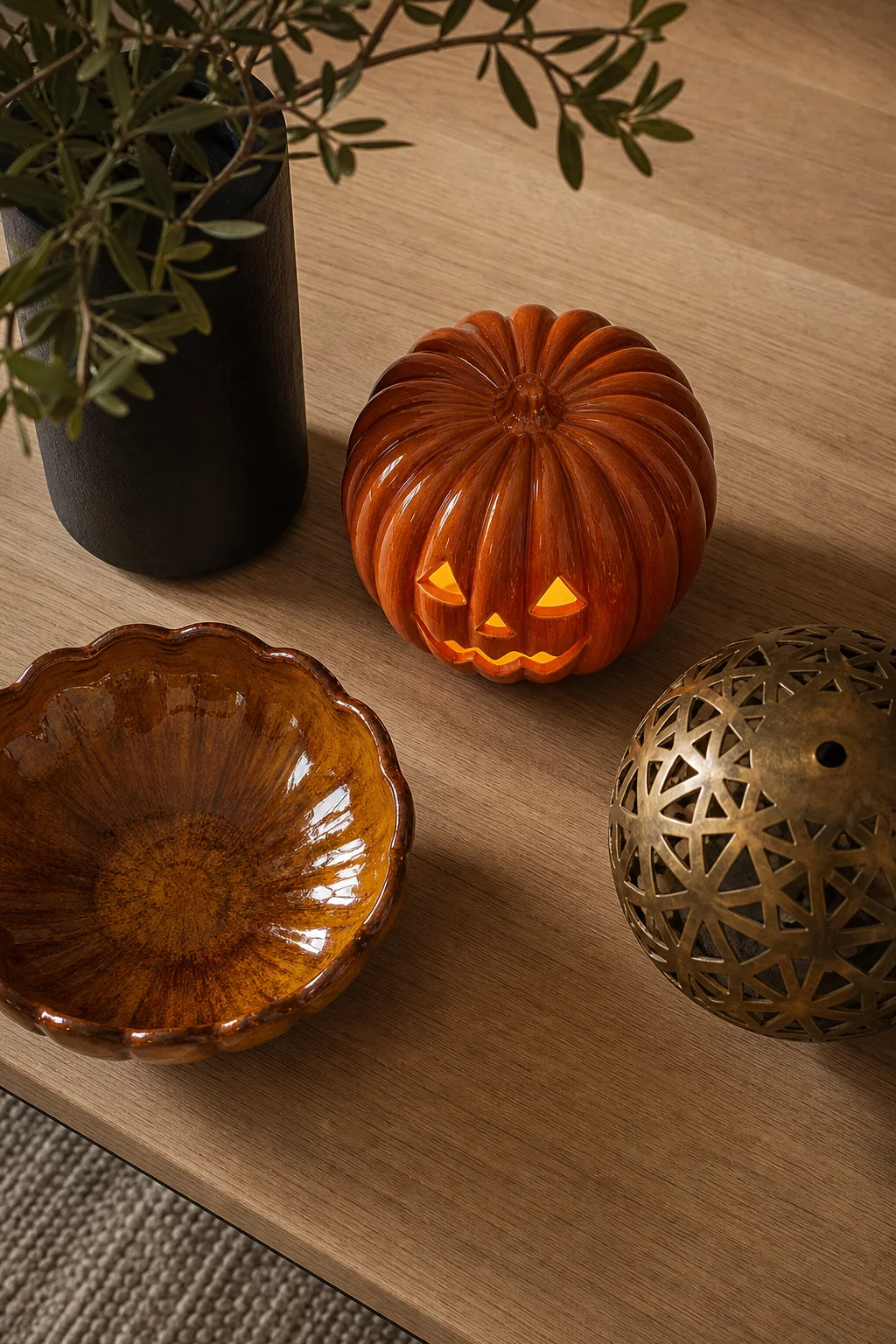
Replacing literal carved faces with a sophisticated pierced brass fixture captures the magic of internal candlelight escaping through sharp geometric negative space. A pierced brass pendant mimics the lantern’s carved glowing cutouts, casting intricate shadow patterns across the ceiling and walls. Hanging the pendant at a height where its shadows interact with the matte plaster walls maximizes this dramatic, cozy effect. Opt for spherical shapes with sharp perforations to truly emulate the source motif, and use a warm-toned bulb to replicate the flicker of a candle.
Use a clear bulb rather than frosted glass in your pierced pendant. Clear glass creates crisp, defined shadow patterns, while frosted bulbs will blur the geometric effect.
The interplay of light and negative space

Geometric shadows from the pendant replicate the lantern’s carved glow, transforming the entryway into a dynamic, welcoming environment. Using a warm-toned bulb replicates the cozy flicker of a candle, ensuring the space feels inviting rather than stark. The interplay between the glowing cutouts and the dark charcoal console table below creates a striking visual tension. This final layer of illumination completes the transition from a simple seasonal object to a fully realized, architecturally rich interior that feels structured and sophisticated all year long.