
Mediterranean Meets Dark Deco: Bathroom
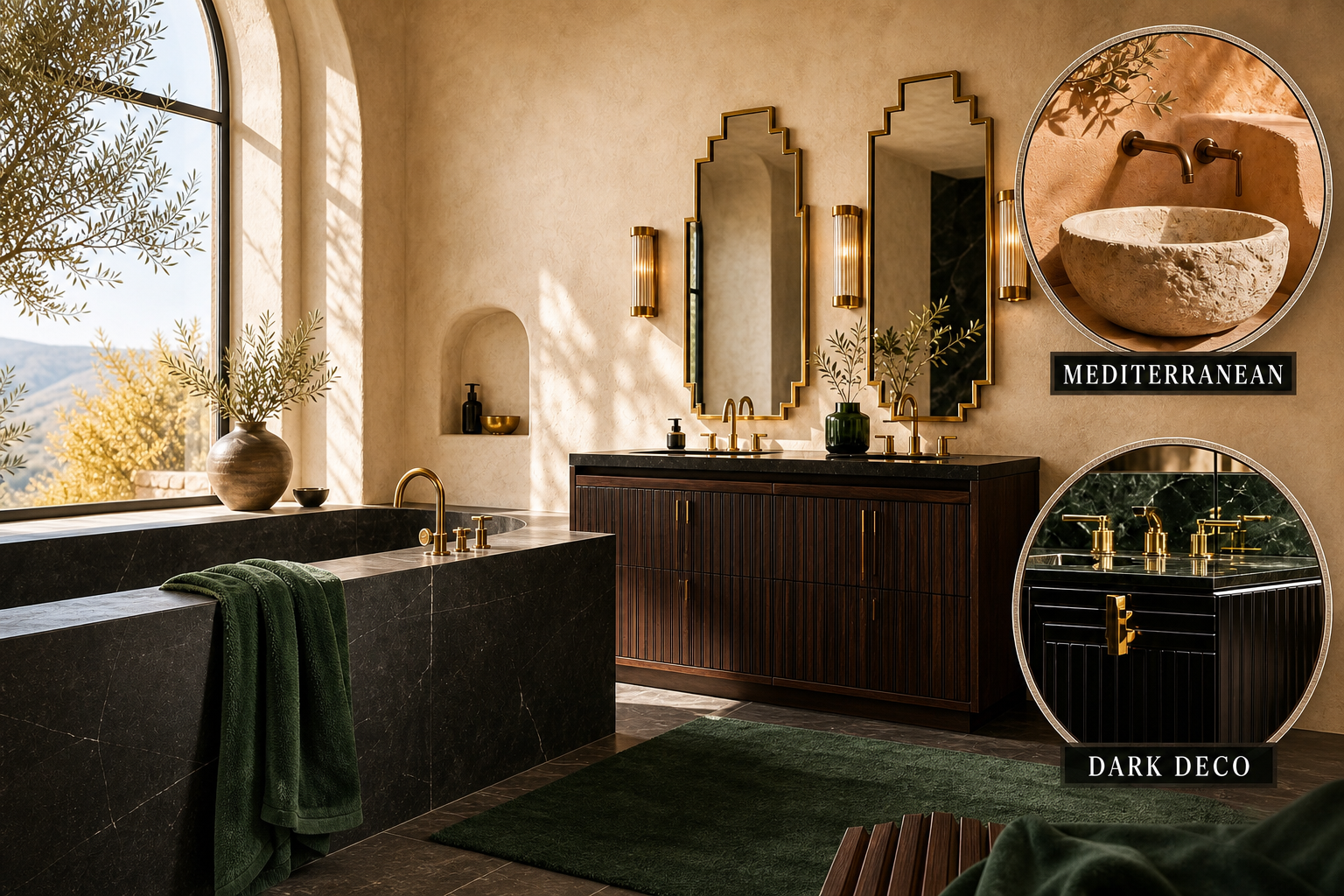
Sun-baked coastal rusticity usually rejects slick, nocturnal glamour. We resolved this contradiction by letting Mediterranean architecture shape the organic plaster shell while Dark Deco dictates the sharp, geometric jewelry of the space, creating perfect harmony in this unique bathroom design.
Mediterranean Foundations
Mediterranean design demands a highly tactile, sun-baked foundation that feels carved directly from the earth itself. Establishing this quiet, organic shell prevents our high-contrast additions from feeling sterile, anchoring the entire space in undeniable warmth, texture, and timeless coastal authenticity.
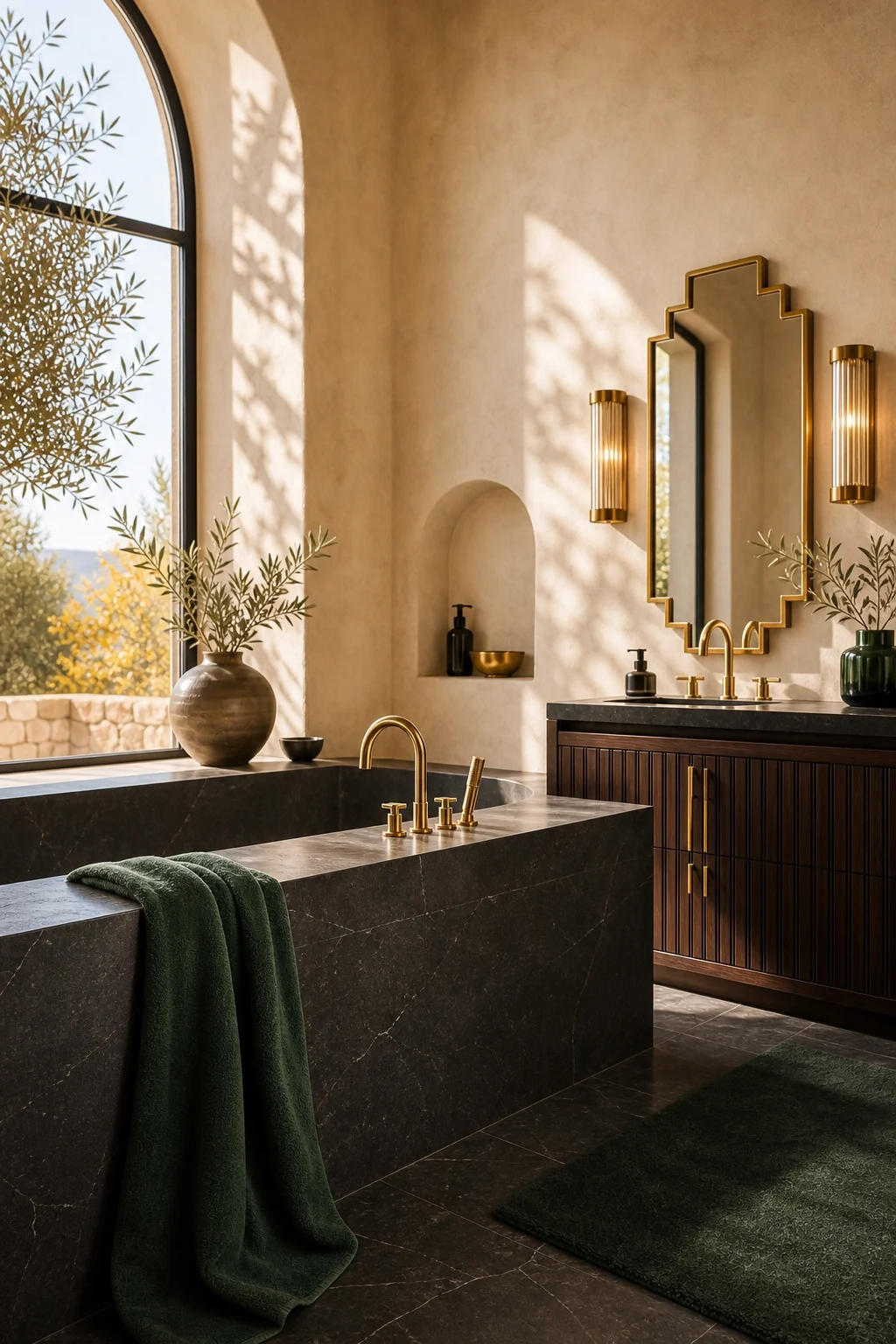
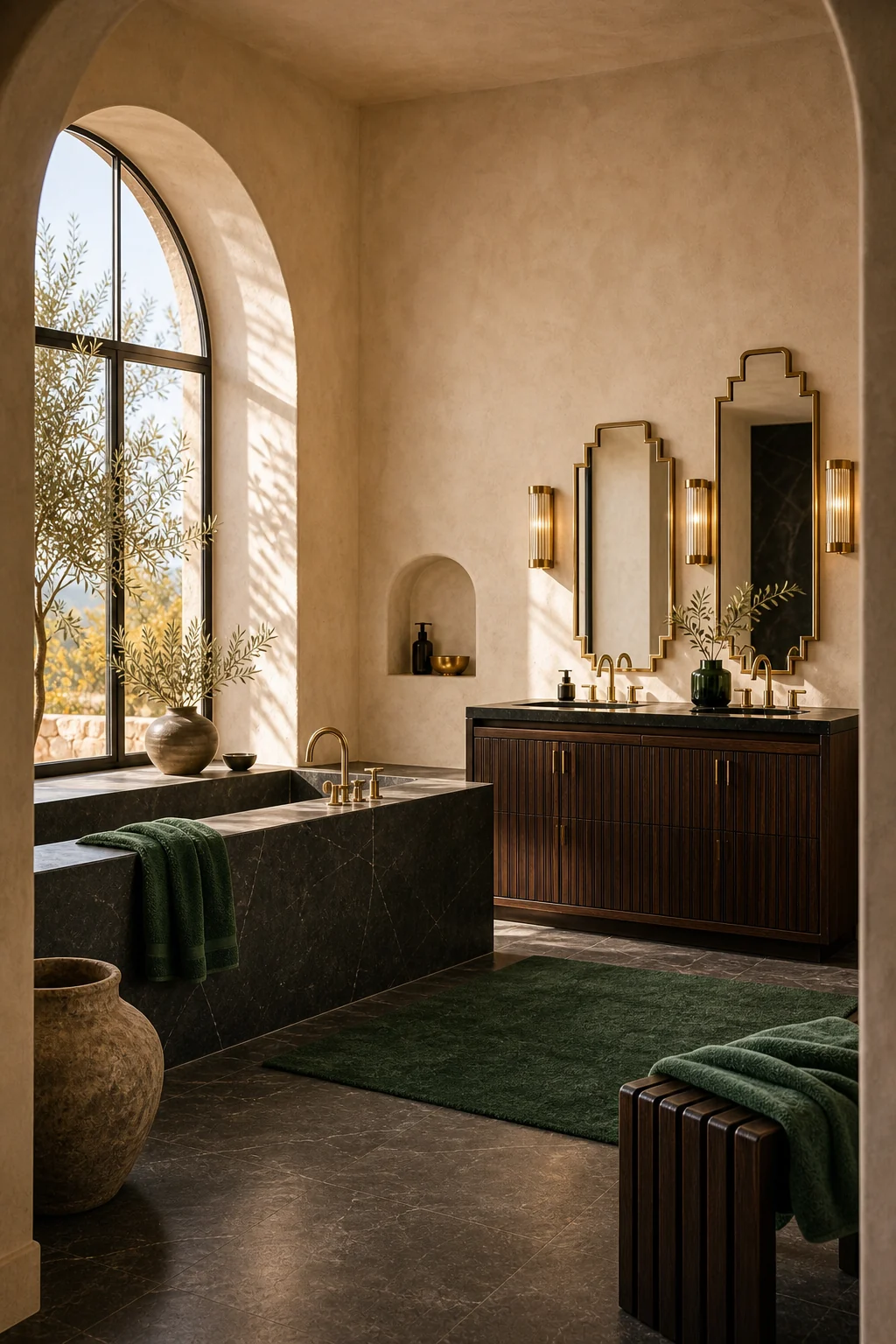
Notice exactly how the matte canvas of the hand-troweled biscuit plaster absorbs the incoming daylight beautifully. This deliberate lack of shine prepares the room to host glamorous metallic accents without overwhelming the eye or fracturing the calm, restorative daily atmosphere.
By carefully integrating large architectural archways alongside a monolithic built-in bathtub, the room establishes a powerful baseline of permanence. These heavy, unified forms ensure the Mediterranean voice remains loud enough to support the incoming jewelry without ever losing its foundational identity.
Dark Deco Glamour
Dark Deco introduces slick, nocturnal luxury through sharp geometry and exceptionally rich, glossy materials. These glamorous interventions act as the room’s architectural jewelry, demanding immediate attention against the quiet, earthy Mediterranean background we carefully established in the previous design step.
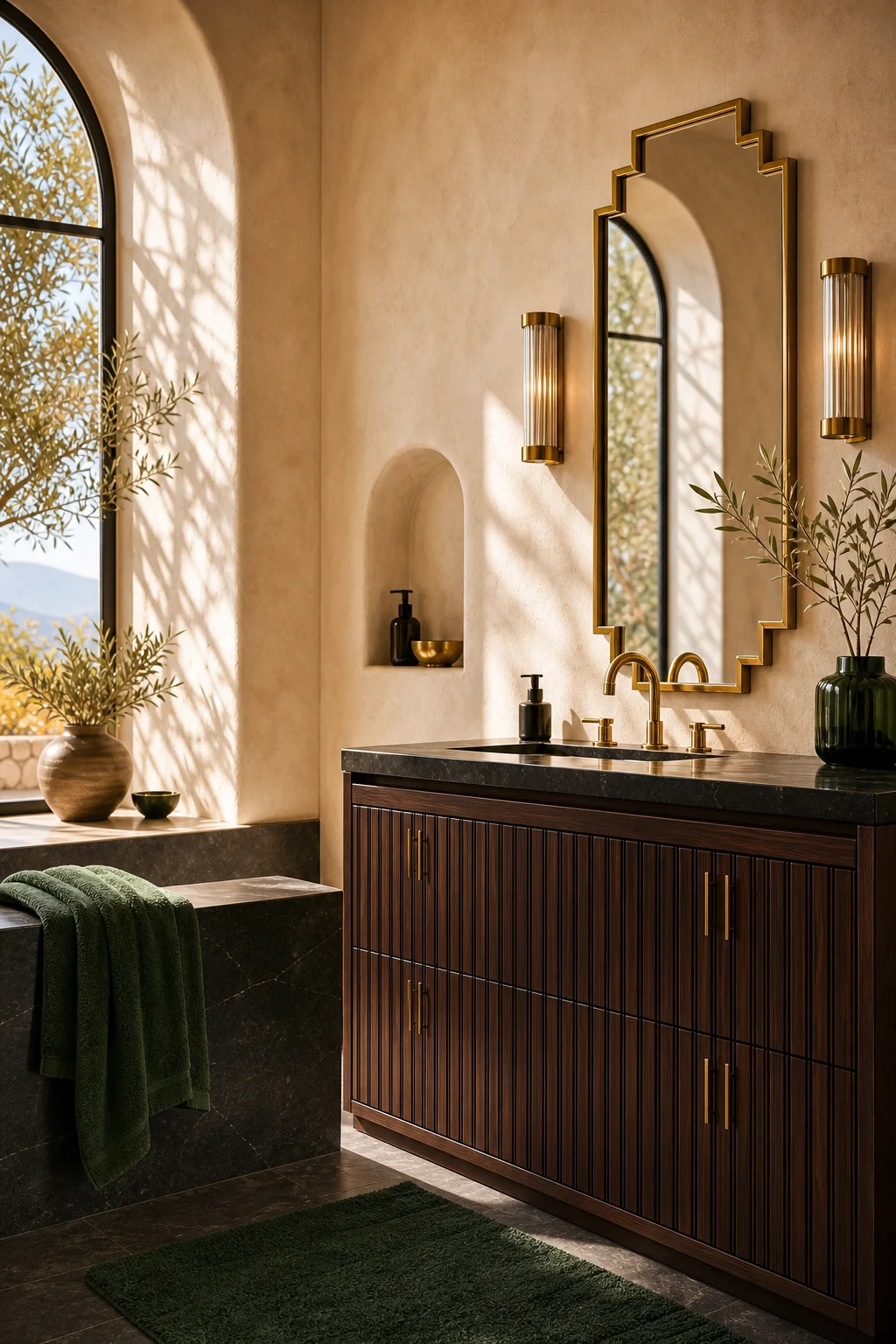
Without these precise, moody additions, the space would inevitably slip into conventional, expected coastal rusticity. The rigid lines and high-gloss finishes provide the necessary visual tension to elevate the room into a realm of sophisticated, urban machine-age luxury and refined elegance.
- Choose fluted dark walnut for heavy cabinetry to introduce rigid vertical lines and deep warmth.
- Install stepped geometric mirrors to reflect light sharply across the otherwise matte, rustic room.
- Select polished brass fixtures to provide high-contrast, machine-age shine against the quiet plaster walls.
Bridging the Contradiction
Connecting these opposing forces requires selecting materials that speak both visual languages fluently. Dark Sicilian basalt effectively bridges local Mediterranean stone traditions with the Deco demand for deep, moody foundation colors that anchor the space in undeniable nocturnal elegance and weight.
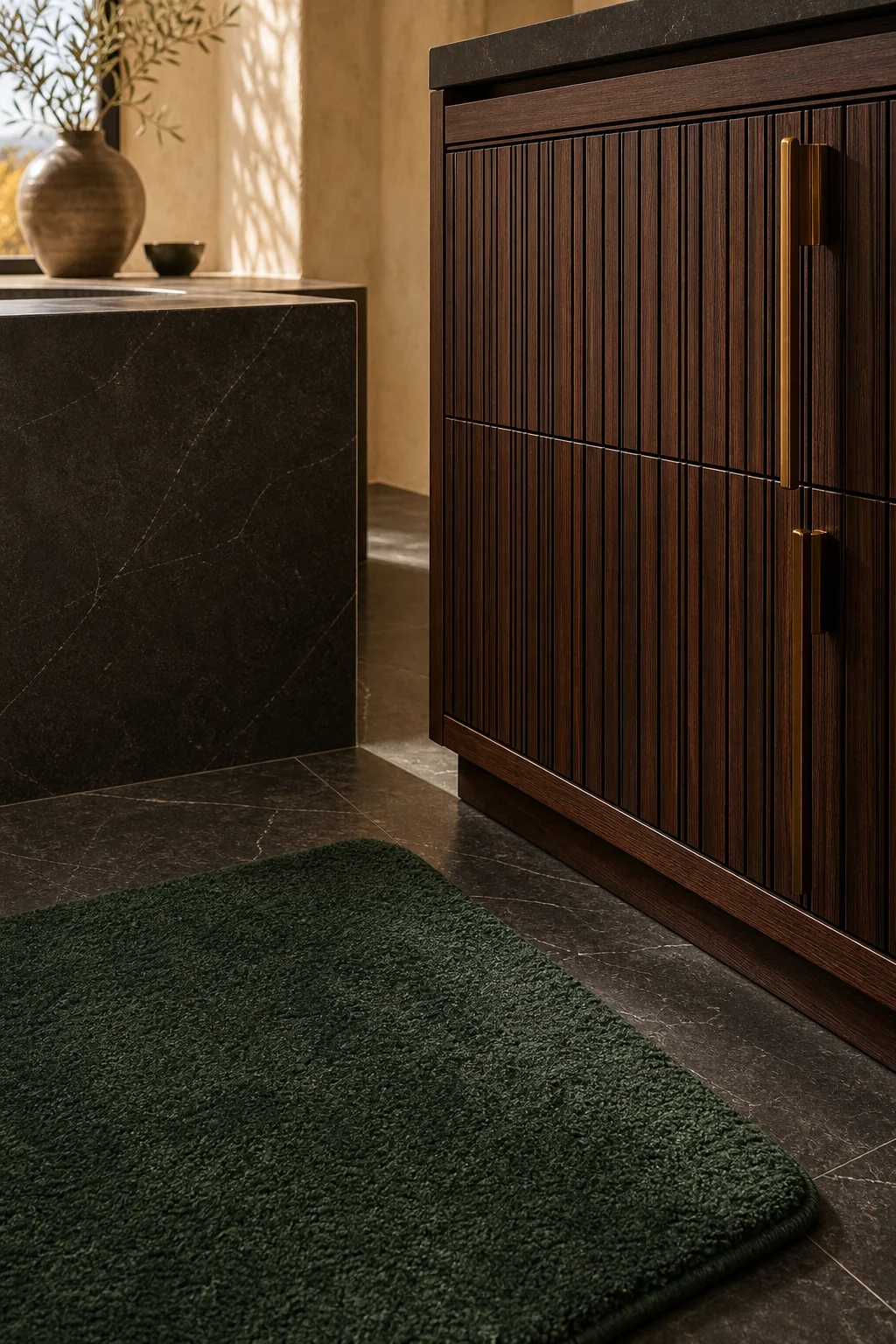
Echoing shapes also builds critical harmony between the two distinct, contrasting styles. The soft Mediterranean architectural arch finds a deliberate, stylized reflection in the stepped, curved silhouettes of the Deco mirrors, tying the room together through shared geometric motifs and careful planning.
Grounding high-gloss Deco fixtures in this highly tactile setting ensures the metals gleam brightly without ever feeling cold or sterile. The resulting friction between the raw earth and refined machinery defines the entire aesthetic success of this unique, balanced bathroom design.
Constructing the Space
Assembling the bathroom requires assigning strict, uncompromising roles to every single design layer. The organic architecture must always remain dominant, allowing the glamorous fixtures to punctuate the space cleanly without fighting for visual supremacy or creating chaotic, unwanted visual noise.
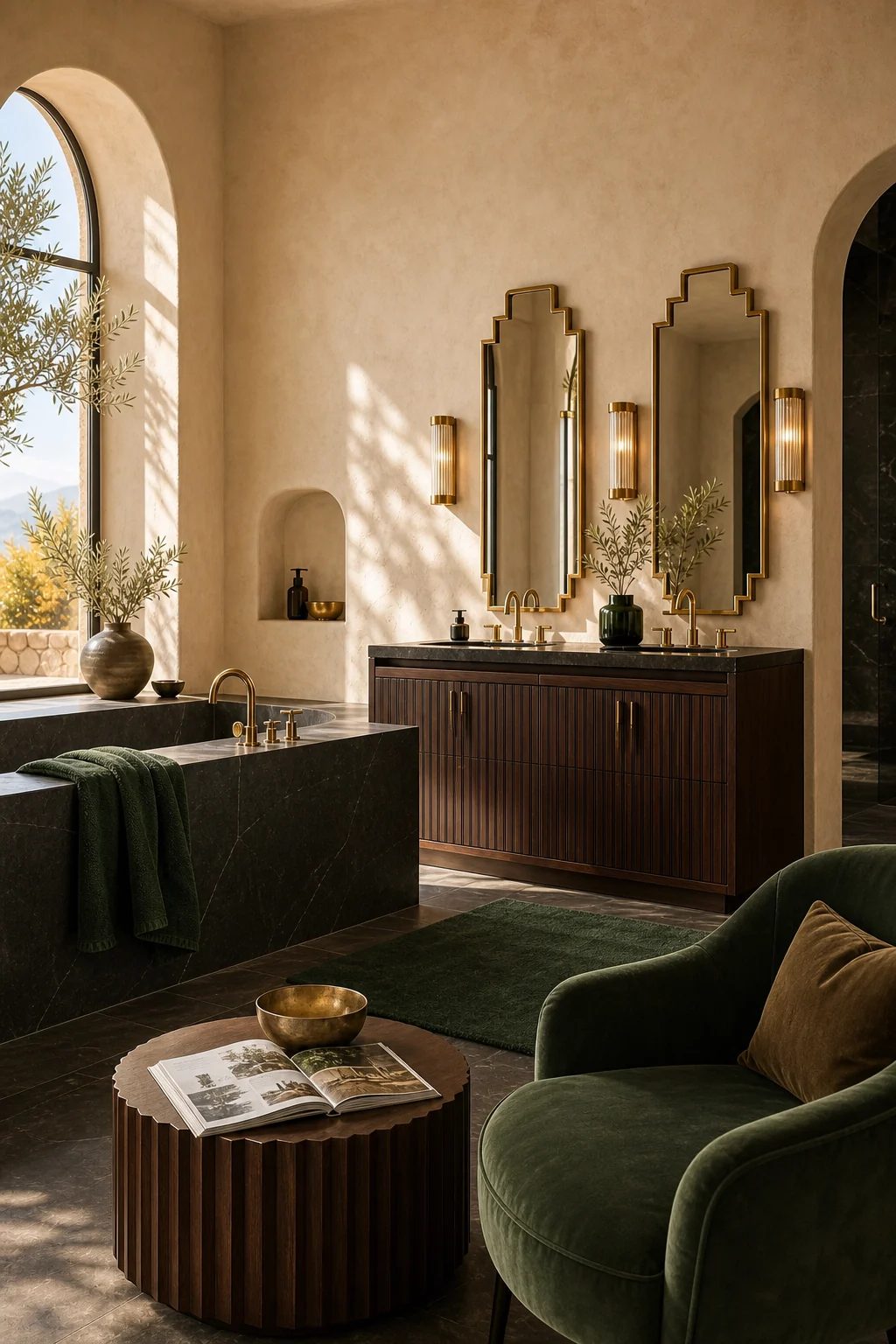
Observe exactly how the monolithic forms ground the room, establishing an undeniable baseline of weight and permanence. We map out these specific material assignments to ensure the tension holds together across every functional zone, from the vanity to the heavy bathtub.
| Layer | Mediterranean Role | Dark Deco Role | Bridge Decision |
|---|---|---|---|
| Shell | Hand-troweled biscuit plaster | Deep, moody foundation colors | Matte charcoal basalt flooring |
| Large Furniture | Built-in monolithic forms | Fluted dark walnut cabinetry | Clean, unornamented heavy volumes |
| Textiles | Organic, tactile woven cottons | Rich, saturated jewel tones | Deep emerald green plush towels |
| Lighting | Soft, diffused natural daylight | Machine-age polished brass sconces | Unlacquered brass that ages gracefully |
| Accents | Raw limestone or terracotta | Stepped geometric vanity mirrors | Sculptural forms with minimal detailing |
By strictly adhering to this deliberate distribution, the room avoids becoming a chaotic mixture. Each element performs a specific job, either softening the acoustics or injecting sharp, luxurious contrast into the daily bathing routine, ensuring a perfectly balanced, harmonious environment.
Sculpting with Light
Lighting dictates exactly how these contrasting textures interact within the confined architectural space. Generous natural daylight highlights the beautifully imperfect plaster walls, while precise, directional sconces illuminate the polished brass to emphasize its sleek, machine-age geometry perfectly throughout the day.
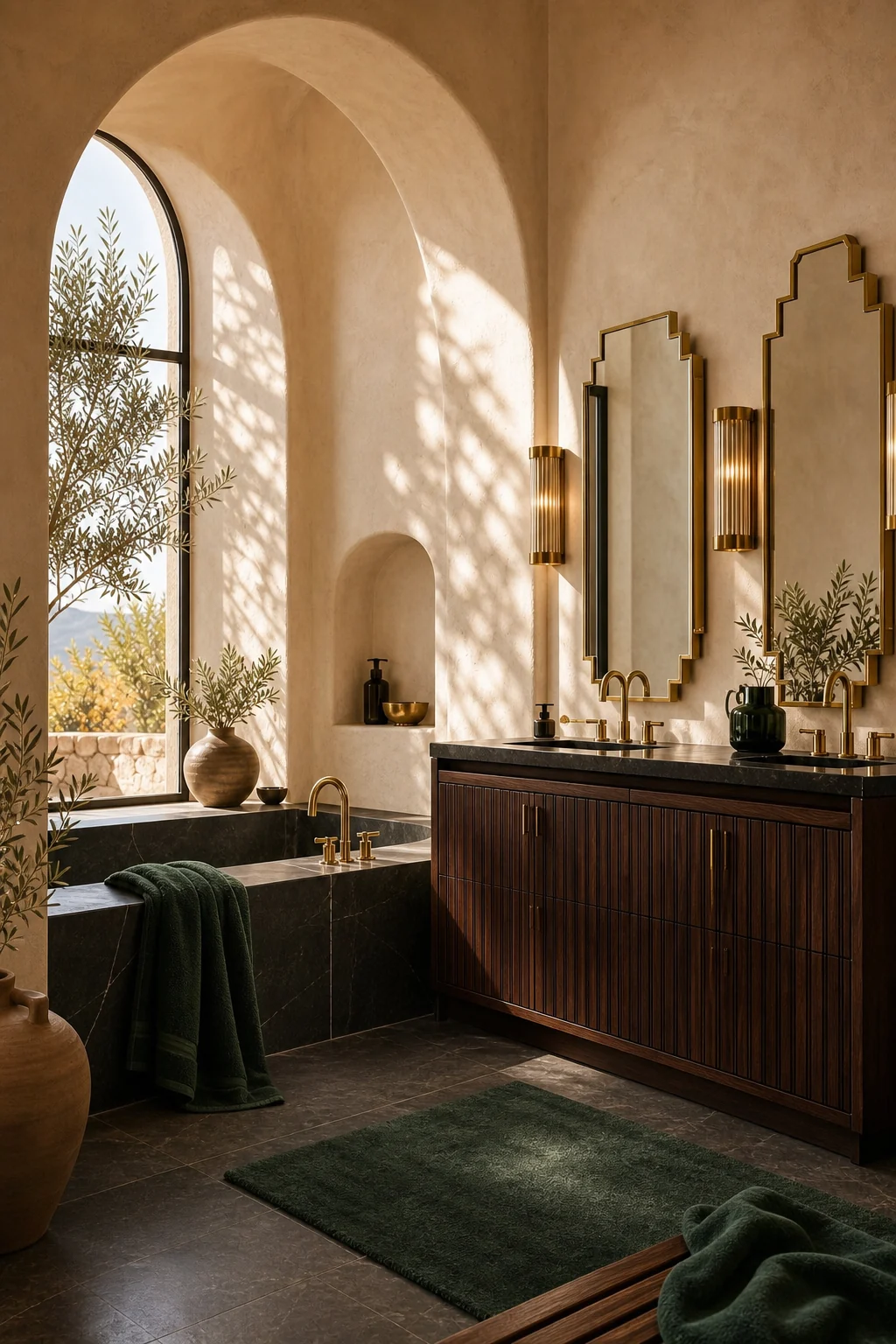
This crucial interplay of light and shadow actively prevents the dark surfaces from feeling gloomy or oppressive. Open, lifted midtones ensure the deep walnut and basalt remain highly aspirational, revealing their rich grain and subtle texture to the user every morning.
- Maximize natural daylight to warm the matte charcoal basalt surfaces thoroughly throughout the day.
- Mount sconces directly on the plaster to create dramatic textural contrast against the smooth metal.
- Use warm bulbs exclusively to enhance the biscuit wall tones and maintain a cozy atmosphere.
Curating the Details
Styling the final layer requires immense restraint to preserve the established logic. Every single object brought into the room must either reinforce the rustic shell or elevate the glamorous, machine-age tension we carefully built through our primary architectural interventions and material choices.
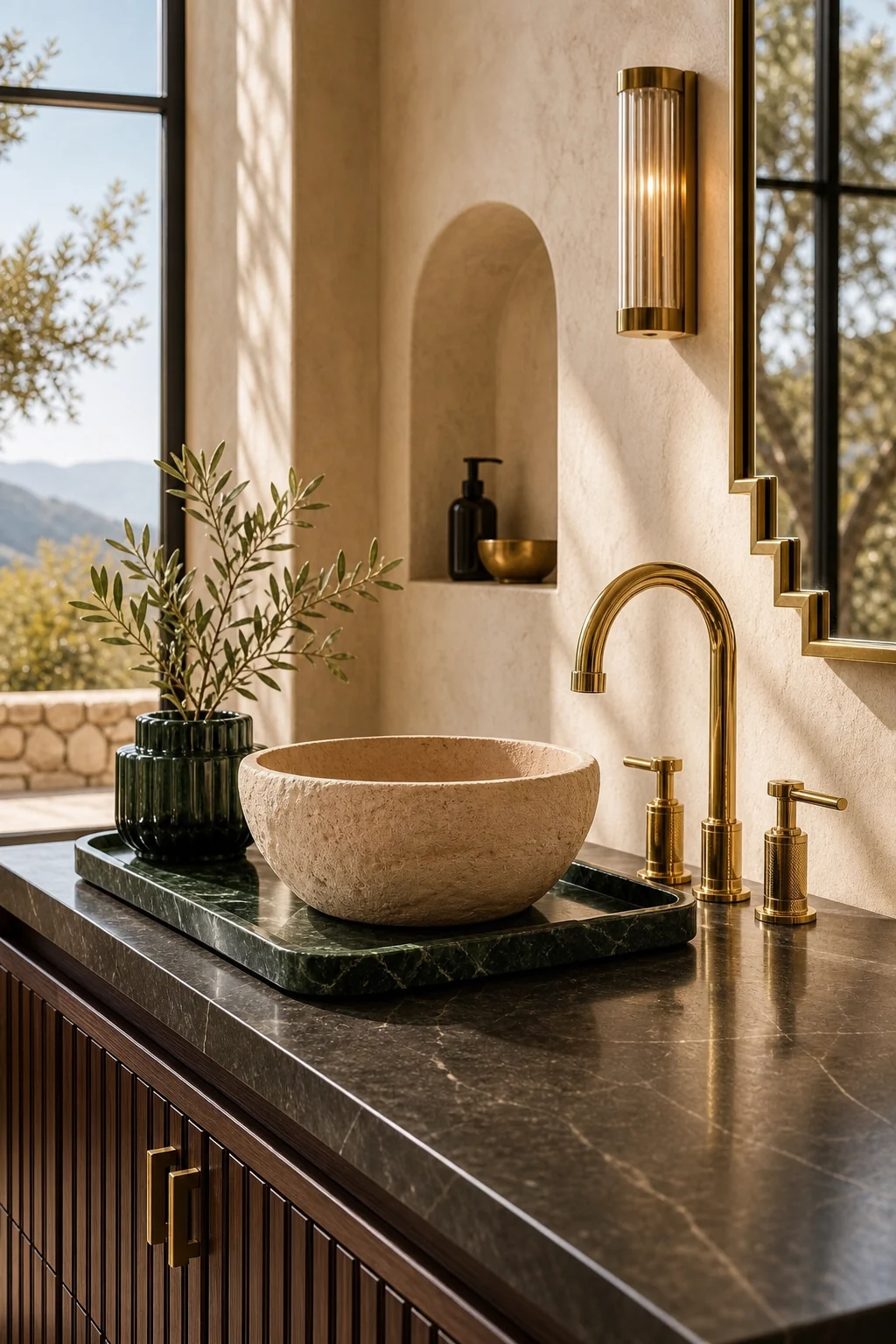
Avoid introducing new accent colors or competing patterns that might dilute the visual impact. Sticking strictly to deep emerald greens, raw ceramics, and polished metals maintains the established visual logic without cluttering the vanity or distracting from the core architectural materials.
Selecting purely functional accessories prevents the space from feeling overly decorated or artificially themed. A simple raw terracotta vessel or a heavy limestone basin grounds the sleek emerald marble, proving that rustic utility and urban luxury can coexist beautifully here seamlessly.
Adapting the Logic
This robust design logic easily translates to other functional zones like a walk-in shower. The fundamental key is maintaining the matte foundation while introducing sharp, metallic hardware to provide the necessary visual punctuation without overwhelming the small, enclosed wet space.
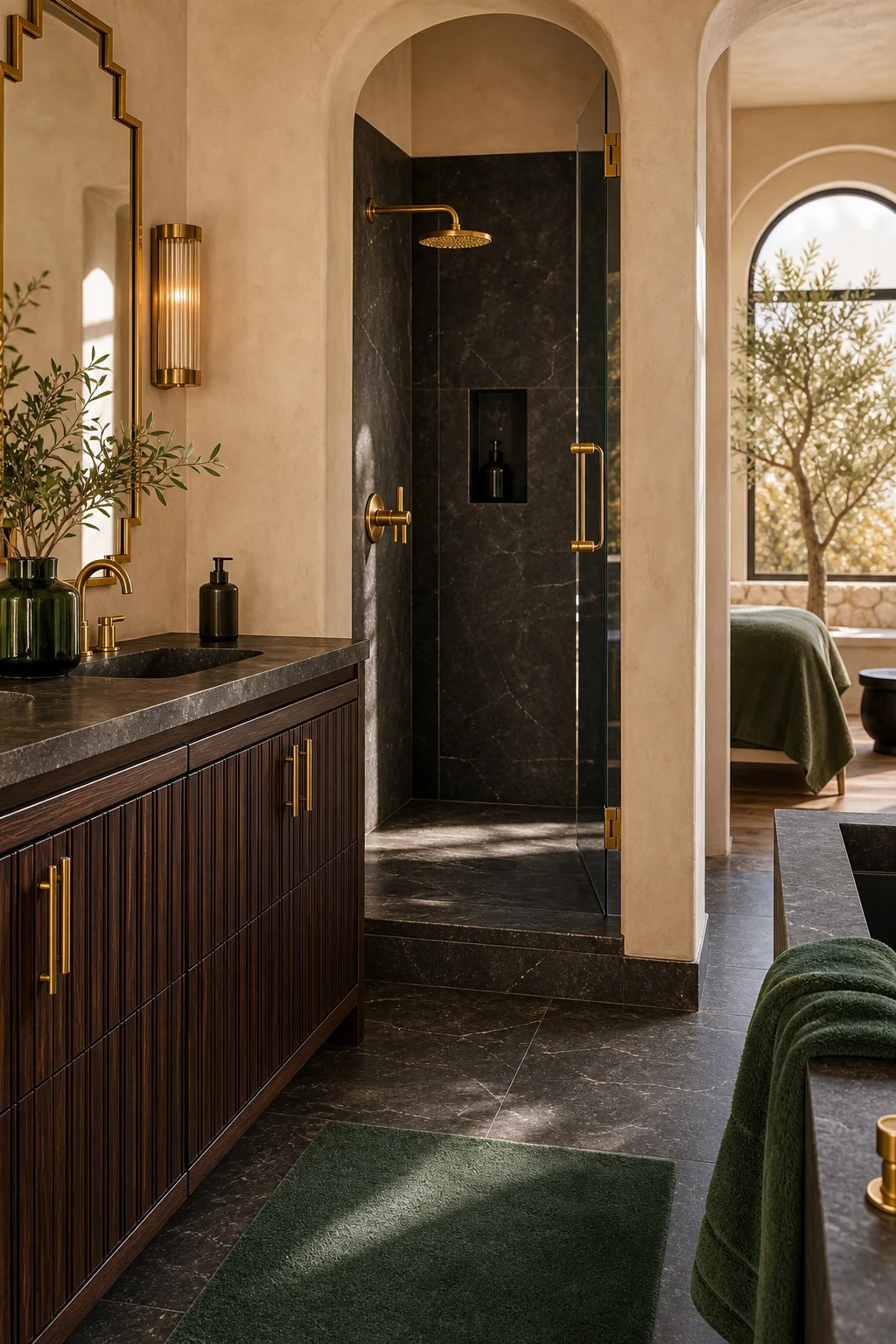
Keep the shower walls entirely seamless to honor the overarching Mediterranean shell. Letting the shower fixtures act as the sole Deco intervention ensures the wet space remains grounded, calm, and perfectly aligned with the broader aesthetic goals of the entire room.
- Use matte biscuit plaster for all wet walls to maintain absolute architectural continuity.
- Select unlacquered brass for exposed showerheads to age gracefully alongside the natural stone elements.
- Keep the floor tiles dark, heavily textured, and slip-resistant to ensure safety and moodiness.
Avoiding the Costume
A successful execution feels like a deliberate, luxurious evolution rather than a superficial themed set. Balancing this delicate tension requires strict, unwavering adherence to our assigned material roles and a complete refusal to compromise on the quality of the selected finishes.
When the balance tips, the room quickly fractures into competing, disconnected aesthetics. Recognizing common failure modes early in the process ensures the final space remains cohesive, grounded, and intentionally designed for daily luxury rather than resembling a chaotic, disjointed showroom display.
- Using glossy walls causes a split personality effect that instantly ruins the rustic illusion.
- Forgetting dark grounding elements leaves the room feeling generic, unanchored, and overly bright.
- Overcrowding the vanity obscures the stepped geometric mirrors and breaks the sleek, intentional lines.