
Shabby Chic Meets Medieval: Living Room
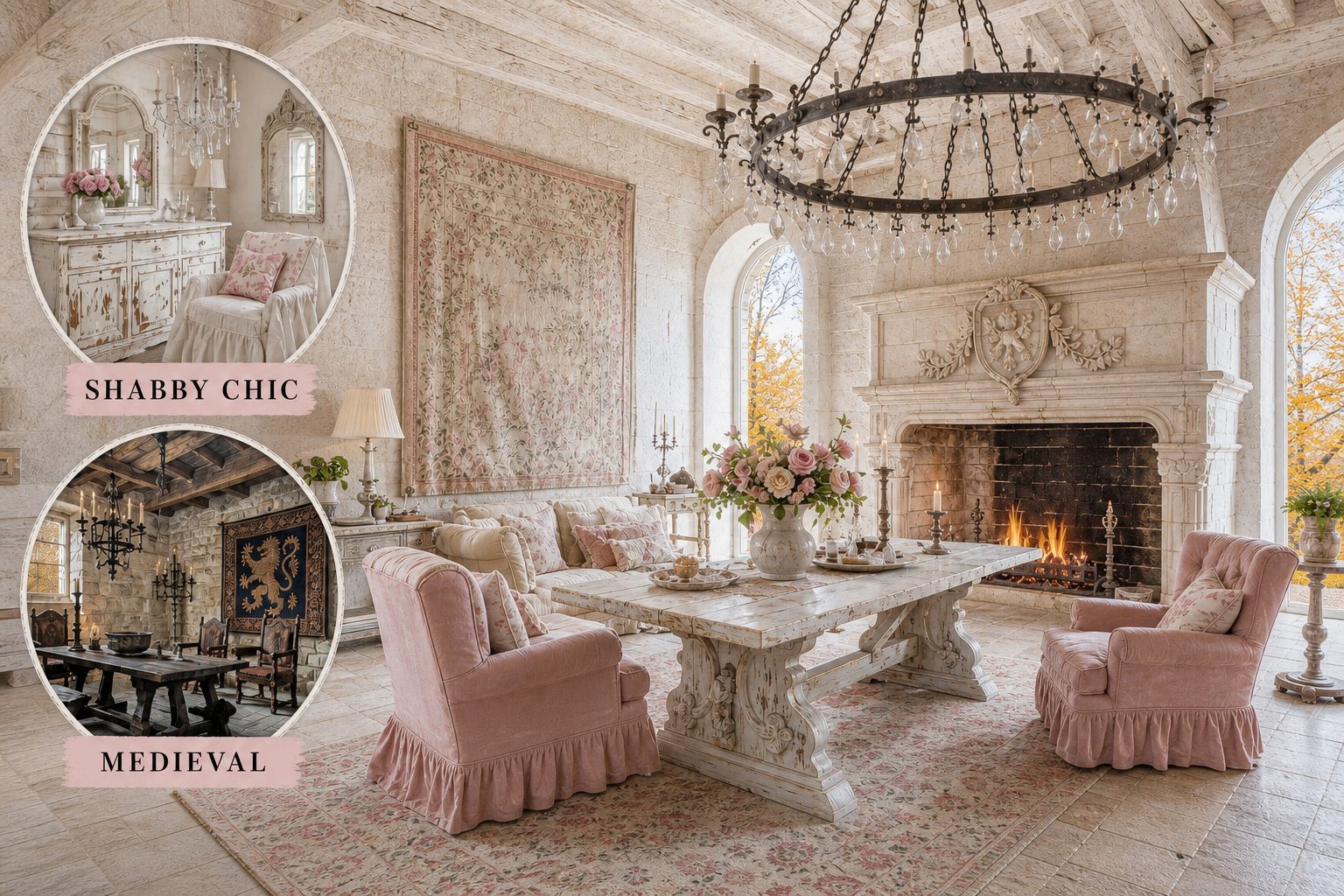
The imposing, defensive weight of medieval stone and timber clashes heavily with the delicate, feminine decay of shabby chic interiors. We resolve this by letting monumental architecture provide the scale, entirely softened by whitewashed finishes, faded linens, and crystal.
Softening the Stone
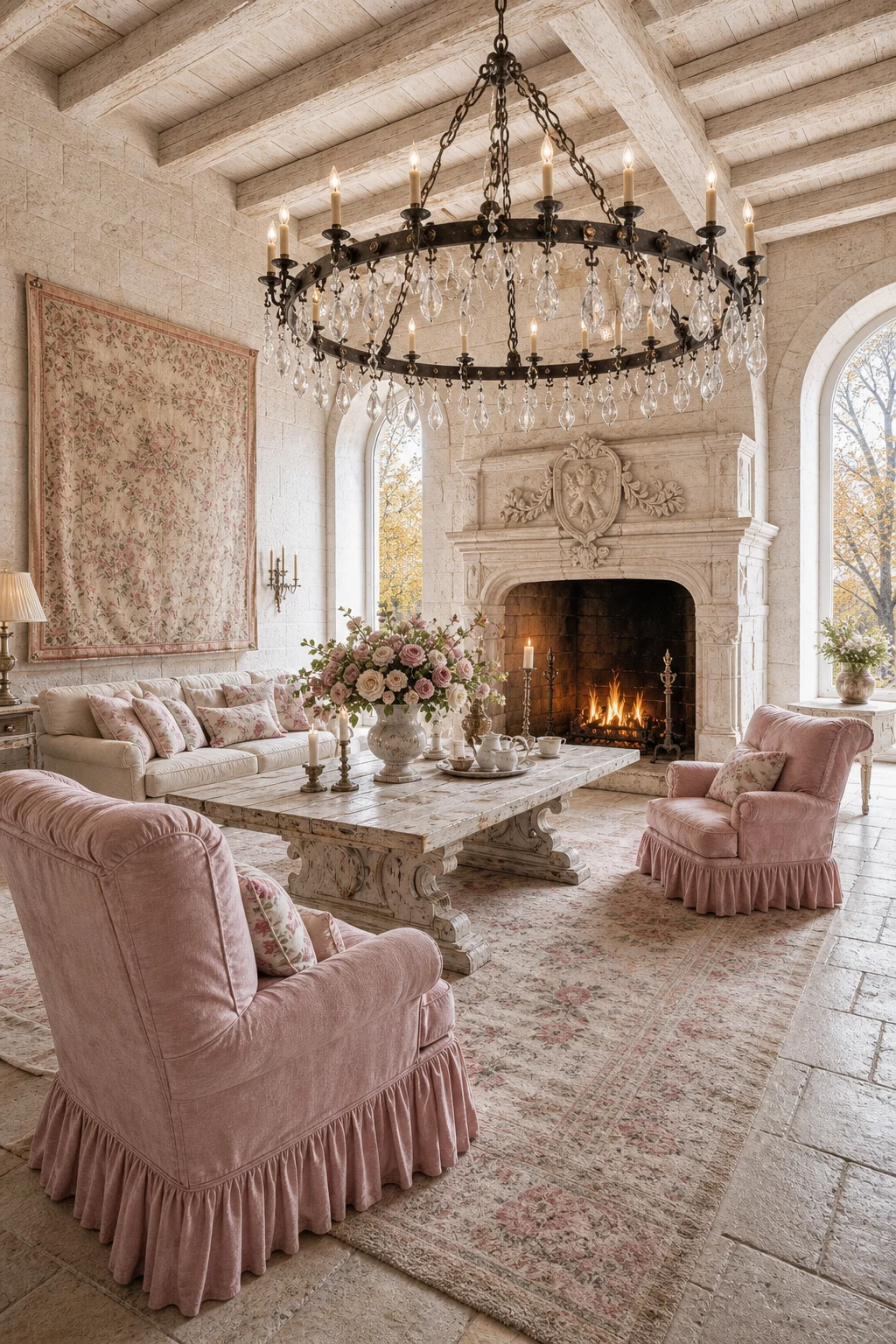
Begin by grounding delicate textiles against rugged structural elements. Faded rose-pink linen slipcovers immediately lose their overly sweet reputation when positioned against the rough, unyielding texture of pale limestone walls, creating an immediate and compelling visual tension that defines the room.
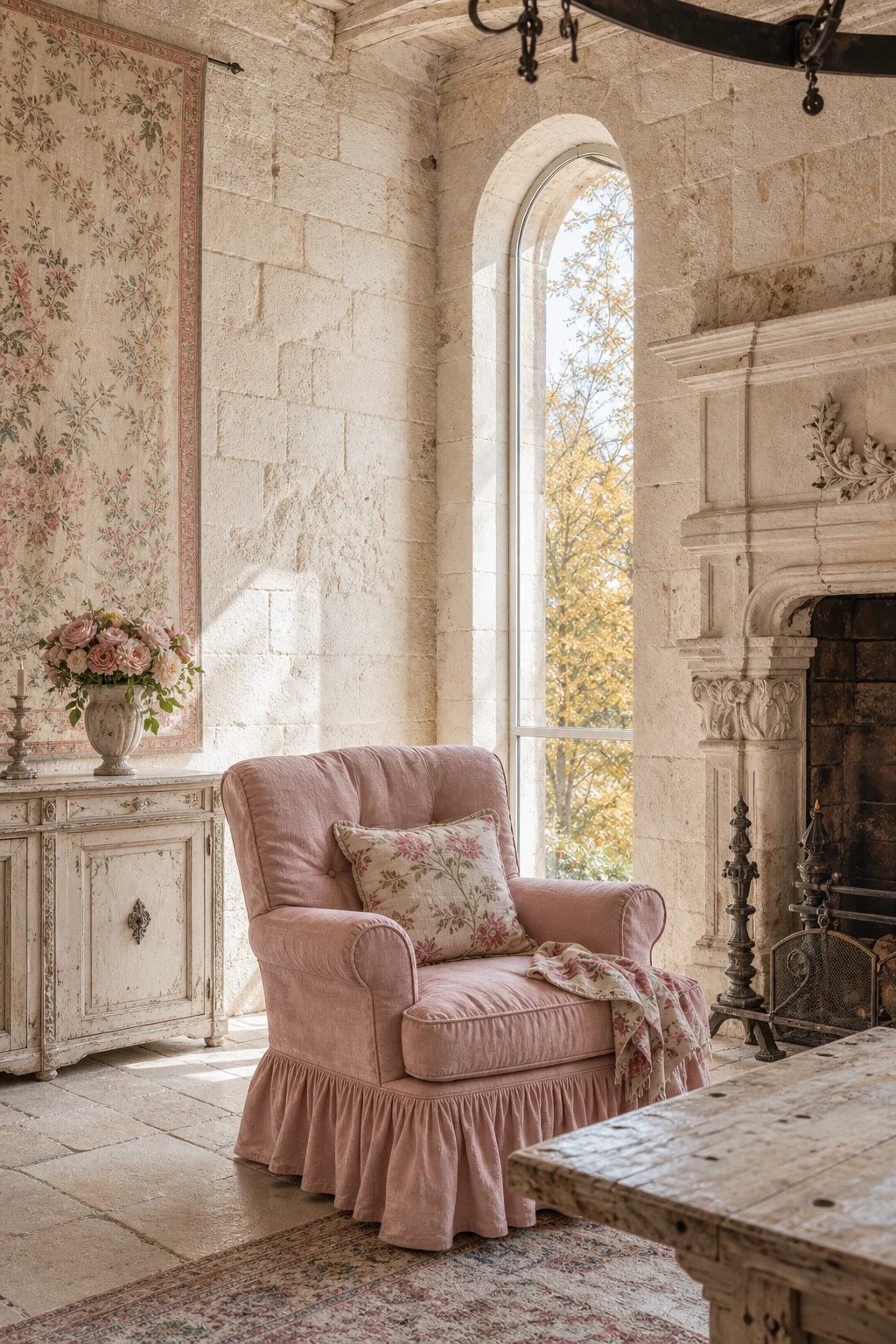
The soft, unstructured nature of shabby chic fabrics requires a rigid backdrop to feel intentional rather than messy. Notice how the ruffled edges of the slipcover interact with the rough-hewn stone surface, completely transforming the room’s defensive historic posture into something inviting.
This foundational contrast establishes the primary dialogue of the room. By allowing the walls to remain raw yet pale, the delicate textiles command attention without feeling out of place in a historically heavy environment, perfectly anchoring the seating arrangement.
Monumental Proportions
Embrace the monumental scale of historic architecture without adopting its traditional gloom. A monumental carved limestone fireplace anchors the room, while delicate finishes pull the visual weight upward, keeping the atmosphere remarkably bright, inviting, and free of heavy shadows.
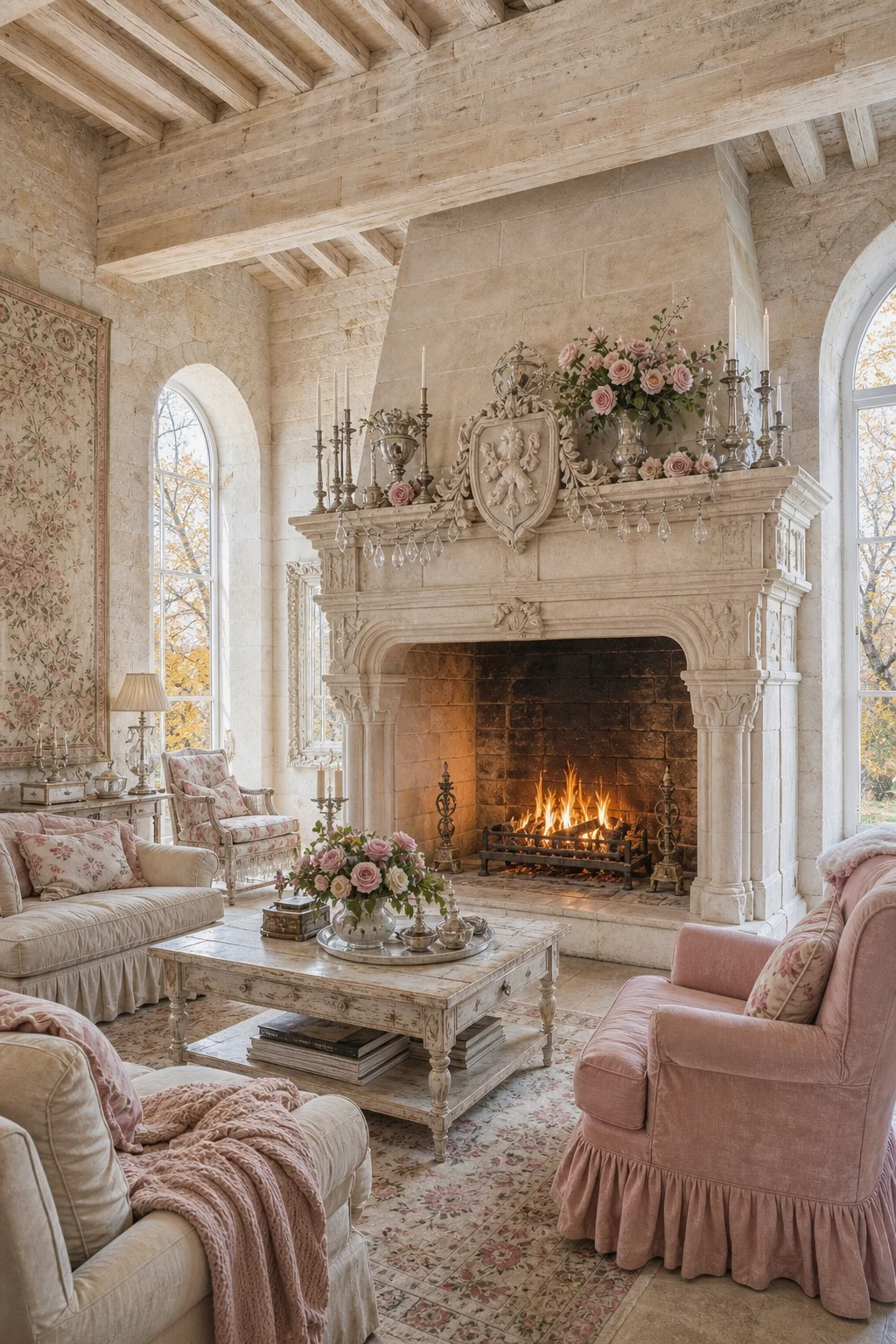
Medieval design relies on imposing structural forms that naturally dominate a space. To prevent these from feeling oppressive, introduce delicate crystal teardrops that scatter light across the heavy carved limestone, instantly softening the impact of the massive architectural features.
- Retain the monumental scale of carved limestone fireplaces to firmly anchor the room’s historic proportions.
- Keep exposed timber beams thick and structurally imposing to maintain authentic medieval architectural weight.
- Use heavy wrought-iron structures for primary lighting fixtures to contrast with the delicate crystals.
- Balance these exceptionally heavy elements with delicate, light-catching accessories and soft, faded linen textiles.
The Whitewash Bridge
The most crucial bridge between these opposing eras is the application of chalky white finishes. Lime-washing heavy medieval stone and timber instantly aligns them with the bright, airy shabby chic palette without erasing their essential historic texture and permanence.
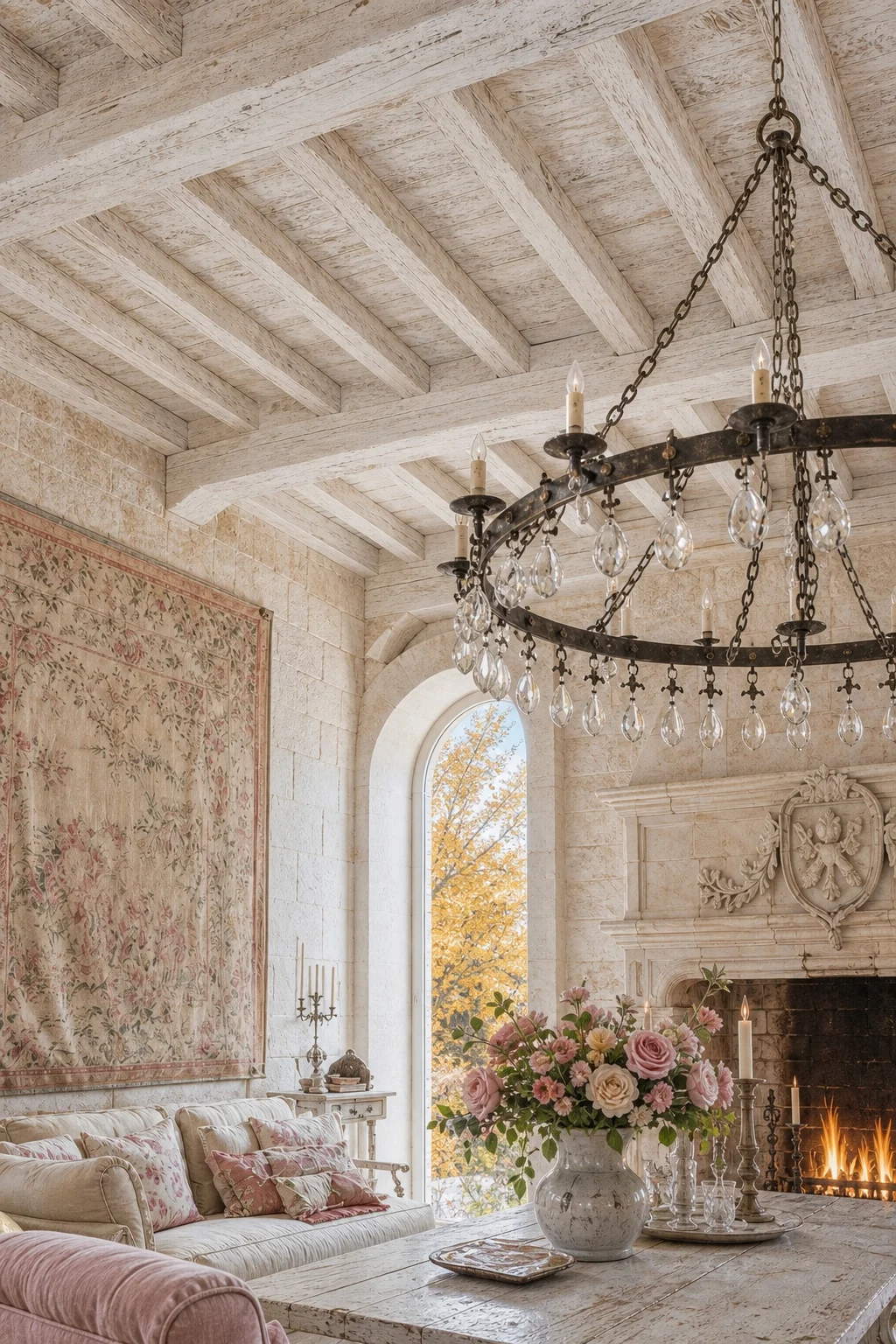
This transformative treatment strips away the visual weight of dark wood. A sheer lime-wash ensures the underlying medieval texture remains distinctly visible through the shabby chic brightness, preserving the structural integrity of the ceiling while completely altering its mood.
By unifying the room’s shell under a pale wash, the heavy architecture acts as a blank canvas. This allows the romantic, distressed furniture to step forward, supported by the quiet strength of the bleached structure surrounding the entire living space.
Layering the Seating Area
A successful seating arrangement forces these styles into direct physical contact. Surround a heavy, distressed white-painted wood medieval trestle table with soft, skirted armchairs to create an inviting, functional tension at the very center of the living room floor plan.
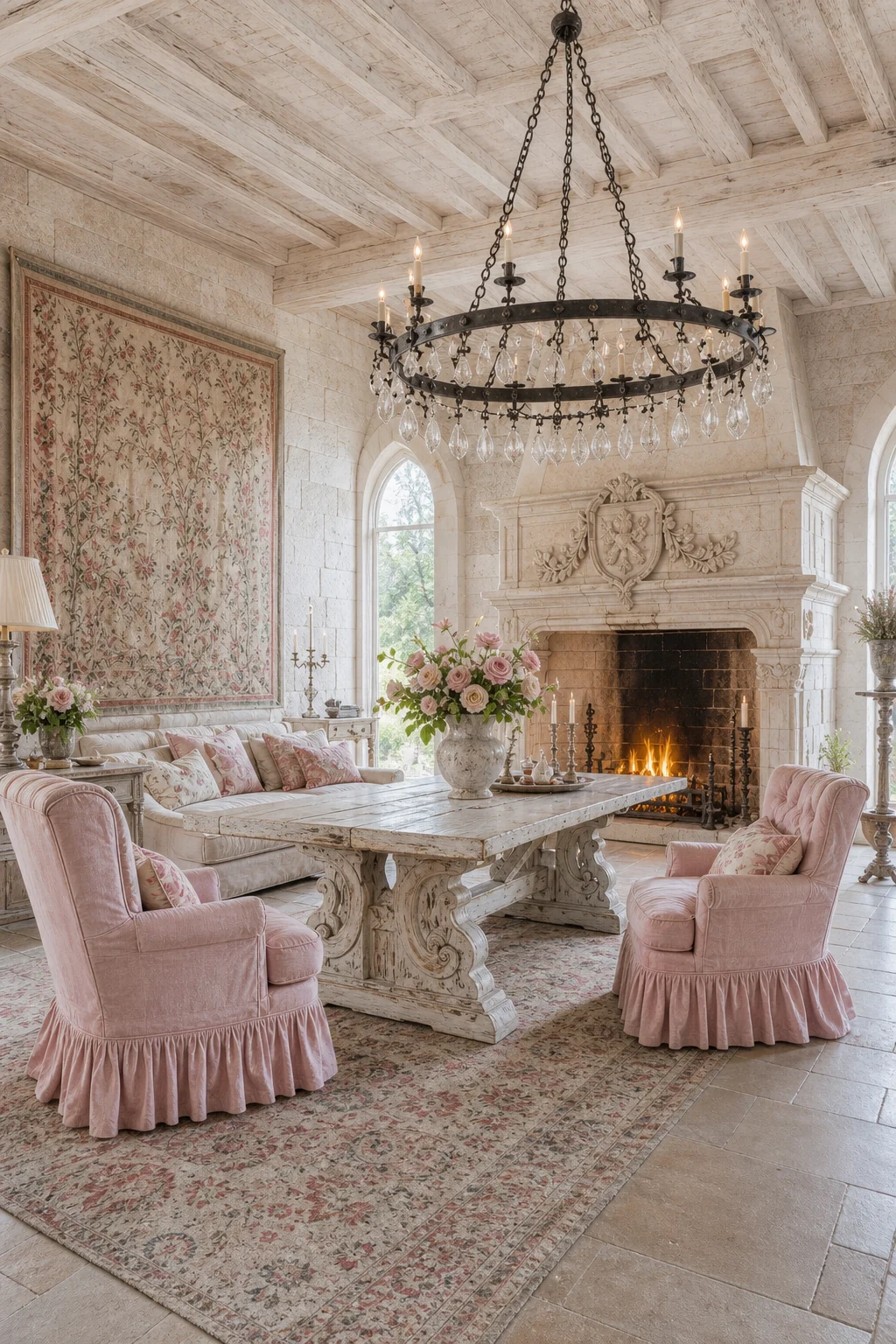
By mixing these contrasting silhouettes, the room achieves a delicate equilibrium. The following translation table outlines exactly how each design layer resolves the inherent contradiction between monumental historic forms and the romantic decay characteristic of shabby chic interiors.
| Layer | shabby chic Role | medieval Role | Bridge Decision |
|---|---|---|---|
| Shell | Faded pastel motifs, chalk white | Monumental scale, heavy timber | Lime-washed Caen limestone |
| Furniture | Distressed white-painted finishes | Heavy oak trestle structures | Bleached, weathered wood tones |
| Textiles | Faded rose-pink linen slipcovers | Heavy woven tapestries | Pastel floral motifs on heavy weaves |
| Lighting | Delicate crystal teardrop accents | Wrought-iron wheel chandeliers | Iron structures dripping with crystals |
| Accents | Vintage mirrors, soft roses | Wrought-iron candelabras | Weathered silver candlesticks |
This layered approach ensures that every sightline contains elements from both eras. The heavy oak provides the necessary grounding, while the faded linens offer tactile comfort, making the monumental space highly livable, surprisingly intimate, and perfectly balanced for daily use.
Illuminating the Architecture
Lighting dictates the mood, rescuing the space from feeling like a dark fortress. Crisp, golden daylight pouring through tall arched windows highlights the faded pastel tapestries and the soft textures of the bleached oak floors, completely transforming the medieval shell.
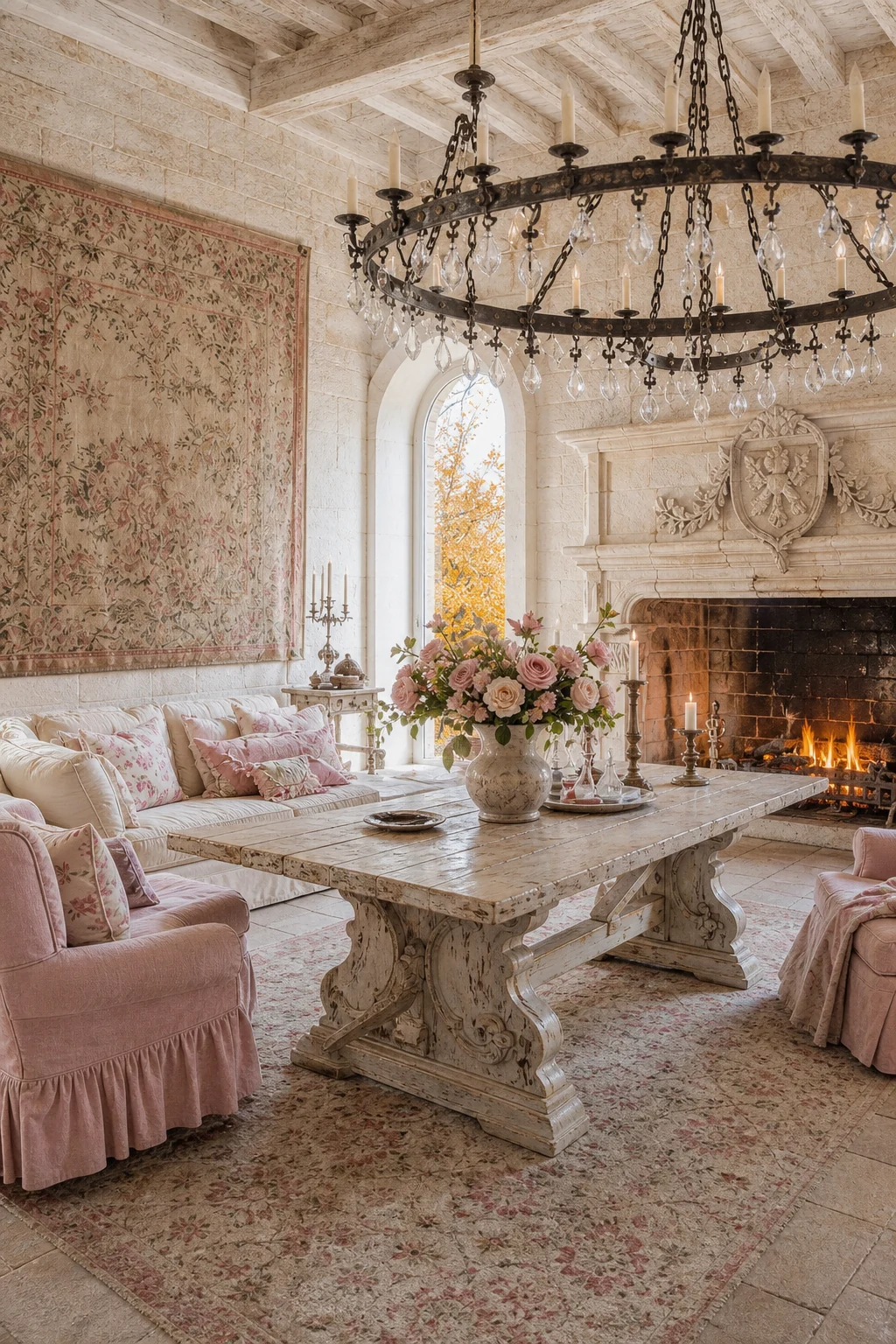
Open shadows and lifted midtones are absolutely essential for this aesthetic. By maximizing natural light, the monumental architecture feels surprisingly airy and romantic, completely subverting the gloomy expectations often associated with heavy medieval interiors and massive stone walls.
- Maximize natural light through tall, unadorned architectural arches to brighten the heavy stone space.
- Lift the midtones with pale wall treatments to avoid gloomy, shadowed corners entirely.
- Use crystal teardrops to scatter light across heavy stone and timber surfaces effectively.
- Position vintage mirrors strategically to reflect daylight deep into the monumental living room.
Curating the Surfaces
Surface styling requires a careful edit of materials to maintain the delicate balance. Combine weathered silver accents with faded floral arrangements on heavy oak consoles to seamlessly merge romantic decay with historic permanence across every visible tabletop.
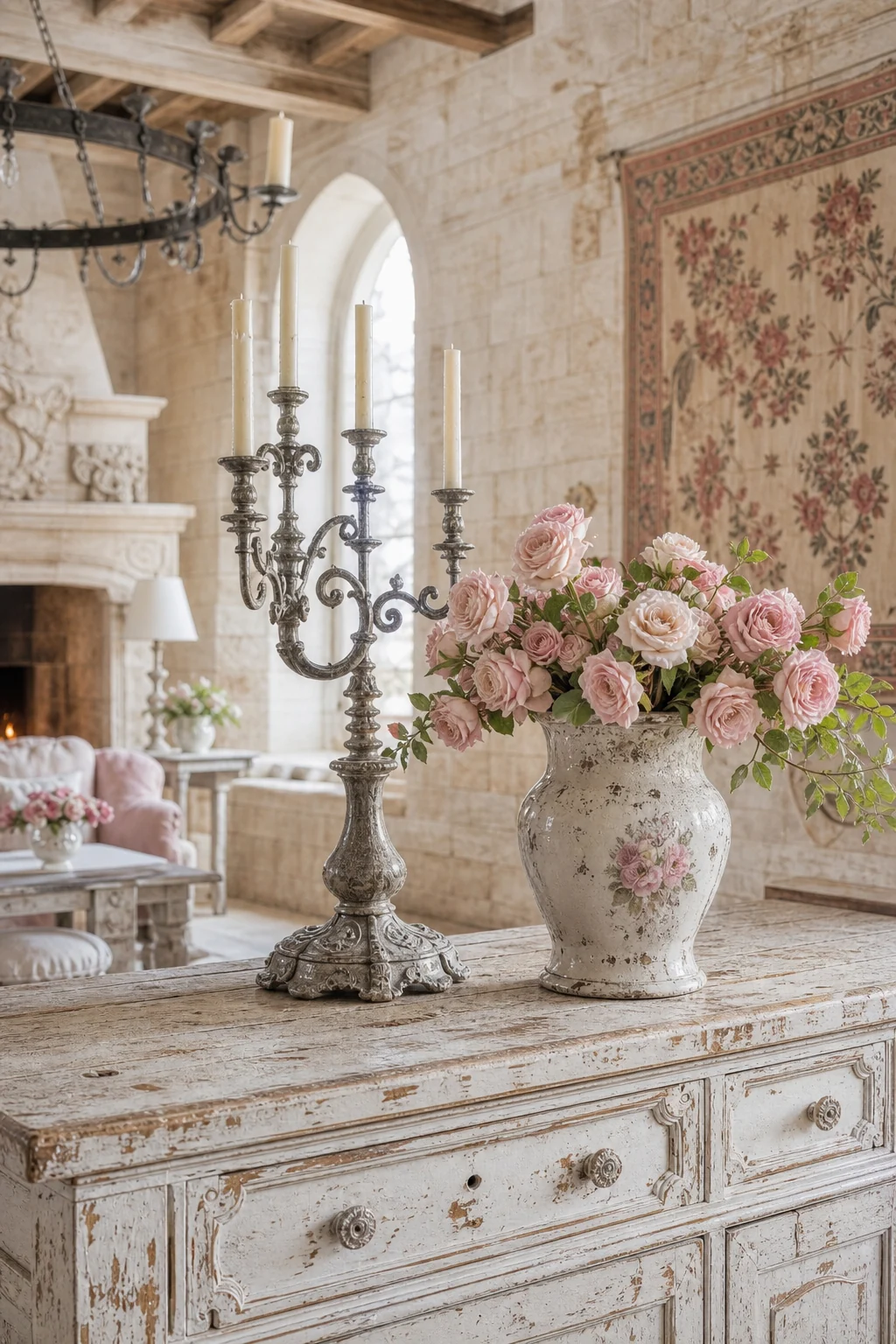
This deliberate merging prevents the room from feeling overly precious or fragile. Focus your sourcing on substantial pieces that bridge these distinct material languages, ensuring the decorative items possess enough visual weight to compete with the monumental medieval architecture.
- Source faded rose-pink linen slipcovers and ruffled textiles for exceptionally soft, romantic seating.
- Seek out distressed white-painted heavy wooden trestle tables to anchor the center of the room.
- Find wrought-iron wheel chandeliers with delicate crystal teardrop accents attached to the heavy frame.
- Collect weathered silver candelabras and vintage distressed mirrors to adorn the pale stone walls.
Translating the Threshold
This aesthetic easily adapts to transitional spaces and smaller footprints. Transform heavy arched wooden doors with a peeling white patina, and flank them with delicate crystal sconces to immediately signal the stylistic shift as you move through the home.
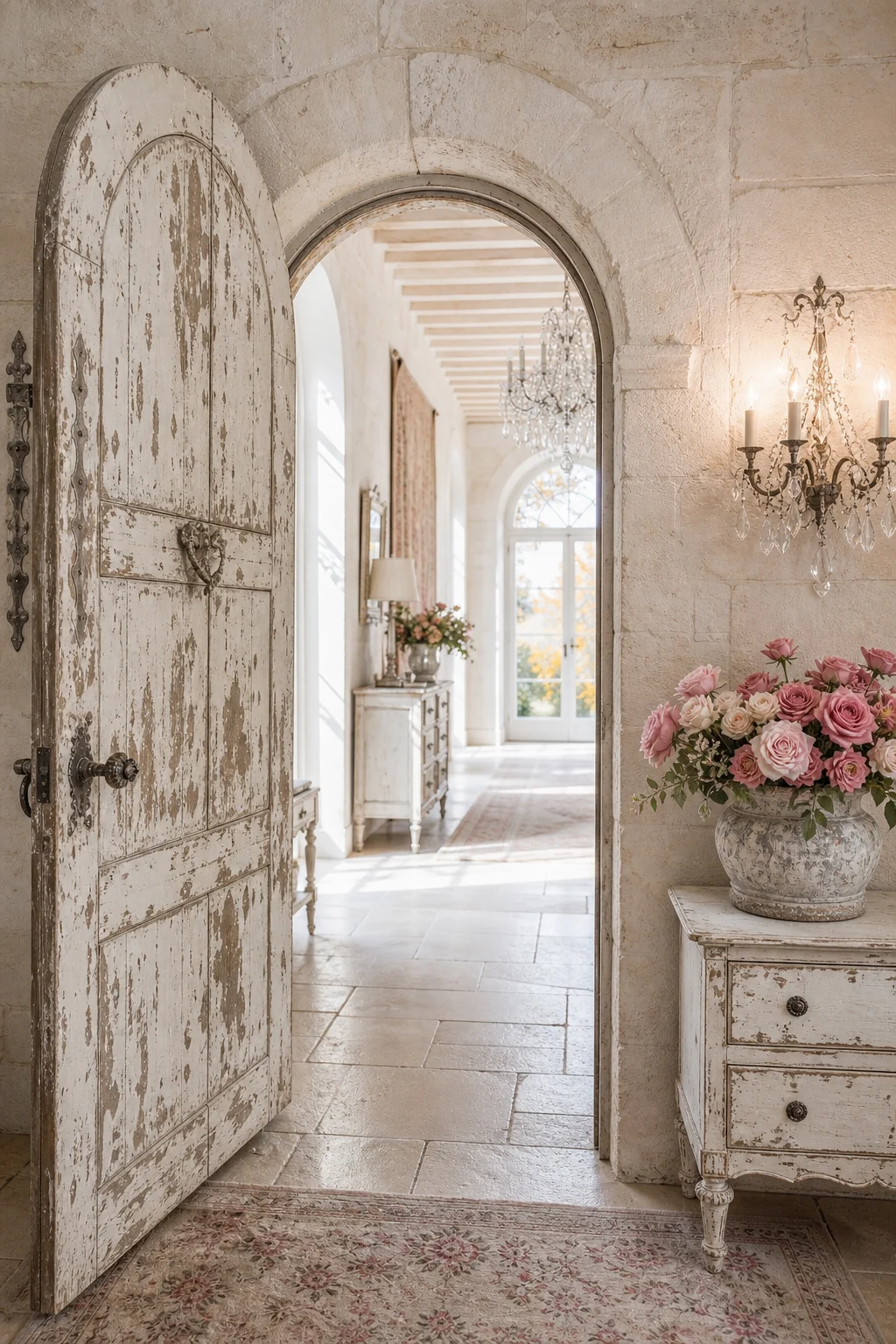
Even in tight hallways, the tension between heavy structure and delicate styling holds true. Keep the palette exceptionally bright to ensure narrow passages feel intentionally romantic and open rather than cramped, defensive, or disconnected from the main living area.
Carrying this bright, textural approach into the transitional zones unifies the entire home. The consistent application of chalky whites and weathered finishes ensures the journey between rooms feels like a single, deliberate architectural statement rather than a disjointed collection.
Grounding the Fantasy
Without strict editing, this mix easily devolves into a disjointed movie set. Success relies on consistent material treatments and a unified bright palette that forces the heavy and light elements to seamlessly coexist within the exact same visual plane.
The final resolution requires constant vigilance against common styling traps. A successful shabby chic medieval room relies on authentic, heavy textures interacting directly with soft, faded fabrics, never allowing one style to isolate itself from the other across the room.
- Costume: Relying on plastic props instead of authentic heavy medieval materials like carved stone.
- Split personality: Keeping styles isolated on opposite sides of the living room layout.
- Dominance: Letting dark medieval wood overpower the carefully balanced, bright chalky white palette.
- Generic result: Over-distressing furniture until it completely loses its imposing historical context and weight.