
Cottagecore Meets Gothic Revival: Library
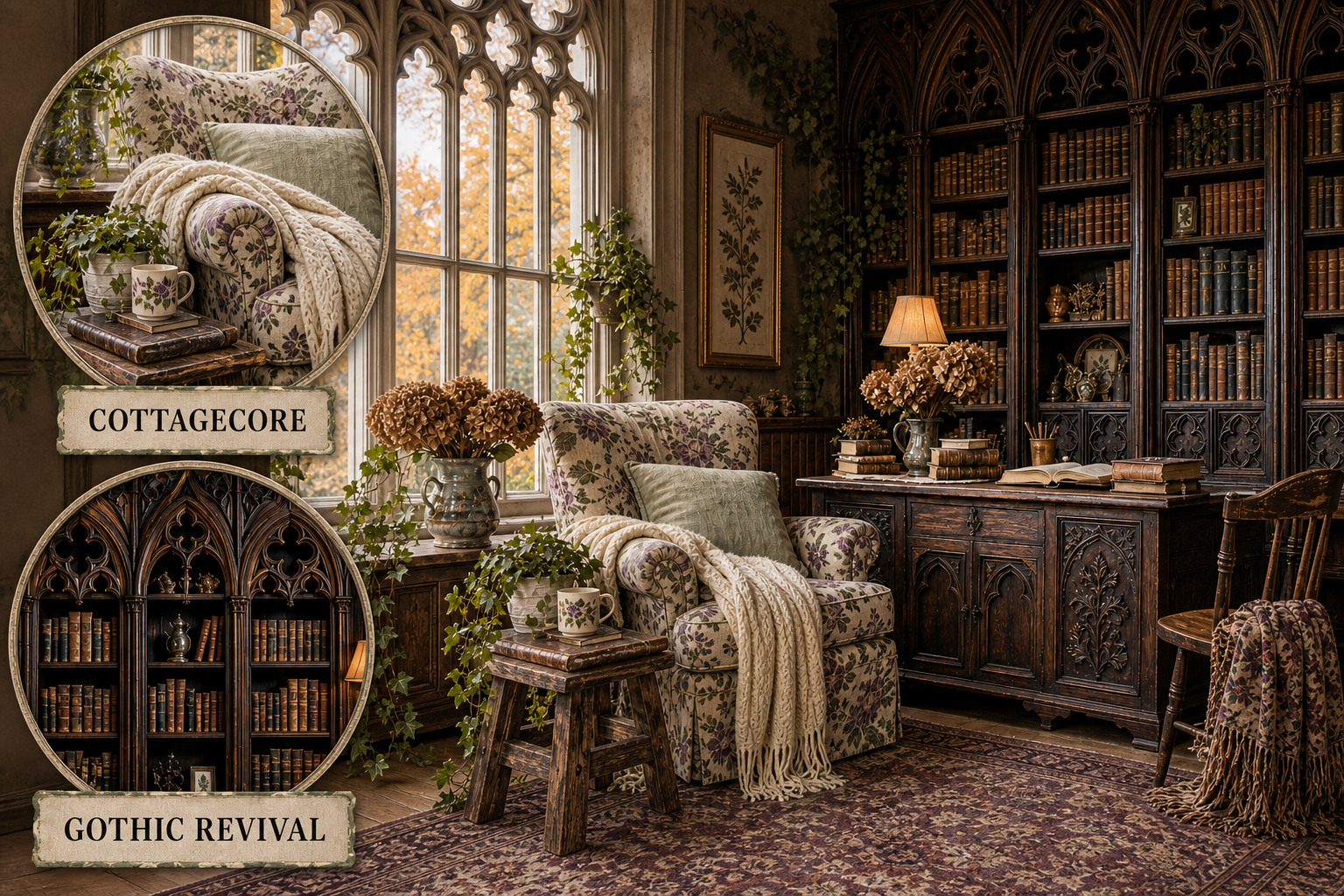
The imposing, ecclesiastical formality of Gothic Revival architecture often clashes with the humble, soft clutter of Cottagecore. We resolve this by letting rigid carved woodwork provide the structural bones while pastoral textiles bring the room down to a deeply human.
Establish the soft foundation
Cottagecore thrives on pastoral warmth and tactile comfort. In a library setting, this translates directly to overstuffed seating and faded floral linens that immediately invite you to curl up with a book, establishing a welcoming baseline before introducing much heavier architectural elements.
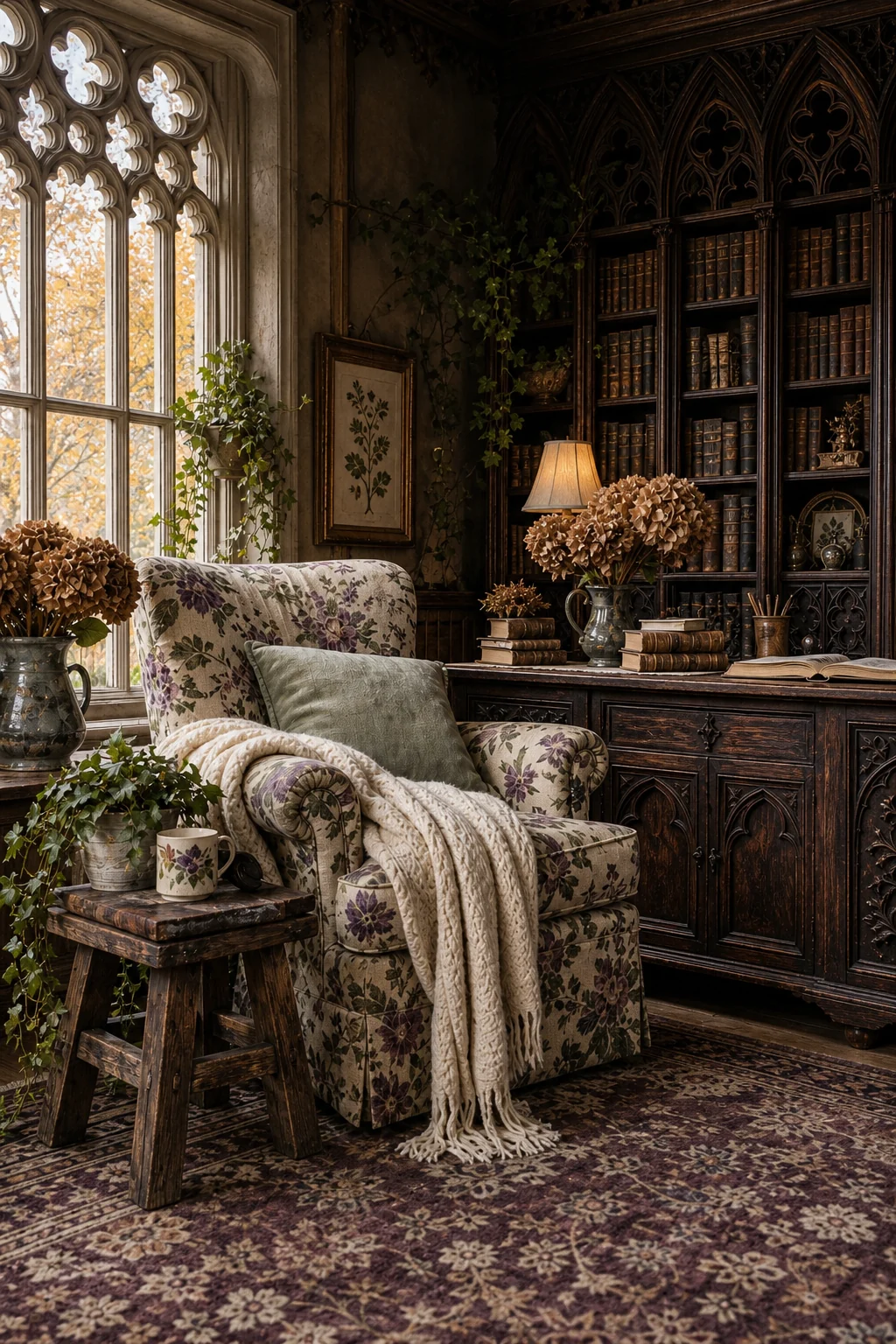
Placing these humble, soft elements directly against rigid architectural features creates immediate visual relief. The textiles break up the heavy woodwork and establish a relaxed, genuinely lived-in atmosphere that prevents the historic room from feeling like an untouchable, sterile museum display.
This foundational layer of softness is absolutely non-negotiable for achieving the desired tension. By anchoring the floor space with plush fabrics, you create a necessary buffer zone that allows the towering architectural features to exist without overwhelming the daily human experience.
- Choose oversized slipcovered armchairs featuring relaxed, unstructured skirts that gently sweep across the vintage wooden floorboards.
- Layer tactile, unbleached wool throws casually over the seating to invite immediate physical interaction.
- Select faded floral prints in muted sage and dusty plum to establish the pastoral palette.
Anchor with architectural gravity
Gothic Revival provides the vital structural anchor for the entire room. Floor-to-ceiling carved oak bookcases with pointed arch headers introduce a profound sense of ecclesiastical formality and vertical scale, ensuring the pastoral softness has a sufficiently rigid framework to push back against.
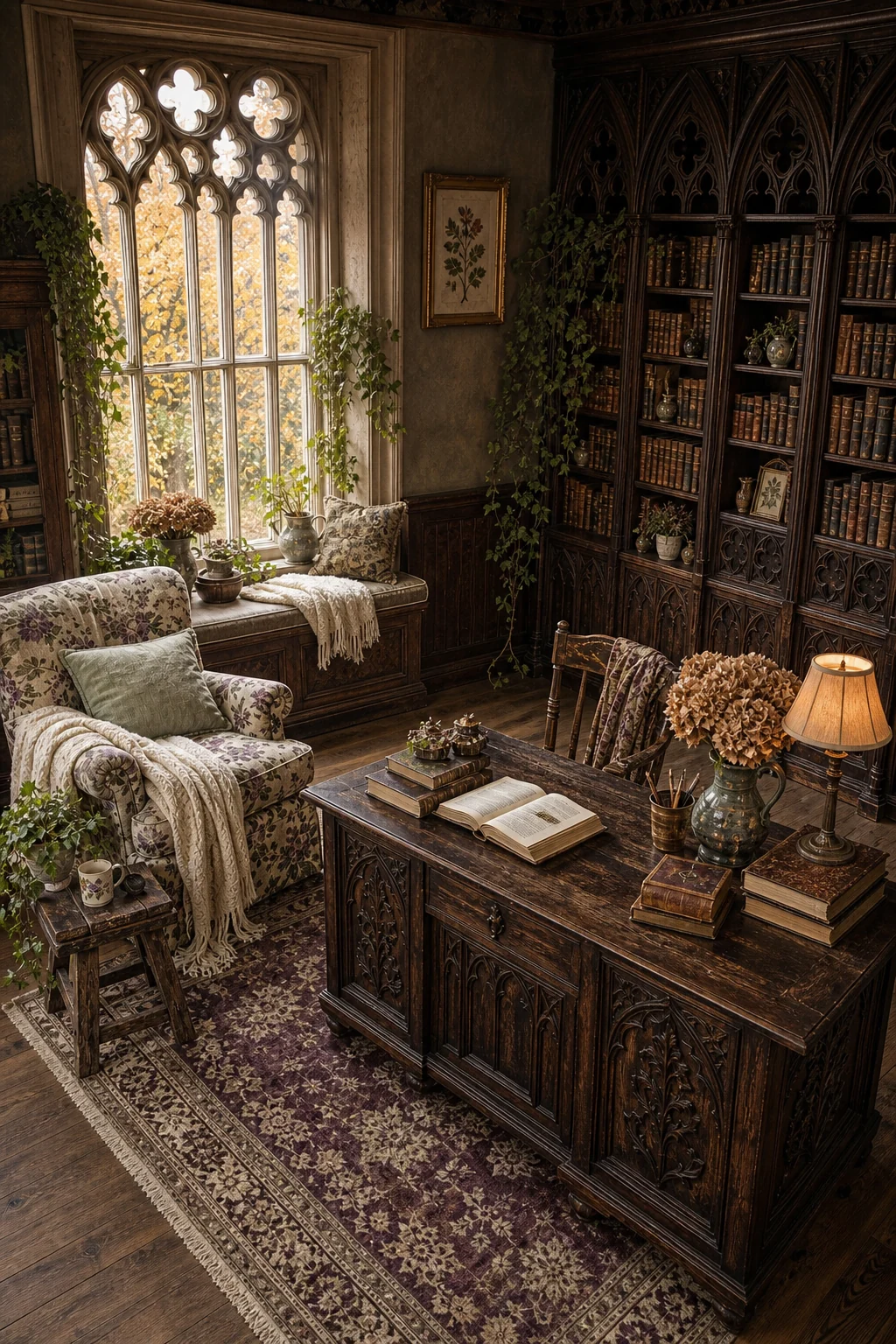
This imposing framework prevents the softer elements from feeling overly sweet or chaotic. The dark, heavy wood grounds the space, offering a serious, historical counterpoint to the pastoral styling that elevates the entire room into a sophisticated, highly intentional design statement.
Embracing the natural weight of these architectural features requires deliberate confidence. Allow the towering bookcases to dominate the vertical plane, trusting that your carefully chosen floor-level textiles will adequately soften their imposing presence and maintain a comfortable, inviting residential atmosphere.
Bridge with botanical motifs
Finding common ground between ecclesiastical rigidity and pastoral softness requires a shared visual language. Botanical motifs serve as the perfect bridge across these contrasting aesthetics, effortlessly linking the rigid historical carvings with the relaxed, nature-inspired fabric prints scattered throughout the space.
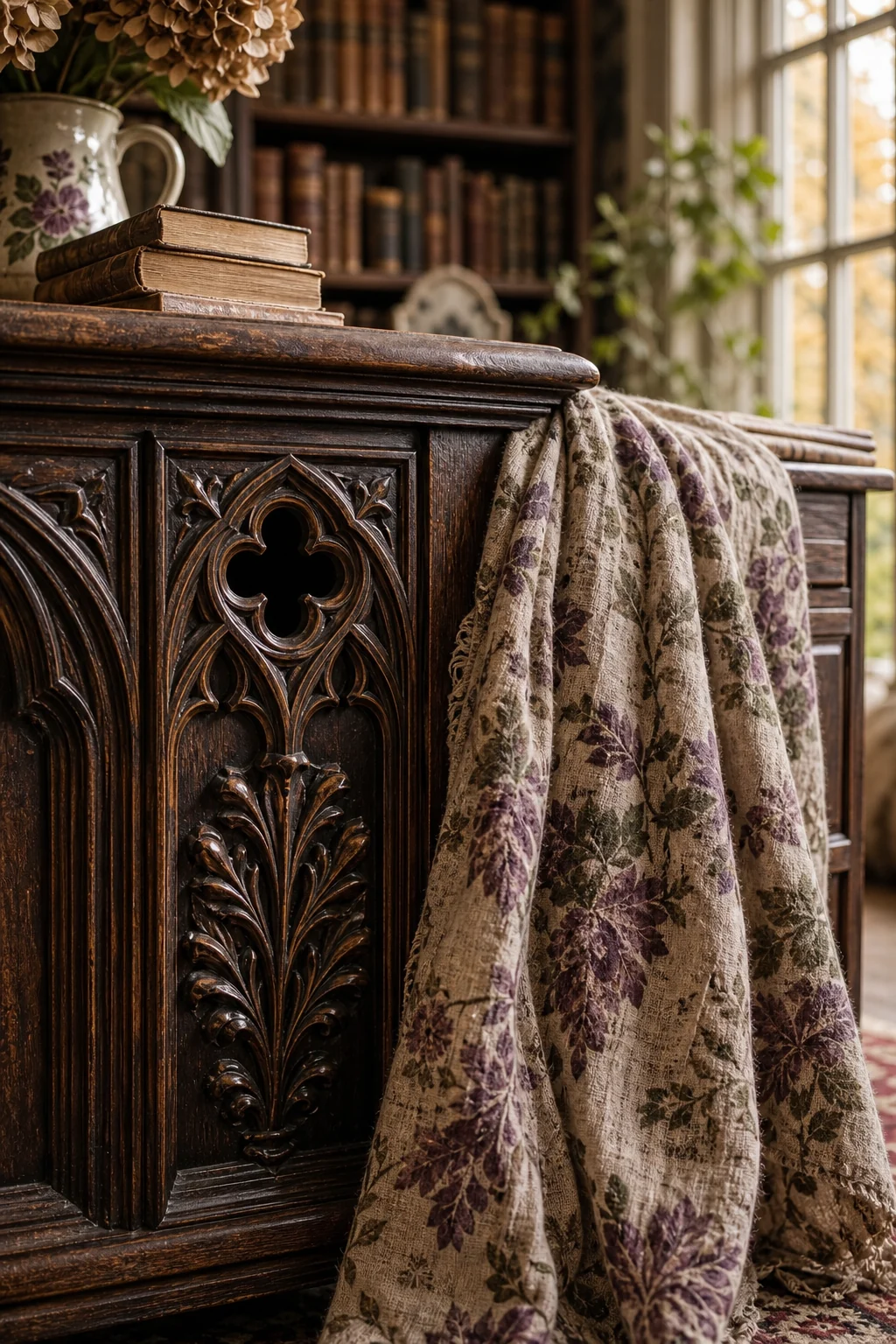
Carved wooden gothic leaves on the antique furniture echo the printed floral linens beautifully. A unified palette of warm golden amber, dusty plum, and sage green ties the disparate materials together seamlessly, proving that these opposing styles share deeply compatible fundamental roots.
This deliberate repetition of natural forms prevents the room from feeling like a chaotic collision of eras. When the eye registers the exact same botanical shapes rendered in both heavy timber and soft linen, the stylistic contradiction immediately resolves into complete harmony.
Build the seating vignette
Constructing the seating vignette requires exceptionally careful layering. The heavy writing desk and towering bookcases must frame the cozy armchair without swallowing it entirely, creating a protected enclave that feels both architecturally significant and intimately scaled for quiet, relaxing afternoon reading.
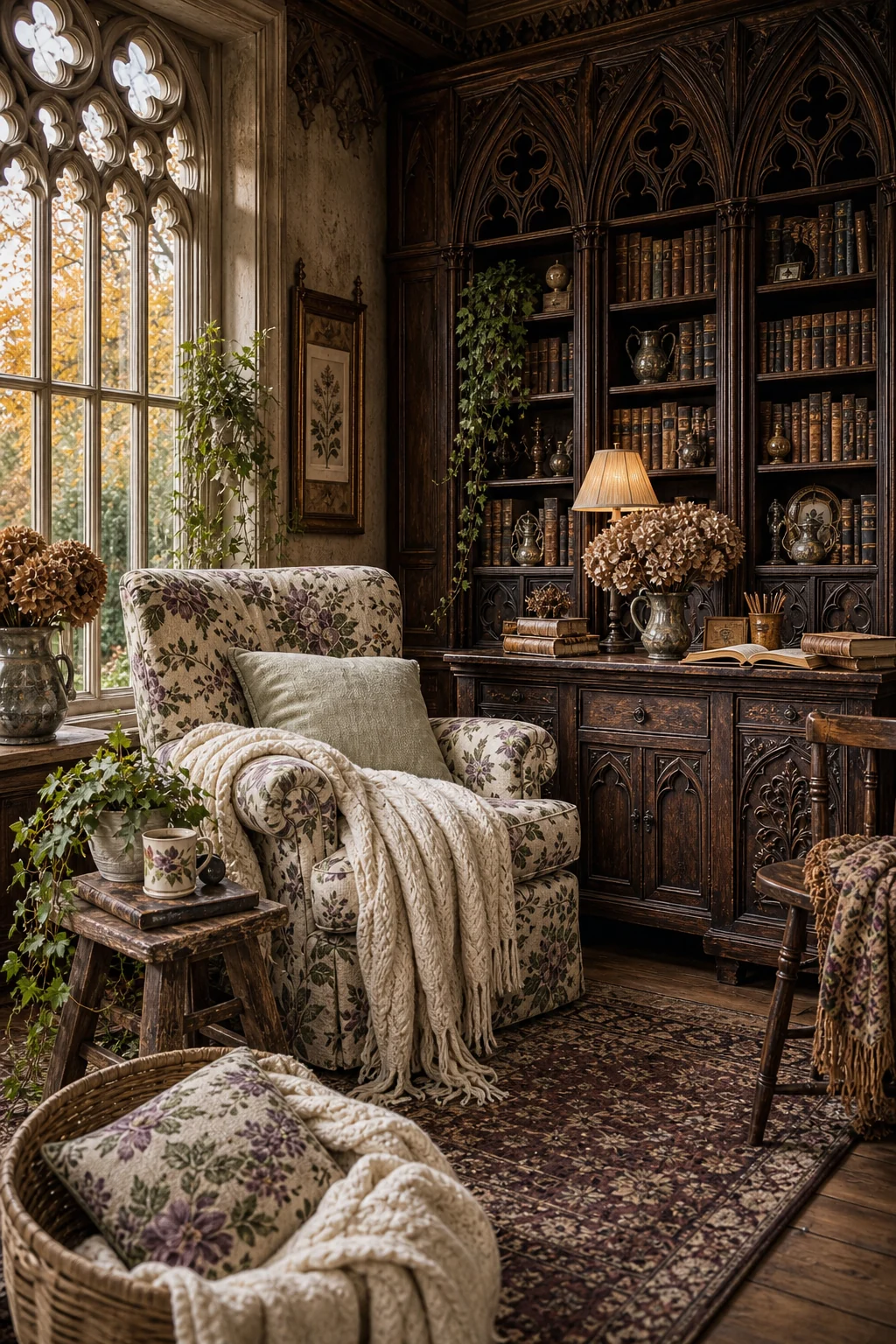
By strategically placing faded floral linen directly against dark oak, you establish clear functional zones. The detailed table below outlines exactly how each distinct design layer contributes to this resolved contradiction, ensuring neither aesthetic overpowers the other in the final room composition.
| Design Layer | Cottagecore Role | Gothic Revival Role | Bridge Decision |
|---|---|---|---|
| Architectural Shell | Soft, diffused natural daylight and lived-in residential warmth | Imposing floor-to-ceiling carved dark oak wall panels | Unifying warm golden amber wood tones |
| Large Furniture | Overstuffed, highly comfortable slipcovered seating arrangements | Heavy, dark-stained historical writing desk and shelving | Historically rooted, substantial furniture silhouettes |
| Soft Textiles | Faded floral linens and draped unbleached wool throws | Structured, formal upholstery on secondary wooden chairs | Shared dusty plum and muted sage green palette |
| Room Lighting | Cozy, low-level reading lamps placed near seating | Architectural window tracery filtering the exterior sunlight | Soft, warm-toned ambient glow across all fixtures |
| Small Accents | Mismatched rustic ceramics and trailing live ivy | Heavy, antique leather-bound volumes and brass tools | Repeated botanical motifs across different physical mediums |
Reviewing these specific layer interactions reveals the underlying structural mechanics of the space. Every time a heavy, formal element is introduced, it is immediately counterbalanced by a soft, tactile addition, maintaining a precise, deliberate equilibrium throughout the entire integrated library environment.
Manage the natural light
Lighting dictates the ultimate mood of this complex hybrid space. Generous, diffused autumn daylight is absolutely essential to prevent the dark gothic wood from turning the room into a gloomy cavern, ensuring the environment remains cheerful enough to support the pastoral aesthetic.
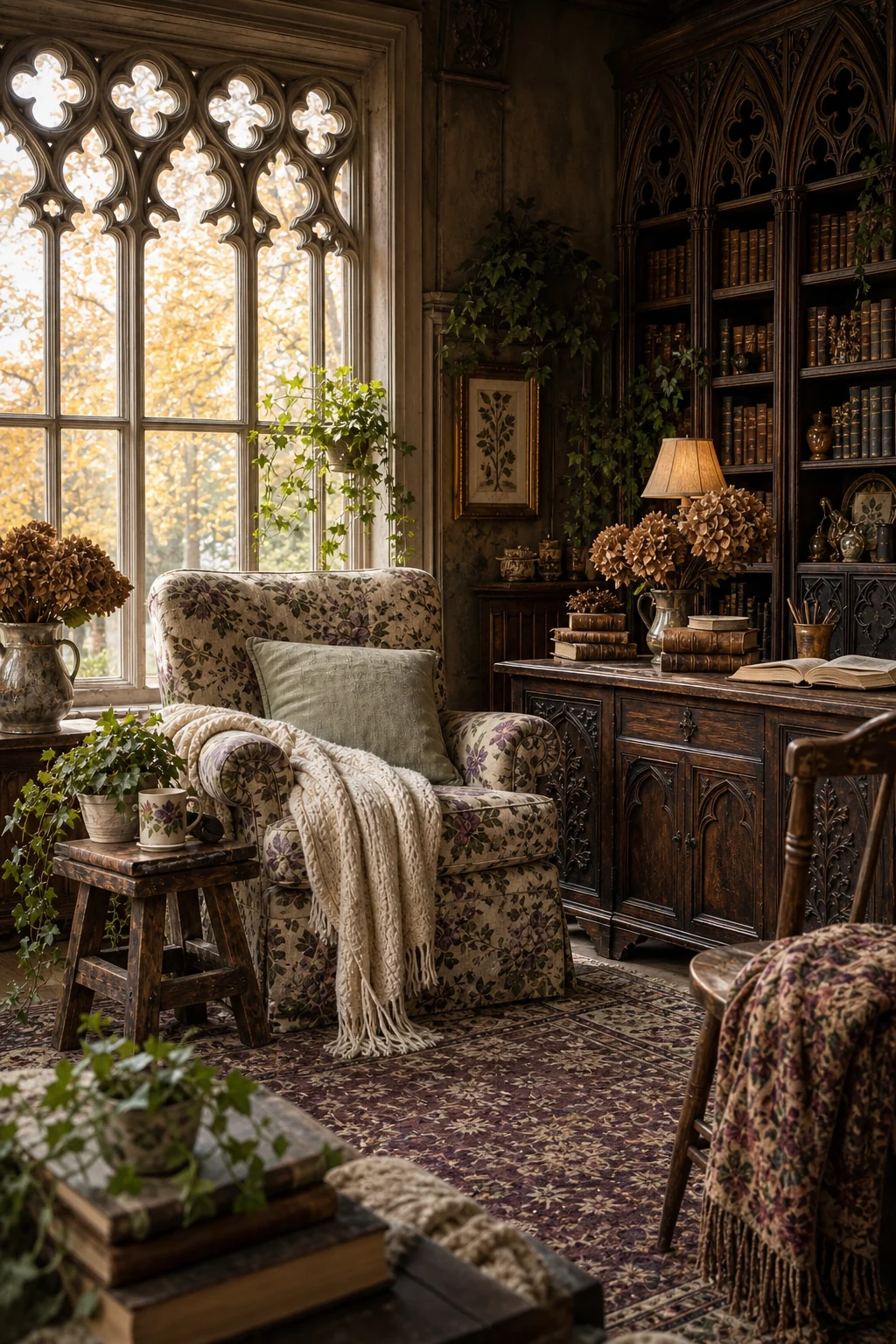
Quatrefoil tracery on the window mullions filters the incoming light beautifully, casting historic architectural shadows. Lifted midtones and open shadows ensure every intricate detail of the carved oak remains highly visible and warm, highlighting the rich grain without creating oppressive, heavy darkness.
- Maximize natural daylight by keeping your chosen window treatments exceptionally minimal, sheer, and completely unobstructed during the day.
- Position your primary, overstuffed reading armchair directly in the brightest available afternoon sunbeam for optimal reading comfort.
- Use strategically placed, warm-toned ambient lamps to completely fill any deep, lingering architectural shadows in the room corners.
Style the functional details
Shelf styling is where the two distinct styles mingle most intimately. Mismatched ceramic jugs holding dried autumn hydrangeas sit comfortably beside heavy, leather-bound antique volumes, creating a beautifully textured display that feels both intellectually serious and wonderfully grounded in the natural world.
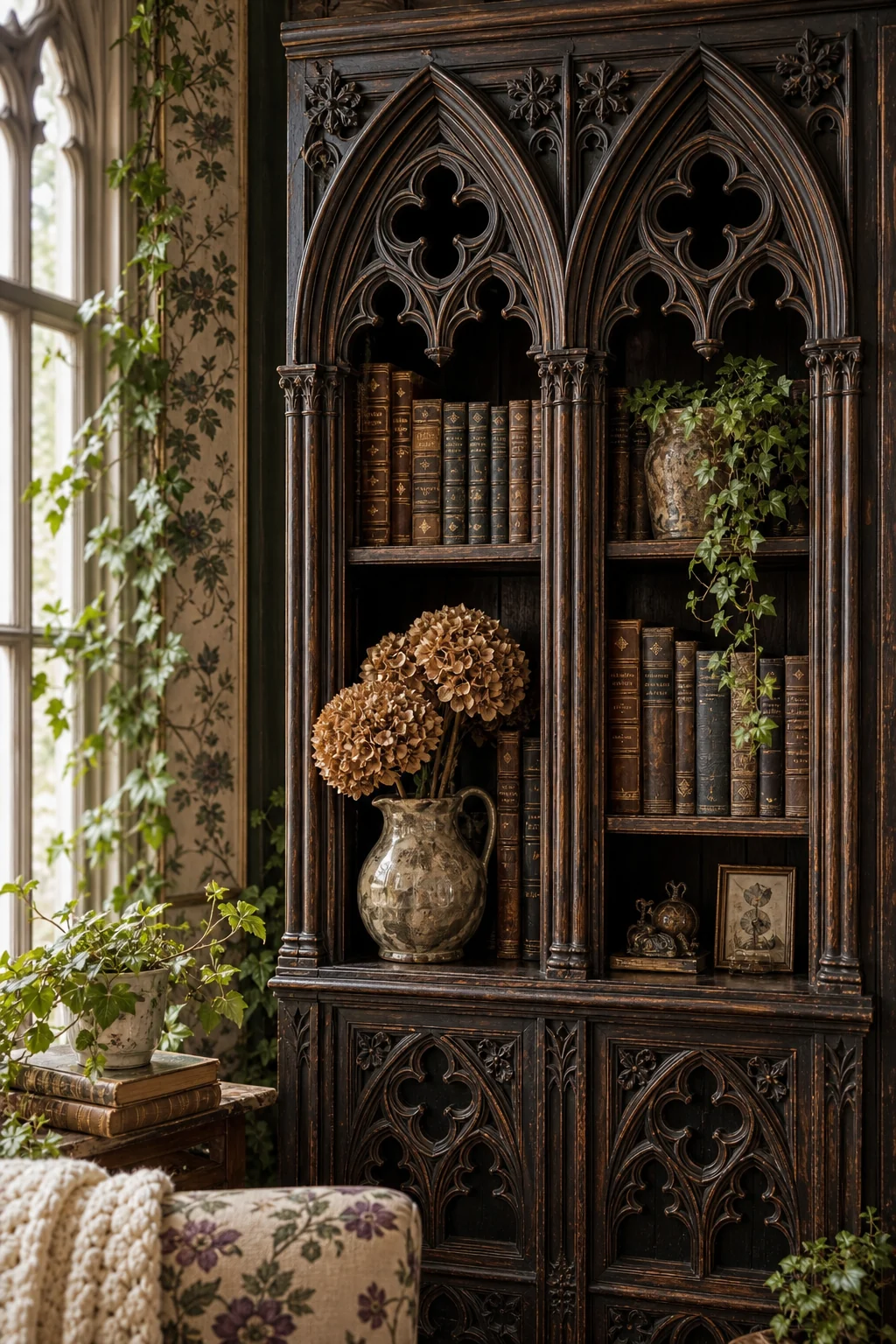
To achieve this delicate balance, focus on tactile layers that invite physical interaction. Follow this logical sequence to integrate your pastoral accessories without cluttering the imposing architecture, ensuring the shelves remain highly functional while fully expressing the blended, cozy design narrative.
- Start by grouping vintage reading books featuring worn, highly tactile fabric covers in muted, earthy colors.
- Display trailing potted ivy prominently on the highest oak shelves to draw the eye upward naturally.
- Use rustic, mismatched ceramic mugs as casual, easily accessible pen holders on the formal writing desk.
Adapt the transitional spaces
This compelling aesthetic tension can easily extend beyond the main reading nook. Applying the exact same logic to a hallway or threshold ensures the library feels deeply connected to the rest of the home, rather than acting as an isolated, disconnected thematic anomaly.
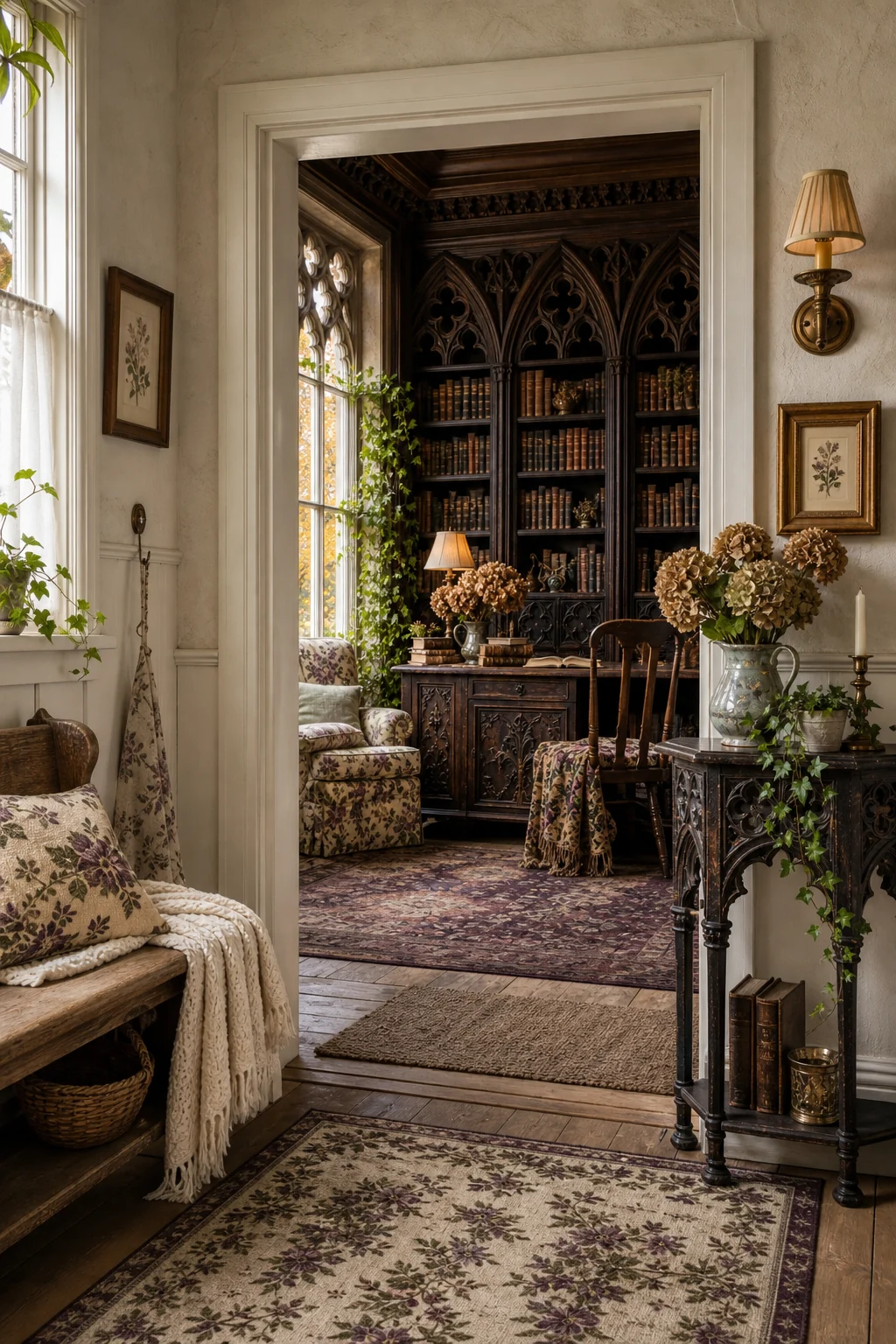
Carry the sage green and plum palette into adjoining spaces to create essential visual continuity. A simple woven rug or a small gothic console table can effortlessly ease the transition between rooms, preparing the eye for the dramatic shift in architectural scale.
- Place a small, intricately carved gothic table in the adjacent hallway to introduce the historical woodwork early.
- Drape a faded floral runner over the threshold floorboards to soften the physical entry into the library.
- Hang dried botanical wreaths on the heavy wooden library doors to signal the pastoral warmth waiting inside.
Avoid the theatrical costume
The greatest risk in combining these potent historical styles is creating a space that feels like a movie set. The room must remain highly functional, deeply personal, and genuinely lived-in, prioritizing your actual daily comfort over rigid adherence to any specific visual theme.
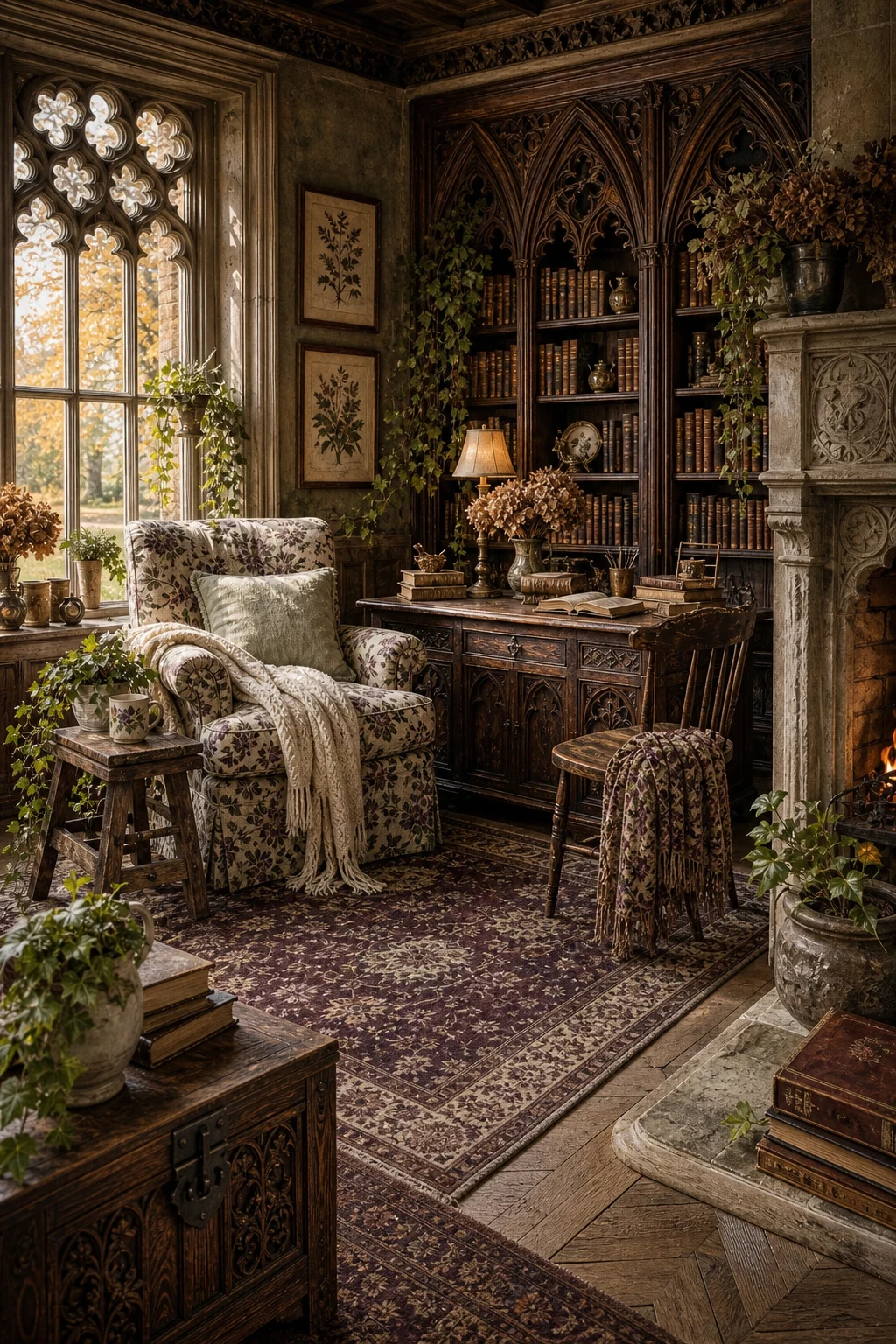
Avoid perfectly matched furniture sets or overly curated, untouchable displays. The true magic lies in the authentic, slightly messy accumulation of well-read books, thriving trailing plants, and comfortable pastoral textiles that successfully soften the grand, imposing architecture into a deeply inviting true home.