
Zen Modern Meets Vintage Revival: Library
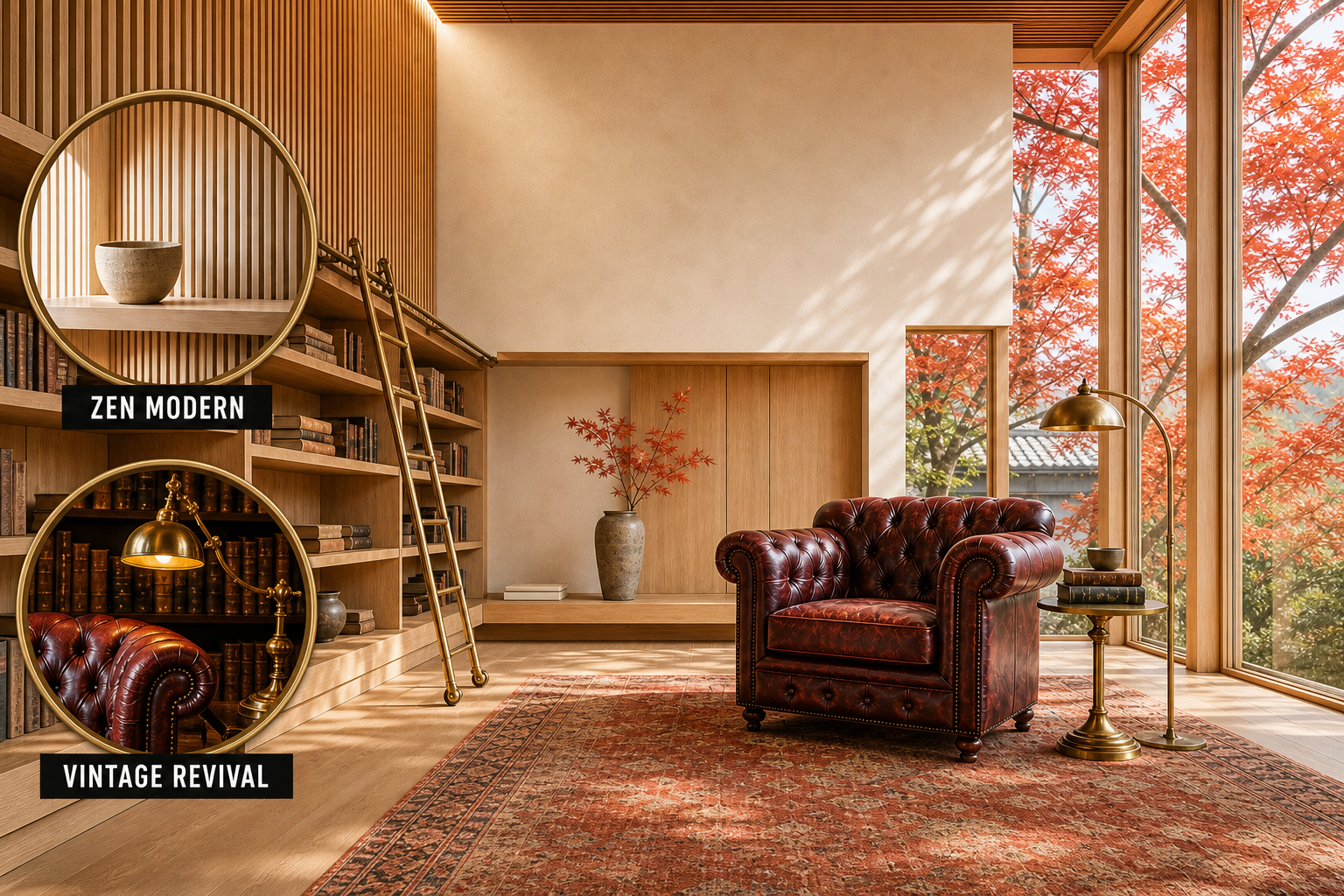
Zen Modern demands rigorous restraint and empty space, while Vintage Revival thrives on accumulated history and nostalgic weight. We resolved this stylistic contradiction by using a clean architectural shell to give heavy, ornate furnishings the breathing room they desperately need.
The Zen Modern Shell
The foundation of this library relies entirely on rigorous architectural restraint. By stripping away traditional decorative moldings and heavy wooden bookcases, the room becomes a serene, empty vessel waiting for a focal point. This deliberate architectural emptiness is a crucial and foundational design tool.
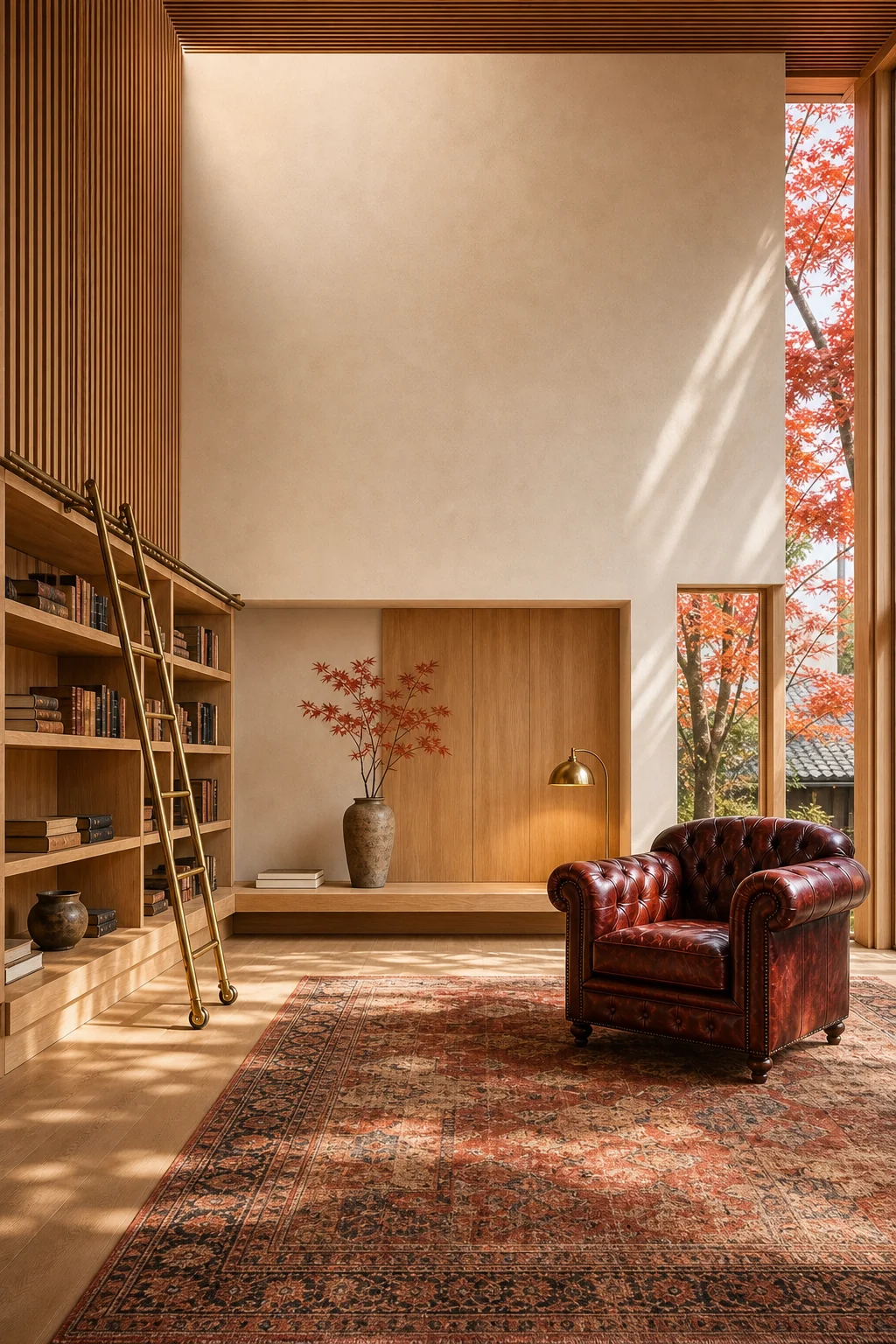
To achieve this absolute quiet, the space uses continuous, unadorned natural materials that soothe the eye. The resulting envelope feels deeply intentional rather than merely empty, setting the perfect, unassuming stage for the intense historical contrast that will soon follow in the furnishings.
- Floor-to-ceiling vertical cedar slats create a rigorous, calming architectural rhythm without adding any unnecessary or distracting surface ornamentation.
- Expansive unadorned warm plaster walls provide essential visual rest between the heavier, darker traditional furniture pieces.
- Low-profile built-in minimalist shelving keeps the primary sightlines entirely clear and beautifully unobstructed throughout the room.
- Shoji-inspired diffused window treatments soften the incoming natural light into a gentle, ambient, and highly flattering glow.
The Vintage Revival Anchors
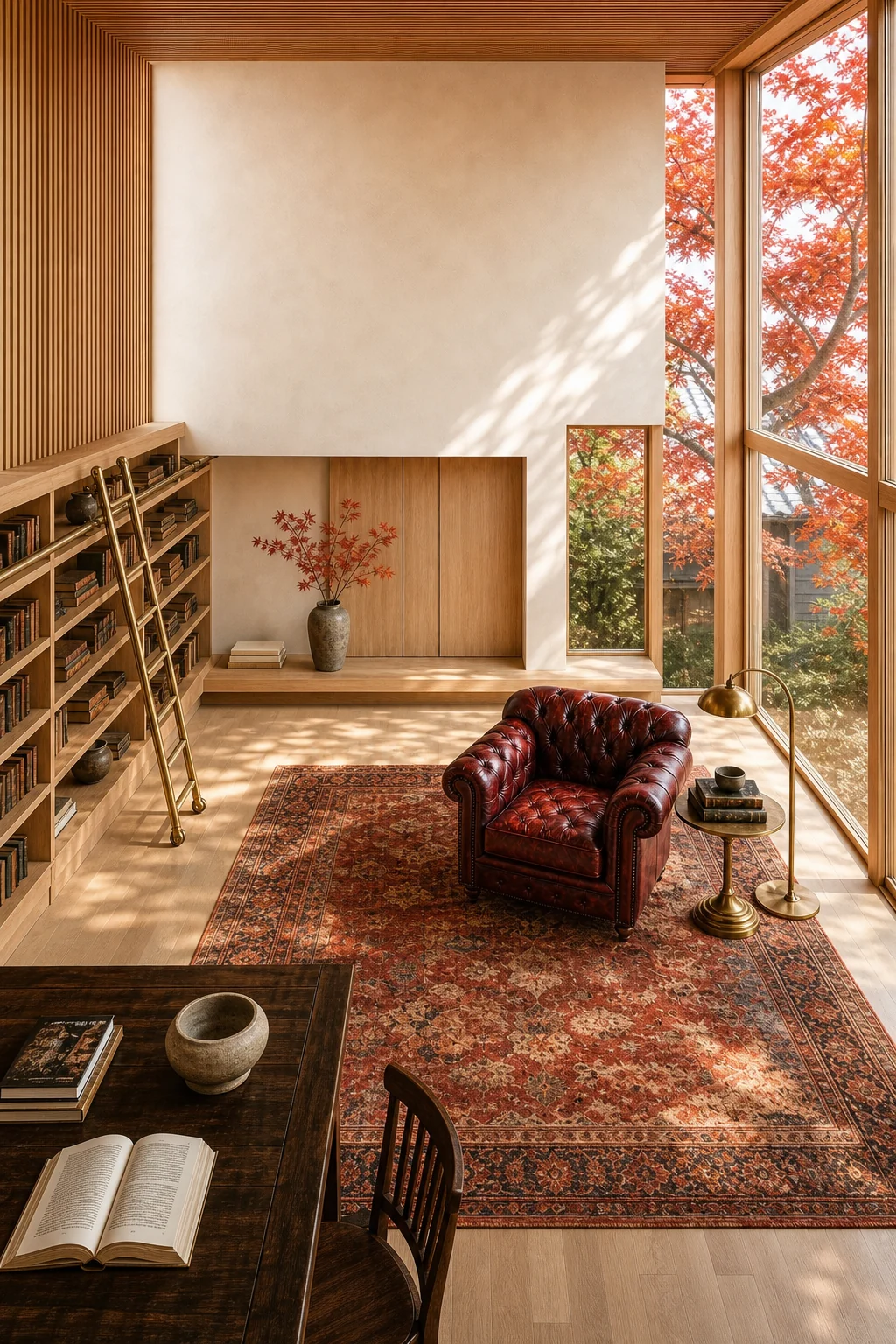
Against that quiet, restrained backdrop, historical pieces command immediate attention. A deeply tufted oxblood leather chair introduces necessary visual gravity, ensuring the airy room retains a grounded, scholarly atmosphere rather than feeling like a stark, uninviting, or overly clinical modern gallery.
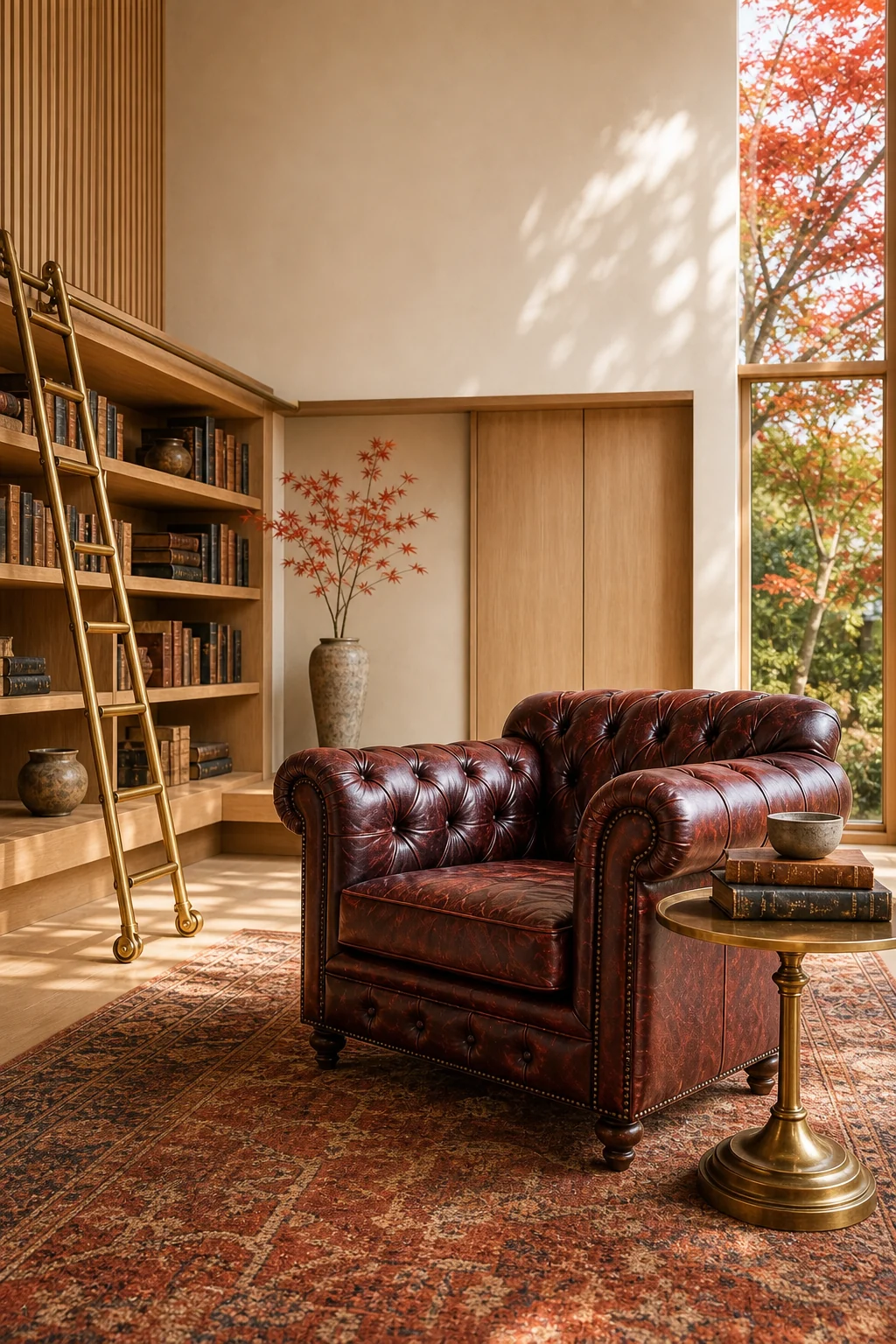
These heavy traditional elements provide the tactile richness that strict minimalism often lacks. Their ornate details shine brightly when isolated within a vast, uncluttered volume, allowing you to appreciate their profound craftsmanship without ever feeling overwhelmed by excessive visual noise in the room.
This foundational independence is the absolute secret to successfully mixing these two demanding aesthetics. The architecture must stand proudly on its own, providing a confident, silent partner to the loud, charismatic antiques that eventually occupy the center of the floor plan.
Bridging the Gap
Connecting these opposing philosophies requires a highly deliberate material transition. The raw, matte finish of architectural cedar must speak seamlessly to the polished, aged patina of antique walnut, ensuring the two distinct styles feel like a cohesive, meticulously planned environment.
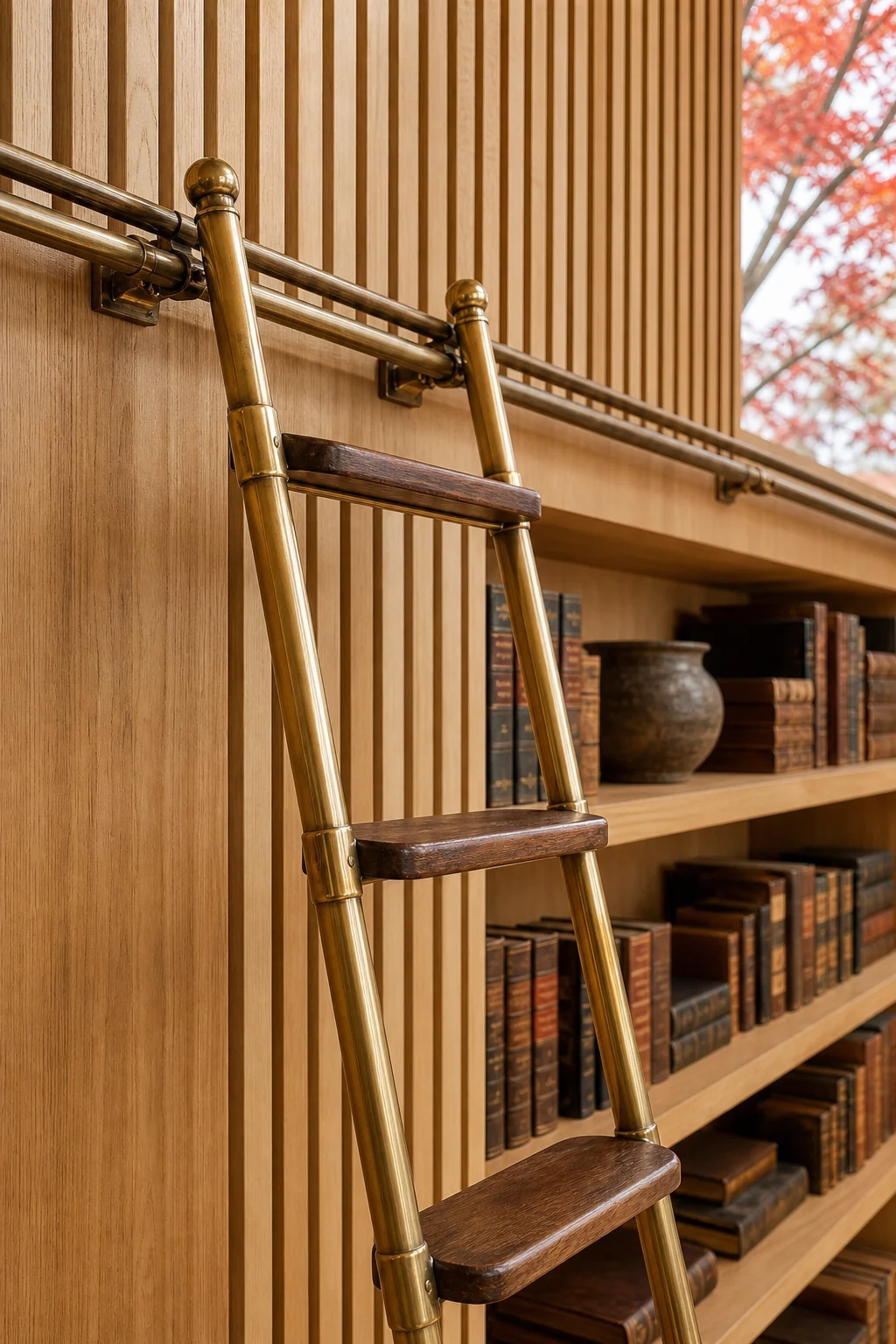
We rely on a shared warm-wood palette and autumnal color echoes to unify the entire space. The rich terracotta and oxblood tones pull the vibrant outdoor foliage inside, firmly grounding the heavy historical furniture in the surrounding natural, seasonal landscape.
- Establish generous negative space to completely neutralize the inherent visual clutter of heavy, ornate vintage antiques.
- Link raw architectural cedar directly to polished antique walnut using their shared, underlying warm wood tones.
- Mirror the vibrant autumn leaves outside with deeply saturated oxblood leather and faded terracotta Persian rugs.
Building the Vignette
Assembling the primary reading zone requires strict spatial discipline. The heavy antique furnishings are treated as isolated sculptural objects, surrounded by vast expanses of uninterrupted floor space that allow their intricate, historical silhouettes to breathe and resonate within the room.
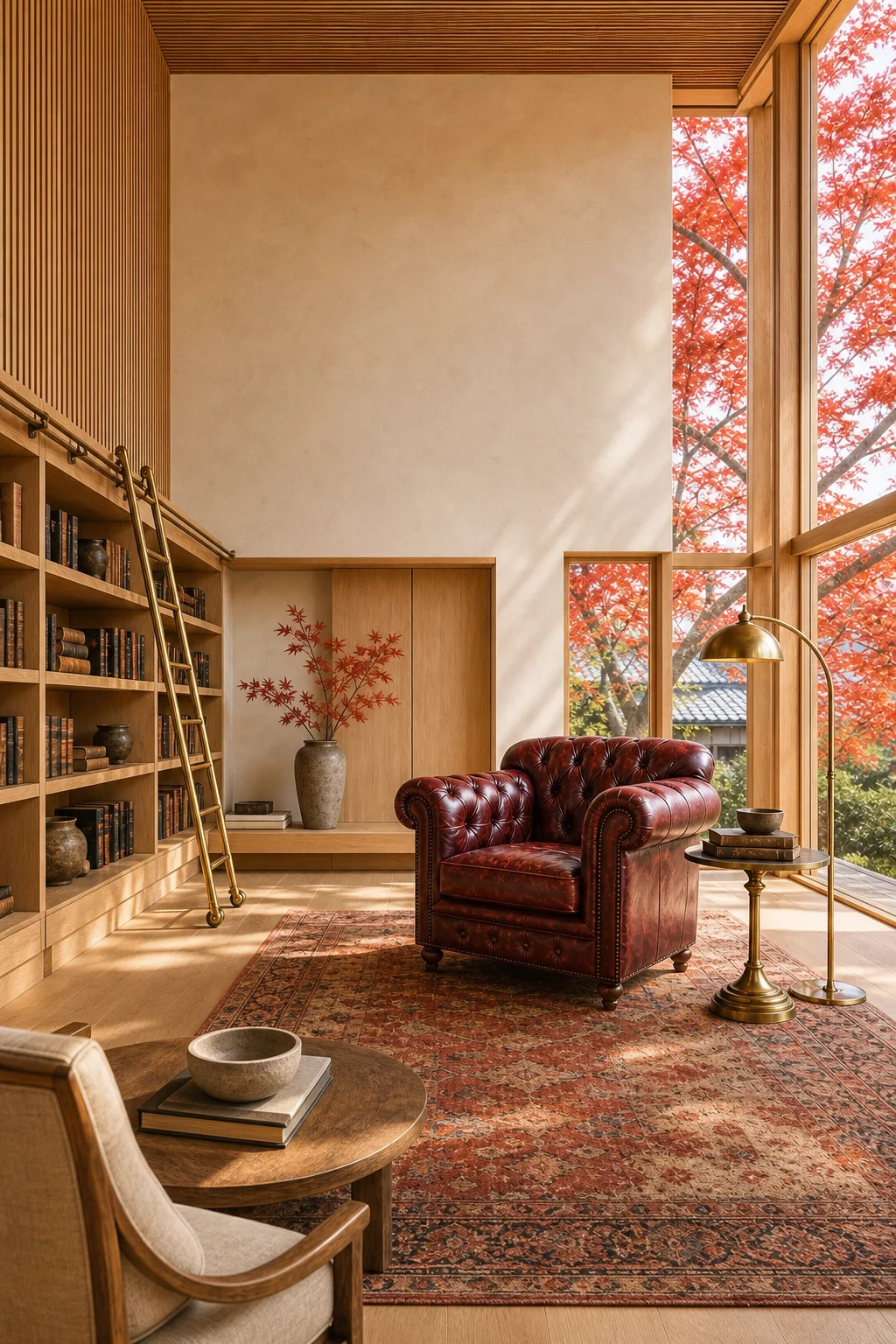
This deliberate isolation prevents the ornate details from overwhelming the senses. The translation table below outlines how each distinct design layer contributes to the final balance, ensuring neither aesthetic dominates this delicate, carefully negotiated and highly curated interior landscape.
| Layer | Zen Modern Role | Vintage Revival Role | Bridge Decision |
|---|---|---|---|
| Shell | Clean vertical cedar slats and warm plaster | None (acts entirely as negative space) | Warm wood tones link the architecture directly to the furniture |
| Large Furniture | Low-profile built-in minimalist shelving | Tufted oxblood leather chesterfield chair | Generous spacing prevents any visual crowding or spatial tension |
| Textiles | Unadorned shoji-inspired window treatments | Faded terracotta Persian rug | Autumnal color echoes tie the interior room to external nature |
| Lighting | Diffused natural daylight with open shadows | Ornate brass banker’s lamp | Aged brass adds necessary warmth without introducing harsh glare |
| Accents | Handmade ceramic vessels | Antique gold-leafed books | Highly curated placement on minimal, uncrowded wooden shelves |
By assigning specific responsibilities to each layer, you prevent the styles from clashing. The architecture handles the atmosphere and the spatial volume, while the furnishings deliver the unique personality, the historical weight, and the primary tactile engagement for the reader.
Light and Architecture
Harsh shadows would instantly ruin the peaceful atmosphere required by the minimalist shell. Shoji-inspired window treatments diffuse the bright daylight, lifting the midtones and highlighting the intricate textures of the historical textiles without ever creating aggressive, distracting visual contrast across the room.
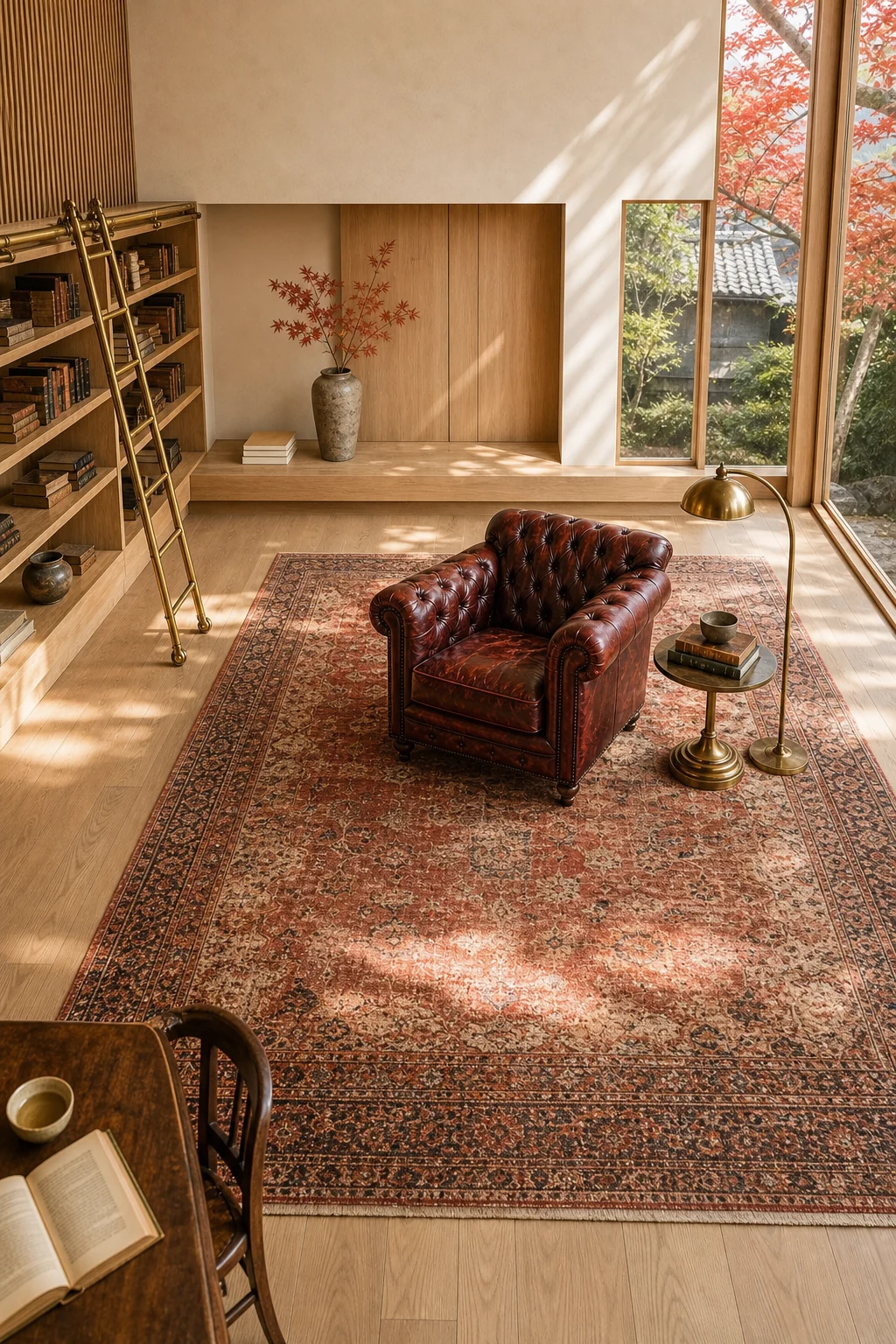
This soft, ambient glow unifies the smooth plaster and the deeply tufted leather. Proper illumination prevents the heavier historical pieces from feeling dark or imposing, effortlessly maintaining the airy, uplifting mood that defines the foundational architectural envelope of the space.
Instead of relying on modern ceiling grids, allow the natural daylight to gently sculpt the room during the afternoon. As evening approaches, transition to the warm, localized glow of the antique brass lamps to maintain an intimate, highly focused environment.
Styling the Details
Minimalist shelving demands a ruthless approach to curation. Instead of packing the built-ins with endless volumes, we treat each antique book and handmade ceramic as a solitary exhibit, actively honoring the empty space around every carefully chosen object on display.
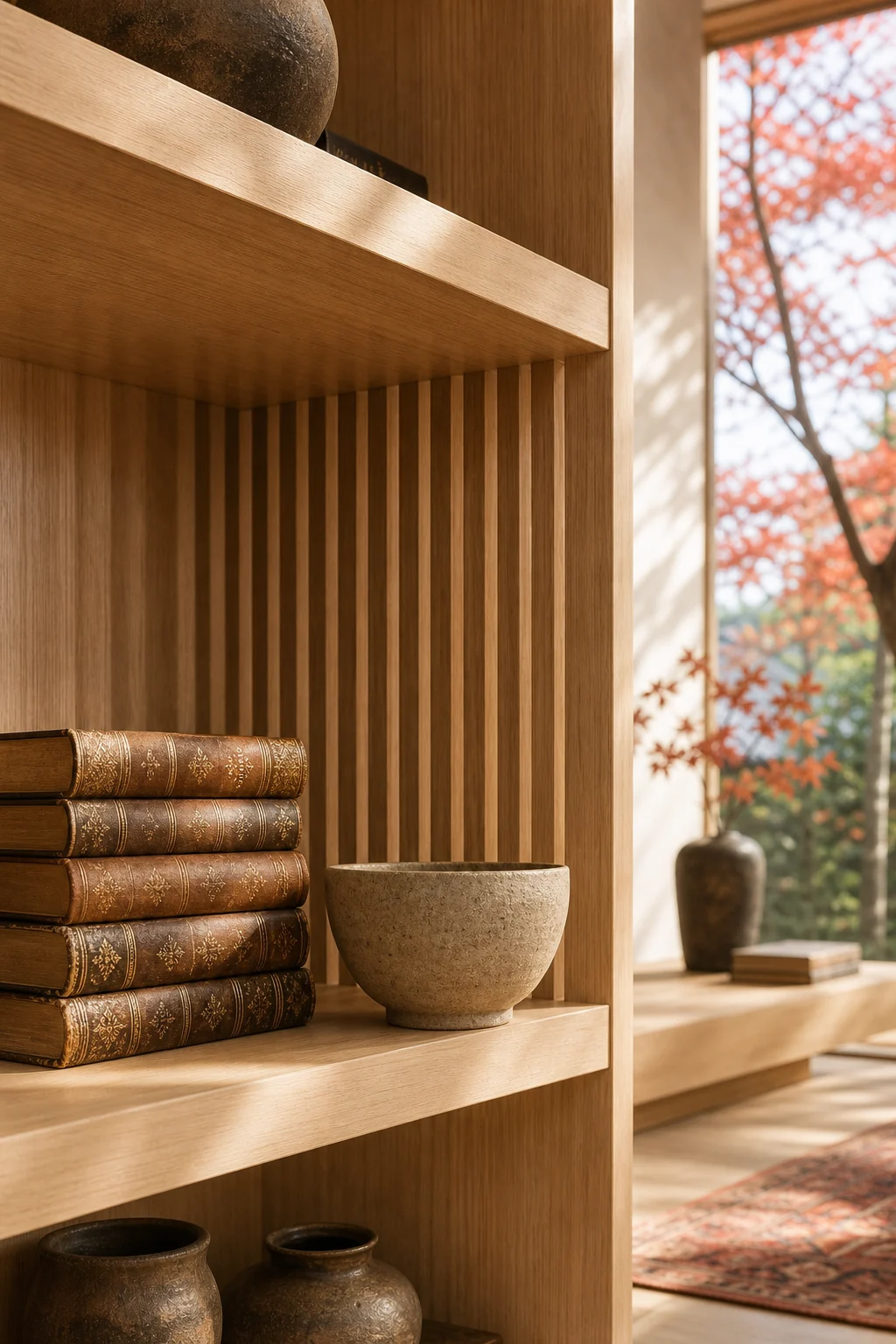
Leaving empty space on the shelves is a highly deliberate design choice, not an oversight. This restraint allows the eye to rest between moments of intense historical detail, perfectly preserving the calm, meditative quality of the overall room design.
- Source low-profile minimalist wood shelving to maintain uninterrupted, exceptionally clean horizontal sightlines across the walls.
- Invest in tufted oxblood leather seating to provide immediate historical gravity and rich, inviting texture.
- Select aged brass task lighting to introduce warm, metallic accents without causing harsh, modern reflections.
- Anchor the seating arrangement with faded terracotta vintage rugs to gently soften the wooden floors.
Adapting the Look
You do not need a massive architectural budget to apply this logic elsewhere. Focus on creating a clean, unadorned threshold that frames your favorite antique as a deliberate destination, rather than treating it as just another piece of everyday furniture.
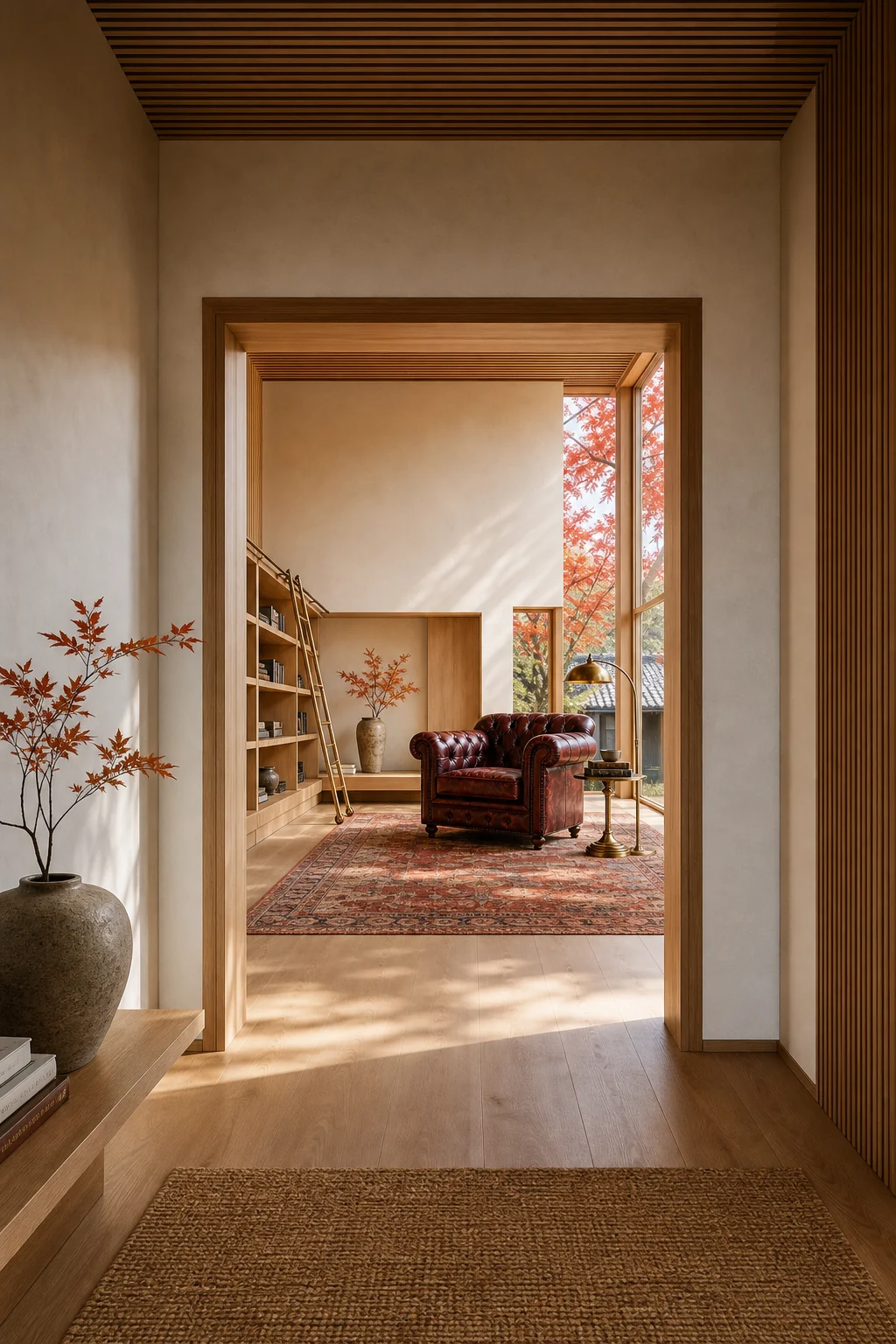
By removing unnecessary visual noise from the perimeter of a room, you dramatically amplify the impact of the pieces you choose to keep. This strategy works beautifully in small apartments and sprawling, open-concept contemporary homes alike, regardless of square footage.
The primary goal is to completely eliminate distractions. When the background disappears into a soft, cohesive blur of warm tones and clean lines, even a modest vintage chair suddenly commands the room with the undeniable authority of a museum artifact.
Avoiding the Costume
The most common mistake is letting the historical elements multiply until they entirely consume the negative space. The tension only works when the minimalist shell remains the dominant force, acting as a strict, unyielding container for the highly curated antiques.
If the room feels cluttered, you have unfortunately crossed into costume territory. Maintain strict spatial boundaries to ensure these two distinct worlds elevate rather than fight one another, preserving the delicate, aspirational balance of the entire composition for years to come.
- Avoid filling every shelf, which instantly destroys the required minimalist serenity and essential visual calm.
- Do not mix too many wood tones across the room; stick strictly to a unified palette.
- Never use harsh overhead lighting on heavily textured vintage pieces, which creates chaotic, unflattering shadows.