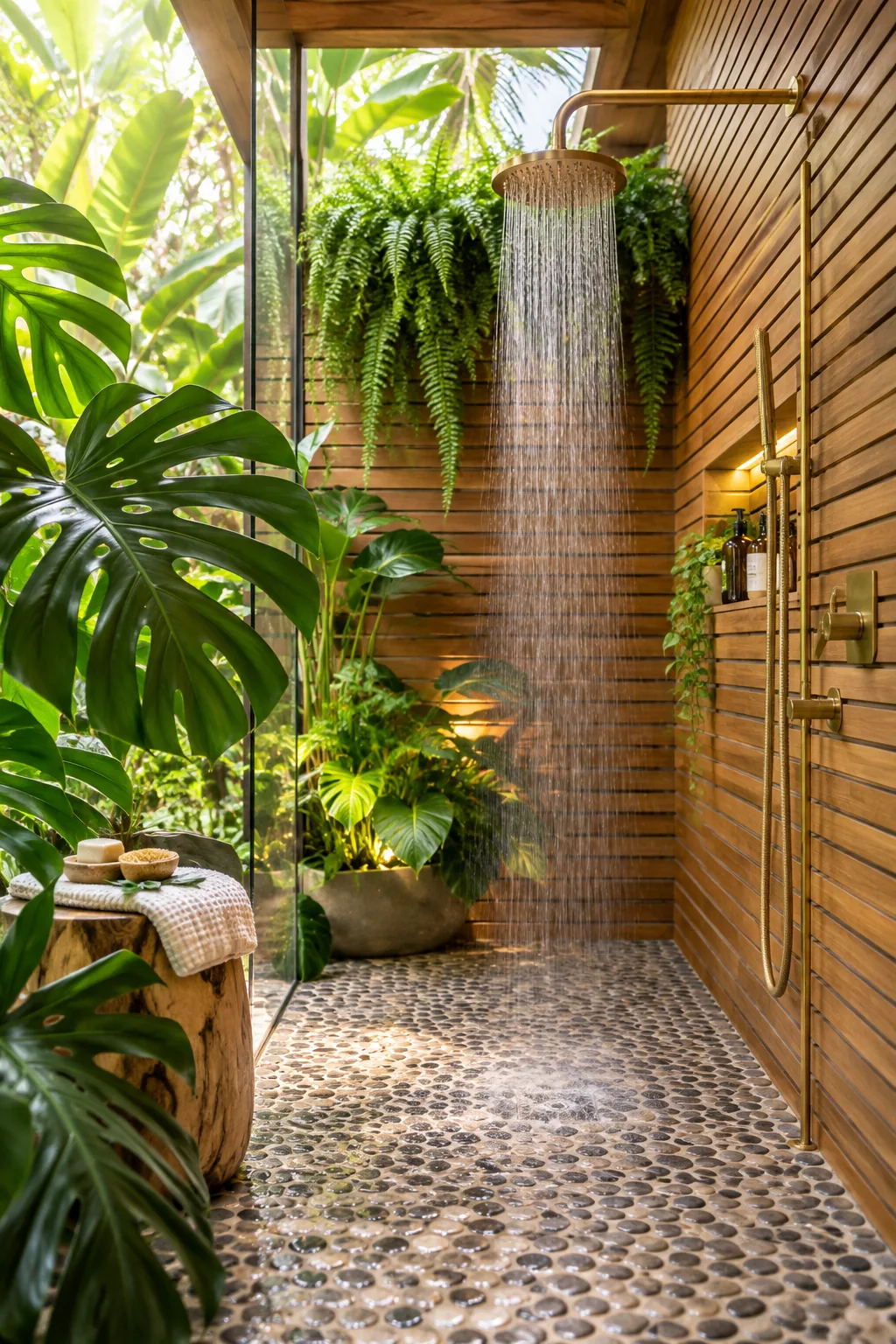
How to Design a Zen Bathroom: The Essential Material Checklist
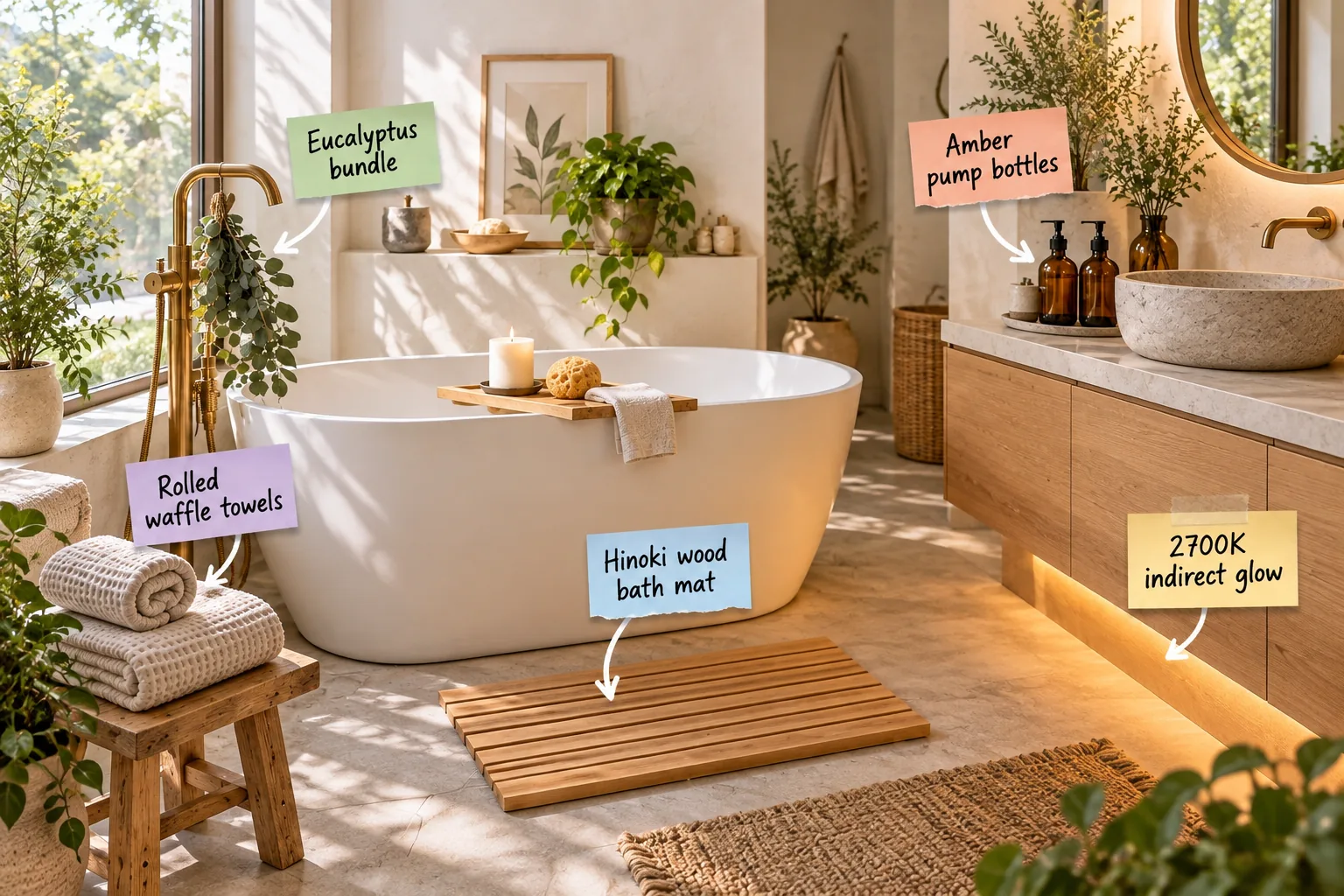
Transforming your daily routine into a spa-like retreat requires precise planning, which is why I created this exact zen bathroom material checklist. You will be able to source the specific lighting, natural textures, and calming details needed to build a cohesive sanctuary.
Setting the Mood with 2700K Indirect Glow
Lighting temperature physically dictates your body’s ability to wind down, making harsh overhead fixtures the enemy of true relaxation. I always specify 2700K LED strips mounted under floating vanities to cast a warm, sunset-like glow across the floor during evening routines.
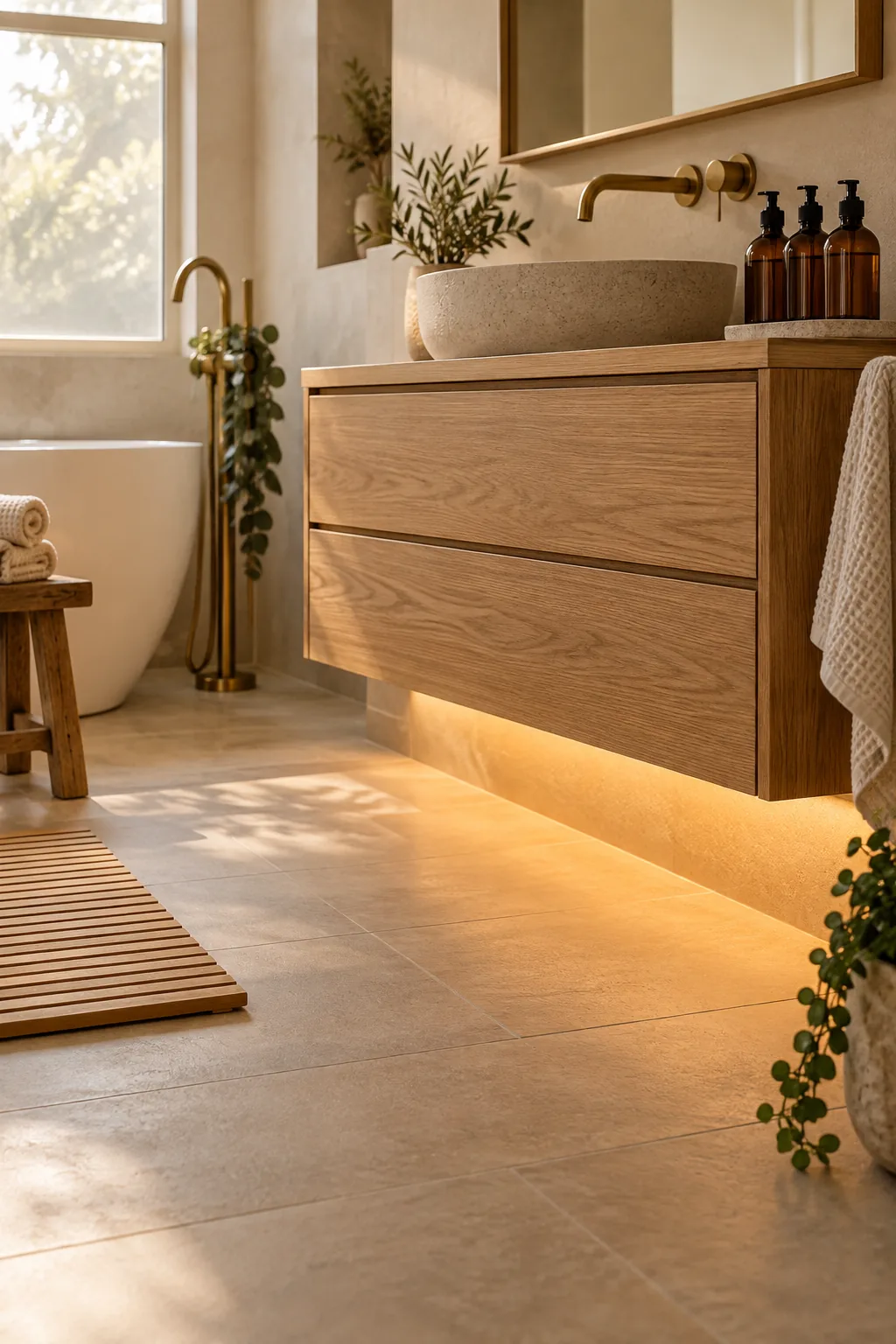
To achieve a truly seamless glow, the linear light source itself must remain completely invisible from any standing or seated angle within the room, ensuring the illumination feels like a natural architectural feature rather than an applied fixture.
Diffusing the Light for a Seamless Finish
Exposed diodes reflect harshly off glossy floor tiles, instantly breaking the calming atmosphere of your carefully planned sanctuary. Installing a dedicated diffusion layer softens the output and creates the continuous, luxurious wash of light you expect in a high-end commercial spa.
Selecting the Right Aluminum Channel Profile
Mounting your LED strips inside a 45-degree angled aluminum extrusion directs the warm light precisely outward across the floor rather than straight down. This simple hardware choice maximizes the visible ambient glow while keeping the individual diodes completely hidden from view.
Streamlining the Vanity with Amber Pump Bottles
Visual clutter actively spikes cortisol, making it impossible to truly unwind while surrounded by brightly colored, branded plastic packaging. I recommend decanting all your daily liquids into uniform 16-ounce amber glass bottles to instantly create a cohesive, apothecary-inspired vanity surface.
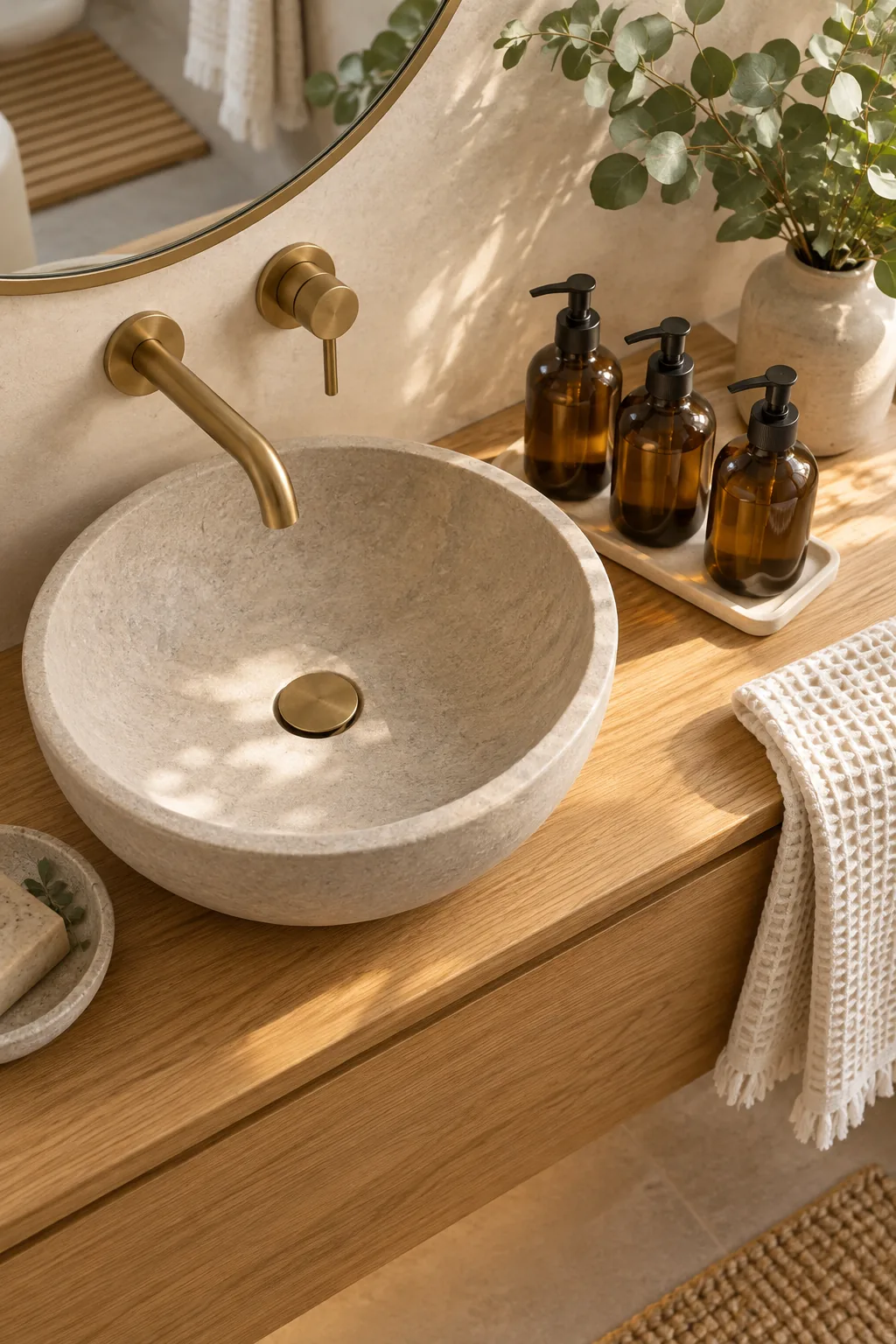
Choosing the right dispenser material depends entirely on who uses the bathroom daily and whether the bottles sit on dry stone countertops or directly inside a slippery, wet shower niche.
Standardizing Your Liquid Dispensers
While glass offers a premium tactile experience, high-quality PET plastic provides a safer alternative for wet zones without sacrificing the amber aesthetic. Understanding the exact trade-offs helps you select the right uniform containers for every specific zone in your bathroom.
| Material | Best Placement | Drop Risk | Aesthetic Quality |
|---|---|---|---|
| Amber Glass | Vanity counters | High | Premium, heavy feel |
| Thick PET Plastic | Shower niches | Zero | Excellent visual match |
| Matte Ceramic | Tub caddies | Moderate | Opaque, earthy texture |
| Silicone Sleeved | Edge of tub | Low | Modern, slip-resistant |
Spacing Your Amber Bottles on the Counter
Grouping your uniform amber dispensers on a small stone or concrete tray establishes a deliberate vanity zone and prevents them from wandering across the counter. Leaving exactly one inch of negative space between each bottle maintains that structured, high-end apothecary aesthetic.
Hanging a Fresh Eucalyptus Bundle
Introducing fresh greenery adds a vital organic element while providing incredible sensory benefits through natural aromatherapy. In my own Denver primary bath, hanging a fresh bundle of silver dollar eucalyptus near the showerhead completely transformed my morning routine.
- Purchase a medium-sized bundle of fresh silver dollar eucalyptus from your local florist.
- Trim the woody stems evenly and bind them tightly together using natural jute twine.
- Loop the remaining twine securely around the base of your showerhead or tub filler.
- Replace the bundle every three weeks when the leaves fully dry out and lose their scent.
Positioning the Eucalyptus for Maximum Steam
The ambient steam from your hot water naturally releases the potent essential oils trapped inside the eucalyptus leaves. You must position the greenery close enough to the heat source to activate the oils, but far enough away to avoid direct water contact.
Replacing Your Eucalyptus Bundle Seasonally
While the intense essential oils peak during the first few steamy showers, the dried leaves will retain a subtle, earthy fragrance for several weeks. Plan to swap your eucalyptus bundle monthly to ensure your bathroom always smells incredibly fresh and inviting.
Preparing the Wooden Tub Caddy
A dedicated resting place for bath-time essentials keeps you grounded in the water rather than constantly reaching over the wet edge. Spanning a slatted teak caddy across the tub provides a stable surface for a natural sea sponge and an unscented pillar candle.
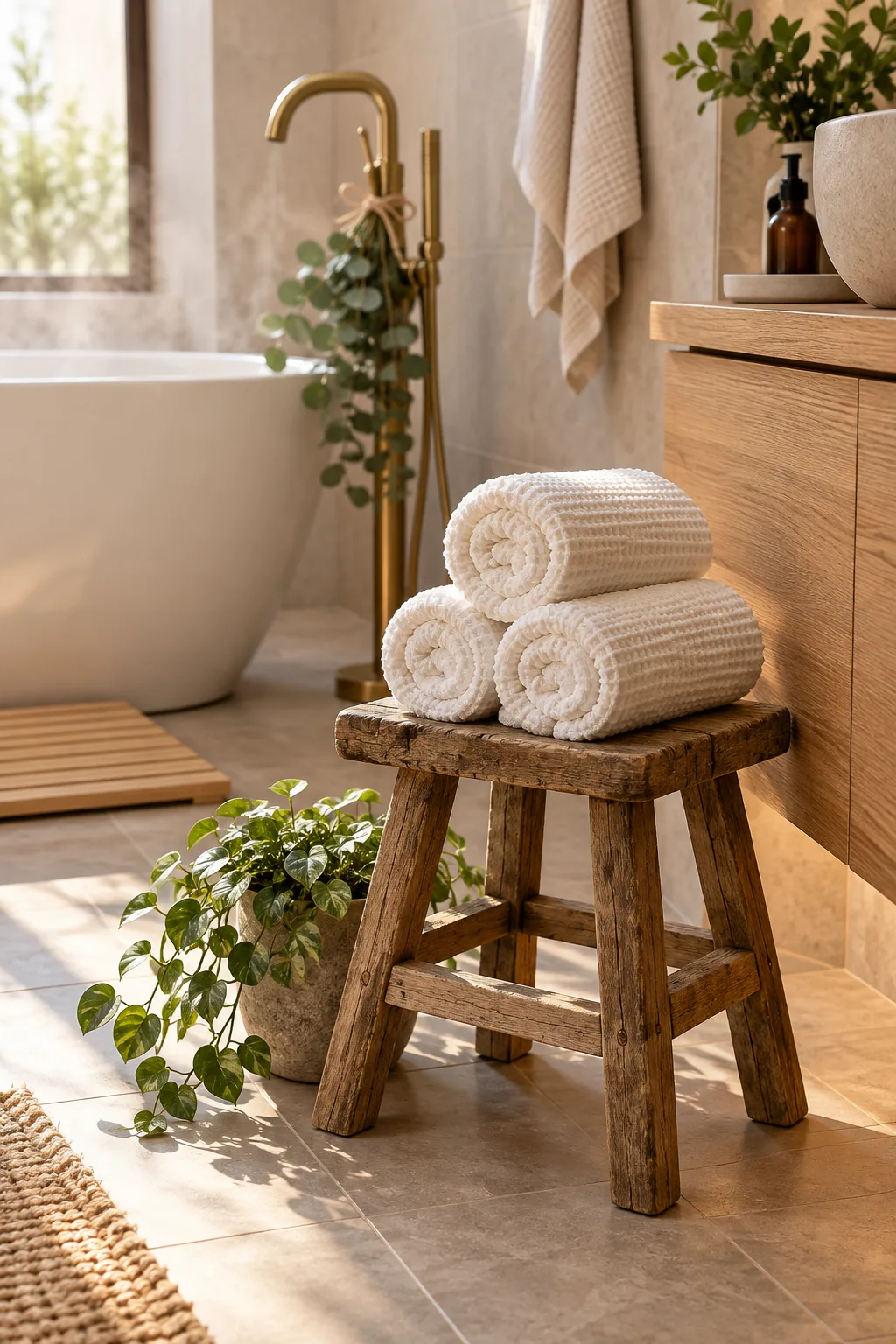
Selecting a slatted design rather than a solid board allows the ambient steam to rise through the wood, enhancing the natural timber scent while preventing moisture from pooling beneath your accessories.
Choosing Unscented Candles for the Caddy
Because the fresh eucalyptus already provides a potent natural fragrance, burning heavily perfumed candles will quickly overwhelm your senses in a small space. Always select a high-quality, unscented beeswax pillar candle to provide that essential flickering warmth without competing aromas.
Staging Rolled Waffle Towels
Spa aesthetics rely heavily on tactile textures, which is why I exclusively source 100% cotton waffle weave towels. After struggling with perpetually damp terry cloth in my own poorly ventilated guest bath, switching to waffle weave solved the moisture issue instantly.
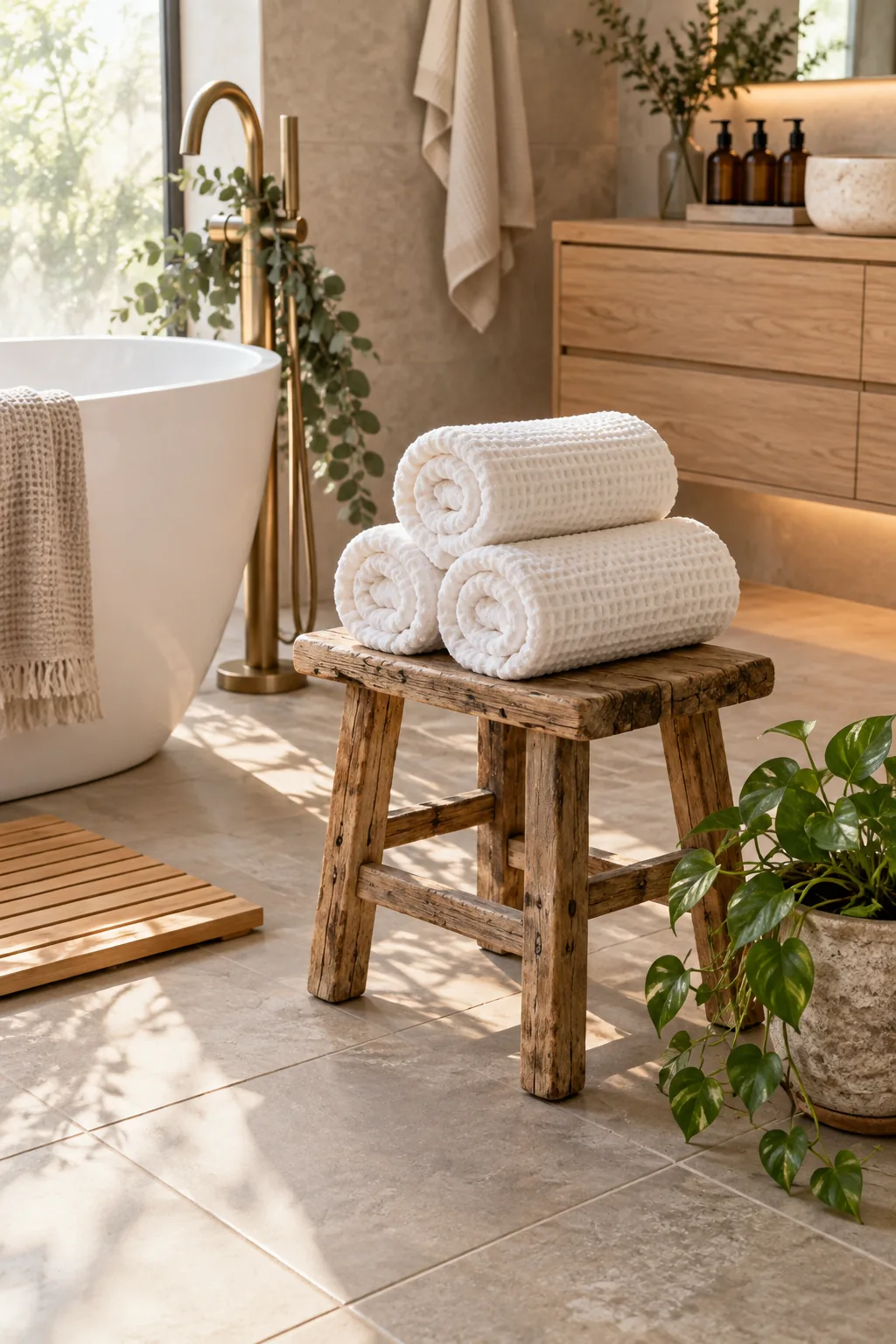
Rolling these textured towels tightly and stacking them on a rustic wooden stool keeps them within easy reach while functioning as a deliberate architectural detail that softens the room.
Maintaining the Texture of Waffle Weave
The deep honeycomb texture of a waffle weave towel naturally exfoliates the skin and dries significantly faster than traditional looped cotton. Washing them in cold water without fabric softeners ensures the fibers remain highly absorbent and retain their signature dimensional structure.
Stepping onto a Hinoki Wood Bath Mat
Introducing wood as a grounding floor element instantly warms up cold tile and provides a remarkably soft landing spot. A slatted Japanese hinoki wood mat resists moisture naturally while emitting a subtle, earthy scent the moment damp feet touch its surface.
Sourcing Authentic Japanese Hinoki Wood
True hinoki cypress contains high levels of natural oils that provide inherent anti-microbial properties, making it the perfect timber for wet environments. Ensure you source untreated, solid hinoki rather than veneered alternatives to guarantee the wood can breathe and release its calming fragrance.
Balancing Stone and Wood Textures
The golden rule of zen design is intentionally contrasting hard, cool surfaces with warm, heavily grained natural elements. Whenever I design a sterile-feeling space in Denver, I immediately introduce live-edge oak or rich teak to soften the rigid stone architecture.
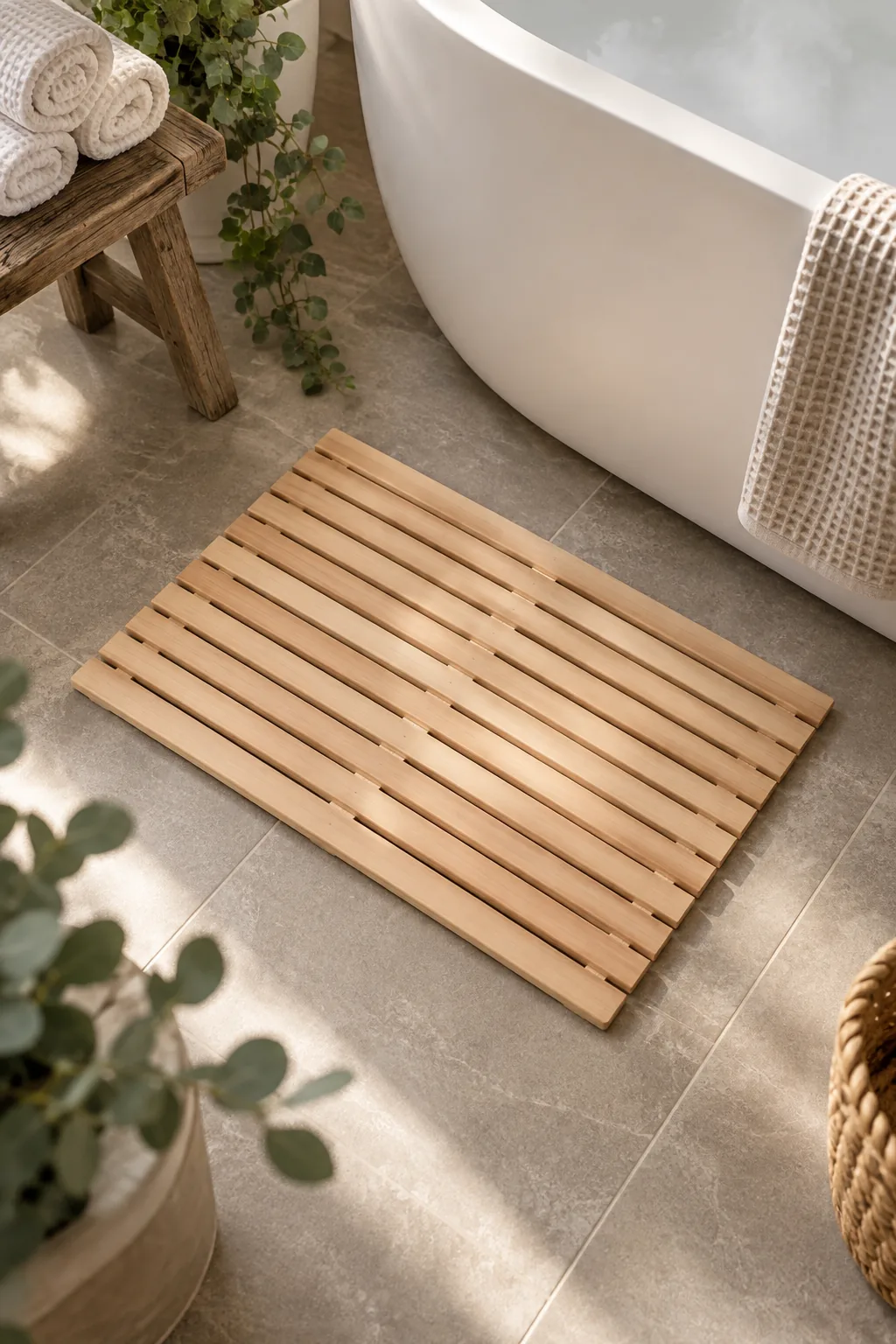
Pairing a smooth, matte stone basin with warm oak cabinetry prevents the room from feeling clinical, ensuring the space remains an inviting sanctuary that appeals to all your senses.
Anchoring the Space with Matte Finishes
Highly polished surfaces bounce light aggressively and create a high-energy environment that directly opposes the calming goals of a zen retreat. Utilizing matte finishes on your ceramics, stone, and hardware absorbs light softly, promoting a deep sense of visual stillness.
Your Zen Bathroom Material Checklist
Consolidating the lighting specifications, wood types, and textiles into one actionable inventory makes sourcing your materials straightforward and stress-free. Take this exact list with you when shopping to ensure every element contributes to a cohesive, relaxing atmosphere.
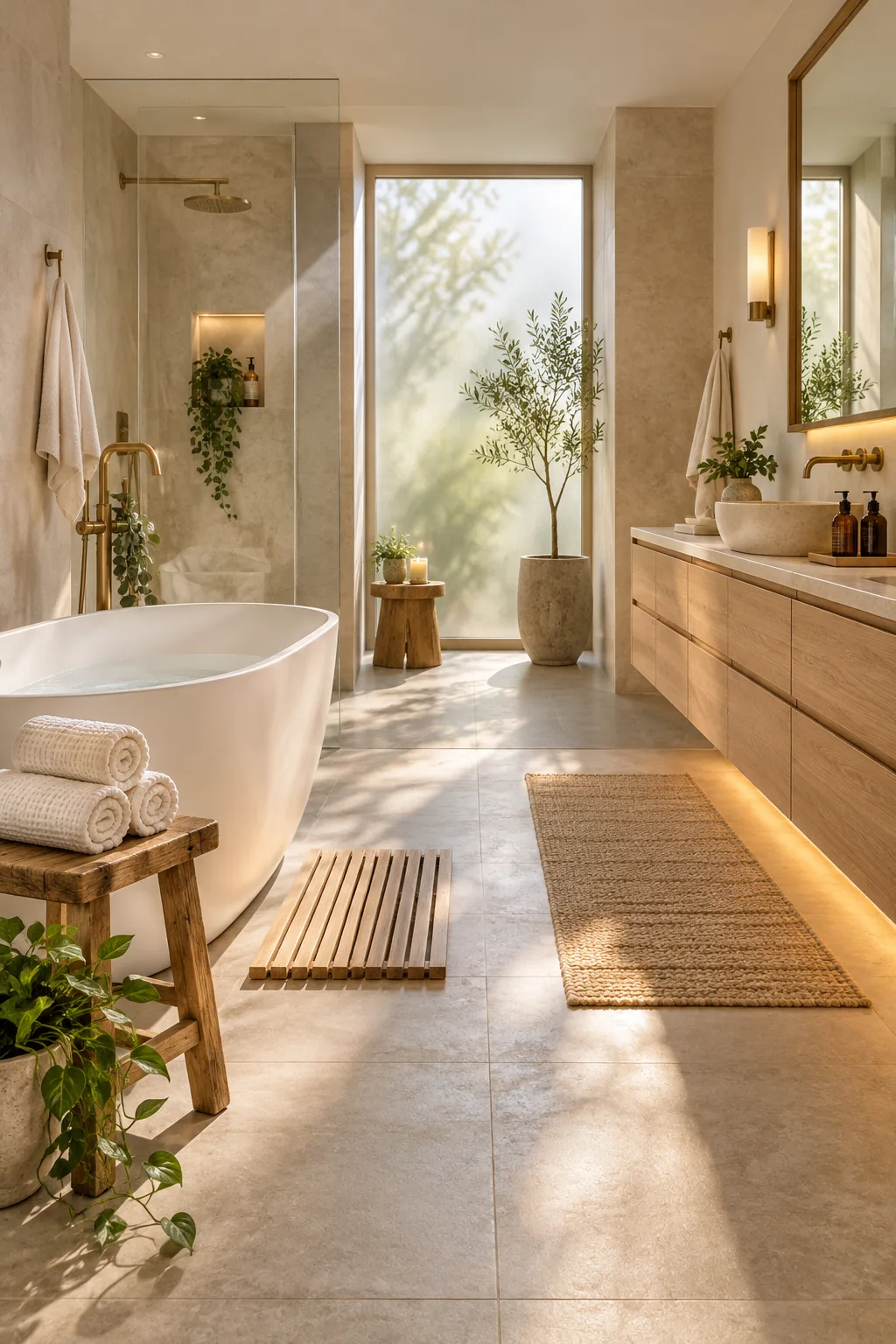
Reviewing these required materials before you begin purchasing guarantees you will achieve the exact spa-inspired retreat we just walked through, completely transforming your daily routines.
More Zen Bathroom Styles to Consider
Find the perfect calming palette for your home by exploring these distinct spa-inspired variations.
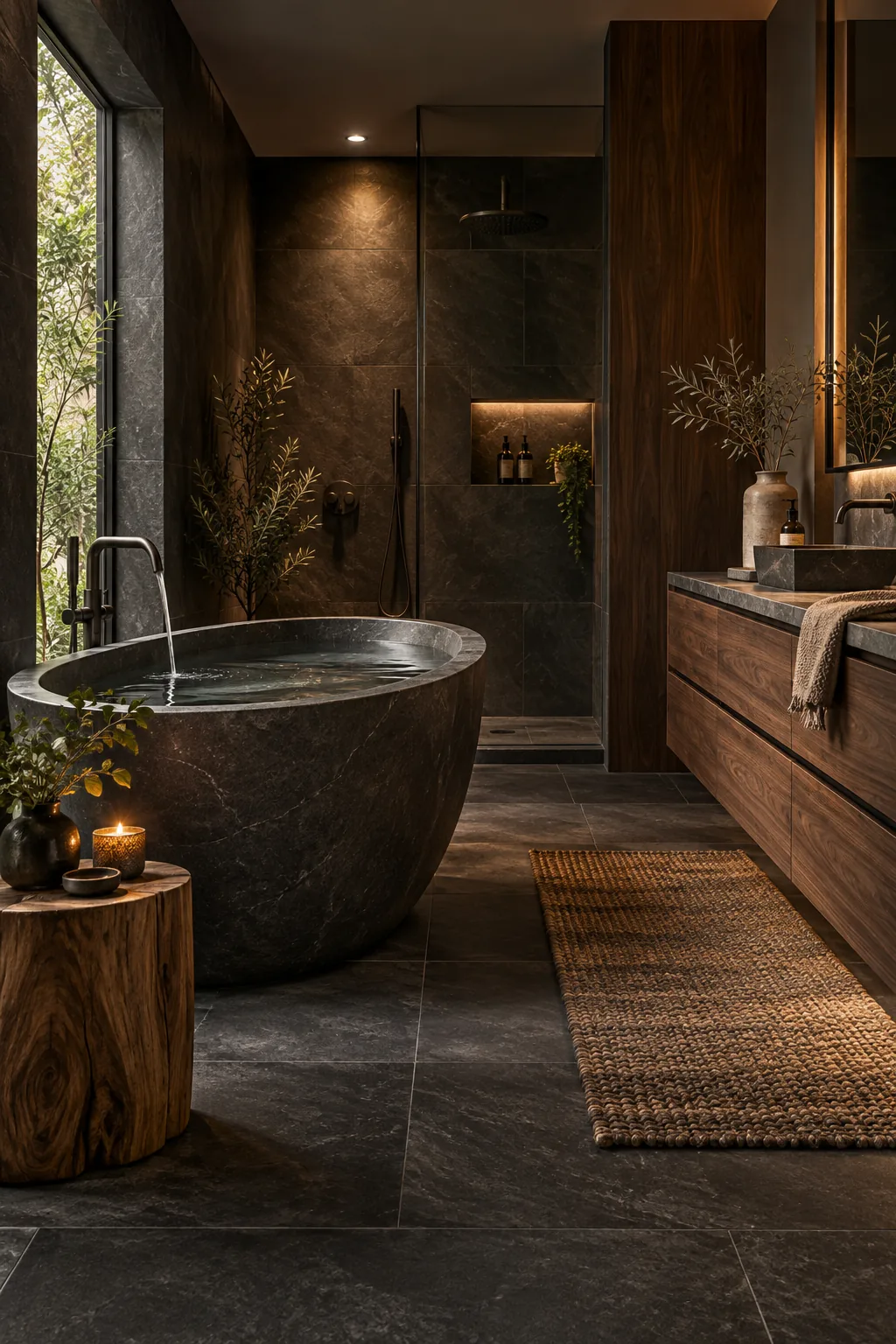
Dark Moody Zen: Embrace a cave-like sanctuary by pairing charcoal slate tiles with rich walnut wood.
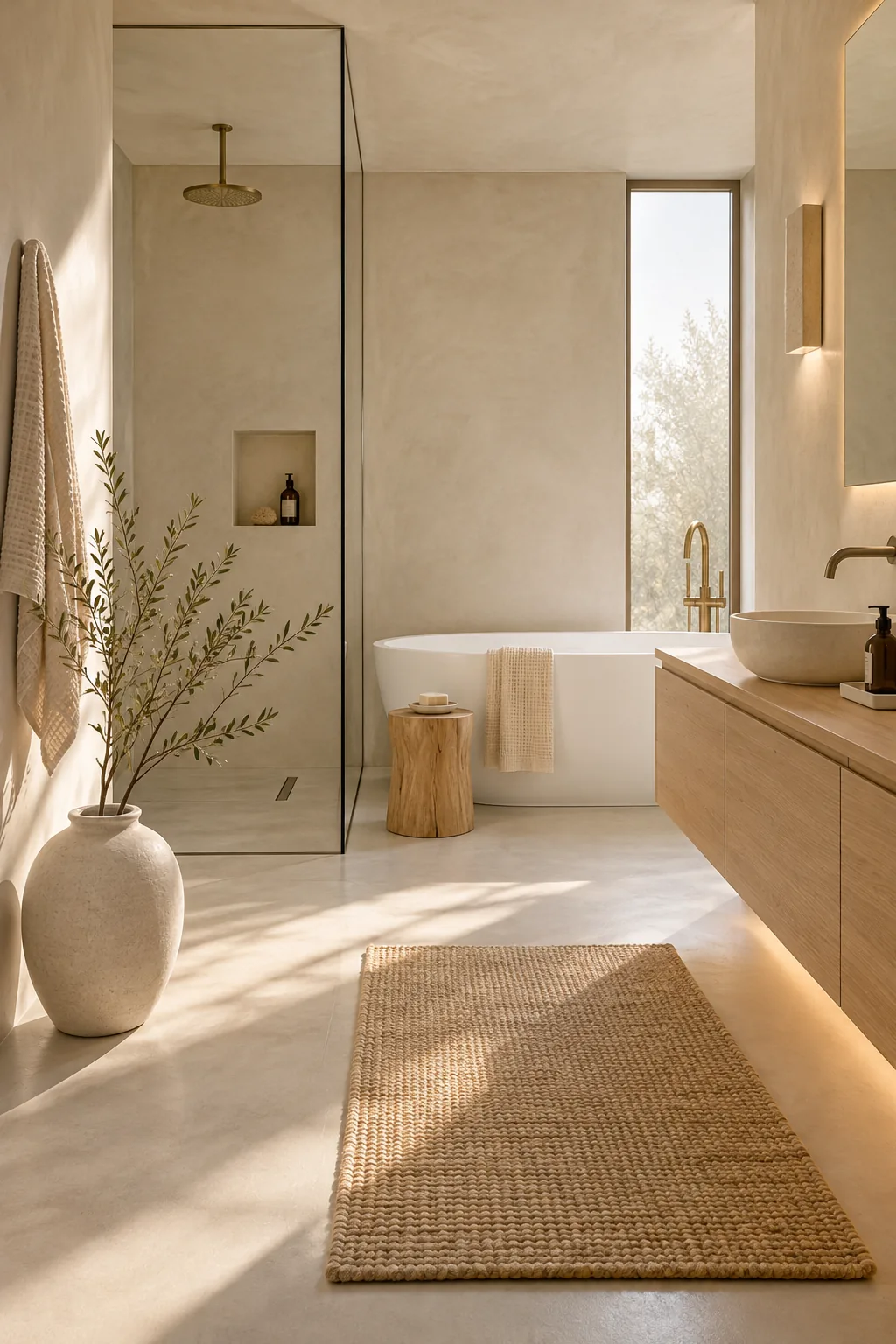
Japandi Minimalist: Achieve ultimate visual quiet with seamless microcement surfaces and pale ash wood accents.
Tropical Spa Sanctuary: Bring the outdoors inside using slatted teak walls, pebble flooring, and lush tropical greenery.