
The 4-Zone Tack Room Layout: Organize Saddles and Gear
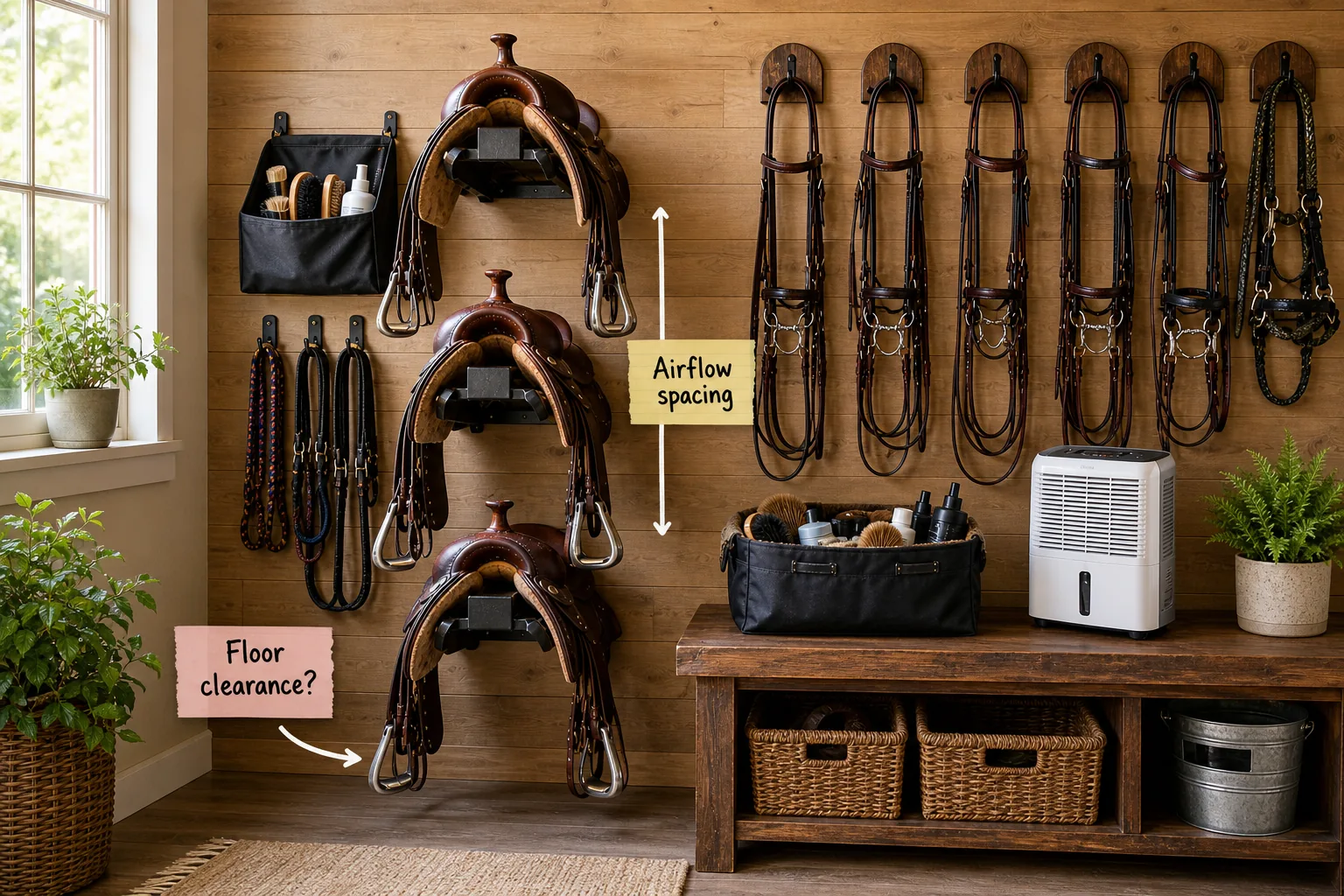
Implement this complete 4-zone tack storage layout guide to protect your expensive leather, manage climate moisture, and perfectly streamline your daily grooming routine. You will successfully map out a highly functional tack wall that spaces saddles correctly, prevents bridle creasing, and keeps daily gear accessible.
The 4-Zone Tack Storage Layout Plan
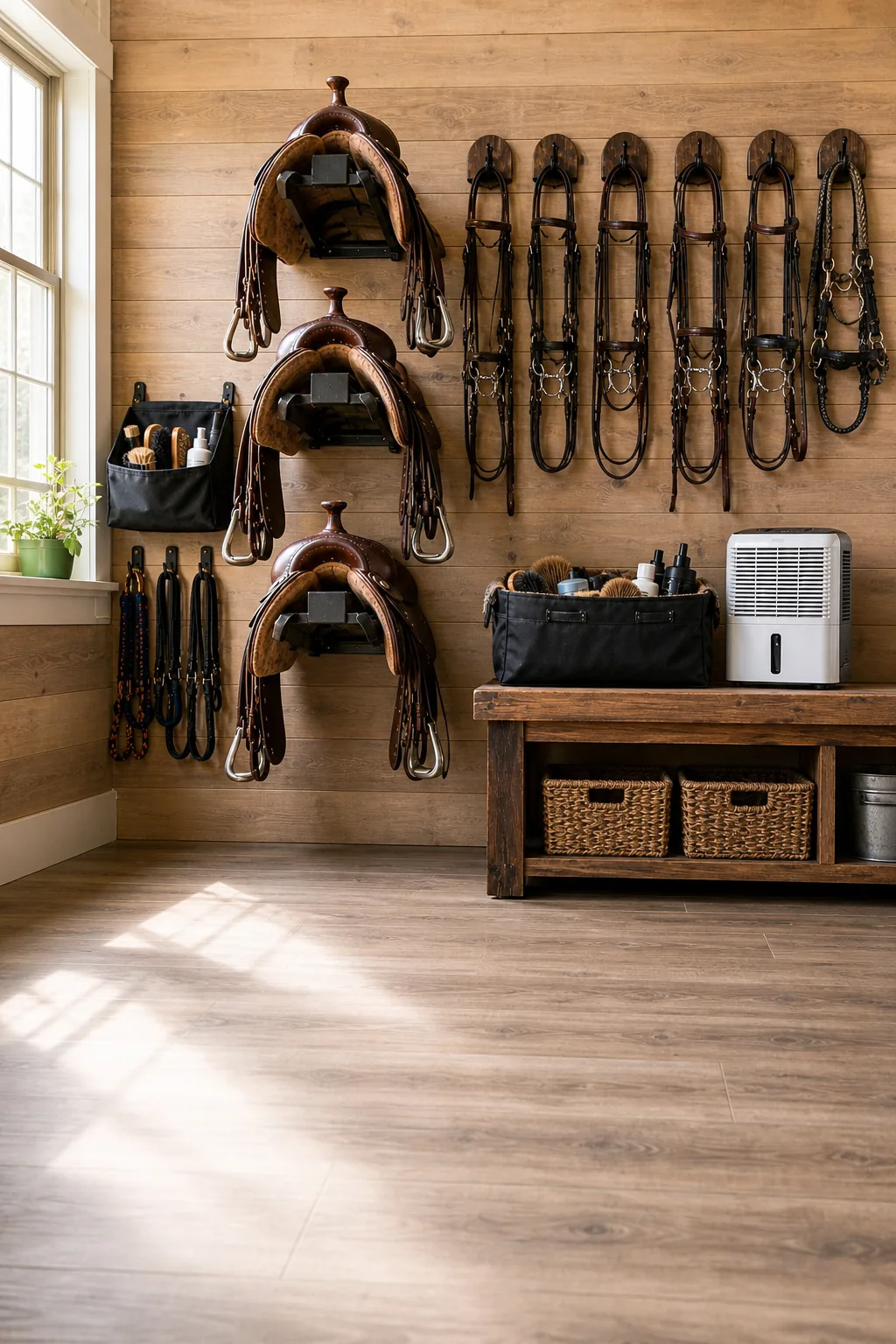
Dividing the wall into four distinct horizontal zones for heavy saddles, hanging bridles, daily grab tools, and climate storage creates an incredibly efficient workflow. This strategic separation completely prevents cross-contamination between dusty grooming tools, muddy boots, and your freshly oiled leather goods.
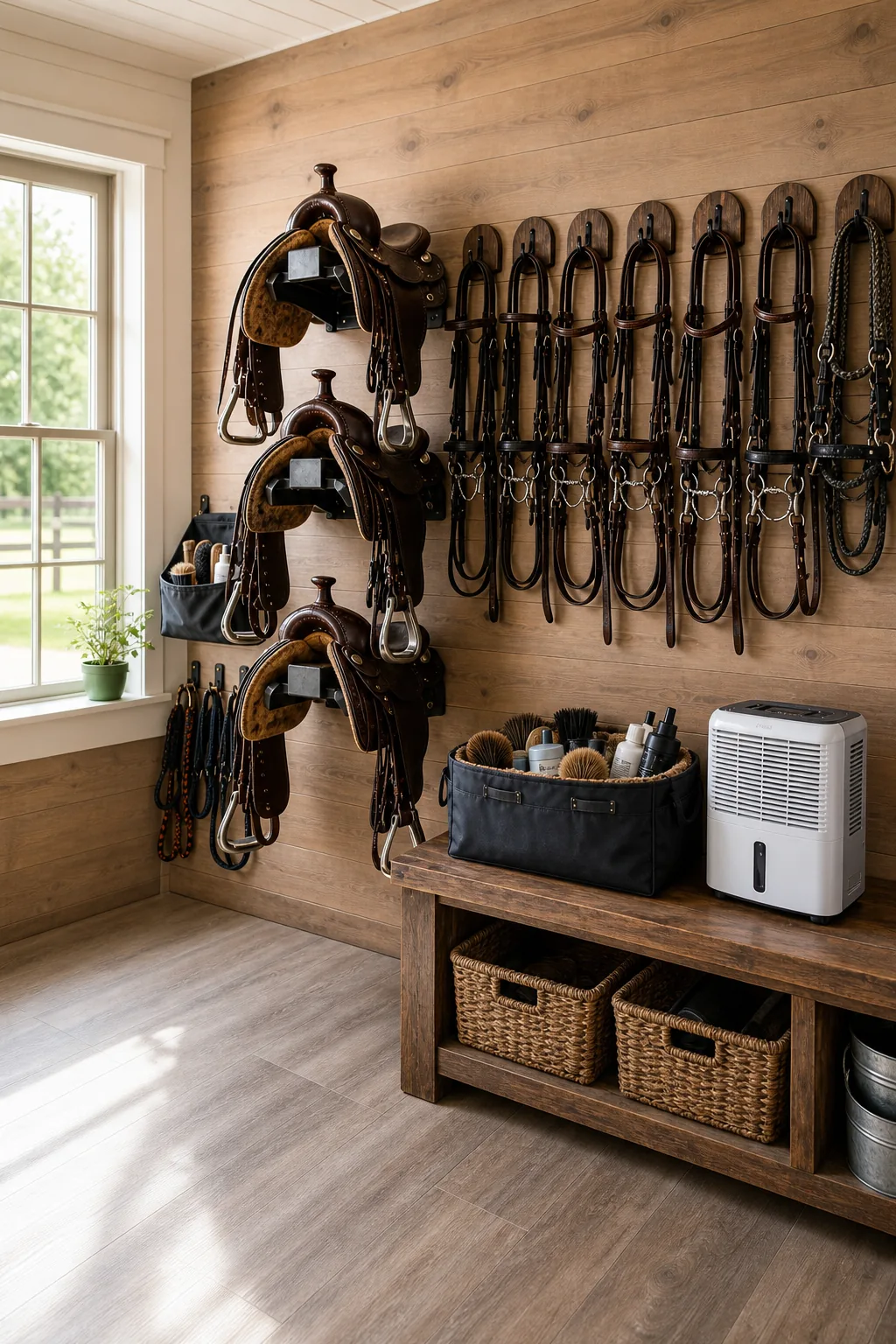
Establishing these dedicated functional zones ensures that every single piece of expensive riding equipment has a specific, logical home. This overarching visual framework drastically reduces frustrating post-ride clutter while ensuring delicate materials remain safely elevated above the busy, high-traffic barn floor environment.
Mapping Your Wall Dimensions
Before installing any permanent hardware, evaluate the total vertical space available on your primary tack room storage wall. Mapping out the exact height requirements for each specific zone guarantees that heavy items remain safely supported while smaller accessories stay perfectly within arm’s reach.
| Storage Zone | Height Placement | Primary Items | Hardware Type |
|---|---|---|---|
| Daily Grab | 40 to 48 inches | Brushes, Sprays | Fabric Caddy |
| Hanging Bridles | 60 to 72 inches | Headstalls, Reins | Wooden Curves |
| Heavy Saddles | 36 to 60 inches | Western, English | Tubular Steel |
| Climate & Base | 12 to 24 inches | Blankets, Clippers | Woven Baskets |
Using these standardized baseline measurements allows you to perfectly customize the exact placement of each mount based on your own height. This careful preliminary planning prevents awkward lifting angles when moving heavy western saddles or reaching for tall bridle crowns after a long ride.
Calculating Saddle Rack Airflow Spacing
Measure the height of your tallest saddle’s horn or cantle to accurately determine the proper vertical gap between stacked wall-mounted racks. You must leave a minimum of 6 to 8 inches of clear space above the saddle to the next rack.
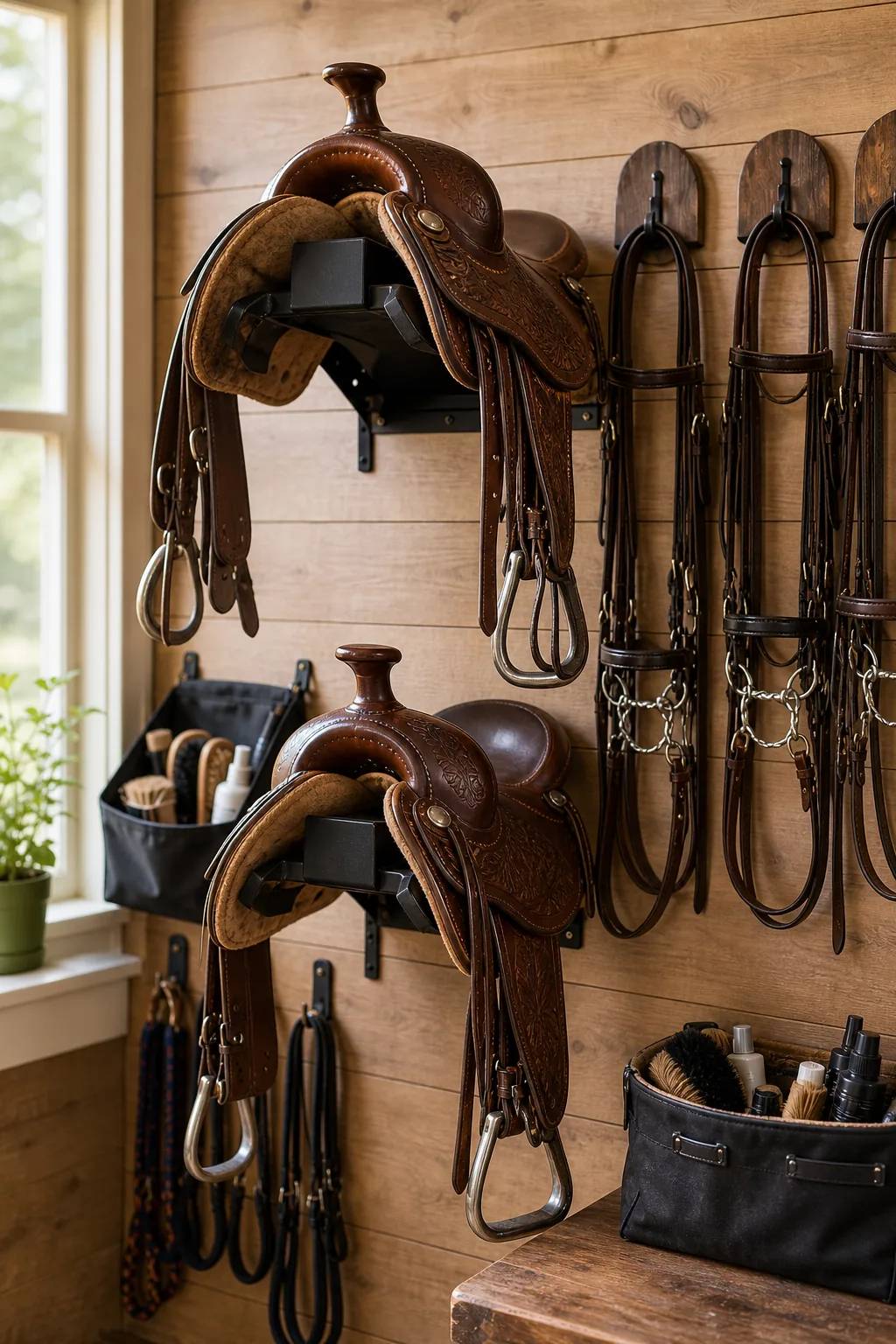
This generous vertical airflow spacing ensures sufficient air circulation to prevent dangerous mold spores from taking hold on heavy leather skirts. Maintaining this structural gap also guarantees you can lift the saddle cleanly off its mount without scratching the leather against the metal frame above.
Selecting Breathable Saddle Mounts
Choosing the correct style of wall mount is just as crucial as measuring the vertical airflow gaps between them. Open-frame tubular steel racks provide significantly better ventilation along the sweaty underside of the saddle pad than solid wooden blocks or flat metal plates.
Upgrading to these highly ventilated tubular mounts prevents damp saddle pads from trapping corrosive horse sweat against the leather panels. This simple hardware choice drastically extends the lifespan of your expensive saddles by allowing natural evaporation to occur between your daily rides.
Protecting Leather with the Crownpiece Curve
The rounded, half-moon shape of wooden wall hooks is critical for maintaining bridle leather longevity and structural integrity. Narrow metal pegs concentrate weight on a single point, which can permanently crease the sensitive leather poll strap over time, requiring expensive replacements.
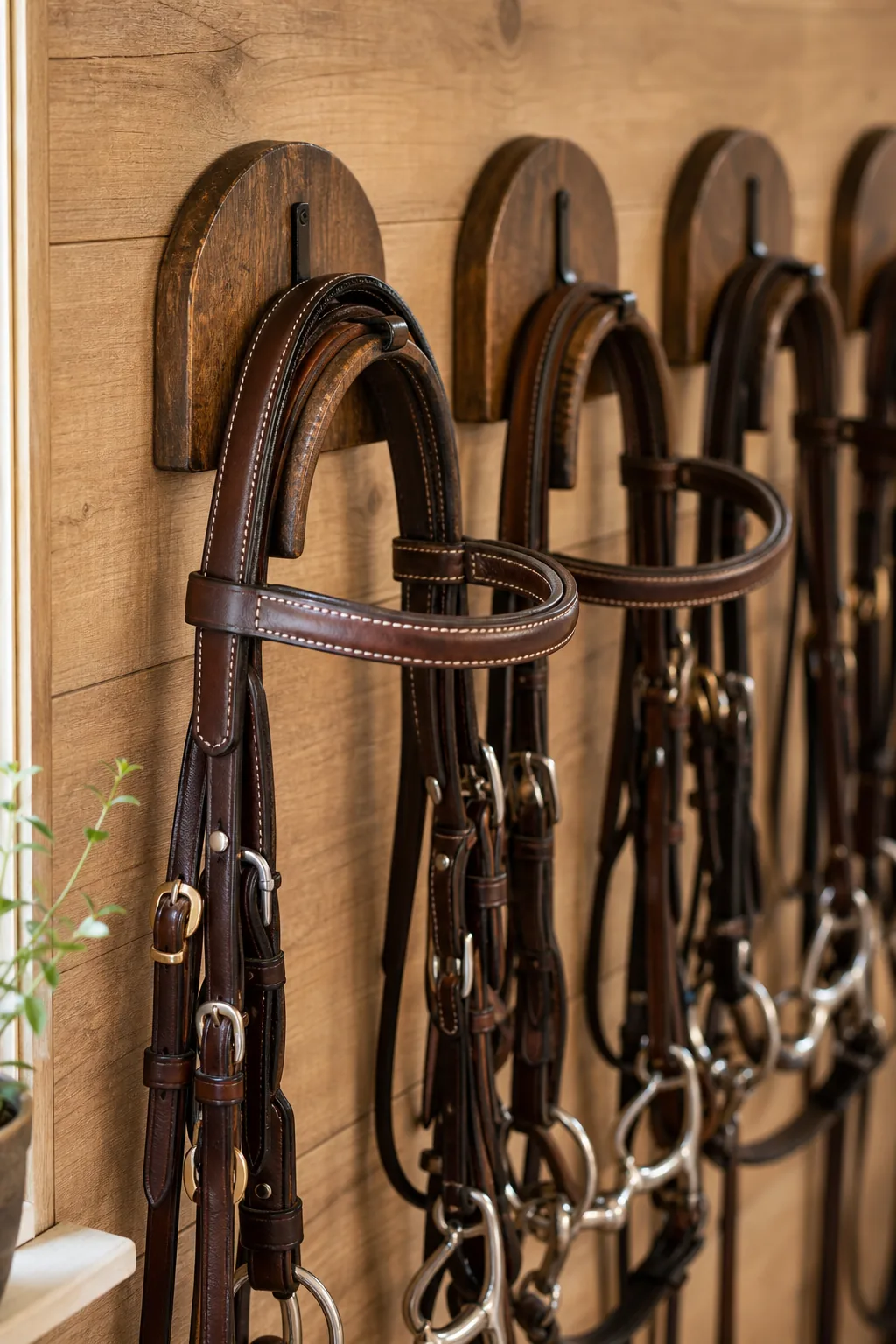
Even high-quality harness leather will degrade surprisingly quickly if it is subjected to improper localized stress while hanging in long-term storage. Replacing sharp hooks with broad wooden curves actively protects your expensive investment from completely avoidable structural damage.
Organizing Brushes by Function
Sorting your grooming tools before placing them into storage further streamlines your daily preparation routine. Grouping similar items together prevents abrasive dirt from stiff dandy brushes from transferring onto your soft finishing brushes or clean massage tools.
- Place hoof picks and heavy shedding blades in the lowest pockets.
- Store soft face brushes in a dedicated, sealed upper compartment.
- Keep liquid detanglers and fly sprays in wide side pouches.
This deliberate sorting method protects the delicate bristles of your expensive finishing brushes while keeping messy shedding tools isolated at the bottom. An organized storage system ultimately extends the usable lifespan of your entire grooming kit by keeping bristles clean.
Setting Up the Daily Grab Zone
A soft, wall-mounted fabric organizer placed at arm’s reach creates an incredibly efficient daily grab zone for busy riders. Mounting this caddy 40 to 48 inches off the ground keeps frequently used items like hoof picks instantly accessible without requiring excessive bending.
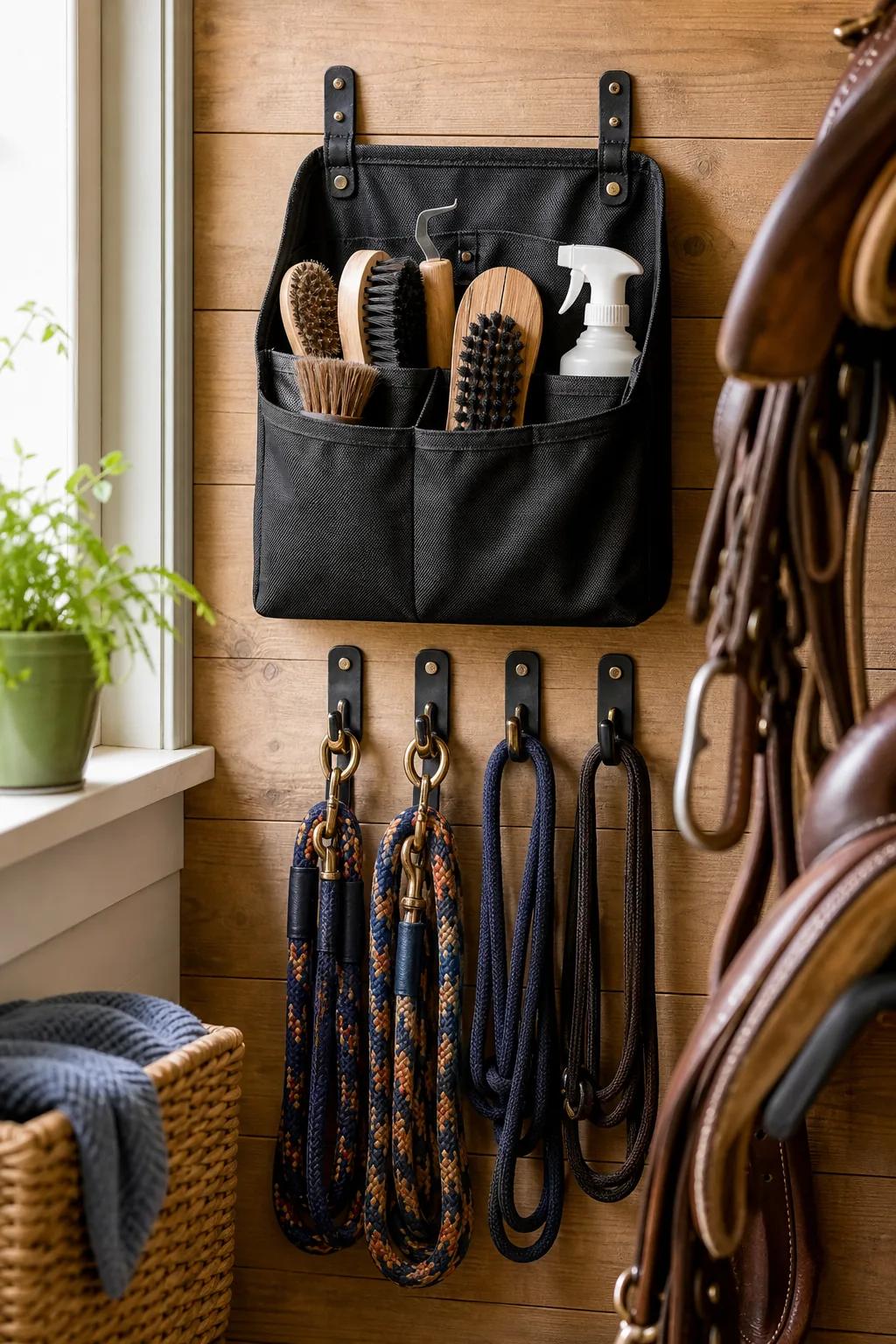
Keeping these essential grooming tools right at chest height means riders never have to dig blindly through a dark floor trunk. This strategic placement ensures that every grooming session begins smoothly, without wasting time searching for buried fly spray or hoof polish.
Cleaning Bridles Before Storage
Never hang a bridle in your pristine storage zone without thoroughly wiping down the bit and leather first. Introducing sweat and horse saliva to your carefully managed tack wall quickly attracts destructive pests and degrades the surrounding wooden hardware over time.
Hanging Lead Ropes and Long Lines
Utilizing a secondary row of smaller hooks beneath the grooming caddy keeps long lines, lead ropes, and extra halters completely untangled and ready for use. Separating these long lines from your expensive bridles prevents accidental snagging when grabbing gear in a hurry.
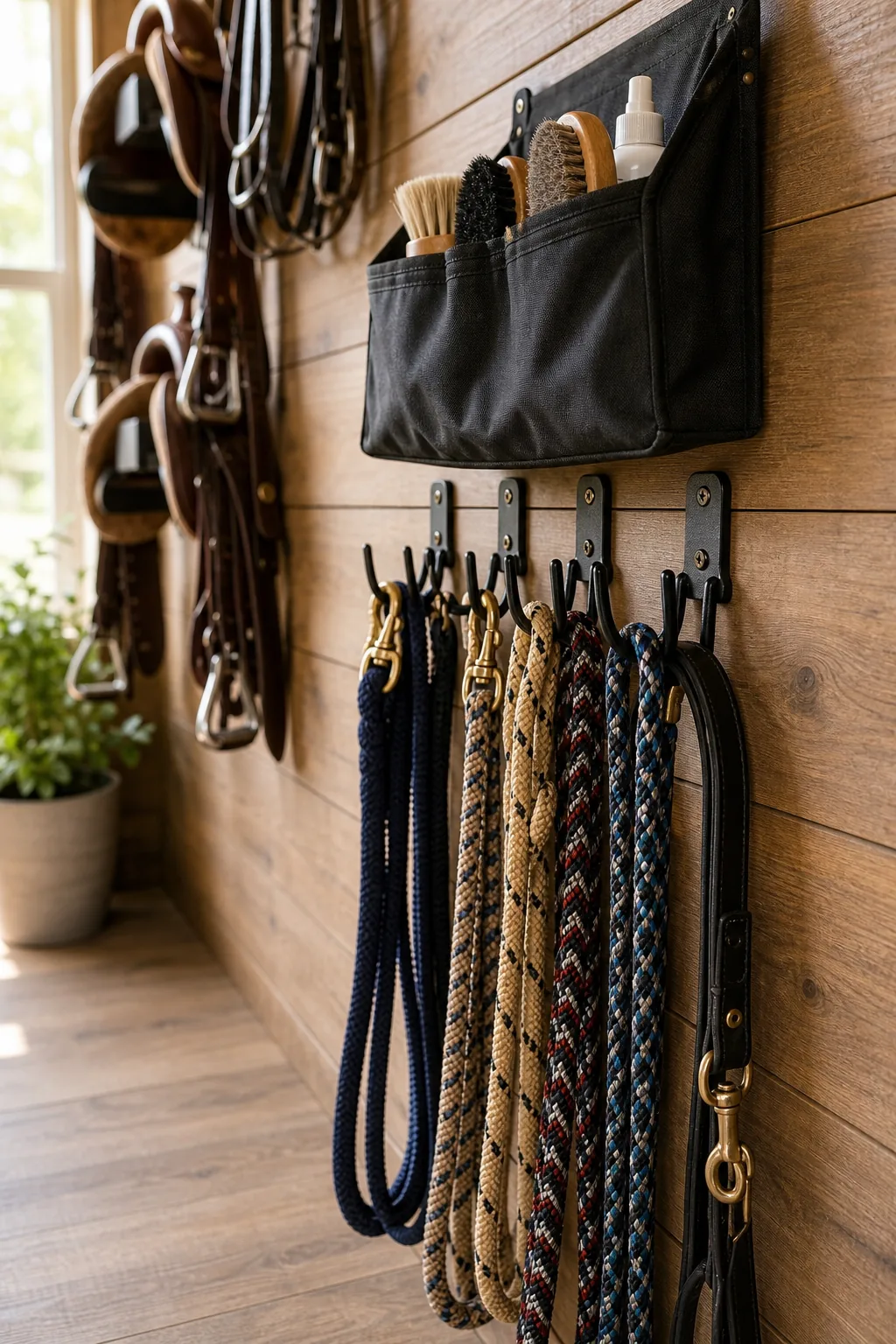
Dedicating this lower hanging zone specifically to durable nylon and cotton ropes keeps the barn aisle completely clear of dangerous tripping hazards. This separation also ensures that heavy brass snaps never accidentally swing into your delicate leather headstalls.
Preventing Snags on Nylon Gear
Coiling your long lines properly before hanging them on the lower hooks prevents frustrating knots and twisted fibers. Using a simple figure-eight wrapping technique ensures that your lunge lines pull away smoothly the exact moment you need them for training.
Moisture Control for Leather Care
A dedicated dehumidifier running in the climate management zone is absolutely necessary in unheated barns to actively prevent mildew from ruining your gear. Aim for a stable relative humidity of 45 to 50 percent to stop mold without drying out oiled leather.
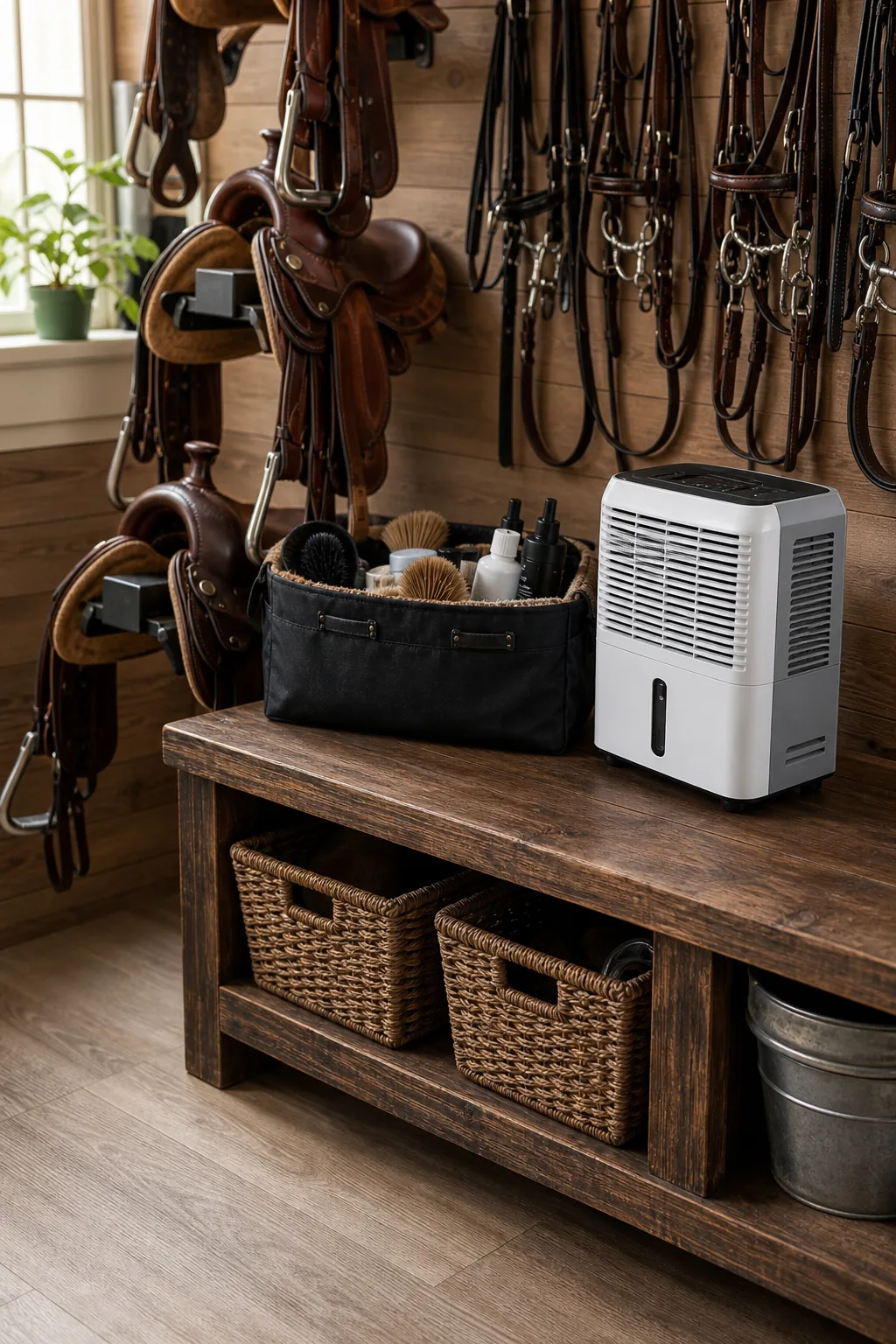
Maintaining the perfect atmospheric balance requires consistent monitoring, especially during humid summer months or damp seasonal transitions. Establishing a strict weekly maintenance routine ensures your dehumidifier never overflows and stops protecting your valuable riding equipment.
Monitoring Seasonal Humidity Shifts
As the seasons change, your tack room’s climate control needs will drastically shift. During the dry winter months, you may actually need to turn the dehumidifier off entirely to prevent the ambient air from pulling essential conditioning oils out of your expensive saddles and bridles.
Bench Storage and Heavy Baskets
Using sturdy woven baskets maximizes the footprint of structural furniture by utilizing the often-wasted under-bench storage area. This lower zone is absolutely ideal for isolating heavy, seasonal items like clippers and winter blankets from daily foot traffic.
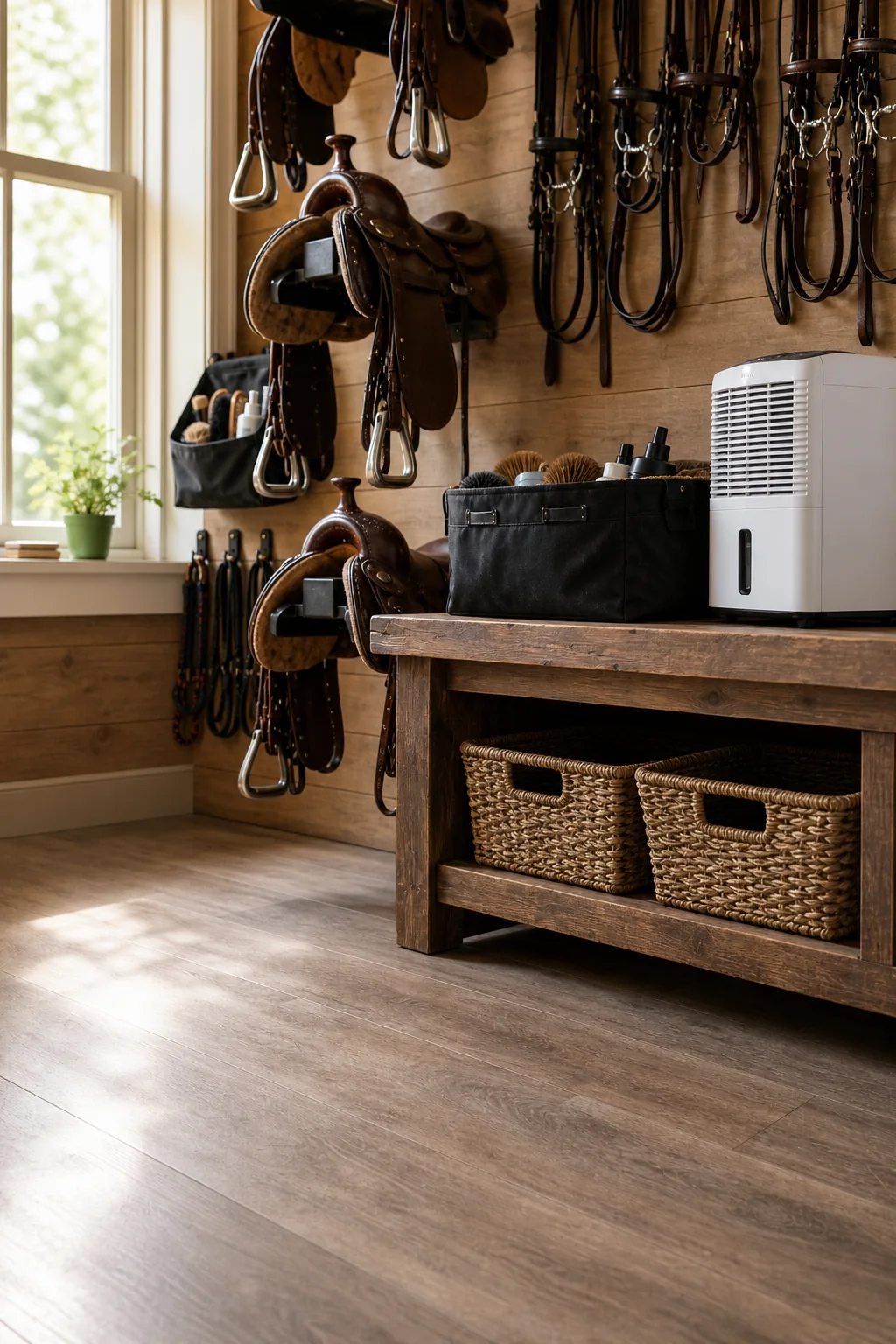
The open weave of these heavy baskets allows necessary air to circulate around stored seasonal fabrics, entirely preventing musty odors from developing. Keeping these bulky items tucked under the bench frees up valuable wall space for your primary riding gear.
Rotating Gear for Winter Months
When the temperature drops, swap the contents of your lower storage baskets to accurately reflect your current riding needs. Moving heavy turnout blankets into the easily accessible under-bench zone saves you from climbing dangerous ladders to reach high storage lofts daily.
Calculating Essential Floor Clearance
Creating deliberate empty space at the bottom of the wall protects expensive equipment from minor barn flooding and swept dirt. Keep the lowest hanging gear and the bottom of the bench at least 12 to 18 inches off the floor.
This essential floor clearance drastically speeds up your daily sweeping routine by eliminating awkward physical obstacles. Keeping the lower perimeter entirely clear also actively deters barn rodents from nesting in dark, hidden corners behind your heavy storage trunks.