
13+ Calming Sensory Room Ideas for Your Home
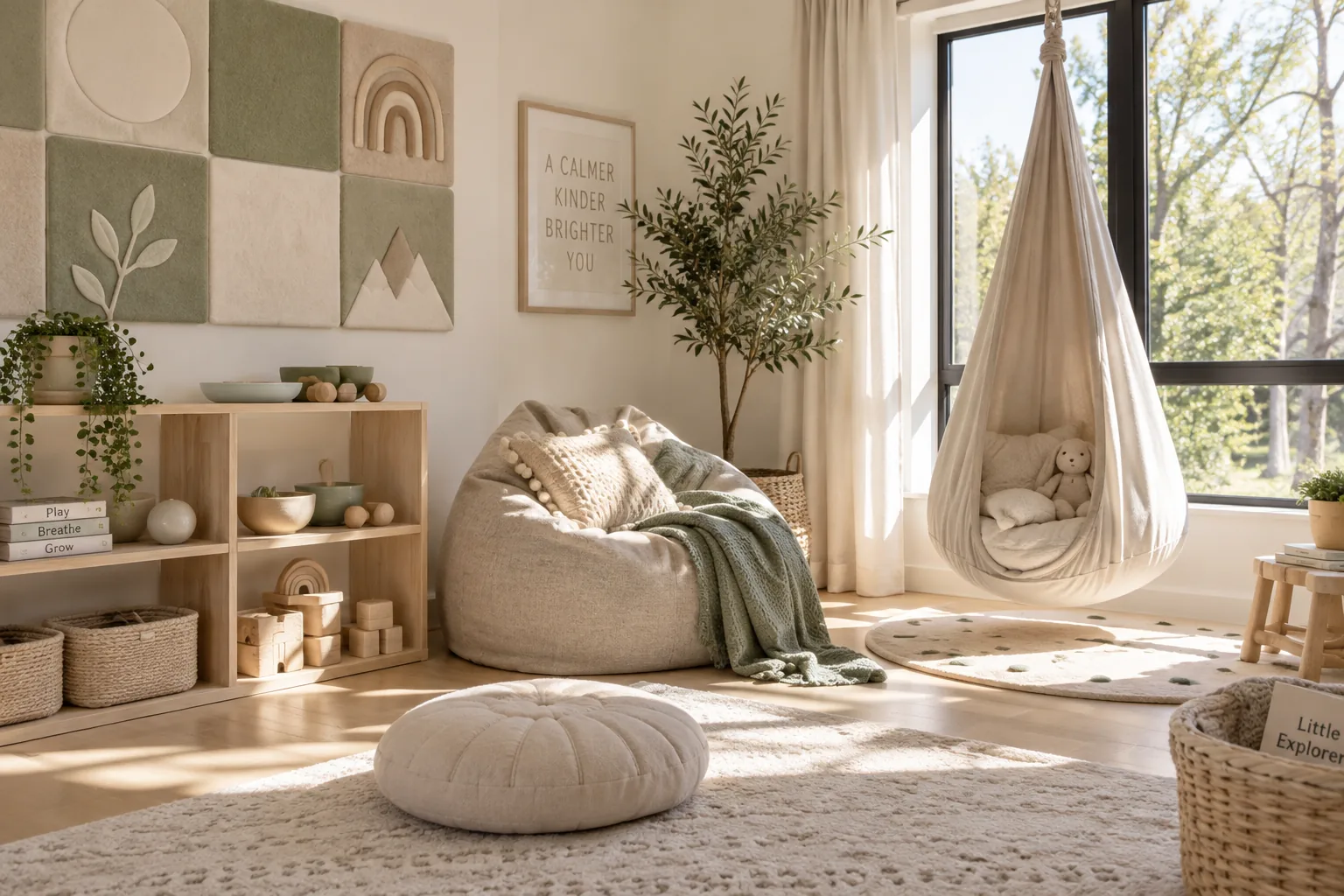
Designing a sensory space is all about managing input to create a calming, safe environment. I focus on grounding textures and adjustable lighting to make these rooms actually work for daily life.
1. Tactile Wall Panels
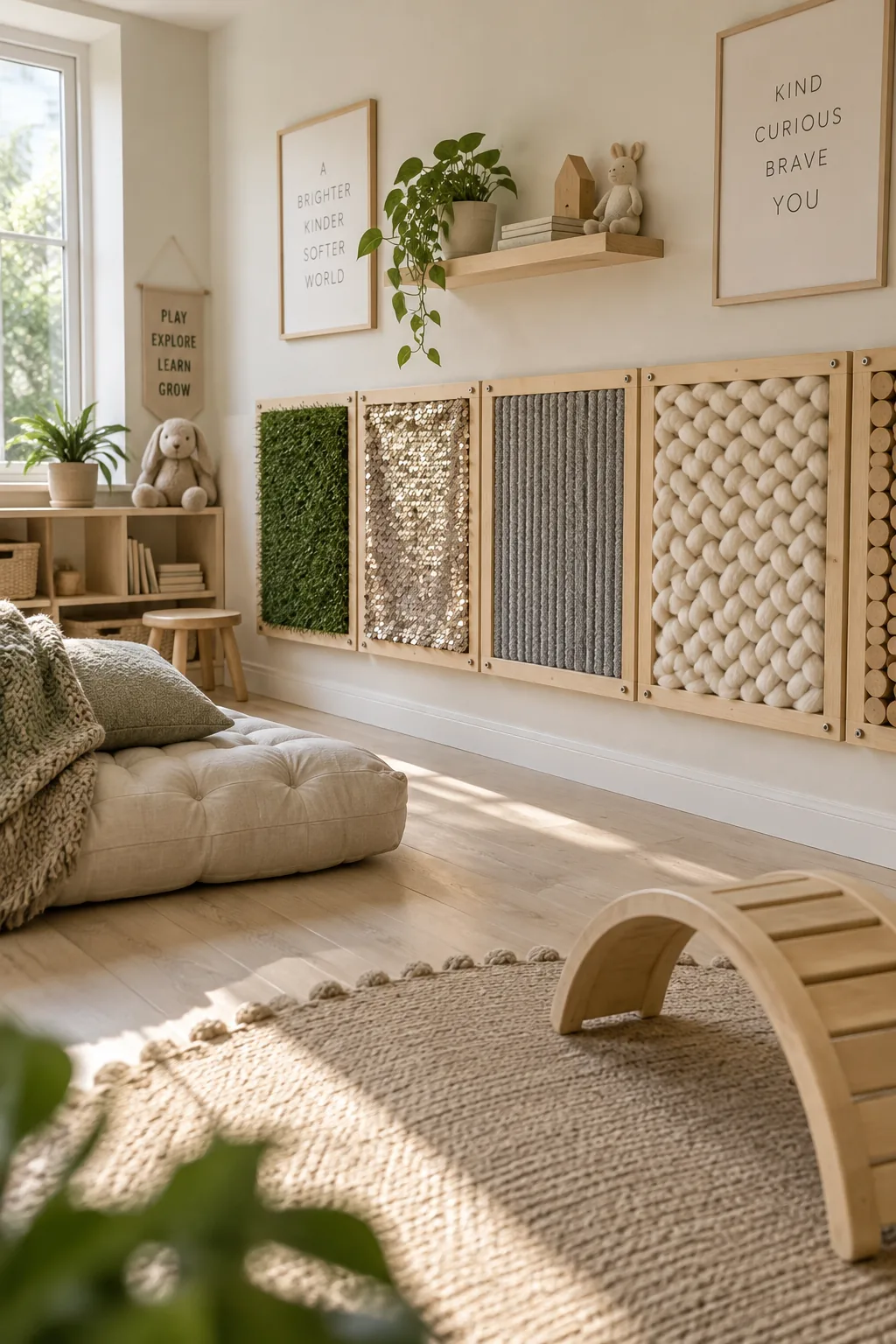
Contrast is the secret to a good tactile wall. Mixing smooth, rough, and squishy surfaces gives the hands plenty to explore.
I like mounting different materials on standard wooden frames. You can use faux grass, sequin fabric, and ribbed carpet remnants.
Place them at eye level for easy access. It anchors the room perfectly.
2. The Crash Pad Corner
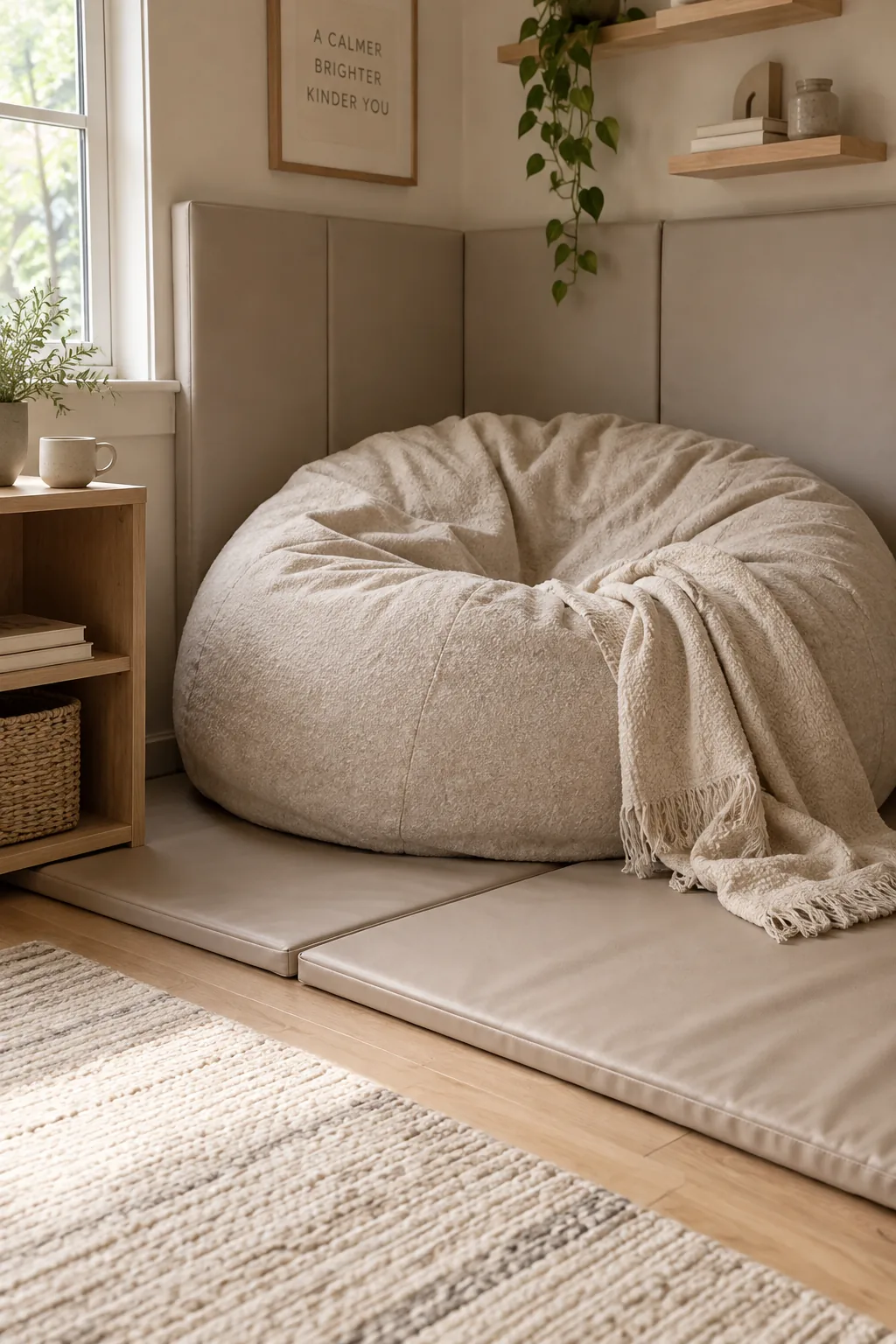
My kids used to destroy the living room sofa before I realized they just needed a safe place to jump. A crash pad corner solves that deep pressure need instantly.
Get a giant foam-filled bean bag and push it into a corner. Line the adjacent walls with thick gym mats for extra safety.
Washable covers are non-negotiable here. They take a lot of abuse.
3. Fiber Optic Waterfall

Draping fiber optic lights over a sheer canopy creates a glowing, magical cave effect. The slow color changes provide gentle visual stimulation without the harsh glare of standard overhead bulbs. Strands that are safe to touch let kids wrap the lights around their hands for a grounding effect. You can hang them from a simple ceiling hook above a comfortable floor cushion. It instantly becomes the most popular spot in the house for quiet time.
4. Indoor Therapy Swing
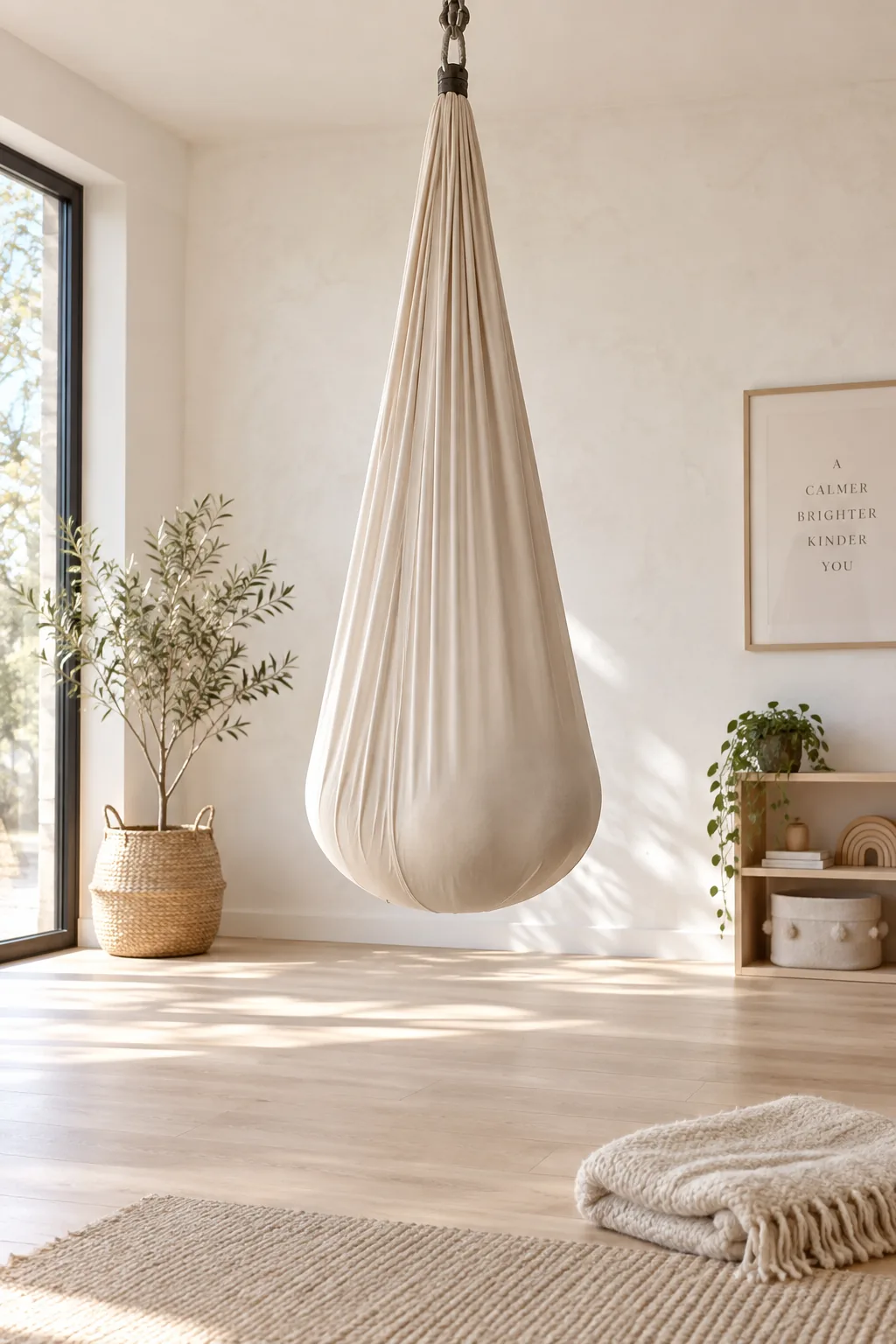
I always insist on finding a ceiling joist for this project because safety has to come first. A stretchy therapy swing creates a cocooning effect that blocks out overwhelming sights and sounds. The spandex blend material hugs the body tightly while allowing gentle bouncing or spinning. You just need heavy-duty hardware and a clear radius around the swing area. It provides crucial vestibular input to help regulate the nervous system.
Why it works: The deep pressure from the fabric combined with gentle motion instantly calms an overwhelmed nervous system.
5. Interactive Floor Projection
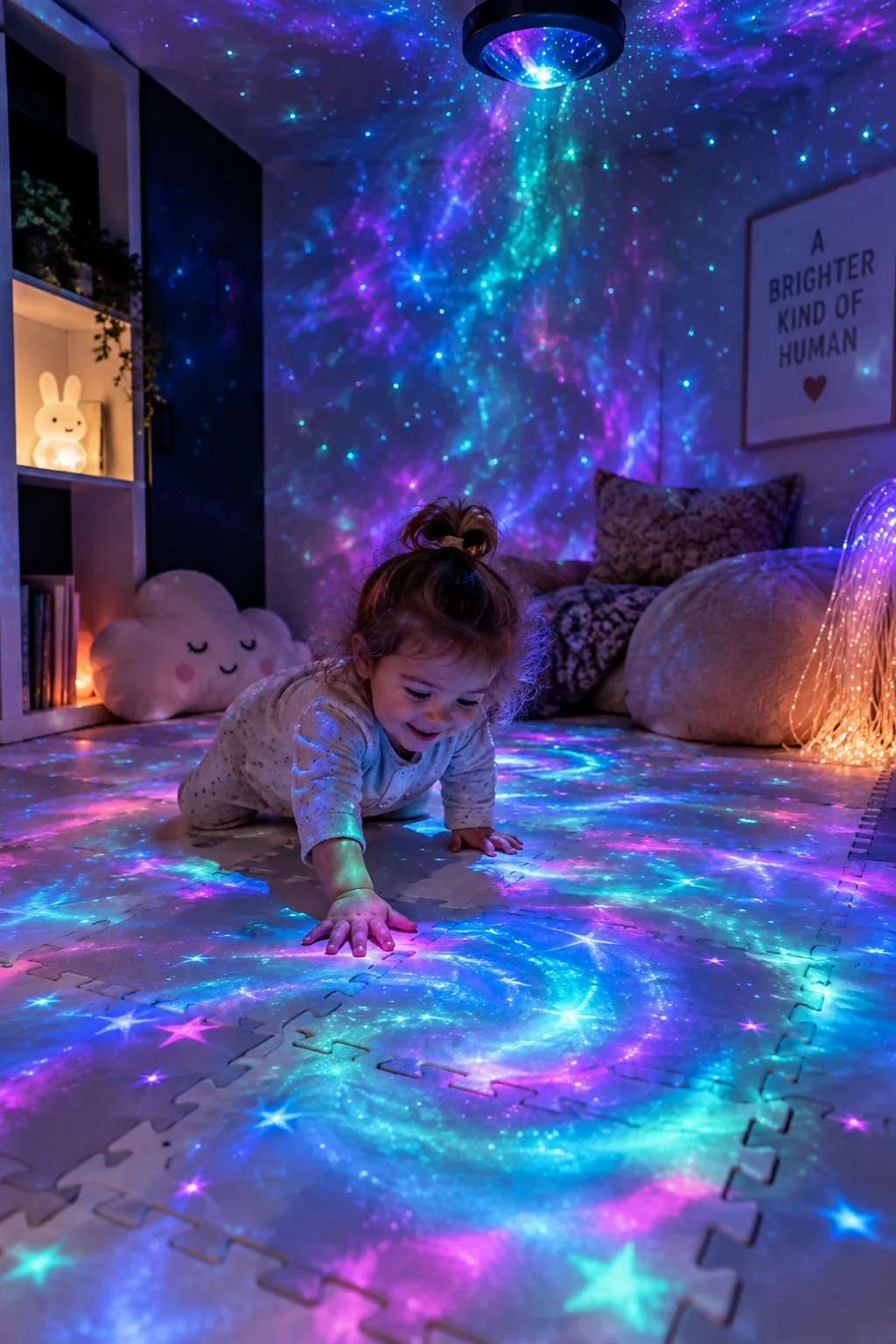
Turning the floor into a moving pond or a starry night sky completely changes the room's atmosphere. A simple galaxy projector aimed downward gives restless kids something to track with their eyes. You can place soft white puzzle mats directly under the light to make the colors pop. Following the moving patterns encourages stretching and crawling. It is a brilliant way to encourage movement without overstimulating the space.
6. Weighted Blanket Nook
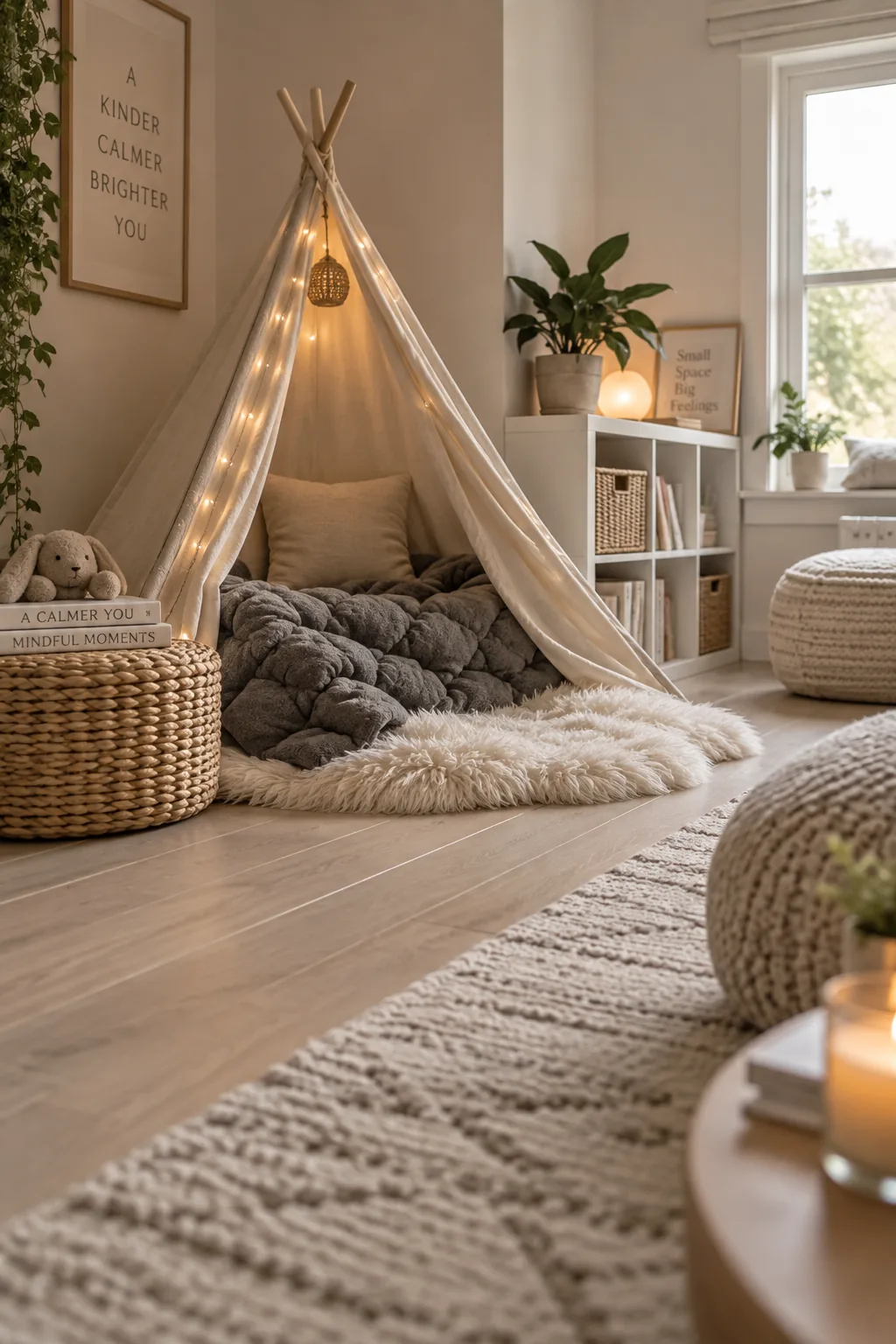
I have found that a dedicated quiet corner is just as important as the active zones. Building a weighted blanket nook requires nothing more than a small pop-up tent and a heavy, cooling blanket. I layer the bottom with a faux fur rug to add another soothing texture. The enclosed space reduces visual noise while the heavy blanket provides deep touch pressure. It gives anyone a fast way to reset after a loud day.
7. Adjustable Color Lighting
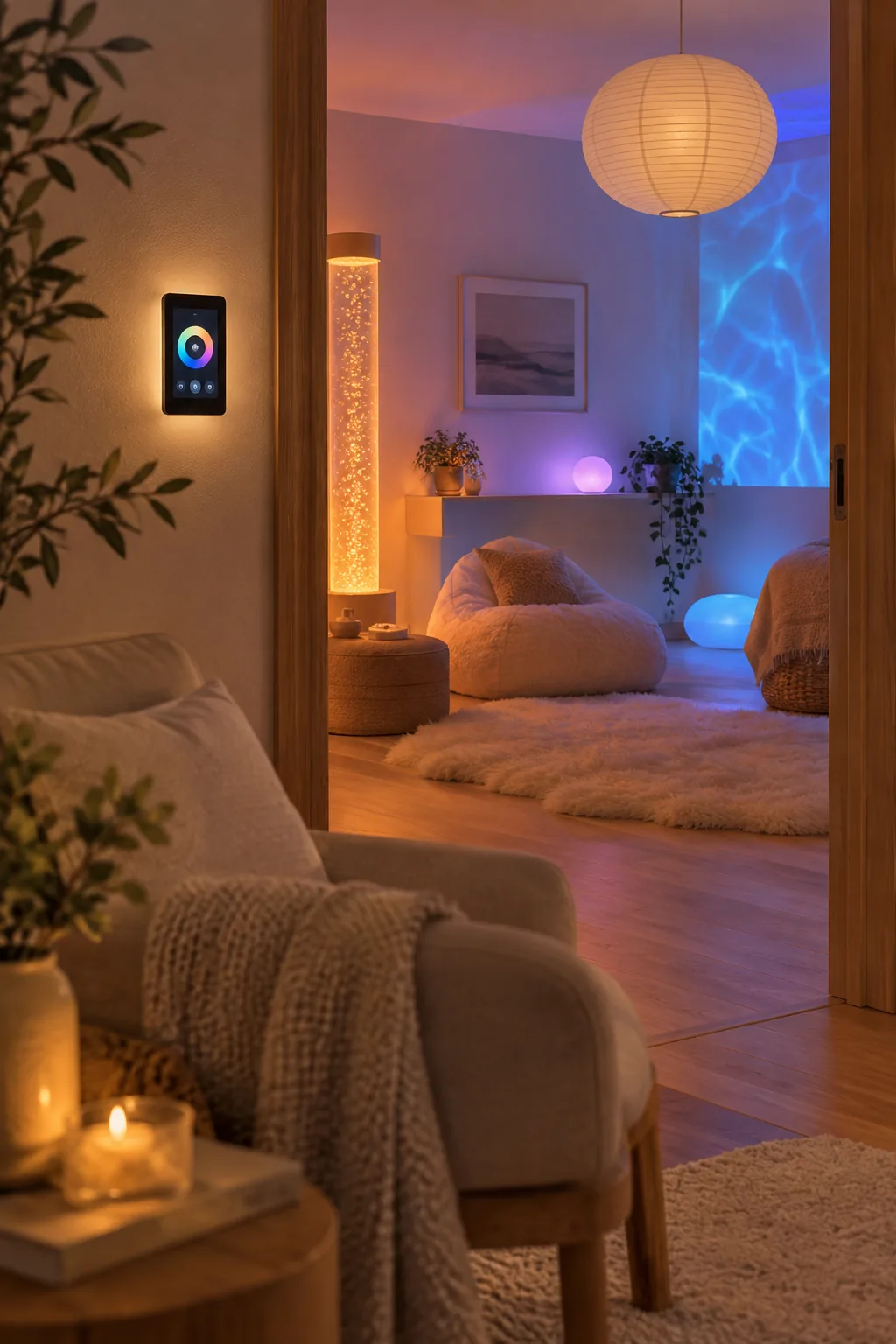
Warm light at 2700 Kelvin is proven to help the brain transition into a relaxed state. Swapping standard bulbs for smart LED lights lets you control both the color and the brightness from your phone. You can set a cool blue tone for focus or a dim amber for winding down. I always remove the main overhead switch to prevent sudden, jarring flashes of bright light. Controlling the visual environment is the foundation of any good sensory room.
8. Acoustic Wall Tiles
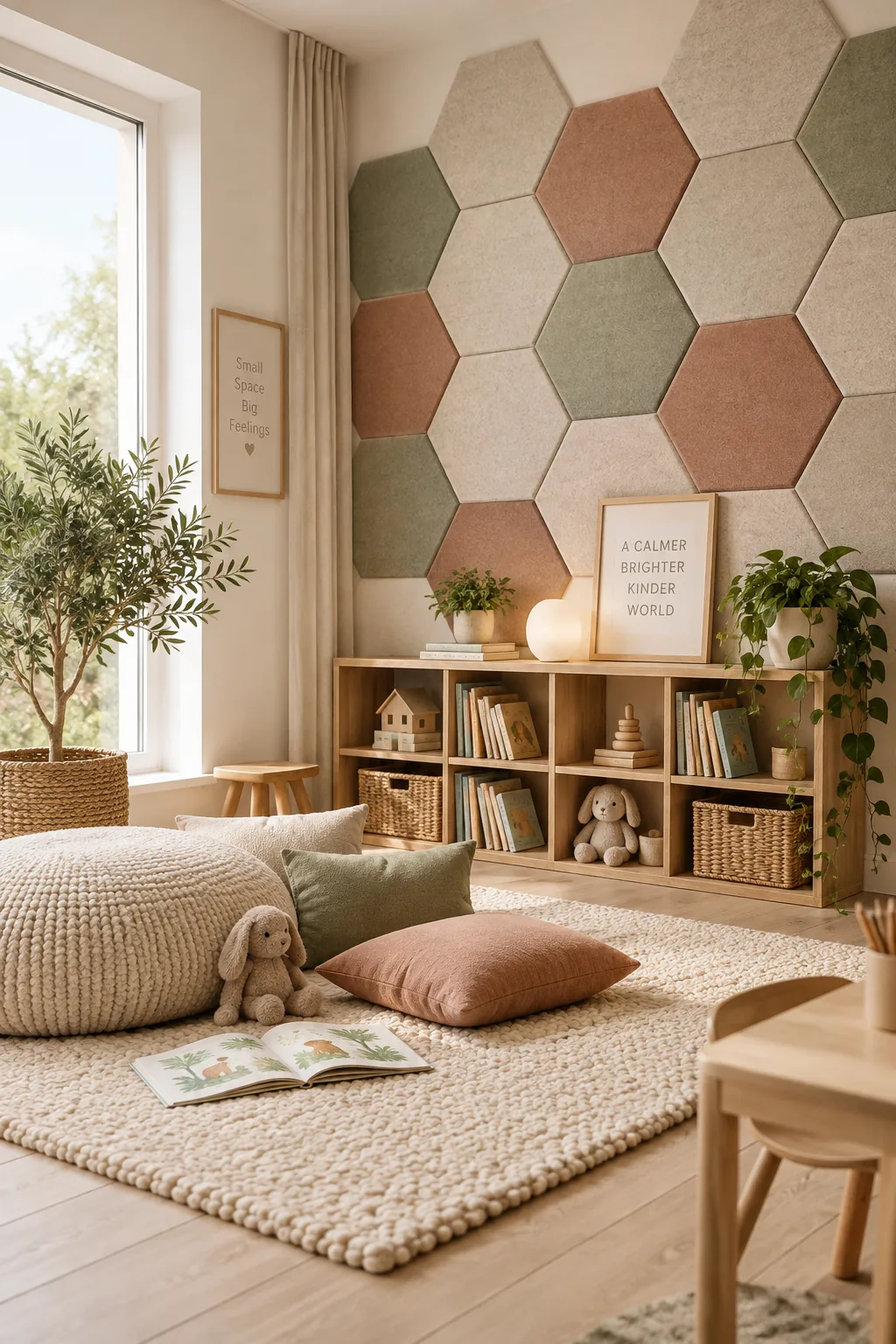
Hard floors and empty walls bounce sound around in a way that creates instant anxiety. Installing acoustic wall tiles absorbs that echo and softens the entire room.
They come in beautiful hexagonal shapes now. You can arrange them in a honeycomb pattern to make them look like intentional art.
Peel-and-stick backing makes them incredibly easy to install. The difference in room noise is night and day.
9. Fidget Wall Station
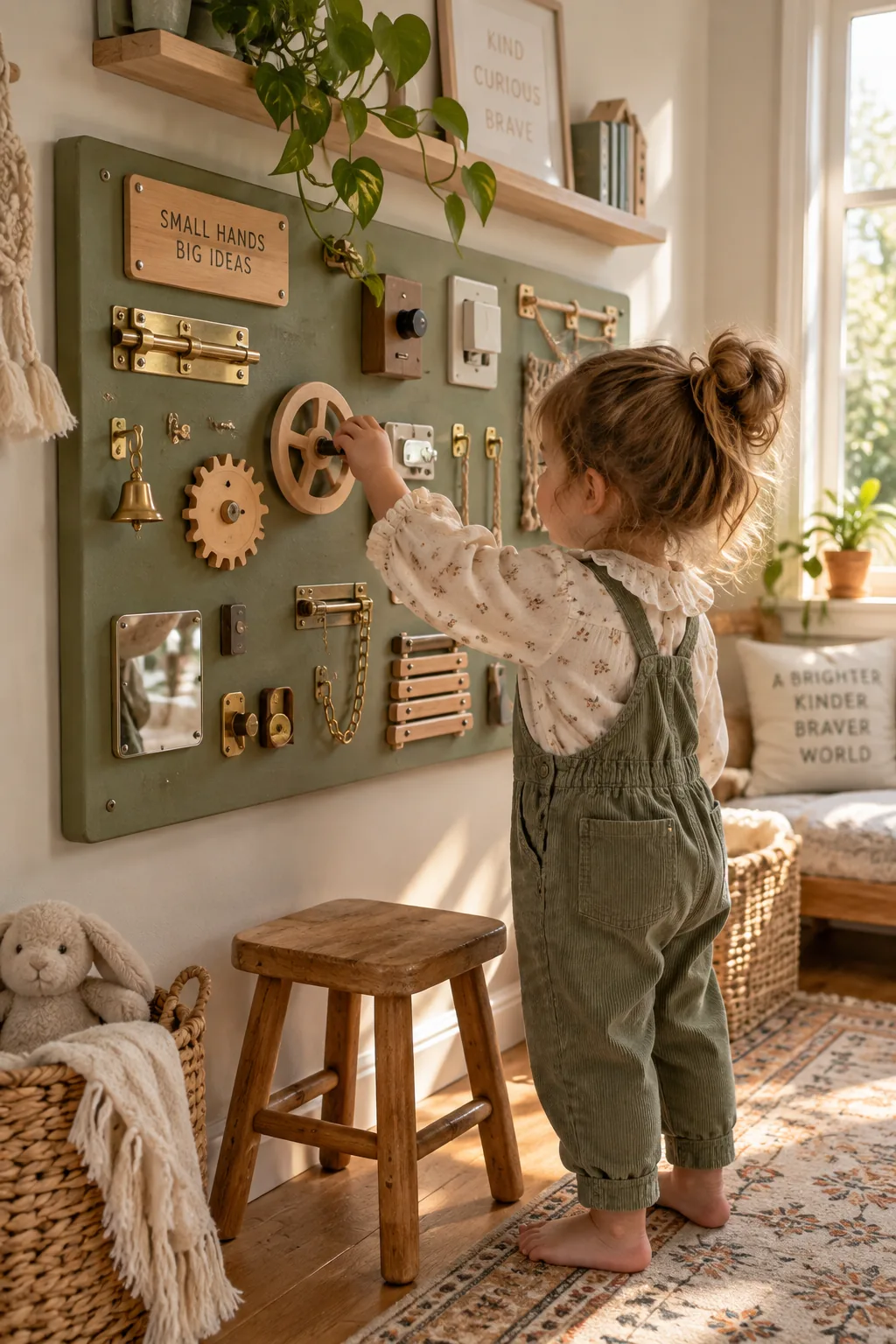
Keeping at least five different mechanical actions in one spot prevents boredom and redirects anxious energy. A fidget wall station uses everyday hardware like sliding latches, spinning wheels, and toggle switches mounted to a sanded wooden board. I paint the board a muted sage green so it blends into the room rather than looking like a giant toy. Grouping these items vertically saves floor space while encouraging fine motor practice. It gives restless hands exactly what they need to focus.
10. Bubble Tube Corner
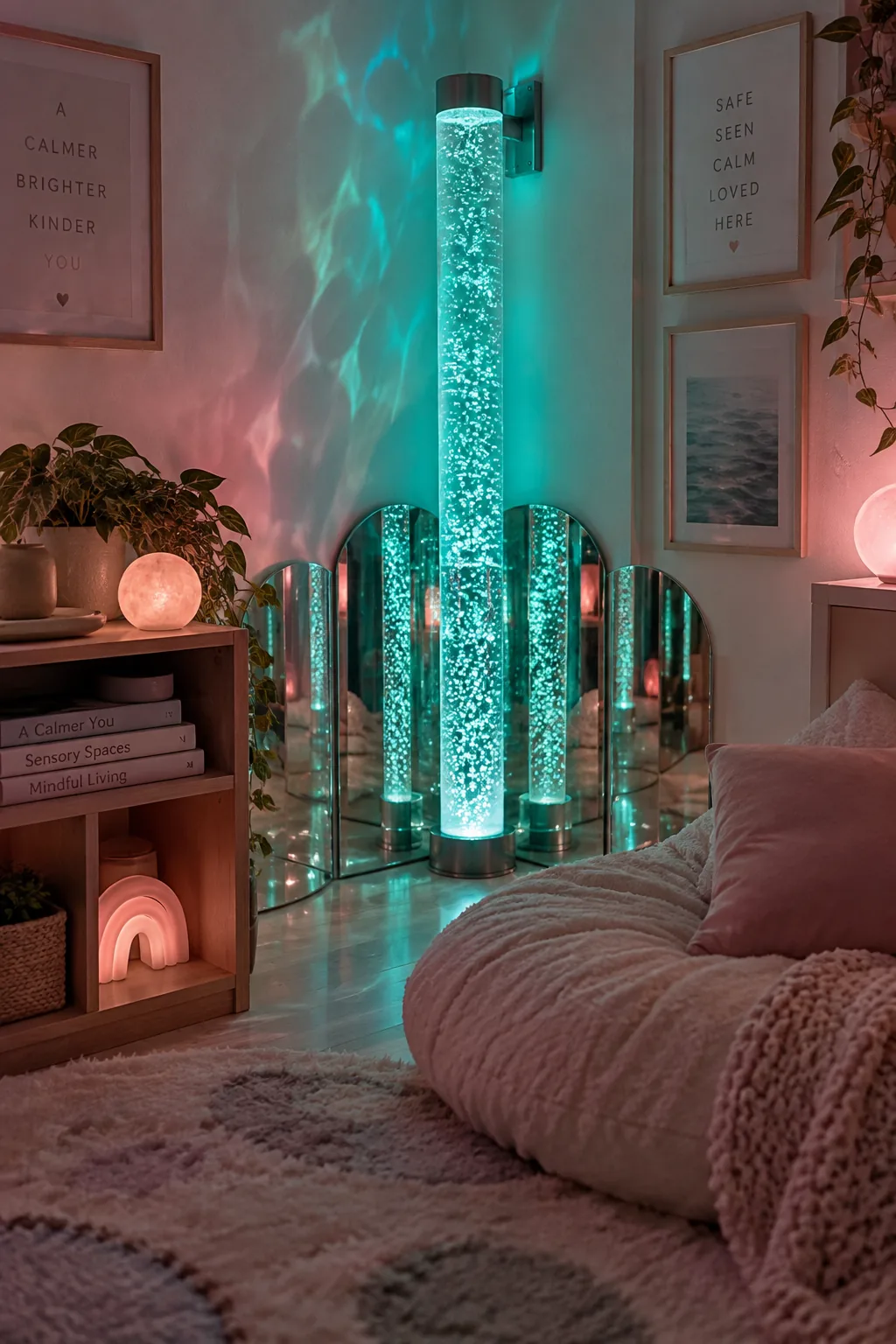
I used to think these were too clinical for a home until I saw how mesmerizing they are in person. A water bubble tube provides a steady, rhythmic visual that naturally slows down a racing mind. You definitely need to secure it to the wall with a bracket so it cannot be tipped over. The gentle humming sound of the motor acts as a subtle white noise machine. Surrounding the base with curved acrylic mirrors multiplies the calming effect.
11. Textured Floor Path
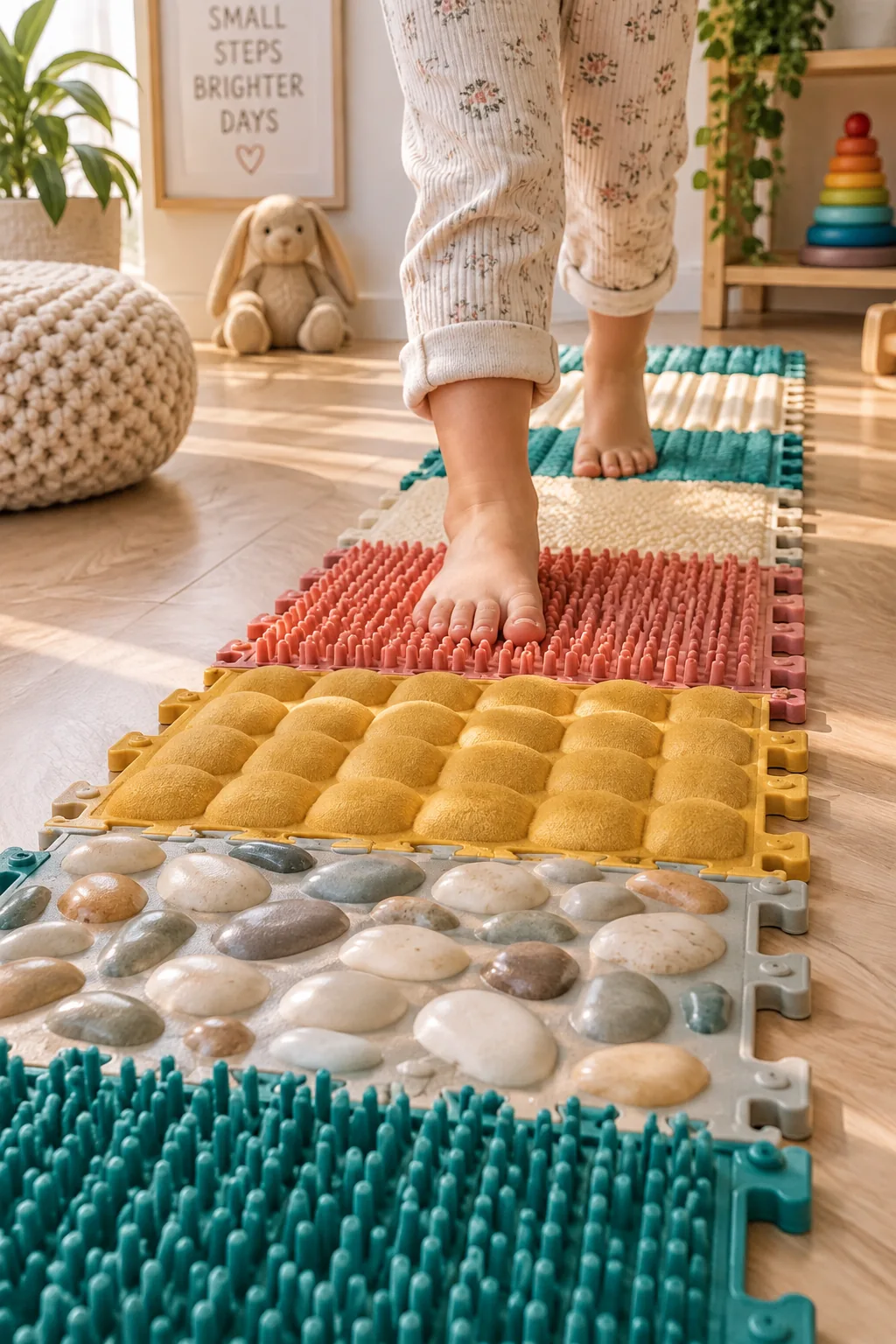
Walking barefoot over different surfaces instantly grounds a distracted mind. Creating a textured floor path with interlocking sensory mats lets you mix rubber bristles, smooth stones, and soft foam. You can easily rearrange the squares to keep the pathway feeling new.
Why it works: The varied textures stimulate nerve endings in the feet, sending grounding signals directly to the brain.
12. Dark Den
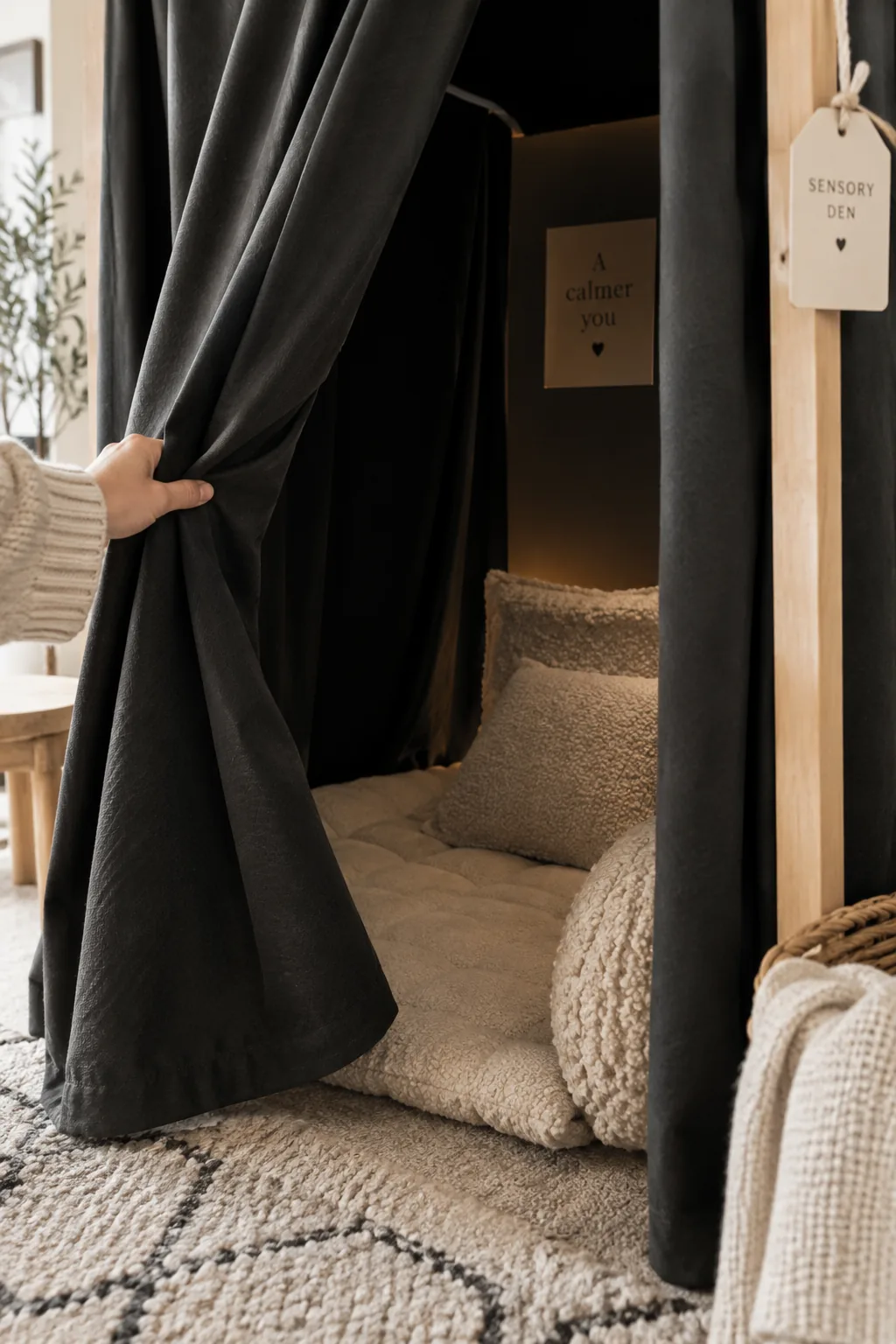
I always try to include a completely pitch-black escape space.
A dark den blocks out all ambient light when the world feels too bright and loud. You can build one easily using blackout curtains draped over a simple PVC pipe frame. Toss a few vibrating pillows inside to complete the sensory retreat.
13. Scented Putty Station

Engaging the olfactory system alongside touch creates a powerful grounding exercise. Setting up a small desk with aromatherapy sensory putty gives kids a quiet, focused activity. I store different scents like lavender and peppermint in airtight glass jars to keep them fresh.
14. Deep Pressure Roller
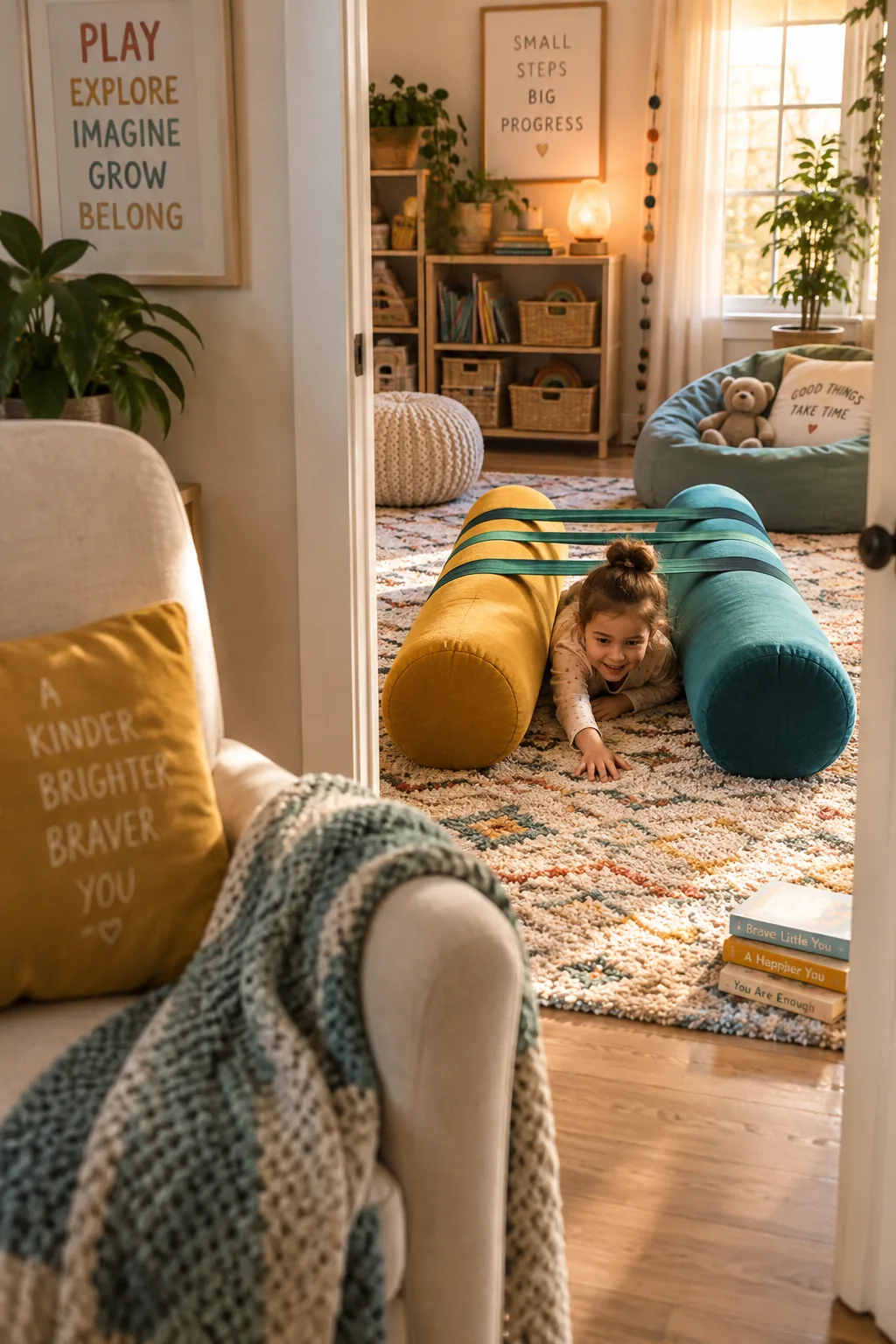
Passing through tight spaces provides intense proprioceptive feedback.
A steamroller machine or a set of heavy foam rollers lets kids squeeze themselves through a safe, padded gap. You can recreate this easily with two firm bolster pillows and some heavy resistance bands.
Why it works: Squeezing the body's joints and muscles helps the brain map where it is in space, reducing physical anxiety.