
How to Style a Warm Green Bedroom: The Paint Pairing Guide
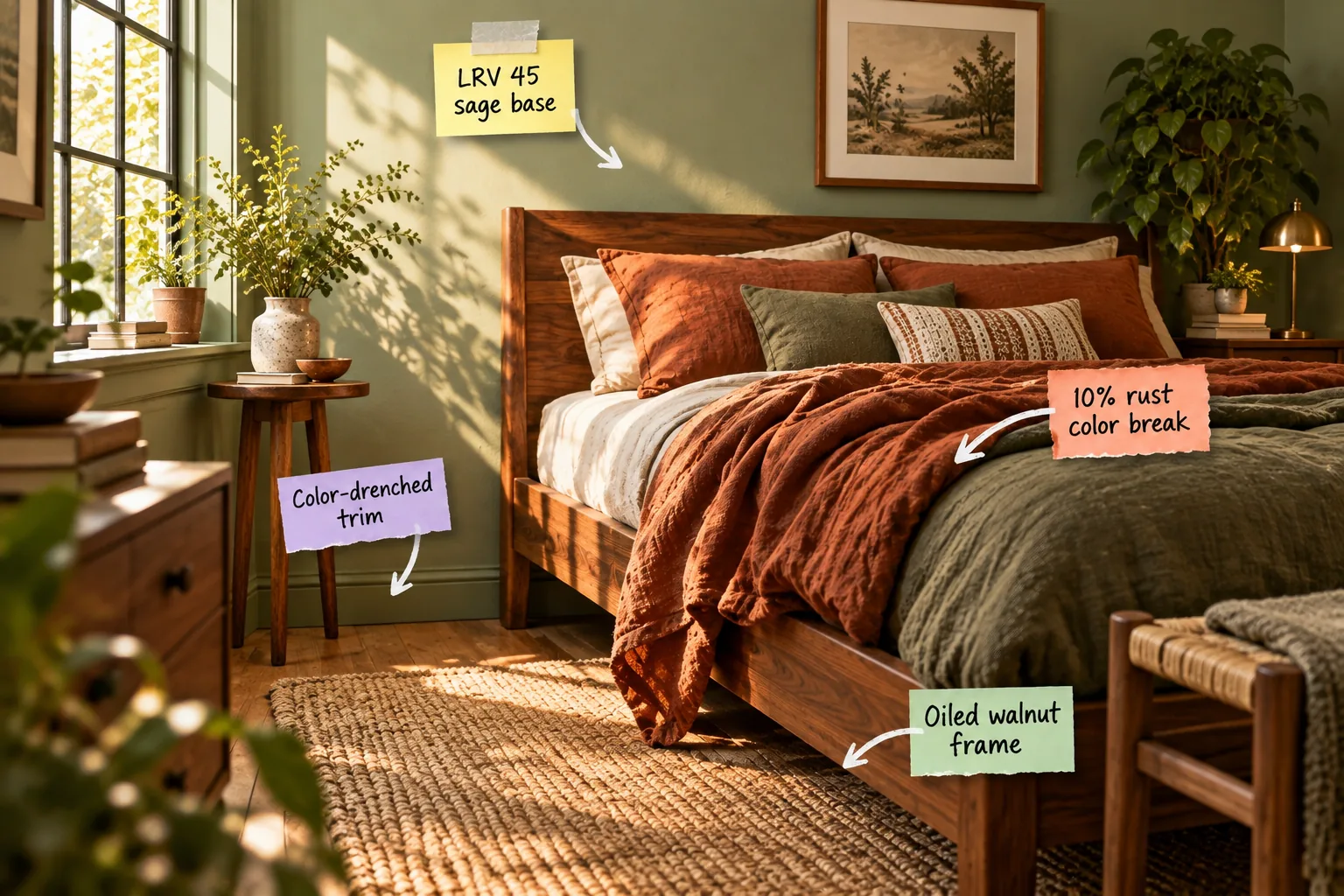
You can confidently select a sage paint color and pair it with the exact wood tones and textiles needed to make the room feel warm using this complete green paint pairing guide.
Choosing the Right Sage Base
In my own Denver bedroom, I tested five different shades before realizing that an LRV around 45 prevents the green from feeling too dark or overly minty while maintaining enough depth to feel incredibly cozy.
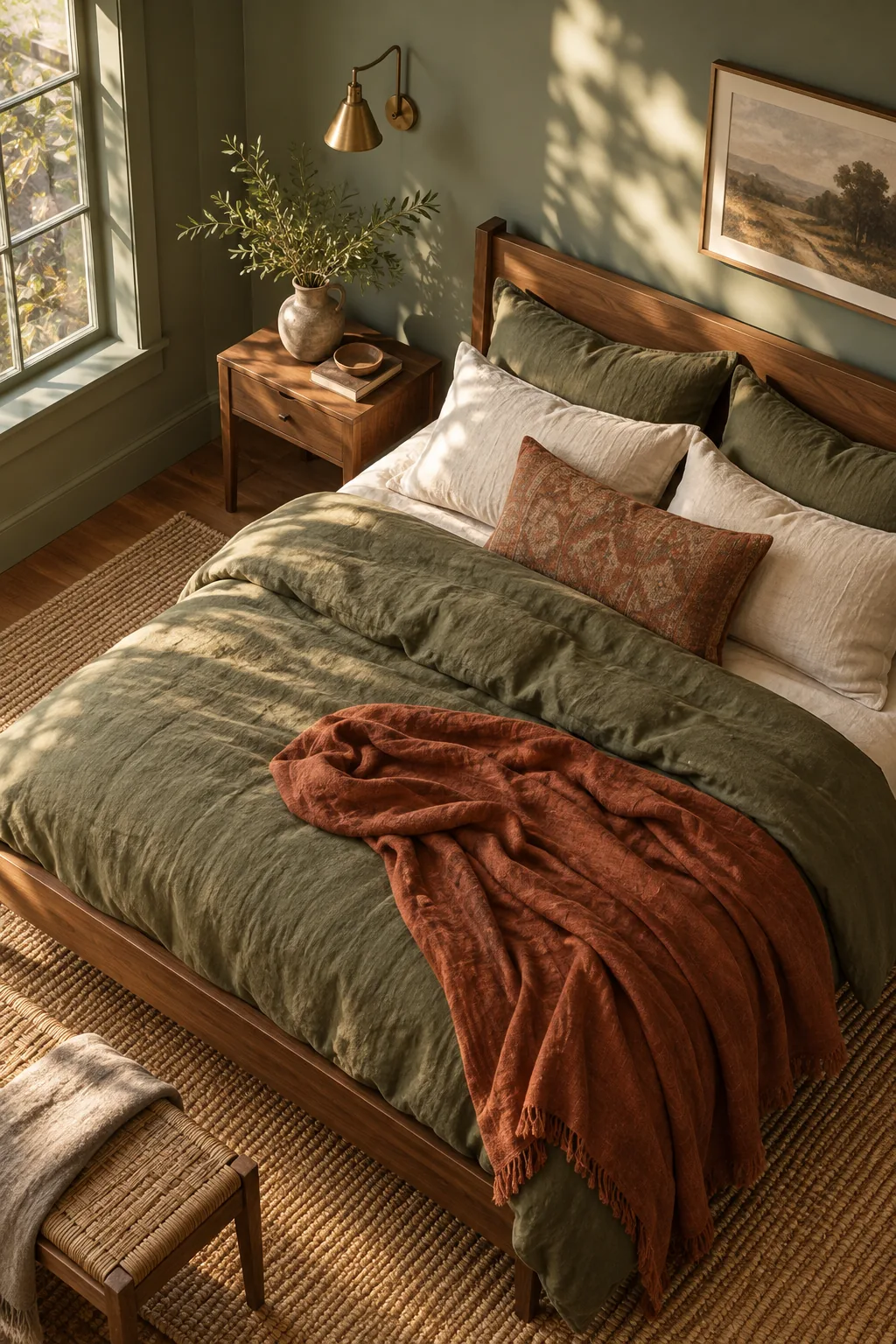
Paint chips look drastically different once applied to an entire room, especially with green hues that shift heavily depending on the time of day and the angle of the sun.
Evaluating Room Orientation
The direction your windows face completely alters how a sage wall reads, dictating whether you need a paint with stronger yellow undertones to combat chilly northern light or a cooler base for southern exposure.
- North-facing rooms: Require a sage with heavy yellow undertones to neutralize the naturally blue, cool light.
- South-facing rooms: Benefit from a slightly grayer sage, as intense direct sunlight naturally amplifies warm tones.
- East-facing rooms: Demand a balanced green that can handle bright morning warmth and shadowy afternoon coolness.
Color-Drenching the Trim
When I finally decided to paint my own baseboards the exact same green as the walls, the room instantly felt taller because removing the stark white visual break leaves you beautifully enveloped in continuous color.
Selecting the Right Paint Finish
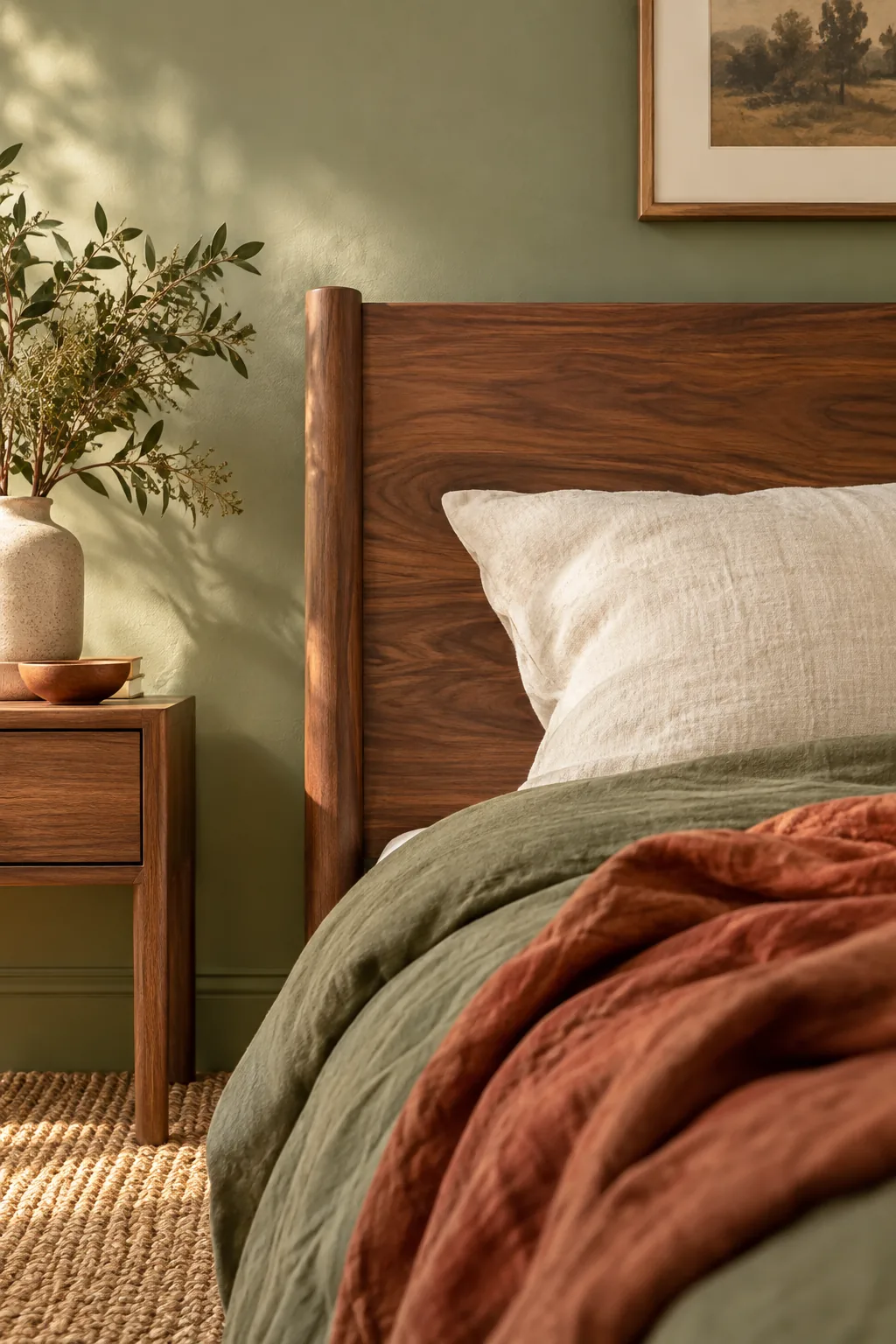
Glossy finishes reflect too much light and highlight drywall imperfections, so always choose a flat or matte finish for your walls to ensure the color absorbs light softly and feels like rich velvet.
Grounding with Warm Wood
I always anchor cooler walls with an oiled walnut bed frame, because its inherent red and orange undertones naturally counteract the green paint for a necessary grounding effect that prevents the room from feeling sterile.
Identifying Hidden Wood Undertones
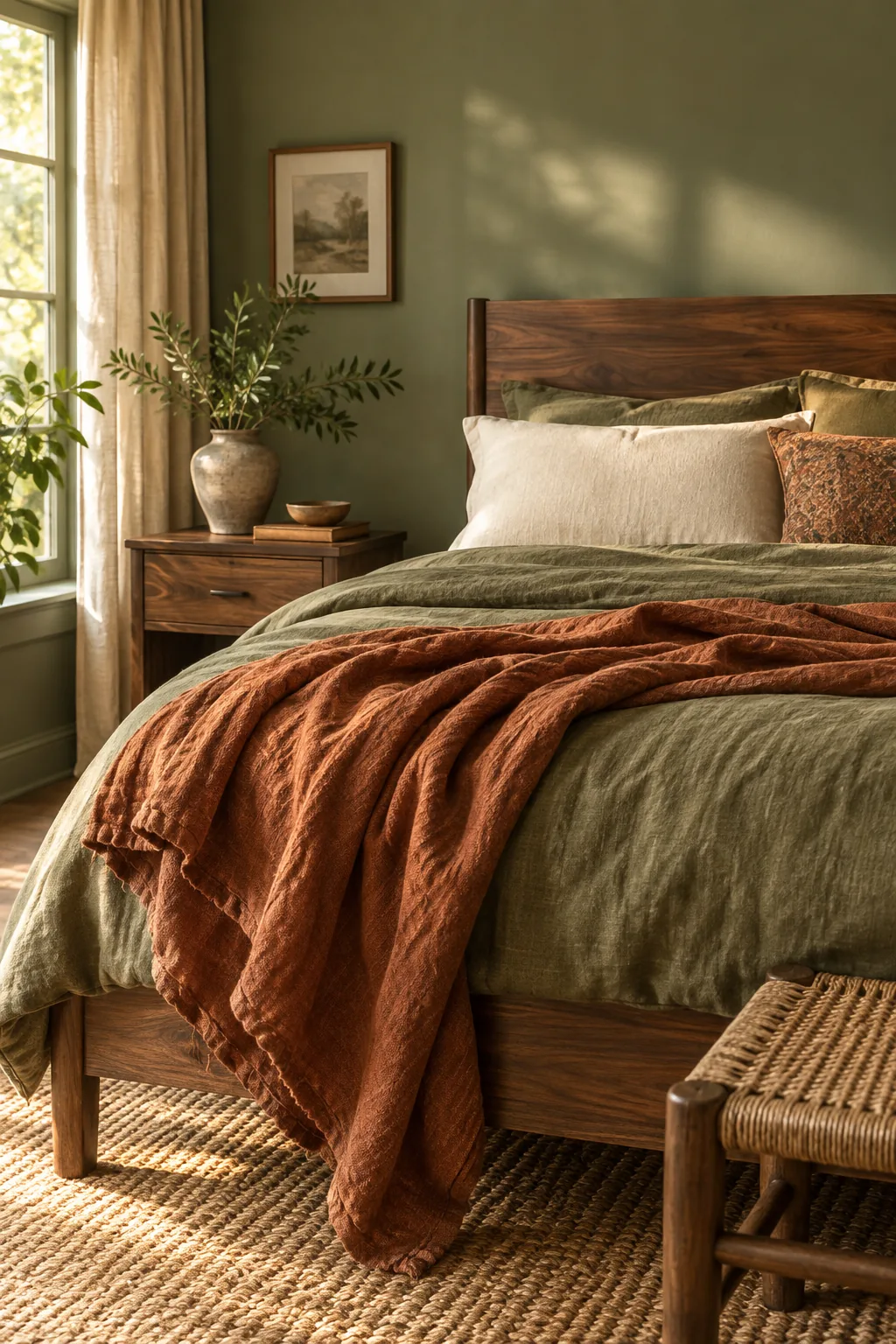
Before purchasing new nightstands, examine your existing floors in natural light to ensure their underlying hues lean toward amber or rust rather than ashy gray, which would clash terribly with a warm sage base.
The 10 Percent Rust Color Break
To master the 10 percent rule for accents in a monochromatic space, introduce a crumpled rust linen throw to provide high-contrast warmth without overwhelming the eye or competing with the walls.
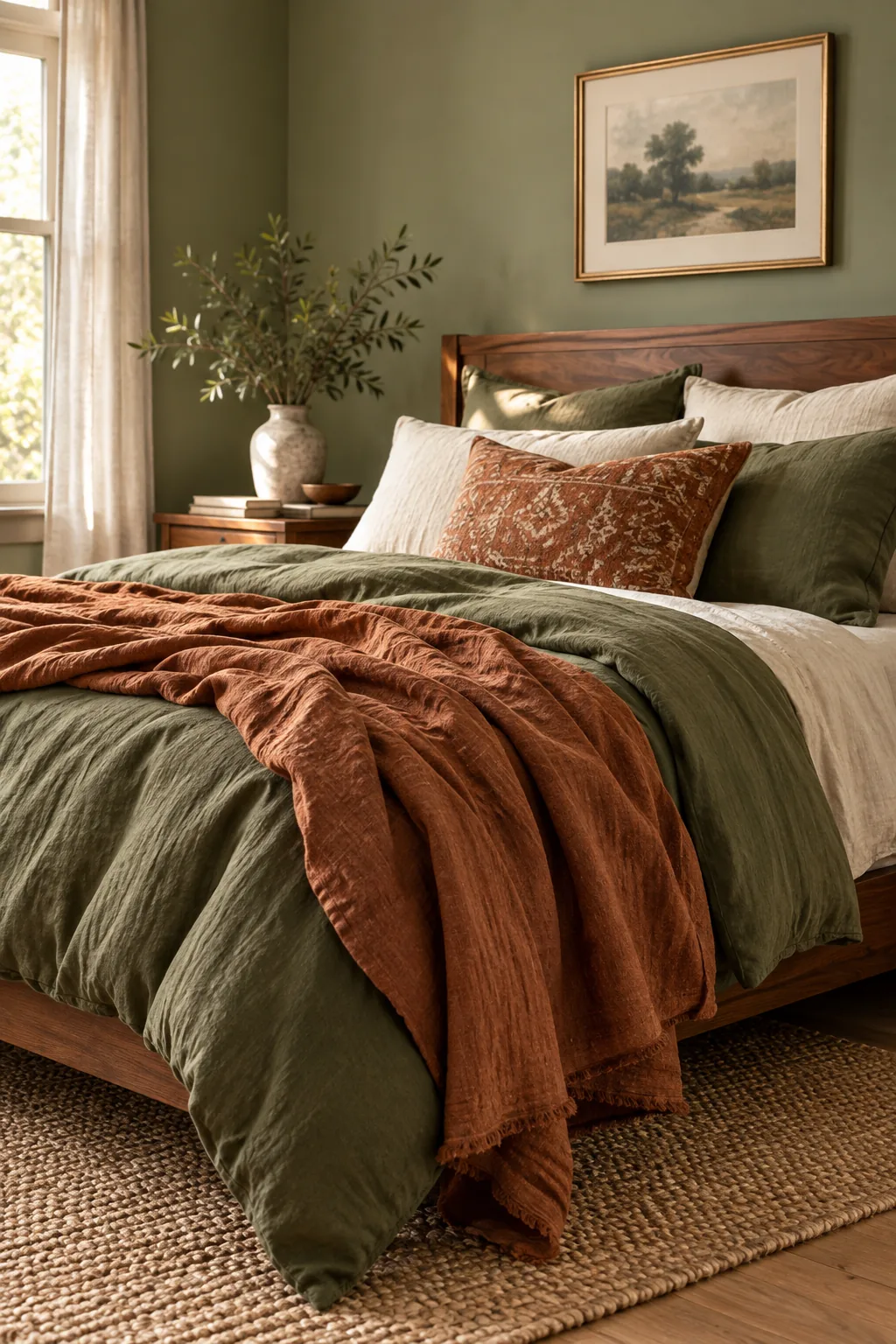
It is tempting to match your curtains, rug, and throw pillows to your accent color, but restraint is the actual secret to making that single vibrant tone truly pop.
Layering Tonal Greens
Mixing darker olive greens with lighter sage tones on your duvet creates visual depth against the LRV 45 walls, preventing the overall palette from falling flat or looking overly calculated.
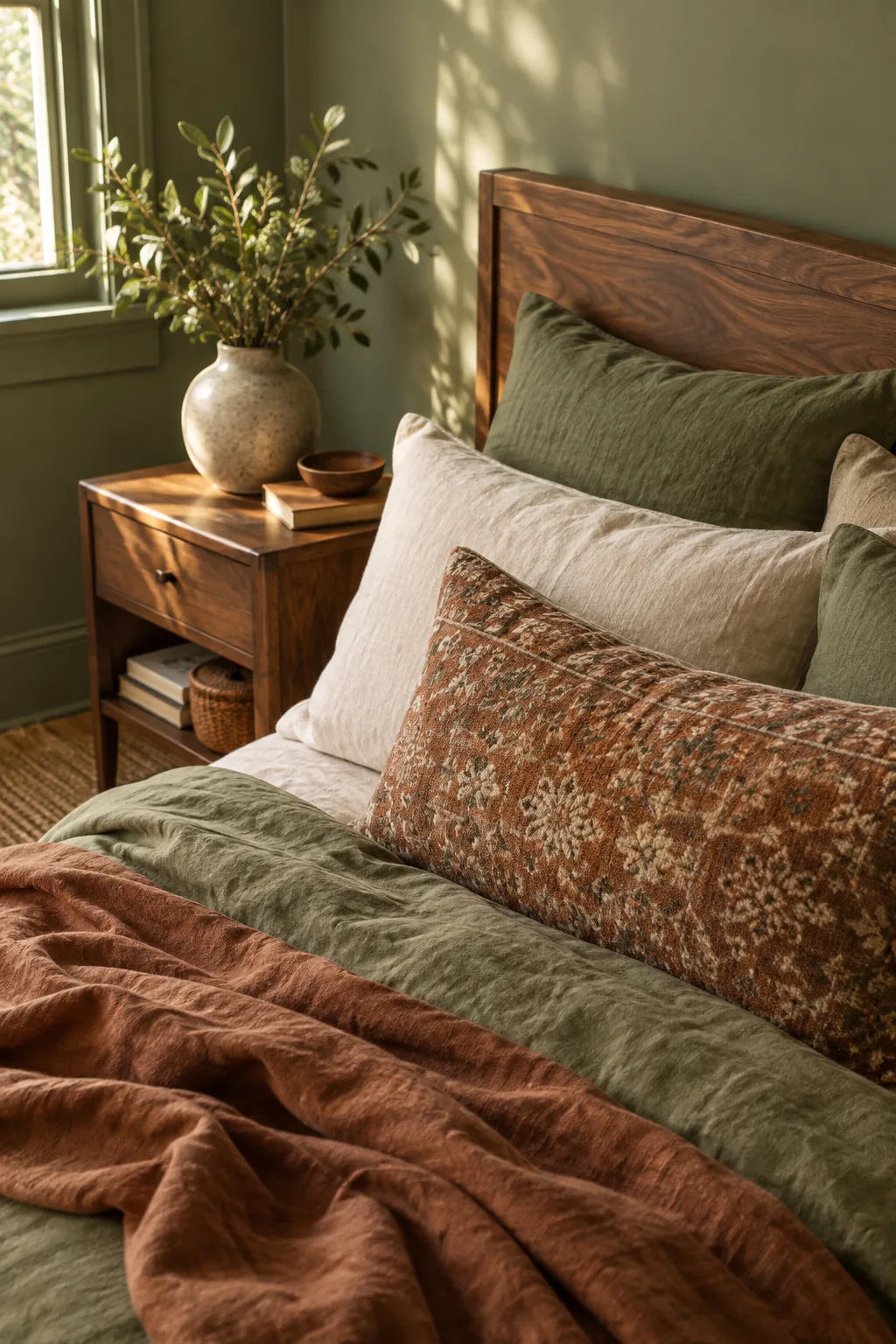
Building the Bedding Foundation
Start with crisp, warm white or oatmeal percale sheets as your base layer, which provides a neutral breathing space between the rich wood frame and the heavy olive duvet layered on top.
Adding Natural Texture
I keep matte ceramics and a chunky jute rug near my bed because these porous, textured elements absorb light differently than painted walls, adding incredible tactile warmth that glossy finishes simply cannot provide.
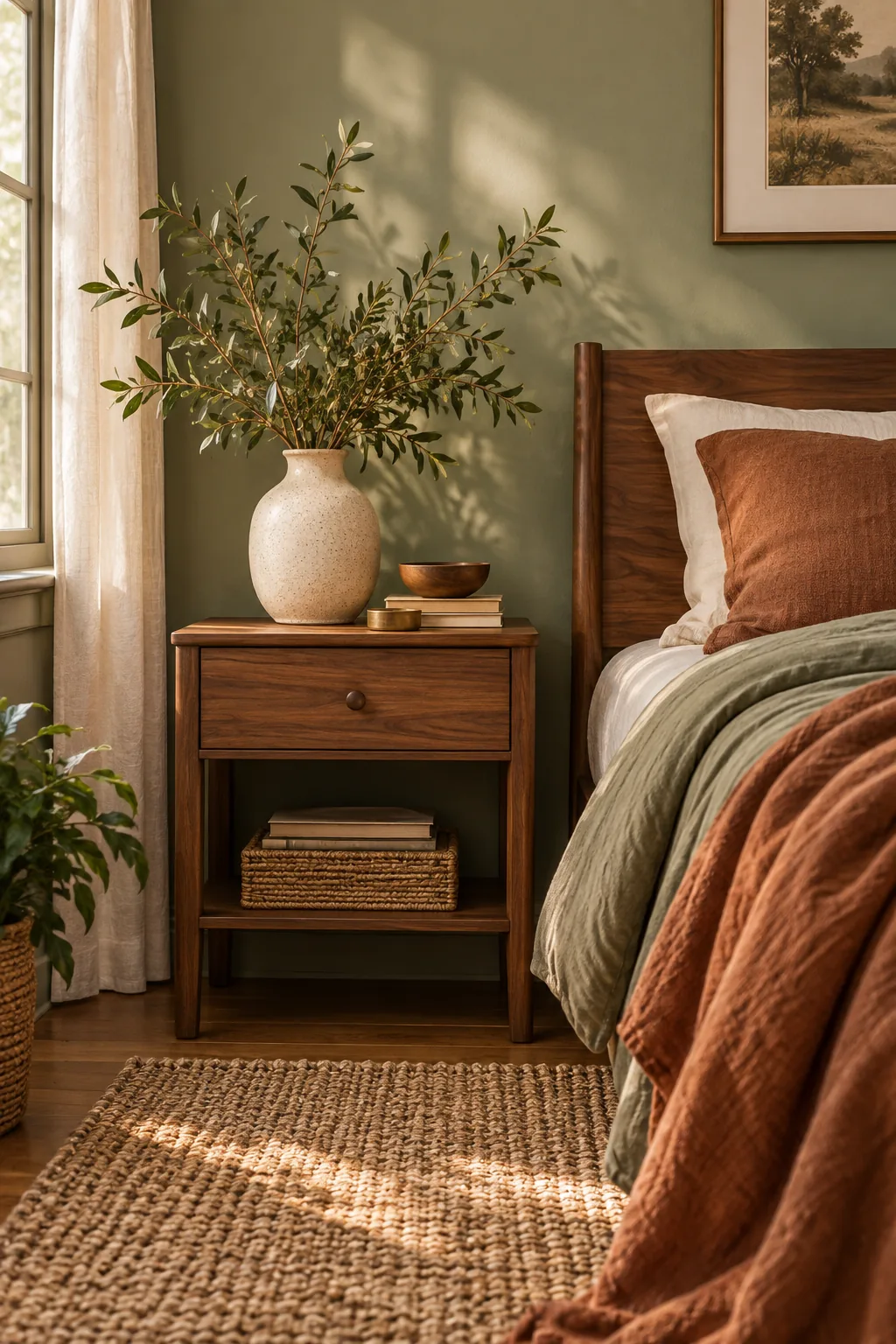
Balancing Metallic Finishes
Polished chrome feels too icy against earthy greens, so swap standard hardware for aged brass or blackened bronze sconces that echo the warmth of your wood tones and rust textiles.
More Ways to Style a Green Bedroom
If sage and rust isn't your perfect match, try one of these distinct color palettes to completely change the mood of your space.
Moody Forest Green: Swap sage for a deep forest green and introduce velvet textures for a dramatic, enveloping space that feels incredibly cozy at night.
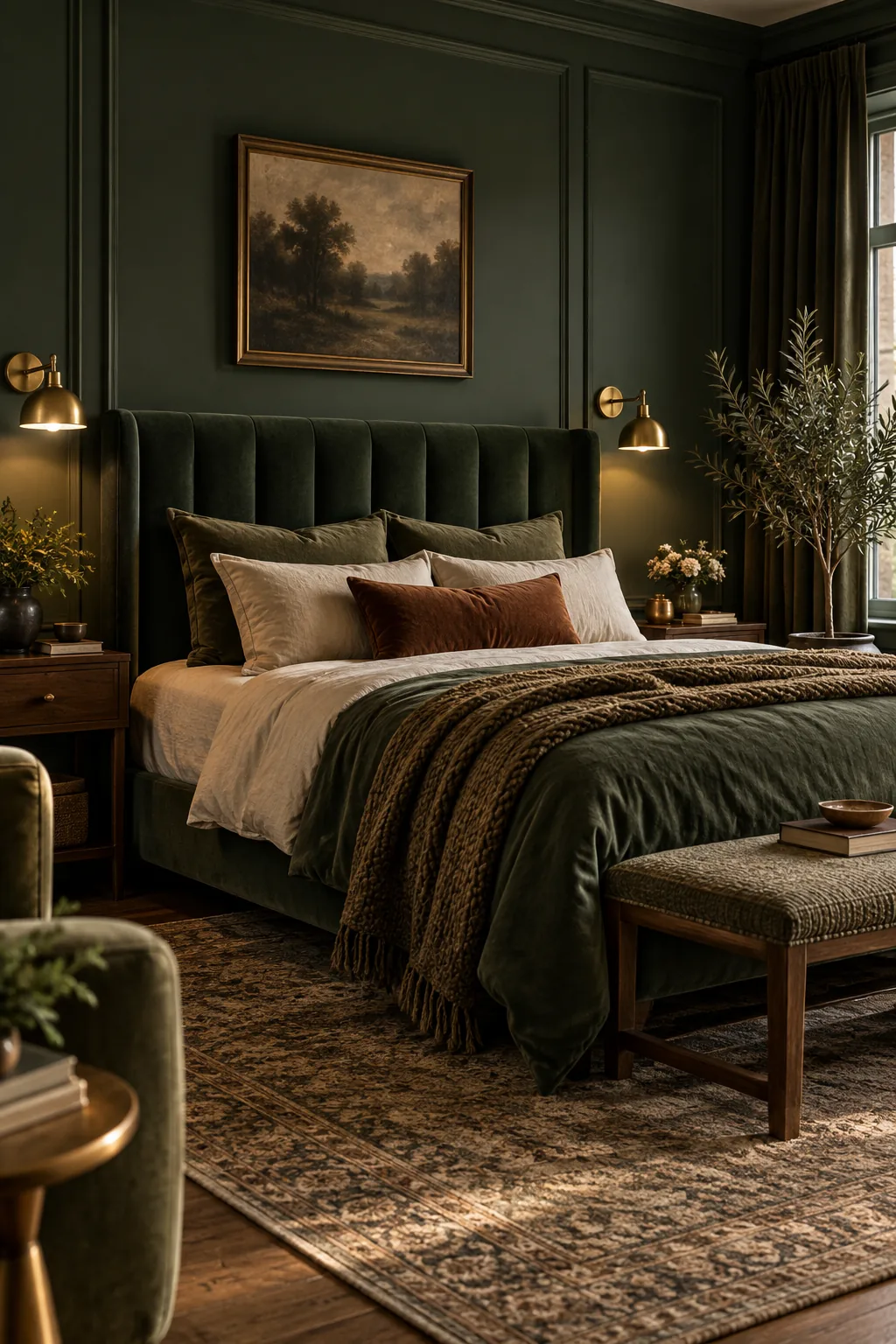
Crisp Mint and Oak: Pair a high-LRV mint green with pale white oak and bright white linens to create a refreshing, airy retreat that maximizes natural light.
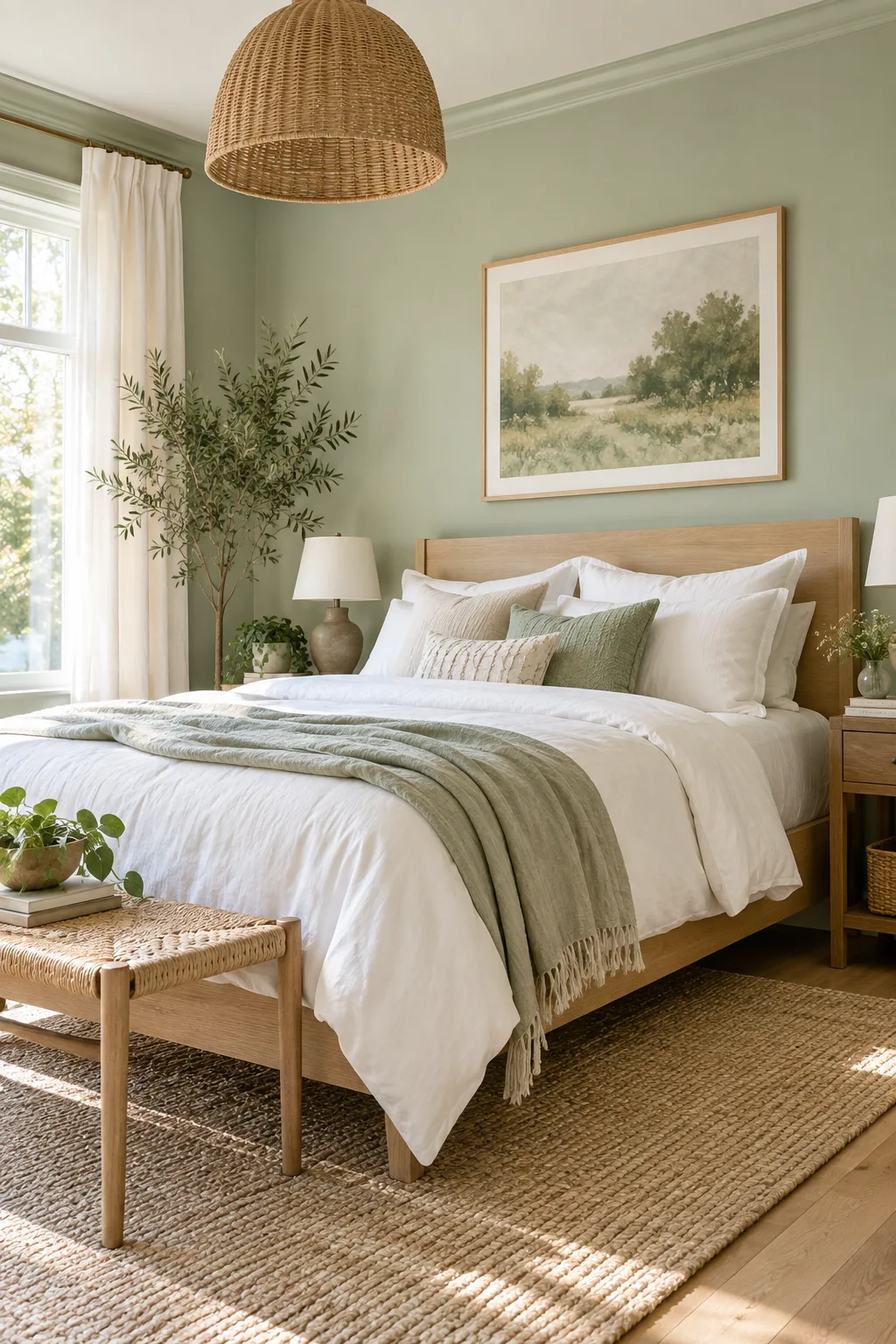
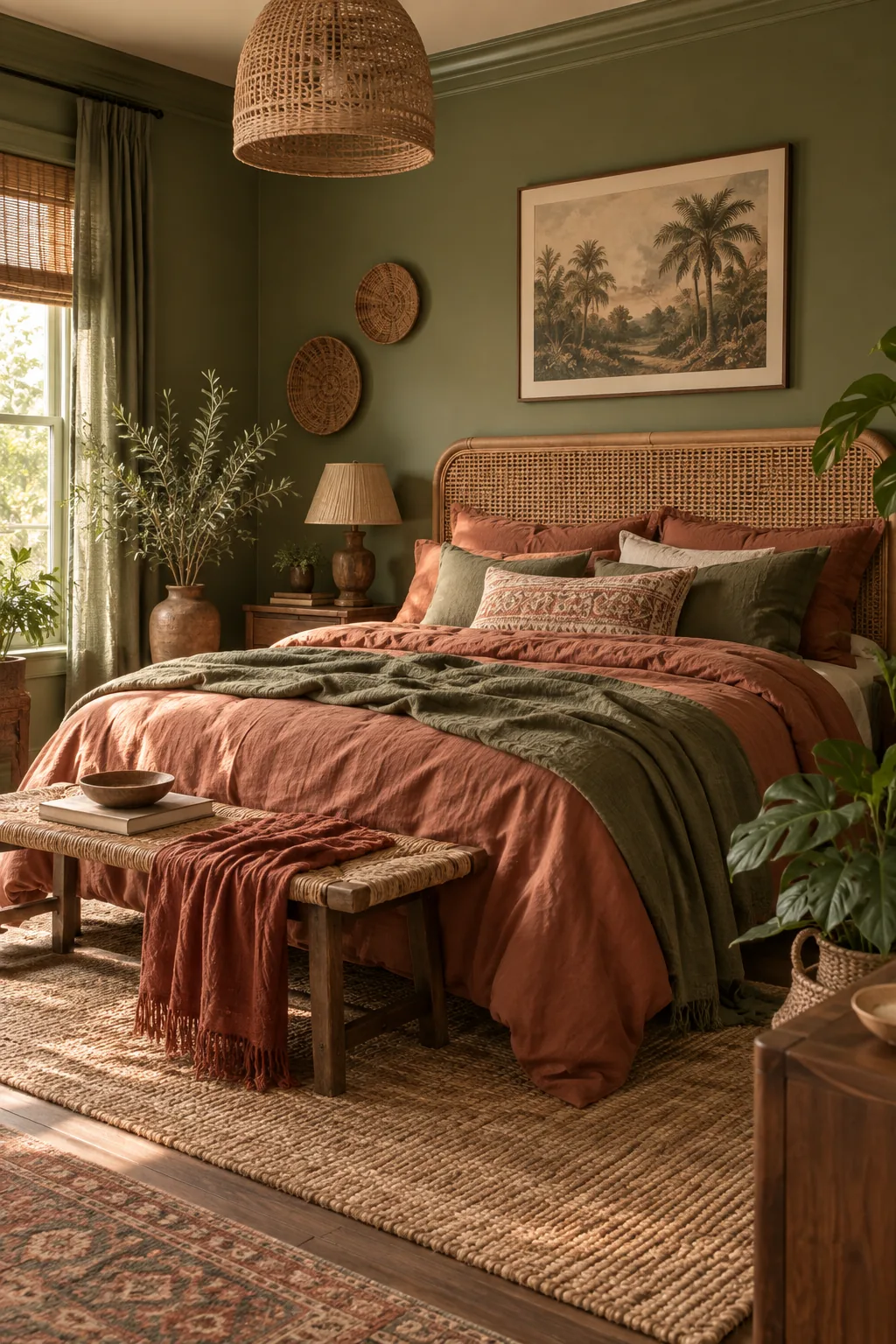
Earthy Olive and Rattan: Lean into warm, muddy olive tones paired with woven rattan furniture and baked terracotta accents for a deeply grounded, bohemian atmosphere.
The Green Paint Pairing Guide
This definitive pairing guide gives you the exact wood tones, accent colors, and metal finishes that reliably turn a cool sage wall into a cohesive, perfectly balanced retreat.
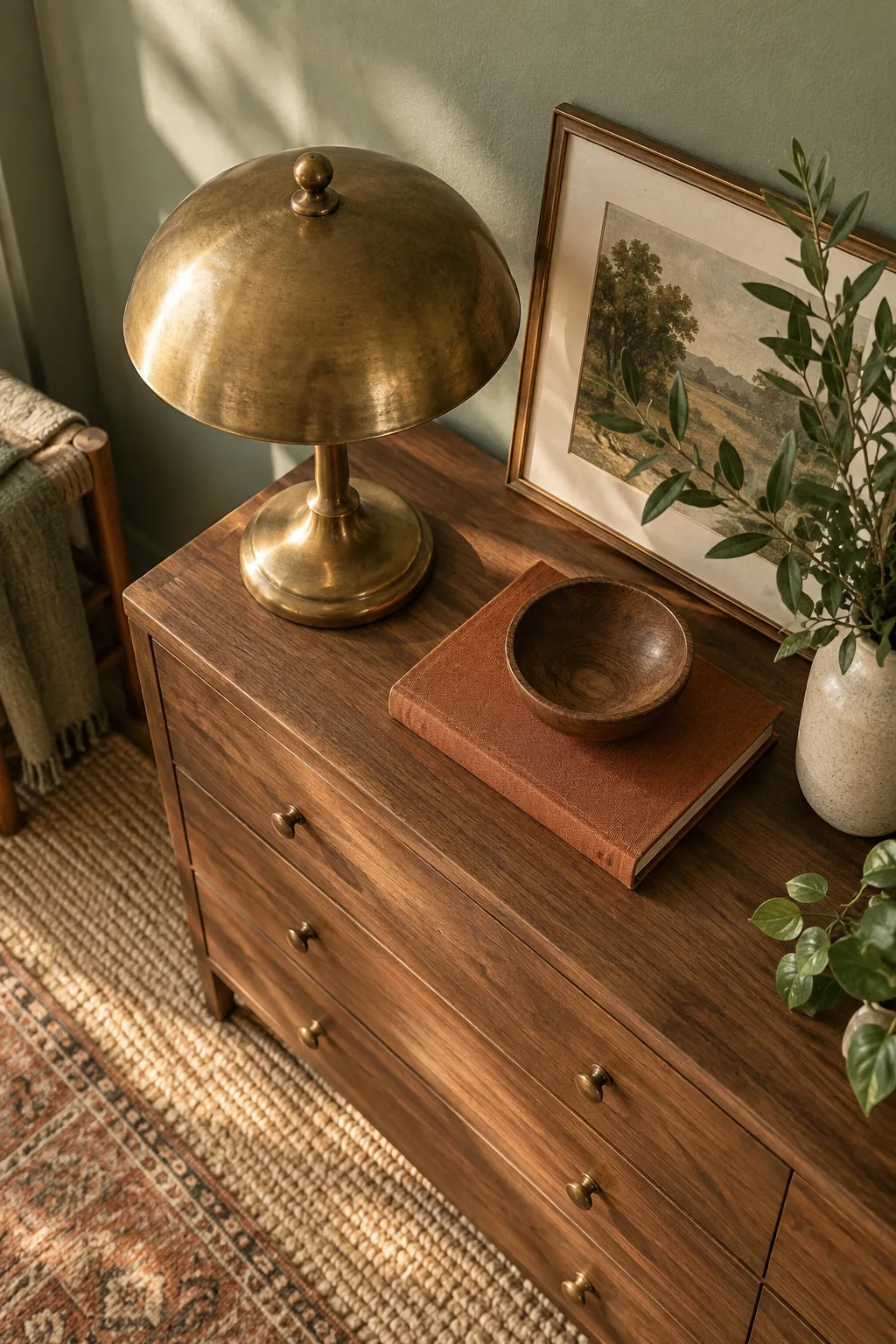
Use this reference matrix to verify your material selections before purchasing, ensuring every element you bring into the bedroom actively contributes to the overall warmth.
| Design Element | Primary Choice | Secondary Option |
|---|---|---|
| Wood Tones | Oiled Walnut | Teak or White Oak |
| Accent Colors | Rust Linen | Muted Mustard |
| Metal Finishes | Aged Brass | Blackened Bronze |