
Mid-Century Modern Living Room Scale & Wood Mix Guide
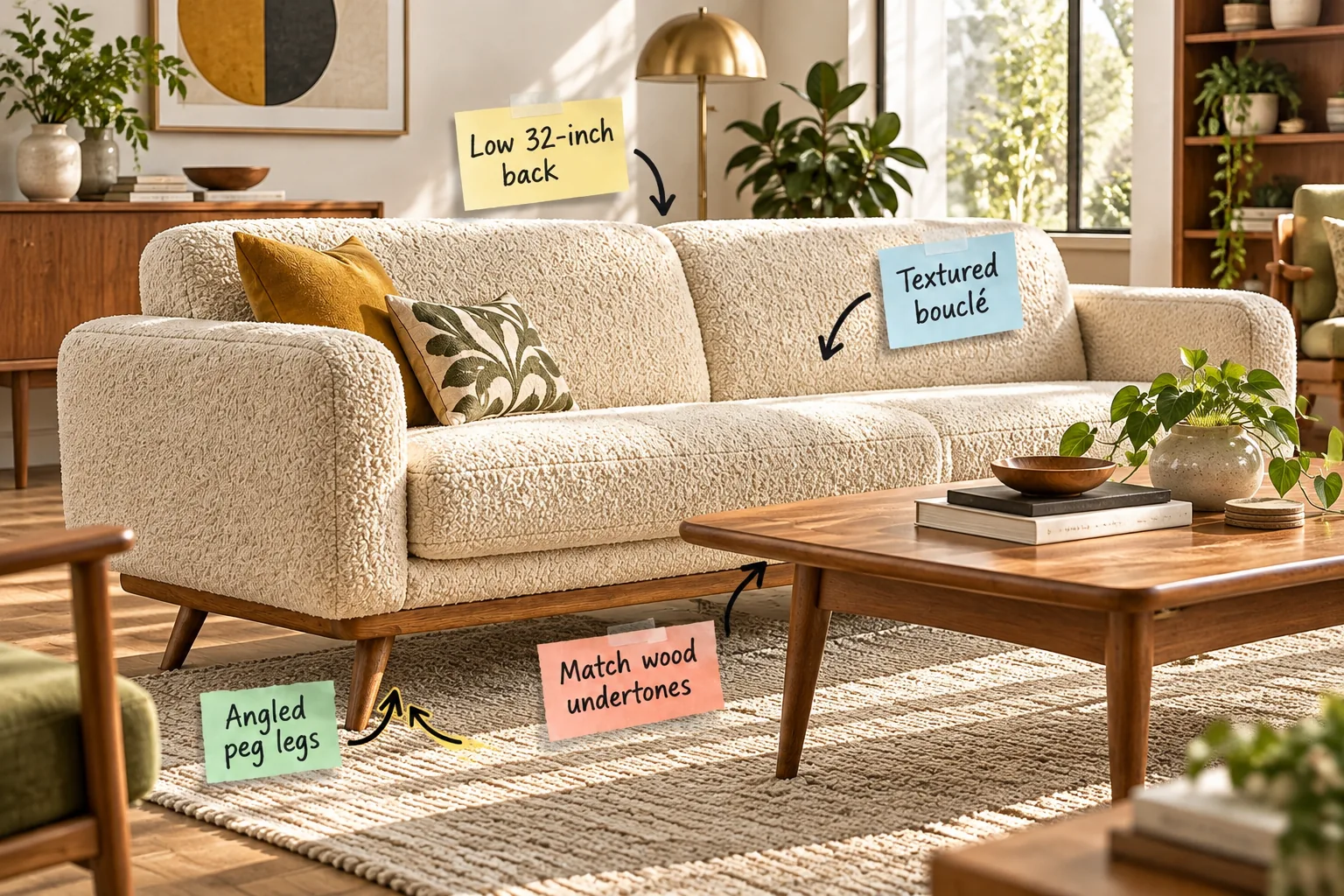
You will be able to confidently mix different wood furniture and select perfectly scaled seating for your mid-century living room with this complete MCM Scale & Wood Mix Guide. Mastering these exact measurements ensures your space feels like an authentic sanctuary rather than a chaotic furniture showroom.
Mastering Mid-Century Proportions
Authentic mid-century modern design relies on low, horizontal lines to make standard rooms feel architecturally taller. Keeping the visual weight closer to the floor creates that signature airy atmosphere we all crave in our carefully curated living spaces.
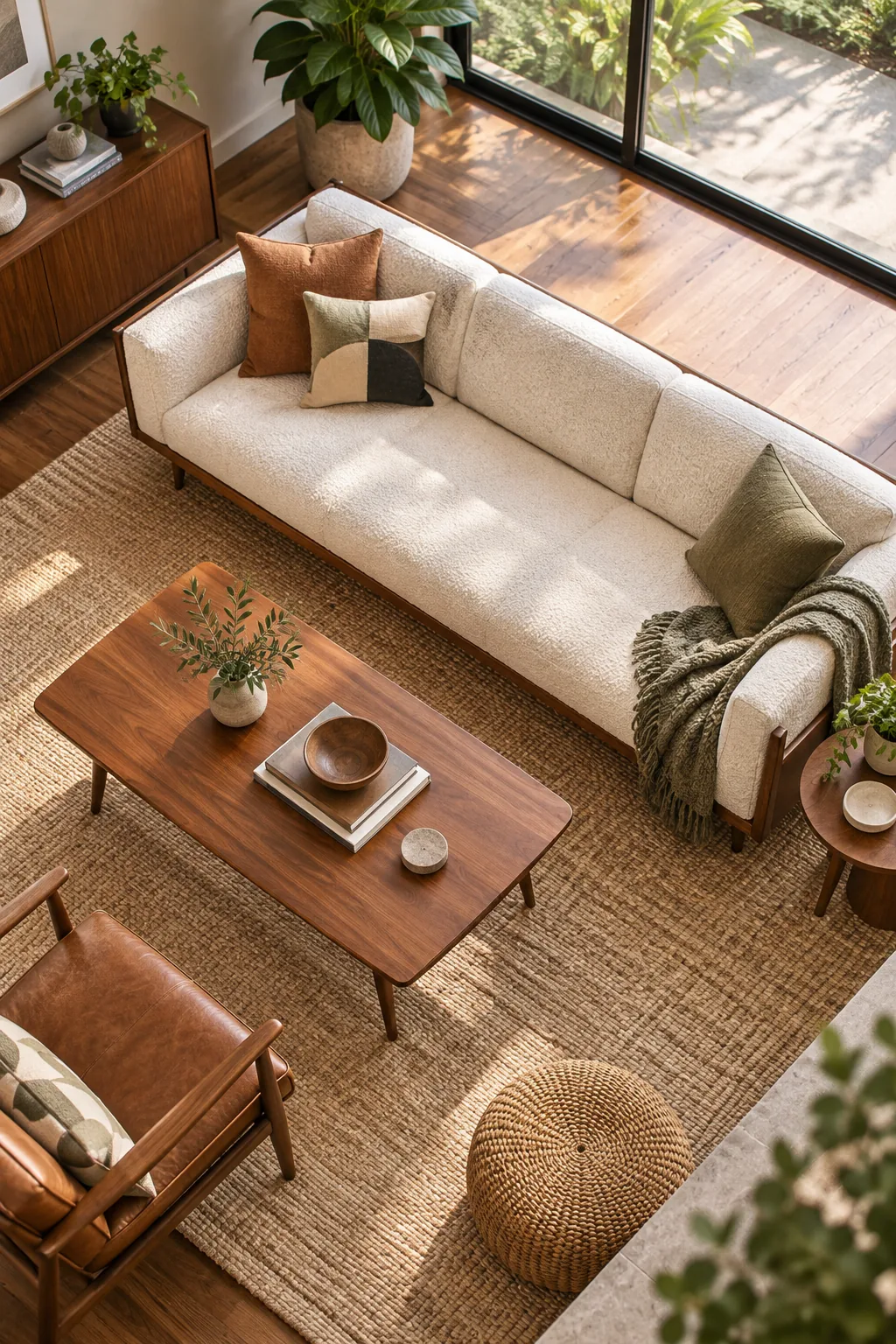
By maintaining a low horizon line across your seating arrangement, you allow the upper half of the room to remain completely empty. This uninterrupted volume of air is the fundamental secret to making a modest vintage footprint feel expansive.
The Illusion of Architectural Height
When furniture sits closer to the ground, the remaining wall space above it visually stretches toward the ceiling. This simple optical trick forces the eye upward, instantly compensating for the standard eight-foot ceilings common in many mid-century suburban builds.
The Role of Negative Space
Mid-century interiors thrive on breathing room between individual furniture pieces. Leaving at least 36 inches of clearance around your main seating area prevents the layout from feeling cramped and highlights the structural beauty of each crafted item.
Balancing Asymmetrical Layouts
Mid-century design often borrows from Eastern philosophies of balance, favoring asymmetry over rigid mirroring. Pairing a long sofa with a single, sculptural lounge chair creates a dynamic visual tension that feels perfectly grounded and harmonious.
The 32-Inch Rule for Sofa Backs
In my own Denver home, swapping a bulky modern couch for one with a low 32-inch back instantly opened up the entire room. A low sofa profile is crucial because it keeps sightlines completely unobstructed across your living space.
Why Overstuffed Furniture Fails
Modern 36-inch sofas often overwhelm a curated vintage layout by dominating the vertical plane. Sticking strictly to the 32-inch maximum height ensures your seating complements rather than competes with your carefully chosen artwork and architectural features.
Measuring the Seat Depth
While the back remains low, mid-century sofas typically feature a generous seat depth of 21 to 24 inches to ensure comfort. This deep seating encourages a relaxed, lounging posture that perfectly matches the casual elegance of the era.
The Impact of Low Armrests
Just like the backrest, mid-century armrests remain intentionally low to facilitate easy conversation. This subtle design choice prevents the furniture from acting as a visual barrier when entertaining guests in an open-concept living space.
Softening the Lines with Textured Bouclé
Because mid-century furniture features rigid, geometric frames, your upholstery must provide a welcoming tactile contrast. Opting for a textured bouclé fabric adds necessary softness and warmth to the room without introducing unwanted visual bulk.
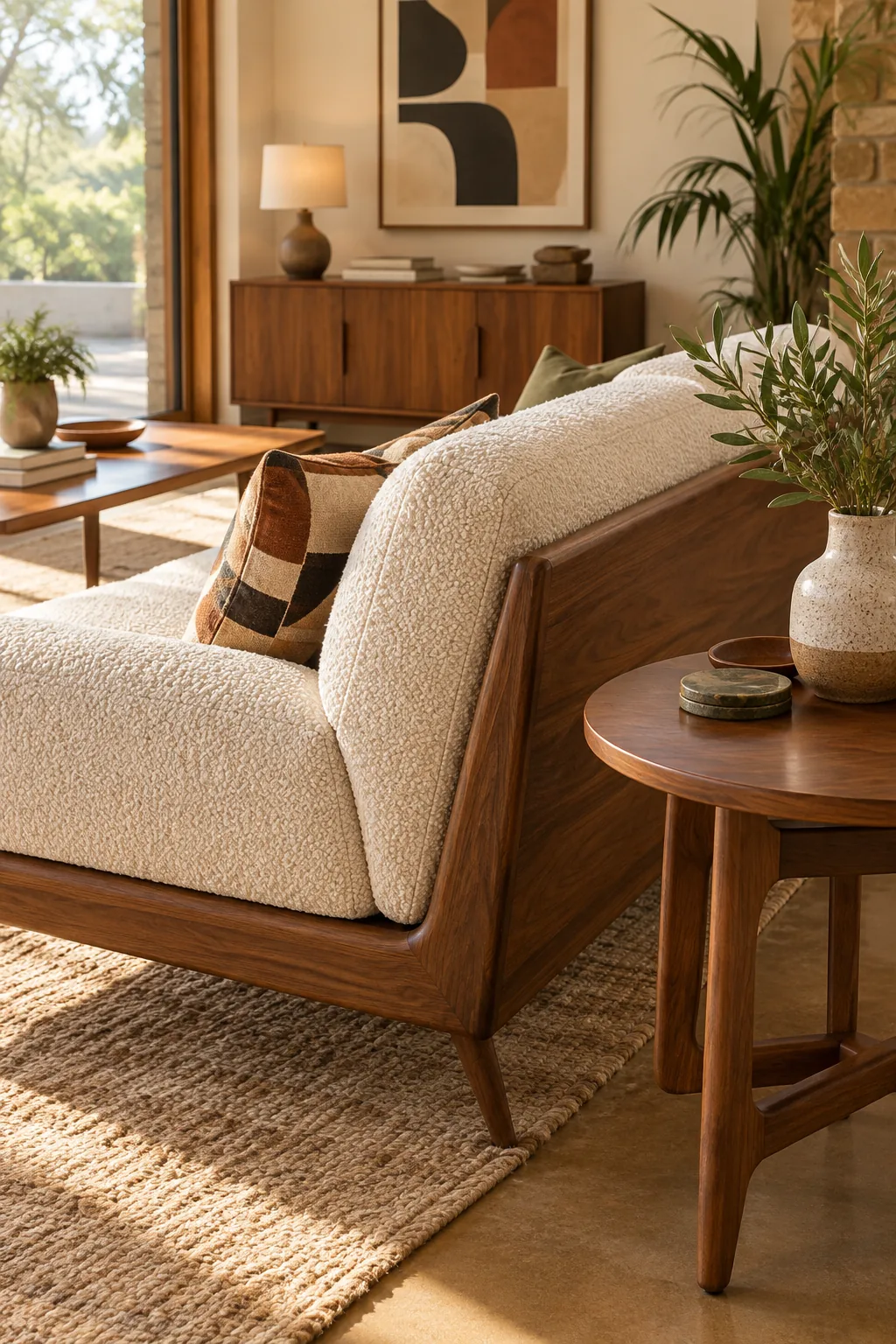
Bouclé introduces a nubby, resilient surface that hides everyday wear while catching the natural light beautifully. This specific weave perfectly balances the sleek, hard edges of exposed wooden arms and tapered timber framing.
Alternative Mid-Century Fabrics
If bouclé feels too heavy for your climate, top-grain aniline leather offers a similarly authentic period texture. The key is selecting a natural material that develops a rich patina over time rather than remaining perfectly flat and uniform.
Selecting the Right Foam Density
Authentic mid-century cushions require high-resiliency foam to maintain those crisp, tailored edges without sagging. Specify a foam density of at least 2.0 to 2.5 pounds per cubic foot to ensure your sofa retains its strict geometric silhouette for years.
Elevating the Frame on Angled Peg Legs
Tapered, angled peg legs create essential negative space beneath heavy furniture pieces to keep the room feeling light. A standard 6 to 8-inch floor clearance allows natural light to pass underneath, making the sofa appear as if it is floating.
Pitch and Angle Specifications
Authentic peg legs typically splay outward at a precise 10 to 15-degree angle. This specific outward pitch provides necessary structural stability for low-slung seating while adding a subtle sense of dynamic forward movement to the entire room.
The Function of Tapered Profiles
A leg that tapers from a wider top down to a narrow base visually reduces the physical weight of the furniture. This tapered profile draws the eye smoothly down to the floor, seamlessly anchoring the piece without making it look heavy.
Protecting Your Hardwood Floors
Because tapered peg legs concentrate the furniture’s weight into a very small point, they can easily dent soft wood floors. Always attach felt pads to the bottom of every leg to protect your original flooring from permanent compression marks.
Identifying Your Primary Wood Tone
Before mixing woods, you must establish one dominant wood tone to anchor the room’s palette. Walnut is the classic choice and should make up roughly 60 percent of the wood surfaces in your living area.
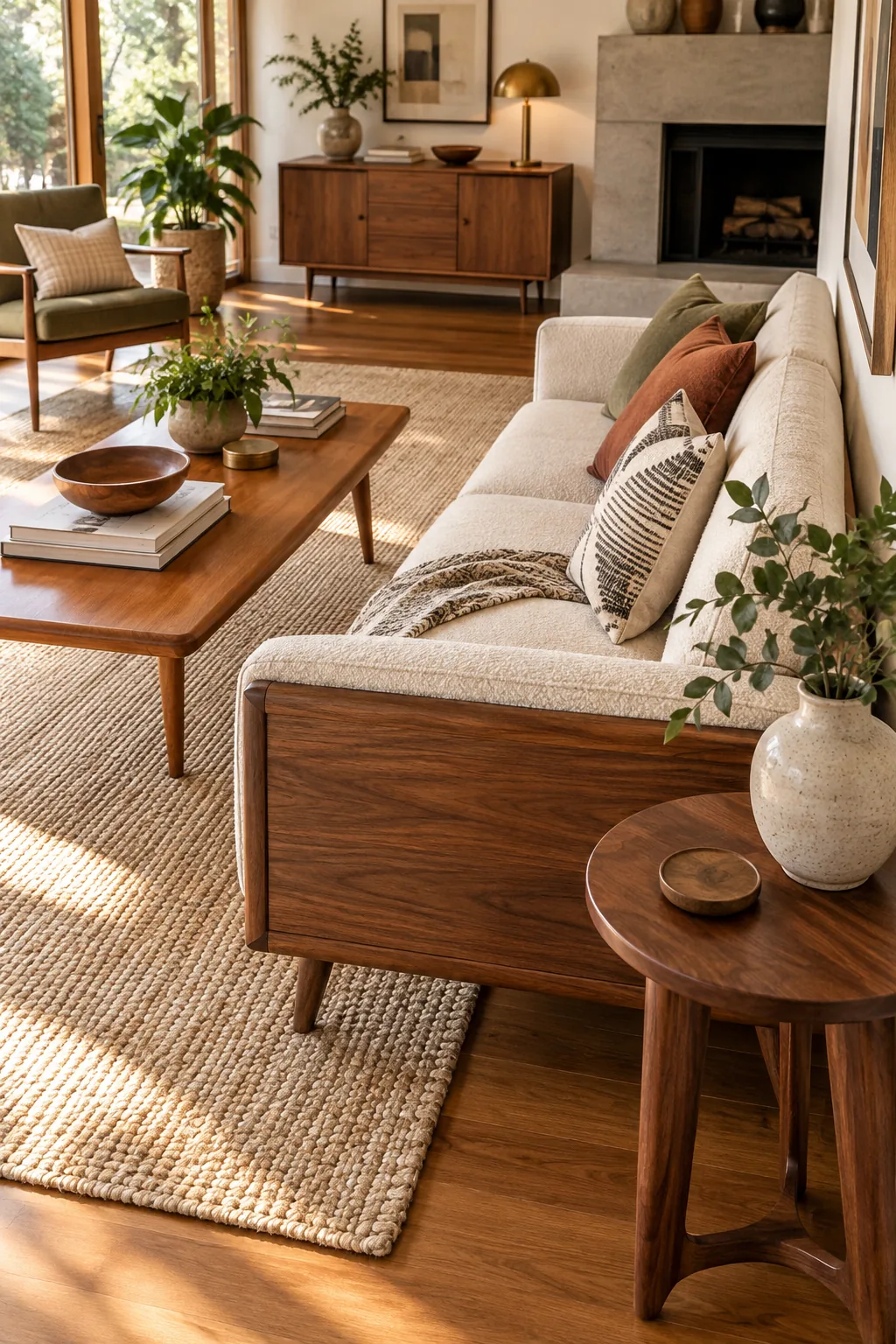
Using walnut as your foundation establishes a rich, grounding base that easily absorbs lighter accent pieces. This dominant layer should include your largest investments, such as the sofa frame, media console, or a primary shelving unit.
The Role of Secondary Woods
Once your dominant walnut is established, introduce a secondary wood like teak for about 30 percent of the room. This secondary tone usually applies to medium-sized elements like your coffee table, sideboards, or dining chairs.
How to Match Wood Undertones
The secret to pairing walnut and teak seamlessly is that both share warm, yellow-orange undertones. While mixing woods adds authentic character, placing warm woods directly next to cool, ashy tones will instantly disrupt the visual harmony.
Testing Wood Compatibility
Always match wood undertones by comparing physical swatches in your actual living room under natural daylight before purchasing large pieces. Follow this sequence to guarantee a perfect pairing every time.
- Place the new wood swatch directly against your dominant walnut piece.
- Observe the undertones at midday when natural light is brightest.
- Check the pairing again in the evening under your warm artificial lamps.
Managing Floor Finishes
If your existing hardwood floors feature a strong reddish hue, use an area rug to create a visual buffer. This separation prevents your warm walnut furniture from bleeding into the floor, allowing the distinct grain of each piece to stand out.
The Complete MCM Scale and Wood Mix Guide
I always tell my Denver clients that nailing these exact scale ratios is what separates amateur styling from professional design. A balanced mid-century layout relies on strict mathematical proportions between your seating, surfaces, and wood finishes.
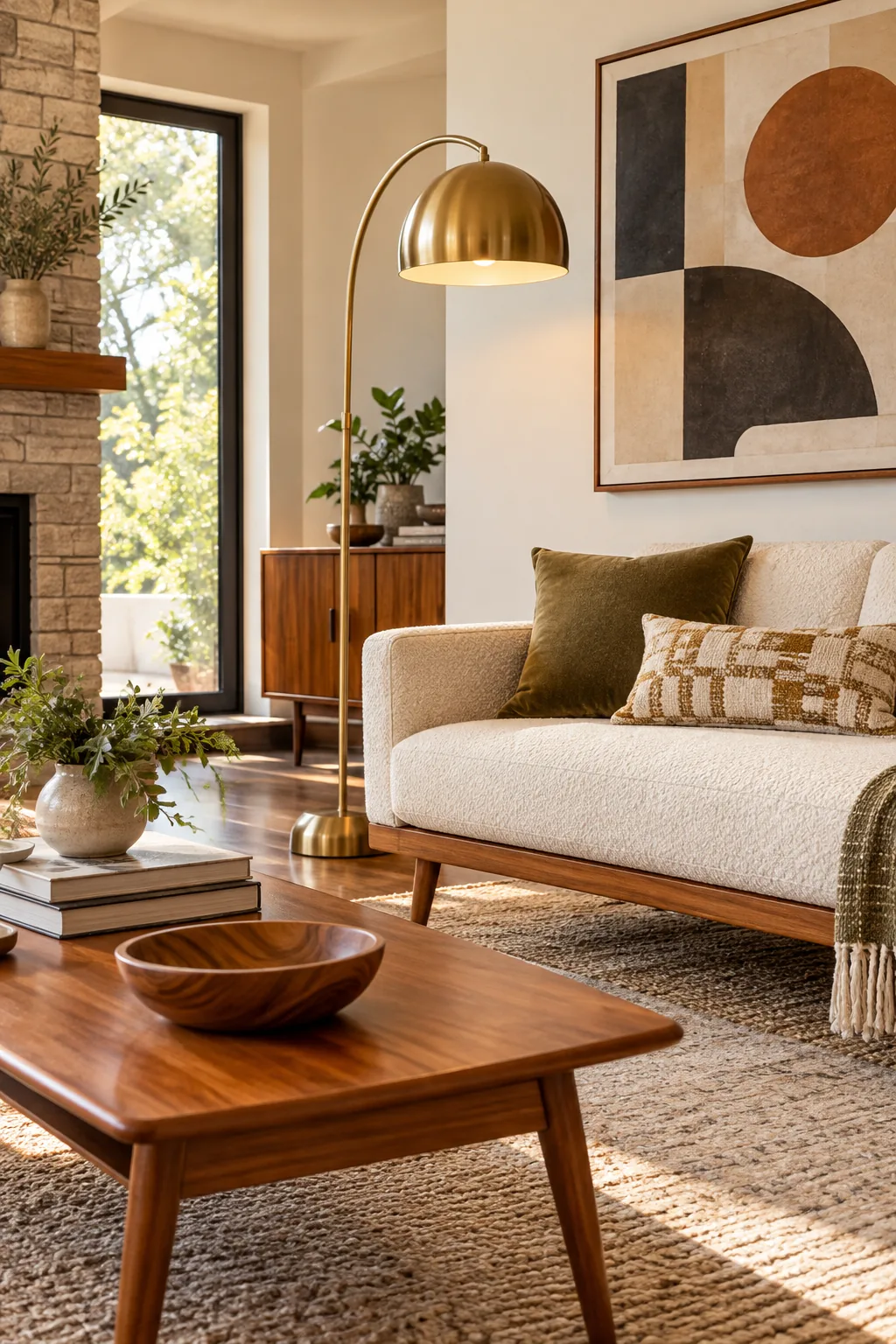
Keep these exact proportions and measurements on hand when shopping for new mid-century pieces to ensure everything fits seamlessly.
Standard Living Room Proportions
To further guarantee a balanced layout, I rely on a few universal measurements for spacing and height. Refer to this structural breakdown when positioning your primary mid-century living room elements.
| Furniture Piece | Ideal Height | Clearance Needed |
|---|---|---|
| Sofa Back | 32 inches | 36 inches |
| Coffee Table | 15 to 17 inches | 18 inches |
| Side Table | Equal to armrest | 2 inches |
| TV Console | 20 to 24 inches | 48 inches |
Grounding the Arrangement with Texture
Floating peg-leg furniture requires a strong visual anchor so the pieces do not feel disconnected. A chunky wool or jute rug should extend at least 8 inches past the sides of the sofa to frame the seating area properly.
Layering Organic Materials
Introducing organic textures counteracts the sharp, manufactured angles of mid-century case goods. Drape a heavy woven throw over a clean-lined chair to instantly soften the overall aesthetic without sacrificing the room’s structural integrity.
Choosing the Right Rug Size
An undersized rug makes a mid-century room look fragmented and temporary. Always size up to an 8×10 or 9×12 foot rug so the front legs of every major seating piece rest comfortably within the woven border.
Incorporating Houseplants
Lush greenery is a staple of mid-century styling because it softens the strict architectural lines of the furniture. Place a large Monstera or Snake Plant near your seating arrangement to bridge the gap between the indoors and nature.
5 Mid-Century Modern Living Room Styles
Explore how different color palettes and architectural settings can completely transform the classic mid-century aesthetic.
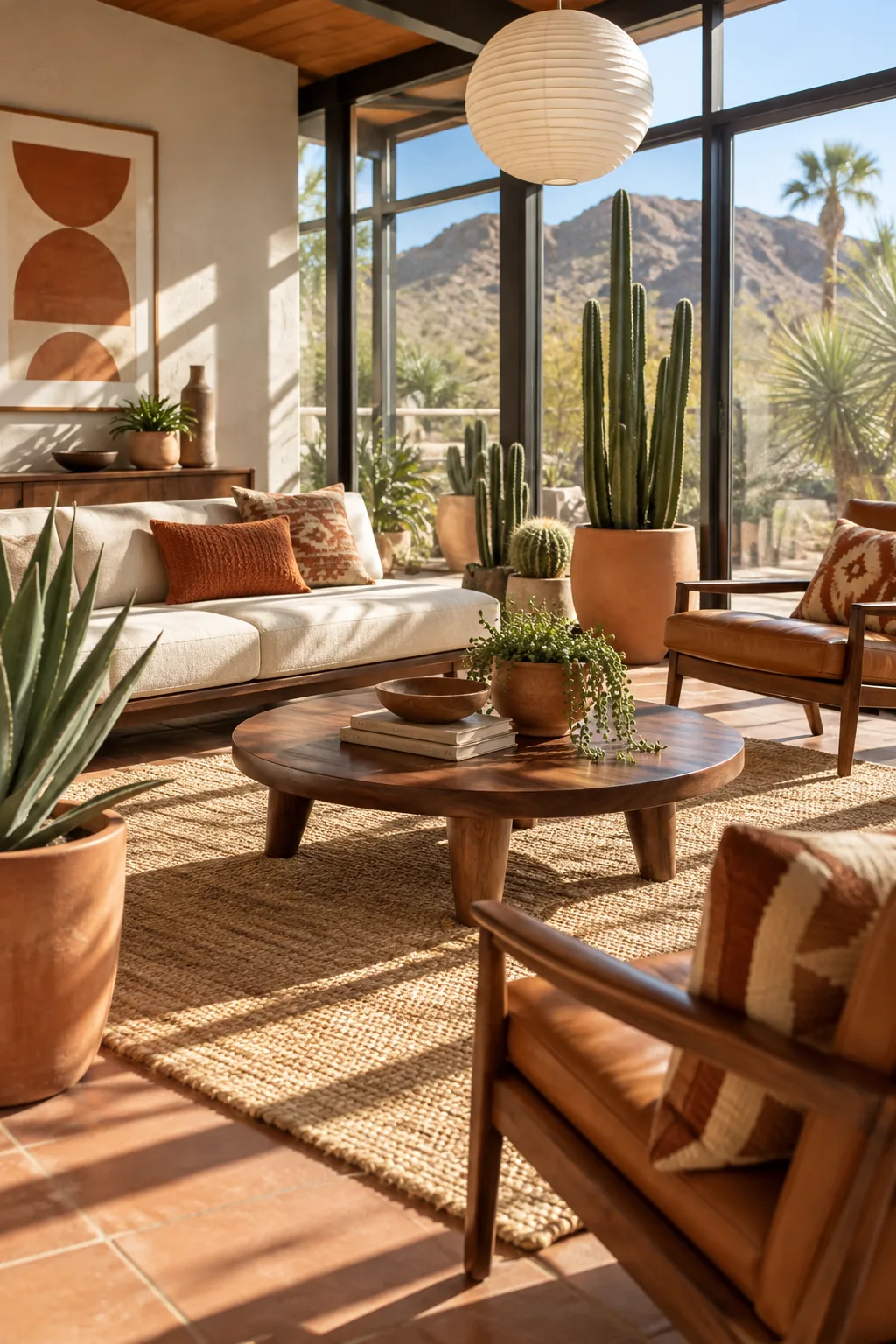
Desert Modern Sunroom: Terracotta tones and large indoor cacti give classic walnut furniture a warm, Southwestern twist.
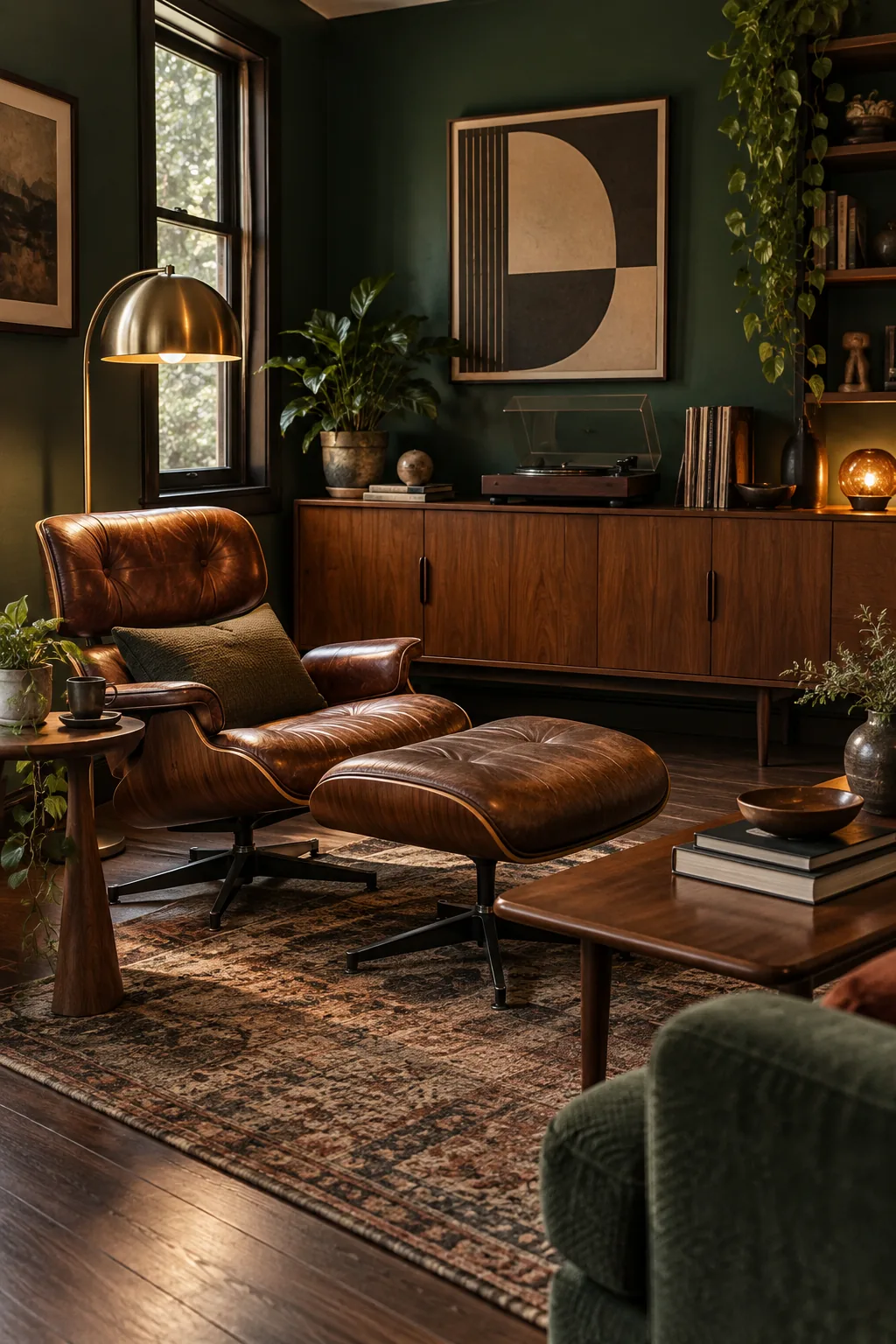
Moody Emerald Den: Deep emerald walls create a dramatic backdrop that makes warm teak wood tones glow.
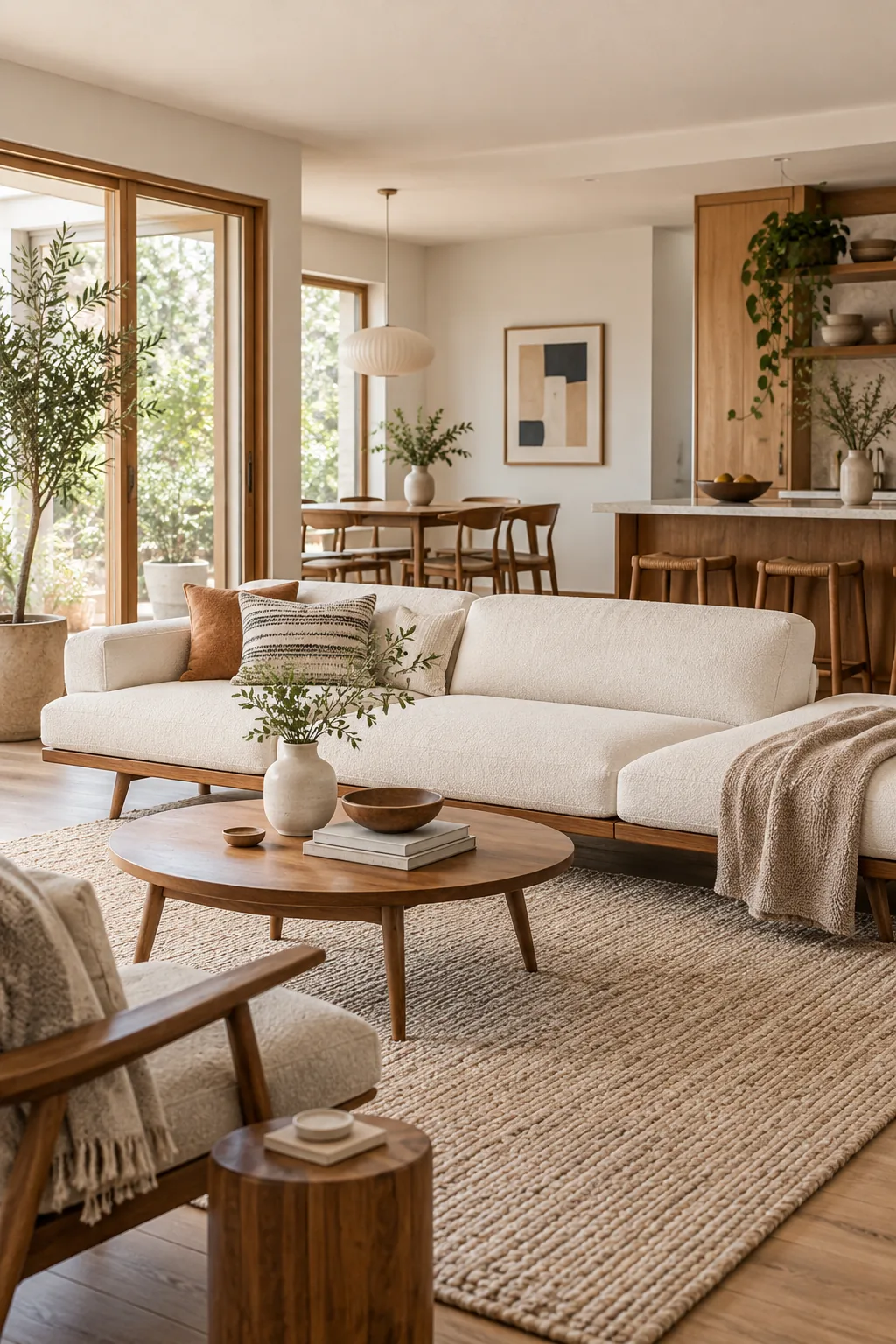
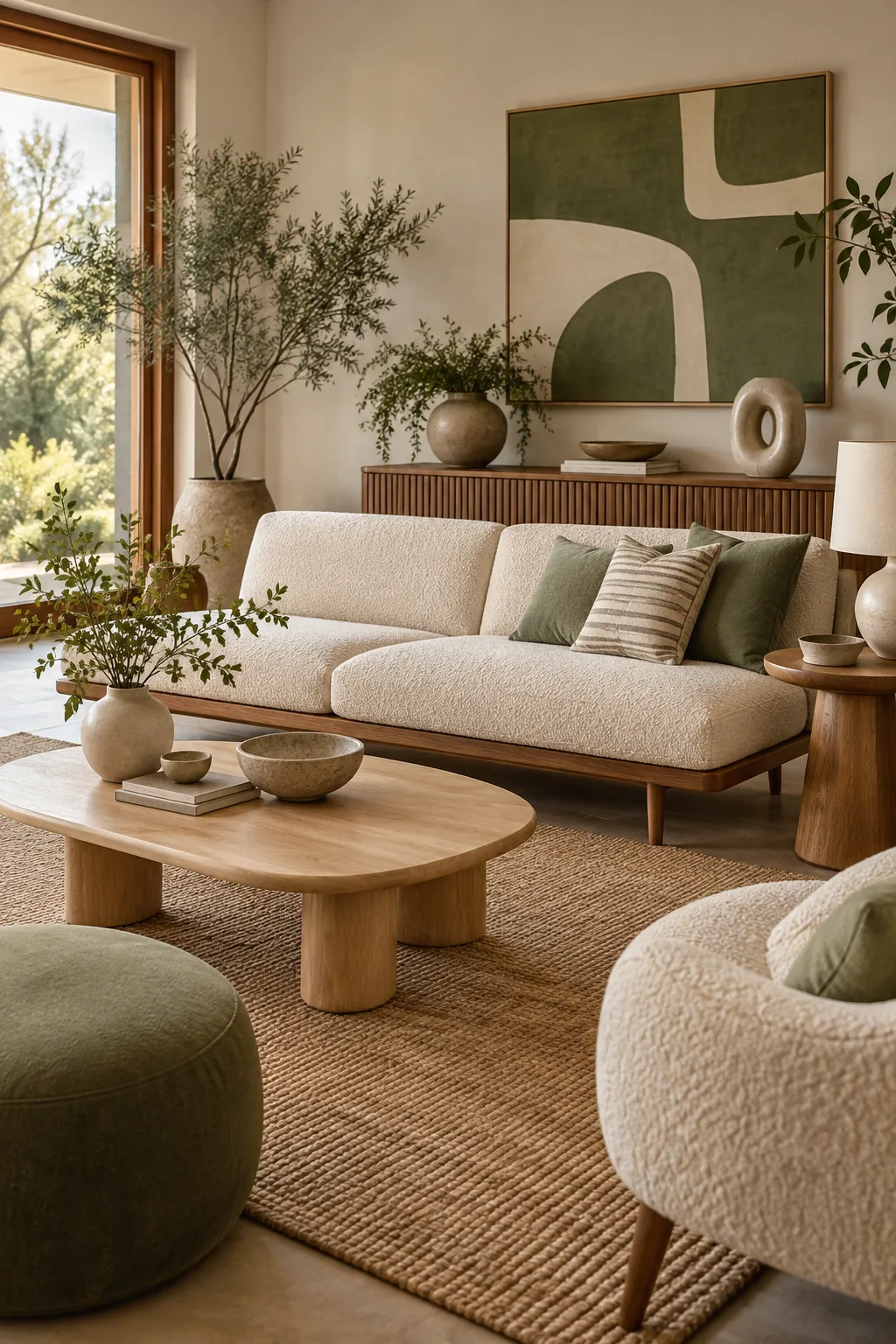
Scandi-MCM Fusion Lounge: Light oak wood and oatmeal textiles blend Scandinavian minimalism with mid-century silhouettes.
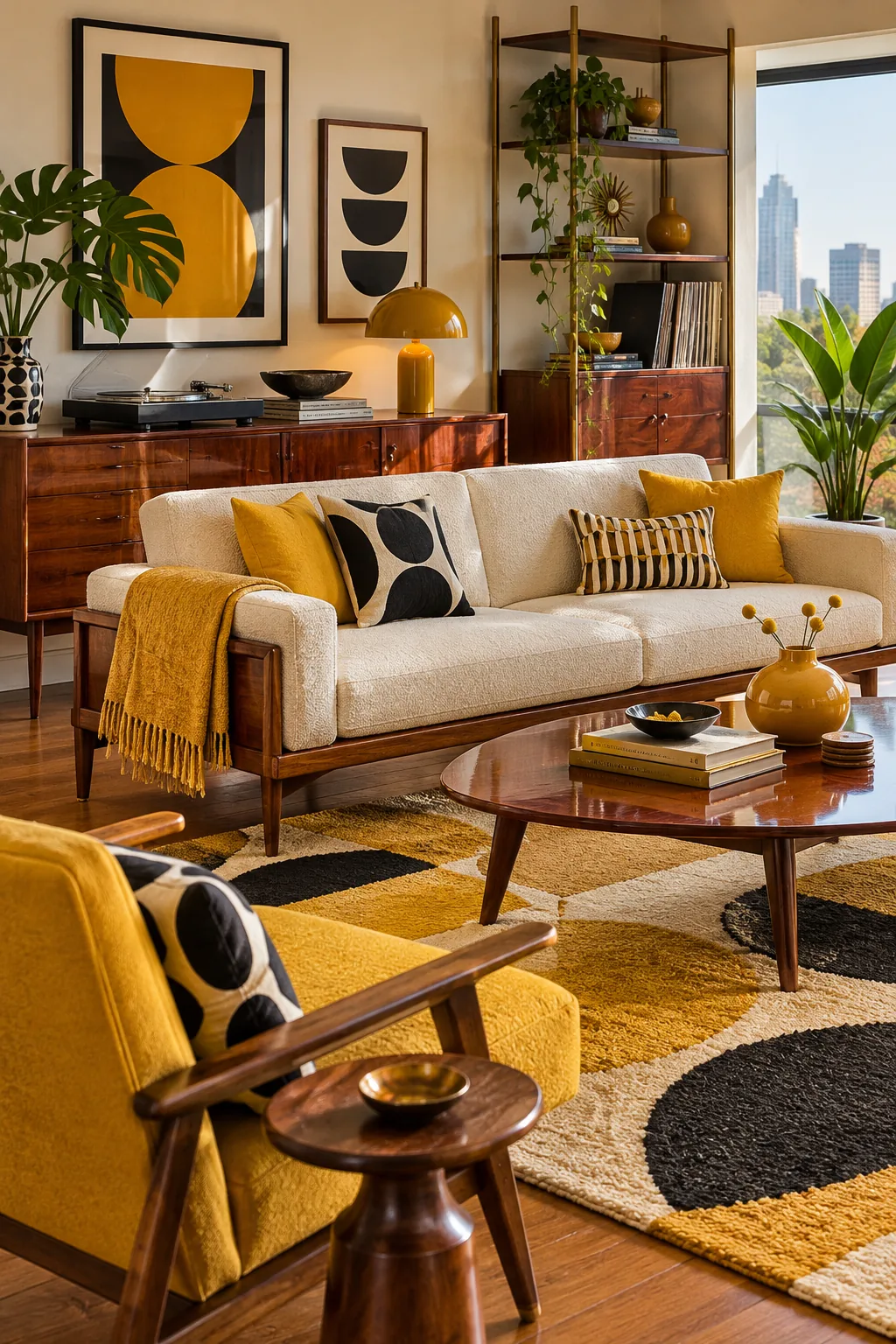
Retro Pop Apartment: Mustard yellow accents and glossy rosewood bring an energetic, playful vibe to small spaces.
Organic Minimalist Living: Muted sage greens and pale ash wood soften the sharp mid-century angles for a calming retreat.
Final Touches: Brass and Geometric Accents
Finish the room by introducing warm metals like a brass dome lamp and abstract geometric art. These elements complement the warm wood tones perfectly while echoing the clean, horizontal lines of your low-profile furniture.
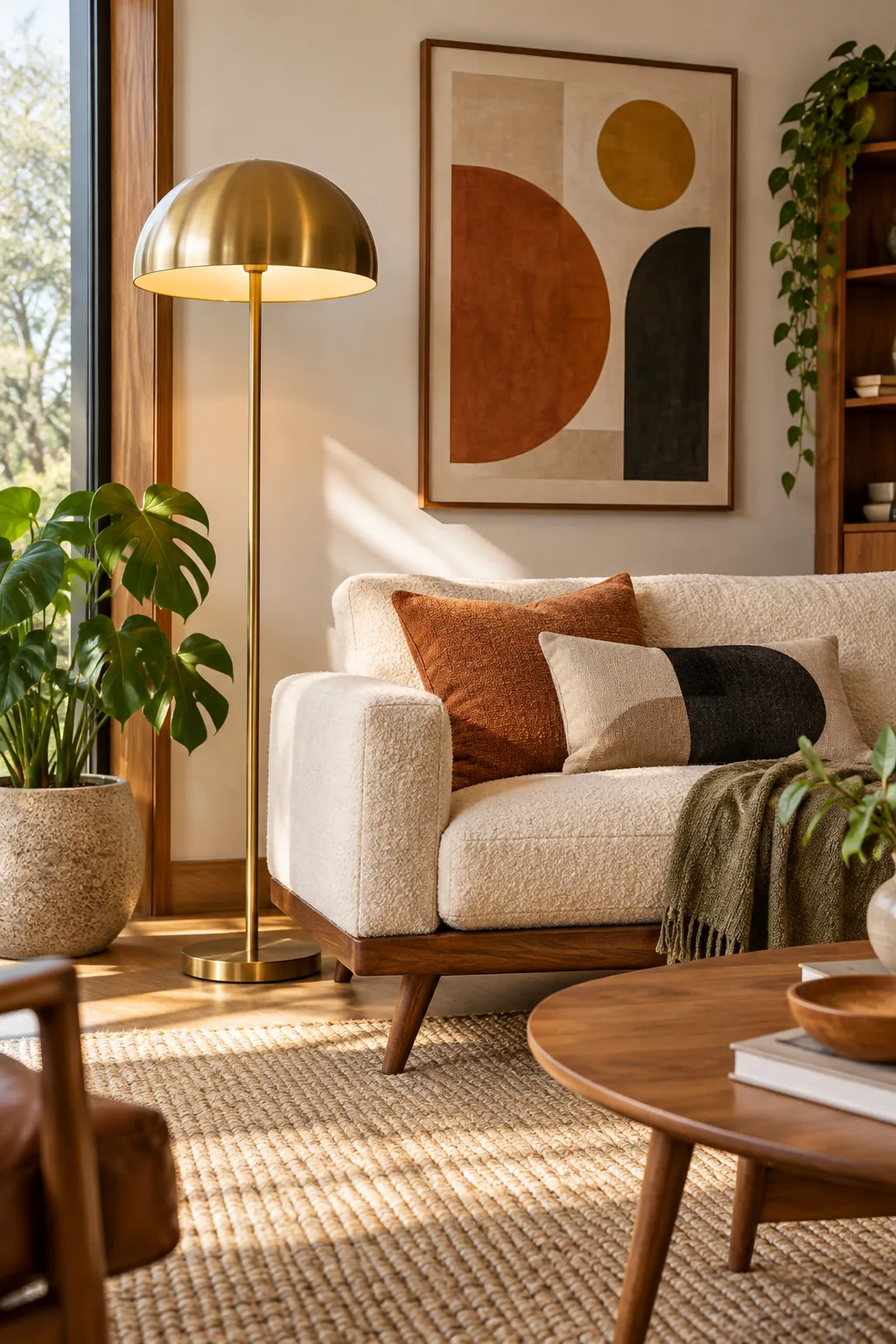
Positioning a brass floor lamp in a dark corner reflects ambient light back into the space, enhancing the rich grain of your walnut and teak pieces. This final layer of metallic warmth completes the authentic mid-century atmosphere.