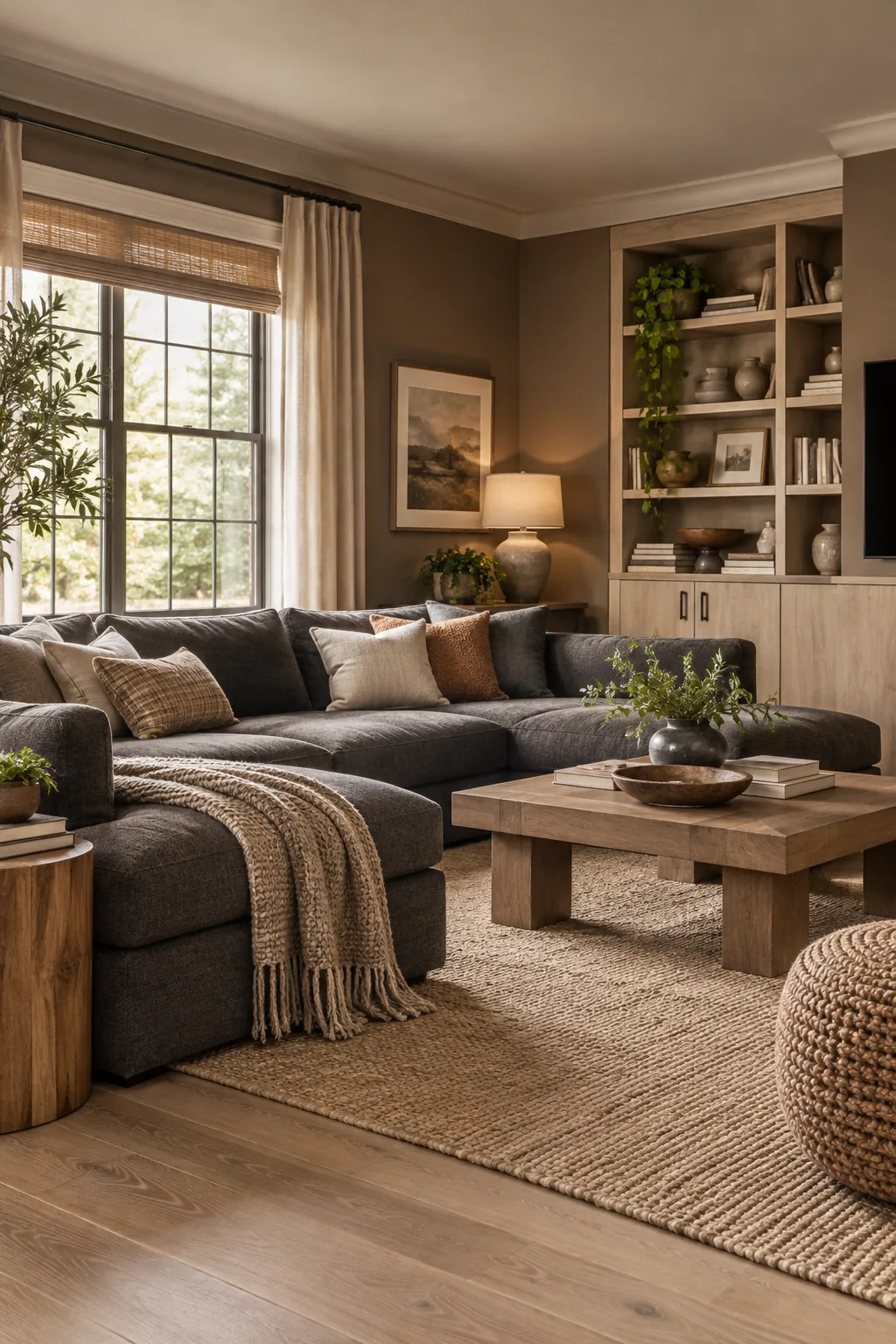
Brown Living Room Styling: How to Build a Glowing Space
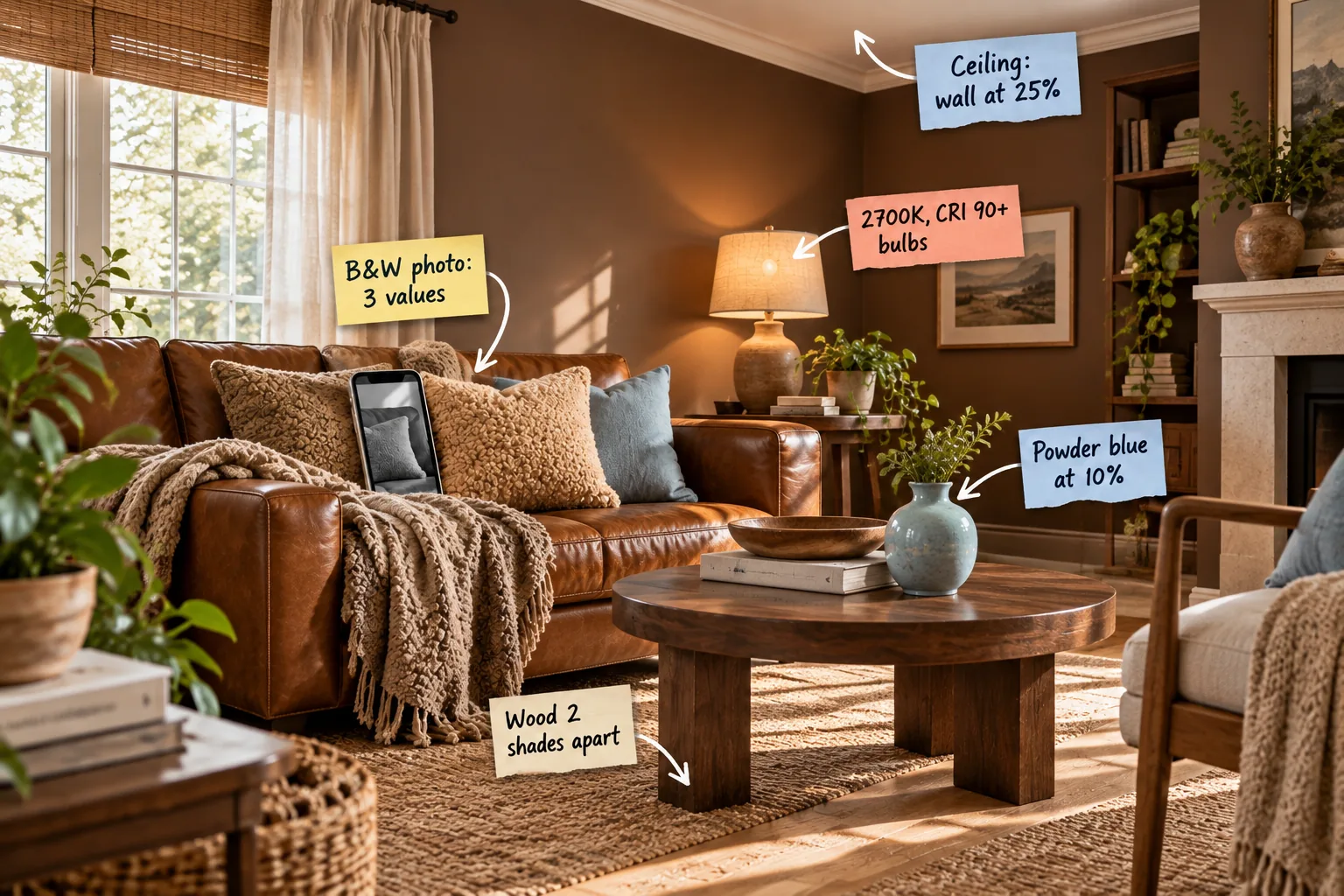
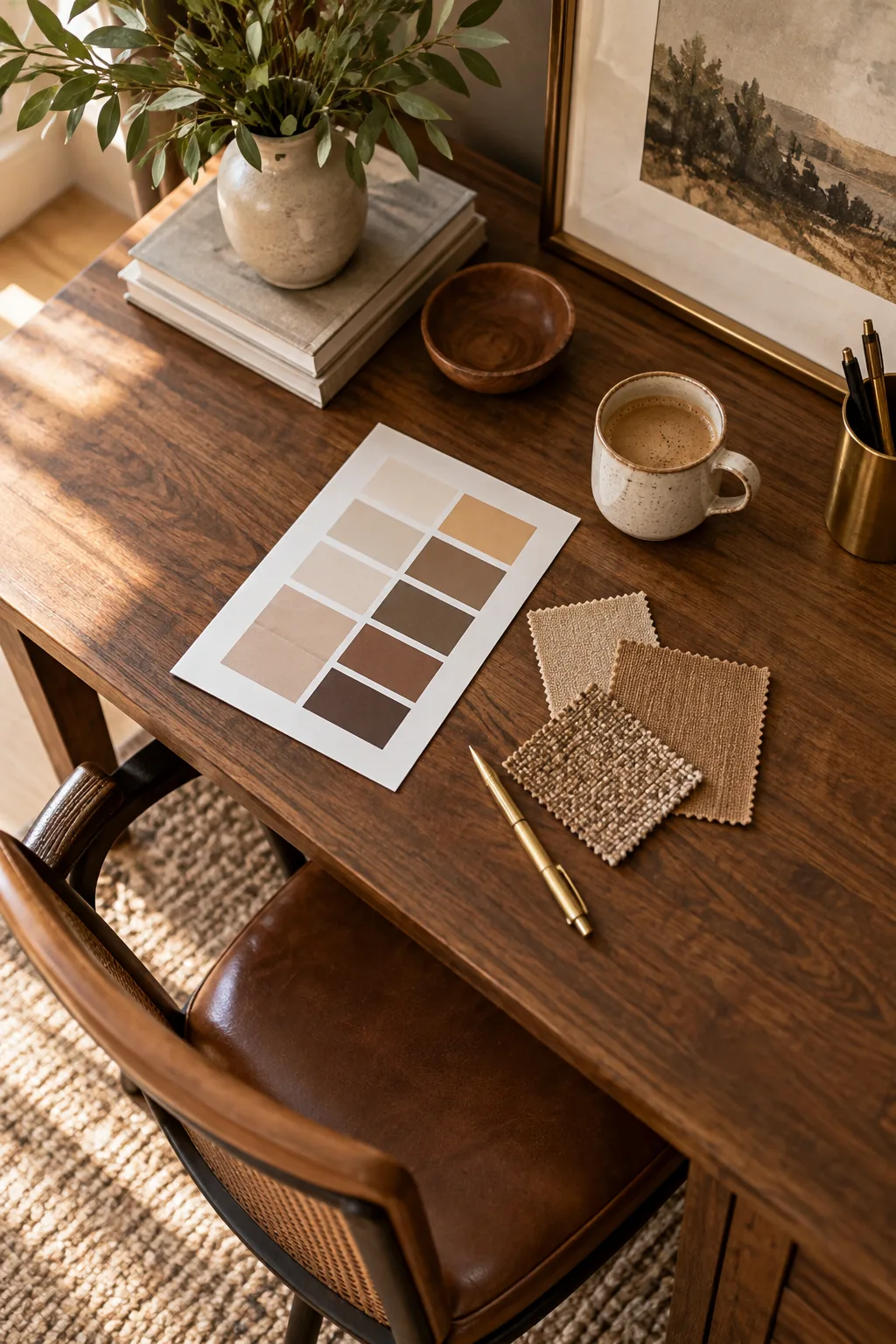
To confidently layer paint, wood, and leather without your space feeling heavy, print our Brown Undertone Matching Sheet. This guide helps you balance undertones and calculate exact ratios so your brown living room glows warmly from the ground up.
Wrapping the Room in Mocha and Tinted Ceilings
Painting your walls a matte mocha creates a cozy foundation, but stark white ceilings will instantly break that spell. Mixing your ceiling paint to exactly 25 percent of the wall color eliminates harsh contrast and makes the room feel taller and beautifully enveloped.
Lighting the Palette for a Hidden Glow
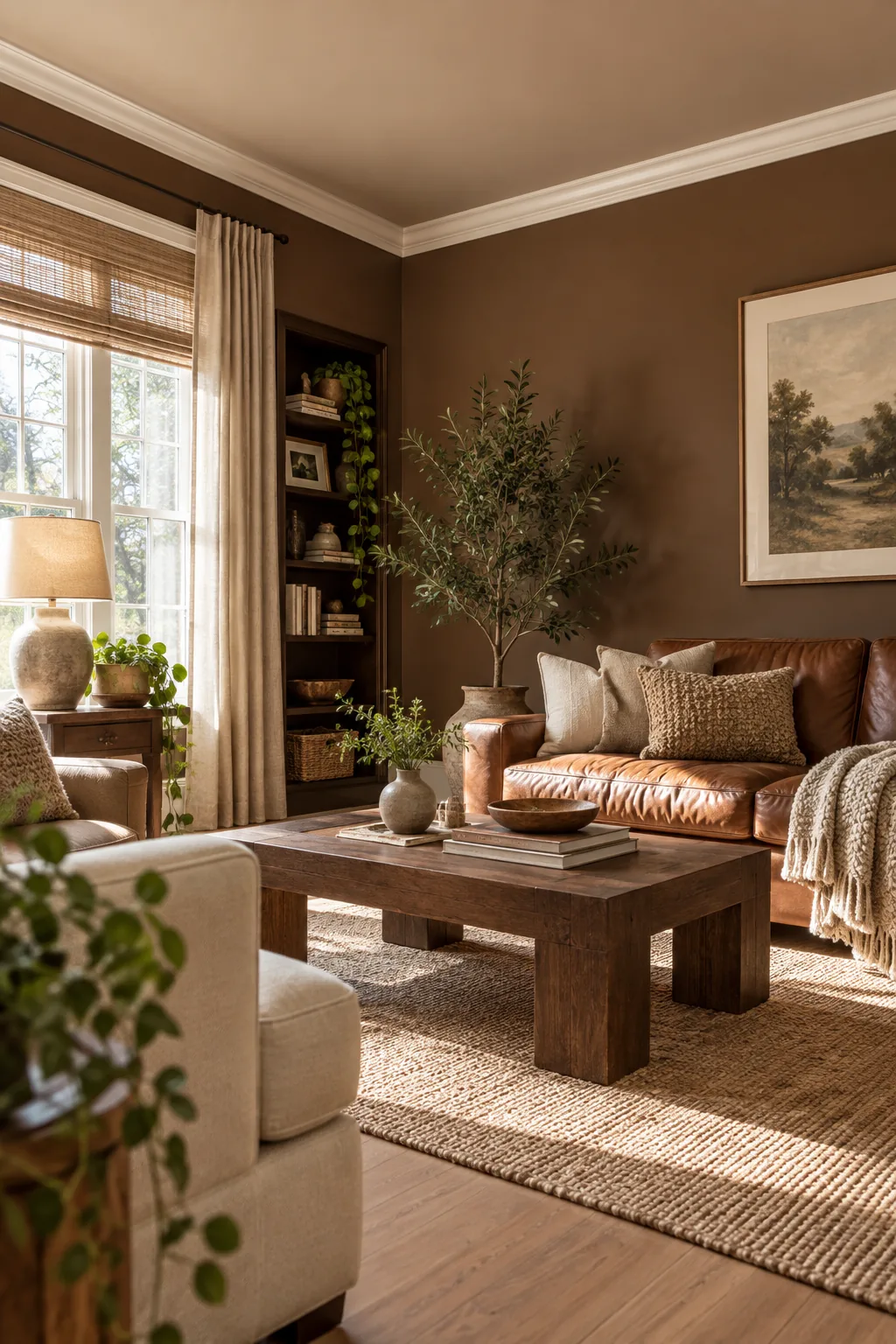
Brown walls require intentional illumination to prevent them from looking muddy, a lesson I learned quickly in my own north-facing Denver living room. Choosing 2700K temperature bulbs with a CRI of 90+ ensures the underlying red and yellow notes in your paint glow beautifully.
Spacing Out Your Wood Tones
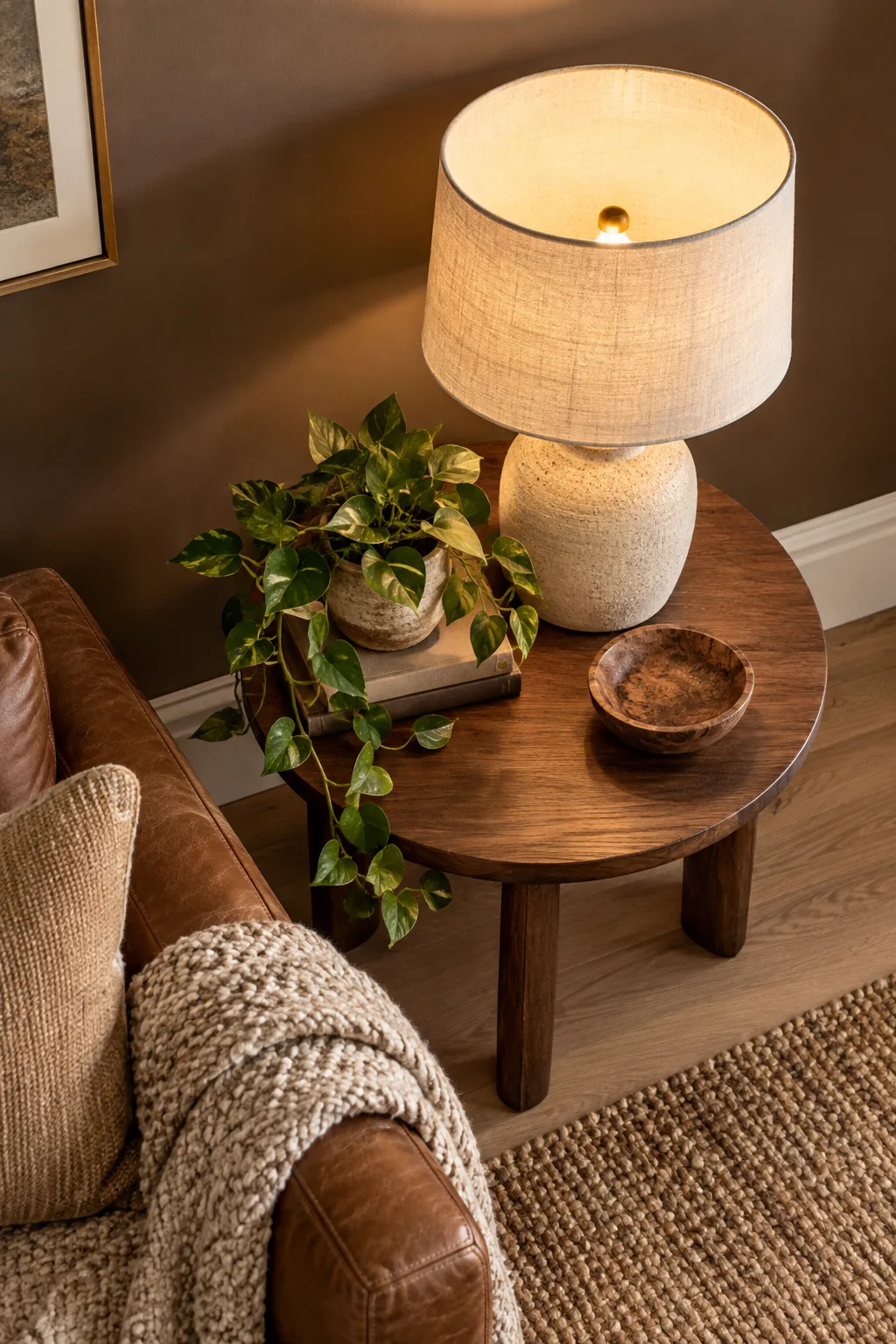
Your furniture must be at least two shades apart from the flooring to prevent the room from collapsing into a single heavy mass. Placing a dark walnut coffee table directly over pale oak floorboards ensures the piece stands out with sharp architectural definition.
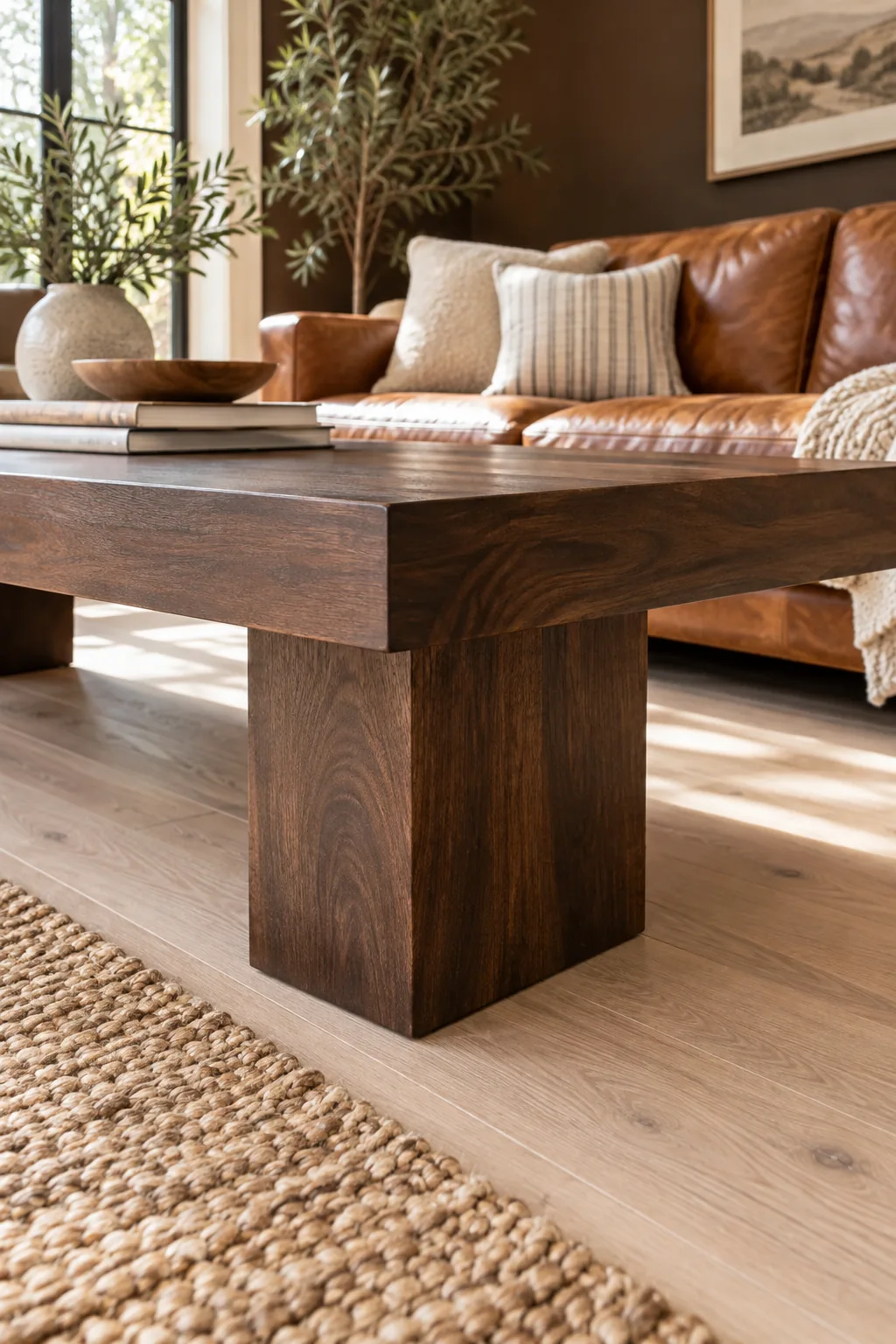
Before you buy a matching furniture set, be aware of how wood behaves against a wooden floor.
Anchoring with a Cognac Sofa
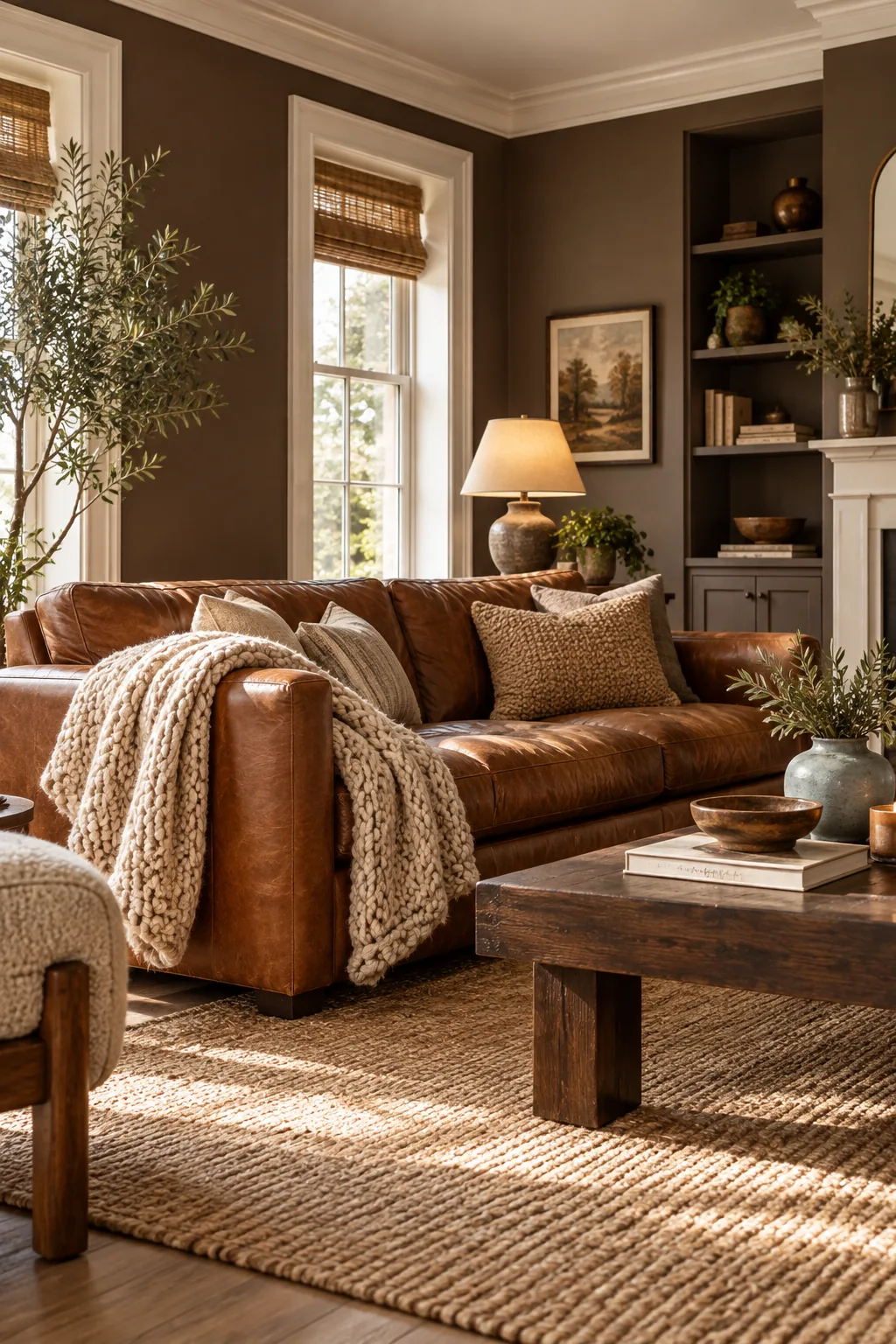
A mid-tone cognac leather sofa acts as the perfect bridge between dark mocha walls and lighter textiles. I always source vintage leather for my projects because the natural patina introduces organic texture that flat, solid fabrics simply cannot replicate.
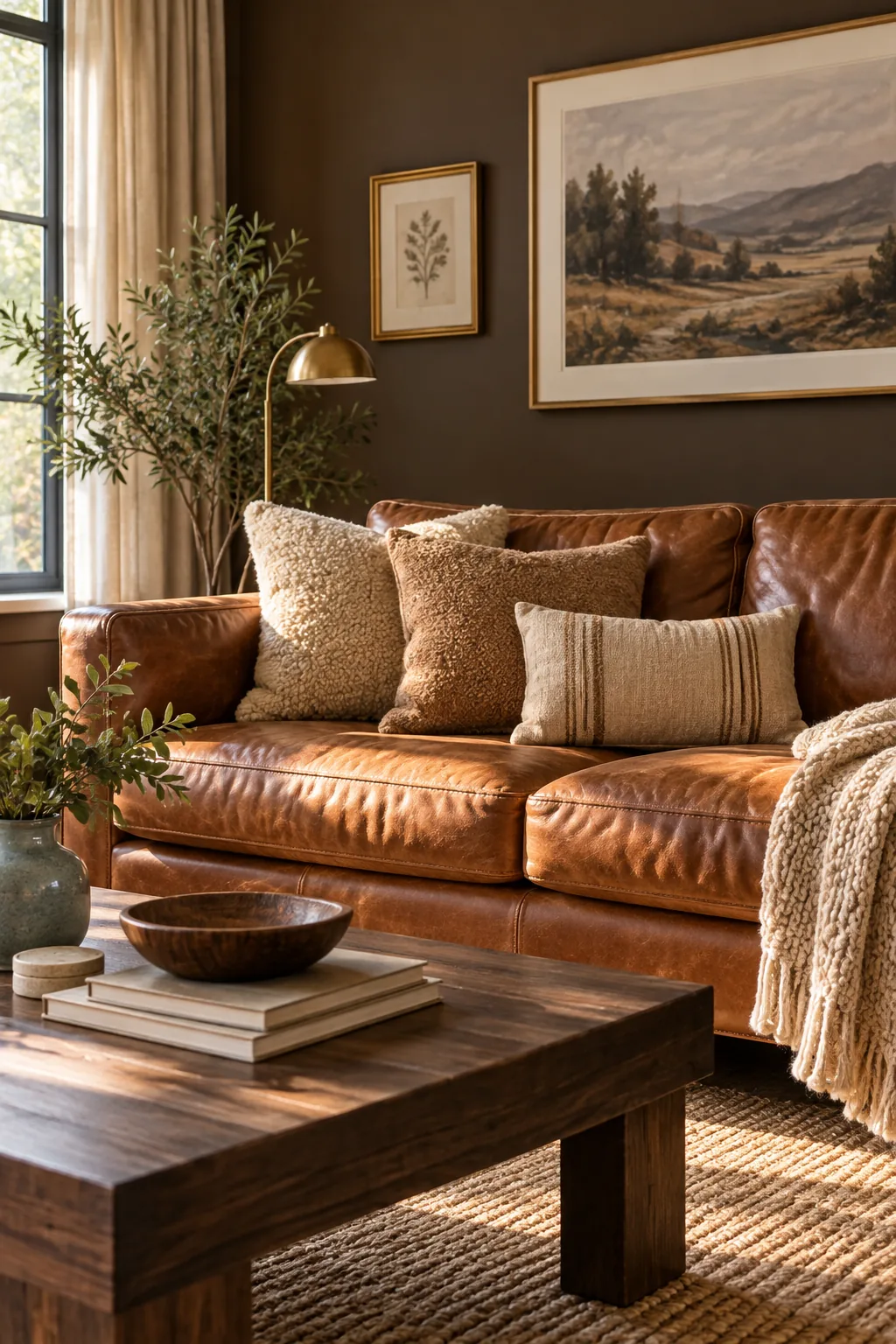
The Black-and-White Contrast Test
You can verify your room’s depth by taking a grayscale photo of the sofa, pillows, and wall. A balanced space will clearly display distinct light, mid, and dark values, proving your camel bouclé doesn’t blend into the mocha background.
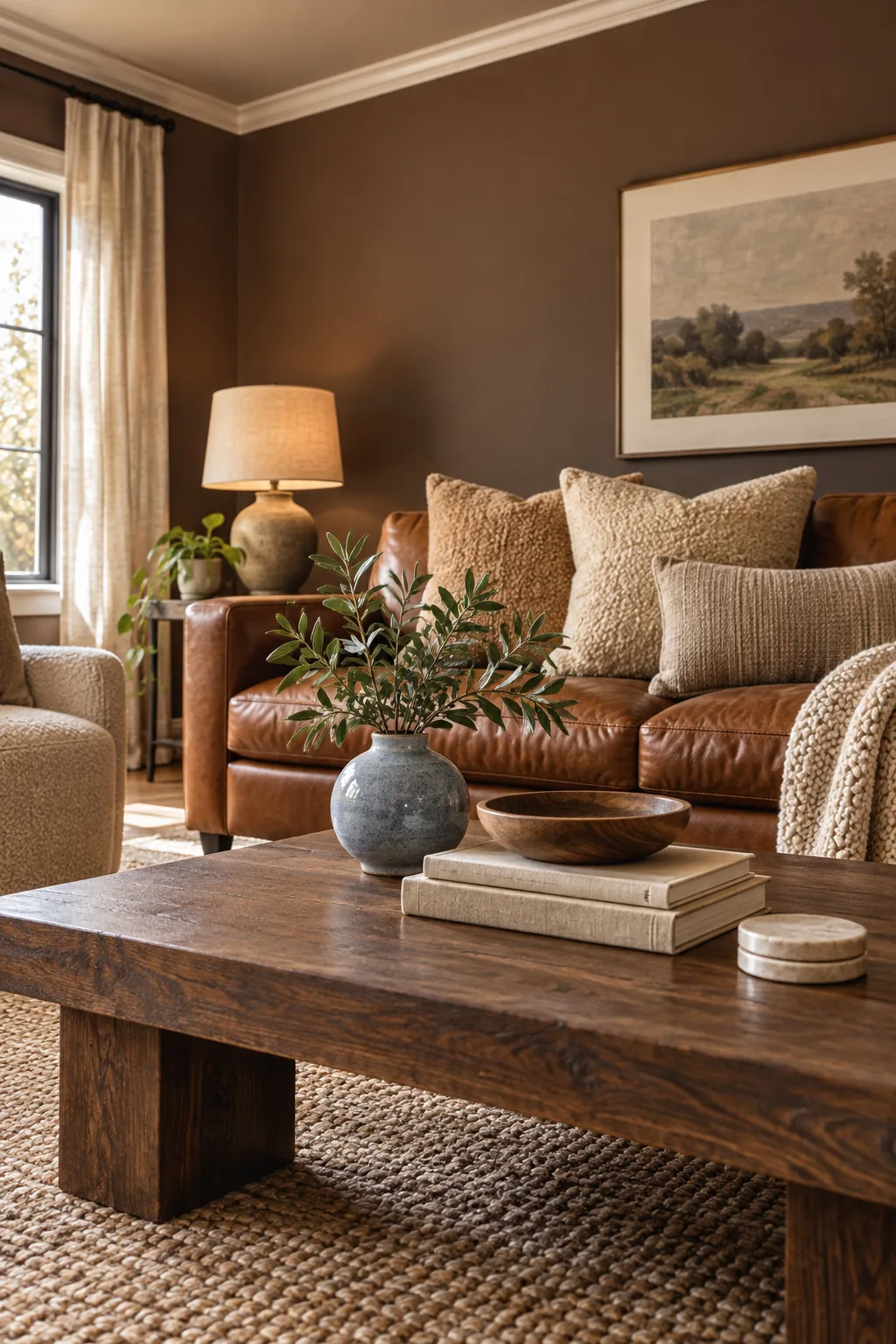
You don’t need professional editing software to check your room’s contrast levels.
Cooling the Room with Powder Blue
A heavy, warm space needs a cool accent color to cut through the richness and provide visual relief. Introducing a strict 10 percent ratio of powder blue through small ceramic vases or linen cushions refreshes the palette without overwhelming the primary brown.
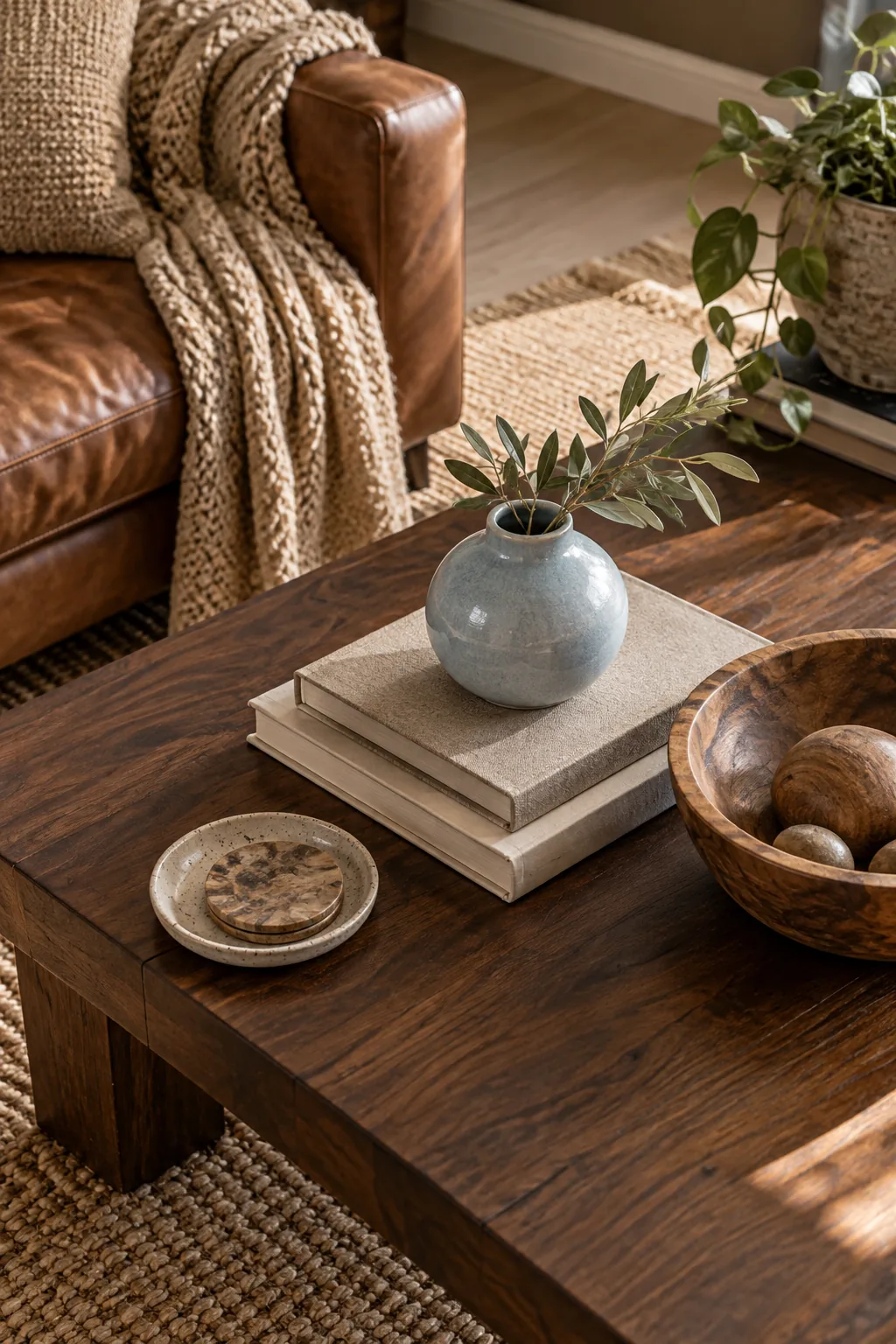
Layering Textures to Prevent Flatness
A monochromatic room relies entirely on tactile variation to maintain interest, a strategy I use constantly to avoid visual fatigue. Draping a chunky knit throw over smooth leather creates an immediate textural contrast that easily replaces the need for multiple bright colors.
The Brown Undertone Matching Sheet
To pull all these elements together, use our Brown Undertone Matching Sheet to pair red-, yellow-, and grey-based browns across paint, wood, leather, and textiles. This printable guide includes the three depth levels, bulb specs, and accent ratios needed to confidently shop for cohesive additions.
More Ways to Style a Brown Living Space
Find the perfect balance of warmth and contrast for your home with these distinct brown palettes.
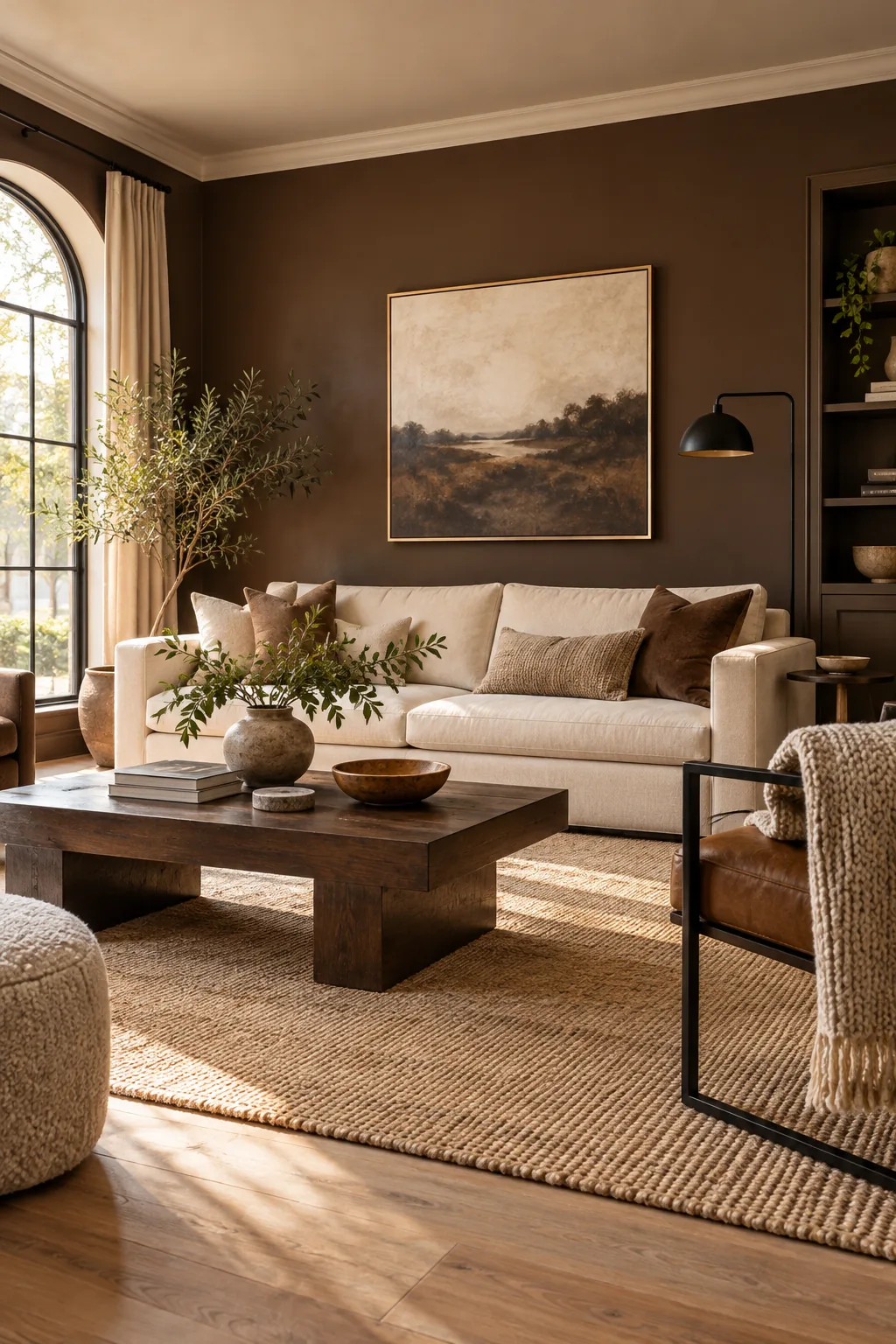
Chocolate & Cream Minimalist: High-contrast cream furniture pops beautifully against deep chocolate walls, creating a crisp, modern aesthetic.
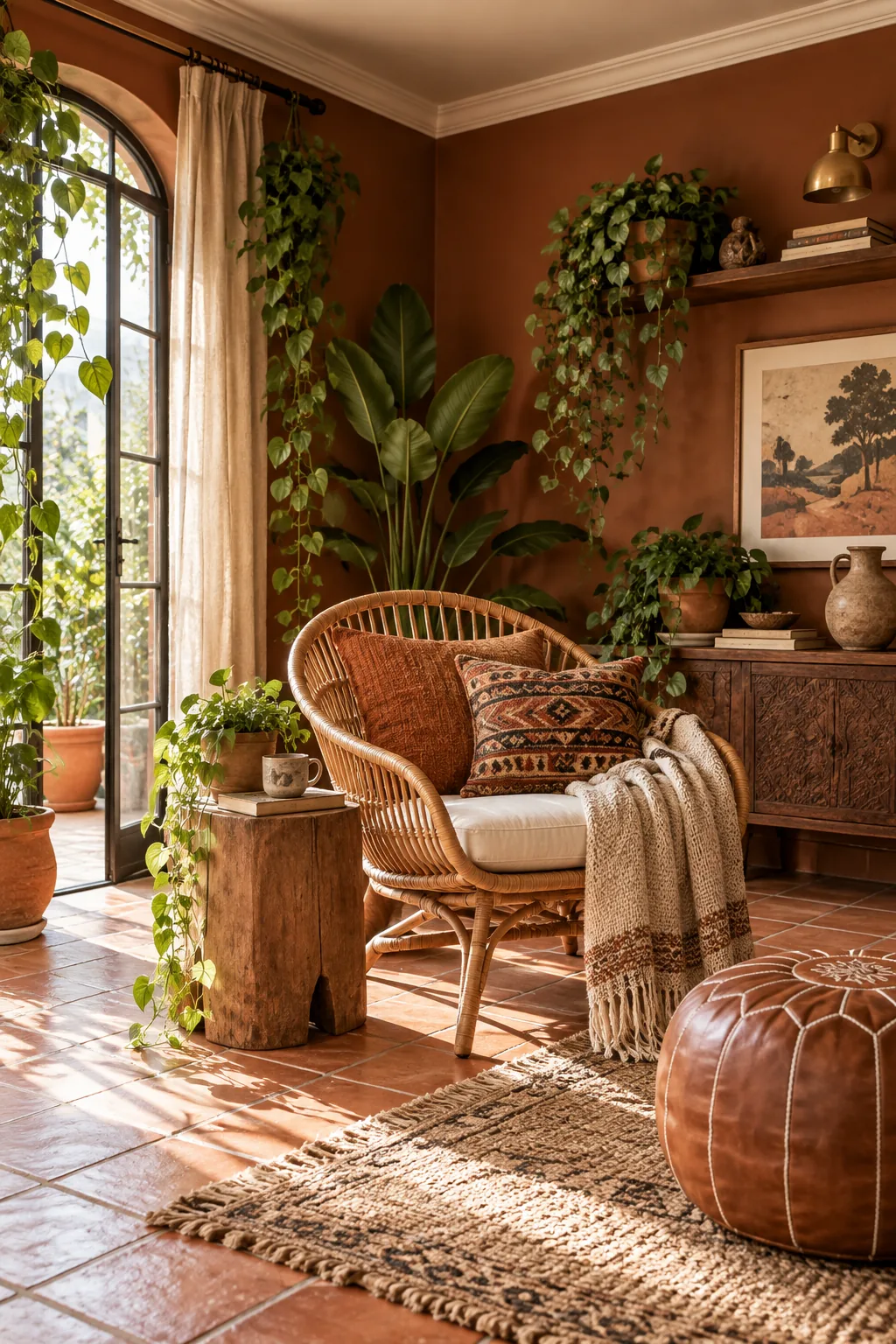
Rust & Terracotta Bohemian: Lean into red-based browns like rust and terracotta to build a warm, earthy foundation for vibrant green houseplants.
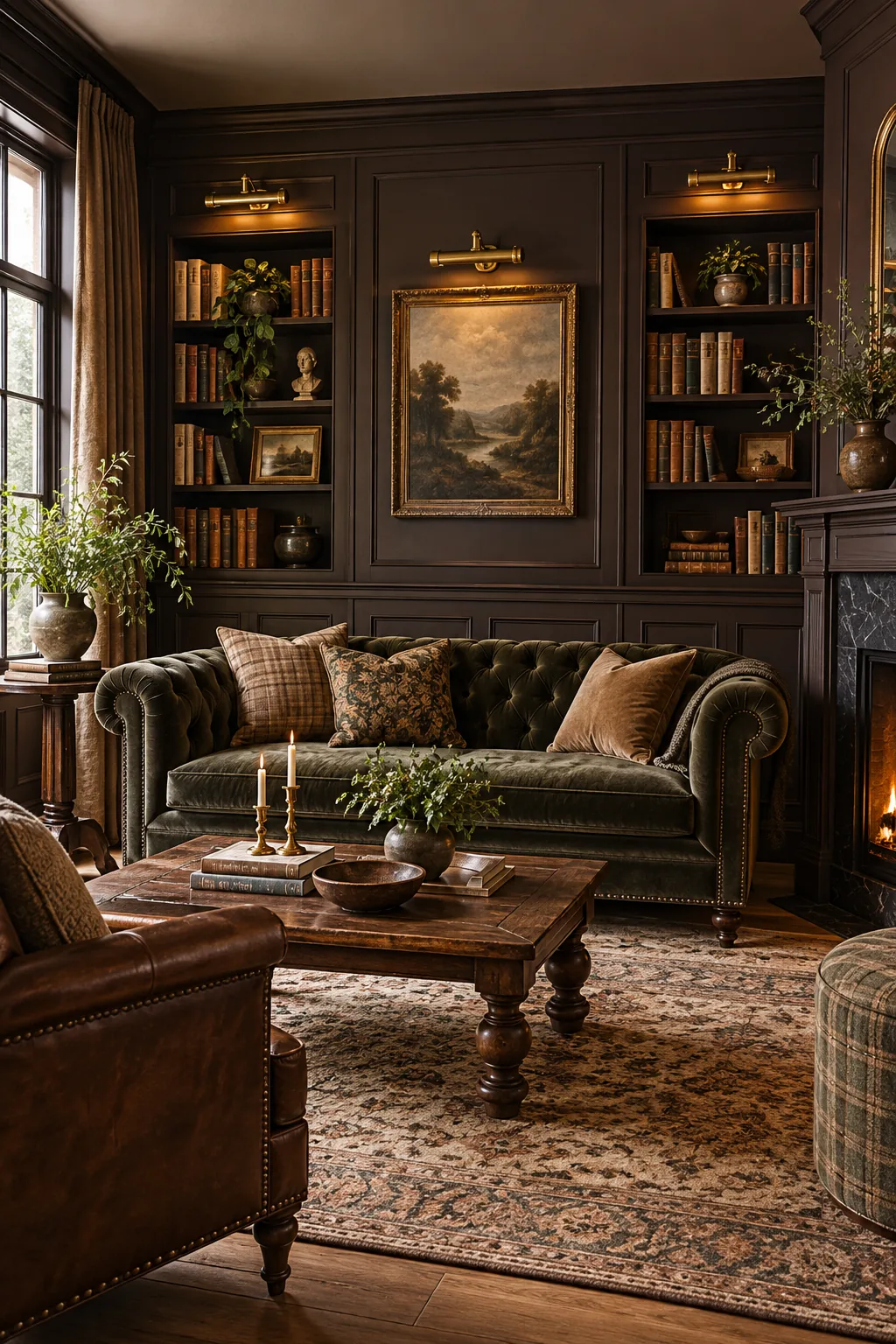
Espresso & Brass Traditional: Dark espresso wainscoting feels instantly historic when illuminated by warm brass fixtures and paired with classic velvet upholstery.
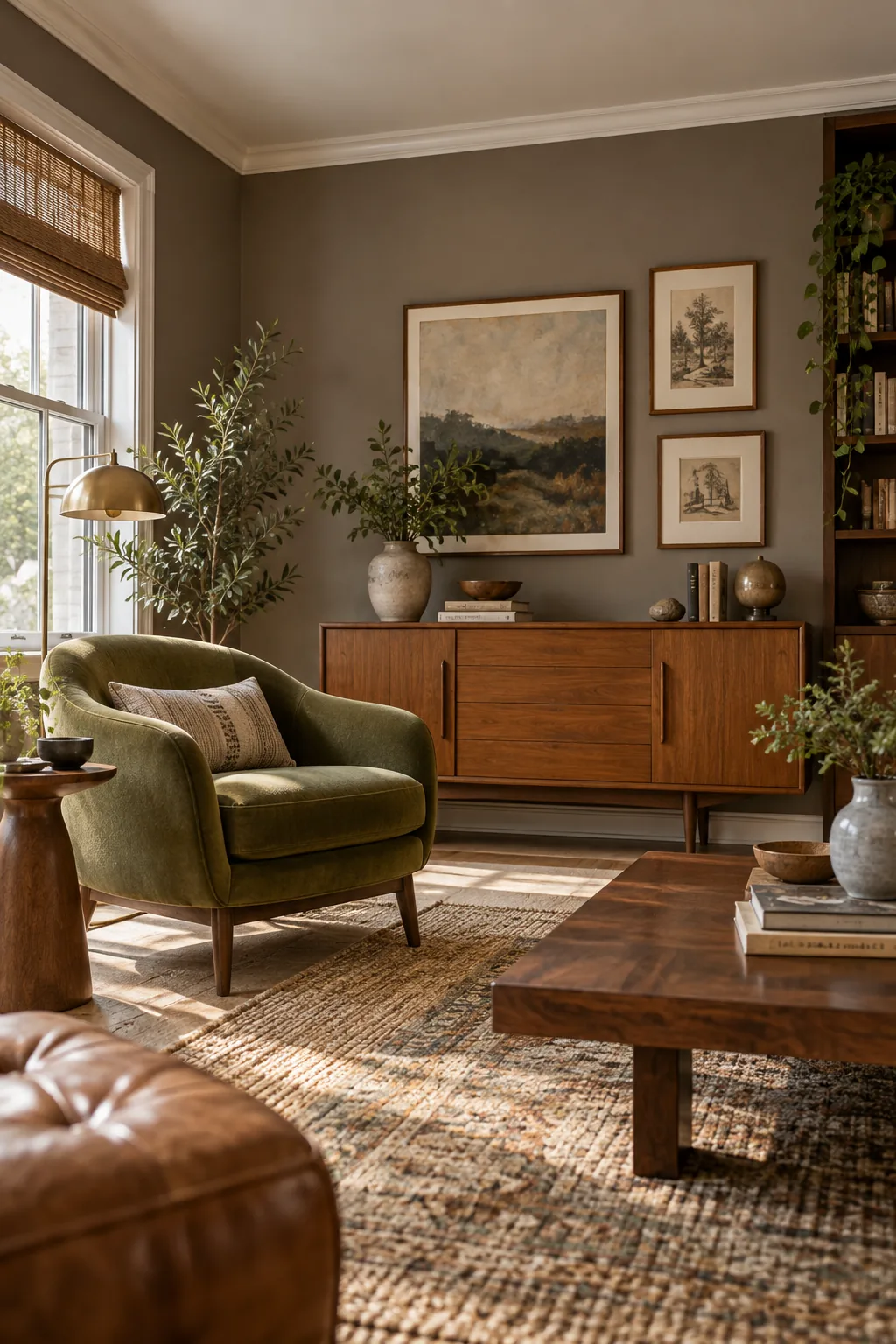
Taupe & Olive Mid-Century: Grey-based taupe walls provide a sophisticated, muted backdrop that allows warm teak wood and olive green accents to shine.
Mushroom & Charcoal Modern: Soft mushroom brown keeps a family room feeling light and airy, while a charcoal sectional grounds the space for everyday use.