
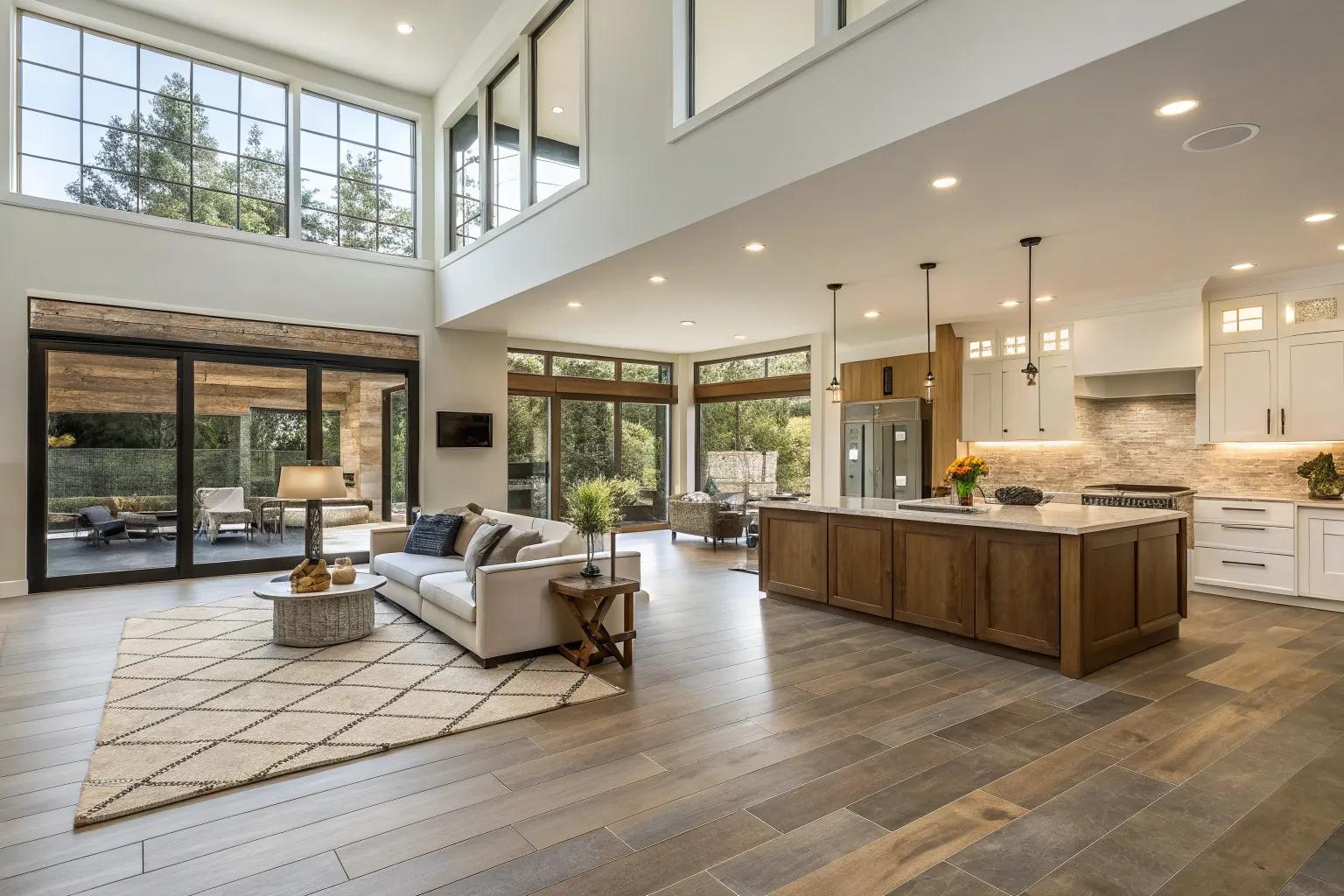
When it comes to home interiors, the details can make a world of difference, especially when transitioning between different flooring materials. Let’s explore 21 exciting ideas to create seamless and stylish floor transitions that will elevate your home’s aesthetic.
1. 1. Decorative Pattern Transition

Create a decorative pattern transition to infuse your floor with personality. This approach appeals to those who love eclectic designs and want their floors to tell a story.
2. 2. Split Line with Furniture

Place furniture strategically on the transition line to bridge different flooring materials. This clever trick can make a transition feel natural and intentional. Explore more creative tile transition ideas to help blend your spaces seamlessly.
3. 3. Elevated Transition for Depth

An elevated transition subtly raises one floor above the other, adding dimension to the room. It’s a clever trick I’ve used to define spaces without physical barriers.
4. 4. Add a Buffer Zone

Introduce a buffer zone of accent tile between two flooring styles for a seamless blend. This method is perfect for avoiding direct clashes in color or texture. Explore our top transition options to find the best fit for your home.
5. 5. Geometric Pattern Transition

A geometric pattern transition adds a modern, artistic touch to your flooring. It’s a bold choice that can transform a simple space into a visual masterpiece. Explore our oak wood flooring ideas to see how these patterns complement natural wood textures.
6. 6. Natural Stone Transition

Use natural stone to create a luxurious transition that feels both organic and upscale. This is an approach I often use to bring a touch of nature indoors. If you are dealing with height differences, explore these clever carpet to tile transition ideas for a seamless finish.
7. 7. Accent Border Transition

Use an accent border to define and enhance your floor transition. This approach can create a visually striking boundary that I often recommend for adding a touch of elegance. Explore more great ideas for wood floor transitions to complete your design.
8. 8. Patterned Carpet Transition

Introduce a patterned carpet to smoothly transition between different hard floor materials. I find this particularly effective in creating a cozy, inviting atmosphere. You can even use these textiles when creating cozy reading nooks in unused corners of your home.
9. 9. Irregular Transition for Uniqueness

Design an irregular transition with playful shapes for a unique, eye-catching effect. I’ve used this technique in creative spaces to reflect an unconventional spirit. Explore these eye-catching partition ideas to further elevate your home.
10. 10. Diagonal Floor Transition

For a touch of drama, consider a diagonal transition that adds a dynamic twist to your flooring. It’s a technique I’ve used in my own home to create visual interest without overwhelming the space. You can also apply this angular approach to your furniture layout by exploring ideas for a diagonal bed in a corner room.
11. 11. Gradual Fade Transition

A gradual fade transition seamlessly blends two flooring types, offering a subtle and cohesive look. I find this particularly effective in open spaces where you want a gentle flow. These transitions work beautifully when paired with open concept kitchen ideas.
12. 12. Mosaic Transition Magic

A mosaic transition can turn your floor into a piece of art, combining small tiles into intricate patterns. I love using this in creative spaces where a touch of artistry can truly shine.
13. 13. Curved Transition for Elegance

Introduce a curved transition for a softer, more organic feel between your floors. This technique effortlessly blends different materials, creating a harmonious flow that I’ve found to be both soothing and stylish. These transitions work particularly well when paired with light wood floor living room ideas.
14. 14. Bold Contrast for Drama

Embrace bold contrast to create a striking visual impact between floors. In my experience, this is a fantastic way to highlight the unique qualities of each material.
15. 15. Zigzag Pattern for Impact

A zigzag pattern transition is bold and eye-catching, perfect for making a statement. I’ve used this in modern spaces to add energy and a contemporary vibe. Explore more modern siding solutions to elevate your exterior design.
16. 16. Chevron Pattern Transition

Incorporate a chevron pattern in your transition for a sophisticated, timeless look. It’s a classic design that I’ve found works beautifully in both modern and traditional settings.
17. 17. Metal Strip Transition

Use a sleek metal strip for a minimalist, industrial transition. This method is excellent for modern interiors where simplicity and function are key.
18. 18. Tile Medallion Transition

Place a tile medallion at the transition point for a grand focal feature. This is perfect for those who want to add a touch of grandeur to their floors.
19. 19. Wood Inlay Transition

Craft a wood inlay transition for a seamless and classy finish. This technique is one of my favorites for adding elegance without overwhelming the design. Explore our wood floor border ideas to further elevate your space.
20. 20. Mixed Material Transition

Combine mixed materials like wood and metal for a unique transition that reflects personal style. This approach adds depth and texture, which I adore for its rich, layered look. You can explore more boho office ideas to further personalize your workspace.