
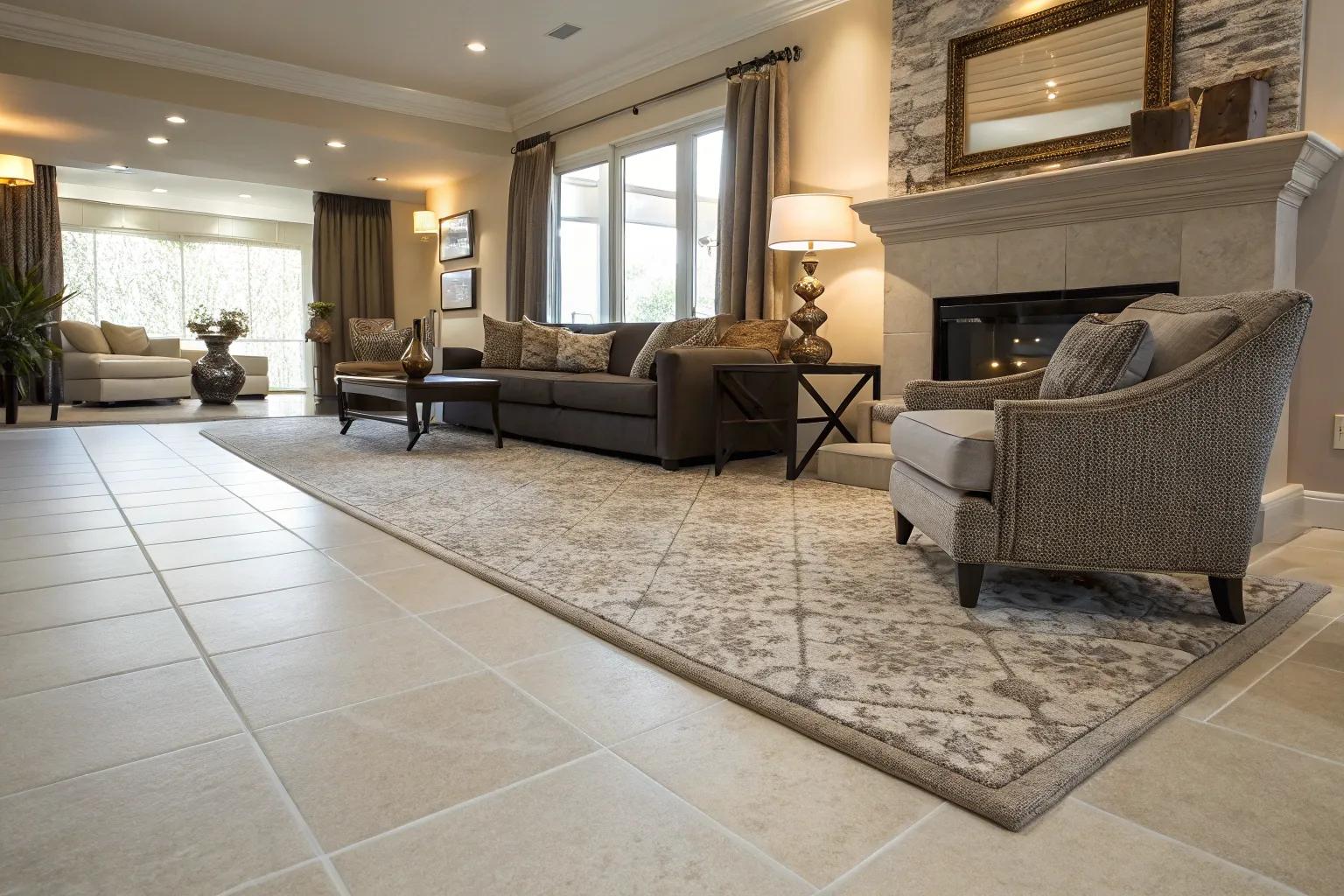
Navigating the transition from carpet to tile can be a real design challenge, especially when dealing with different floor heights. Let’s dive into some creative solutions to make these transitions both functional and beautiful.
1. 1. Try Schluter Trim

Schluter trims provide a clean and professional look, perfect for a polished finish. I’ve used them to protect edges while adding a sleek touch.
2. 2. Use Reducer Strips for Smoother Changes

Reducer strips act as a bridge, leveling the height difference between carpet and tile elegantly. I love using them in spaces where subtlety is key. For more inspiration, explore these creative tile uneven floor transition ideas.
3. 3. Opt for a Metal Transition Strip

Metal strips provide a sleek, modern look, ideal for contemporary spaces. In my projects, they often highlight the transition beautifully and pair well with fresh epoxy floor designs.
4. 4. Opt for a Z-Bar Transition

The Z-bar is my go-to for securing carpet edges under tiles, adding an extra layer of security. It’s a favorite in high-traffic areas where durability is crucial. For other flooring materials, explore our top transition options between wood and tile.
5. 5. Embrace the Tuck-In Method

This method is a classic for a reason; it neatly tucks the carpet edge into the tile, creating a clean finish. I’ve used it in spaces where simplicity and function are key, and it works wonders.
6. 6. Try Strategically Placed Rugs

Rugs are a fabulous way to bridge the style gap, especially with intricate patterns. I’ve used overlapping rugs to harmonize spaces seamlessly. These techniques are also featured in our guide to creative floor transition ideas for a cohesive home.
7. 7. Employ Gradual Blends

Gradual blending of colors or materials offers a seamless transition. It’s one of my favorite techniques for maintaining harmony in open spaces, especially when designing open concept kitchens.
8. 8. Explore Organic Tile Edge Patterns

Organic shapes can create a natural flow between different flooring types. I’ve used this in open-concept spaces for a harmonious feel.
9. 9. Introduce Decorative Patterns

Decorative patterns can enhance the transition area, adding a touch of flair. I love using them to inject personality into transitional spaces. Explore our fresh ideas for using transitional tile to elevate your home decor.
10. 10. Utilize Geometric Patterns

Geometric designs can add a modern twist, making transitions an artful statement. I’ve used bold patterns to draw attention in minimalist spaces. You can explore more oak wood flooring ideas to complement these patterns.
11. 11. Incorporate Diagonal Dynamics

Diagonal transitions add energy and movement, ideal for dynamic spaces. I’ve seen them transform ordinary areas into exciting design statements. Explore our great ideas for wood floor transitions to see how these angles can elevate your home.
12. 12. Create a Tile Accent Border

For a touch of elegance, a tile accent border can define the transition area beautifully. I’ve seen this work especially well in upscale living rooms.
13. 13. Consider Smooth Curves

Curved transitions soften the divide, creating a pleasing flow. These are perfect for spaces where elegance and ease of movement are priorities. You can incorporate these shapes into your design by exploring various stylish floor tile patterns.
14. 14. Use Complementary Colors

Complementary colors can tie spaces together visually without matching exactly. This approach brings balance and unity to diverse areas.
15. 15. Experiment with Bold Contrasts

Bold contrasts can create a dramatic effect, defining each area distinctly. In open spaces, this technique adds excitement and energy.