
17+ Brilliant Indoor Concrete Floor Paint Ideas for Your Home
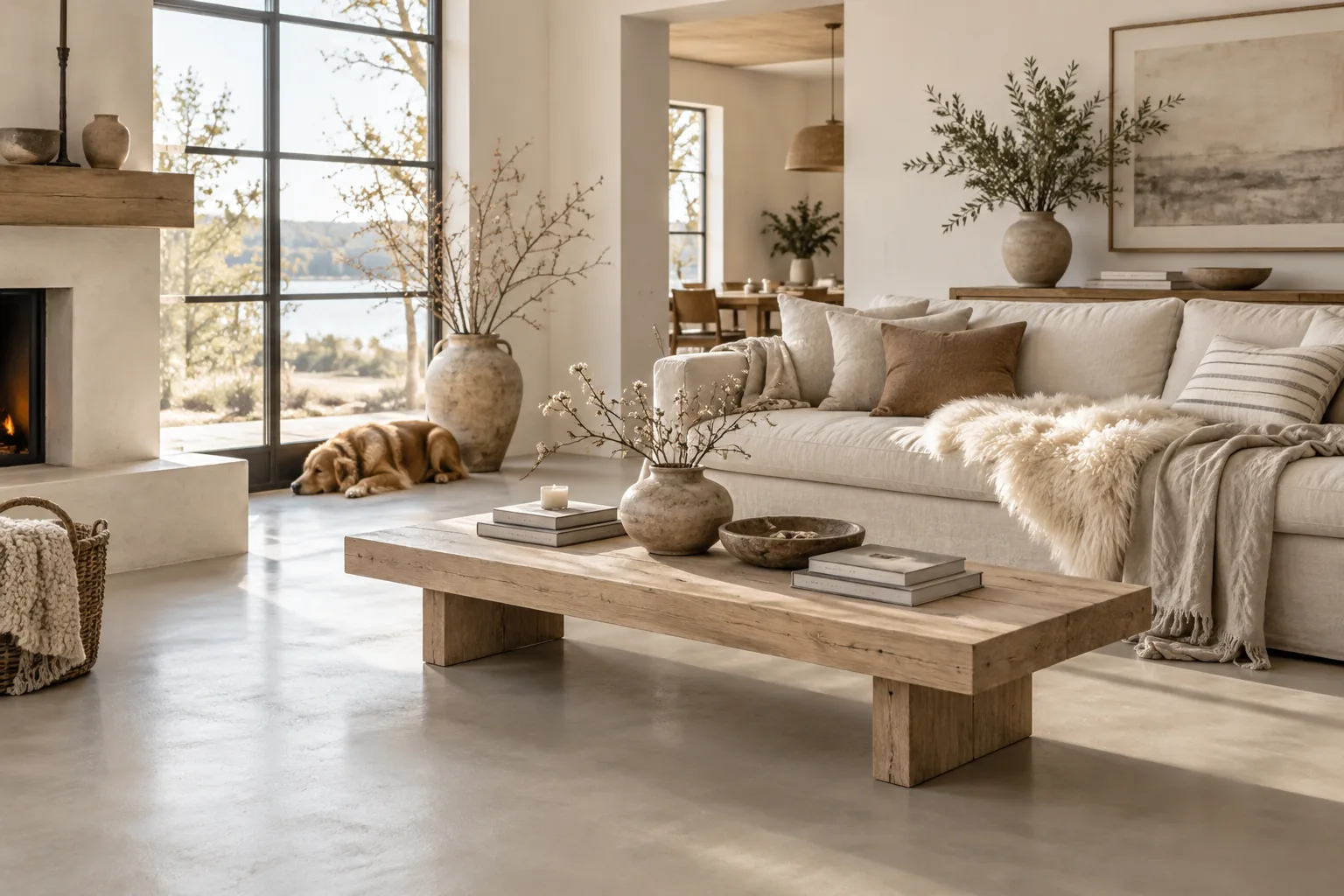
Tearing up old carpet usually reveals a bare slab just begging for a fresh coat of indoor concrete floor paint. I gathered these easy floor transformations so you can skip the expensive flooring and just grab a roller.
1. Checkerboard Pattern
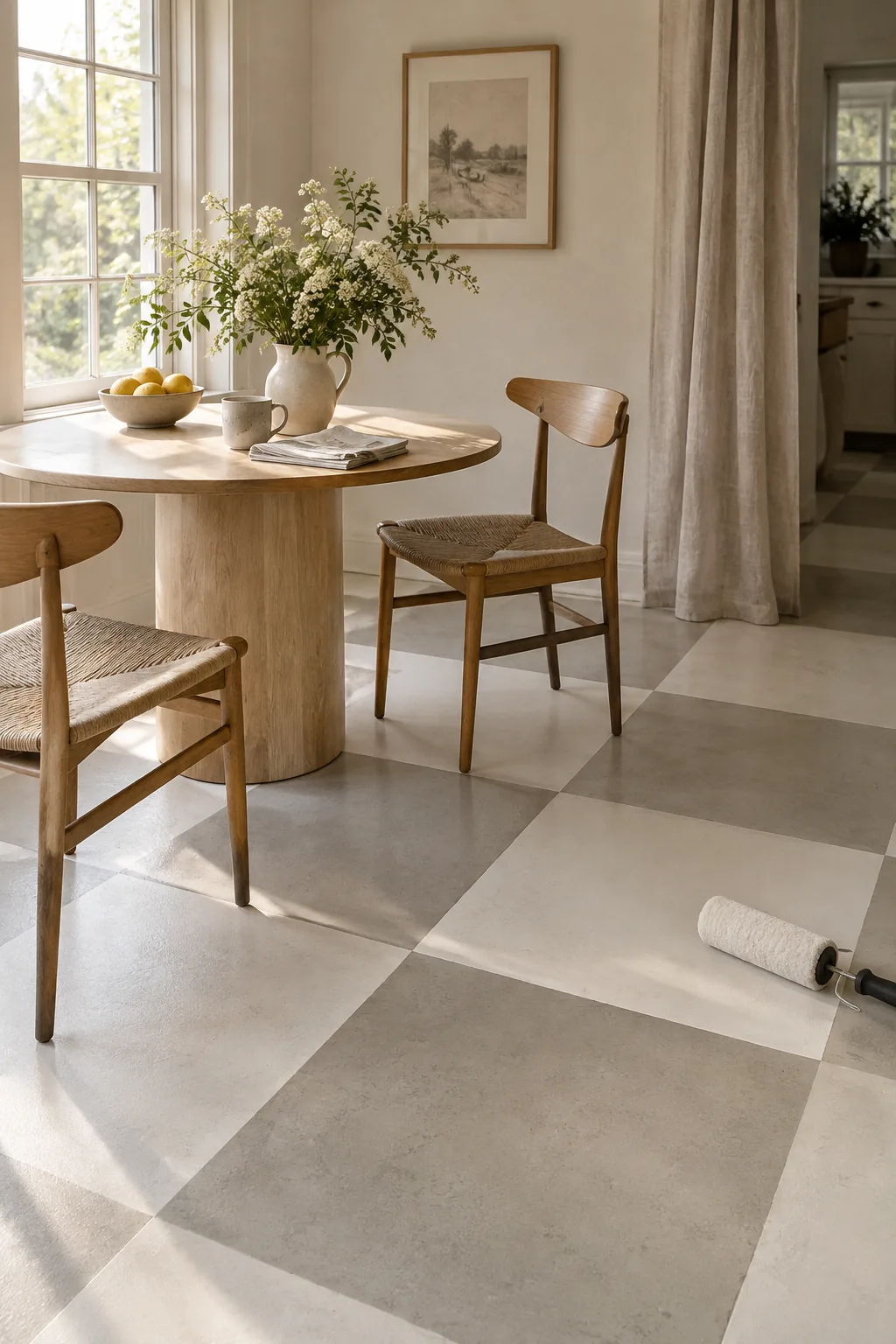
Tape lines always bleed a tiny bit on a porous concrete slab.
You can hide those imperfections completely with a checkerboard floor pattern. Paint your base color first, then map out large squares with a laser level. A dense foam roller gives you the crispest edges for the contrasting squares.
2. Faux Terrazzo Flakes
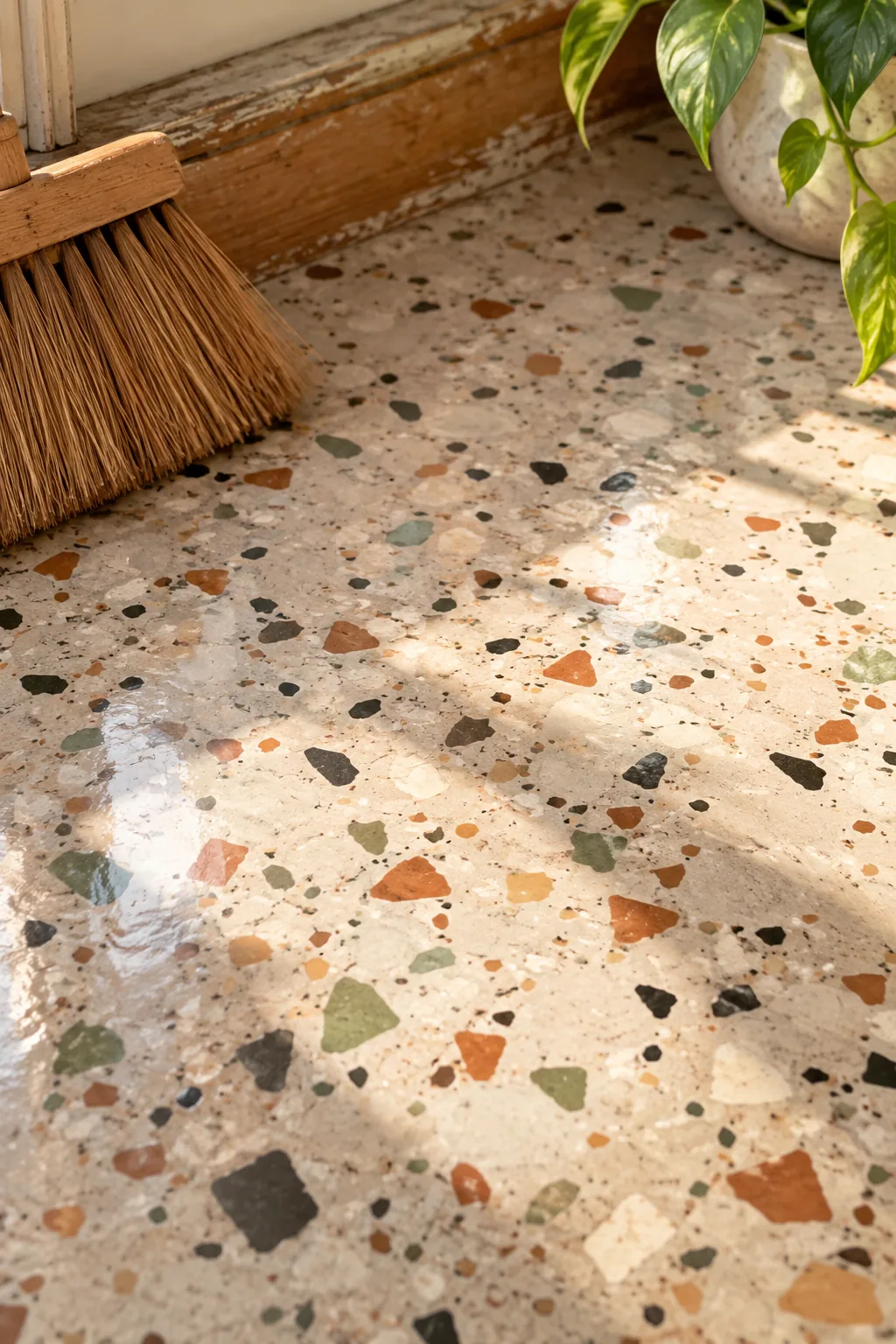
A scattered confetti effect mimics high-end stone without the massive price tag. You achieve this by broadcasting decorative vinyl color chips over wet epoxy paint. The trick is to throw the flakes upward into the air so they drift down naturally. Once they dry, you seal everything under a tough, clear topcoat. This makes the floor completely smooth and incredibly easy to sweep clean.
3. Solid Charcoal Minimalism
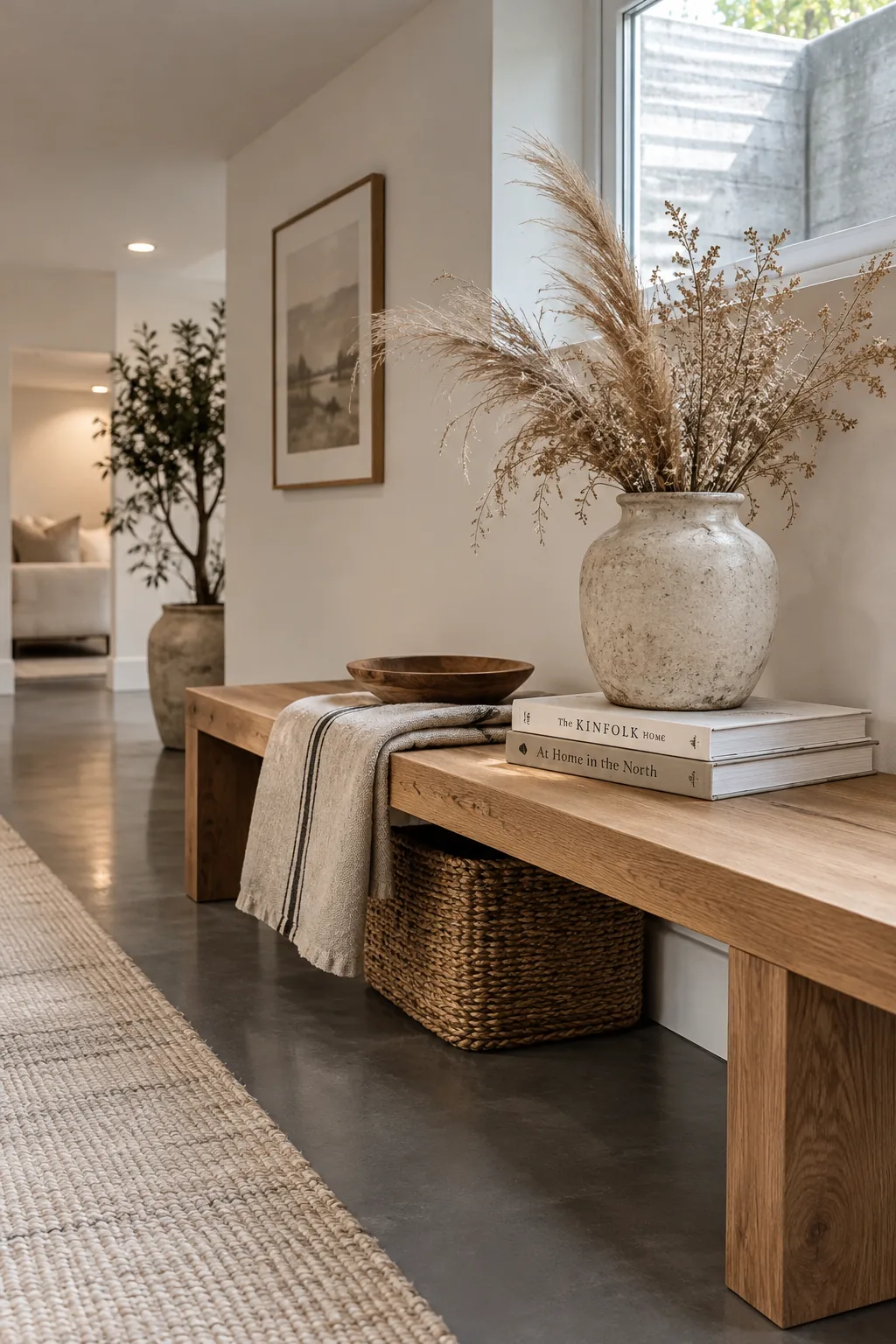
Dark floors anchor a bright room beautifully.
A solid coat of charcoal gray epoxy turns a dusty basement into a sleek modern space. You just need to patch any major cracks with concrete filler before you start rolling. The matte finish hides dirt much better than a high-gloss topcoat.
4. Stenciled Tile Look
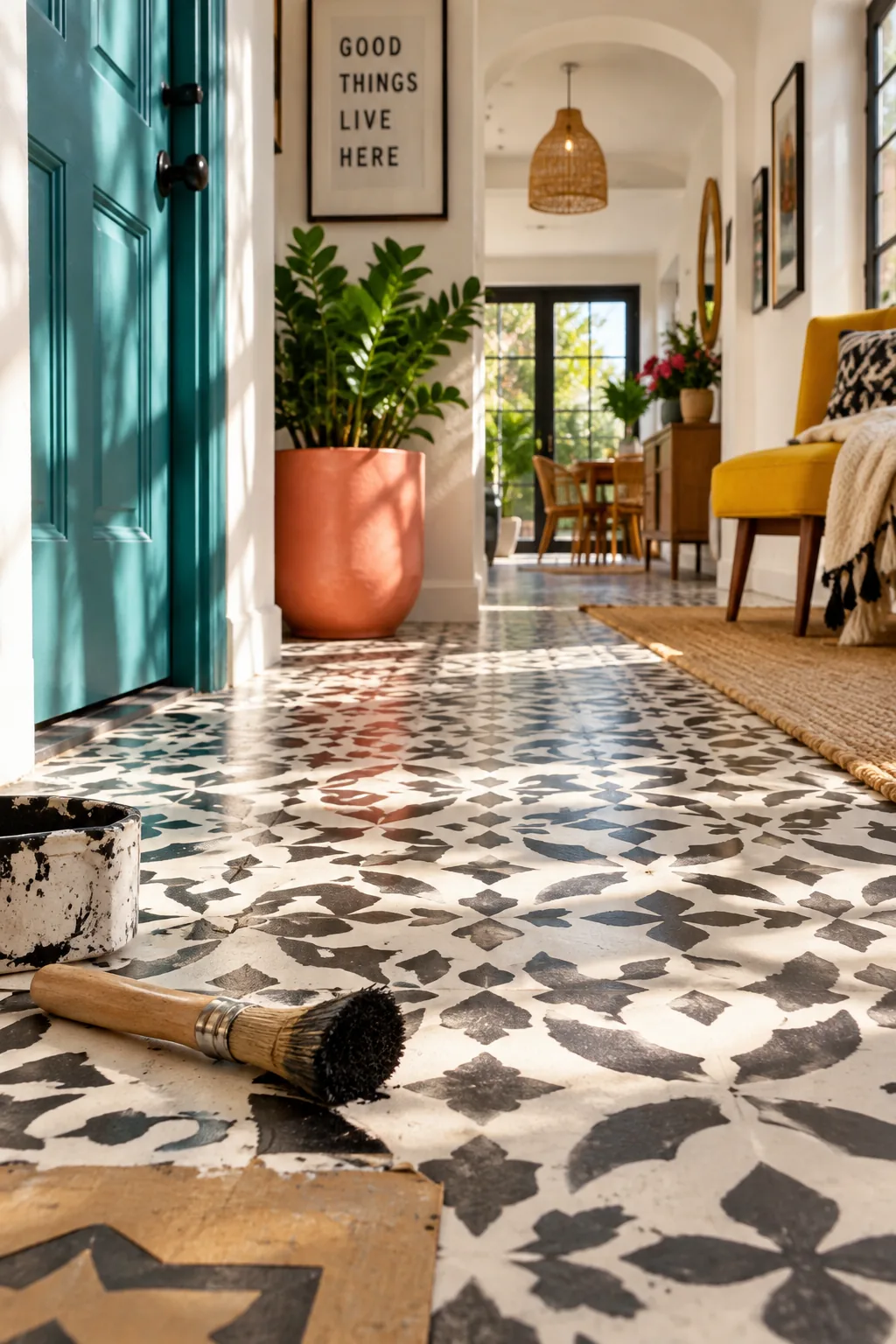
A single reusable floor stencil costs about thirty bucks and covers an entire room. You just apply a stark white base coat, tape down the stencil, and dab on a black geometric pattern with a stencil brush to fake the look of expensive cement tiles.
5. Painted Faux Rug
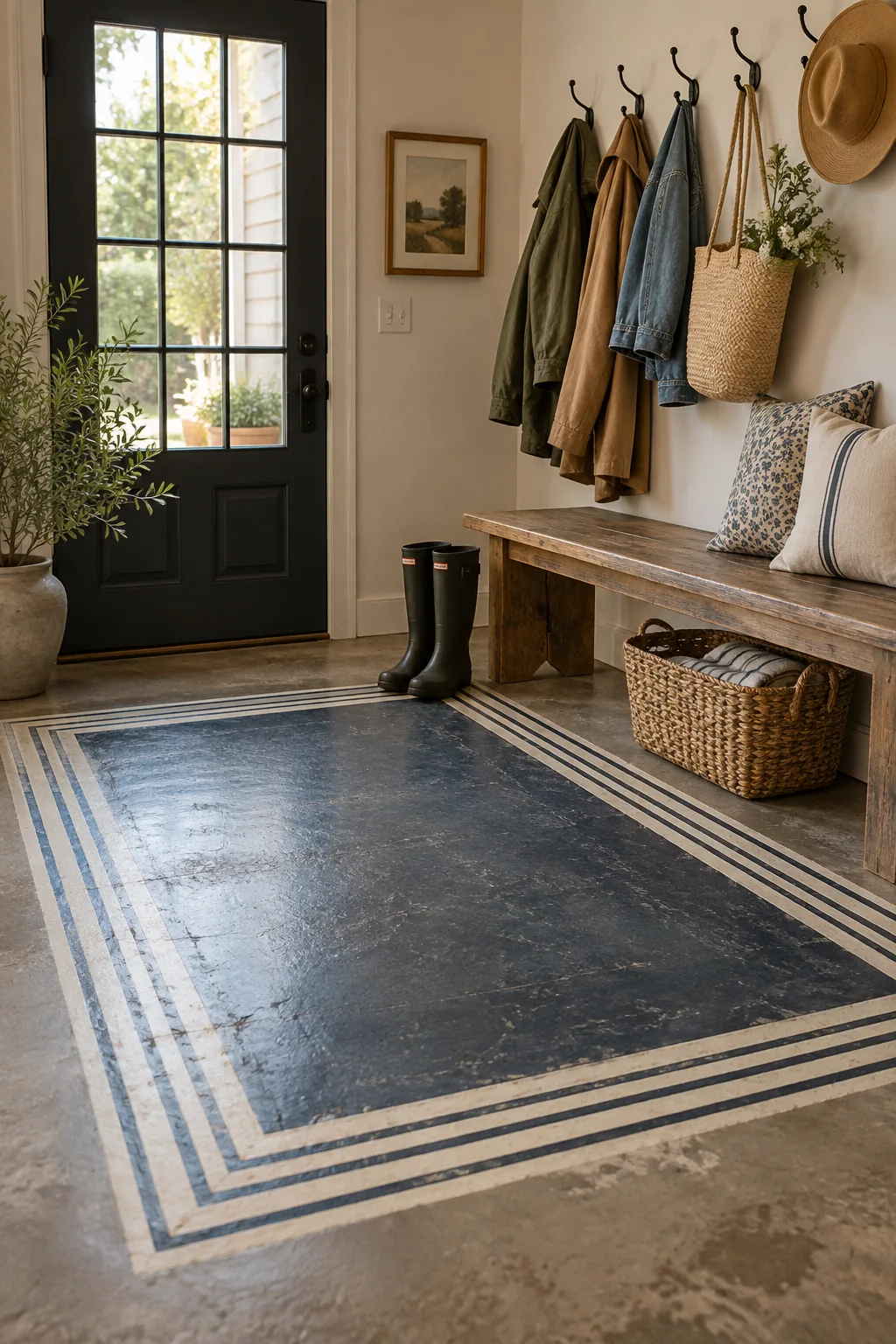
Fabric rugs in high-traffic mudrooms get ruined in less than a year.
You can paint a permanent faux area rug directly onto the concrete slab instead. Just tape off a large rectangle in the center of the room.
The best part is that you can customize the border with simple stripes.
- A wide painter's tape for the main border
- A contrasting paint color
- A small brush for fringe details
6. Geometric Color Blocking
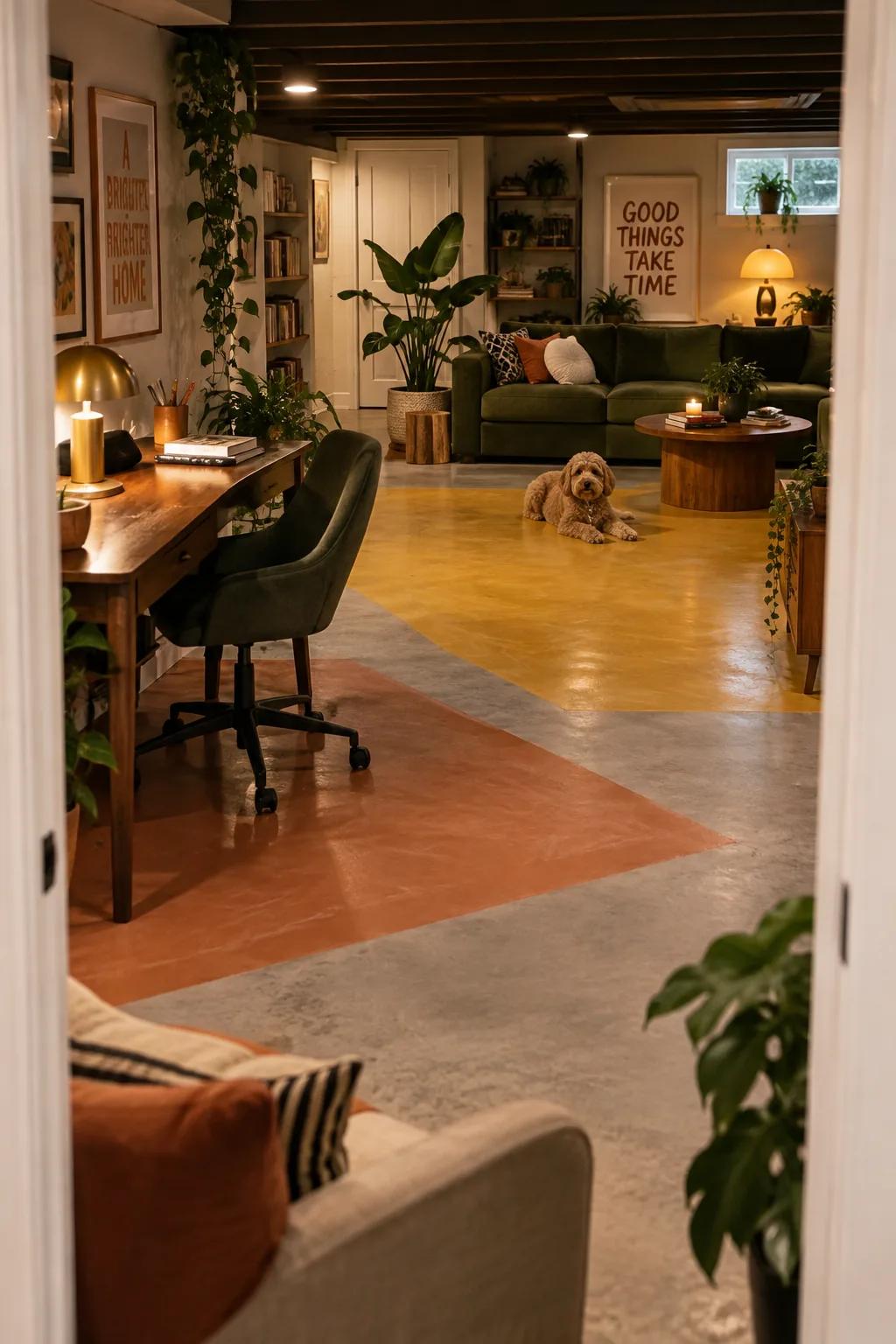
Map out your design with chalk before committing to the paint.
Bold color blocking breaks up a massive basement floor into distinct living zones. You can paint a terracotta triangle under the desk and a mustard yellow rectangle in the lounge area. Leaving negative space between the shapes lets the raw concrete act as a neutral border.
- Chalk line tool for straight edges
- Three distinct paint colors
- High-adhesion painter's tape
7. Whitewashed Concrete
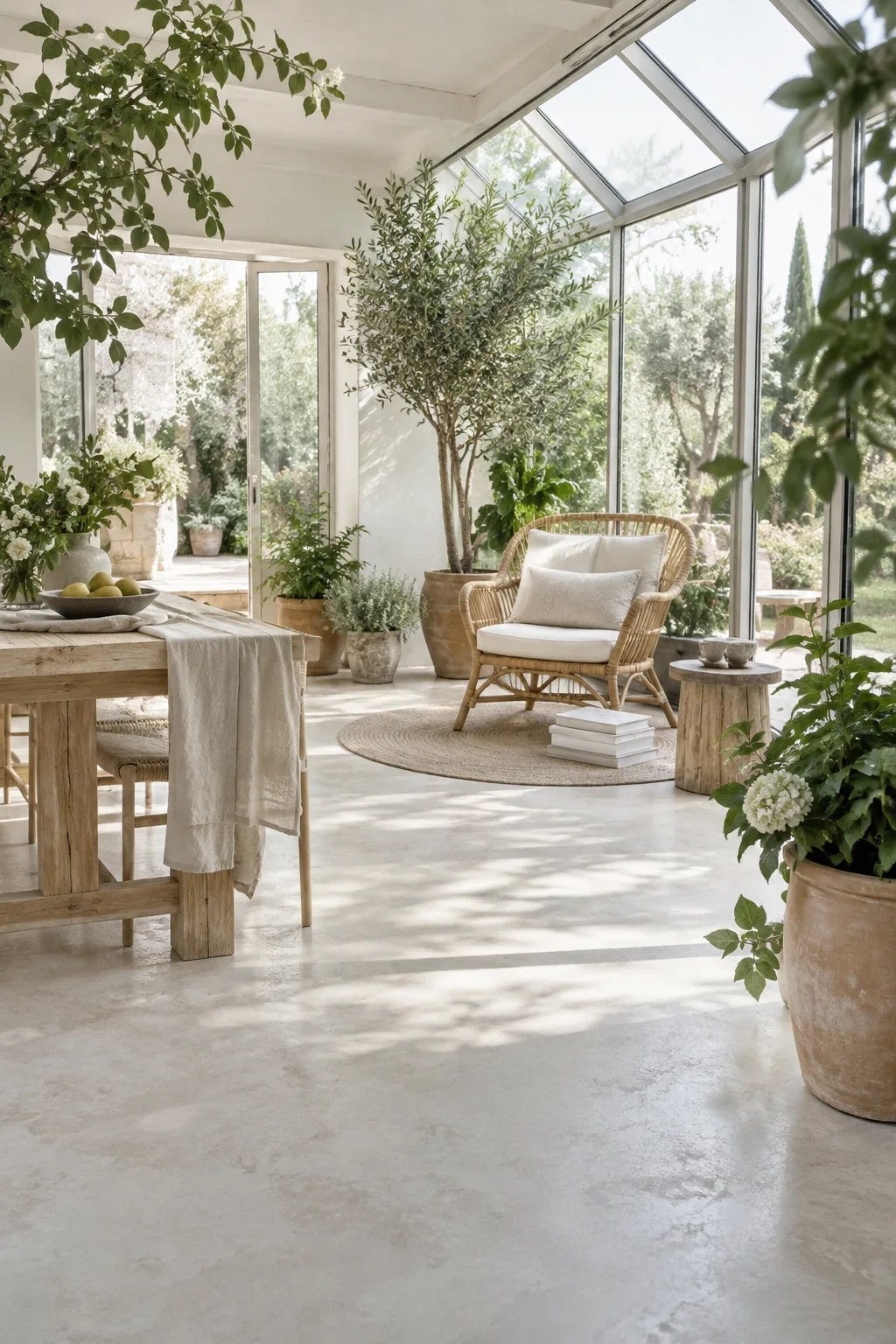
Thin your paint with water to create a breathable wash instead of a thick layer. A whitewashed concrete floor brightens up dark garden rooms while letting the natural texture of the slab peek through. You just mop the diluted paint onto the floor and immediately wipe away the excess with a dry rag. This technique won't peel or chip because the color actually sinks into the pores of the concrete. It gives the room a soft, airy feel that pairs perfectly with lots of indoor plants.
8. Faux Wood Planks
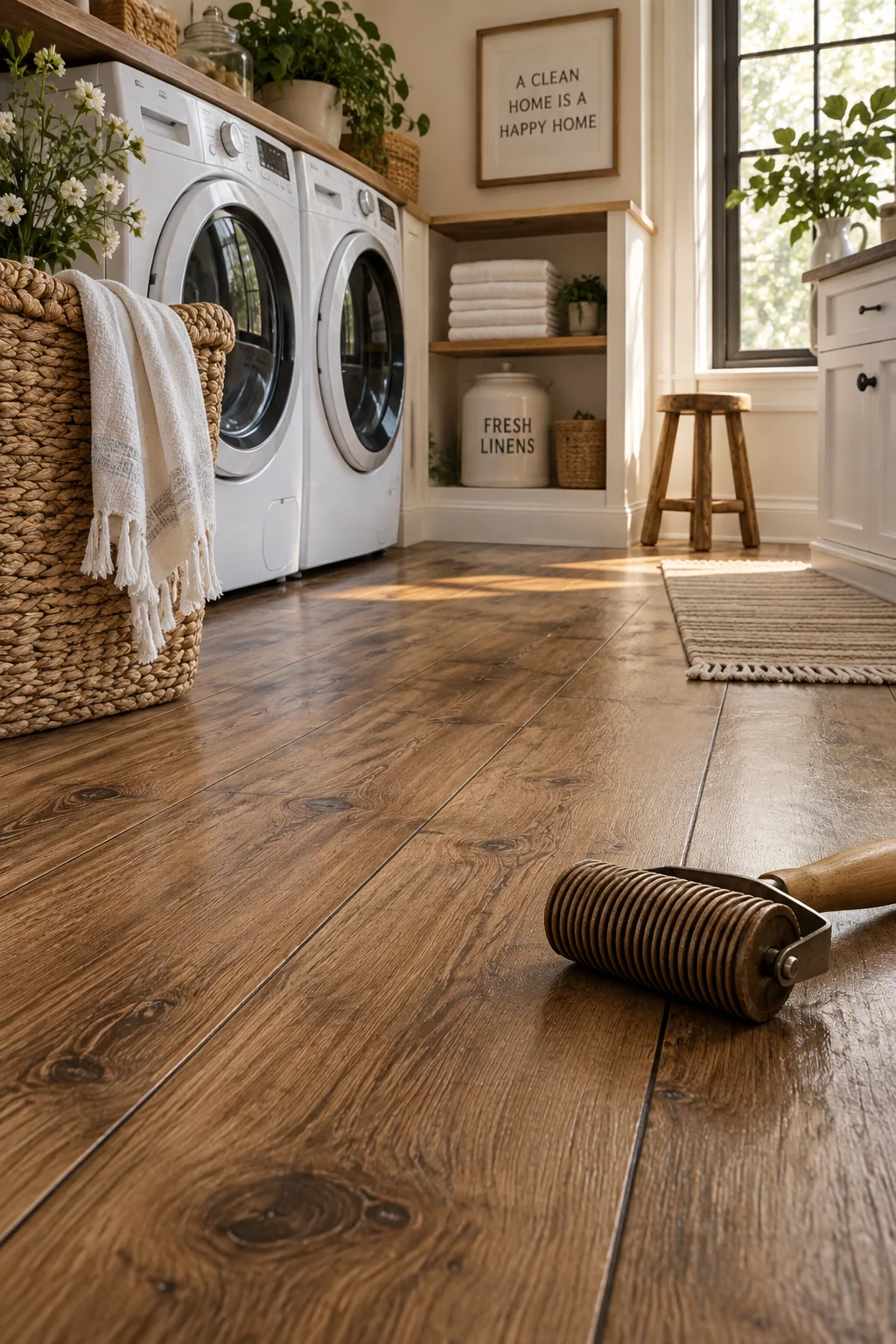
I used this exact technique in my laundry room last spring.
You can drag a wood grain rocker tool through wet brown paint to create realistic knots and lines. Once the base dries, a darker glaze brushed over the top settles into the grooves. It fools everyone into thinking you installed real hardwood.
- Warm brown base paint
- Dark brown tintable glaze
- Rubber wood grain tool
9. Solid Sage Green
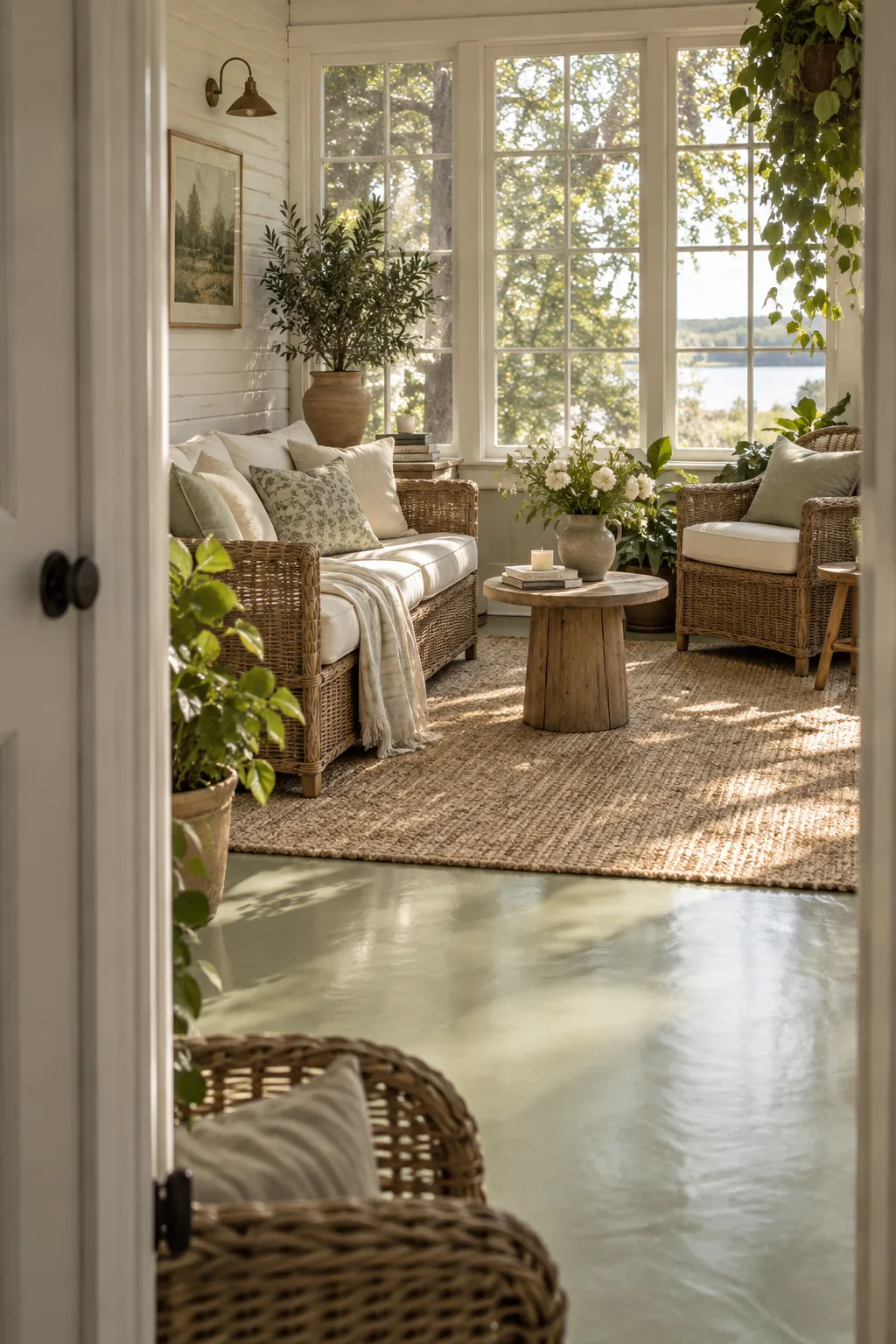
Choose a satin finish if you want the floor to reflect just a little bit of light from the windows. Painting the slab a muted sage green brings a calming, earthy vibe to an enclosed sunporch. You can layer it with jute rugs and wicker furniture for a cozy, organic aesthetic.
10. Distressed Vintage Finish
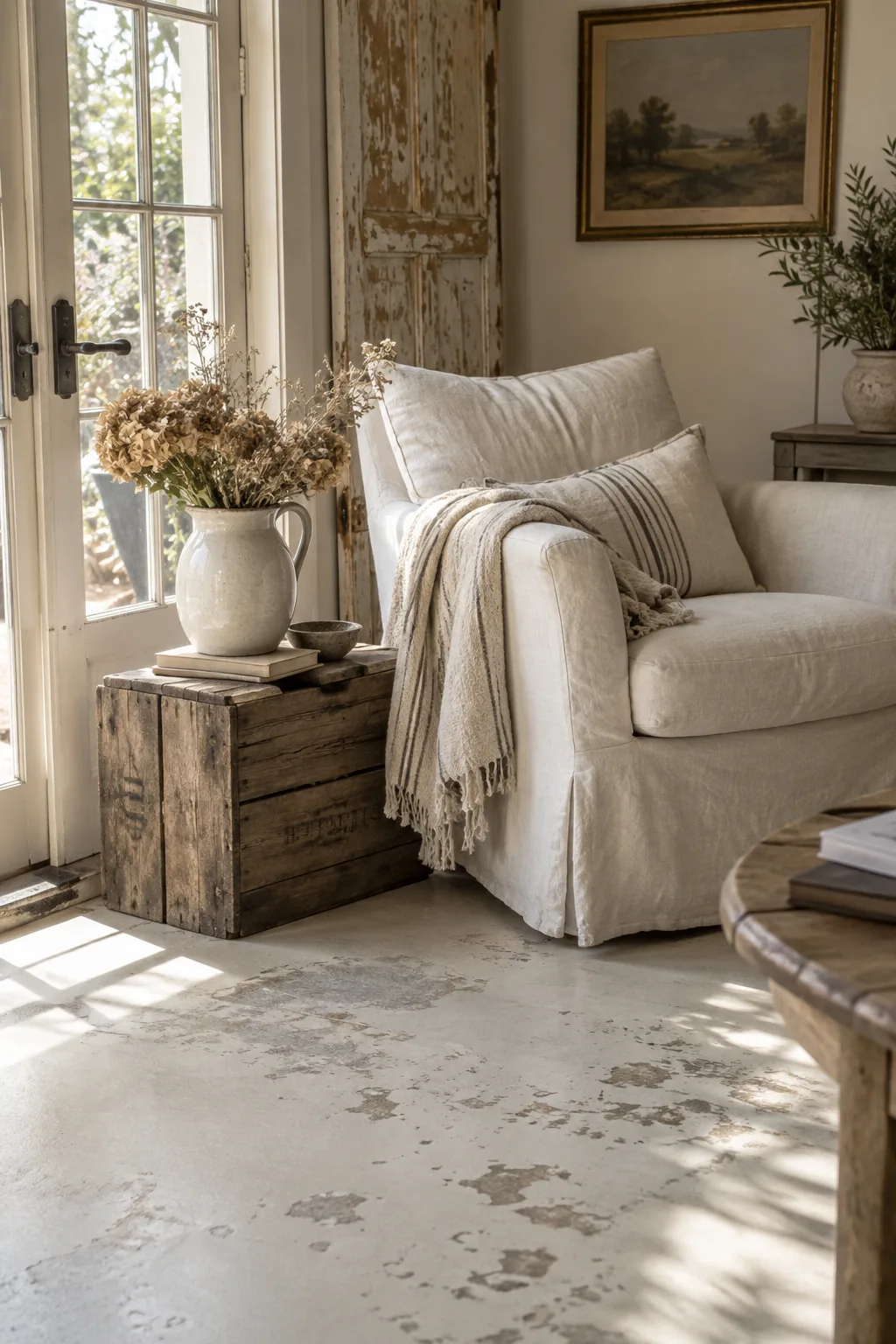
A scuffed, weathered floor looks like it belongs in a century-old French farmhouse. You achieve this by painting a solid base color and then lightly sanding random patches to reveal the raw concrete underneath. Sealing it with a matte clear coat locks in that beautiful distressed vintage patina.
Why it works: The intentional scuffs hide future scratches perfectly in high-traffic zones.
11. Bordered Hallway Runner
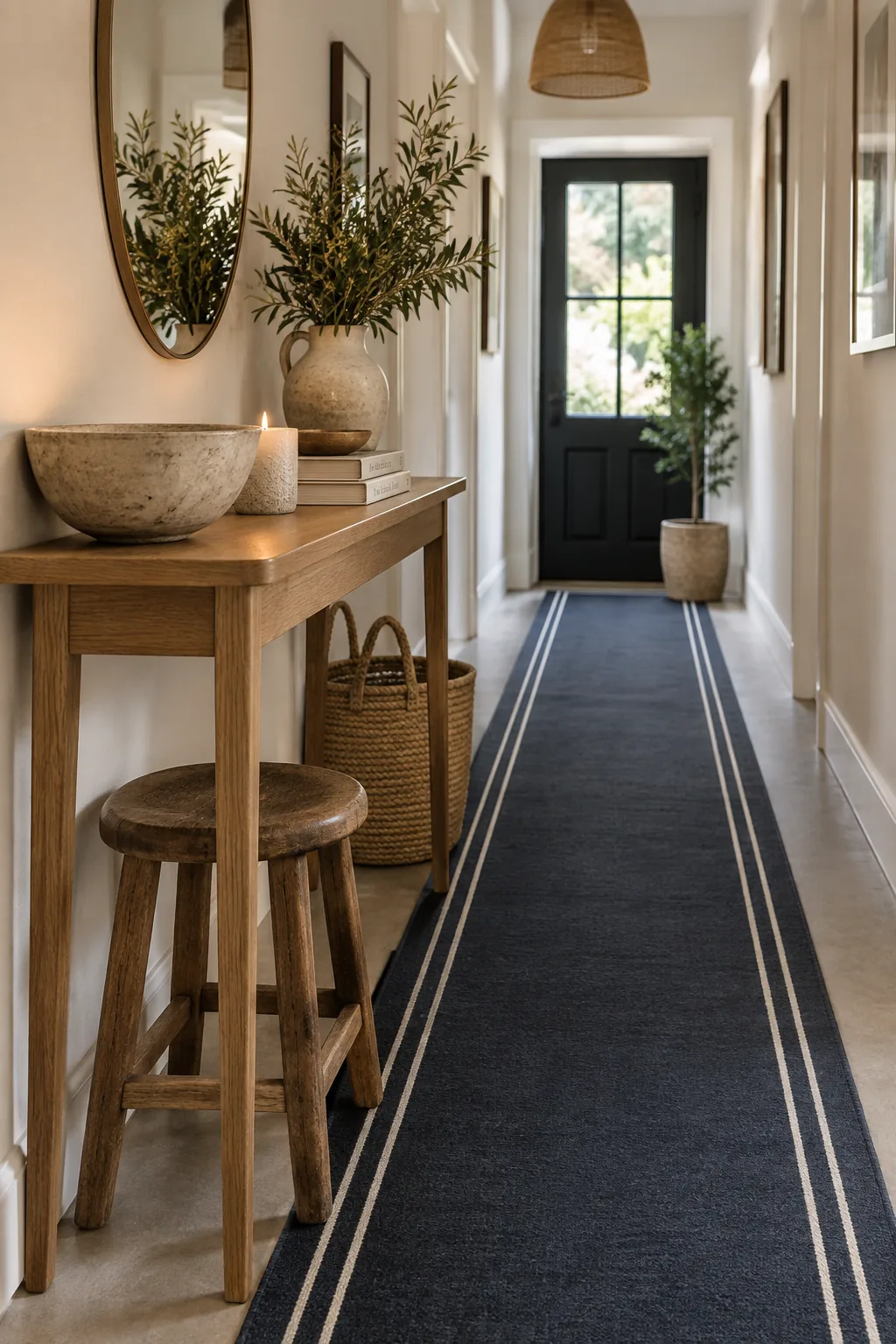
Measure your hallway width and leave a six-inch unpainted border on both sides. Rolling a solid strip of navy blue paint down the center creates a permanent runner that never slips or bunches up. You can even add thin white pinstripes along the edges for a tailored finish.
It makes a narrow corridor feel instantly wider and much more finished.
12. Metallic Epoxy Swirls
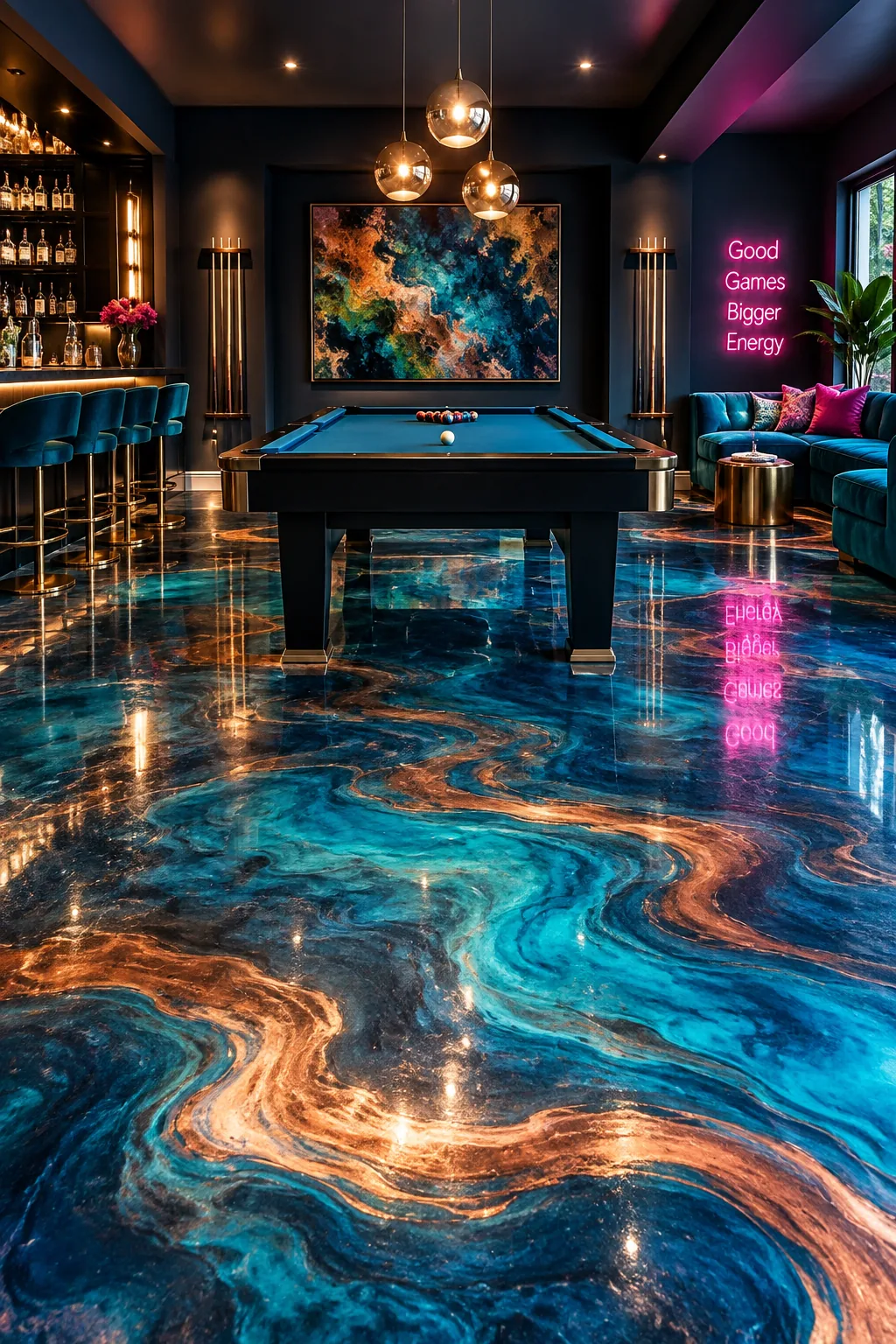
Standard flat paint sometimes feels too dull for a modern game room. You can mix metallic pigments into a clear epoxy resin to create a floor that looks like swirling liquid marble. Pouring two different metallic shades at the same time and blending them with a squeegee creates insane depth. The self-leveling formula fills in tiny dips in the slab automatically. It cures into a rock-hard, glossy surface that stands up to heavy furniture and dropped tools.
13. Painted Baseboards
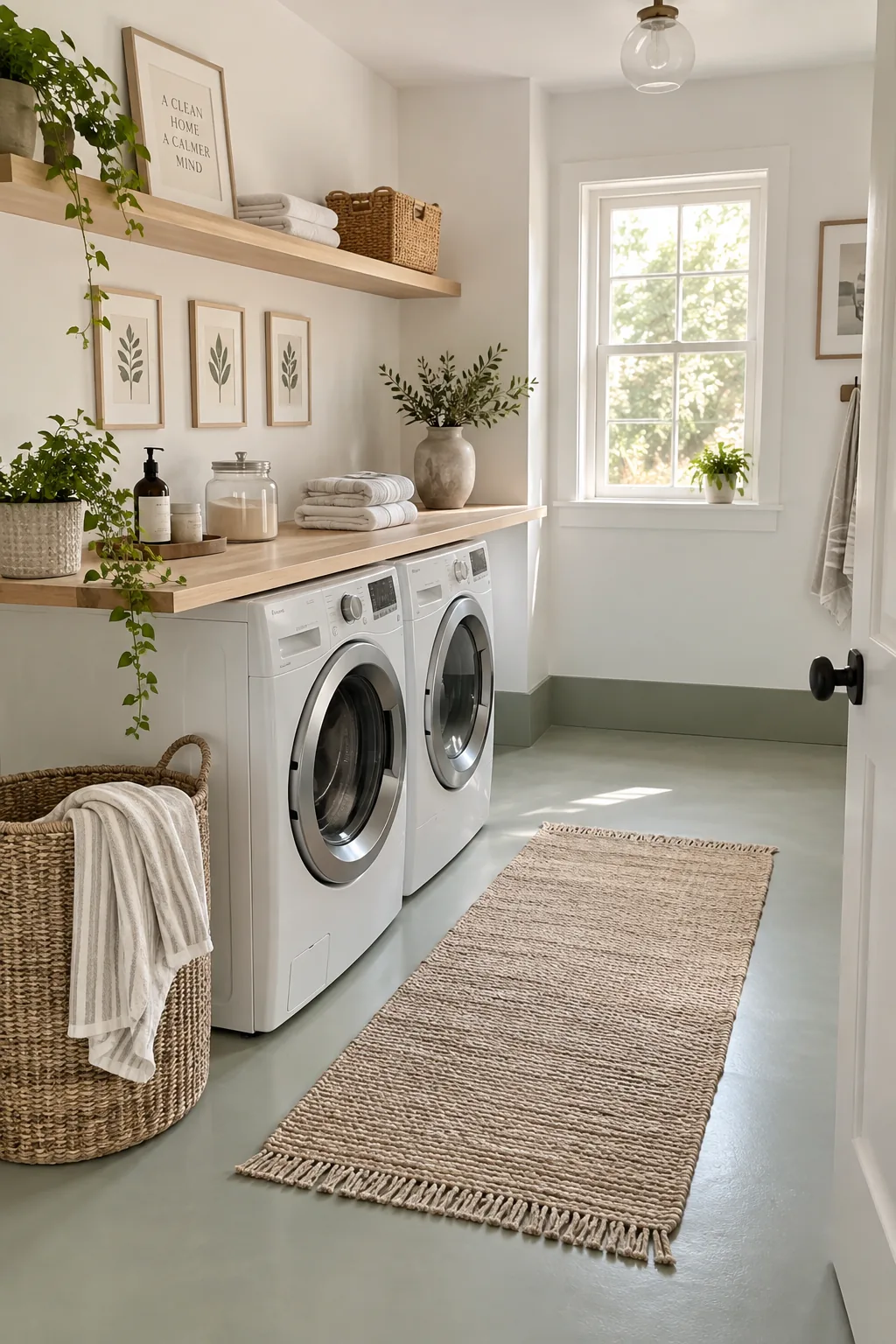
I always hated how standard wood baseboards looked against a raw concrete floor. If you carry your floor paint color a few inches up the wall, it creates a seamless, waterproof basin effect. This trick is incredibly useful in laundry rooms where minor water spills happen frequently.
Just use a crisp tape line to keep the top edge perfectly straight.
14. Splatter Paint Art
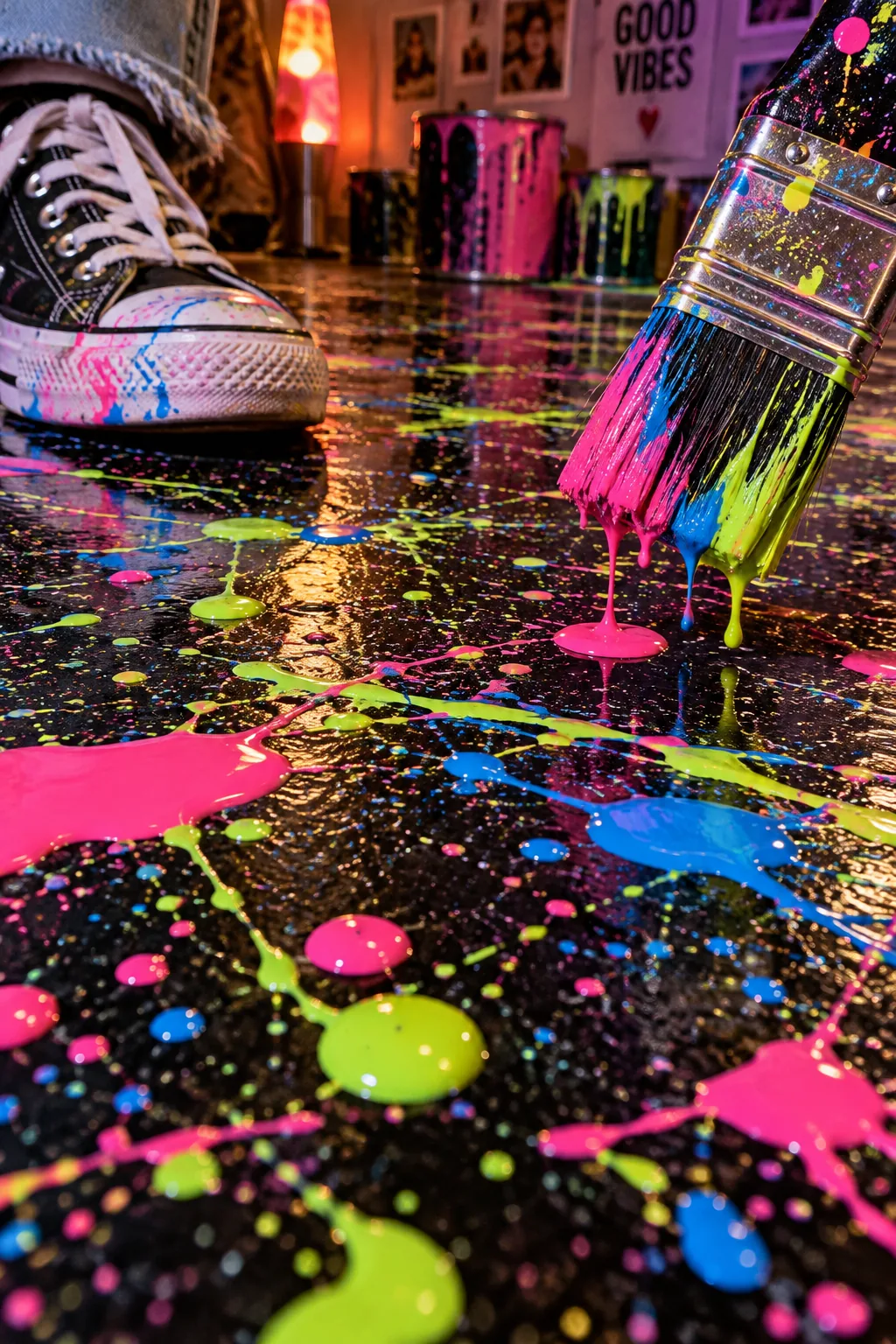
Randomly flicking paint from a brush requires zero precision or artistic skill. Starting with a stark black floor and adding neon splatter paint creates a fun, retro vibe for a teenager's hangout space. You just dip a stiff brush into different colors and snap your wrist to fling the paint across the room.
A heavy-duty clear coat is essential to keep the raised paint drops from chipping off.
Why it works: The chaotic pattern completely camouflages dust and small bits of debris.
15. Moody Black Gloss
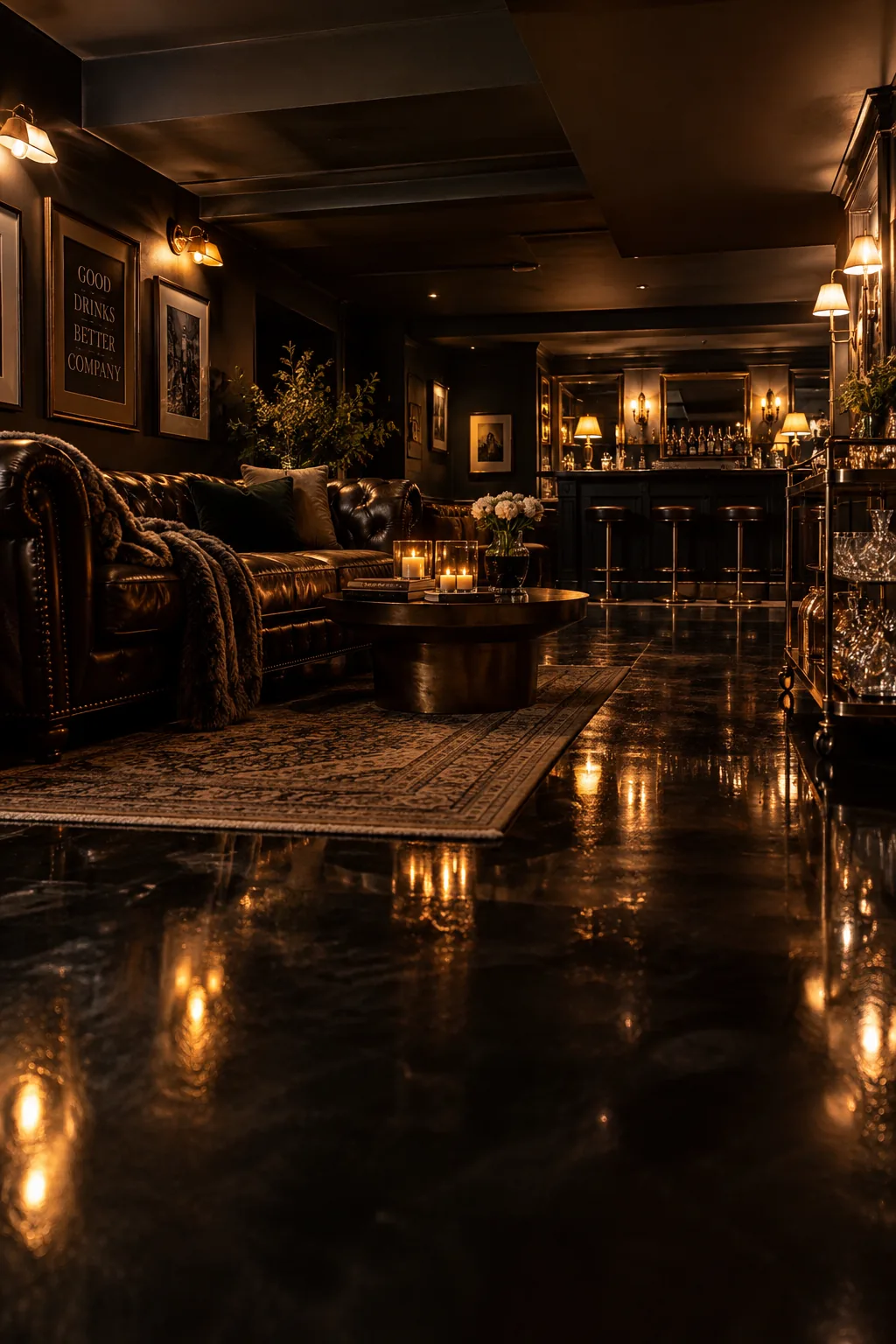
A mirror-like surface turns an ordinary basement into a sophisticated speakeasy lounge. Rolling on a high-gloss black floor paint bounces the ambient light around the room. You absolutely must prime the concrete first so the dark paint adheres evenly without soaking in. Adding a non-slip additive to the final clear coat keeps the slick surface safe to walk on in socks. The deep black color makes low basement ceilings feel surprisingly taller by grounding the space.
16. Hand-Painted Mandalas
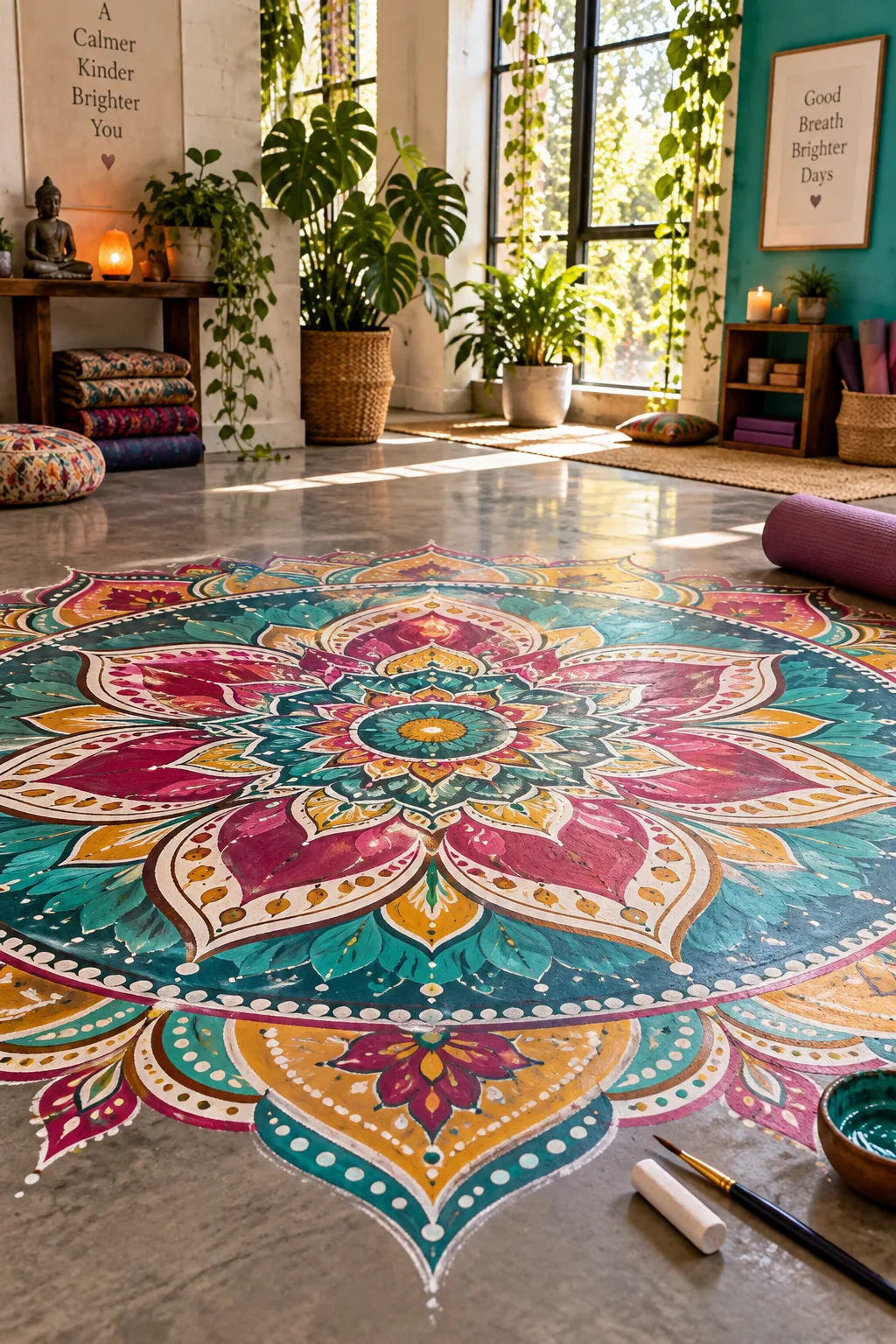
I spent a whole weekend freehanding a design on my patio floor.
You can use a large circular stencil to paint a massive mandala floor medallion in the center of your yoga room. Using a chalk pencil lets you trace the intricate details before filling them in with a fine artist's brush. It turns a boring slab into a stunning focal point.
17. Striped Sunroom Floor
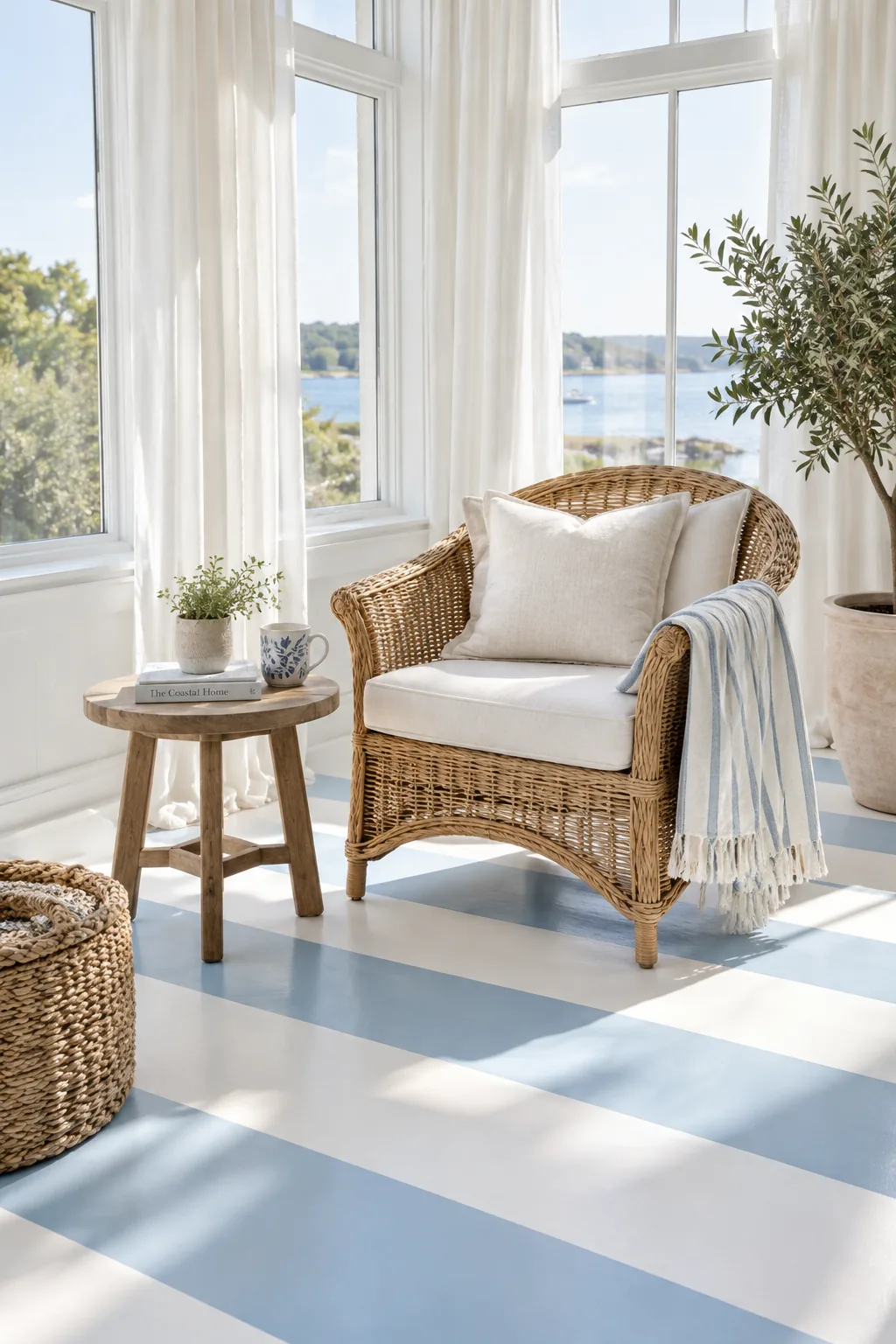
Alternating wide bands of color draws the eye outward and makes a small room feel massive. Painting thick cabana stripes across a concrete sunroom floor brings in a playful, coastal energy. You just paint the entire floor white first, then tape off twelve-inch sections for your secondary color. A soft powder blue or pale yellow works beautifully for that breezy beach house aesthetic. Peeling the tape while the second coat is still slightly tacky guarantees a razor-sharp line.
18. Stenciled Faux Brick
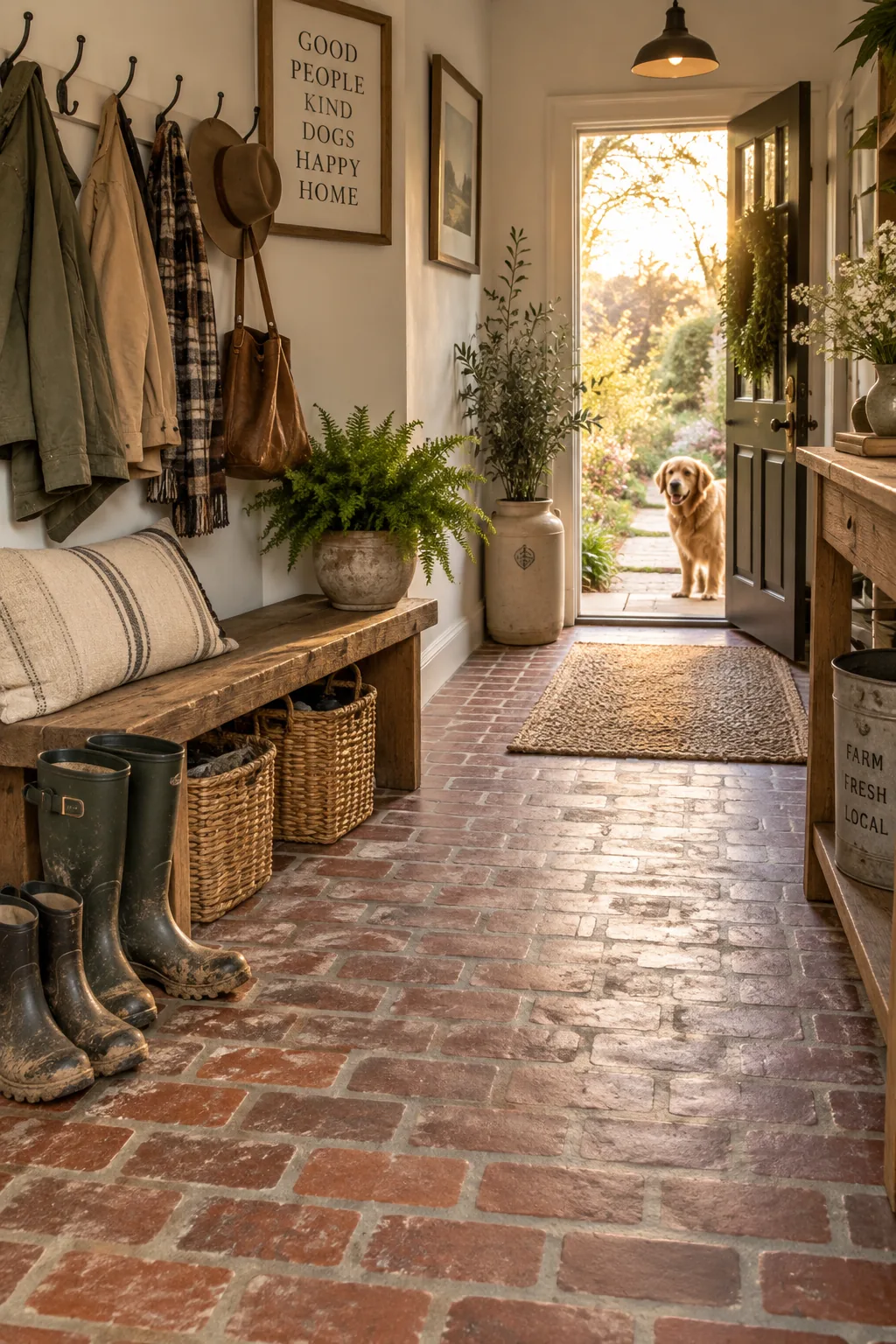
I love the look of exposed brick but hate the messy installation process. You can use a repeating wall stencil on the floor to paint a faux brick walkway right through your mudroom. Dabbing different shades of terracotta and rusty red with a sponge gives the bricks a realistic, weathered texture. Leaving the grout lines the color of the raw concrete makes the whole design look authentic. Two coats of a heavy-duty matte sealer will protect your hard work from muddy boots.