
16+ Brilliant Exposed Ceiling Basement Ideas for Your Home
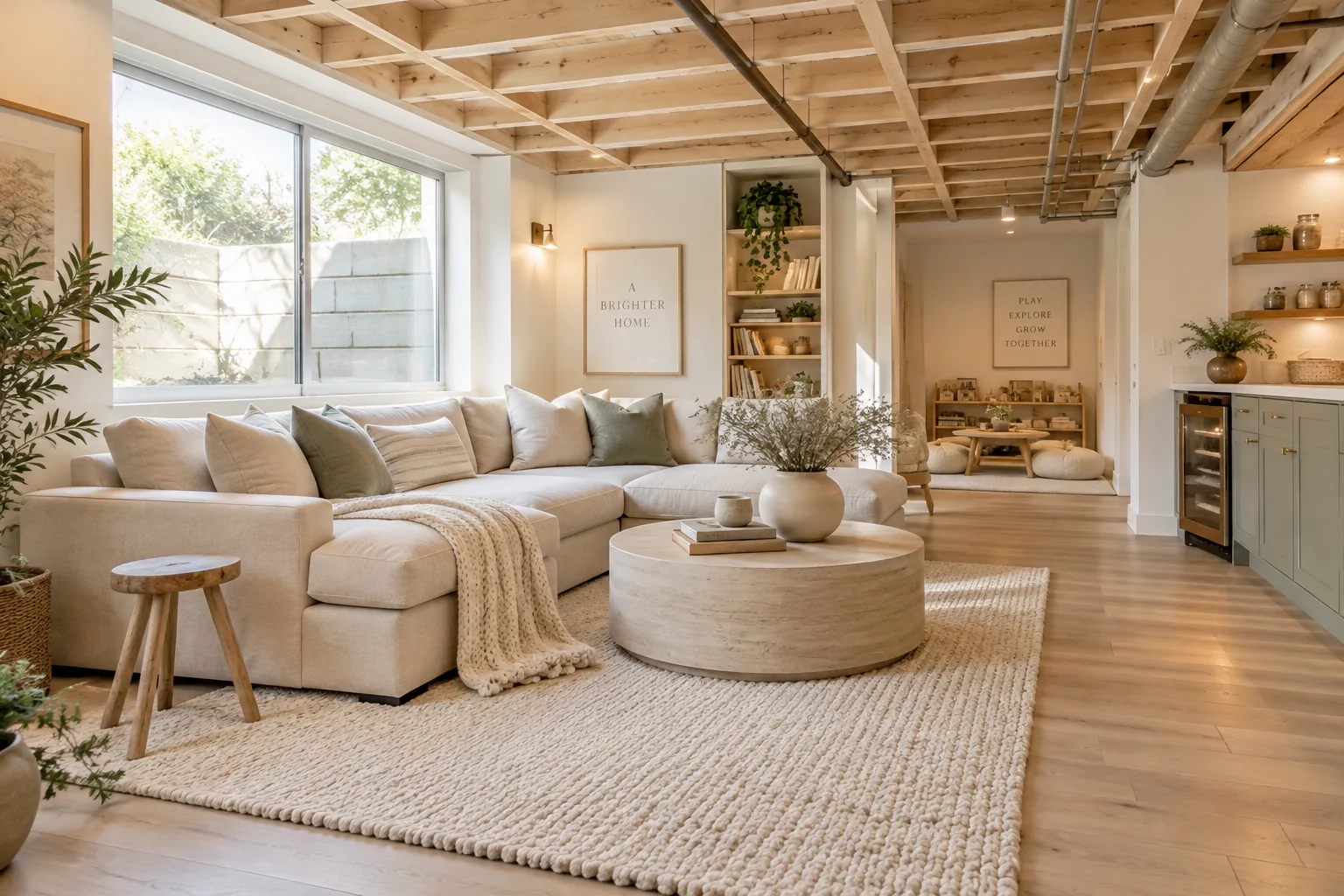
Leaving your basement ceiling exposed is the smartest way to gain precious headroom while saving thousands on drywall. I am going to show you exactly how to style those pipes and joists so they look intentional and finished.
1. Paint It Matte Black
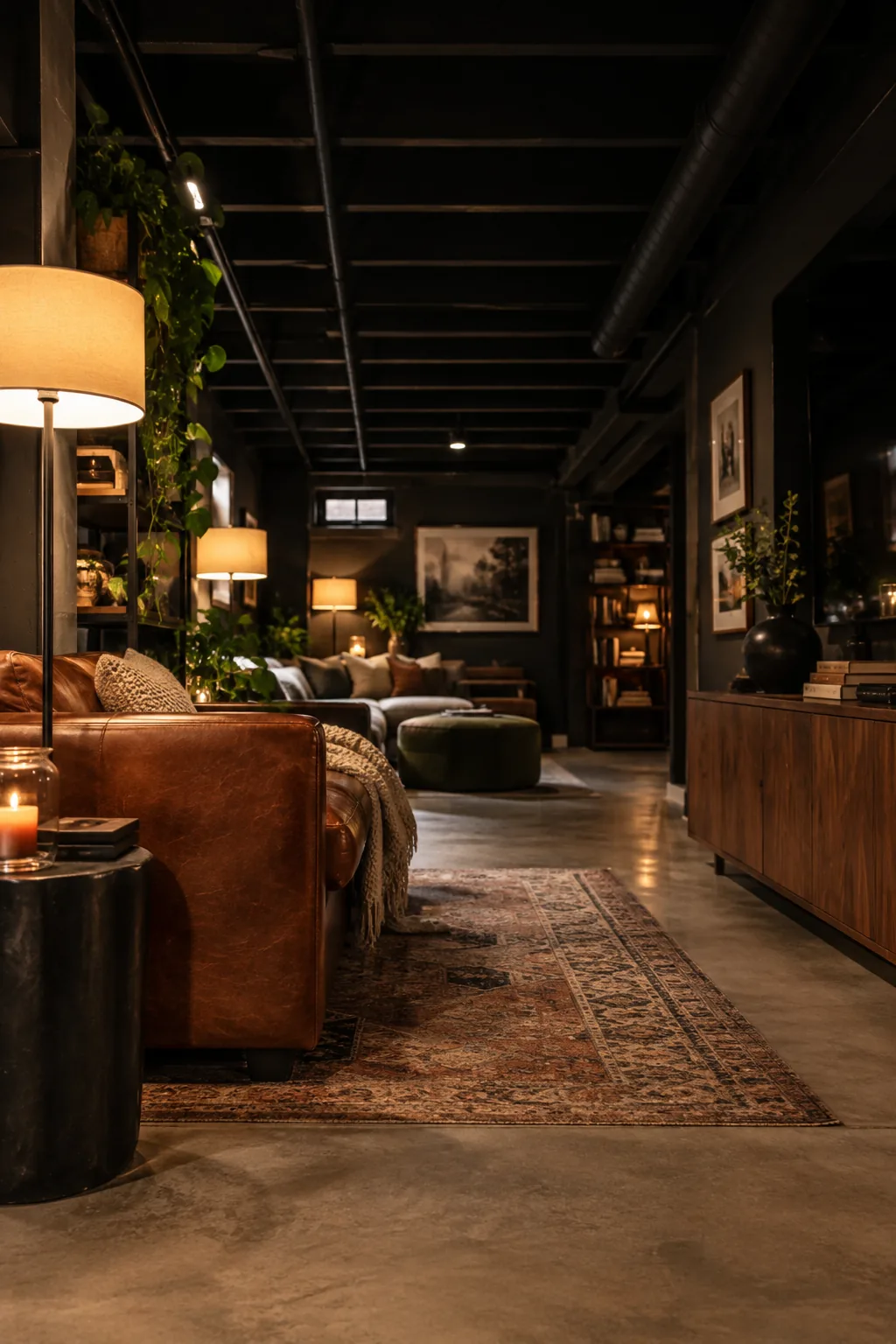
Painting the entire ceiling matte black hides about 90 percent of the visual clutter up there. It makes the PVC pipes, wires, and ductwork recede into the shadows so you stop noticing them entirely.
Just make sure you rent a professional paint sprayer to get into all those tight crevices.
Why it works: Dark colors create an illusion of endless depth, making a low ceiling feel much higher.
2. Color Drench the Room
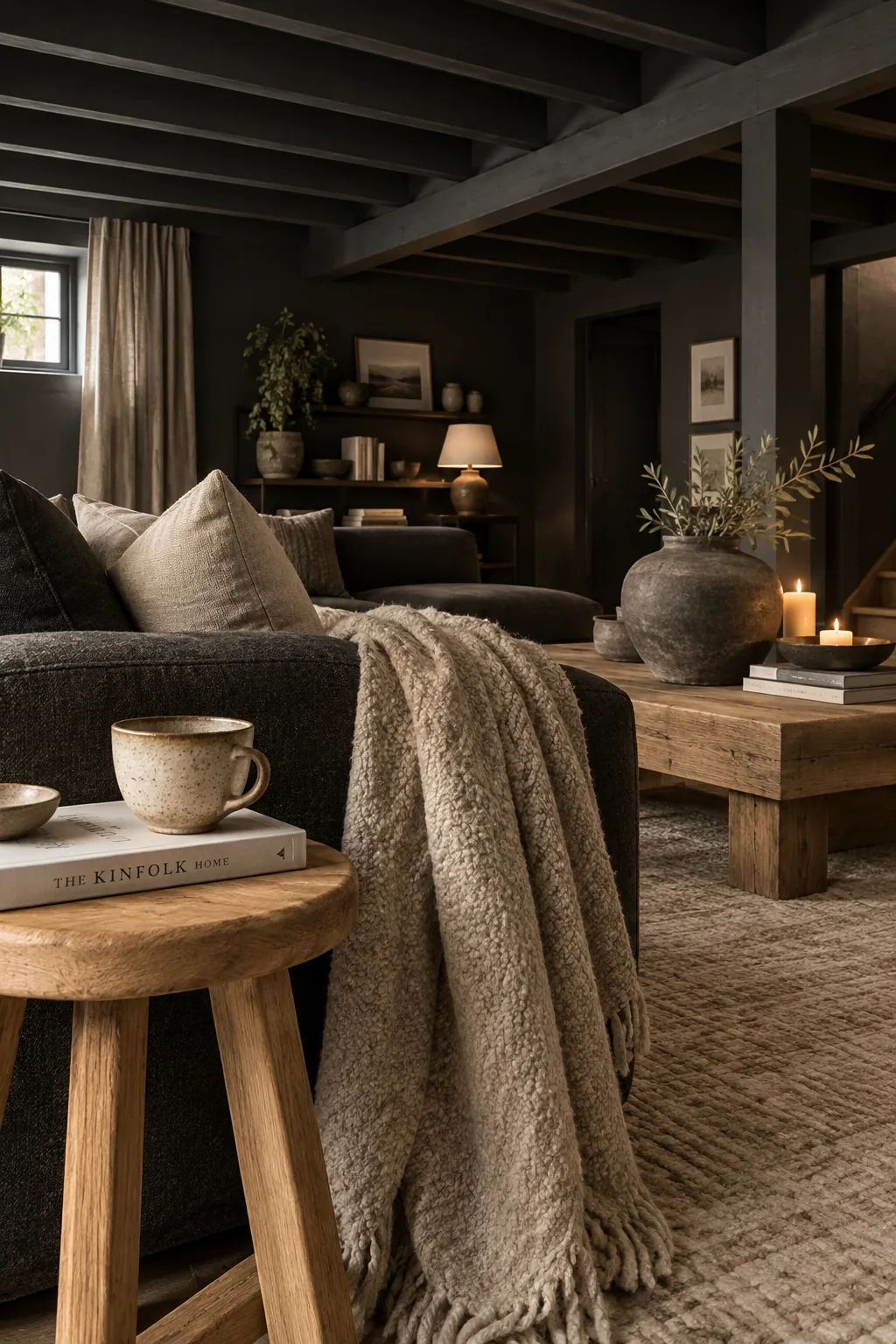
Matching your ceiling color to your walls creates a seamless envelope that feels incredibly cozy. Wrapping the room in a single shade like deep charcoal blurs the hard lines where the wall meets the joists. The eye sweeps right past the unfinished elements.
It is the ultimate designer trick for making a raw space feel like a moody lounge.
3. Embrace the Raw Wood

An industrial loft aesthetic is so easy to achieve when you leave the natural wood joists completely bare. You just need to clean the wood thoroughly and let its raw texture warm up the room. To balance the heavy timber, bring in softer furnishings below. Focus on incorporating these specific elements into your design scheme.
- Plush area rugs
- Velvet seating
- Flowing floor-to-ceiling curtains
4. Install Track Lighting
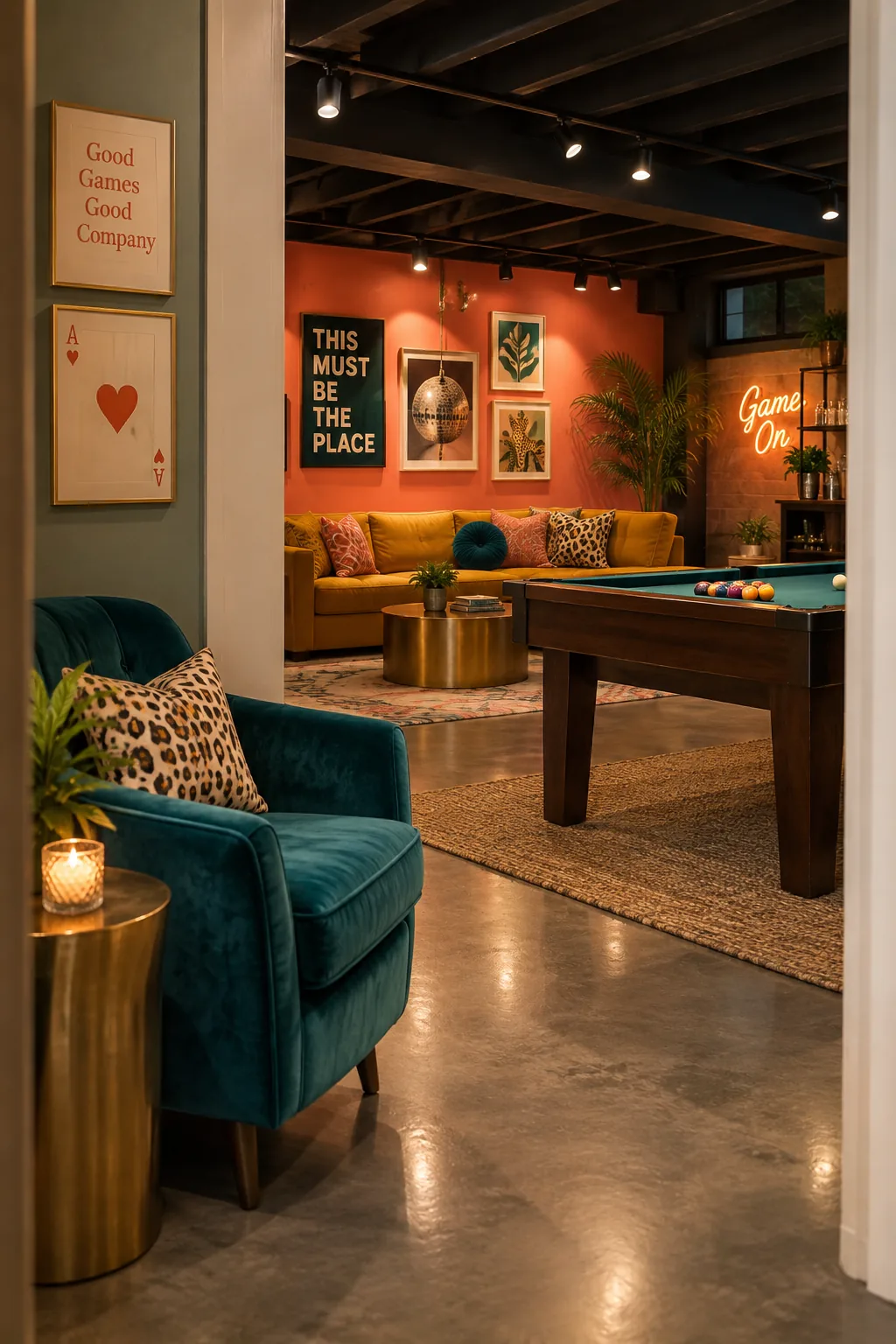
Install track lighting directly onto the sides of the joists. This keeps the fixtures tucked away while letting you aim the light exactly where you need it.
Black tracks blend beautifully into dark ceilings. White tracks pop against bare wood.
It is much more flexible than hardwiring traditional recessed cans.
5. Spray It Crisp White

A bright, airy Scandinavian vibe happens instantly when you spray the entire exposed ceiling crisp white. The white paint reflects light beautifully, making a dark subterranean room feel like a sunny main floor.
Pair it with pale oak luxury vinyl plank flooring. You will completely forget you are underground.
To keep it from feeling sterile, layer in these warm accents.
- Woven rattan baskets
- Potted pothos plants
- Textured linen throw pillows
6. Wrap Columns in Rope
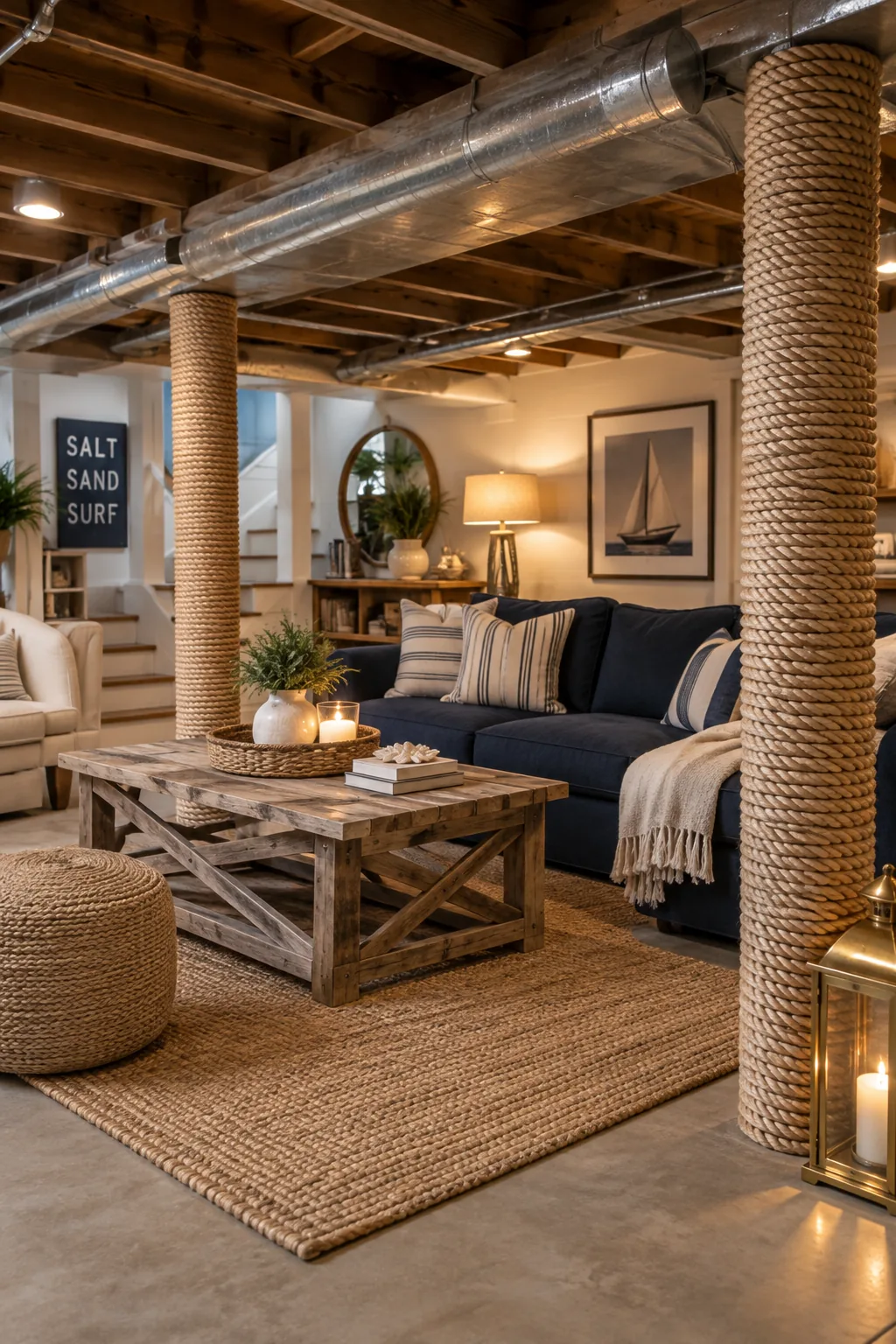
Wrap your ugly metal support columns in thick sisal rope to turn an eyesore into a nautical feature. You literally just apply heavy-duty construction adhesive and coil the rope tightly from the floor to the exposed ceiling joists. It takes a weekend but completely changes the texture of the room. The thick rope brings a natural, tactile element that contrasts perfectly with the harsh metal ductwork above.
Why it works: Adding organic textures breaks up the cold, rigid lines typical of unfinished basements.
7. Drop Pendant Lights
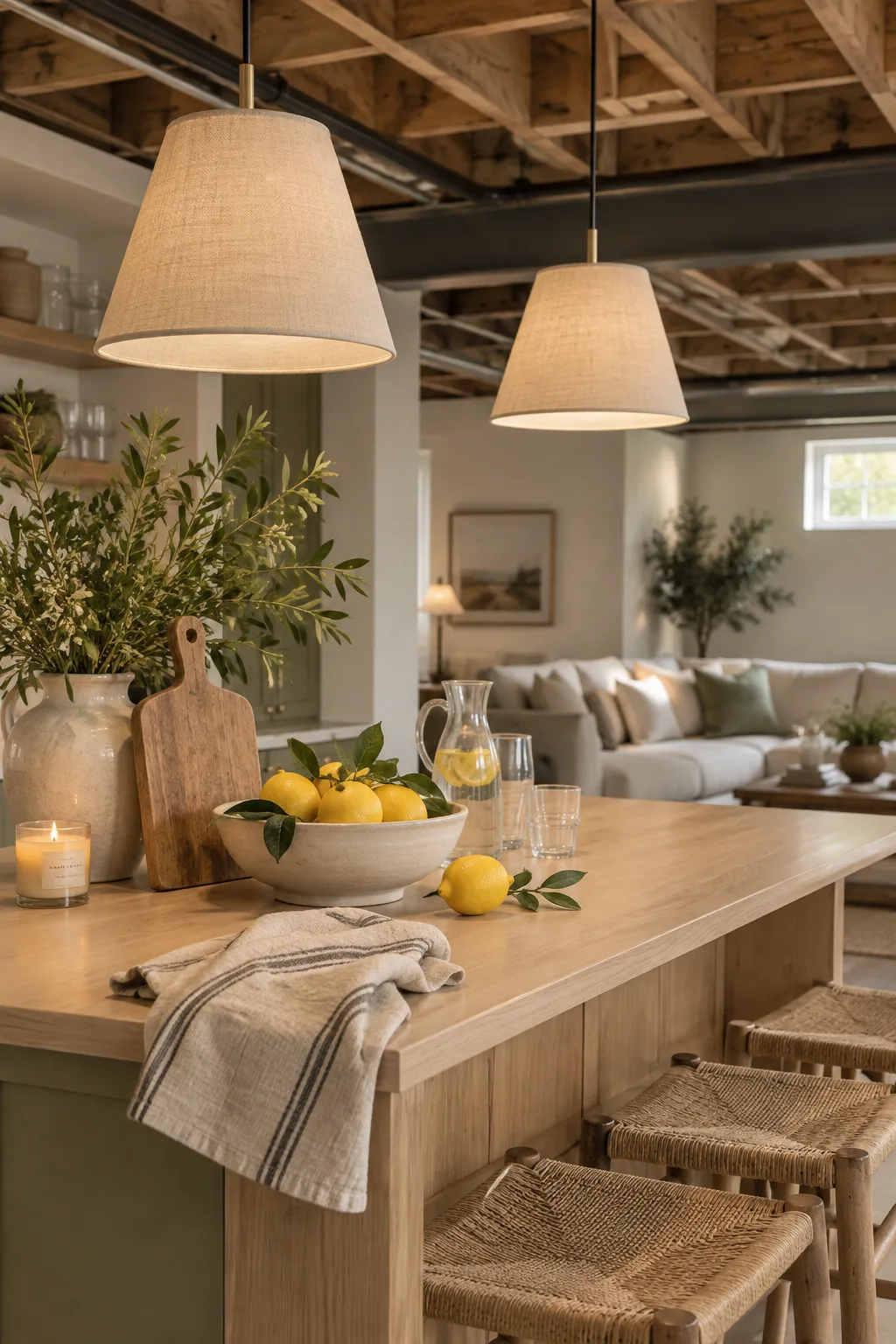
Dropping pendant lights 12 to 18 inches below the joists establishes a visual ceiling plane. People naturally perceive the bottom of the light fixtures as the actual ceiling height. Hanging them over a pool table or a kitchen island anchors the space. It is a brilliant way to make the unfinished void above feel totally intentional.
8. Add Acoustic Foam
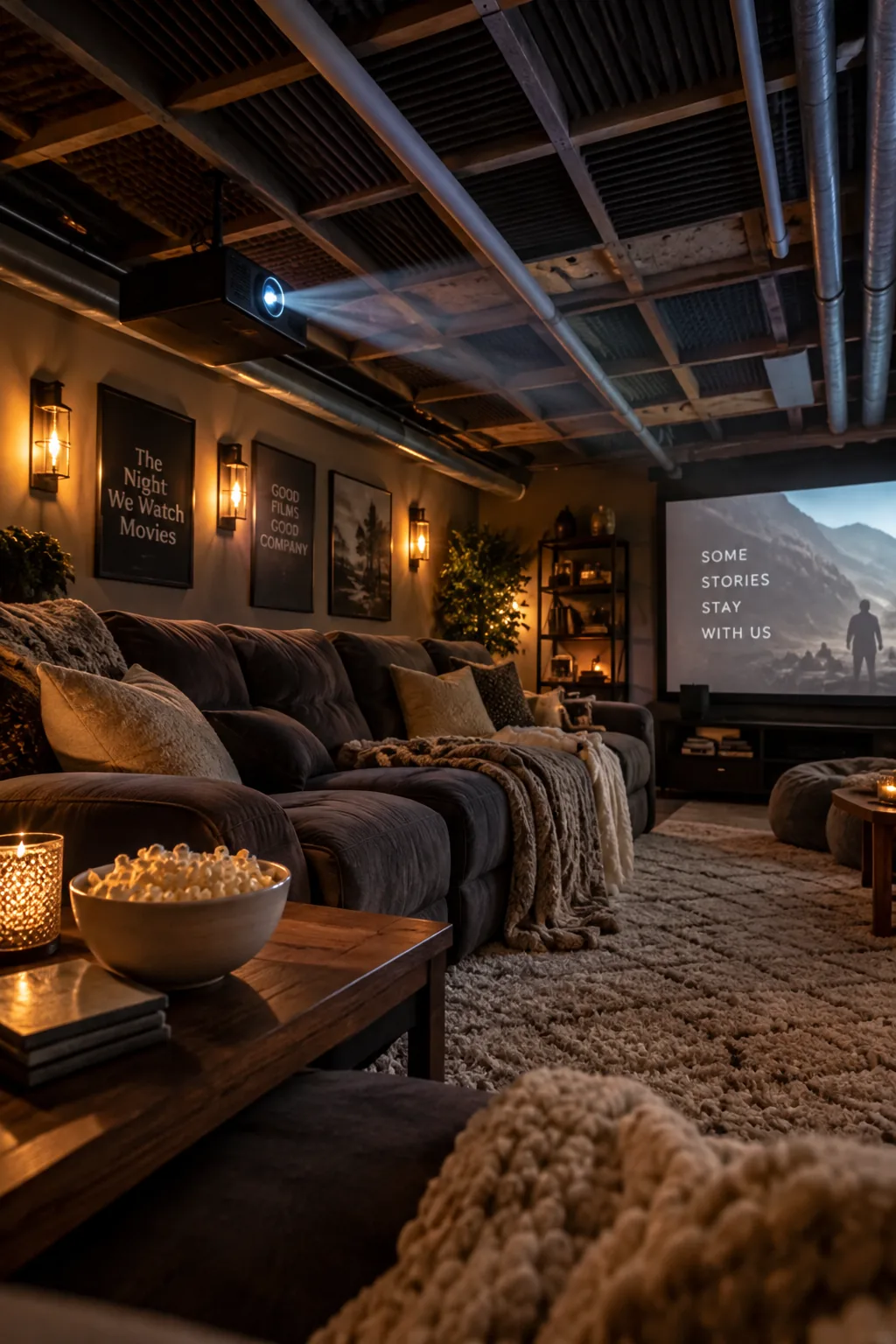
I always struggle with the acoustics in unfinished basements until I add sound-absorbing panels between the joists. You can cut rigid acoustic foam to size and wedge it right against the subfloor above. It stops the echo dead in its tracks. Plus, it prevents your movie night surround sound from vibrating the kitchen plates upstairs.
9. Whitewash the Wood
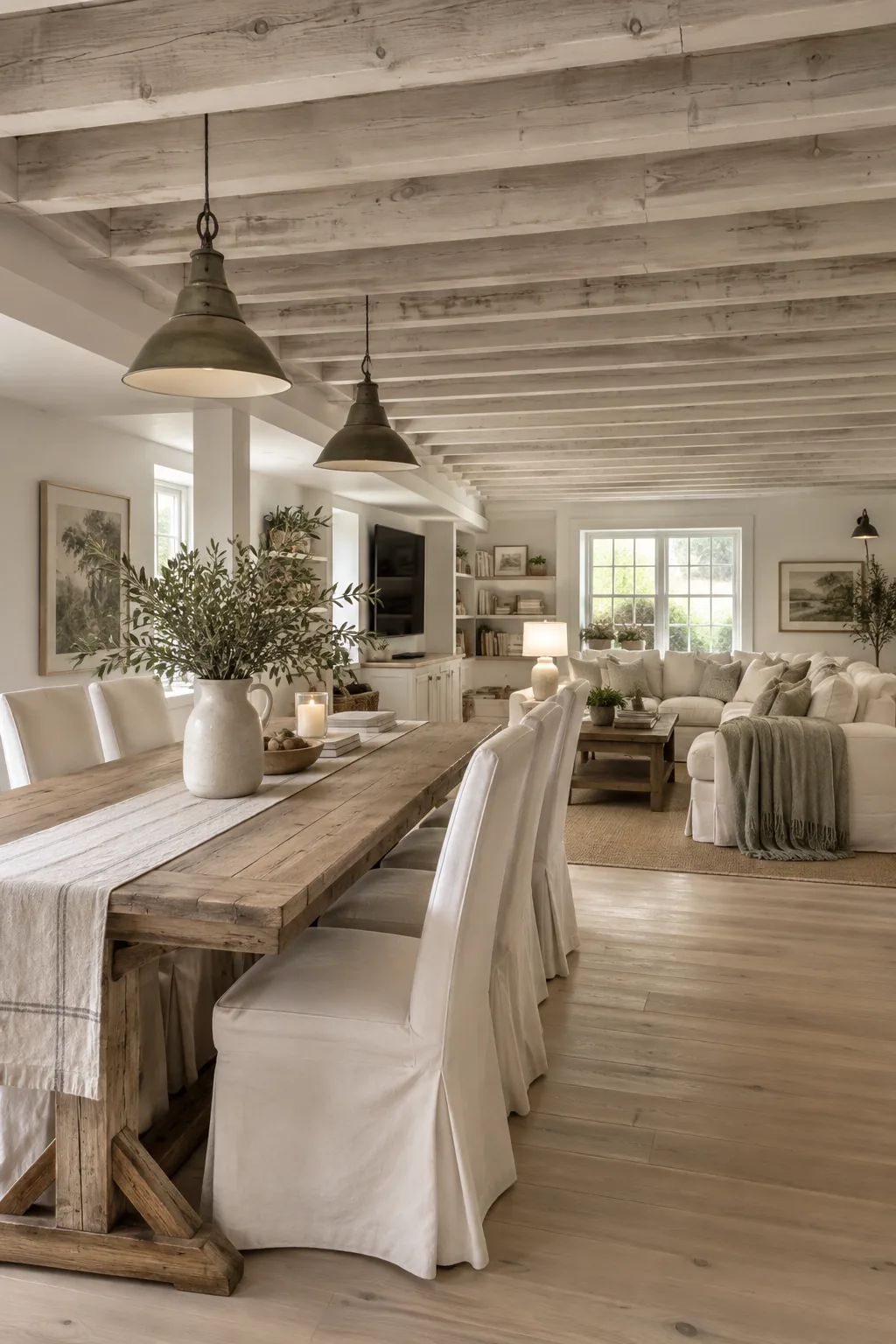
A modern farmhouse feel emerges when you whitewash rough-sawn ceiling joists instead of painting them solid. The watered-down paint lets the wood grain peek through while still brightening the room. It feels rustic but incredibly clean.
Try a ratio of half water and half flat white paint for the perfect translucent finish.
Why it works: Whitewashing reduces the heavy, oppressive feeling of raw lumber without erasing its natural charm.
10. Highlight the Ductwork
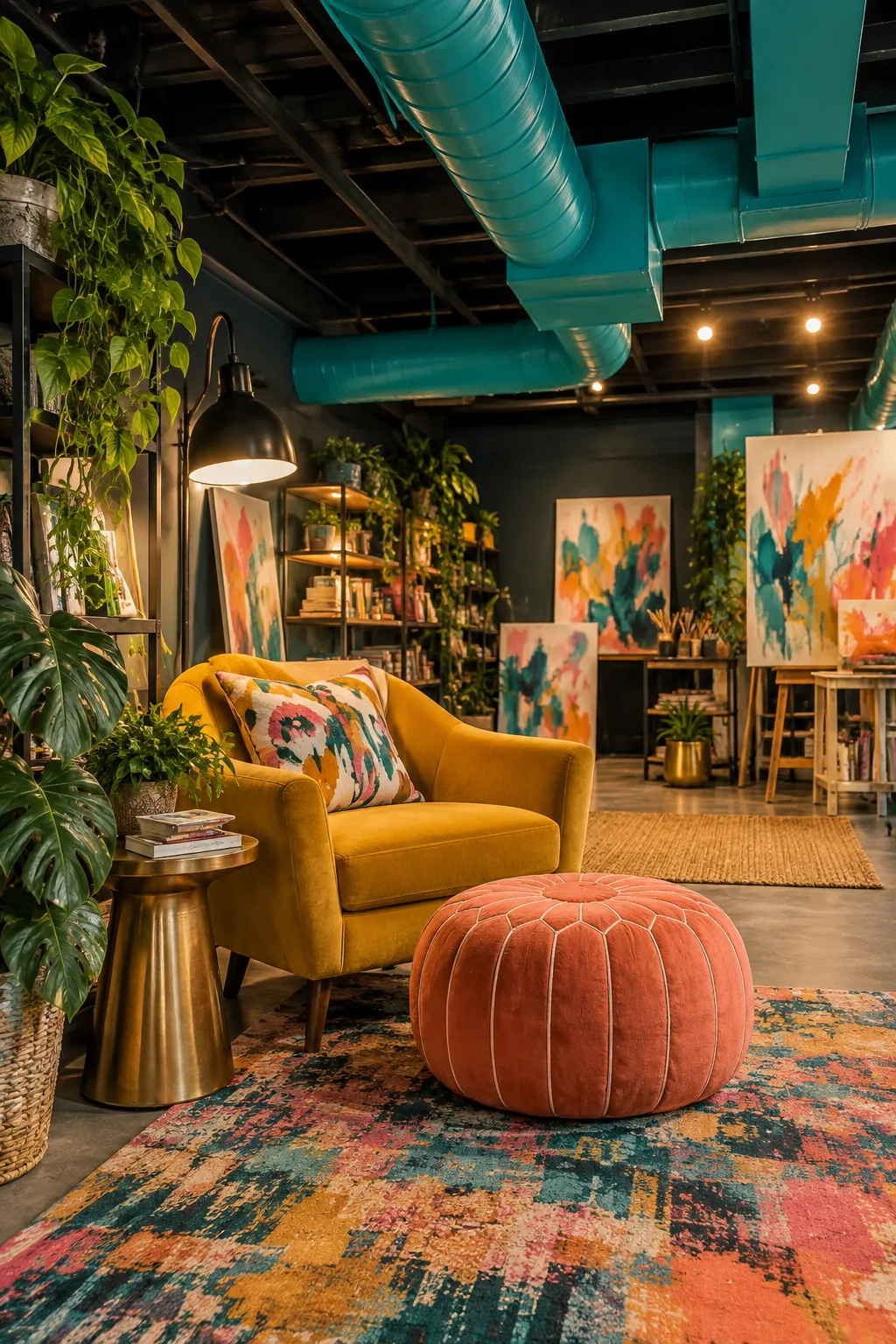
Paint your HVAC ducts a bold accent color to make them a structural focal point. Instead of trying to hide massive silver tubes, coat them in a vibrant teal or a rich mustard yellow. It gives the basement an energetic, playful gallery vibe. You just need to use a primer specifically designed for galvanized metal first.
Why it works: Highlighting architectural flaws with bold color flips them into deliberate design statements.
11. Use Metal Conduit
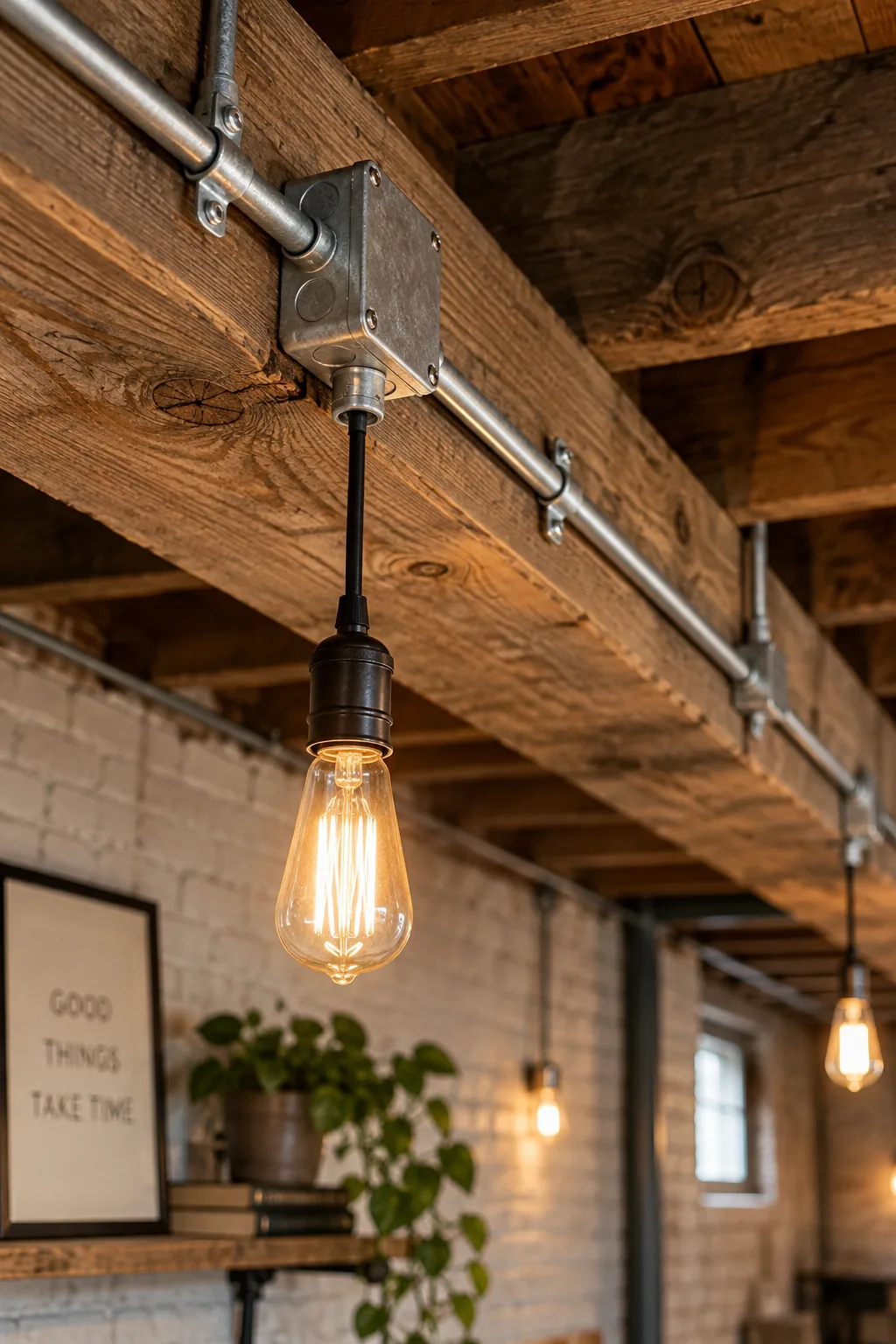
Run your electrical wires through galvanized steel conduit rather than leaving loose cables stapled to the wood. It looks incredibly polished and leans hard into that vintage factory aesthetic. You can leave the conduit raw silver or paint it black to match the joists.
Why it works: Rigid metal piping turns messy, chaotic wiring into clean, geometric lines.
12. Trim the Joist Edges
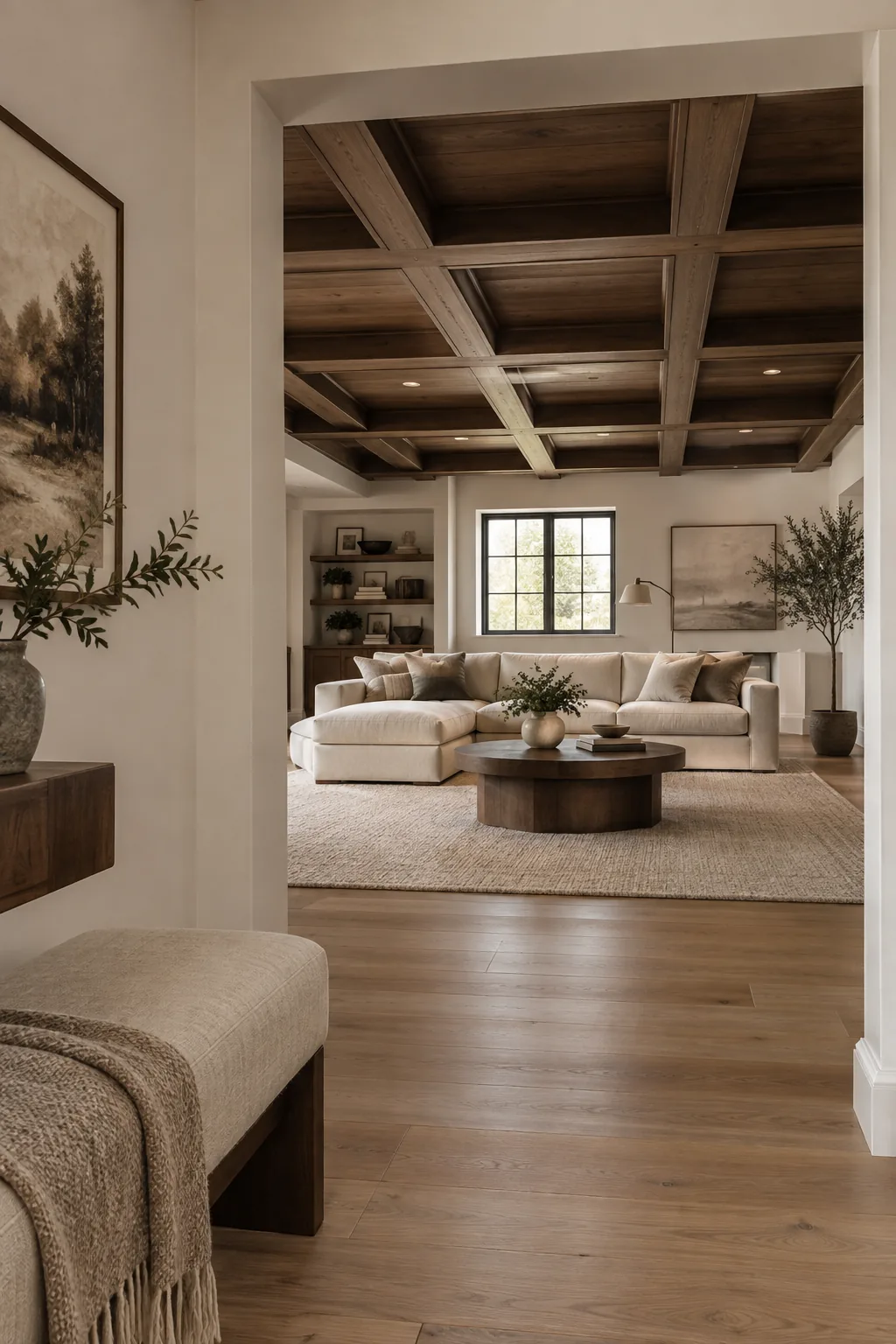
Adding a 1×4 trim board along the bottom edge of every joist creates a structured, coffered look.
It hides the messy nail holes and splintered edges found on standard construction lumber. You can stain the trim dark walnut for a rich contrast.
This tiny detail elevates the whole room instantly.
Why it works: Capping rough framing lumber with finished trim bridges the gap between raw construction and refined design.
13. Hang Bistro Lights
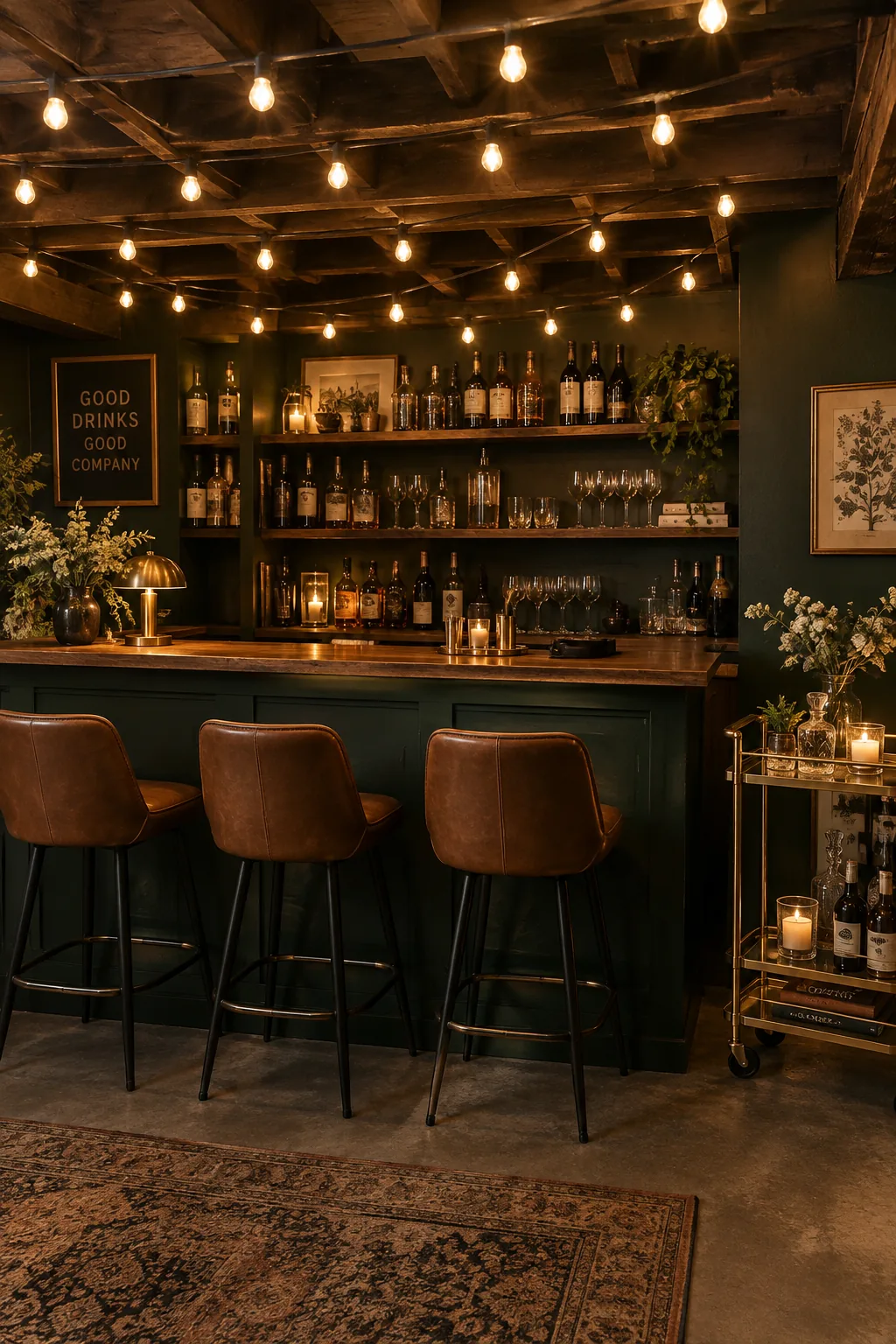
A cozy, speakeasy atmosphere is guaranteed when you string heavy-duty bistro lights back and forth across the joists. The warm, glowing bulbs create a false ceiling of light that distracts from the dark pipes above. It is surprisingly affordable and takes less than an hour to hang.
Why it works: The ambient glow draws the eye downward and creates a festive, intimate canopy.
14. Drape Fabric Panels
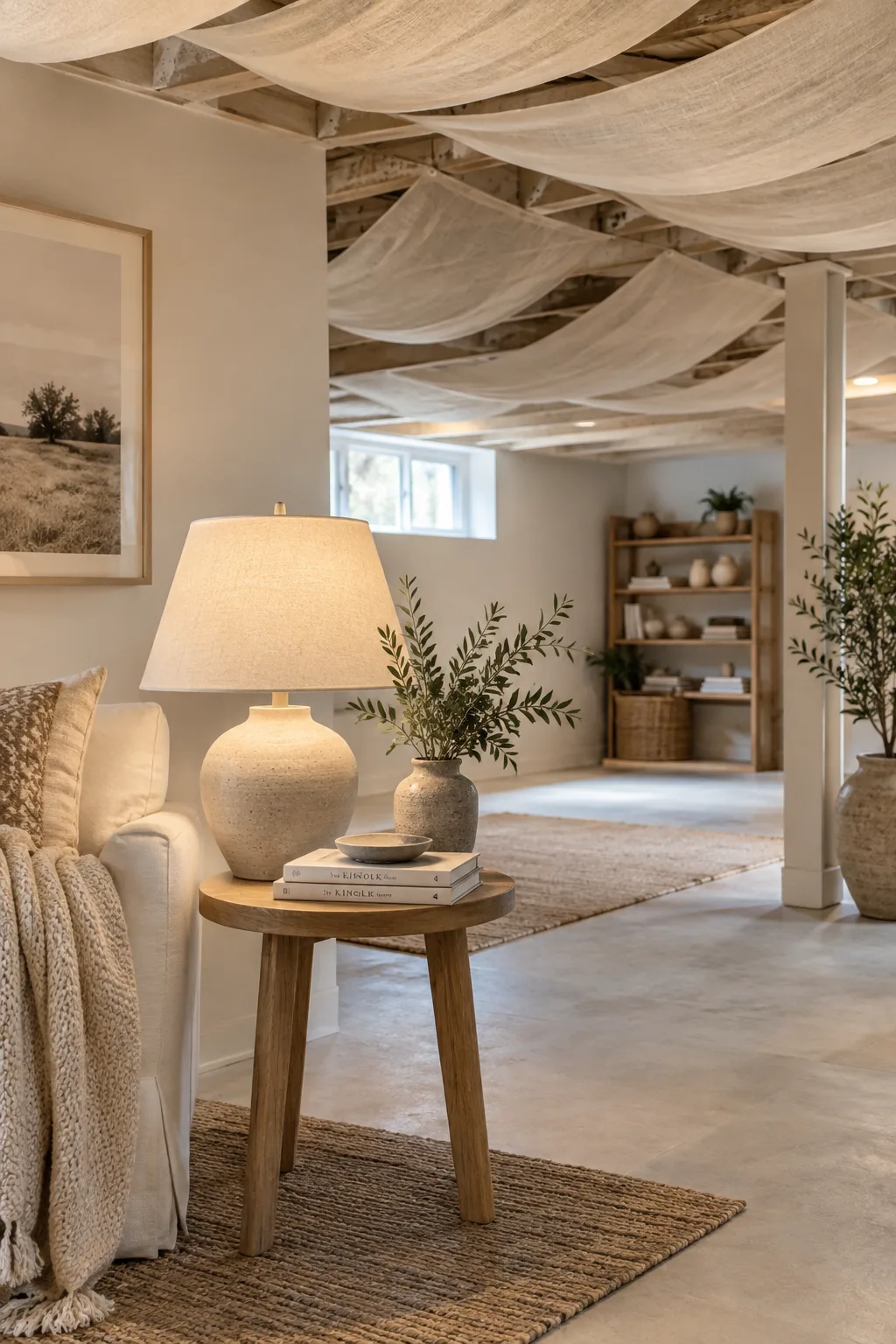
Hang lightweight fabric panels between the joists to soften the hard angles of the ceiling.
You can staple inexpensive muslin or canvas loosely so it drapes slightly in the middle. It hides the ugliest wires while still allowing easy access for repairs.
Use these fabrics for the best draping effect.
- Unbleached cotton muslin
- Lightweight linen blends
- Sheer outdoor drapery panels
15. Polish the Copper

Copper plumbing pipes actually look beautiful when you polish them and let them shine against a dark painted ceiling. Leaving those metallic accents exposed adds a touch of steampunk elegance without costing you a dime in materials.
16. Create a Perimeter Gap
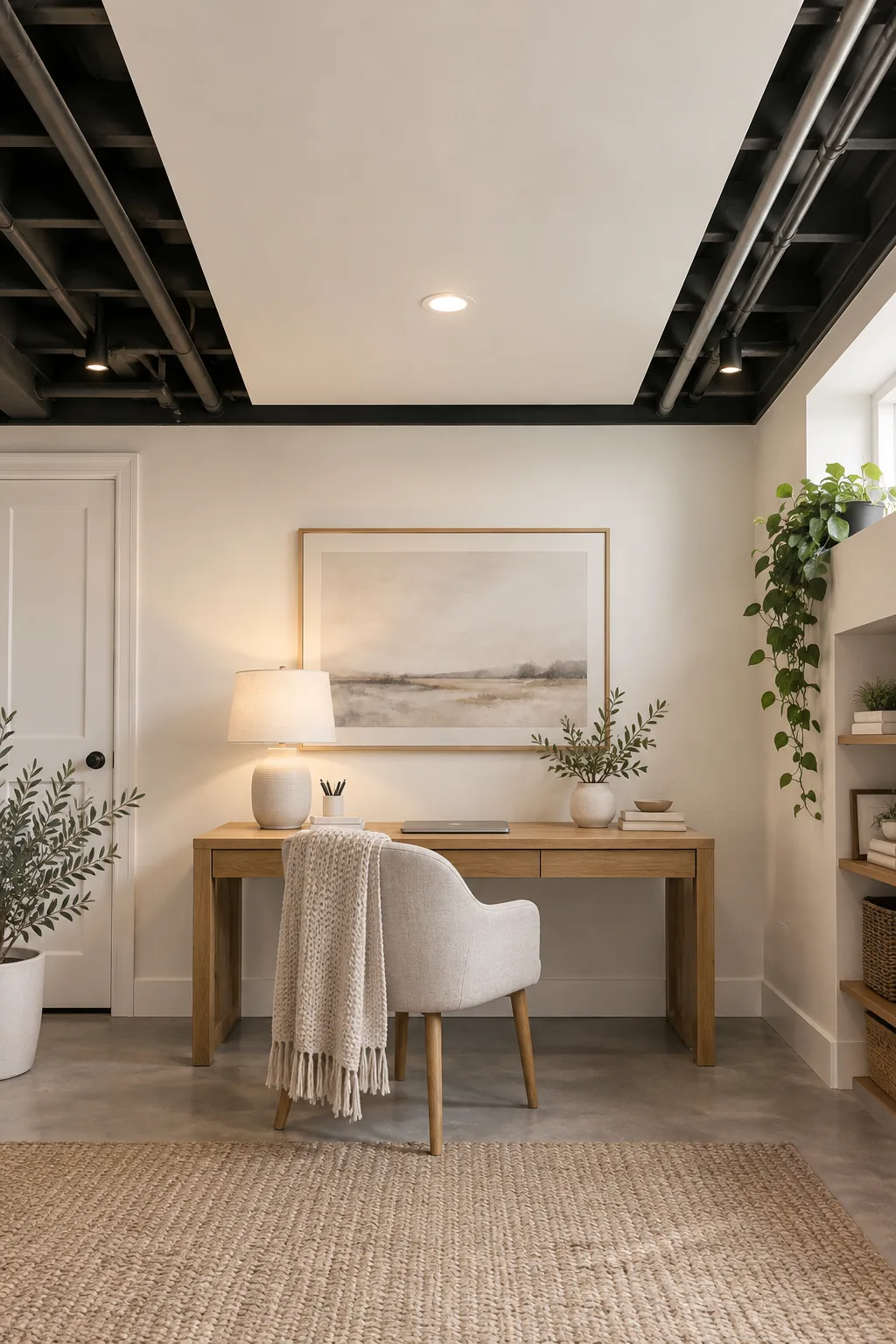
Leaving a 6-inch gap around the perimeter of a partial drywall ceiling gives you the best of both worlds. You get a clean, finished ceiling in the center of the room but keep access to the pipes running along the edges. Paint the exposed perimeter gap black to create a cool floating ceiling effect. It is a highly practical compromise for basements with low clearance.
17. Insert Corrugated Metal

Using corrugated metal sheets as decorative inserts between the wooden joists adds incredible texture. The wavy metal catches the light from your lamps and makes a standard basement feel like a trendy downtown restaurant.