
Guide to Installing a Deck Sun Shade Without Center Poles
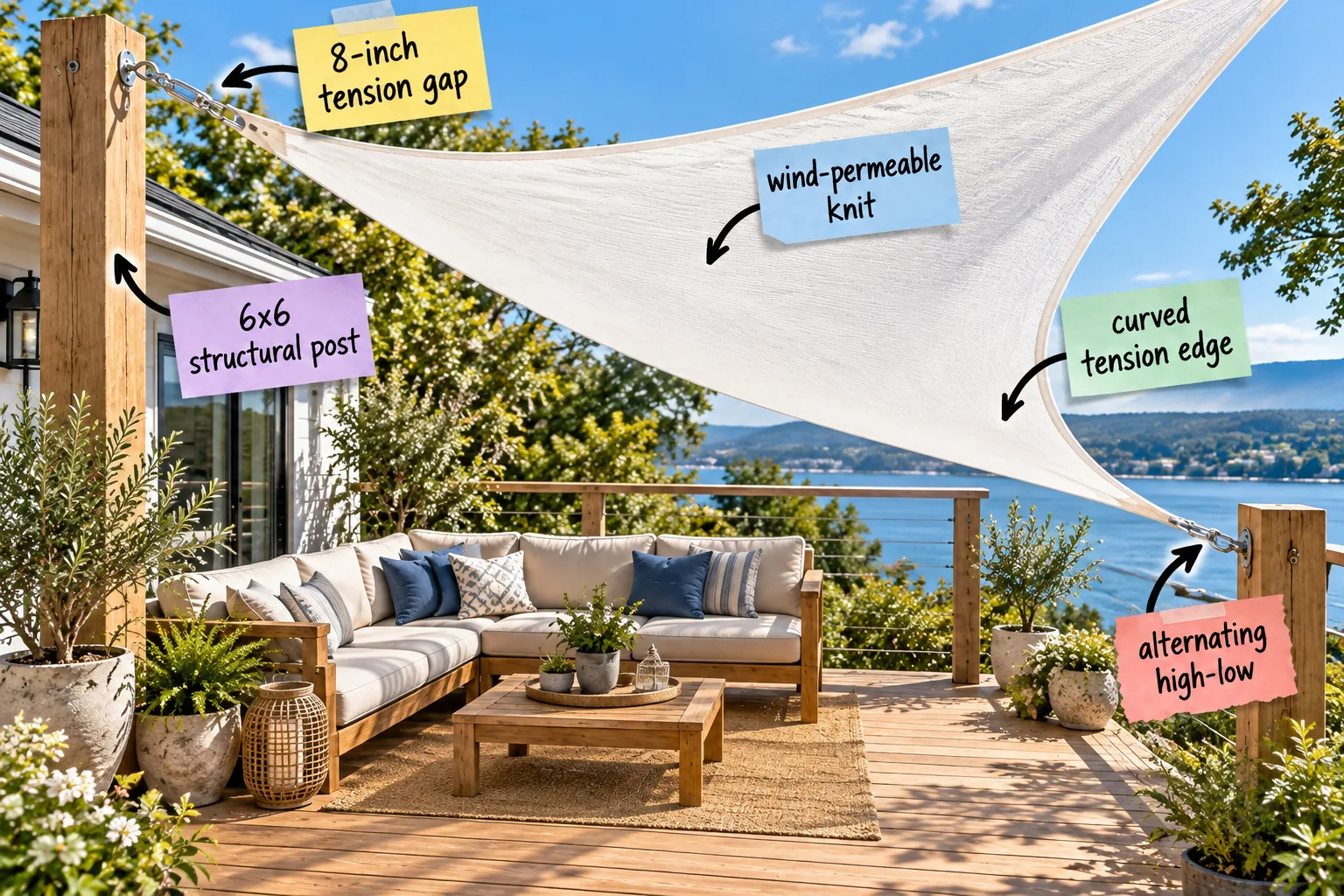
Learning how to hang a deck sun shade without center poles means you can finally enjoy a taut, wind-resistant canopy over your patio. I am sharing my complete hardware and spacing guide so you can install a beautiful shade sail that will never sag.
Planning a Layout Without Center Poles
Keeping the deck surface completely clear of obstacles requires moving all structural support to the outer edges of your outdoor living space.
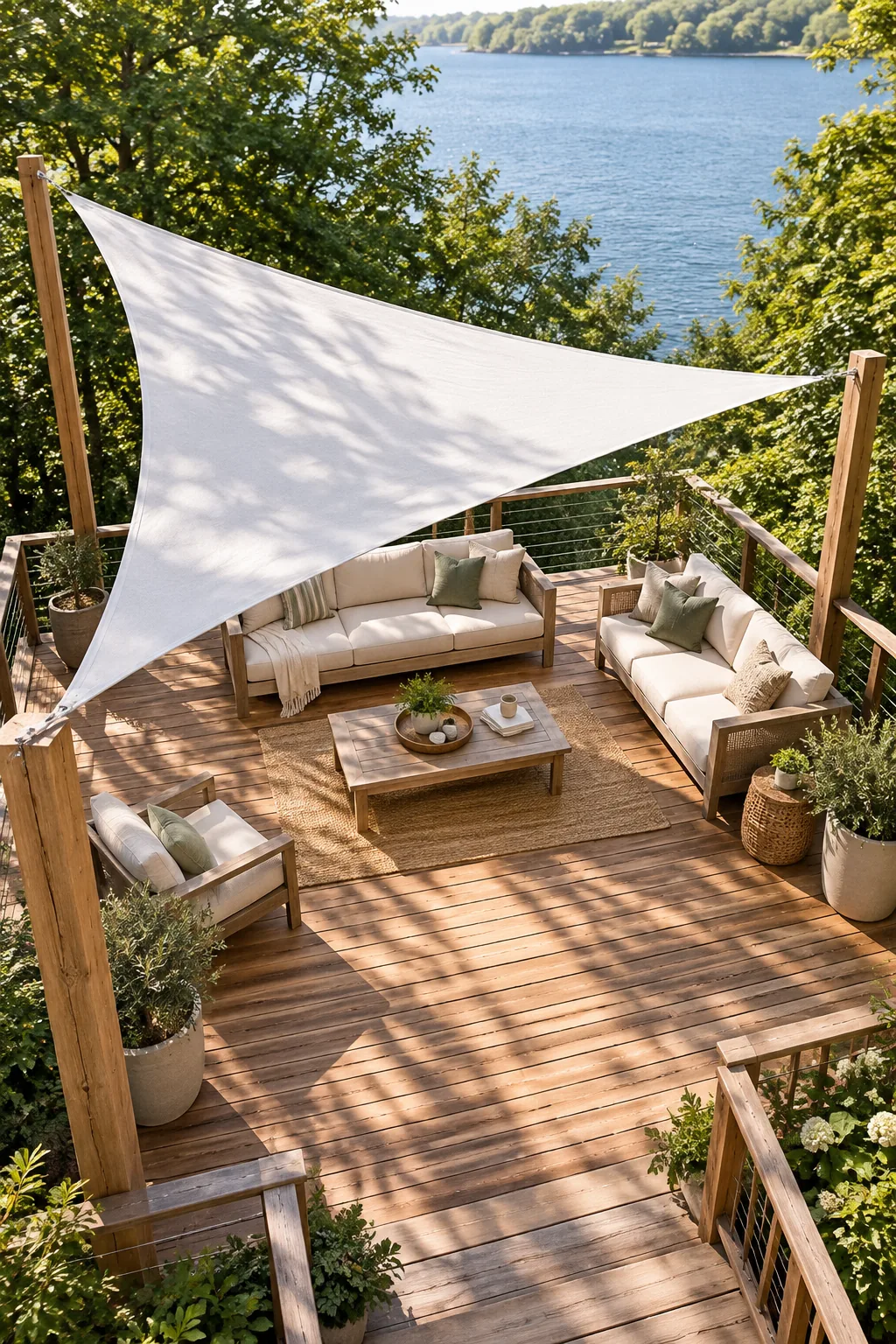
Plan to position your perimeter mounting points at least 12 inches outside the main seating and foot traffic zones to ensure the heavy tensioning hardware never becomes a hazard for your family.
The Hardware and Spacing Guide
A successful installation relies on leaving the exact correct distance between the fabric corner and the sturdy wooden mounting point.
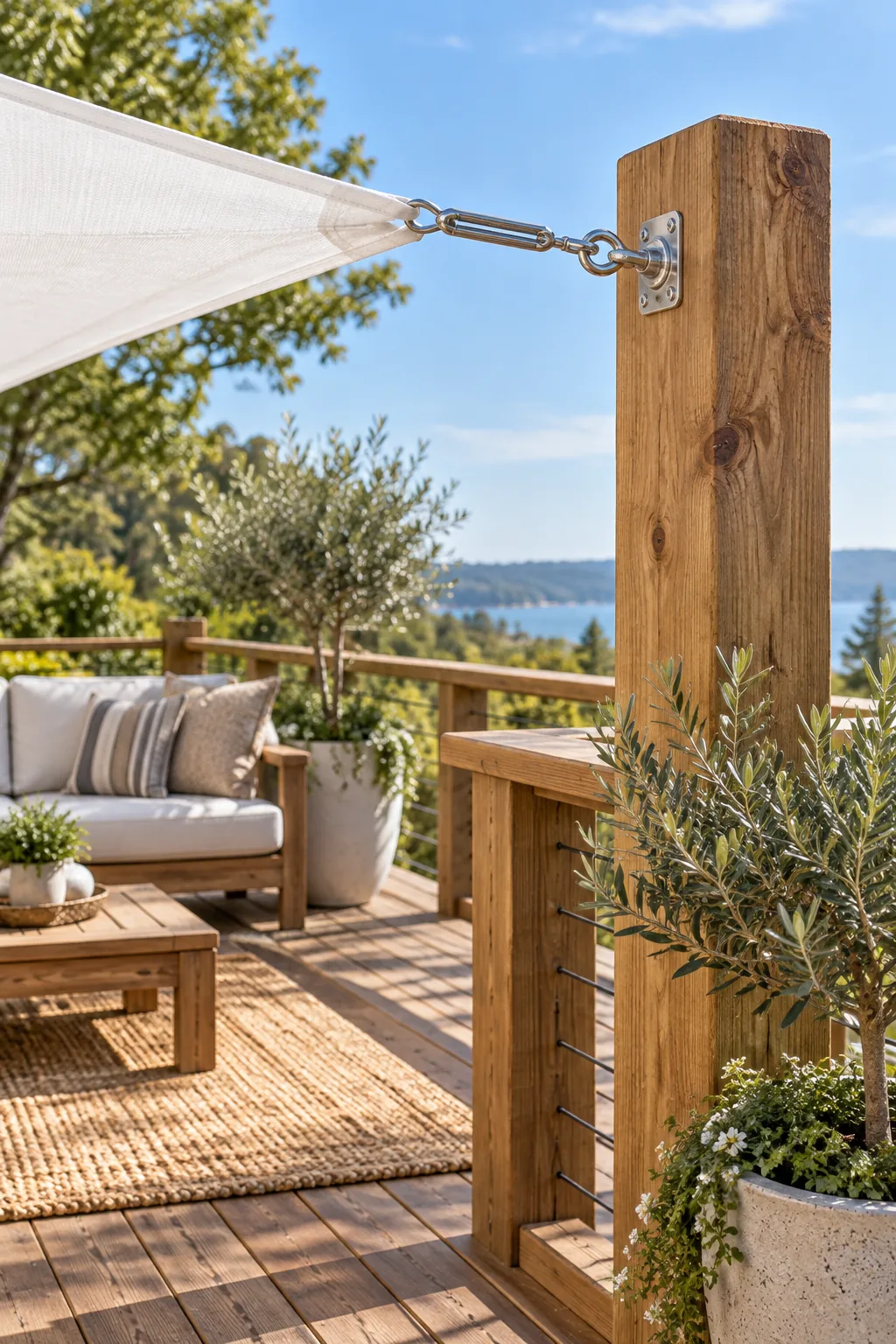
Always subtract 10 percent of the sail’s total length to bridge that calculated gap, because achieving a drum-tight canopy requires marine-grade components that withstand constant pulling.
Mapping the Perimeter Attachment Points
Before ordering any fabric, mark the exact locations where your mounts will sit, just like I did when mapping out my own Austin backyard patio last spring.
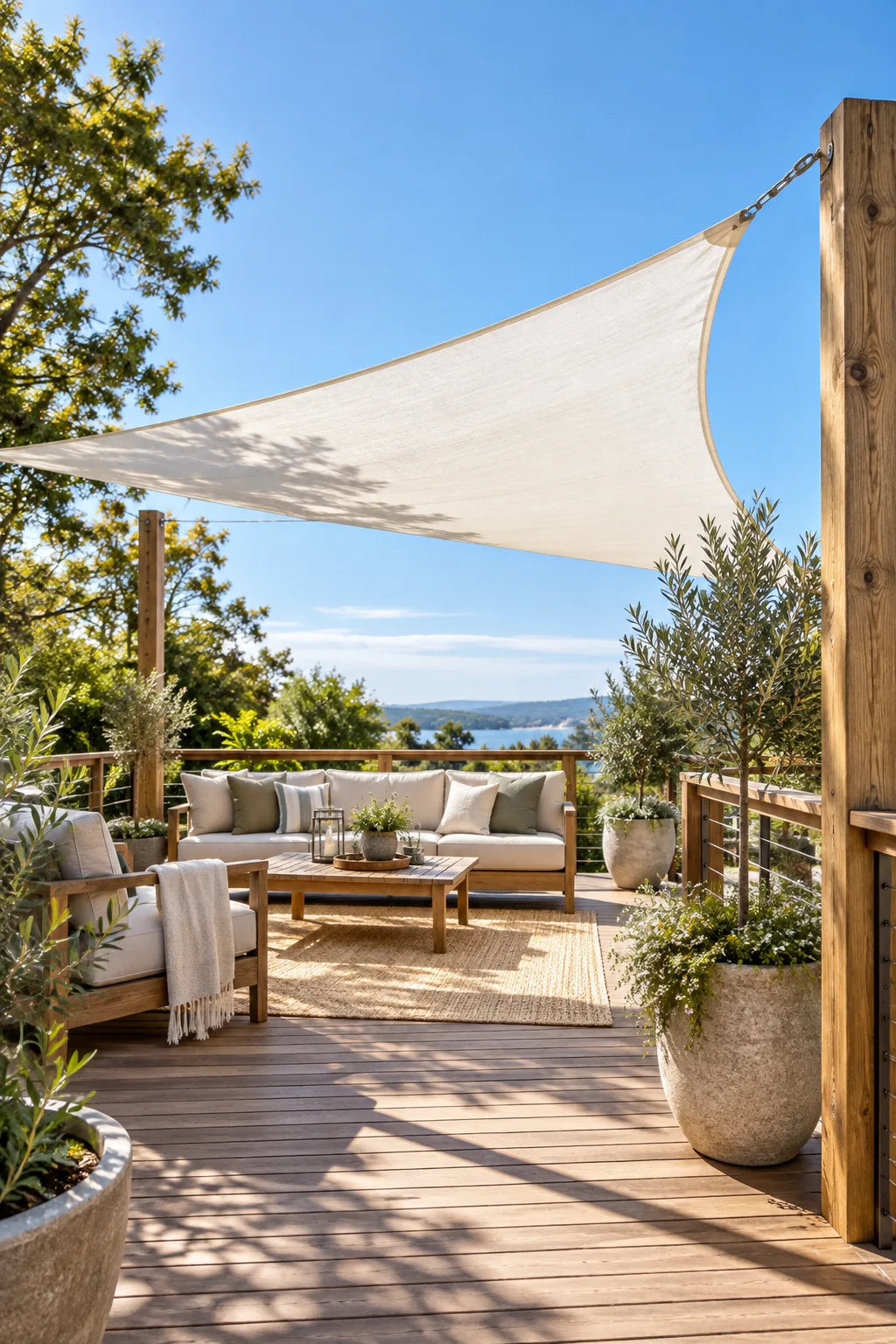
Measure point-to-point diagonally across the space to verify the footprint is perfectly square, which prevents the final shade from pulling unevenly once tension is applied.
- Mark your first primary anchor point on the house fascia or main structural post.
- Measure the exact perimeter distance to the next planned wooden post location.
- Pull a diagonal measurement between opposite corners to confirm the layout is perfectly square.
Anchoring with 6×6 Structural Posts
Standard deck posts will inevitably bow under the immense horizontal force of a stretched canopy, making structural upgrades absolutely non-negotiable for safety.
| Post Type | Resistance to Pull | Best Application |
|---|---|---|
| 4×4 Standard Wood | Low | Light string lights only |
| 6×6 structural post | High | Primary shade sail anchors |
| Steel Pipe (3-inch) | Maximum | Commercial or oversized sails |
Secure these thick pressure-treated wooden posts deep into the ground with concrete below your local frost line for rigid, unbending support that lasts for years.
Selecting a Wind-Permeable Knit
Solid waterproof fabrics catch passing wind exactly like a parachute, putting incredibly dangerous stress on your deck framing during sudden summer storms.
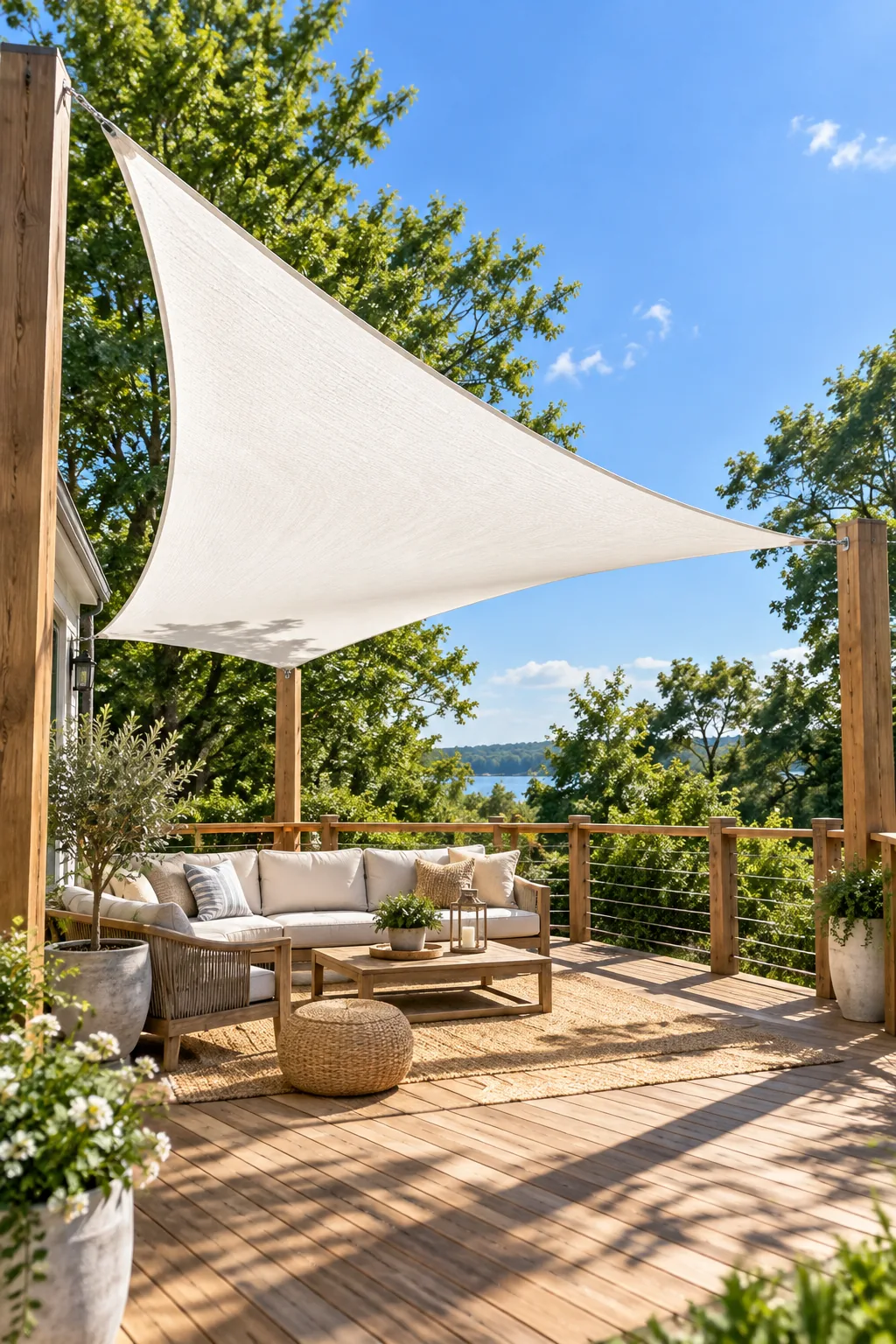
A high-density polyethylene (HDPE) wind-permeable knit allows hot air to escape upward and lets wind safely pass through, significantly reducing the structural load on your posts.
The Alternating High-Low Technique
Mounting all four corners at the same height creates a flat surface that catches wind, which I learned the hard way after my first flat canopy collected heavy autumn leaves.
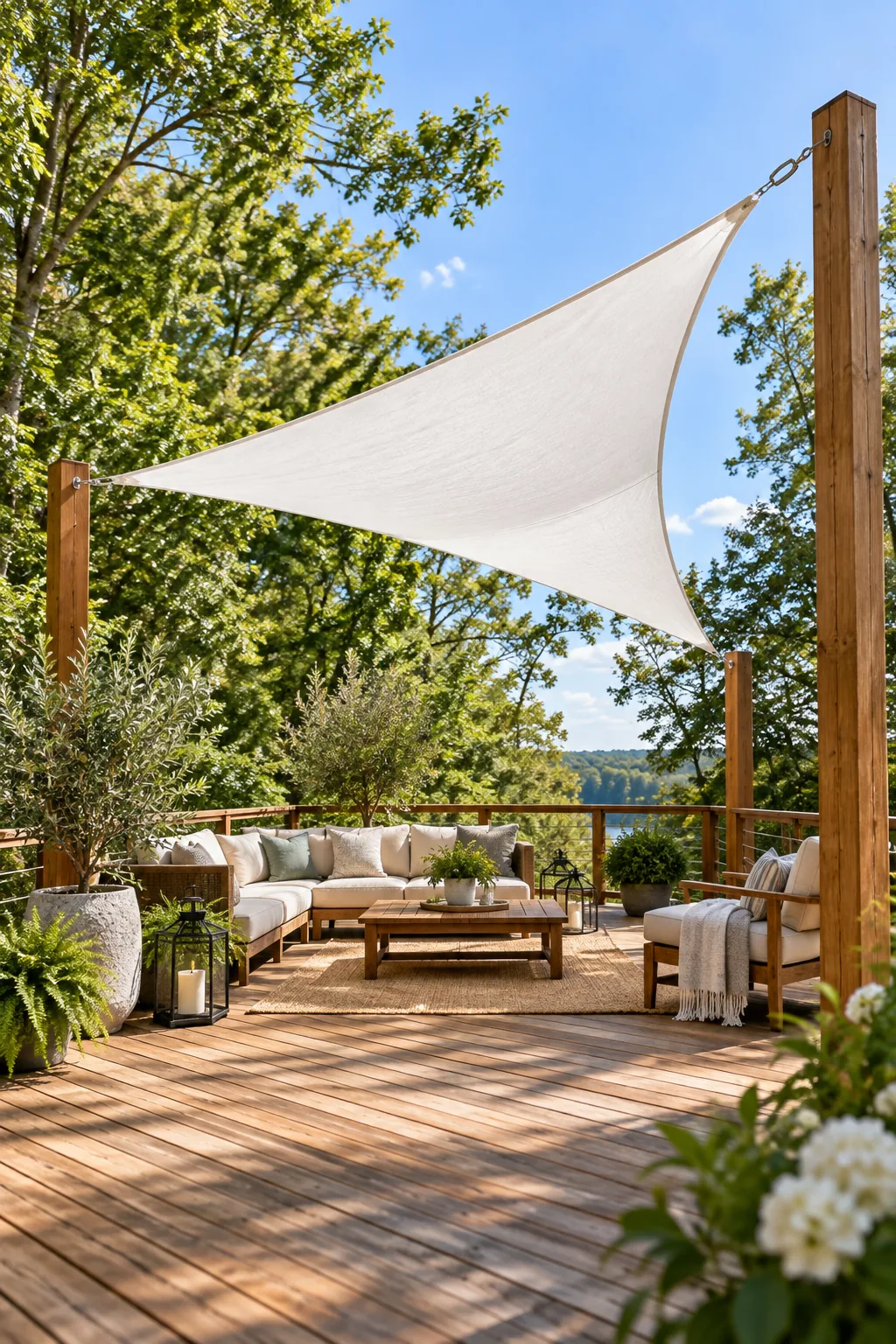
Creating this twisted geometry requires a deliberate difference in your mounting heights on the posts to achieve the stable alternating high-low design.
Why the Curved Tension Edge Matters
The distinctive swooping sides of a shade sail are engineered specifically for structural integrity, rather than just serving as a fun backyard aesthetic feature.
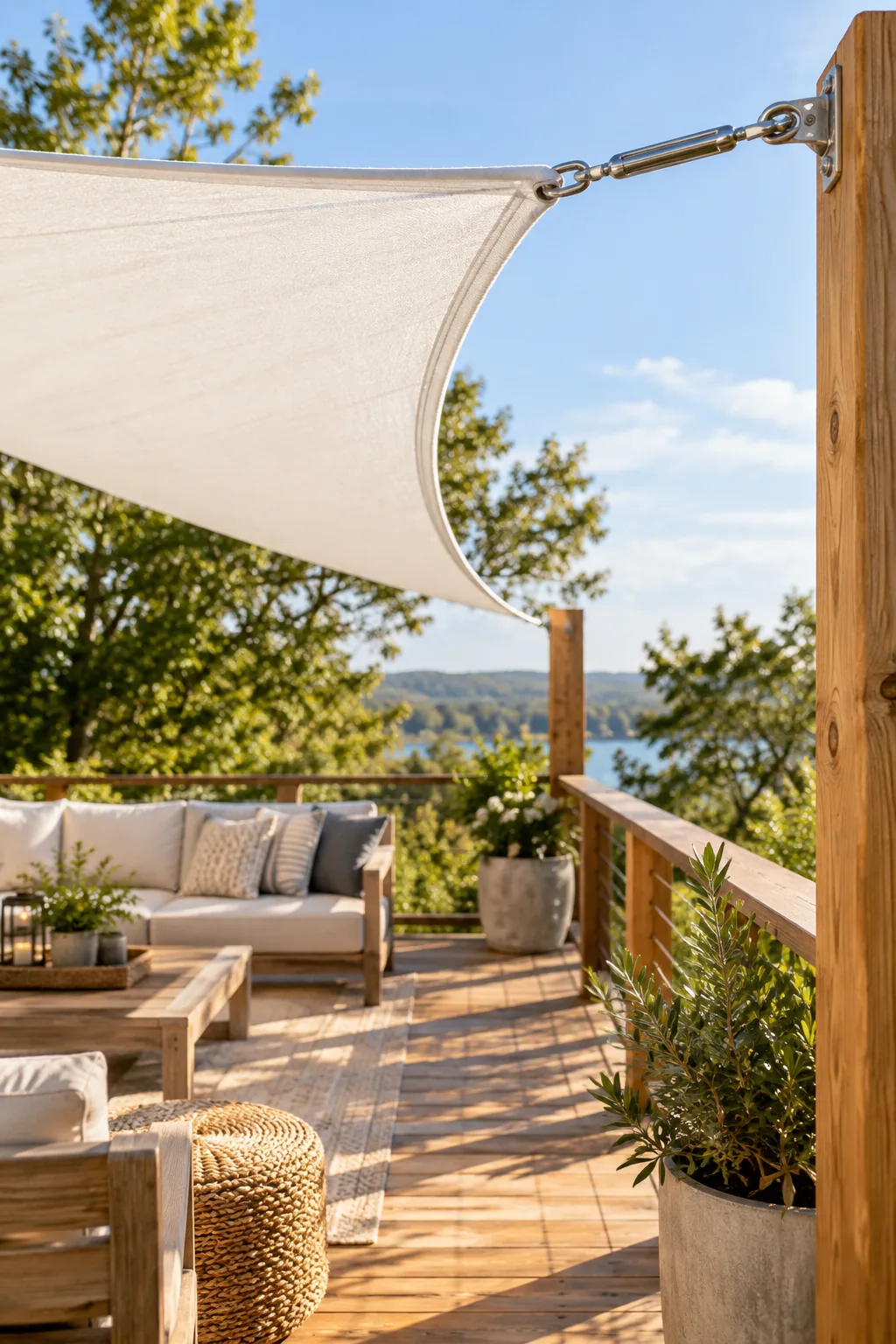
This concave curved tension edge directs the outward pulling force toward the center of the fabric, ensuring the middle stays drum-tight without sagging over your seating area.
5 Stunning Shade Sail Designs to Inspire Your Deck
Explore how different fabric colors and mounting styles can completely transform your outdoor living space.
Crisp nautical coastal deck: Pair a deep navy canopy with bright white painted posts for a classic maritime feel.
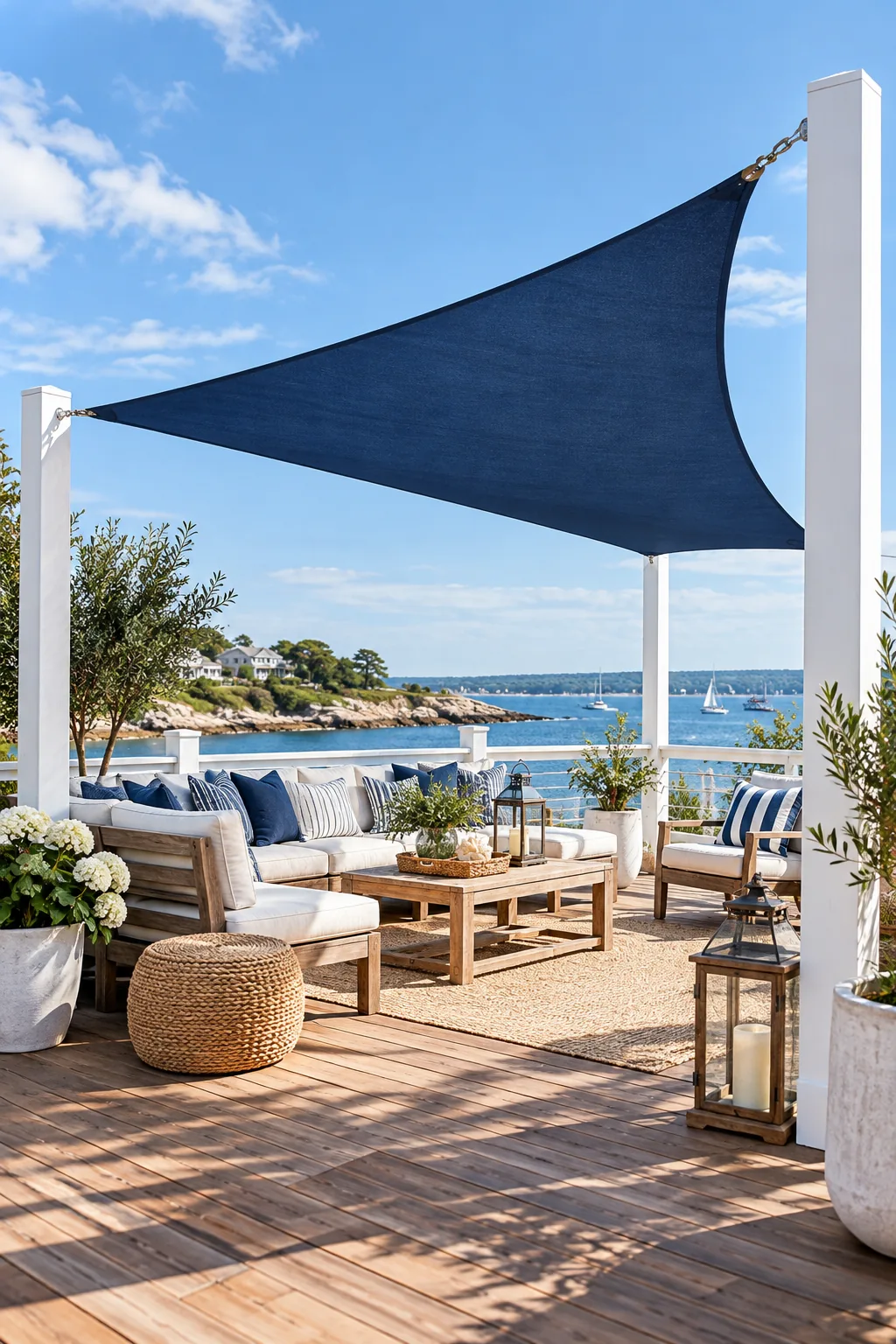
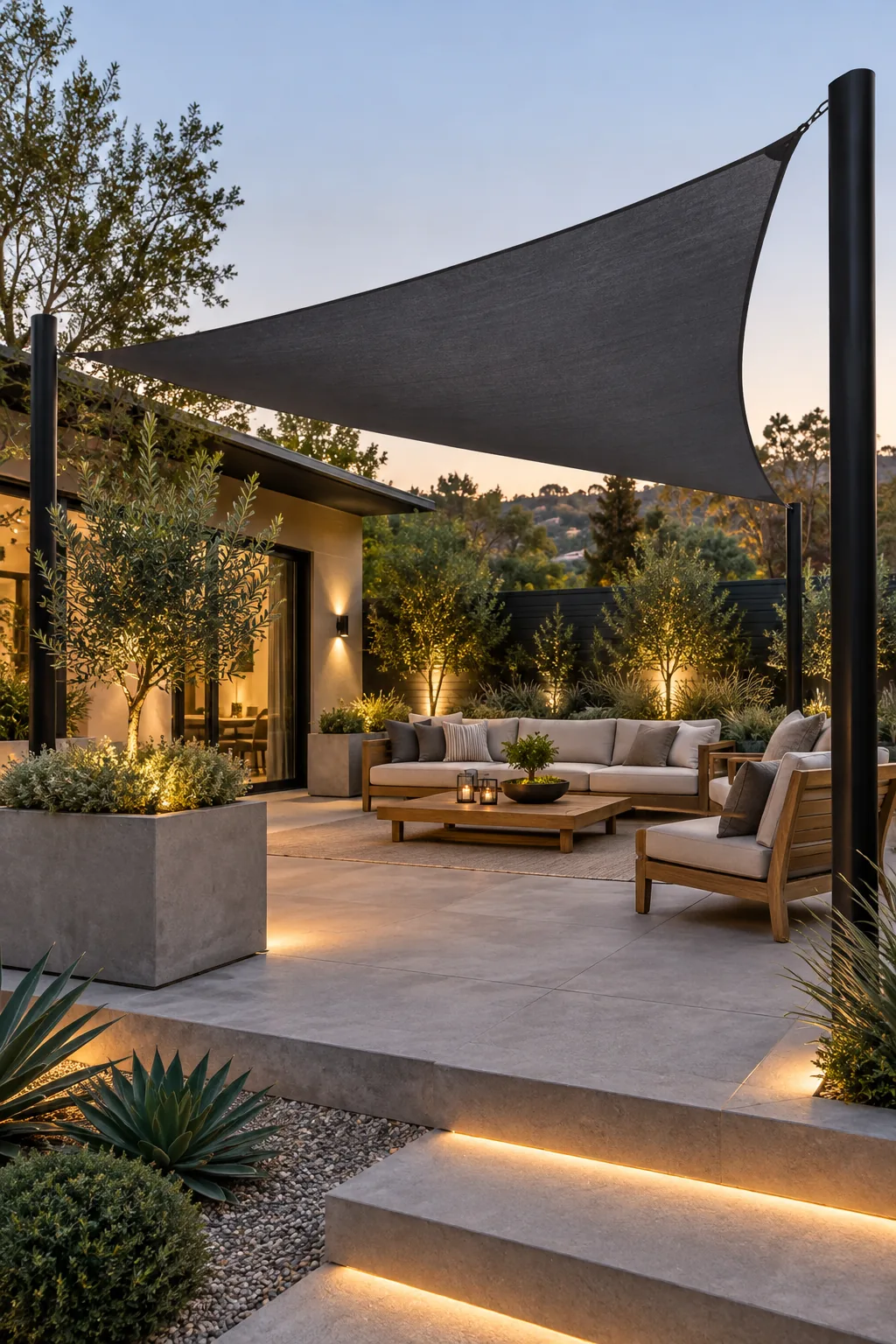
Modern industrial concrete patio: Swap wooden posts for black steel to give a dark grey canopy an industrial edge.
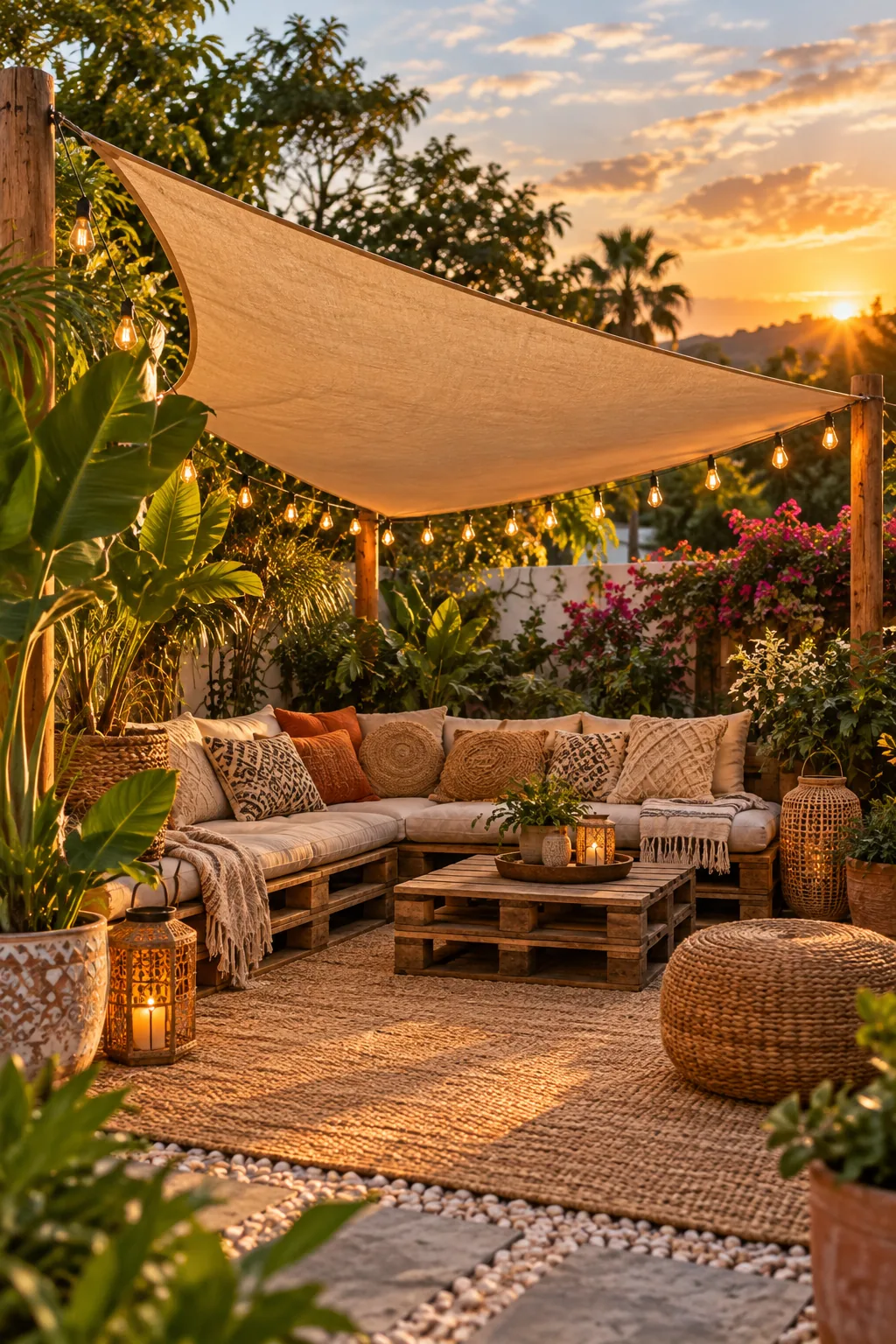
Relaxed bohemian garden lounge: Mount a sand-toned sail slightly lower to create an intimate, tent-like atmosphere over casual seating.
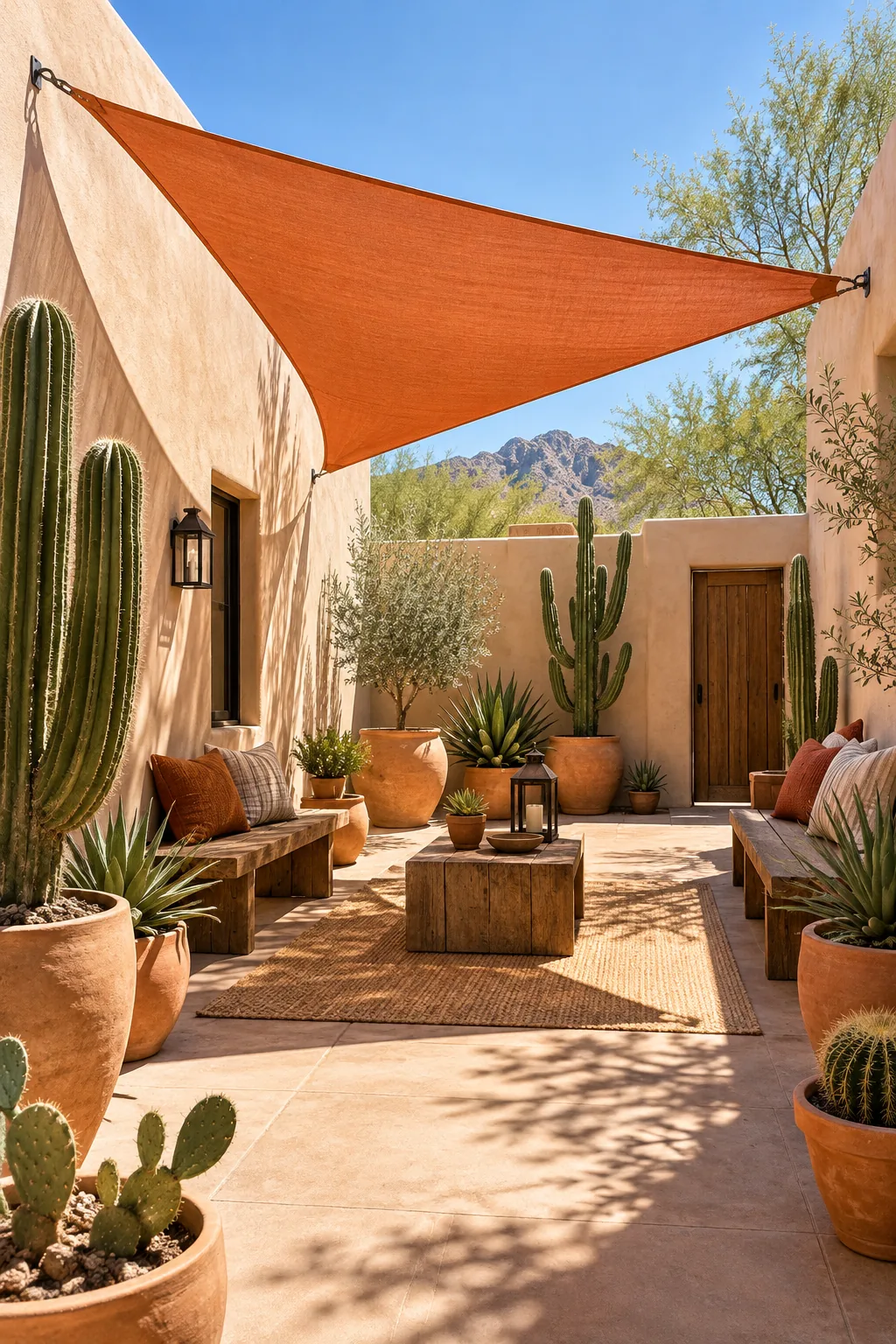
Warm desert courtyard oasis: Use a warm terracotta fabric anchored directly to surrounding walls to complement a desert landscape.
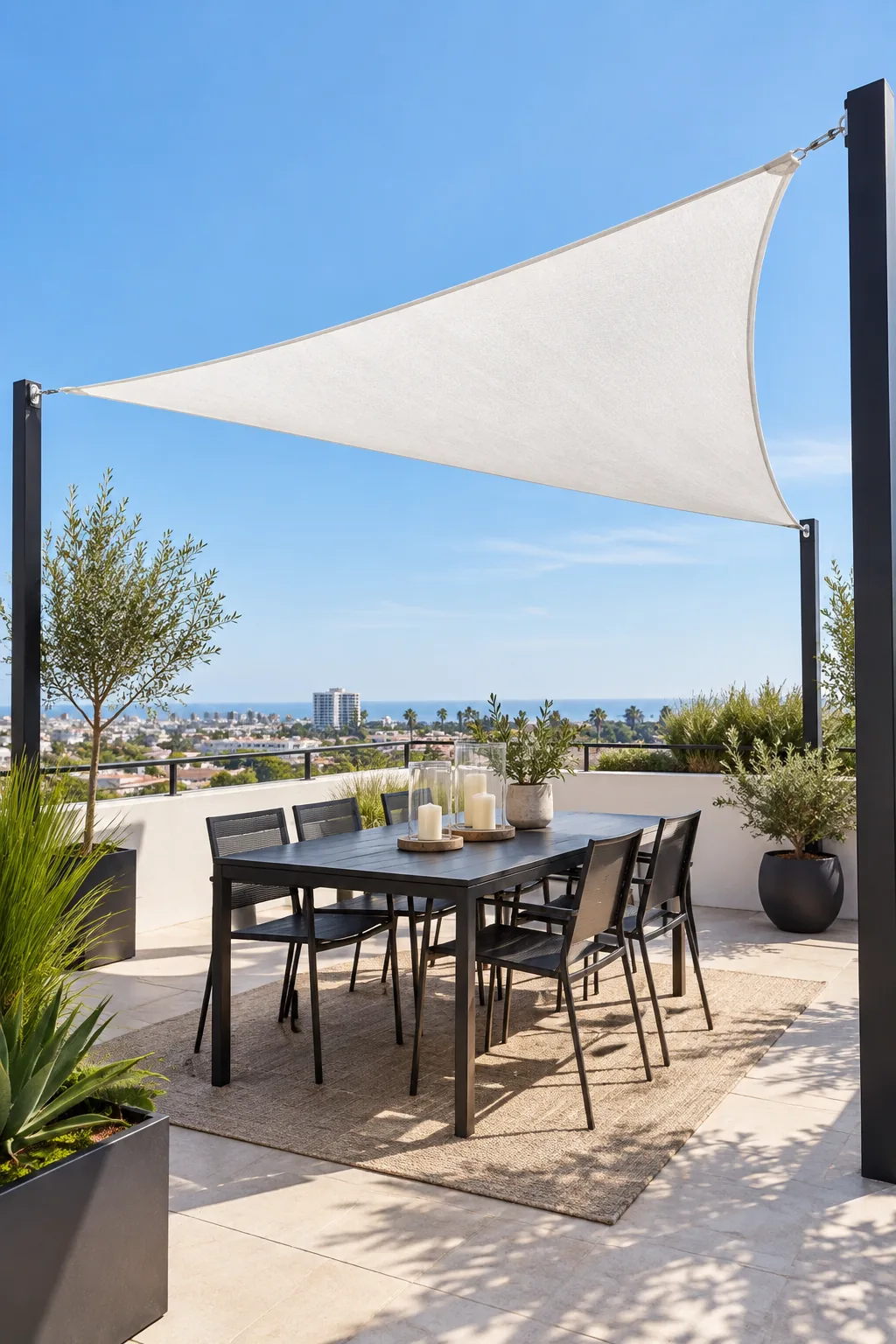
Sleek minimalist rooftop dining: Keep the focus on the sky by pairing a pure white canopy with understated black furniture.
Leaving an 8-Inch Tension Gap
New shade sails will inevitably stretch during their first few weeks in the sun, something I noticed on my own deck after just one hot Texas July afternoon.
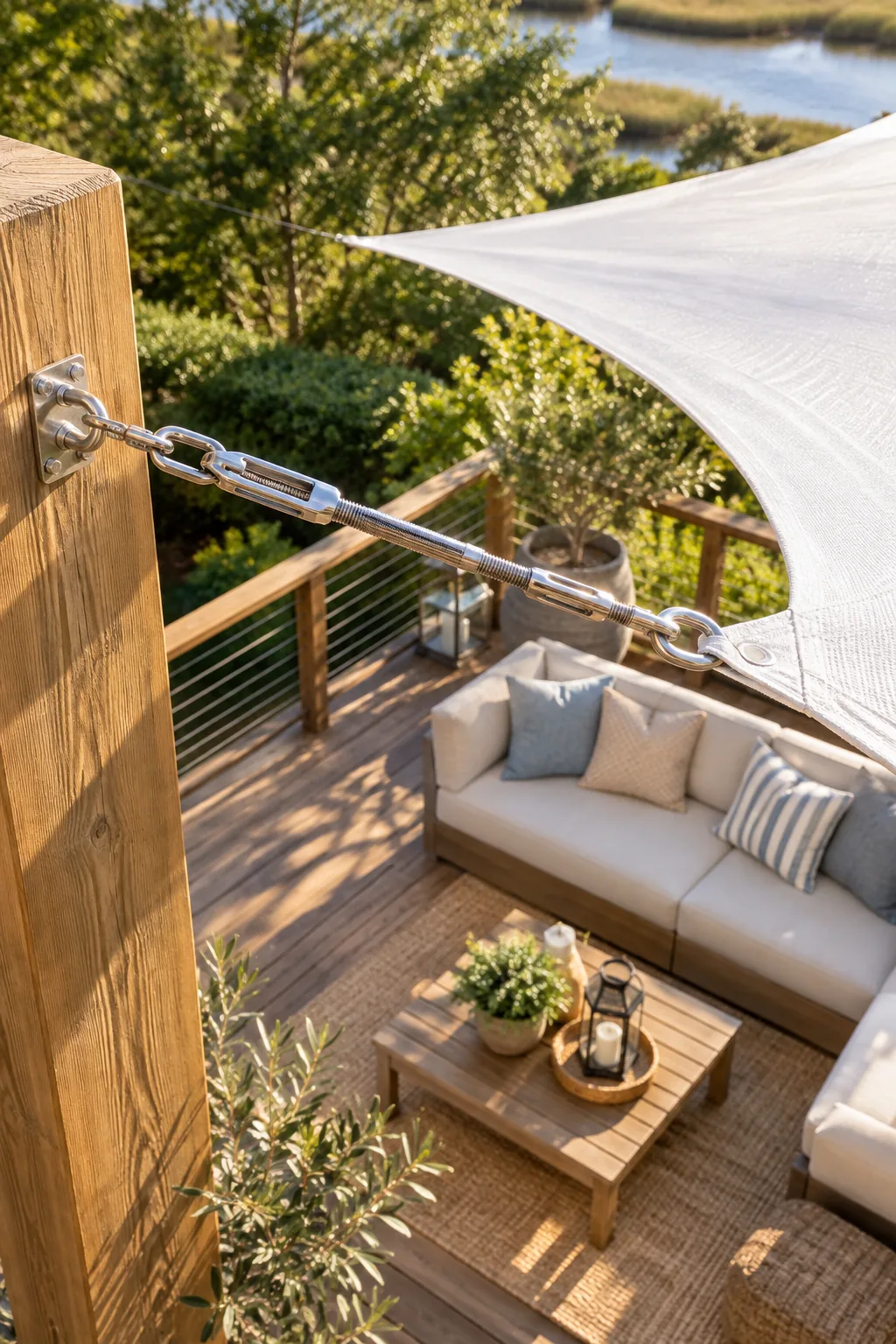
Leave a visible 8-inch tension gap on your turnbuckles during the initial installation so you have the mechanical room to crank the hardware tighter later in the season.