
12+ Stunning Concrete Patio Border Ideas for Your Yard
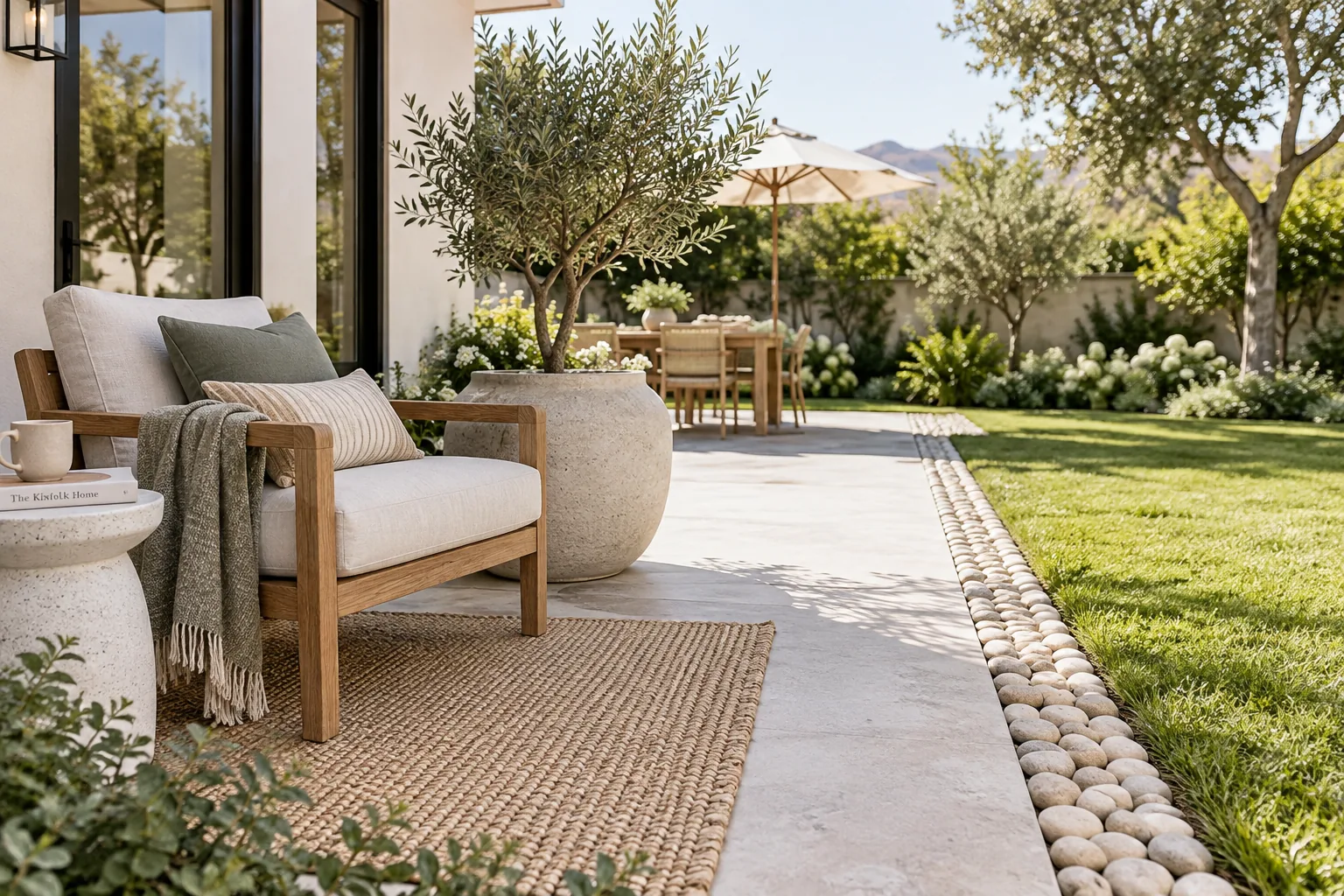
A plain concrete slab often feels unfinished until you give it a proper frame. Adding a distinct edge is the easiest way to bridge the gap between your patio and the rest of your yard.
1. River Rock Trench
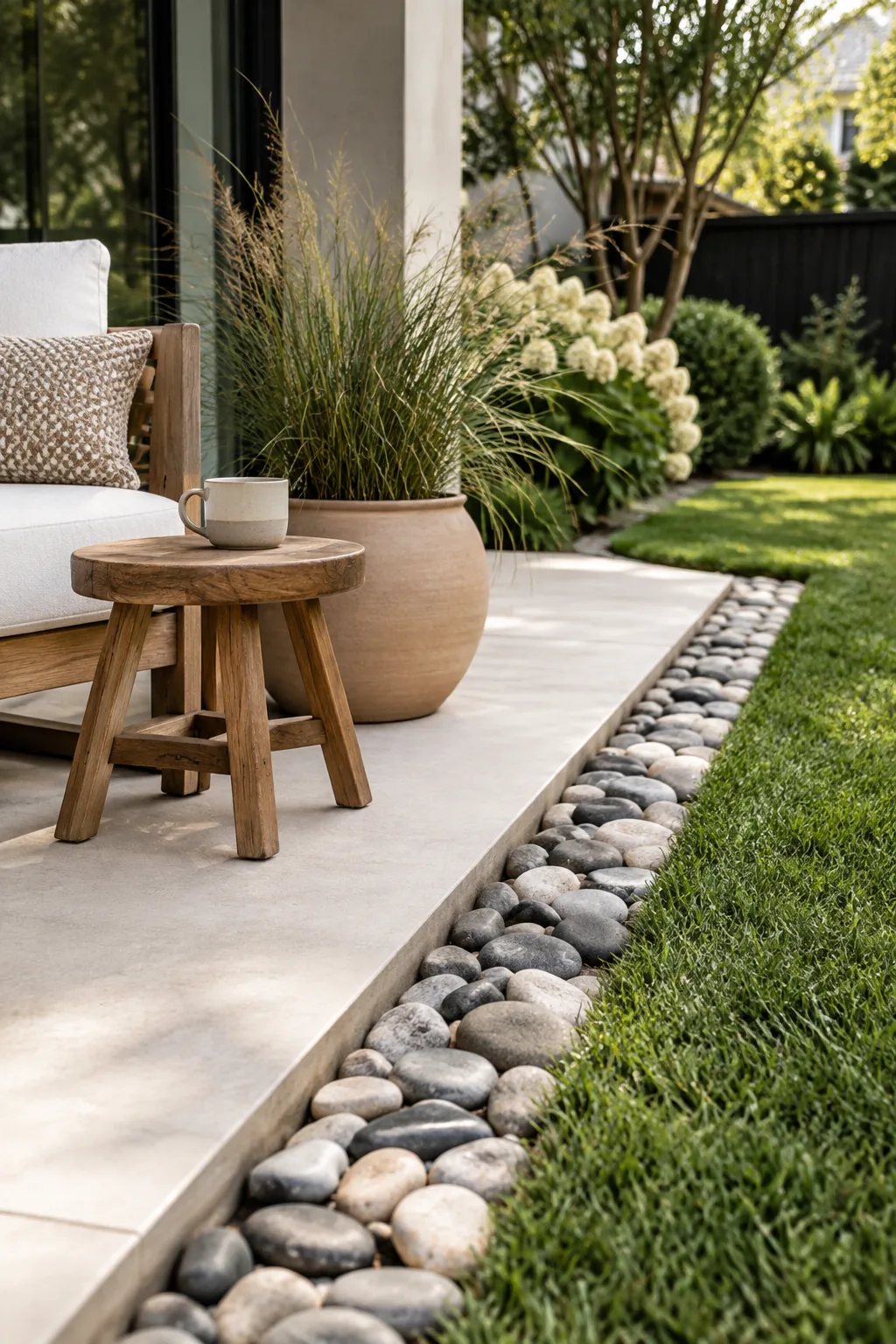
A thick band of smooth river rocks creates a clean organic transition between hardscaping and your lawn. Digging a shallow trench to hold the stones keeps them from scattering into the grass when you mow.
Why it works: It provides excellent drainage while hiding uneven concrete edges.
2. Contrasting Brick Ribbon
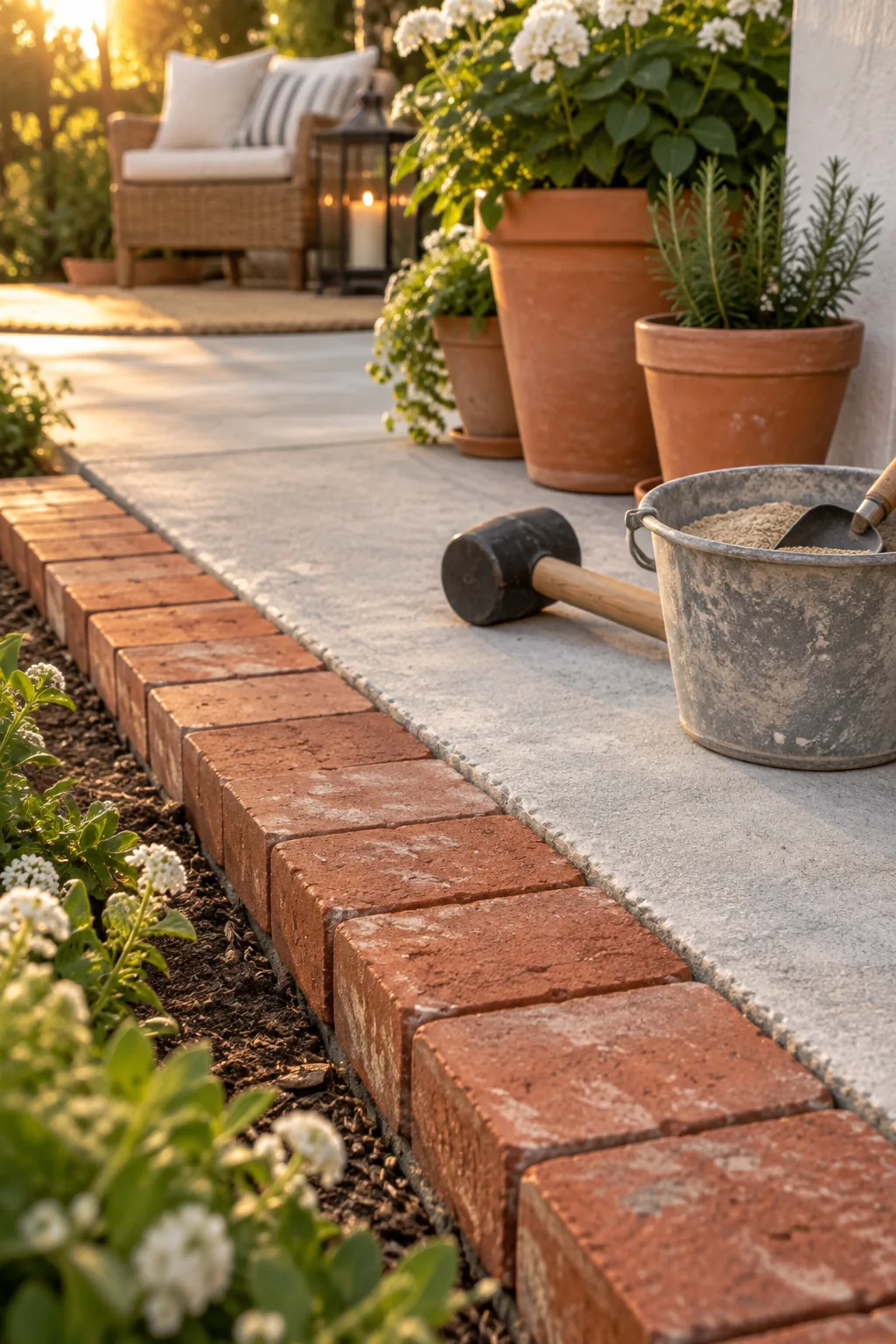
I always tell my friends to look at classic brick when they want an instant upgrade. Laying a single row of red clay bricks flat against the concrete adds instant warmth to a cold gray slab. You just need some leveling sand and a rubber mallet to get them perfectly flush with the patio surface. The contrast between the crisp red rectangles and the poured concrete looks incredibly sharp. It defines the outdoor living space without requiring a massive budget.
3. Low Profile Planter Boxes
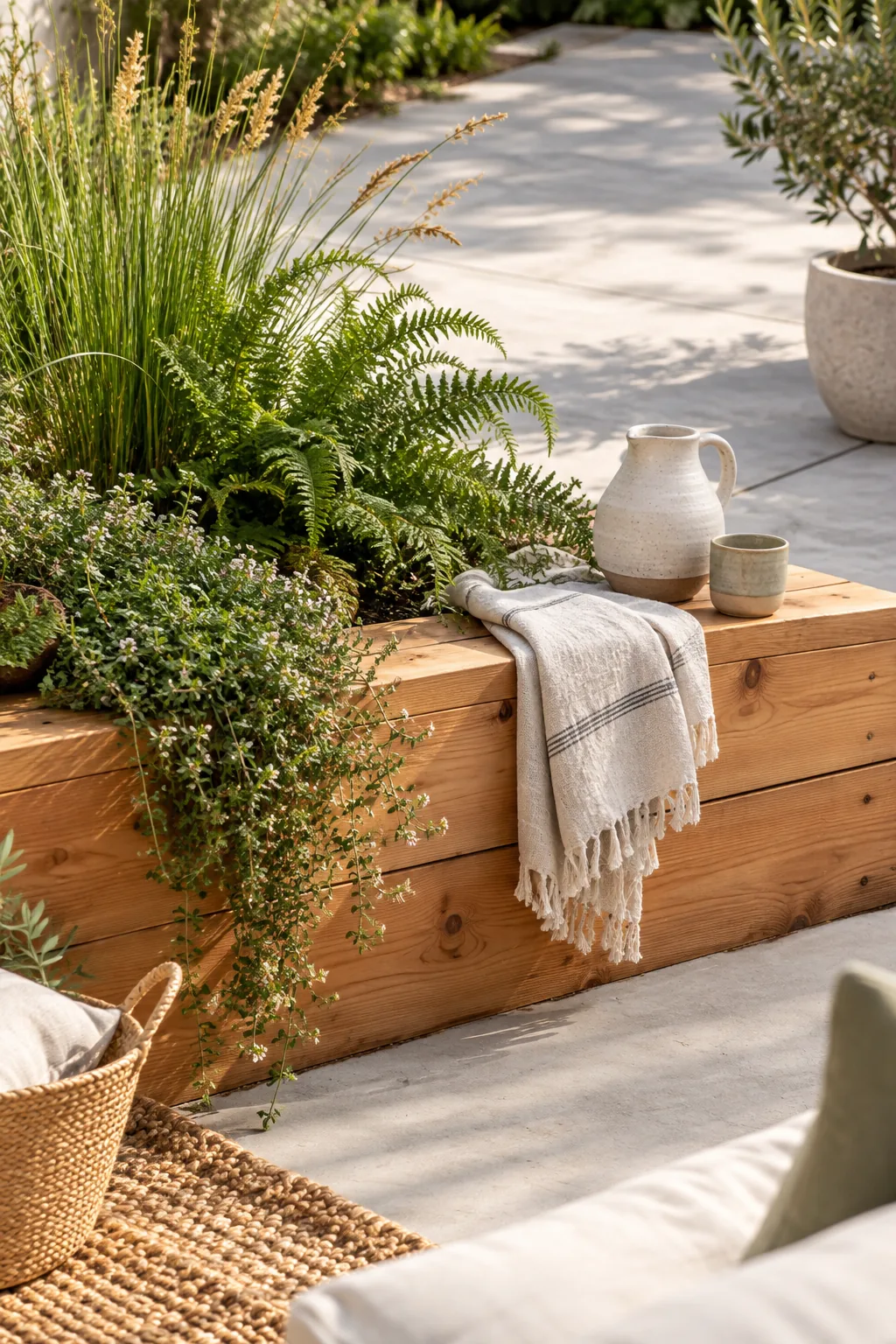
Built-in wooden borders soften the harsh lines of a standard poured patio. Framing the perimeter with cedar planter boxes turns a basic edge into a lush green wall. The wood naturally resists rot, making it perfect for direct ground contact right next to your concrete. You can build these just twelve inches high to maintain an open feel while still clearly dividing the zones. I love filling them with a mix of spilling and upright plants.
- Creeping thyme
- Dwarf fountain grass
- Trailing rosemary
4. Black Mulch and Boxwoods
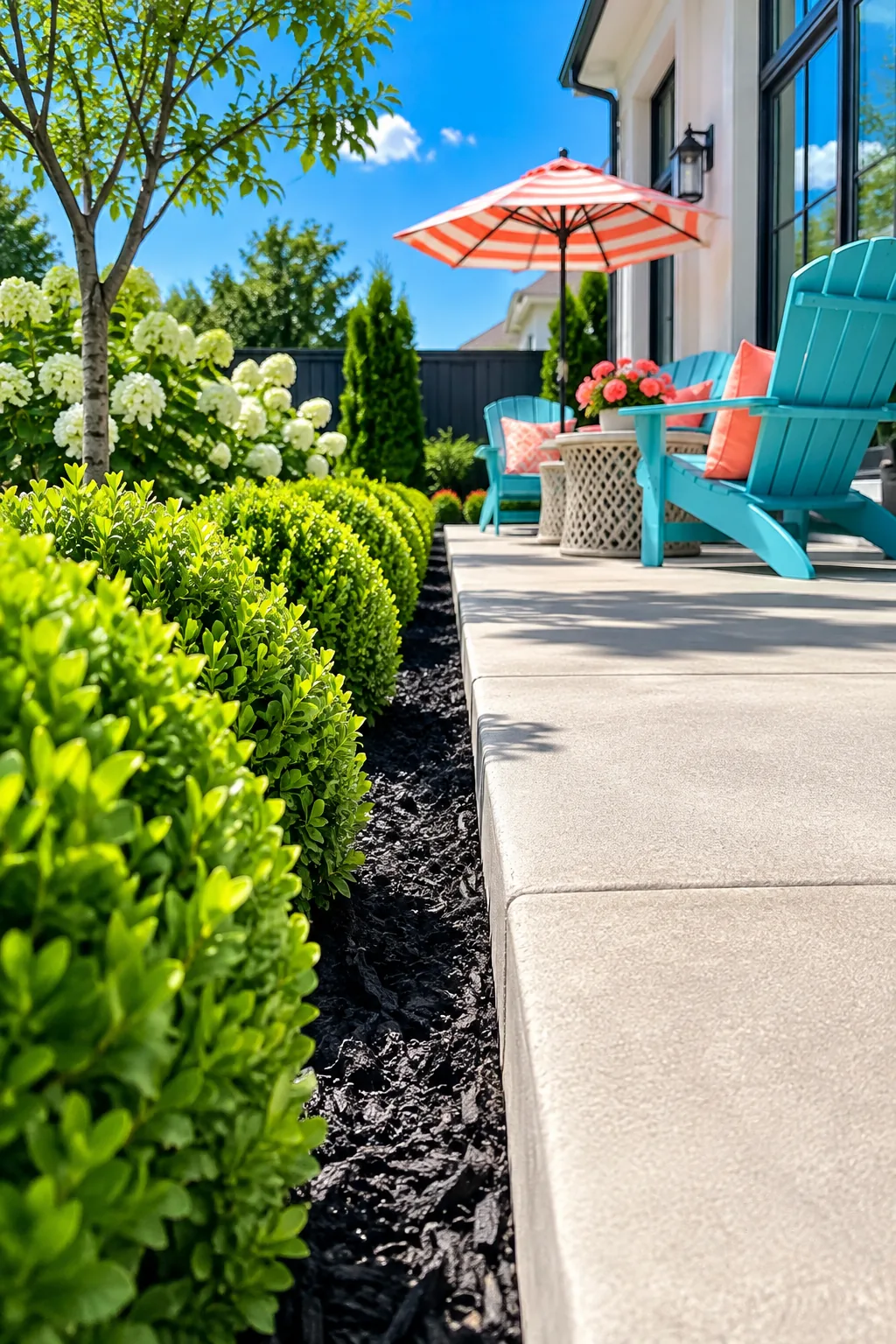
A two-foot wide bed of black mulch provides high-impact contrast.
Planting a tight row of small boxwood shrubs directly into this dark border gives the patio a formal, structured frame. The dark background makes the bright green foliage pop beautifully against the light gray concrete. You only need to trim them twice a year to keep that sharp geometric shape.
5. Stamped Concrete Band
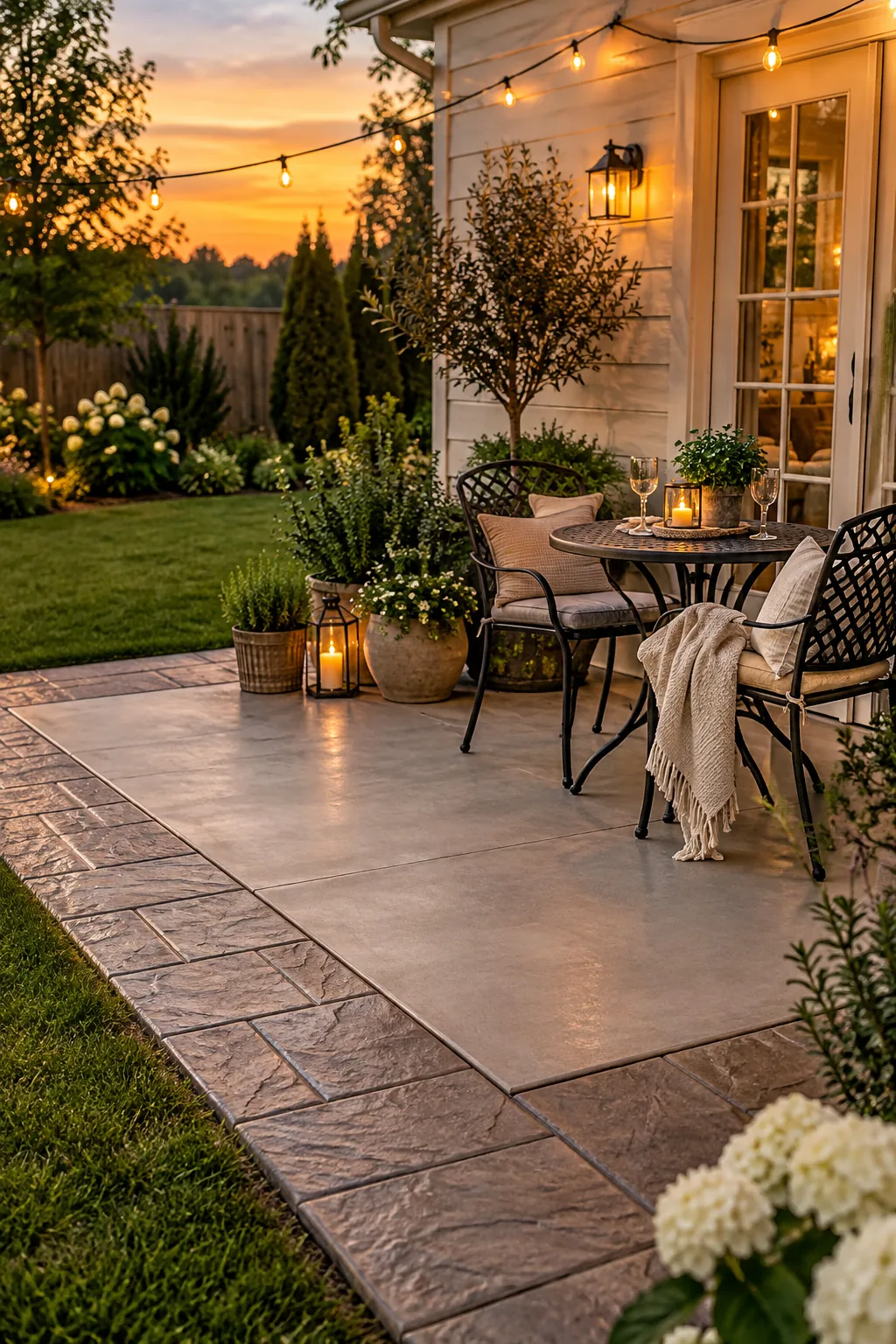
Pouring a secondary frame around the main slab allows you to play with different textures. A narrow band of stamped and stained concrete creates a permanent, weed-free border that looks like expensive natural stone.
- Slate texture mats
- Charcoal release powder
- High-gloss sealant
6. Weathering Steel Edging
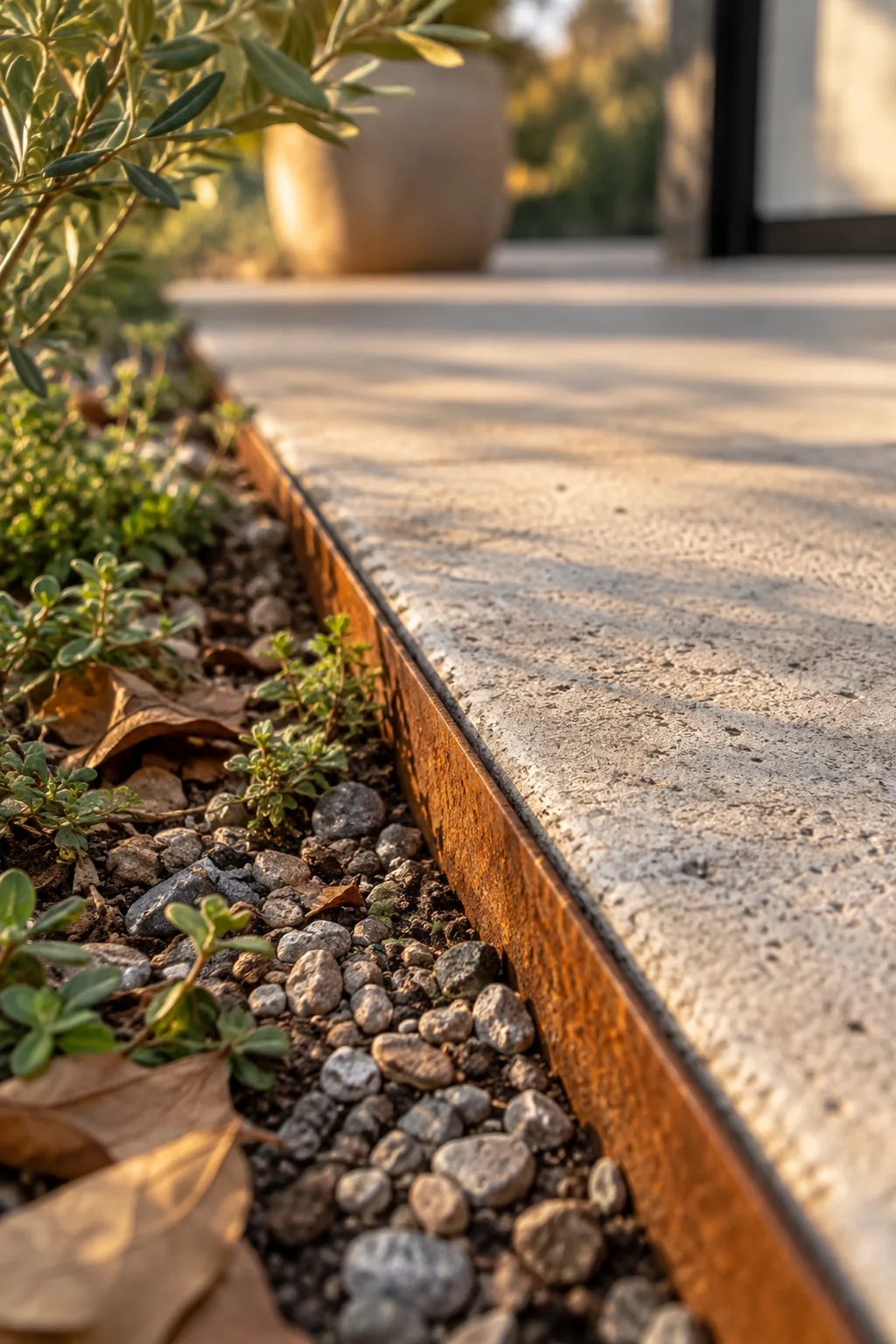
Standard steel edging strips come in eight-foot lengths for easy installation.
Choosing weathering steel for your patio border introduces a rich, rust-colored patina that gets better with age. You simply pound the metal strips into the dirt right against the concrete lip to hold back soil or gravel. It creates an ultra-thin, modern line that practically disappears while doing the heavy lifting.
7. Flagstone Mosaic Edge
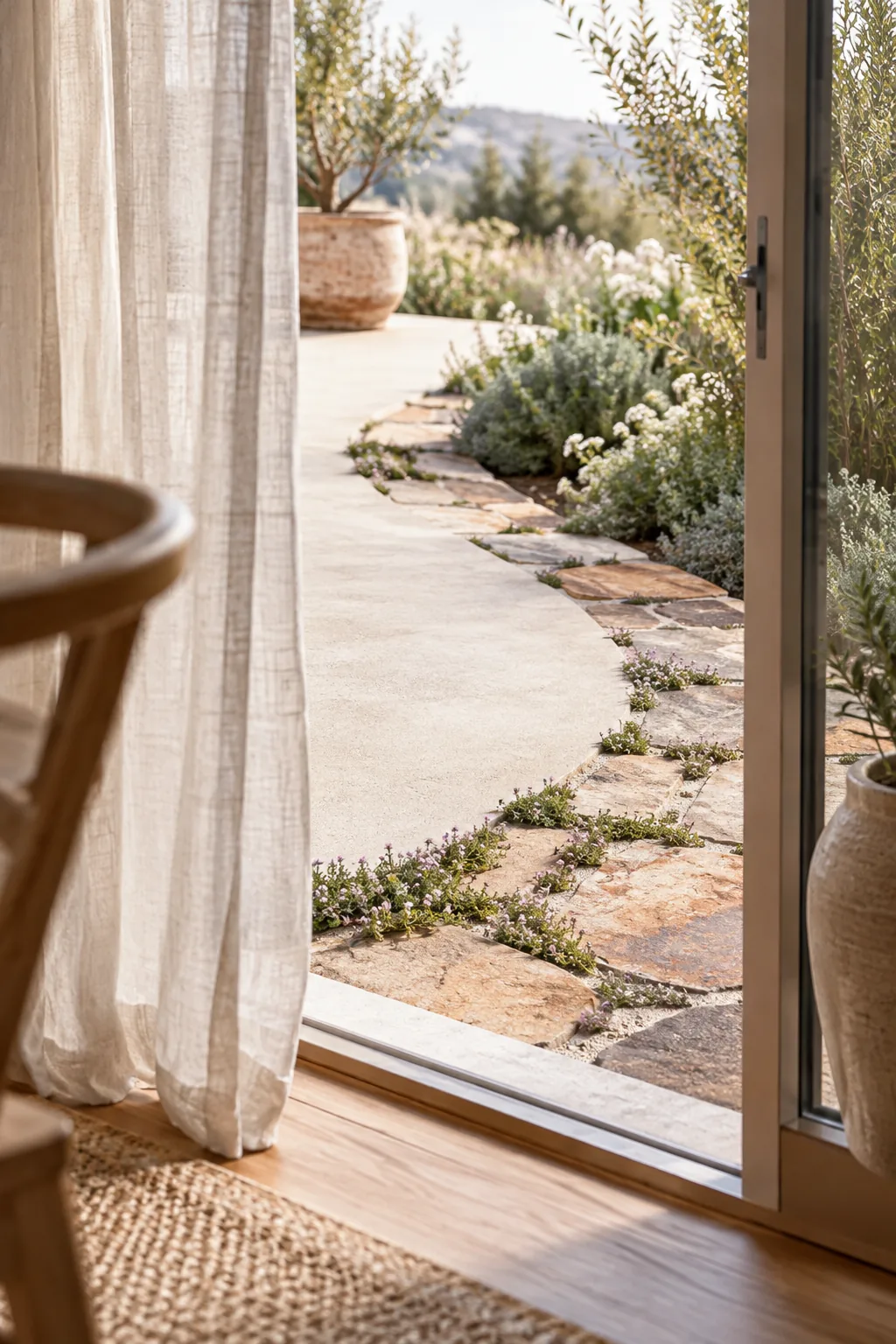
Using irregular shapes breaks up the rigid geometry of a square patio.
Setting pieces of natural flagstone in a thick mortar bed right at the edge creates a custom, handcrafted finish. The varied earth tones warm up the entire outdoor space.
You can grow creeping groundcovers between the stone joints for an even softer look.
8. Pea Gravel and Stepping Stones
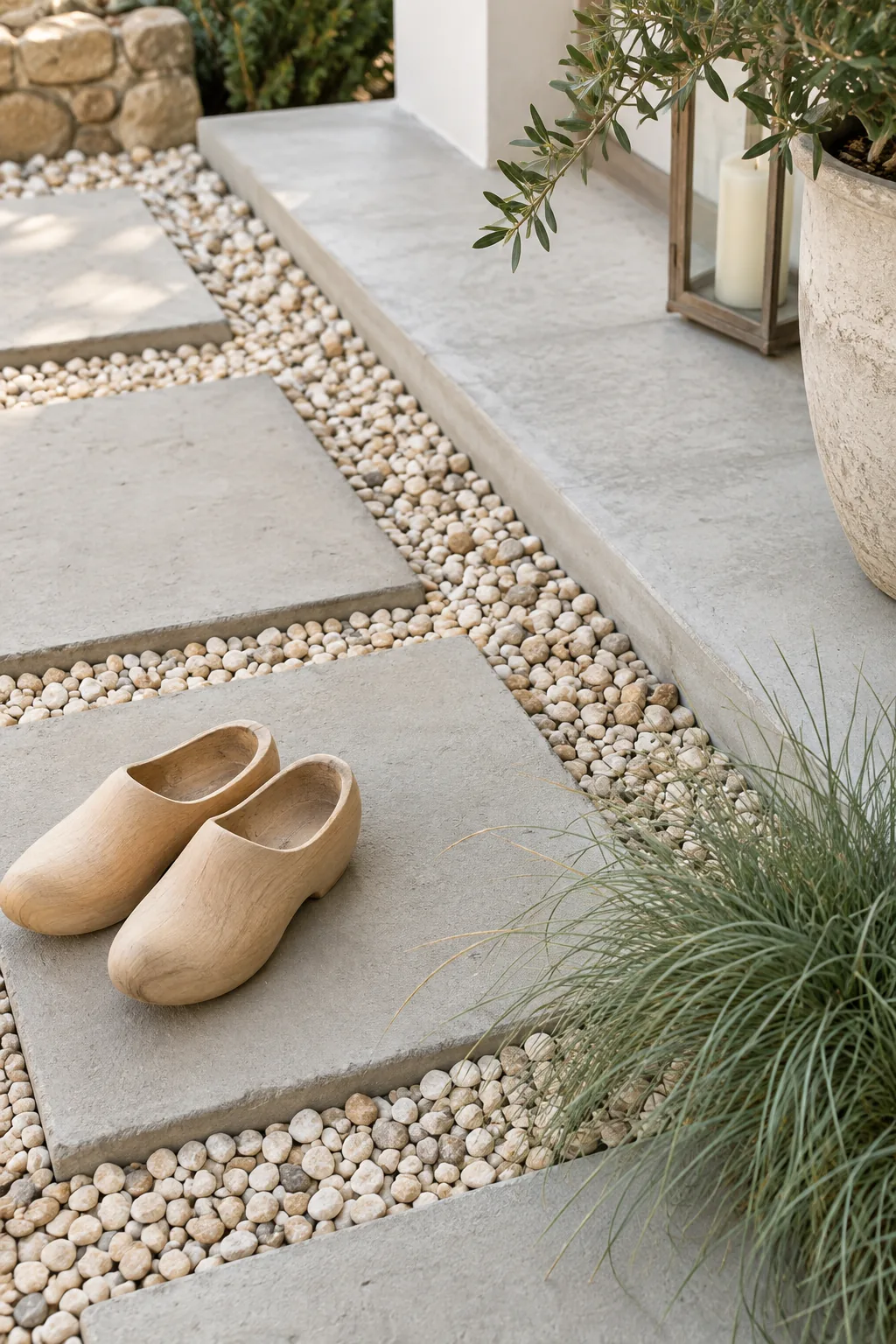
A casual, beachy vibe emerges when you use loose materials for your border.
Digging out the perimeter and filling it with crunchy pea gravel gives rainwater a place to go. Dropping large square pavers into the gravel creates a designated walkway off the main slab.
This combination looks incredibly intentional and keeps mud away from your clean concrete.
9. Liriope Grass Ribbon
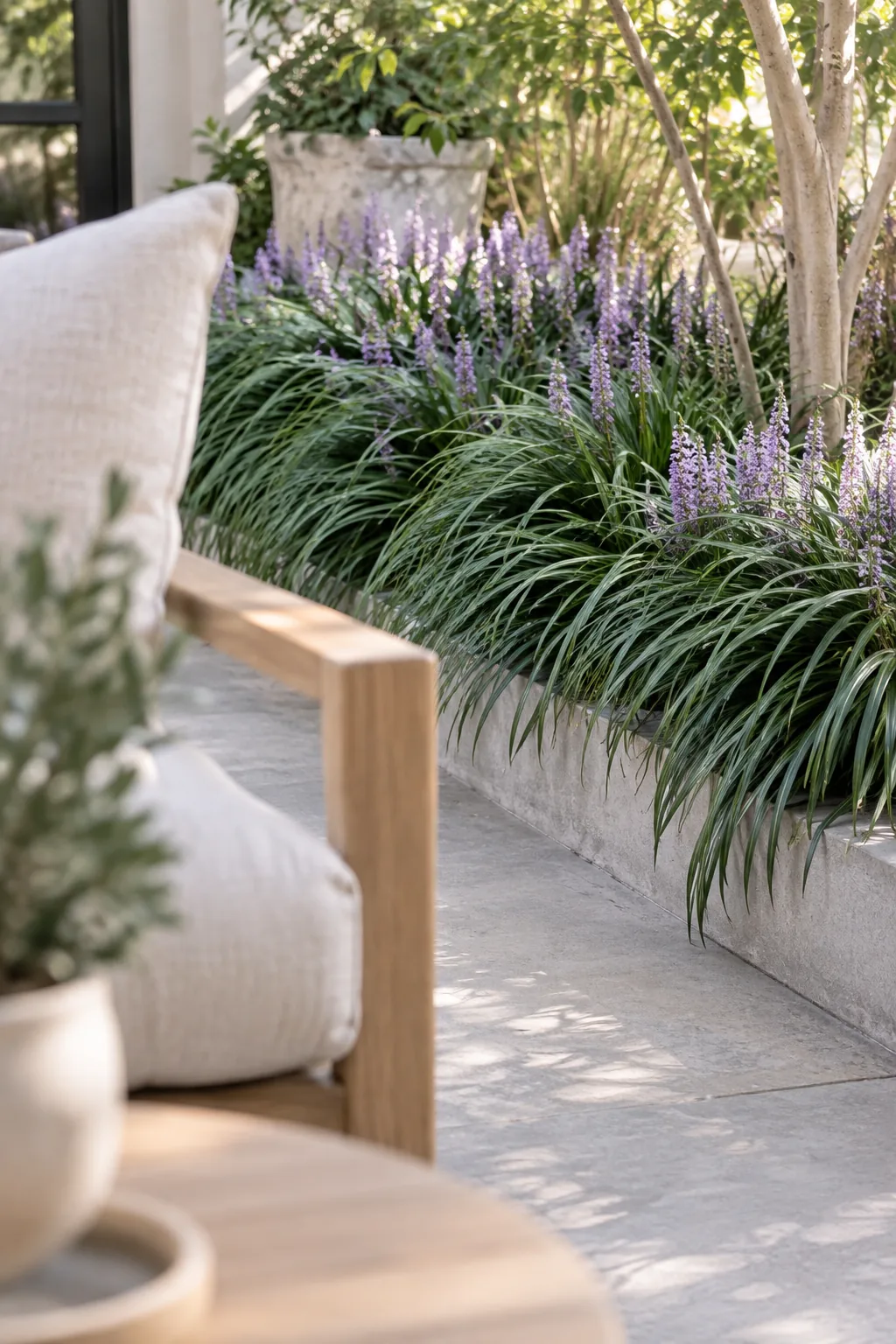
Repetition is the secret to making a simple landscape design look professionally installed.
Planting a solid, unbroken line of Liriope grass right against the concrete forms a dense, evergreen border. The strappy leaves spill slightly over the edge, hiding any rough spots in the pour.
In late summer, the tiny purple flower spikes add an unexpected pop of color to the patio edge.
10. Cobblestone Paver Lock
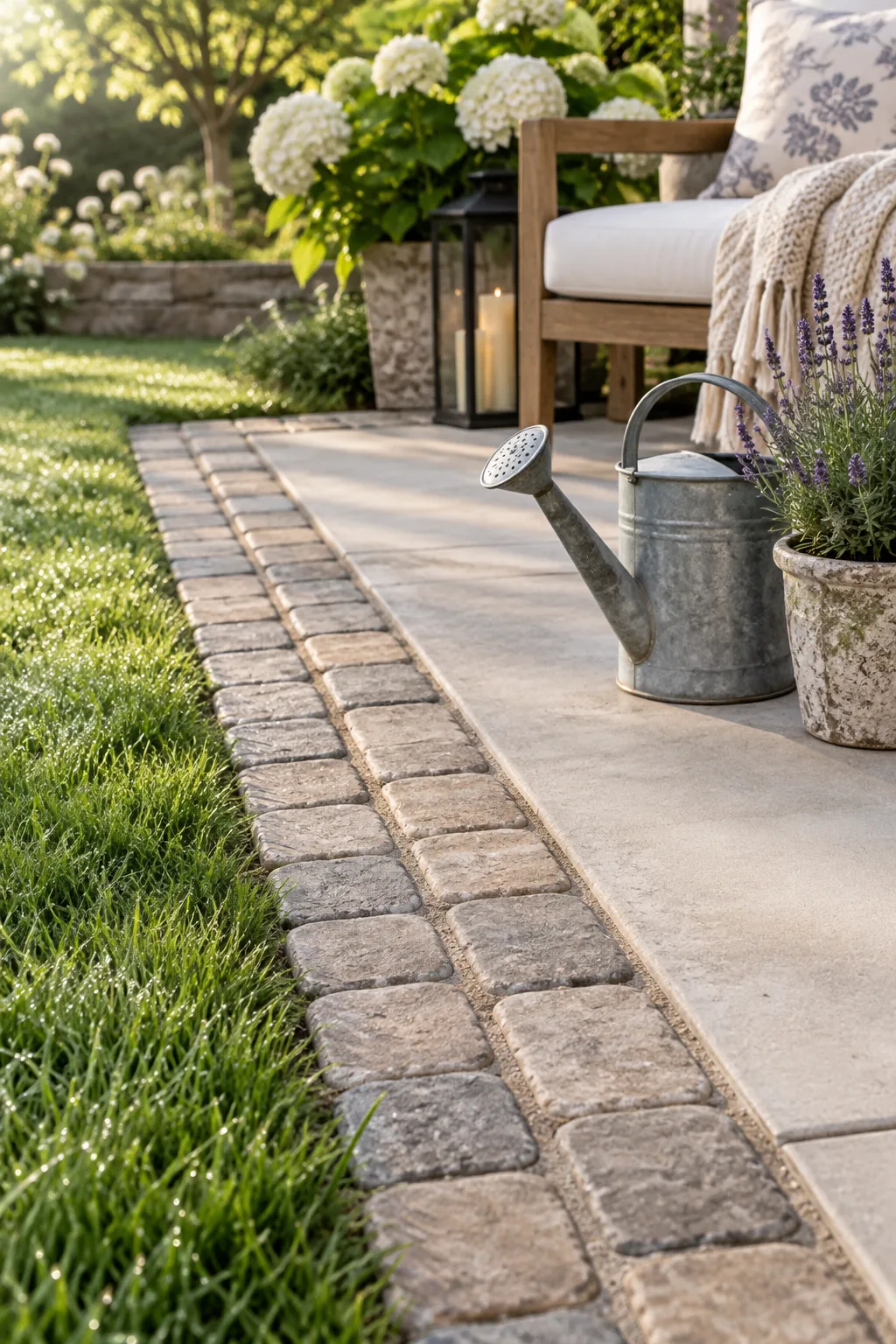
Traditional square pavers interlock perfectly to form a solid, unmoving frame around a poured slab. A double row of tumbled cobblestones set in polymeric sand bridges the gap between the modern concrete and your lawn.
Why it works: The textured surface of the stones provides a non-slip transition zone.
11. Railway Sleeper Frame
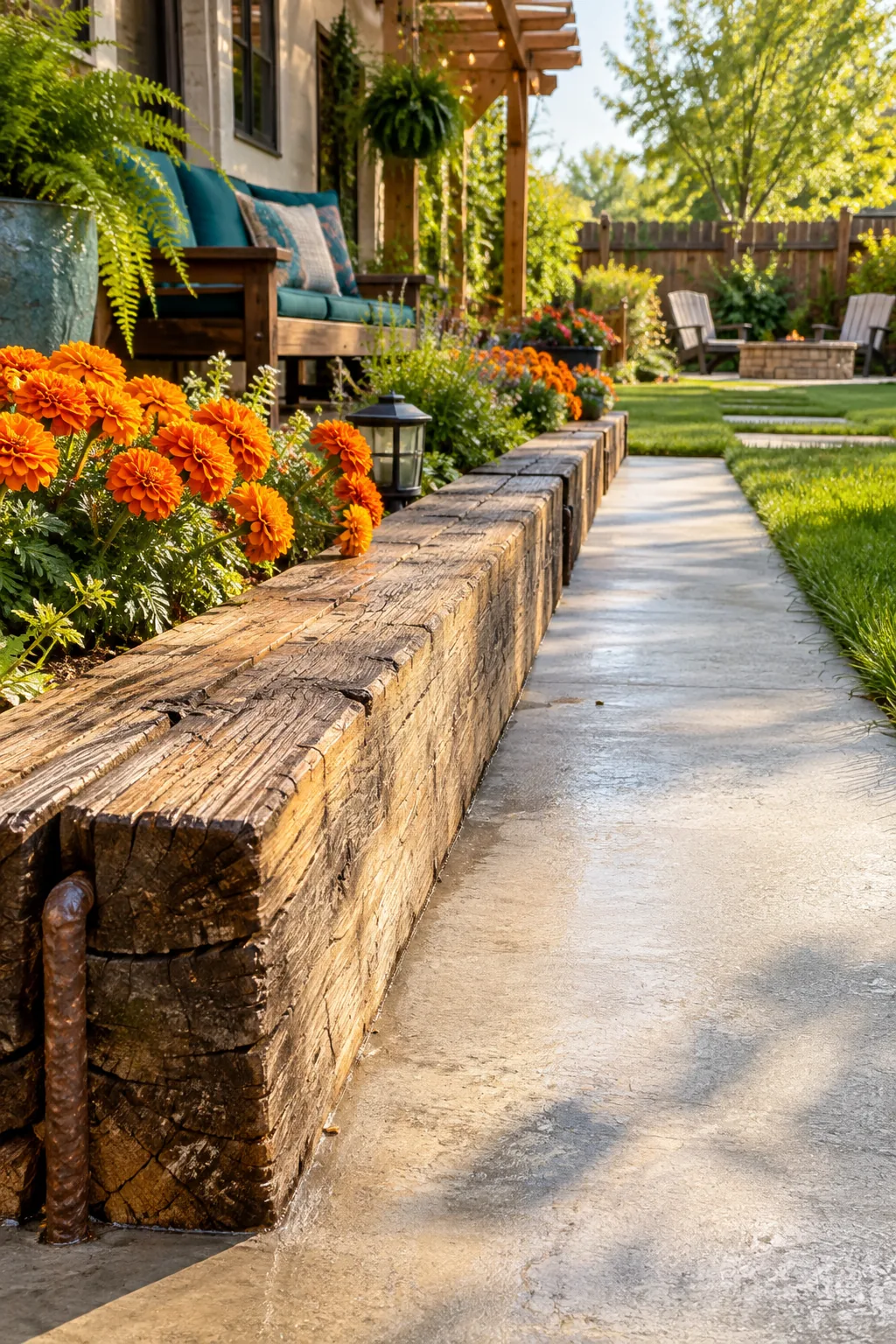
Reclaimed timber beams weigh over a hundred pounds each, ensuring they stay exactly where you put them. Laying chunky wooden sleepers flat against the concrete edge brings a heavy, rustic element to your backyard. You can drill through them and drive rebar straight into the ground to lock them in place permanently. The weathered wood grain looks fantastic next to smooth, freshly pressure-washed concrete.
12. White Marble Chips
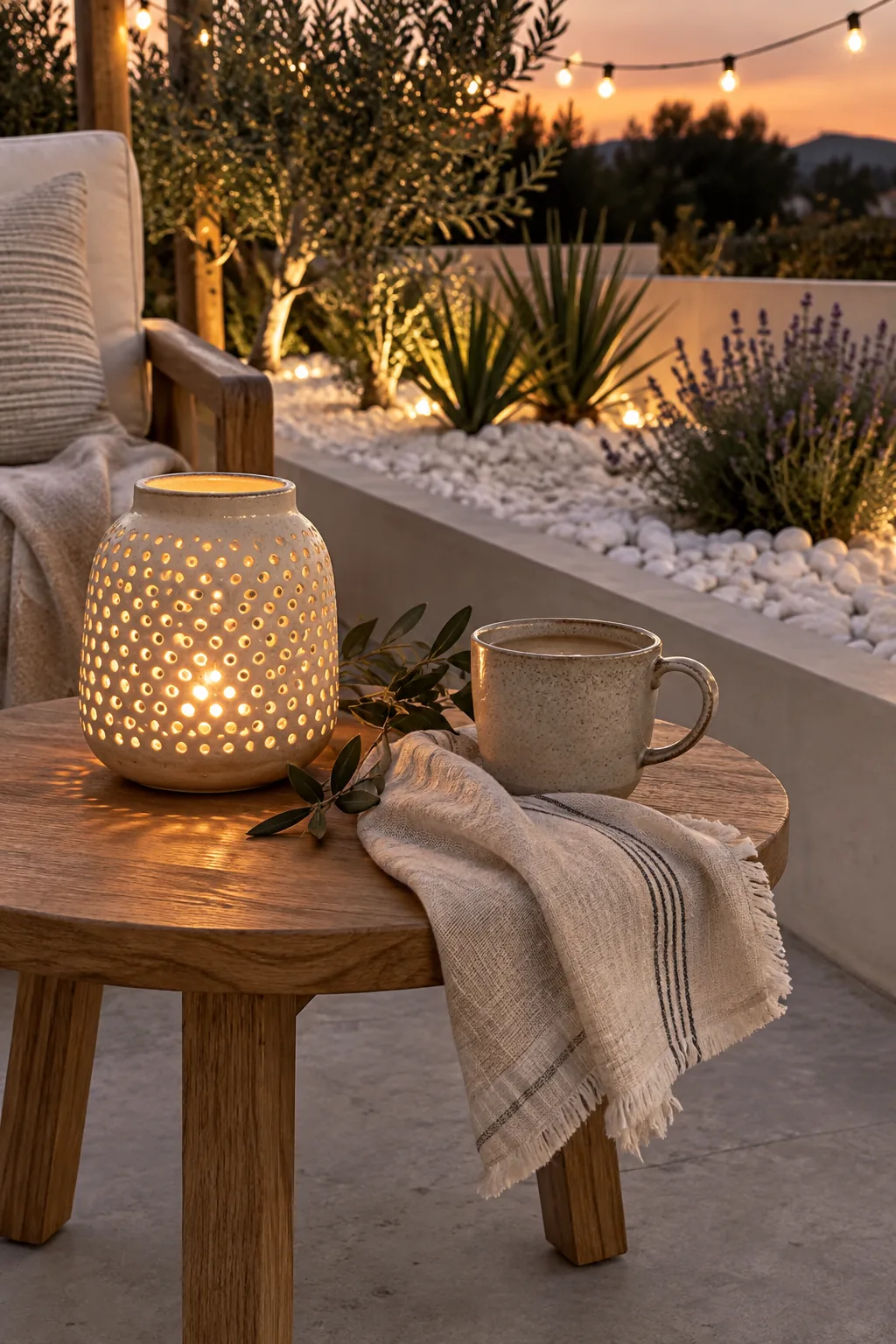
High contrast is the easiest way to make a basic backyard feature look highly stylized. Trenching the perimeter and filling it with bright white marble chips instantly modernizes an older patio. The jagged edges of the crushed stone lock together, which keeps them from migrating into your grass like smooth stones do. It acts as a brilliant visual boundary that practically glows at night when you turn on your string lights. I suggest using commercial-grade landscape fabric underneath to stop weeds from ruining the pristine white look.
13. Groundcover Succulent Bed
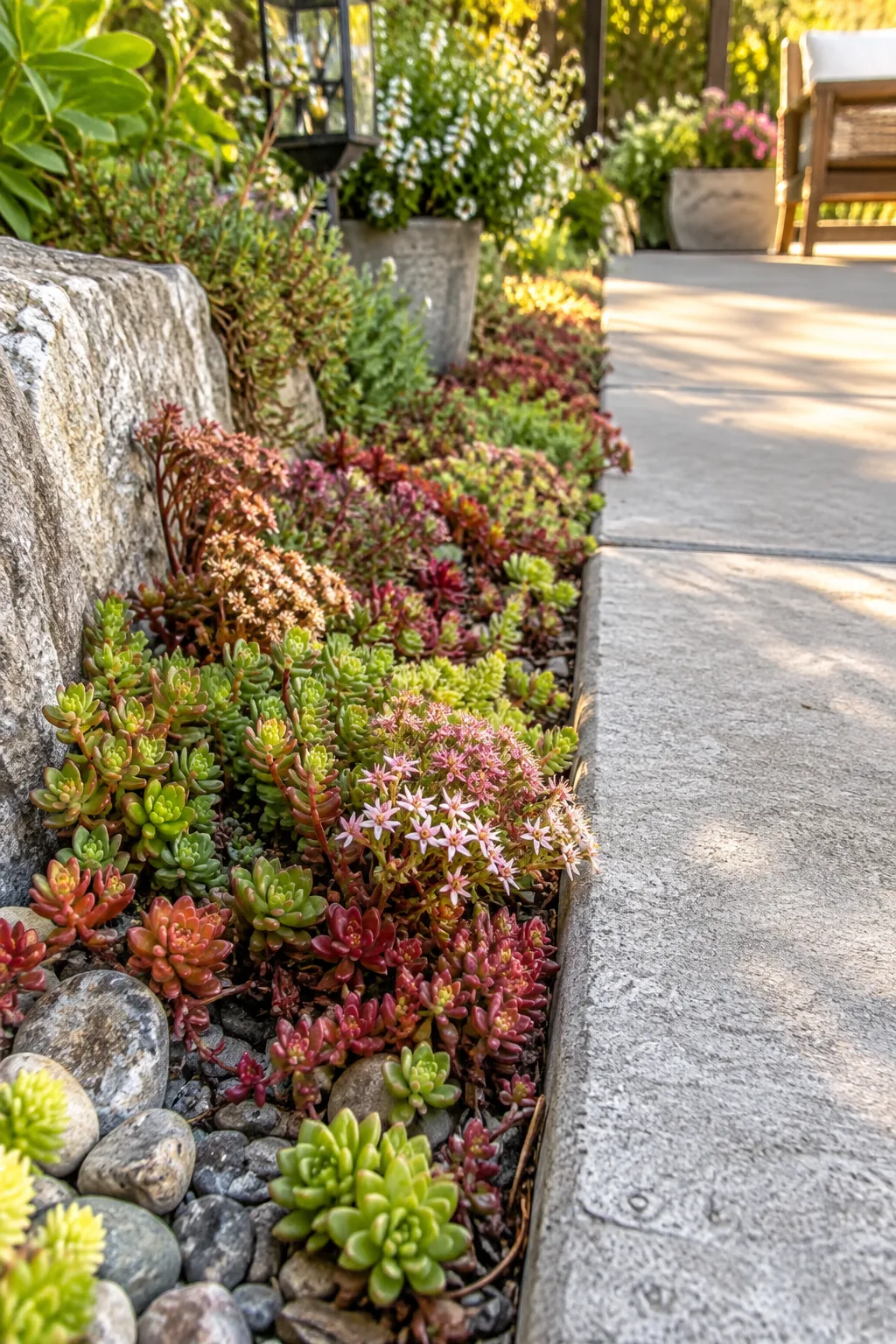
Most concrete patios radiate heat during the summer, creating a tough microclimate for delicate plants. Filling a narrow border trench with drought-tolerant creeping sedum solves the problem beautifully. These tough little succulents actually thrive in the hot, dry soil right next to the slab. They spread quickly to form a dense, textured mat that chokes out weeds and softens the hard edge. During the cooler months, many varieties turn gorgeous shades of red and bronze for extended seasonal interest.