
Pro Spice Drawer Layout & Jar Sizing Guide
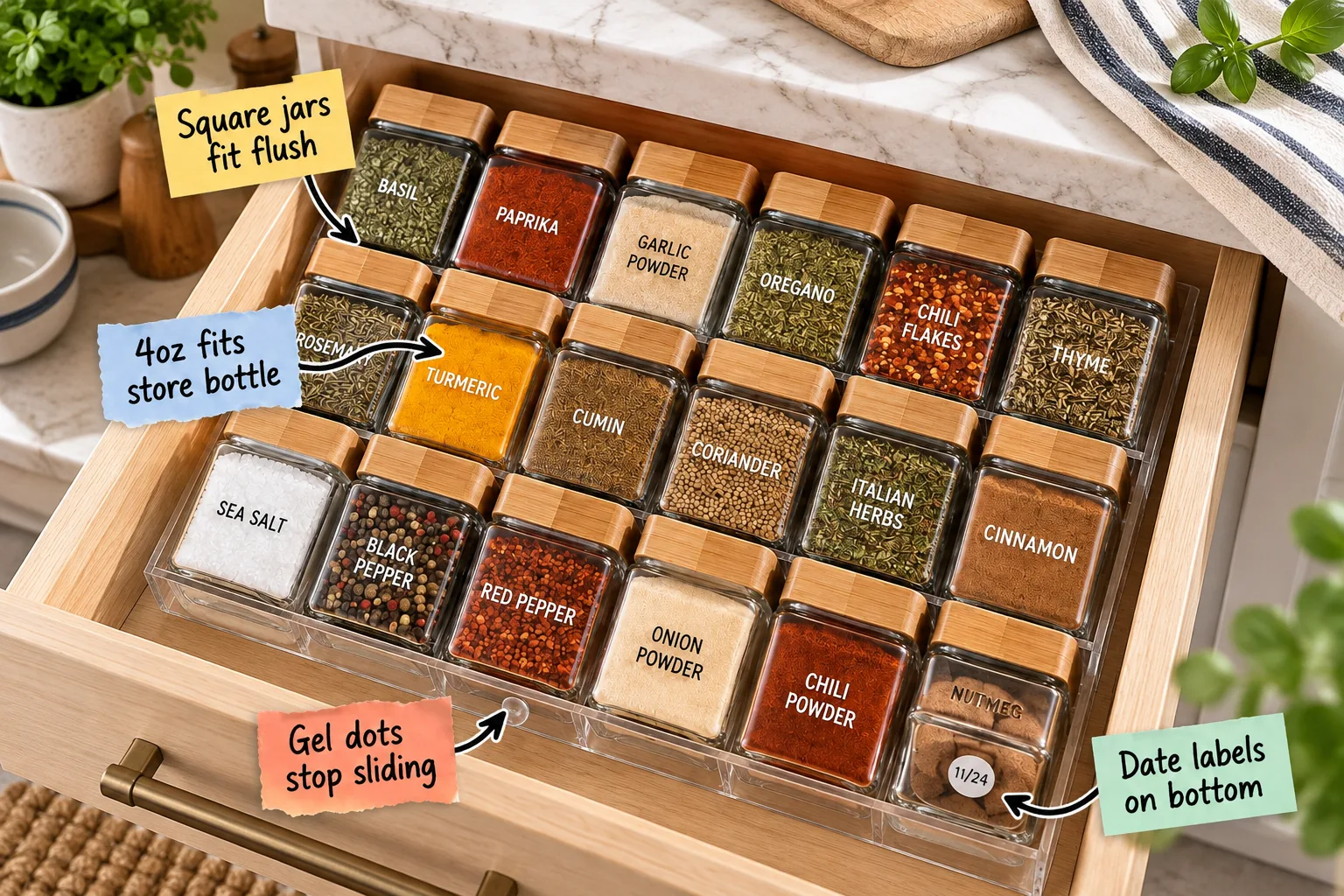
Stop digging through cluttered cabinets and use this exact blueprint for tiered acrylic inserts and flush-fit jars to build a perfectly organized collection. This pro spice drawer layout and jar sizing guide helps you measure your space, choose exact capacities, and lock inserts perfectly in place today.
Emptying and Cleaning the Drawer
Before installing any new acrylic tiers, completely empty your current spice collection and vacuum out the drawer box. Errant paprika dust or sticky garlic residue will prevent your new inserts from sitting perfectly flat against the wood bottom.
Measuring Your Drawer Clearance
In my own Denver kitchen, I learned the hard way that bamboo lids need breathing room. Jars resting on angled acrylic tiers typically require a minimum of 4.5 inches of internal clearance to allow the drawer to open smoothly.
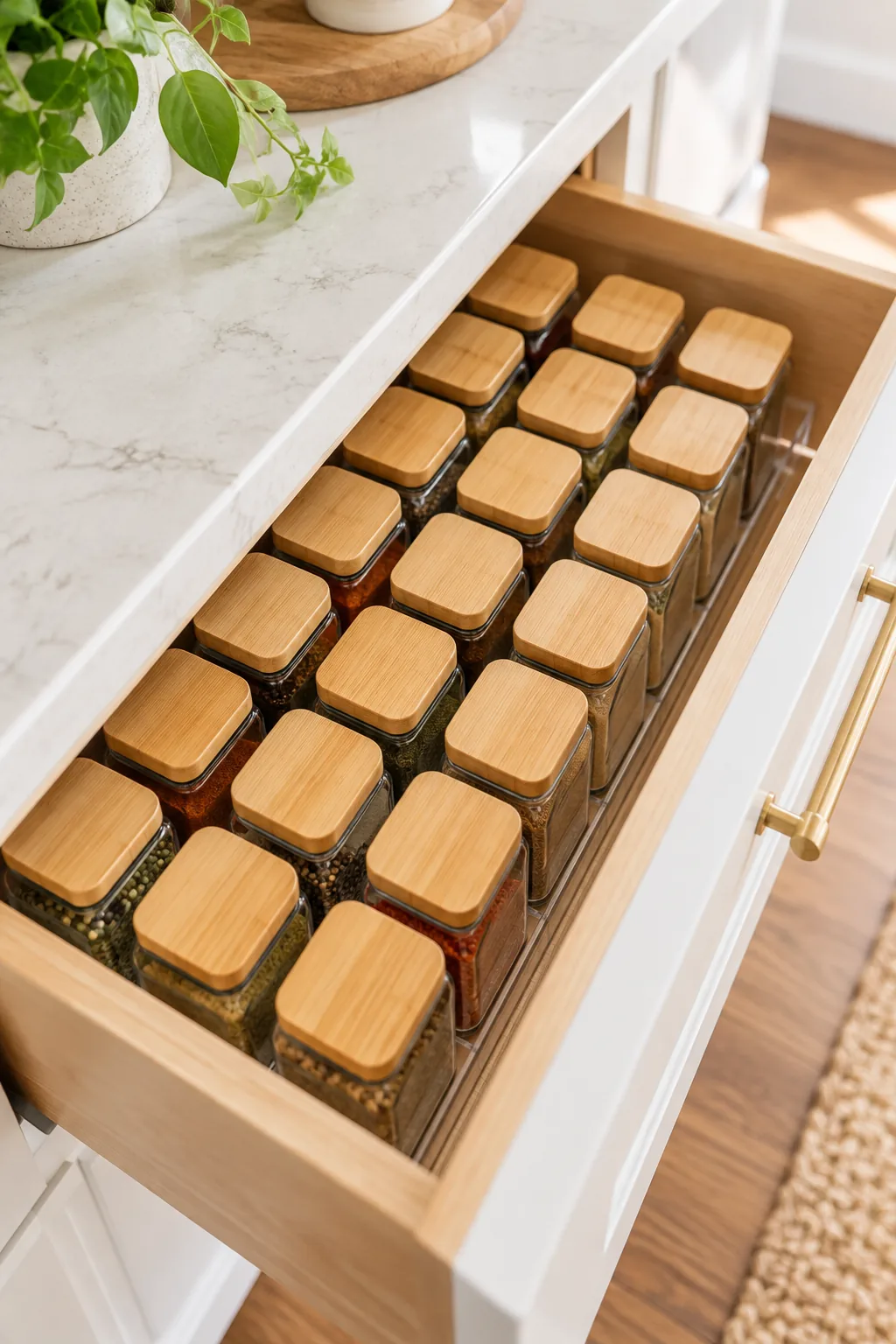
Before buying any inserts or jars, verify your exact drawer dimensions to ensure a smooth, catch-free fit.
Evaluating Drawer Width Constraints
Beyond vertical clearance, the usable width of your drawer dictates your ultimate grid capacity. Older cabinet boxes often feature curved inner corners or bulky glide hardware that reduces the actual flat surface available for resting your new acrylic tiers.
| Drawer Type | Hardware Intrusion | Usable Width Loss | Insert Adjustment |
|---|---|---|---|
| Modern Frameless | Undermount glides | 0 inches | Order exact fit |
| Face Frame | Side-mounted glides | 1 inch | Subtract 1 inch |
| Vintage Wood | Center wood track | 0.5 inches | Subtract half inch |
| Custom Millwork | Concealed glides | 0.25 inches | Subtract quarter inch |
Always measure the absolute narrowest point of the drawer bottom rather than the top edge. Subtracting a quarter inch from this final measurement ensures your acrylic inserts drop in easily without aggressively scraping the finished wood sides.
Securing the Acrylic Tiers
During a recent client build, I noticed lightweight drawer inserts tend to slide backward when the drawer is pulled open quickly. The secret to a grounded, permanent feel is creating an invisible grip between the acrylic and the wood.
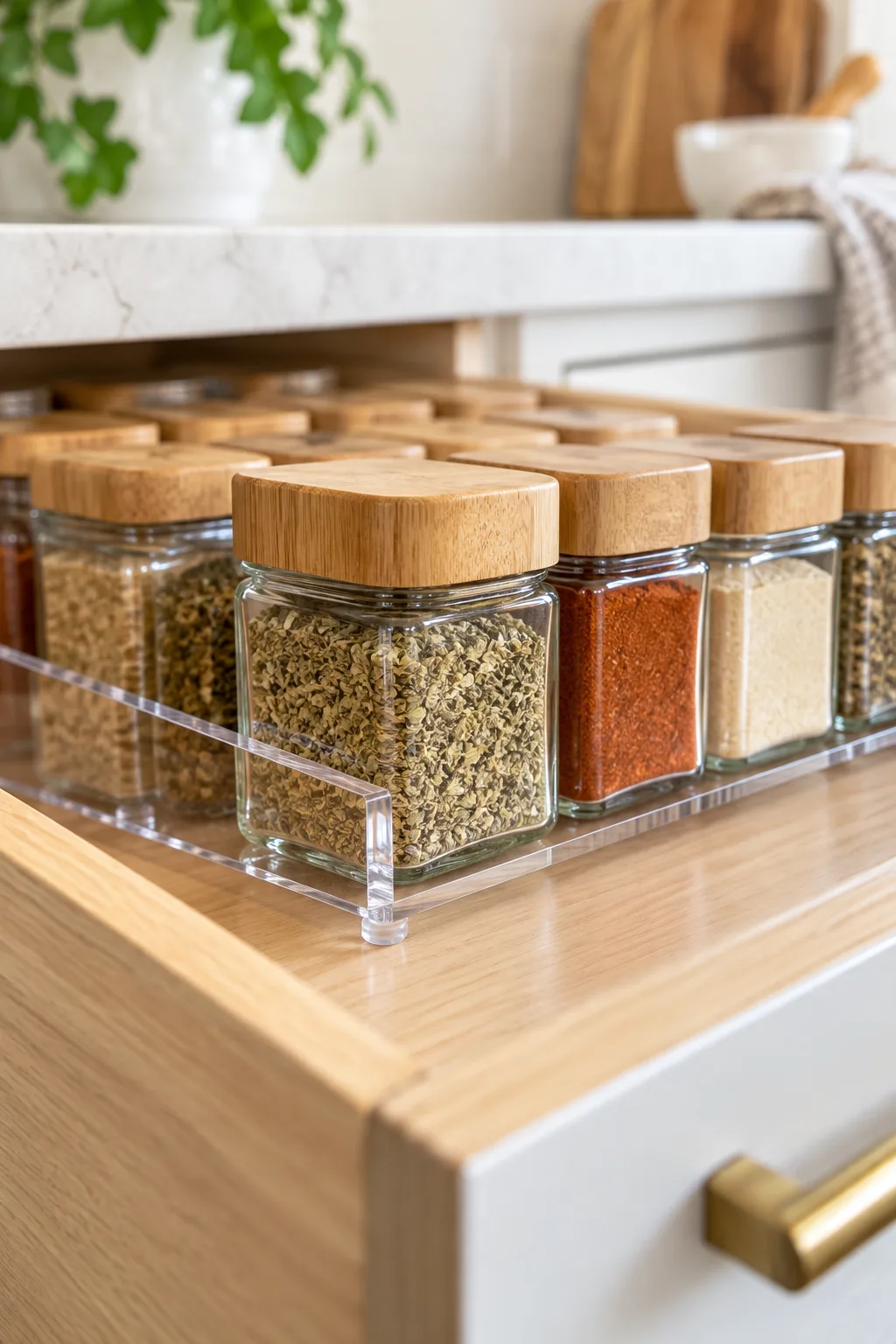
To stop this movement entirely, place a 3mm clear polyurethane gel dot under the front lip of the acrylic tier. These tiny bumpers lock the tray in place while remaining completely invisible from above.
Choosing the Right Insert Material
Selecting the foundation for your spice grid requires balancing aesthetics with daily maintenance. Expandable plastic trays often warp under heavy glass, while solid wood inserts can absorb stubborn turmeric or paprika stains that are impossible to scrub out.
Choosing the Right Jar Shape
When comparing round versus square spice containers, geometry dictates your drawer’s ultimate capacity. Square jars sit shoulder-to-shoulder, completely eliminating the dead space that round bottles naturally create when packed tightly together.
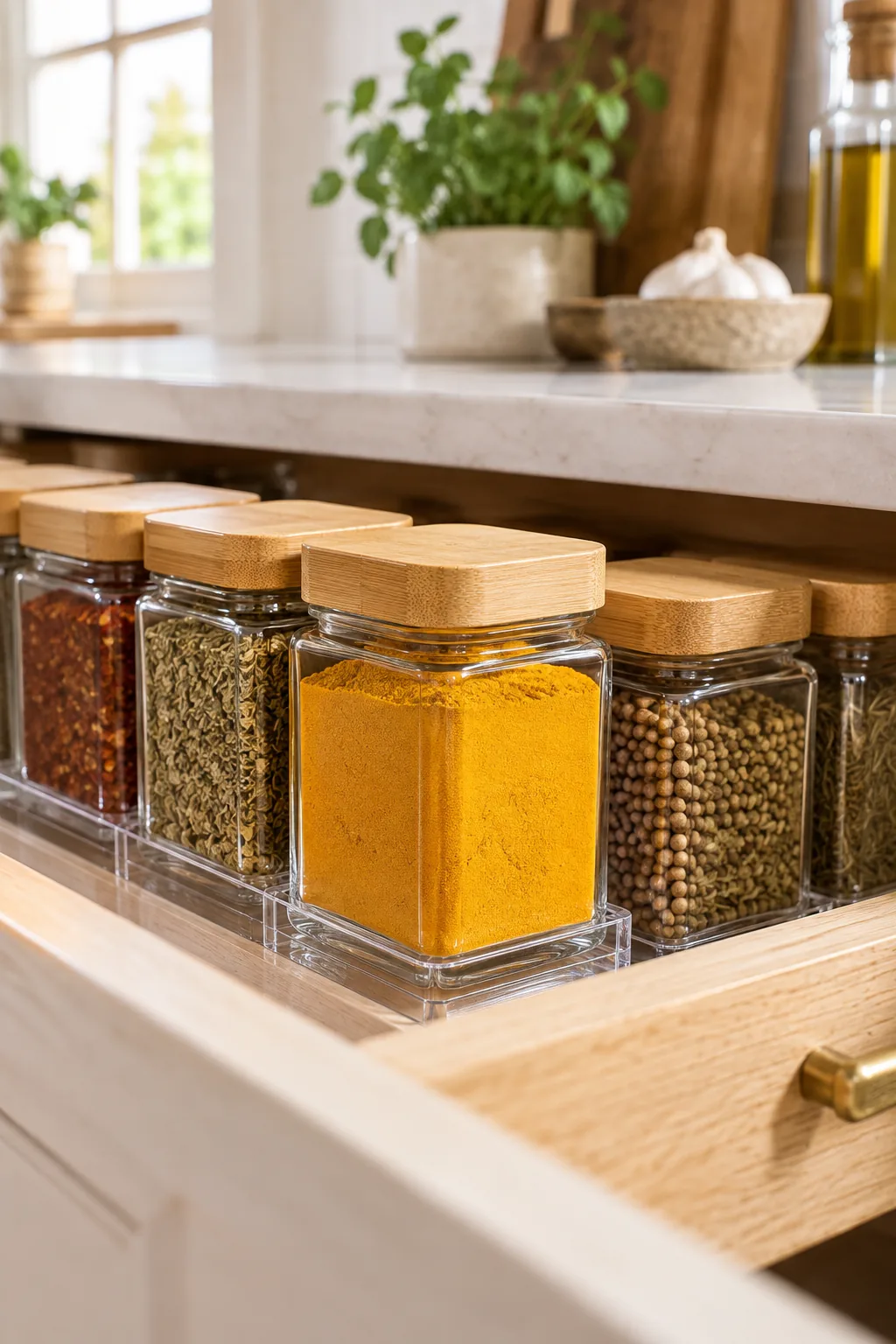
This flush-fit approach optimizes the narrow footprint of a standard kitchen drawer. By aligning flat glass sides, you gain a seamless, architectural look and can often squeeze an entirely extra row of spices into the same space.
Selecting the Best Lid Material
The closure impacts both spice longevity and your kitchen’s aesthetic. Metal lids frequently rust in humid environments, while cheap plastic caps crack over time. Solid bamboo lids with silicone gaskets offer a warm organic contrast while creating an airtight seal.
Washing and Prepping New Jars
Before transferring any spices, thoroughly sanitize every new glass jar to prevent cross-contamination. Run them through a high-heat dishwasher cycle, then allow the glass and bamboo lids to air dry completely for twenty-four hours to prevent hidden condensation.
Sizing Jars for Standard Spices
Decanting can be frustrating if you confuse fluid ounces with net weight. A 4oz volume jar perfectly holds the contents of a standard grocery store spice bottle, preventing those annoying leftover packets from cluttering your pantry shelves.
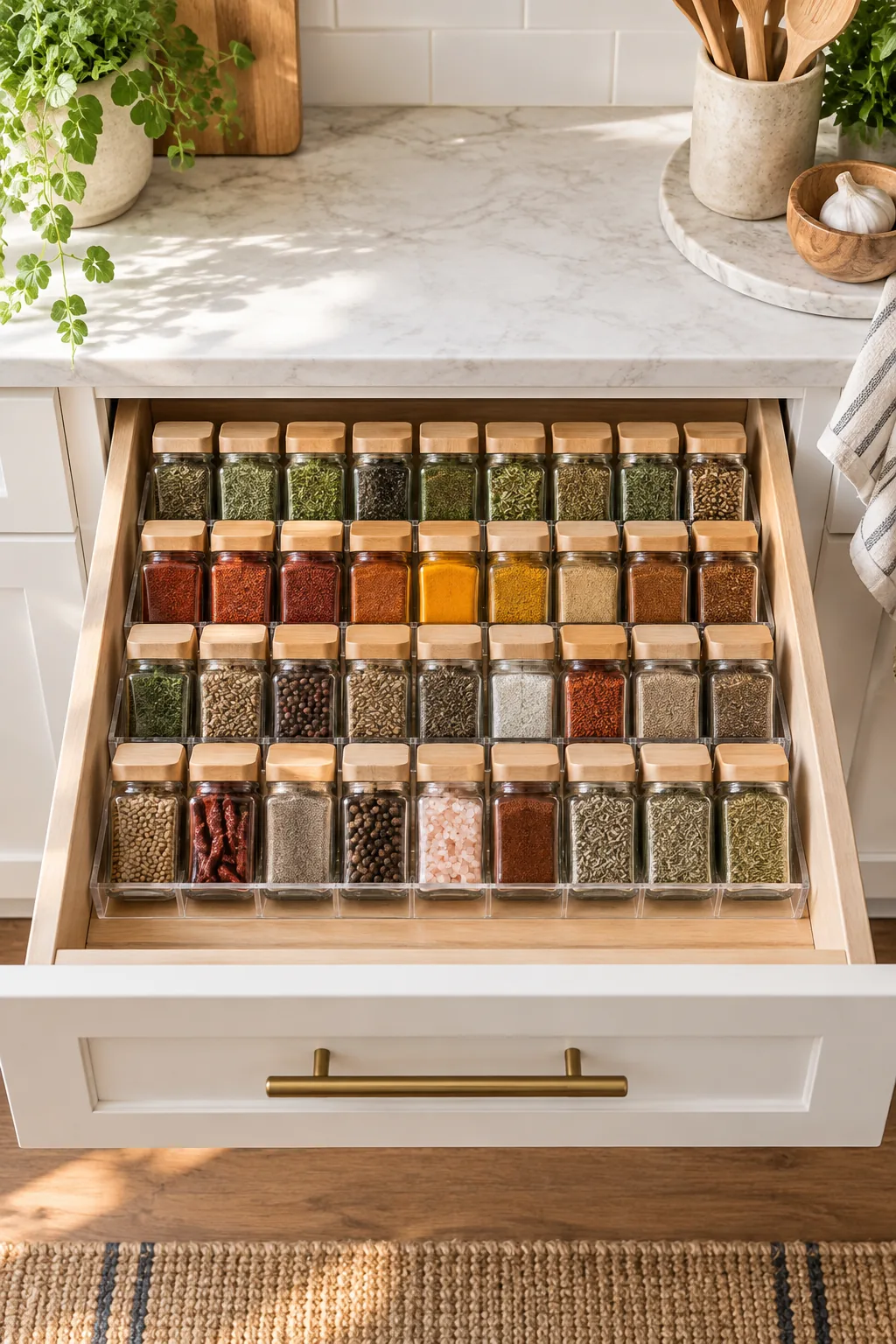
Most commercial spice bottles contain 1.5 to 2.5 oz of net weight, which translates perfectly into a 4oz fluid capacity glass container. This simple sizing rule keeps your backup pantry completely empty and your primary drawer fully stocked.
Handling Oversized Bulk Purchases
Some specialty spices or frequently used staples only come in large bulk bags that exceed standard drawer capacities. Attempting to force these massive quantities into a standard grid disrupts the visual harmony and wastes valuable front-row real estate.
The Drawer Layout and Sizing Guide
To build your definitive layout blueprint, calculate your row capacity by dividing the internal drawer width by the 1.8-inch width of a standard square jar. This exact math ensures a tight, professional grid without awkward gaps.
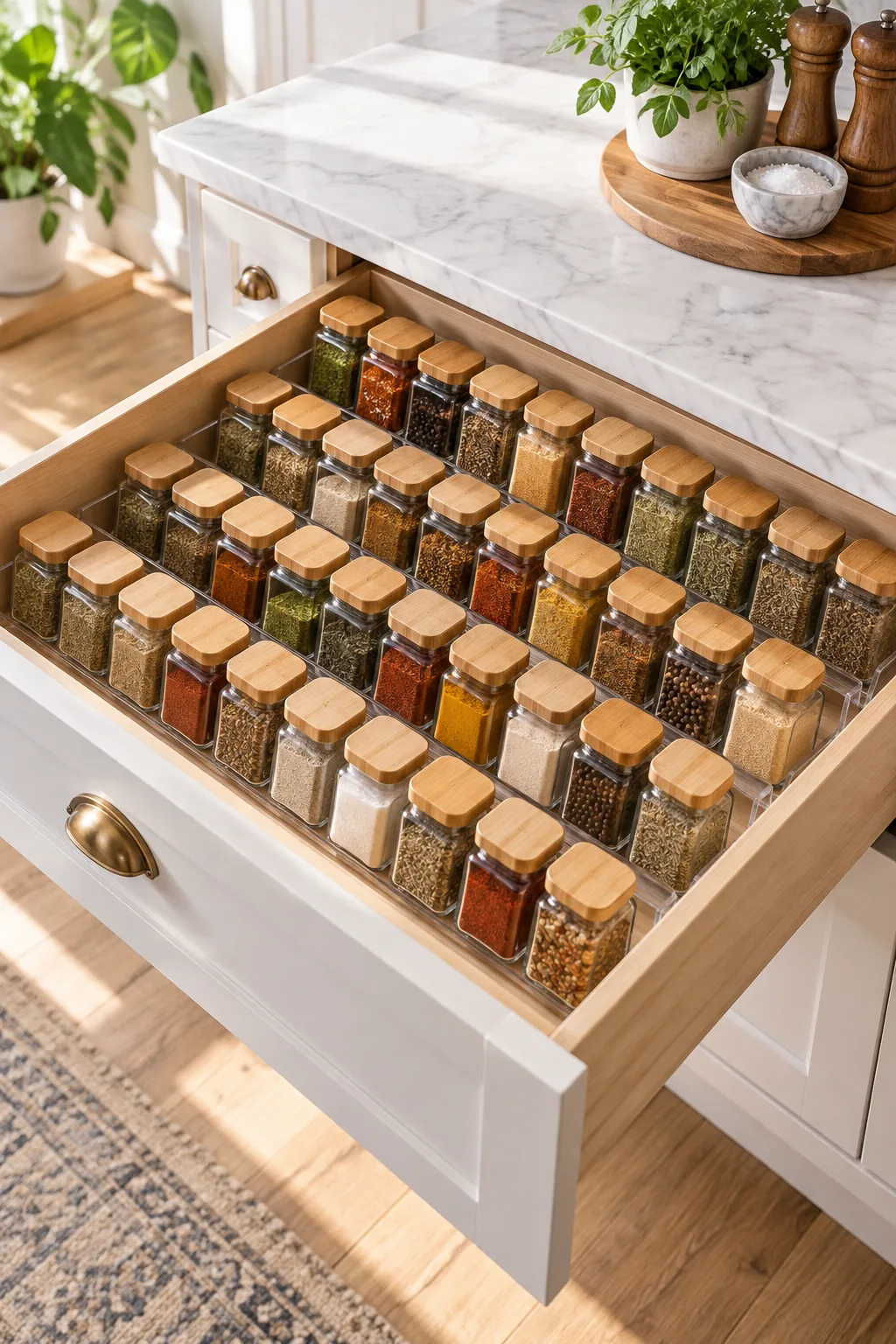
Even with a perfectly calculated grid, you will occasionally buy a bulk spice or odd-sized container that doesn’t fit the primary system.
Accommodating Custom Spice Blends
When mixing your own barbecue rubs or taco seasonings, standardizing on the exact same jar size maintains the visual rhythm of the drawer. Dedicate the far right column of your grid entirely to these custom house blends for easy access.
Managing Refill Inventory
Keeping a perfectly gridded drawer means you need a strategy for the half-empty bulk bags left over after decanting. Dedicate a single airtight plastic bin in your pantry specifically for these secondary refill pouches to maintain freshness.
Arranging by Color and Use
I always set up my own daily drivers—like sea salt, black pepper, and garlic powder—right in the front row for immediate access. Once the grid is sized, a practical layout strategy balances frequency of use with visual harmony.
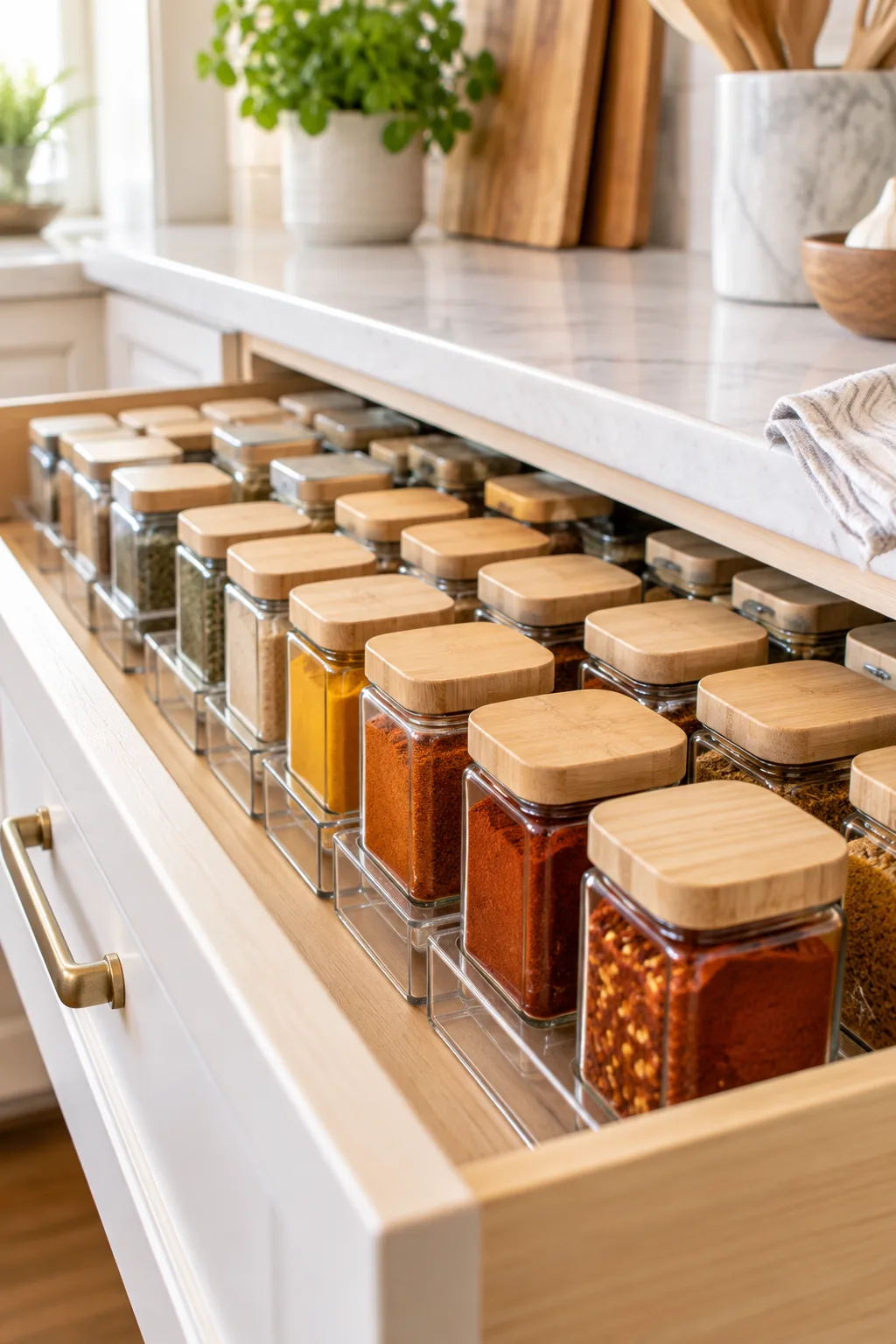
Group warm baking spices together in one zone and green herbs in another. This color-blocked approach acts like a visual map, accelerating dinner prep because your eye naturally jumps to the correct section without reading every label.
Alphabetizing Versus Categorizing
While strict alphabetical order seems logical on paper, it often separates complementary flavors like cumin and coriander across opposite sides of the drawer. Grouping by flavor profile creates a much more intuitive cooking experience when building a complex dish.
- Zone by cuisine: Keep Italian herbs together for quick pasta prep.
- Zone by application: Group baking spices like cinnamon and nutmeg in a dedicated row.
- Zone by heat: Place chili flakes, cayenne, and paprika in a distinct spicy section.
- Zone by frequency: Keep everyday staples in the front row regardless of their flavor profile.
This functional zoning method reduces the time spent scanning the drawer, allowing you to grab three or four complementary jars in a single motion while managing a hot stove.
Applying Front-Facing Labels
I used to label the lids in my own home, but scanning them while looking down at an angled tray was always frustrating. The most functional approach is placing the text directly on the front glass face of the jars.
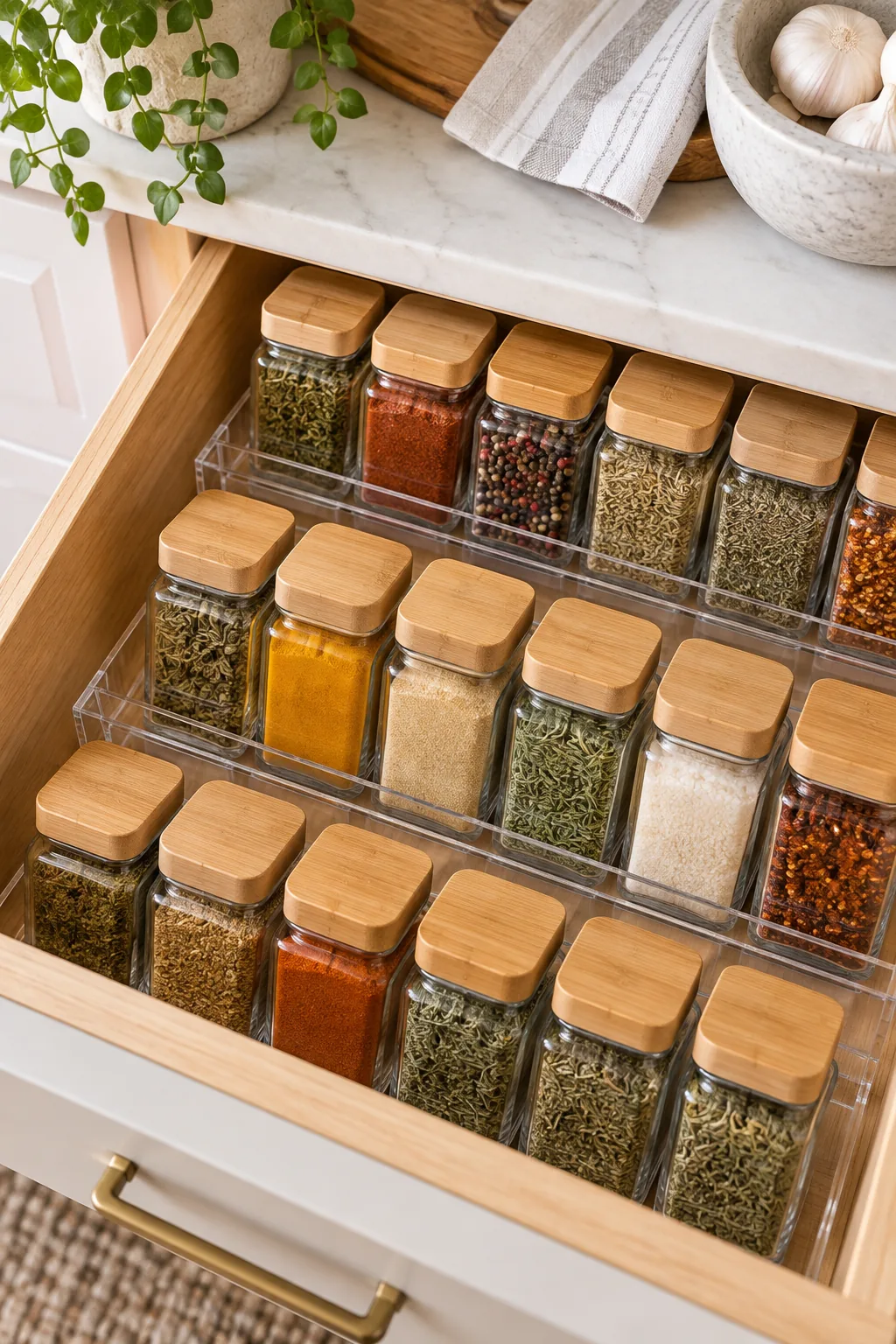
Apply crisp white vinyl decals or printed clear labels to the center of the glass. The high contrast against the colorful spices ensures they are instantly readable without having to pull the jar out of the drawer.
Maintaining Label Alignment
Crooked text instantly ruins the clean aesthetic of a custom spice grid. Use a simple cardboard template cut to the jar’s exact height to ensure every single decal sits at the exact same level across the entire drawer.
Choosing the Right Font Style
When selecting or printing your vinyl decals, prioritize legibility over overly decorative scripts. A clean, bold sans-serif font ensures you can distinguish between chili powder and cayenne pepper with a quick glance in dim evening kitchen lighting.
Updating Labels for Seasonal Spices
Your cooking habits naturally shift with the weather, bringing pumpkin pie spice forward in autumn and grill rubs out in summer. Swap these seasonal jars into the front rows as the months change to keep your current favorites accessible.
More Spice Drawer Aesthetics
Match your kitchen's style with these alternative drawer setups.
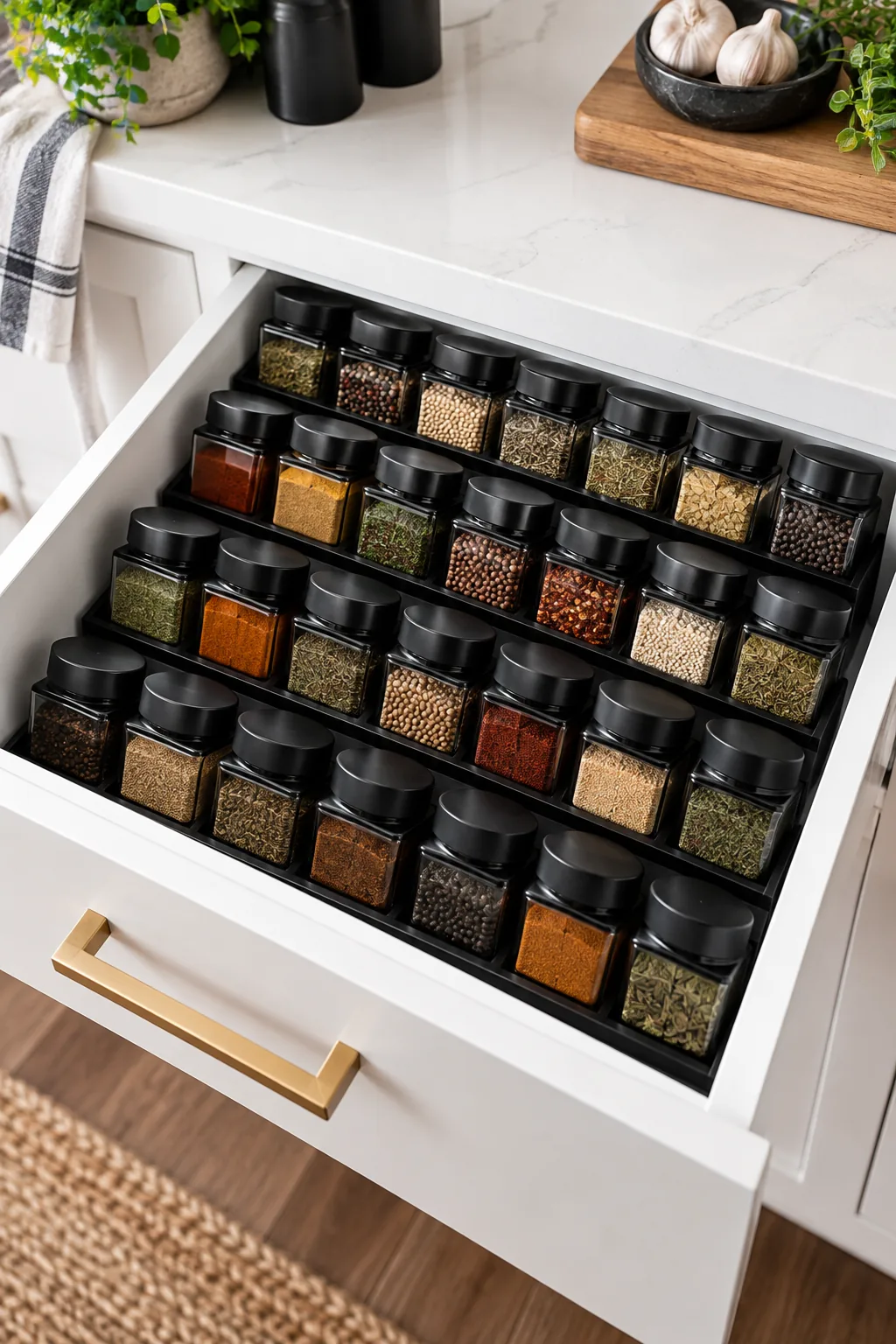
Minimalist Matte Black: Swap clear glass for opaque black jars to protect spices from light while maintaining a sleek, modern aesthetic.
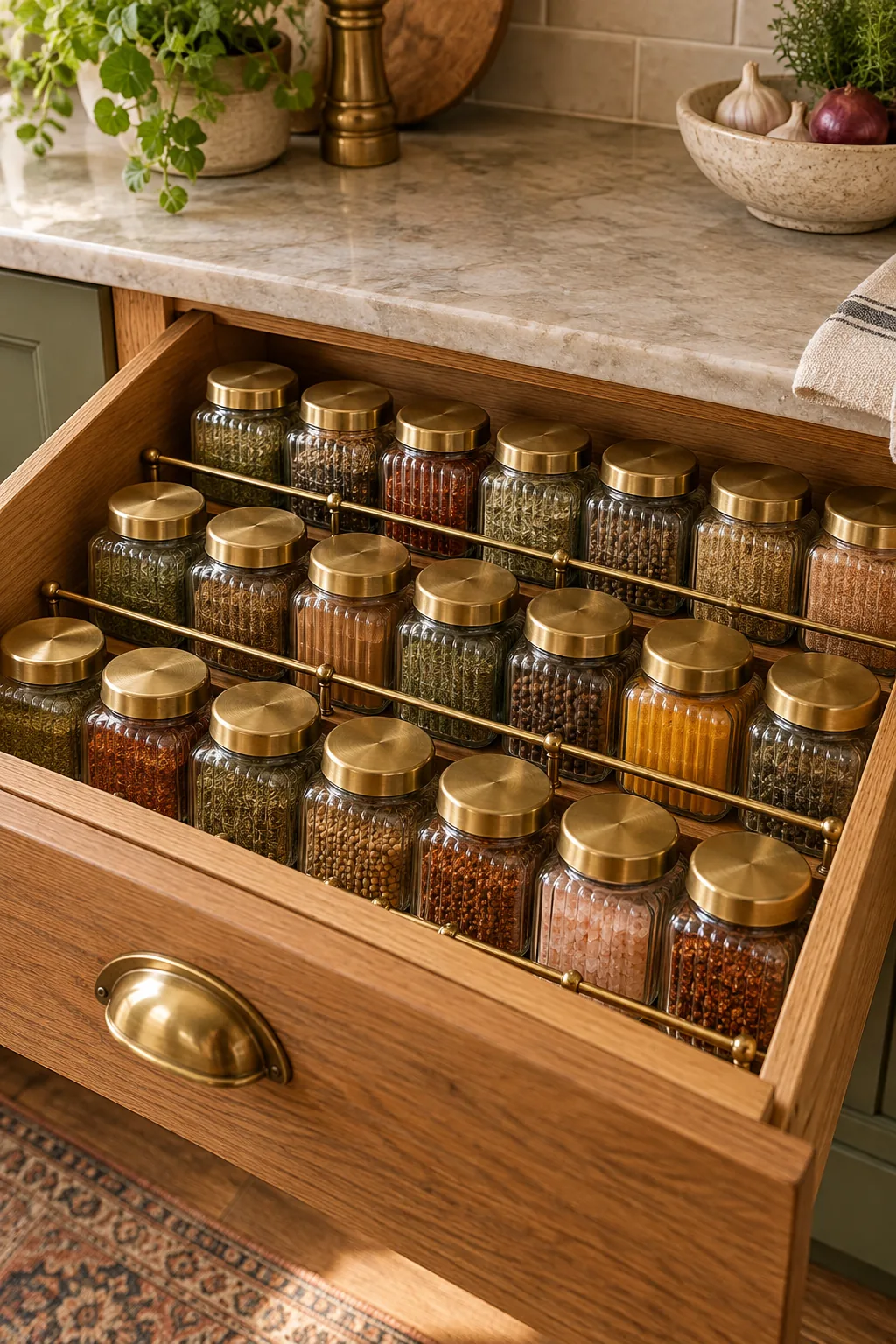
Warm Vintage Brass: Use ribbed glass and brass accents to give a traditional kitchen a touch of timeless elegance inside the drawers.
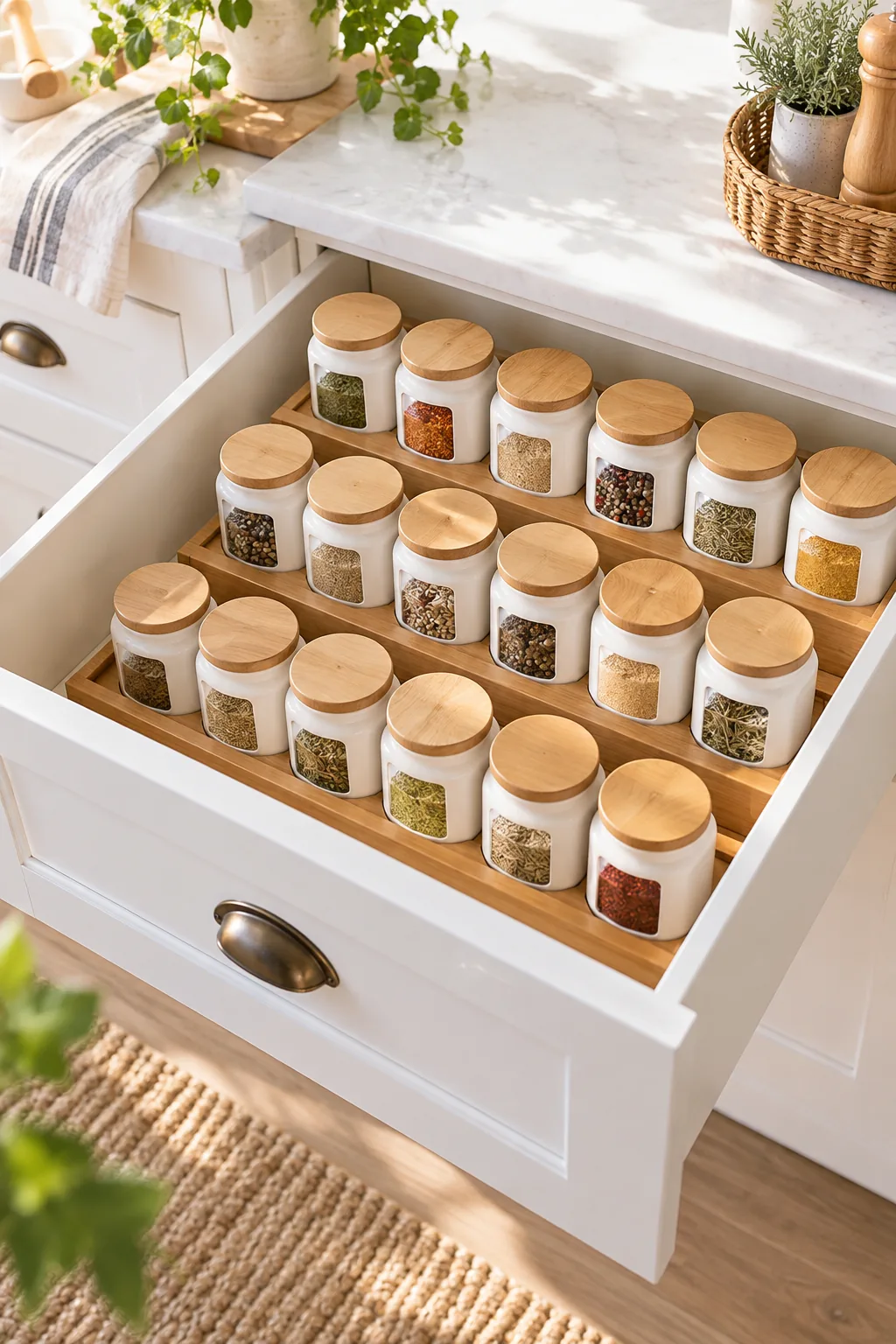
Clean White Ceramic: White ceramic jars with stamped lettering create a bright, uniform look perfect for a light-filled farmhouse kitchen.
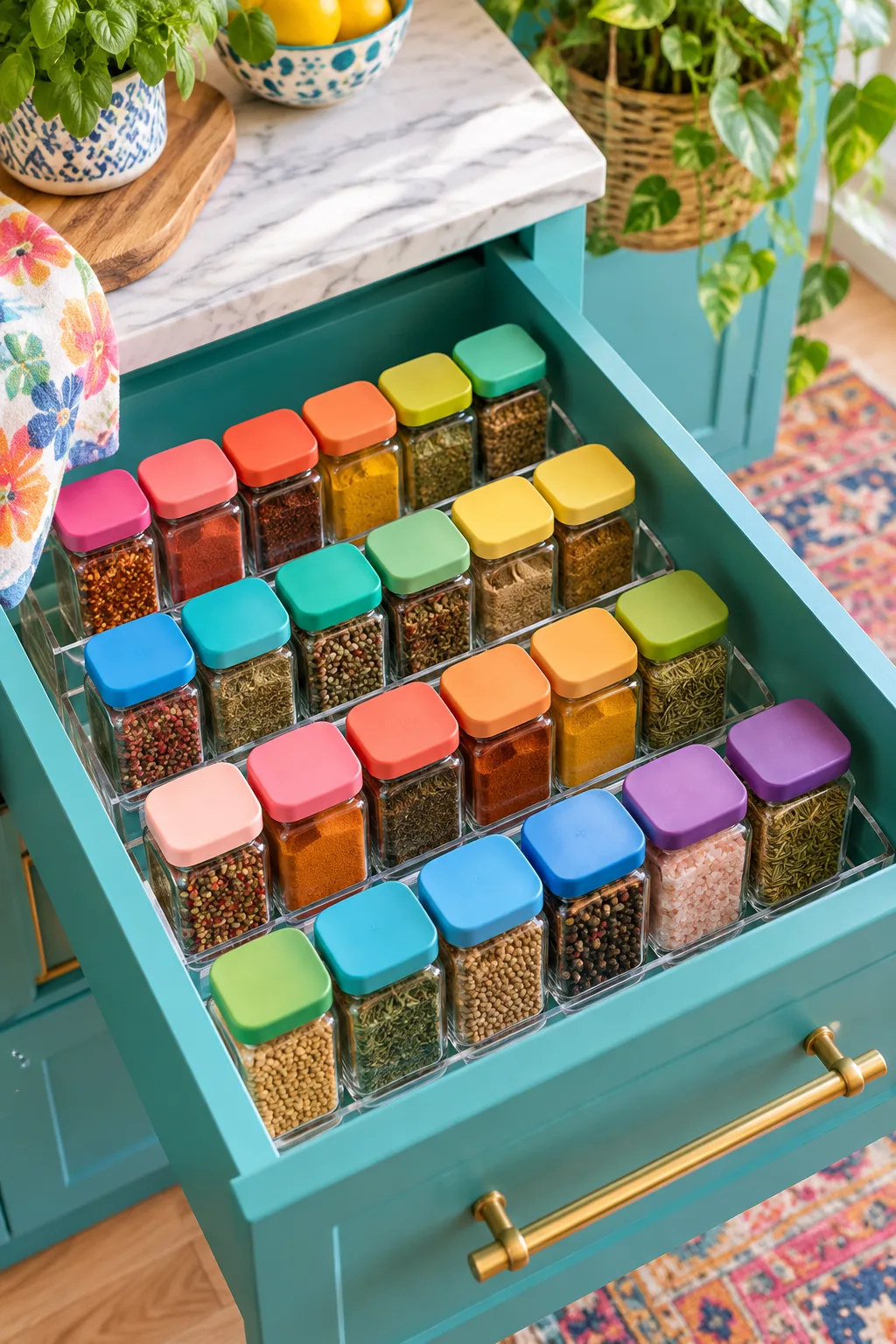
Eclectic Pantry Rainbow: Color-code your categories using bright silicone lids in a painted teal drawer for a playful, high-energy cooking space.
Tracking Expiration Dates
The biggest drawback to decanting is losing track of freshness when you toss the original packaging. You need a reliable system that tracks shelf life without cluttering the clean, minimalist aesthetic of your new custom front-facing labels.
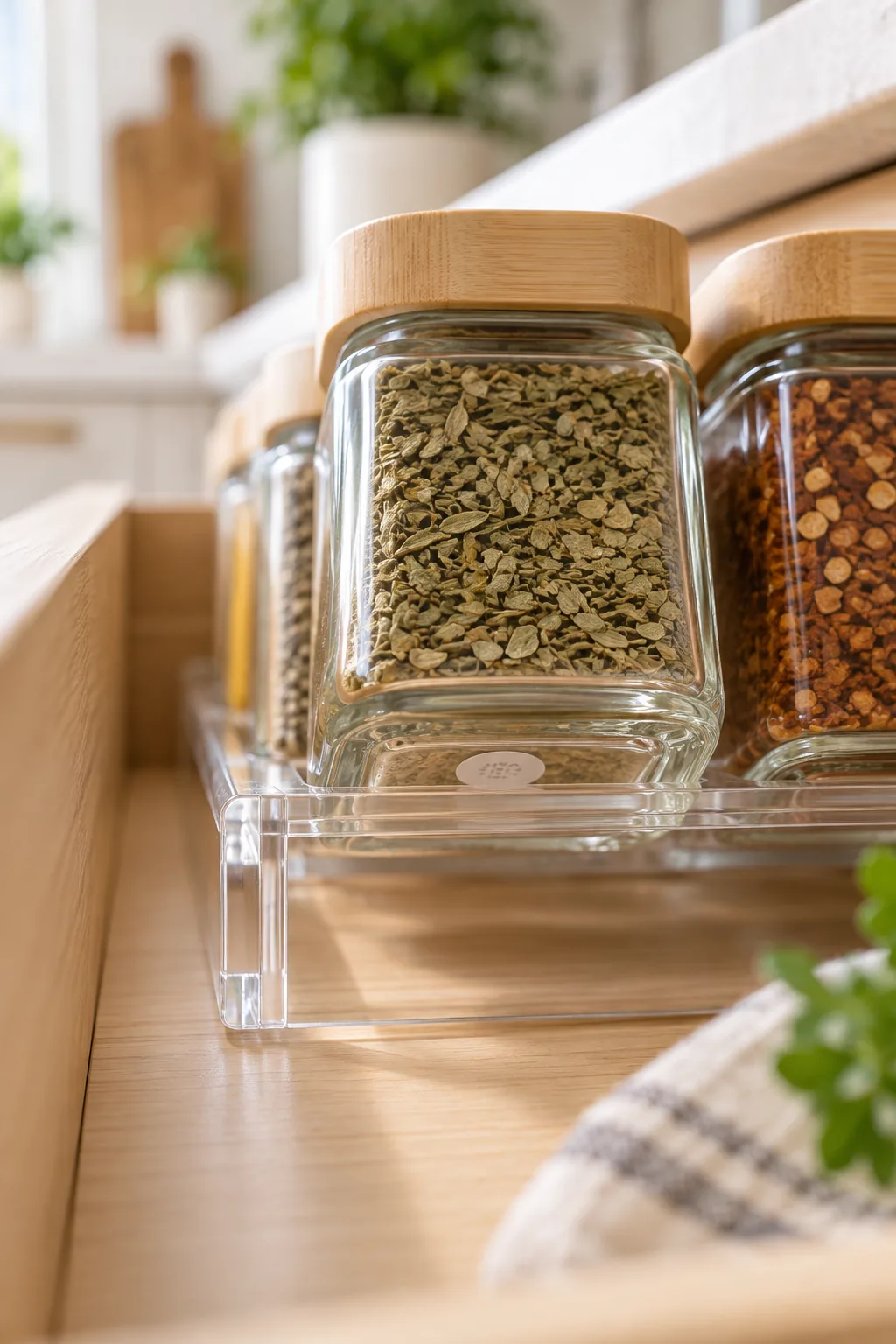
The simplest trick is placing small round date stickers directly on the bottom of the glass jars. Because they rest on clear acrylic tiers, you can easily read the dates through the bottom without having to lift a single jar.