
Interactive Kindness Bulletin Board: 4-Week Setup Guide
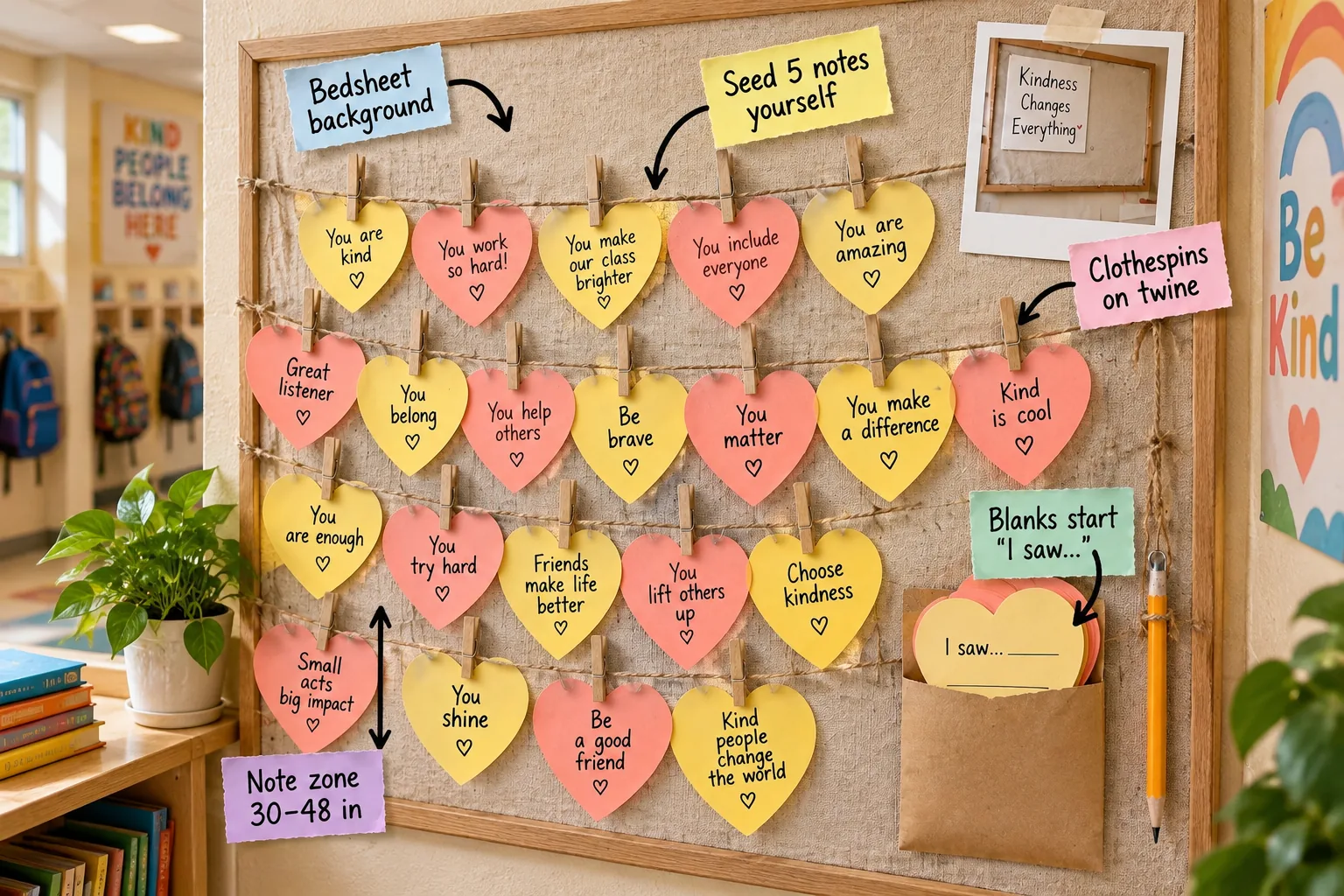
Building an interactive kindness board is much easier when you grab our free printable two-page launch sheet. It gives you a four-week note schedule, a prompt list, and a step-by-step setup guide to keep students writing positive notes all month long.
Stretch the Fabric Foundation
I always used to struggle with rolled craft paper tearing, until I switched to wrapping my boards in a twin flat bedsheet. You just pull the oatmeal linen fabric taut over a 4-by-6-foot corkboard and staple from the center outward for a smooth backdrop.
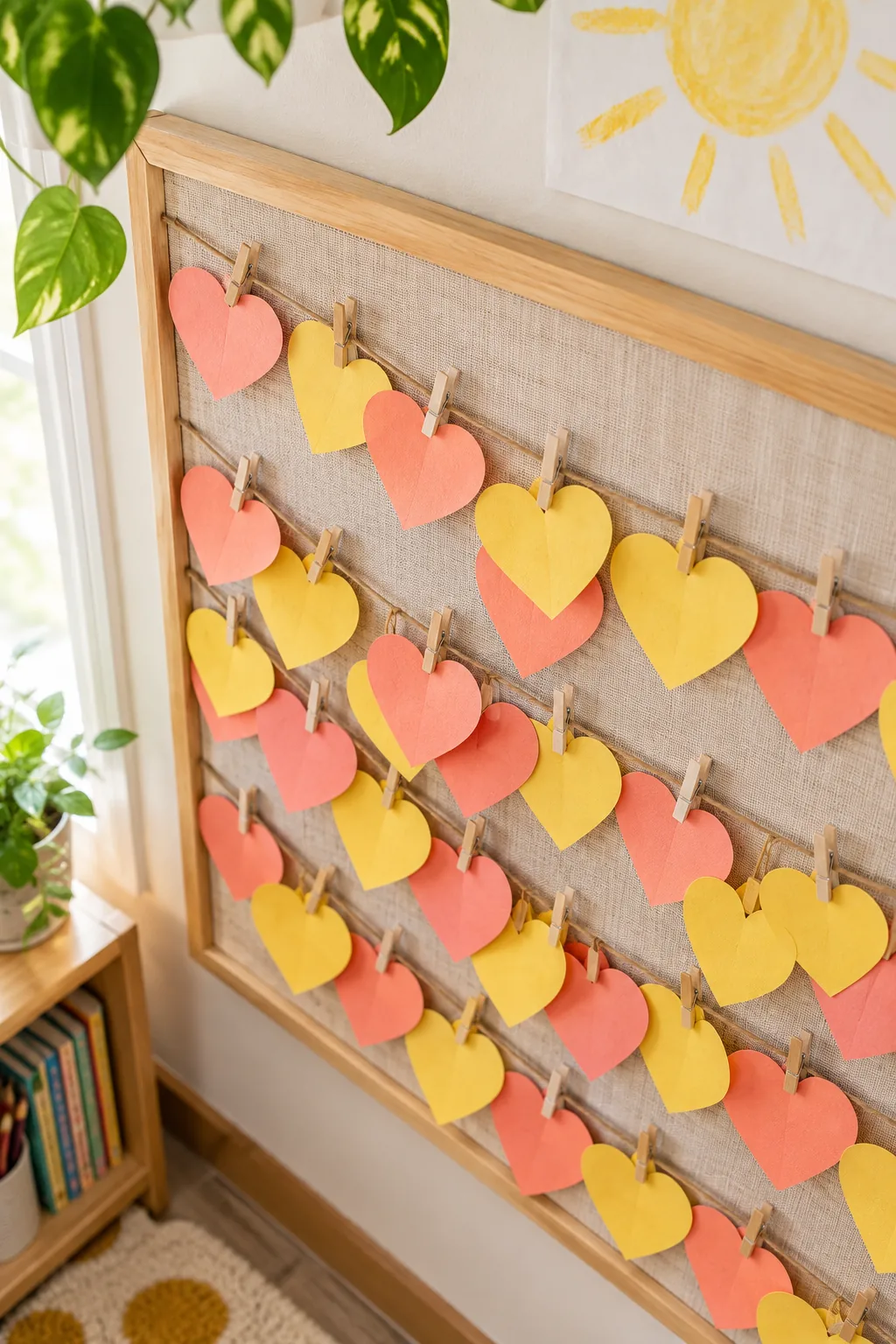
This heavy textile foundation instantly elevates the space and hides staple holes perfectly when you reset the display next year.
String the Display Lines
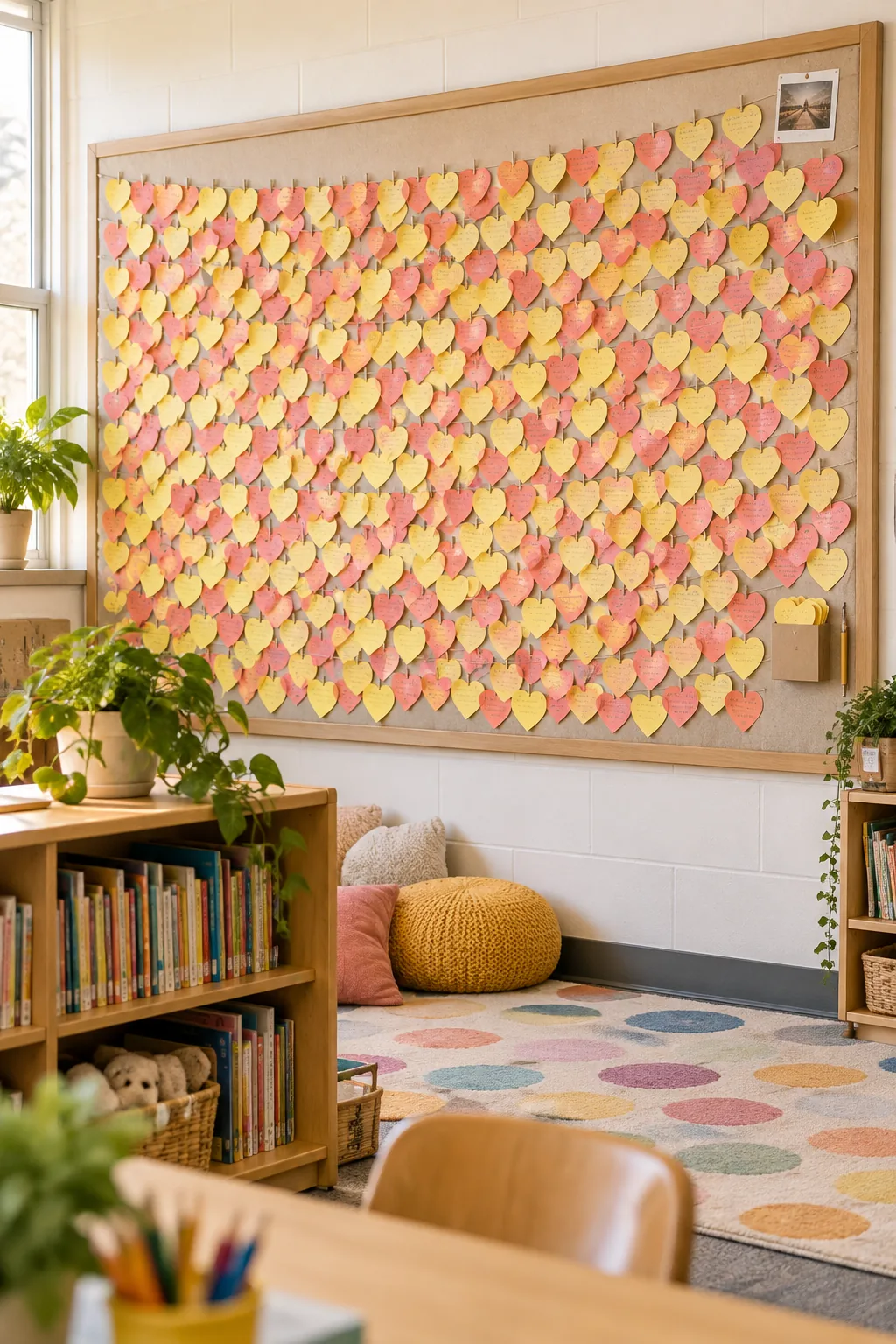
Anchor lengths of jute twine across the board using heavy-duty push pins at the outer edges. I pre-clip natural wooden clothespins onto the lines so they are ready for students to grab and use without searching for supplies.
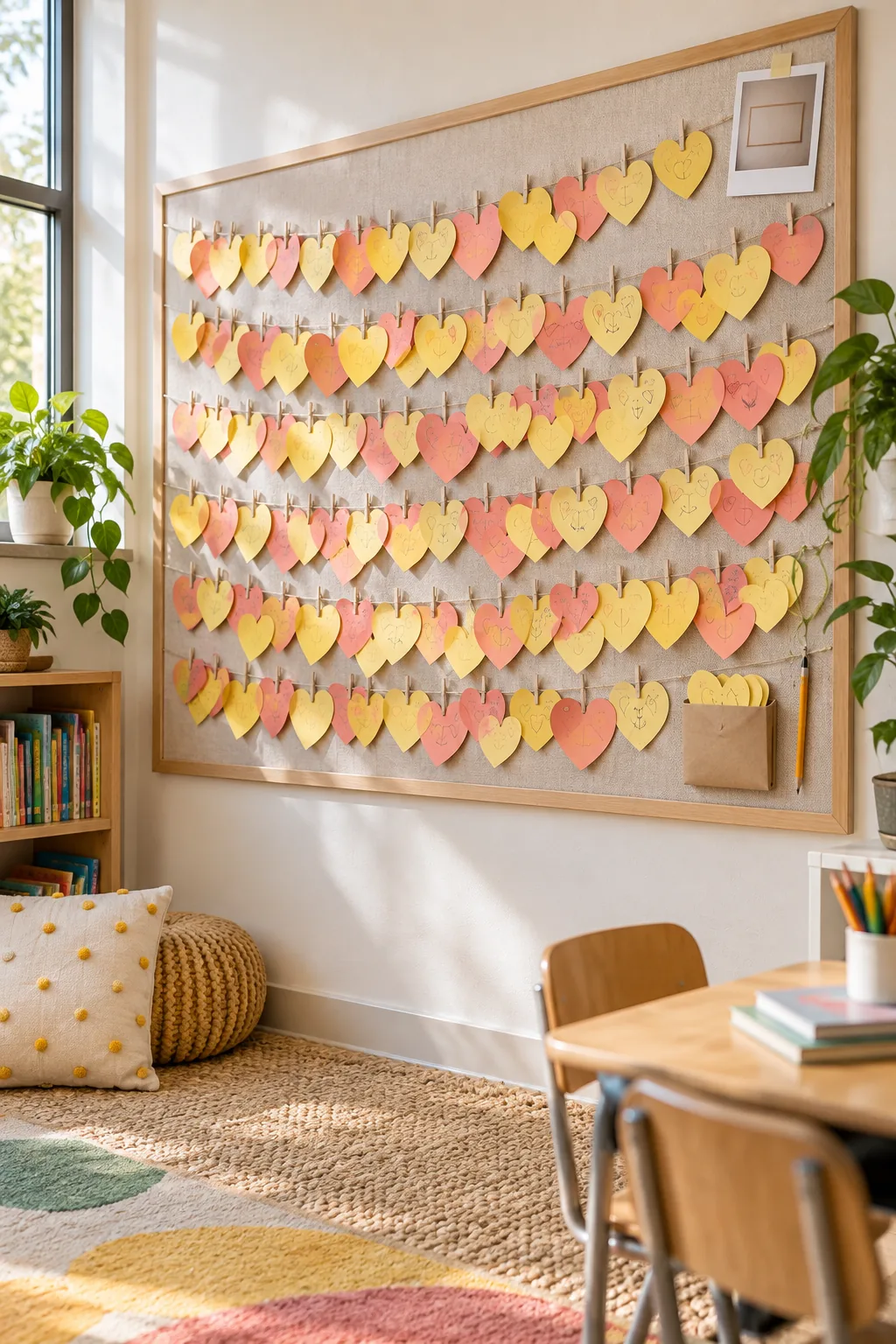
Spacing these rows carefully ensures the hanging hearts never overlap and obscure the kind words written on them.
| Grade Level | Row Spacing | Total Rows |
|---|---|---|
| Pre-K to K | 8 inches | 3 rows |
| 1st to 3rd | 6 inches | 4 rows |
| 4th to 5th | 5 inches | 5 rows |
Map the Student Reach Zone
When I set up my first classroom display, I placed everything too high and the kids completely ignored it. To make the board truly interactive, cluster the lowest twine lines in a note zone 30 to 48 inches from the floor.
- Eye Level: Place the densest cluster of notes where kids naturally look.
- Reach Limit: Keep the highest interactive line below their shoulder height.
- Clear Path: Ensure no desks block the floor space directly beneath the station.
Mount the Refill Station
Attach a kraft library card pocket at the bottom right to hold a stack of coral and sunshine-yellow heart cutouts. Pre-printing blanks that start with “I saw…” keeps the focus on specific actions rather than vague compliments.
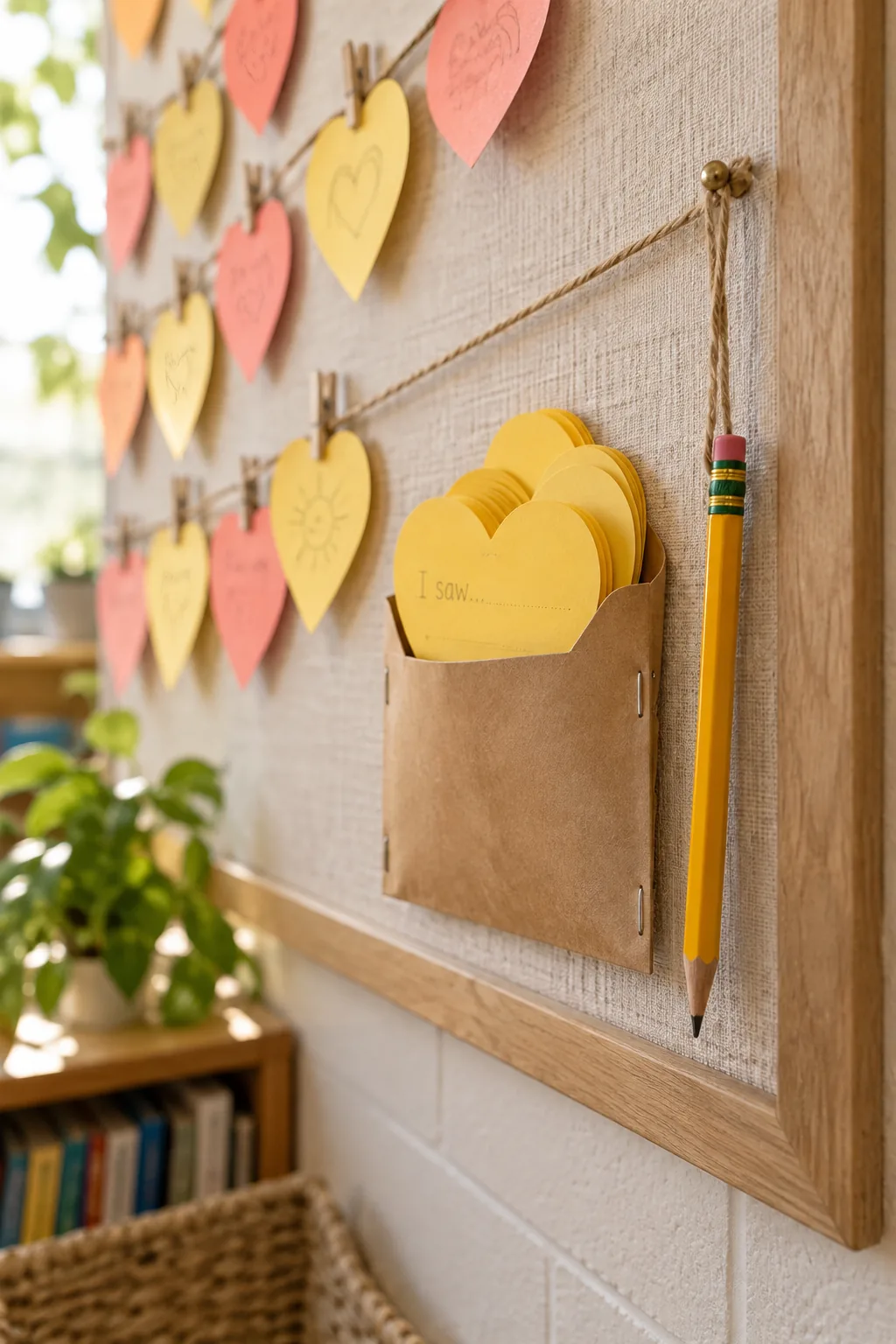
Leaving a stack of completely blank paper often leads to writer’s block or off-topic doodles.
Post the Day-One Progress Photo
Before the board fills up, take a small instant photo of the nearly bare display and tape it in the upper corner. Labeling it with a phrase like “Kindness Changes Everything” gives students a visual reminder of their community impact.
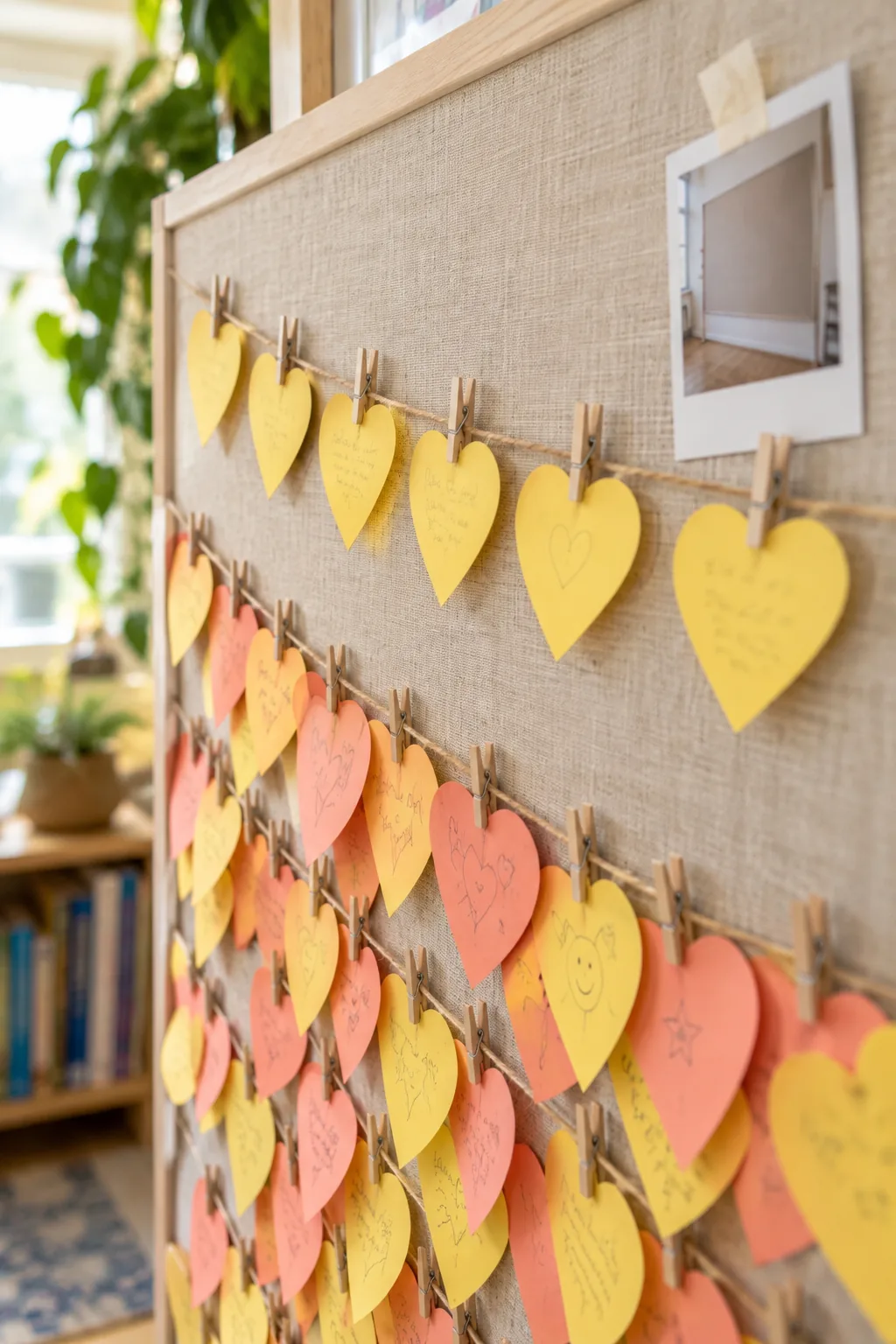
This simple “before” snapshot serves as a powerful anchor point once the display begins overflowing with daily shout-outs.
Plant the Seed Notes
Break the ice by taking time to seed 5 notes yourself and clipping them to the top twine line. When I launched my own neighborhood board, those first few teacher examples modeled exactly the specific, positive tone I wanted everyone to use.
Introduce Weekly Prompts
Keep the momentum going by introducing a new theme each week during your morning meetings. I love shifting the focus from general kindness to specific acts, like helping with cleanup, because it always sparks a fresh wave of participation.
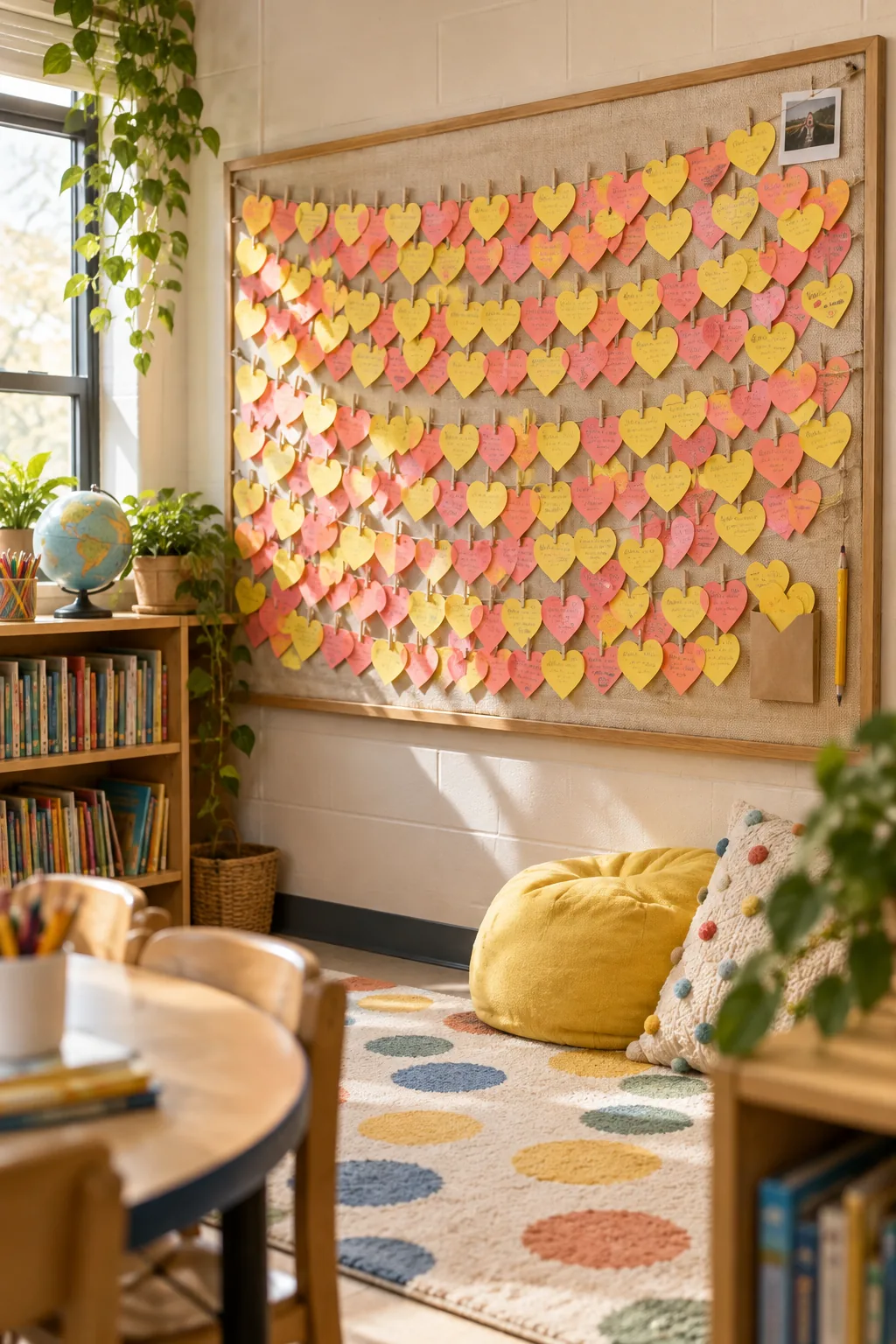
Guiding their attention toward these specific daily interactions ensures the board continues to grow all month long.
More Ways to Style a Kindness Board
Adapt the interactive note concept to fit your classroom theme or hallway colors with these distinct looks.
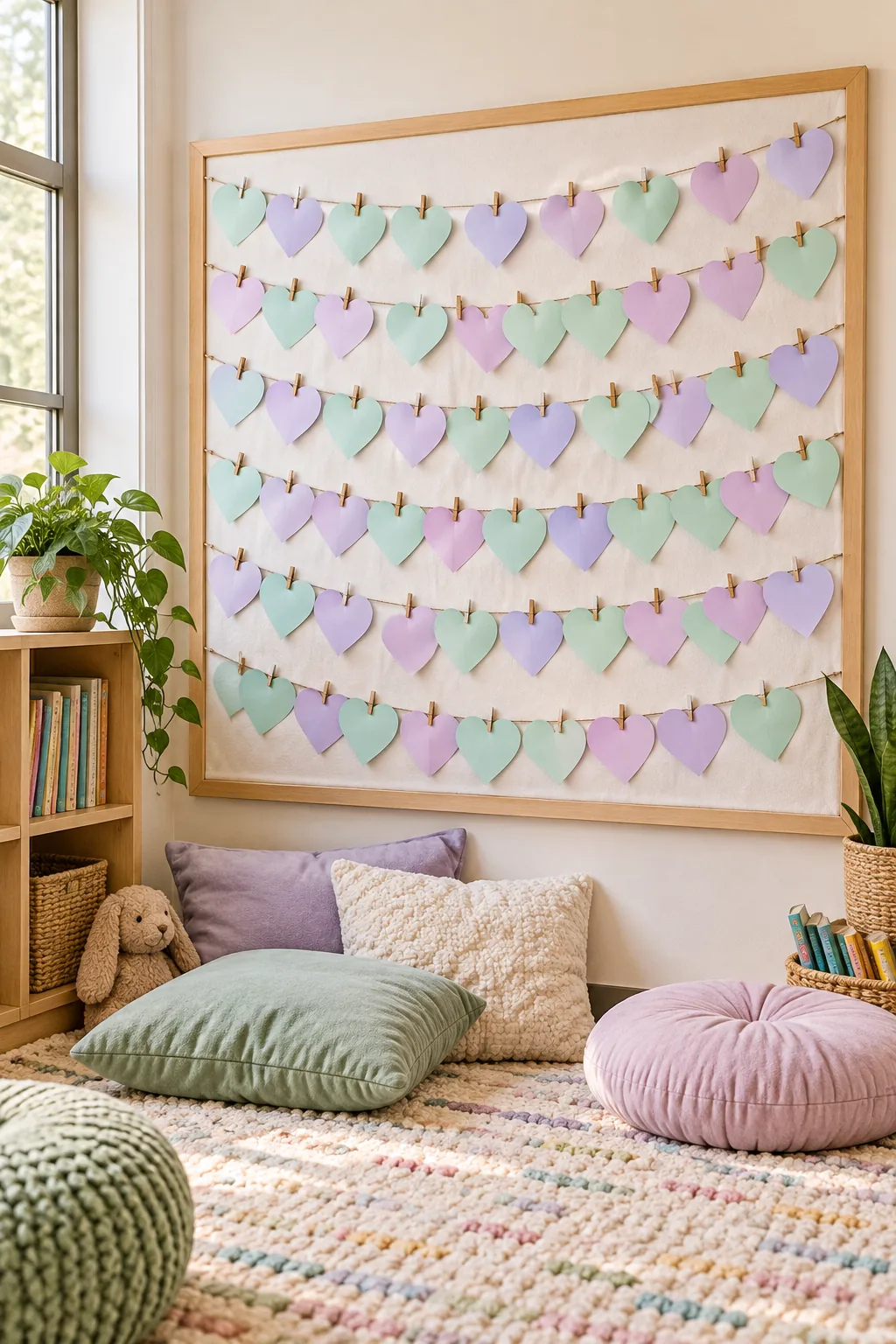
Pastel Rainbow Reading Nook: Swap the warm tones for cool mint and lilac hearts against a crisp white canvas background.
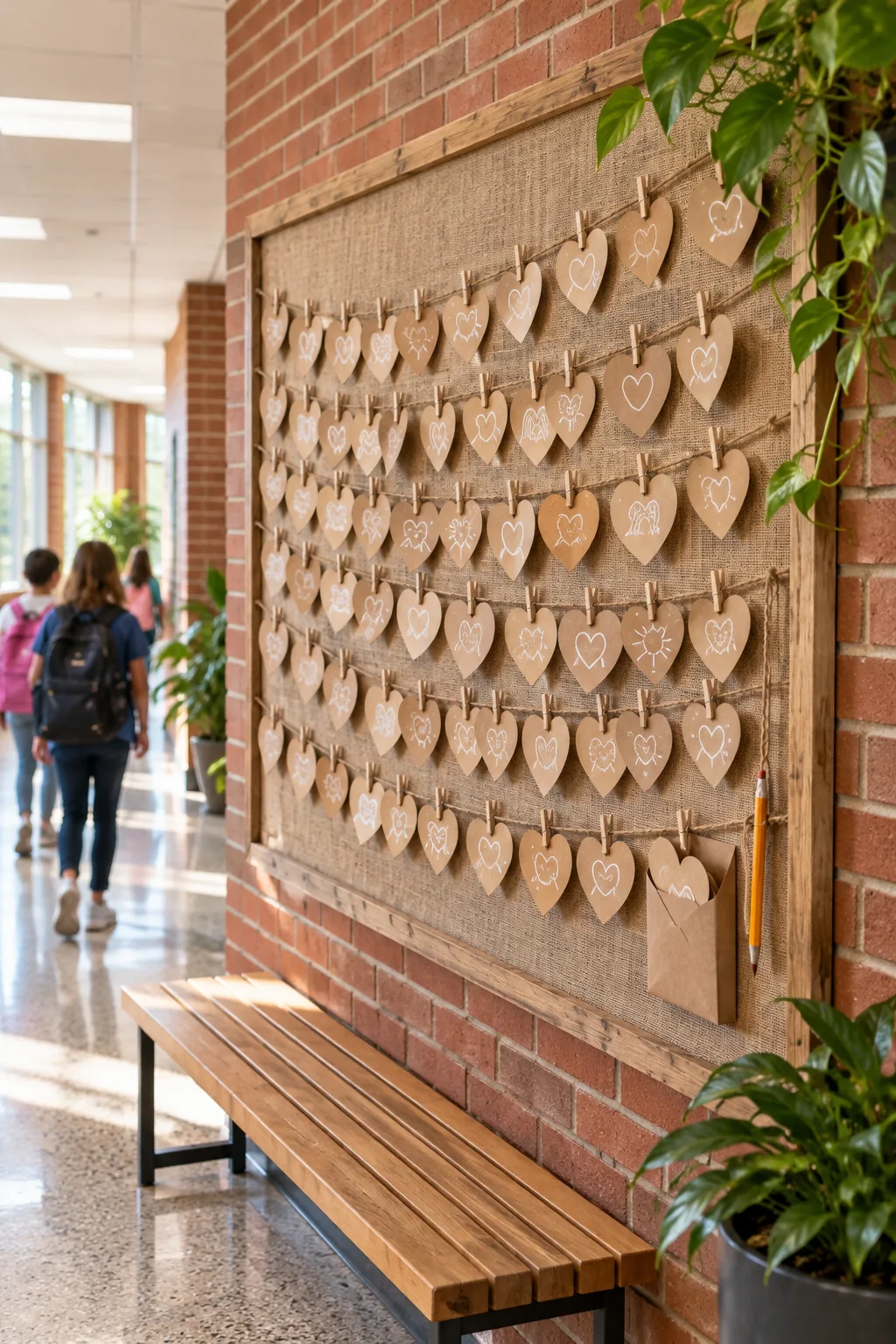
Rustic Kraft Hallway Display: Use white gel pens on kraft paper shapes over a burlap backdrop for a highly textured, rustic look.
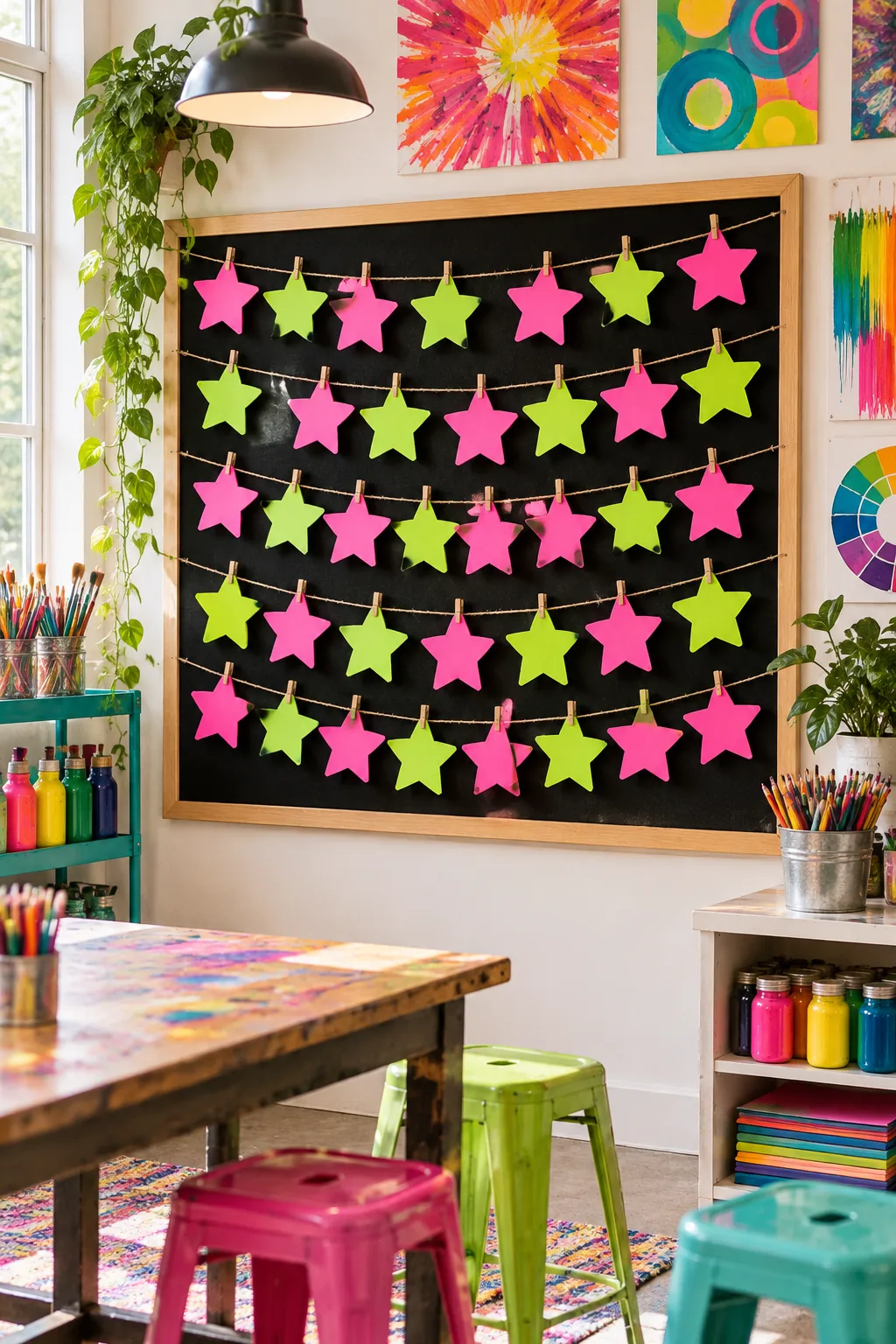
Neon Pop Art Room: Make the notes stand out by using bright neon star shapes against a stark black felt background.
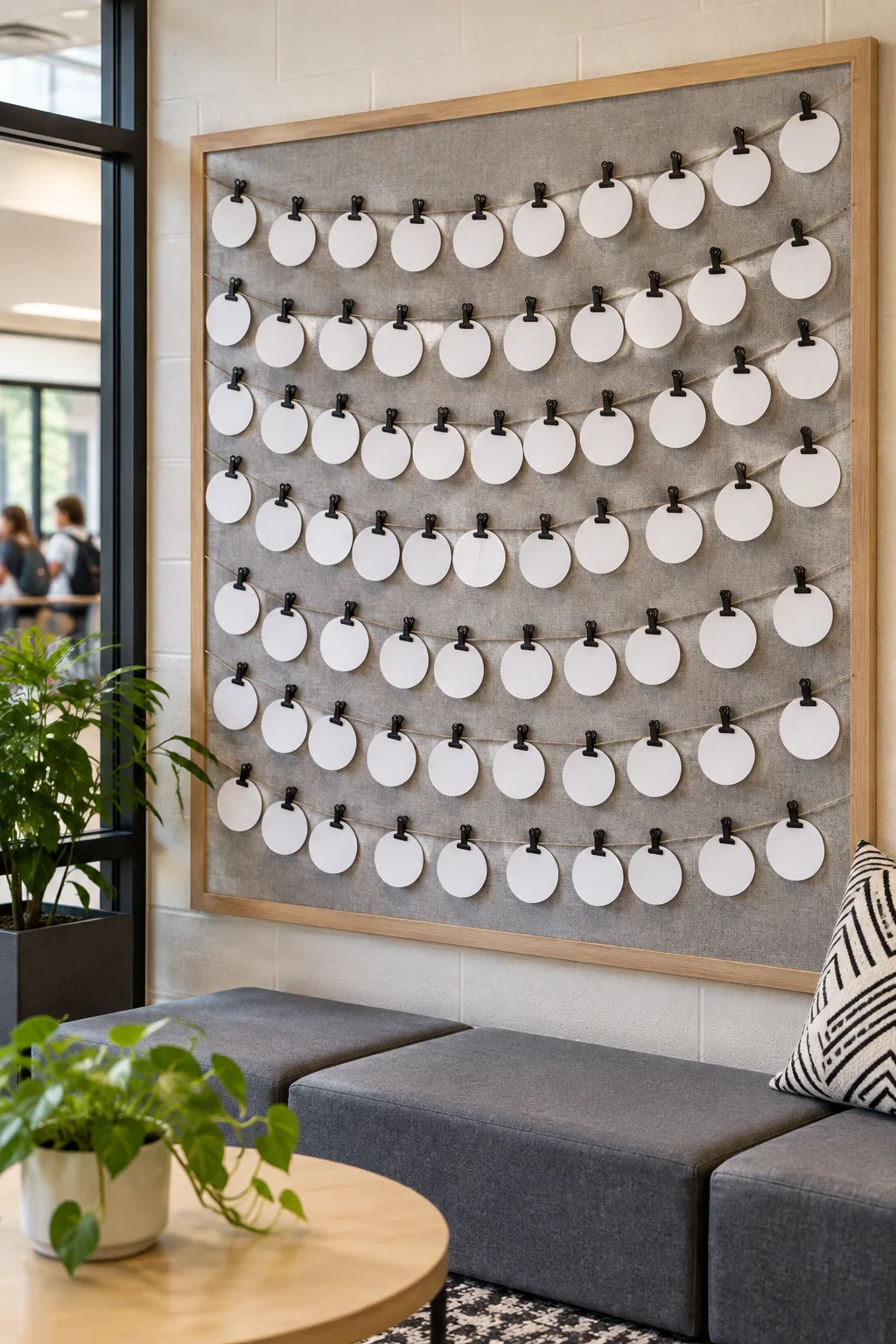
Minimalist Monochrome Common Area: Elevate the concept for older students using crisp white circular notes, gray linen, and sleek black metal clips.
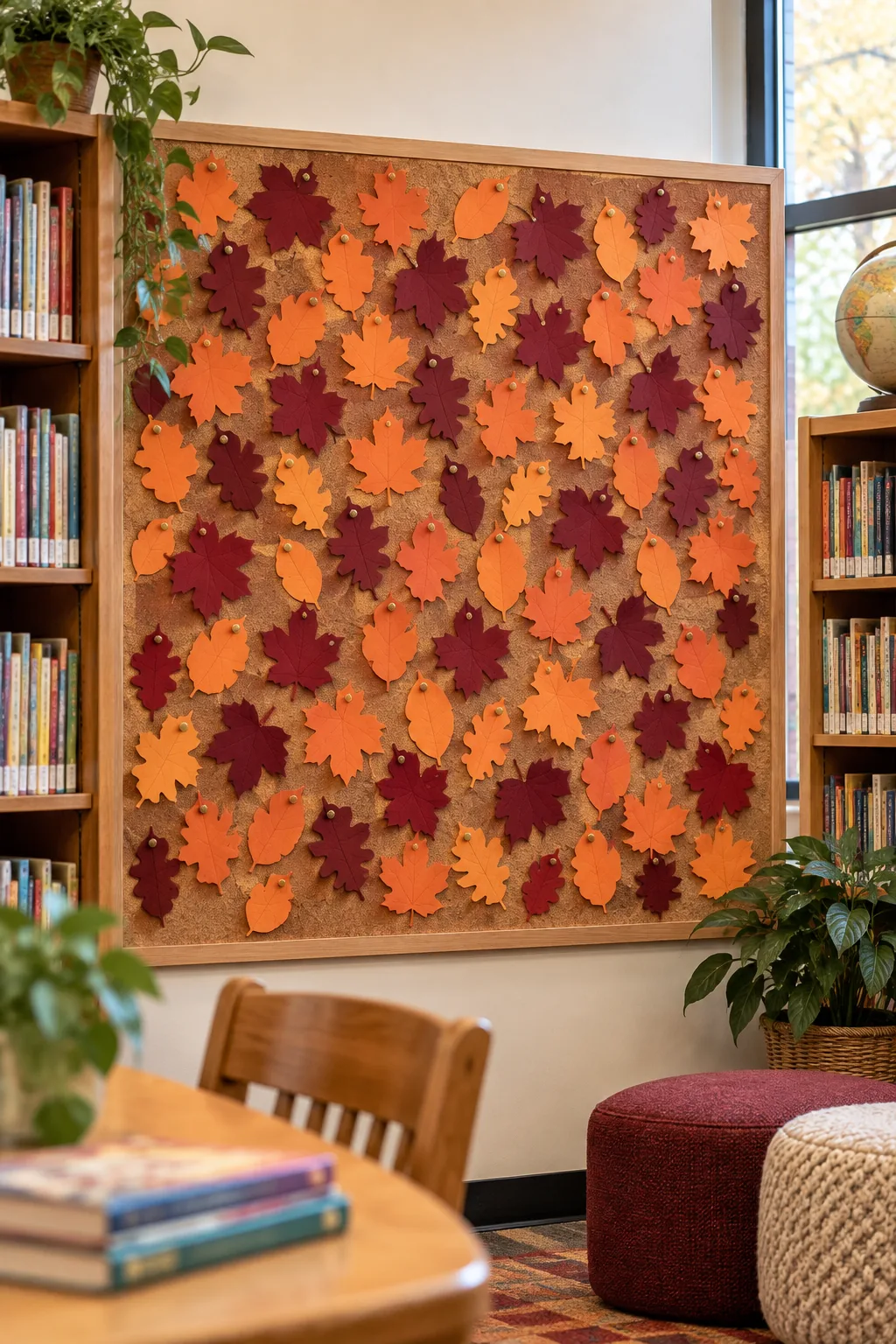
Seasonal Leaves Library Board: Embrace the season by having students pin autumn leaf shapes directly into a natural corkboard.
Print the Launch Schedule
Download the printable two-page Kindness Board Launch Sheet to organize your campaign and get exact supply quantities for a 4-by-6-foot board. It includes the scripts for your five seed notes and the full four-week fill-up schedule with weekly student prompts.
Before introducing the board to your class on Monday morning, run through these final preparations to ensure the station is ready for heavy use.