
Living Room Plant Decor: Your Light-Spot Matching Guide
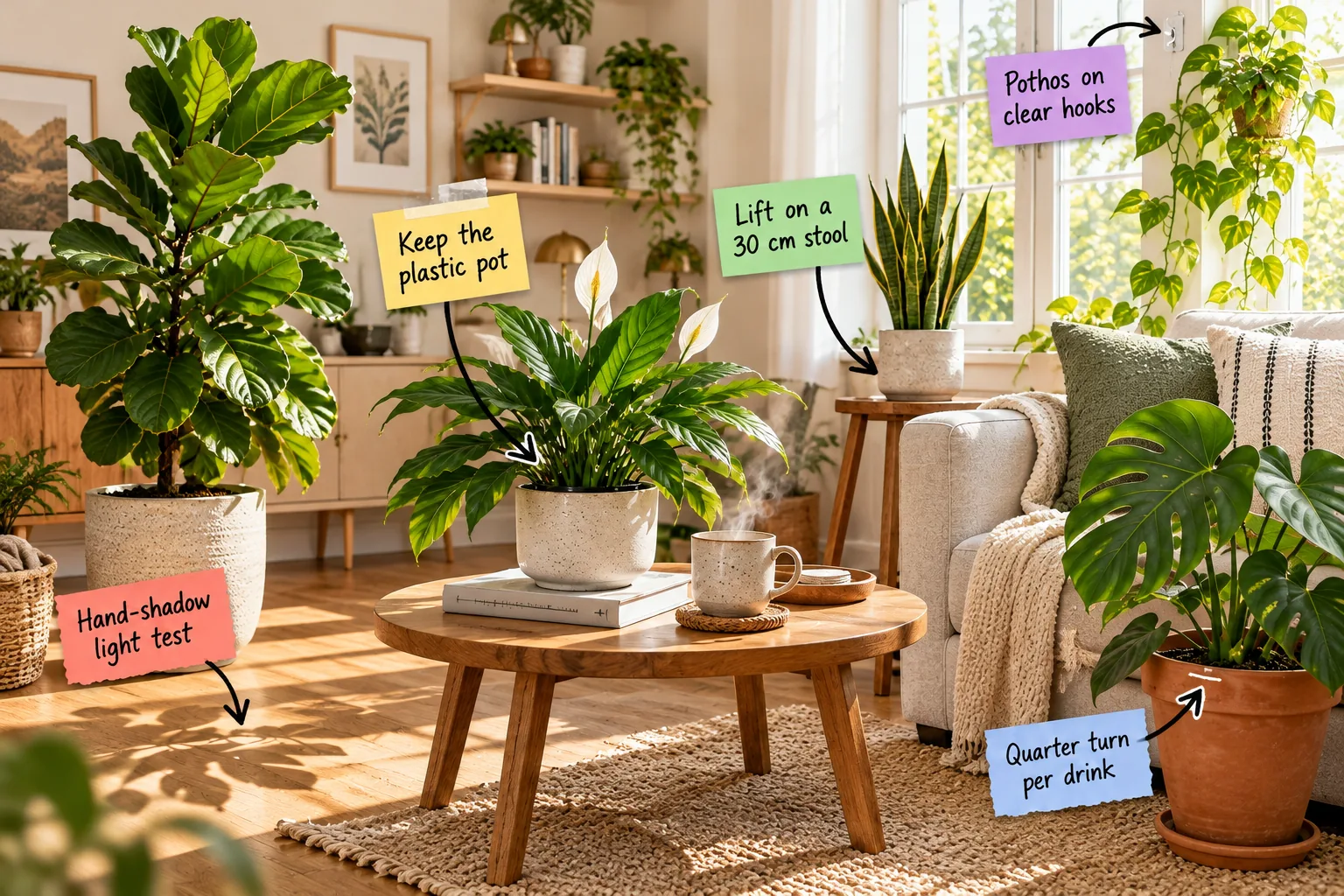
You will be able to test the exact light level in any room and confidently place the right plant in the right spot using our printable Light-Spot Plant Matching Sheet. Download the free guide to pair every corner’s hand-shadow test with the exact houseplant that will thrive there.
The Hand-Shadow Light Test
Determine the true light level of any spot by holding your hand about 30 cm above the floor at midday. When I first moved into my Boston brownstone, this simple trick saved me from scorching three delicate ferns in a south-facing bay window.
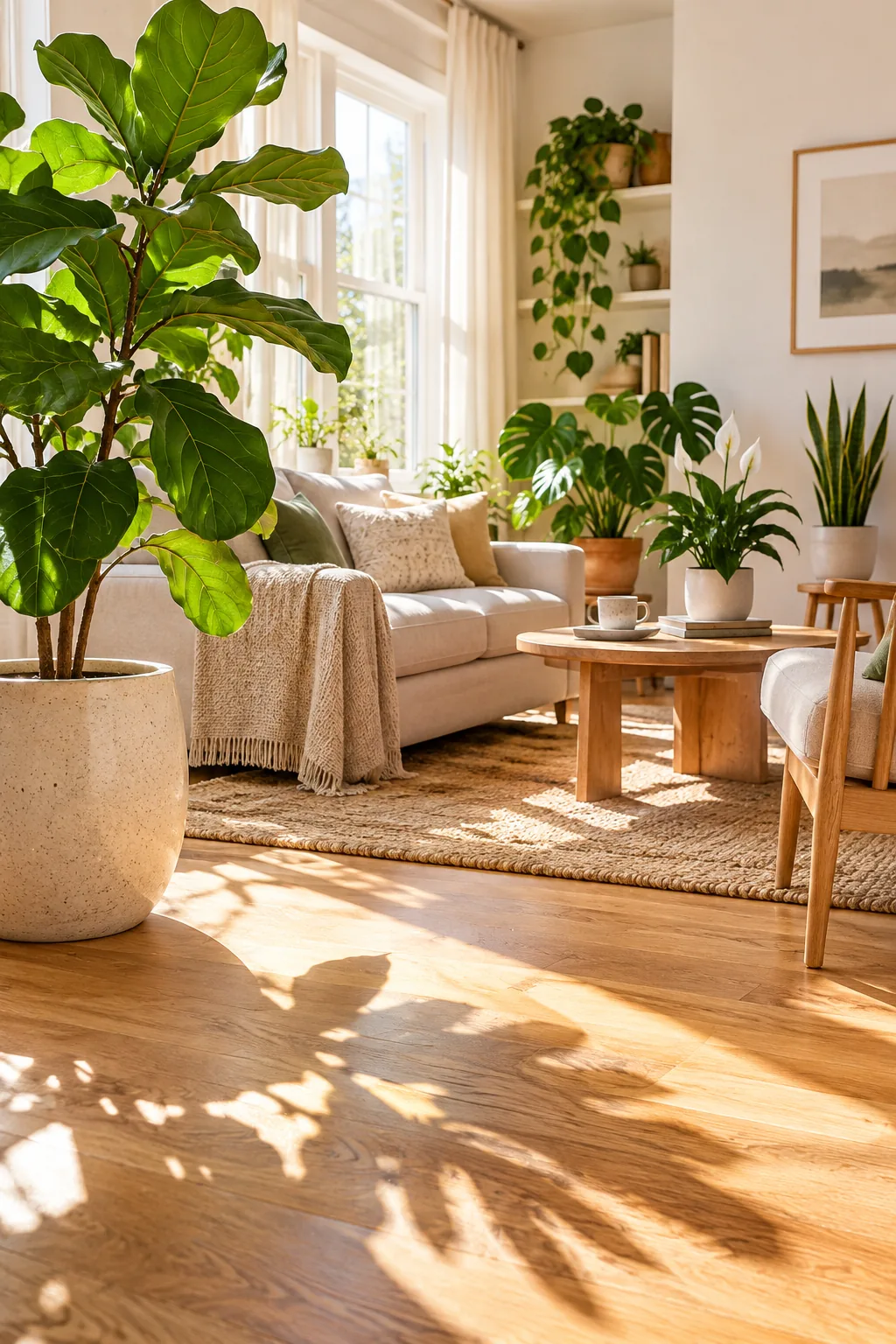
A crisp shadow indicates direct sunlight, a soft shadow means bright indirect light, and a faint, blurry shadow reveals low light. Always evaluate the space when the sun is at its highest point to get the most accurate baseline for your indoor garden.
Calibrating for Seasonal Light Shifts
The shadow you cast in mid-summer will look drastically different than the one you test in the dead of winter. As the sun dips lower in the sky, direct light stretches further into the room, requiring you to move sensitive tropicals back to prevent accidental sunburn.
Your Light-Spot Plant Matching Sheet
Take the guesswork out of plant shopping with our downloadable matching sheet. It translates your shadow results into a foolproof shopping list, so you never bring home a sun-loving succulent for a dark, north-facing corner.
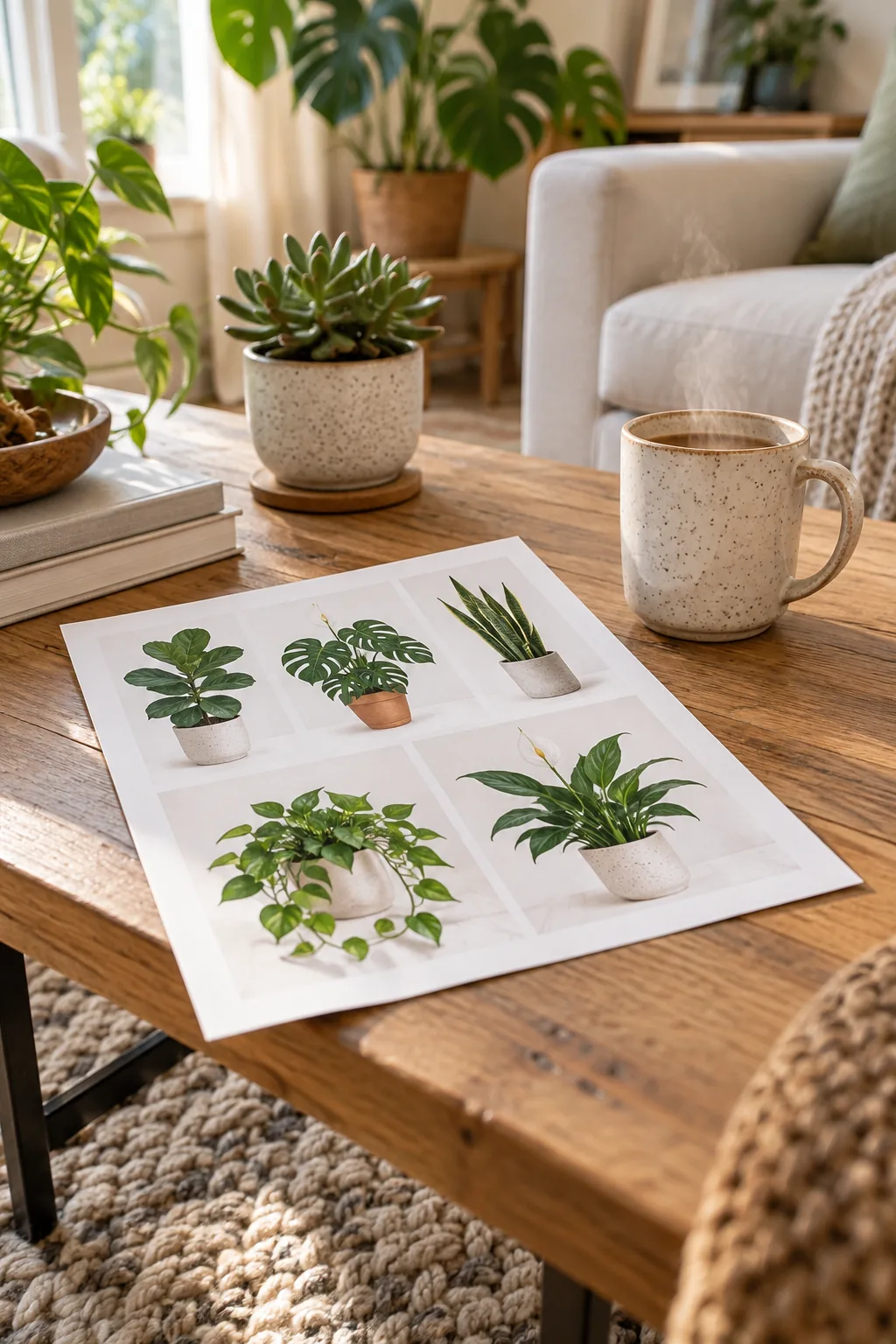
The guide pairs your crisp, soft, or faint shadow results with 12 foolproof living room plants, detailing their ideal pot sizes. It also provides a simple weekly watering schedule to keep your new greenery looking lush and vibrant all year long.
Sourcing the Right Soil Mix
Even the perfect light spot cannot save a plant trapped in heavy, waterlogged soil. Most commercial potting soils retain far too much moisture for indoor environments, which quickly suffocates delicate root systems and leads to inevitable rot.
| Plant Type | Base Soil | Perlite Ratio | Bark Ratio |
|---|---|---|---|
| Tropicals (Monstera) | 40% | 30% | 30% |
| Desert (Snake Plant) | 30% | 50% | 20% |
| Moisture (Peace Lily) | 60% | 20% | 20% |
| Trailing (Pothos) | 50% | 30% | 20% |
Mixing your own substrate ensures water drains freely within seconds of pouring it over the surface. A loose, airy blend encourages rapid root growth and makes it nearly impossible to accidentally overwater your favorite living room statement pieces.
Choosing the Right Cachepot Size
Always select a decorative outer pot that is 2 to 5 cm wider than your plant’s current plastic nursery pot. This crucial gap allows for essential airflow around the roots and makes it much easier to lift the plant out on watering day.
Maintaining this extra breathing room prevents fungal issues in the damp microclimate. If the plastic pot wedges tightly into the ceramic one, you risk damaging the foliage every time you check the soil.
Floor Plants and the Quarter-Turn Rule
Large floor plants like the monstera will naturally lean heavily toward the nearest window as they stretch for the sun. Without regular intervention, they eventually become completely lopsided, tipping their heavy pots over and ruining your carefully balanced room design.
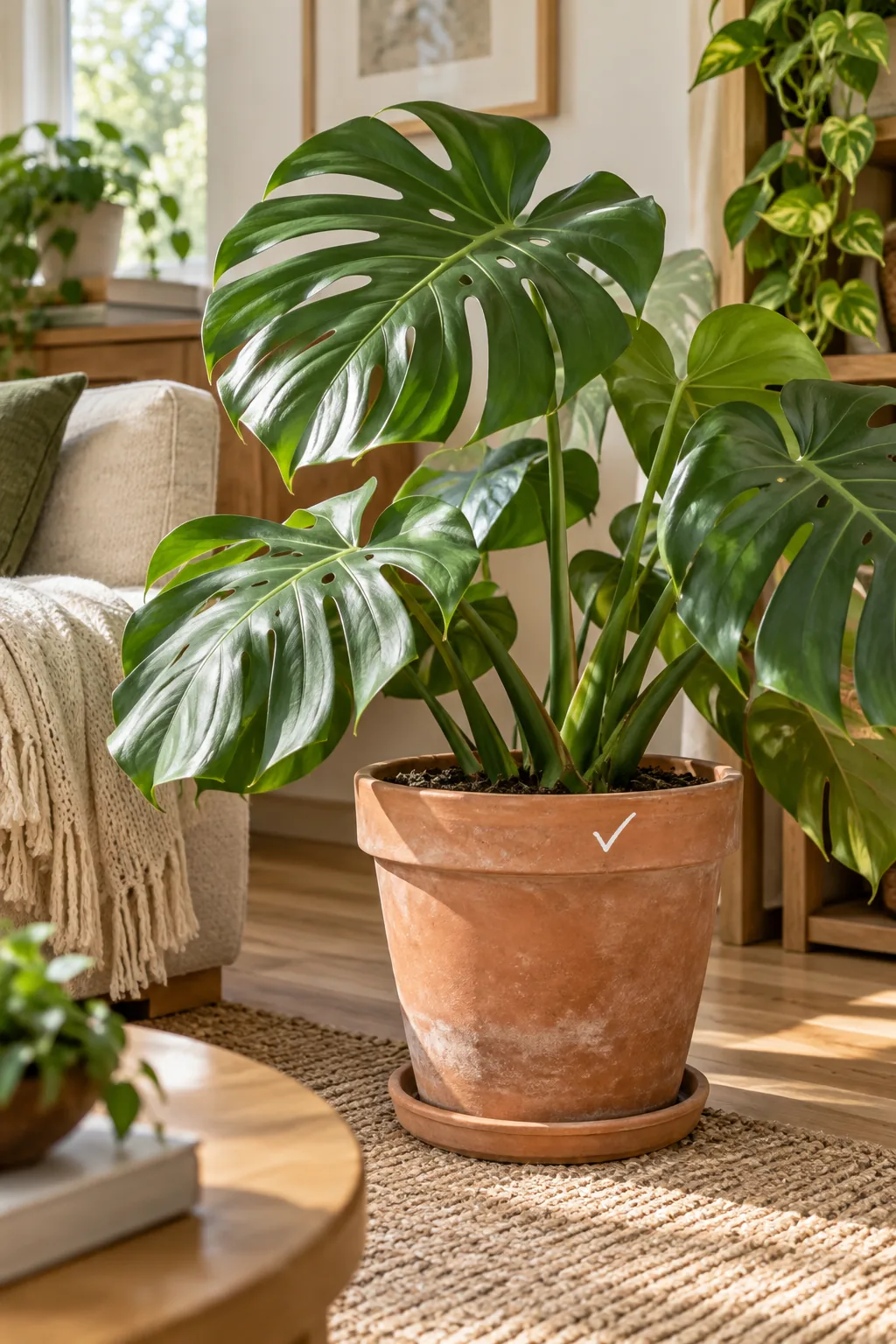
Make a small chalk tick mark on the rim of the terracotta pot to easily track a 90-degree rotation every time you water. This simple visual cue ensures even, upright growth and keeps the plant looking full from every angle in the room.
Managing Drafts Near Floor Plants
Floor plants stationed near large windows or exterior doors frequently suffer from extreme temperature swings. Cold winter drafts or blasts of dry air from heating vents can cause sudden, irreversible leaf drop on otherwise perfectly healthy tropical species.
- Identify the primary source of moving air near the floor.
- Pull the planter exactly 60 cm away from the draft zone.
- Monitor the bottom leaves for crisping edges over the next two weeks.
Keeping a safe buffer zone between your greenery and the climate control vents preserves the ambient humidity they desperately crave. A stable temperature is just as important as the right light level for maintaining a lush, jungle-like aesthetic.
Protecting Hardwood Floors from Water
Placing large floor plants directly on warm oak flooring is a guaranteed recipe for hidden water damage and dark circular stains. Always slide a thick cork mat underneath your terracotta saucers to create a breathable, waterproof barrier that protects your expensive finishes.
The Double-Pot Trick for Tabletop Plants
Keep tabletop centerpieces like the peace lily in their original plastic nursery pots, simply dropping them into a slightly larger ceramic cachepot. In my own living room, this exact setup saved my favorite coffee table from catastrophic water damage during a rushed morning routine.
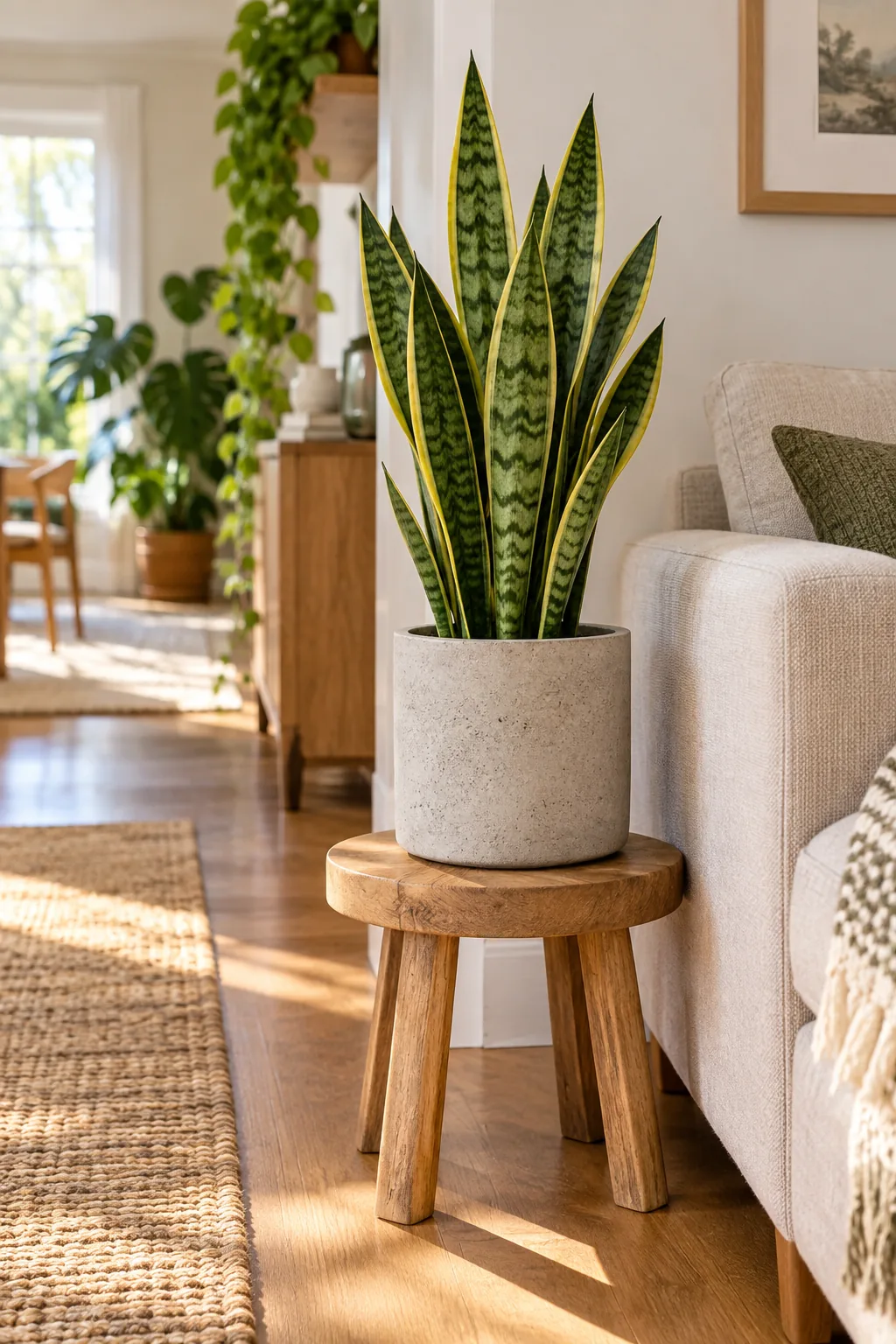
This hidden layer prevents root rot by keeping the soil elevated above any accidental standing water that pools at the bottom. It also allows you to easily swap out different decorative pots as your interior design tastes evolve over the seasons.
Selecting the Best Tabletop Species
Not all plants thrive on a low coffee table where light naturally falls away from the windows. Avoid tall, leggy plants that obstruct conversation lines, and instead pair a dark, glossy ZZ plant in a matte clay cachepot for a sophisticated, low-maintenance centerpiece.
Elevating Plants to Sofa Height
Medium-sized plants often look completely awkward sitting directly on the floor next to substantial, heavy furniture. They get lost in the visual shadow of the upholstery and fail to contribute to the room’s overall vertical design.
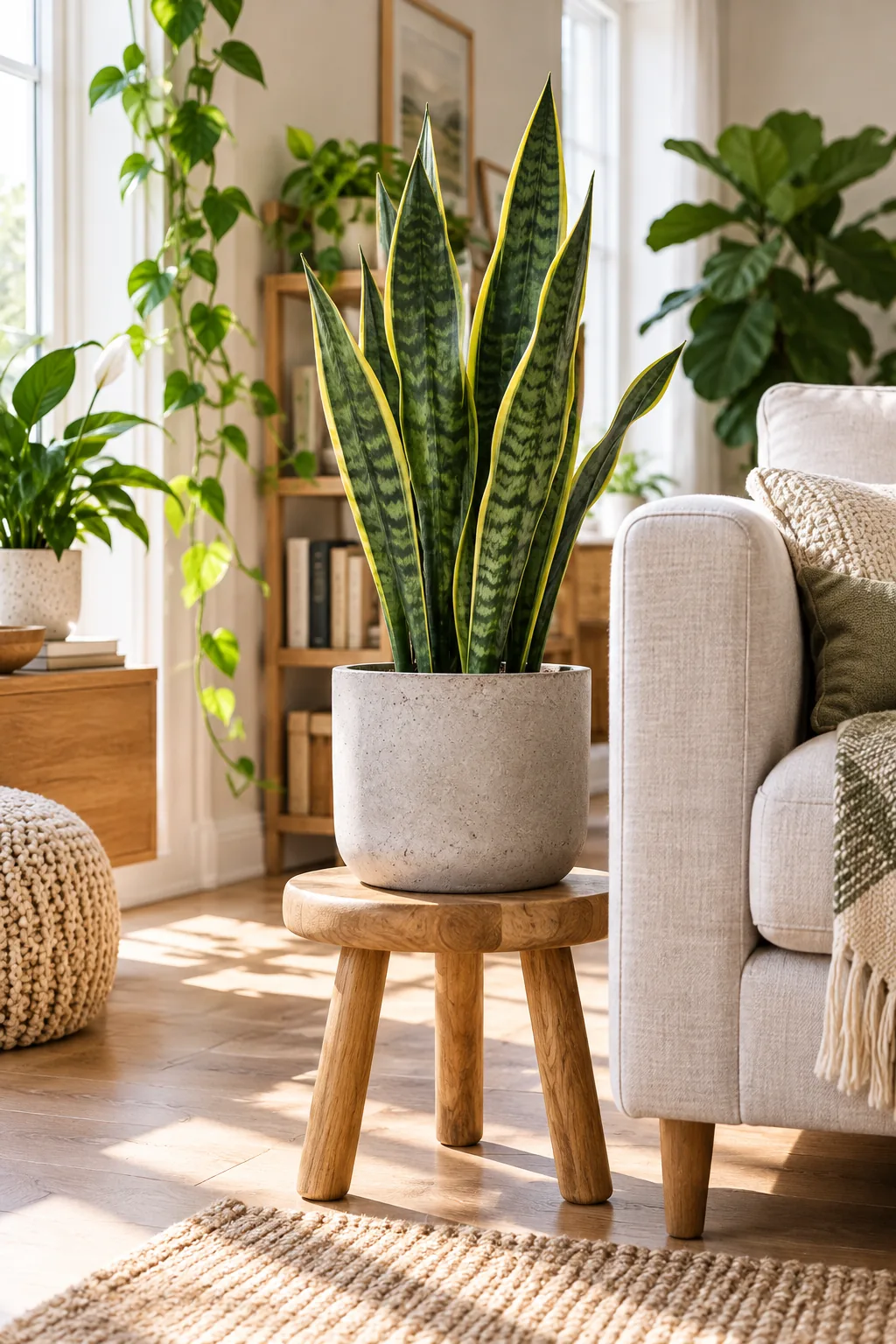
Lift a snake plant on a low 30 cm wooden stool so its foliage begins exactly level with the sofa arm. This simple elevation instantly balances the room’s proportions and makes a moderately sized plant feel like a major architectural feature.
Balancing Visual Weight with Furniture
When you elevate a plant, match the visual weight of the stand to your upholstery to create a cohesive aesthetic. Solid ceramic pedestals pair beautifully with heavy linen sectionals, while slim metal legs perfectly complement visually light, mid-century modern seating arrangements.
Framing Windows with Trailing Vines
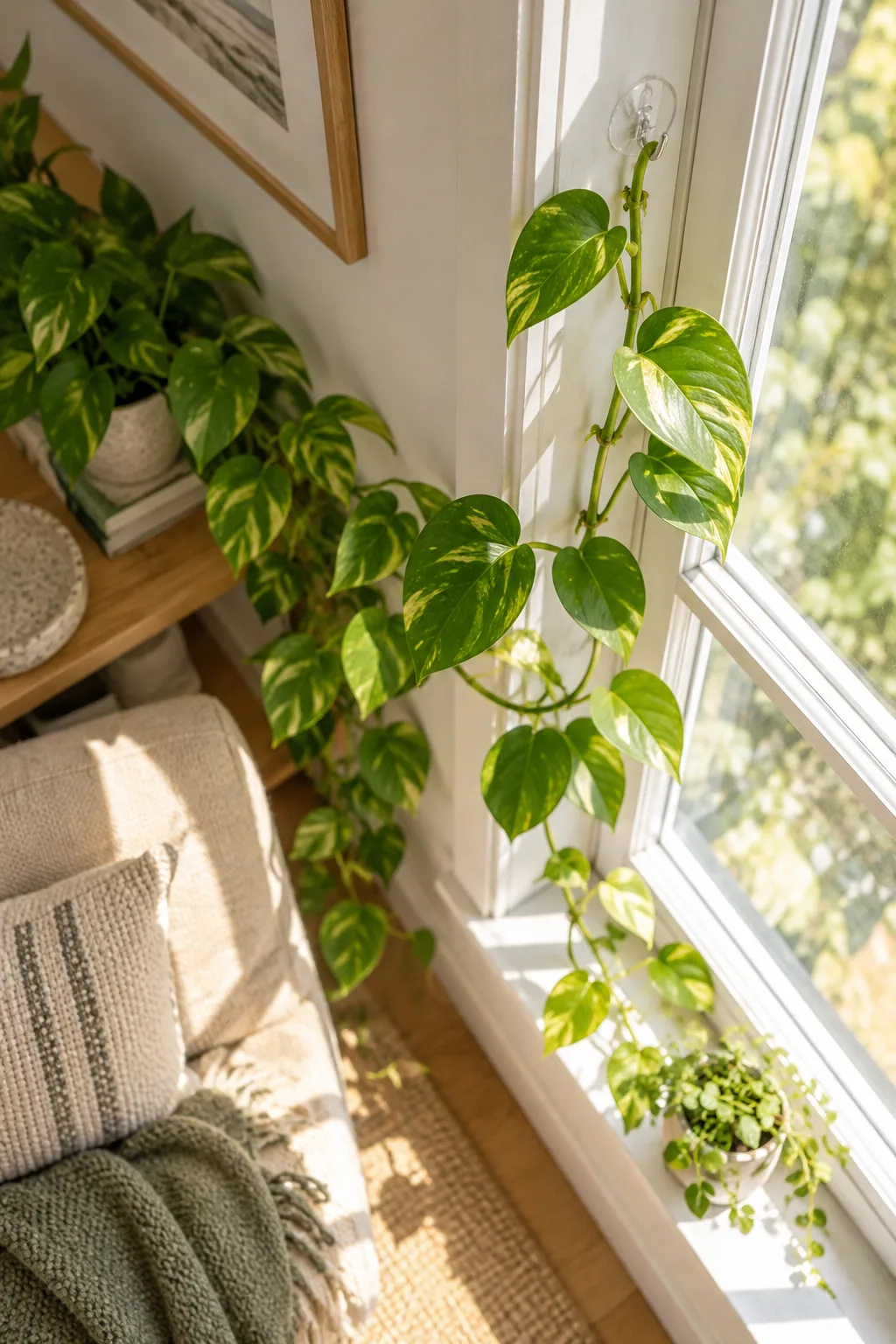
Draw the eye upward by guiding a golden pothos vine along the natural lines of your architecture. I love using this technique to make standard apartment windows feel significantly taller and much more dramatic without spending a dime on custom drapery.
Place tiny transparent adhesive hooks every 40 cm along the window frame to support the stems securely. This spacing holds the heavy vines perfectly in place while remaining completely invisible against the white woodwork.
Pruning Vines for Thicker Growth
Trailing plants left to grow indefinitely will eventually produce long, stringy vines with massive gaps between the leaves. Regular pruning forces the plant to push out new growth closer to the soil line, resulting in a much fuller, bushier top.
Trim back the longest vines by at least one third every spring to encourage vigorous branching. This simple maintenance step transforms a sad, sparse trailing plant into a lush, cascading focal point above your window.
Grouping Plants by Watering Needs
Arrange plants with similar thirst levels in the same zone to streamline your care routine. Beyond just light levels, consider how your plants can actually help each other when placed in the same zone.
Keeping your humidity-loving peace lily and pothos relatively close together makes weekly maintenance significantly faster. A dense cluster of foliage traps moisture in the air, benefiting every single plant in the arrangement.
Wiping Leaves to Maximize Light
Even the brightest window cannot sustain a plant if its leaves are covered in a thick layer of household dust. Wipe the foliage gently with a damp microfiber cloth every month to ensure the plant can properly photosynthesize and absorb the sunlight you carefully measured.
Three Ways to Style Your Plant Decor
Explore how different planters and plant choices can completely change the mood of your living room.
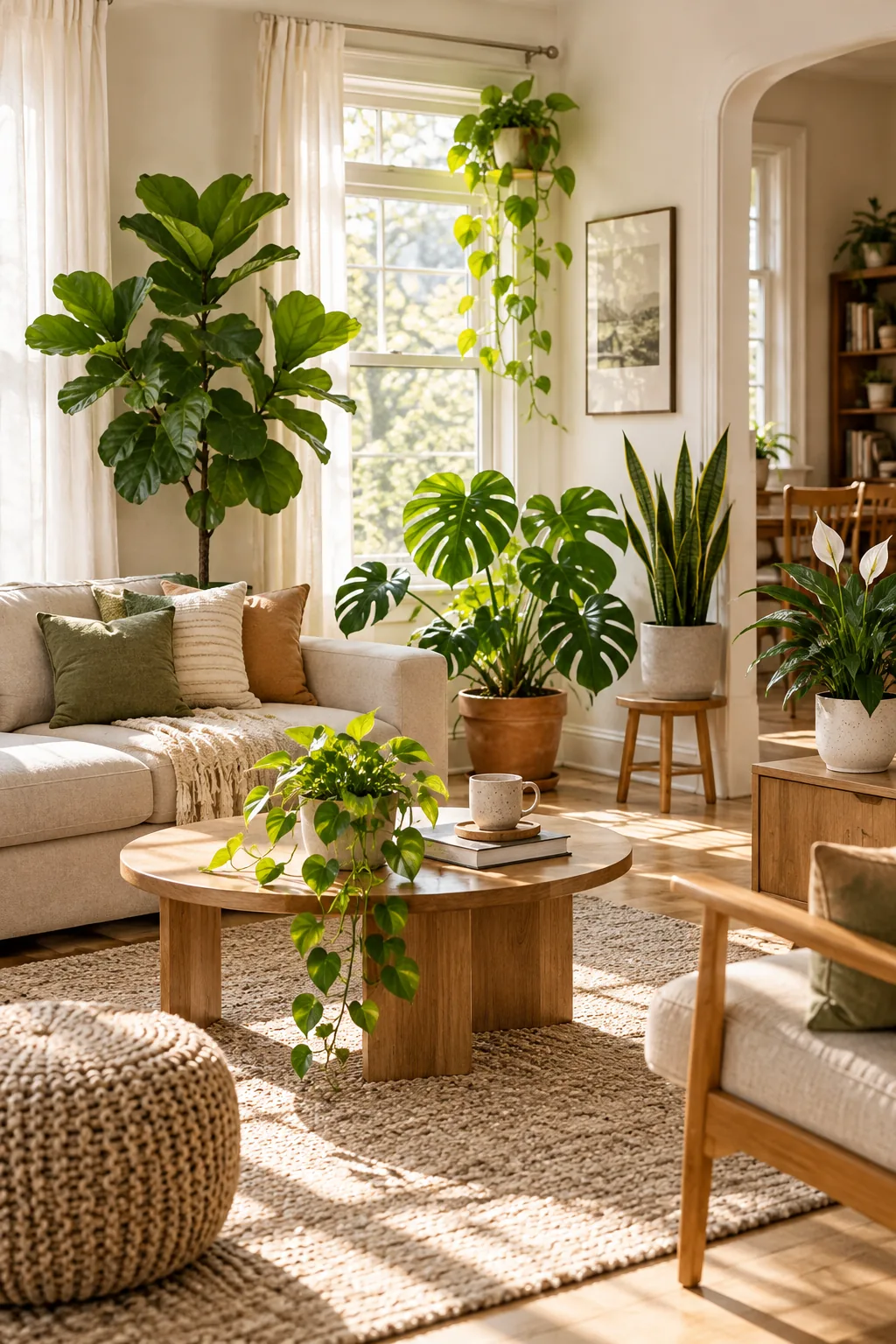
Minimalist Scandi Plant Styling: Stick to structured plants in matte white cylinders to maintain a clean, uncluttered aesthetic.
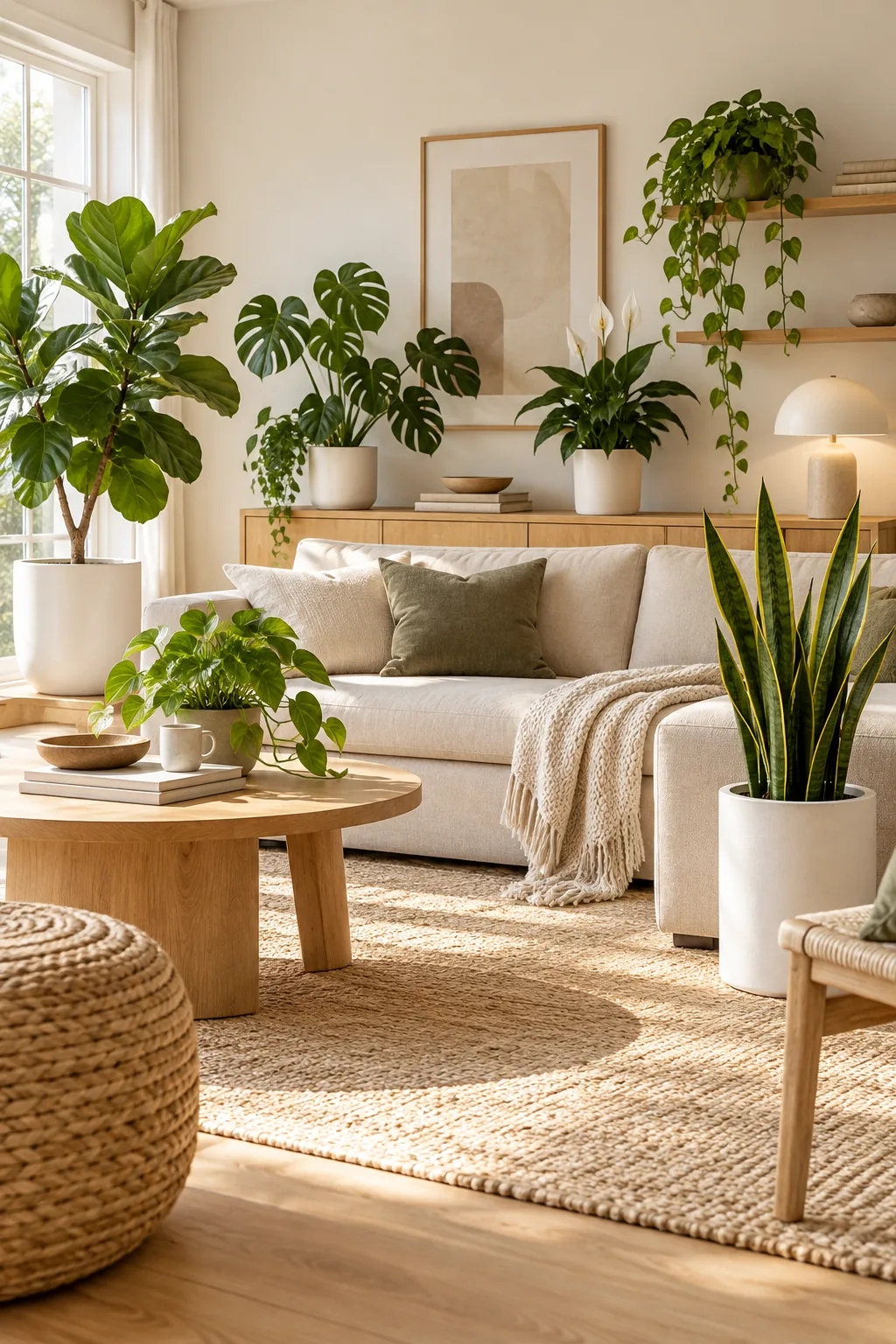
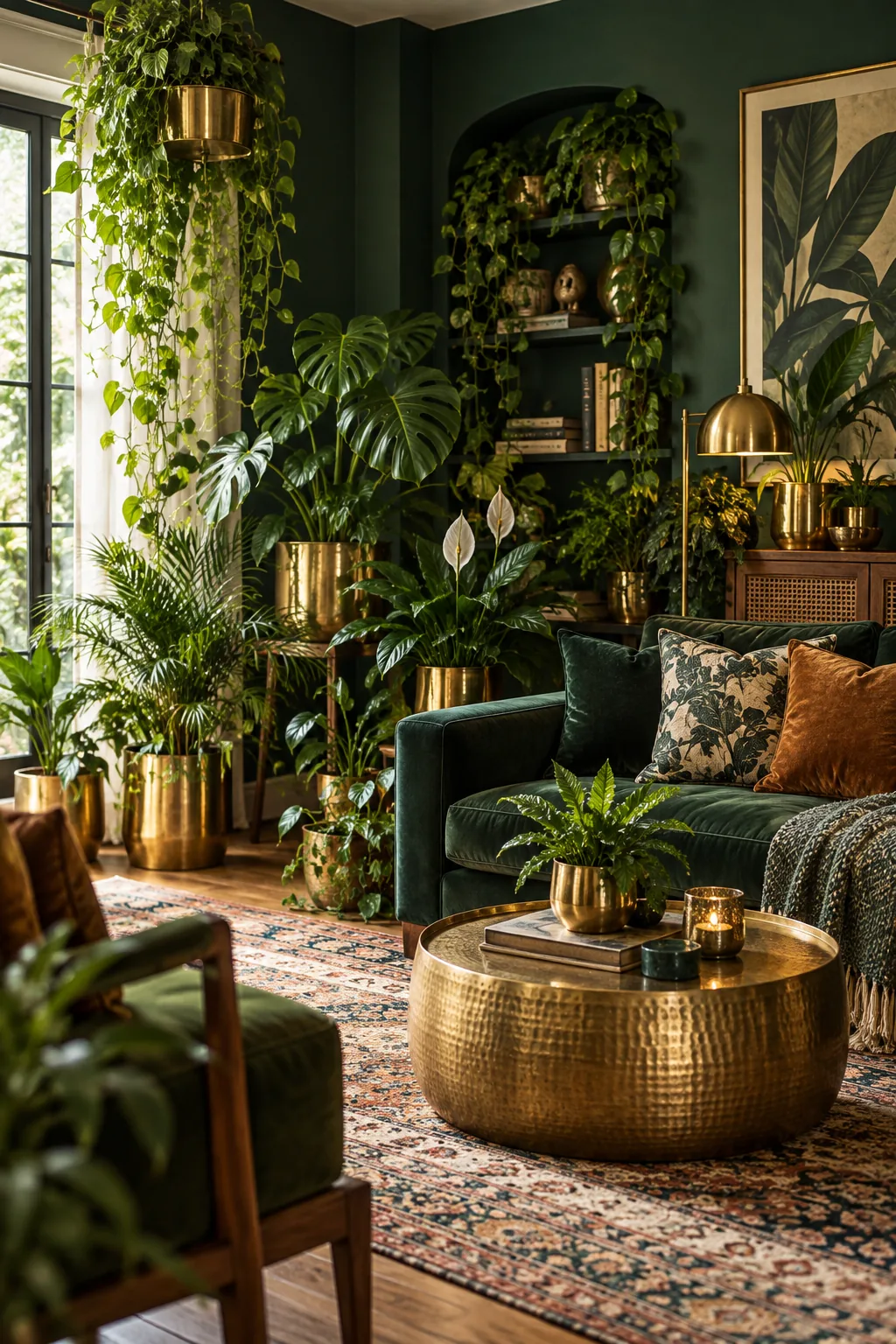
Moody Maximalist Plant Layering: Layer trailing vines and large-leaf tropicals in reflective brass pots against dark walls for dramatic depth.
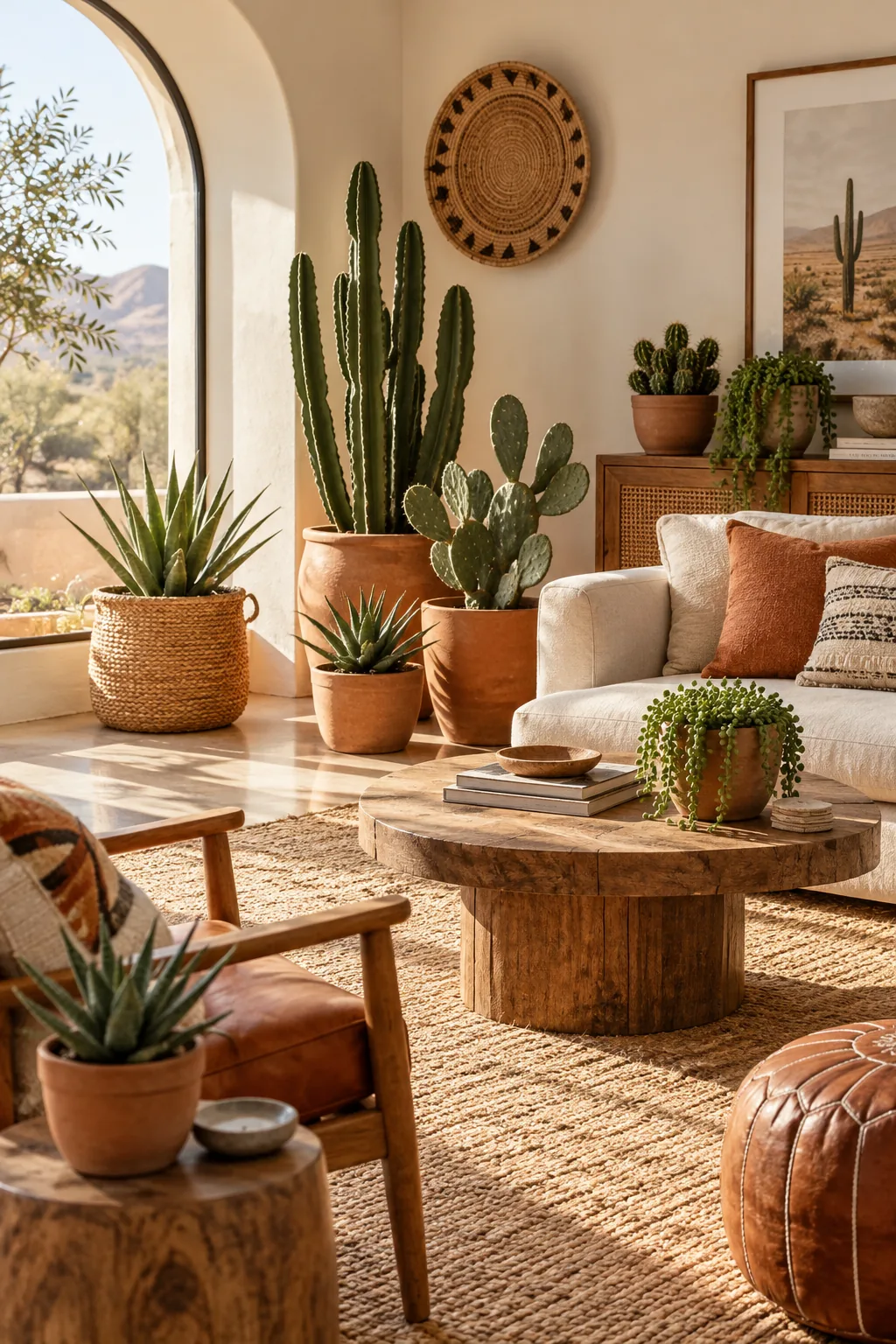
Warm Desert Modern Oasis: Swap tropicals for arid varieties in raw terracotta and woven baskets to create a sun-drenched, textural space.
Establishing a Weekly Morning Routine
Tie your entire living room decor together with a consistent Sunday morning check that keeps the space looking lush and intentional. A predictable routine prevents the stress of underwatering and the tragic consequences of overwatering alike.
Use the matching sheet’s schedule to water, turn, and wipe down the leaves all at once. Spending just twenty minutes on this focused care ritual ensures your indoor jungle remains a beautiful architectural feature rather than a chore.