
10+ Clever Garden Layout Ideas for Your Yard
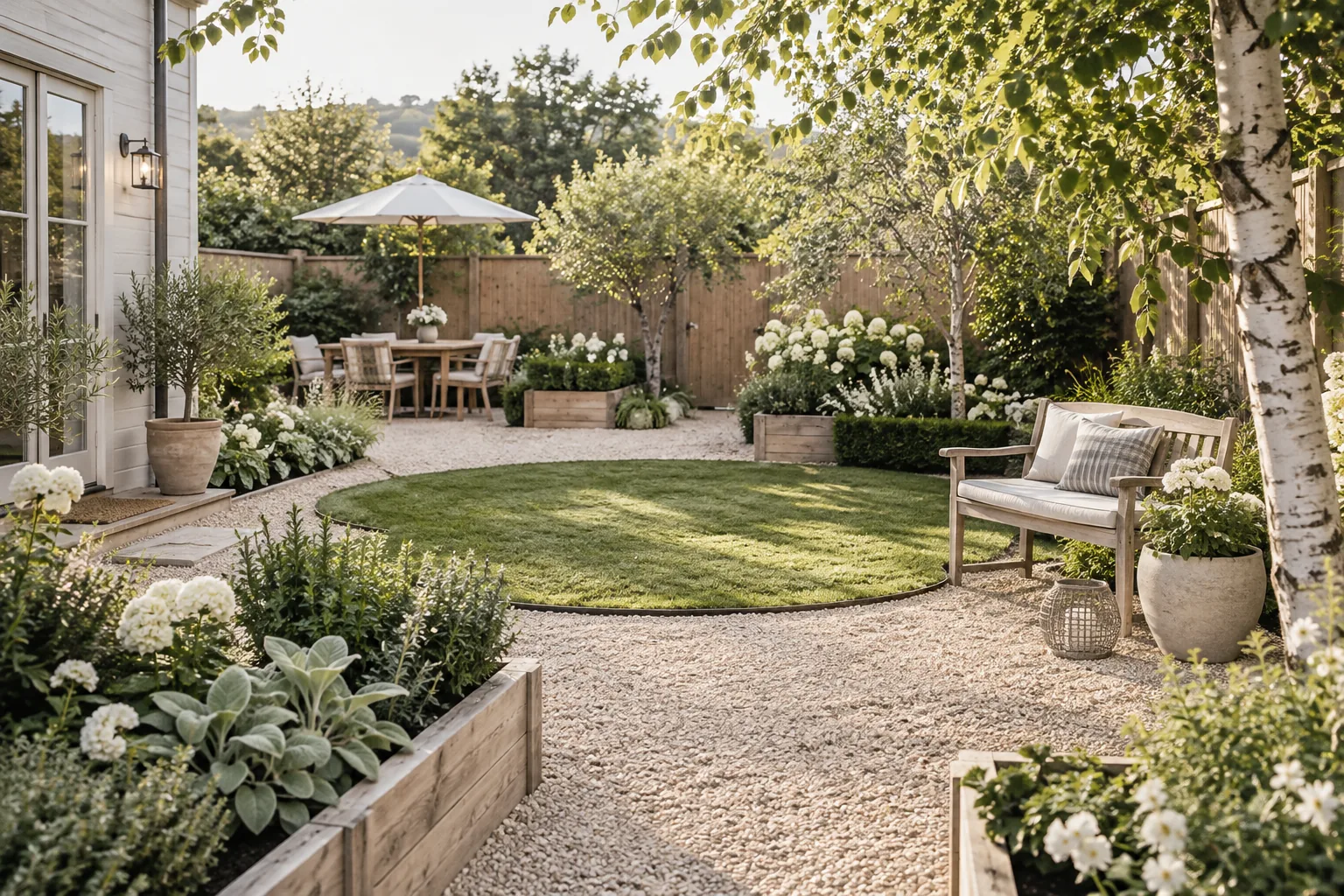
Figuring out where to put your plants is half the battle when you want a backyard that actually looks put together. I've gathered my favorite ways to map out your outdoor space so you can skip the guesswork and get straight to the fun part.
1. Symmetrical Cottage Grid
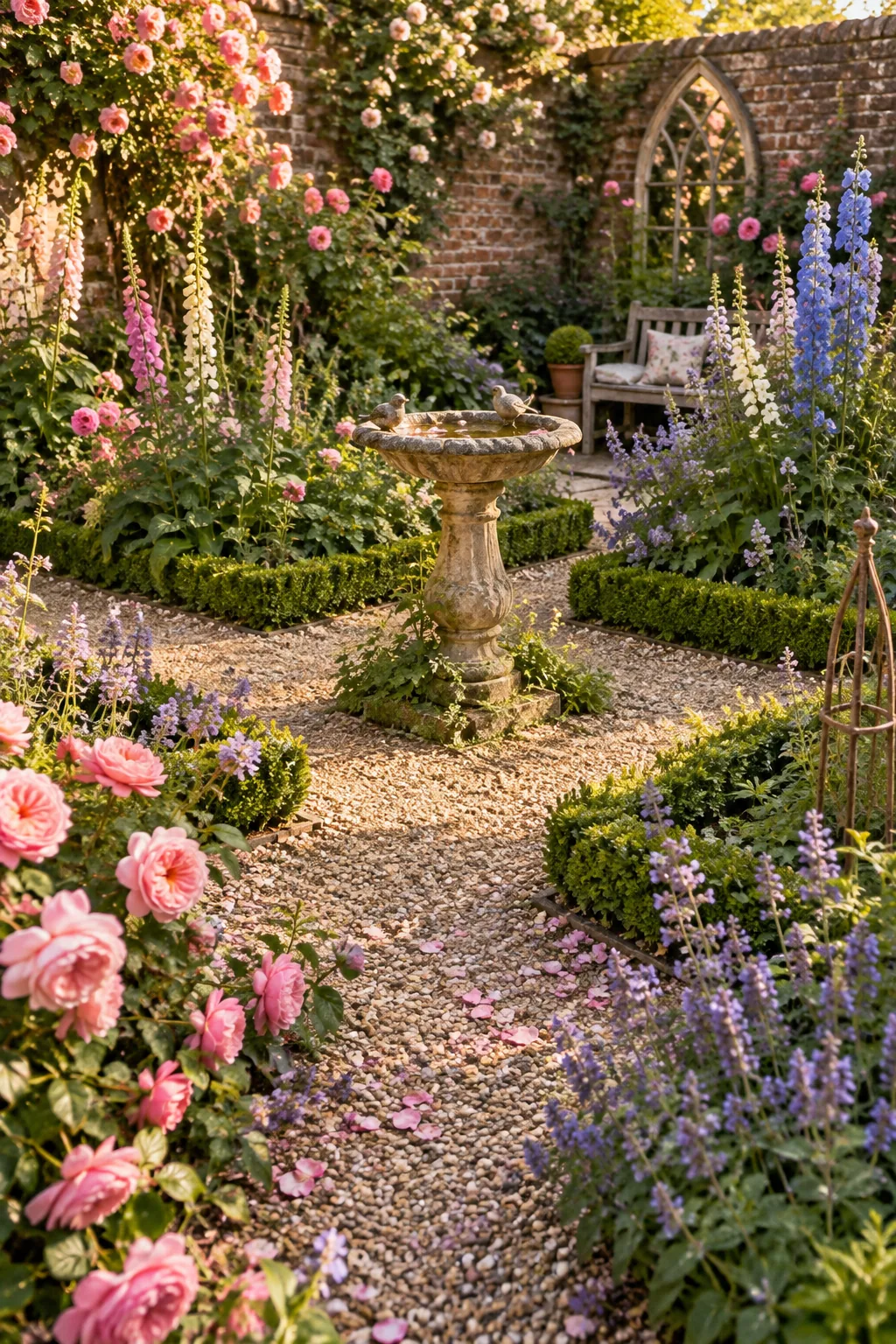
A classic English cottage vibe starts with a central focal point surrounded by symmetrical planting zones. You just divide your main space into four equal squares using gravel paths that meet in the middle. This keeps wild, overflowing blooms looking intentional instead of messy.
It is the easiest way to make a wild flowerbed feel perfectly structured.
- A birdbath for the center
- Pea gravel for the paths
- Creeping thyme for the edges
2. Wide Curved Pathways
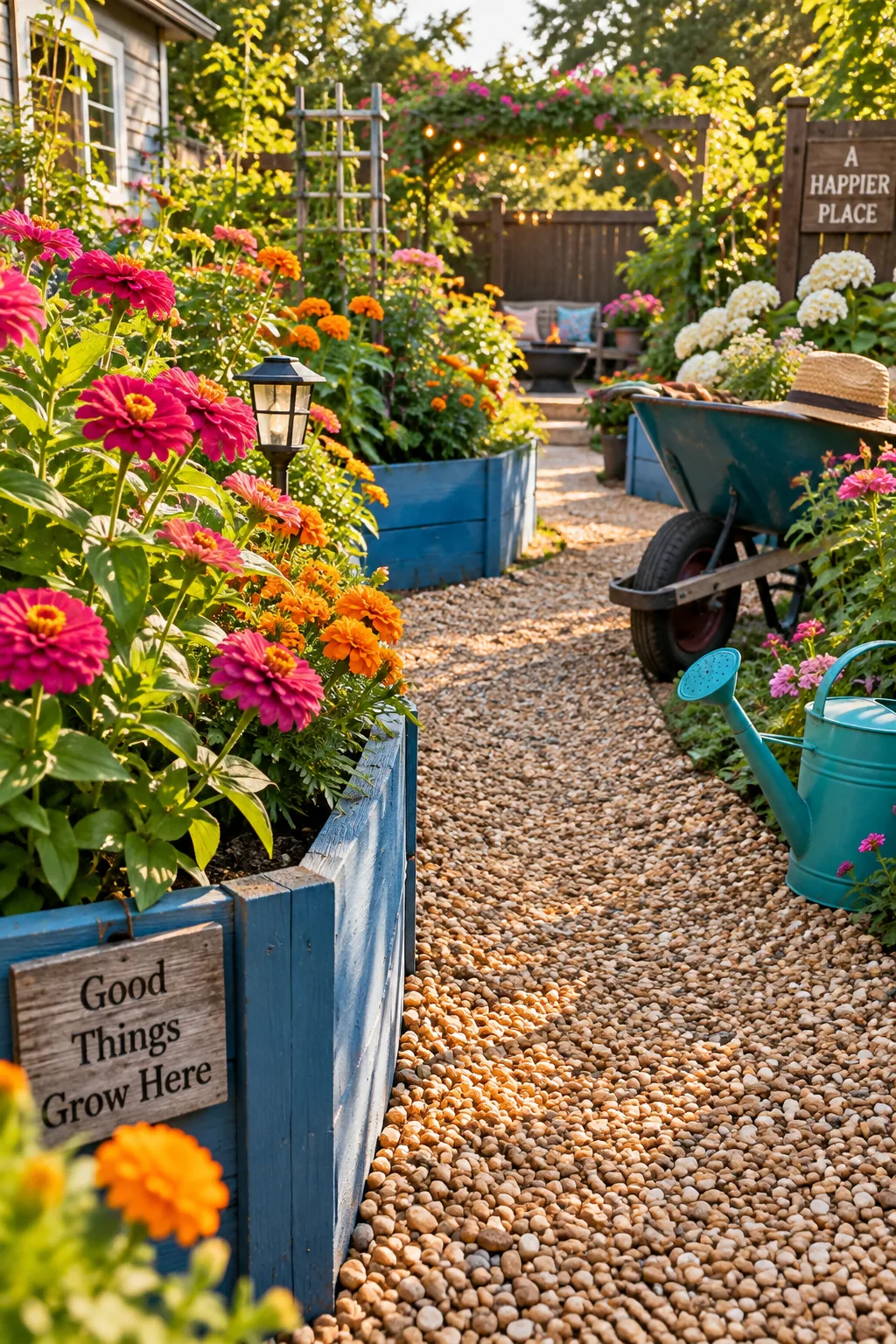
A standard three-foot walkway is the absolute minimum you need to comfortably push a wheelbarrow between your garden beds. Leave enough room for your tools before you start building your boxes. Curving those paths slightly makes a small yard feel much deeper than it actually is. You trick the eye into seeing a longer journey from the patio to the fence.
3. Vertical Fence Garden
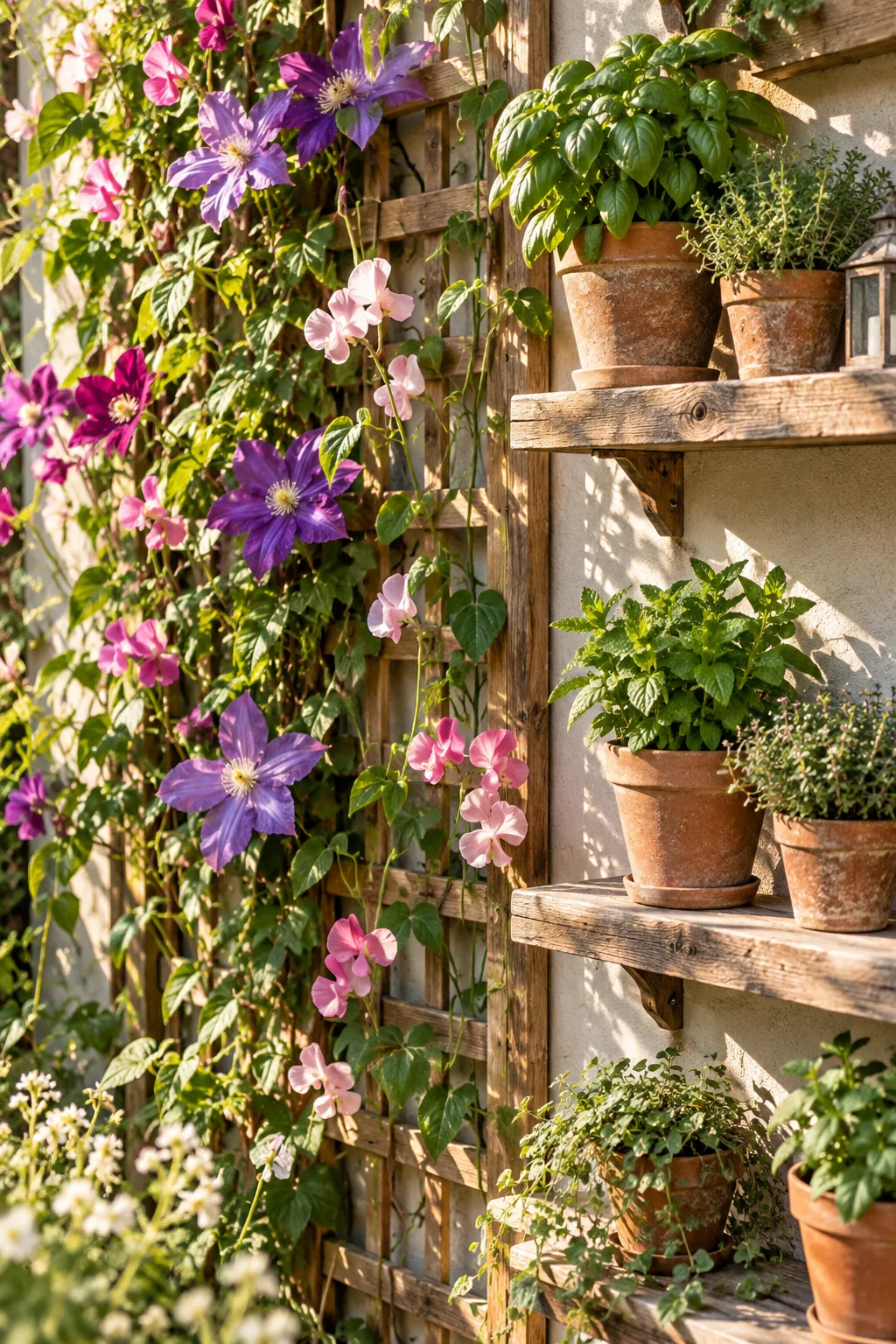
Stacking your layout vertically draws the eye up and saves massive amounts of ground space. You just mount a sturdy wooden trellis system against your sunniest blank wall.
Plant your heavy climbers at the base. Then stagger smaller potted herbs on floating shelves right next to them.
It turns a boring fence into a living privacy screen.
Why it works: It pulls attention away from a narrow yard by forcing you to look upward.
4. Minimalist Planter Grid
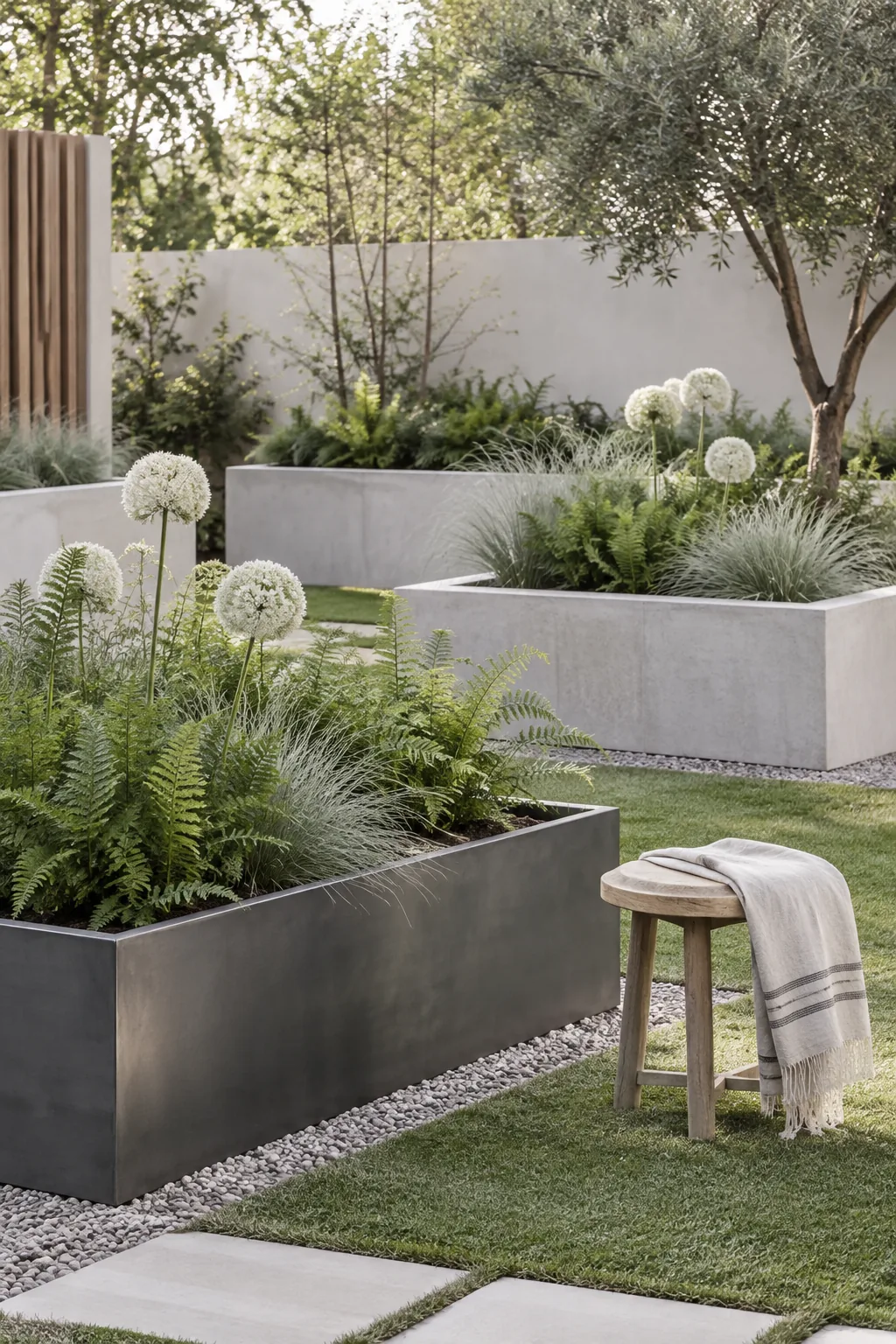
A modern, minimalist aesthetic relies heavily on geometric raised beds spaced evenly across a flat lawn. You want crisp lines and right angles everywhere. I love using sleek steel planters or smooth concrete blocks to contrast with the soft green foliage. Keep the plant palette limited to just two or three colors to maintain that clean, uncluttered energy.
5. Patio Kitchen Garden
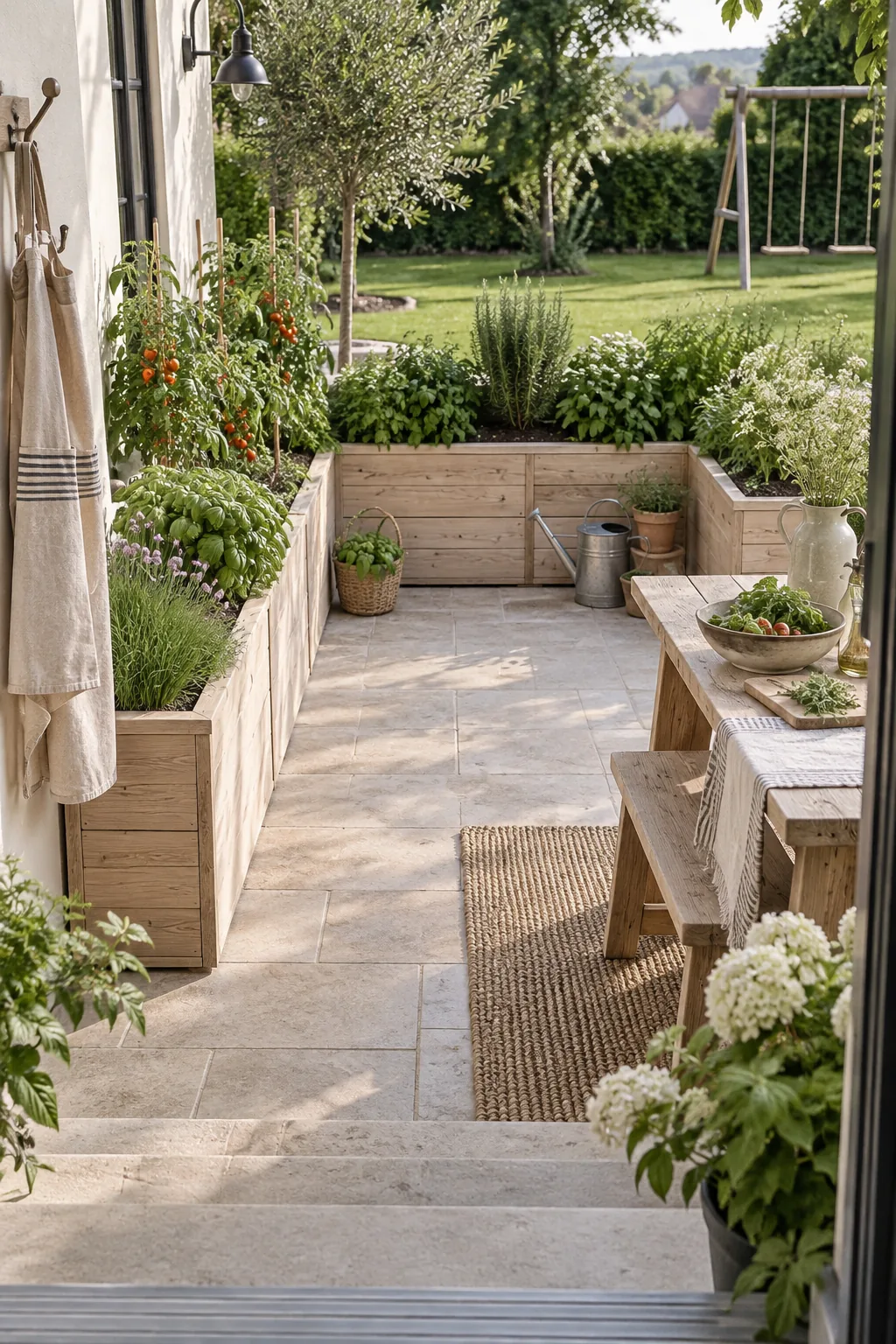
Place your kitchen garden right by the back door so you actually remember to water and harvest your herbs. Nobody wants to trudge across a muddy lawn in the dark just to grab a handful of basil for dinner. Build a U-shaped layout of waist-high planters right off the patio steps. This creates a little cooking oasis that feels like a natural extension of your house. It also keeps your fragile greens away from the kids' main play area.
- Galvanized troughs for deep roots
- Cedar boxes for shallow herbs
- Stepping stones for easy access
6. Built-In Hillside Terraces
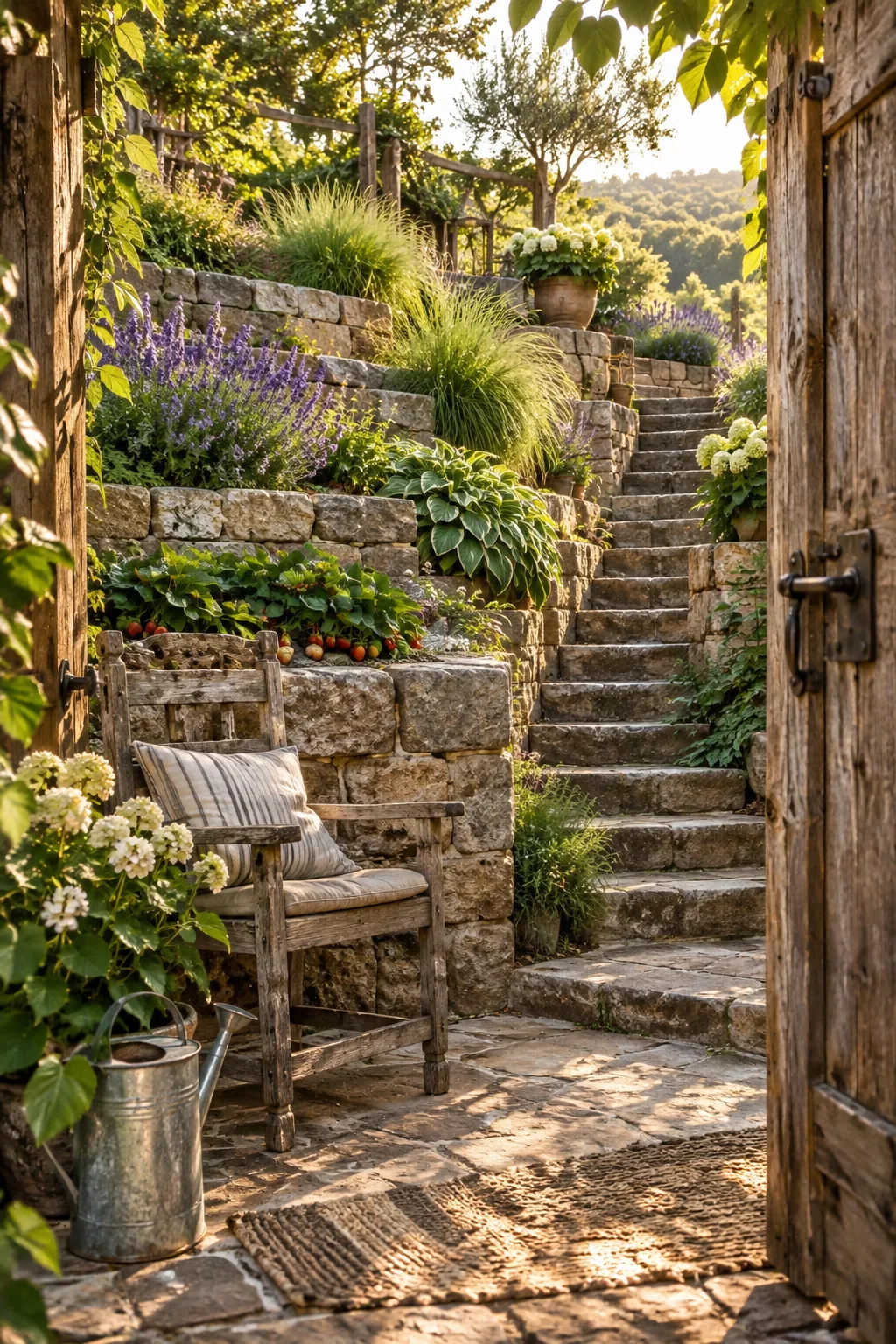
I used to hate the awkward sloping corner of my yard until I built a terraced garden right into the hill. It completely changed how I use the space.
Use heavy retaining blocks to carve out flat, stair-step planting zones. This stops soil erosion dead in its tracks.
You get distinct levels for different types of plants.
7. Deep Lawn Borders
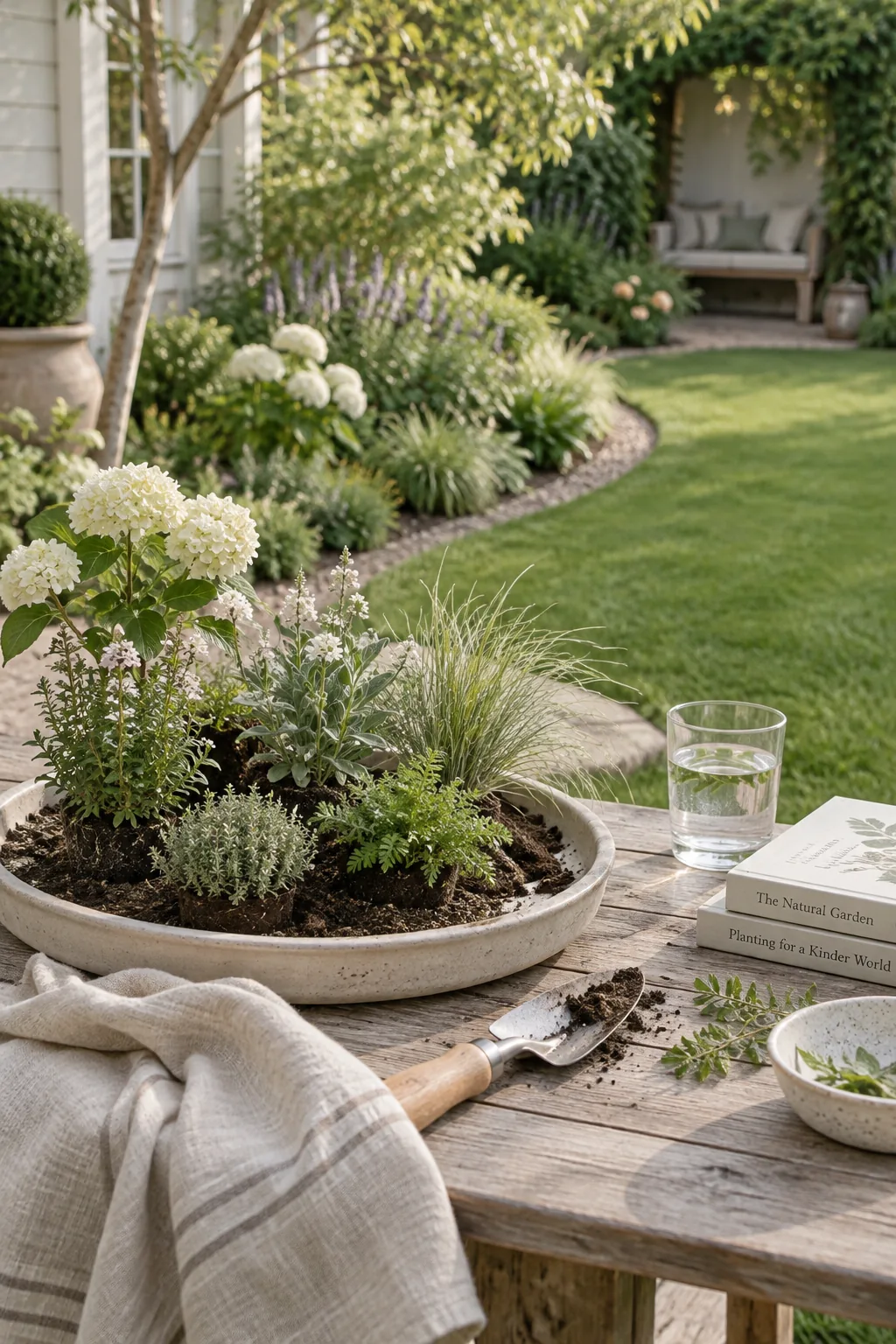
Most people push all their garden beds against the perimeter fence, leaving a massive, unused green square in the middle. Pulling a curved border bed out into the lawn breaks up that boring bowling-alley effect. You create hidden nooks that make the yard feel like a secret garden.
Suddenly your backyard has distinct zones instead of just being one big patch of grass.
8. Sun-Mapped Vegetable Zones
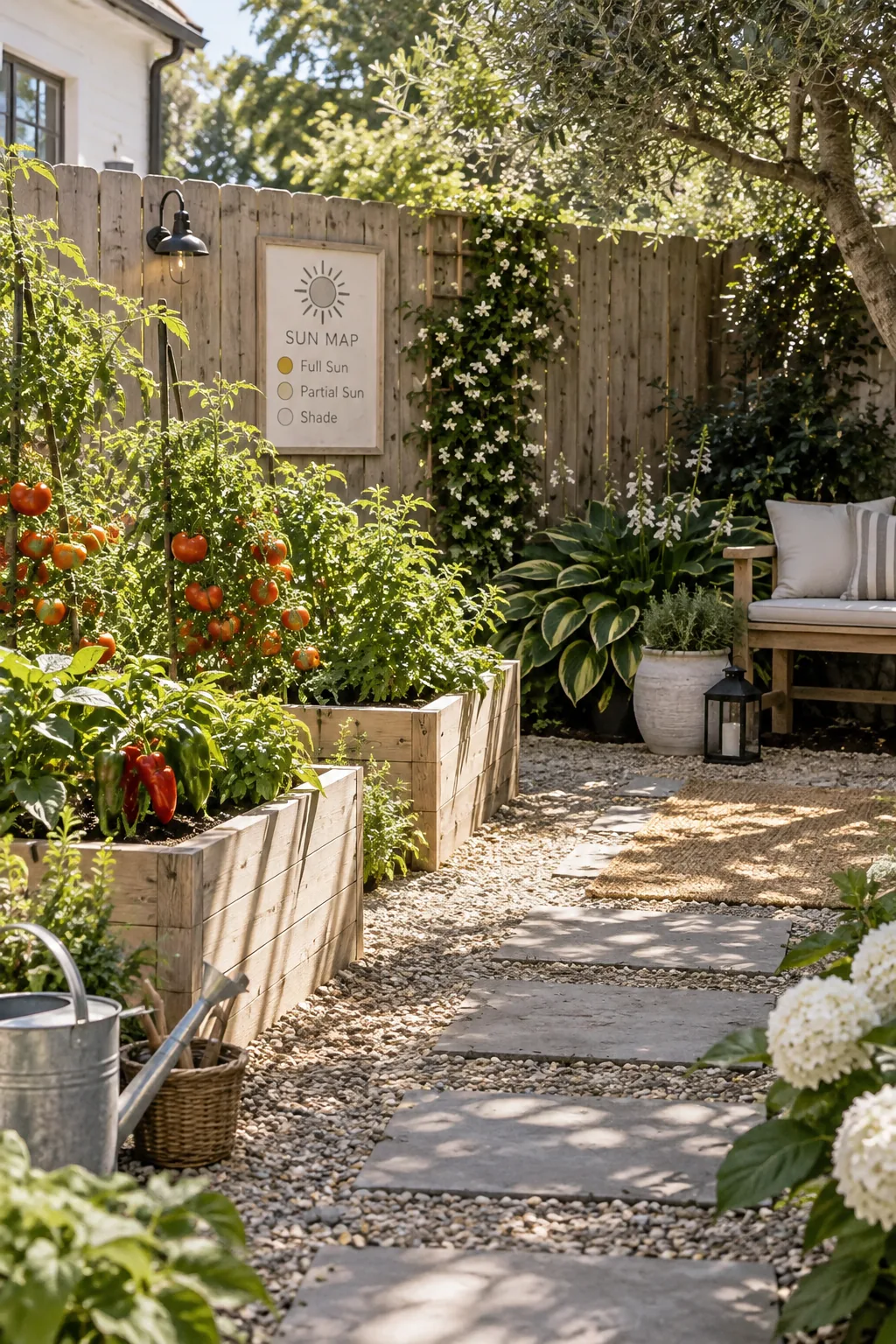
Six hours of direct sunlight is the magic number for most vegetables.
Map out your yard's shadows before you commit to a sun-mapping layout. Watch where the light hits at breakfast, lunch, and dinner, then place your heat-loving tomatoes right in the brightest spot. Your shady corners are better off reserved for hostas and a cozy reading bench.
9. Water-Smart Hydro Zones
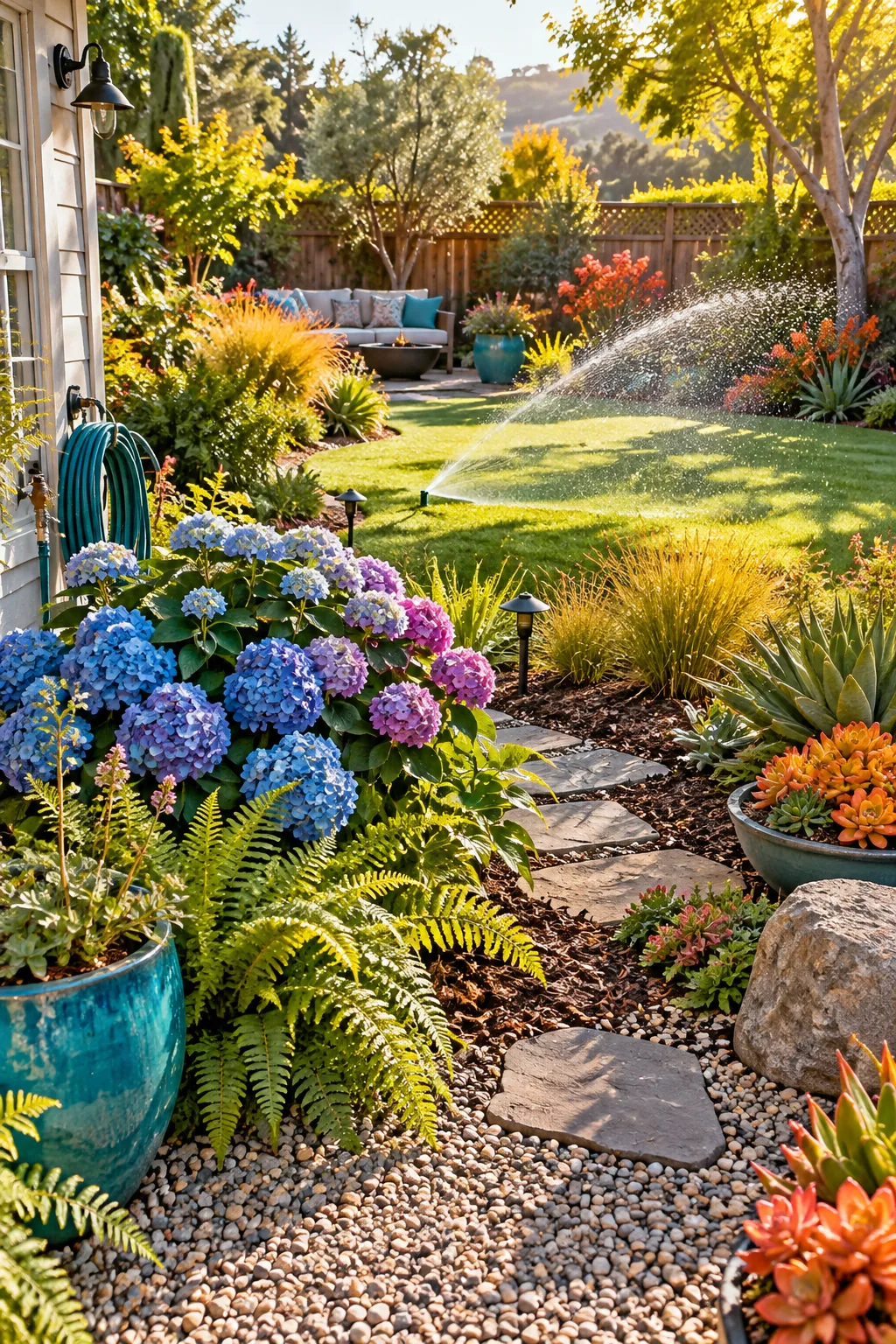
Grouping plants by their water needs creates a hydro-zoned layout that saves you hours of dragging the hose around. You keep the thirsty hydrangeas and ferns clustered near the water spigot. Drought-tolerant succulents and native grasses go in the far corners where the sprinkler barely reaches. It is a highly practical way to design your yard that naturally dictates where everything should live. Plus, your water bill will drop noticeably by mid-summer.
- Soaker hoses for the thirsty zones
- A rain barrel near the patio
- Gravel mulch for the dry spots
10. L-Shaped Corner Beds
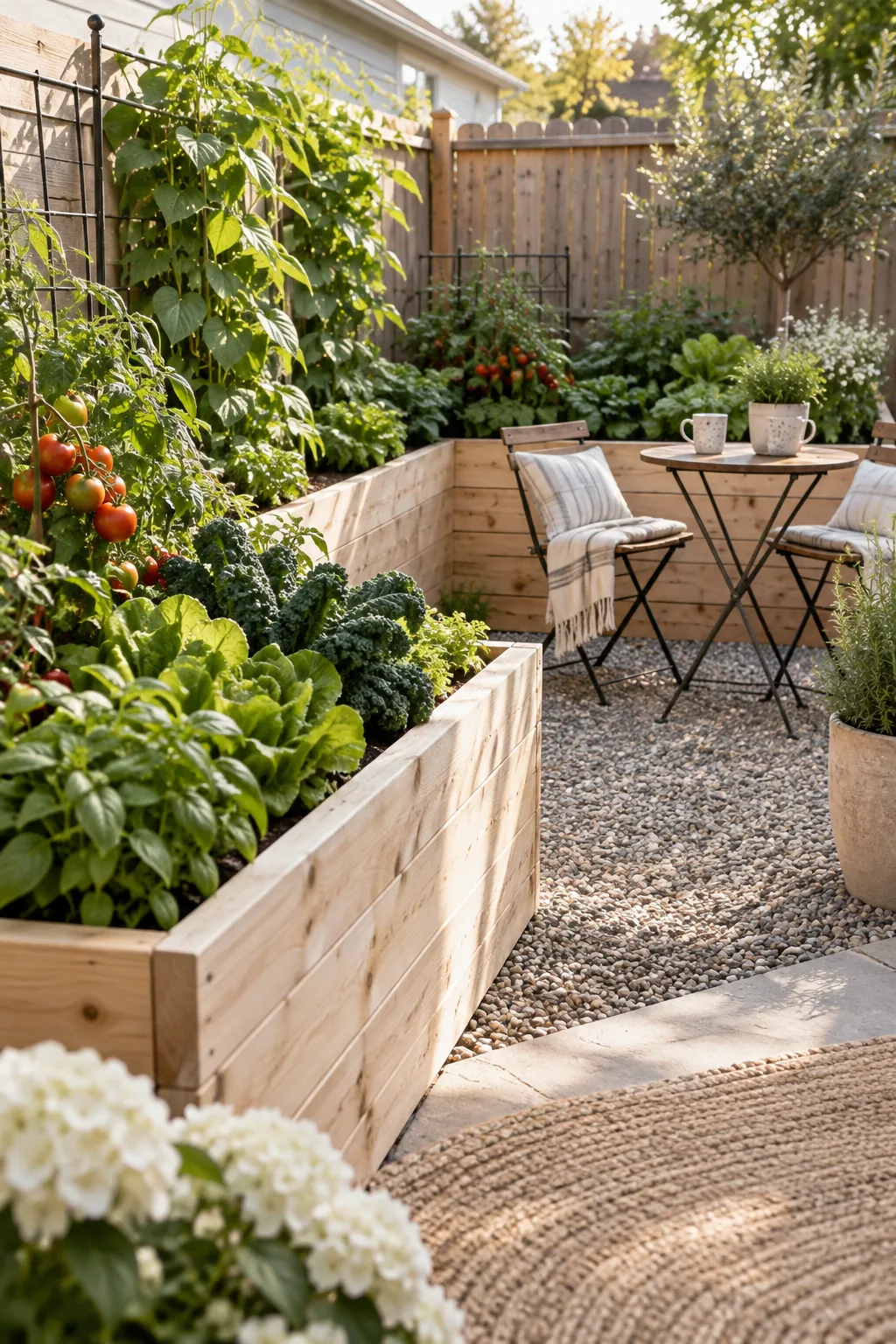
A standard four-by-eight raised bed yields enough vegetables to feed two people all summer.
Arranging three of these boxes in an L-shape creates a highly efficient corner garden. You maximize your growing space while keeping the center open for a small bistro set. It is the perfect setup for a compact suburban backyard.
- Untreated cedar lumber
- A mix of topsoil and compost
- Hardware cloth for the bottom
11. Cozy Fire Pit Circle
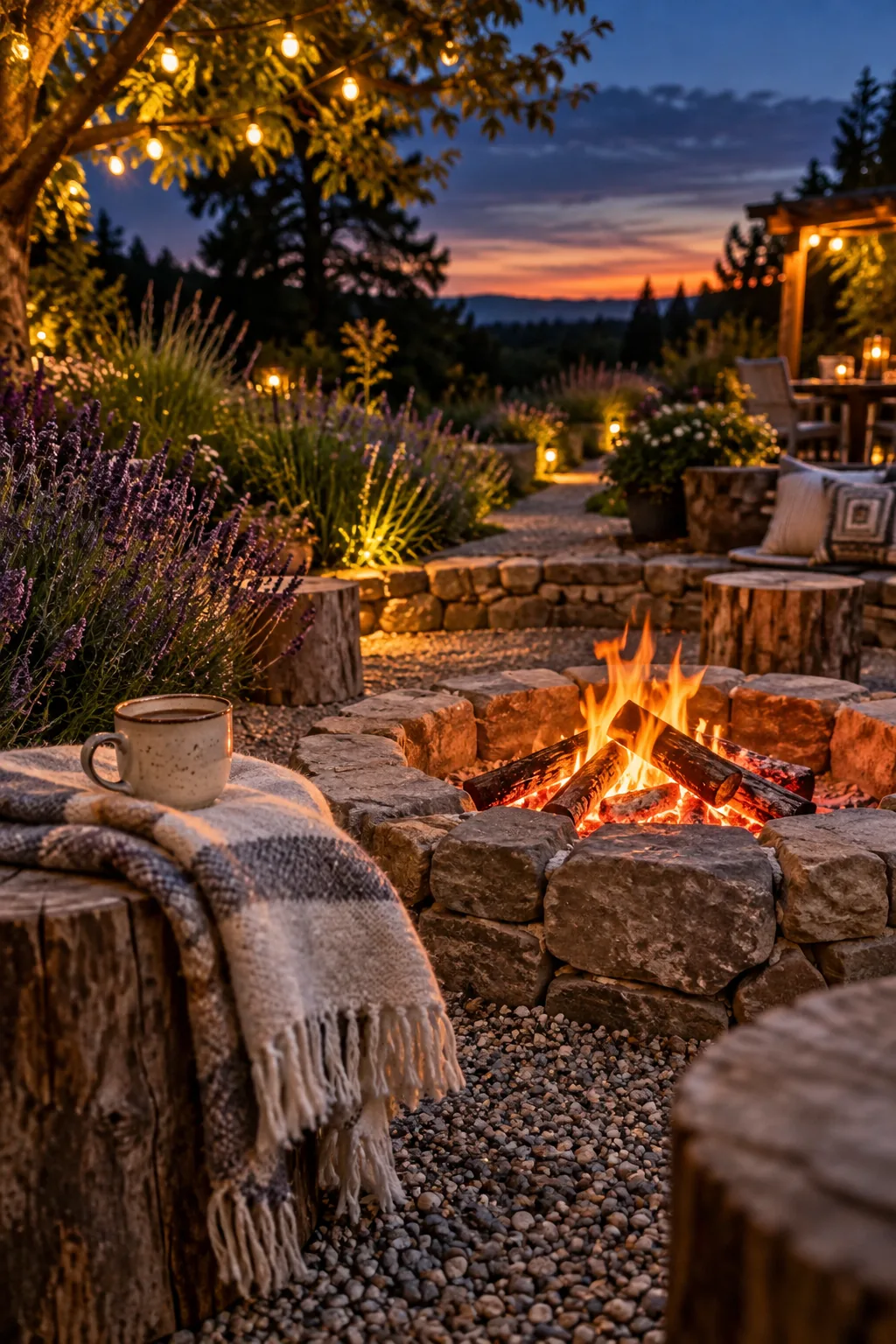
My absolute favorite evening spot is the fire pit circle I carved out of the back garden.
Surround a simple stone fire ring with a thick border of mosquito-repelling plants like lavender and lemongrass. Lay down a heavy layer of crushed granite to keep stray sparks from catching the dry grass. It turns an ordinary backyard into a cozy destination long after the sun goes down.