
13+ Brilliant Wall Shelf Ideas for Your Home
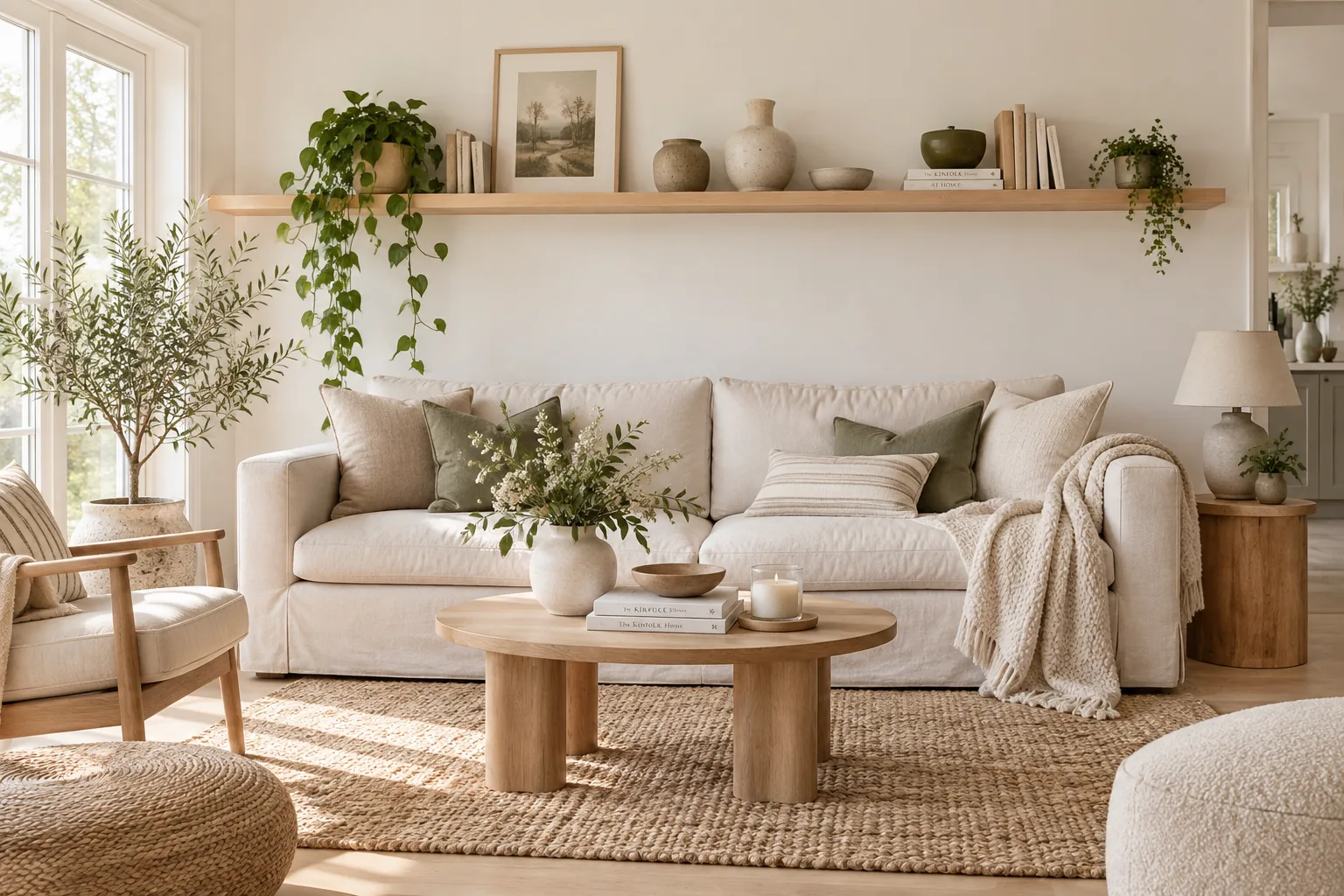
Blank walls are just missed opportunities waiting for the right combination of wood and metal. I use these simple shelving setups constantly to give flat rooms an instant layer of depth and personality.
1. Color-Drenched Floating Shelves
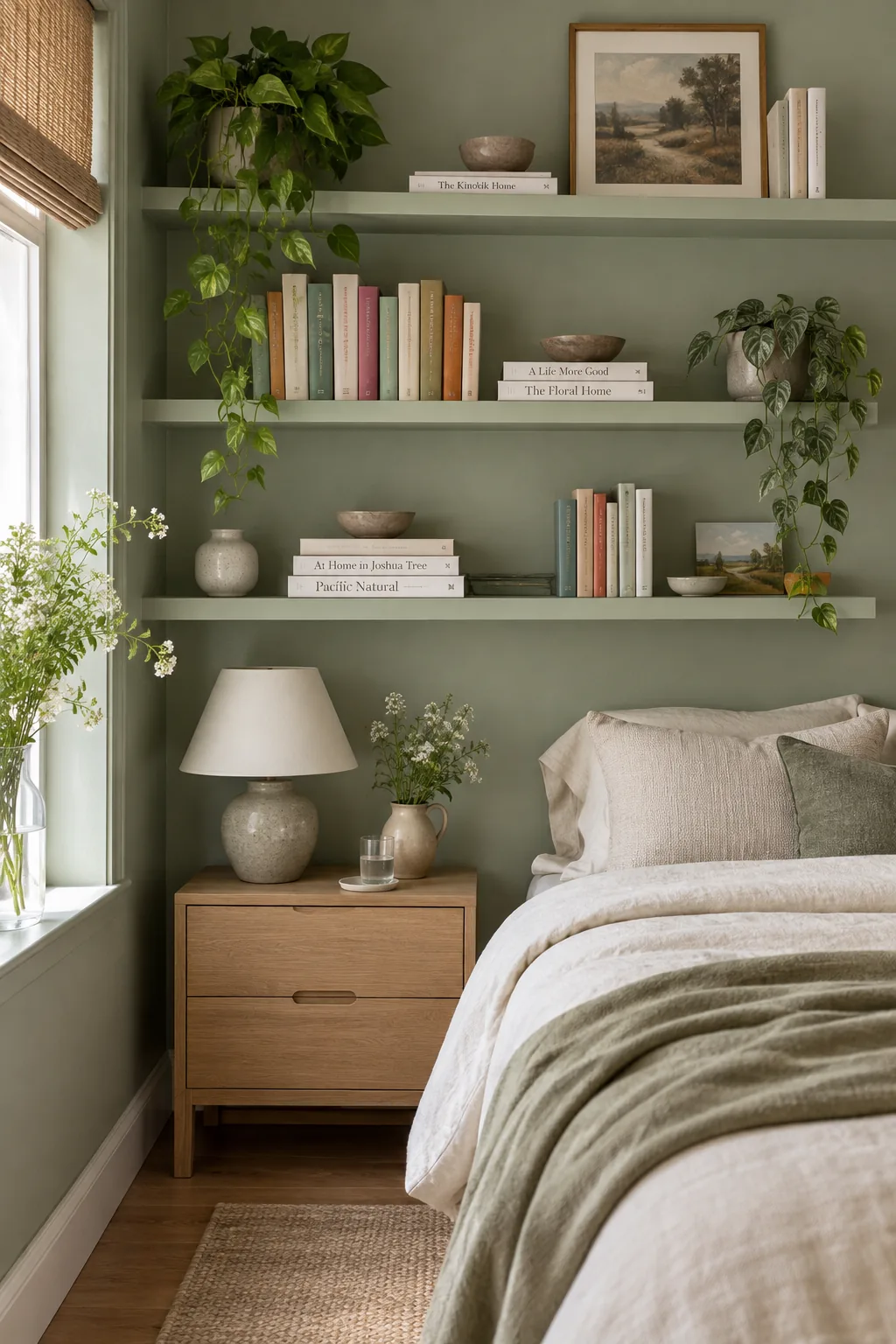
A seamless, built-in look happens instantly when you paint your floating shelves the exact same color as your wall. The shelves seem to disappear, letting your colorful book spines and ceramic vases do all the heavy lifting. I love using this trick in small bedrooms where heavy wooden furniture would feel too bulky. It keeps the visual weight incredibly light while maximizing your storage.
2. Brass Gallery Rails
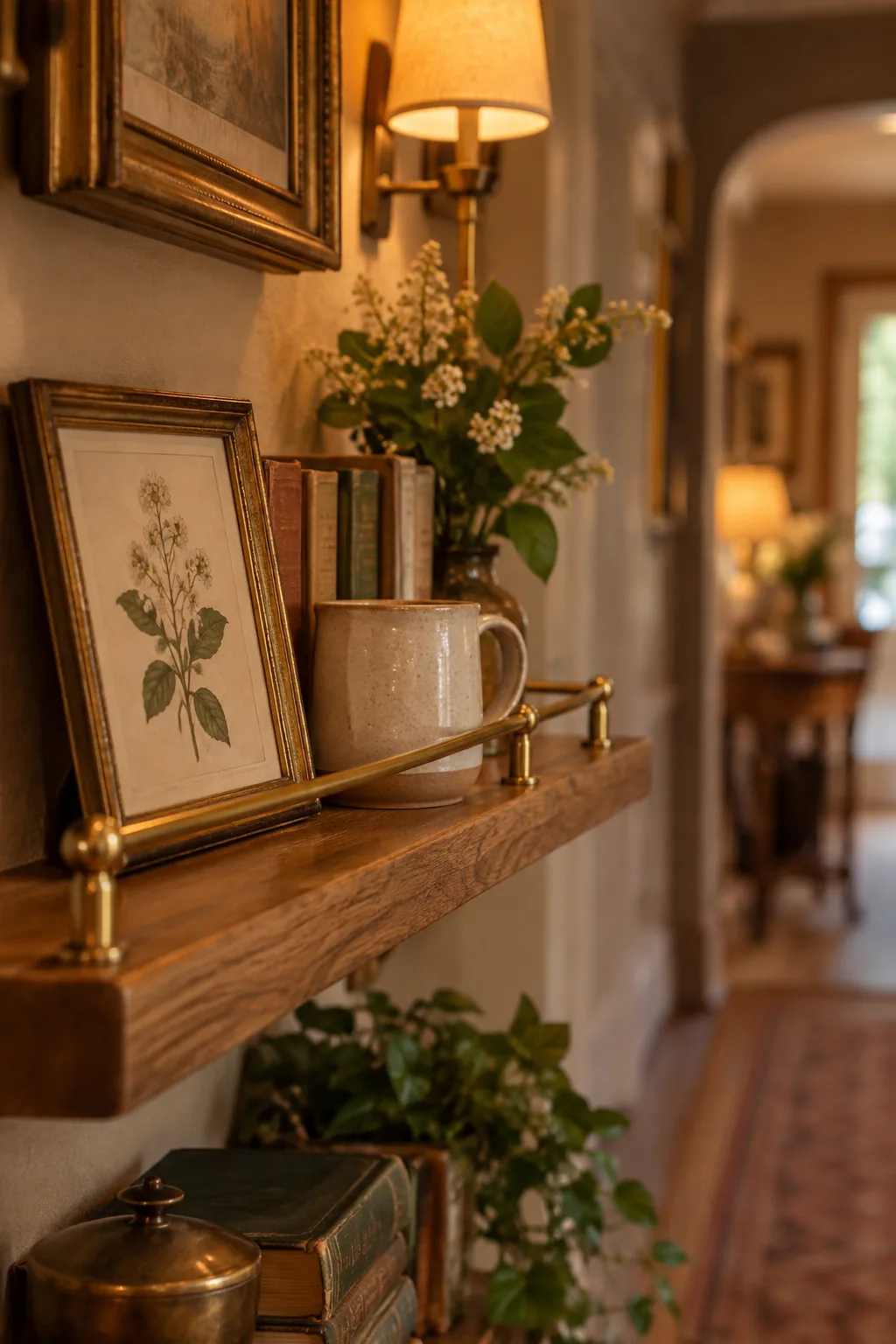
I always keep a stash of brass gallery rails in my design kit.
Attaching a thin metal rail to the front edge of a basic wooden shelf gives it an instant vintage library feel. It stops framed art from sliding off and looks incredibly high-end.
You can easily add these to existing shelves in your kitchen or hallway.
3. The 12-Inch Rule
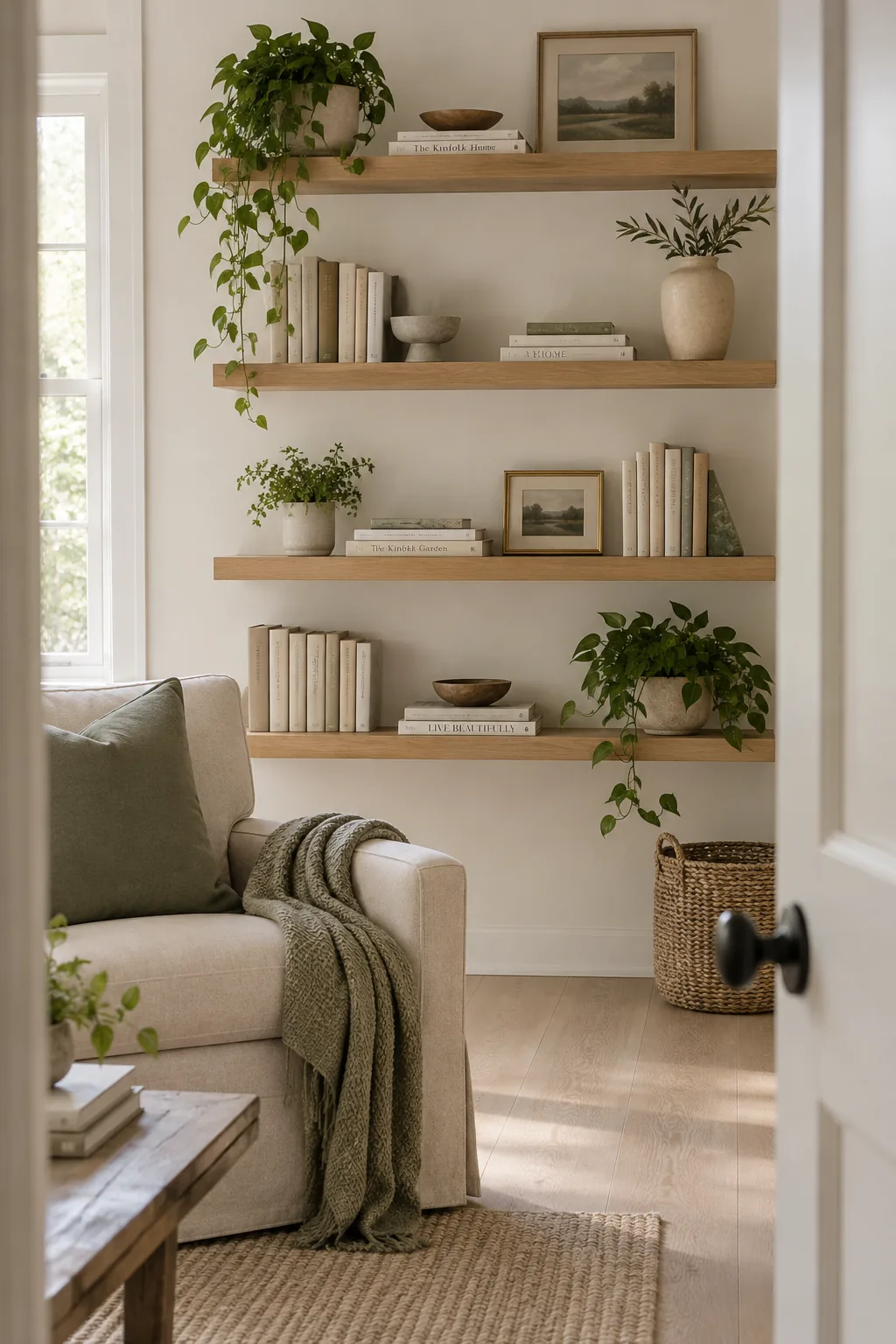
Leaving exactly twelve inches of space between stacked shelves is the golden rule for most standard hardback books.
You get enough breathing room for tall vases without making standard paperbacks look dwarfed. I usually stagger the heights just a bit if I have oversized art to display.
Just keep the spacing tight enough that the shelves feel like a single cohesive unit.
Why it works: It creates a purposeful, custom-built appearance instead of looking like random floating boards.
4. Layered Picture Ledges
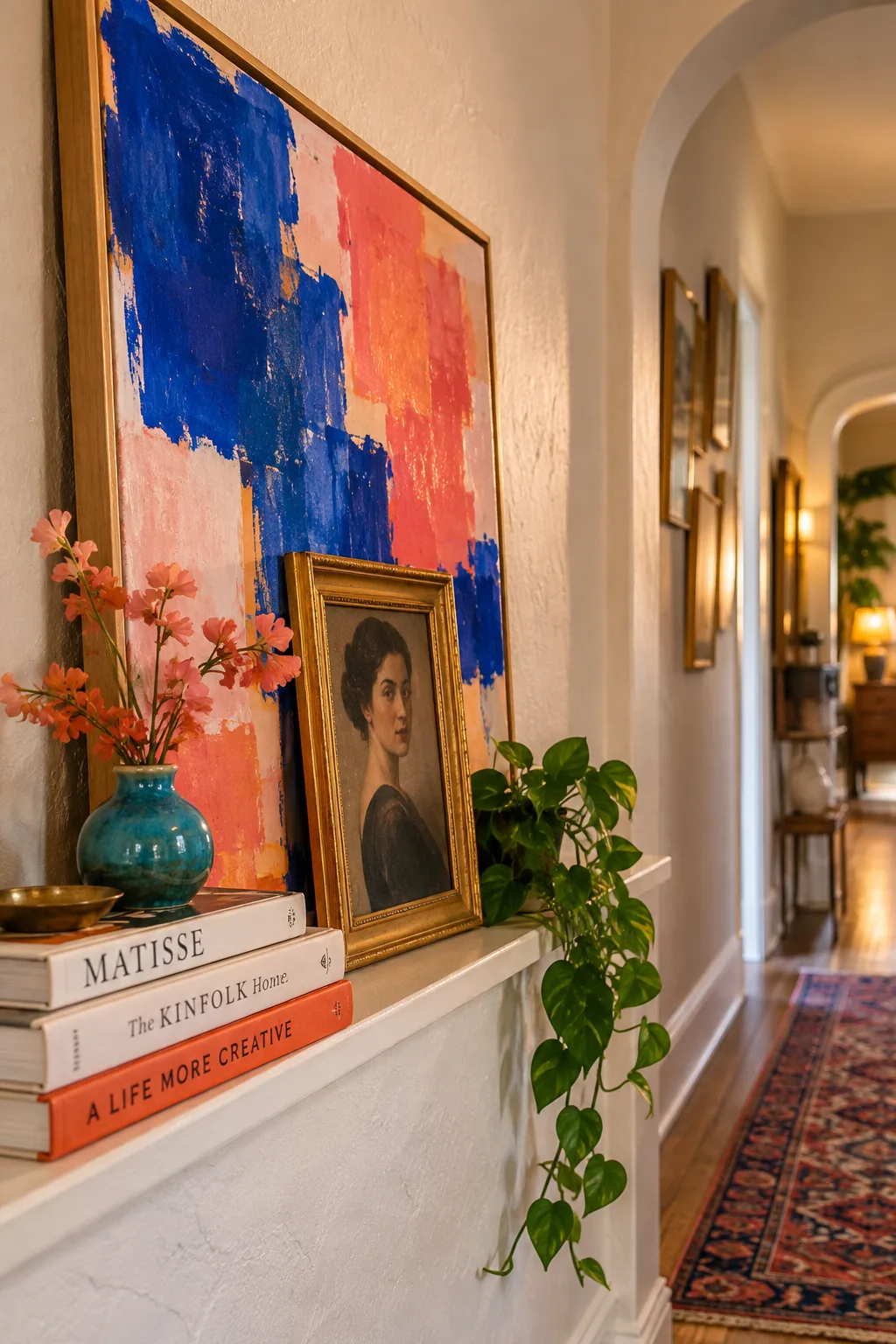
A casual, lived-in aesthetic comes together beautifully when you lean your artwork instead of hanging it. Layering a large framed canvas behind a smaller vintage portrait on a picture ledge adds instant depth to a flat hallway. You can swap the pieces out in seconds whenever you crave a change.
Secure the frames with a tiny piece of mounting putty so they never shift.
5. Asymmetrical Arrangements
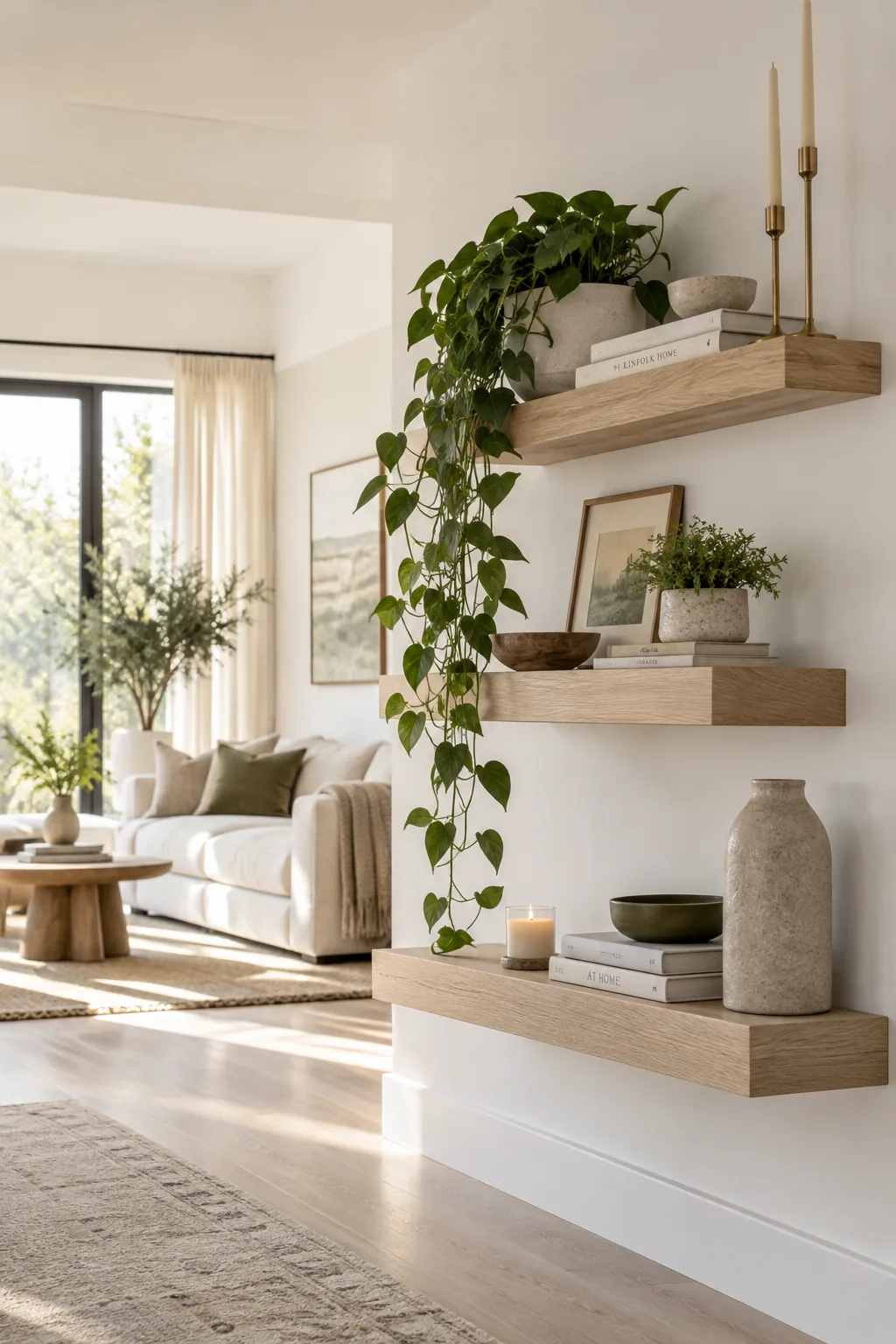
Asymmetry is what makes a staggered shelf arrangement feel modern and intentional.
Instead of perfectly aligning three shelves, shift the middle one a few inches to the left. This breaks up the rigid grid and gives you a natural spot for taller items on the bottom tier.
Fill the negative space with trailing plants or tall candlesticks to balance the visual weight.
- Pothos plants
- Taper candles
- Stacked coffee table books
6. The Single Long Shelf
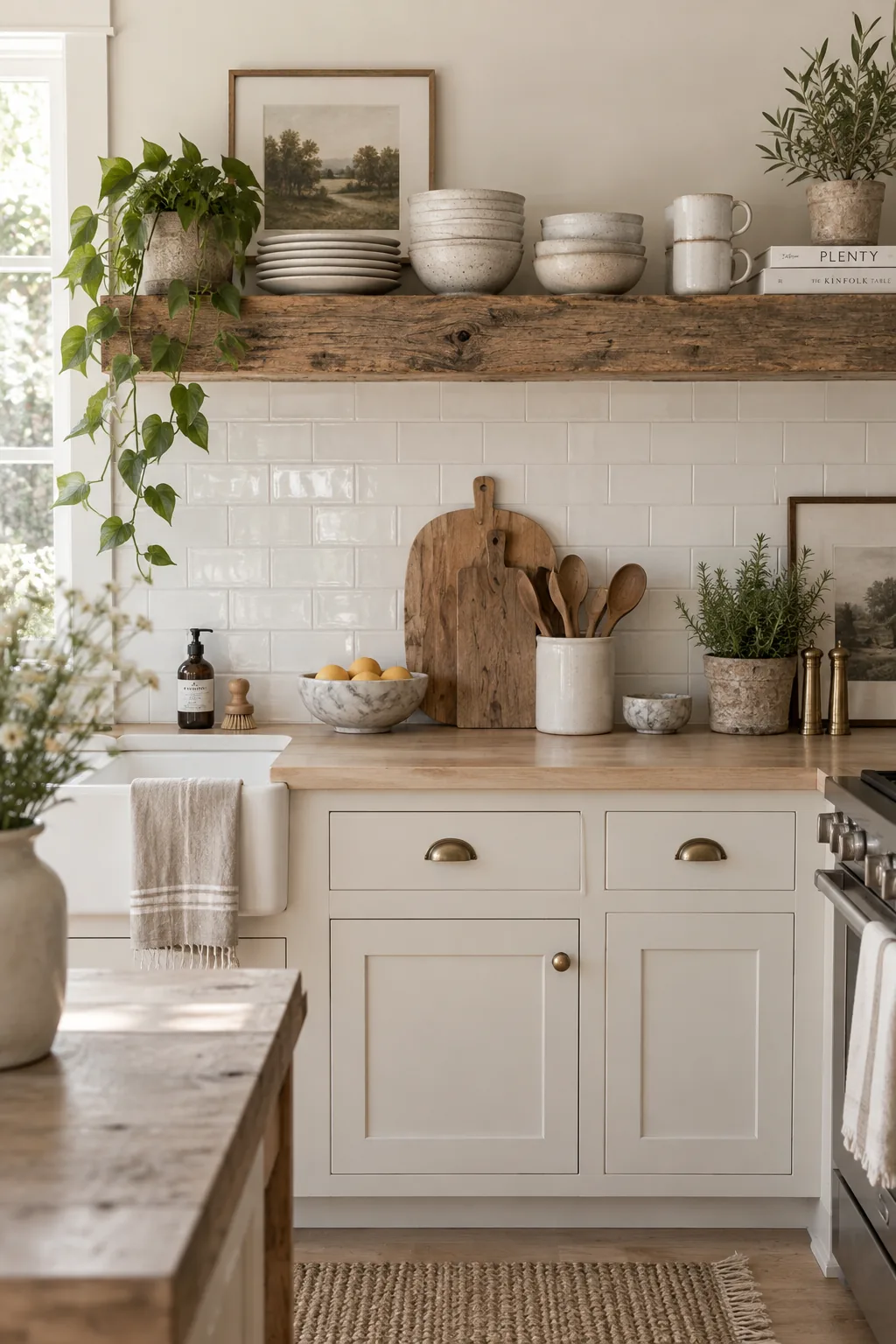
Kitchens with open upper walls often feel top-heavy and crowded.
Replacing chunky upper cabinets with a single, long reclaimed wood shelf opens up the entire room. It forces you to keep only your prettiest everyday dishes out in the open.
The horizontal line draws the eye across the space, making a cramped kitchen feel instantly wider.
7. Anchor with Heavy Pieces
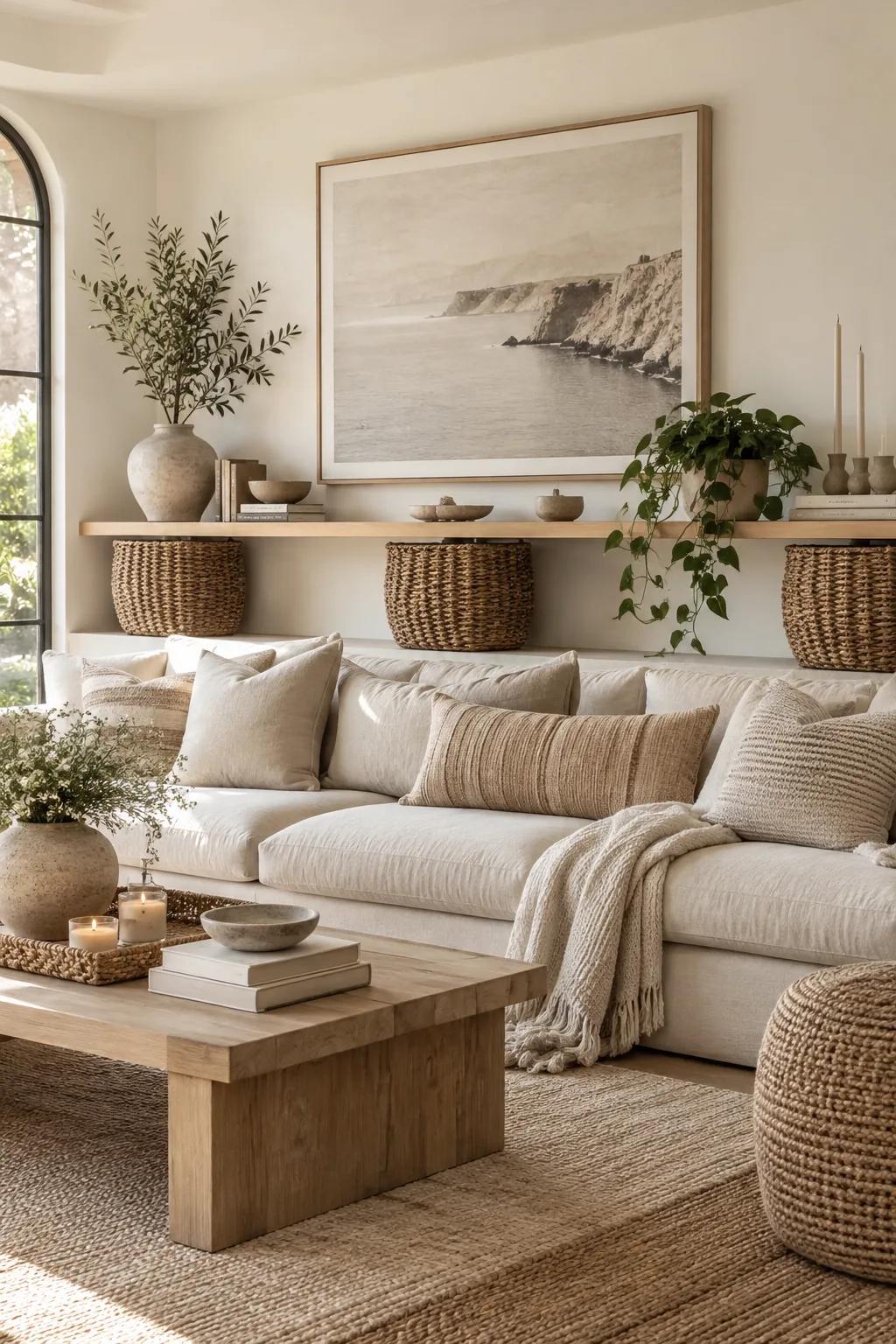
Anchor your shelf styling by starting with your largest items first, like big woven baskets or oversized art prints. Once those heavy pieces are placed, you can easily tuck in smaller decorative objects and trailing plants to fill the gaps.
8. Invisible Acrylic Shelves
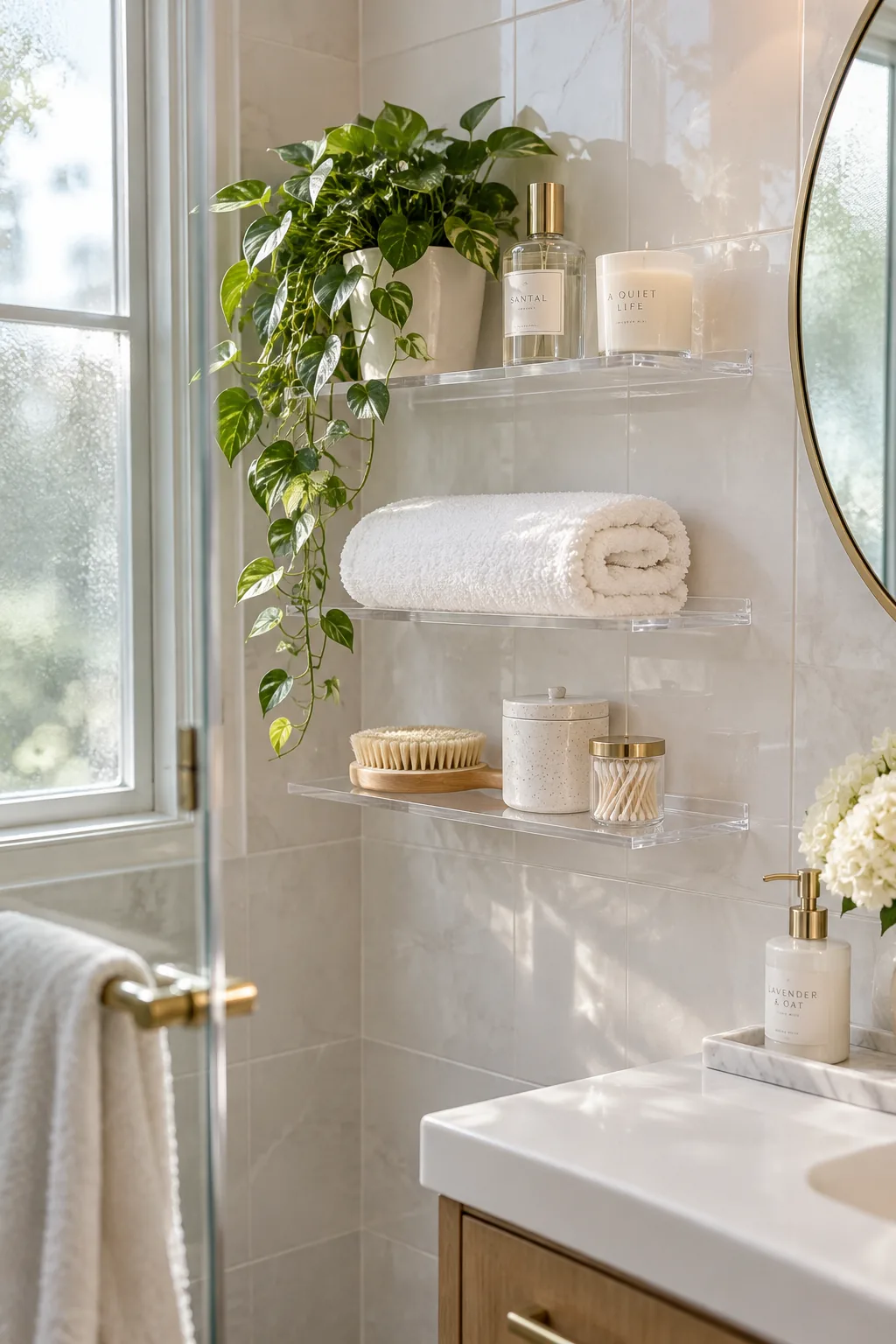
I recently started using acrylic shelves in dark, narrow bathrooms.
The clear material takes up absolutely zero visual space while still holding all your daily essentials. It is the perfect solution for tight corners where a heavy wooden shelf would block the natural light. You get all the function without shrinking the room.
9. Dark on Dark Styling
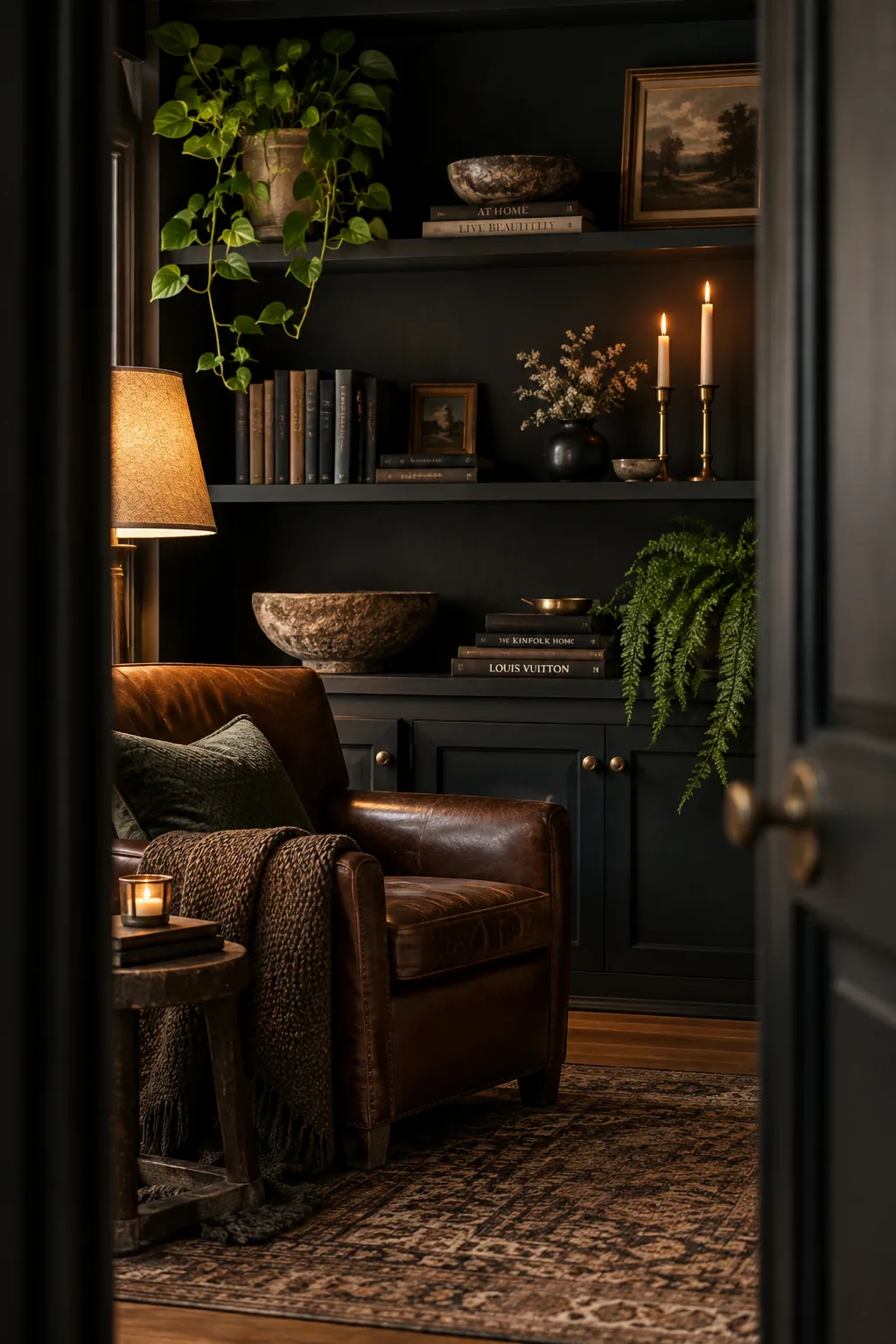
A moody, dramatic vibe takes over the room when you install matte black shelves against a dark charcoal wall. The dark-on-dark palette creates an incredible backdrop that makes metallic and natural textures pop beautifully.
- Brass bookends
- Woven rattan boxes
- White ceramic bowls
10. Embrace Negative Space
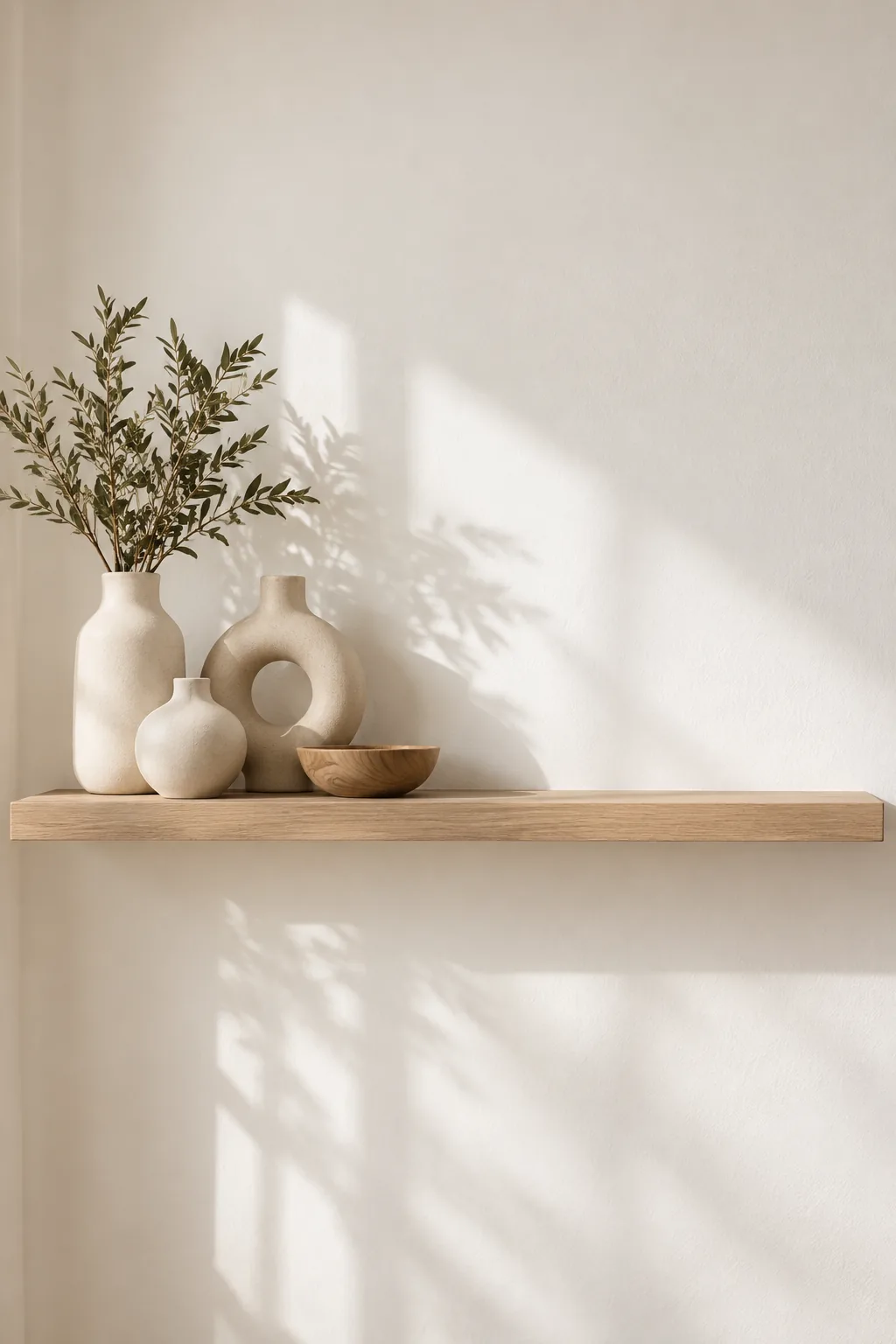
Tension is what makes a minimalist shelf arrangement actually look interesting.
Grouping a cluster of items on one end while leaving the other side completely bare creates a striking focal point. This intentional negative space highlights the sculptural shapes of your decor instead of turning it into a cluttered mess.
11. Wrap-Around Corners
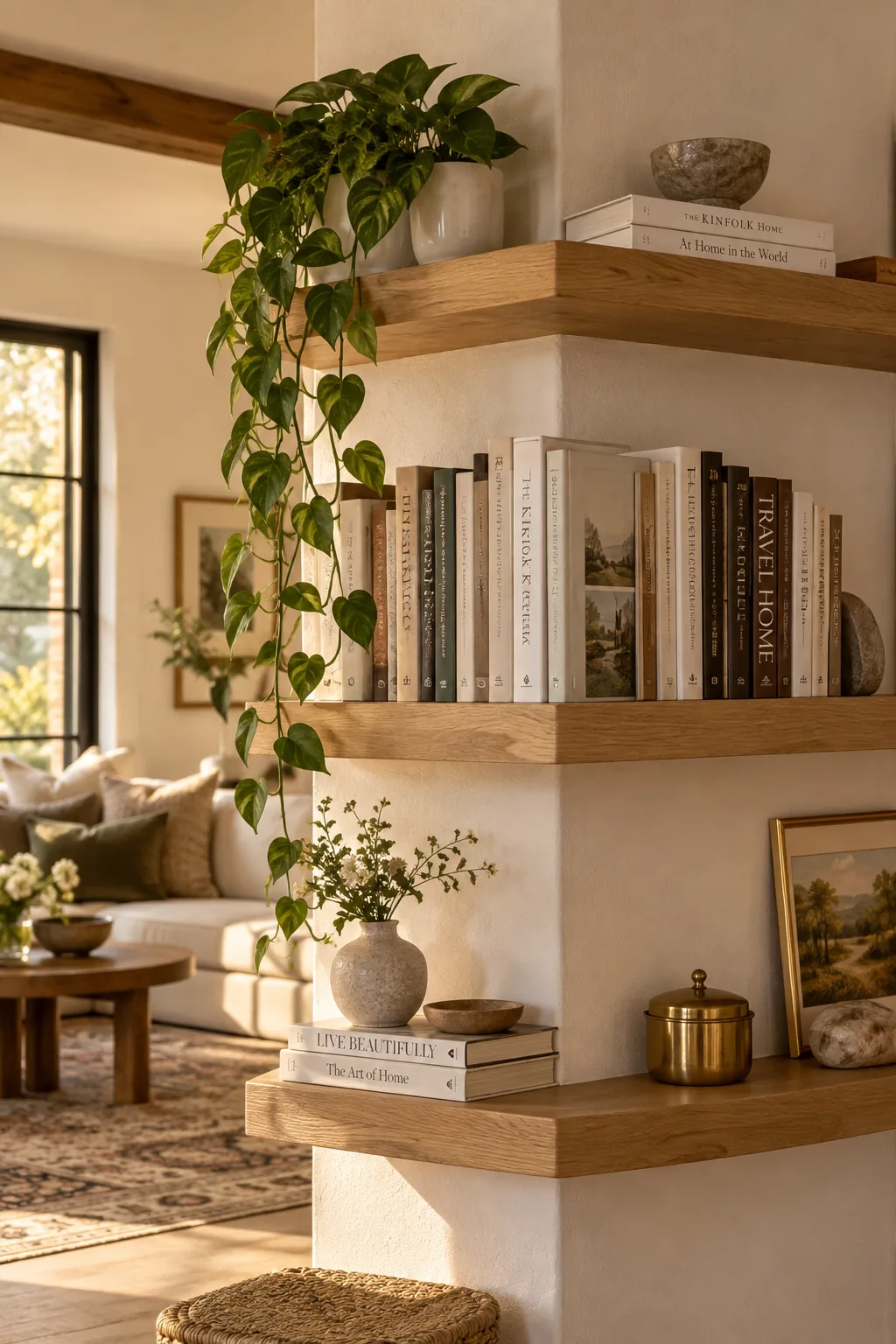
A cozy, architectural feel emerges when you wrap shelves entirely around an outward-facing corner. It connects two separate walls and turns an awkward structural pillar into a stunning display area for your favorite objects. I like to keep the styling continuous, letting a row of books literally turn the corner. This custom touch tricks the eye into thinking the architecture is far more expensive than it really is.
12. Antique Corbel Brackets
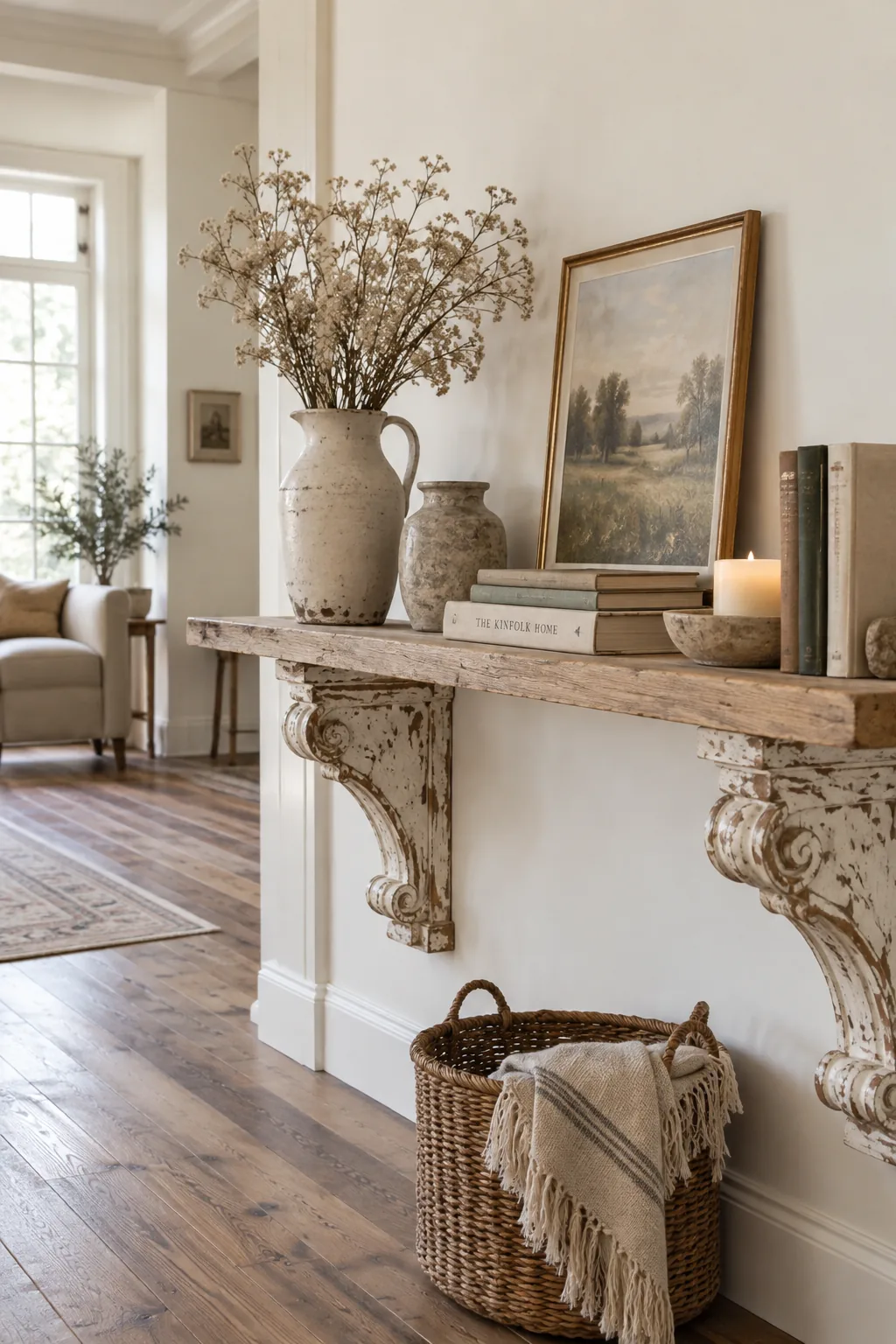
I always hunt for antique corbels at flea markets to use as shelf brackets. Mounting a simple pine board on top of ornate, chipped-paint corbels gives you an incredible mix of clean lines and historic charm. It brings so much character to a plain drywall box.
You can easily paint them to match your trim for a more subtle finish.
Why it works: The contrast between the simple flat shelf and the highly detailed brackets creates immediate visual interest.
13. Leather Strap Suspensions
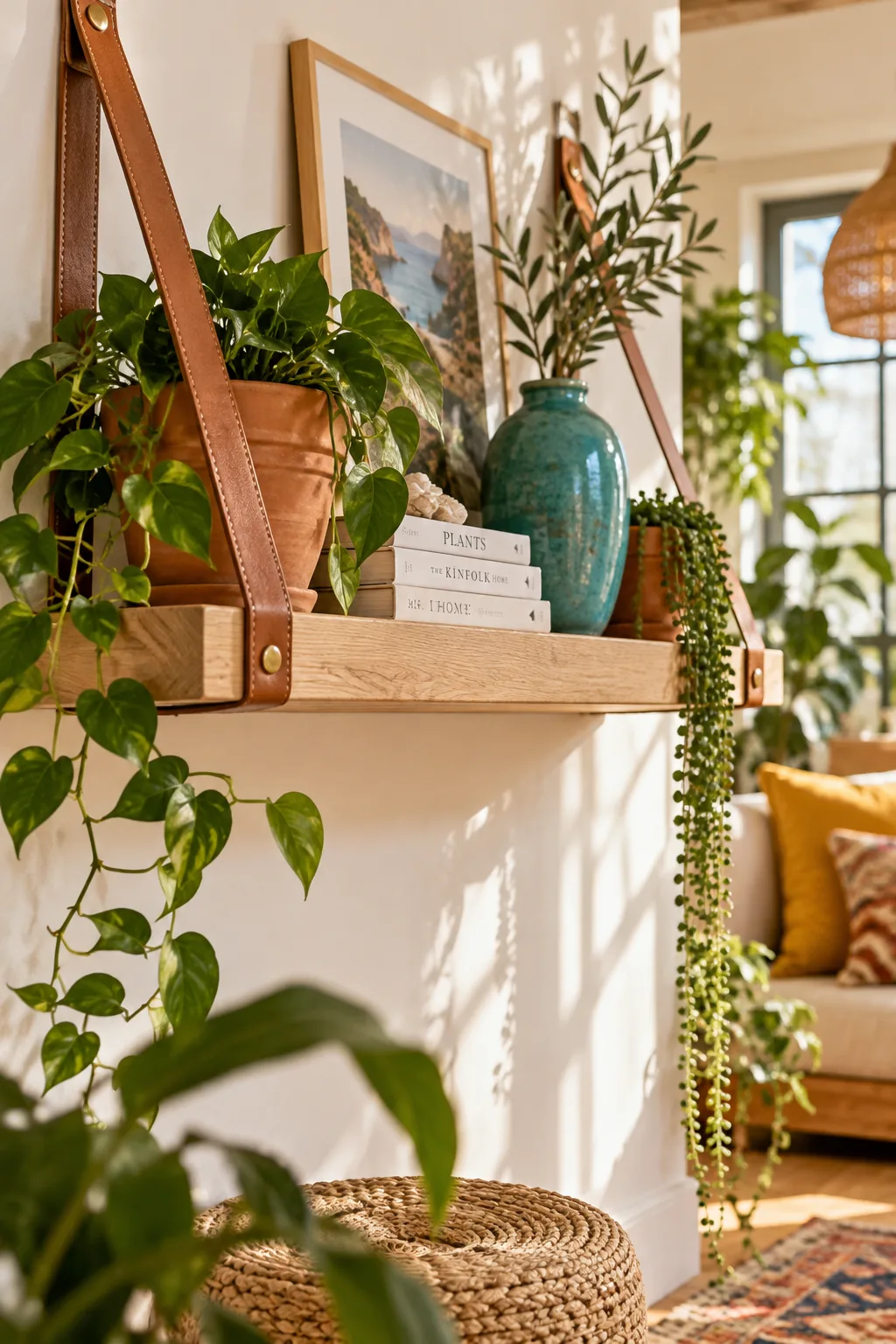
An effortless, bohemian aesthetic shines through when you suspend a shelf using thick leather straps.
The warm tones of the leather contrast beautifully against a crisp white wall and a light oak board. It takes less than an hour to install but looks like a custom piece of furniture. Just make sure your anchors are heavy-duty if you plan to display heavy planters.
14. Over-the-Door Storage
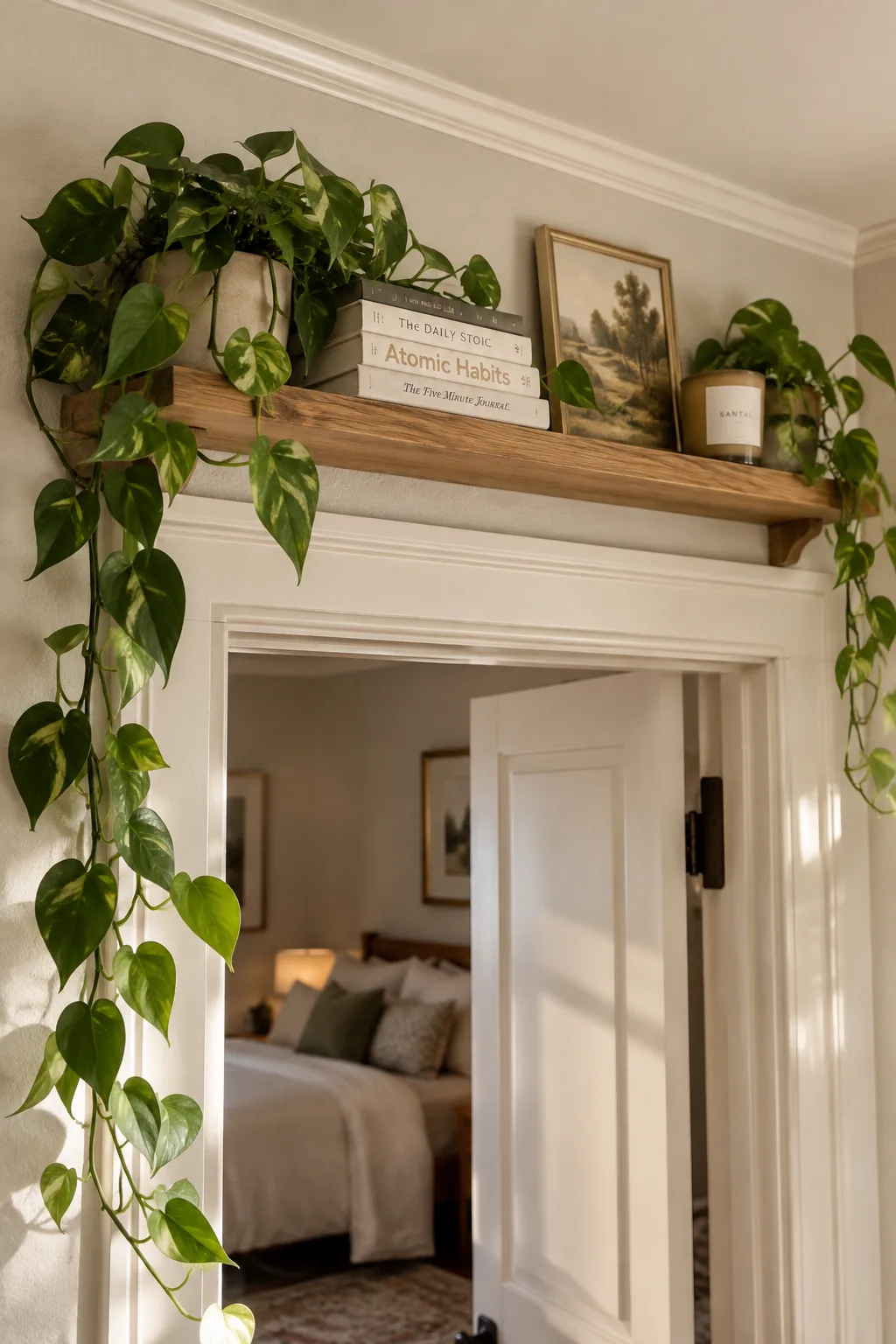
I have a massive weak spot for installing a single shelf just above a bedroom door frame. It utilizes completely dead space and gives you a spot to stash books or display trailing vines without eating up any floor space. The room feels instantly taller when the eye is drawn all the way up to the ceiling.
Keep the items up there relatively lightweight for safety.
Why it works: It maximizes vertical storage while drawing the eye upward to emphasize the height of the room.