Exterior Home Design: Curb Appeal & Contrast Cheat Sheet
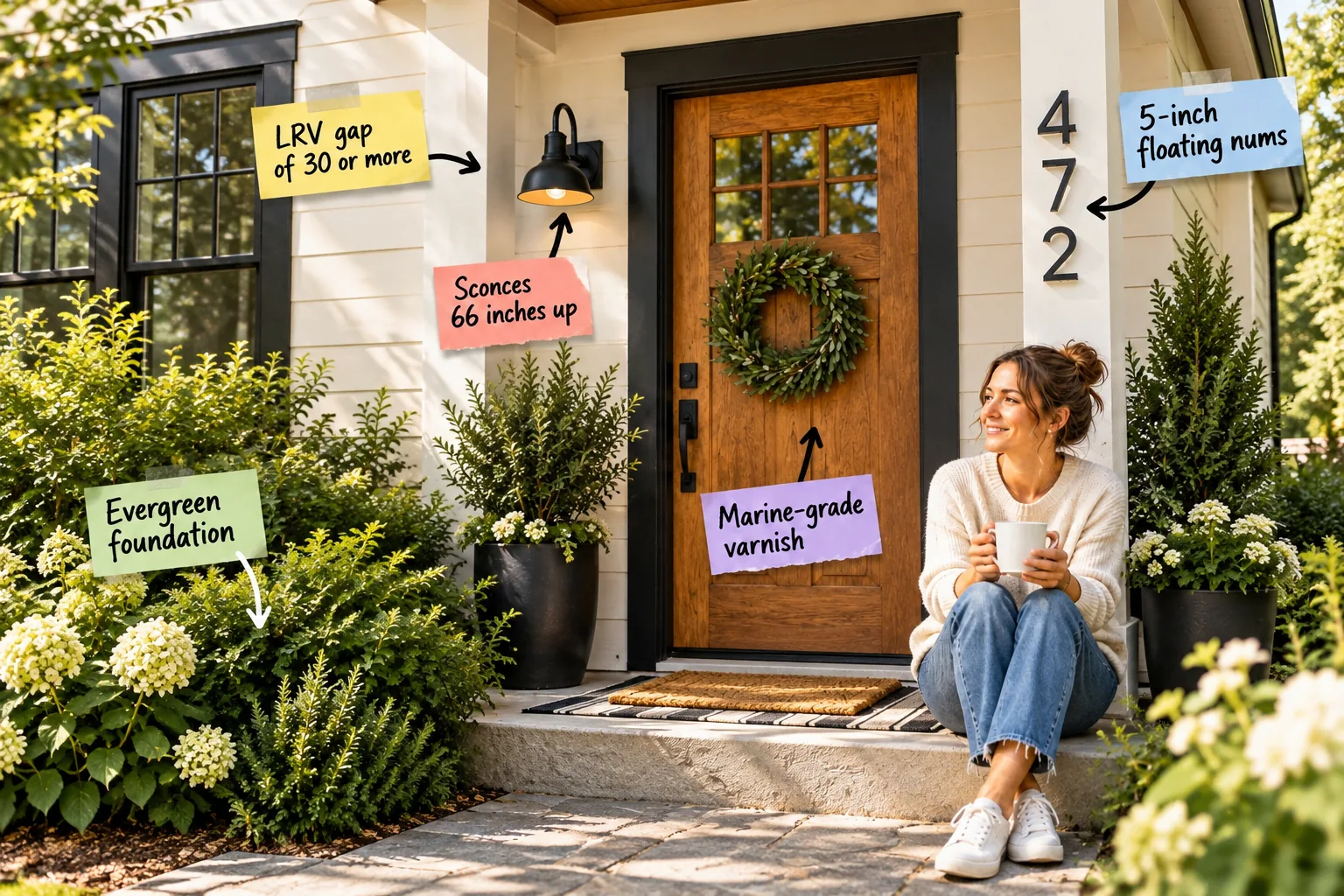
You can easily create a welcoming, balanced front porch using our complete curb appeal measurement and color contrast cheat sheet. Downloading this exact guide ensures you will be able to measure, space, and color-match your exterior updates with absolute confidence.
Grounding the Porch With Evergreen Foundation
When planting your evergreen foundation shrubs, always space the root balls at least 24 to 36 inches away from the exterior foundation wall so mature plants have plenty of room to breathe.
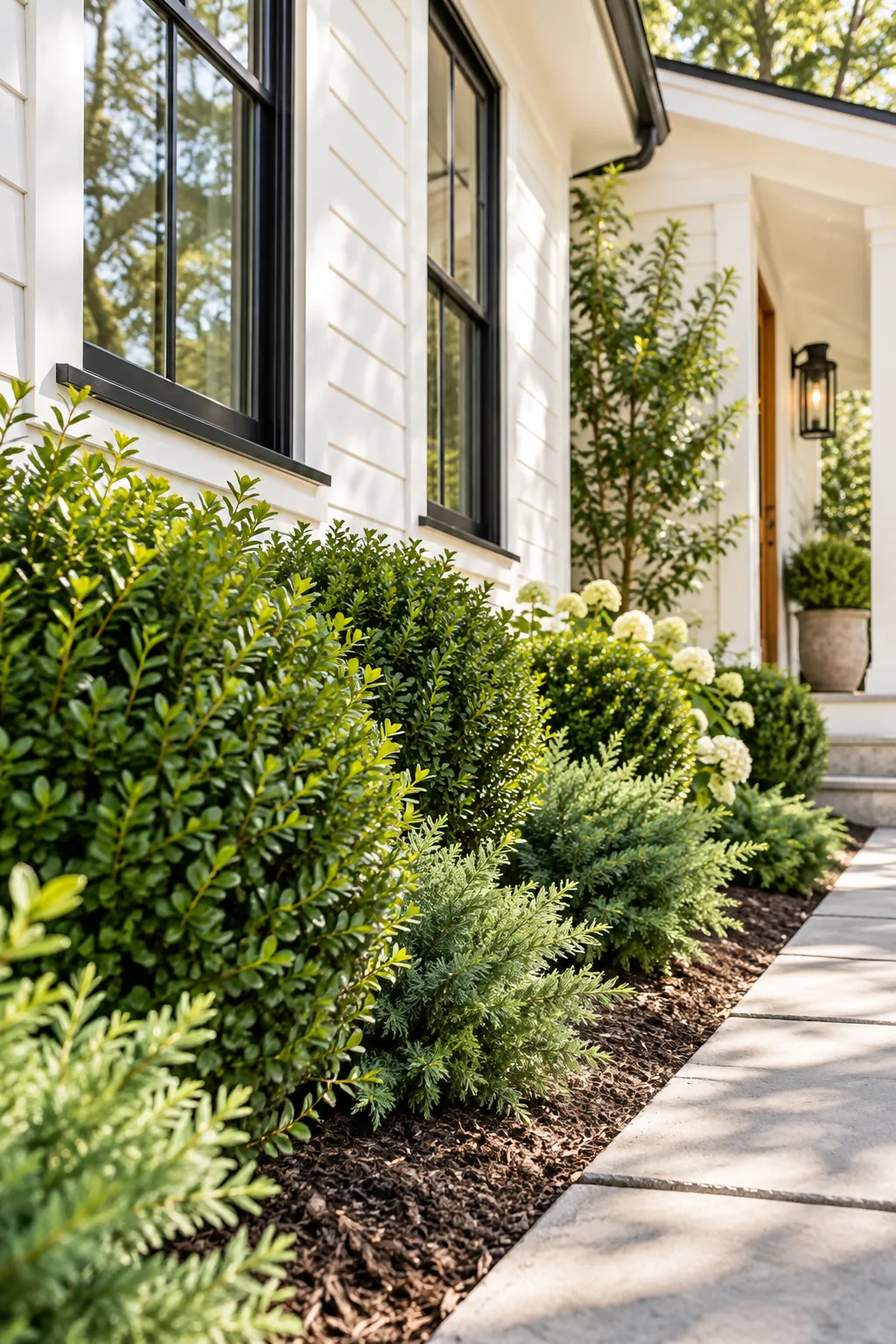
While structural planting is incredibly important for year-round color, a solid wall of identical greenery can sometimes feel a bit too heavy for a relaxed, welcoming entrance.
Spacing Shrubs for Optimal Airflow
Leaving that crucial two-foot gap behind your shrubs prevents trapped moisture from damaging your siding and ensures the foliage receives adequate sunlight on all sides for even growth.
Choosing the Right Foundation Soil Mix
Because the soil directly next to a concrete slab often lacks nutrients, I always blend a rich organic compost into the native dirt before setting any new root balls.
Mulching Around Your Evergreen Base
Applying a thick two-inch layer of natural cedar mulch helps regulate the soil temperature during intense summer heat while keeping aggressive weeds from competing with your fresh landscaping.
Calculating the Ideal Siding and Trim Contrast
To ensure your architectural details truly pop, aim for an LRV gap of 30 or more between your creamy exterior siding and your crisp black window trim.
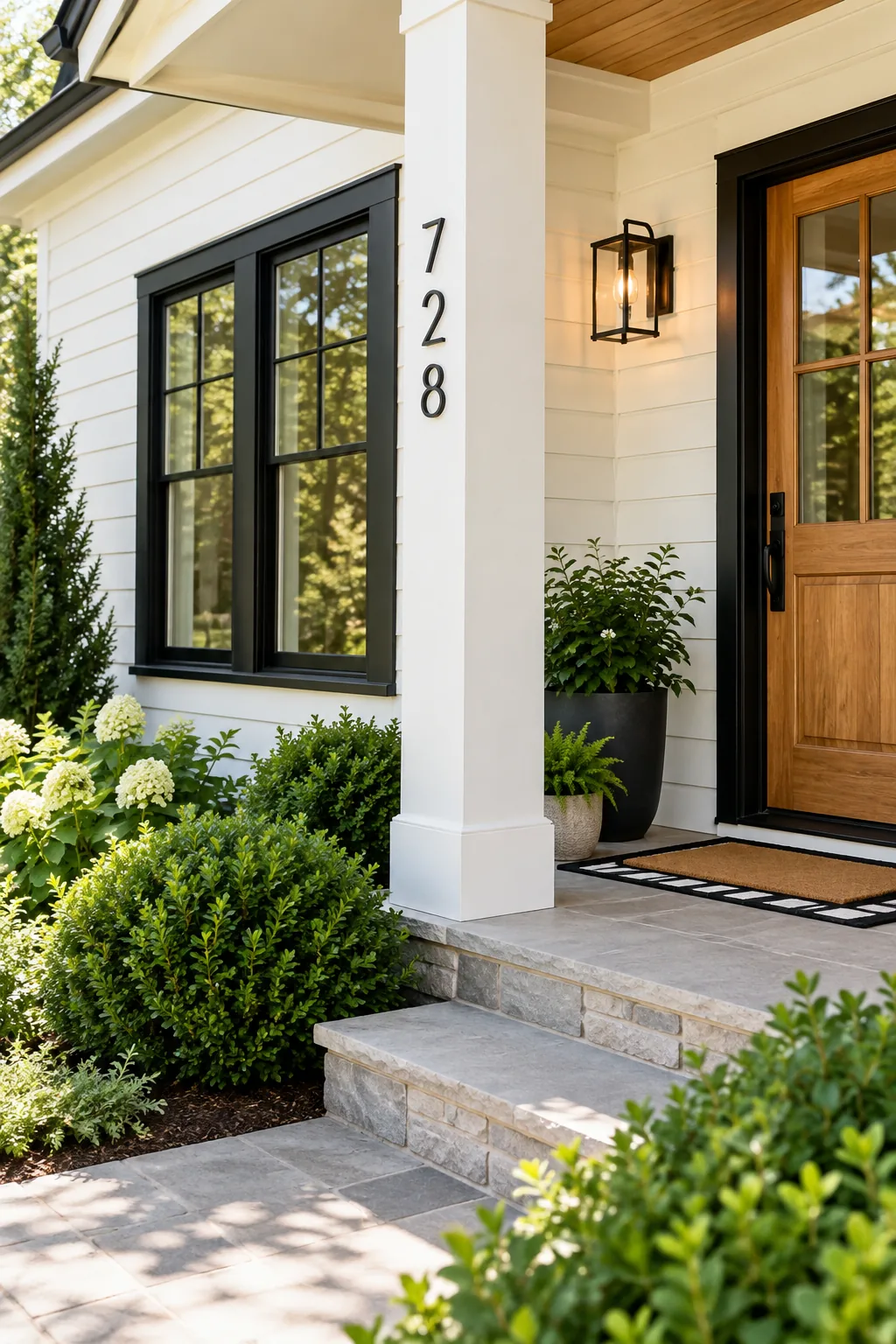
Maintaining this stark numerical difference prevents the house from looking completely washed out when hit by direct, intense morning sunlight.
Understanding the Light Reflectance Value Scale
The Light Reflectance Value is a simple industry scale from 0 to 100 that measures exactly how much light a specific paint color reflects back into the environment.
Testing Paint Colors in Morning Sunlight
Always paint large test swatches on both the north and south sides of your home to verify that the high contrast remains visible across different lighting conditions.
Selecting a Creamy Siding Base
Choosing a soft off-white rather than a stark hospital white gives the exterior a much warmer, inviting feel while still providing an excellent backdrop for dark accents.
| Paint Element | Target LRV | Visual Effect | Best Finish |
|---|---|---|---|
| Main Siding | 75 to 85 | Warm and bright | Satin or Eggshell |
| Window Trim | 10 to 25 | Crisp framing | Semi-gloss |
| Front Door | 15 to 30 | Focal grounding | High-gloss |
| Porch Ceiling | 80 to 90 | Lifts the space | Flat |
Sizing and Mounting Modern House Numbers
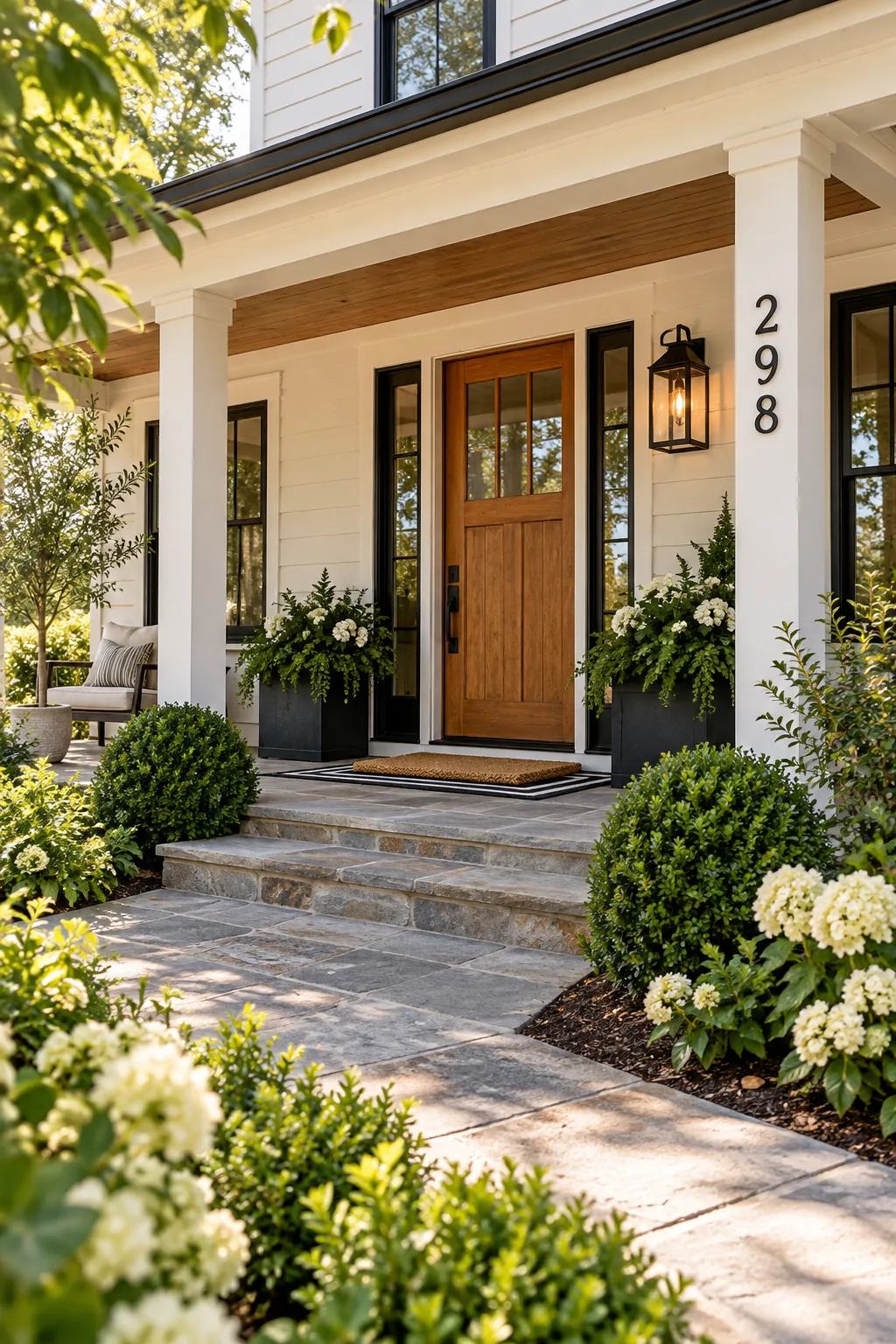
Upgrading to 5-inch floating nums hits the perfect visual sweet spot because they remain highly readable from the street without overwhelming standard six-inch porch columns.
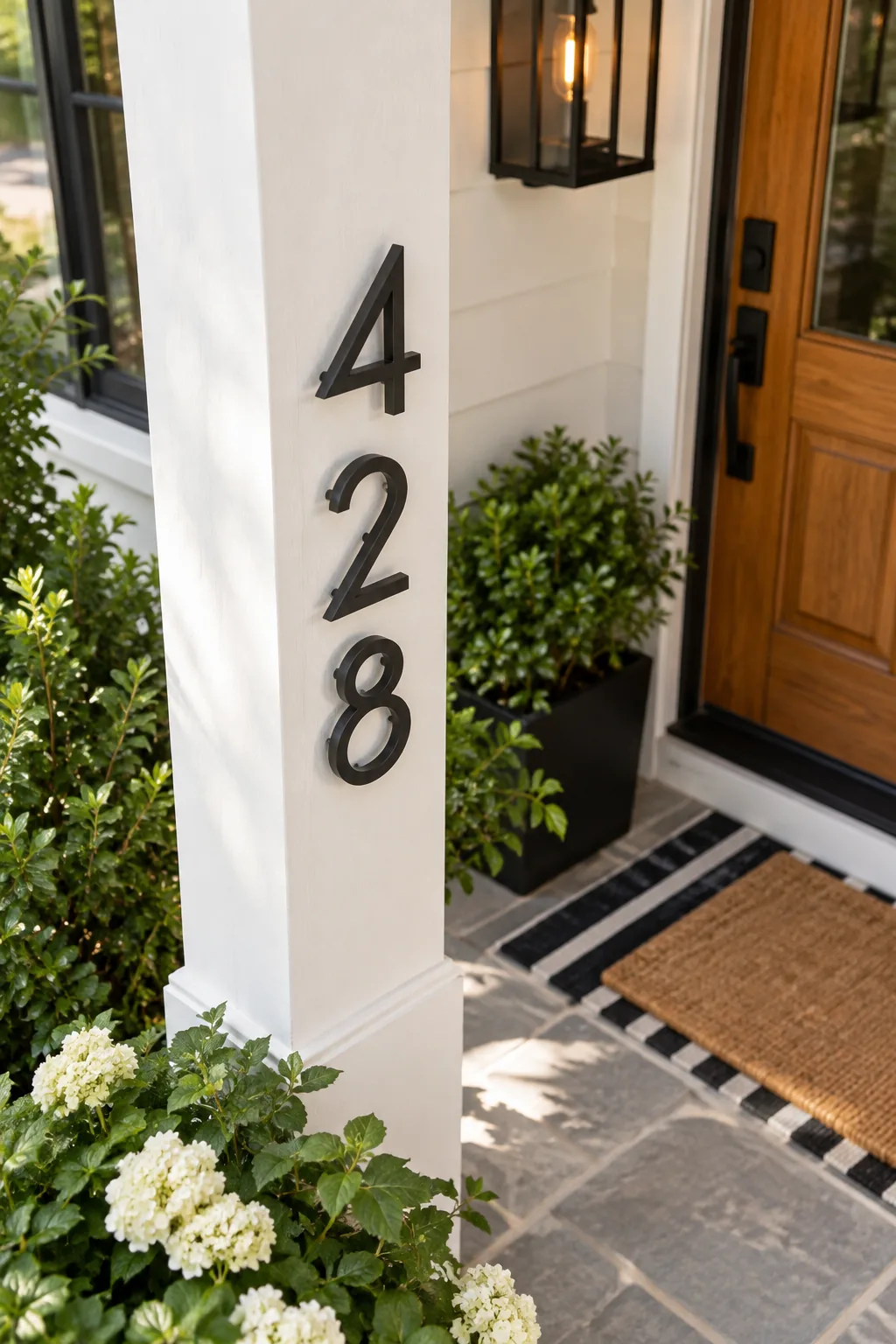
When I swapped out my old brass digits for these modern metal ones, leaving a half-inch gap behind the hardware instantly gave my Austin entryway a custom, dimensional look.
Creating the Perfect Shadow Gap
Using simple metal standoffs during installation pushes the numbers away from the mounting surface, allowing ambient light to cast a subtle, modern shadow against the painted wood.
Aligning Hardware With Porch Columns
Always center your stacked numbers vertically on the column facing the street, ensuring the top digit sits just slightly above the natural eye level of a passing driver.
Choosing Weather-Resistant Metal Finishes
Selecting a powder-coated matte black finish guarantees your hardware will resist fading and rust, even if your porch faces the harsh afternoon sun or frequent heavy rain.
Positioning Porch Wall Sconces
To cast a welcoming, glare-free glow across your entryway, always mount your fixtures so the center sits exactly 66 inches above the porch floor.
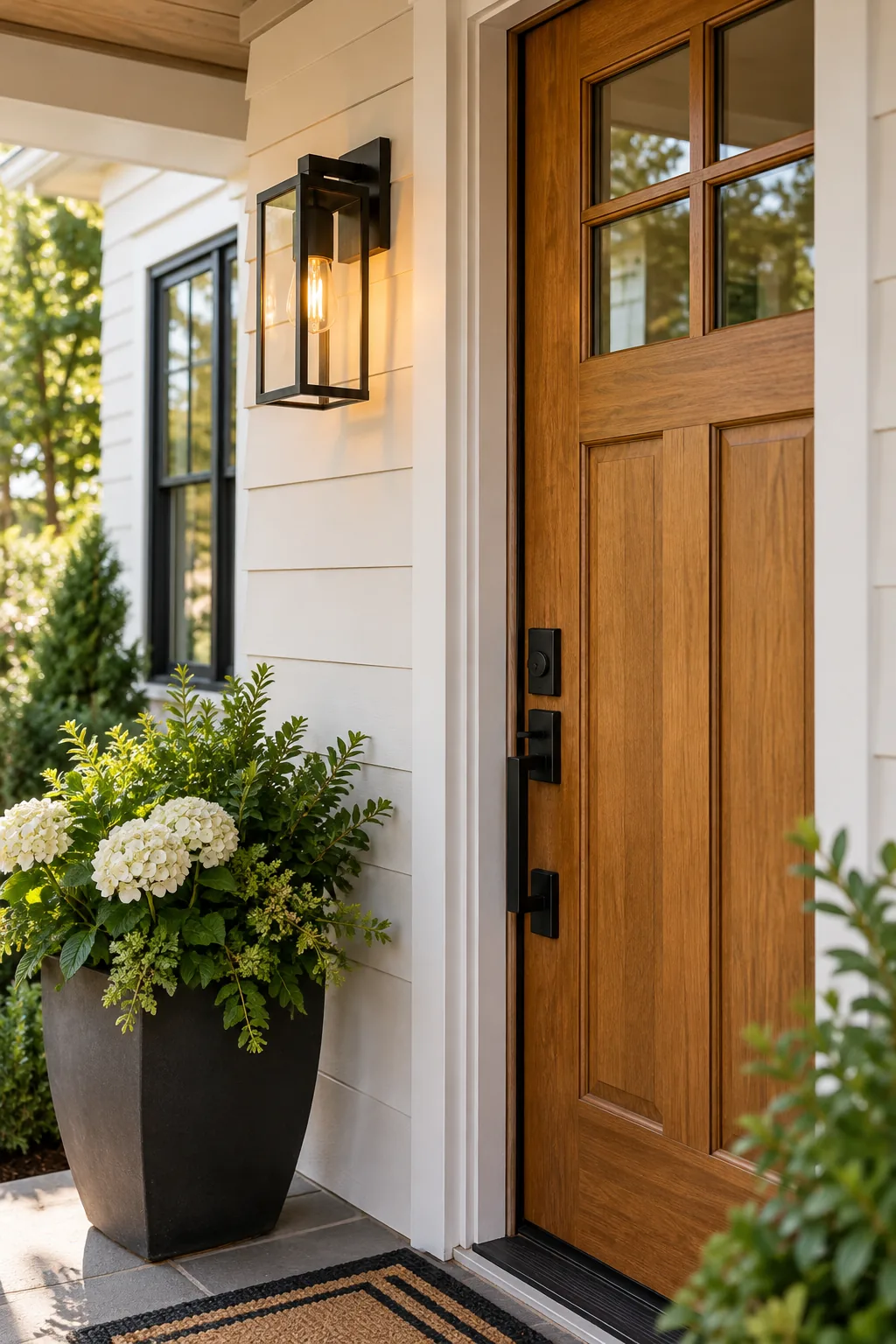
Even the most beautiful light fixture feels awkward if installed at the wrong height, a lesson I learned quickly after mounting my first porch light way too high.
Sizing Your Exterior Light Fixtures
A standard exterior sconce should measure roughly one-quarter to one-third the total height of your front door to ensure the scale feels balanced from the curb.
Selecting the Best Bulb Temperature
Installing warm 2700K LED bulbs creates an inviting, amber-toned glow that beautifully highlights natural wood tones without looking like a harsh commercial security floodlight.
Protecting a Natural Wood Front Door
A natural wood grain door requires heavy-duty protection from UV rays and moisture, so I always recommend applying three thin coats of marine-grade varnish.
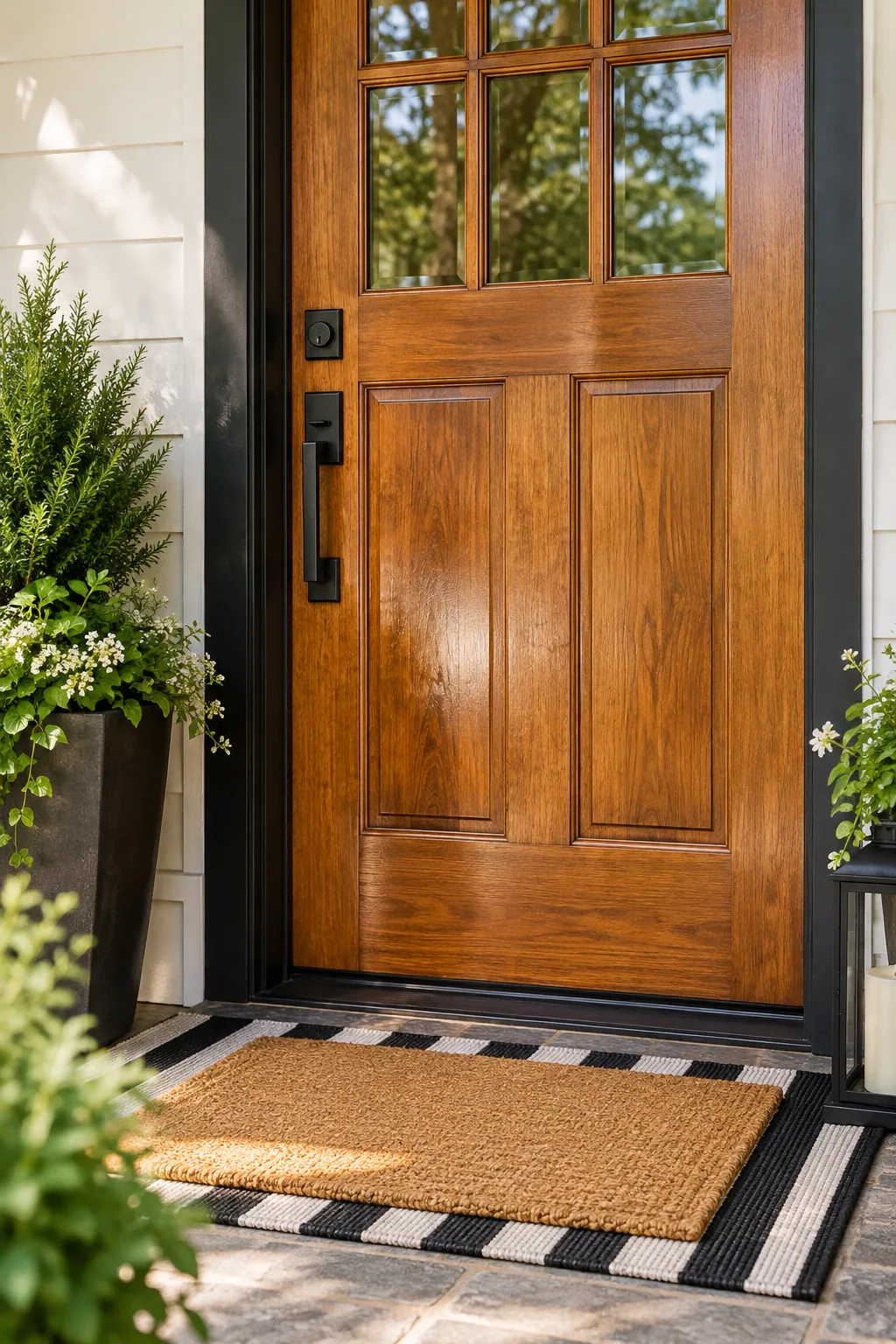
This specialized flexible finish prevents the expensive timber from splitting as temperatures shift rapidly, keeping your entrance deeply colored and highly durable through every season.
Prepping the Wood Grain for Varnish
Proper adhesion requires a perfectly smooth surface, so taking the time to sand away old flaking clear coats is absolutely essential before opening your new finish.
Applying Layers for UV Protection
Brushing on multiple thin layers rather than one thick coat prevents unsightly drips and builds a much stronger barrier against the daily onslaught of direct sunlight.
Maintaining the Clear Protective Coat
You should plan to lightly scuff and reapply a fresh topcoat of clear varnish every two to three years to maintain that gorgeous, welcoming satin sheen.
Layering the Entryway Floor
To anchor the space visually and make it feel lived-in, layer a highly textured 2×3 coir mat directly over a slightly larger 3×5 patterned outdoor rug.
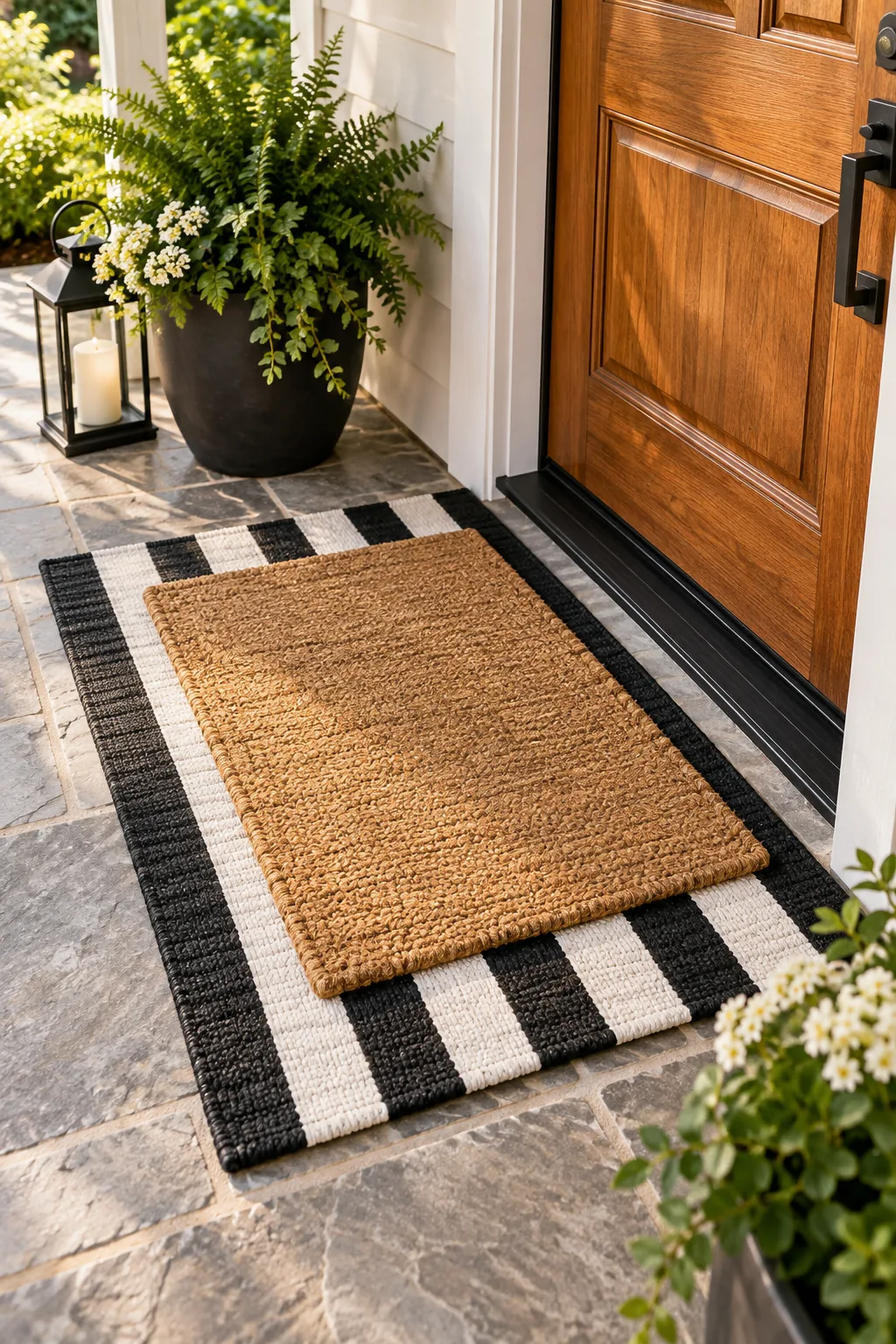
This simple double-mat technique adds incredible depth and personality to the stoop while keeping muddy footprints from tracking directly into your freshly cleaned foyer.
Sizing Your Patterned Outdoor Rug
The bottom rug must extend at least six inches past the edges of the top coir mat to ensure the contrasting pattern remains fully visible from the driveway.
Balancing the Porch With Heavy Planters
Placing a substantial, structured concrete planter on the hinged side of the door beautifully balances the visual weight of the layered rugs and the dark metal hardware.
Selecting Proper Drainage for Entry Pots
Always elevate your heavy ceramic or concrete planters on invisible rubber risers so excess irrigation water can drain freely without leaving permanent dark rings on your porch floor.
Your Exterior Measurement Cheat Sheet
Downloading your complete curb appeal measurement and color contrast cheat sheet ensures you have every crucial height, gap, and ratio right at your fingertips.
Keeping these exact exterior numbers saved on my phone has rescued me from several second-guessing meltdowns while standing in the middle of a busy hardware store aisle.
- Map your foundation planting layout first, measuring 24 to 36 inches from the wall.
- Select your contrasting paint colors using an LRV gap of 30 or more.
- Install your 66-inch high sconces and 5-inch floating numbers as the final step.
4 More Welcoming Exterior Looks
Explore these distinct architectural styles to find the perfect color palette and hardware combination for your own front porch.
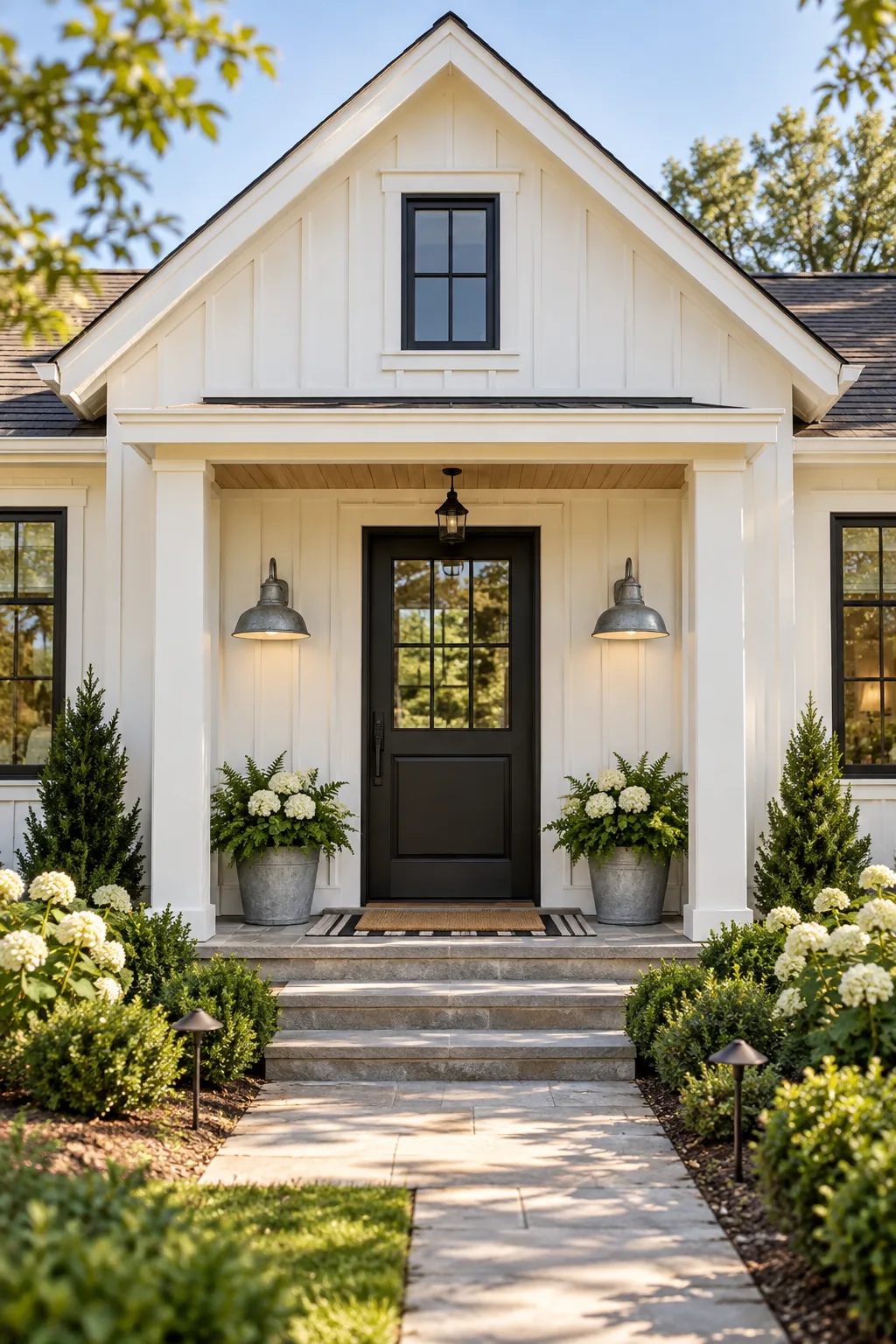
Modern Farmhouse Contrast: Board and batten siding paired with a stark black door creates a timeless, high-contrast farmhouse aesthetic.
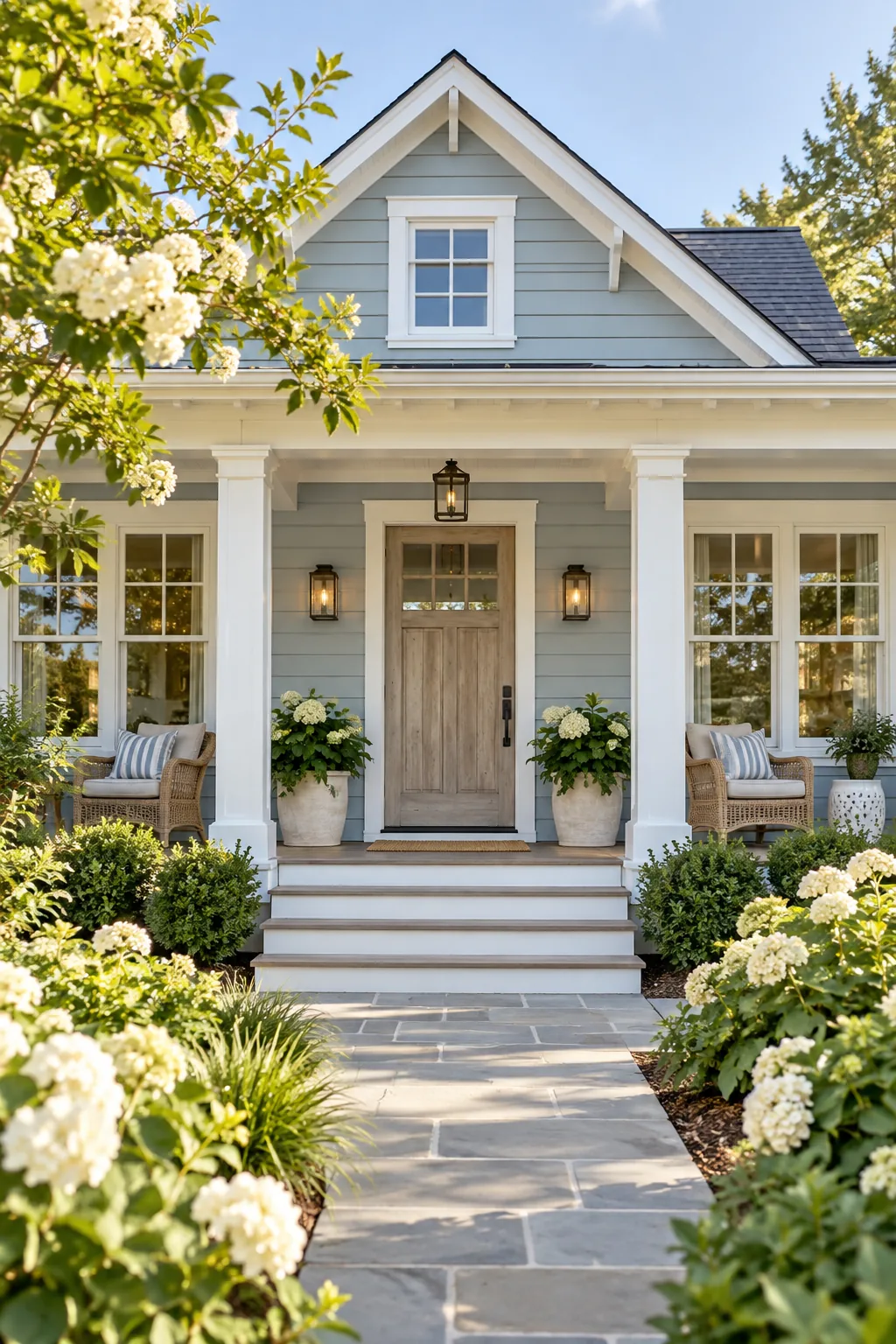
Soft Coastal Cottage: Misty blue siding and crisp white trim offer a relaxed, breezy backdrop for a weathered wood door.
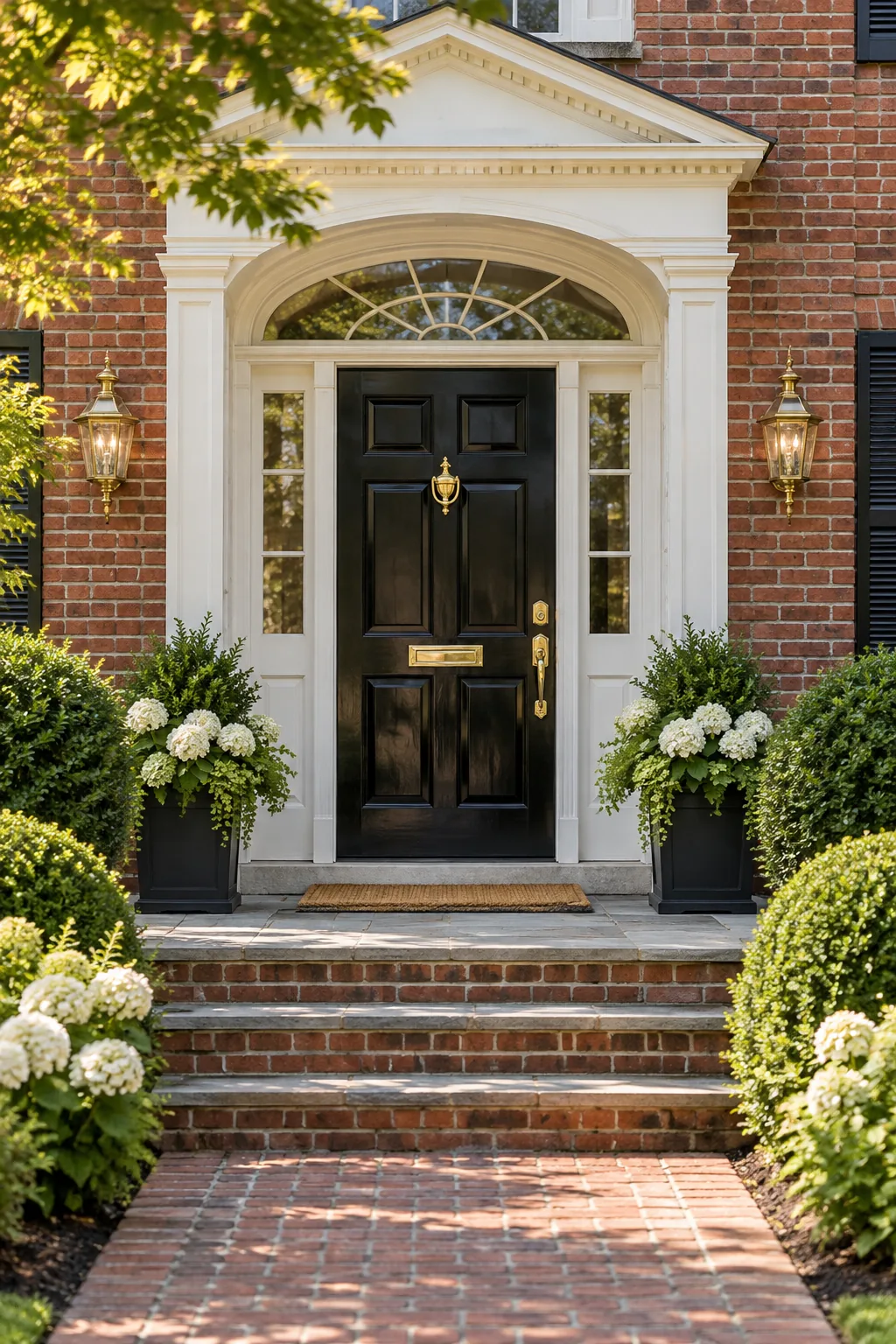
Classic Brick Traditional: Warm red brick masonry demands a strong focal point, perfectly provided by a glossy black door and brass accents.
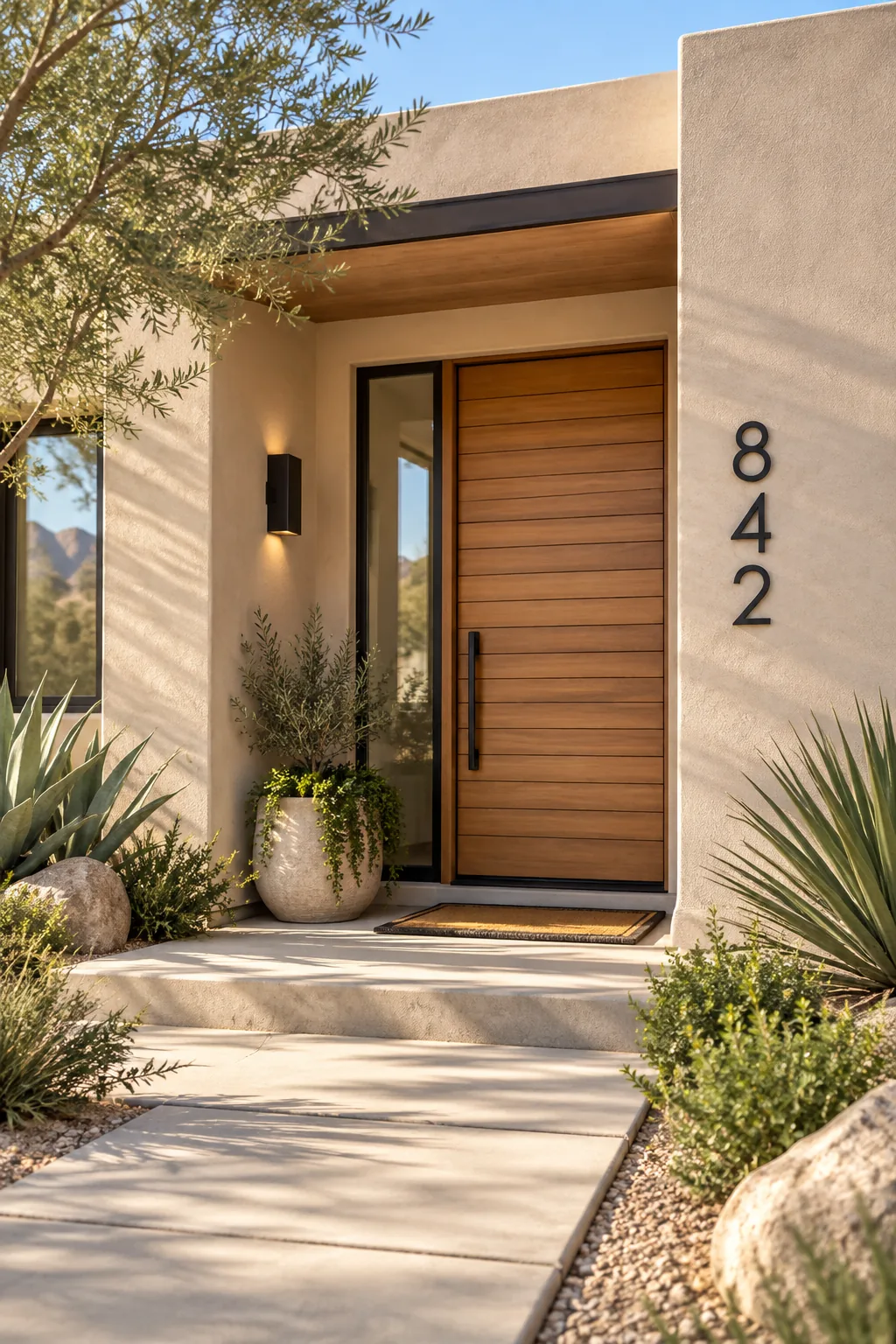
Warm Desert Contemporary: Smooth stucco walls let the architectural texture of a horizontal slatted teak door take center stage.