
This Copper Coffeepot Became a Front Porch
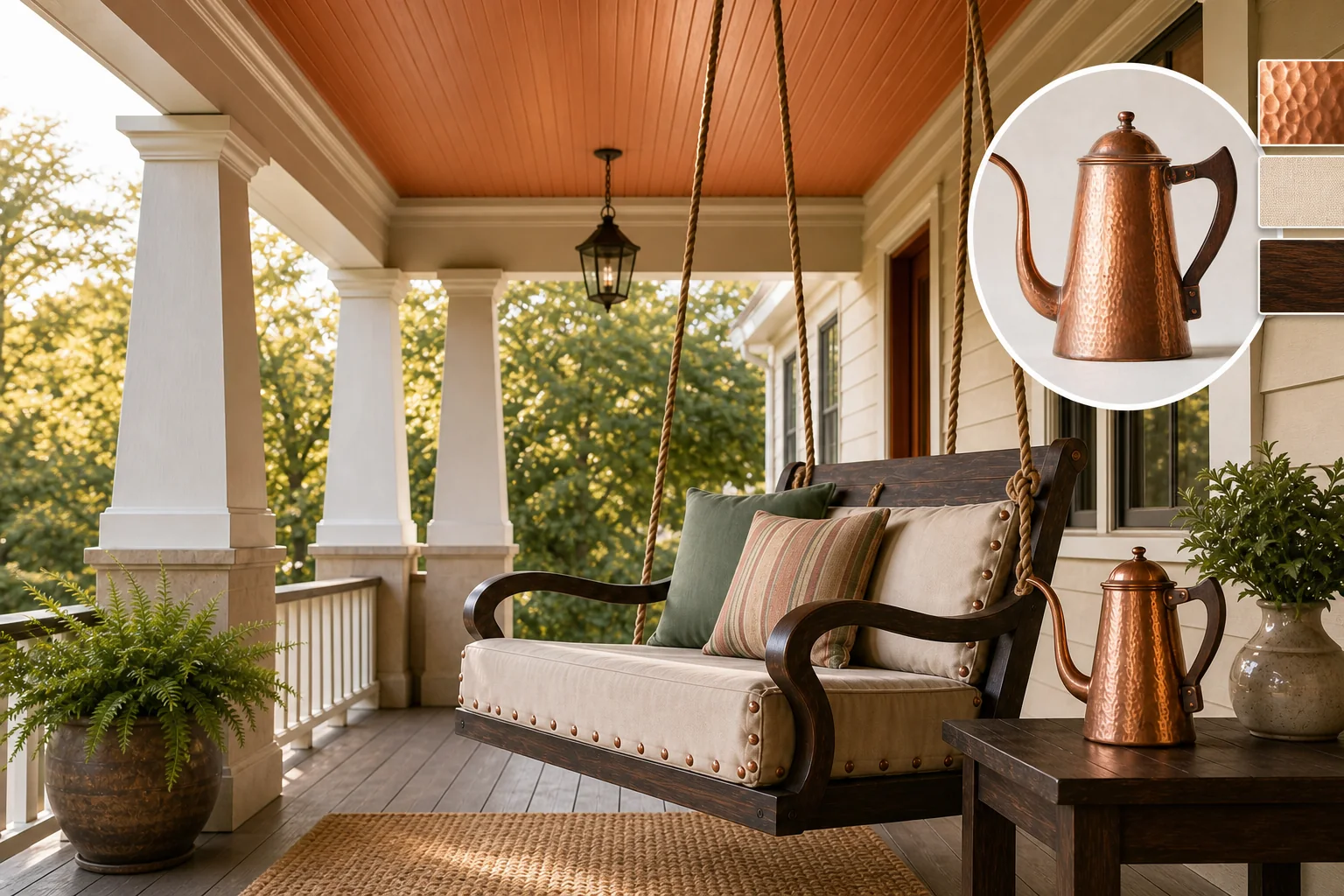
A vintage Arts and Crafts coffeepot holds the blueprint for a welcoming outdoor living space, proving that everyday functional objects can inspire entire architectural environments. This transition space balances structural rigidity with inviting comfort by celebrating exposed structural integrity softened by warm ambient light and singular, sweeping gestures.
Grounding the architecture with tapered forms
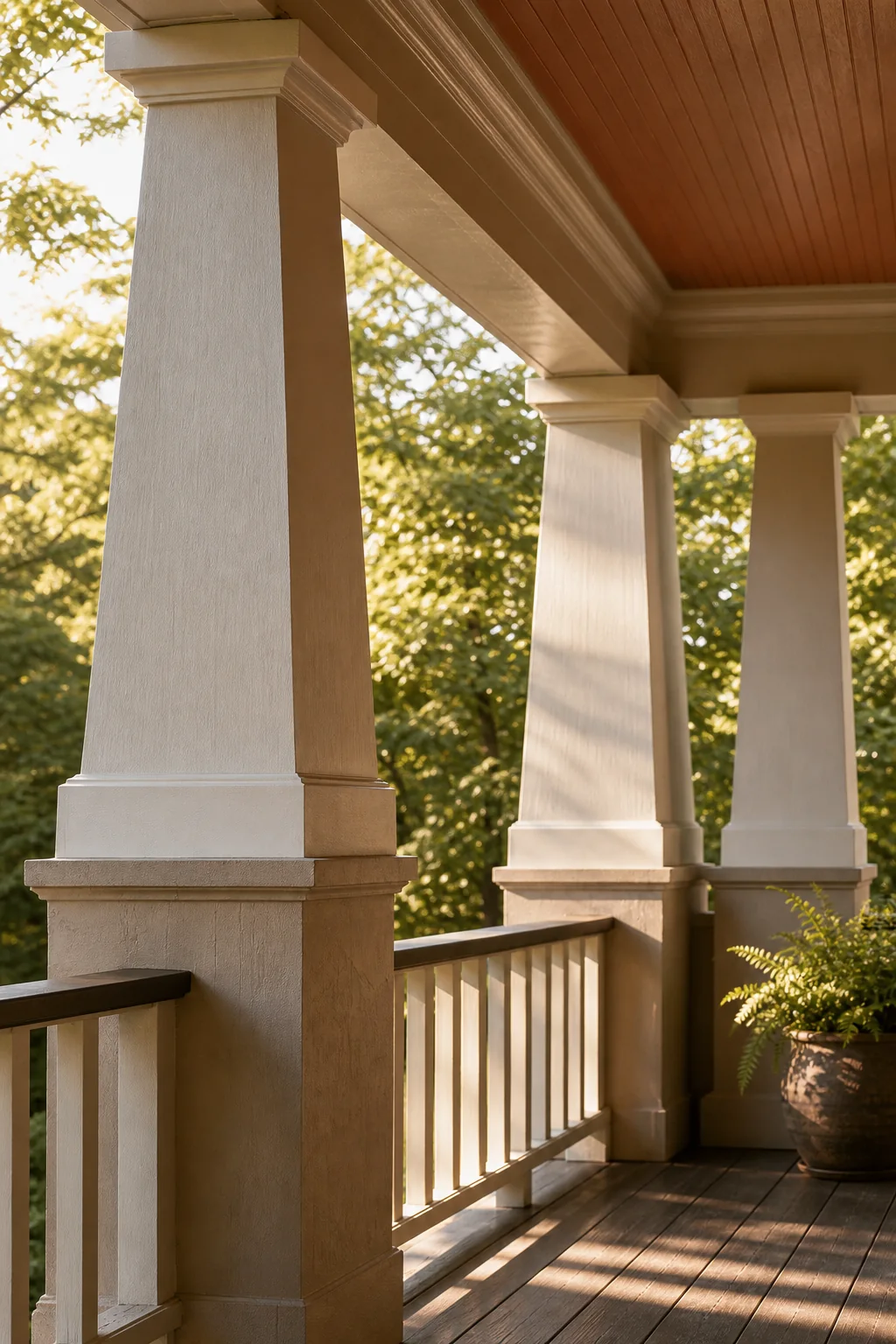
Establishing a sturdy, wide-stanced base provides the necessary visual weight to anchor the lighter, more fluid elements to come, much like the wide, stable bottom of the original coffeepot. Tapered craftsman columns echo this stable base, framing the porch architecture with undeniable permanence while setting up the essential structural grid. By utilizing weather-resistant composite or treated wood for these column wraps, the design ensures the taper ratio matches traditional craftsman proportions to maintain historical accuracy. To bring this grounded foundation to life, follow a specific sequence of implementation steps that guarantees lasting durability and structural soundness.
- Install tapered craftsman column wraps over existing posts
- Paint the porch ceiling a muted rose-terracotta shade
- Hang the dark oak swing using heavy-duty weather-resistant ropes
- Attach heavy canvas cushions detailed with exposed copper rivets
Casting a metallic glow from above
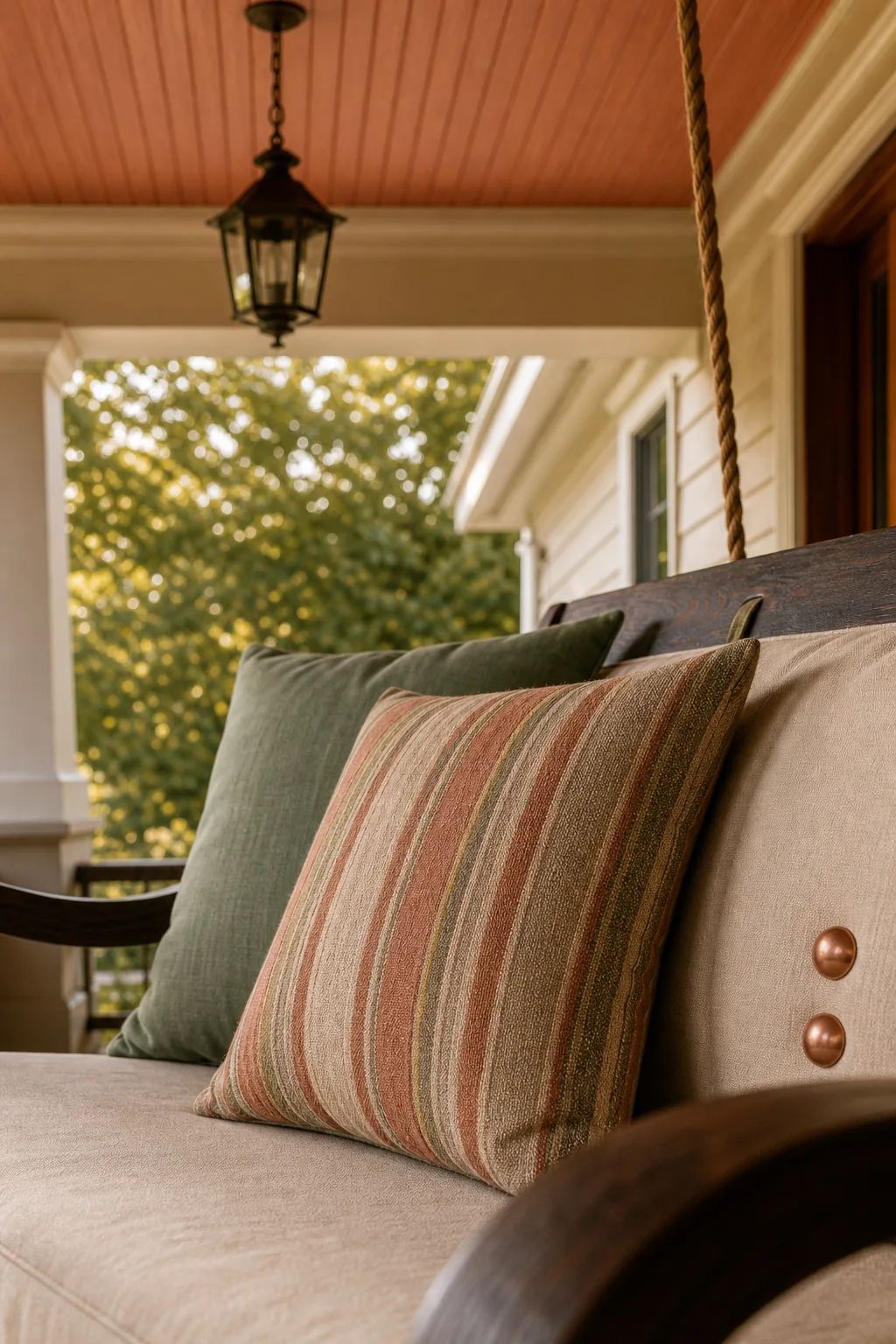
By moving the metallic warmth to the ceiling, the porch captures the coffeepot’s ambient glow without relying on literal metal surfaces that might overheat in the afternoon sun. A rose-terracotta painted beadboard ceiling casts a warm, coppery light over the seating area, perfectly balancing the rigid architectural lines below with a light-reflecting overhead plane. Selecting a matte or eggshell exterior paint diffuses the light softly, ensuring the terracotta shade casts a flattering, inviting warmth at dusk. This translation from a utilitarian object to a fully realized architectural environment relies on a precise visual mapping strategy.
| Source trait | Visible evidence | Room move |
|---|---|---|
| Tapered Base | The wide, stable, tapered bottom of the Arts and Crafts coffeepot | Sturdy, tapered craftsman-style wooden columns framing the porch architecture. |
| Metallic Warmth | The glowing rose copper finish of the pot’s body | A muted rose-terracotta painted beadboard ceiling that casts a warm, coppery light over the seating area. |
| Honest Joinery | Exposed metal rivets connecting the dark handle to the copper body | Heavy canvas swing cushions detailed with oversized, exposed copper rivets and thick structural stitching. |
| Gooseneck Curve | The fluid, sweeping S-curve of the pouring spout | The gracefully sweeping, steam-bent wooden armrests of the dark oak porch swing, contrasting with the rigid columns. |
Stitching honest joinery into the textiles
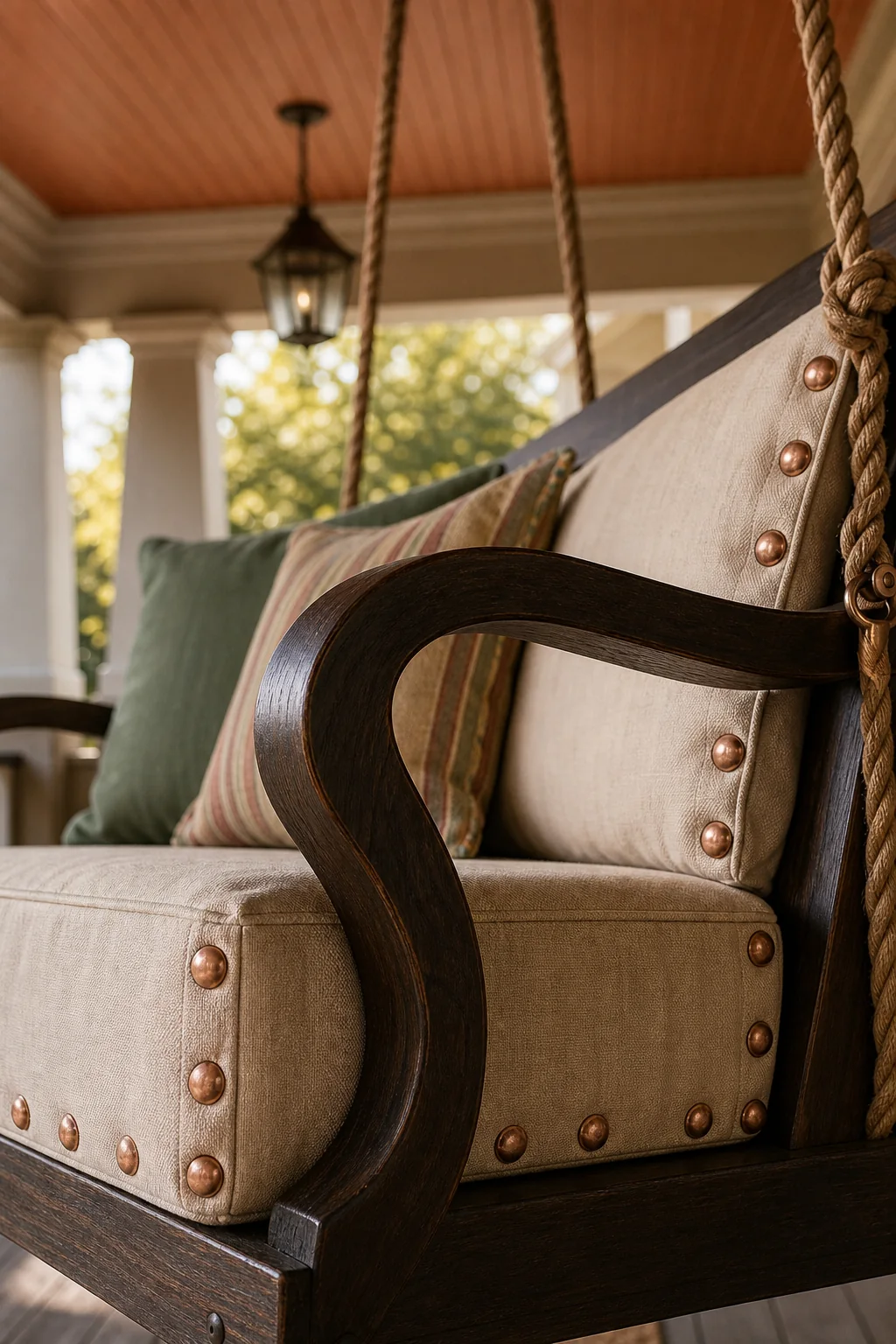
Translating the pot’s visible rivets into textile hardware celebrates the utilitarian beauty of how things are put together, adding a layer of rugged sophistication to the seating area. Heavy canvas cushions feature exposed copper rivet detailing, providing a durable, weather-resistant touchpoint that grounds the space in honest craftsmanship. Sourcing marine-grade canvas ensures longevity against wind and rain, while genuine copper or brass rivets will develop a beautiful natural patina over time. Gathering the right components for this material edit ensures the outdoor space feels cohesive, intentionally designed, and perfectly aligned with the original inspiration.
Highlighting the structural hardware
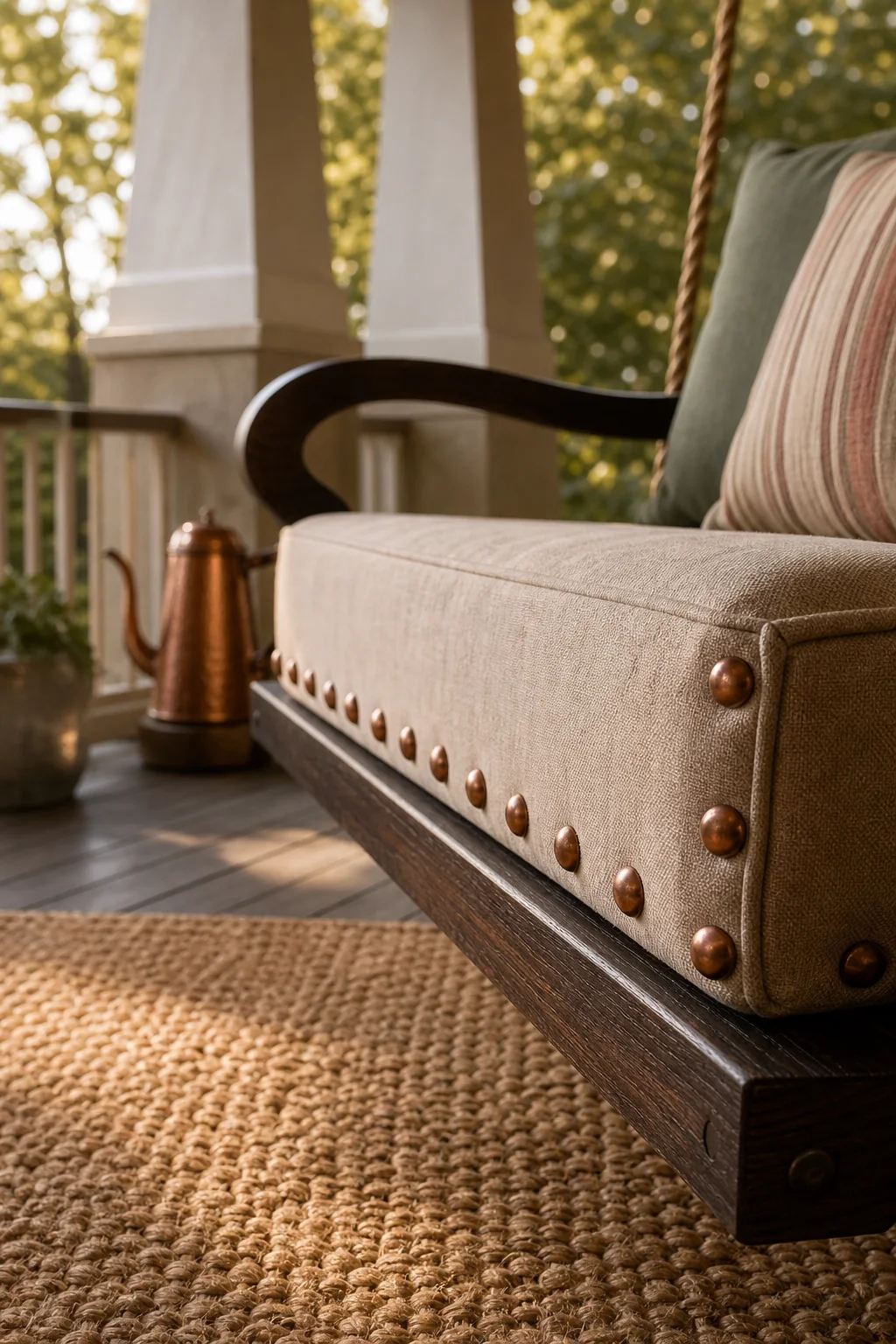
Aged copper rivets anchor the canvas exactly like the pot’s handle connects to its body, emphasizing the beauty of visible construction rather than hiding the seams. This tactile detail invites closer inspection, proving that utilitarian hardware can serve as a primary decorative element when applied thoughtfully to soft furnishings. The thick structural stitching surrounding each rivet reinforces the heavy-duty nature of the materials, ensuring the cushions withstand daily use while maintaining their tailored appearance. By celebrating these functional connections, the porch swing becomes a testament to the enduring appeal of traditional, unpretentious craftsmanship.
Introducing the sweeping gooseneck curve
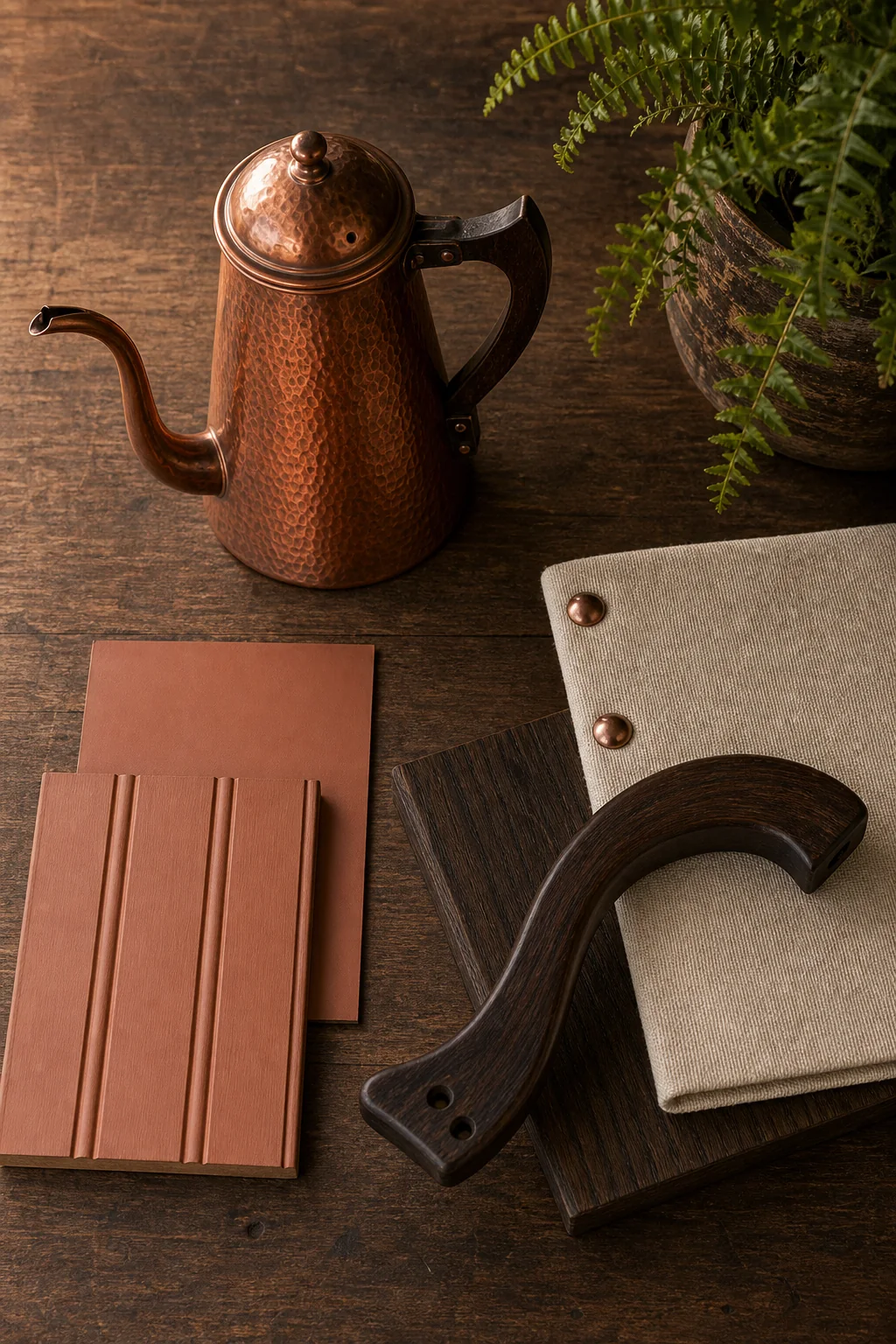
A single, dramatic curve in the swing’s armrests breaks the rigid architectural grid, providing the same graceful interruption as the coffeepot’s spout. Steam-bent armrests replicate this fluid gooseneck curve, offering an elegant contrast to the heavy, sturdy columns that frame the porch. Positioning the swing so its curved profile is visible from the street maximizes its visual impact, while finishing the oak with a dark, penetrating oil perfectly matches the pot’s handle. This deliberate juxtaposition ensures that the heavy, rigid architectural lines are successfully offset by a warm, light-reflecting overhead plane and one fluid gesture.
Limit sweeping curves to the furniture. If the surrounding architecture also curves, the swing loses its standout visual impact and the carefully balanced contrast completely disappears.
Carving out the signature curve
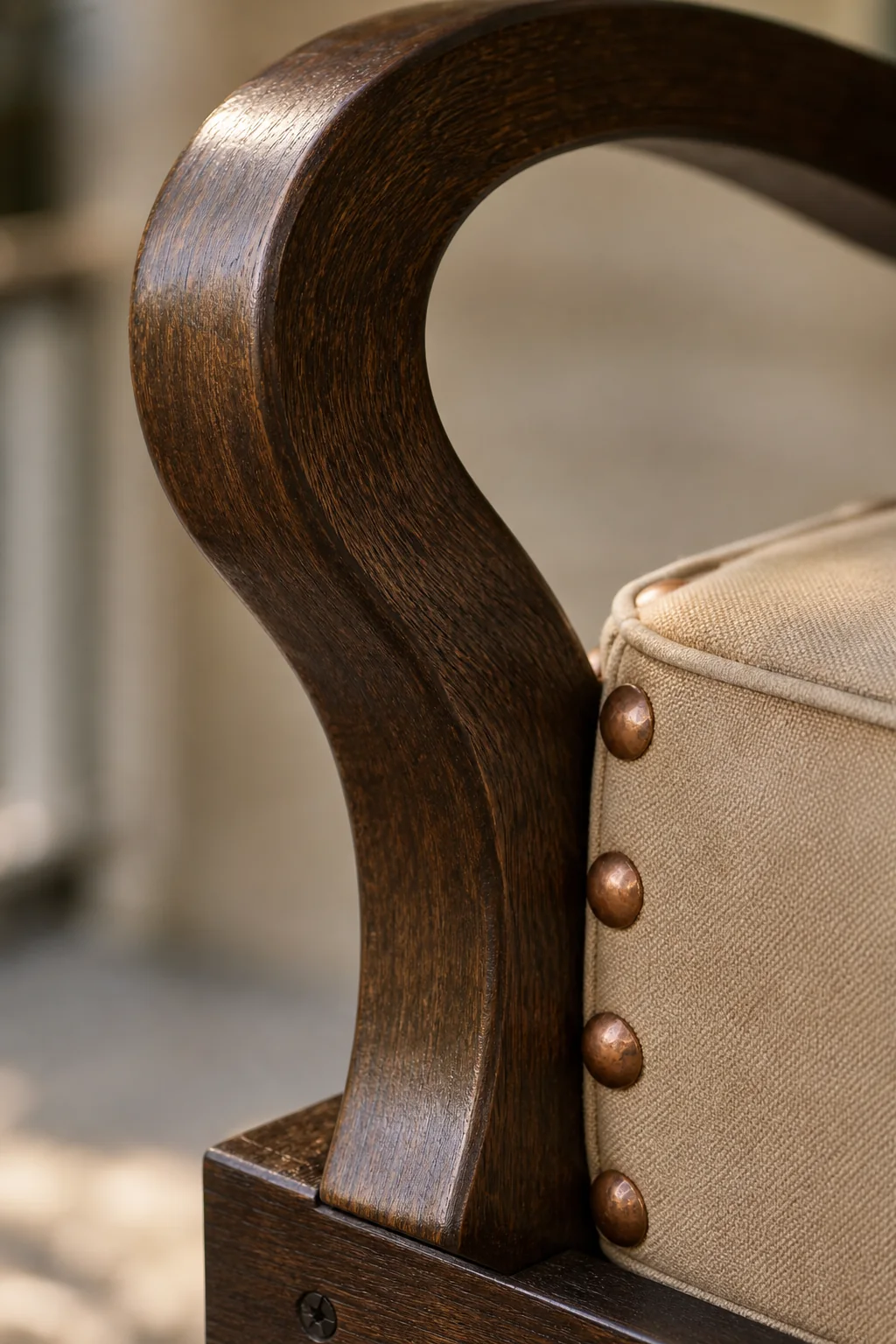
The dark oak armrest sweeps upward like the pouring spout, finalizing a balanced design that pairs a soft rose-terracotta ceiling with a dark oak swing and copper-riveted neutral canvas. If you prefer a subtle approach, keep the ceiling a traditional haint blue while introducing copper tones strictly through small hardware details and a single metallic side table. For a bold statement, extend the terracotta color down the upper walls, use highly polished copper for the swing chains, and select heavily textured, dark-stained wood for all porch decking to amplify the dramatic contrast.