
This Olivewood Platter Became a Dining Room
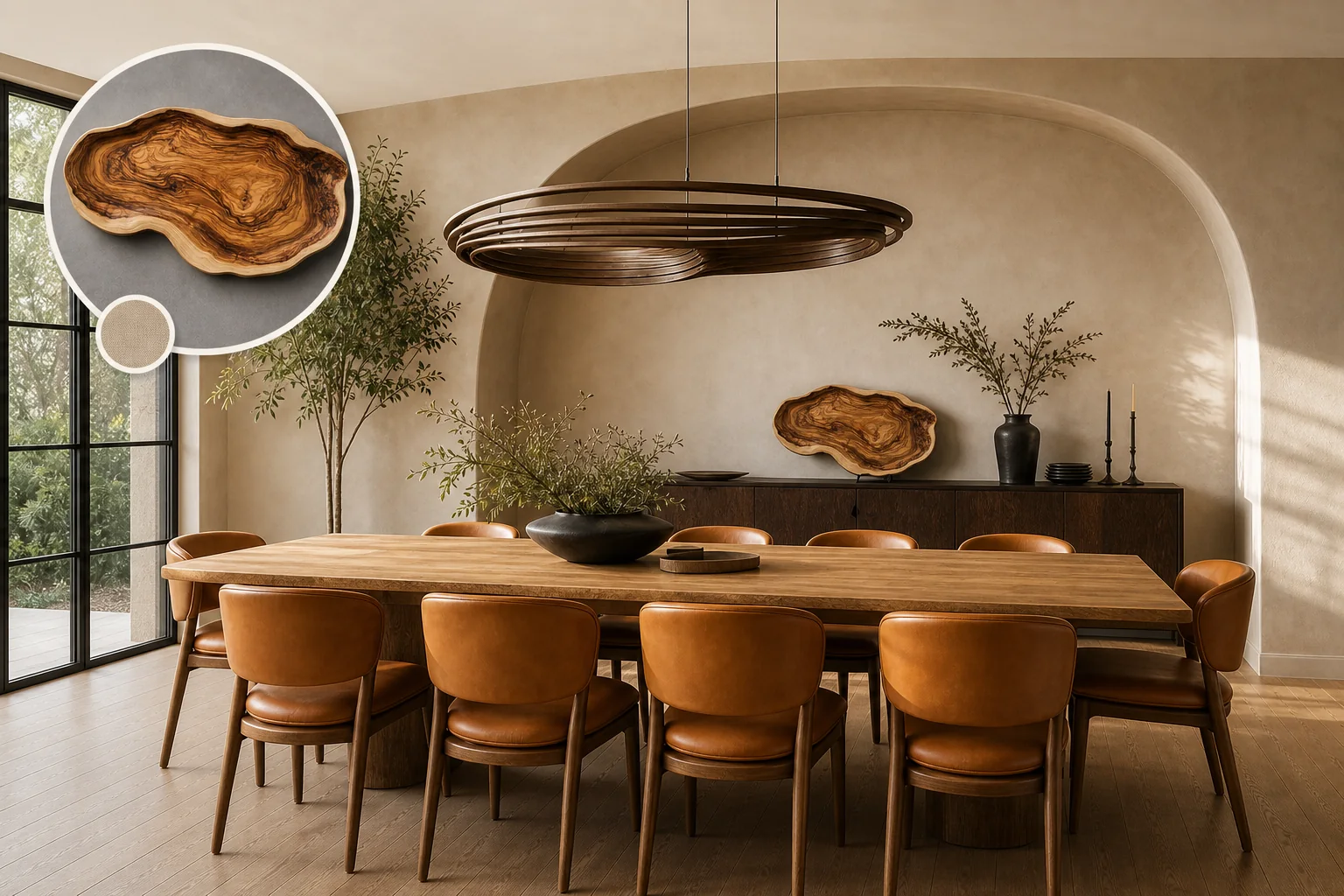
A single olivewood platter offers a masterclass in balancing fluid organic lines with high-contrast warmth. By translating its live edges and oiled grain into architectural shapes and tactile finishes, we created a warm minimalist dining room that anchors organic shapes with a restrained, neutral color palette.
Shaping fluid architectural boundaries
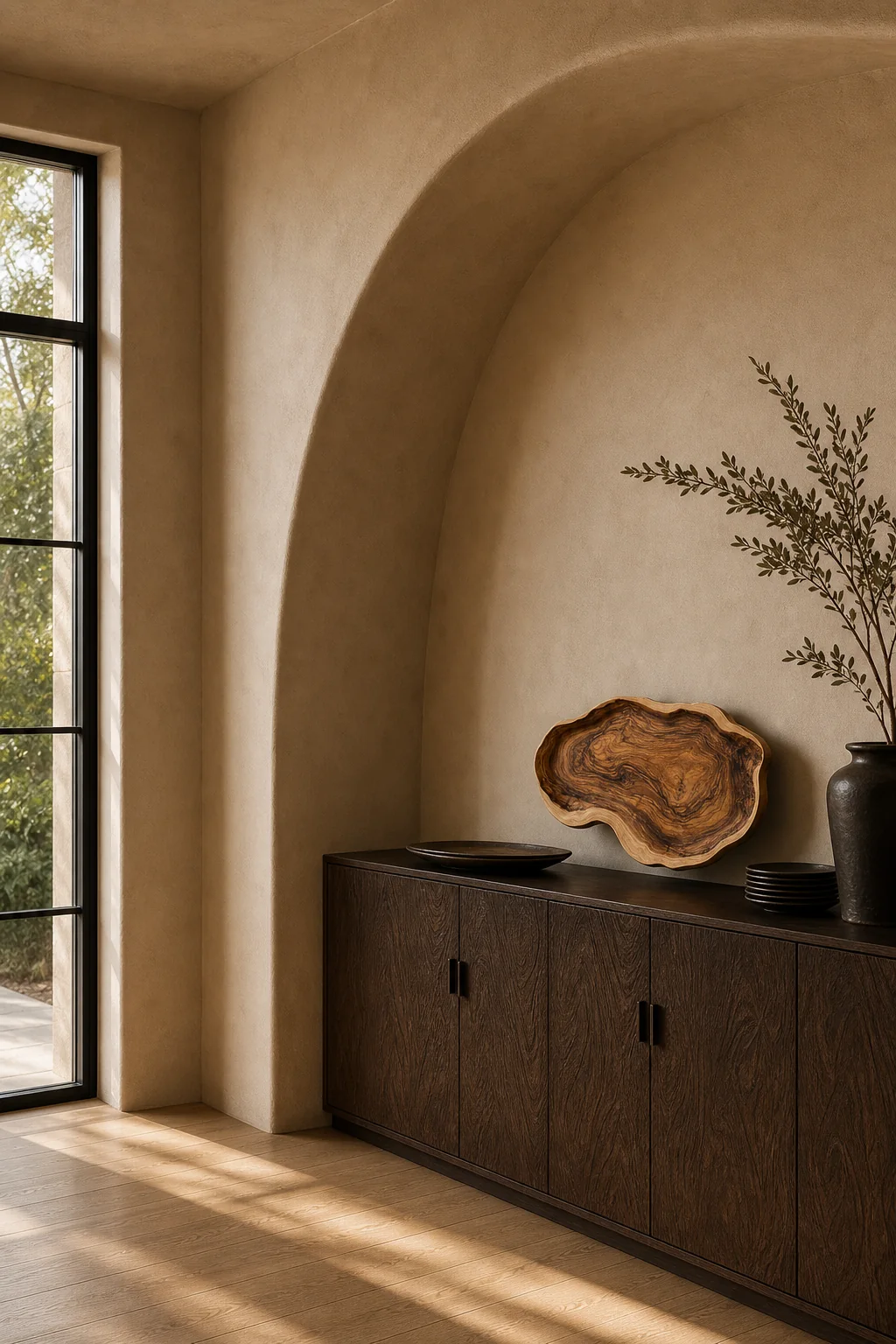
The platter’s asymmetrical live edge informs the room’s foundational architecture, replacing sharp corners with gentle, sweeping transitions that invite guests into the space. A gently curving, hand-troweled plaster alcove mimics this undulating boundary, softening the rigid architectural geometry of the gathering space while providing a quiet nook for a dark espresso wood sideboard. Keeping the alcove’s depth shallow maintains a minimalist footprint, celebrating natural imperfections and continuous, sweeping lines without overwhelming the dining room’s practical need for ample seating and movement.
If custom plasterwork isn’t feasible, introduce fluid boundaries through a large arched floor mirror or a curved dining banquette to soften the room.
Balancing high-contrast grain tones
We mapped the stark interplay of pale sapwood and espresso heartwood onto the room’s surfaces, using warm putty plaster walls as a quiet canvas for grounding accents. Dark patinated bronze window frames and lighting replicate the espresso grain, anchoring the fluid, organic shapes to prevent the space from feeling rustic or chaotic. This deliberate contrast ensures the dining room retains a sophisticated edge, balancing the warmth of the oak floors with crisp architectural definition, as detailed in our visual-DNA mapping table.
| Source trait | Visible evidence | Room move |
|---|---|---|
| Fluid Boundary | The undulating, asymmetrical live edge of the wood | A gently curving, hand-troweled plaster alcove that softens the room’s rigid architectural geometry |
| High-Contrast Grain | The stark contrast between the pale sapwood edge and the dark espresso heartwood lines | Warm putty plaster walls acting as a quiet canvas for dark, patinated bronze window frames and lighting fixtures |
| Oiled Warmth | The smooth, buttery, satin-oiled finish of the carved olivewood | Dining chairs upholstered in supple, honey-toned saddle leather that patinates and softens over time |
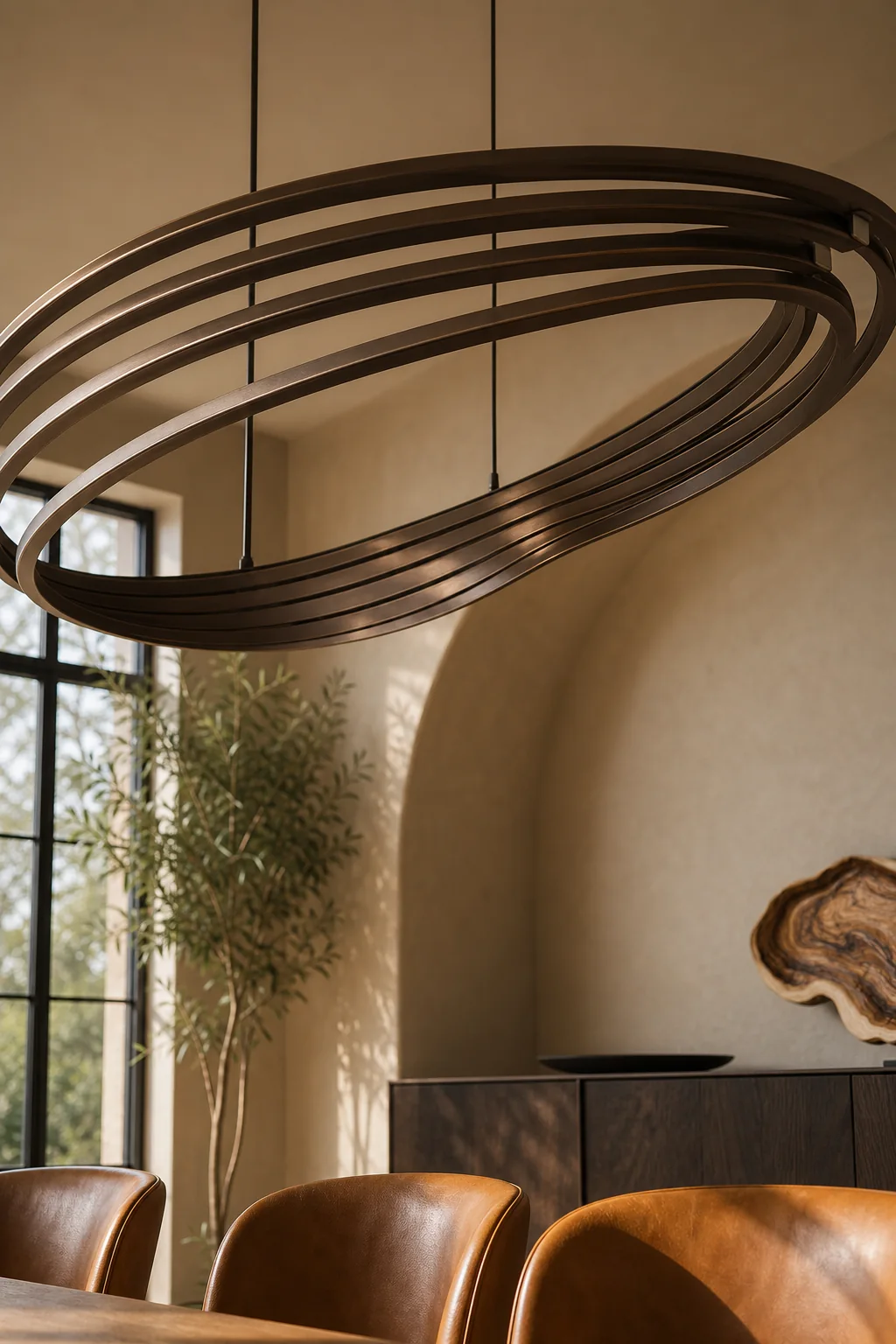
| Topographical Swirl | The concentric, expanding rings of the olivewood grain | A custom, organically shaped linear pendant light constructed from concentric bronze bands suspended over the table |
Patinated bronze accents
The stark, crisp contrast of dark bronze against pale walls captures the essence of the wood’s high-contrast linear marbling, drawing the eye upward toward the ambient overhead lighting. Selecting living finishes that lack a uniform, lacquered shine ensures these metallic accents feel as organic as the heartwood espresso lines they emulate. This deliberate material choice grounds the airy plasterwork, adding visual weight and historical permanence to the warm minimalist architecture, which you can replicate using this room-ready material edit.
Layering oiled warmth and patina
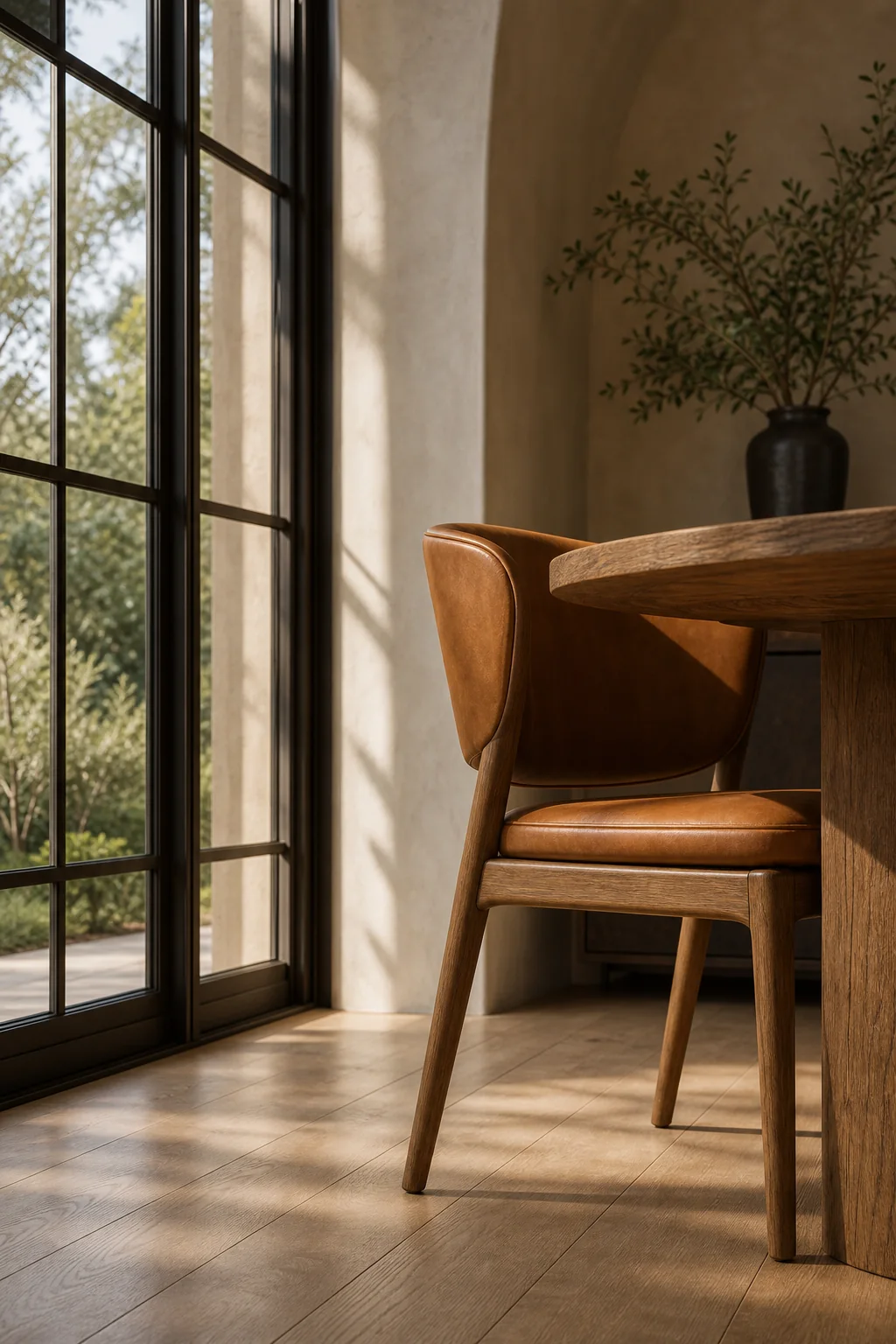
The tactile, buttery quality of oiled olivewood translates directly into the room’s upholstery and furniture finishes, prioritizing materials that grow richer with use and daily life. A large matte-oiled oak harvest table anchors the center of the room, providing a generous, low-luster gathering surface that comfortably seats eight. Surrounding this centerpiece, chairs capture the honey tones of the wood grain, ensuring every touchpoint feels grounded, inviting, and intimately connected to the source object, brought together through these core implementation steps.
- Construct the gently curving plaster alcove to introduce a sweeping, asymmetrical architectural boundary.
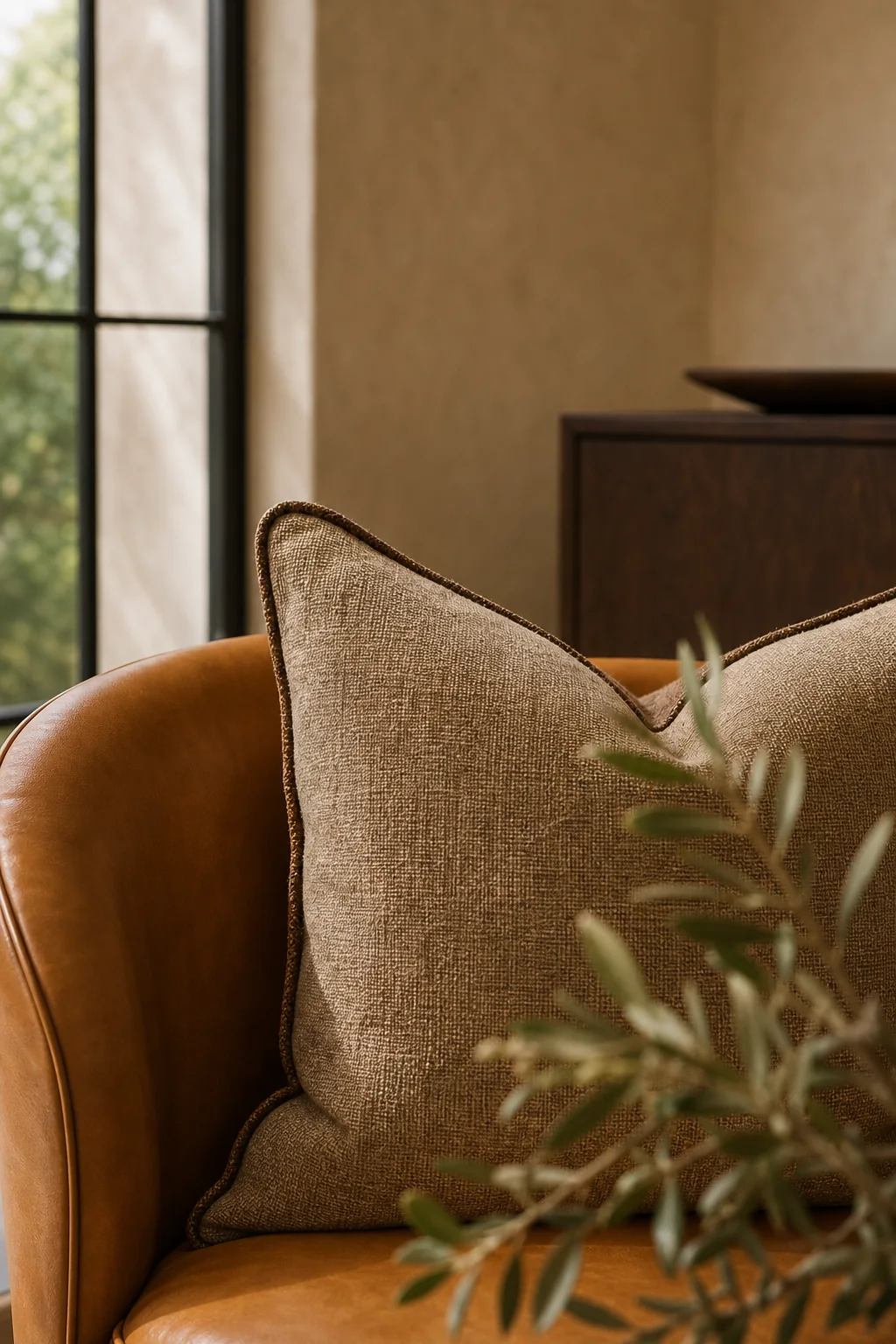
- Apply warm putty plaster to all walls for a soft, hand-troweled texture that mimics pale sapwood.
- Install the matte-oiled oak harvest table to anchor the center of the room with a large, low-luster surface.
- Arrange honey-toned saddle leather chairs to introduce a buttery, patinating texture around the table.
- Hang the concentric bronze pendant light to provide ambient overhead illumination through an organic, topographical shape.
Supple leather seating
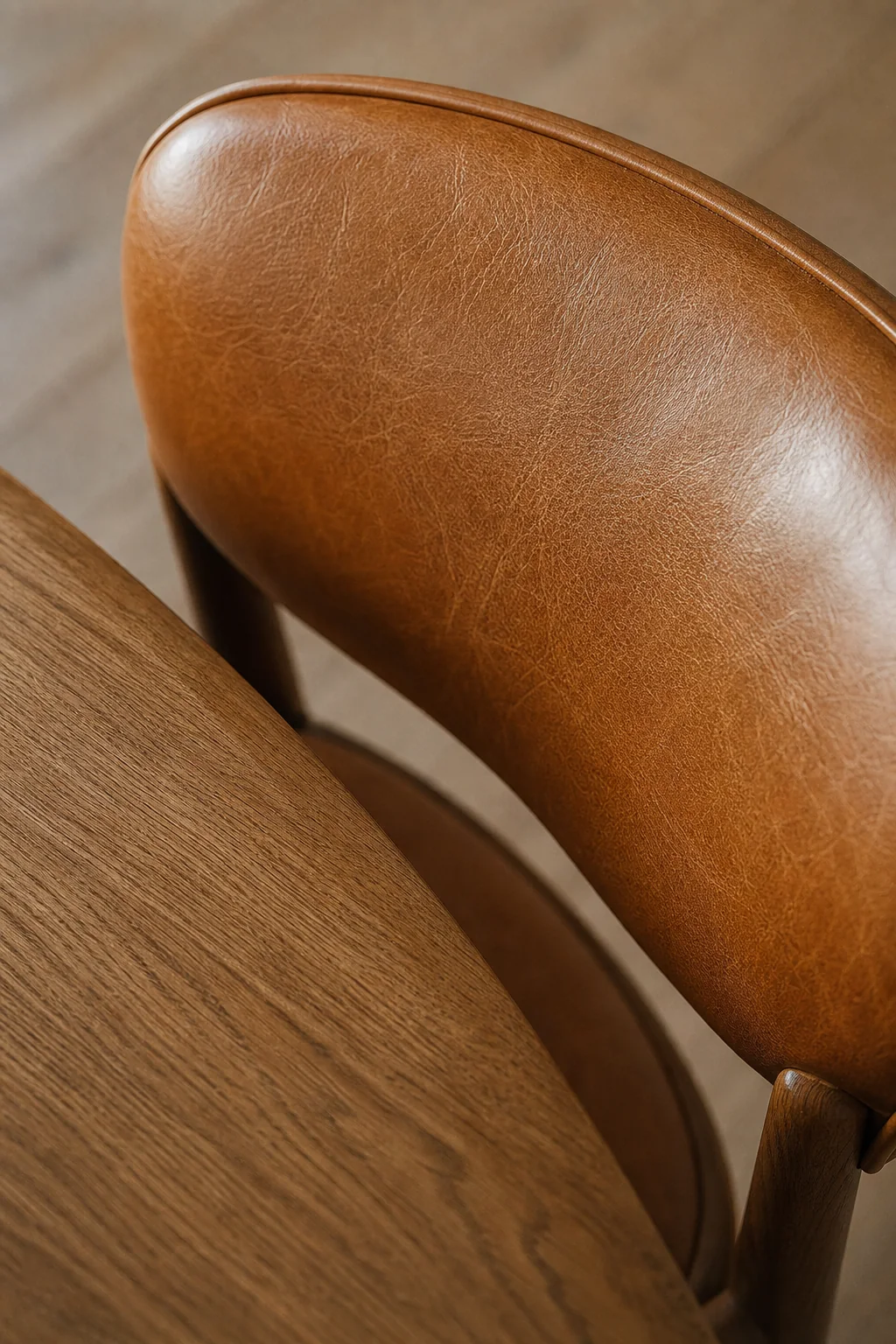
Uncoated, honey-toned saddle leather introduces a supple texture that will patinate and soften over time, echoing the smooth, satin-oiled finish of the carved olivewood platter. This material choice provides a warm, inviting seating experience around the harvest table without resorting to literal interpretations like wood-grain printed wallpaper or matching olivewood furniture. As the leather ages, it develops topographical wear patterns that subtly mimic the concentric lines of the wood, further reinforcing the room’s organic, gathering-focused narrative.
Echoing topographical grain swirls
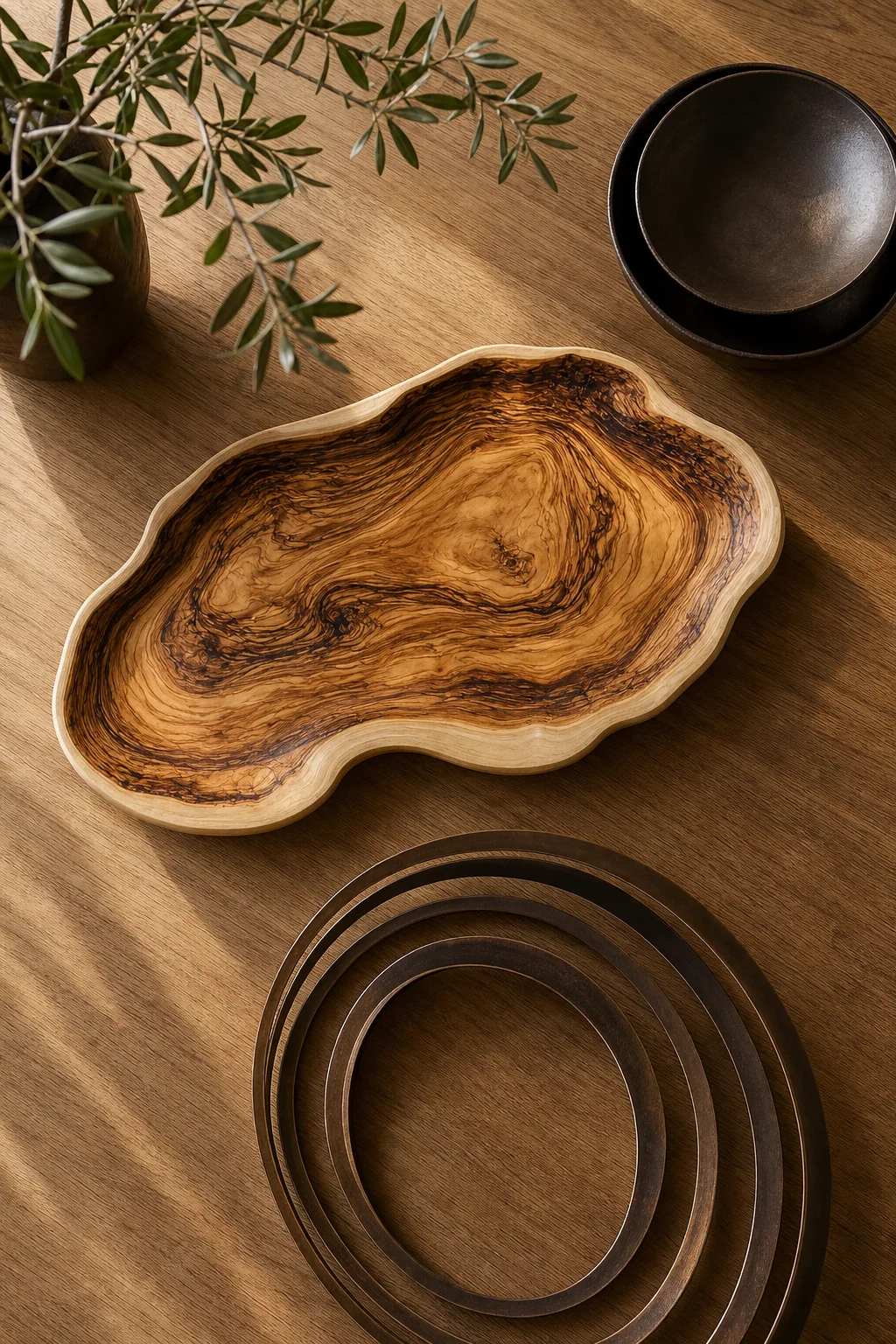
The expanding, topographical rings of the wood grain dictate the room’s spatial flow through a custom concentric bronze pendant light suspended over the table. You can scale this concept’s intensity: a subtle approach uses a live-edge serving board in a flat white room; a balanced execution combines a matte oak table, honey leather chairs, and a curved alcove; while a bold design wraps the entire space in hand-troweled putty plaster with a massive, room-spanning concentric lighting installation that mimics sweeping grain lines.