
Danish Pastel Meets French Chateau: Bathroom
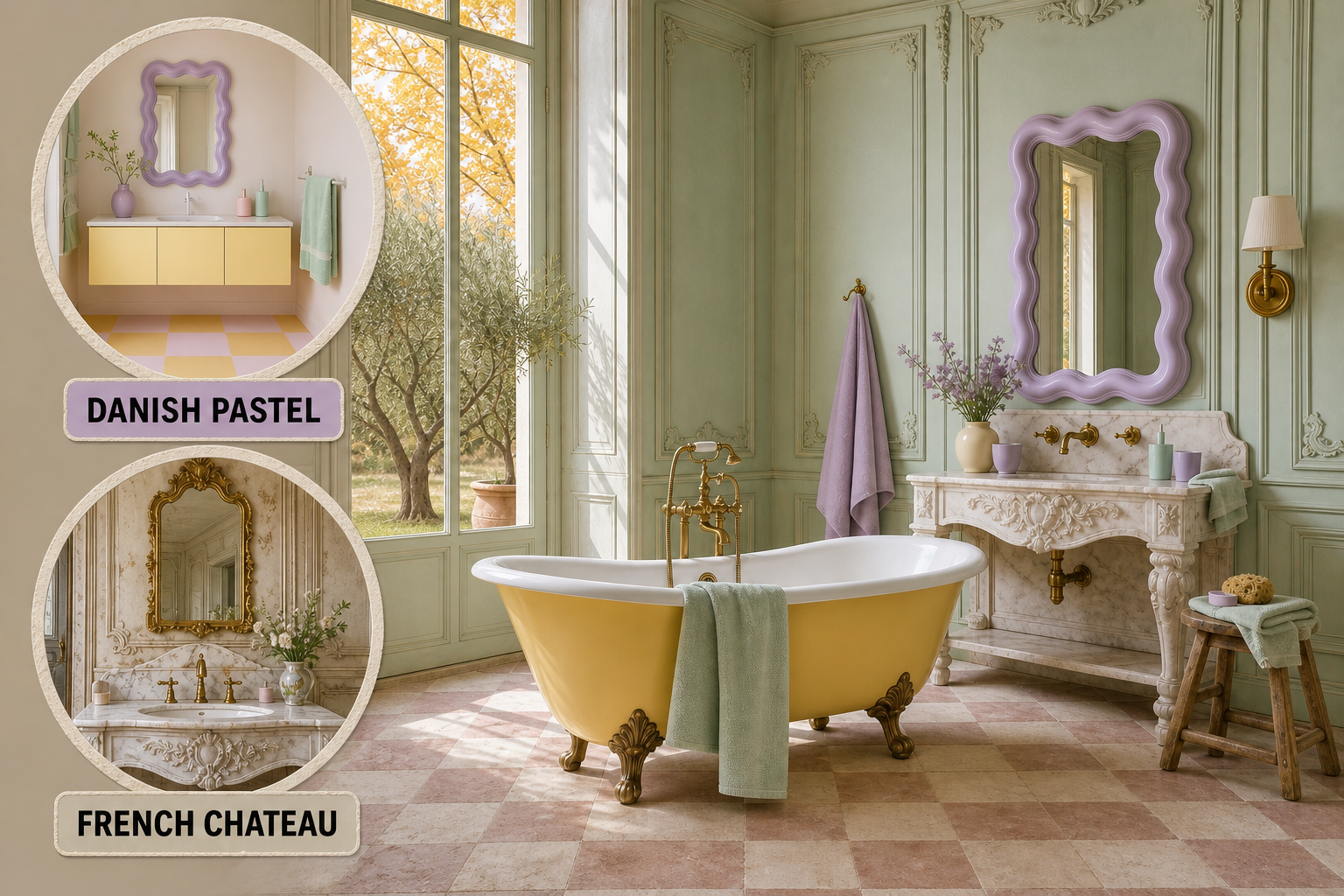
The youthful, synthetic playfulness of modern Scandinavian pastels sharply clashes with the heavy, patinated grandeur of 18th-century French aristocracy. We resolve this by using historic chateau architecture as a grand canvas for modern, matte color-blocking.
Defining Danish Pastel
Danish Pastel thrives on youthful optimism, relying entirely on chunky geometries and synthetic hues. In a historic bathroom, these playful elements disrupt the expected aristocratic seriousness with deliberate, cheerful contrast. We must establish this vibrant foundation first before adding heavy antiques.
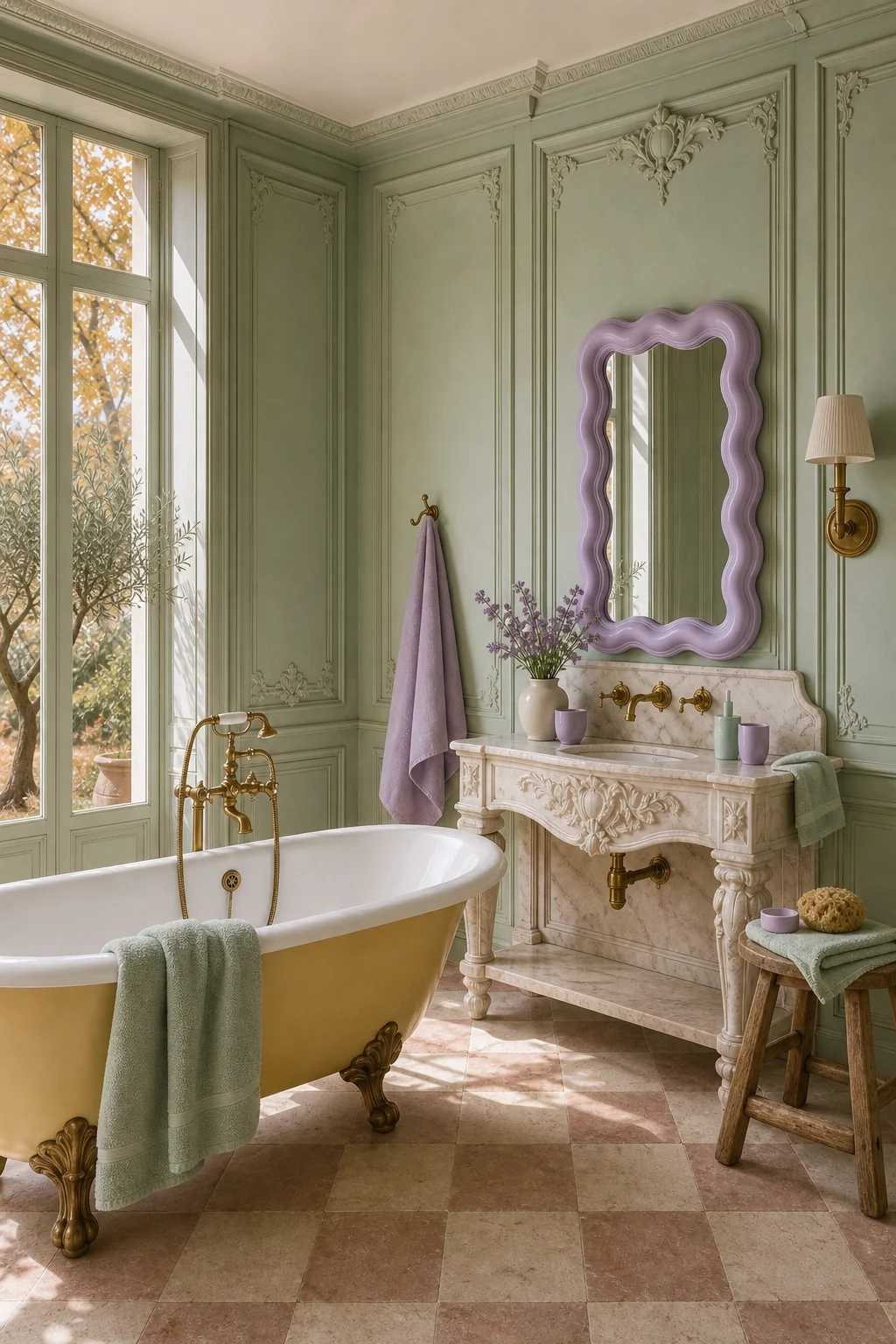
The key to this disruption lies in specific silhouettes and finishes. You must anchor these cheerful colors with serious history to prevent the room from feeling juvenile. Implementing the right chalky texture ensures the modern additions feel highly intentional and architectural.
Establishing these matte surfaces prepares the space for heavier historical counterweights. Without a grounding force, these synthetic colors float away into a chaotic aesthetic. Next, we introduce the crucial aristocratic elements that will anchor our playful pastel palette effectively and beautifully.
- Select matte butter-yellow and pale lilac to establish a strict, highly controlled primary color blocking foundation.
- Install a chunky, wavy-framed vanity mirror above the sink to inject immediate playful geometry into the room.
- Display contemporary matte ceramic accessories rather than traditional cut glass to maintain the required chalky surface texture.
- Choose fluffy, solid-color pastel towels without any ornate traditional embroidery to reinforce the modern Scandinavian aesthetic.
Anchoring French Chateau
French Chateau design provides the crucial gravitas needed to keep vibrant pastels from floating away. Heavy, ornate materials and centuries of visible patina ground the room in enduring European history. This architectural foundation easily supports our modern, synthetic color interventions.
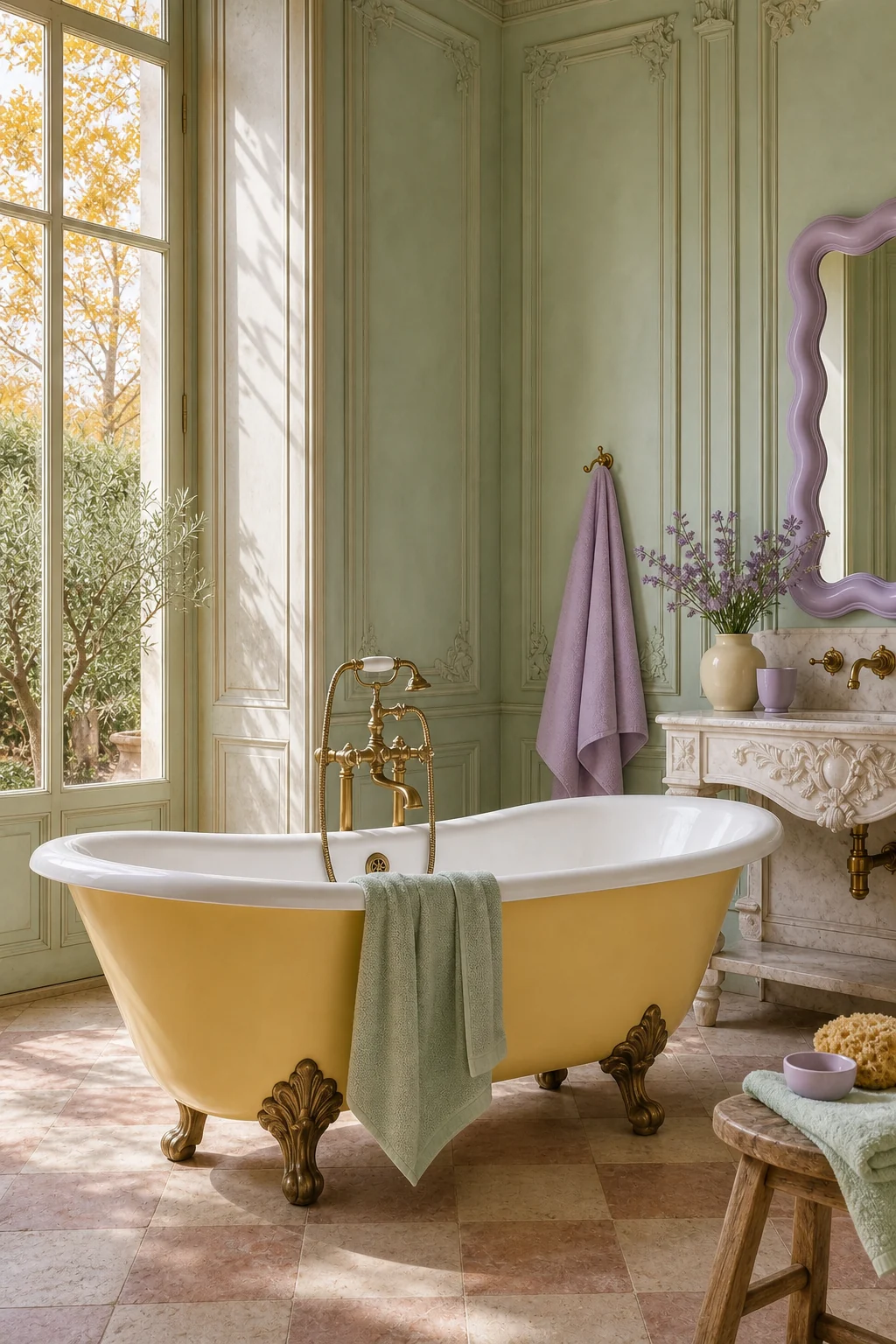
To successfully integrate the modern hues, these aristocratic elements must retain their authentic, unpolished dignity. The visual tension relies entirely on letting these historic materials proudly display their age directly against the fresh, flat paint. We must protect this historic integrity.
- Prioritize unlacquered brass fixtures that will tarnish naturally and beautifully over years of daily use.
- Retain heavily veined, carved marble washstands to provide immense visual weight and authentic aristocratic history.
- Embrace chipped, distressed finishes on antique gilded mirrors to contrast sharply with the fresh pastel paint.
- Preserve original plaster moldings and intricate woodwork to maintain the essential historic architectural envelope.
Bridging the Eras
A classic checkerboard floor bridges the gap between playful geometry and historic materials perfectly. Executing this pattern in tumbled antique pink and cream limestone marries both aesthetics seamlessly. Let us examine how this brilliant foundation supports the entire room’s visual weight.
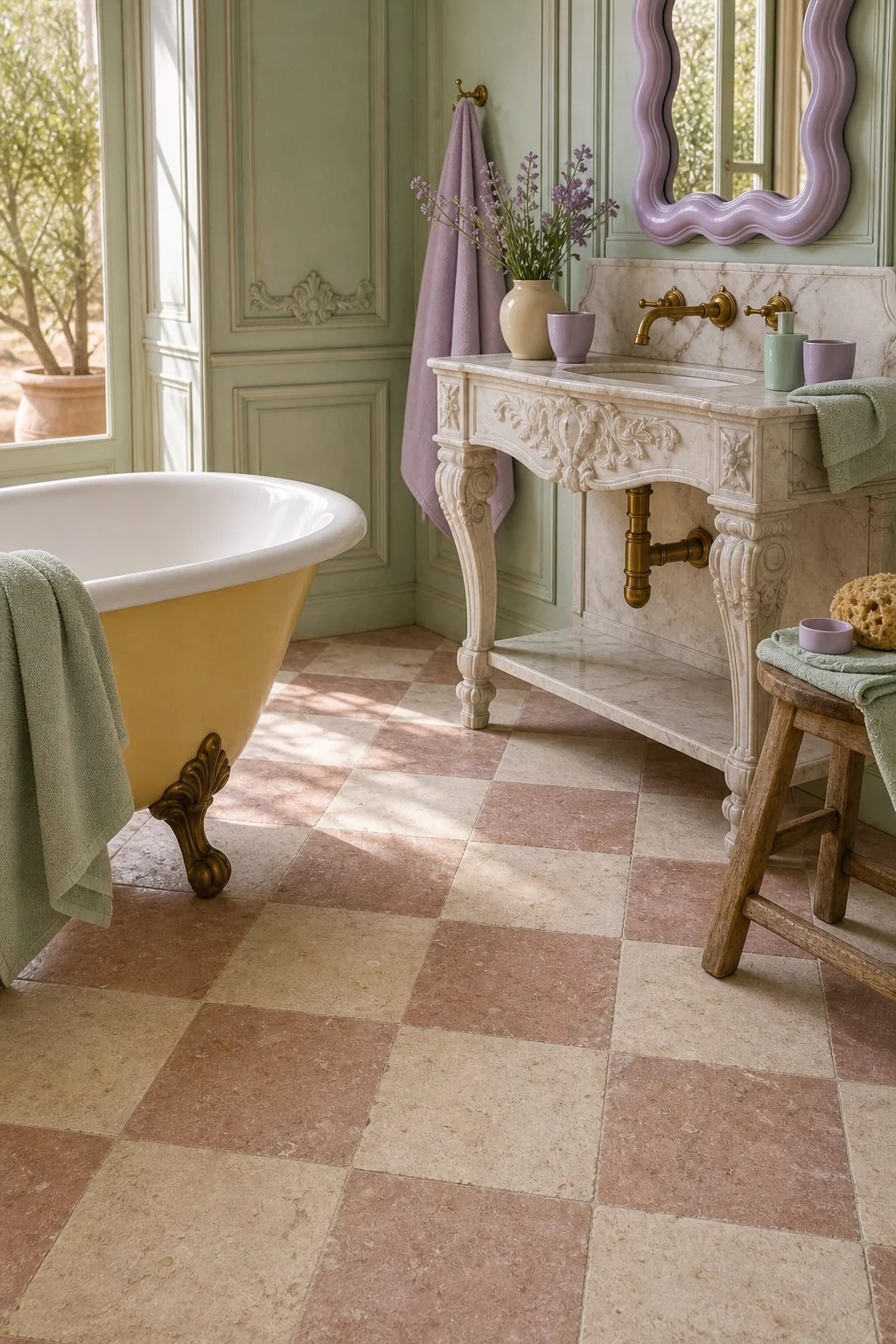
The porous texture of the stone grounds the synthetic colors, proving that material choice is the ultimate peacemaker. This specific flooring transition prevents the two contrasting styles from feeling like an accidental collision. Authentic materials validate the modern pastel hues completely.
Laying these antique stones in a rigid geometric grid satisfies the Danish Pastel love for chunky patterns. Meanwhile, the chipped edges and natural color variations satisfy the French Chateau demand for authentic, enduring European history. This floor anchors the entire aesthetic.
Building the Bathroom
Combining these distinct styles requires strict discipline across every design layer. You must assign clear roles to the historic shell and the modern accents to maintain harmony. The translation table below maps these exact assignments to ensure a perfectly balanced aesthetic composition.
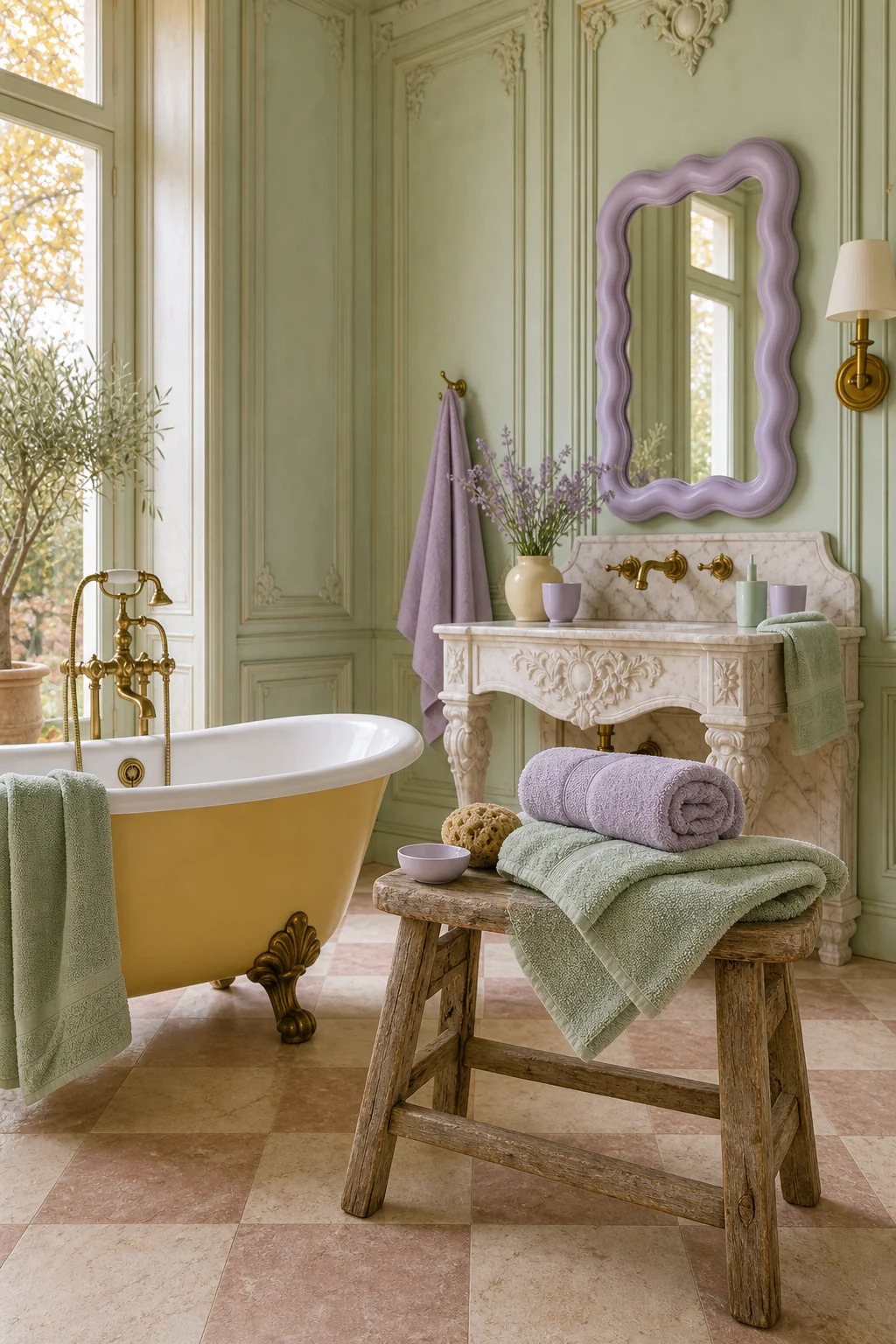
Proper lighting makes these layered decisions sing, ensuring the heavy antiques and cheerful pastels feel like a unified composition. Follow this exact distribution of materials to achieve the necessary balance between the two eras. Deviating from this plan invites visual chaos.
| Design Layer | Danish Pastel Role | French Chateau Role | Bridge Decision |
|---|---|---|---|
| Architectural Shell | Playful mint green color-blocking | Heavy ornate boiserie paneling | Matte paint finish applied to historic woodwork |
| Large Furniture | Bright butter yellow palette | Traditional cast-iron bateau bathtub | Classic tub painted in a vibrant modern hue |
| Soft Textiles | Fluffy lilac and mint towels | Heavy antique linen window drapes | Soft pastel tones on classic woven fabrics |
| Room Lighting | Playful chunky geometric sconces | Ornate antique brass chandeliers | Simple fabric shades mounted on patinated metal |
| Small Accents | Chunky wavy-framed vanity mirrors | Heavily carved marble washstands | Contemporary matte ceramics resting on aged stone |
By isolating the vibrant colors to specific, controlled zones, the heavy architectural shell remains dominant. The bathtub becomes a sculptural centerpiece, while the smaller textiles and accents pepper the room with youthful optimism. This deliberate mapping prevents any single layer from overwhelming.
Lighting the Canvas
Grand architectural shells require specific lighting to highlight both ornate carvings and modern paint. Warm, low autumn sunlight lifts the midtones, making the mint green boiserie glow beautifully. This illumination exposes the smallest styling details, proving the success of our material choices.
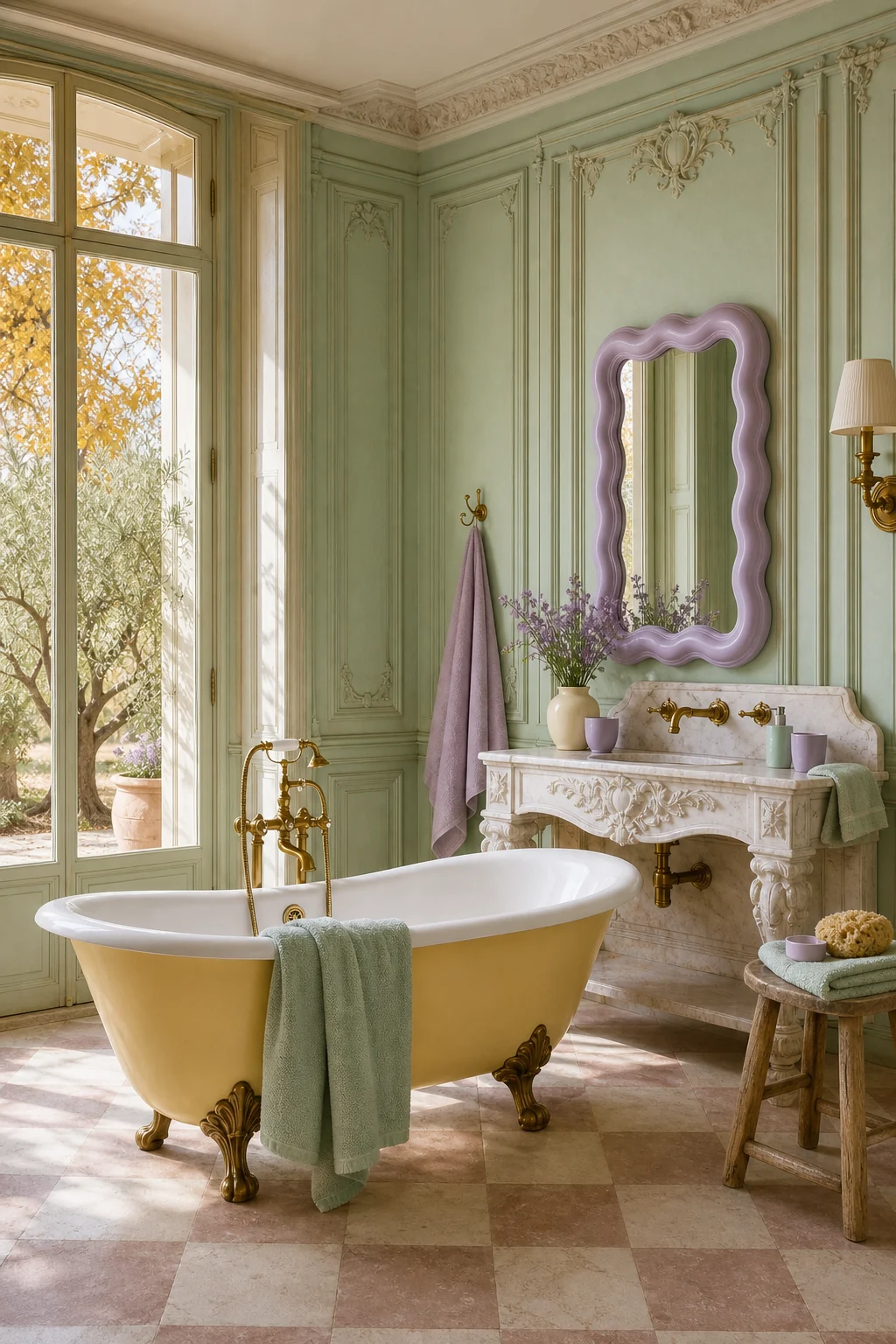
Golden hour illumination softens the stark contrast between the playful geometry and the aristocratic patina. Without this warmth, the flat pastels risk looking sterile against the heavy, aged stone and tarnished metal. Lighting acts as the final unifying layer in this complex space.
Manipulating this natural light requires unadorned, tall windows that allow the sun to sweep across the matte paint. When the golden rays hit the unlacquered brass, the resulting gleam bridges the gap between the historic architecture and the youthful modern styling perfectly.
Styling the Details
Small styling moments dictate the final polish of the room. Placing contemporary matte ceramics directly beside heavily patinated brass creates a highly intentional, tactile micro-tension. You can translate these details into any standard home easily by focusing on these specific material interactions.
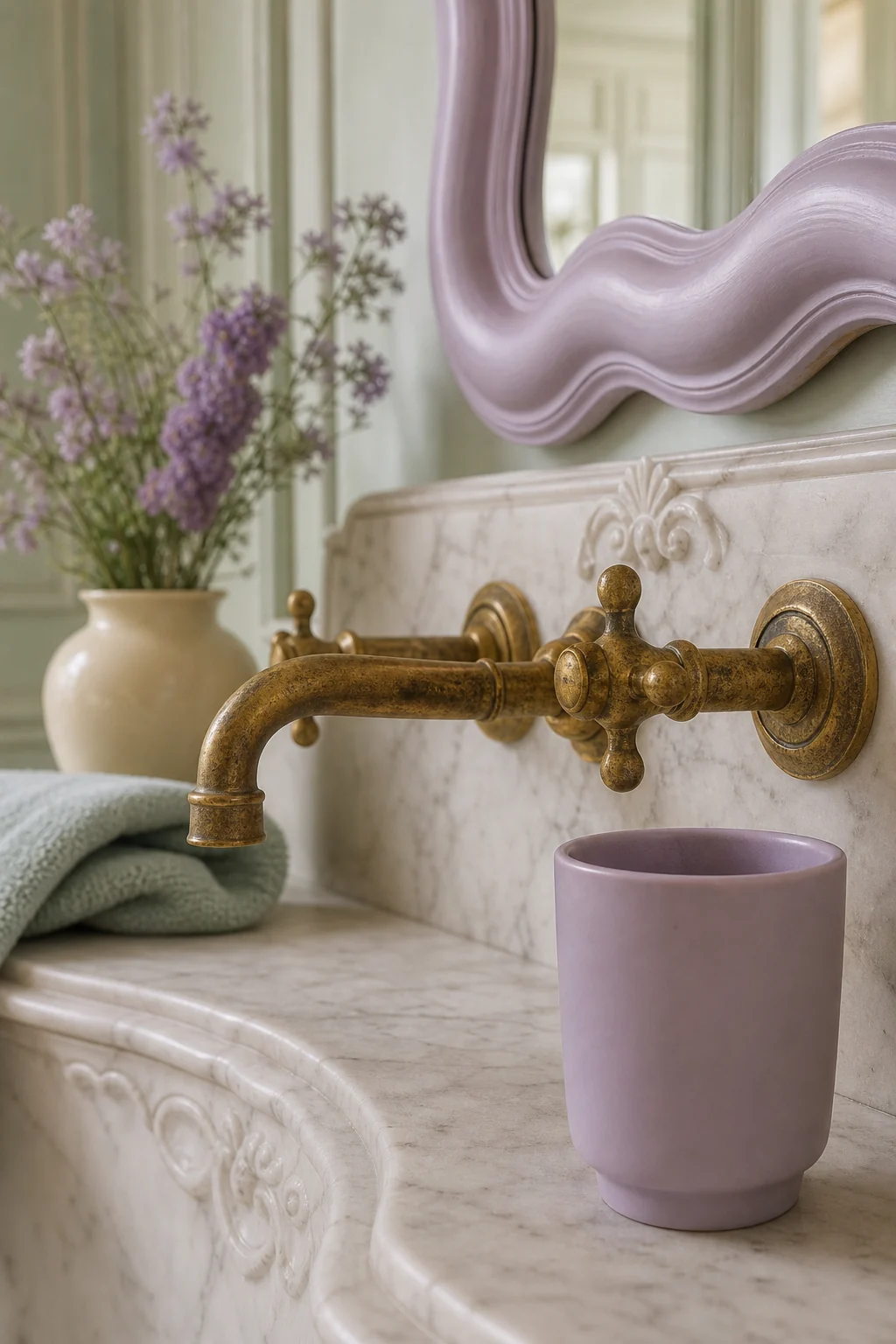
Prioritize these specific upgrades to establish a clear aesthetic connection. The friction between chalky, modern ceramics and centuries-old metal is the exact detail that makes this resolved contradiction so compelling and aspirational. Small changes yield massive results in this layered bathroom design.
- Source chunky wavy-framed mirrors in flat lilac or soft butter yellow to introduce playful geometry.
- Choose matte ceramic tumblers over traditional cut glass or heavy crystal to maintain the chalky texture.
- Display fluffy, solid-color pastel towels without any ornate traditional embroidery to keep the look modern.
- Incorporate simple geometric soap dispensers that contrast sharply against the ornate, heavily carved marble washstands.
Adapting the Look
You do not need an actual French estate to achieve this delicate balance. Standard picture-frame molding can mimic historic boiserie perfectly when drenched in a flat pastel hue. We must carefully avoid common theme-park pitfalls during the initial installation and painting phases.
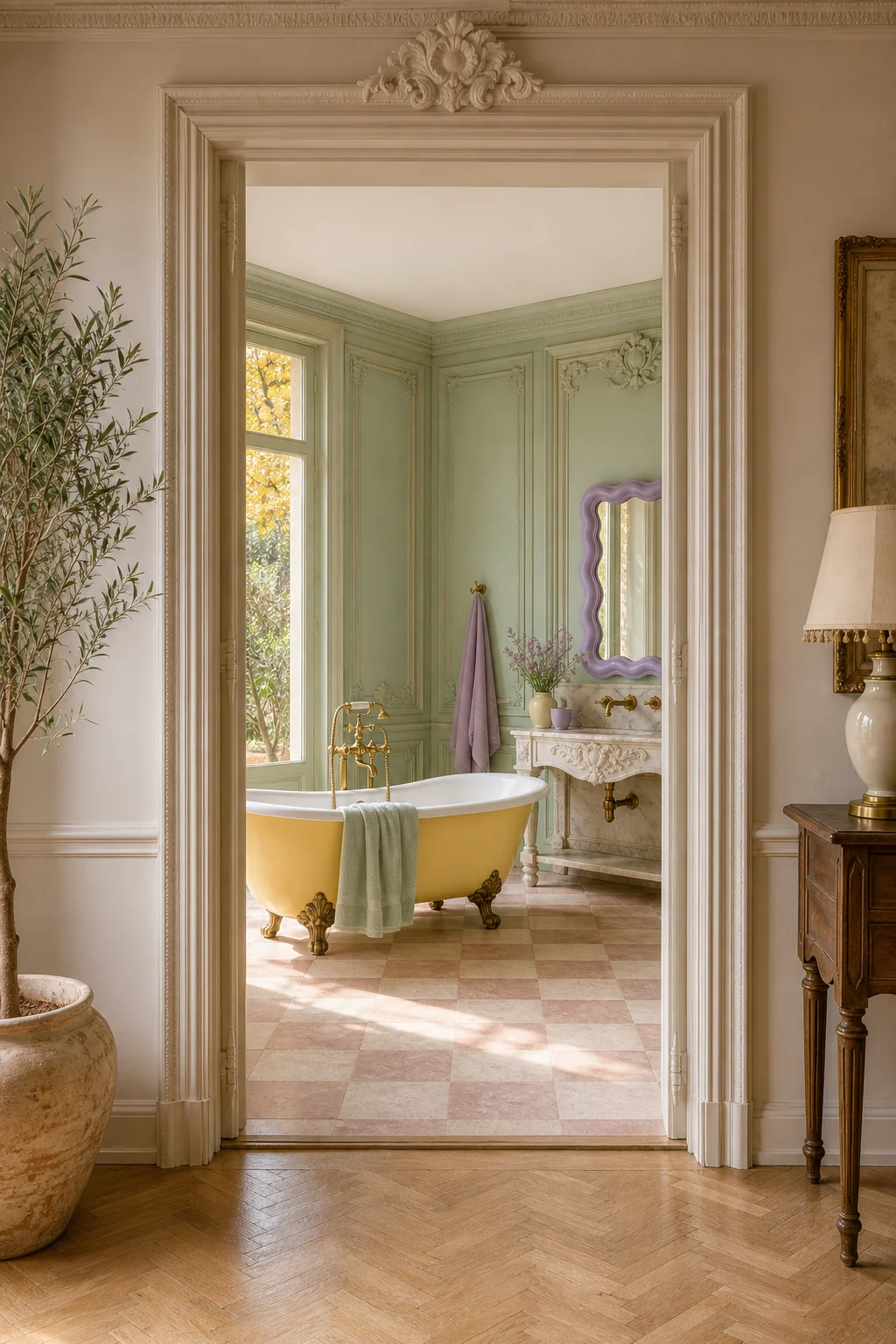
Applying a continuous mint shade across the walls, trim, and doors modernizes the traditional molding instantly. You must scour architectural salvage yards for authentic, heavily patinated brass hardware to ground this new molding, ensuring the room avoids feeling like a cheap, temporary set.
Avoiding the Costume
Without careful editing, this mix quickly devolves into a chaotic theme park. The tension only works when the historic elements retain their dignity against the playful colors. The final resolution demands strict boundaries to prevent the space from feeling overwhelmed and confused.
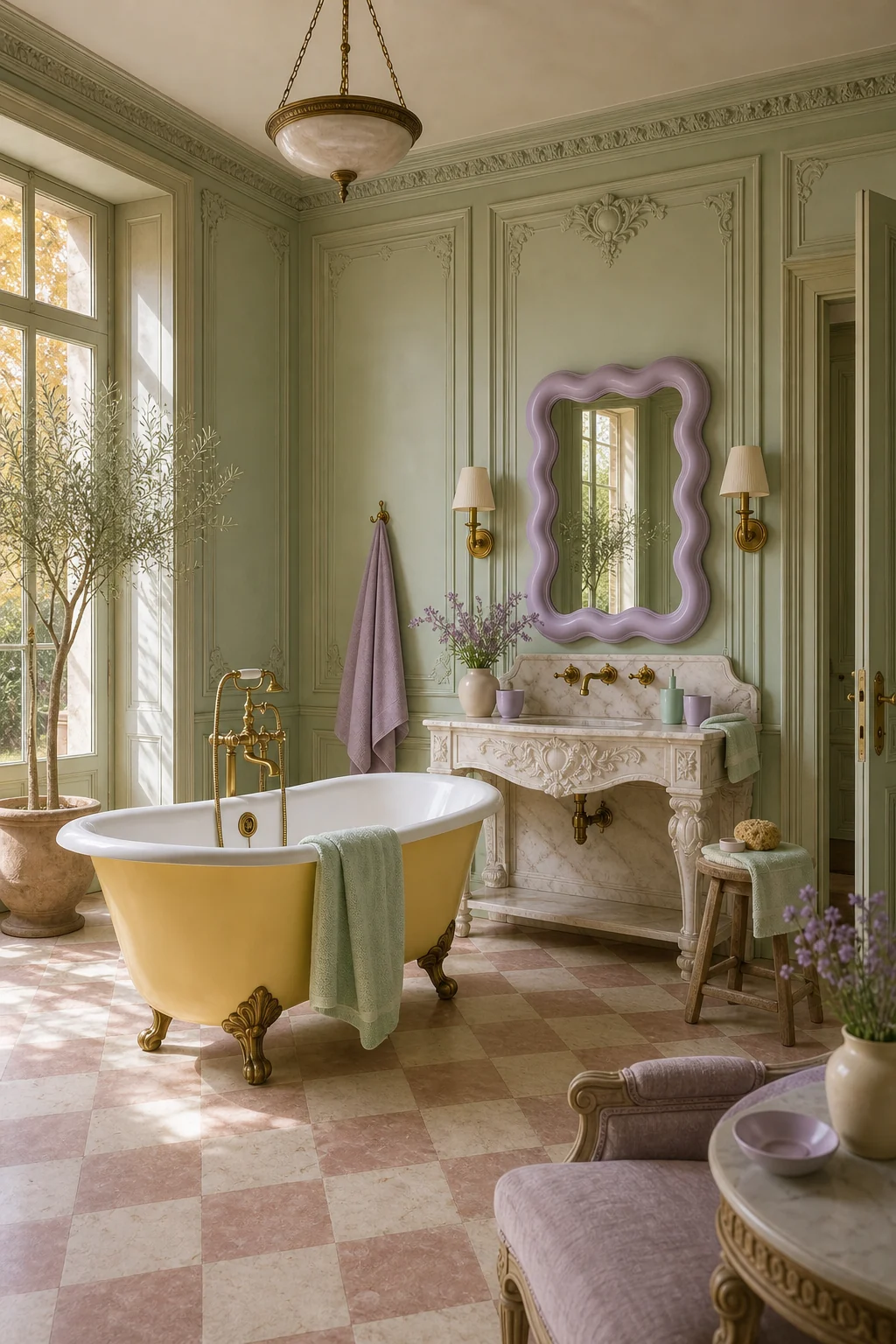
Stop adding colors once you establish a three-hue palette, ensuring the historic shell remains the dominant visual anchor. Respecting these boundaries guarantees a sophisticated, resolved space rather than a confused, temporary trend. The resulting bathroom is both historically grounded and wonderfully optimistic.
- Avoid pastel floral wallpapers that dilute the strict color-blocking impact of the modern Scandinavian influence.
- Never paint the antique marble or original stone surfaces, as they provide essential historical grounding.
- Stop adding accent colors once you establish a strict three-hue pastel palette to maintain visual order.
- Reject glossy finishes on any painted surface to ensure the modern additions feel architectural and intentional.