
Skater Meets Primitive: Living Room
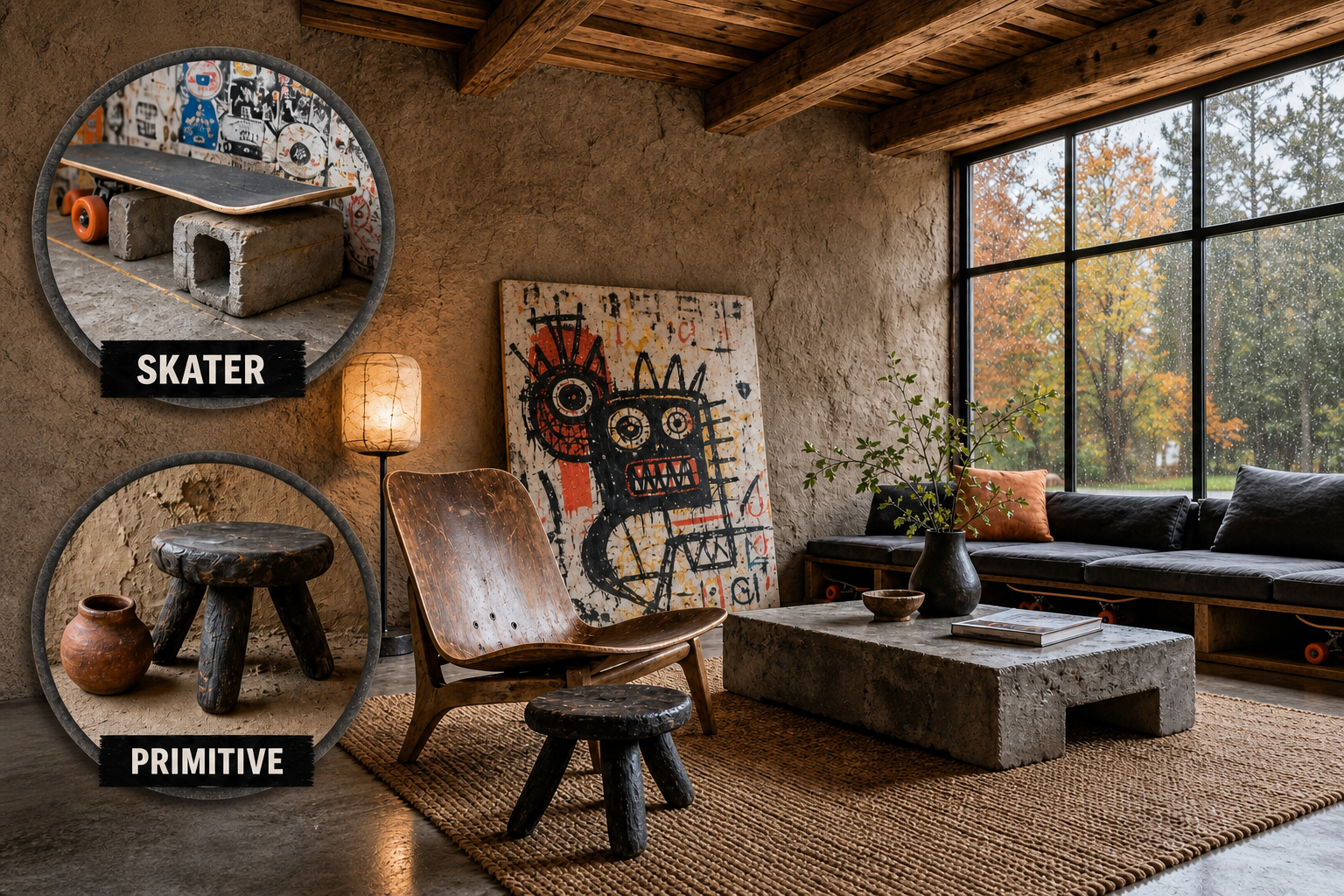
The kinetic rebellion of urban street culture clashes with the slow permanence of ancient rural craft. We resolve this tension by grounding low-slung, casual energy within a heavy, earthen architectural shell, proving that disparate eras can forge a deeply harmonious.
Defining the Skater Influence
Skater culture introduces a low-slung, casual energy defined by kinetic wear and industrial rebellion. Scuffed bentwood and graphic street art read like modern cave paintings against heavy, ancient walls, bringing a necessary jolt of youthful defiance to the otherwise quiet, earthen living room.
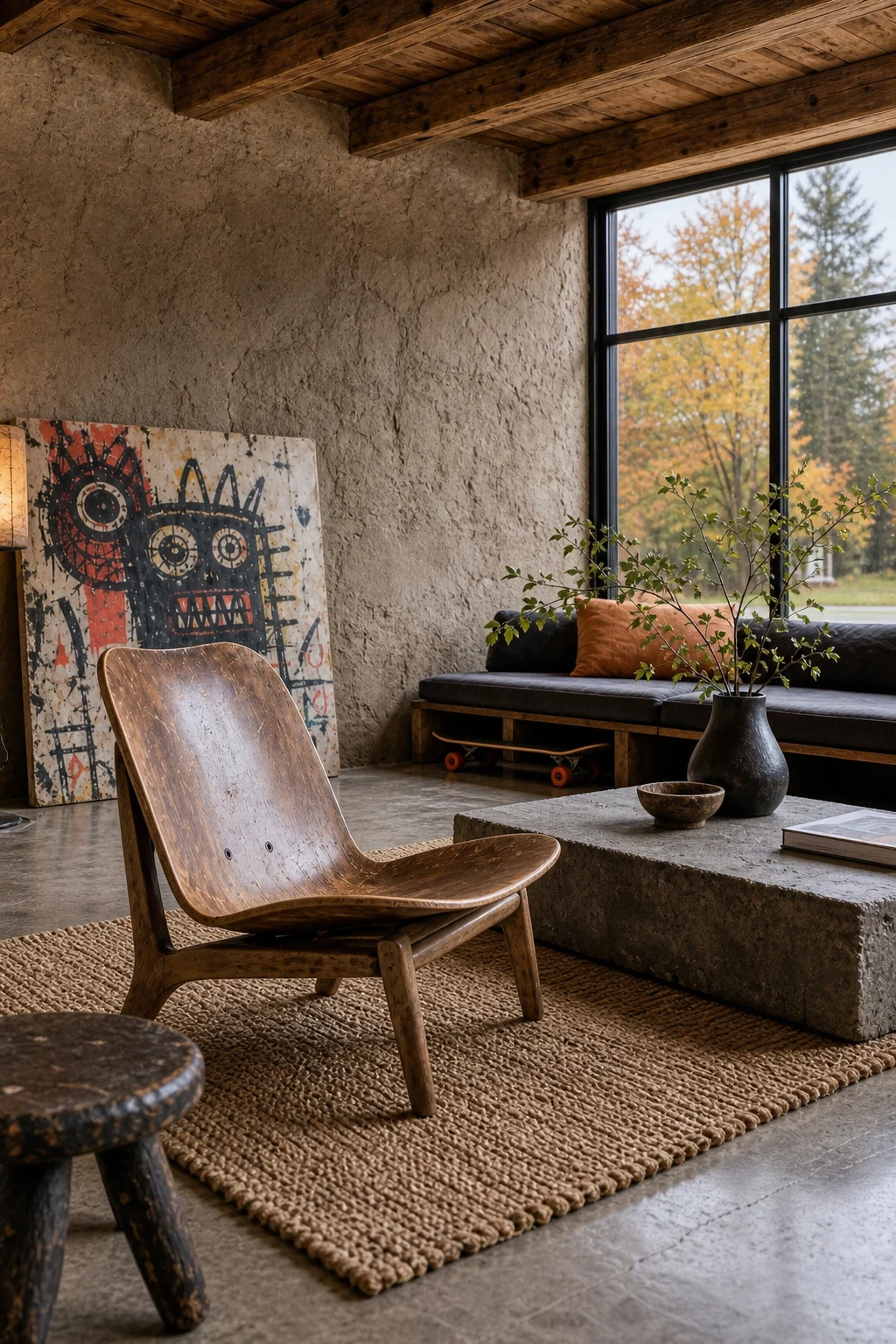
Notice how the scuffed bent-maple plywood brings authentic history to the space. This intentional wear prevents the room from feeling like a teenager’s bedroom while maintaining its vibrant edge. Street culture artifacts possess a sculptural quality when properly isolated and displayed.
By isolating these industrial artifacts against quiet backdrops, their kinetic energy becomes a deliberate focal point. The vibrant graphics and raw textures demand attention without overwhelming the senses, establishing a clear visual hierarchy that respects both the rebellious origins and the calm environment.
Anchoring with Primitive Elements
Primitive architecture provides a heavy, earthen shell that slows down the room’s visual pace. Thick, hand-adzed timber beams and uneven earth plaster walls ground the space with undeniable, timeless weight, offering a silent backdrop that absorbs the chaotic energy of urban artifacts.
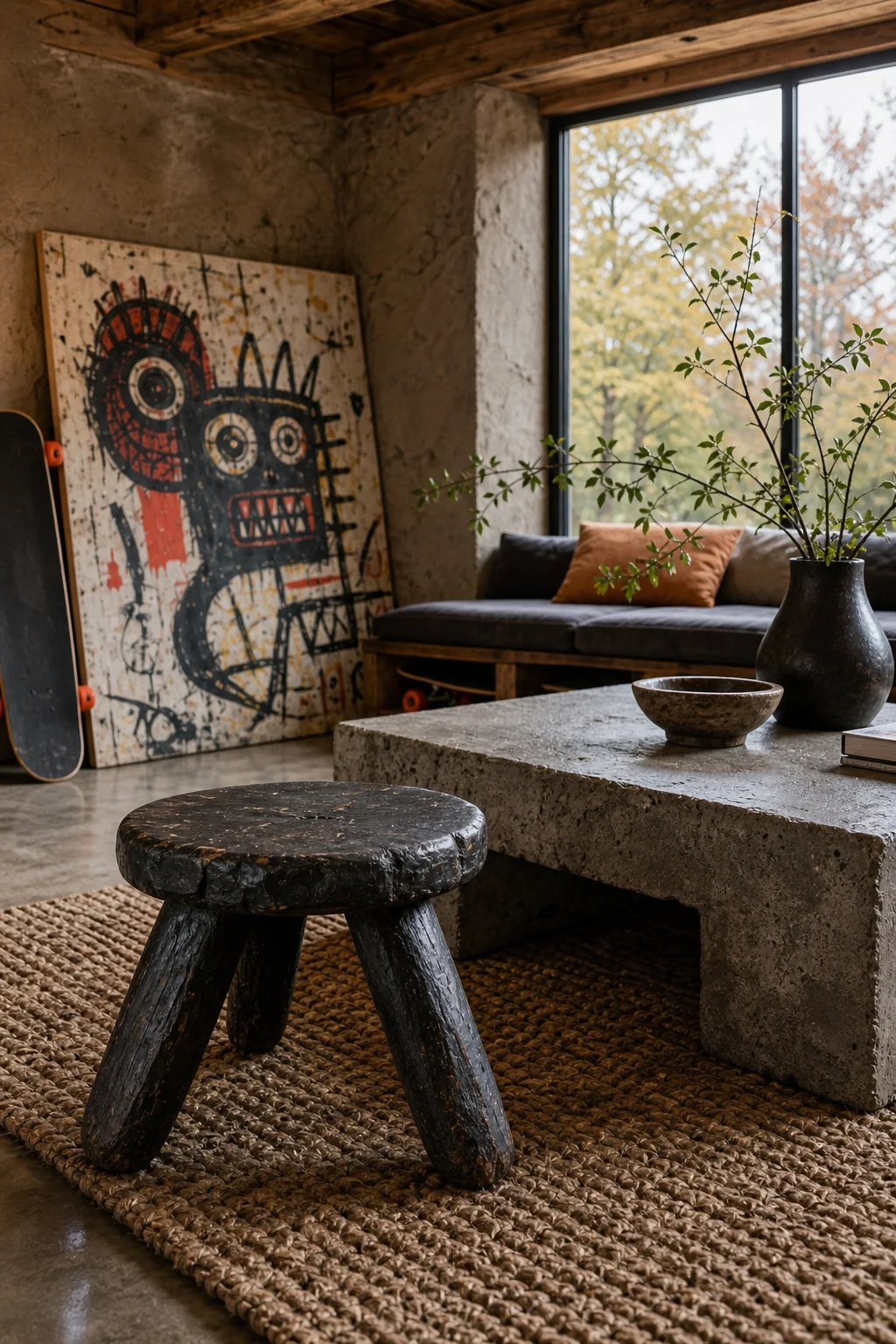
The carved blackened-wood stool anchors the kinetic energy of the concrete table. These heavy, wabi-sabi imperfections offer a necessary contrast to the vibrant street culture artifacts, demanding a slower, more deliberate physical interaction from anyone navigating this highly curated, grounded living space.
This foundational weight is crucial for absorbing the energetic bursts of the skater aesthetic. Heavy, hand-hewn objects dominate the lower visual field, creating an unshakable gravity that allows the more chaotic, colorful urban elements to float playfully and harmoniously above them.
Bridging the Contradiction
The transition relies on a shared appreciation for raw, unvarnished materials. Scuffed skate wear seamlessly mimics ancient weathering, bridging the gap between vibrant maple ply and charred oak. This material honesty creates a dialogue where neither era feels out of place or overly dominant.
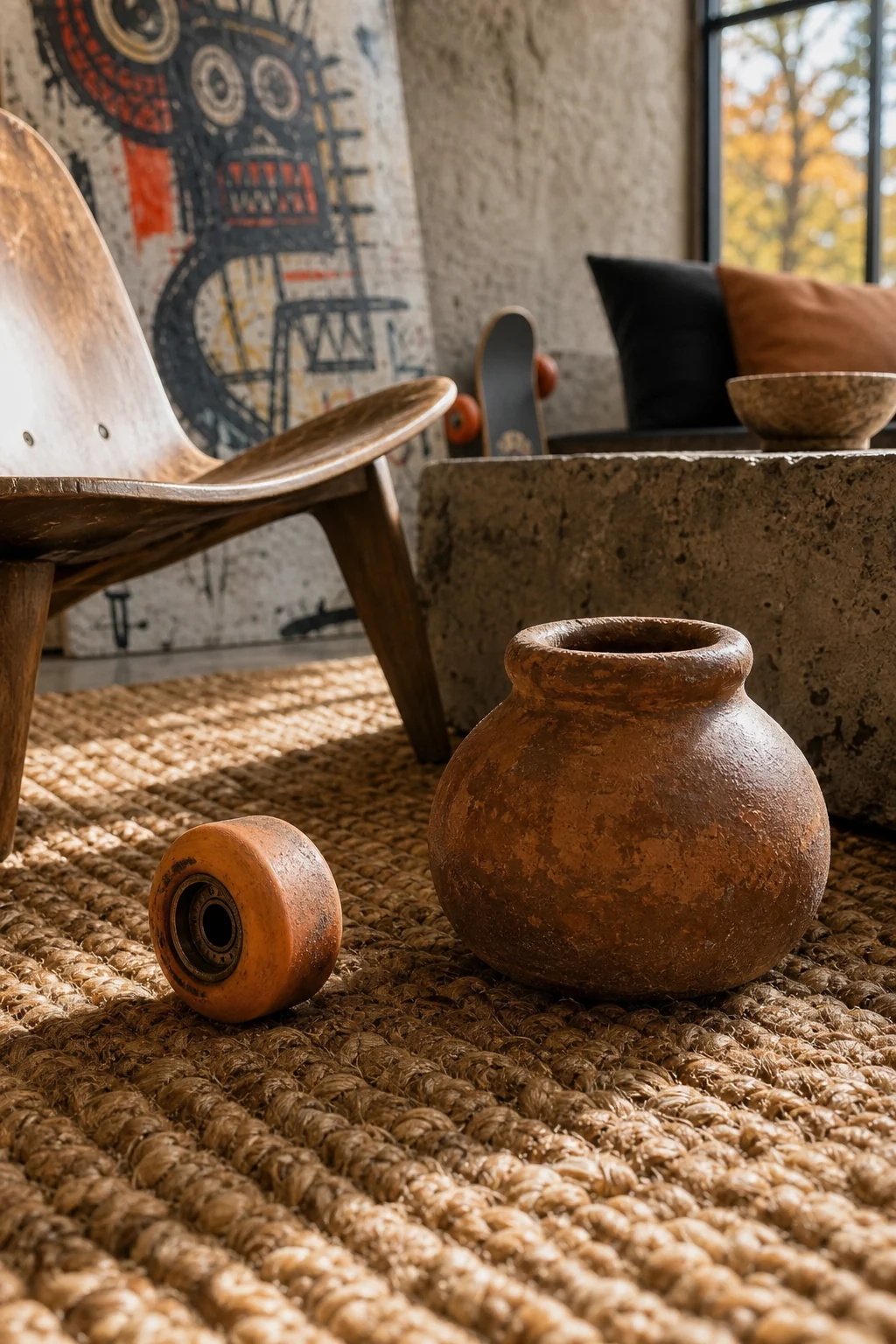
By aligning these rugged textures, the room achieves a cohesive identity. The interplay of faded urethane orange and crude clay proves that disparate eras can share a unified visual language, turning what should be a chaotic clash into a deliberate, harmonious curation of tactile history.
- Match the heavy visual weight of raw concrete coffee tables with the undeniable mass of thick architectural timber beams.
- Use faded urethane orange accents strategically to complement and elevate the earthy terracotta tones found in primitive clay.
- Align low-slung seating heights across both distinct design styles to ensure the room feels physically connected and intentionally grounded.
- Treat industrial grip tape textures exactly like thick woven jute rugs, celebrating their shared appreciation for raw tactile surfaces.
Building the Seating Vignette
Constructing the focal point requires balancing kinetic energy with grounded permanence. A low-slung profile unites primitive floor-living traditions with the casual, drop-in lounging typical of a skate house, creating a relaxed seating area that feels both effortlessly cool and deeply, historically rooted in craft.
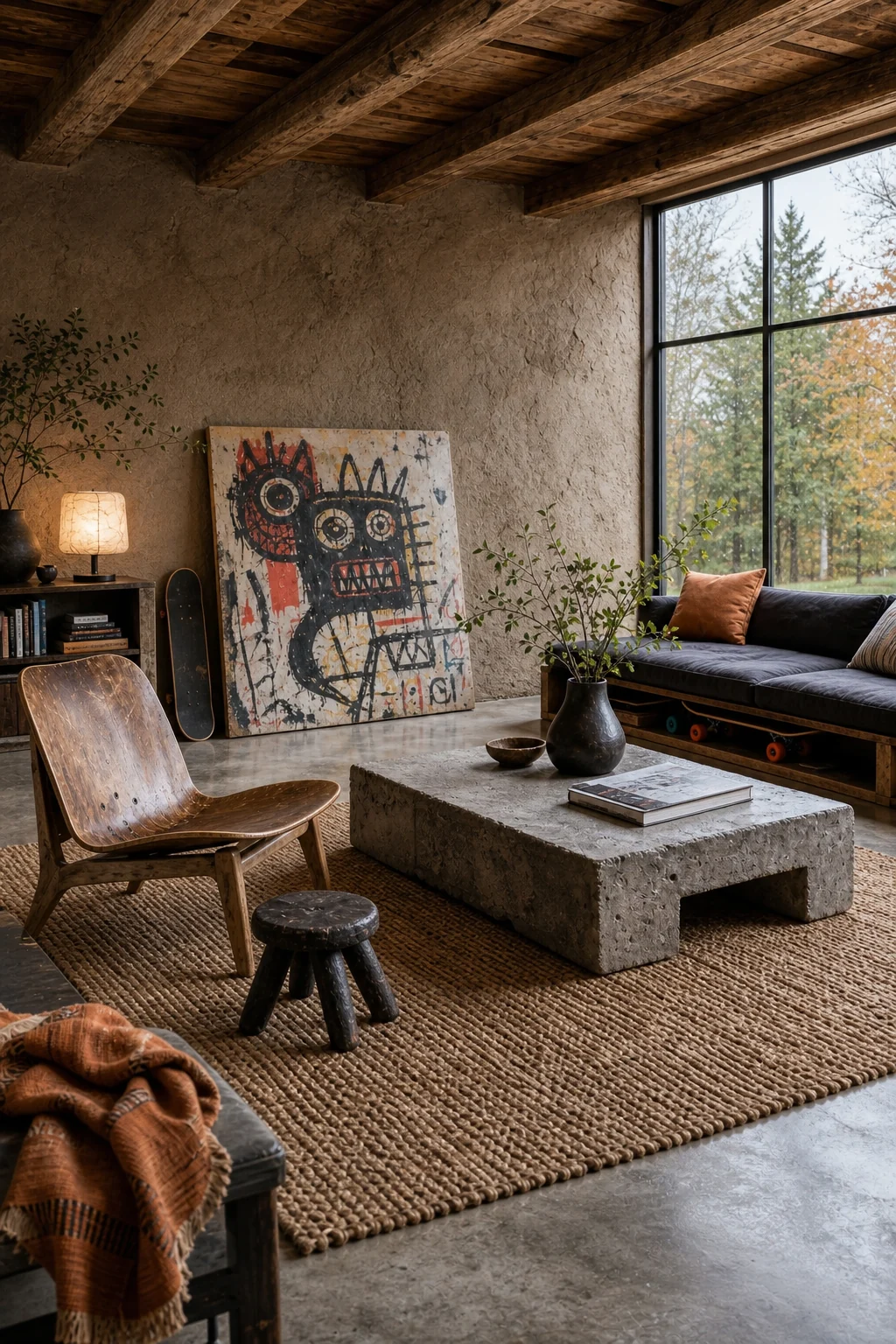
This seating arrangement demonstrates how low-slung seating heights physically connect the two styles. The resulting vignette forces the eye to travel closer to the uneven mud plaster floor, encouraging guests to appreciate the intricate, raw tactile details hidden entirely below standard eye level.
| Design Layer | Skater Role | Primitive Role | Bridge Decision |
|---|---|---|---|
| Architectural Shell | Vibrant graphic canvases | Uneven earth plaster walls | Embrace patina and weathering as decoration |
| Large Furniture | Scuffed bent-maple chairs | Carved blackened-wood stools | Align low-slung seating profiles across styles |
| Tactile Textiles | Industrial grip tape | Thick, hand-woven jute rugs | Celebrate raw, unvarnished tactile surfaces |
| Ambient Lighting | Industrial steel floor lamps | Textured paper lantern shades | Maintain a diffused silver-grey glow |
| Small Accents | Faded urethane wheels | Crude terracotta clay vessels | Unify through an earthy, weathered palette |
Lighting the Architectural Shell
Soft, diffused silver-grey Pacific Northwest daylight fills the room, highlighting the rough textures. Large steel-framed windows naturally illuminate the uneven plaster and heavy architectural timber beams, casting open shadows that emphasize wabi-sabi imperfections without creating harsh, distracting high-contrast glare across the raw concrete.
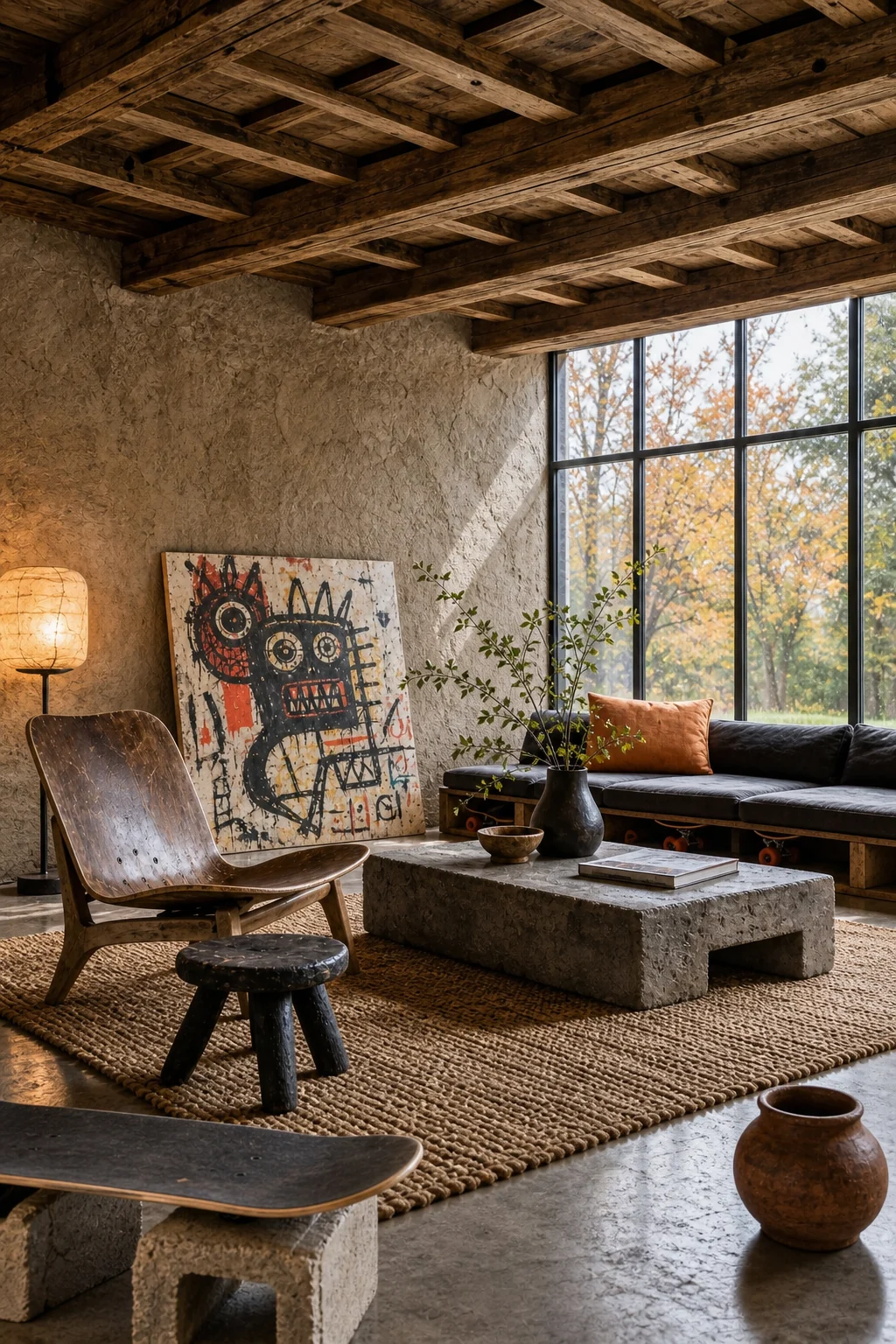
Proper illumination emphasizes the earthen architecture while spotlighting vibrant urban accents. Controlling this light ensures neither the heavy shell nor the kinetic art overwhelms the other, allowing the scuffed concrete and raw maple to glow with a remarkably warm, inviting, and perfectly balanced exposure.
- Maximize natural daylight from large steel-framed windows to emphasize the rough wabi-sabi imperfections of the uneven earth plaster walls.
- Leave heavy architectural timber beams completely exposed to provide a massive, earthen visual anchor that slows down kinetic energy.
- Lean vibrant graphic street-art canvases directly against the ancient mud plaster to echo the raw energy of modern cave paintings.
- Filter harsh afternoon sunlight to maintain a soft, diffused silver-grey ambient glow that flatters both scuffed concrete and charred oak.
Styling the Tactile Details
Small moments dictate the room’s authenticity. A tabletop or low shelf becomes a gallery where industrial grip tape and raw cinderblocks mingle with crude clay and ancient silhouettes, proving that scale and texture matter just as much as the larger architectural shell surrounding them.
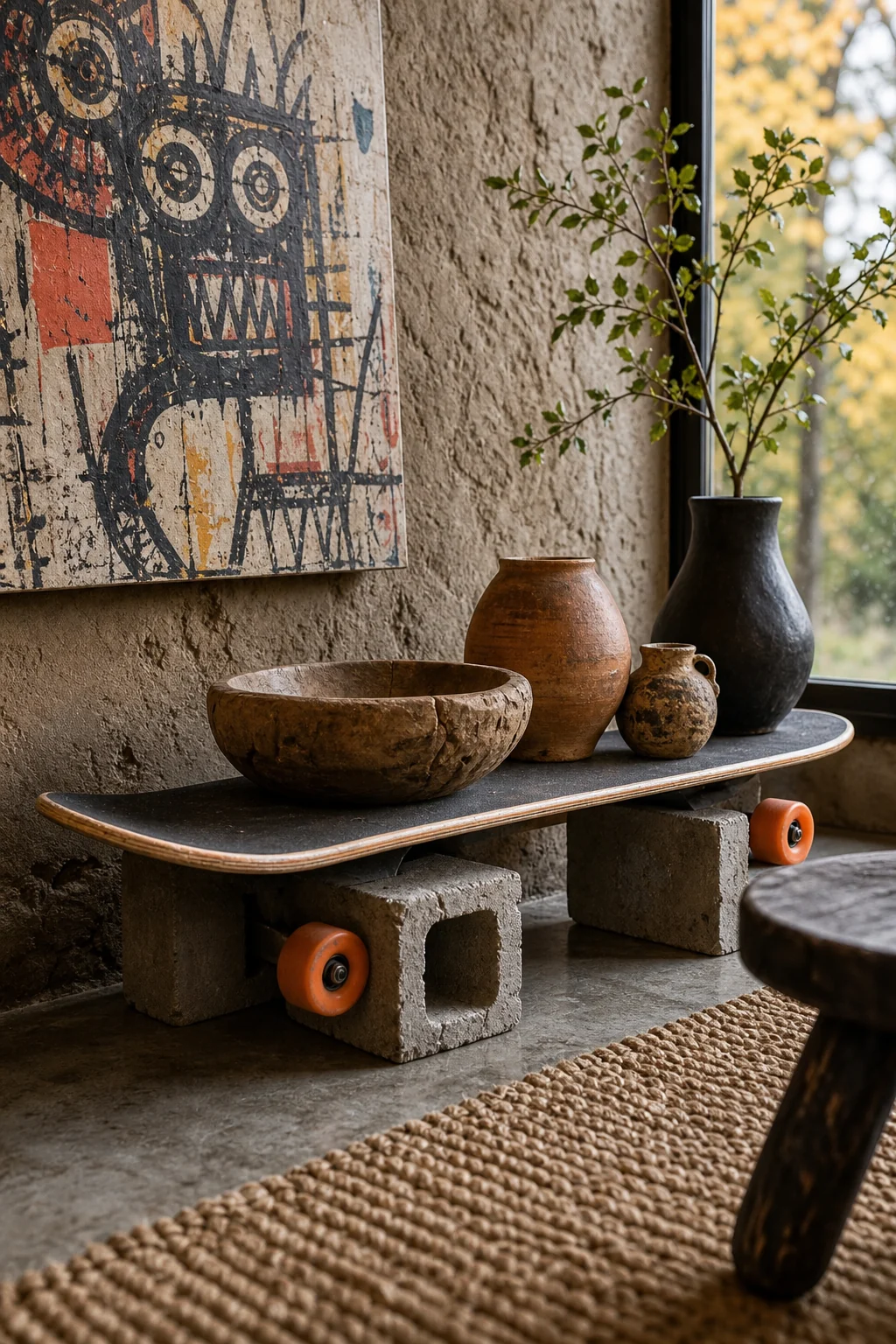
These curated vignettes celebrate raw unvarnished materials at an intimate scale. Selecting the right foundational pieces ensures the tension remains balanced throughout the entire living space, inviting guests to touch the heavy grind marks and feel the smooth, hand-carved wooden bowls nearby.
- Source scuffed bent-maple plywood lounge chairs with highly visible wood grain that proudly display their kinetic wear and industrial rebellion.
- Hunt for raw concrete coffee tables featuring heavy industrial grind marks that seamlessly mimic the slow weathering of ancient artifacts.
- Select hand-carved blackened-wood stools with ancient three-legged silhouettes that ground casual skate-house lounging with timeless architectural weight.
- Display crude, unglazed terracotta clay vessels in earthy, muted tones alongside stray polyurethane wheels to bridge distinct design eras.
Adapting the Aesthetic
Translating this look beyond the main living area requires focusing on functional passages. A hallway or entryway easily adopts this tension through rugged flooring and singular, striking art pieces, ensuring the narrative continues seamlessly as you move through the home toward the main room.
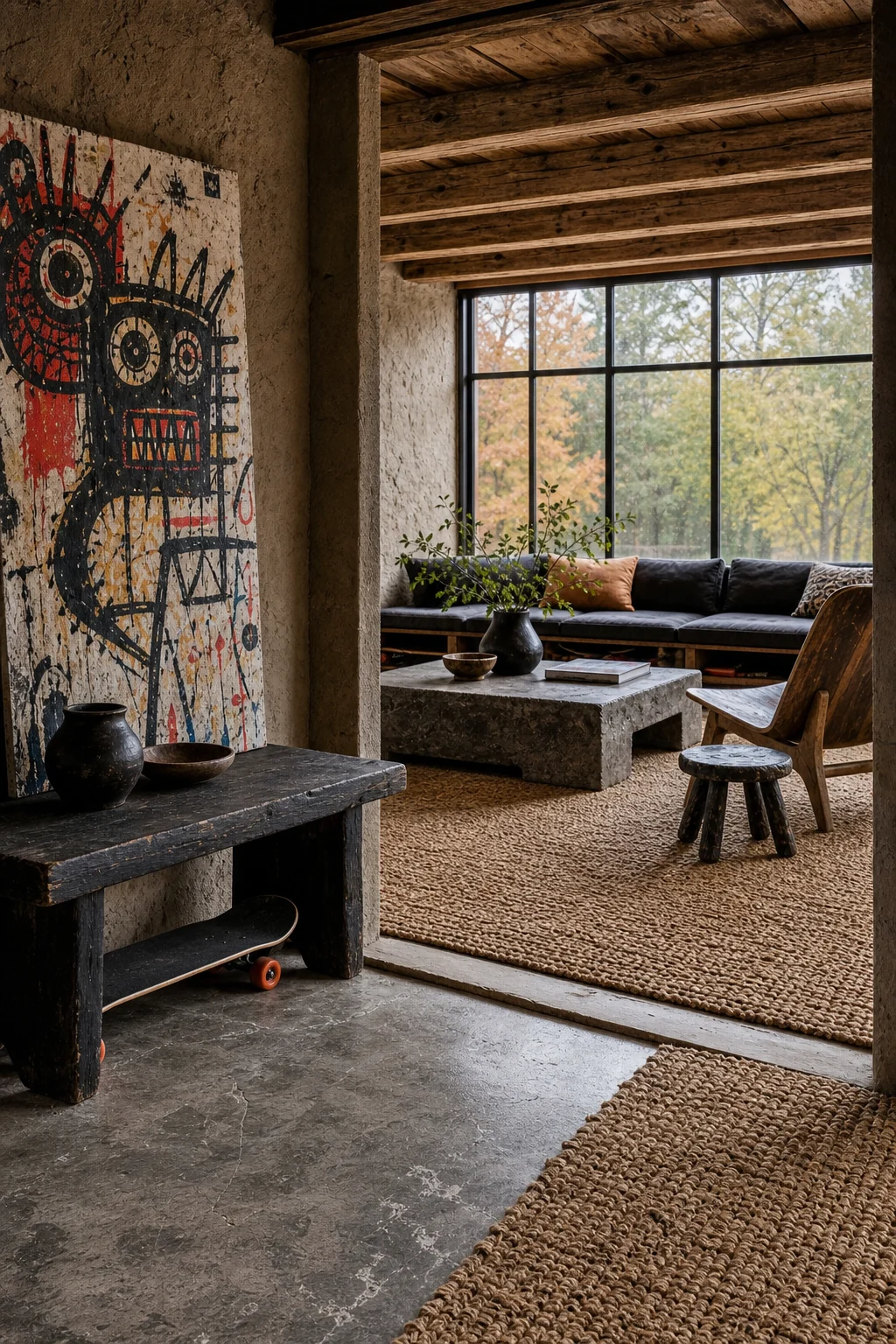
Even small thresholds benefit from this deliberate clash of eras. By keeping passages uncluttered, a single heavy bench and a vibrant canvas can carry the entire aesthetic, proving that you do not need massive square footage to execute this resolved contradiction with absolute precision.
This approach to transitional spaces prevents the home from feeling like a series of disconnected themes. When the entryway establishes the exact same material tension as the main living room, the entire architectural experience feels intentional, cohesive, and deeply considered from the very first step.
Avoiding the Costume
A successful room avoids looking like a teenager’s skate park or a historical reenactment. True harmony emerges when industrial rebellion and rural craft share equal footing, creating a space that feels curated, mature, and deeply respectful of both distinct design languages and material histories.
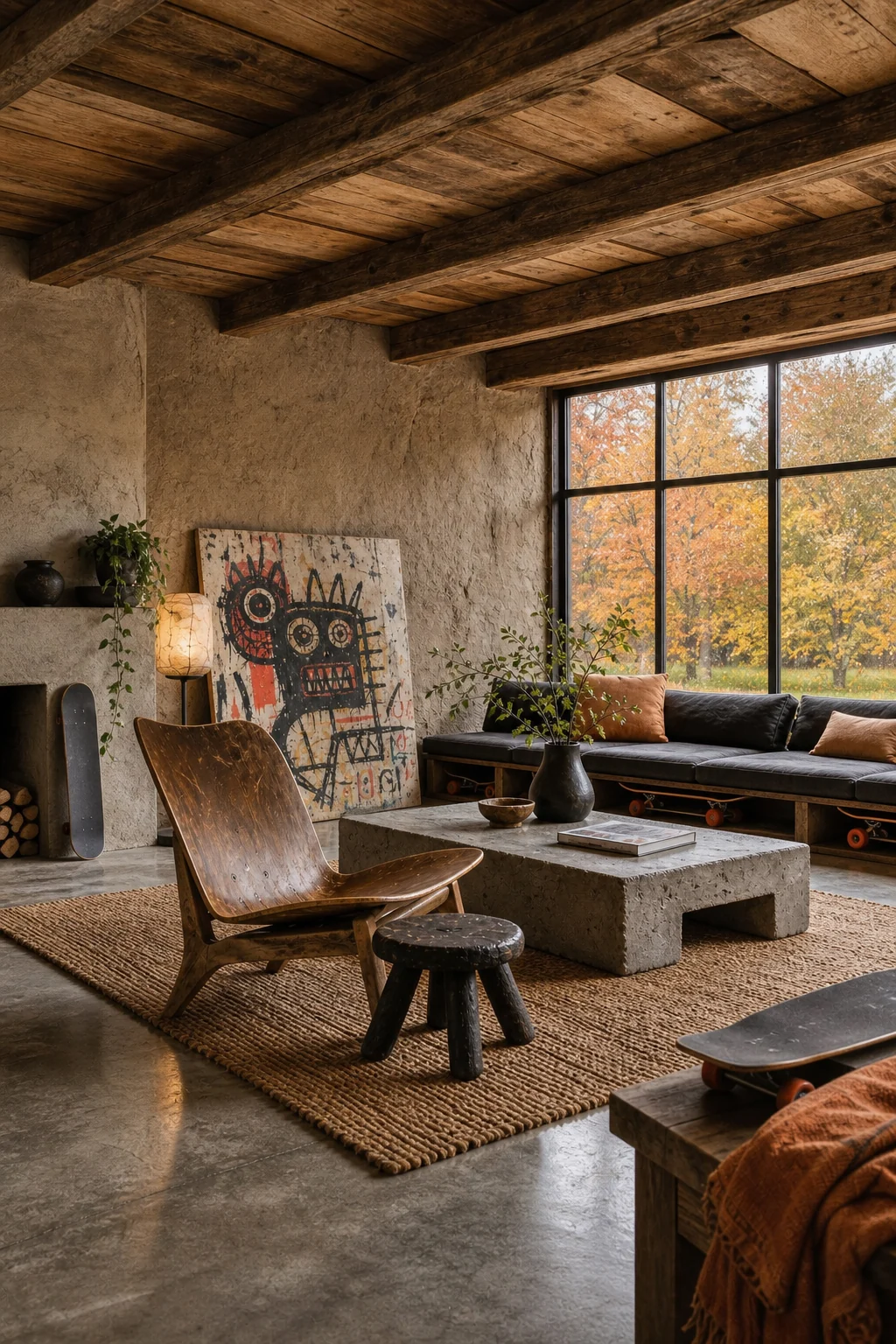
This final balance proves that disparate cultures can forge a grounded yet kinetic living space. Success relies on strict editing and a commitment to authentic weathered materials, ensuring the final environment remains sophisticated, highly functional, and completely free of novelty or cheap imitation.
- Avoid pristine, mass-produced skateboards entirely; demand authentic scuffs, urethane marks, and heavy industrial wear to legitimize youthful street culture.
- Do not overstuff the living room; primitive design requires vast breathing space to let the heavy earthen architectural shell resonate.
- Never use fake brick or synthetic textures; stick strictly to authentic earth plaster, raw cinderblocks, and thick woven jute rugs.
- Refuse delicate, polished decor; prioritize hand-hewn, genuinely weathered foundational pieces that withstand the visual weight of vibrant graphic canvases.