
This Recipe Book Became a Baking Station
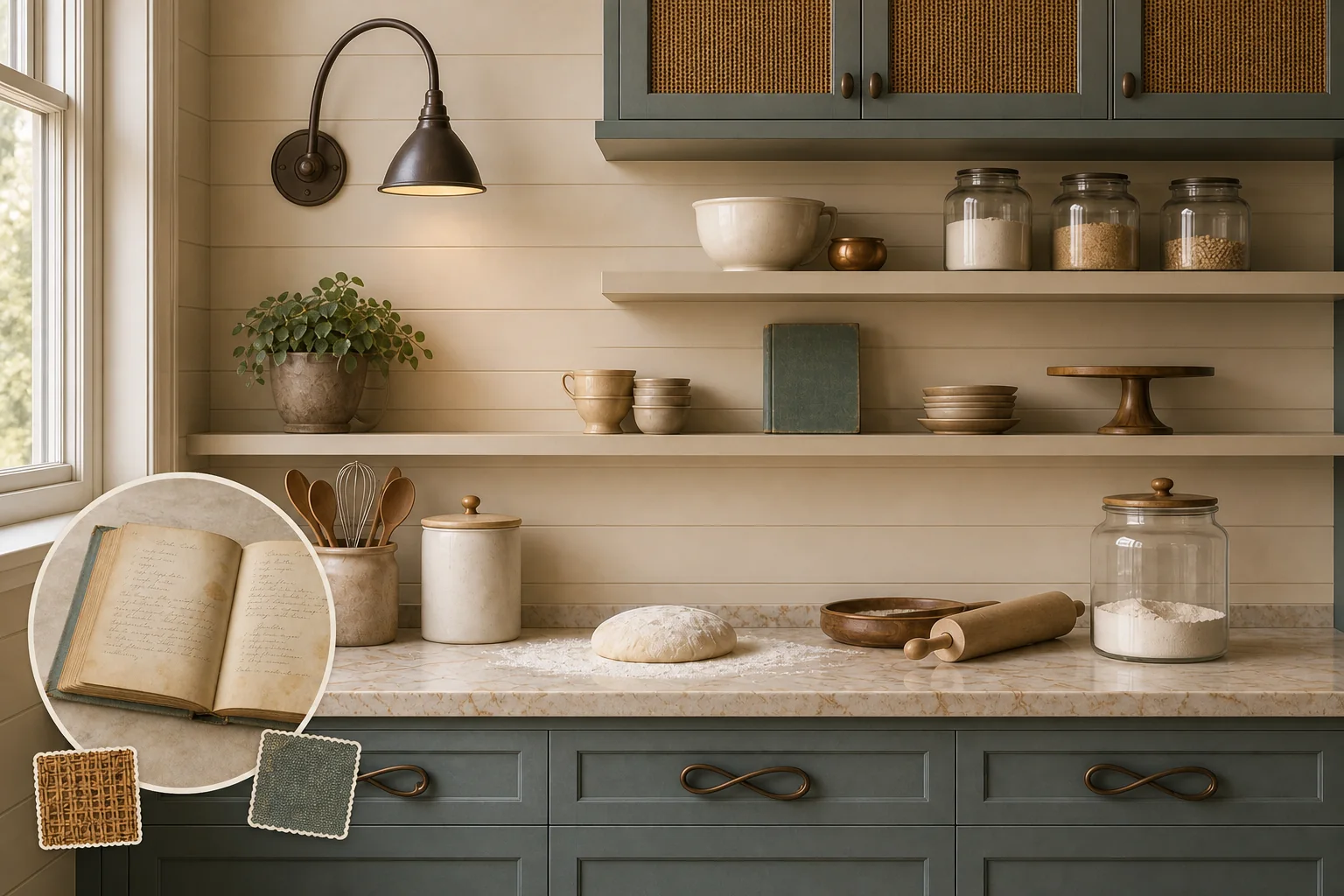
Transforming a fabric-bound mid-century recipe book into a highly functional baking station requires balancing nostalgia with utility. By extracting its tactile qualities, the marriage of strict, utilitarian geometry with warm, organic human touches creates a durable, warm kitchen alcove designed for precise pastry work.
Building the Stacked Pages Architecture
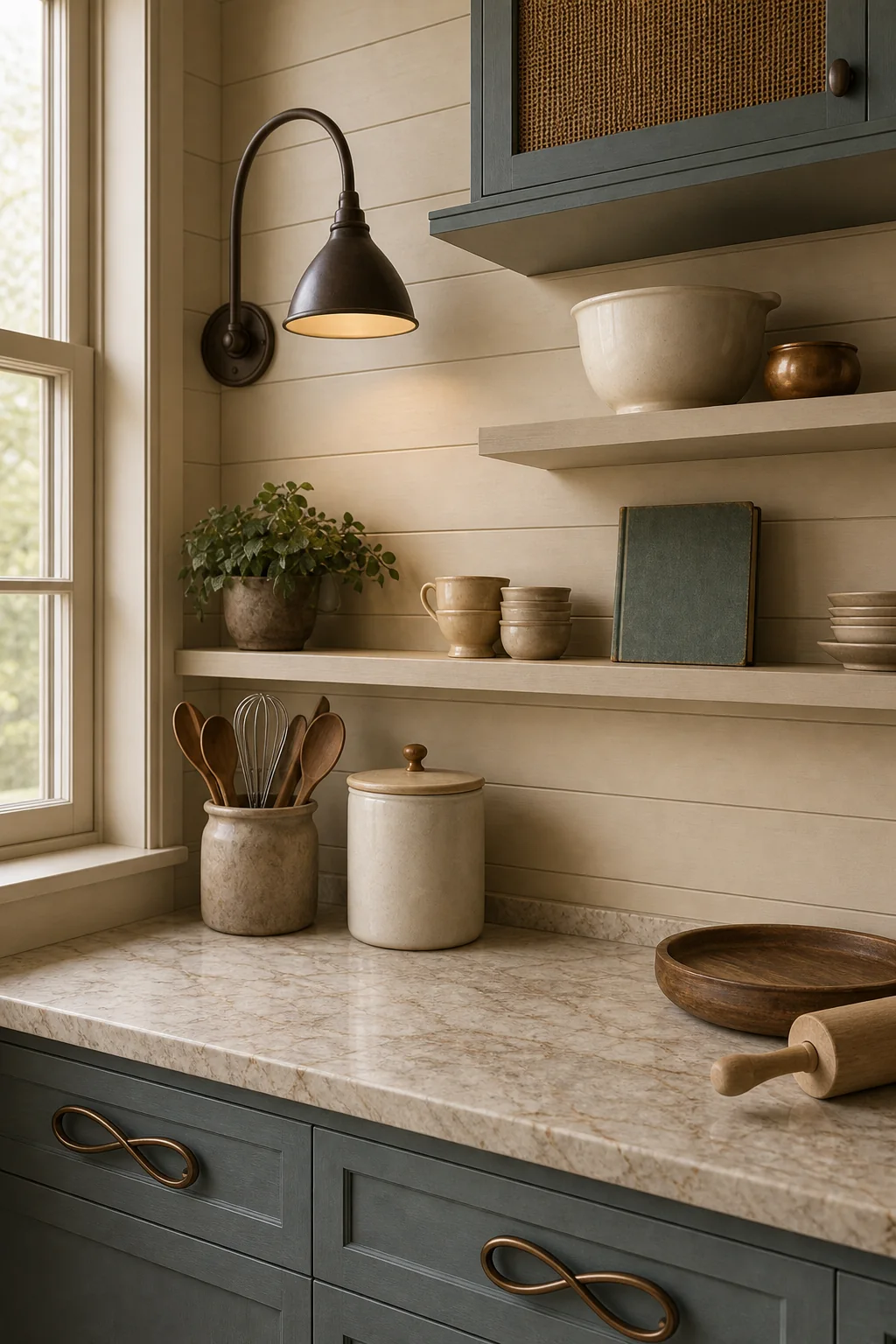
Translating the dense, linear edges of a closed book into architectural paneling establishes a strict, utilitarian grid for the workspace. By keeping the foundational architecture strictly linear, the fluid, handwritten-inspired accents will eventually stand out without feeling chaotic. Horizontal tongue-and-groove paneling emphasizes the width of the recessed kitchen alcove, creating a warm parchment-colored backsplash that mimics the dense stack of closed pages. This foundational geometry provides a highly functional, durable backdrop that supports accessible storage for baking staples while maintaining the clean, organized environment required for precise pastry work. Implementing this foundational architecture requires a sequence of deliberate construction phases.
- Install horizontal tongue-and-groove paneling to emphasize width.
- Mount thin floating shelves tightly together.
- Paint the lower cabinetry in a muted teal.
- Fit a honed marble countertop with amber veining.
- Attach fluid, continuous-loop bronze pulls.
Stacking the Floating Shelves
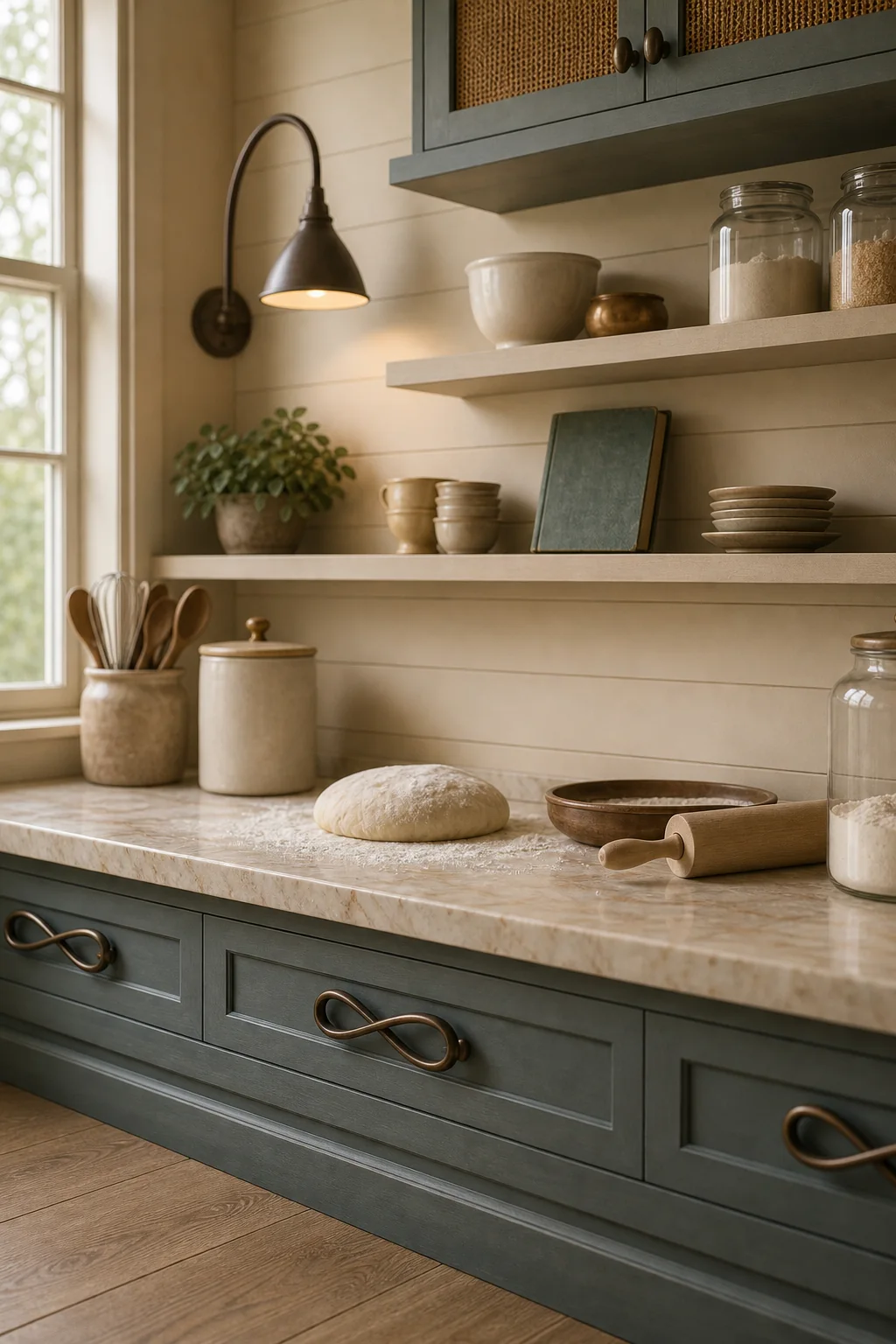
Tightly stacked thin shelves mirror the dense book pages, providing accessible storage for baking staples while maintaining the rigid horizontal geometry of the overall alcove design. By mounting these thin floating shelves tightly together against the horizontal tongue-and-groove backsplash, the upper storage visually replicates the dense, horizontal lines of the closed book’s page edges. This configuration not only maximizes vertical storage in a recessed kitchen alcove but also reinforces the strict architectural foundation, ensuring that the display space for essential tools feels intentionally integrated rather than cluttered or haphazardly arranged.
Translating Stained Parchment and Faded Teal
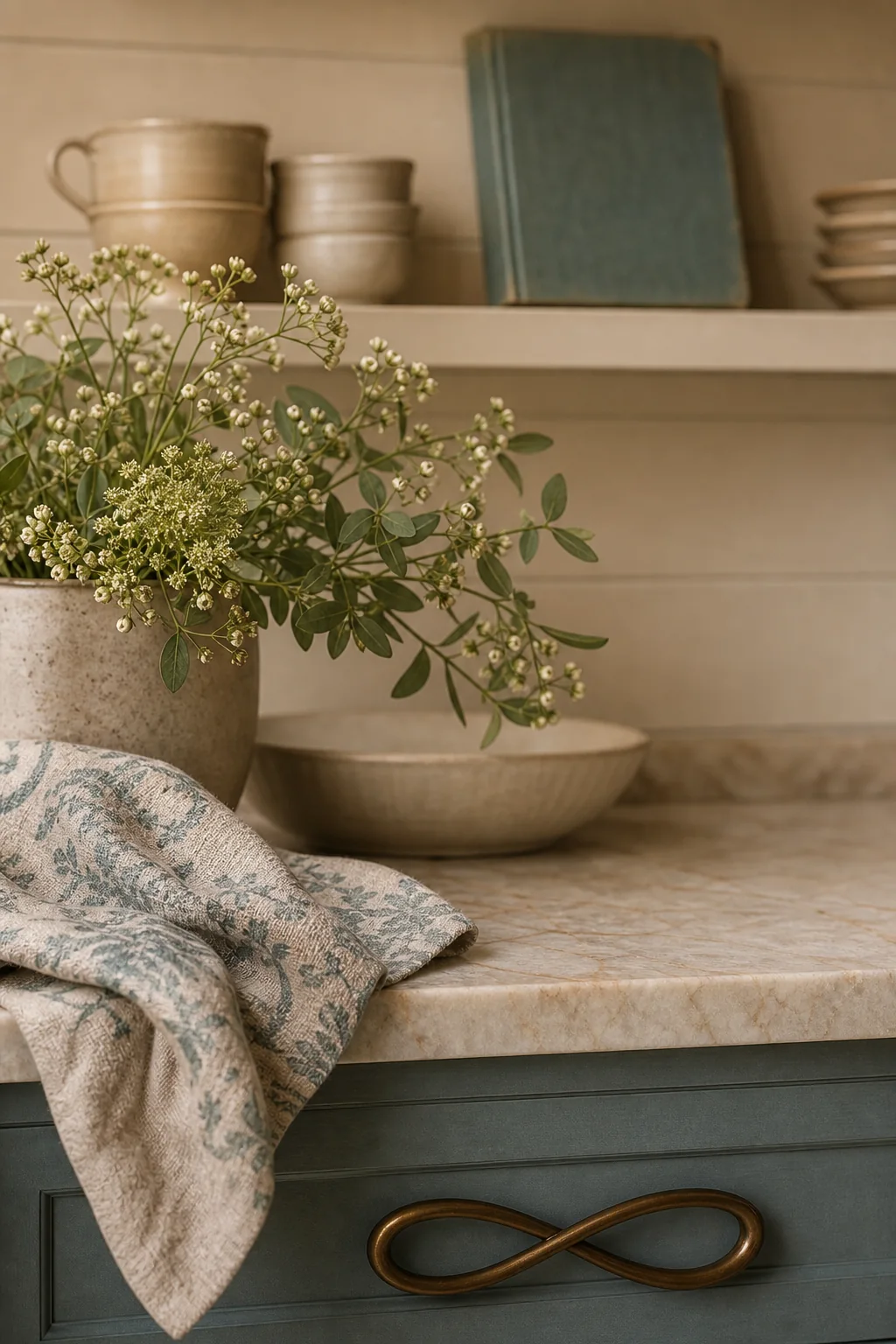
Pairing muted, cool-toned cabinetry with warm, unbleached-white surfaces captures the nostalgic contrast of an aged heirloom cover protecting delicate pages. Muted teal lower cabinetry grounds the space, while a warm, unbleached-white honed marble counter with subtle amber veining provides a durable, cool surface for kneading dough. This careful color mapping ensures the baking station feels both nostalgic and highly efficient, echoing the translucent butter stains of the original recipe book without resorting to literal interpretations. The visual-DNA mapping table below illustrates exactly how these heirloom characteristics translate directly into architectural and decorative room moves.
| Source trait | Visible evidence | Room move |
|---|---|---|
| Stacked Pages | The dense, horizontal lines of the closed book’s page edges. | Horizontal paneling mimics the dense stack of closed pages. |
| Stained Parchment & Cover | The contrast between the faded teal fabric cover and the warm, butter-stained paper. | Muted teal cabinets ground the warm, butter-stained marble counter. |
| Woven Bookcloth | The tactile, grid-like warp and weft of the mid-century fabric binding. | Woven brass mesh inserts replicate the fabric bookcloth texture. |
| Cursive Loops | The sweeping, continuous loops of handwritten ink across the rigid page. | Fluid bronze hardware mimics the sweeping loops of cursive ink. |
Weaving the Tactile Bookcloth
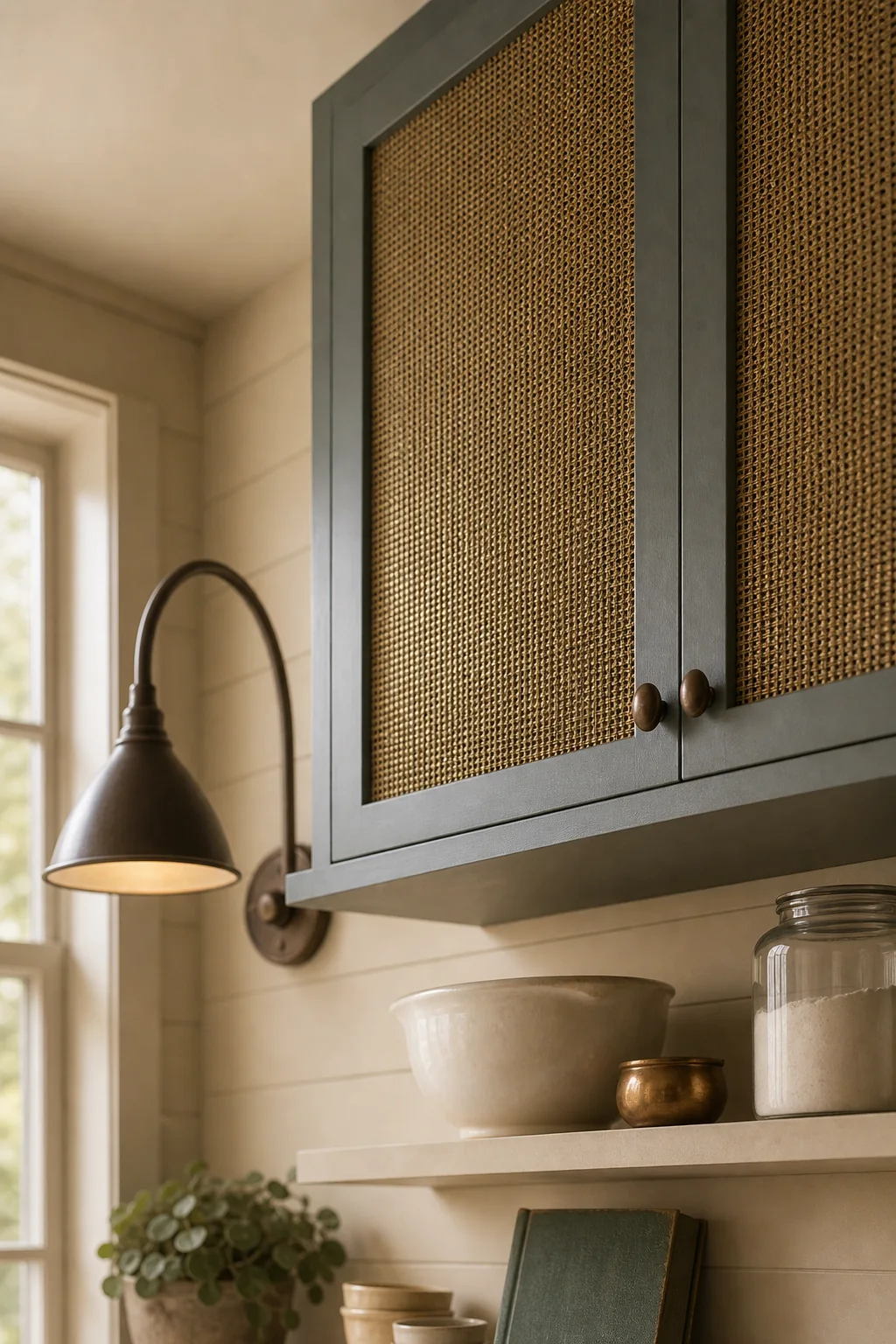
Introducing woven metal into the upper cabinetry softens the hard architectural lines, bringing the tactile warmth of a fabric book cover into a durable kitchen zone. Woven brass mesh inserts replicate the tactile, grid-like warp and weft of the mid-century fabric binding, adding a textile-like texture to a hard architectural surface. This material choice bridges the gap between the nostalgic, porous base surfaces of the source object and the functional requirements of a modern baking station. Procuring the right finishes is essential to achieving this delicate balance between heirloom aesthetics and everyday kitchen utility.
Framing the Woven Brass Mesh
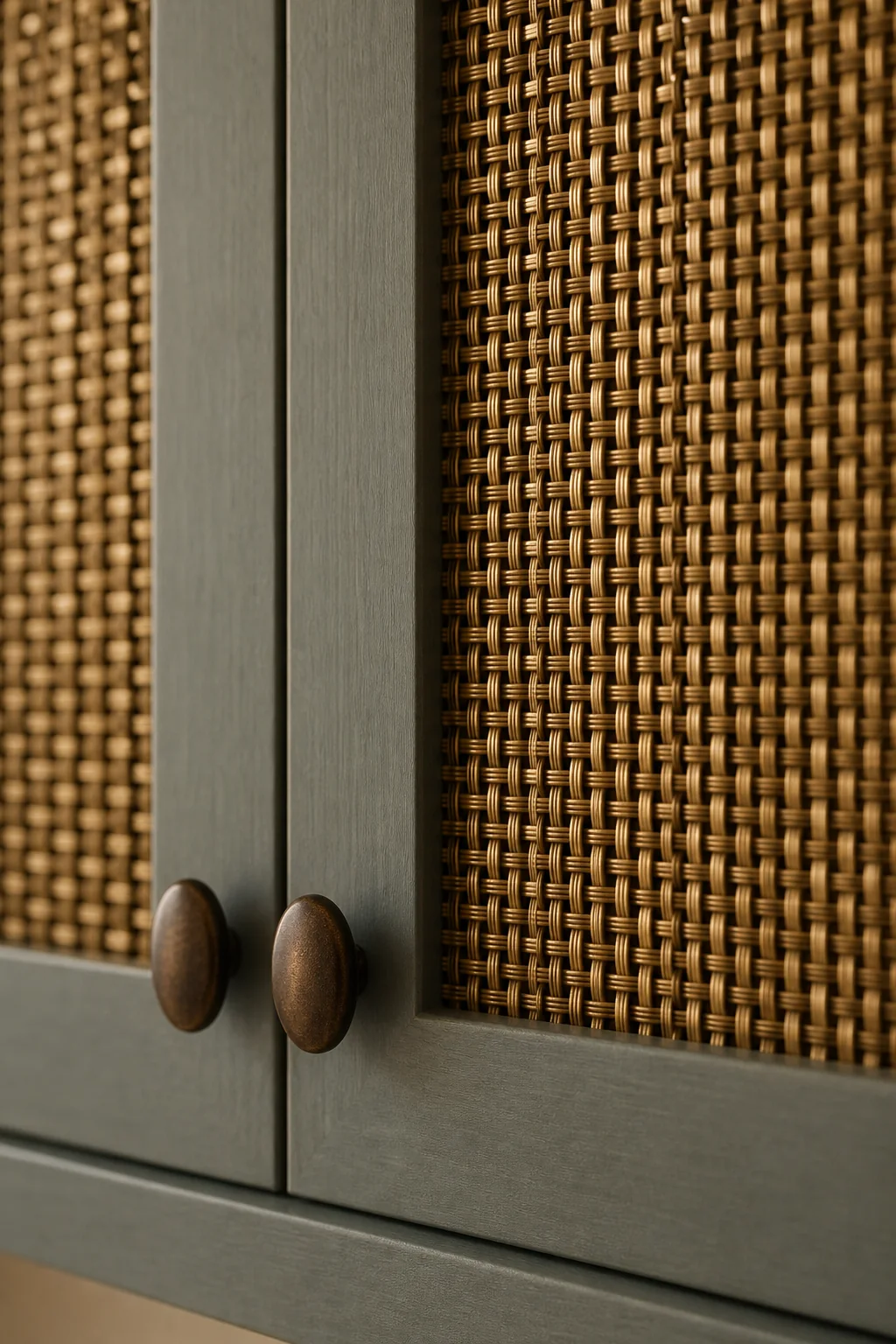
Using a tight weave for the brass mesh inserts closely resembles fabric, allowing soft natural light from the left-side window to highlight the intricate warp and weft without compromising durability. Keeping the surrounding wood frames simple ensures that the woven texture remains the focal point of the upper cabinetry, much like the faded woven teal bookcloth of the original heirloom. This subtle translucent layering adds depth to the upper storage area, providing a visual break from the rigid rectangular blocks of the surrounding horizontal paneling and tightly stacked floating shelves.
Introducing the Cursive Loops
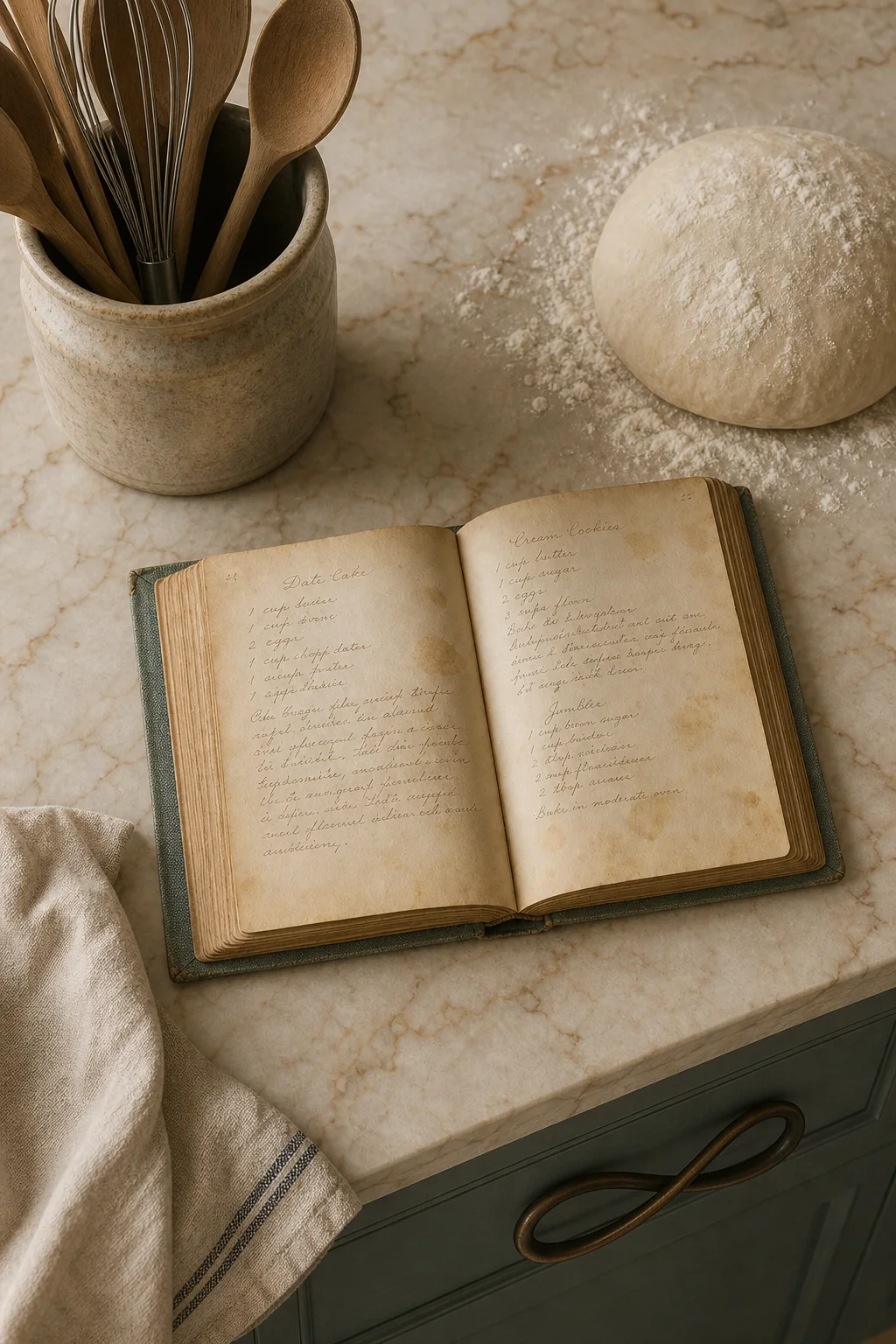
Against the strict horizontal geometry of the paneling, sweeping metallic curves act like handwritten ink on a page, adding organic rhythm to the workspace. Fluid, continuous-loop dark bronze cabinet pulls and a curved gooseneck task sconce break the strict horizontal stacking interrupted by singular, fluid metallic curves. For a balanced intensity, pair muted teal lower cabinets with a warm parchment backsplash and woven brass mesh on just the upper doors. You can achieve a subtle look by painting the cabinets a soft parchment white and using standard brass knobs, or execute a bold transformation by wrapping the entire alcove in faded teal and using heavily veined amber marble.
To keep cursive-inspired hardware from looking messy, align all cabinet pulls horizontally. This grounds the sweeping loops against the strict lines of the paneling.