
This Illuminated Book Became a Reading Corner
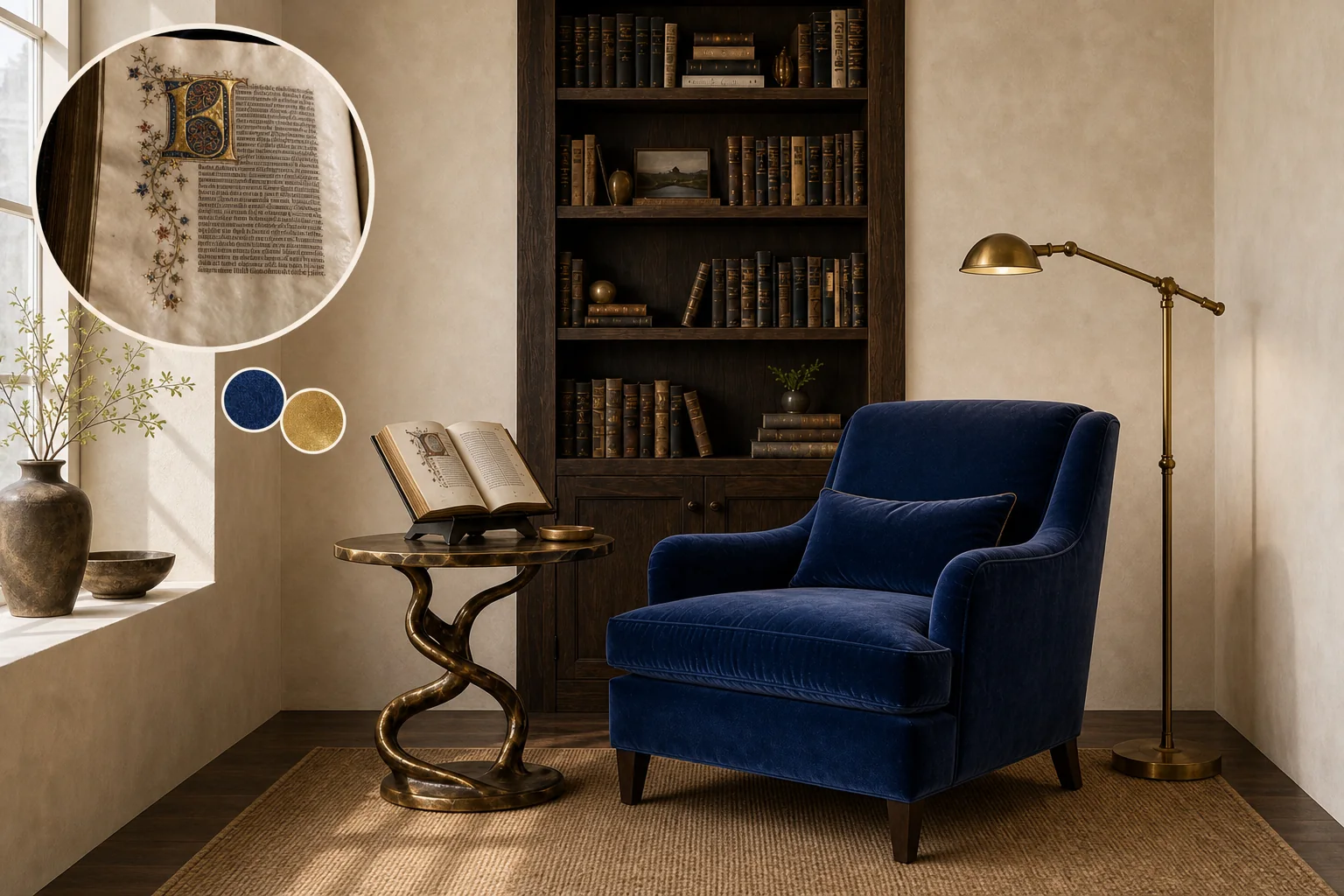
Translating a medieval manuscript into a modern interior isn’t about literal gothic arches or tapestries. It is an exercise in mastering negative space, where strict architectural grids frame concentrated moments of intense color and metallic luster against a quiet, unadorned vellum-like shell.
Structuring the page and the plaster
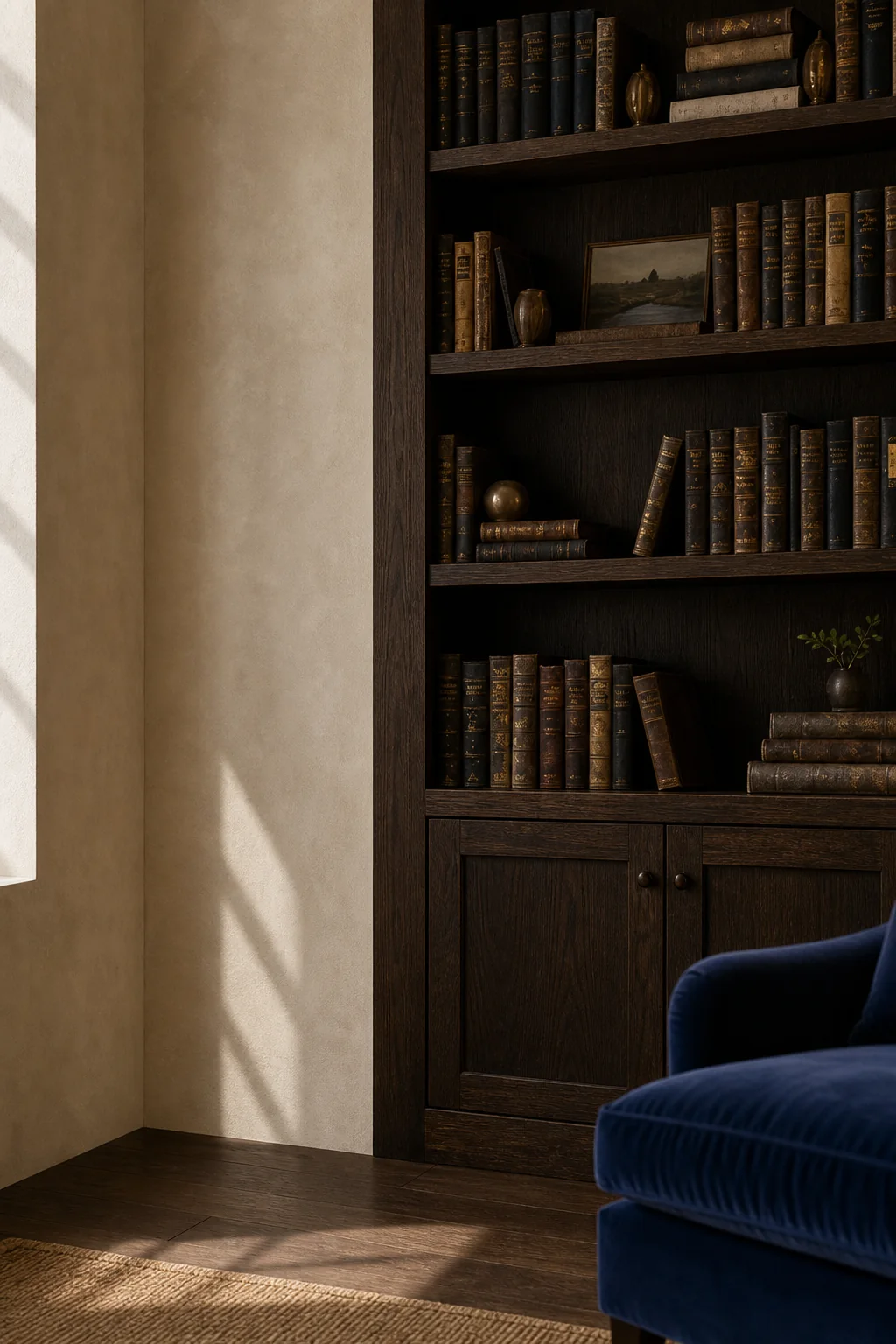
By treating the walls as blank vellum margins, a dark oak bookcase becomes a grounded, structural anchor that defines the room’s quiet geometry. This dense core mimics the strict text block of a manuscript, requiring you to resist hanging art on the surrounding walls to preserve the deeply calming negative space. Keeping the architectural shell completely unadorned and matte is the essential balancing rule to prevent the rich velvet and brass elements from feeling heavy or overly theatrical in a contemporary home. To build this balanced architectural alcove properly, follow these foundational actions to establish the room’s core proportions.
- Apply a warm, matte plaster finish to the walls
- Install a tall, narrow built-in bookcase in dark oak
- Leave generous empty wall space around the shelving
- Position seating directly in front of the dark shelving
Illuminating the space with lapis lazuli
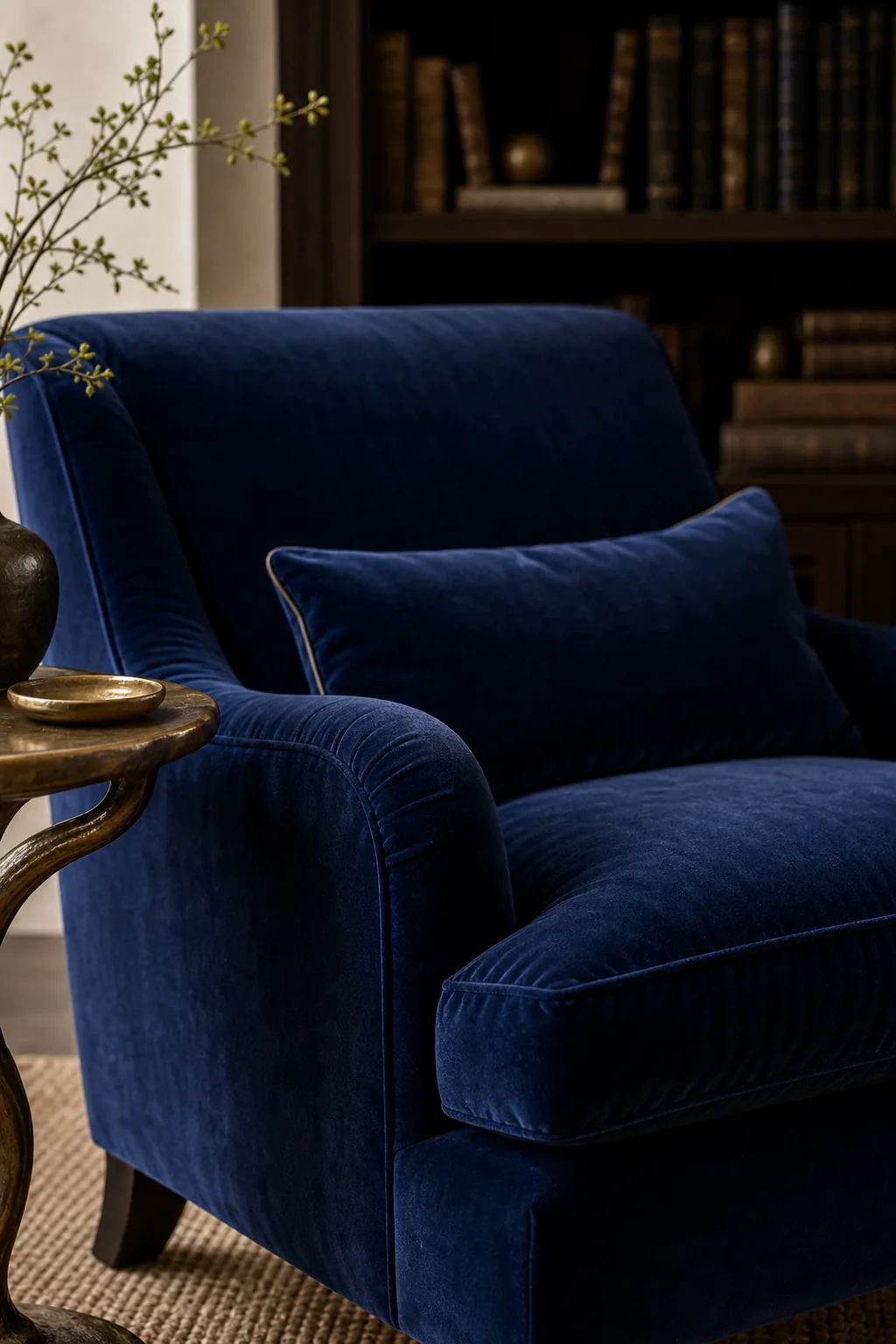
Just as a manuscript uses precious pigment sparingly for maximum impact, a single lapis blue armchair serves as the vibrant focal point within the neutral alcove. Positioning this highly saturated piece centrally acts as the illuminated initial of your room’s layout, ensuring it remains the sole source of bold color against the empty plaster. Selecting a deep, highly saturated blue rather than a muted navy captures the true intensity of lapis lazuli, drawing the eye immediately to the center of the reading space. The translation from an ancient painted page to a deeply calming, focused room relies on mapping these specific visual traits directly into your interior architecture.
| Source trait | Visible evidence | Room move |
|---|---|---|
| Text block and margins | The strict, dense grid of black ink surrounded by wide, empty vellum margins | A tall, densely packed dark oak bookcase centered on the wall, surrounded by wide, unadorned expanses of warm, matte plaster |
| Illuminated initial | Highly saturated lapis lazuli pigment used sparingly for the primary decorative letter | A single, plush armchair upholstered in deep lapis blue velvet, acting as the visual anchor and focal point of the quiet space |
| Raised gold leaf | Burnished gold leaf that catches the light, contrasting with the flat, matte tempera and vellum | An articulated floor lamp and a small drinks coaster in unlacquered, brushed brass that provide warm, metallic catch-lights against the matte plaster and velvet |
| Marginalia flourishes | Organic, winding botanical vines that escape the rigid text grid and trail into the margins | A sculptural side table with a winding, asymmetrical cast-bronze base, placed next to the strict, rigid geometry of the bookcase and armchair |
The weight of deep velvet
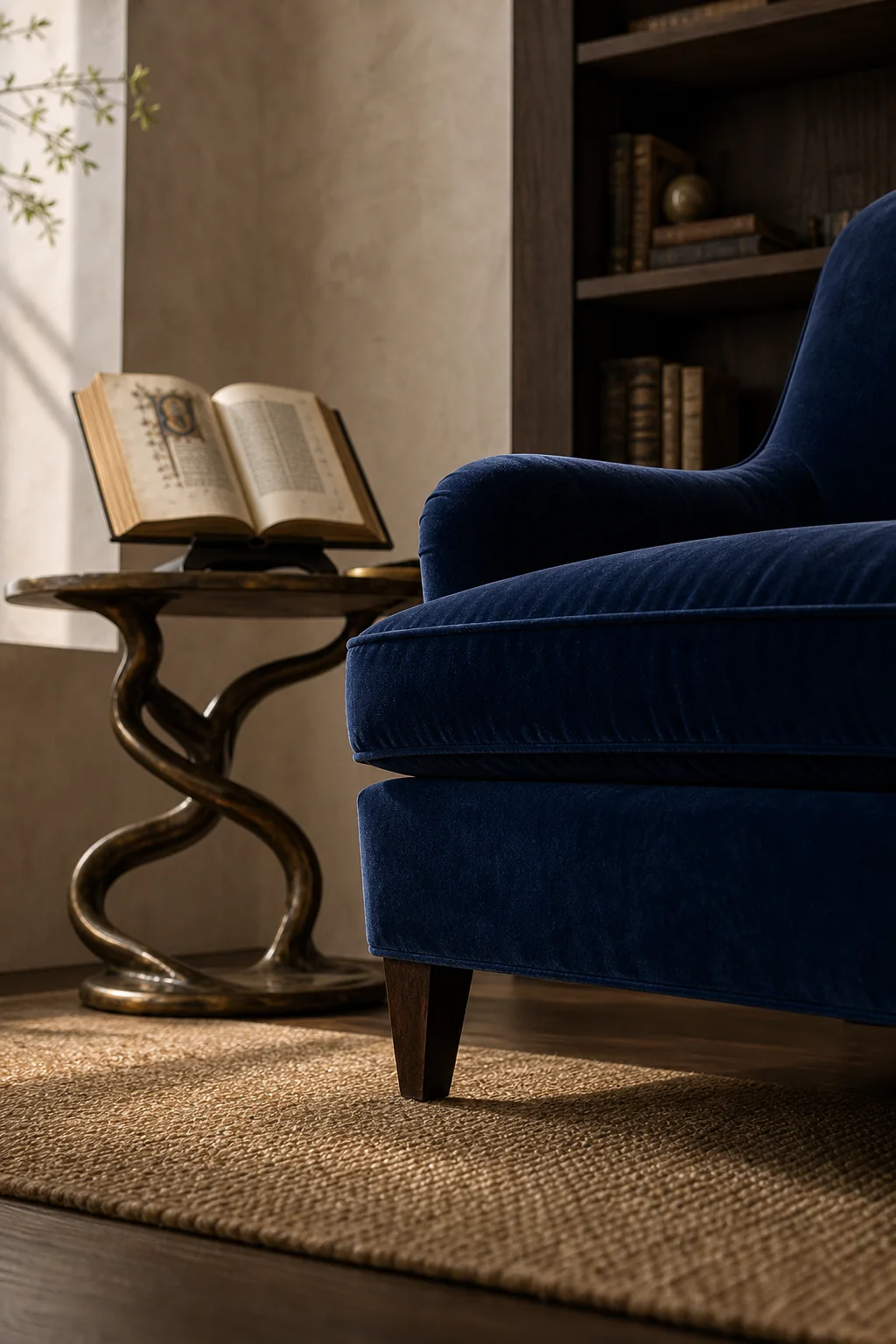
Selecting a heavy cotton velvet rather than a shiny synthetic blend captures the dense, light-absorbing quality of authentic historical pigments used in medieval miniatures. This plush material choice ensures the chair feels grounded and substantial against the warm off-white plaster, preventing the rich hue from feeling overly theatrical or disconnected from the room’s earthy foundation. The heavy textile provides comfortable, supportive seating for extended reading sessions while anchoring the visual weight of the dark oak shelving directly behind it.
Catching the light with burnished metals
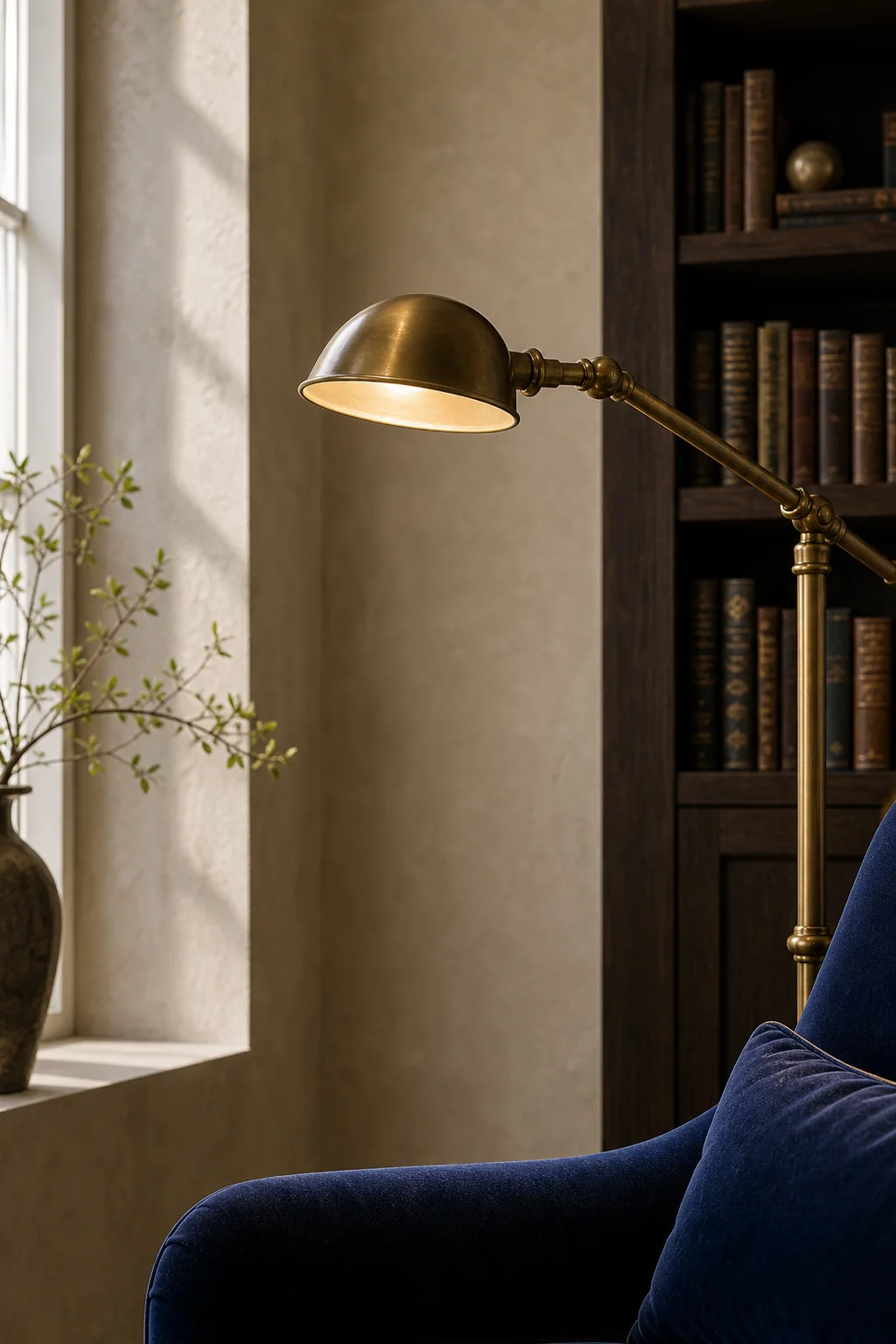
Introducing small, highly reflective brass elements creates a necessary tension against the flat, matte plaster, echoing the way raised gold leaf lifts a painted page. Keeping these metallic touches intentional and allowing them to develop a natural patina over time ensures they blend seamlessly with the aged oak rather than competing for attention. You should incorporate an articulated floor lamp in unlacquered brass for functional task lighting with a warm glow, avoiding large expanses of shiny surfaces that might disrupt the serene atmosphere. Gather these specific elements to complete the material palette and bring the manuscript’s tactile qualities into the physical space.
Gleaming accents in a matte room

An articulated floor lamp with a slender profile provides functional task lighting while delivering a warm, metallic catch-light that cuts through the visual weight of the dark wood and heavy fabric. This subtle gleam prevents the deeply colored reading corner from feeling flat, adding just enough luster to elevate the surrounding matte surfaces without overwhelming the quiet alcove. A small drinks coaster in unlacquered, brushed brass resting on the dark oak offers another micro-moment of reflection, perfectly mimicking the tiny, brilliant catch-lights of burnished gold leaf scattered across a vellum page.
Softening the grid with organic lines
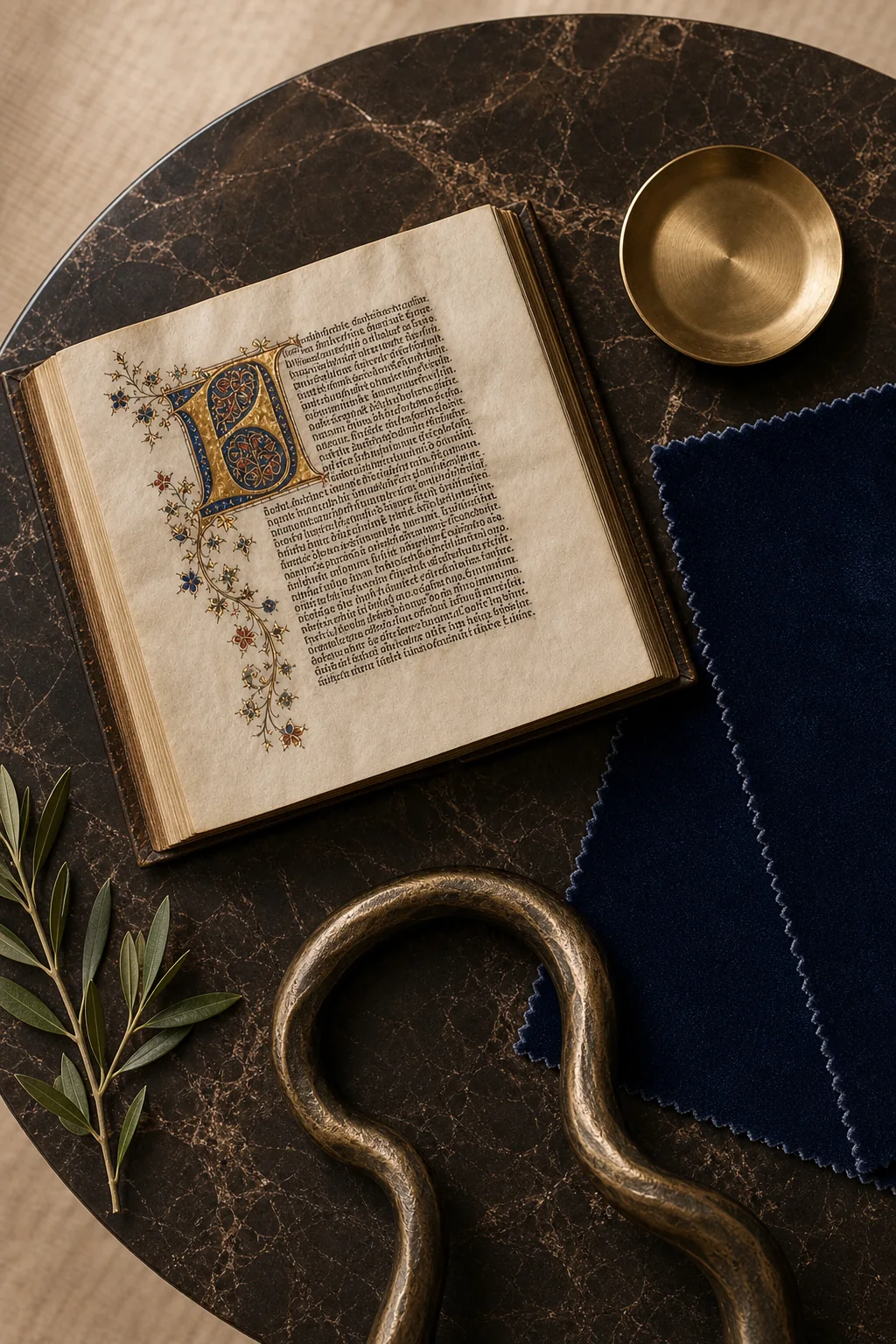
To prevent the strict architectural grid from feeling too rigid, a single sculptural side table with a winding cast-bronze base introduces a playful, botanical rhythm reminiscent of marginalia vines. You can adjust this balanced intensity to suit your home: for a subtler approach, swap the lapis velvet for muted slate linen, use standard matte paint, and keep all metal accents in a dark, oil-rubbed bronze. Conversely, if you prefer a bold interpretation, introduce vermilion red piping to the lapis blue armchair, add a highly polished brass side table instead of a subtle brushed finish, and paint the ceiling in the same dark oak tone to compress the space dramatically.
Introduce only one distinctly organic shape to the room. Too many winding lines will dilute the contrast between the strict architectural grid and the playful flourish.