
Edwardian Meets Wabi Sabi: Library
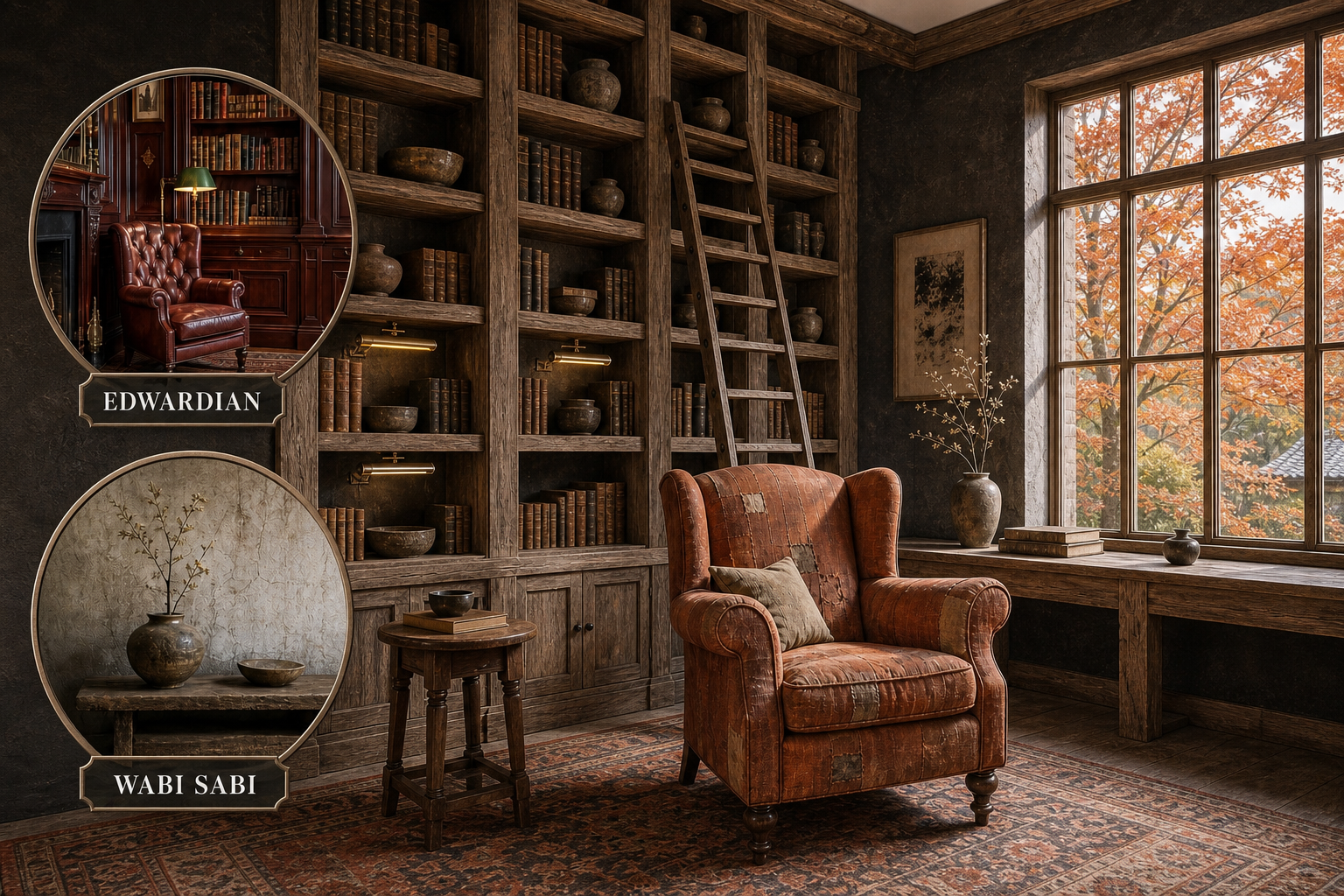
The rigid accumulation of a classic English gentleman's study clashes powerfully with the sparse reverence for decay found in Japanese rustic philosophy. We successfully resolve this profound contradiction by letting formal Edwardian proportions dictate the architecture while Wabi Sabi strictly.
Defining the Edwardian Framework
The foundation of a formal gentleman’s library relies heavily on imposing verticality and floor-to-ceiling structured symmetry. We maintain these exacting Edwardian architectural proportions to define the room, but we deliberately strip away the expected glossy mahogany finishes in favor of raw timber for absolute authenticity.
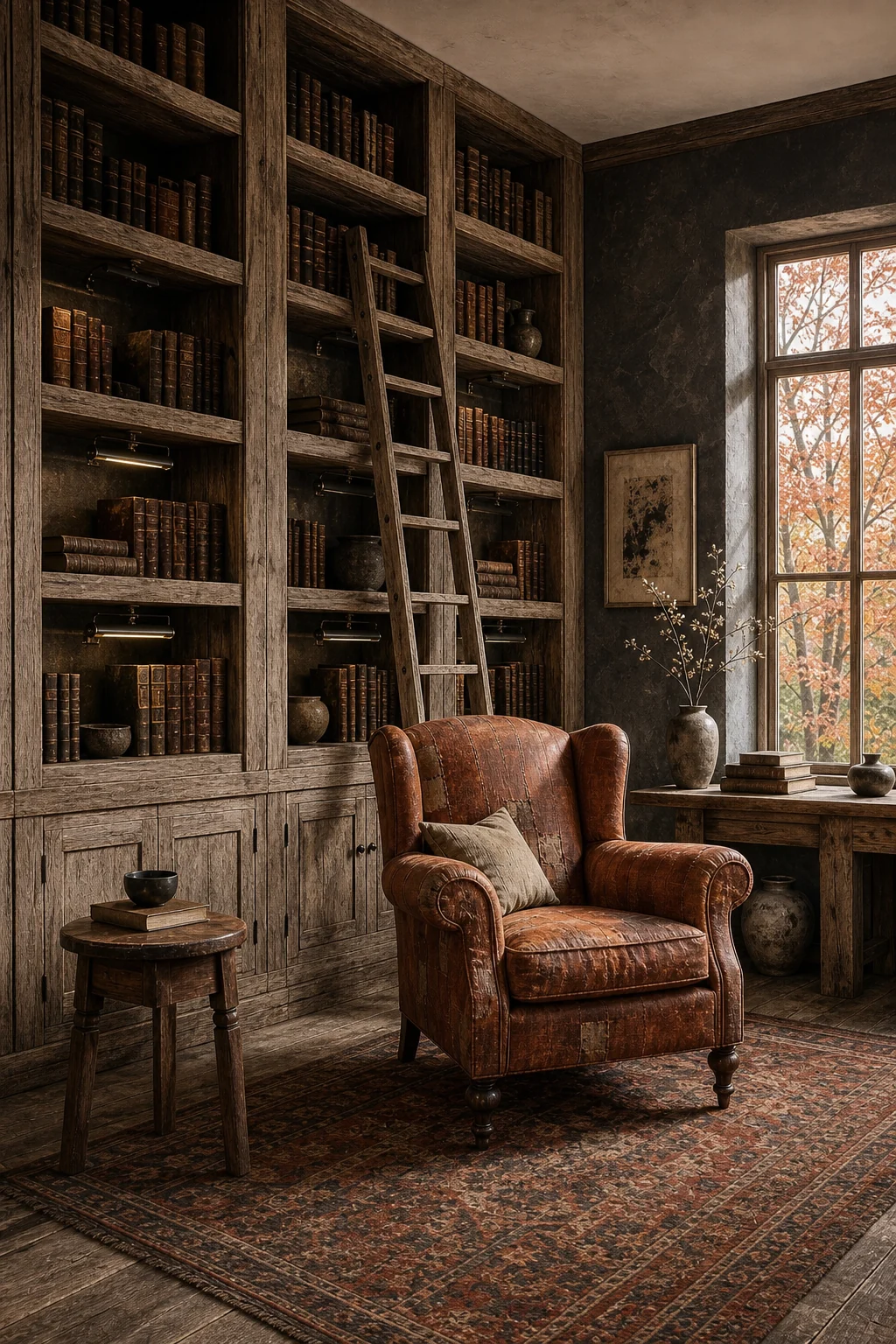
Towering bookcases establish the room’s physical boundaries, creating an immediate sense of historical permanence and profound architectural weight. By executing this rigid structural framework entirely in raw, unvarnished cedar, the space instantly breathes, shedding its stifling formality for an inviting, deeply tactile warmth and character.
Embracing Wabi Sabi Surfaces
Traditional raised wood paneling feels far too heavy and polished for this delicate hybrid approach. Japanese rustic philosophy demands a strict departure from varnished perfection, introducing quiet, organic movement to the walls to beautifully offset the rigid, imposing shelving structures dominating the entire space.
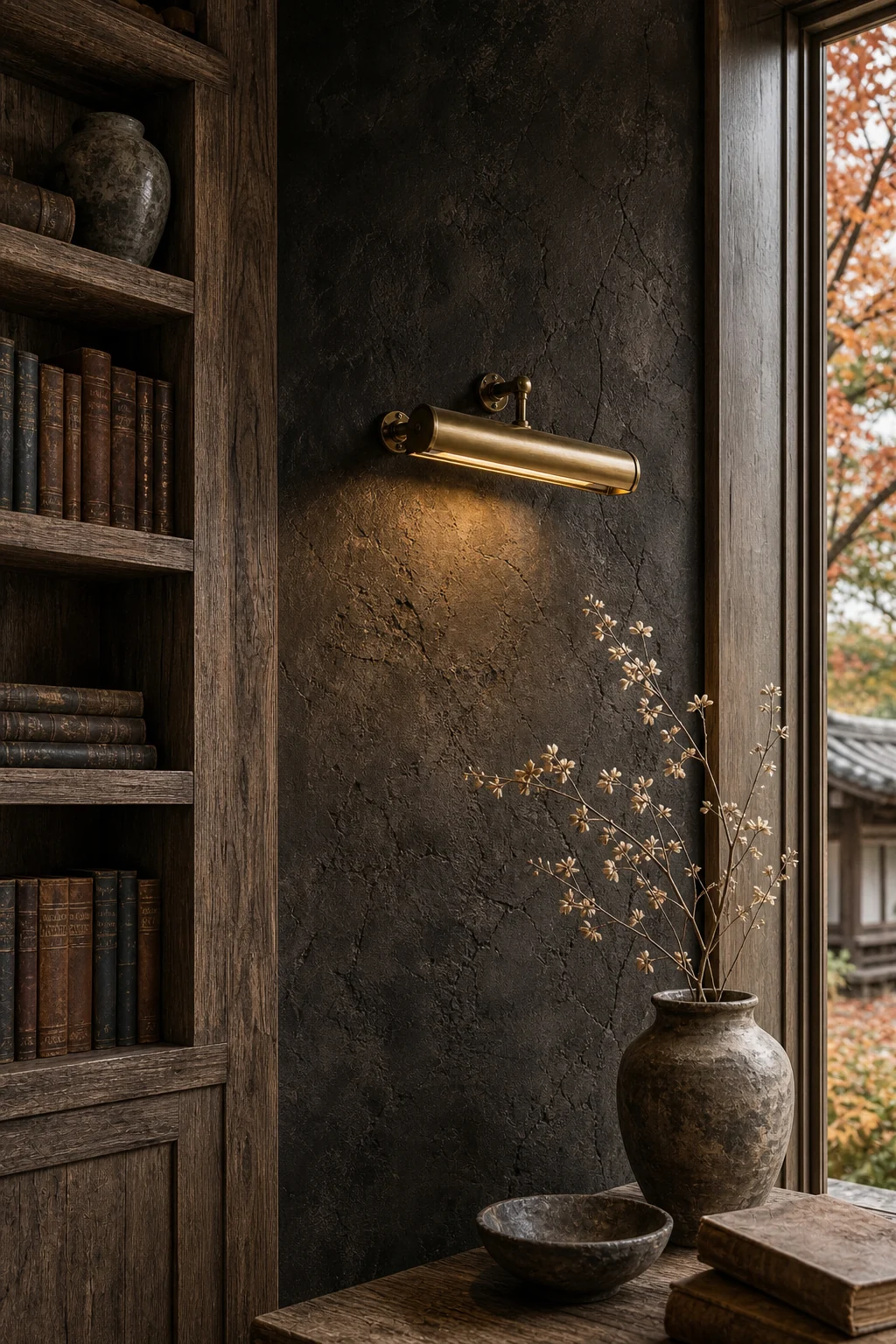
Hand-troweled earthen plaster replaces glossy paint, offering a deeply matte, beautifully uneven backdrop that grounds classic brass lighting. The resulting texture transforms bare walls into active design elements, catching natural shadows and highlighting the room’s deliberate, celebrated organic imperfections with absolute stunning clarity.
- Choose deeply matte earthen plaster over standard flat paints to ensure sweeping, organic wall movement across the entire room.
- Leave trowel marks highly visible to emphasize the natural beauty of human imperfection and inevitable rustic decay.
- Contrast these intentionally rough walls with tarnished brass picture lights for subtle, sophisticated metallic warmth and depth.
- Avoid perfectly smooth drywall finishes that completely undermine the tactile philosophy of this beautifully rustic Japanese aesthetic.
Bridging the Tactile Divide
A shared autumnal palette of faded russet, muted gold, and deep charcoal seamlessly unites these distinct design philosophies. This unifying color bridge allows highly formal furniture shapes to comfortably wear relaxed, unpretentious textiles without ever feeling entirely out of place in the finished room.
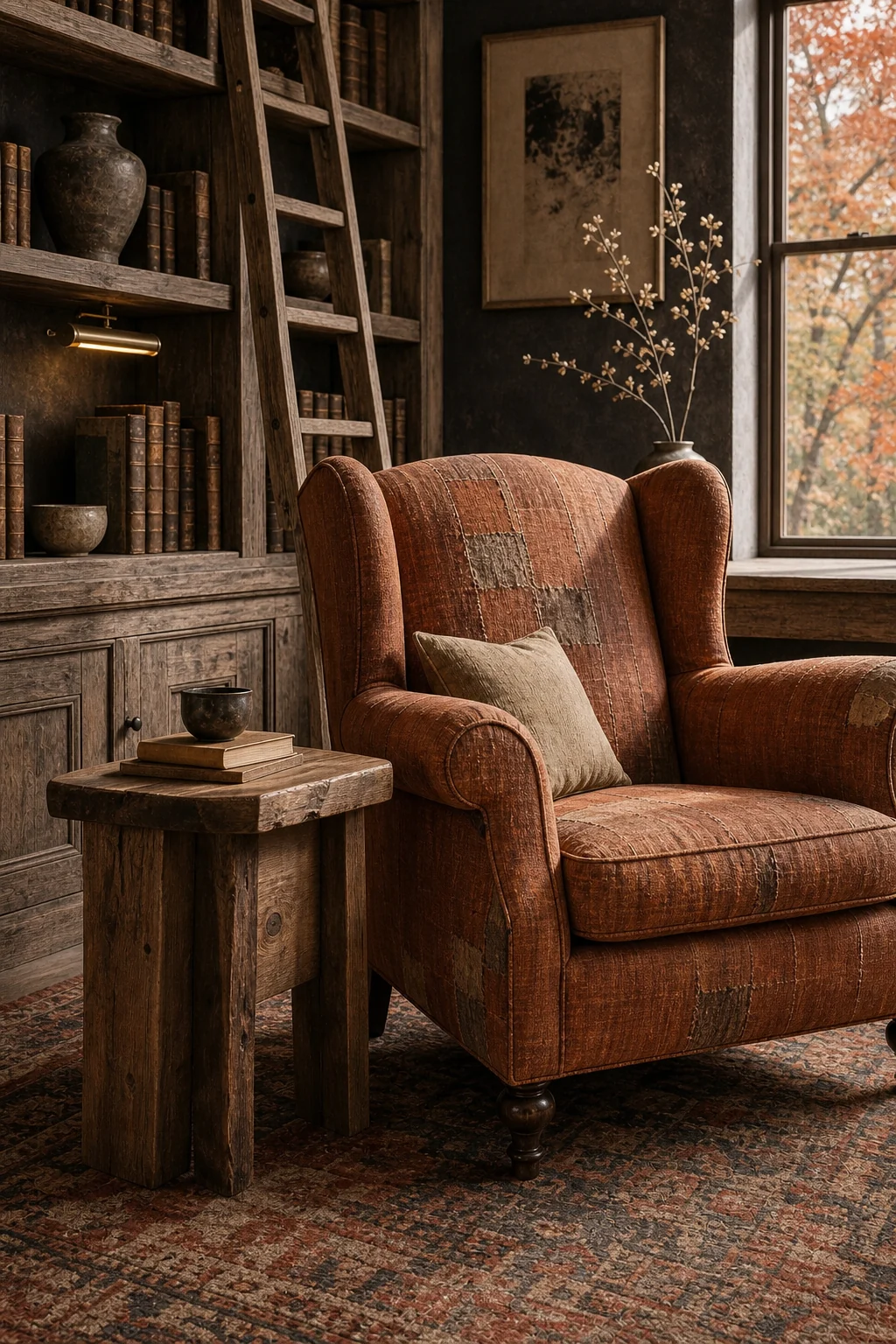
The traditional wingback club chair silhouette remains completely intact, but its surface material entirely transforms. Replacing expected tufted oxblood leather with faded russet linen instantly softens the room’s rigid geometry, inviting a relaxed physical posture rather than demanding stiff formality from the seated guest.
Constructing the Hybrid Space
Balancing these opposing aesthetic forces requires strict visual discipline across every single design layer. The room must ultimately feel like a cohesive, tranquil sanctuary rather than a chaotic, accidental collision of two entirely distinct historical eras aggressively competing for your attention in the space.
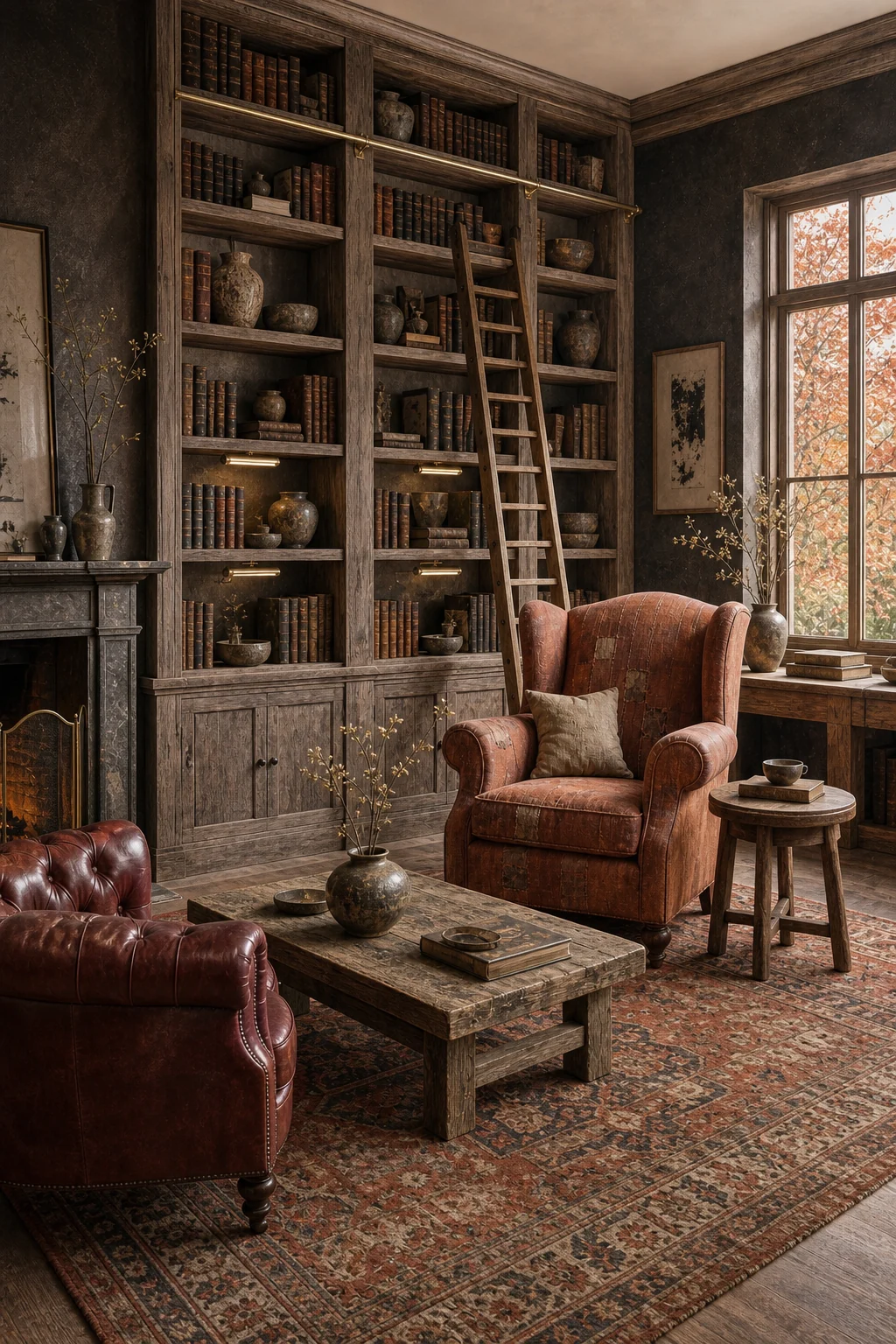
A successful seating vignette relies on directly translating formal expectations into rustic realities. The structural chart below maps exactly how each specific design layer shifts from a classic wingback silhouette to raw Japanese minimalism, ensuring the hybrid remains perfectly balanced throughout the design process.
| Design Layer | Edwardian Role | Wabi Sabi Role | The Bridge Decision |
|---|---|---|---|
| Shell | Floor-to-ceiling structured symmetry providing architectural mass | Hand-troweled earthen plaster celebrating natural imperfection | Charcoal plaster walls framed strictly by unvarnished timber |
| Large Furniture | Wingback club chair silhouette dictating formal posture | Weathered, unpolished frames showing historical wear | Classic seating shapes built entirely from raw cedar |
| Textiles | Tufted oxblood leather projecting uncompromising permanence | Faded, patched organic fabrics celebrating tactile comfort | Relaxed russet linen applied to formal seating frames |
| Lighting | Brass picture lights providing focused illumination | Soft, diffused natural daylight emphasizing matte textures | Tarnished brass fixtures casting warm, low-angled directional light |
| Accents | Antique leather-bound books projecting intellectual authority | Asymmetrical, rough-hewn ceramics honoring rustic simplicity | Sparse curation of books beside rustic ceramic vessels |
Illuminating the Textures
Heavy architectural mass requires generous, thoughtful illumination to prevent the space from feeling dark or oppressive. Soft, lifted natural light is absolutely crucial for revealing the deep, complex patina of unvarnished wood and the subtle, organic variations in the rough plaster across the room.
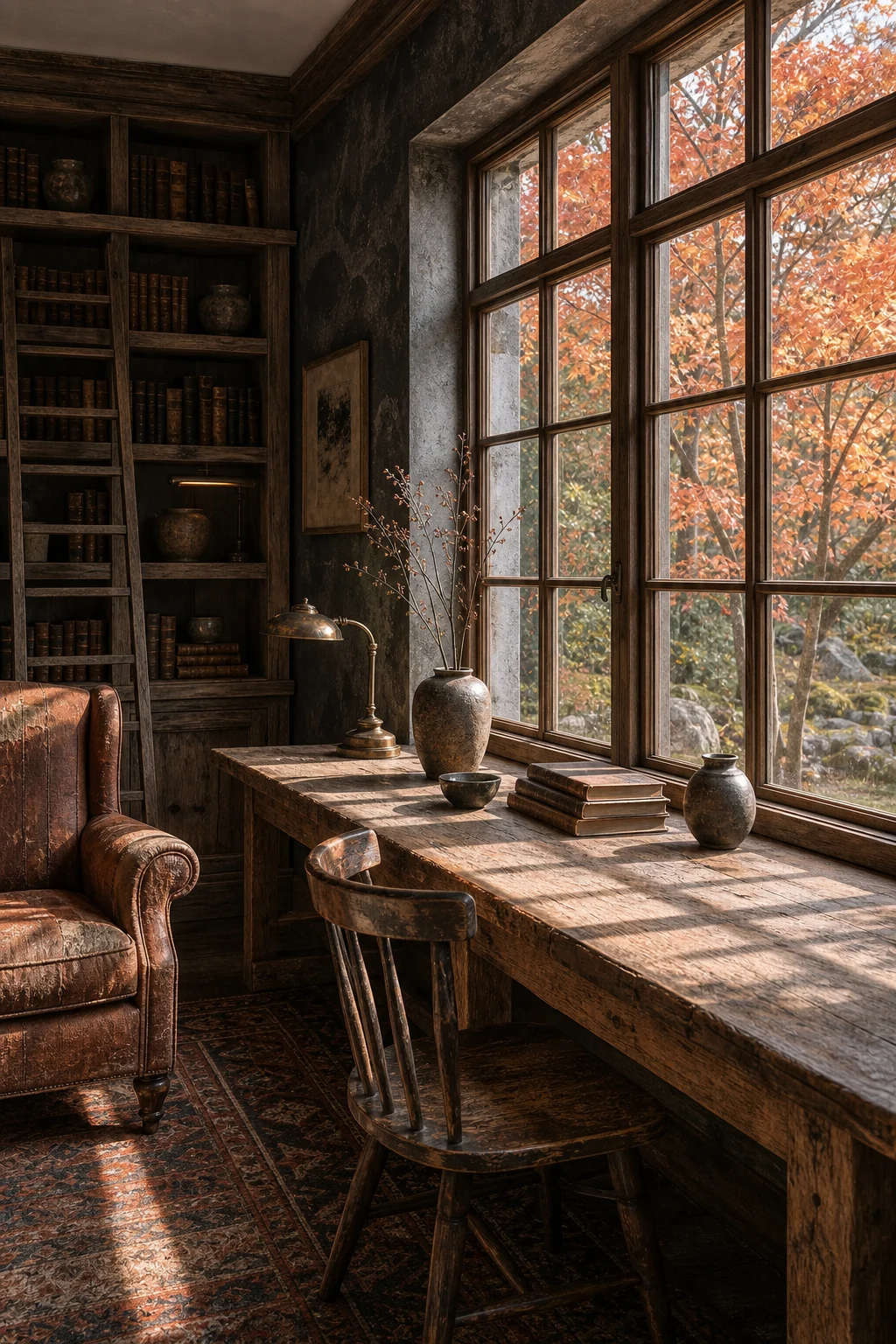
Diffused Kyoto autumn daylight filters gracefully through large mullioned windows, casting structured geometric shadows across the raw desk. Controlling this natural light highlights the matte earthen plaster without ever creating harsh, distracting glare on the room’s deeply textured, organic surfaces during the afternoon hours.
- Maximize natural daylight to open dark shadows and reveal the subtle grain of raw cedar woodwork.
- Use traditional mullioned windows to cast structured architectural shadows across the organic, uneven plaster walls.
- Highlight the unvarnished wood grain with warm, low-angled lighting to emphasize its tactile depth and history.
- Avoid harsh overhead lighting that flattens rich textures and destroys the carefully cultivated rustic atmosphere.
Curating the Collections
Decorative accessories must carefully navigate the inherent tension between a collector’s abundance and a minimalist’s restraint. The wooden shelves cannot be entirely empty, nor can they overflow with chaotic, overwhelming clutter that ruins the tranquil atmosphere of the hybrid space you have carefully built.
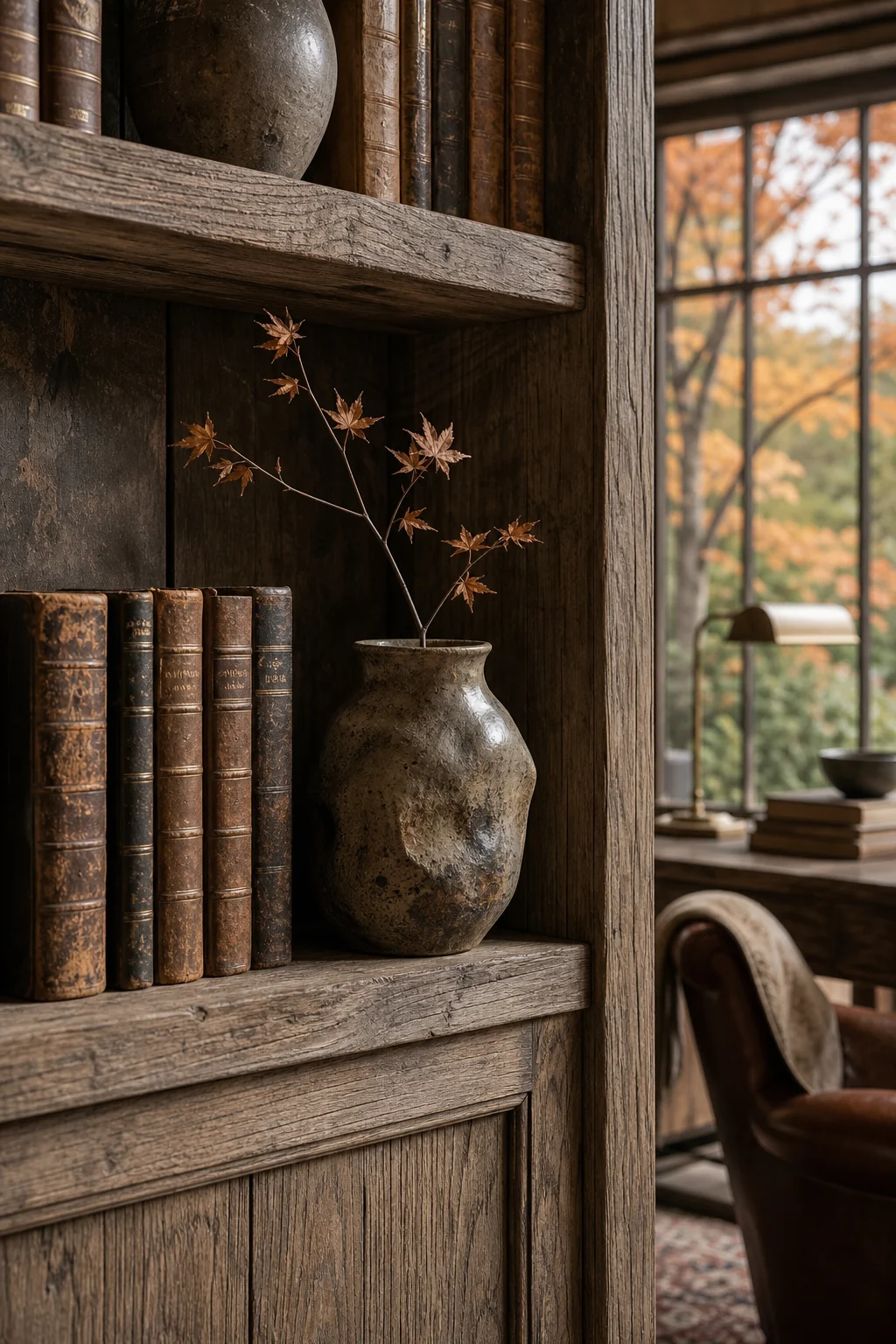
Antique leather-bound books share dedicated shelf space with rough-hewn ceramic vessels holding delicate dried maple branches. This careful, deliberate curation perfectly balances heavy intellectual weight with the quiet, poetic beauty of natural decay, creating a truly compelling visual narrative for the finished home library.
- Source unvarnished, heavily weathered cedar shelving units to establish the primary architectural framework of the entire room.
- Select faded russet linen upholstery fabric to soften traditional, rigid seating silhouettes effectively and beautifully.
- Install tarnished brass globe fixtures to provide warm, focused illumination against the deeply matte earthen plaster walls.
- Display asymmetrical, rough-hewn ceramic vessels to introduce organic imperfection to the highly structured, symmetrical wooden shelves.
Extending the Logic
This specific hybrid approach easily translates to smaller transitional spaces and functional thresholds throughout the home. You certainly do not need a massive, dedicated room to successfully apply these tactile principles and material contrasts to your own daily living environment with great visual success.
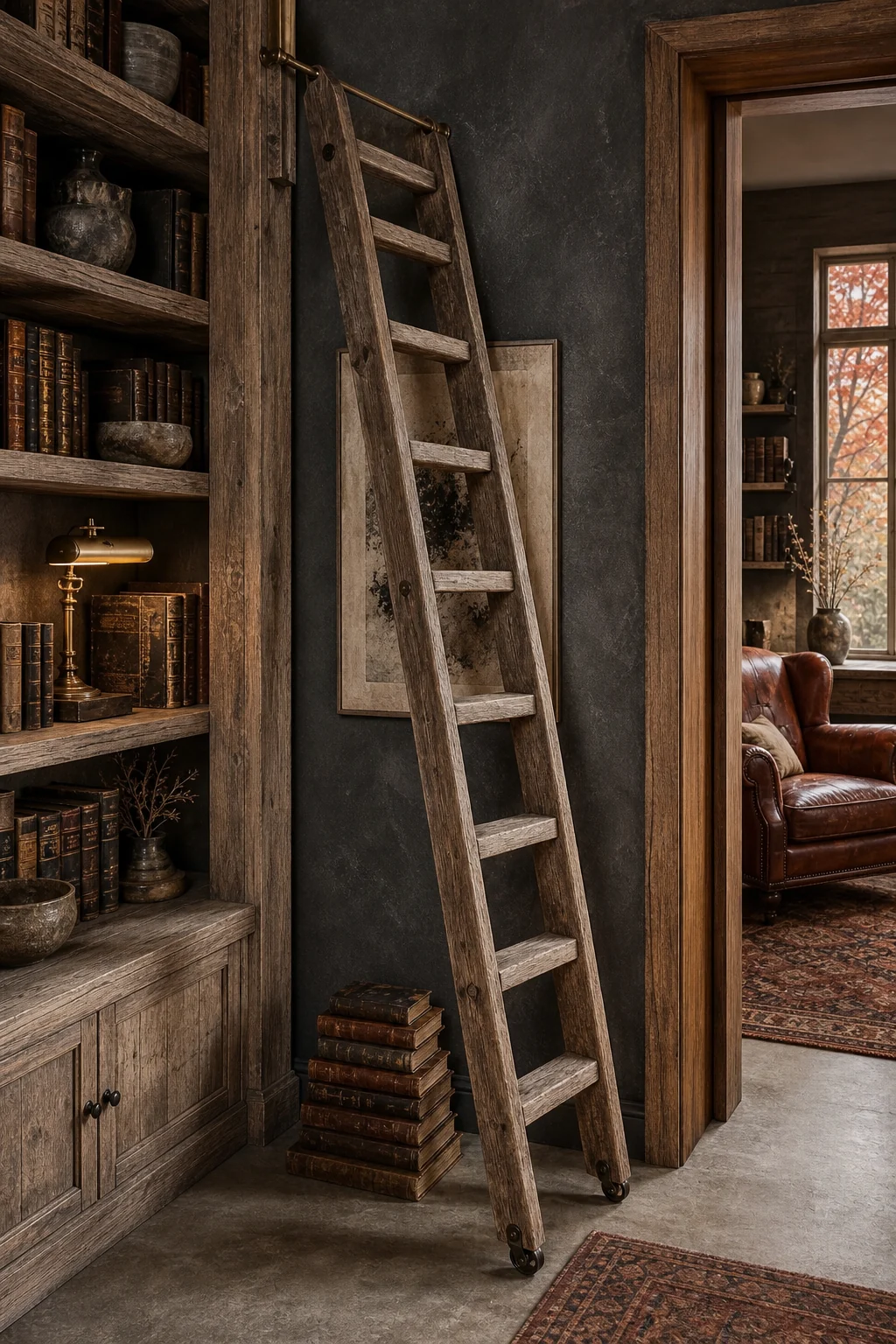
A classic weathered timber library ladder turns a simple, overlooked hallway into a purposeful design moment. The stark contrast between formal Edwardian utility and raw Wabi Sabi material remains incredibly striking here, proving the concept’s ultimate versatility and power in any architectural setting imaginable.
Avoiding the Costume
A successful hybrid interior avoids the split-personality trap of simply placing a delicate Japanese vase inside a traditional English study. The integration must be deeply structural and material-based, rather than merely relying on superficial decorative accents to convey the theme to the casual observer.
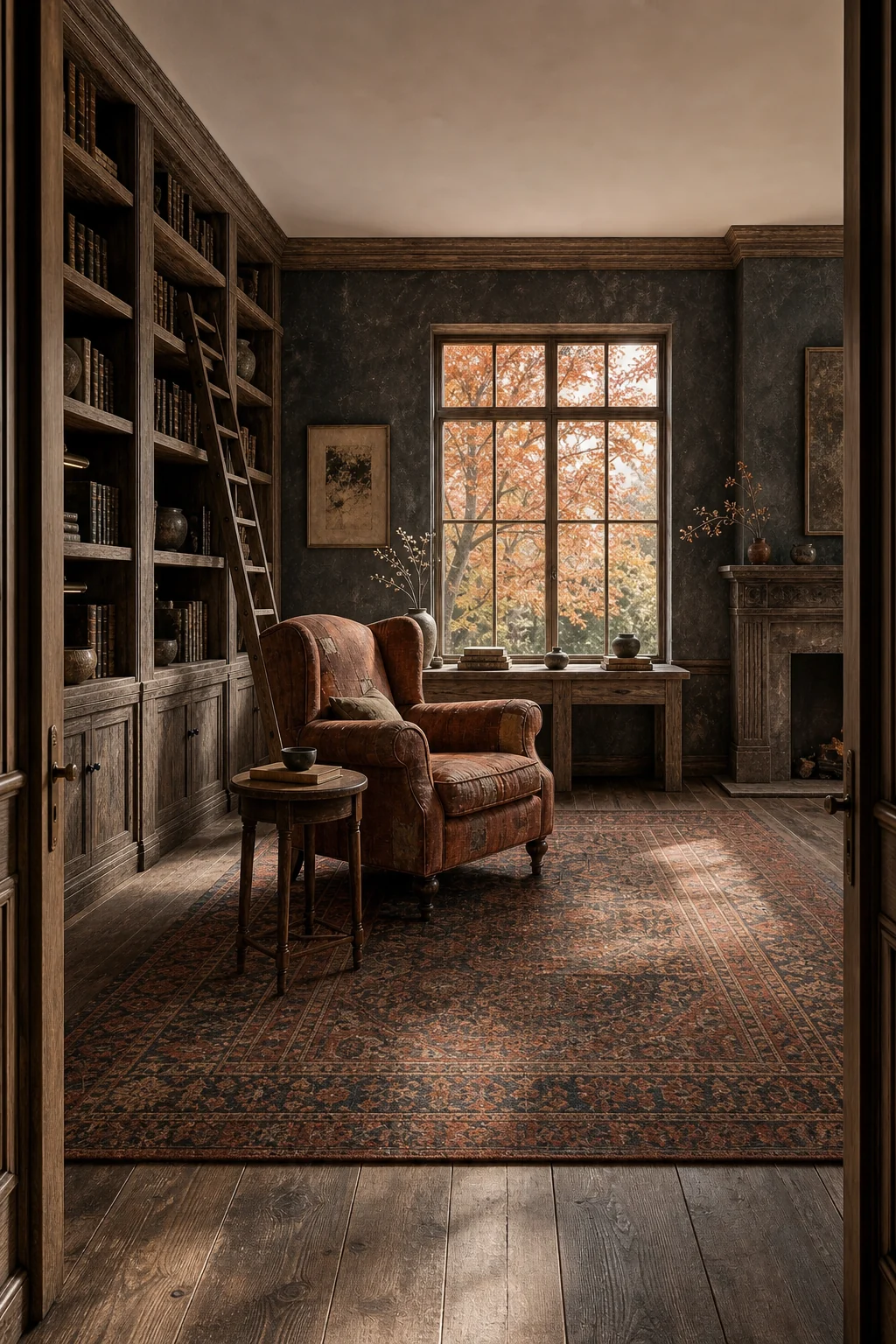
True aesthetic resolution happens only when the formal Edwardian skeleton wears a completely organic skin. The resulting hybrid library feels incredibly timeless, deeply grounded, and far more personal than either style could ever hope to achieve without committing to strictly unvarnished finishes throughout.
- Never use glossy varnishes on the primary woodwork, as it destroys the necessary rustic texture entirely.
- Avoid pristine, unblemished leather upholstery on formal chairs to prevent a stifling, traditional atmosphere from forming.
- Do not clutter flat surfaces with excessive small decor that disrupts the minimalist tranquility we desire.
- Ensure every structural element serves a distinct purpose, balancing heavy architectural mass with quiet, organic imperfection.