
This Amber Comb Became a Bedroom Vanity Nook
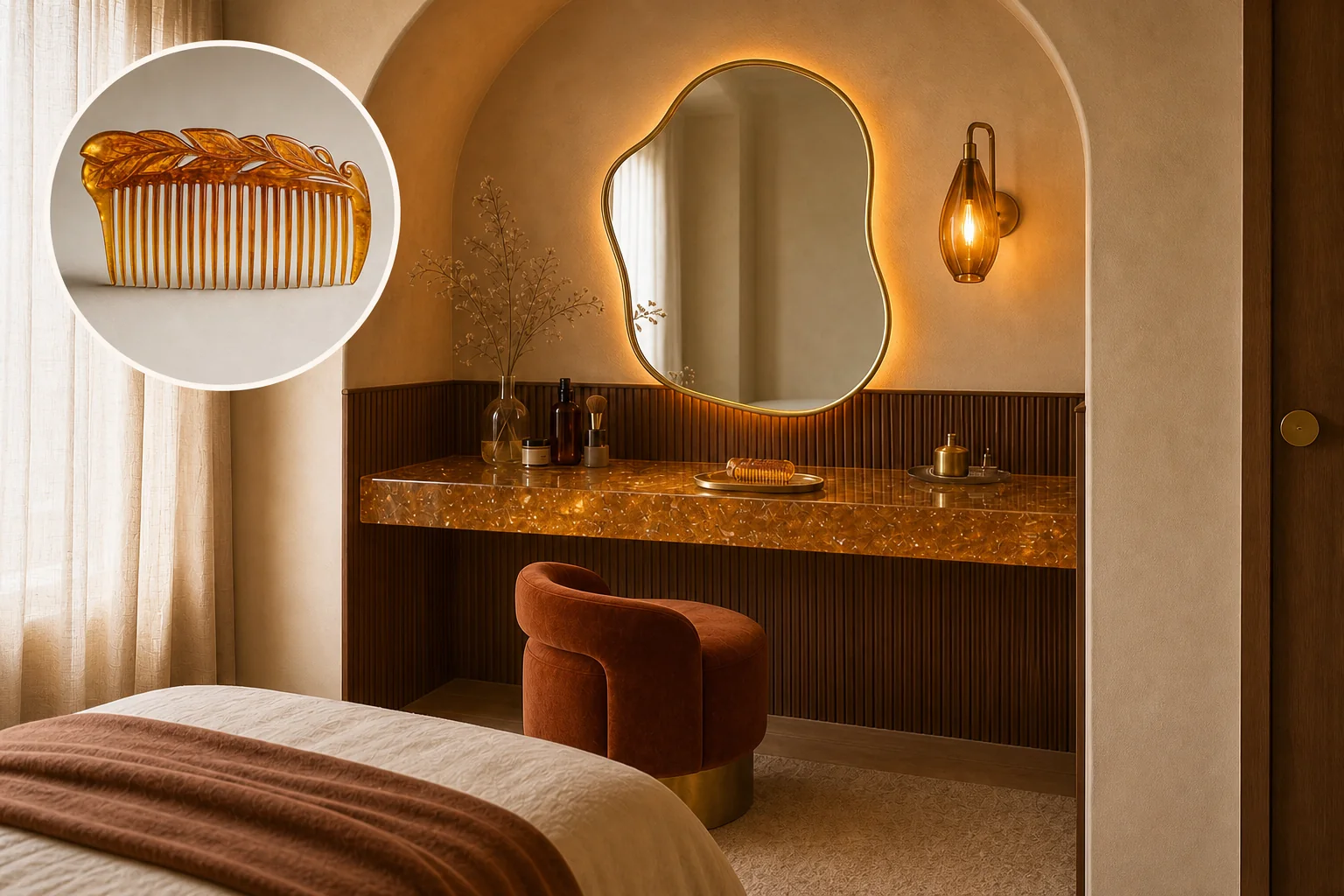
Transforming a daily morning ritual into an immersive, tactile experience requires balancing delicate inspiration with rigorous architectural structure. By translating a vintage hand-carved honey amber comb into a functional bedroom vanity nook, this design carries an upward transition from rigid, grounding repetition to soft, illuminated fluidity.
Grounding the nook with rhythmic structure
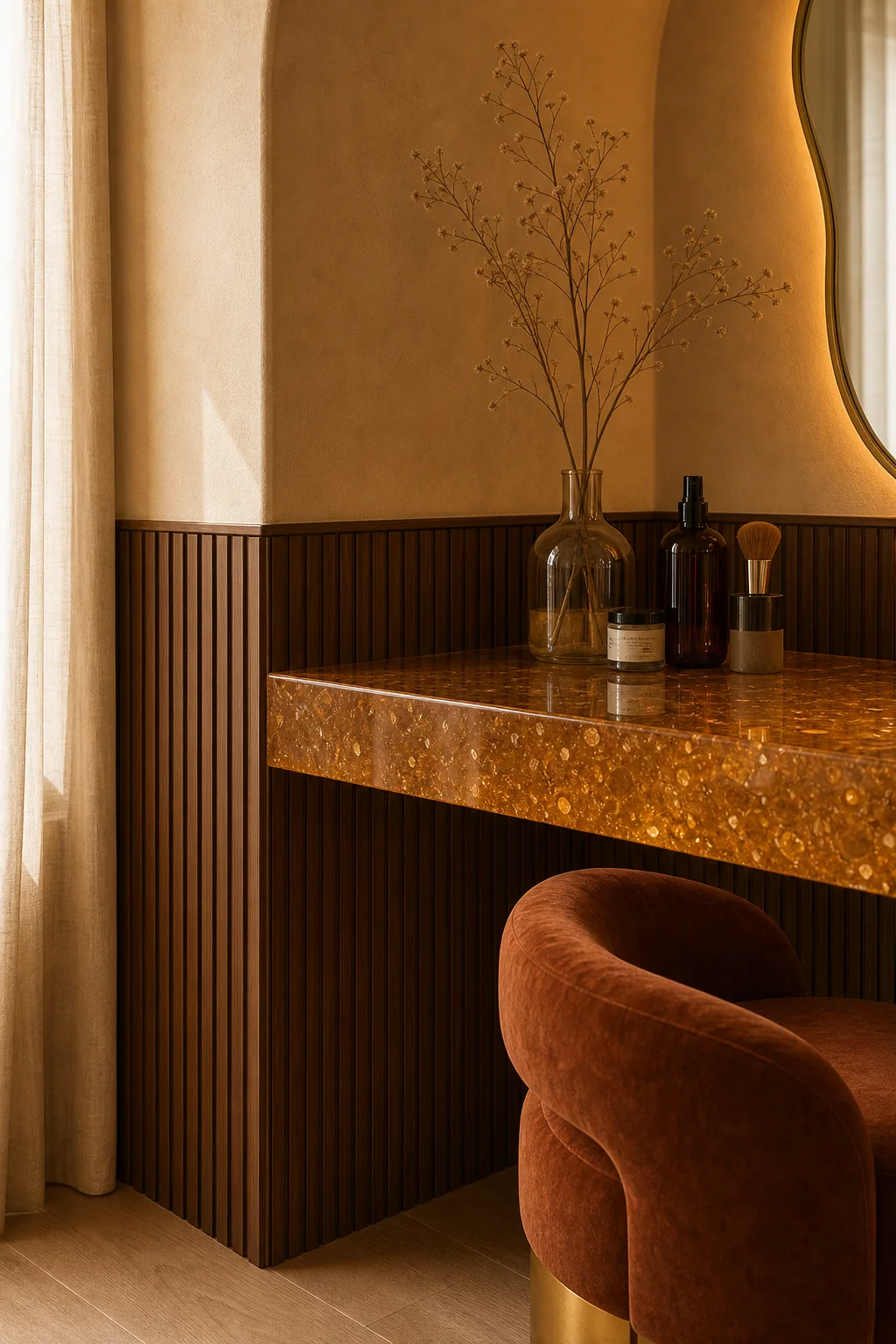
The rigid repetition of the comb’s teeth translates directly into a structured architectural base that physically and visually grounds the vanity alcove. By installing fluted walnut paneling on the lower half of the walls, the space gains a tight, rhythmic foundation that contrasts beautifully with the smooth, curved honey-toned plaster applied above. Stopping this dark wood paneling sharply at the vanity counter line creates a distinct, grounding horizon, ensuring the lower framework provides a necessary anchor for the softer, more ethereal elements floating in the upper half of the nook.
Match the width of your wood fluting to the overall scale of the space; narrow grooves feel significantly more delicate and vintage, honoring the fine teeth of the original hair accessory.
Capturing the backlit amber glow
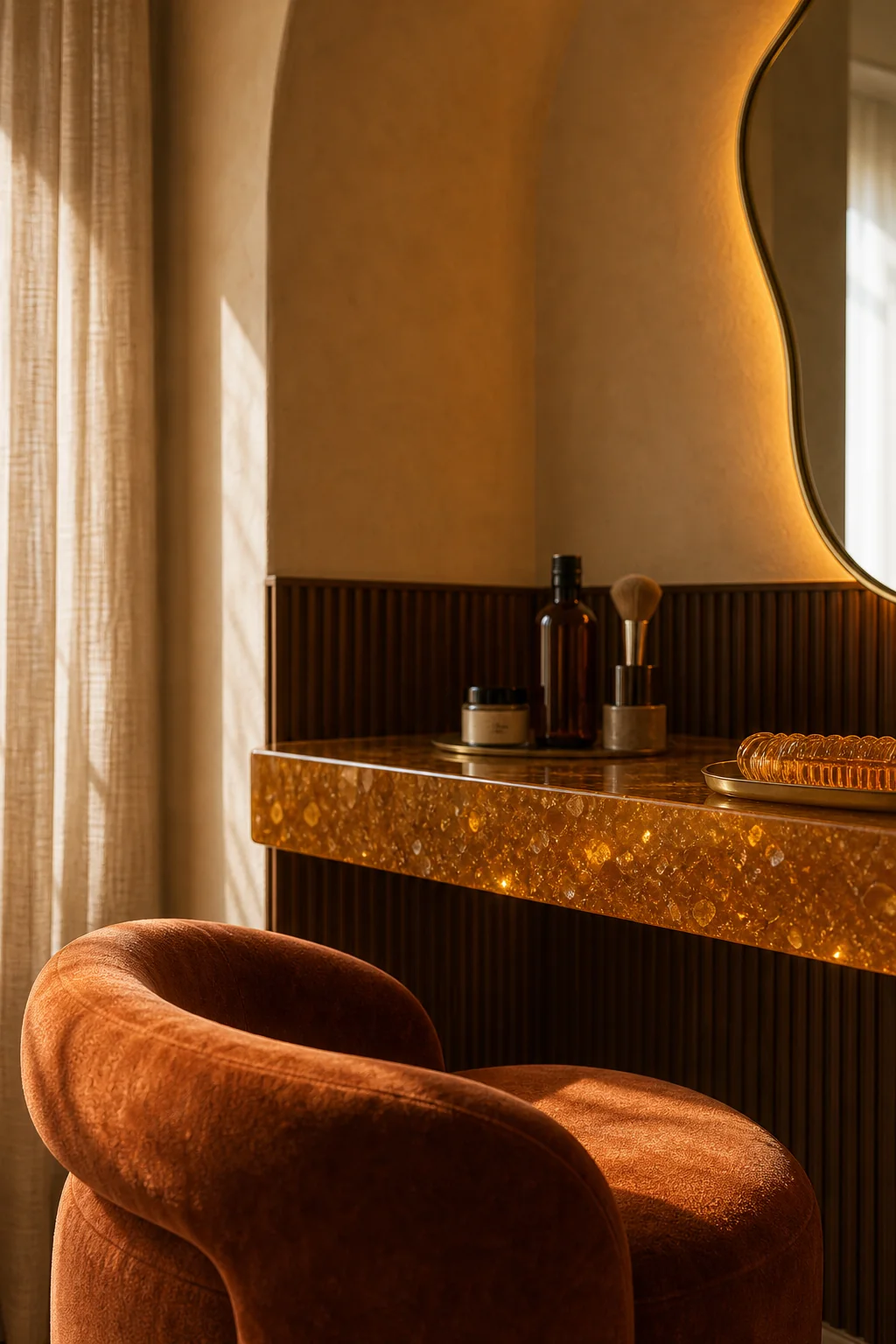
The translucent warmth of the carved resin is faithfully recreated through layered, diffused lighting that washes gently over the matte plaster surfaces. This approach proves that matte architectural surfaces must anchor the highly polished, light-catching accents to prevent a chaotic, overwhelming glare in an intimate space. Installing a concealed LED strip behind the vanity mirror replicates the comb’s backlit translucence, setting a glowing, atmospheric foundation that highlights the visual-DNA mapping table used to translate this small object into a fully realized interior environment.
| Source trait | Visible evidence | Room move |
|---|---|---|
| Rhythmic transition | The contrast between the rigid, parallel teeth and the smooth, curved spine of the comb | Fluted walnut paneling transitions into smooth honey-toned plaster. |
| Backlit glow | The way the honey amber resin catches and diffuses light from behind, creating a warm gradient | Concealed LEDs and amber glass cast a warm golden gradient. |
| Polished translucence | The smooth, glassy surface of the polished amber material with its slight internal inclusions | A polished cast-glass counter mimics the comb’s glassy surface. |
| Whiplash curves | The asymmetrical, flowing Art Nouveau leaf motifs carved into the handle | An asymmetrical mirror reflects the comb’s flowing leaf motifs. |
Diffusing the golden light
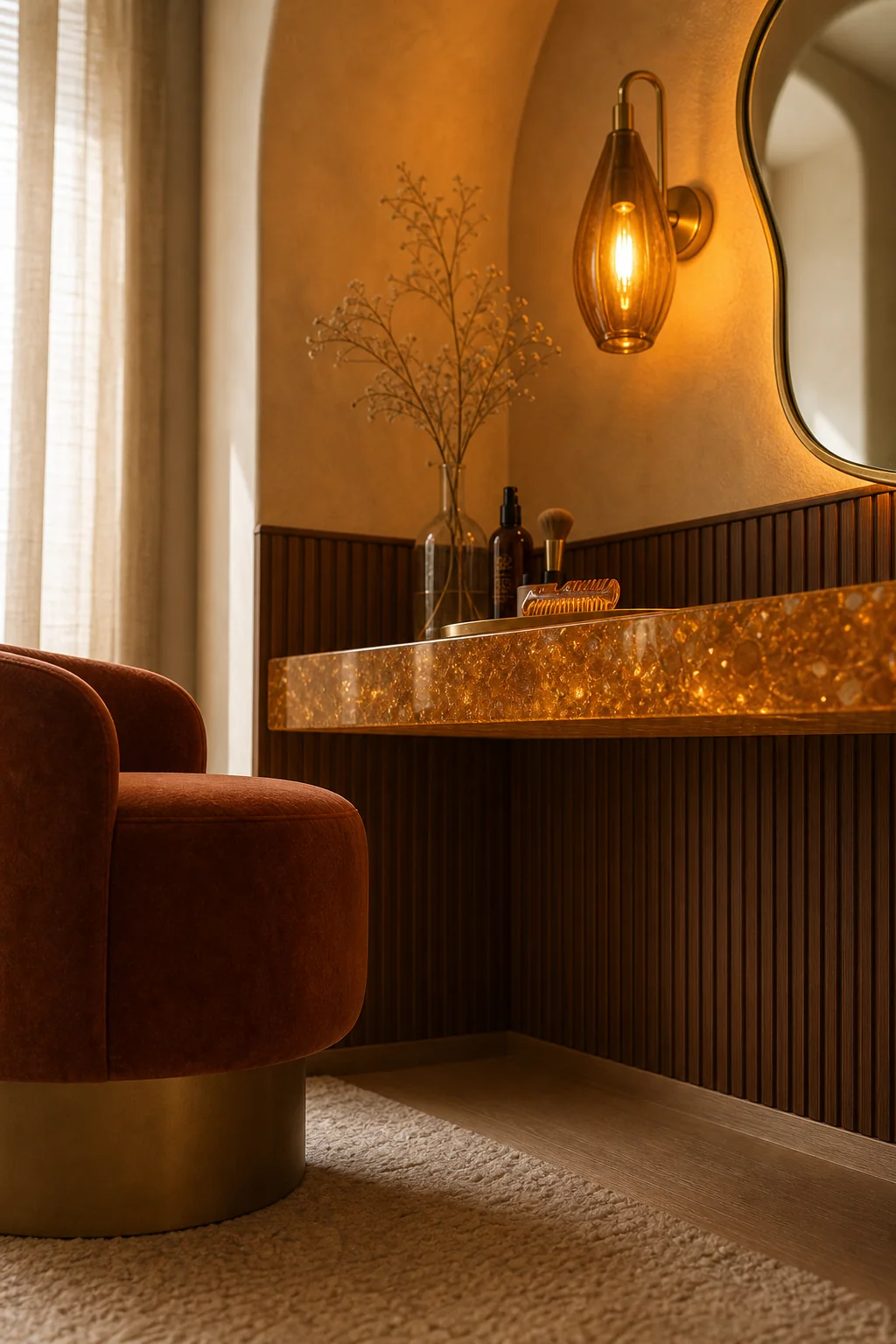
Adding a single amber-glass sconce to the side wall casts a soft, golden gradient against the honey plaster, diffusing light just like the translucent resin to maintain a deeply honeyed atmosphere. Ensuring all task and ambient bulbs are warm-toned is critical to capturing the backlit amber glow without overpowering the delicate architectural shell of the alcove, providing ideal, flattering illumination for daily makeup application.
Polished surfaces against matte shells
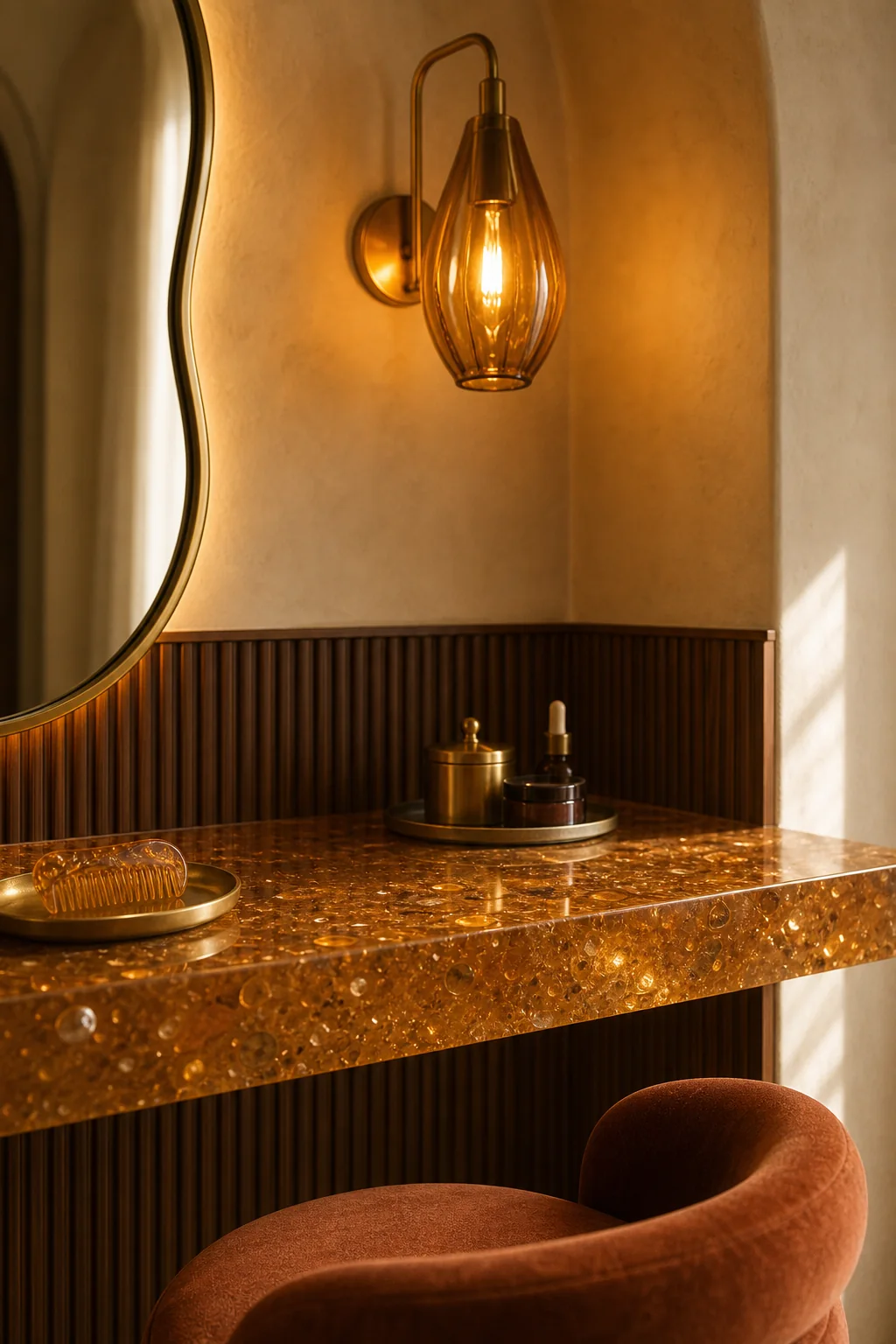
The tactile contrast of the original source object is achieved by pairing a highly polished, light-catching vanity surface with a muted, structural architectural shell. Resting a heavy, glassy surface directly on the matte fluted walnut base creates a distinct tactile boundary between the grounding foundation and the illuminated upper zone. To successfully execute this material translation and ensure the vanity functions perfectly as a dedicated horizontal surface for cosmetics, gather these specific textural components for your build.
The resin-inspired vanity surface
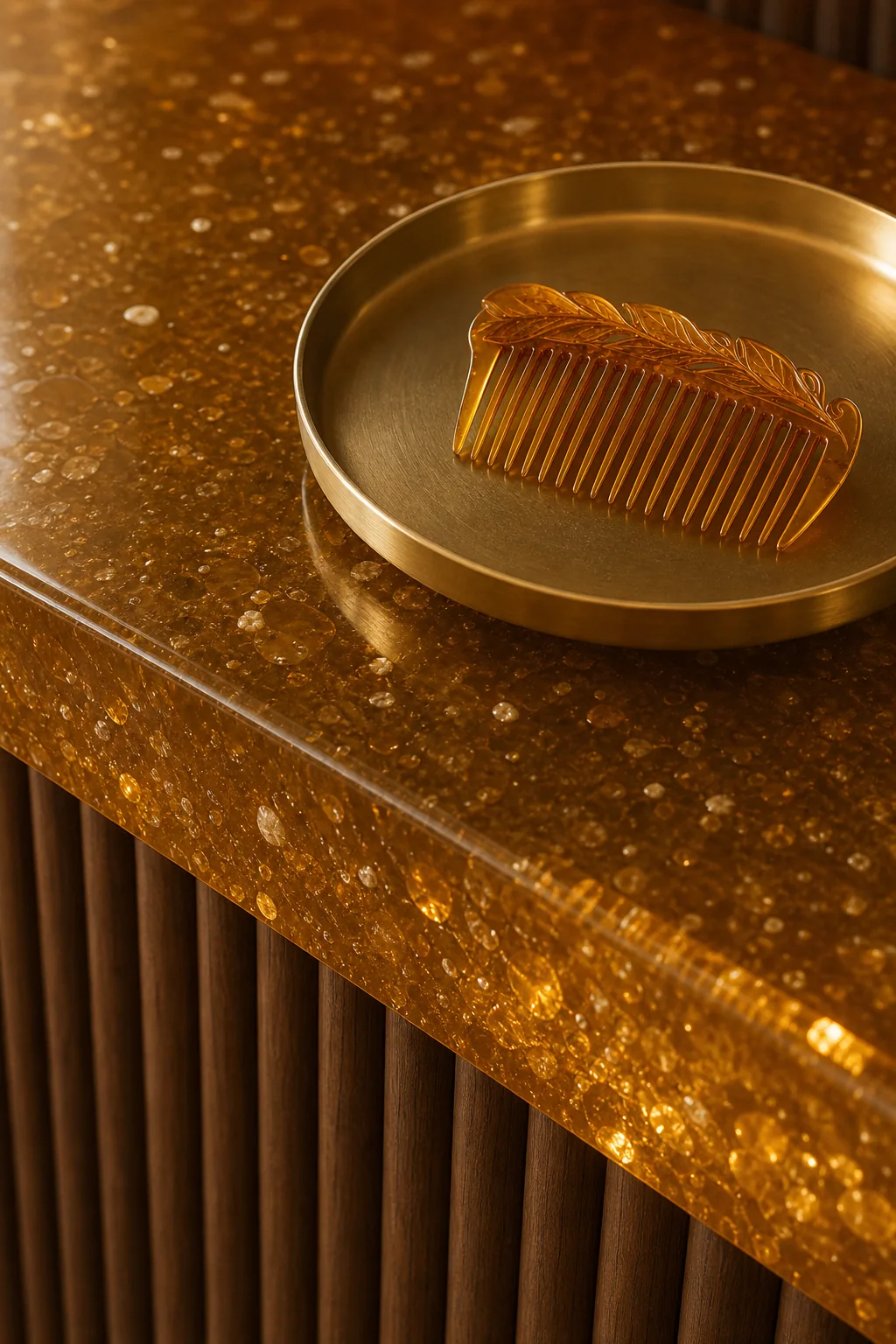
Commissioning a thick, custom cast-glass countertop with subtle internal bubbles brilliantly mimics the resin’s natural inclusions, providing a dedicated horizontal surface that feels organically formed rather than manufactured. Introducing a curved, sculptural stool upholstered in rust-colored mohair velvet and tucked neatly under the counter adds a soft, light-absorbing texture that perfectly balances the highly polished cast-glass counter and prevents the nook from feeling too cold.
Introducing organic whiplash curves
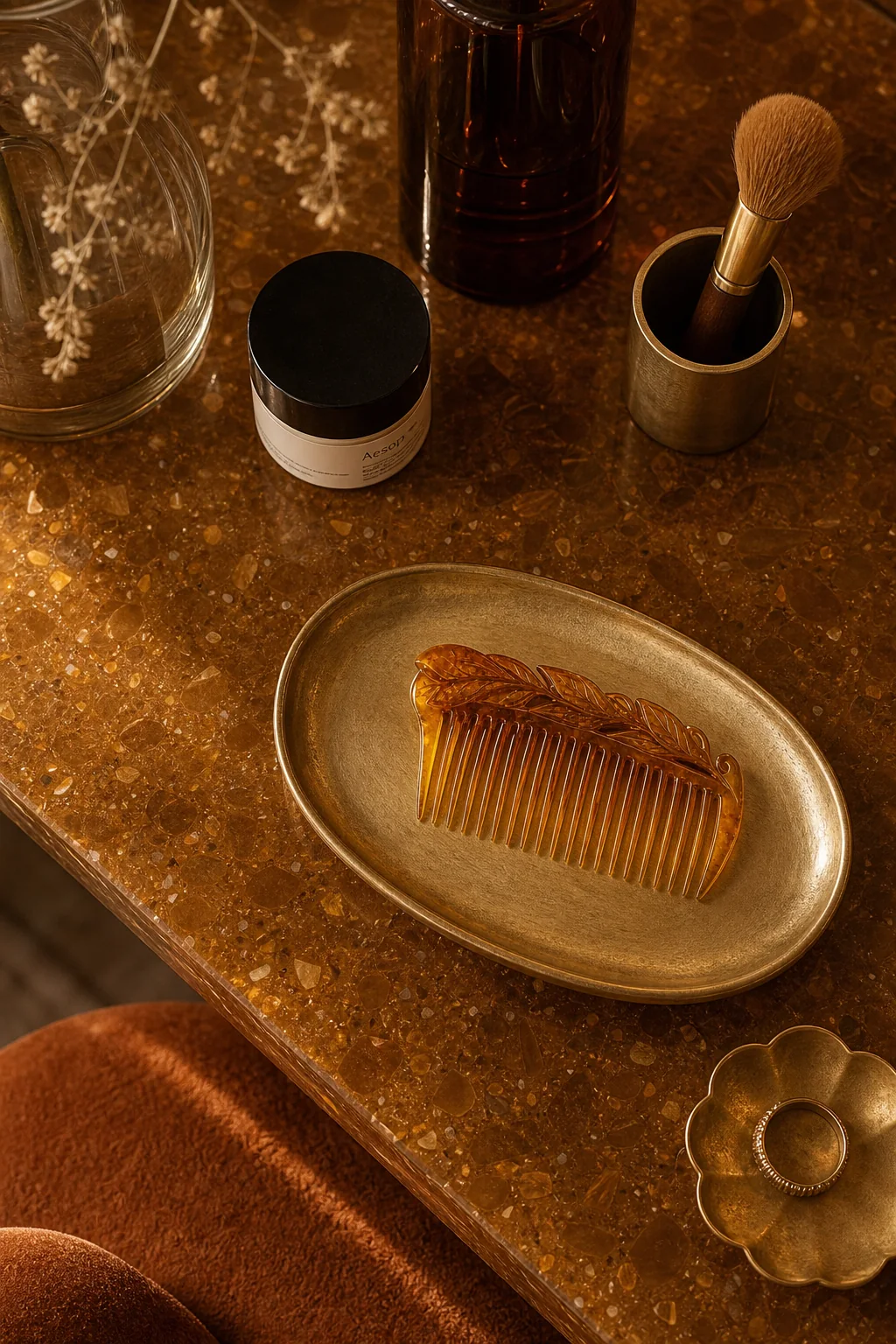
The rigid vertical lines of the lower vanity dissolve into flowing, asymmetrical shapes at eye level, mirroring the comb’s carved handle through an organically shaped mirror framed in thin, unlacquered brass. You can scale these organic whiplash curves from a subtle approach using standard flat wood paneling to a balanced execution with custom cast glass, or even a bold fluted walnut extension featuring heavily bubbled amber resin and oversized Art Nouveau sconces. To achieve the balanced, highly detailed architectural digest style seen here, follow these precise implementation steps.
- Build the lower alcove framework and install fluted walnut paneling to ensure the lower half of the nook has a rigid, rhythmic wooden base.
- Apply honey-toned plaster to the upper walls and ceiling so a smooth, matte backdrop is ready to catch and diffuse warm light.
- Mount the thick cast-glass countertop over the walnut base, creating a polished, translucent horizontal surface that divides the two zones.
- Install the concealed LED strips and the amber glass wall sconce until the plaster wall glows with a warm, backlit gradient.
- Hang the asymmetrical brass mirror at face height above the counter to introduce an organic, flowing focal point that breaks up the architectural lines.