
The 4-Season Sunroom Layout Guide: Rules for Year-Round Comfort
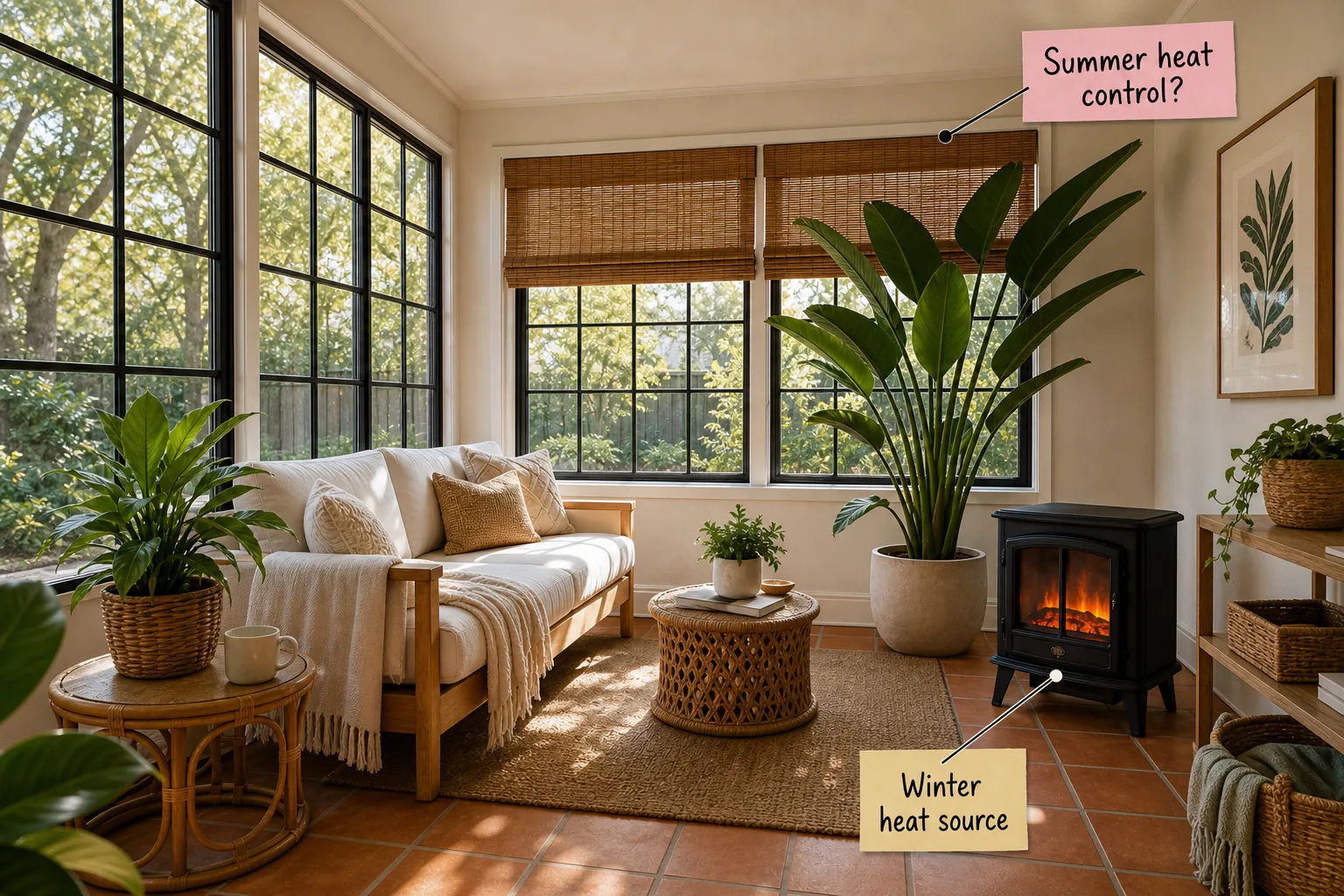
Design a sunroom you can actually use all year with our complete 4-season layout guide. You will learn exactly how to arrange your furniture, select the right glass, and implement passive climate control for perfect year-round comfort.
The 4-Season Layout Framework
Establish the foundational layout for a multi-season space by ensuring furniture never touches the exterior glass directly. Maintain a strict 12 to 18-inch perimeter buffer zone to protect your upholstery from freezing exterior panels and allow proper summer air circulation.
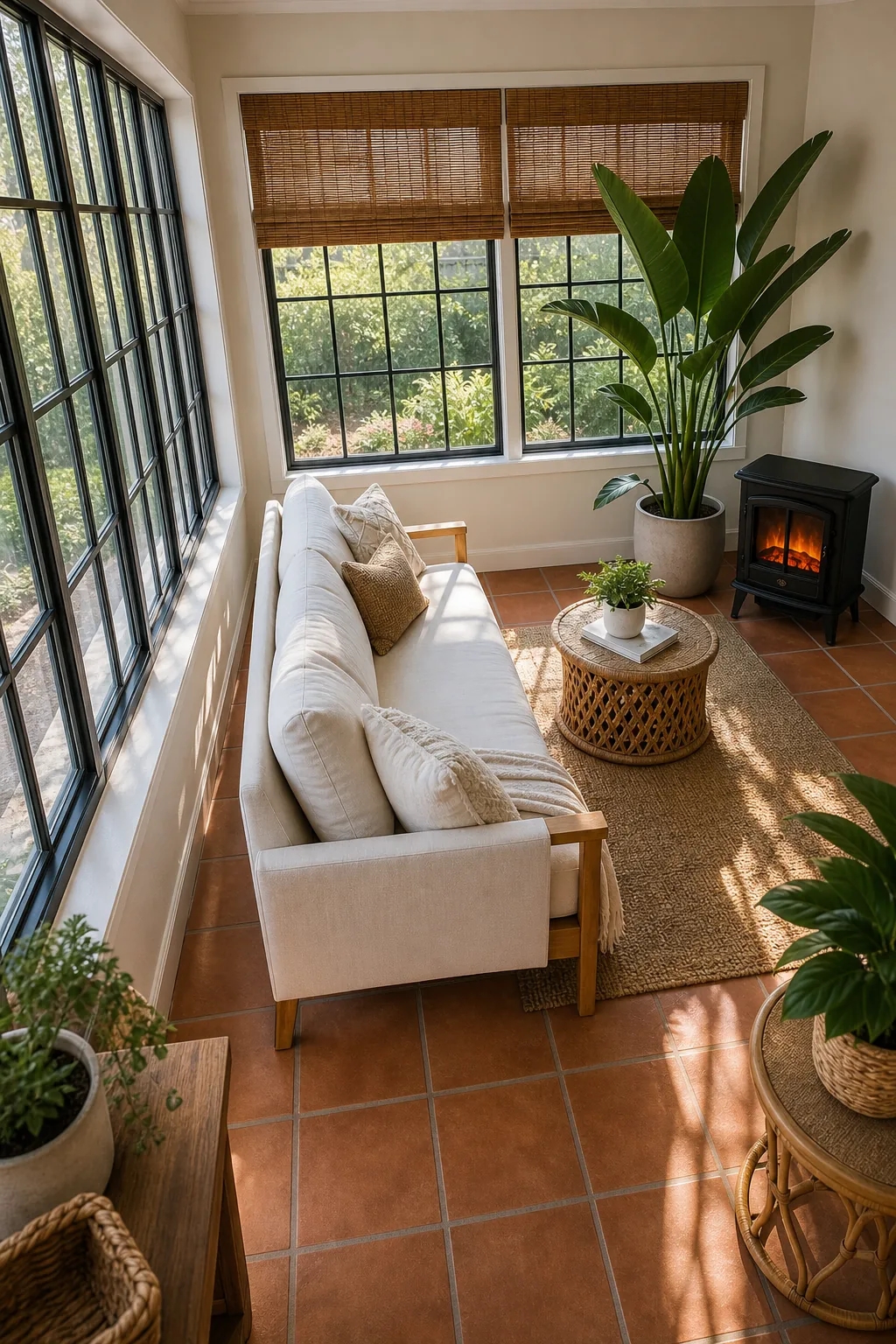
Before finalizing your floor plan, verify these three spatial clearances to guarantee the room functions in extreme temperatures.
Framing for Structural Integrity
Before installing advanced glazing, ensure your sunroom skeleton can handle the thermal load. Select thermally broken aluminum or composite fiberglass frames to stop conductive heat transfer directly at the perimeter of your new addition.
Specifying UV-Filtering Glass
High-performance windows are completely essential for passive climate control and protecting your interior investments. Specifying double-pane glass with a Low-E coating ensures your space remains usable and comfortable regardless of the harsh weather outside.
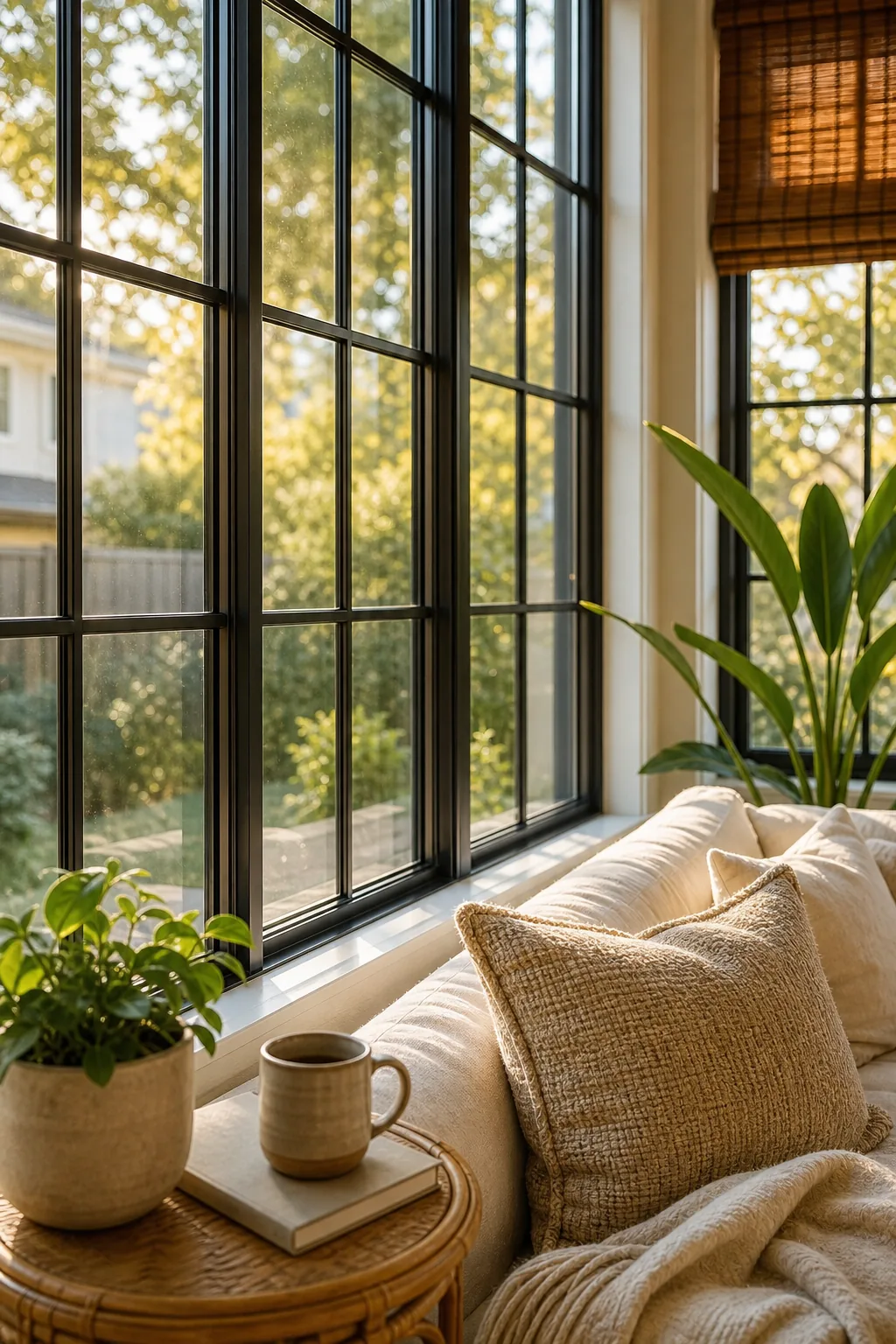
This specific 70 to 90 percent filtration level blocks harmful radiation while still allowing visible light and passive solar heat to enter the room. Compare standard glass options below to understand why advanced coatings are necessary for sunrooms.
| Glass Type | UV Block | Insulation Value | Best Use |
|---|---|---|---|
| Single Pane Clear | 20% | Poor | 3-Season Porch |
| Double Pane Clear | 40% | Moderate | Mild Climates |
| Double Pane Low-E | 70-90% | Excellent | 4-Season Room |
Harnessing a Thermal Mass Floor
Dense flooring materials naturally regulate dramatic temperature swings throughout the day by capturing free solar energy. Installing a thermal mass floor ensures your sunroom remains actively heated even after the sun goes down.
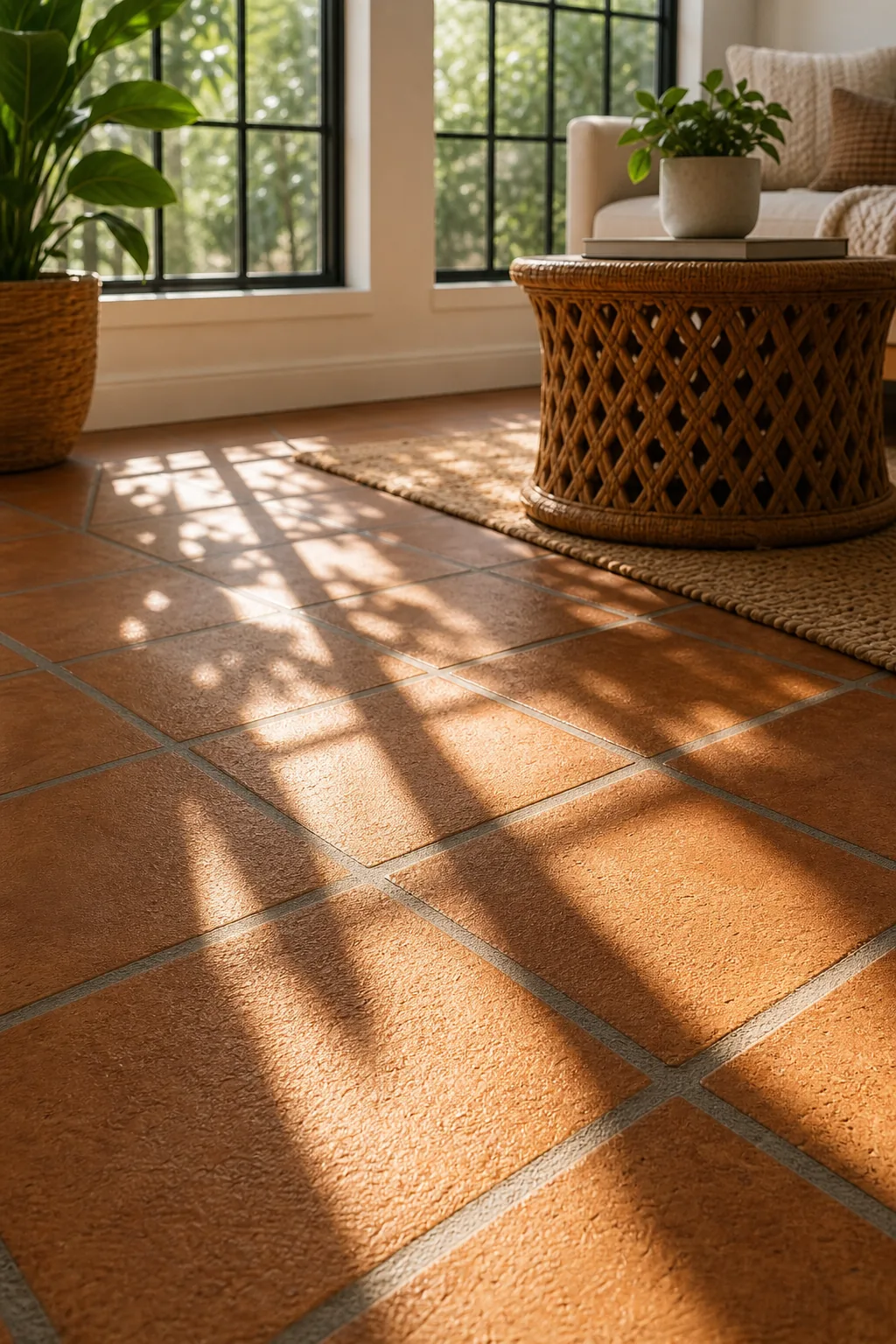
This dense material absorbs the sun’s radiant heat during peak daylight hours and slowly releases warmth as evening temperatures drop. Follow these precise steps to build a functional thermal floor system.
- Pour a perfectly level concrete slab foundation.
- Apply a high-quality modified thinset mortar.
- Lay 1/2-inch to 3/4-inch thick terracotta or slate tiles.
Passive Ventilation Strategies
Trapped hot air quickly turns a glass-walled room into an unusable, stifling greenhouse. Install operable transom windows near the ceiling to vent rising hot air naturally before it accumulates and overwhelms your cooling systems.
Managing Summer Heat with Woven Shades
You must block intense summer sun before it bakes the room’s interior surfaces. Mount interior woven wood Roman shades inside the window frame and lower them halfway to cut solar heat gain by up to 45 percent.
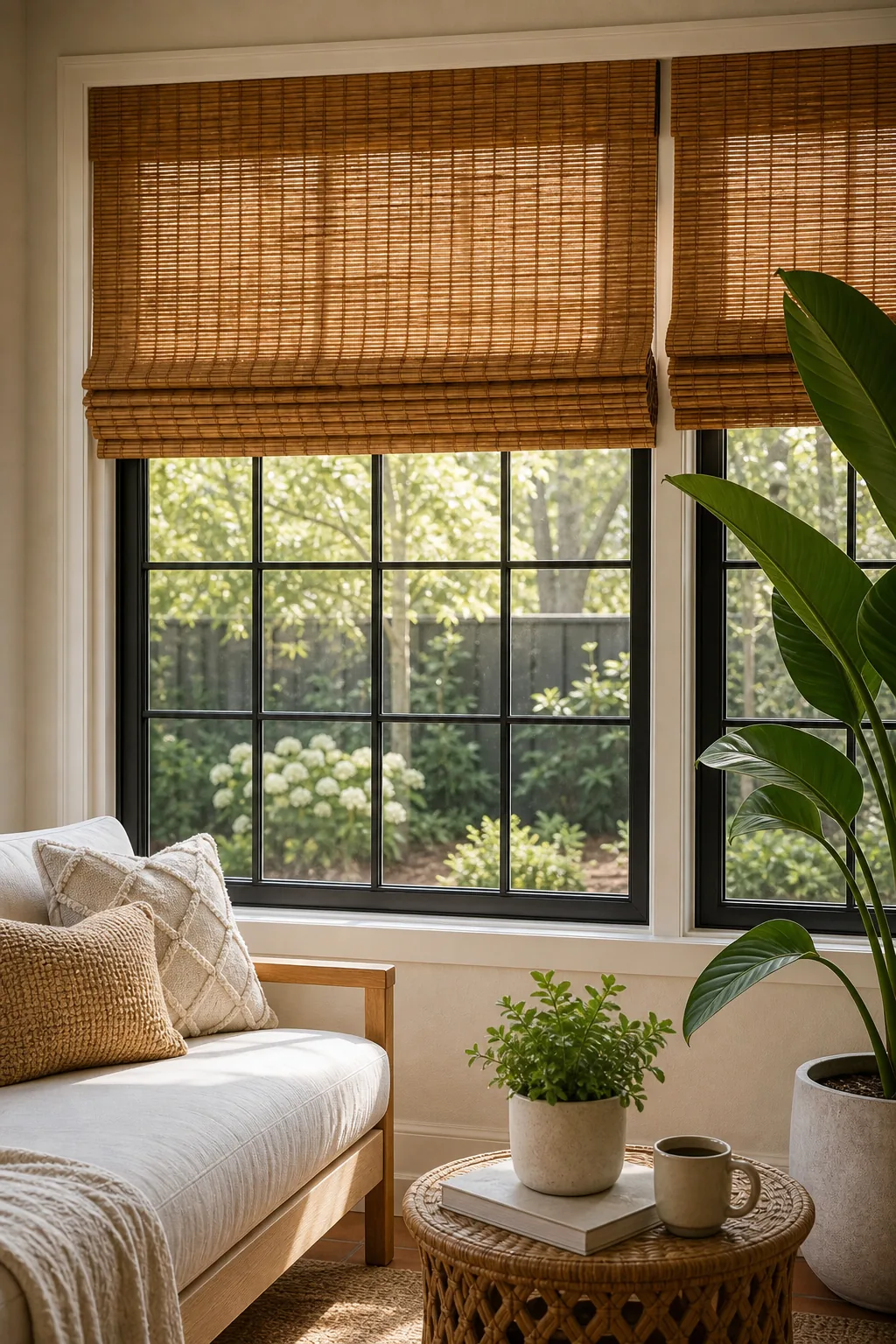
The material you choose for your window treatments determines whether your sunroom feels like a breezy porch or a stagnant greenhouse during July afternoons.
Sizing Your Winter Heat Source
Active heating is absolutely required to keep the space comfortable during the coldest months of the year. Select a freestanding electric stove or baseboard unit rated for at least 30 to 40 BTUs per square foot.
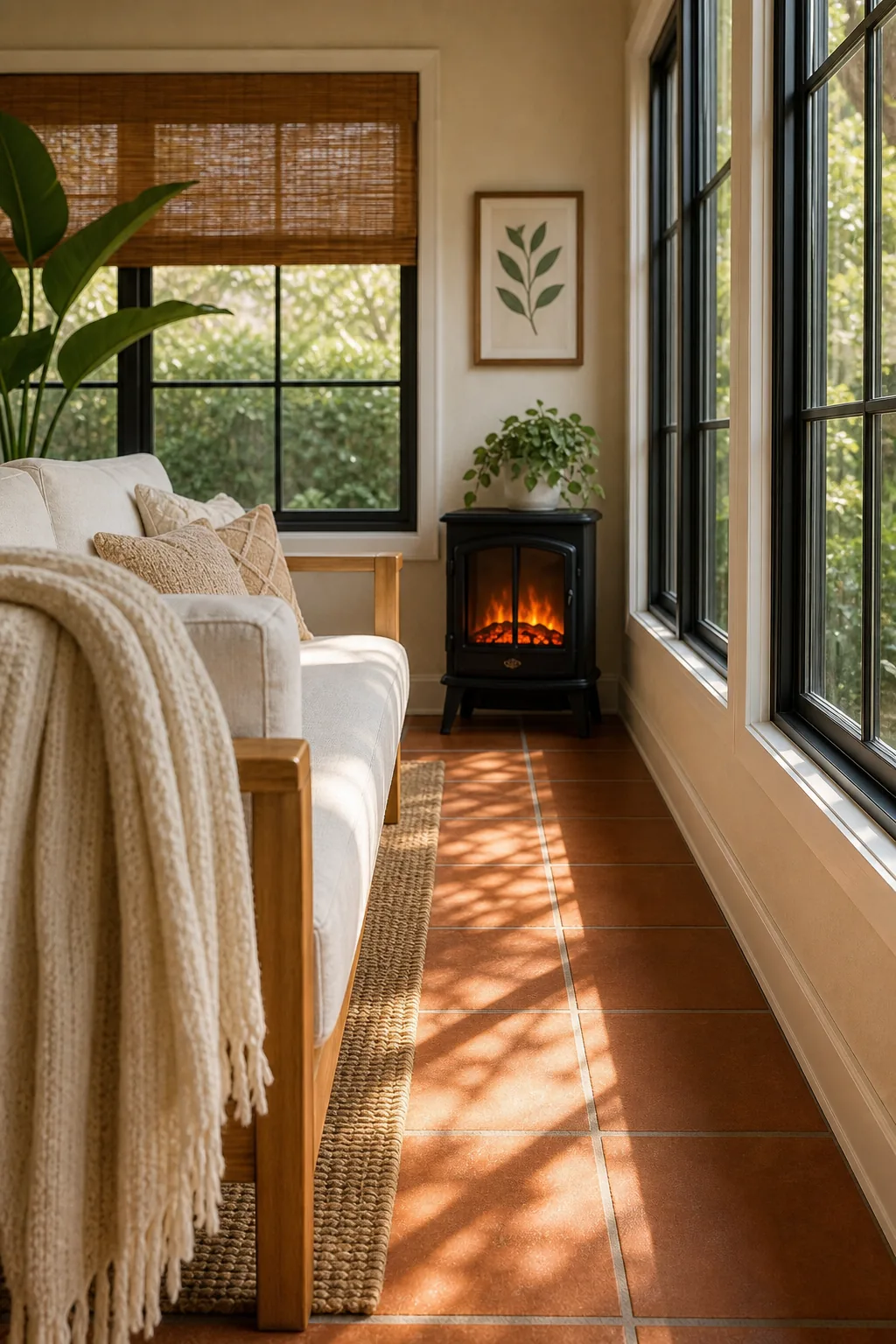
Because sunrooms lose heat significantly faster than heavily insulated interior walls, oversizing your supplemental heating unit slightly ensures you never experience a chill during winter storms.
Establishing Convection Pathways
Sunrooms lose heat rapidly through exterior glass, making internal airflow absolutely critical for comfort. Keep the center of your floor plan completely open to allow rising heat to cycle back down along the cooler walls.
Furniture Placement for Airflow
Heavy upholstery can easily block your active heating source if positioned incorrectly. Place the main sofa parallel to the longest window wall, but pull it exactly 24 inches forward to create an invisible heating corridor.
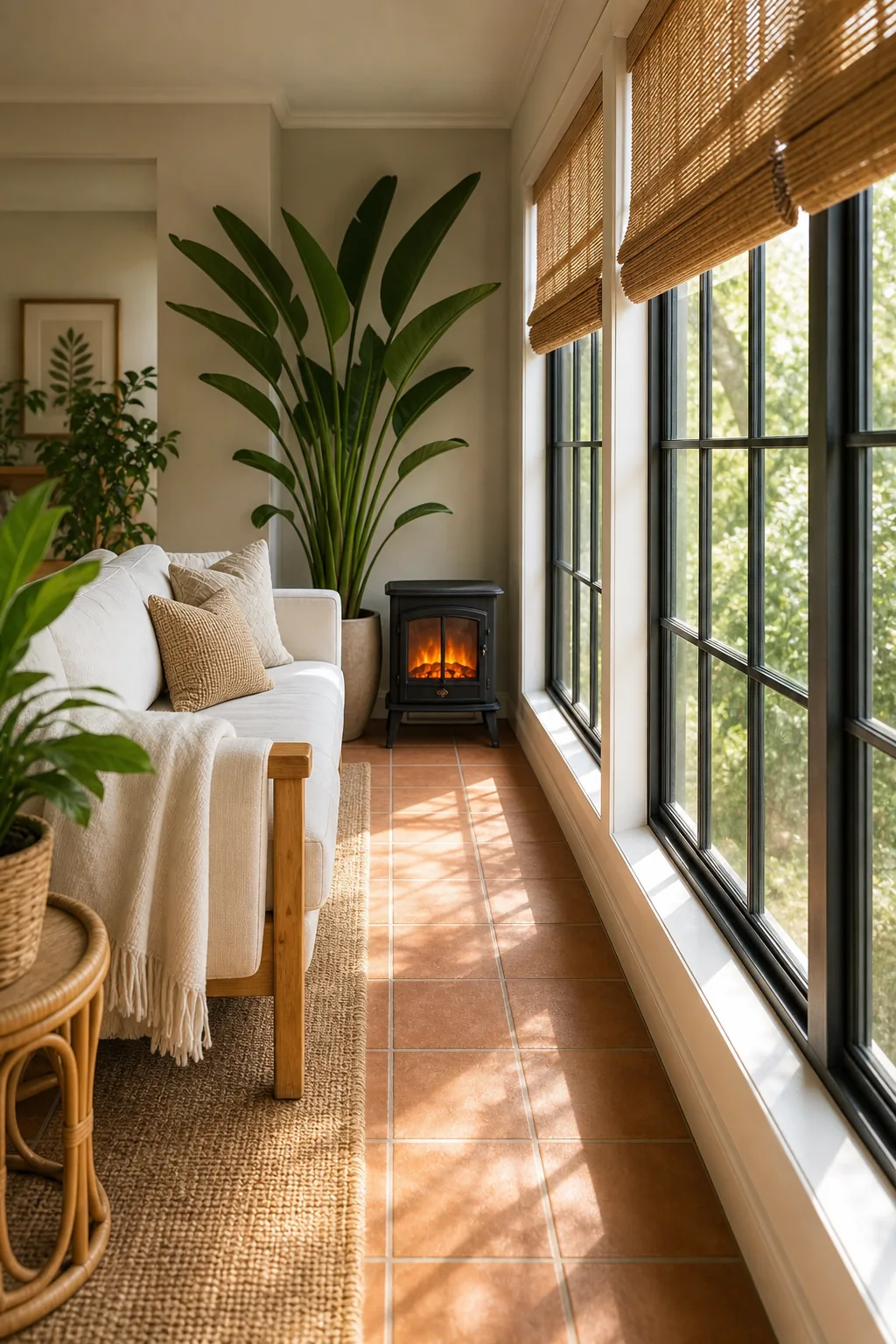
This specific placement creates a dedicated channel for thermal distribution behind the seating area, eliminating cold spots and preventing moisture buildup on the adjacent glass panes.
Managing Condensation Risks
Dramatic temperature swings inevitably create heavy moisture on large glass panes during the transition seasons. Ensure your active heating pathways remain clear so warm air can constantly evaporate surface condensation before it damages your flooring.
Selecting Year-Round Greenery
Place large tropicals like a Bird of Paradise or Meyer Lemon tree in the sunniest corner of the room. Ensure their heavy pots sit at least 3 feet away from the glass threshold to prevent sudden cold shock when opening the room to the garden.
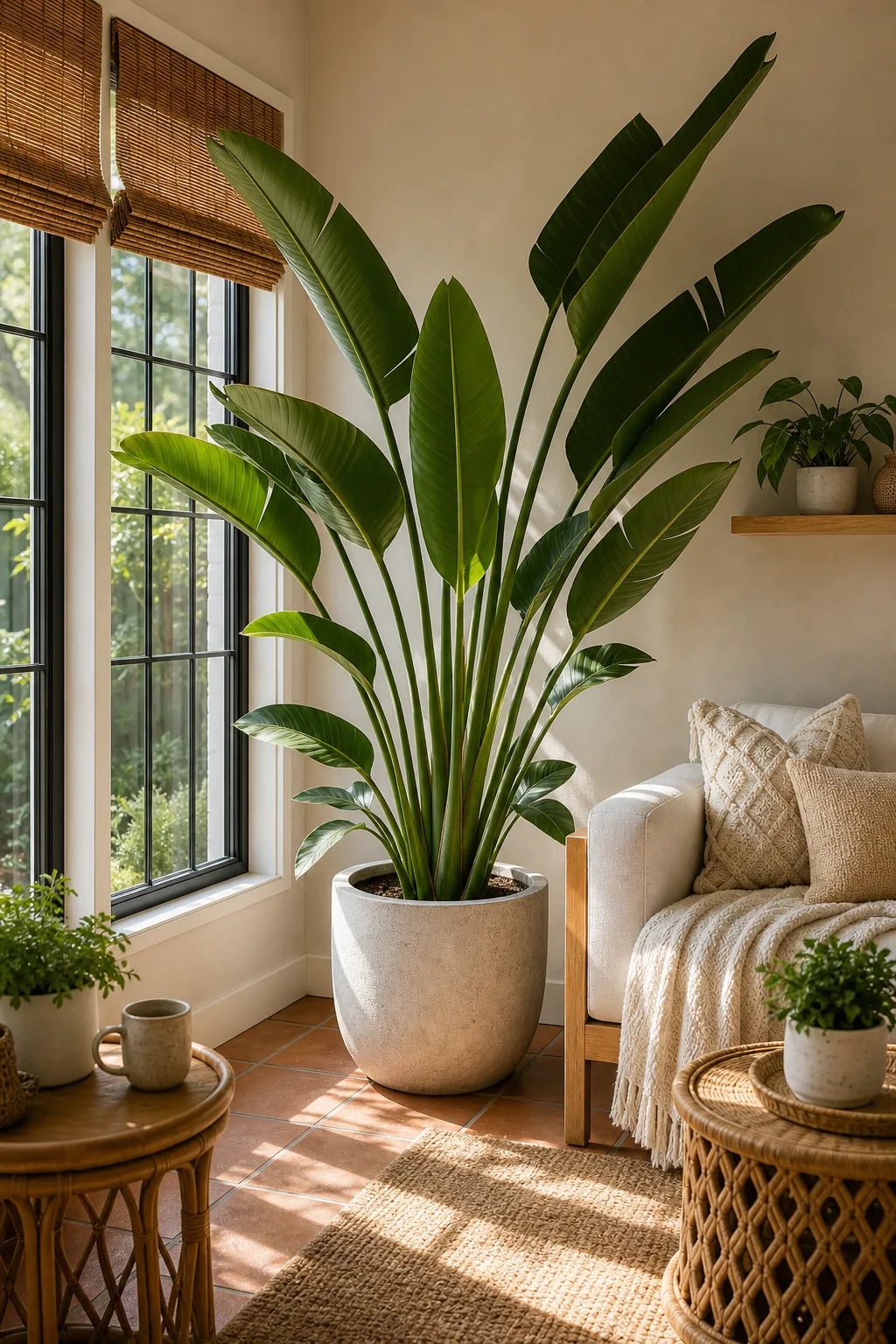
Indoor trees bring vital life to the space but must tolerate significant temperature fluctuations. Select resilient species that genuinely thrive despite the unique microclimate of a 4-season sunroom.
- Jade Plant: Thrives in intense direct sunlight and dry winter air.
- Cast Iron Plant: Survives dramatic temperature drops near exterior glass.
- Parlor Palm: Adapts easily to shifting seasonal humidity levels.
Layering Textiles for Transition Seasons
Ground the seating area with a chunky jute or sisal rug that breathes naturally and won’t trap underlying moisture. Keep lightweight linen or cotton throws on hand to adjust personal comfort easily as the sun shifts.
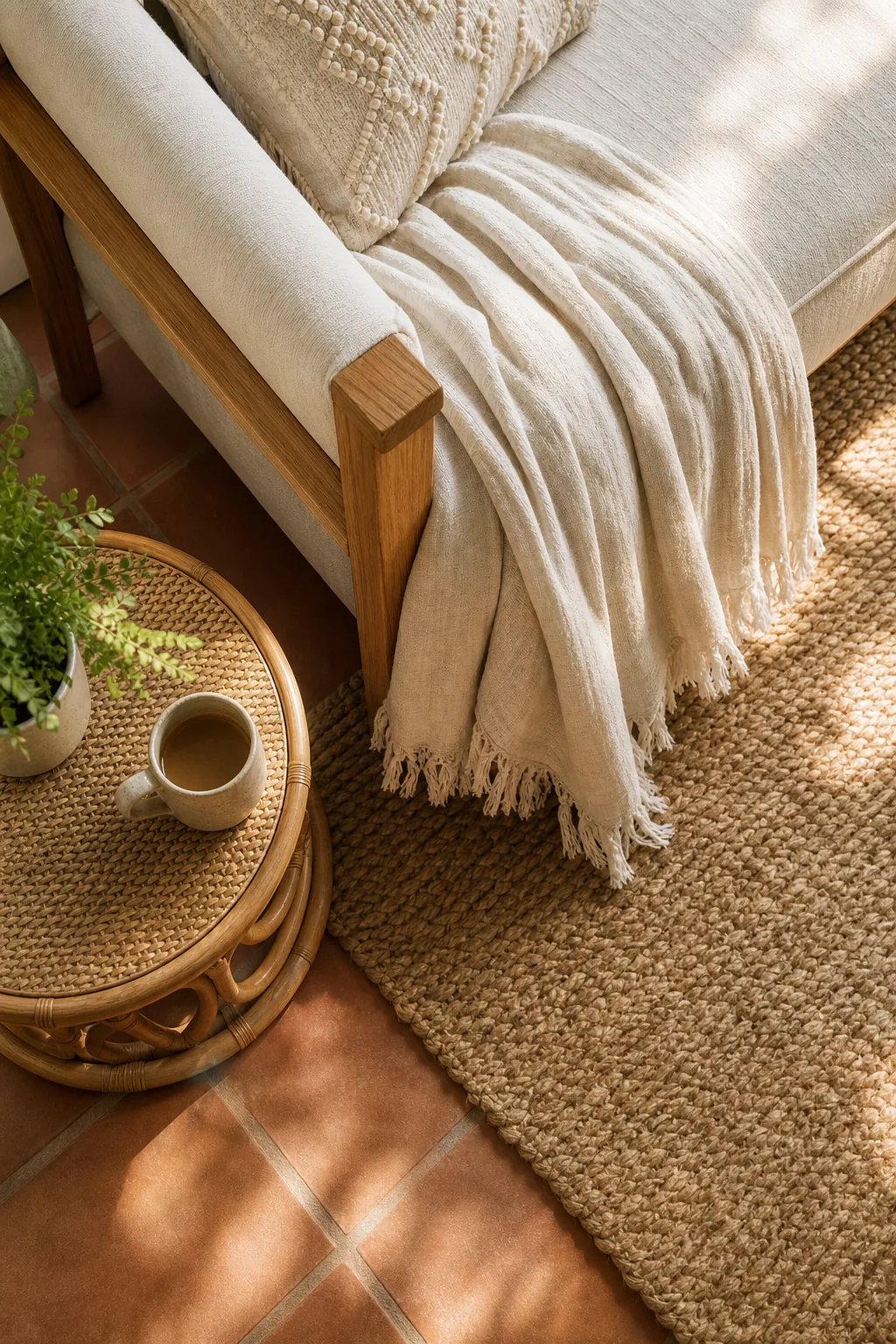
These adaptable textile layers ensure your sunroom transitions effortlessly from crisp spring mornings to warm autumn afternoons, finalizing a space you will truly use every single day of the year.