
Aztec Meets Industrial: Living Room
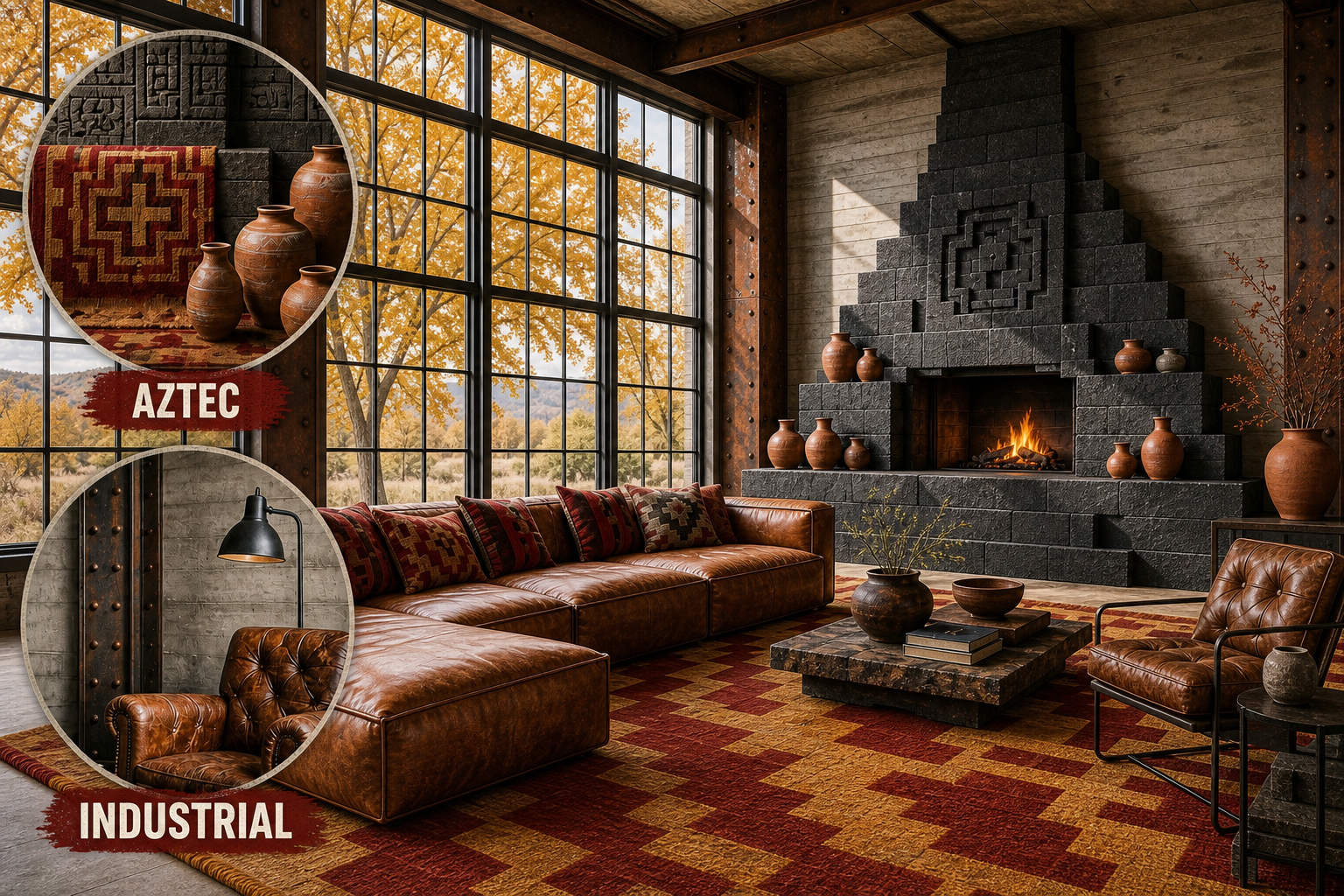
The sacred monumentality of Mesoamerican antiquity clashes with the cold utilitarianism of a 20th-century factory. We resolve this tension by using raw concrete and steel to frame warm terracotta, monumental stepped masonry, and rich geometric textiles.
Style A language
To ground the room, we introduce the Aztec anchor of monumental stepped masonry. This heavy, ancient architectural language provides a profound sense of permanence against the cold factory shell. It ensures the living space feels historically rooted, intentionally designed, and structurally uncompromising.
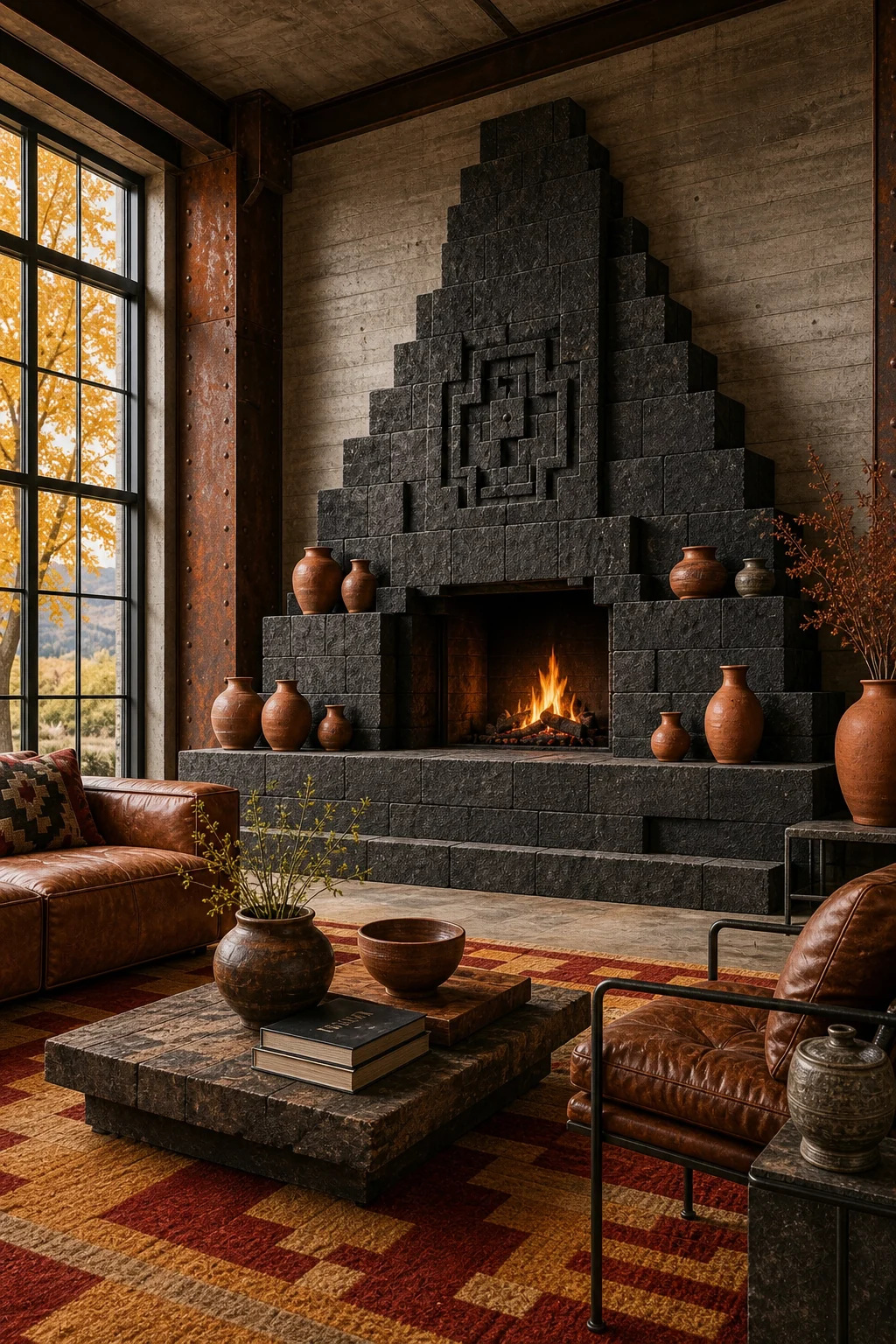
Notice how the stepped volcanic basalt fireplace dominates the space. Its massive, monolithic presence echoes ancient pyramids, ensuring the room feels structurally grounded rather than merely decorated. This heavy tactile quality is absolutely essential for balancing the severe, modern utilitarian architecture surrounding it.
By committing to this heavy materiality, you establish a powerful visual anchor. The rough basalt absorbs natural light rather than reflecting it, creating deep, dramatic shadows that emphasize the stepped geometry. This sets the perfect foundational tone for the entire integrated living room.
Style B language
The Industrial architecture acts as a utilitarian framing device. By employing exposed structural elements, the cold, secular shell prevents the historical warmth from feeling like a literal museum exhibit. It introduces a necessary, striking tension that makes the hybrid aesthetic feel distinctly contemporary.
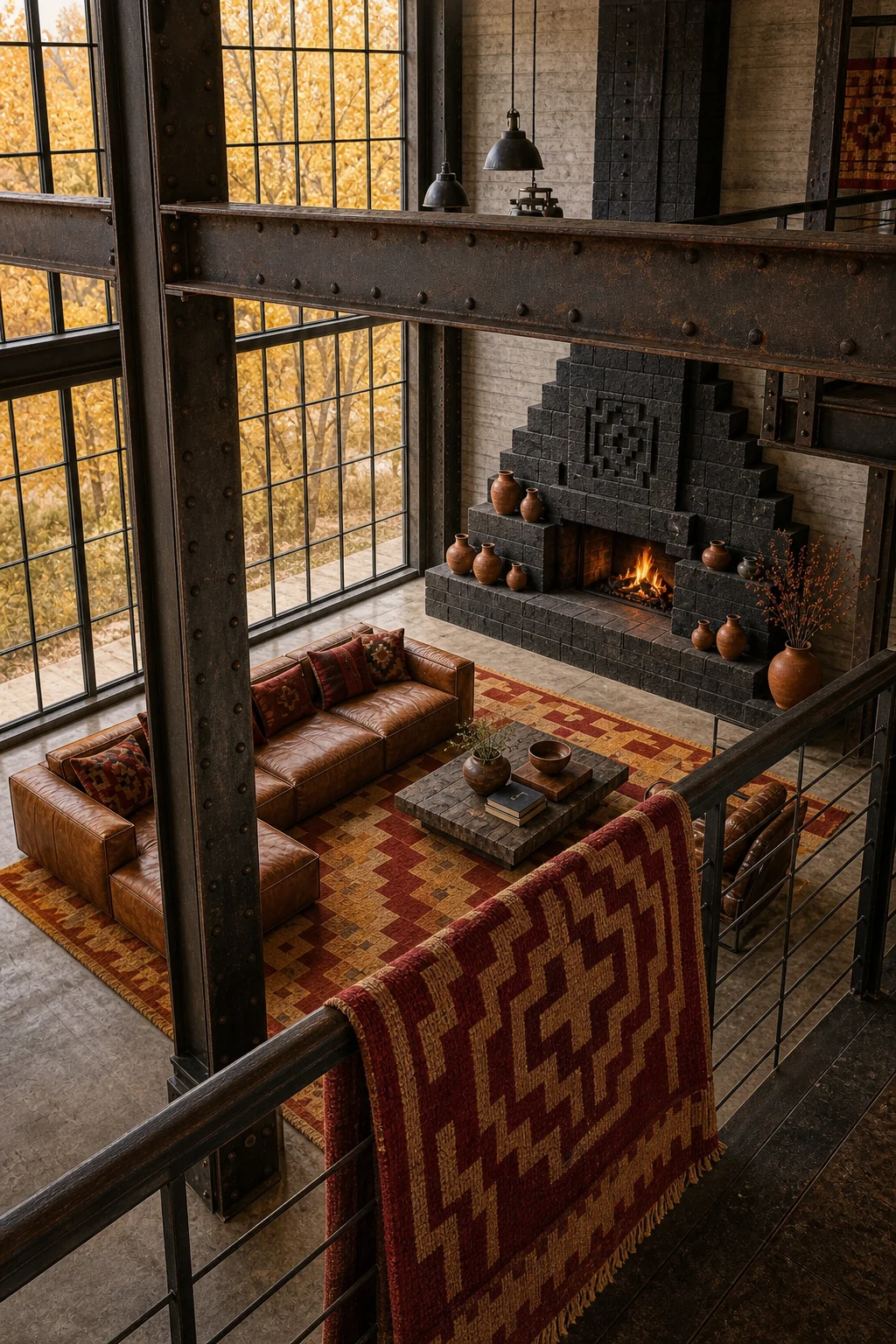
Exposed steel I-beams and board-formed concrete provide a heavy, unrefined boundary. These machine-made materials establish a rigid grid that beautifully contains the vibrant, handcrafted textiles. The resulting contrast highlights the inherent beauty of both the ancient stone and the modern utilitarian materials.
- Leave steel I-beams exposed to highlight structural honesty and provide a rigid architectural framework.
- Use black Crittall windows to frame natural autumn light and establish a strict visual grid.
- Keep concrete walls raw and board-formed to ensure the surface texture remains intentionally heavy.
The bridge
A successful resolution requires a shared visual language. Oxidized rust and cochineal red share an exact earthy palette, uniting the distinct eras through warm patinated tones. This deliberate, exact color overlap makes the transition between ancient and modern feel completely effortless and natural.
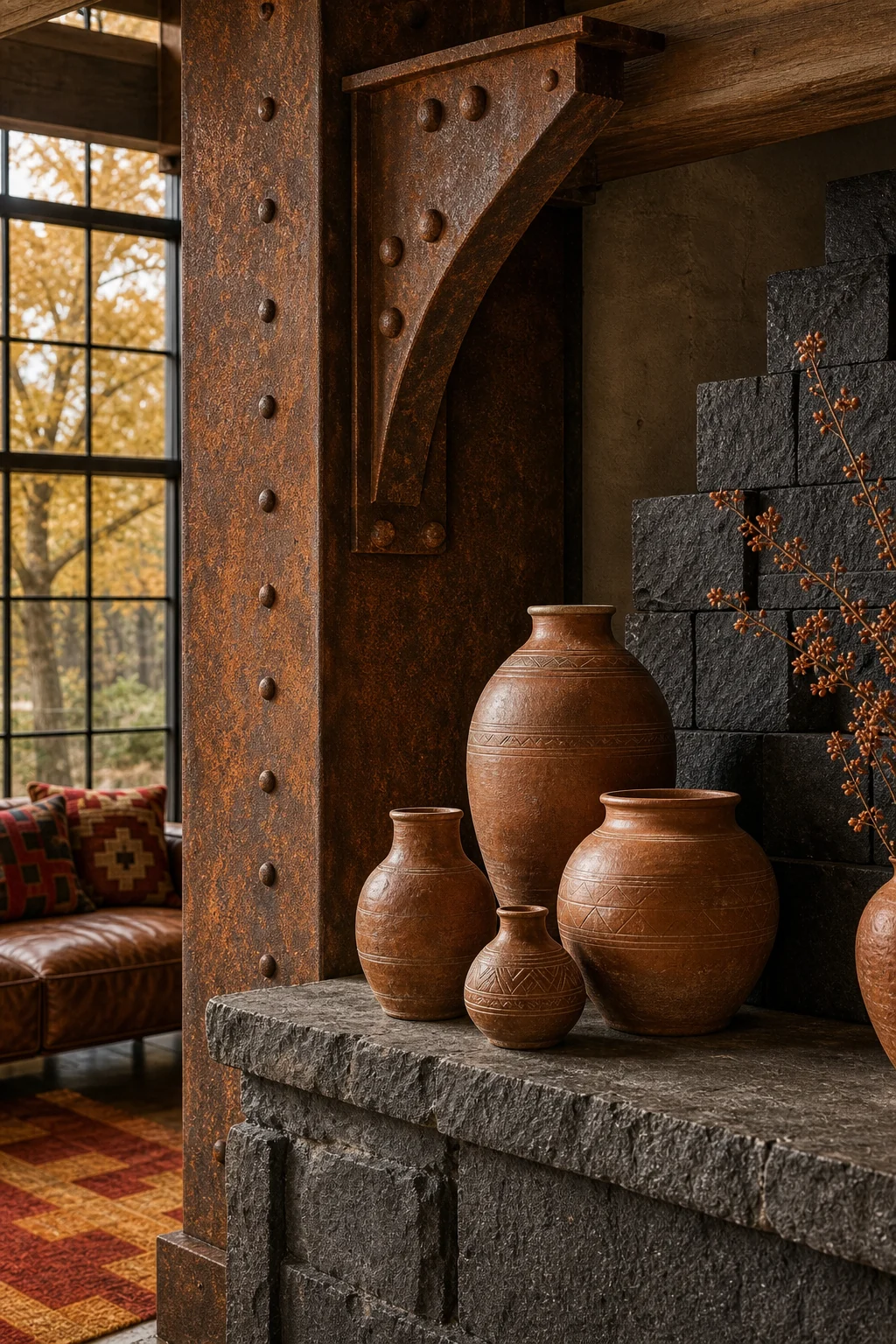
When rusted steel architectural accents sit beside terracotta vessels, the boundary between factory and antiquity dissolves. They share a fundamental reliance on heavy, unpolished earth. This shared, undeniable materiality proves that these two styles are not as contradictory as they might first appear.
This careful color matching allows the eye to travel smoothly across the room. By echoing the deep reds of the Aztec textiles in the oxidized metal hardware, you weave a subtle but undeniable thread of continuity throughout the entire architectural living space.
Build the room
Assembling the core seating area requires balancing heavy hides with rigid geometry. A distressed cognac leather sofa provides a functional, comfortable core that respects both aesthetic languages. It offers vital tactile warmth while maintaining the utilitarian durability required by the harsh industrial shell.
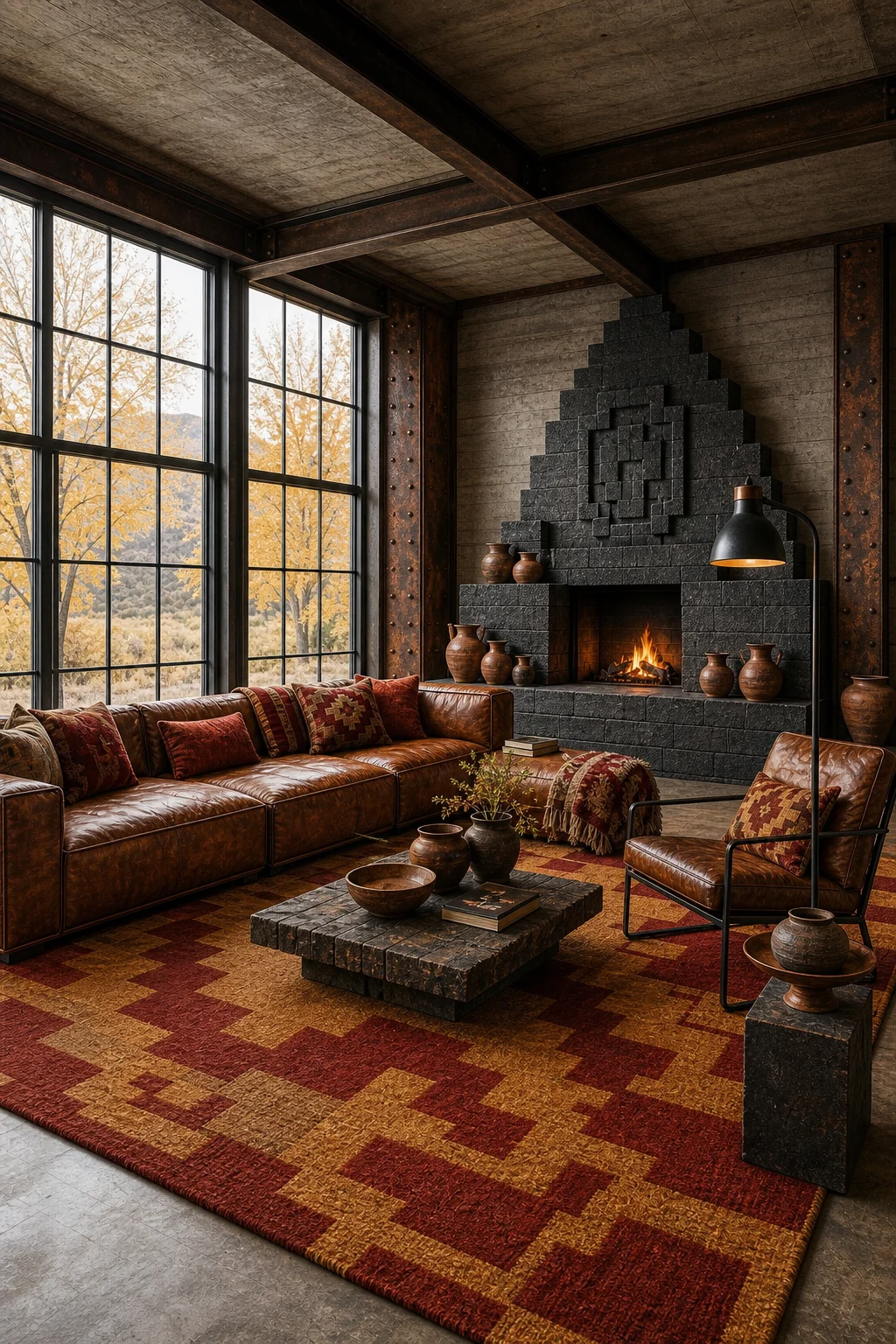
The leather modular seating rests on a geometric flat-weave rug. The bold, orthogonal stepped fretwork in the textile perfectly anchors the heavy utilitarian metal frames. This central grouping serves as the functional, inviting heart of the newly integrated, highly textured living space.
| Design layer | Aztec role | Industrial role | Bridge decision |
|---|---|---|---|
| Structural shell | Monumental stepped volcanic basalt masonry walls | Raw board-formed concrete and exposed steel structural beams | Heavy, unpolished, monolithic textures that absorb natural daylight |
| Large furniture | Low-slung, heavy wooden plinths and solid carved tables | Utilitarian metal frames and heavily distressed cognac leather | Rigid orthogonal geometry and substantial visual weight |
| Woven textiles | Flat-weave natural wool with bold xicalcoliuhqui motifs | Heavy utilitarian canvas fabrics and worn animal hides | Warm, earthy color palettes like cochineal and deep ochre |
| Room lighting | Ambient firelight radiating from the massive basalt hearth | Matte black metal factory floor and task lamps | Warm color temperatures and raw, unlacquered patinated metal finishes |
| Small accents | Hand-coiled unglazed terracotta and red ceramic vessels | Oxidized rust hardware and exposed heavy steel rivets | Shared patinated, earthy red and rich warm brown tones |
Using this translation table ensures neither aesthetic dominates the floor plan. The heavy leather seating grounds the room physically, while the geometric textiles provide the necessary visual warmth. Together, they create a balanced, highly functional core designed for comfortable daily living.
Light and architecture
Golden autumn light transforms how these heavy textures interact. The strict grid of factory windows casts shadows that perfectly echo the stepped Aztec motifs. This beautiful interplay between light and structure reinforces the geometric connection between the two otherwise entirely distinct historical styles.
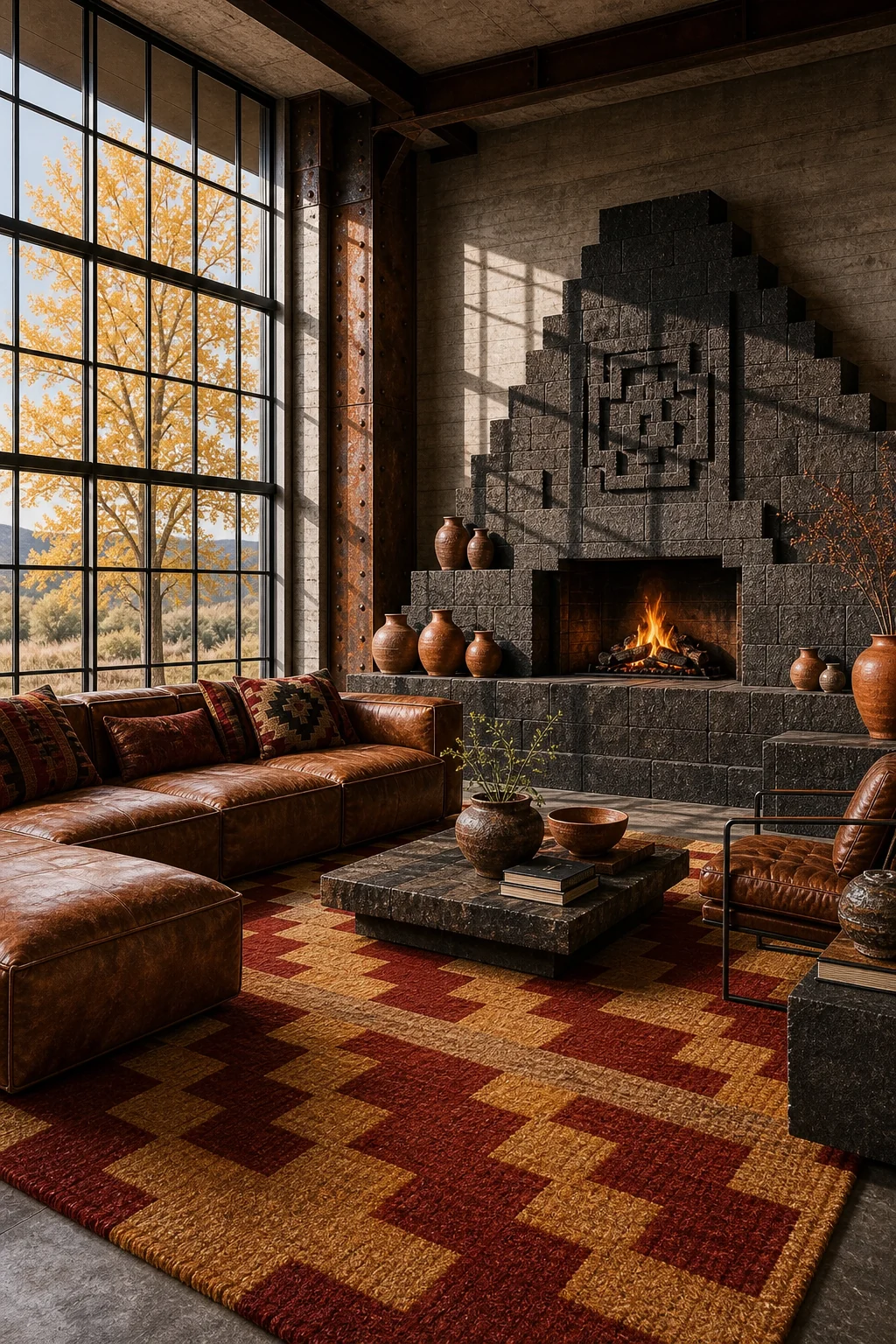
As high desert sunlight pours through the Crittall windows, it highlights the tactile depth of the carved basalt, softening the otherwise severe concrete walls. The changing daylight continually redefines the complex relationship between the raw factory shell and the massive ancient masonry.
- Maximize natural daylight to prevent the heavy architectural materials from feeling overly oppressive or gloomy.
- Install matte black metal fixtures to provide focused task illumination without distracting from the architecture.
- Allow window grids to cast geometric shadows across raw concrete to reinforce the orthogonal motifs.
Style the details
Smaller decor elements must negotiate the tension between machine and hand. Styling a raw steel console with hand-coiled ceramics softens the rigid metal without sacrificing visual weight. These intimate, carefully curated vignettes are where the hybrid aesthetic truly comes to vibrant life.
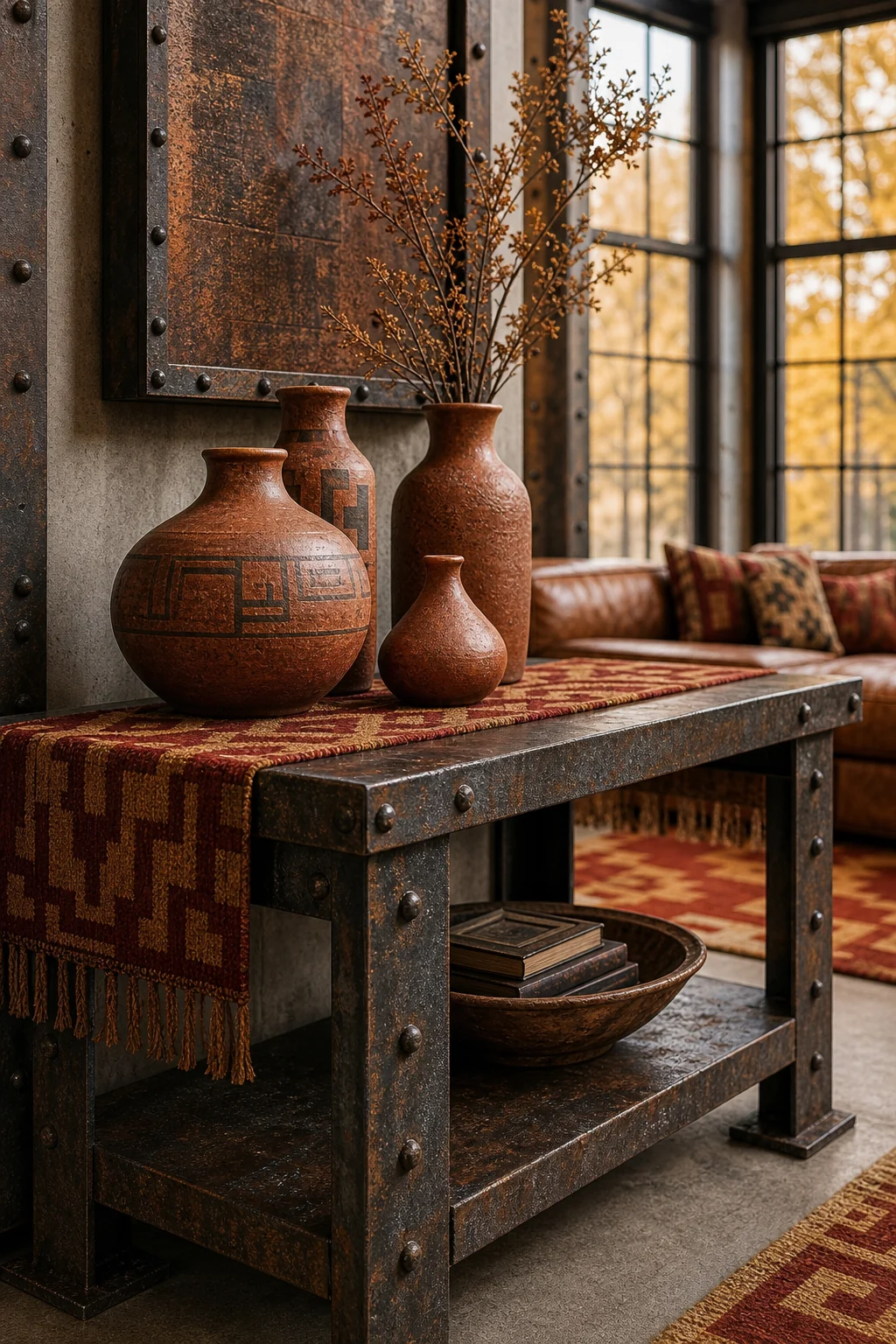
Notice how the unglazed terracotta vessels sit against visible steel welds. This deliberate pairing ensures the handmade earthen objects stand out against the utilitarian backdrop. The striking contrast highlights the unique imperfections of the pottery against the precision of the industrial metalwork.
By keeping the styling restrained, you allow the foundational materials to speak for themselves. Avoid introducing unnecessary colors or delicate objects that might dilute the impact of the heavy, patinated metals and the rich, highly textured terracotta vessels scattered throughout the room.
Adapt it
This aesthetic translates beautifully into transitional spaces like hallways or thresholds. Carrying the approach into a passage requires editing down to the most essential textures. You must maintain the industrial scale without losing the inviting warmth of the sacred ancient geometric motifs.
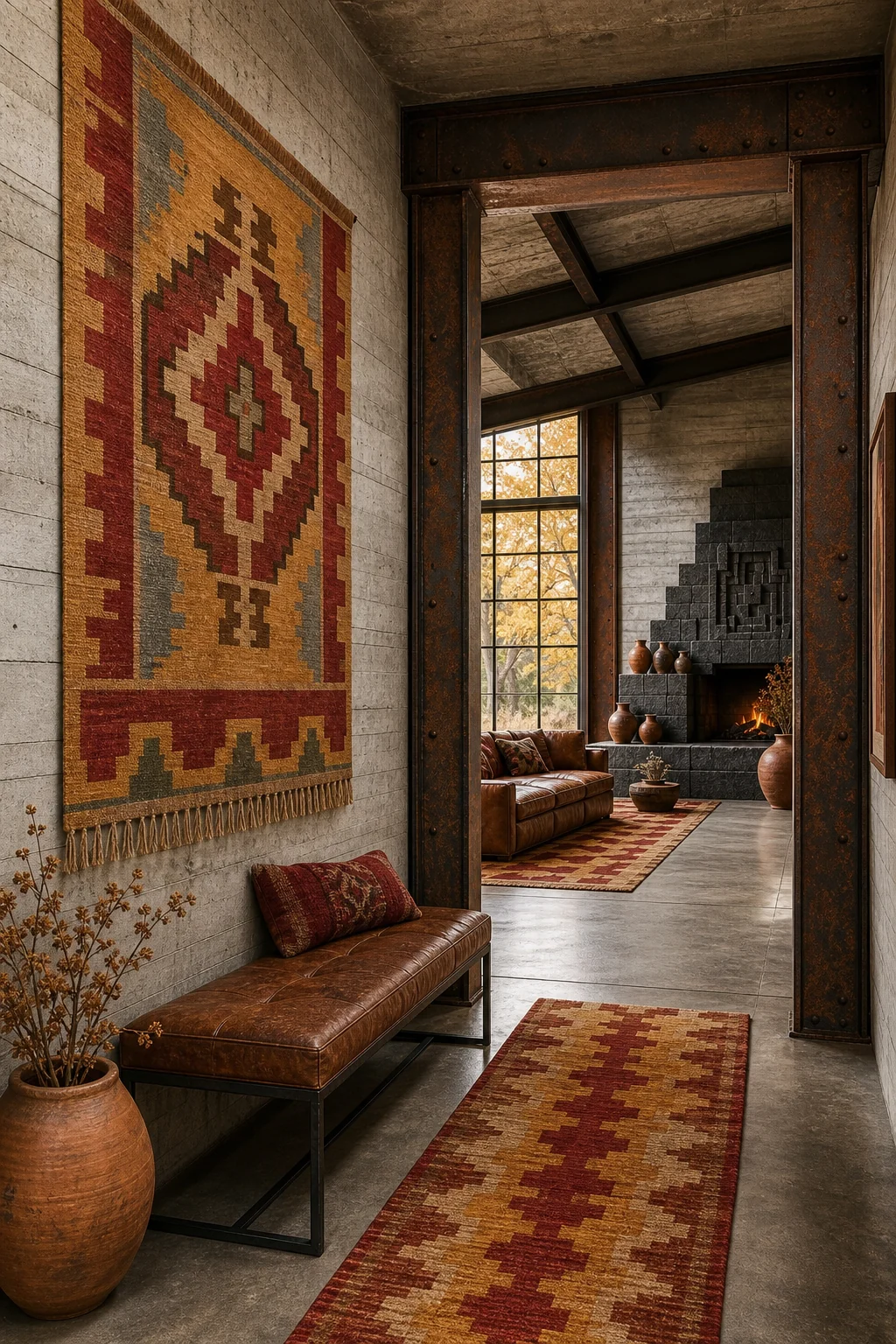
A concrete hallway becomes a powerful vignette with a simple leather bench. Adding a bold Aztec wall hanging introduces immediate warmth without overwhelming the narrow architecture. This proves the concept works just as effectively in constrained spaces as in massive grand rooms.
- Use a single, oversized woven wall hanging to introduce vital warmth into a cold concrete corridor.
- Place a distressed leather bench beneath the textile to provide a highly functional resting point.
- Keep the surrounding walls completely bare to emphasize the raw concrete texture of the passage.
Avoid the costume
A successful integration relies entirely on authentic material weight. Using cheap replicas or overly polished finishes ruins the tactile experience, turning a resolved room into a literal theme park. The tension only works if both styles are treated with absolute equal respect.
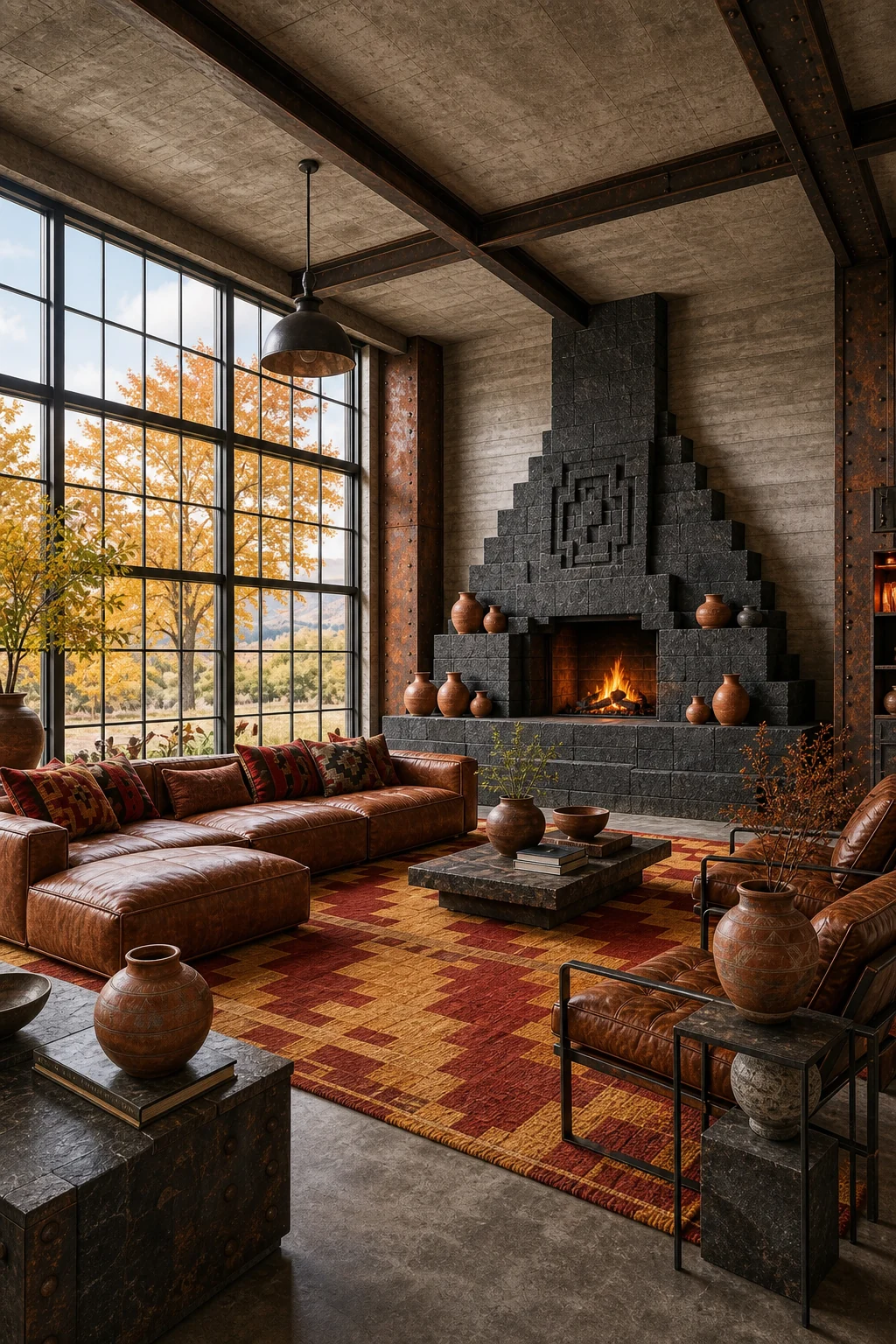
The final space succeeds because the monumental basalt and raw concrete share a genuine gravity. Balanced Aztec and Industrial elements create a sophisticated, integrated living room. The resulting environment is neither a museum nor a factory, but a completely unified, breathtaking home.
- Avoid polished finishes that ruin the raw tactile experience of the heavy foundational architectural materials.
- Never use synthetic fabrics for the geometric textiles; always stick to authentic natural flat-weave wools.
- Do not crowd the space with too many small artifacts to prevent a cluttered museum look.