
Boho Meets Alpine Modern: Bedroom
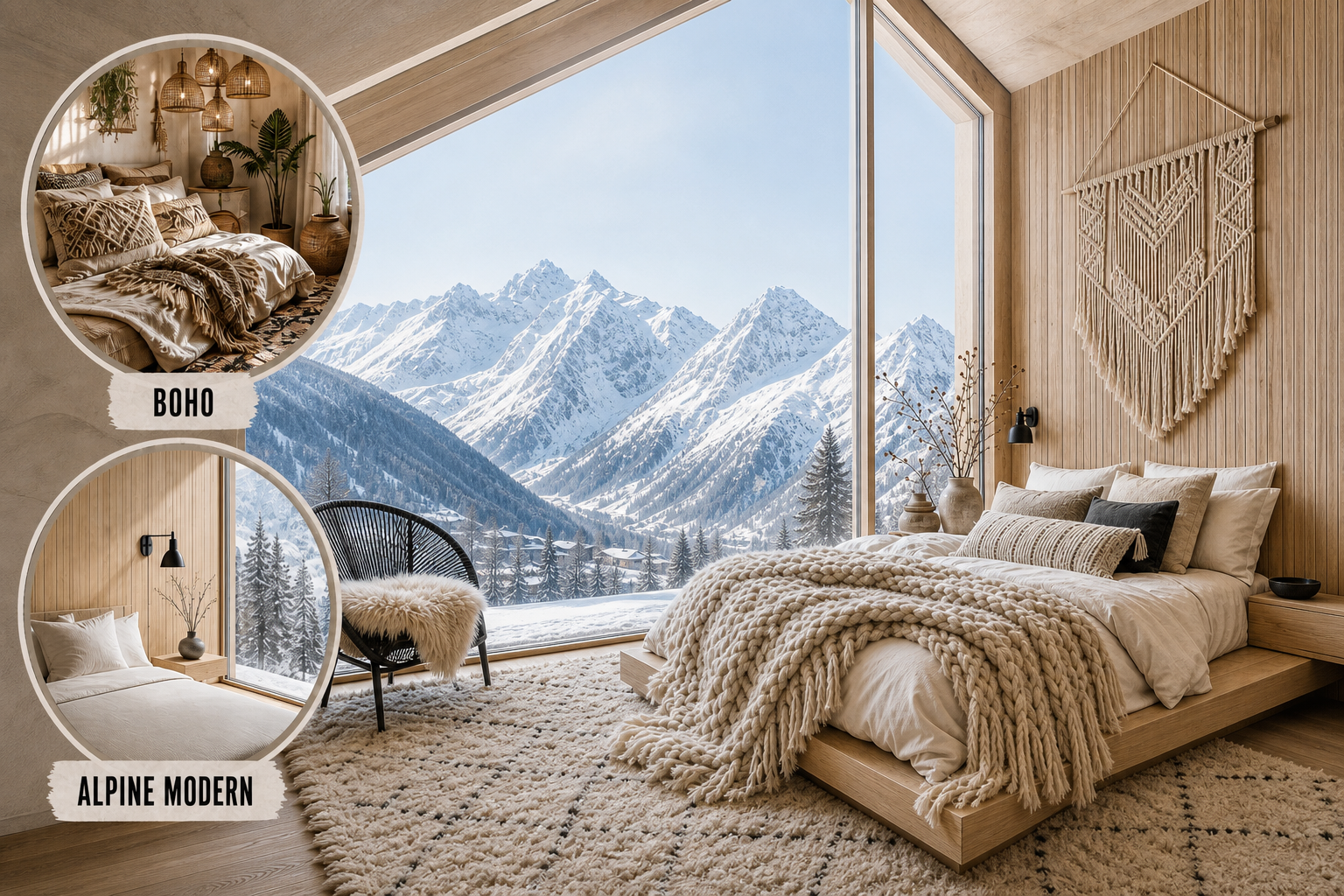
Boho’s loose, eclectic informality deeply contradicts the stark, minimalist restraint of alpine modern architecture. You can successfully resolve this tension by using rigorous, clean-lined built-ins to frame highly textured, monochromatic organic textiles and oversized singular handcrafted objects.
Grounding the Boho Softness
Boho thrives on heavily layered informality, but introducing it to a precise architectural shell requires strict material discipline. This deep contradiction begins with the textiles, where organic warmth must meet stark geometry without creating any sense of visual clutter.
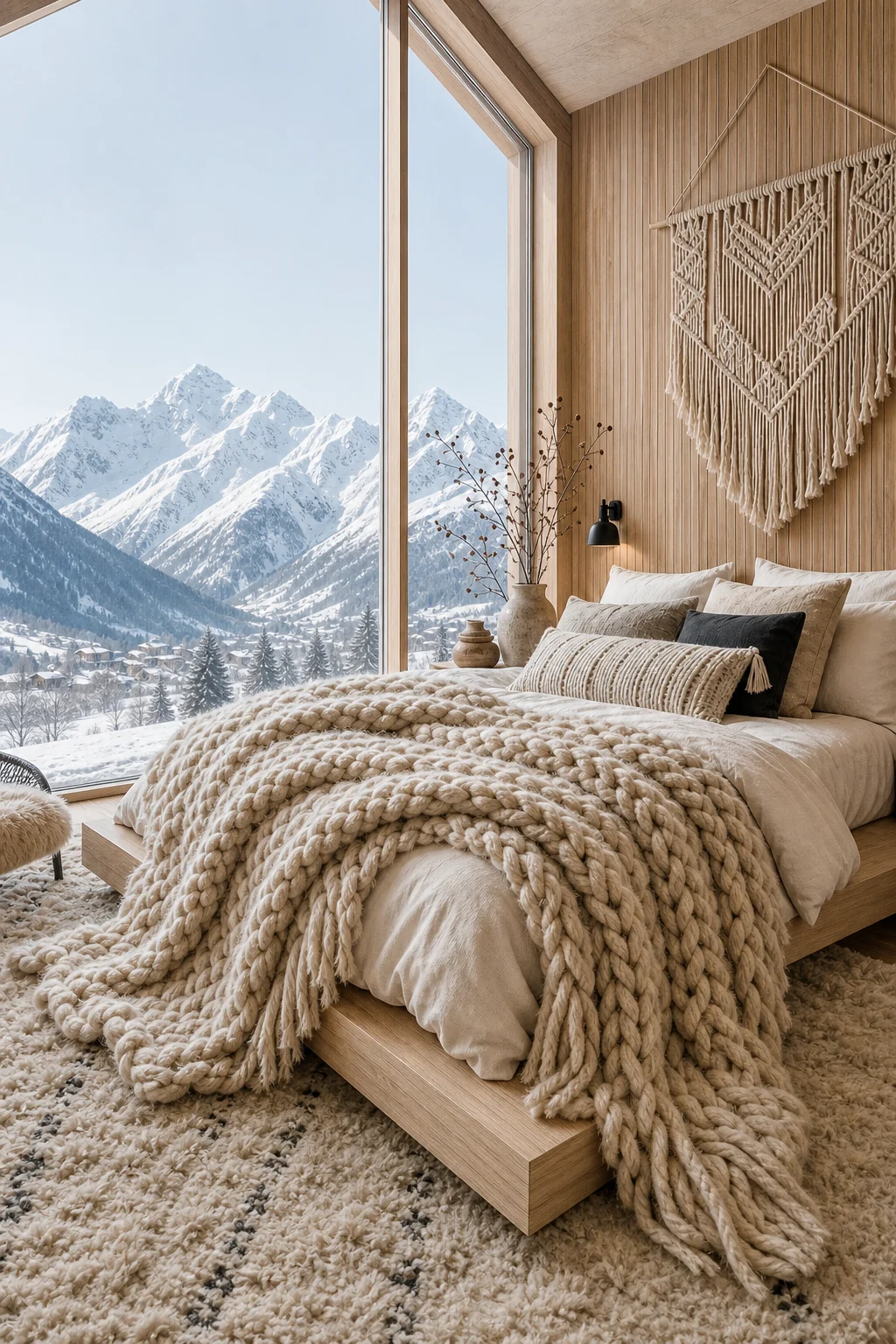
Stripping away bright, eclectic patterns is absolutely essential for this integration to succeed. By relying entirely on raw, unbleached cream yarns, these heavy textiles provide necessary warmth without disrupting the room’s serene visual weight or competing with the structural framework.
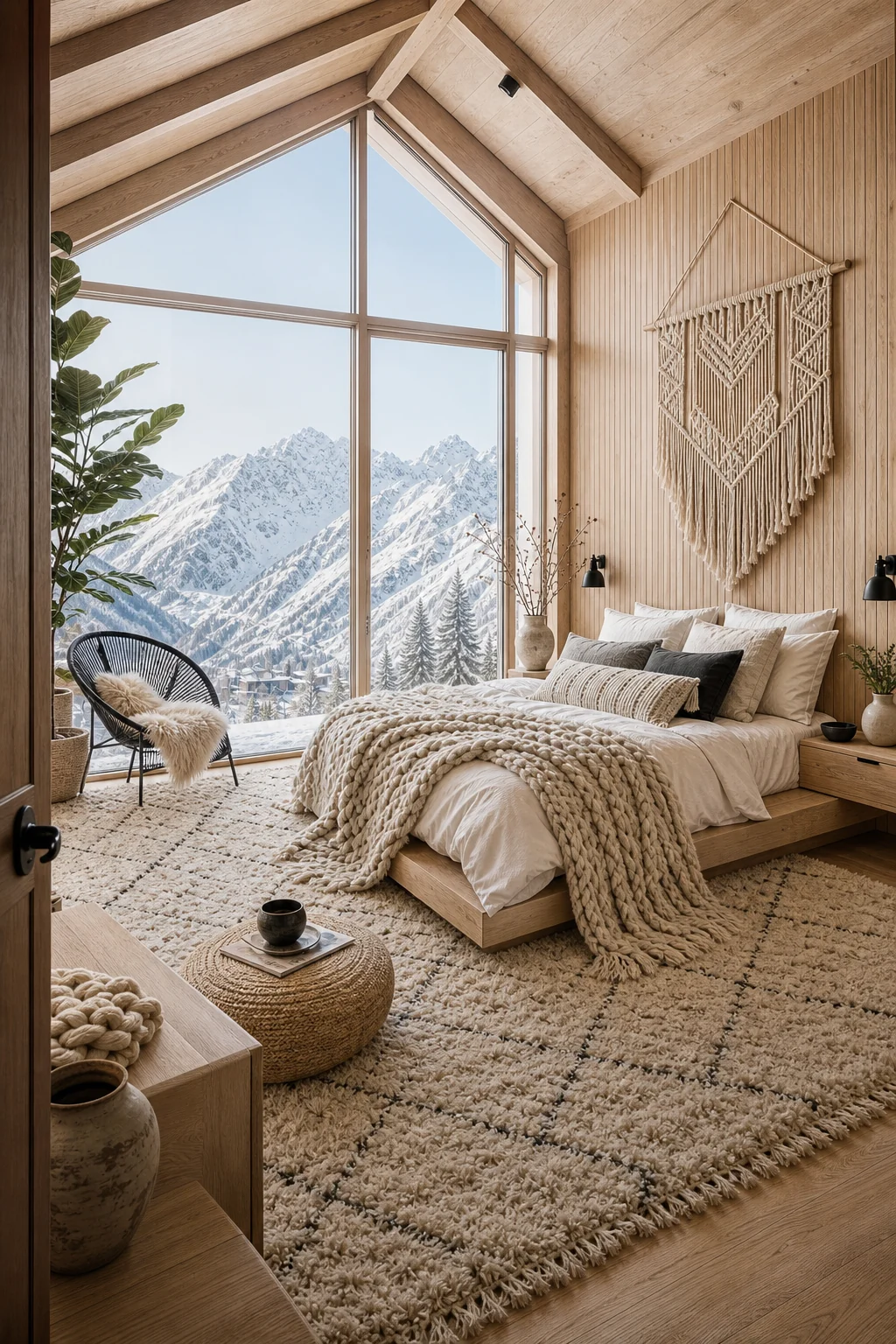
This tactile approach ensures the bedroom feels inviting rather than sterile. An oversized chunky-knit unbleached wool throw acts as a crucial softening agent, deliberately contrasting against the hard architectural lines of the built-in minimalist timber bed frame.
Defining the Alpine Modern Shell
Alpine modern dictates the rigorous, clean-lined architectural shell of the bedroom. This minimalist framework is crucial for containing the eclectic nature of the softer decor, actively preventing the space from feeling visually overwhelming or unintentionally chaotic to the eye.
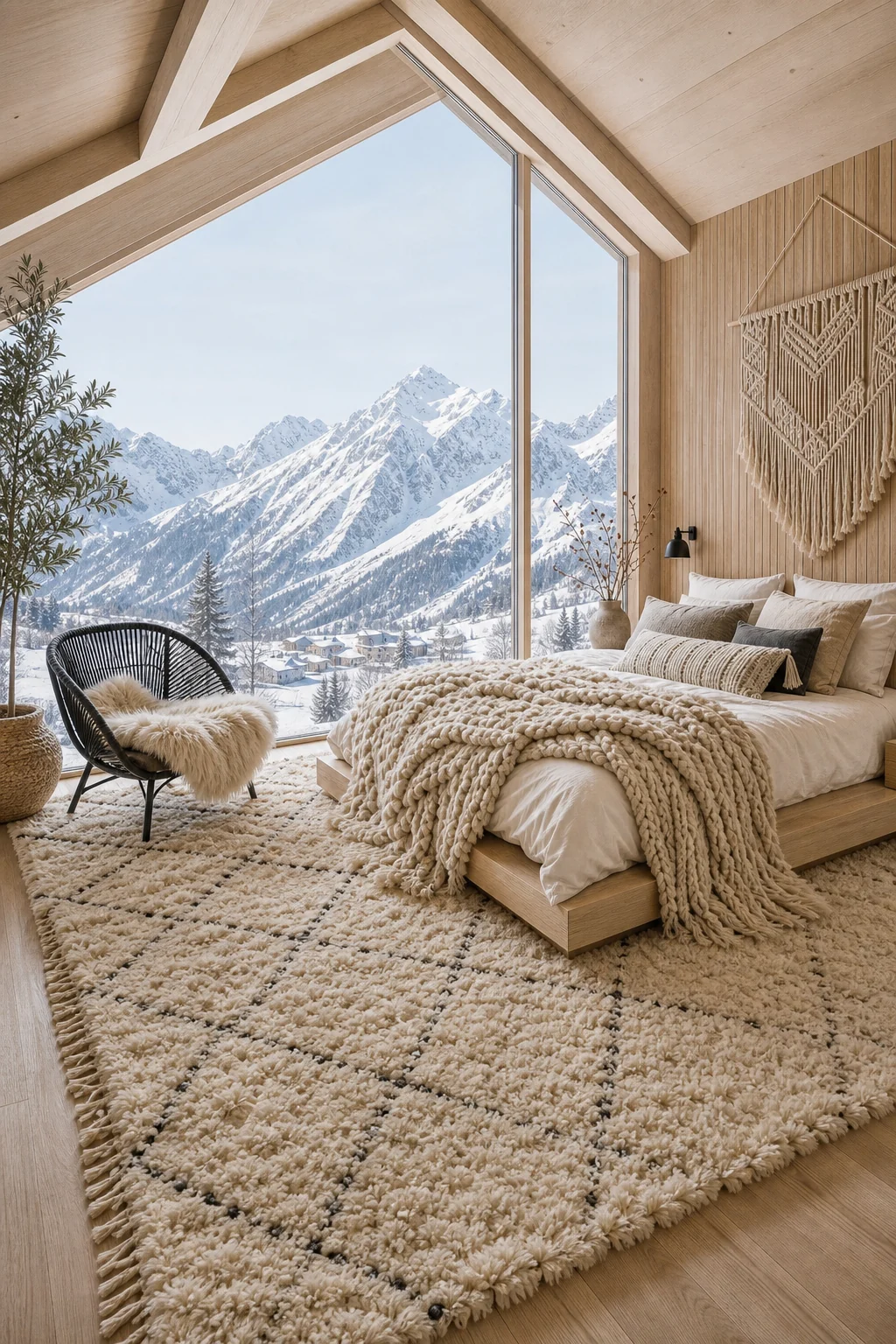
The architecture serves as a strict boundary for the softer organic elements. Seamless pale oak vertical paneling establishes a continuous visual flow, drawing the eye directly toward the expansive floor-to-ceiling geometric windows framing the crisp, snow-covered mountains outside.
- Keep sightlines completely clear across the room to emphasize the expansive floor-to-ceiling geometric windows framing the mountains.
- Use seamless pale oak vertical paneling across primary walls to create a continuous, uninterrupted architectural flow.
- Integrate minimalist, low-profile built-in timber furniture to anchor the room’s lower half with heavy geometric precision.
- Ensure all architectural joints remain sharp, flush, and meticulously concealed to maintain the minimalist illusion perfectly.
Bridging the Gap With Texture
The deep stylistic clash is resolved through a shared monochromatic palette of snow white, pale ash, and deep charcoal. This strict color control acts as an essential bridge, allowing two distinct design languages to coexist peacefully within the same room.
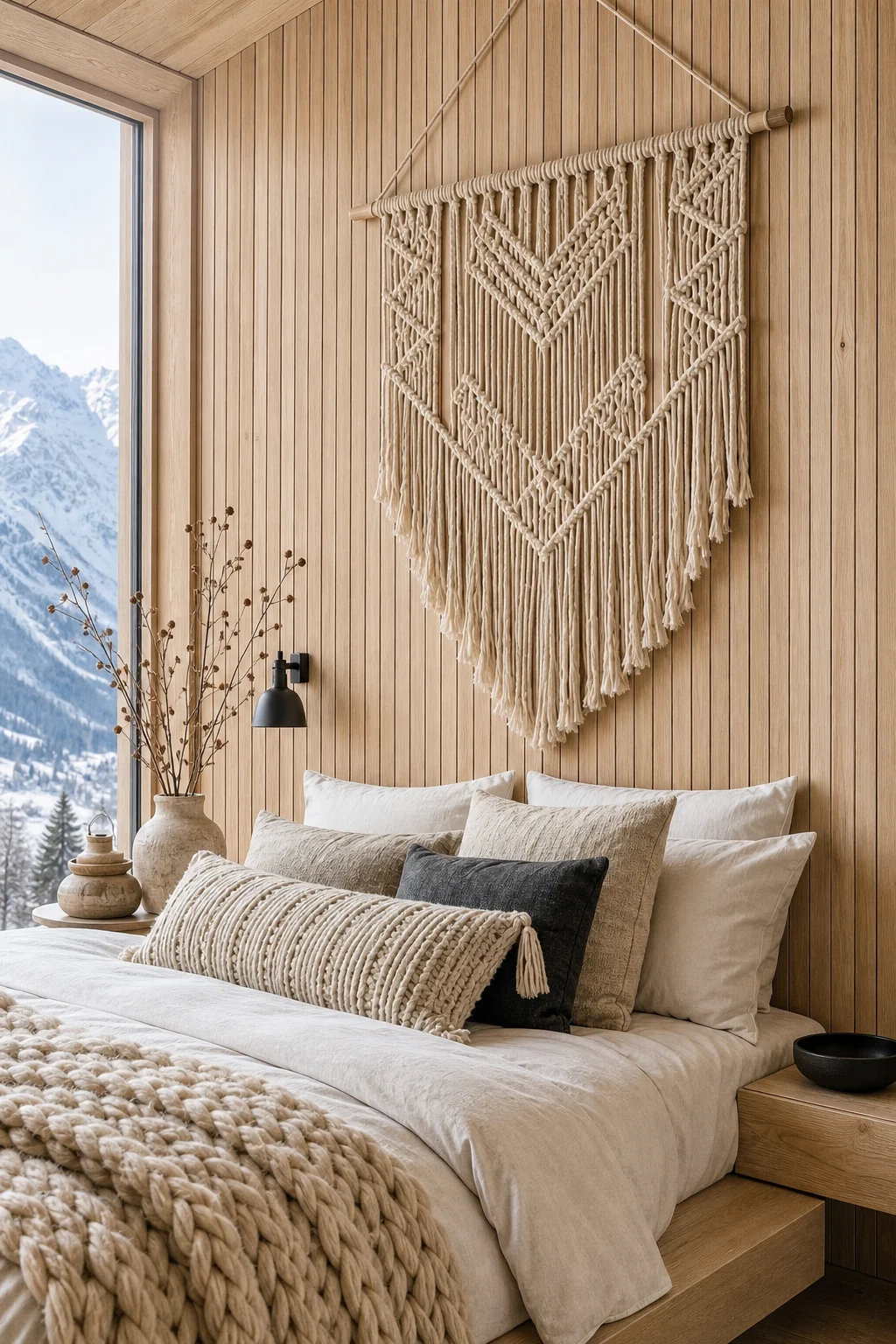
Repeated geometry further unifies the room’s disparate elements. The structured, linear knotting of a large-scale structured macramé wall hanging directly echoes the vertical slats of the timber paneling, creating unexpected and highly satisfying visual harmony across the walls.
This disciplined color scheme allows the rich textures to speak loudly without causing visual fatigue. The raw, unspun wools of the boho textiles perfectly mirror the rugged, natural textures of traditional alpine sheepskin and quarried mountain stone.
Building a Cohesive Seating Area
A functional seating vignette demonstrates exactly how these styles interact on a human scale. Sleek metal frames provide a sharp, unforgiving counterpoint to plush, deep-pile rugs, chunky knits, and heavily textured organic throws draped casually over the rigid furniture.
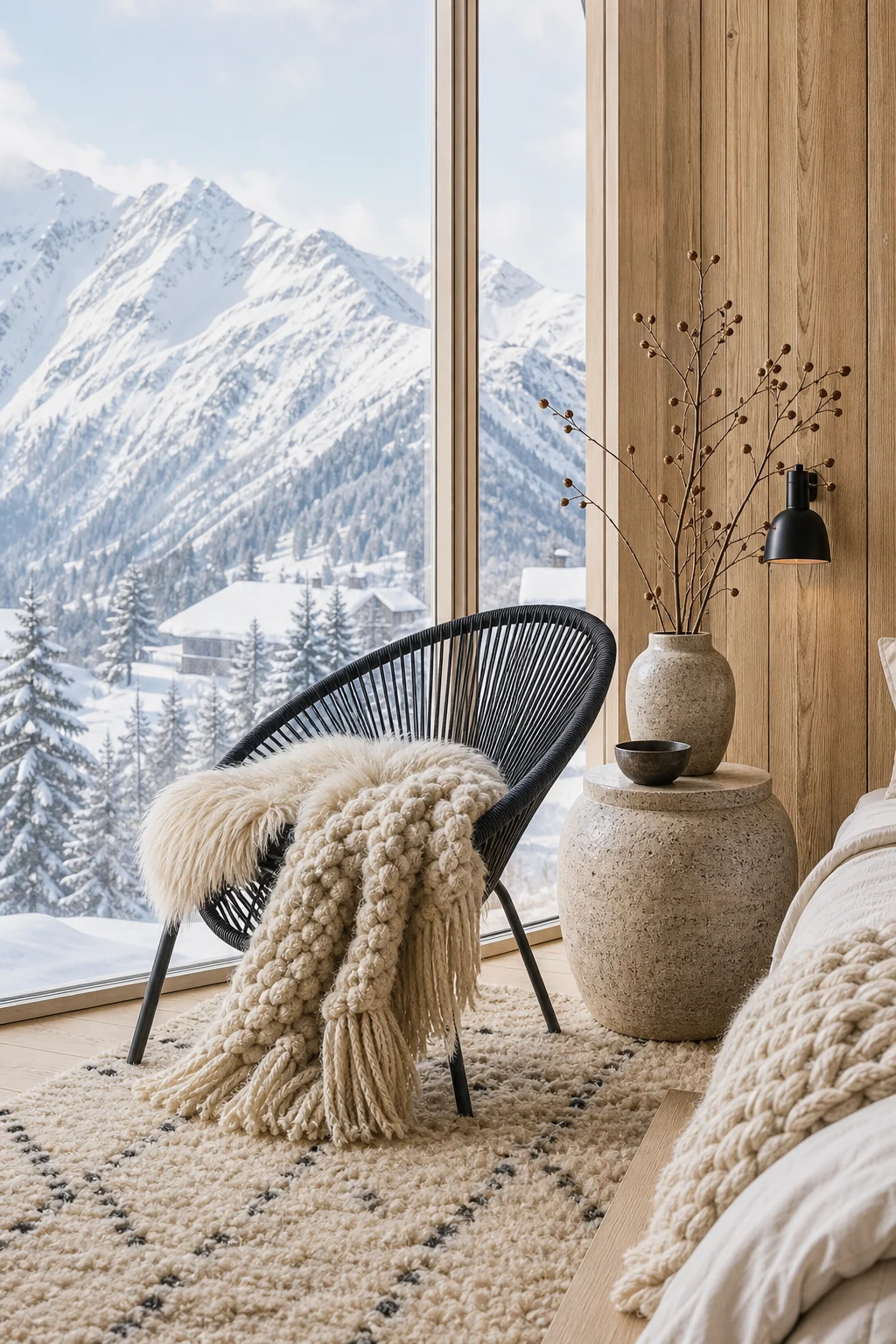
Balancing these elements requires a clear understanding of their respective structural roles. The translation table below outlines how each design layer contributes to the final, cohesive aesthetic without ever overpowering the opposing style in the shared physical space.
| Design Layer | boho Role | alpine modern Role | Bridge Decision |
|---|---|---|---|
| Architectural Shell | Organic, inviting warmth | Strict, clean geometry | Seamless pale ash wood paneling |
| Large Furniture | Low-slung, casual comfort | Minimalist, integrated built-ins | Low-profile timber bed frames |
| Soft Textiles | Heavy fringe and chunky knits | Crisp, tailored neutral linens | Monochromatic raw unspun wools |
| Room Lighting | Woven, diffused ambient glow | Sleek, directional metal fixtures | Matte charcoal metal reading sconces |
| Small Accents | Handcrafted, tactile ceramics | Stark, empty surface restraint | Oversized singular neutral bedside vessels |
By assigning specific, non-competing responsibilities to each distinct layer, the room gracefully avoids feeling like a chaotic mixture. The resulting seating area feels both meticulously planned by an architect and effortlessly inhabited by a passionate collector of textiles.
Illuminating the Structural Details
Lighting serves as a critical architectural anchor in this hybrid space. Sleek matte charcoal metal sconces introduce a necessary dark, precise element that cuts sharply through the soft, pale textiles and pale oak walls to establish visual hierarchy.
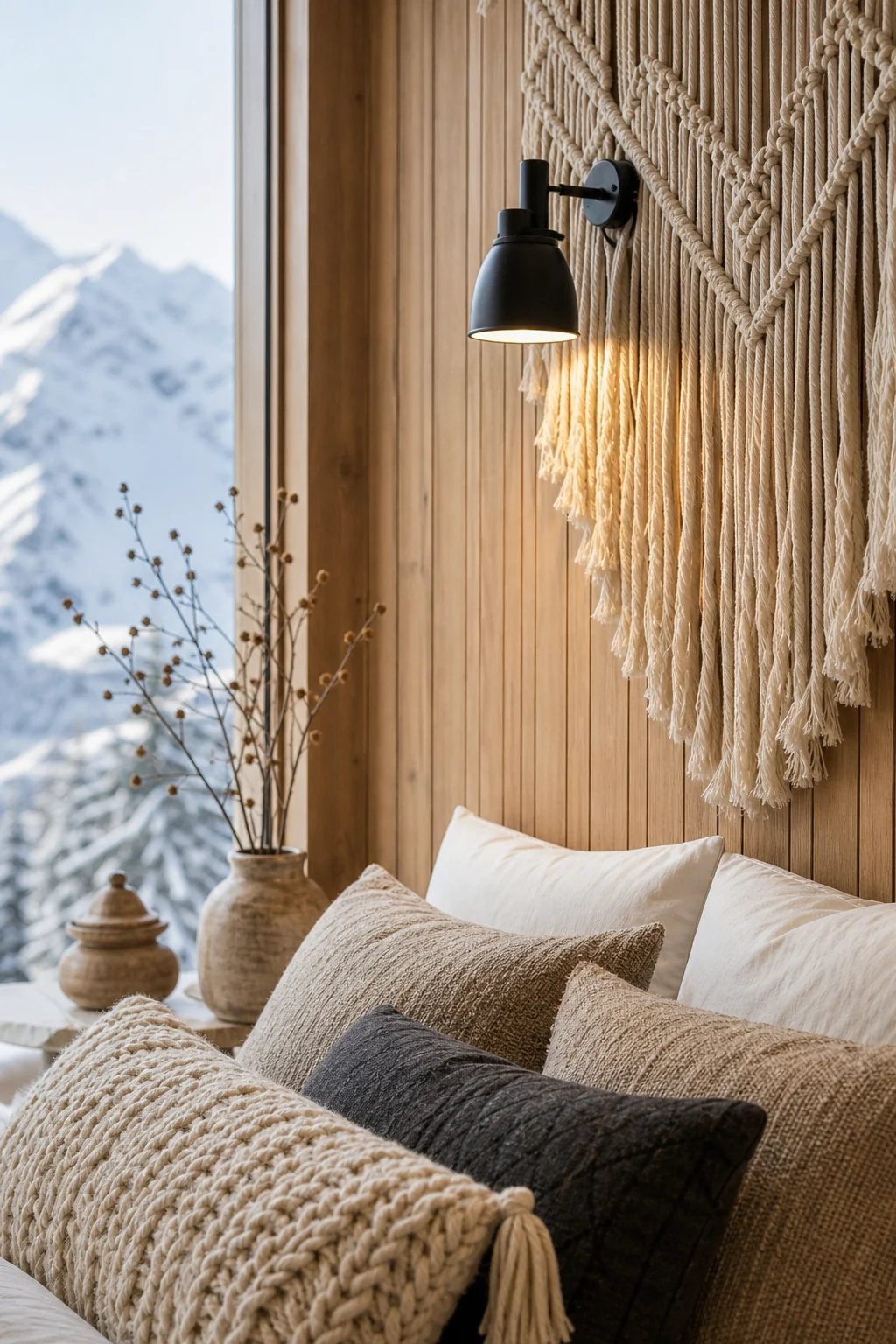
This high-contrast lighting strategy highlights the tactile echo between the raw, unspun wools and the rugged timber. Directional beams emphasize the deep shadows within the macramé knots, reinforcing the geometric connection to the wooden slats behind them.
- Install sleek matte charcoal metal reading sconces to provide a stark, high-contrast industrial counterpoint.
- Direct the focused beam to highlight the heavy textures of the raw cream yarn wall hangings.
- Keep all electrical wiring completely hidden within the timber paneling to preserve the minimalist illusion.
- Ensure the metal finish remains entirely matte to avoid unwanted reflections against the soft organic textiles.
Curating the Restrained Accents
Styling small surfaces in this bedroom requires immense restraint. Instead of typical eclectic clutter, opt for oversized, singular handcrafted objects that command immediate attention without overwhelming the minimalist surfaces of the built-in furniture or disrupting the serene atmosphere.
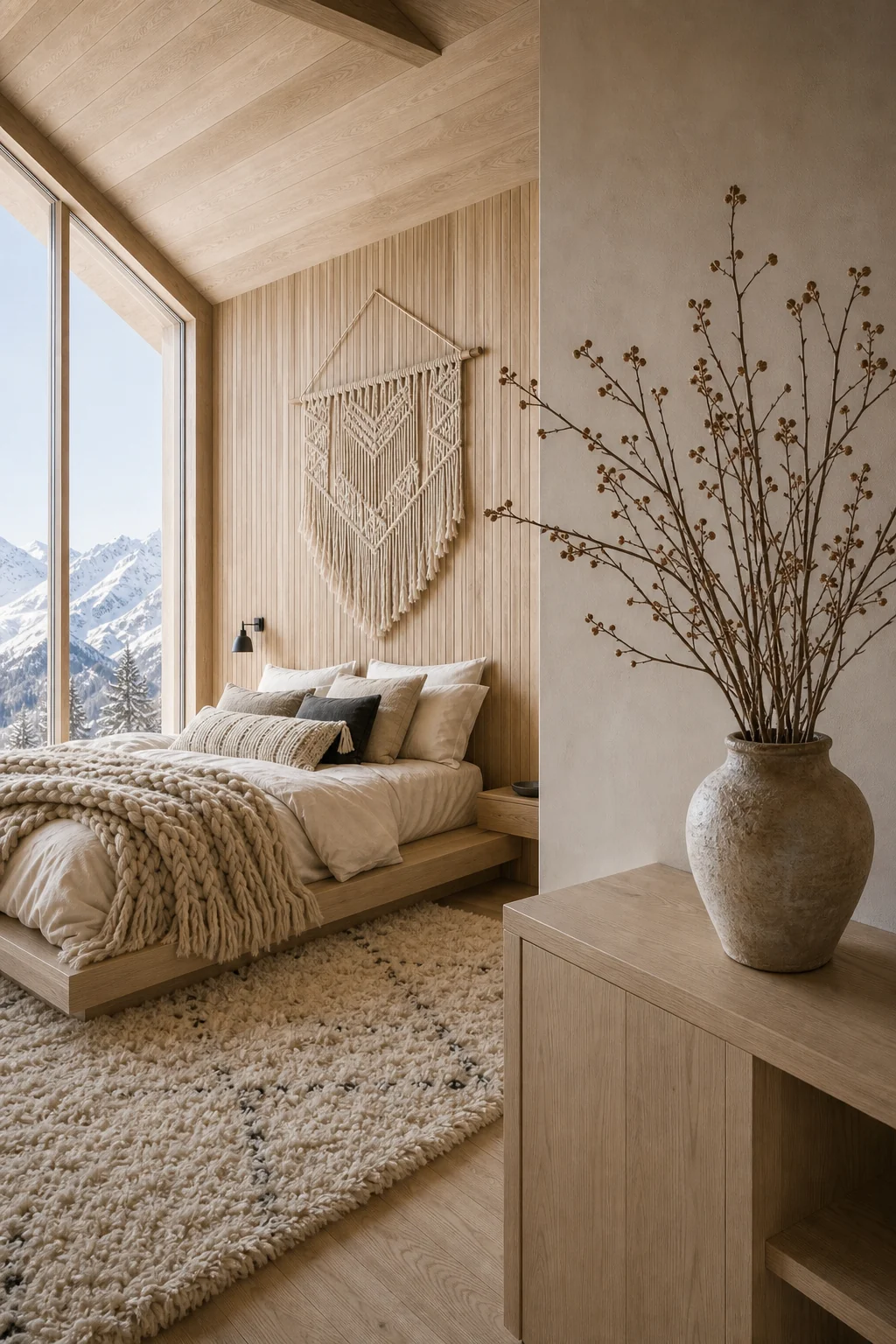
Every object must justify its placement through monumental scale and rich texture. A single organic hand-thrown ceramic vessel provides enough visual interest to anchor an entire console table, completely eliminating the need for smaller, distracting decorative trinkets.
- Source oversized chunky-knit unbleached wool throws with thick fringe to drape over precise timber frames.
- Hang large-scale structured macramé in raw yarn to introduce heavy texture to bare wooden walls.
- Display organic, hand-thrown ceramic bedside vessels as singular, sculptural focal points on empty nightstands.
- Anchor the floor space with plush, deep-pile cream Moroccan-style rugs to soften the hard oak planks.
Adapting the Look Beyond the Bedroom
Translating this strict logic to transitional spaces like hallways or entryways relies on maintaining the exact same material tension. A stark, echoey timber corridor instantly softens with the introduction of a plush, heavy floor runner to guide the footstep.
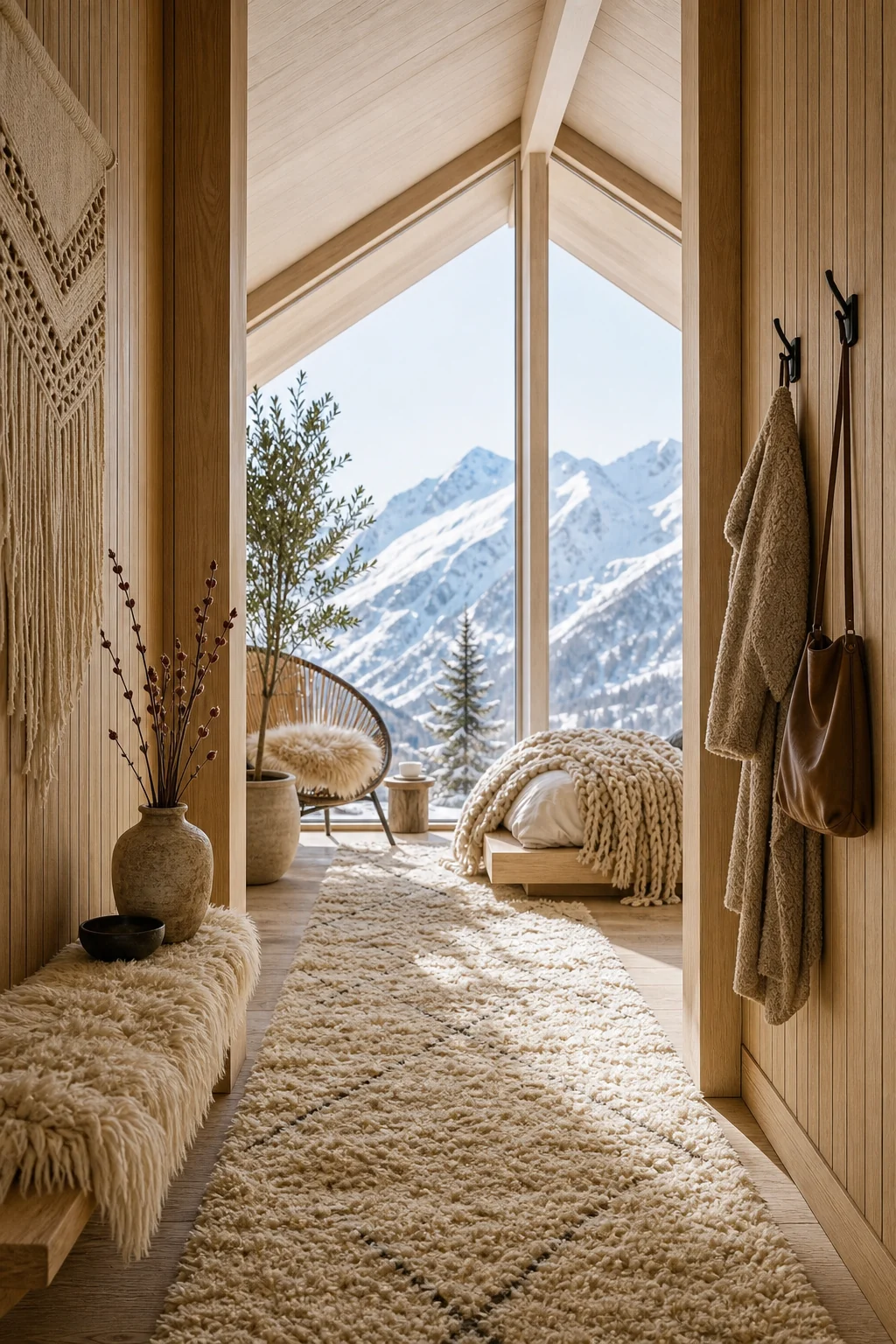
The architectural shell must remain dominant even in these narrower passages. Letting a plush cream Moroccan-style rug float generously within the wooden floor ensures the sharp borders of the room remain crisp, visible, and structurally uncompromised by the fabric.
If the textiles begin to obscure the built-in furniture or spill over the paneling edges, the balance has shifted too far. The architecture must always frame the softness, never be consumed, hidden, or softened by it in any way.
Avoiding the Thematic Trap
Achieving this delicate balance requires constant, ruthless editing. The most common mistake is allowing one aesthetic to dominate the other, turning a sophisticated hybrid space into a predictable, themed set that lacks genuine architectural rigor or authentic warmth.
To preserve the integrity of the design, you must actively police the boundaries between the two distinct styles. Watch carefully for these frequent points of failure during the final styling and daily maintenance phases to keep the room perfect.
- Costume: Relying on cheap, mass-produced themed decor items instead of authentic, heavy, raw organic materials.
- Split personality: Placing stark modern furniture next to messy corners rather than integrating them completely.
- Dominance: Letting bright eclectic colors overpower the serene, strictly controlled monochromatic alpine winter palette.
- Generic result: Losing the rugged textures of traditional alpine materials by choosing overly synthetic, flat fabrics.