
Dark Academia Meets Japandi: Reading Nook
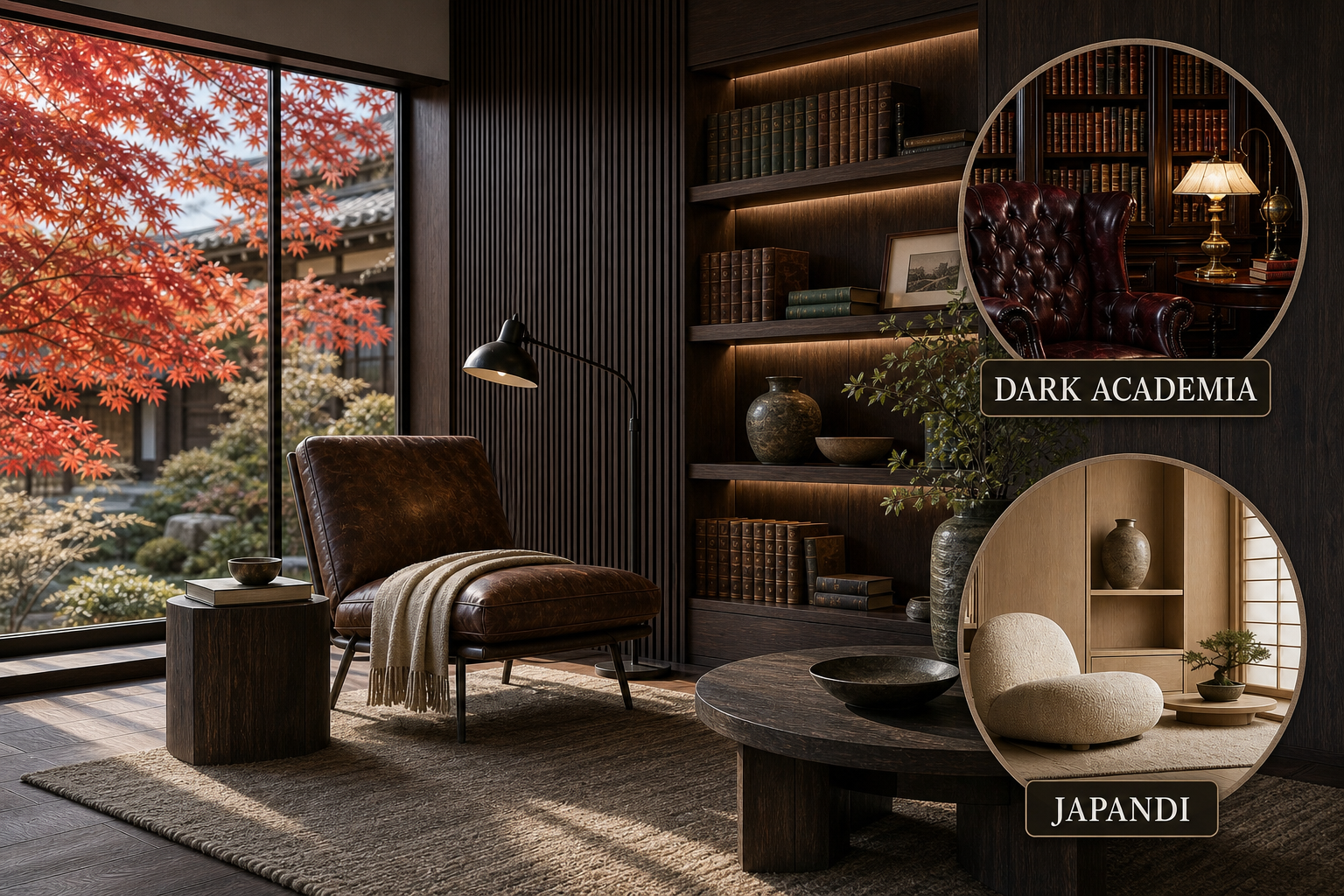
The maximalist, heavy historicism of dark academia clashes directly with the uncluttered, light-wood minimalism of japandi. We resolve this by letting dark academia control the rich material palette while japandi dictates the clean architectural geometry and strict curatorial restraint.
Anchor the Shell in Dark Woods
The dark academia aesthetic relies on heavy, historic weight, which easily overwhelms a small space. To prevent a gloomy atmosphere, we apply its signature deep espresso walnut to strictly linear, floating shelves, establishing a clean, minimalist architectural foundation.
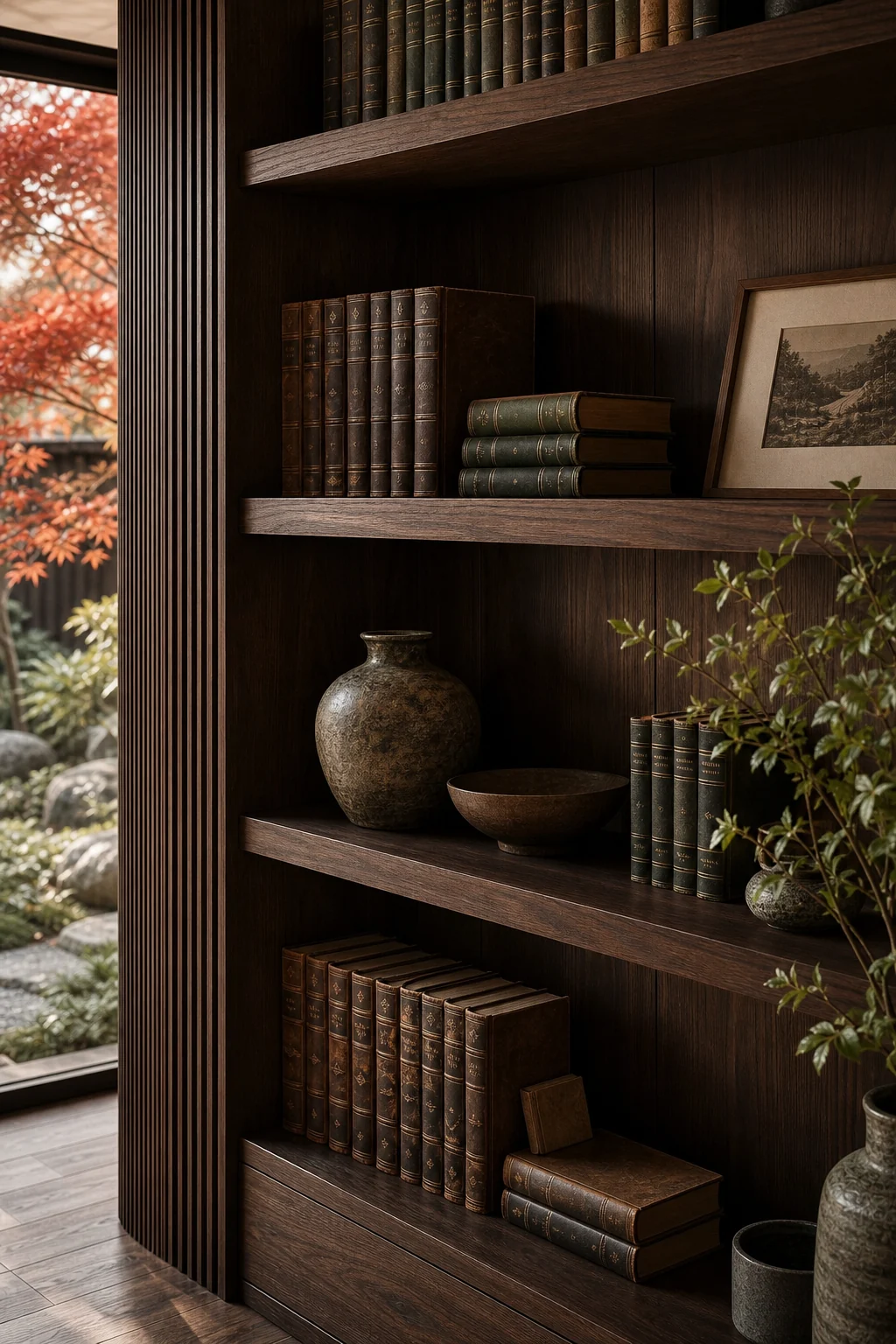
Opaque dark stains read as flat and heavy, while visible walnut grain maintains the organic texture essential to japandi. This rich material grounds the reading nook, providing historic gravity without adding unnecessary visual clutter to the surrounding bare walls.
With the architectural shell established, we must carefully select furniture that honors both aesthetics simultaneously. Next, we look at how japandi’s negative space transforms the primary seating area into a peaceful, highly functional retreat for focused, quiet reading sessions.
Streamline the Seating Geometry
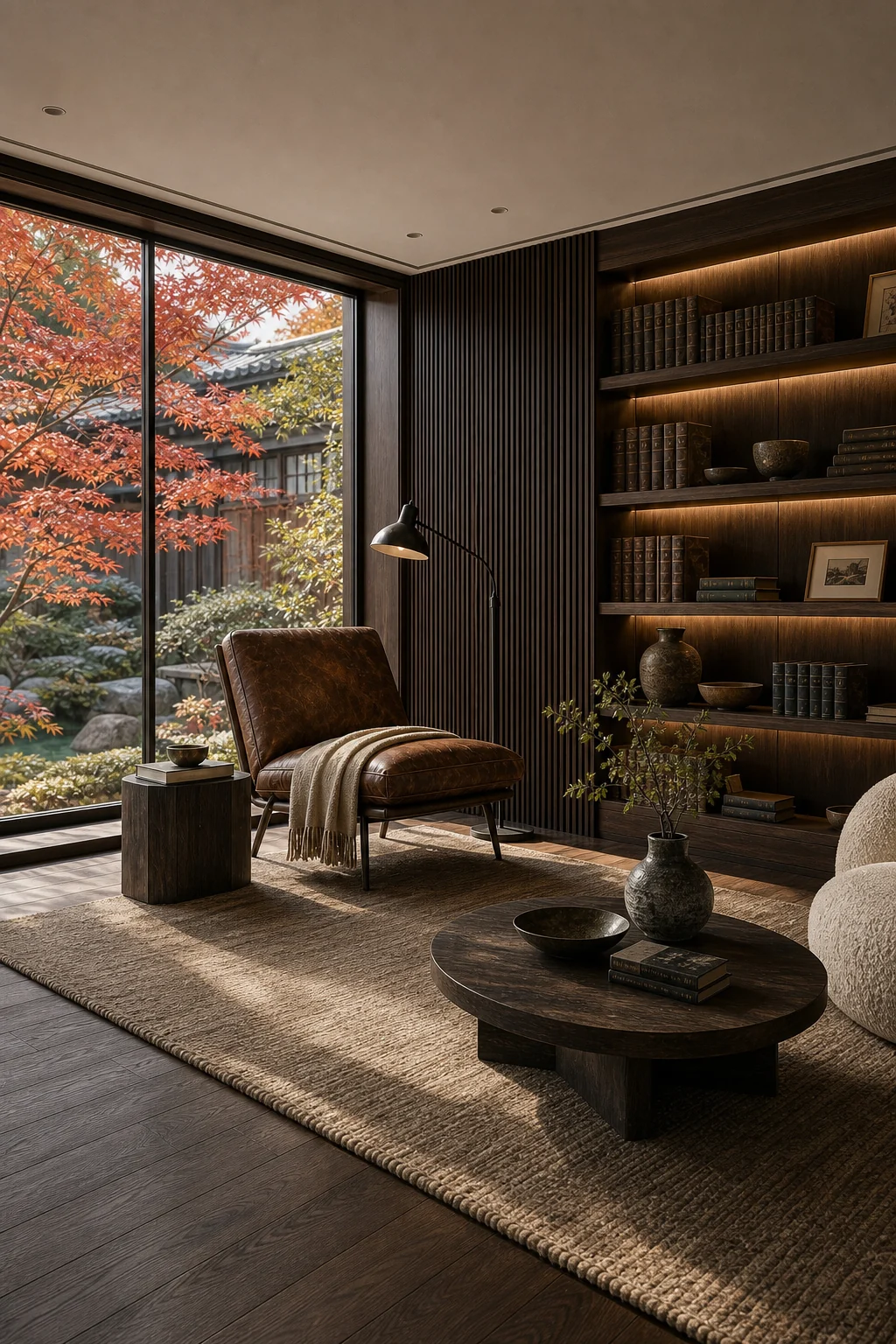
The japandi approach demands uncluttered negative space and low-profile seating to create a profound sense of calm. We honor this geometry but swap pale bouclé for dark academia’s aged saddle leather, injecting essential intellectual weight into the minimalist wooden frame.
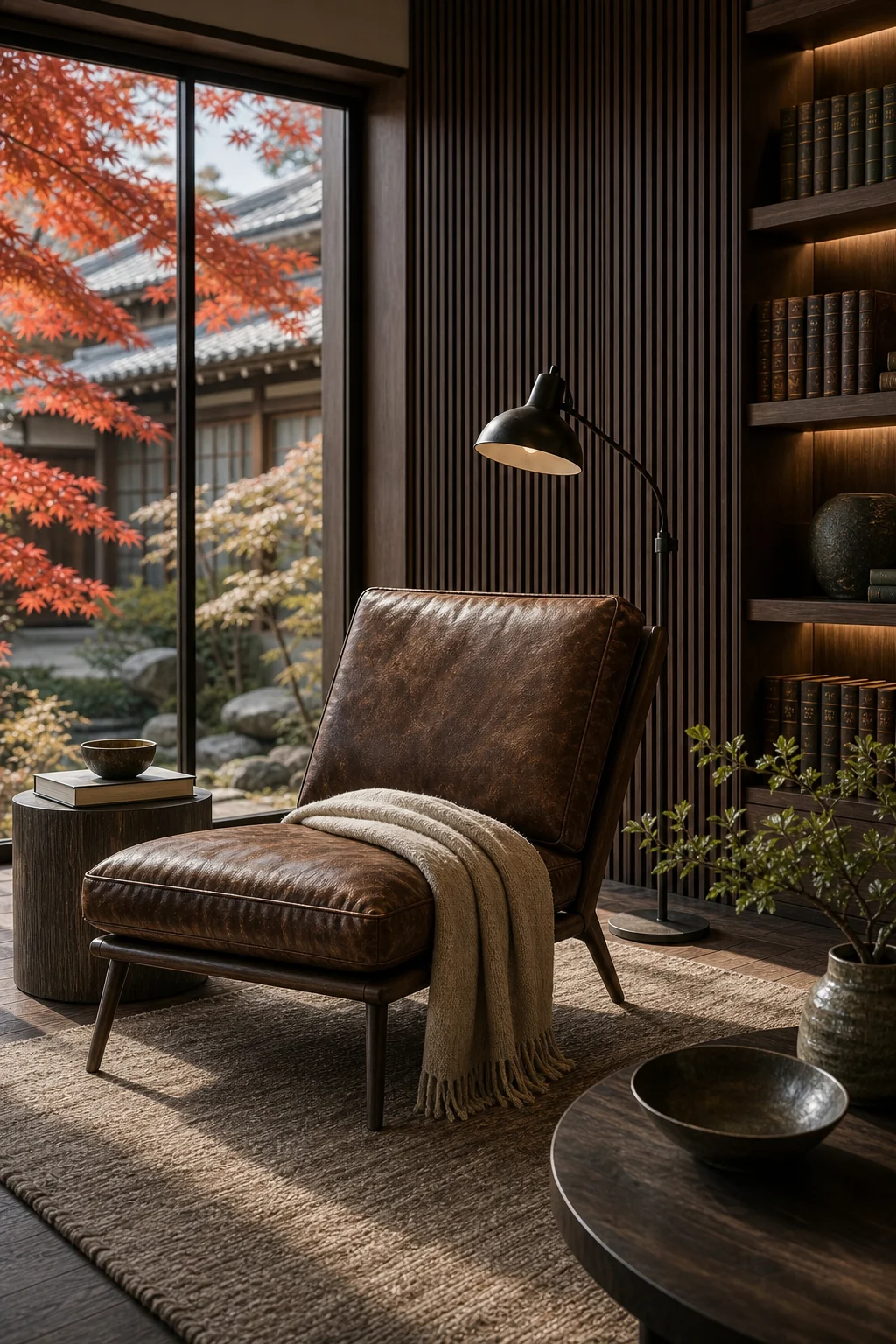
Choose chairs with exposed wooden frames rather than fully upholstered, heavy blocks. Ensure the leather has a matte, distressed finish to avoid a modern showroom look, keeping the floor space beneath the seating entirely clear and visually open.
- Keep the floor space beneath the seating entirely clear to maximize the feeling of airy, uninterrupted negative space.
- Select low-profile frames that emphasize horizontal lines, grounding the room’s energy closer to the floor for ultimate relaxation.
- Avoid tufted or overstuffed traditional library chairs that disrupt the strict minimalist architectural geometry of the surrounding space.
- Pair the seating with a warm unbleached linen throw to introduce soft, natural tactile texture against the dark leather.
Bridge the Walls with Slatted Texture
The primary architectural bridge between these opposing worlds is the vertical slatted wall. By executing this classic japandi feature in dark academia’s deep espresso walnut, the room gains immediate historic gravity while remaining structurally clean and wonderfully organized.
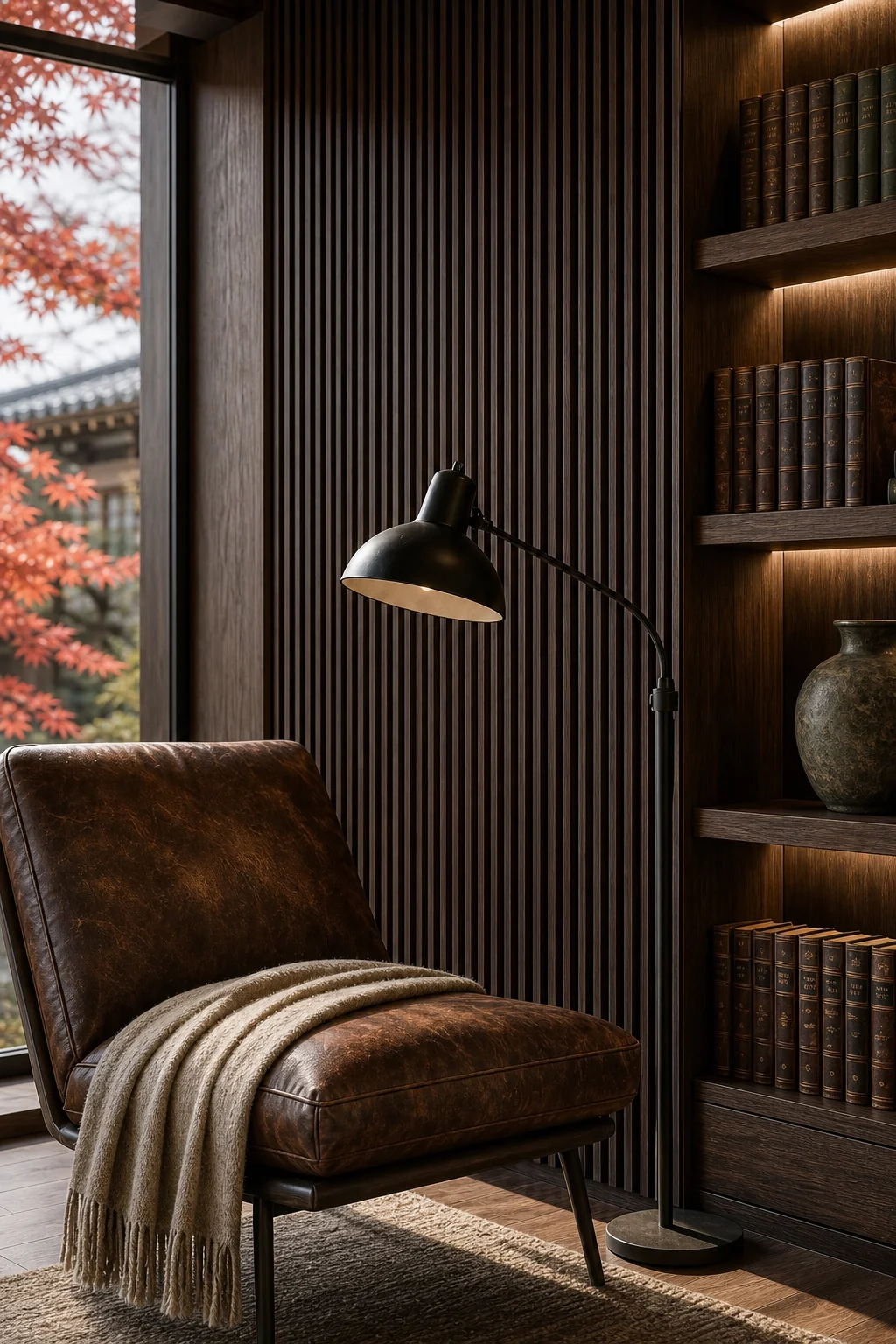
This ribbed texture adds vital depth to the dark palette, preventing the walls from feeling like a solid black void. The repeating vertical lines draw the eye upward, reinforcing the minimalist geometry and creating rhythmic, calming visual interest.
Let us see how these foundational elements combine into a complete seating vignette. When rich, historic materials meet uncluttered negative space, the resulting environment feels both intellectually stimulating and profoundly peaceful, ready for hours of quiet contemplation.
Assemble the Curated Nook
Building the room requires strict curatorial discipline. You must resist the urge to add rolling ladders or overflowing stacks of paper, relying instead on a highly curated layout that isolates each meaningful object within vast, calming empty space.
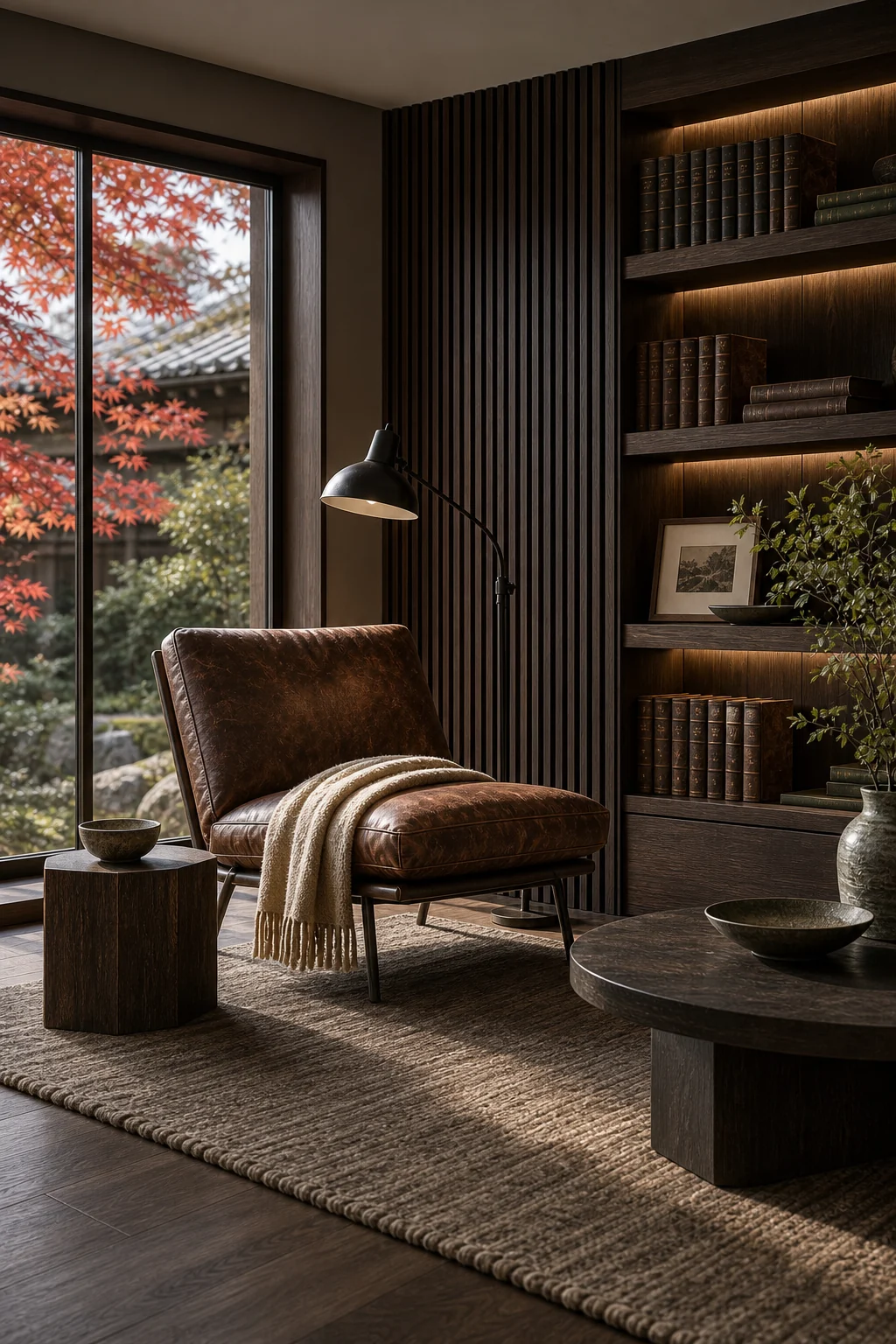
With the furniture placed and the material bridge established, the atmosphere relies entirely on intentional placement. We map out the exact roles each style plays across the room’s layers to ensure a perfectly resolved aesthetic contradiction that never feels accidental.
| Layer | dark academia Role | japandi Role | Bridge Decision |
|---|---|---|---|
| Shell | Moody, dark-stained wood tones | Clean vertical lines and vast negative space | Slatted espresso walnut paneling |
| Large Furniture | Aged saddle leather upholstery | Low-profile, minimalist wooden frames | Mid-century inspired leather lounge chairs |
| Textiles | Heavy, comforting warmth and depth | Unbleached, natural organic fibers | Warm unbleached linen throws |
| Lighting | Classic library reading lamps | Matte, unadorned minimalist finishes | Matte blackened bronze task lighting |
| Accents | Vintage hardbound books and history | Sparse, highly intentional placement | Strictly curated, uncrowded built-in shelves |
This strict framework ensures neither aesthetic overwhelms the other. Next, we must address how natural light interacts with these heavy, dark surfaces to maintain absolute clarity and prevent the reading nook from feeling oppressive or visually muddy.
Illuminate the Heavy Textures
Dark rooms fail completely when they lack adequate, balanced illumination. We rely heavily on japandi’s deep connection to nature, using large windows to filter bright daylight across the heavy interior materials, lifting the shadows naturally and beautifully.
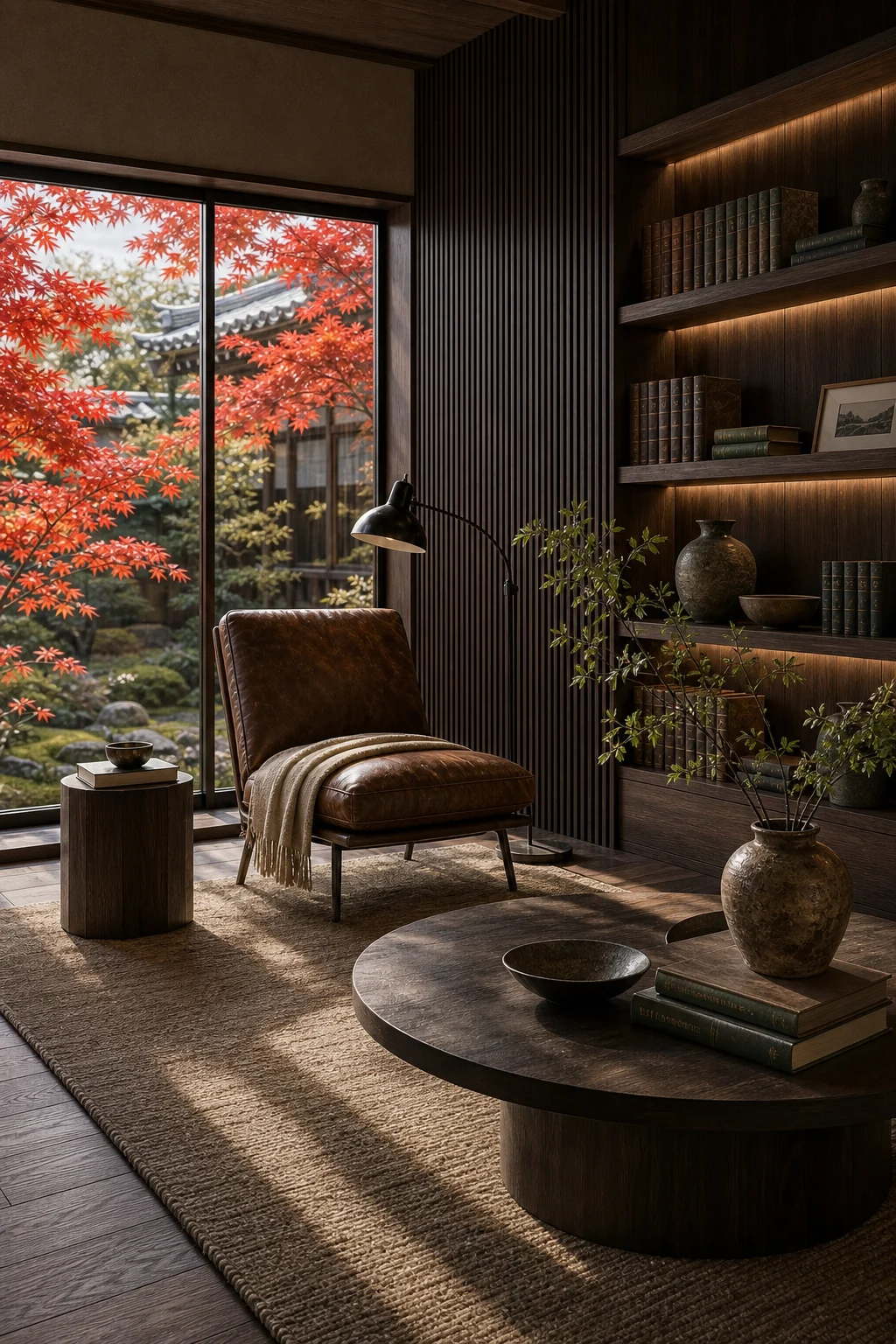
This natural brightness allows us to style the smaller details with absolute precision. Open shadows ensure every dark wood and leather surface remains clearly visible and inviting, never gloomy or muddy during the daytime hours when reading is essential.
Proper illumination highlights the organic textures rather than hiding them in gloom. With the lighting perfectly balanced, we can now focus on curating the ideal accessories for the built-in shelves without creating visual chaos or overwhelming the space.
Edit the Intellectual Accessories
The styling phase is where the dark academia instinct to hoard must be completely suppressed. We organize heavy vintage books into precise, isolated groupings rather than overflowing stacks, treating each volume as a deliberate, highly respected sculptural object.
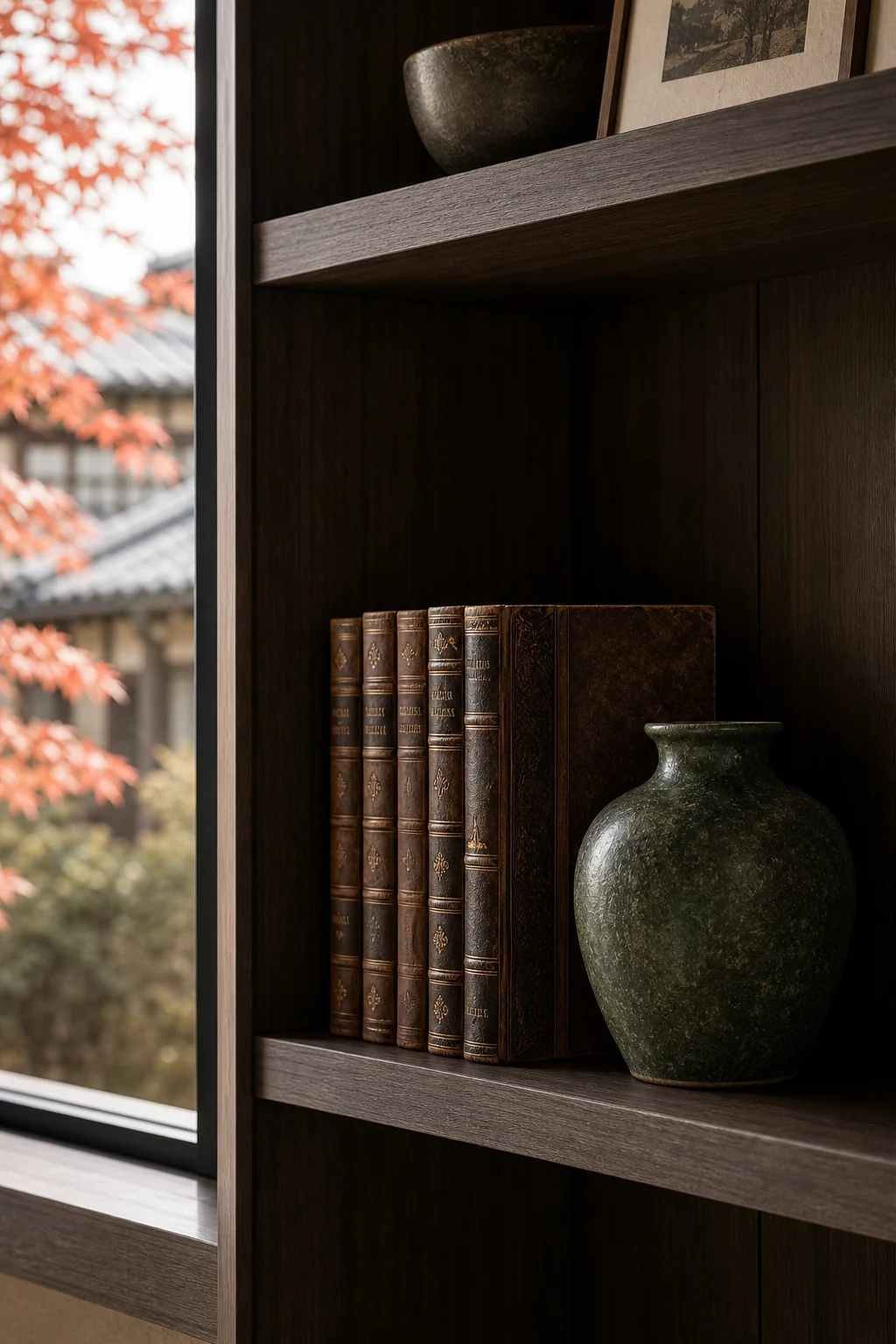
Select items that carry immense intellectual weight but display them with vast negative space. A strictly curated approach merges historic atmosphere with calming wabi-sabi restraint, turning a traditional library into a minimalist sanctuary designed for focused, uninterrupted reading.
- Source matte blackened bronze floor lamps with adjustable heads for precise, glare-free reading illumination.
- Drape warm unbleached linen throws with simple, frayed edges to soften the rigid wooden architecture.
- Place handmade wabi-sabi ceramic vessels in deep forest green to introduce subtle, organic color variations.
- Display vintage hardbound books with subtle gold spine embossing, ensuring they stand perfectly upright and isolated.
Extend the Logic to Passages
You can easily adapt this logic to transitional spaces like hallways or entryways. The key is maintaining the dark material palette while strictly enforcing negative space on every available surface, preventing any accidental clutter accumulation in high-traffic areas.
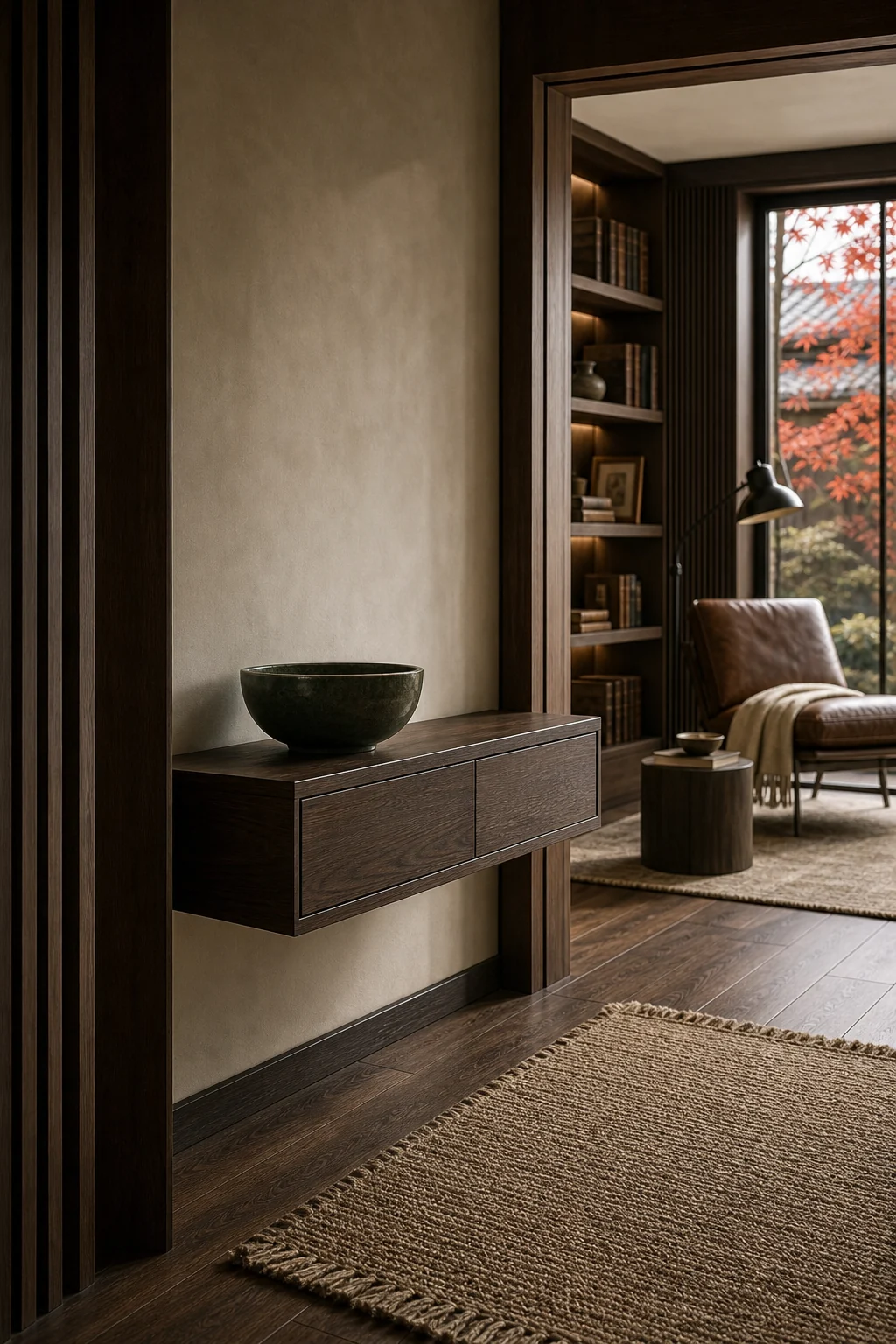
A single dark wood console table holding one deep forest green ceramic bowl communicates the entire aesthetic instantly. This minimalist approach works perfectly for smaller budgets or rental apartments where major structural architectural changes are simply impossible.
- Limit hallway decor to a single statement piece of pottery, allowing the surrounding architecture to breathe freely.
- Use floating shelves to preserve floor space in narrow corridors, maintaining the vital illusion of a larger footprint.
- Apply dark academia tones only to functional, necessary furniture pieces rather than purely decorative, unnecessary additions.
- Ensure the lighting in these transitional zones matches the color temperature of the primary reading nook perfectly.
Maintain the Disciplined Balance
The most common failure mode is the split personality, where one wall is entirely minimalist and the other is a cluttered library. Success requires blending the defining traits perfectly within every single object, unifying the room completely.
By enforcing japandi restraint, we prevent dark academia from becoming a heavy costume. The resulting reading nook is intellectually stimulating and profoundly peaceful. To maintain this perfect harmony, you must strictly avoid the following common aesthetic failure modes.
- Never use fake book spines or mass-produced vintage replicas that lack genuine historic texture and weight.
- Avoid heavy drapery that blocks essential natural daylight, relying instead on clean, architectural window treatments.
- Keep brass accents matte and streamlined to prevent visual clutter from distracting the eye during quiet reading.
- Resist the urge to fill empty shelf space; negative space is an active, essential design element here.