
10+ Simple Rock Landscaping Ideas for Your Yard
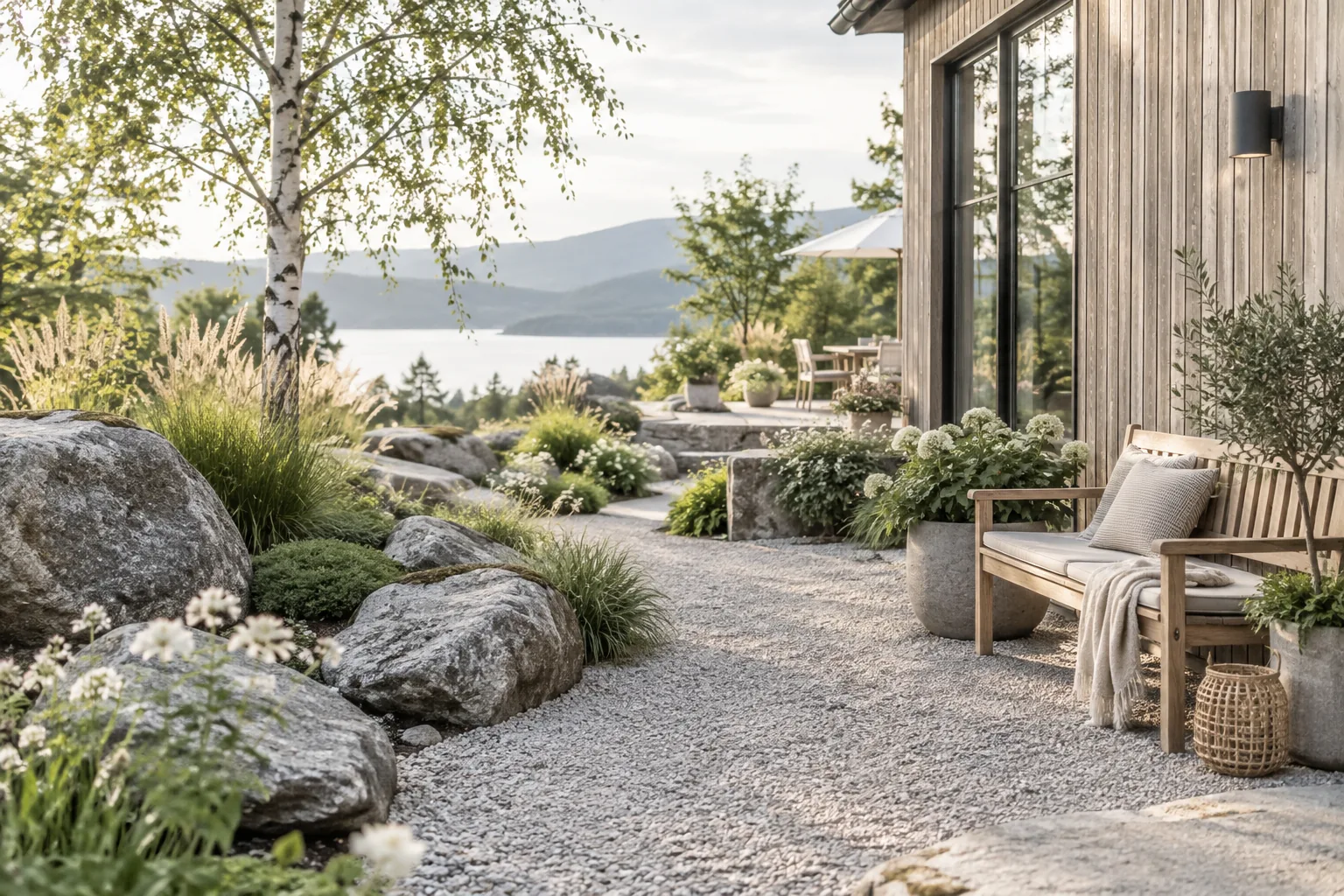
Rocks are the ultimate low-maintenance secret weapon for any outdoor space. They add instant texture and structure while cutting down on your weekend weeding time.
1. Clean Up the Foundation
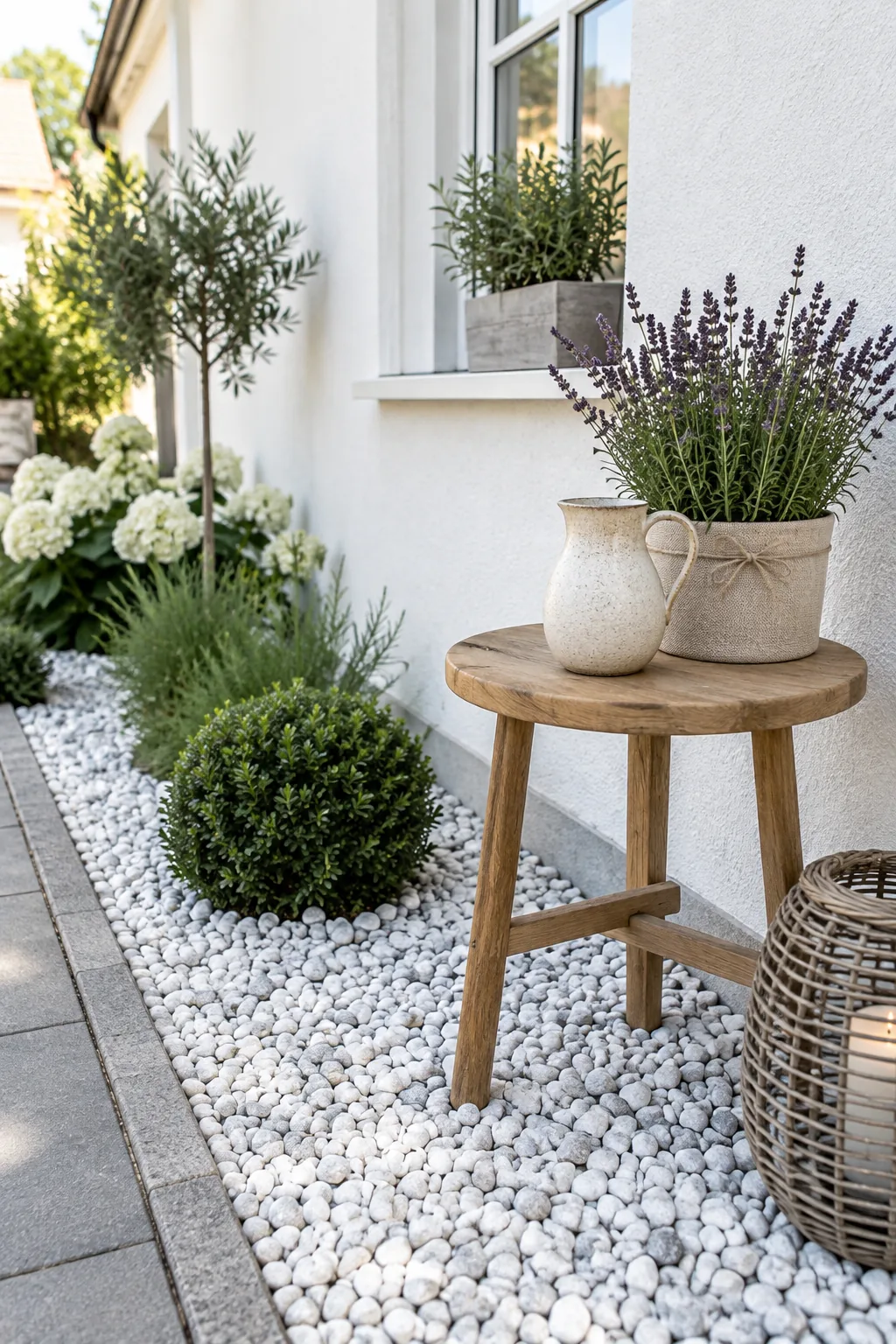
Grass struggles to grow right up against house foundations anyway. Swapping that bare dirt for a crisp bed of white marble chips instantly cleans up your home's exterior.
Why it works: It creates a clean visual break between your siding and the lawn while keeping mud off your foundation during heavy rain.
2. Build a Dry Creek Bed
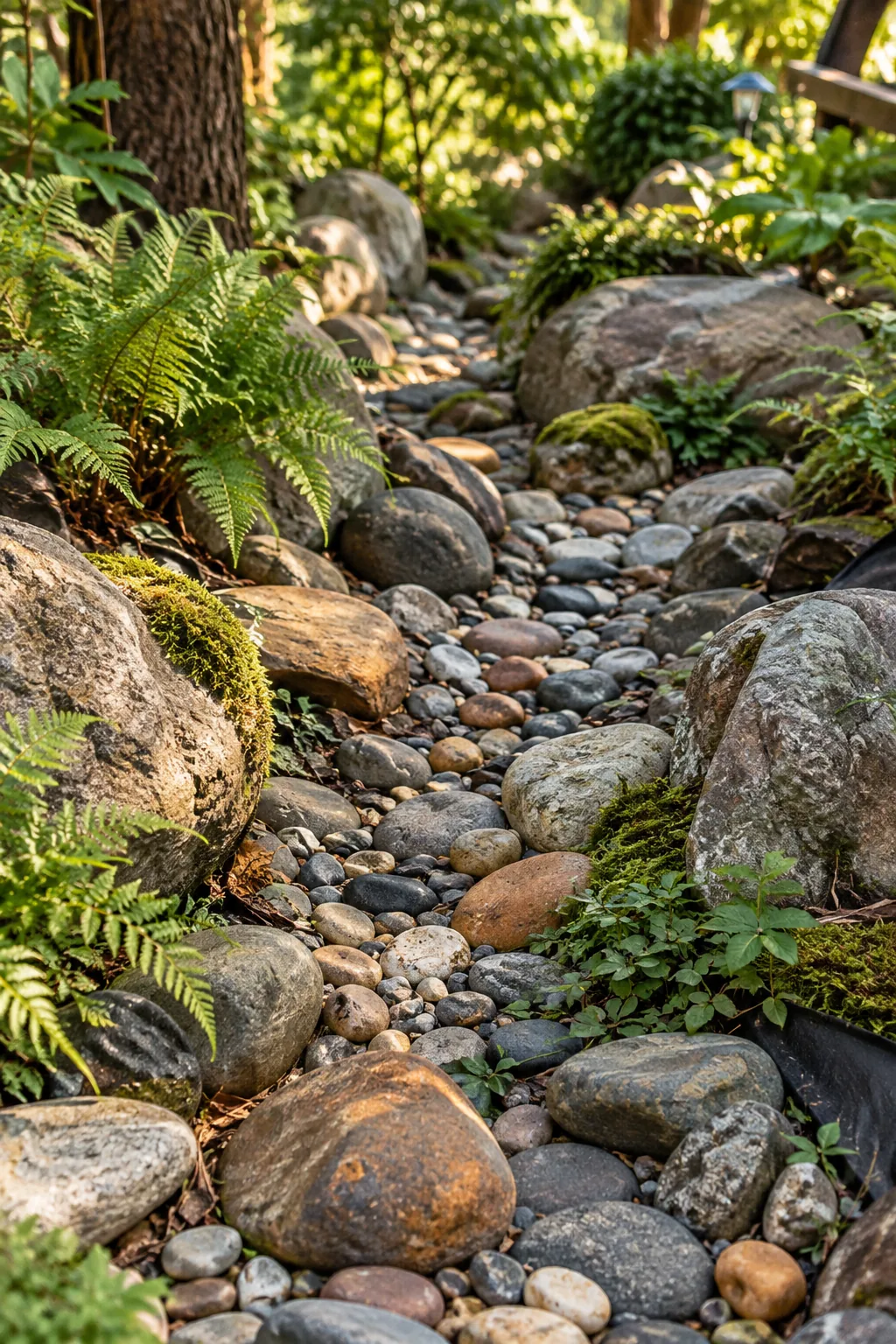
A dry creek bed gives your yard a rugged, natural woodland feel. You just dig a shallow, winding trench and line it with landscape fabric to keep weeds out. Then, you layer in different sizes of river rocks and boulders to mimic how water naturally flows. This setup is actually highly functional for drainage during heavy rain. It looks incredibly intentional when you tuck a few native ferns along the edges.
- Large anchor boulders
- Medium river rocks
- Small pea gravel
3. Create a Budget Fire Pit
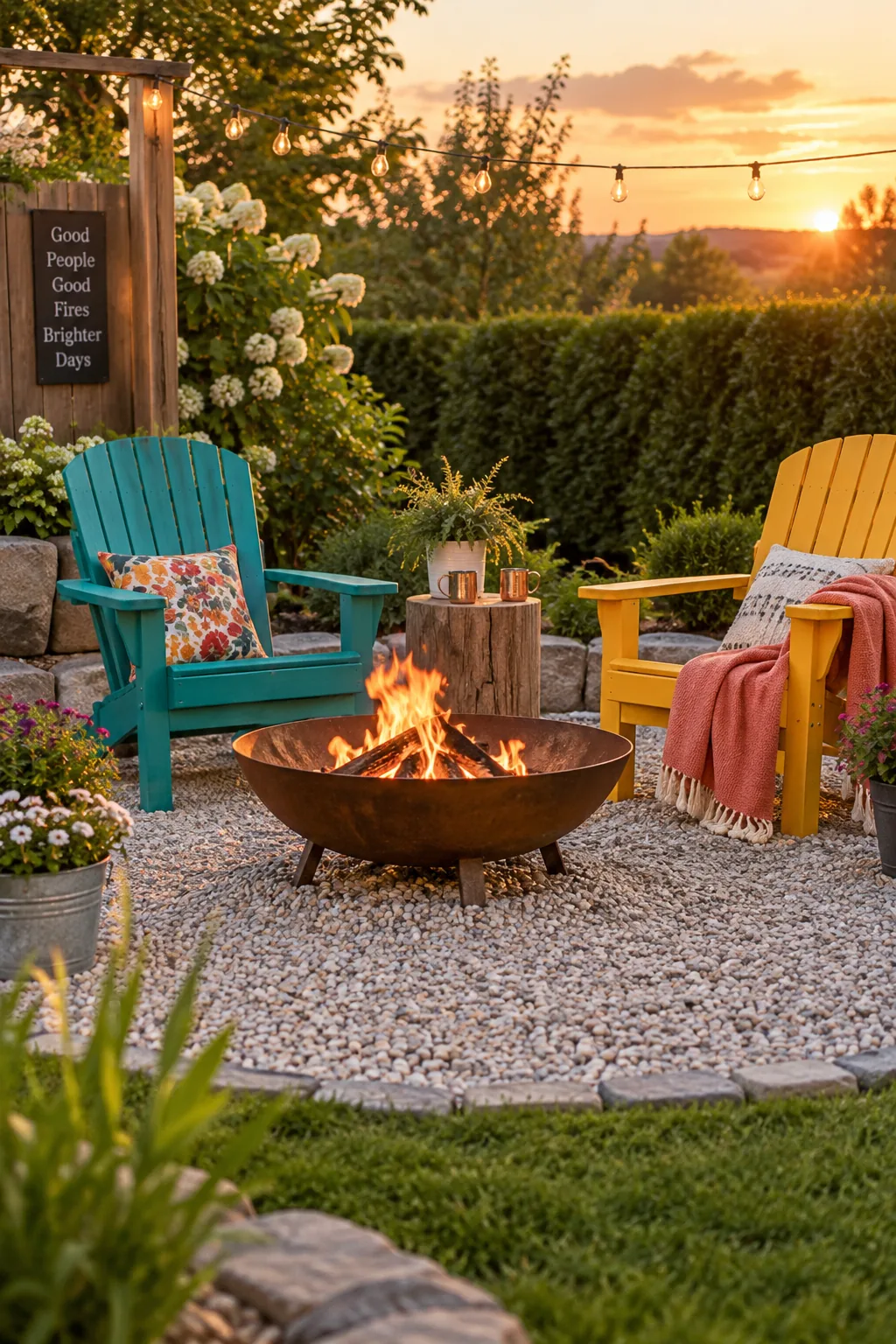
A standard bag of pea gravel covers about two square feet at a two-inch depth. That makes it incredibly affordable to carve out a casual fire pit area in a single weekend. You just need to mark a circle, remove the topsoil, and pour the gravel right over a weed barrier. The tiny stones compact nicely underfoot to create a stable surface for heavy wooden chairs.
4. Design a Modern Walkway
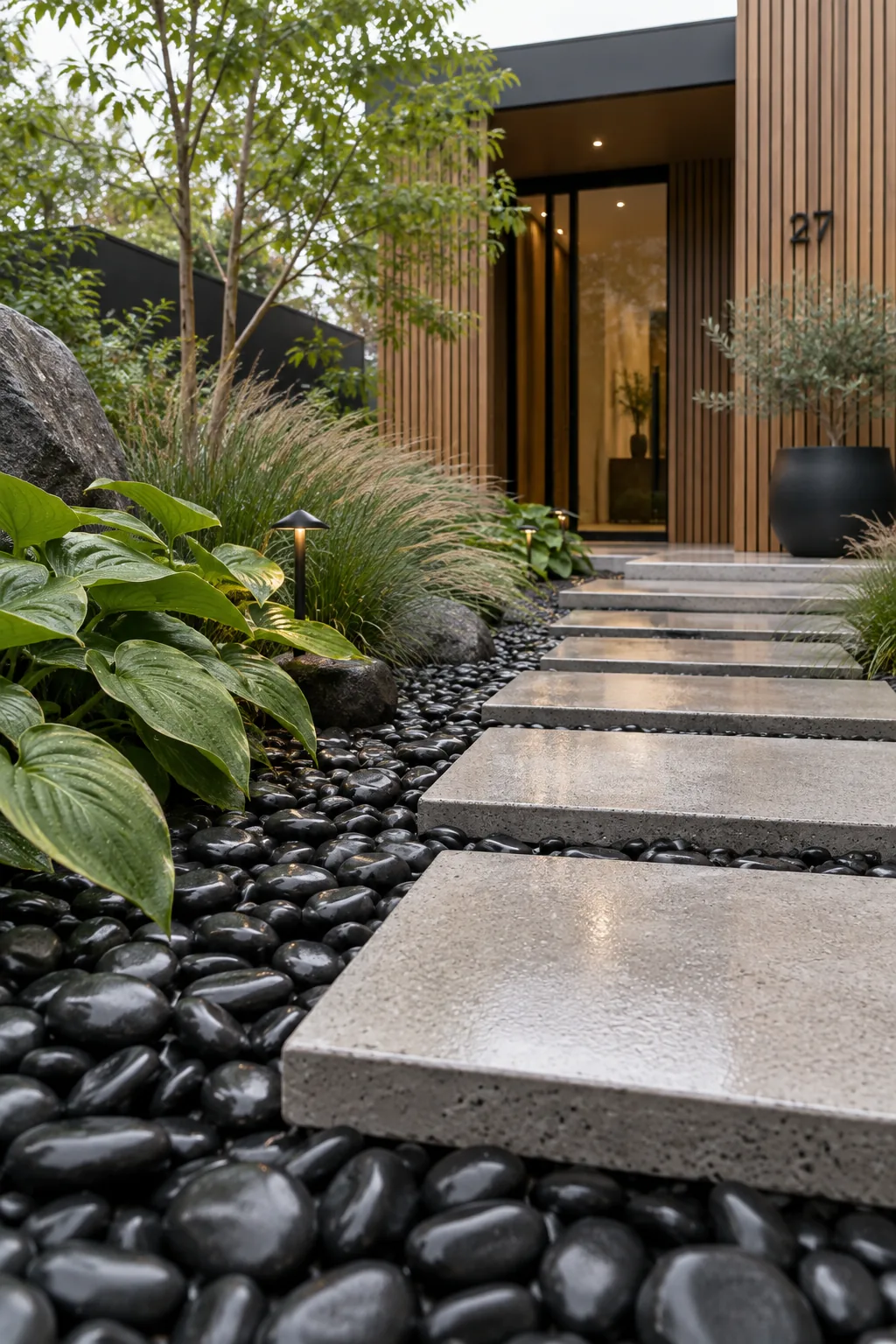
A structured, modern aesthetic is easy to achieve by pairing dark Mexican beach pebbles with oversized concrete pavers. The stark contrast between the smooth black stones and the pale walkways makes every surrounding plant pop.
5. Upgrade Your Mailbox Base
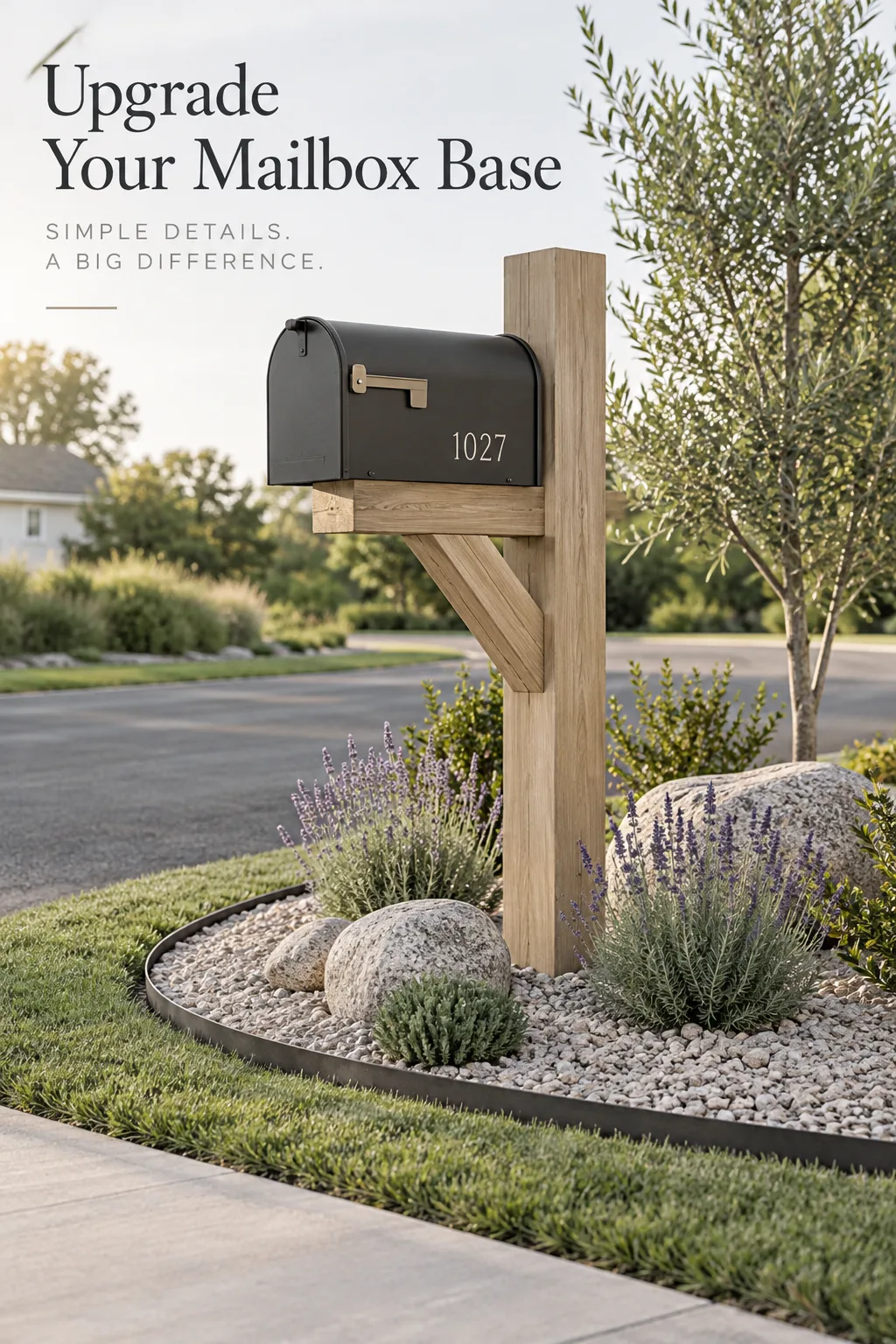
Mulch blows away and fades, but a solid layer of crushed granite stays put forever. Using this heavy stone around your mailbox or light posts means you never have to edge those awkward spots again. It locks in moisture for the surrounding plants while keeping the lawnmower at a safe distance.
Just make sure to install a deep metal edging so the stones do not spill into the grass.
6. Rake a Zen Garden
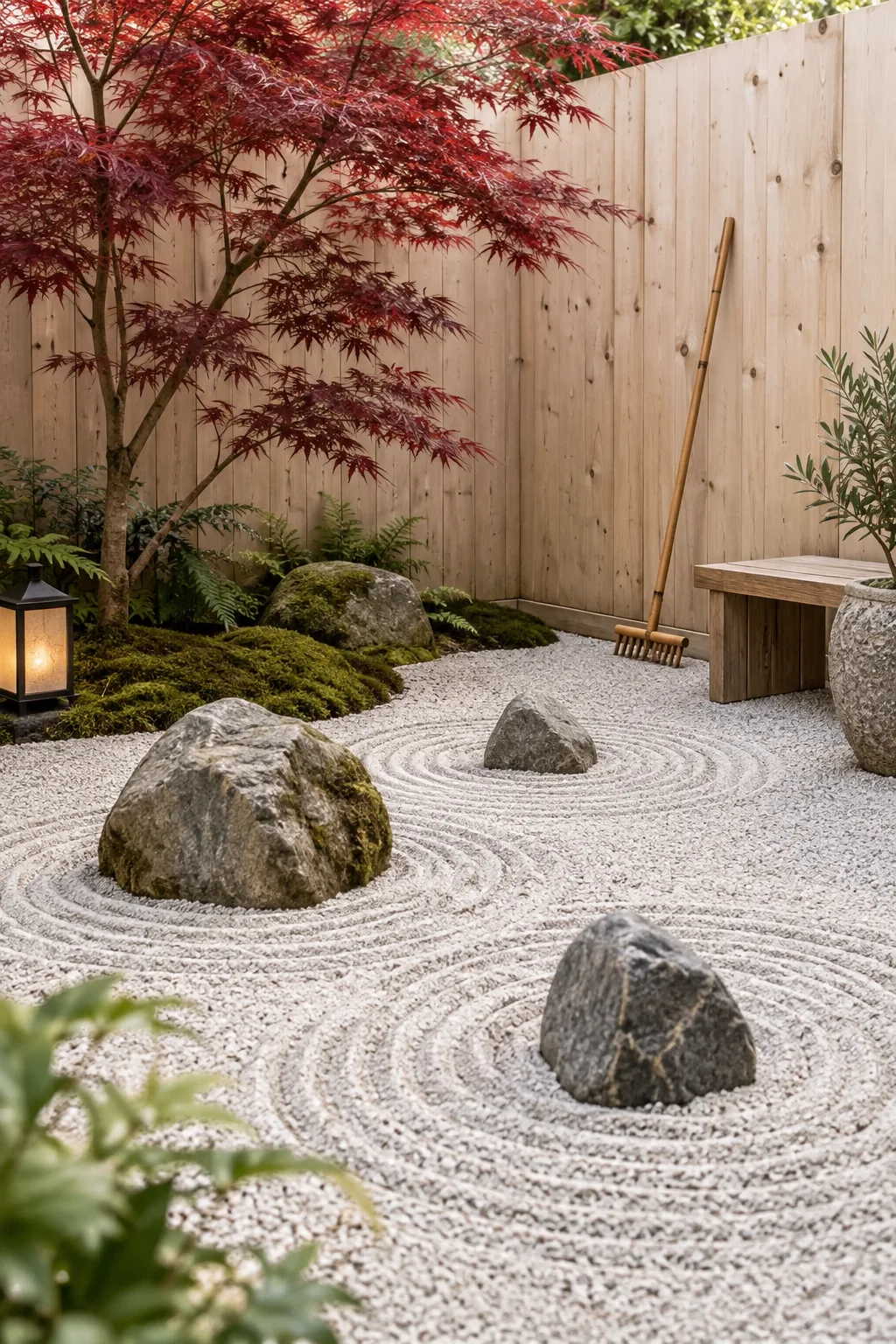
A Zen-inspired garden corner brings instant calm to a chaotic yard.
You can achieve this by raking fine sand or gravel in circular patterns around a few carefully placed boulders. The trick is to keep the plant life minimal, so a single Japanese maple or a patch of moss is all you need.
Raking the gravel actually becomes a relaxing weekend ritual.
7. Fix Muddy Shade Spots
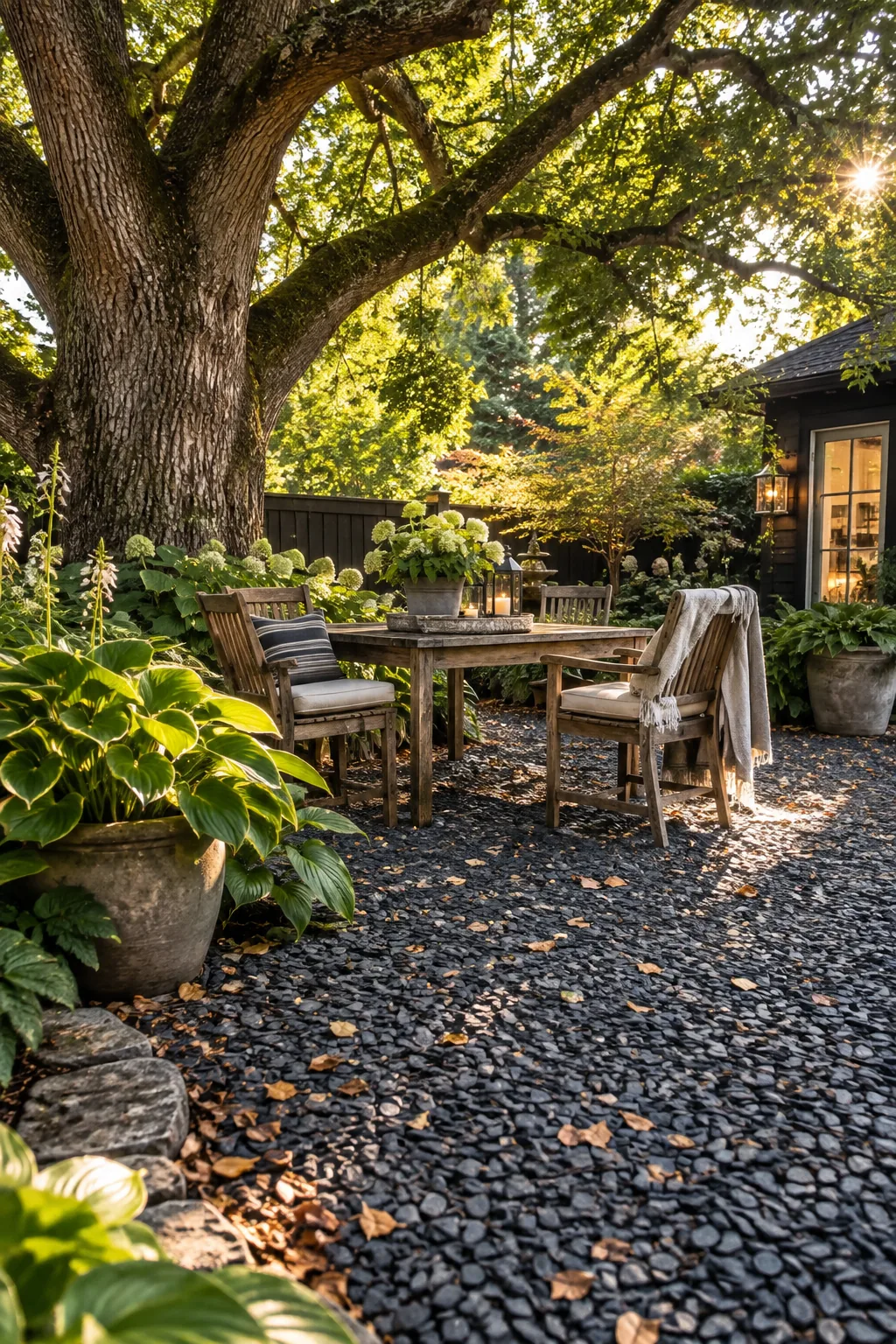
I finally gave up on trying to grow grass under my giant oak tree.
Instead, I filled the entire shaded canopy area with chunky slate chips and a few shade-loving hostas in large pots. The flat profile of the slate is easy to walk on and hides fallen leaves surprisingly well. It turned a muddy eyesore into my favorite backyard seating area.
8. Wash Your Stones First
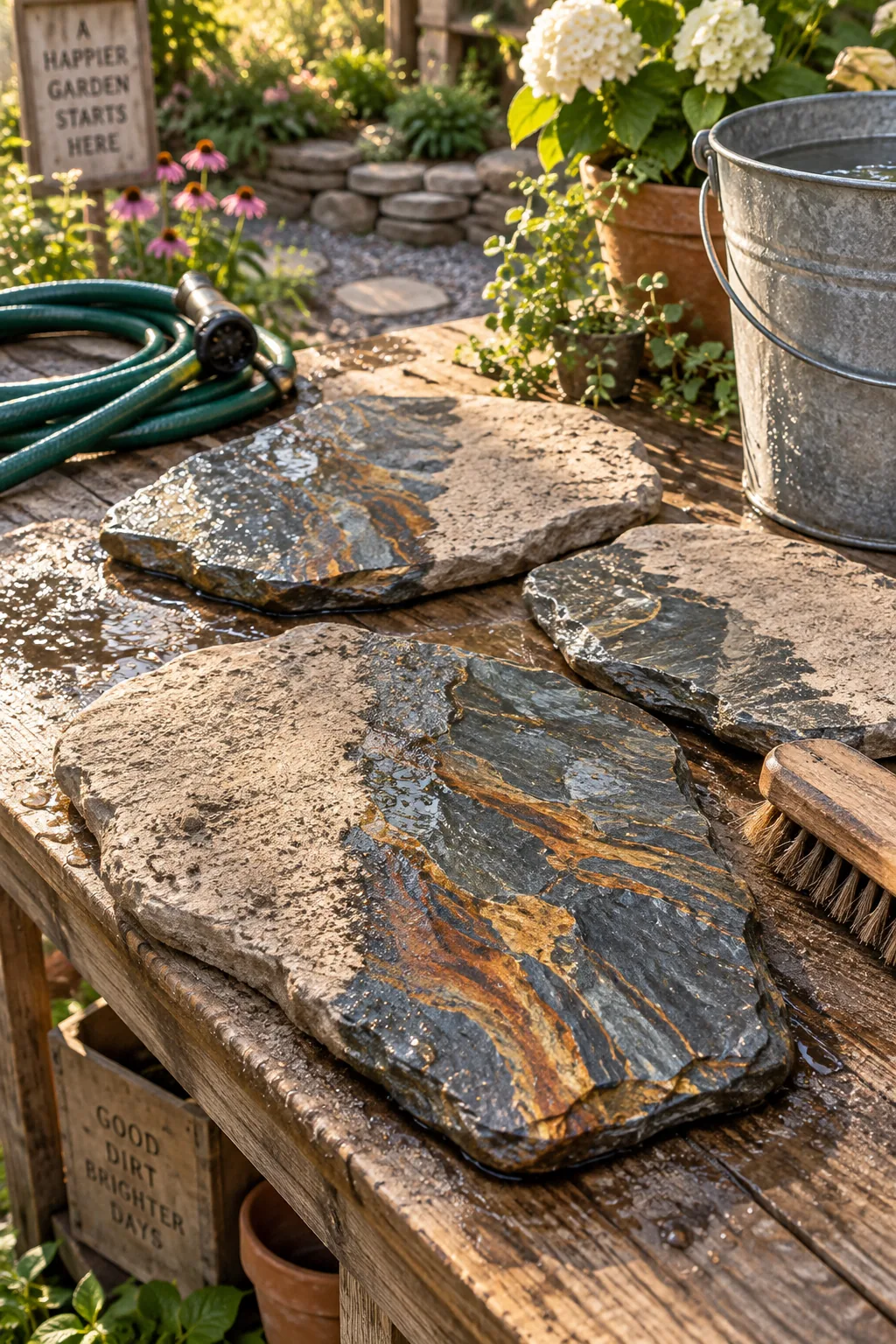
Always wash your landscaping rocks before you finalize your design.
Most bulk stone arrives covered in a thick layer of quarry dust that completely hides its true color. A quick spray with the garden hose reveals the natural veins and tones, helping you arrange the flagstone stepping stones perfectly. You will be shocked at how vibrant they look once they are clean.
- Hose with a spray nozzle
- Stiff bristle push broom
- Work gloves
9. Terrace a Sloped Yard
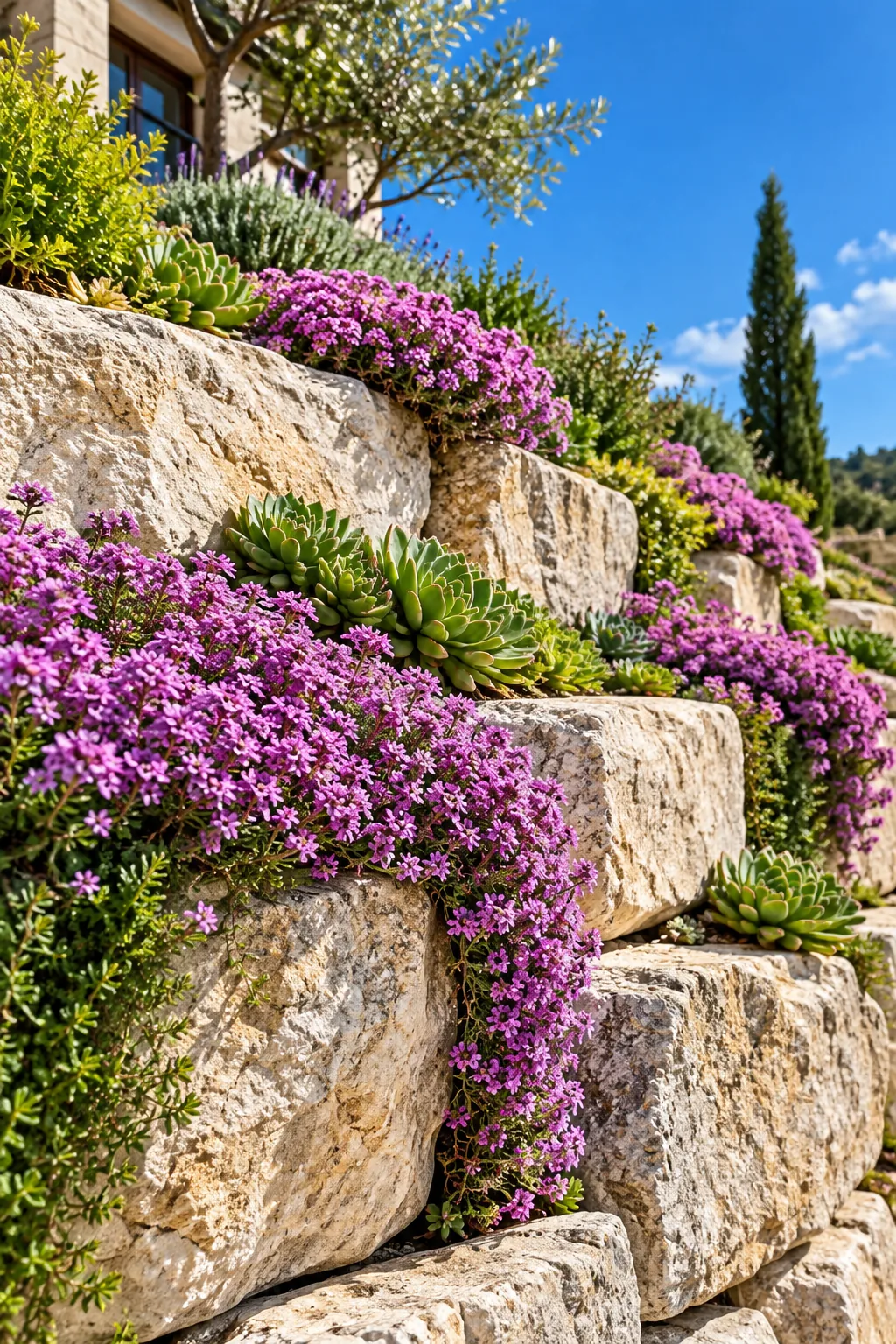
Sloped yards lose about an inch of topsoil every year to heavy rain runoff. Terracing that hill with heavy limestone retaining blocks stops erosion in its tracks. You can stack them dry without any mortar, leaving small gaps to tuck in trailing succulents like creeping thyme. The roots eventually anchor the whole structure while softening the harsh stone edges.
10. Mix Up Your Stone Sizes
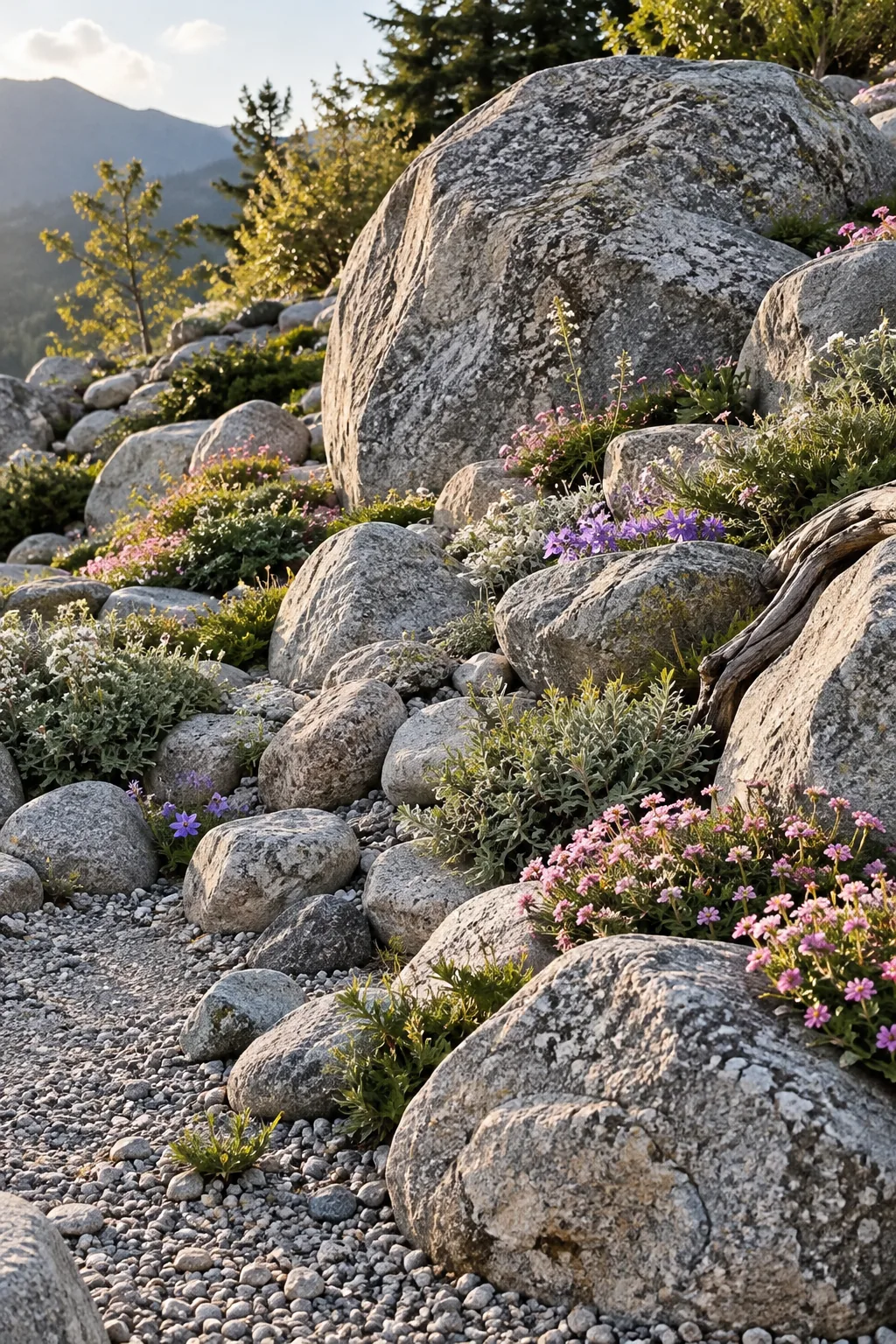
Varying the scale of your materials is exactly what makes a rock garden look natural rather than dumped from a truck. You want to anchor the space with massive granite boulders, fill the middle ground with cantaloupe-sized cobbles, and use small gravel as the floor. This mimics a natural mountain scree and gives alpine plants the perfect drainage they need to thrive.
Burying the bottom third of your largest boulders makes them look like they have been there for centuries.
- Oversized granite boulders
- Medium river cobbles
- Fine gravel base
11. Map Curves with a Hose
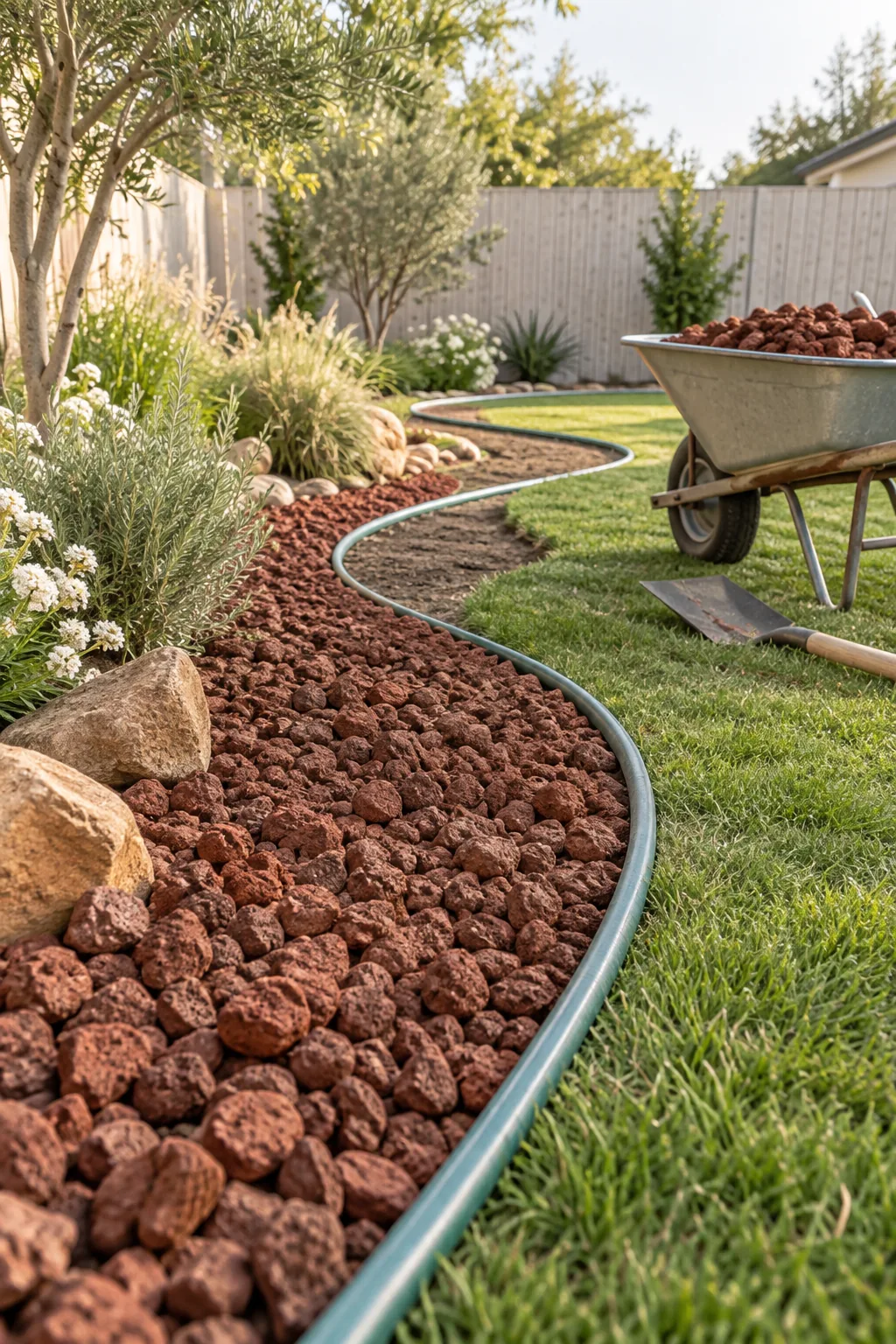
A standard garden hose is exactly five-eighths of an inch thick, which makes it the perfect flexible tool to map out curved garden beds. You just lay it on the grass to design a fluid, organic border before you start digging. Filling that new border with lava rock adds incredibly lightweight texture that is easy to haul in a wheelbarrow. The porous red stone absorbs heat during the day and keeps the soil warm on chilly nights.