
12+ Brilliant Outdoor Steps Ideas for Your Home
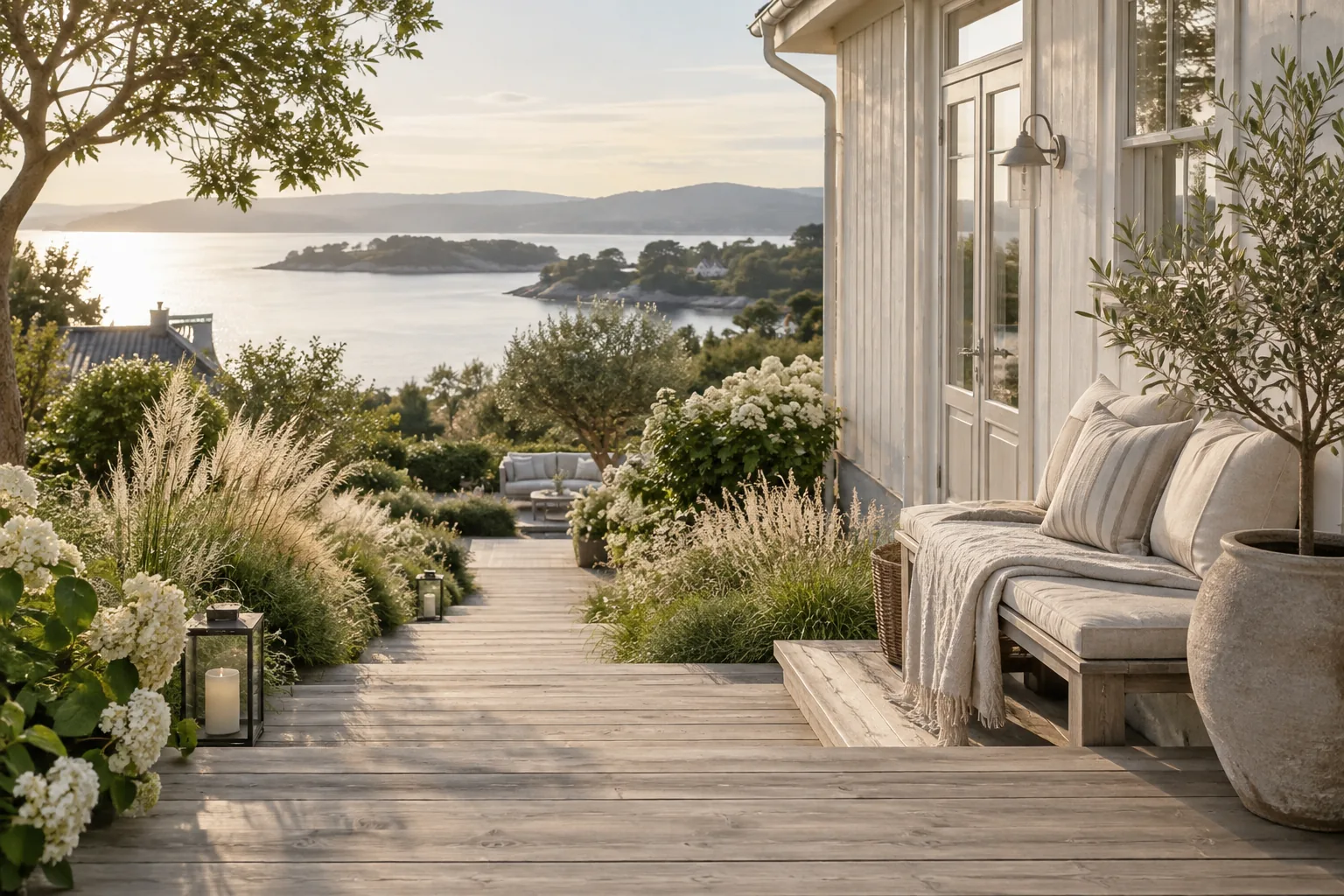
Upgrading your outdoor steps completely changes the curb appeal and flow of your yard without a massive landscape overhaul. I rounded up some of the best hardscaping approaches you can easily adapt for your own space.
1. Flagstone Slab Stairs
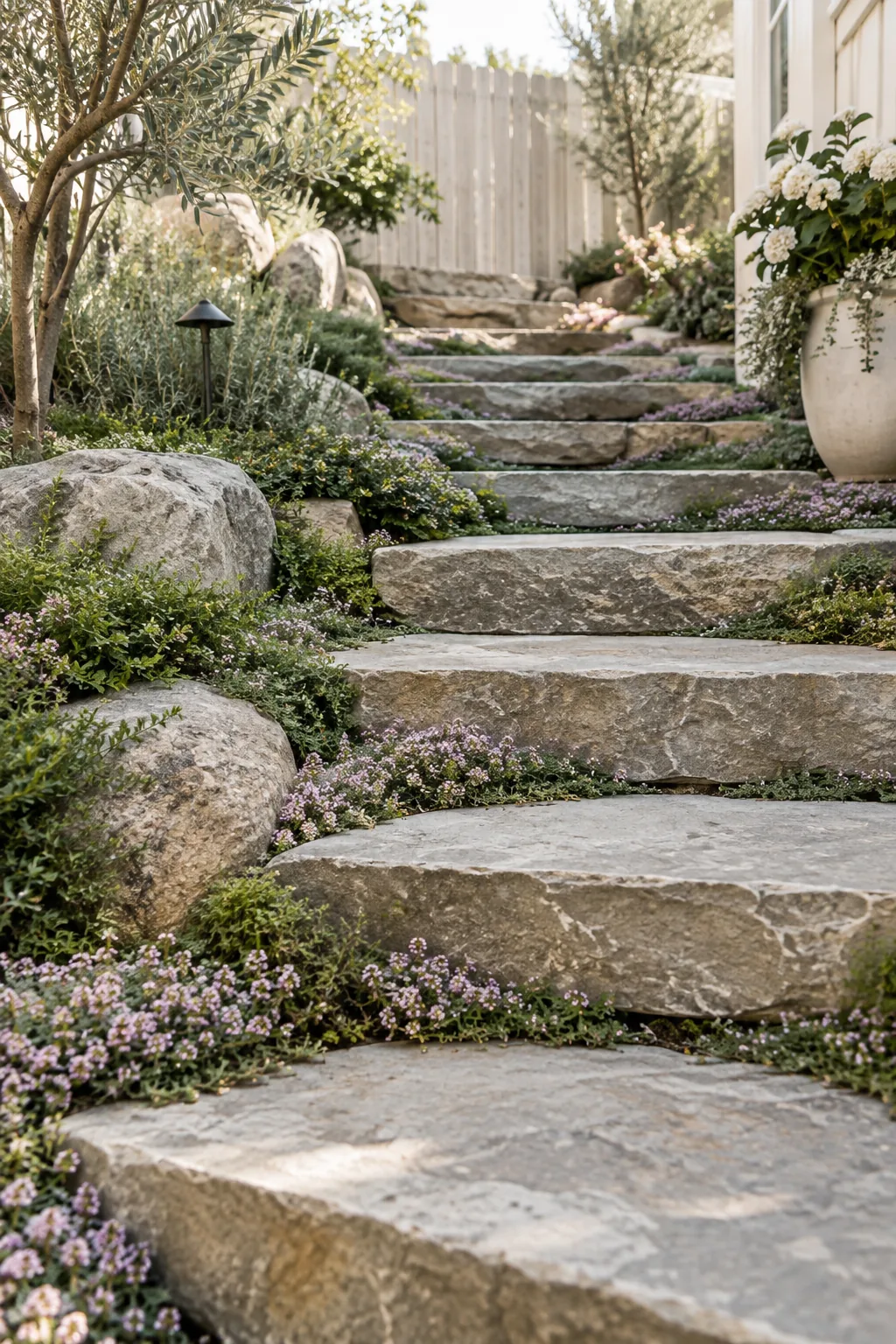
A standard staircase needs a six-inch riser to feel comfortable underfoot. You can achieve this perfectly by stacking thick flagstone slabs directly into a sloped hill. Let a creeping ground cover fill in the gaps for a lived-in, organic look.
Just make sure the base soil is heavily tamped down before laying the stone.
2. Timber and Gravel Paths
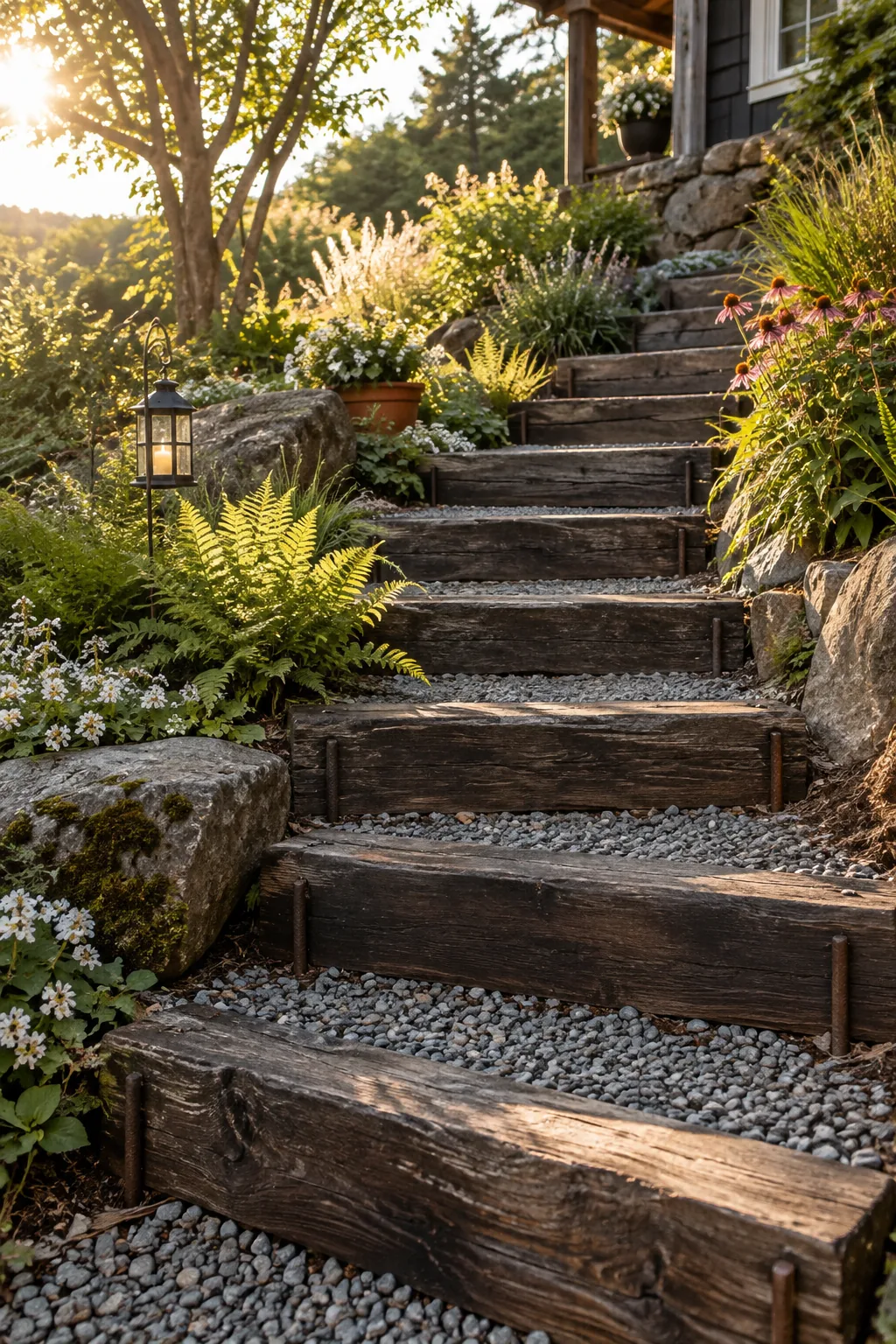
Using railroad ties mixed with crushed gravel creates a rugged, natural transition down a steep garden path. The heavy wood anchors the loose stones so they don't wash away during heavy rain. It is an incredibly cost-effective way to build a long staircase. You just pin the timber into the earth with rebar.
Why it works: The rough texture of the wood grips the gravel, preventing erosion while adding rustic charm.
3. Floating Concrete Treads
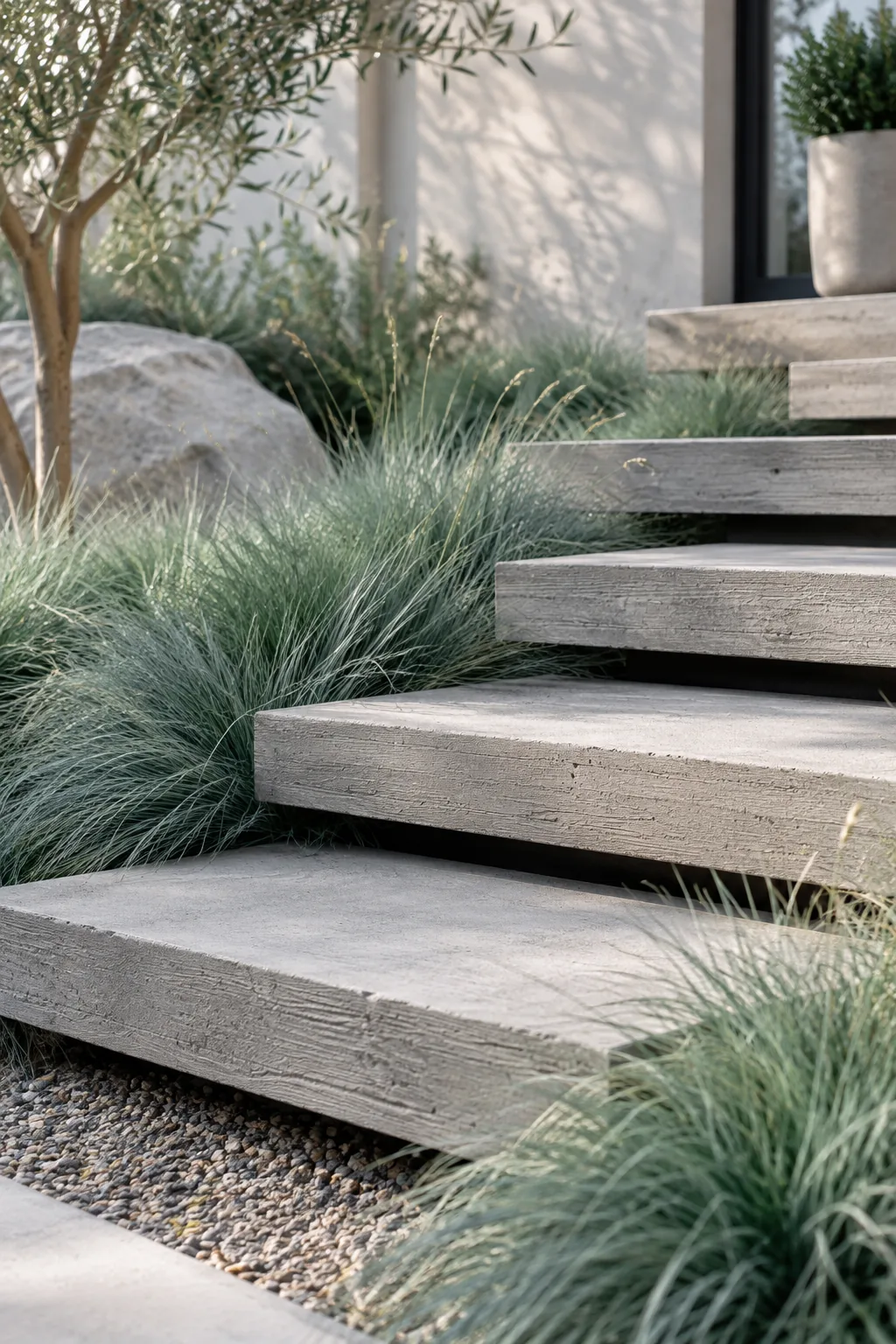
I always love the look of poured concrete steps floating slightly above the grass. You pour the concrete into simple wooden forms, leaving a deep shadow line underneath each tread. It gives a heavy material a surprisingly light, modern feel. Plant soft fescue grass right up to the edges to soften the stark grey lines.
4. Under-Step LED Lighting
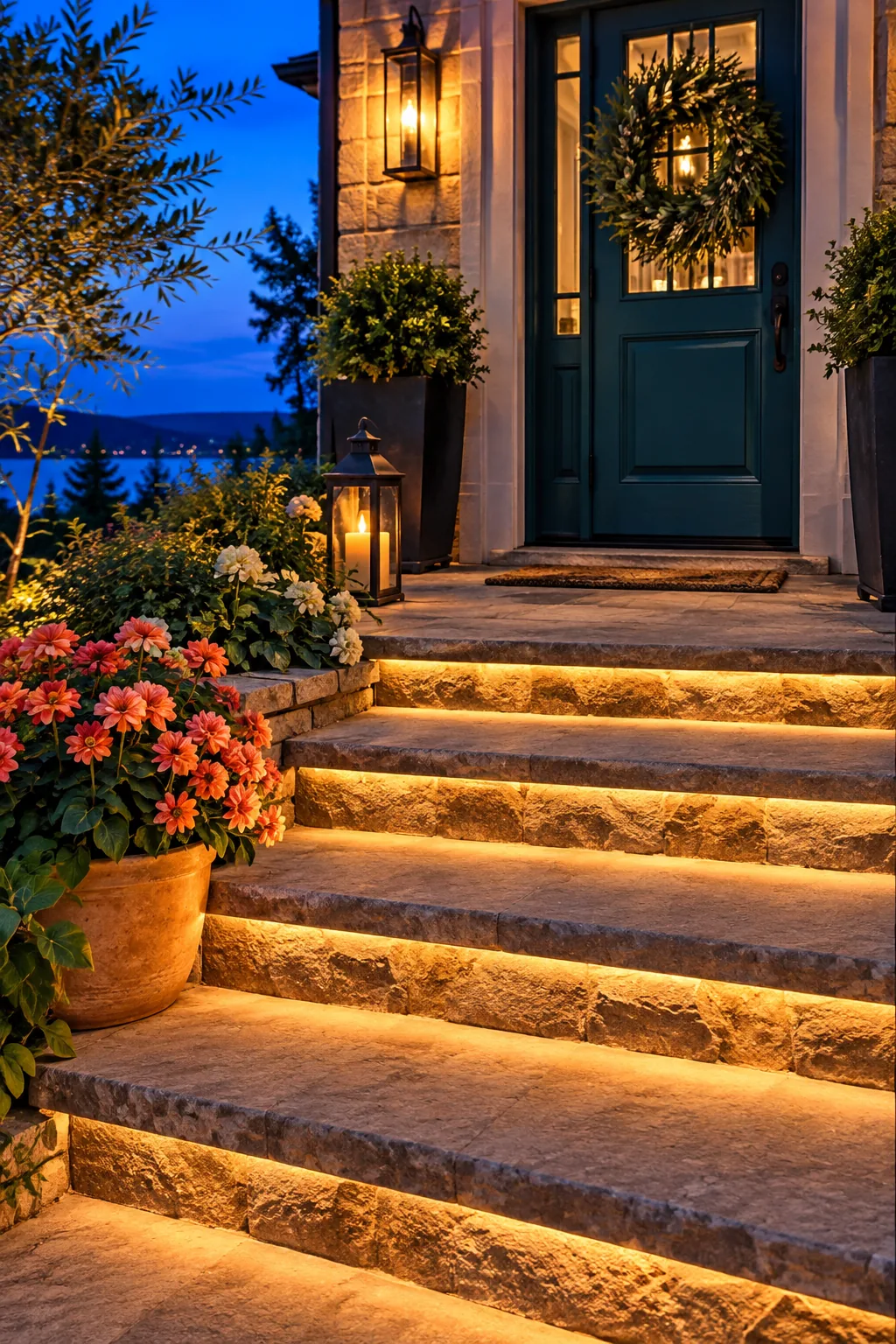
Adding low-voltage LED strip lights under the lip of each step increases nighttime safety by 100 percent. The hidden glow highlights the texture of the stone treads without blinding anyone walking up to your front door.
5. Wooden Box Steps
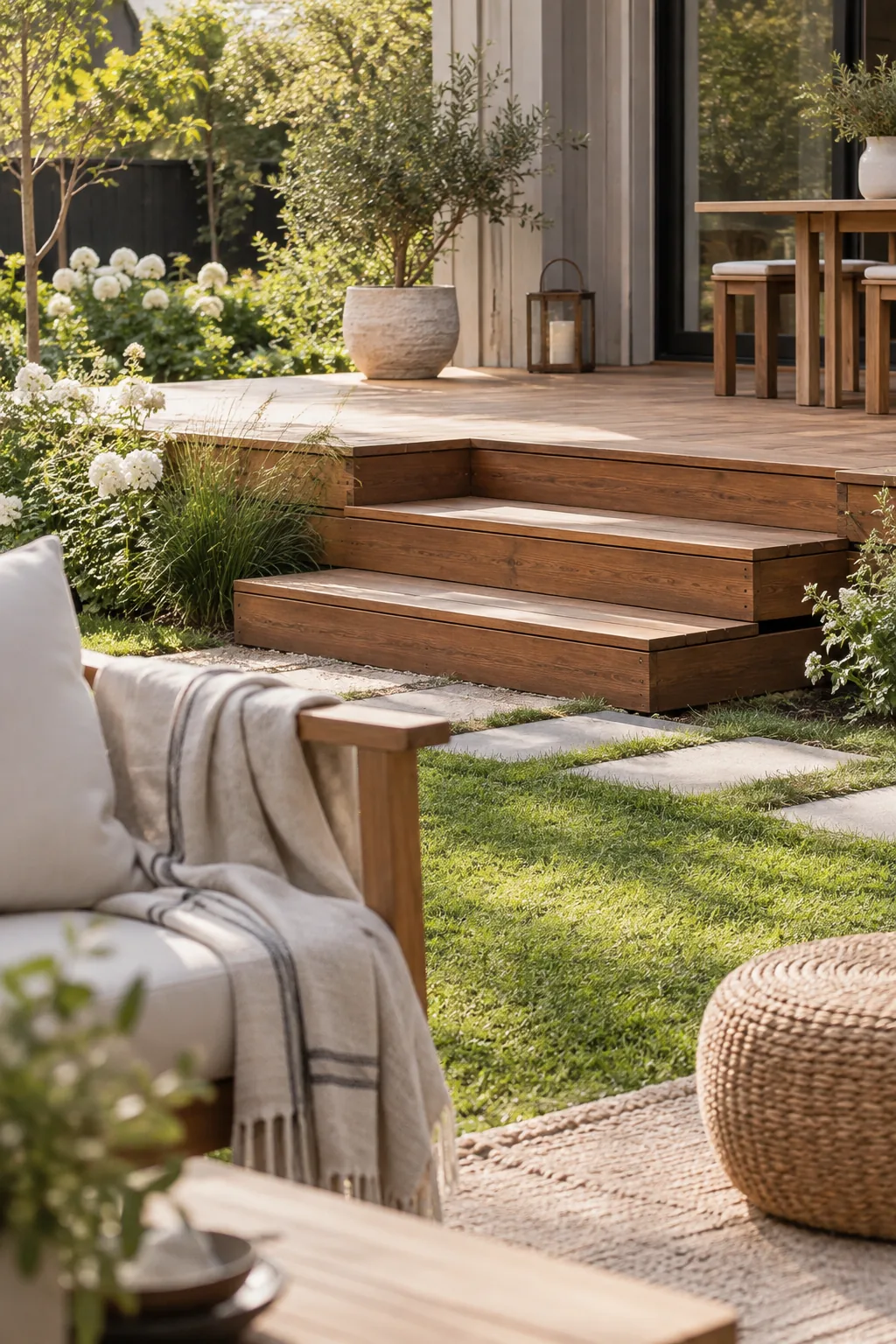
My favorite weekend project is building box steps out of pressure-treated lumber. They are essentially hollow wooden frames you fill with dirt and cap with decking boards.
You can stain the wood a rich cedar color to match your existing deck. It ties the whole backyard together seamlessly.
Plus, this method requires zero masonry skills.
6. Wraparound Brick Pavers
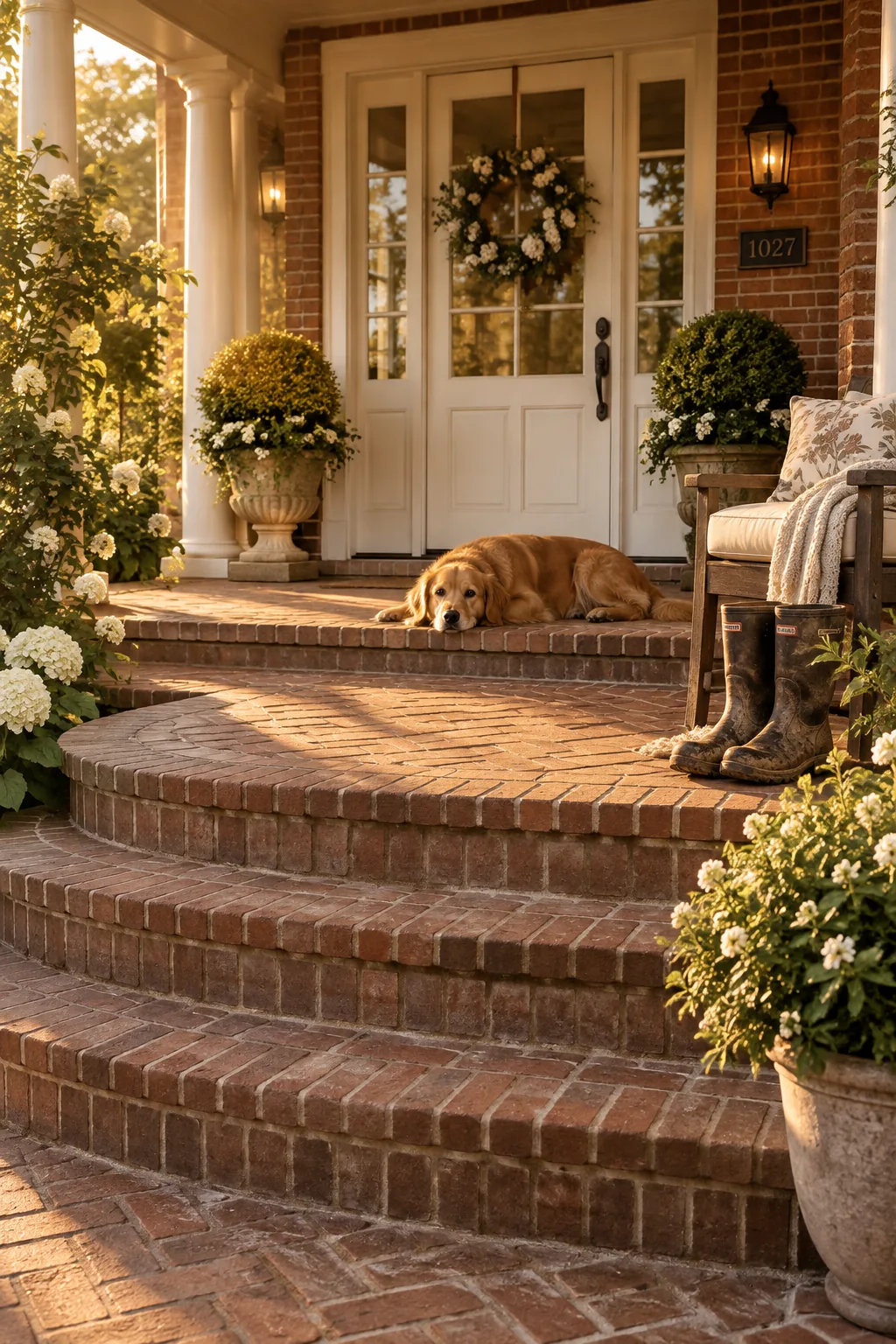
Wide, sweeping steps make a small front entrance feel grand and welcoming. Wrapping brick pavers around the sides of the porch creates a natural gathering spot.
You can sit on the edges to pull off muddy boots.
A herringbone pattern on the main landing adds a custom, high-end touch.
7. Extended Landing Pads
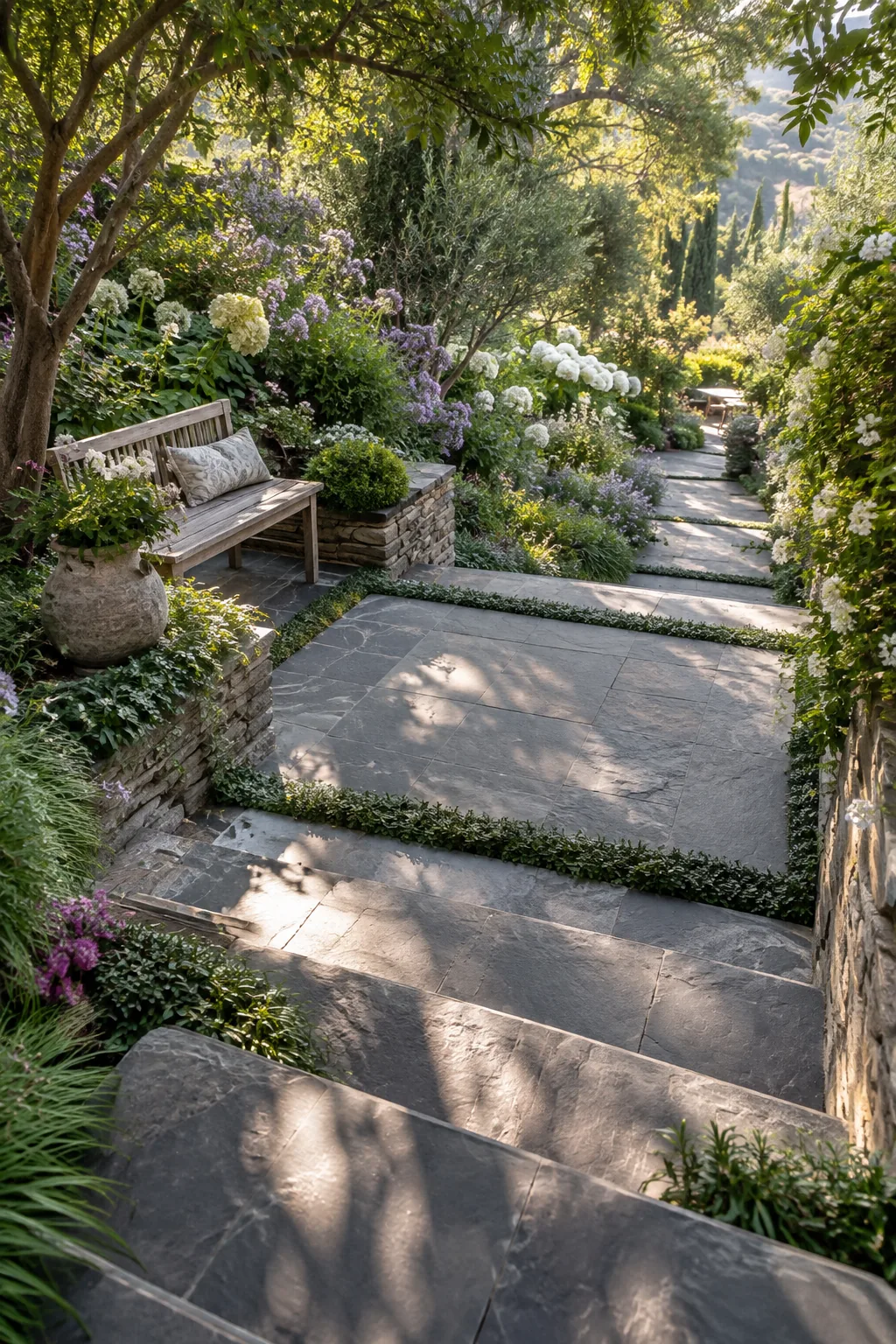
Alternating the width of your steps naturally slows down the walking pace.
By stretching out every third tread into a deep landing pad, you give people a place to pause and look at the garden. Fill these wider sections with oversized slate tiles surrounded by dwarf mondo grass. It feels like a secret pathway rather than a utility staircase.
Why it works: Deep landings break up a steep incline, making the climb feel much less exhausting.
8. Cinder Block and Veneer
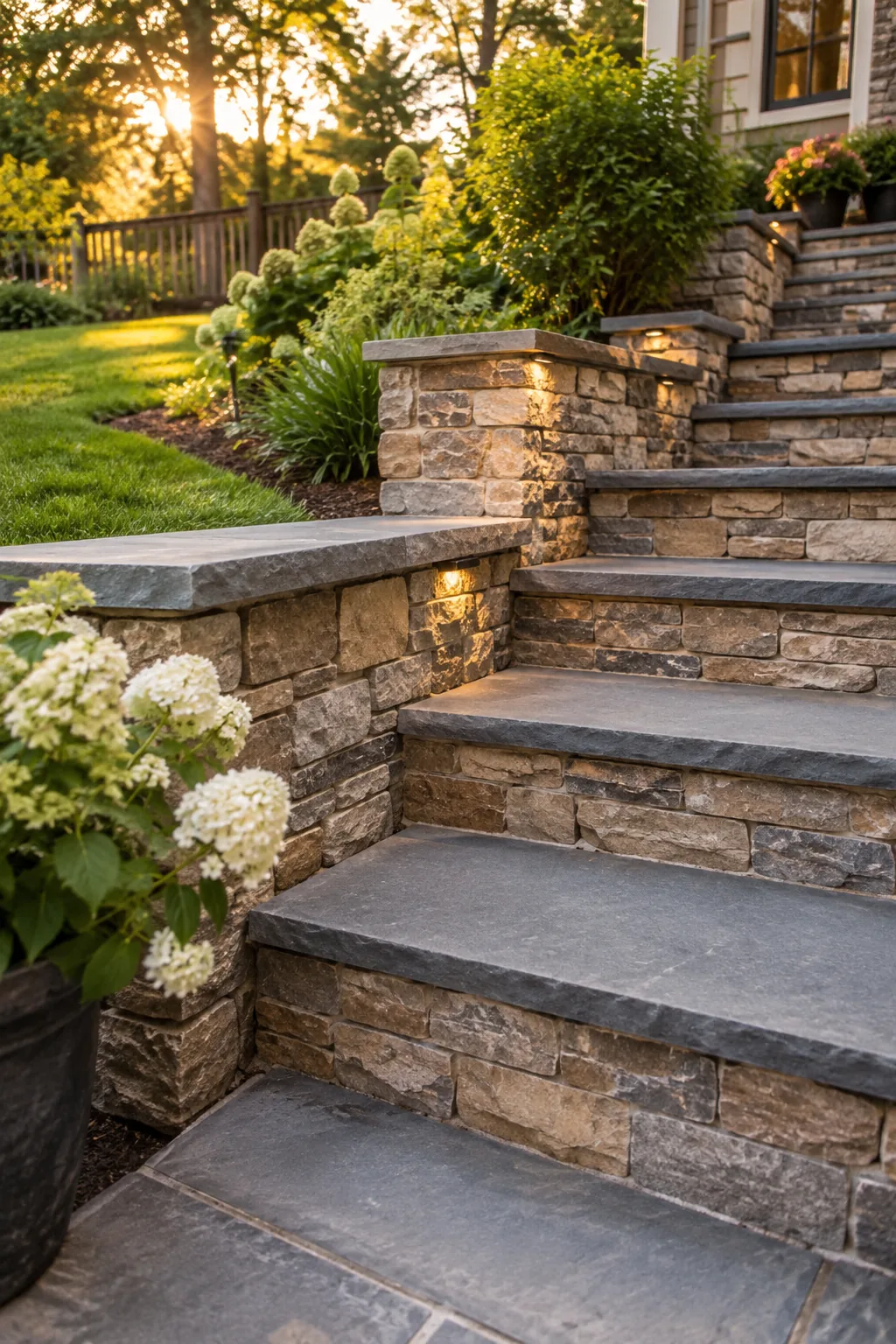
A standard cinder block measures exactly eight inches high, making it the perfect base for a quick backyard staircase. You can stack them dry and fill the hollow cores with rebar and wet concrete for serious stability. Once the core is set, face the ugly blocks with natural stone veneer using construction adhesive. Cap the top with a smooth piece of bluestone to finish the edge. It looks like a custom masonry job for a fraction of the price.
9. Weathering Steel Edging
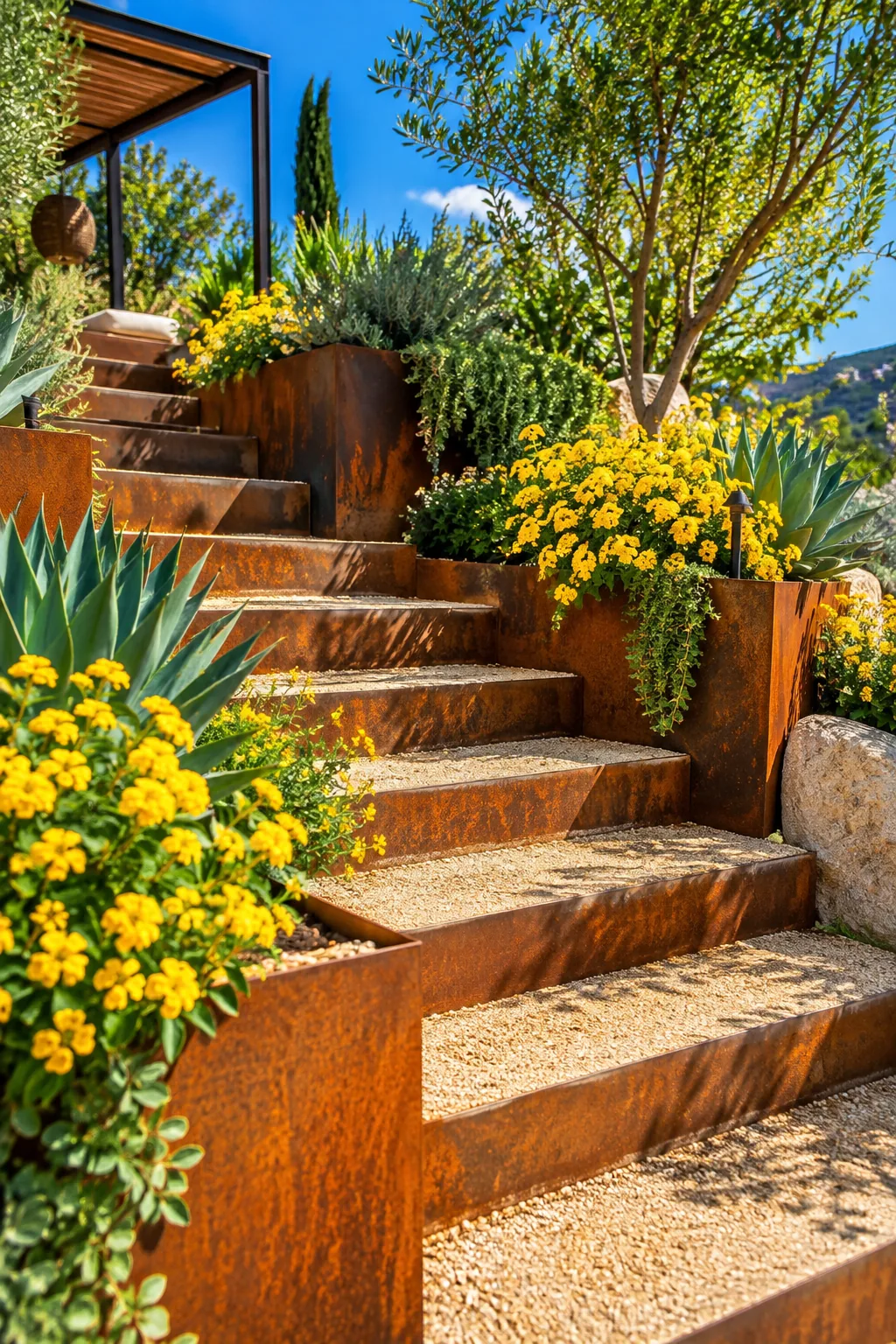
Weathered weathering steel edges bring a sharp, industrial contrast to lush green landscaping. You bend the steel sheets into open-faced boxes and pack them tightly with decomposed granite. Over time, the metal develops a protective rust layer that blends beautifully with earthy tones.
Why it works: The thin profile of the steel maximizes the tread space while providing an unbreakable retaining wall.
10. Reclaimed Granite Cobblestones
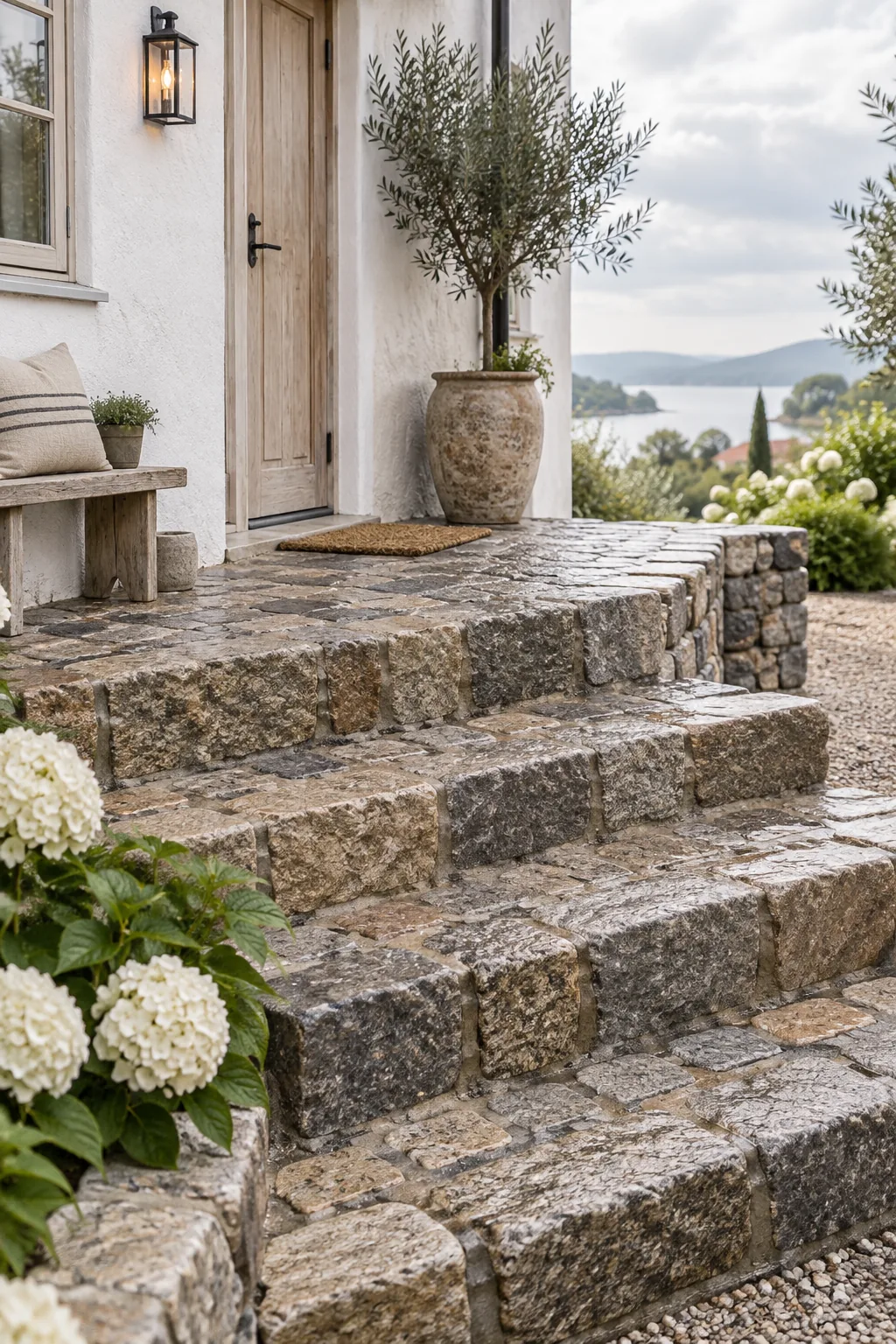
Using reclaimed granite cobblestones adds instant historical character to a new build.
These stones are virtually indestructible and provide incredible traction in the rain. Set them in a thick bed of mortar to keep the uneven blocks locked firmly in place. Sweeping polymeric sand into the joints stops weeds from sprouting up.
11. Solid Limestone Blocks
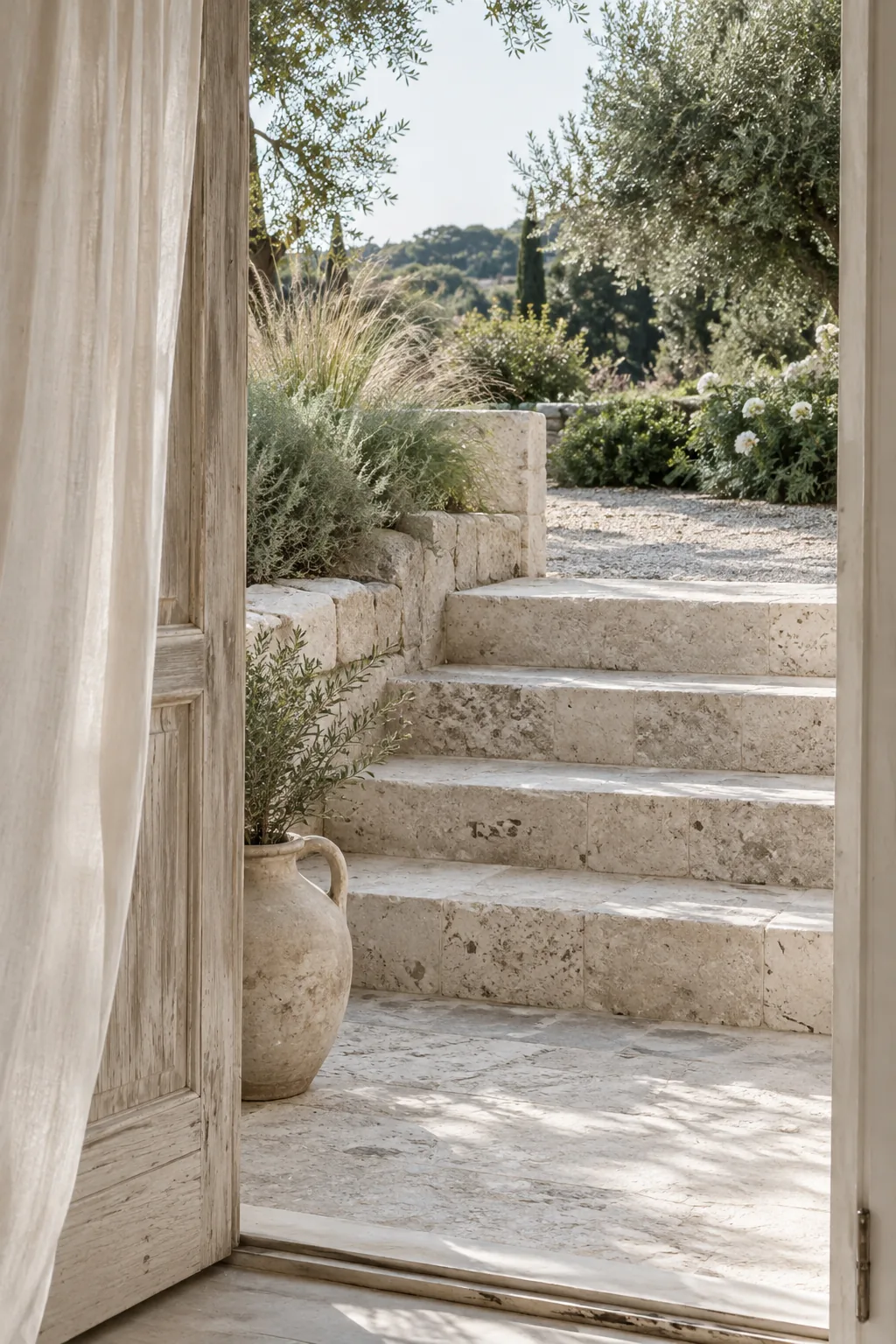
I recently helped a neighbor replace their rotting wooden stairs with solid limestone blocks. We rented a small machine to move the heavy stones, but the actual installation went incredibly fast. You just carve out a level dirt shelf, drop the block in, and check it with a level. The sheer weight of the solid stone means you do not have to mess with complex footings or mortar. It is a one-weekend project that will literally last a century.
12. Painted Concrete with Grip
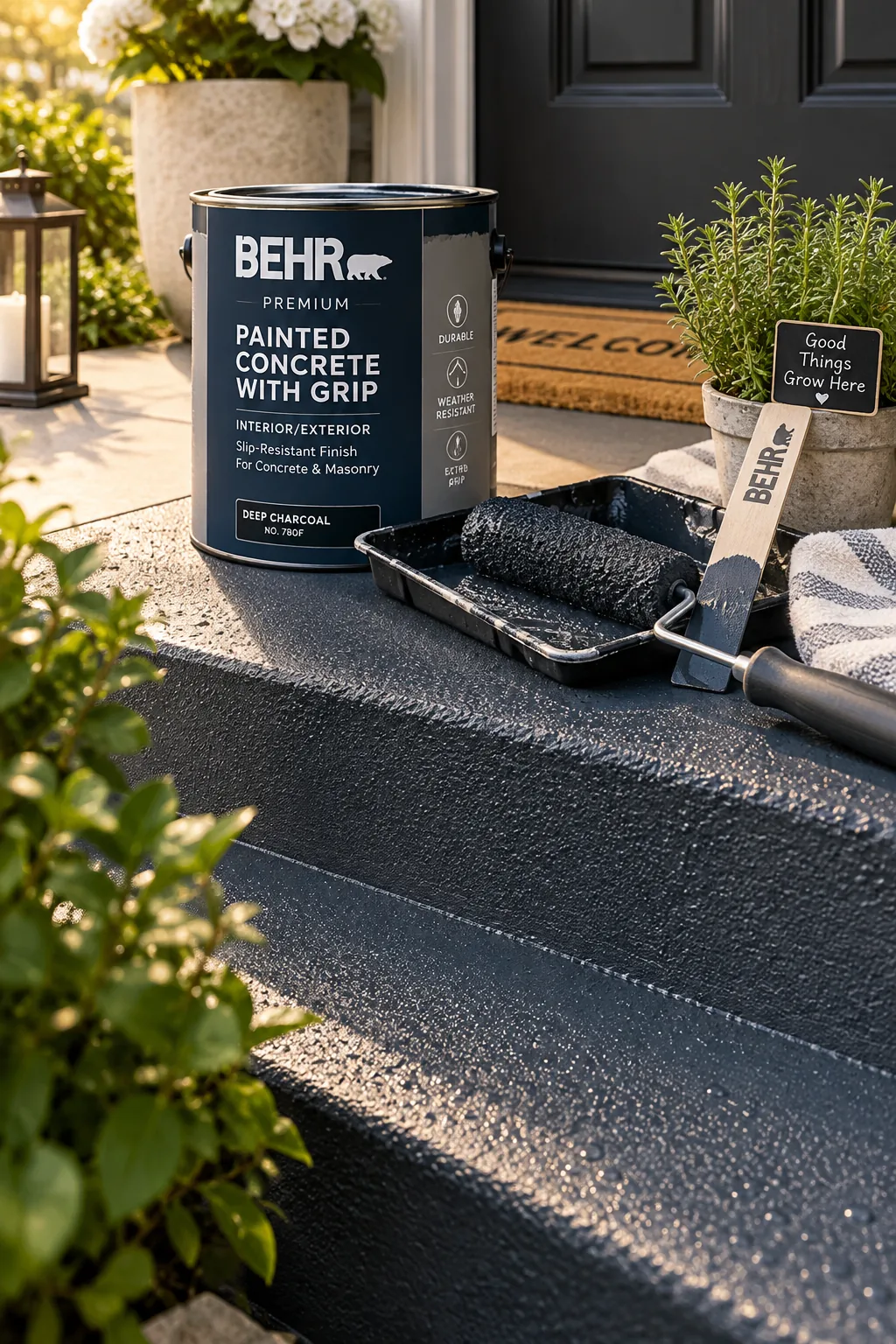
Painting your concrete steps with an epoxy floor coating takes less than three hours and completely transforms a drab entryway. The key is to etch the concrete with acid first so the paint actually bites into the surface. Mix a handful of anti-slip additive right into the paint bucket before you roll it on. This gives the finish a subtle grit that prevents dangerous slips on wet mornings. Stick to classic colors like charcoal or deep navy for a clean, modern finish.
13. Built-In Planter Boxes
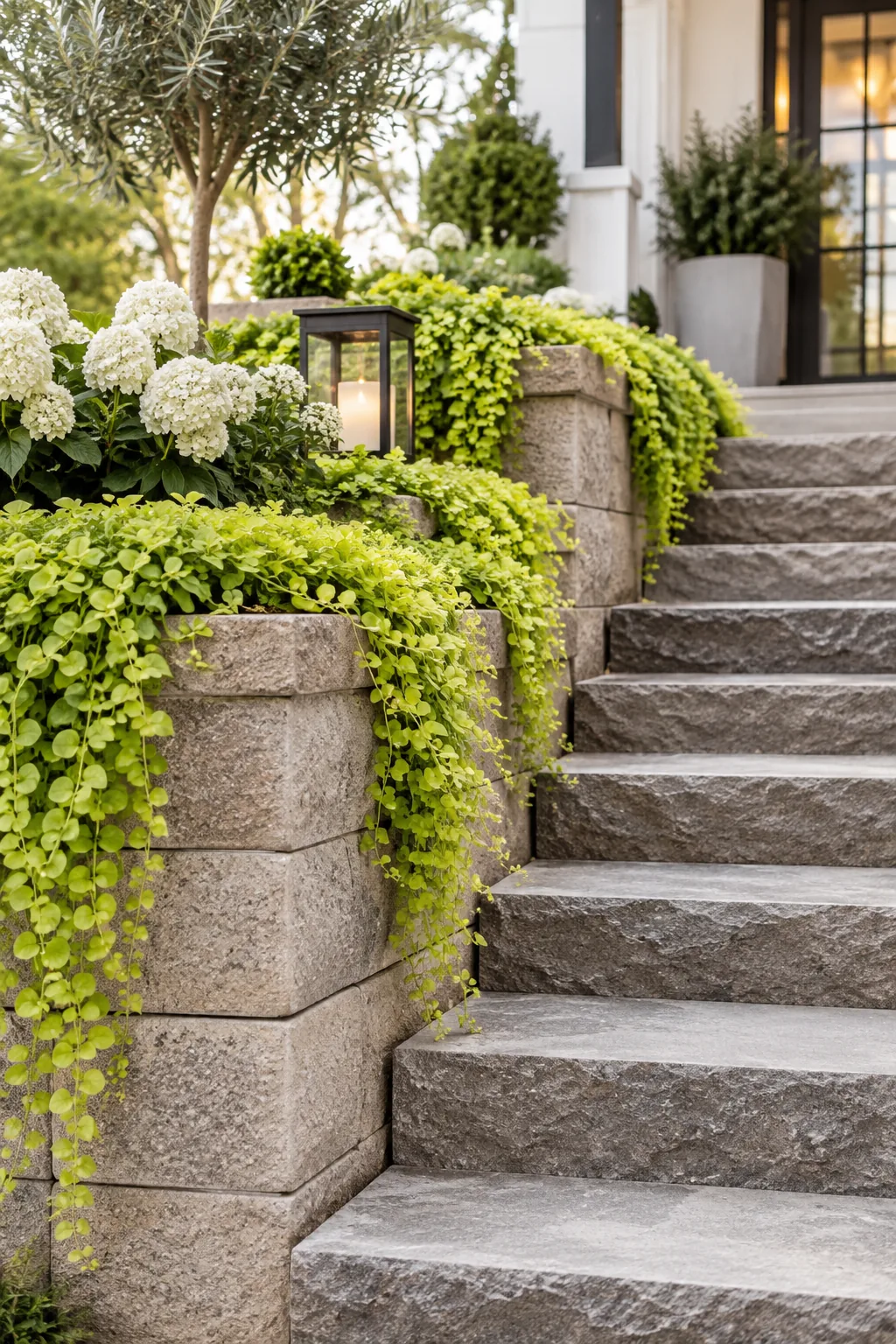
Flanking your steps with built-in planter boxes creates a seamless transition between the hardscape and the garden. The raised walls of the planters act as a natural safety railing without blocking the view. You can build these out of the same retaining wall blocks you use for the stairs to keep the design cohesive. Fill them with trailing plants like creeping jenny to soften the hard masonry edges. It makes the entire staircase feel like a living part of the landscape.
Why it works: Integrated planters double as safety barriers and bring vibrant greenery right up to eye level.