
Wall Wine Rack Mounting and Spacing Guide for Hosting
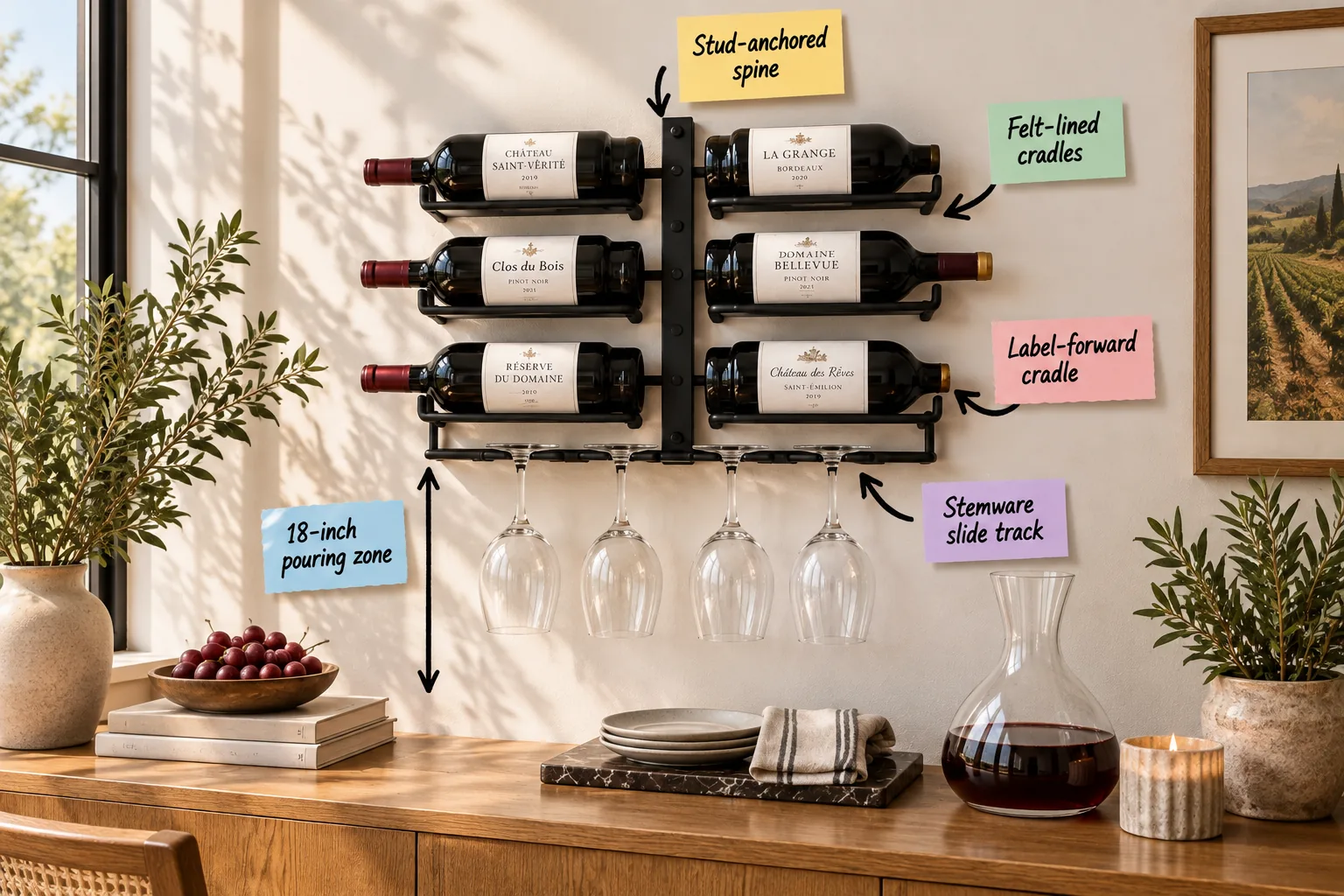
You will be able to confidently measure, mount, and style a secure wall wine rack over your dining credenza using this exact mounting and spacing cheat sheet.
The Wall Wine Rack Spacing Cheat Sheet
Start with the foundational numbers to ensure your display is both safe and functional by mapping out your wall before picking up a drill.
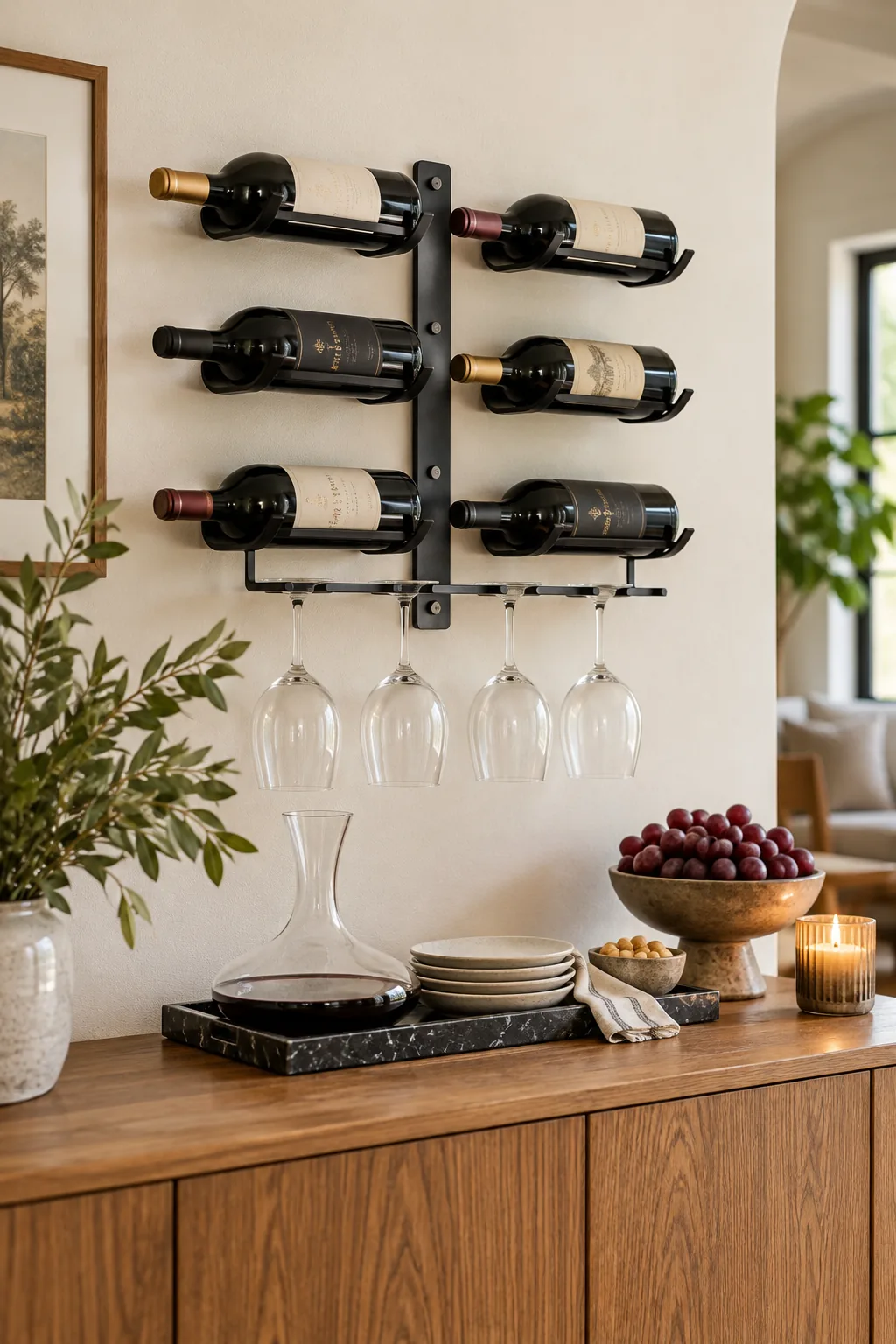
Before committing to a layout, double-check these critical dimensions to guarantee your tasting station functions smoothly.
Understanding the Structural Wall Requirements
A fully stocked metal rack carries significant weight, with each filled glass bottle adding nearly three pounds to the overall cantilevered load on your dining room wall.
Securing the Stud-Anchored Spine
Driving the central vertical mounting bar directly into a solid wooden wall stud is absolutely non-negotiable for long-term safety and stability.
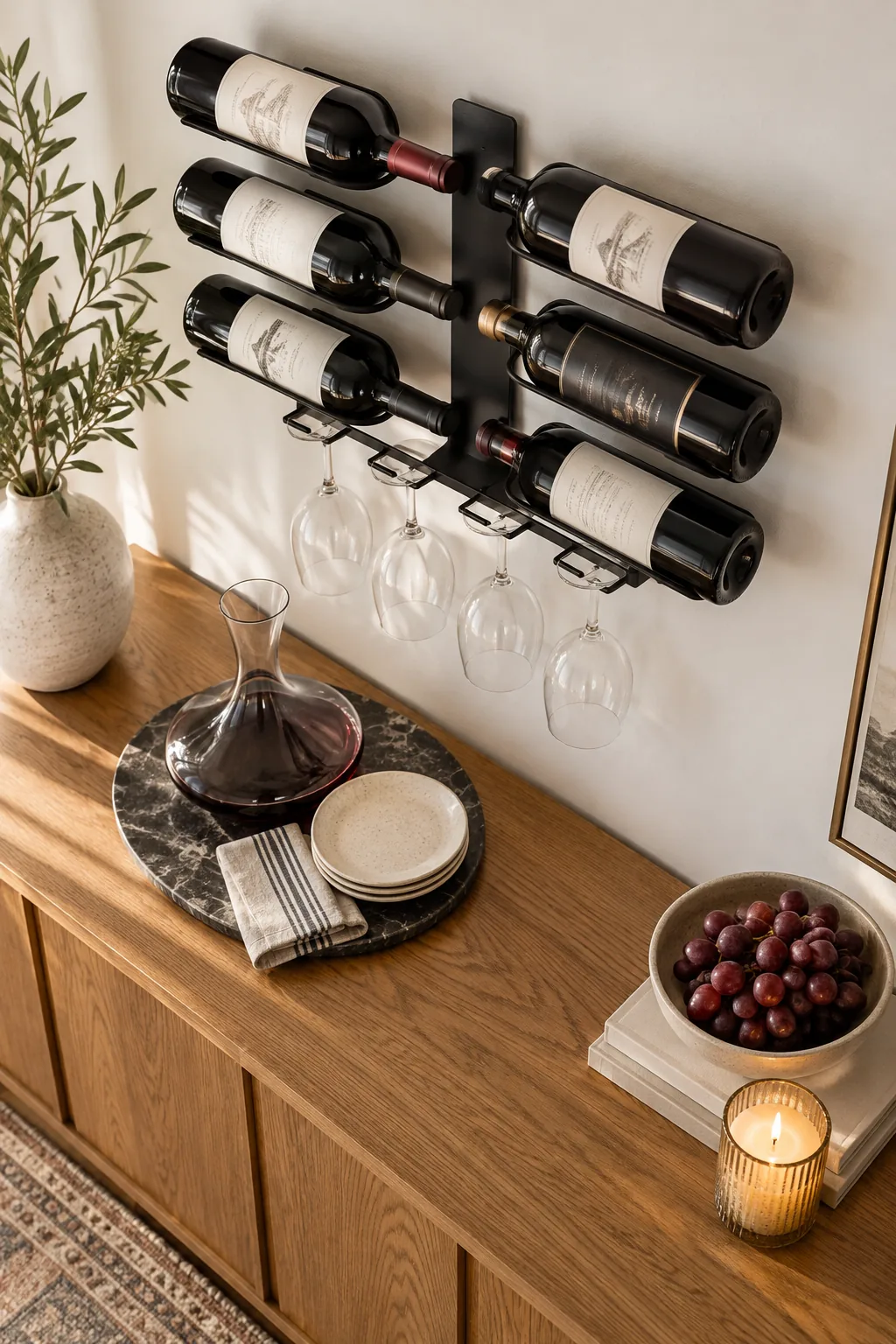
This structural connection ensures the stud-anchored spine never pulls away from the fragile drywall over time under the shifting weight of your collection.
Selecting the Right Anchor Hardware
Standard plastic drywall anchors will eventually fail under the dynamic load of repeatedly removing and replacing heavy wine bottles during a party.
| Hardware Type | Best Application | Weight Capacity |
|---|---|---|
| Plastic Toggle | Lightweight decor only | Under 20 lbs |
| Zip Toggle | Hollow drywall areas | Up to 50 lbs |
| Lag Screw | Direct stud anchoring | Over 100 lbs |
Always opt for heavy-duty steel lag screws driven at least two inches deep into the wooden framing to guarantee maximum security for your vintage collection.
Positioning the Vertical Mounting Bar
Use a reliable magnetic stud finder to locate the exact dead center of the wooden framing before marking your top and bottom pilot holes.
Displaying with Label-Forward Cradles
Horizontal storage keeps the natural cork perfectly moist, but the specific orientation of the bottle matters deeply for creating an interactive hosting environment.
Highlighting the Vintage for Guests
A label-forward cradle allows guests to read the vineyard and vintage instantly without ever needing to touch or turn the delicate glass.
Protecting Bottles with Felt-Lined Cradles
Industrial metal racks can be incredibly harsh on delicate glass bottles if the curved contact points are not properly finished or cushioned.
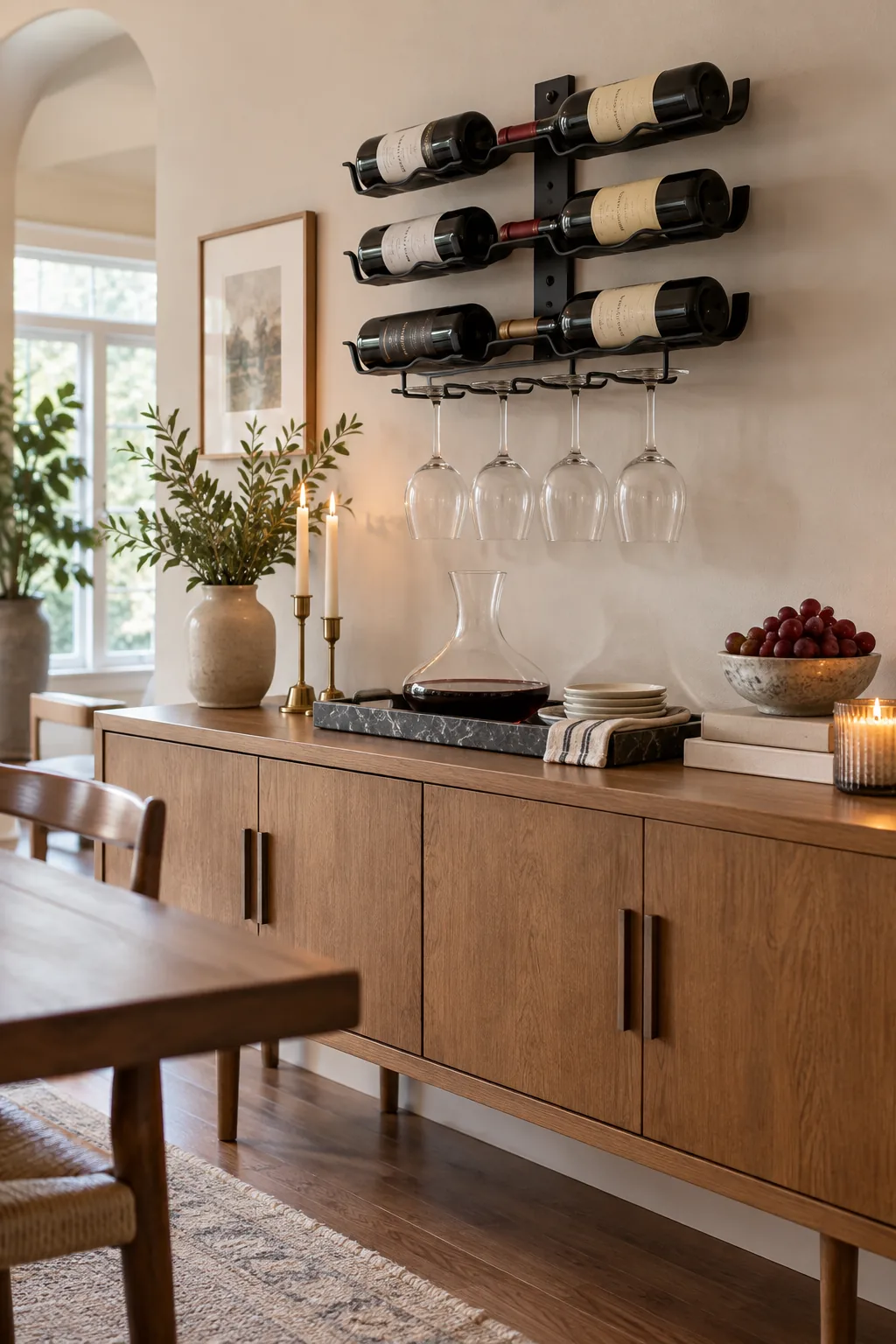
I learned this the hard way in my own dining room when a raw metal edge permanently scratched the paper label of an irreplaceable anniversary vintage.
Preventing Micro-Scratches on Glass
The subtle addition of soft felt tape completely eliminates the harsh scraping sound when sliding heavy bottles in and out of the metal slots.
Utilizing the Stemware Slide Track
Integrating hanging glass storage directly into the bottom of the rack saves highly valuable credenza surface area for appetizers, decanters, and floral arrangements.
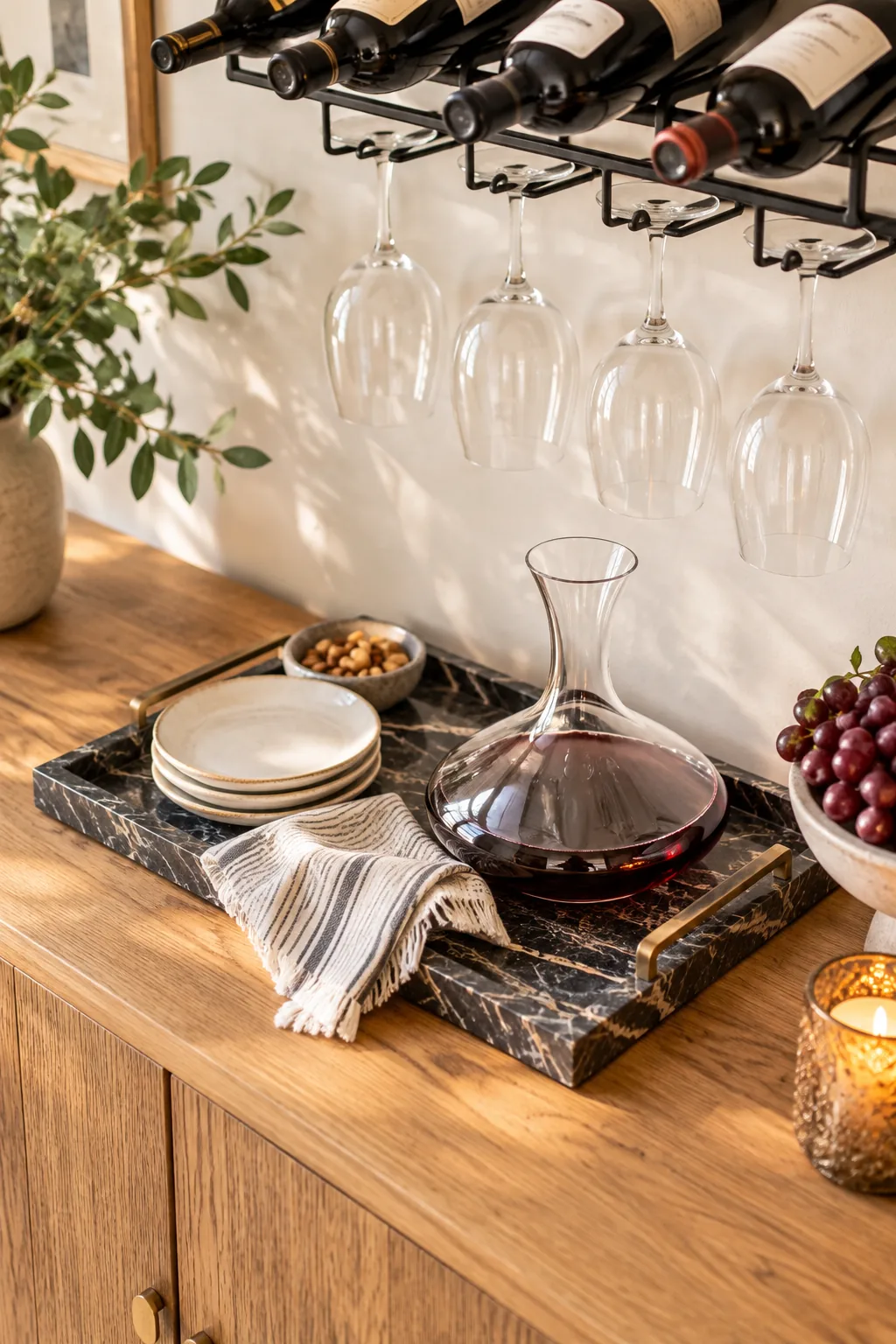
The stemware slide track on the bottom tier holds the delicate base of your wine glasses securely upside down, keeping them dust-free.
Storing Glasses Upside Down
Hanging your stemware by the base prevents dust from settling inside the bowl, ensuring every glass is instantly ready for a spontaneous tasting session.
Spacing the Glasses for Easy Access
Crowding too many oversized burgundy glasses onto a single metal track increases the risk of accidental chipping during a busy weekend gathering.
Measuring the 18-Inch Pouring Zone
Even a minor miscalculation in height can make your beautiful new wine rack frustrating to use, as I discovered when a client’s tall decanter wouldn’t clear the glasses.
Testing the Corkscrew Clearance
You must ensure there is enough vertical space to comfortably operate your preferred style of wine opener without hitting the fragile glasses above.
- Place your tallest wine bottle on the credenza surface.
- Attach your winged corkscrew to the top of the bottle.
- Pull the levers fully upright to check the maximum vertical clearance.
This simple physical test prevents you from having to awkwardly pull bottles forward off the credenza just to remove the cork.
Setting Up the Tasting Station
With the rack securely mounted to the wall, transition to styling the credenza surface immediately below the designated pouring zone.
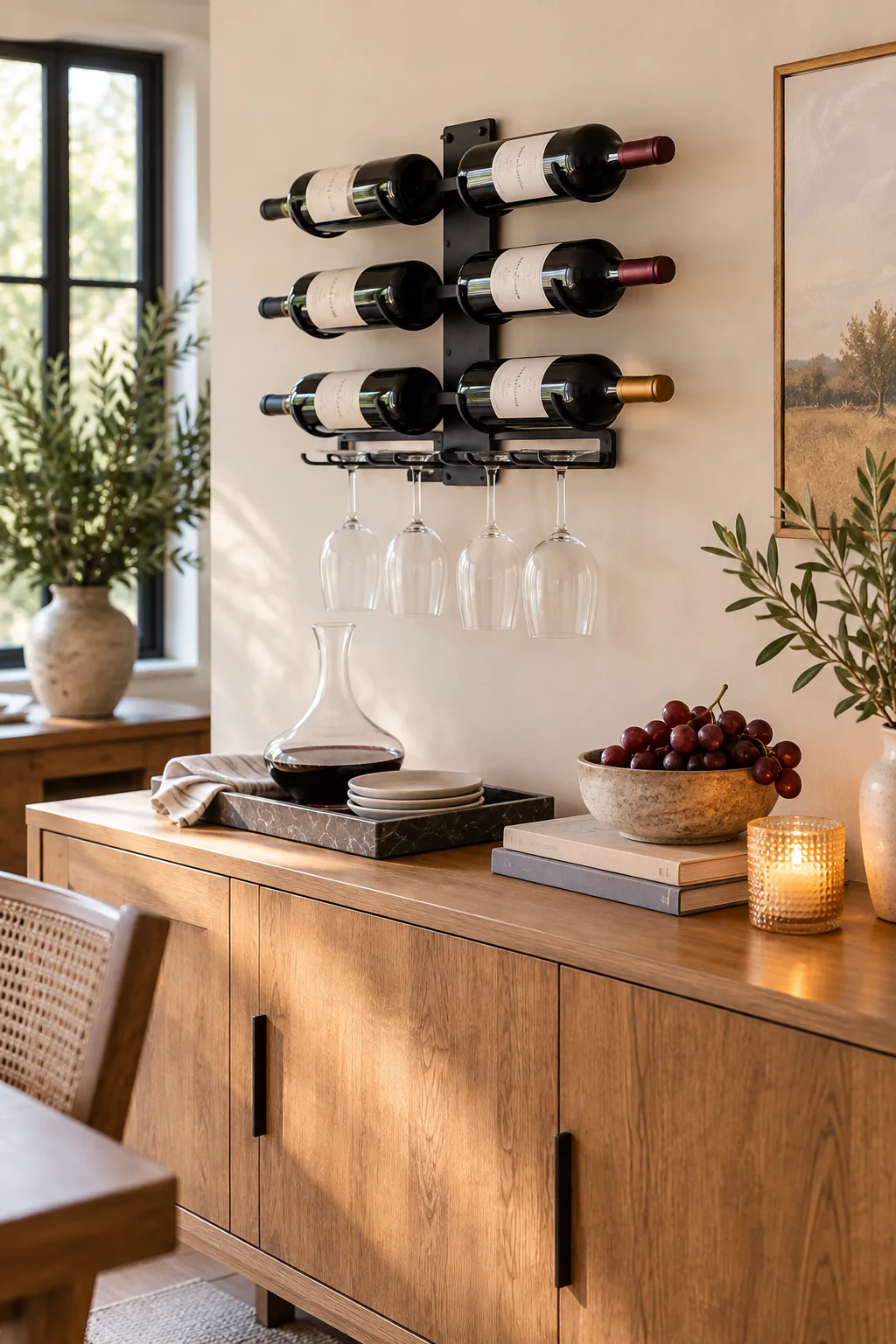
Center a wide-bottom glass decanter directly under the stemware track to visually anchor the space and invite guests to serve themselves effortlessly.
Placing the Glass Decanter
Positioning the decanter directly beneath the hanging glasses creates a highly functional, intuitive workflow for pouring and aerating full-bodied red wines.
Stacking Appetizer Plates and Linens
Add a small, neat stack of ceramic appetizer plates and freshly folded linen napkins right next to the decanter for immediate accessibility.
Layering the Credenza Surface
A well-styled tasting station balances practical hosting tools with thoughtful aesthetic details that strategically draw the eye downward from the heavy metal rack.
Adding Ambient Lighting and Texture
The warm glow of a low candle reflects beautifully off the hanging glass bowls, instantly transforming the utilitarian metal rack into a cozy focal point.
Balancing the Visual Weight
Grounding the heavy wall installation with substantial decorative objects on the credenza ensures the overall dining room design feels intentionally balanced and grounded.
Incorporating Organic Elements
Introducing natural textures like marble trays, woven linen, and fresh fruit breaks up the rigid, predictable geometry of the structural steel spine.
Preparing for Weekend Gatherings
Having your glasses, napkins, and favorite vintages perfectly aligned in one dedicated zone allows you to focus entirely on enjoying your company.
Maintaining the Tasting Station
Wipe down the metal cradles with a dry microfiber cloth monthly to prevent dust buildup from transferring onto your pristine paper wine labels.
Enjoying the Seamless Hosting Experience
A meticulously measured and thoughtfully styled wall display turns the simple act of opening a bottle of wine into an elegant, effortless ritual.
Wine Rack Styling Ideas for Every Room
Explore these distinct aesthetics to find the perfect pairing for your home's architecture.
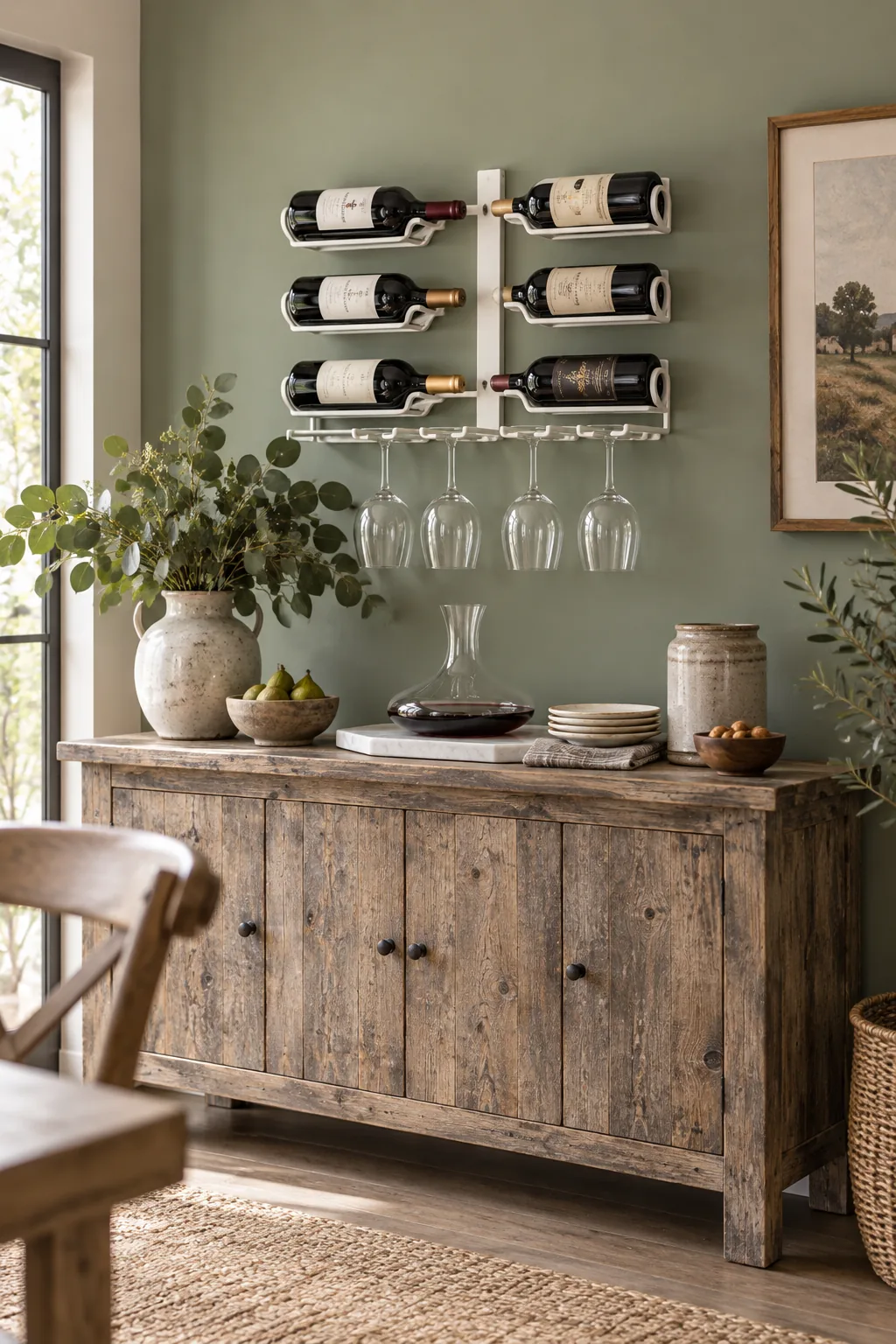
Modern Farmhouse Tasting Station: A matte white finish blends seamlessly into a sage green wall, allowing the reclaimed wood credenza to bring rustic warmth to the space.
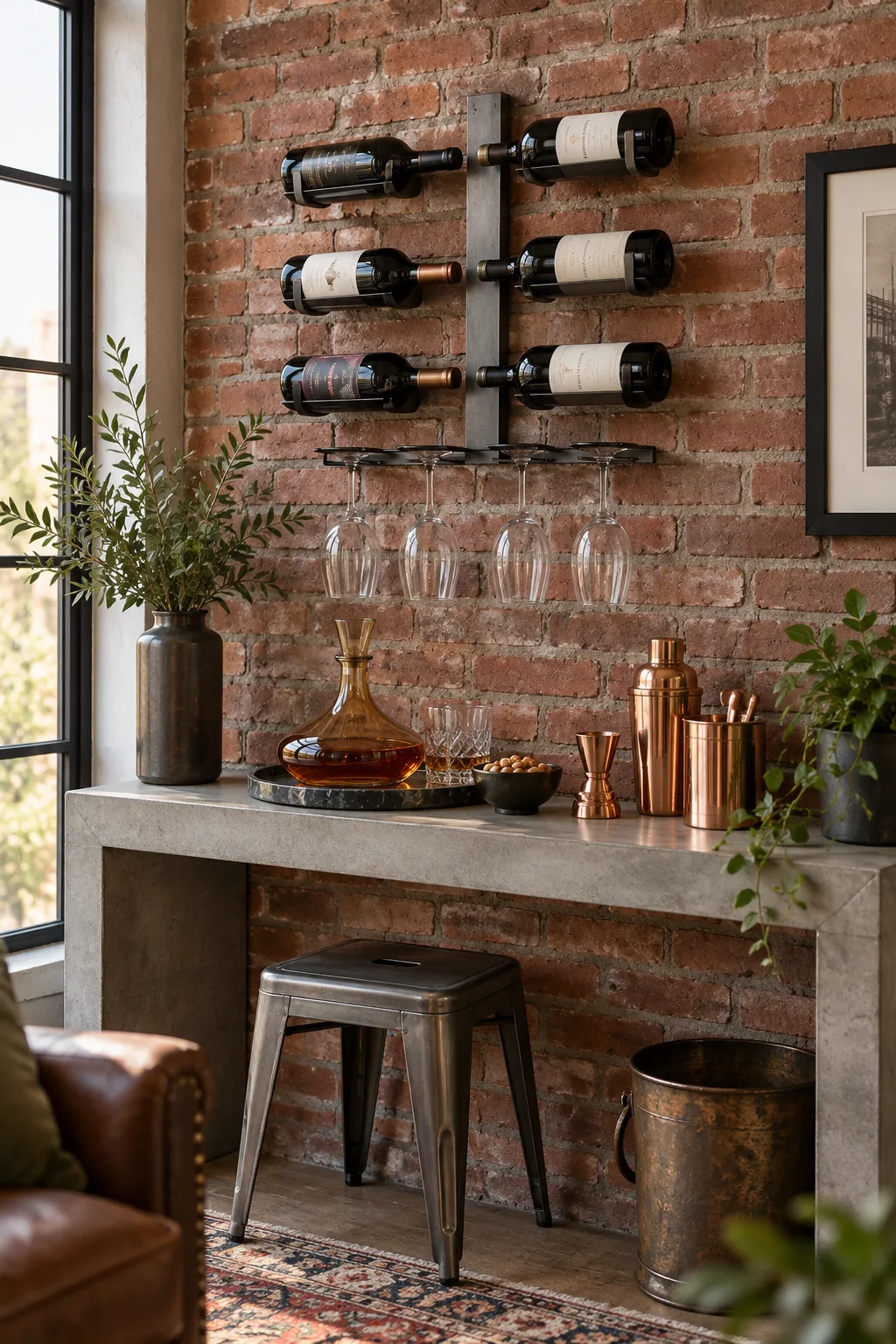
Industrial Loft Wine Display: Raw steel hardware and a concrete console table lean fully into an edgy, urban loft aesthetic that pairs perfectly with exposed brick.
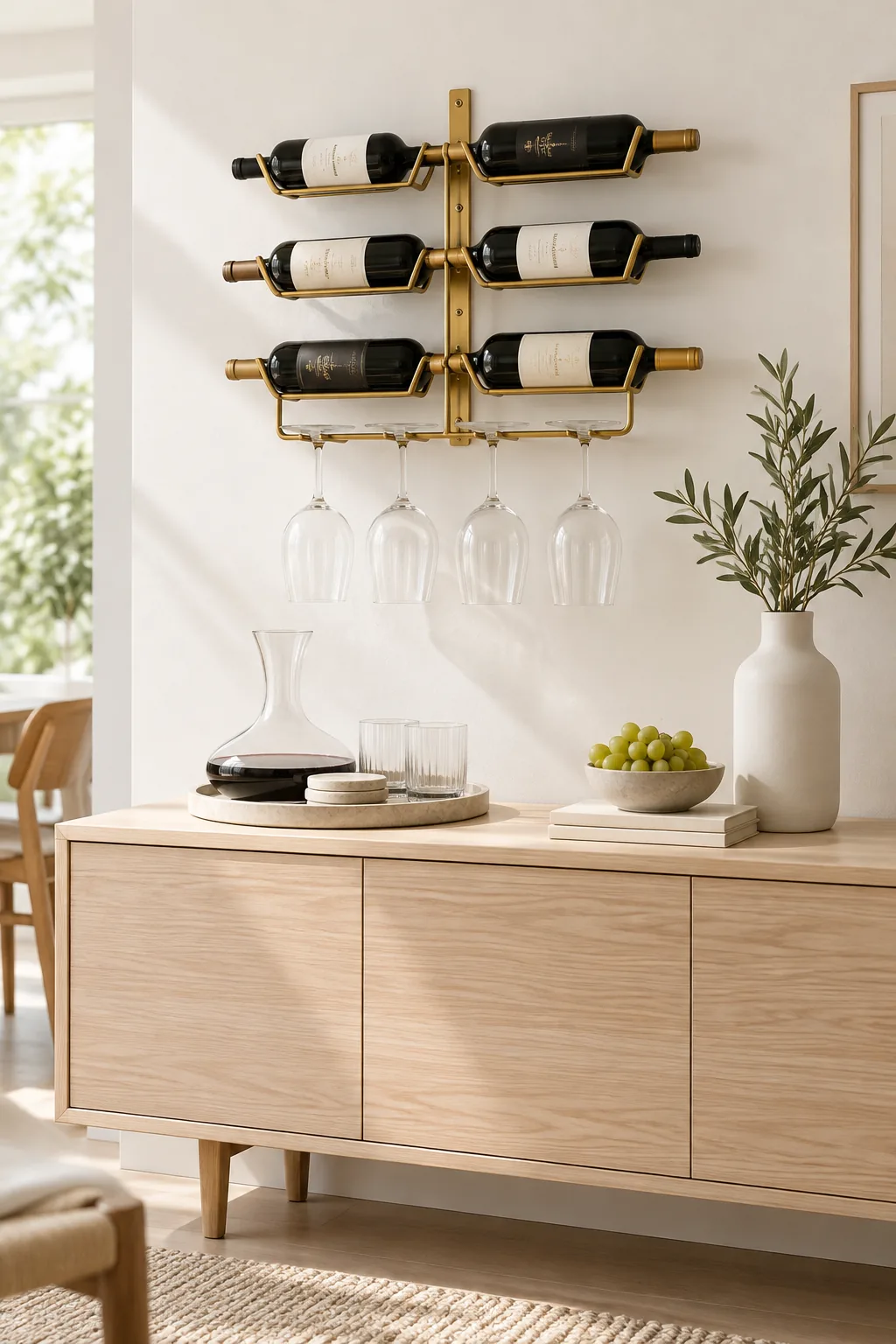
Minimalist Scandi Pouring Zone: Brushed brass hardware adds a subtle touch of elegance to a bright, minimalist space anchored by a pale ash wood credenza.
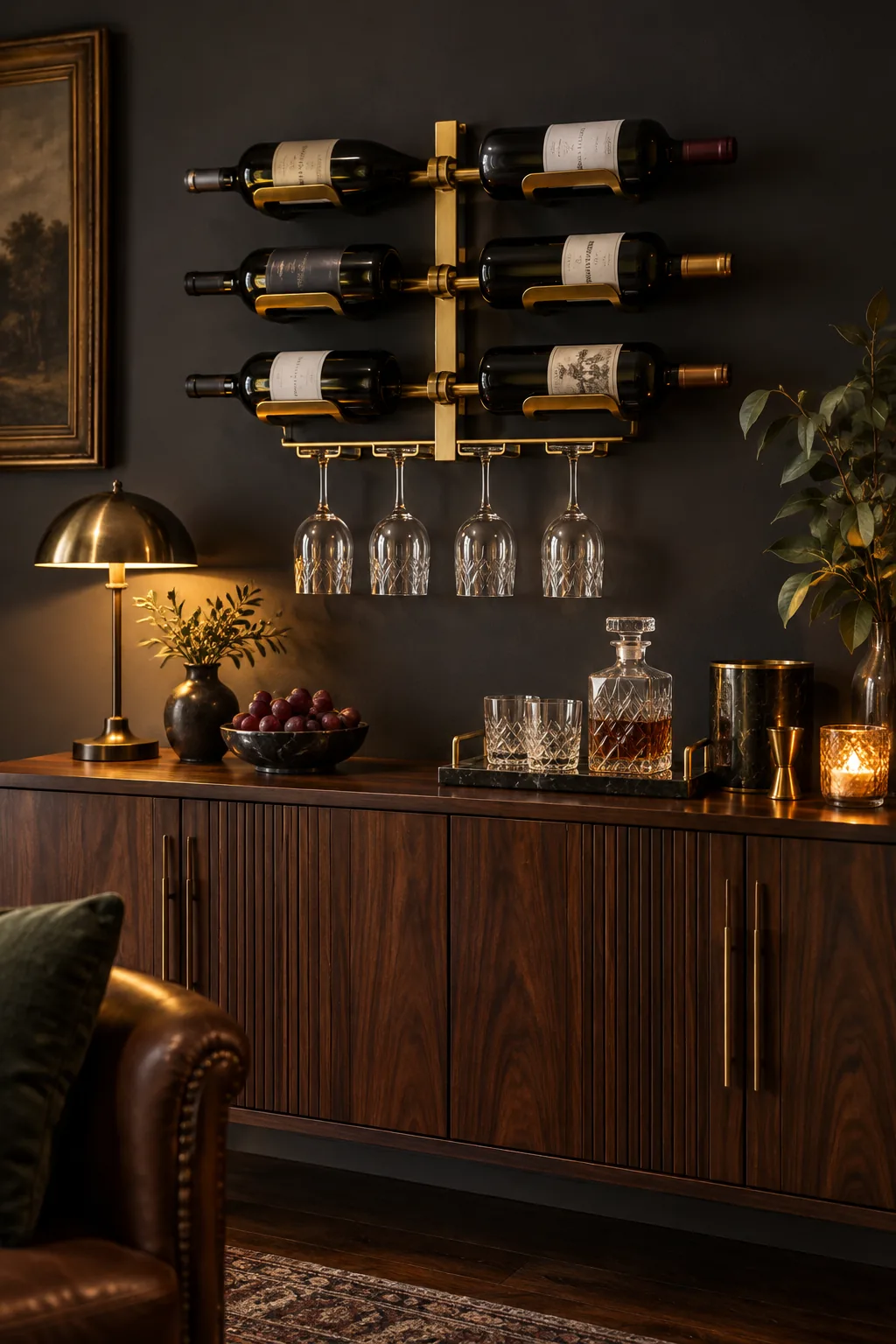
Moody Speakeasy Bar Setup: Charcoal walls and a dark walnut cabinet create a dramatic, moody backdrop that allows the matte gold wine rack to truly shine.
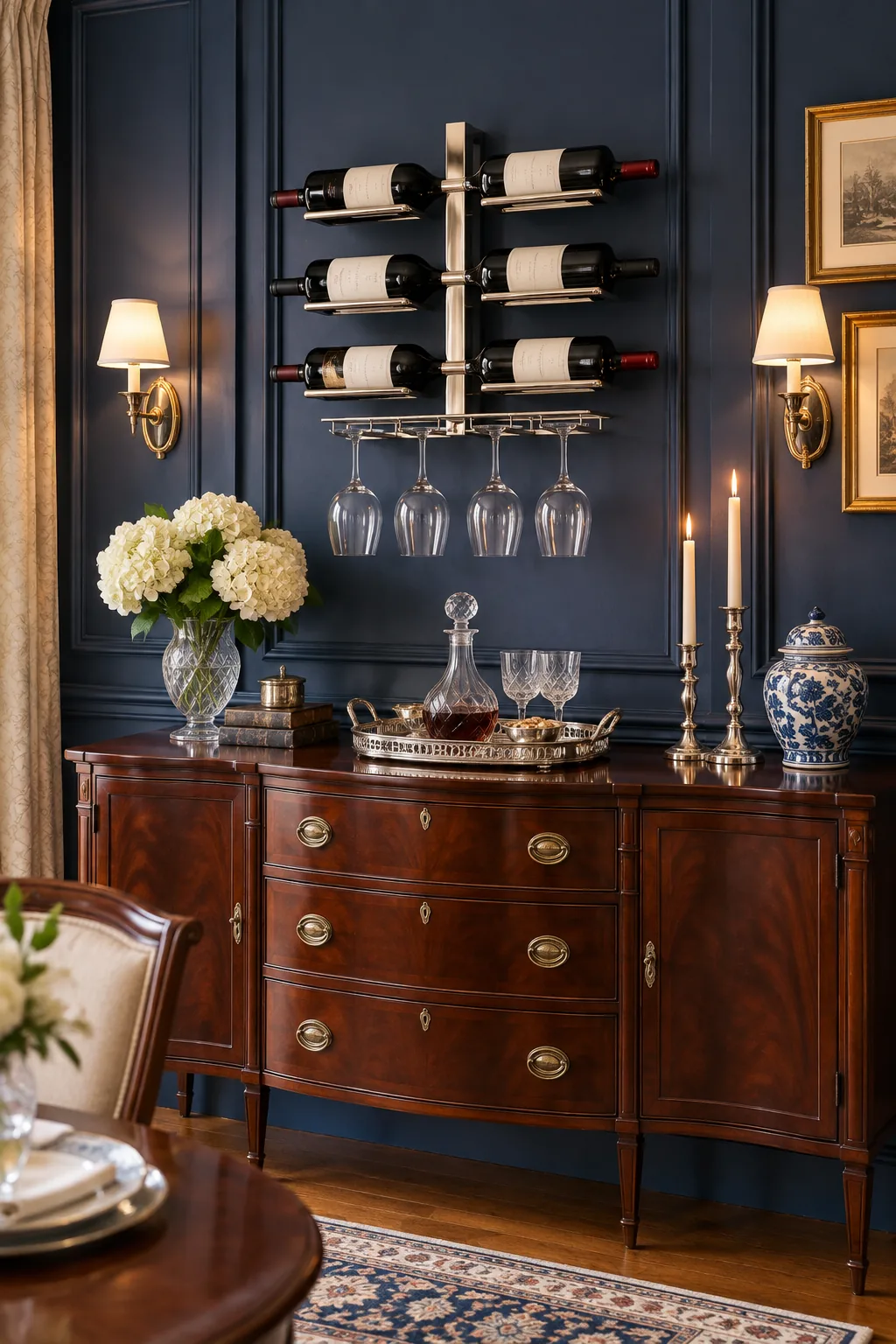
Classic Traditional Wine Buffet: Polished nickel hardware provides a crisp, timeless contrast against rich navy blue wainscoting and a formal mahogany dining buffet.
Finishing the Hosting Display
Soften the industrial look of the matte black metal hardware with warm, organic touches that elevate the entire dining room arrangement.
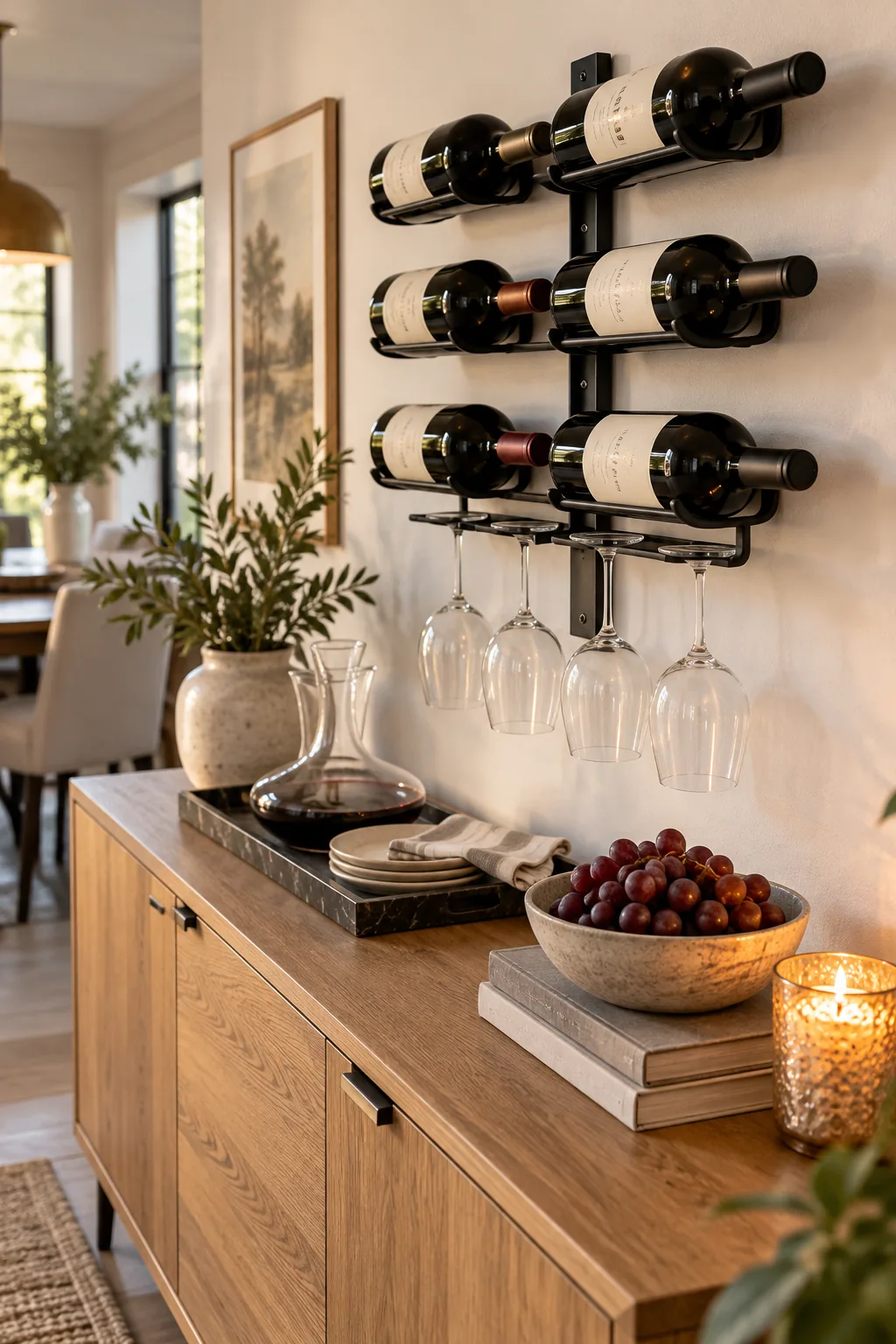
I love elevating a bowl of fresh green grapes on a stack of design books, finishing with ambient candlelight for a welcoming atmosphere in my own home.