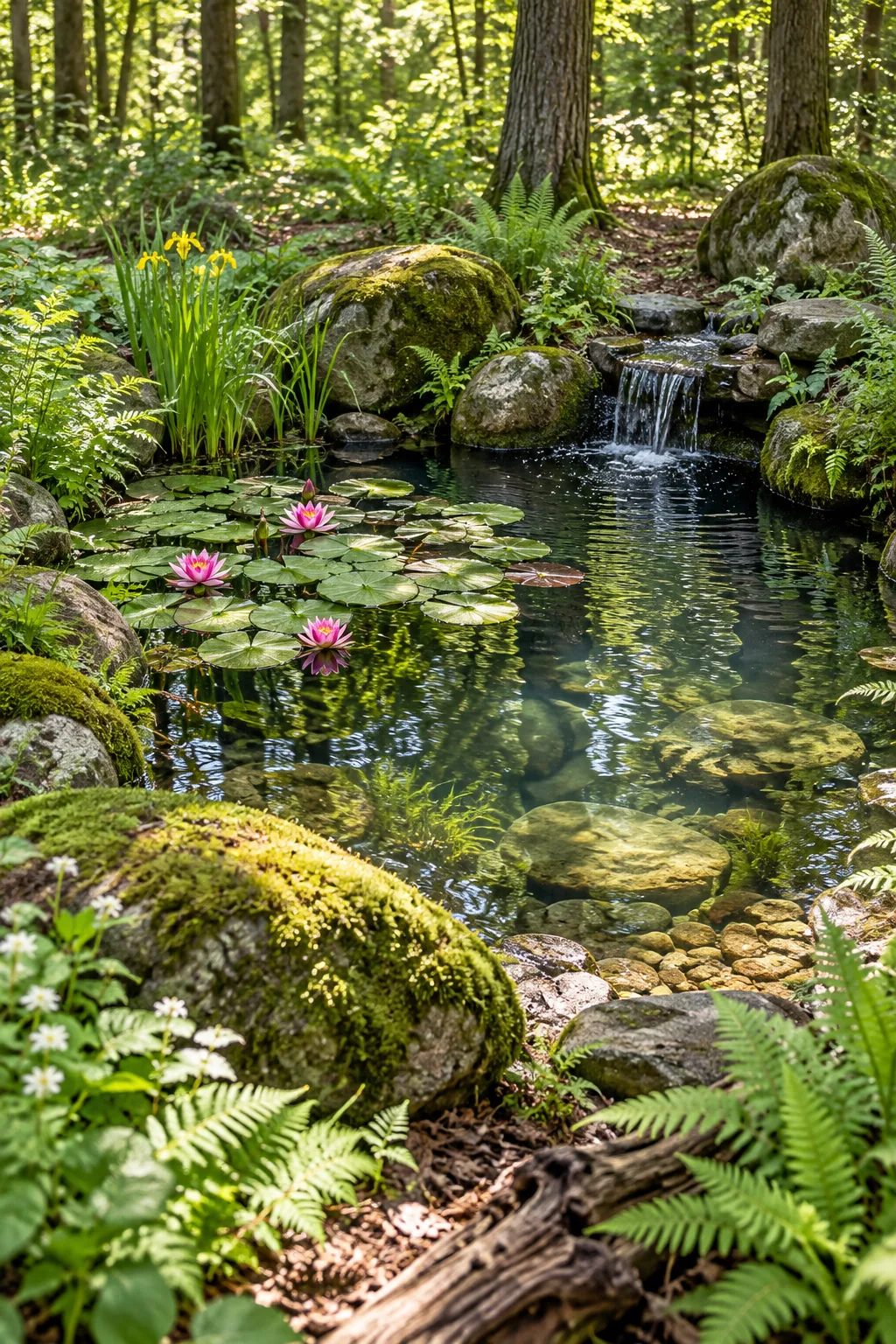
Clear Water Secrets: Backyard Pond Planting Depth Chart
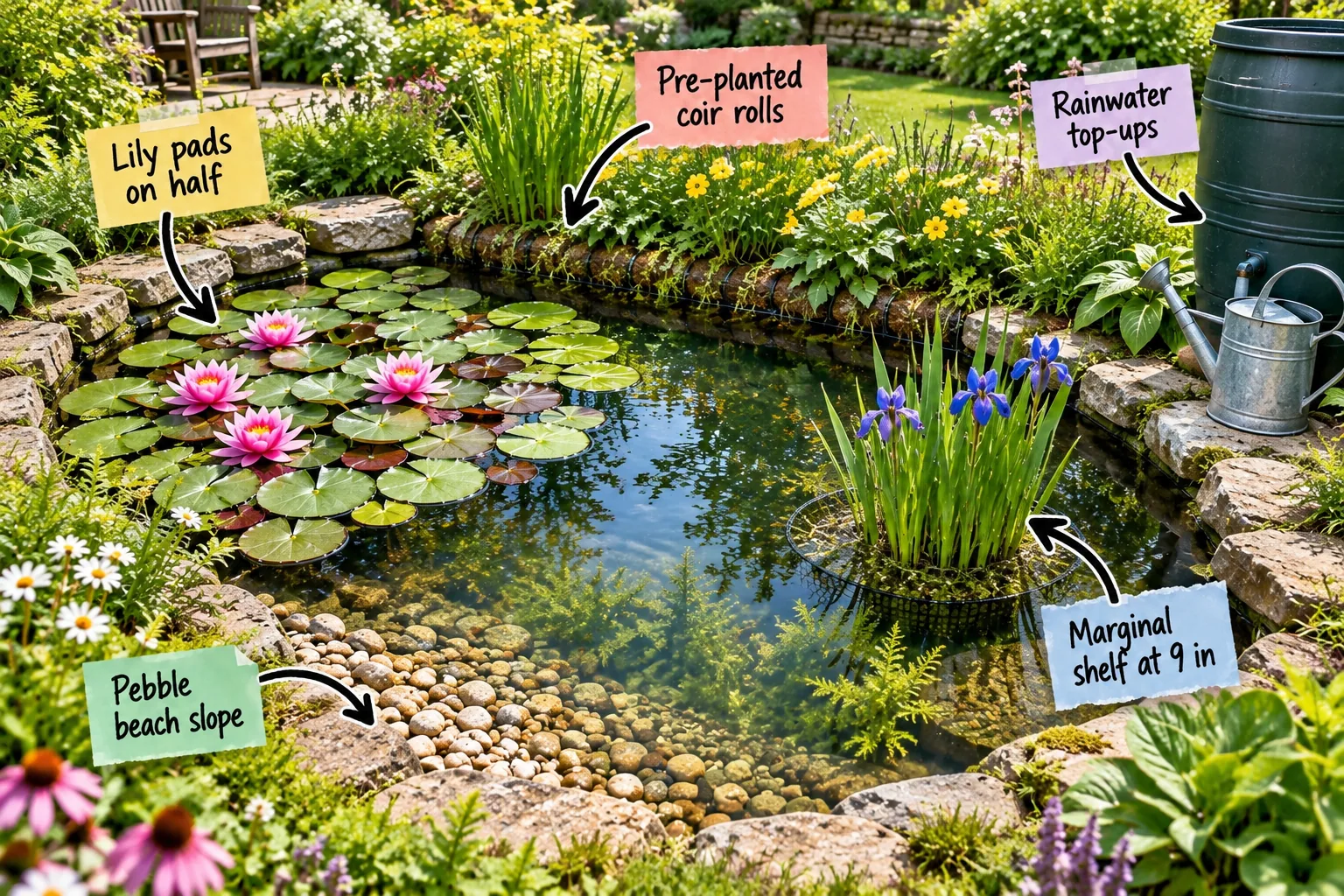
You will be able to stock your backyard pond with the exact quantities and depths of aquatic plants needed to maintain naturally clear water. Print our complete Pond Planting Depth & Quantity Chart to assign every marginal, lily, and oxygenator to its perfect zone.
Sloping the pebble beach for wildlife
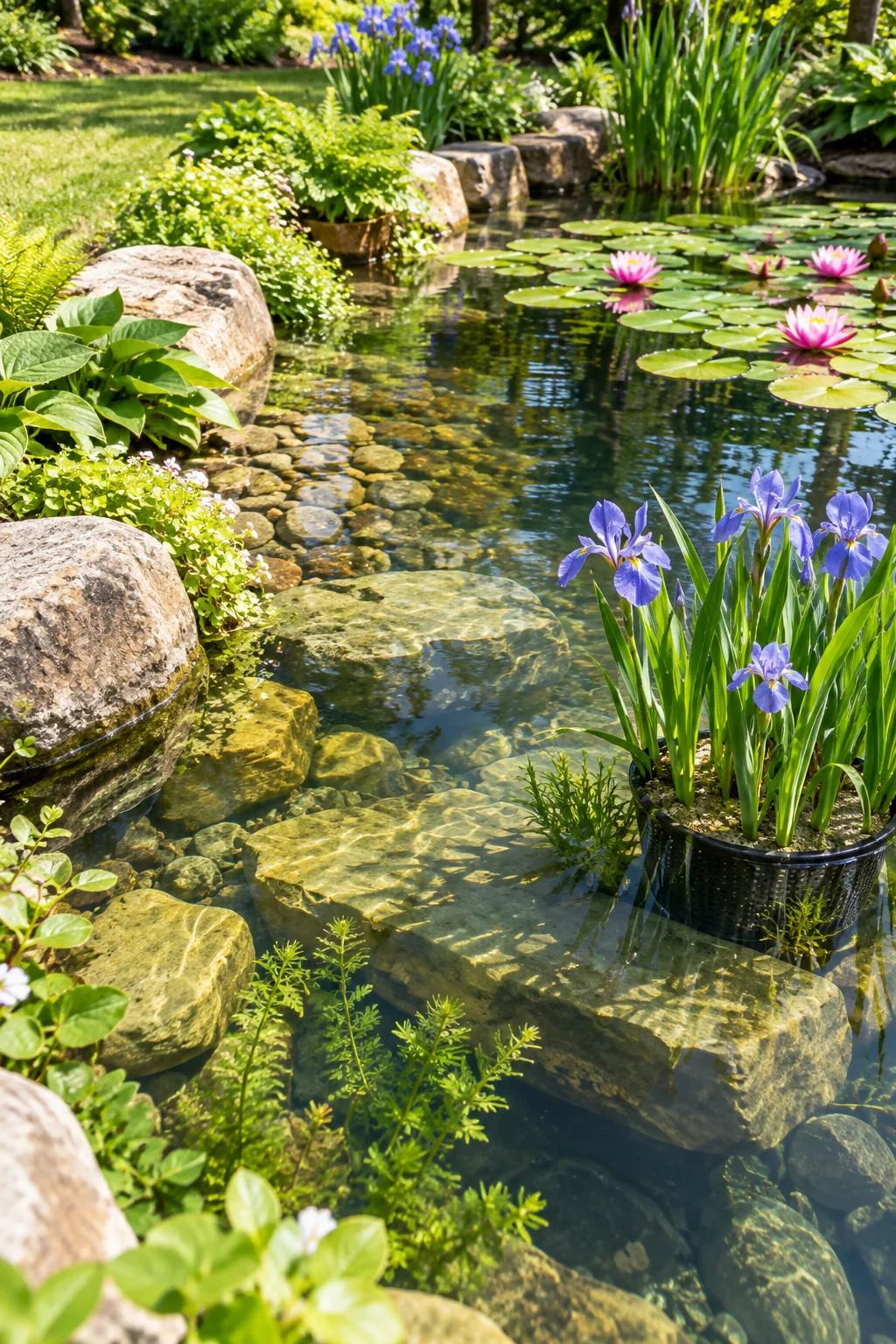
A successful backyard pond requires a safe entry and exit point for local wildlife to drink without slipping into deep water. Create a gentle pebble beach slope on one side of the pond, transitioning smoothly from the lawn into the shallow water.
- Excavate a gradual incline starting at the lawn edge and sloping down into the water.
- Line the entire slope with a heavy-duty protective underlayment to prevent rubber punctures.
- Cover the area completely with smooth, rounded river pebbles of varying sizes.
- Extend the stones slightly above the expected water line to hide the liner.
- Test the stability of the stones by pressing firmly with your hands.
When I built my first Austin water garden, watching a tiny green tree frog safely hop out across the wet stones proved this shallow gradient works perfectly. The gentle incline visible at the water’s edge mimics a natural shoreline, giving exhausted birds a secure place to land and bathe.
Softening the edge with pre-planted coir rolls
Exposed black liner ruins the natural illusion of a backyard pond. Lay pre-planted coir rolls along the rim to hide the edge. Because these fibrous rolls are buoyant when first introduced, they require temporary mechanical anchoring to stay securely in place.
Elevating marginal plants on a 9-inch shelf
Most emergent aquatic plants will eventually drown if placed directly at the dark bottom of the pond. Build a marginal shelf at 9 inches deep to hold baskets of blue flag iris exactly where they thrive.
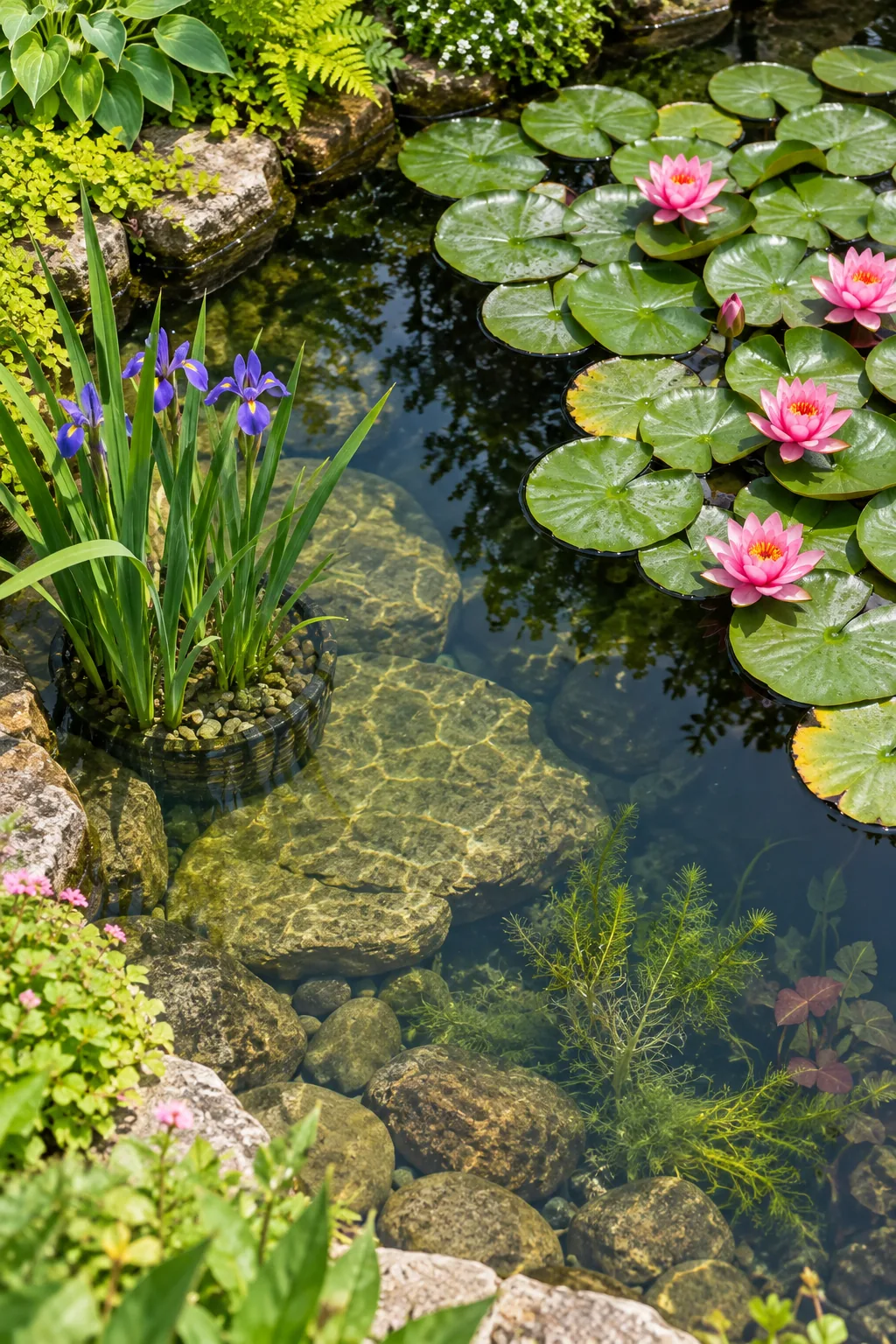
In my own backyard, measuring this shelf precisely meant I never had to prop up wobbly plant baskets on submerged bricks. This specific measurement keeps the plant crowns at the perfect depth to flourish while remaining completely invisible from above.
Sinking the deep zone to 24 inches
A stable ecosystem requires a body of water deep enough to resist rapid temperature swings during extreme weather. Excavate the central deep zone to exactly 24 inches to provide a cool, insulated refuge for overwintering frogs.
| Pond Zone | Ideal Depth | Primary Function |
|---|---|---|
| Pebble Beach | 0 to 2 inches | Safe wildlife access |
| Marginal Shelf | 9 inches | Emergent plant support |
| Deep Zone | 24 inches | Temperature stability |
| Surface Layer | Floating | Sunlight blocking |
This 24-inch depth serves as the standard requirement for hardy water lilies to establish successfully. It also creates a proper anchor point for large aquatic baskets that would otherwise tip over in shallower water.
Shading half the surface with lily pads
Sunlight fuels algae blooms, quickly turning clear water into thick green pea soup during the summer months. Plant enough water lilies in the deep zone so that their floating lily pads on half of the water surface block the light once mature.
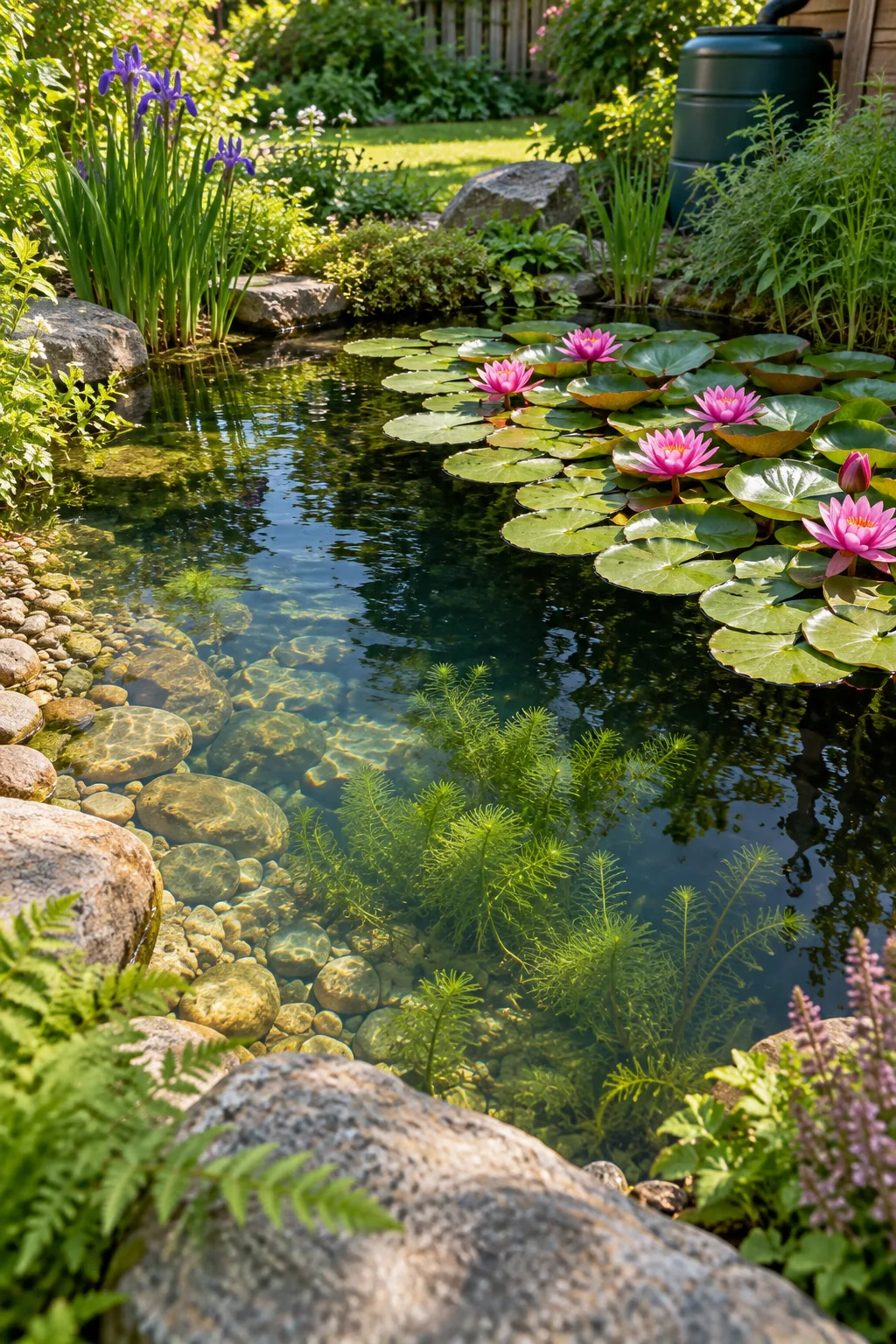
This 50 percent ratio starves suspended algae of the light it needs to multiply while keeping the water cool beneath the surface. Covering more than half can deplete oxygen, so maintaining this exact balance is crucial for a healthy ecosystem.
Adding submerged oxygenators for clear water
Surface shade alone is never enough to maintain a perfectly balanced pond ecosystem. You must sink dedicated oxygenating plants into the deeper zones to actively process the invisible waste produced by decaying leaves and beneficial bacteria.
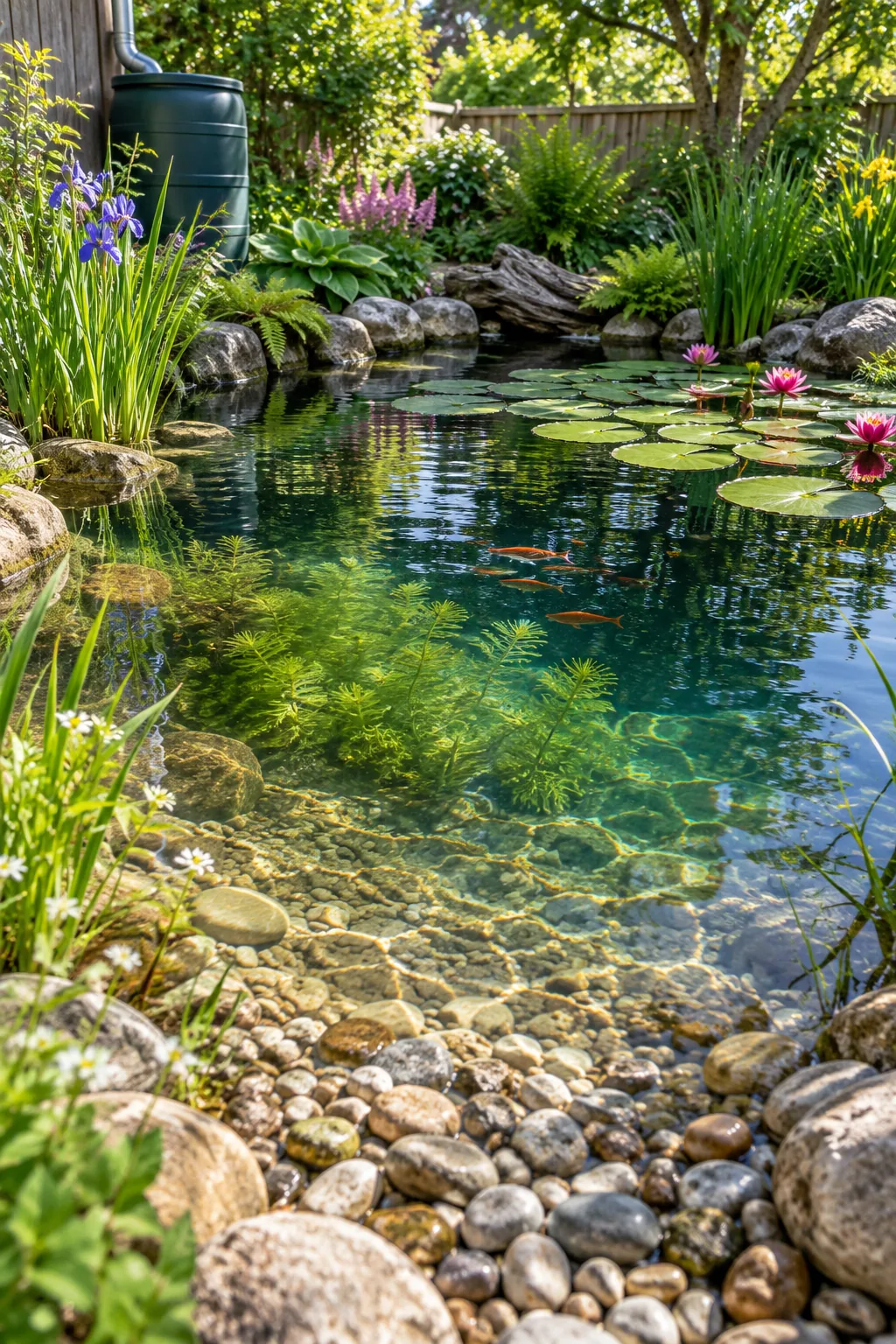
Drop the recommended number of weighted oxygenator bunches directly to the pond bottom. These feathery green plants will quietly filter the water out of sight, ensuring crystal clarity year-round without cluttering the surface.
Topping off with pure rainwater
Evaporation will slowly lower your pond’s water level during the summer months. Keep a rain barrel with a metal watering can beside the pond for all your rainwater top-ups, as reaching for the garden hose introduces invisible chemical problems that ruin water clarity.
Your pond planting depth and quantity chart
Balancing a pond requires planting the right species at the correct depths and in the proper ratios. Print our one-page Pond Planting Depth & Quantity Chart to see exactly how many lilies cover half the surface for small, medium, and large ponds.
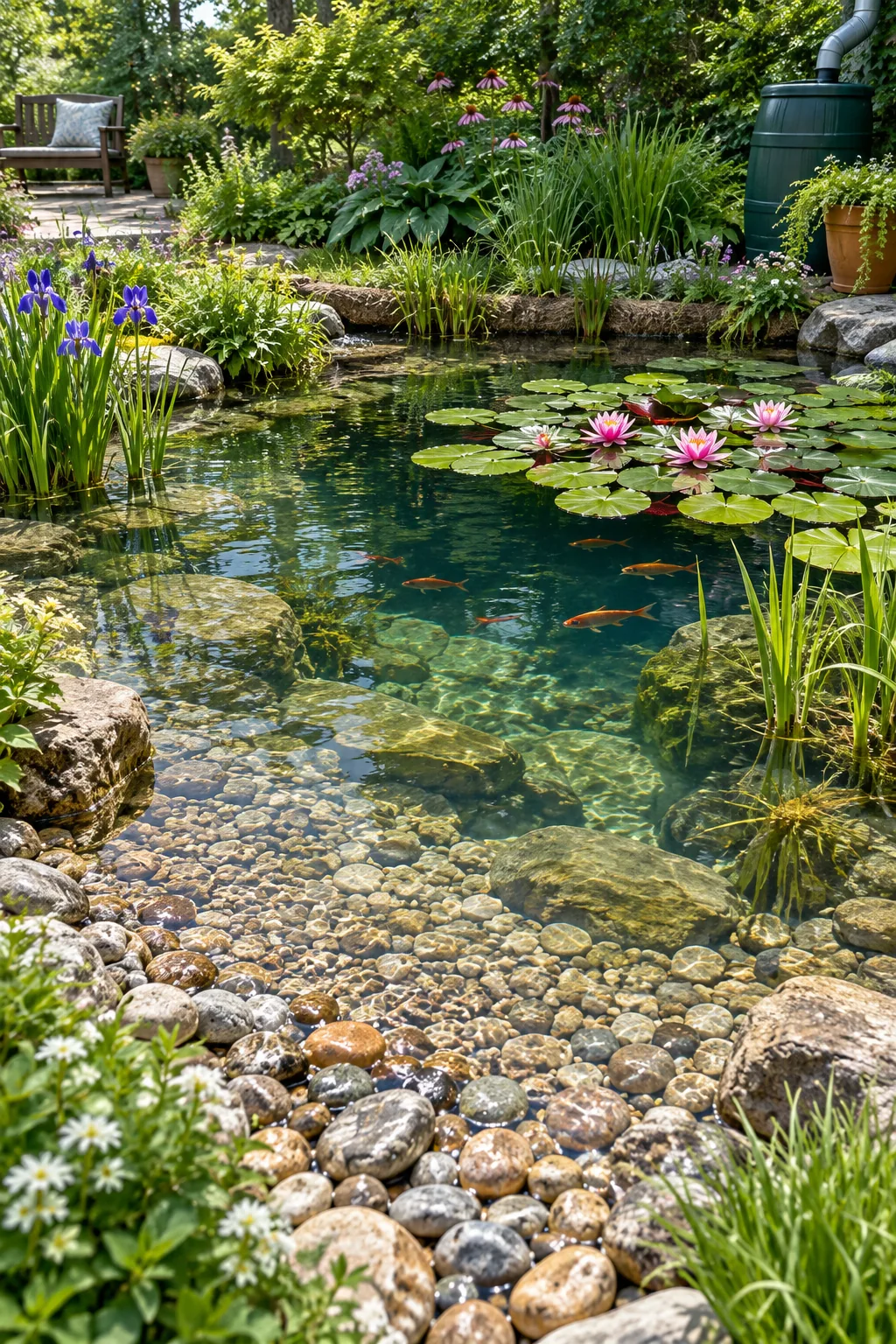
This printable guide assigns every common pond plant to its proper zone, from the pebble beach to the 24-inch deep zone. It also lists the exact oxygenator bunches needed per square yard so you can buy the perfect quantities for clear water.
More backyard pond styles
Adapt these depth and planting rules to fit any garden aesthetic.
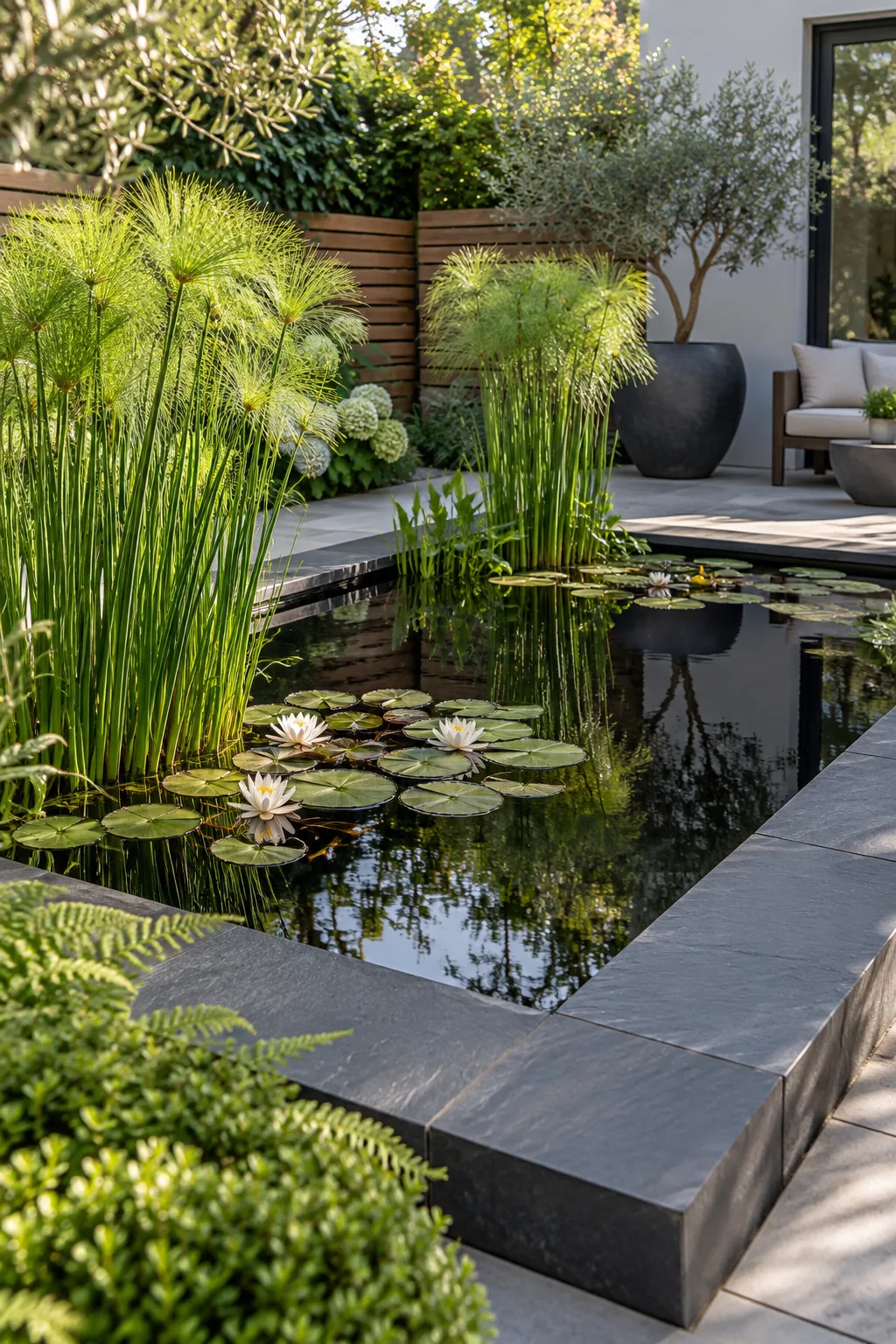
Modern formal slate courtyard: Dark dyed water and sleek slate edging give this formal courtyard pond a highly reflective, minimalist finish.
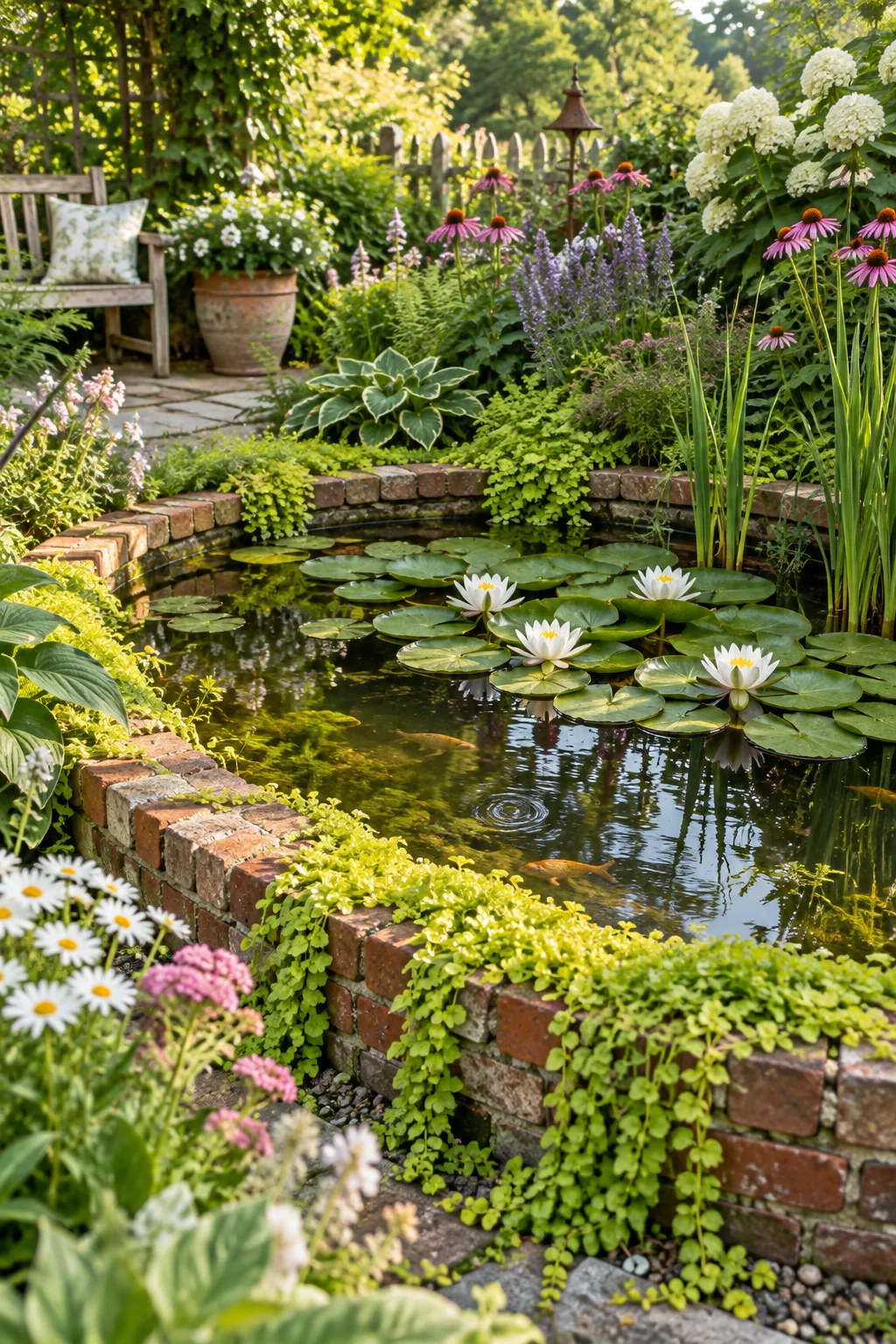
Lush cottage brick border: Weathered brick edging softened by trailing creeping jenny anchors this pond beautifully into a traditional blooming cottage garden.
Shaded woodland mossy boulders: Large mossy boulders and native ferns create a secluded, naturalistic wildlife watering hole under the dappled shade of mature trees.