
Modern Wall Niche Decor: Styling Heights & LED Lighting Guide
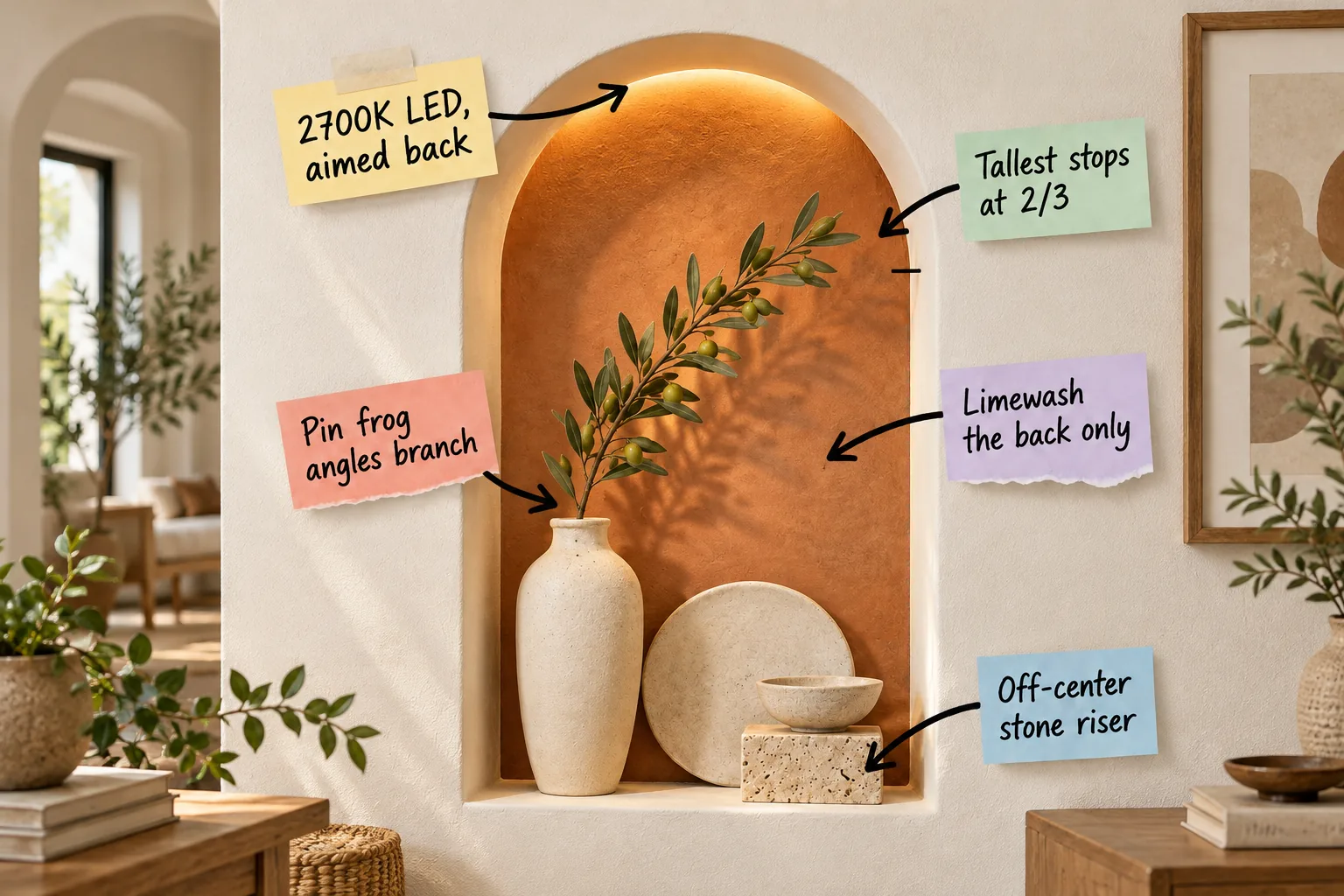
You will be able to correctly light, measure, and arrange a perfectly balanced wall niche using our printable 2-page styling sheet complete with exact object heights, riser measurements, and the full LED shopping list.
Treat the Niche as a Framed Stage
Before adding objects, evaluate the niche dimensions to ensure it can actually hold a layered composition. A modern styled niche requires a minimum depth of 6 to 8 inches to comfortably layer objects without them hanging over the edge.
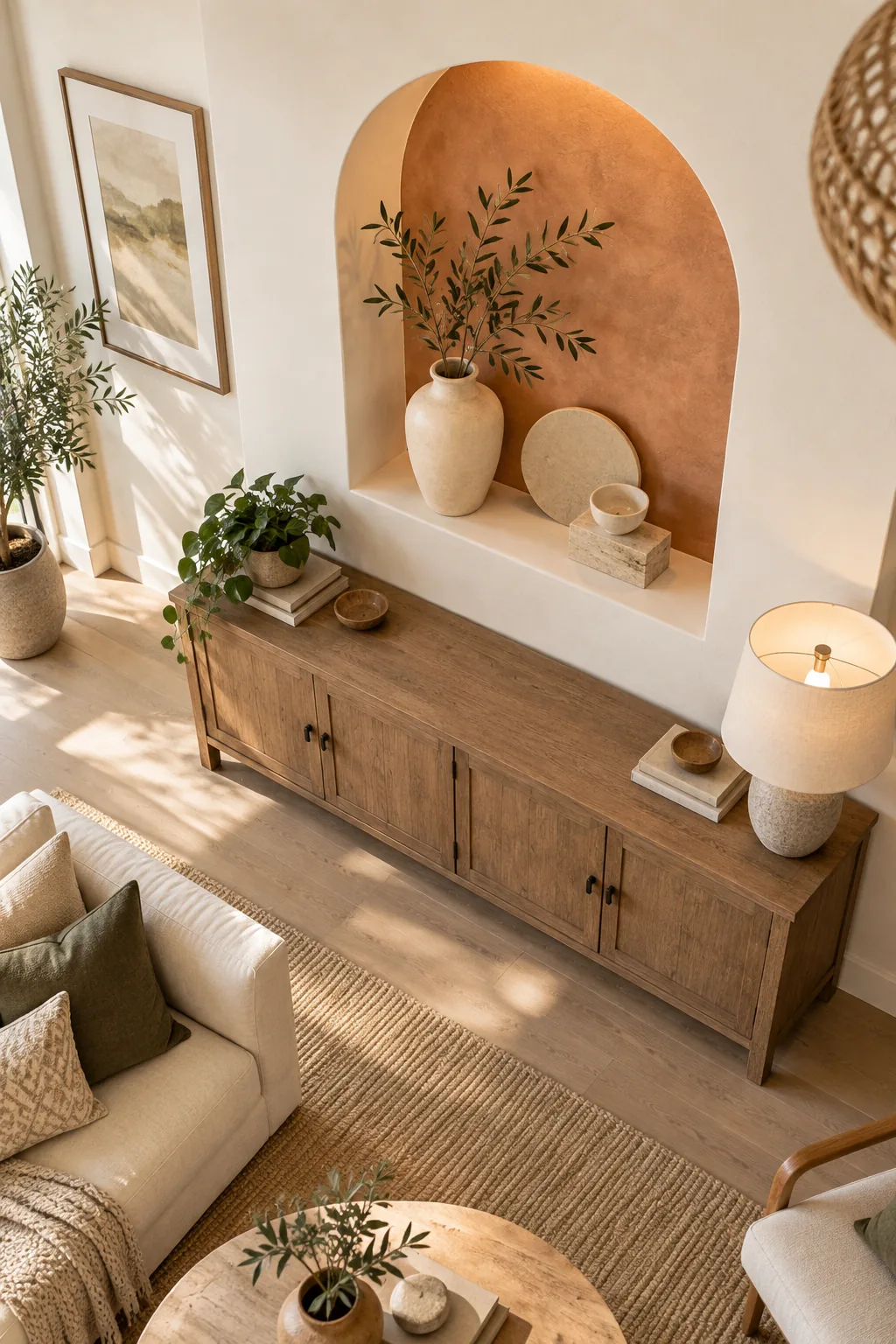
In my own Denver living room, I initially tried styling a shallow four-inch cutout, but the pieces always looked precariously perched until we framed it out deeper to create a true stage.
Limewash the Back Panel Only
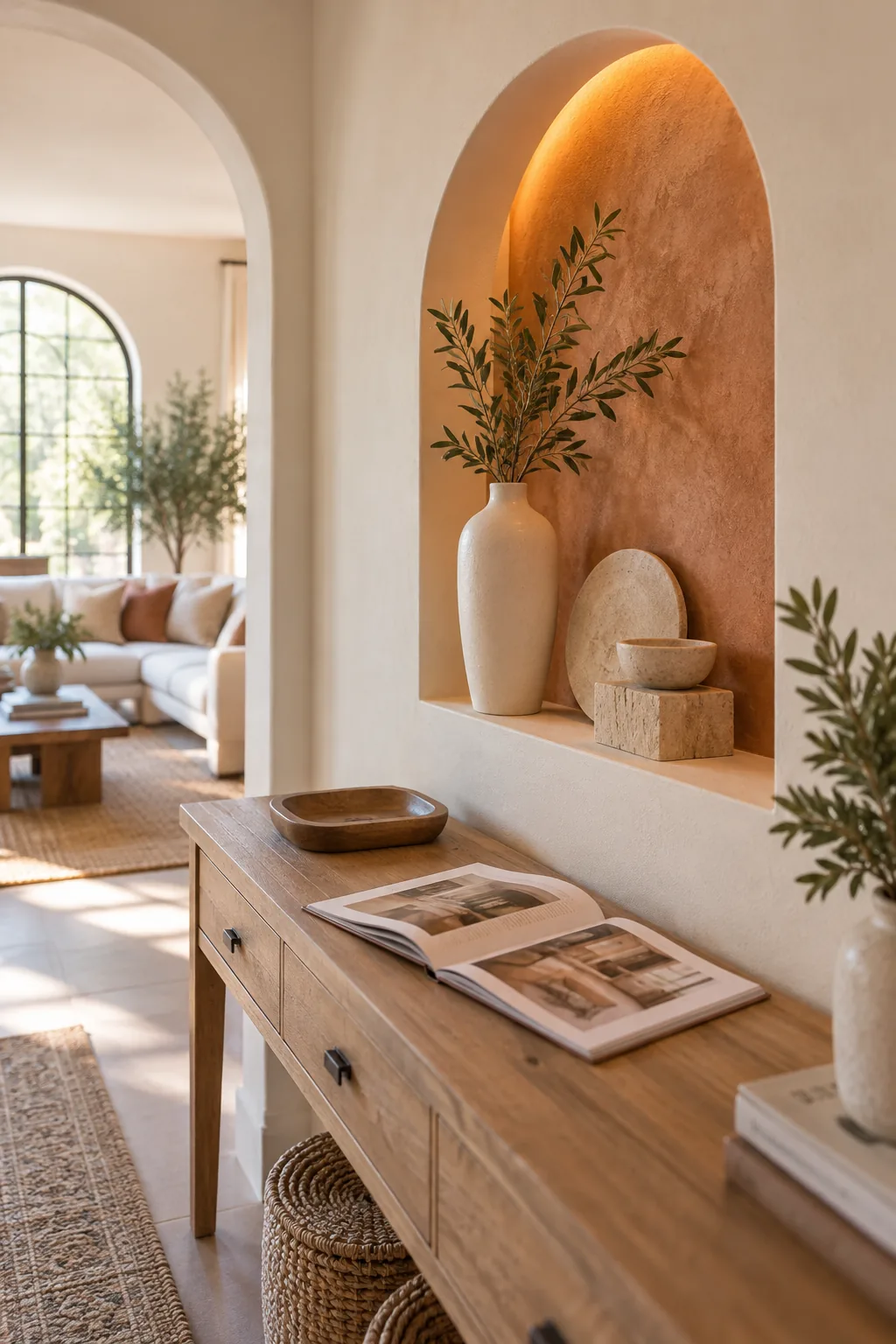
Create immediate depth by applying a textured finish exclusively to the back wall of the niche. Leaving the surrounding wall and the inside arch return in a flat, warm white makes the cloudy terracotta limewash pop.
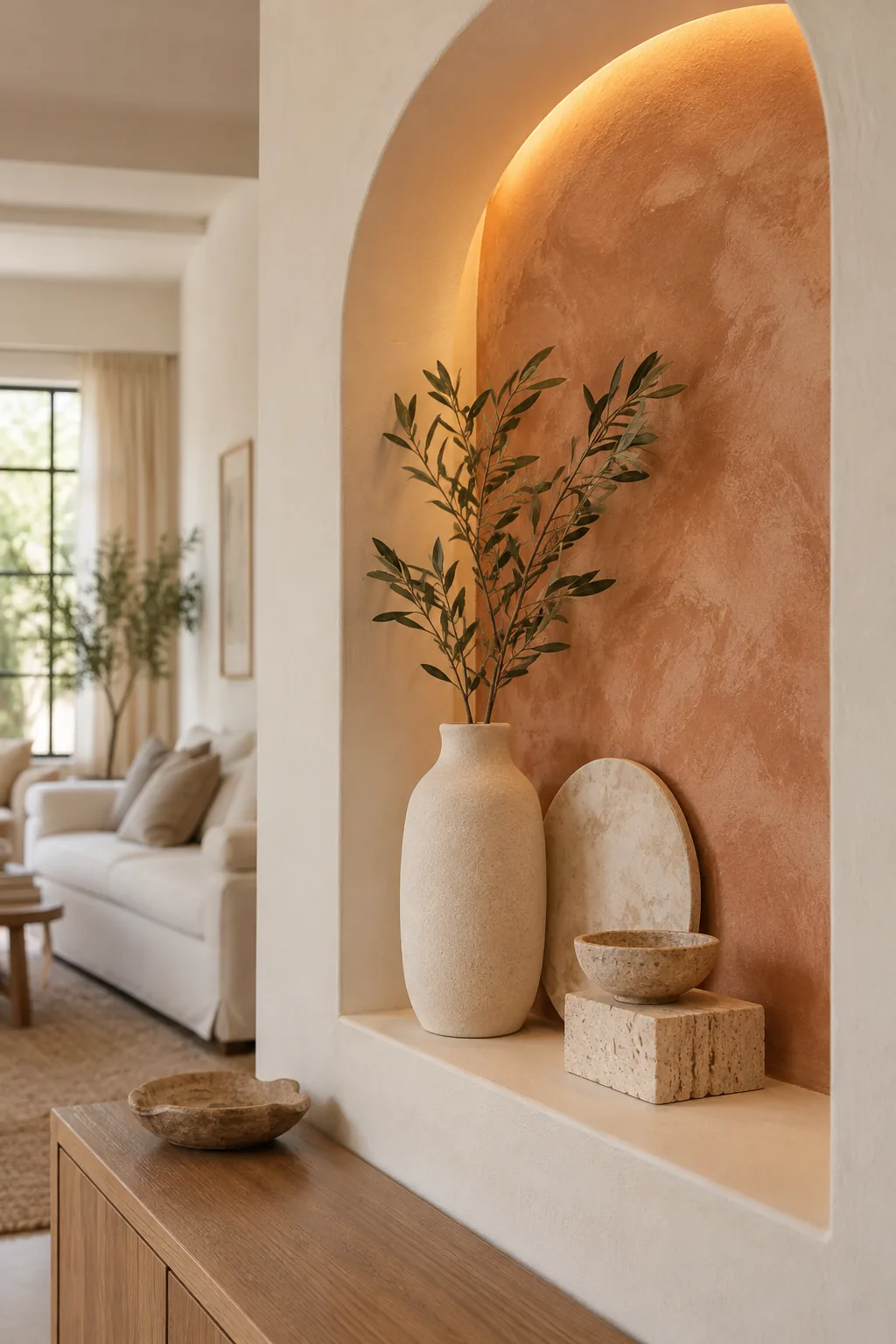
I used this exact technique in my hallway last spring, and painting only the back plane instantly turned a flat architectural feature into a glowing shadow box that anchors the entire space.
Hide a Warm LED at the Top Arch
Professional stylists light the niche before placing a single vase, because shadows define the shape of your decor. Tuck a slim LED strip behind the front top lip of the arch, aiming the light backward to graze down the textured plaster.
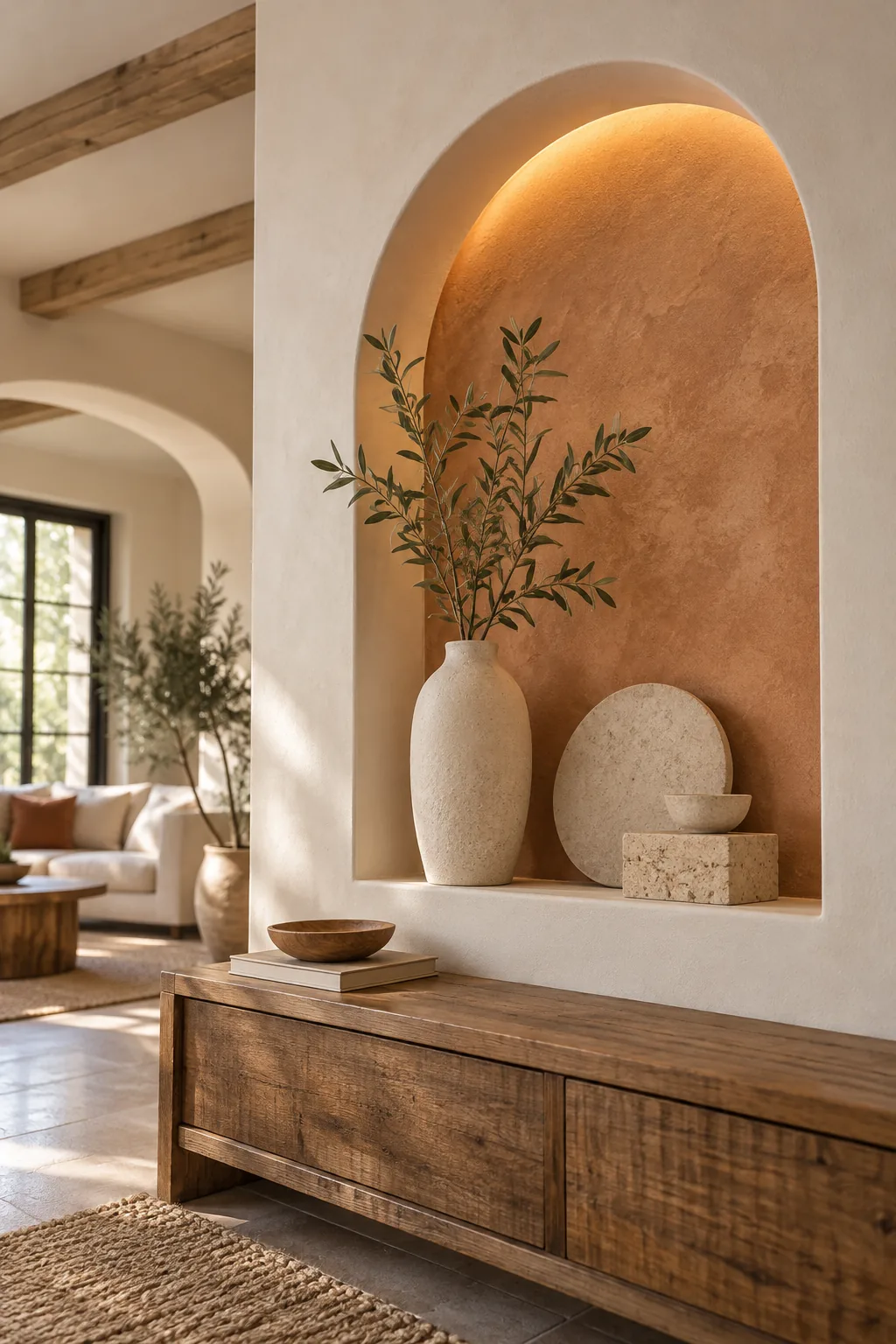
Choosing the right color temperature is critical for a cozy atmosphere, so stick to 2700K LEDs to enhance the warm terracotta tones rather than washing them out with harsh daylight bulbs.
Stop Your Tallest Stem at Two-Thirds
The most common styling mistake is filling the entire arch, which suffocates the negative space. The tip of your tallest element should end at exactly two-thirds of the niche height to leave the upper curve completely open.
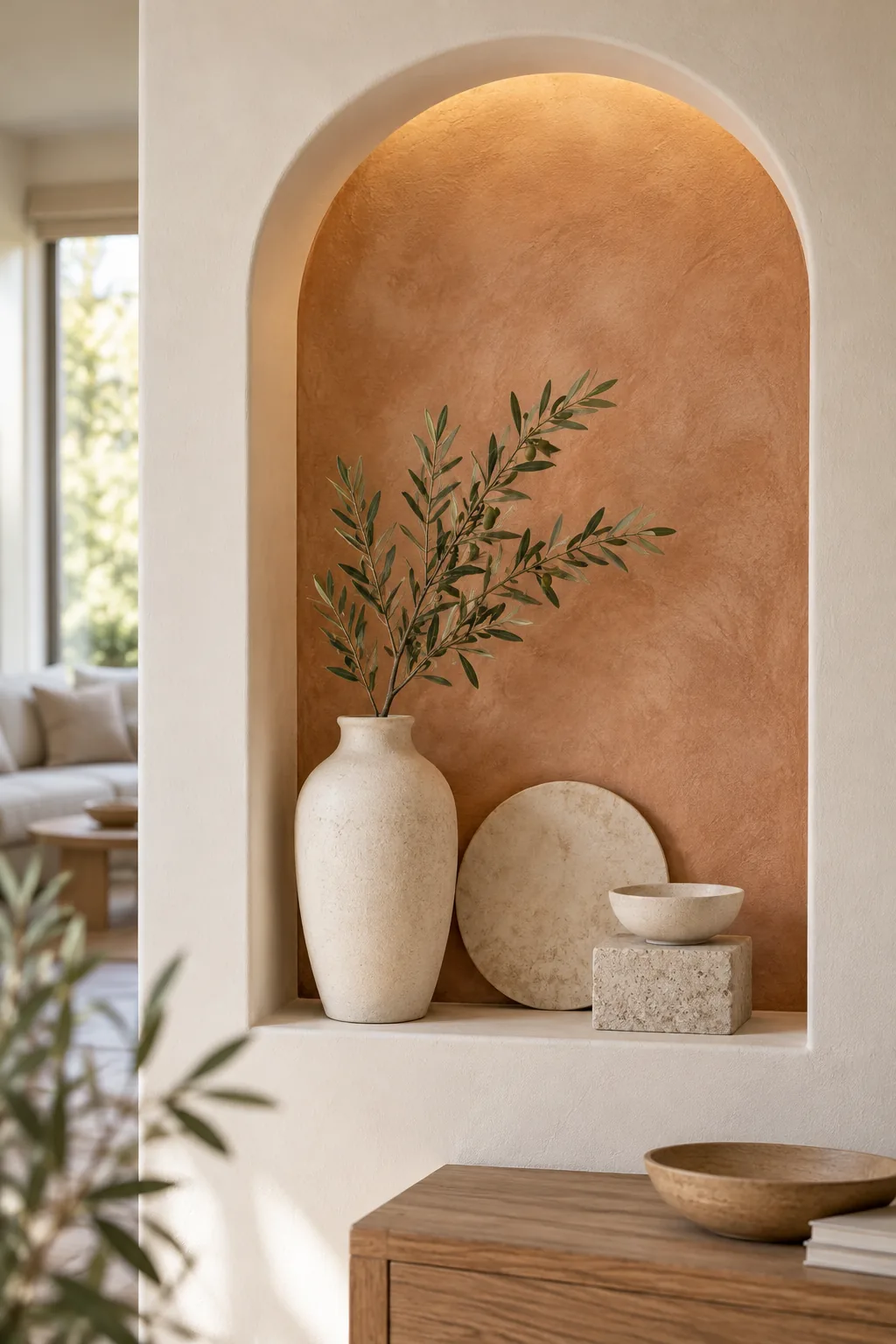
Finding this exact proportion keeps the arrangement grounded and allows the hidden lighting to breathe. You can calculate this easily before cutting your stems to guarantee a perfectly balanced silhouette.
I constantly use this two-thirds rule in my own home to balance tall branches without letting them scrape the ceiling of the arch.
Angle the Branch With a Hidden Pin Frog
A single branch in a wide-mouth vase will inevitably flop to the side and ruin your careful height calculations. Drop a heavy 2-inch metal pin frog into the bottom of the tall cream vase to hold the stem at a deliberate, graceful lean.
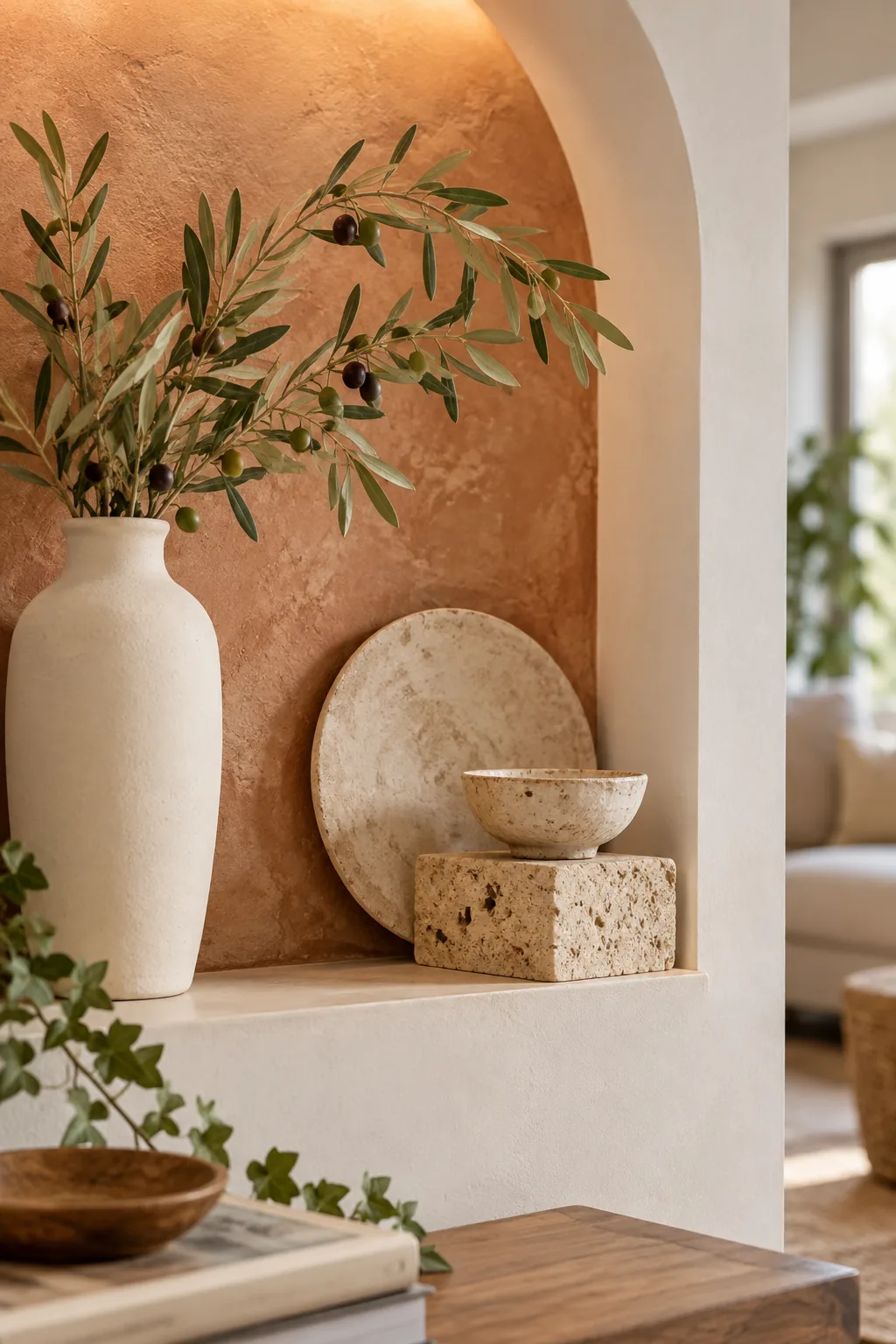
Securing the stem at a precise angle creates a dynamic diagonal line that guides the eye down toward the smaller decorative objects resting below.
Elevate Small Bowls on an Off-Center Riser
Break up uniform heights by introducing a small travertine block to act as a structural pedestal. Place it off-center to the right to lift a smaller bowl, creating an asymmetrical balance against the tall vase on the left.
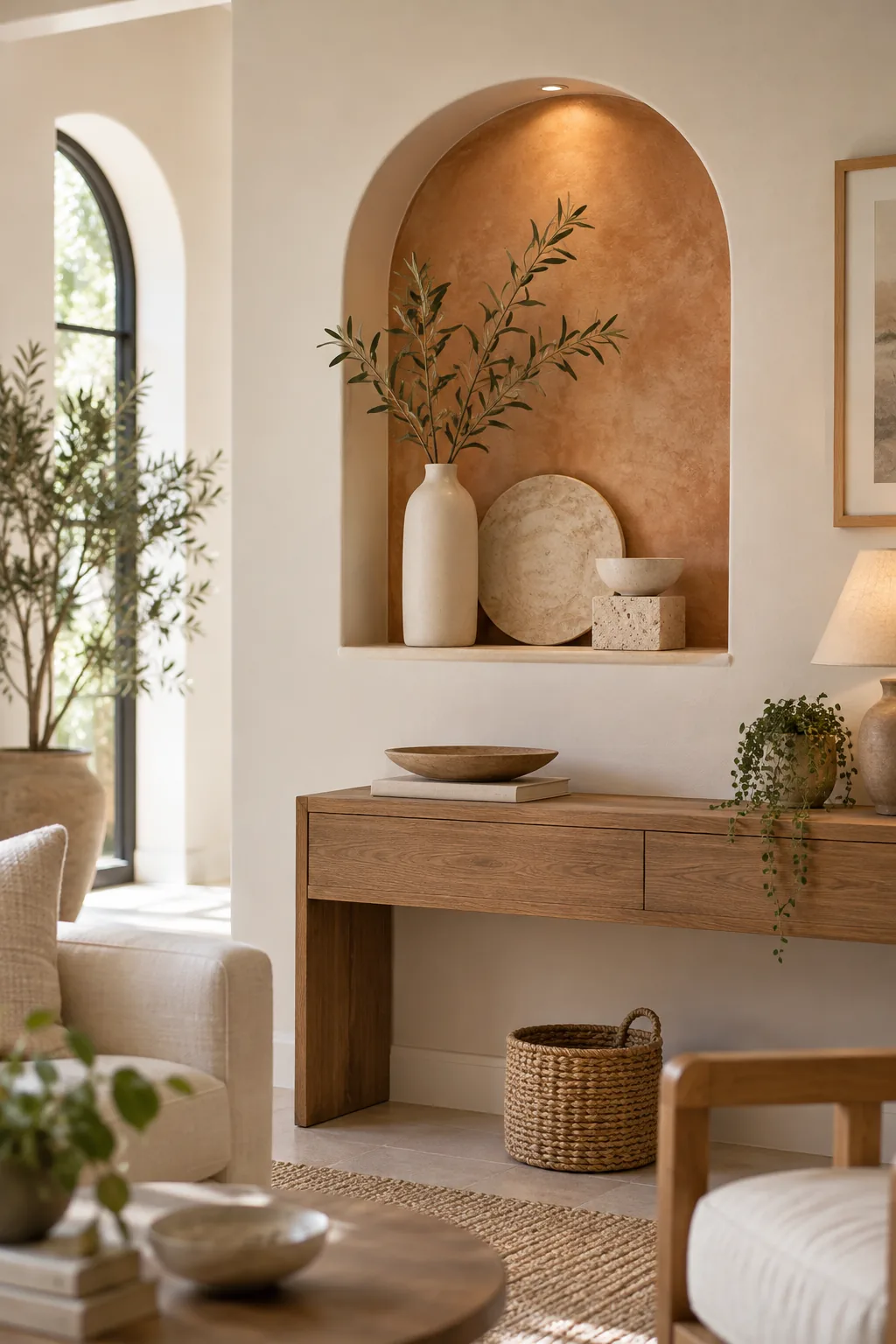
Using standard riser heights ensures your secondary objects sit at the perfect visual level without competing with your primary vase.
| Niche Height | Vase Height | Stone Riser Height |
|---|---|---|
| 24 inches | 8 inches | 2 inches |
| 36 inches | 12 inches | 4 inches |
| 48 inches | 16 inches | 6 inches |
Layer a Round Disc to Bridge the Gap
Connect the tall vase and the low riser by leaning a round ceramic disc against the back wall. This intermediate shape bridges the visual gap and adds necessary overlapping layers to the composition.
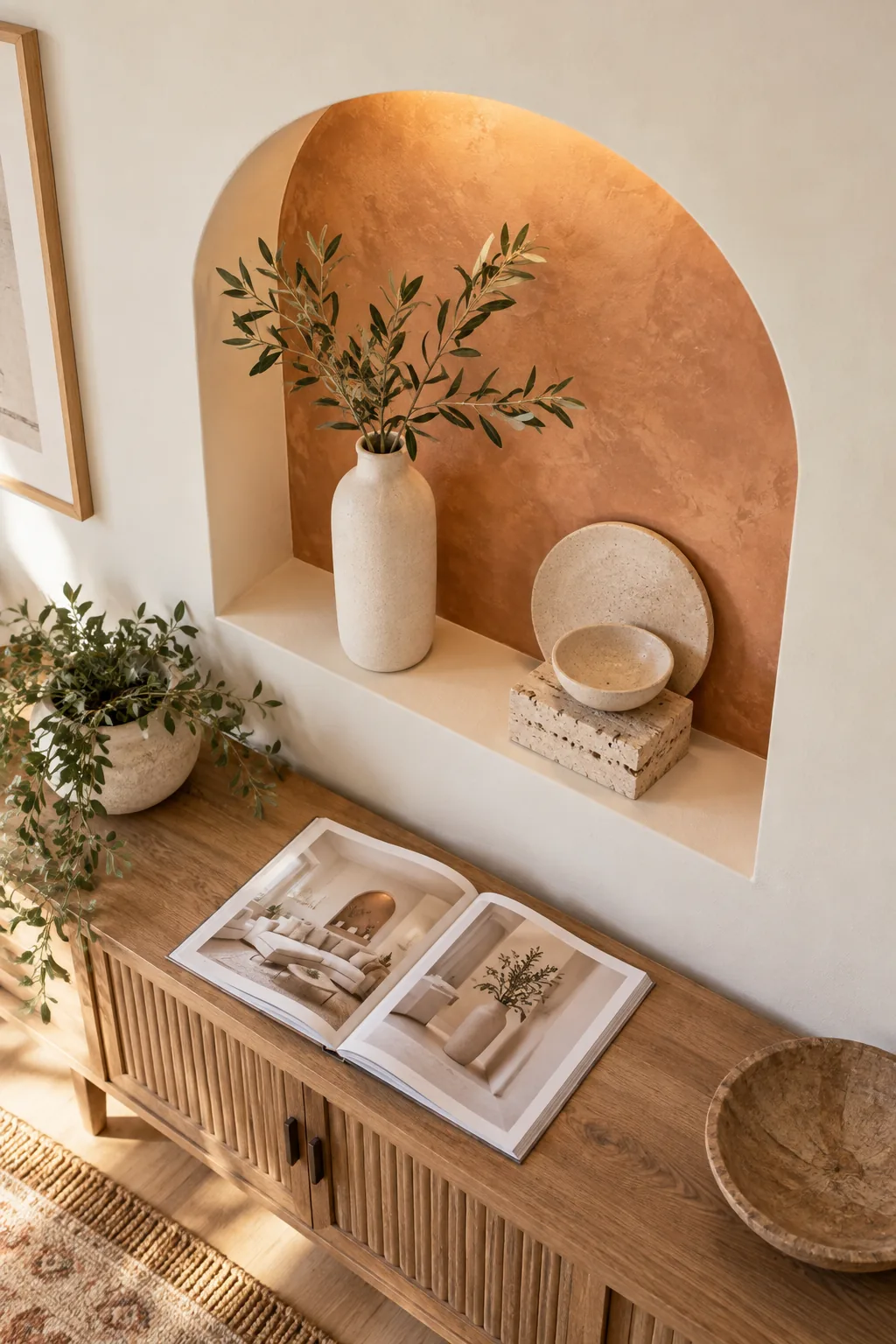
To achieve this layered look effortlessly, you need a specific sequence of placement to ensure nothing gets knocked over during styling.
- Place the tall vase on the left side, about two inches from the side wall.
- Lean the round ceramic disc against the back right corner.
- Position the stone riser directly in front of the overlapping disc.
- Set the small decorative bowl on top of the riser.
More Wall Niche Styling Ideas
Explore how different textures and palettes completely change the mood of an arched niche.
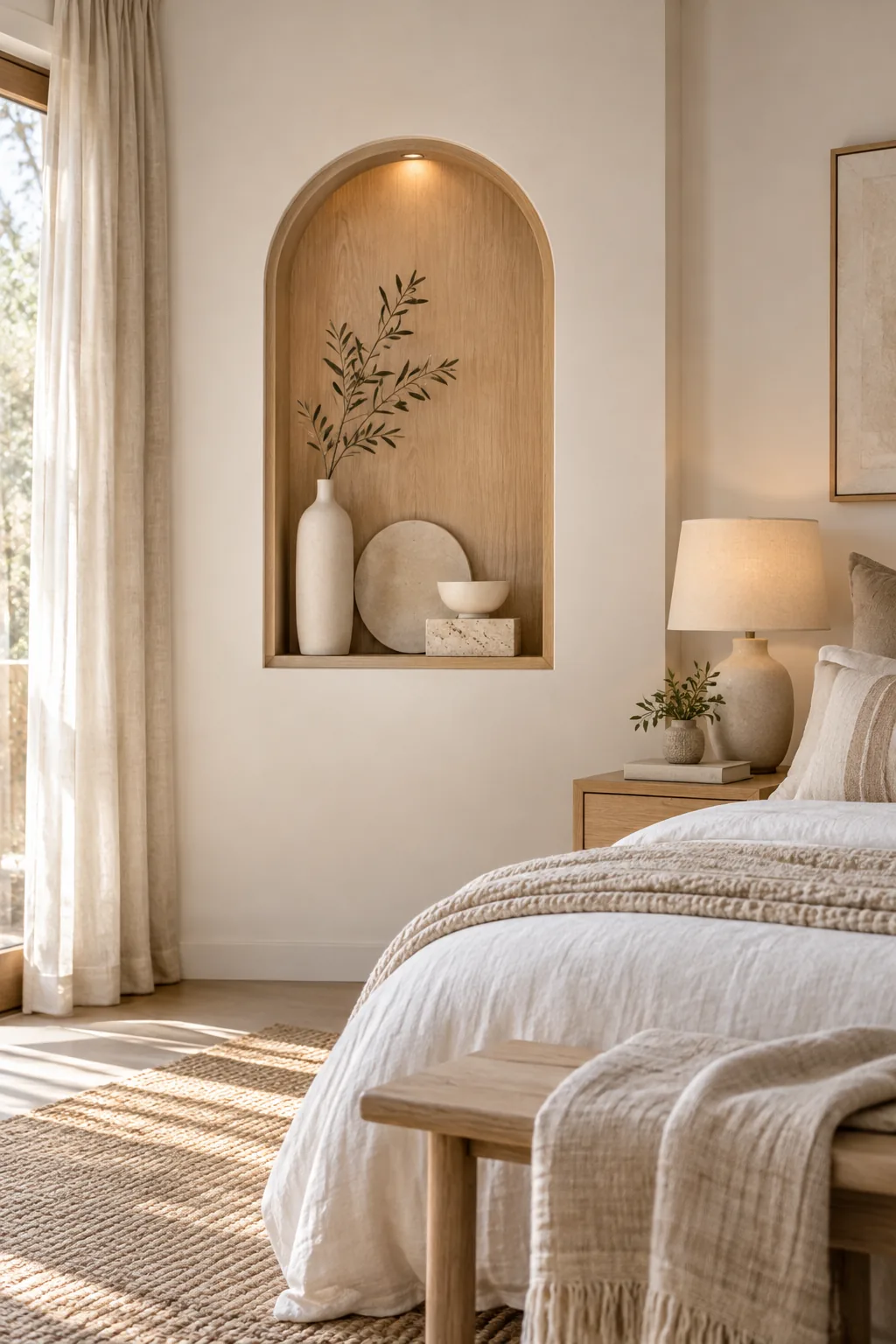
Minimalist Japandi Oak Niche: Warm wood tones replace plaster for a softer look, while matte white ceramics keep the bedroom feeling incredibly serene.
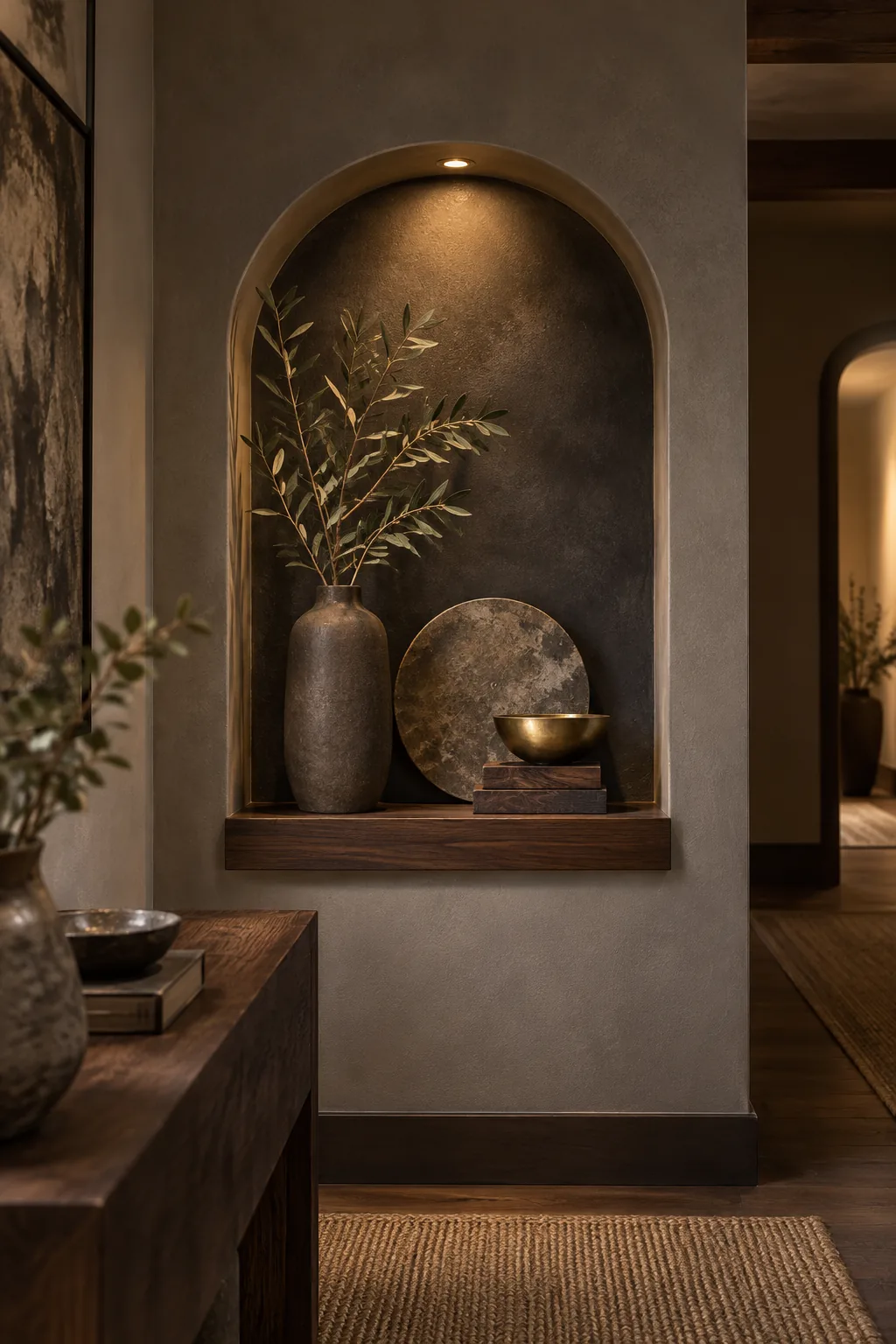
Moody Organic Charcoal Plaster: Deep charcoal plaster adds dramatic depth to a hallway, perfectly highlighting the metallic sheen of a small brass bowl.
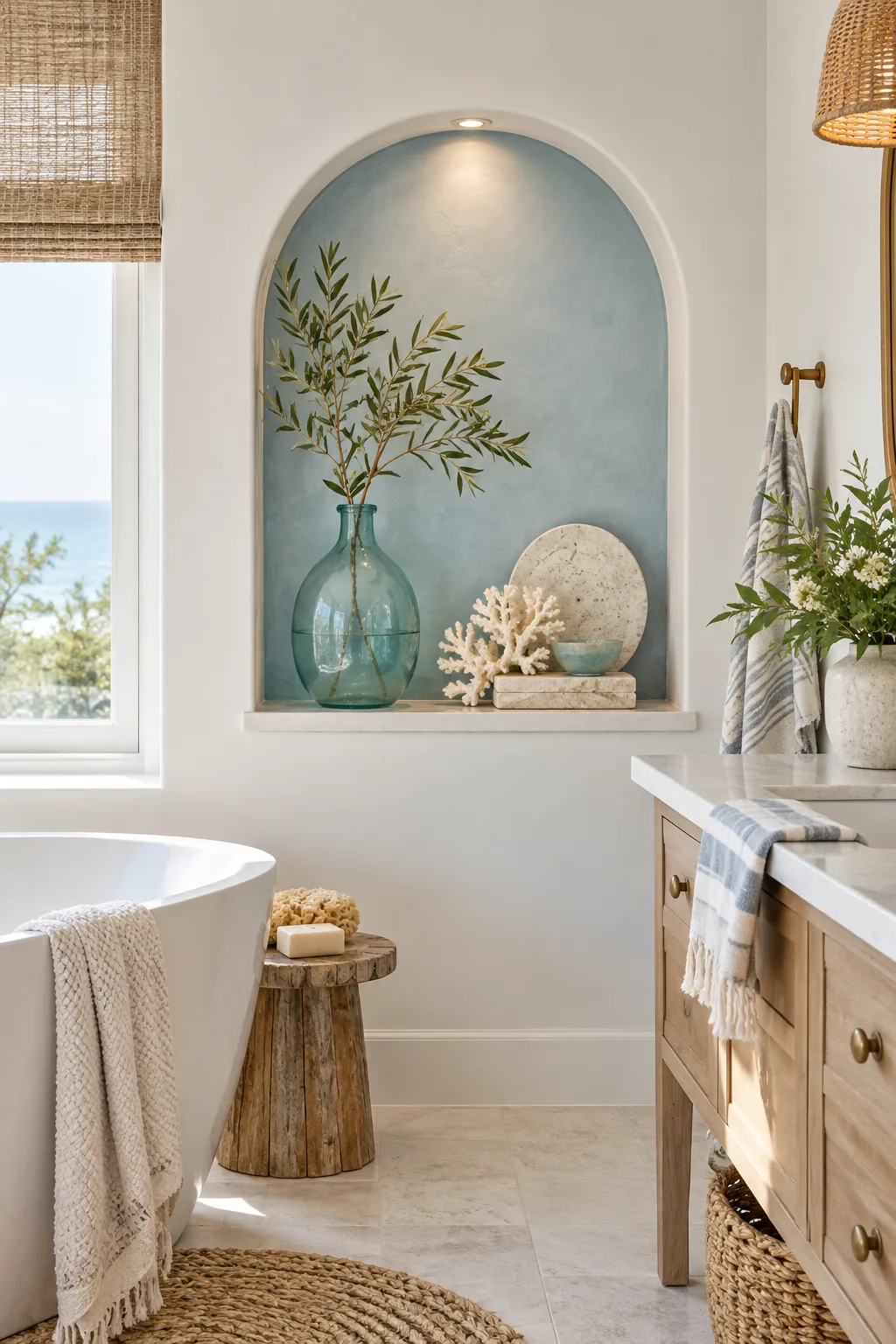
Coastal Modern Blue Niche: A soft blue background instantly brightens a bathroom, providing the perfect canvas for natural bleached coral and sea glass.
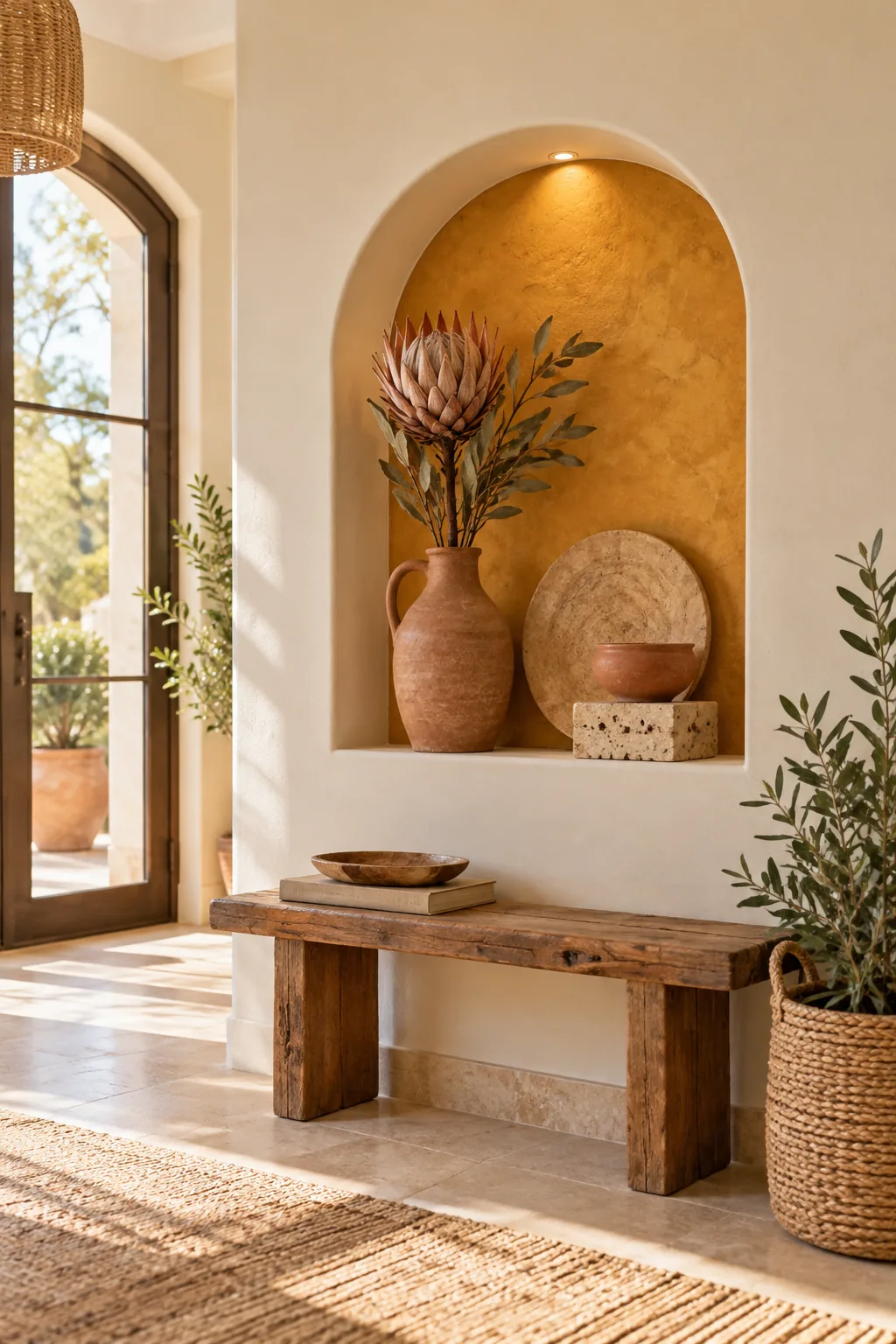
Desert Warmth Mustard Plaster: Mustard yellow plaster creates a welcoming entryway glow that beautifully complements raw terracotta pots and structural dried flowers.
Print the Niche Styling & LED Sheet
Take the guesswork out of your project with our printable Wall Niche Styling Sheet. It includes the exact tallest-object heights for common niche sizes, riser and spacing measurements, and three modern arrangement layouts.
The 2-page PDF also features the complete LED channel shopping list, including the exact 2700K strip, diffuser channels, and step-by-step fixing instructions to complete your design.