
Minimalist Bedroom Blueprint: Your Room Reset Checklist
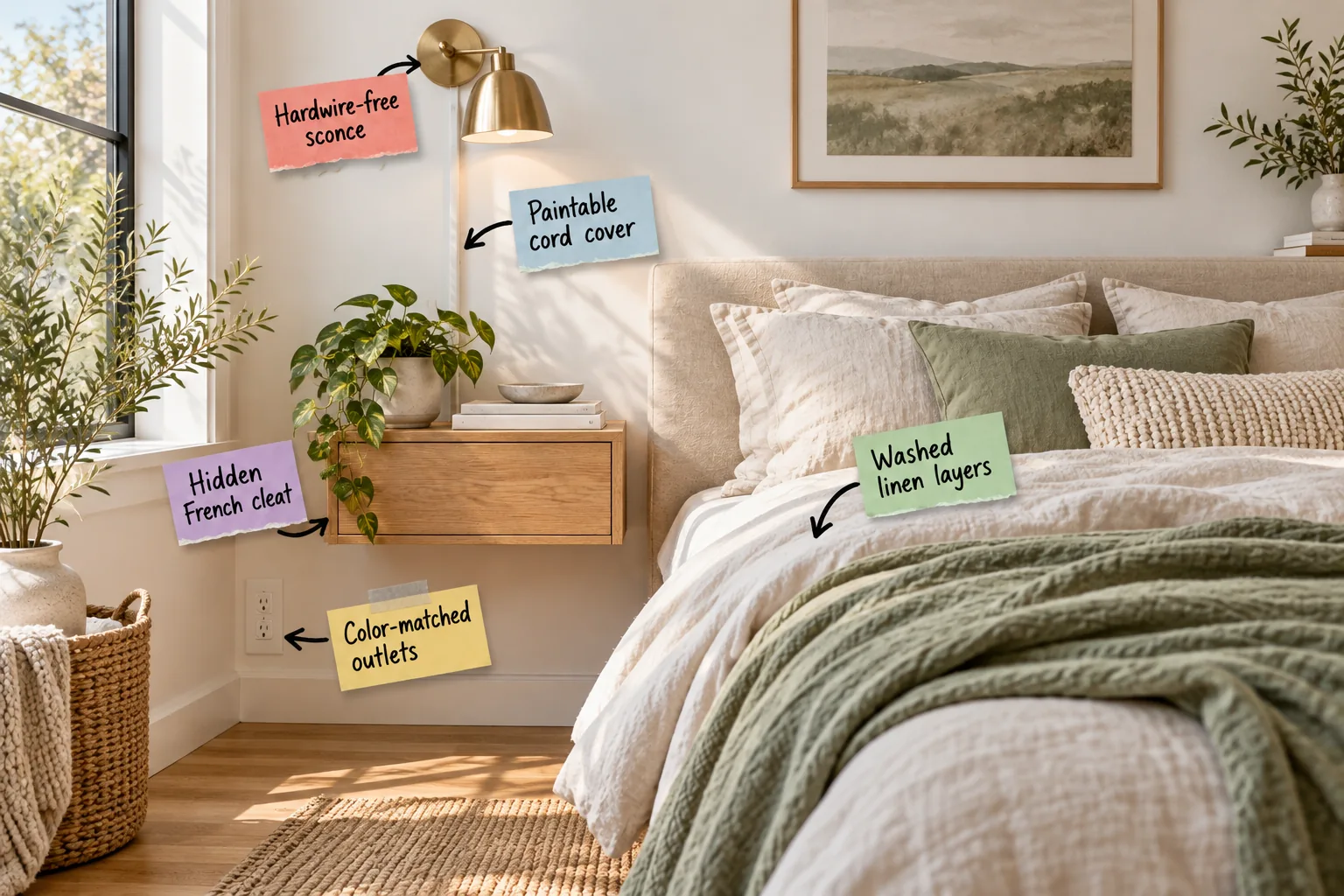
You can transform your sleeping space into a clutter-free sanctuary by hiding visual noise and utilizing our ultimate Minimalist Room Reset Checklist. We will move top-to-bottom through the room’s architecture, from the lighting down to the floor, ending with your daily reset routine.
Plug-In Sconces for Instant Ambiance
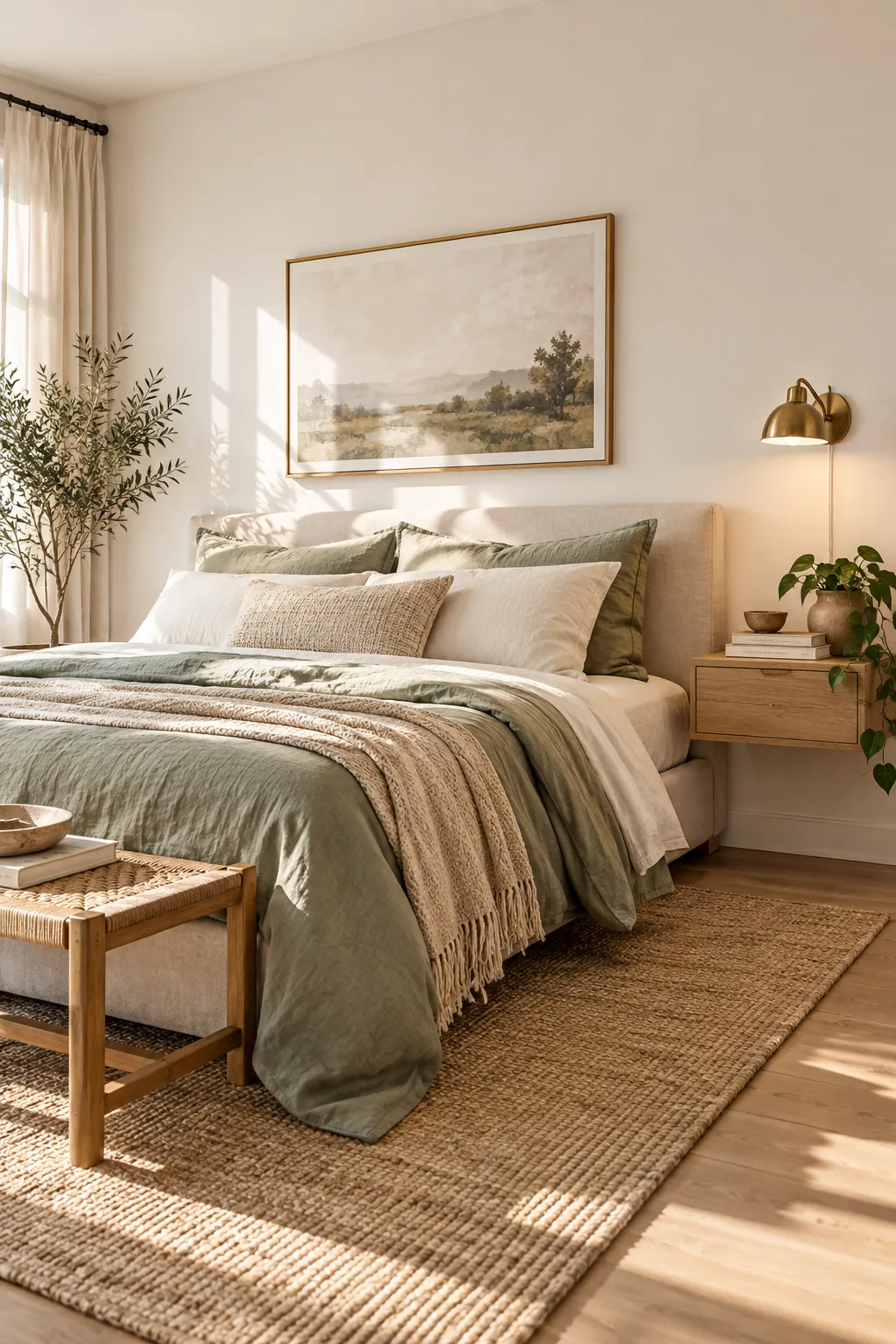
Achieve a high-end, built-in look without hiring an electrician by utilizing a hardwire-free sconce. Mount the fixture so the base sits exactly 30 inches above the top of your mattress for optimal reading light without casting harsh shadows across the wall.
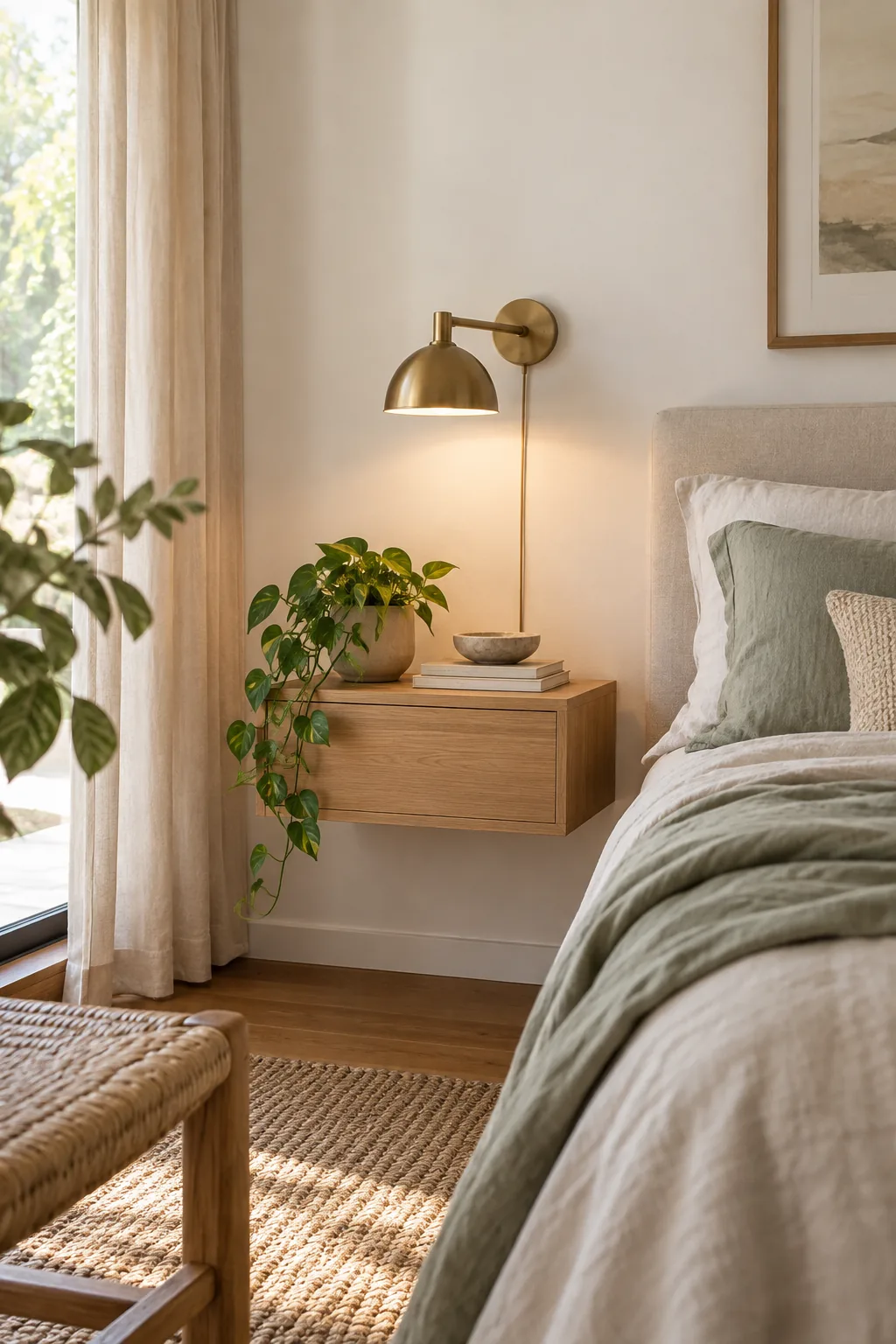
This precise placement ensures the light cone hits your book rather than shining directly into your eyes while resting. You gain the architectural elegance of custom lighting without opening up your drywall or pulling new electrical wires through the studs.
Choosing the Right Bulb Temperature
A minimalist bedroom requires soft, inviting illumination to counteract the sparse furnishings. Always select LED bulbs with a color temperature of exactly 2700 Kelvin to mimic the warm, relaxing glow of traditional incandescent lighting and signal your brain to wind down.
Positioning for Symmetrical Balance
When mounting your sconces, measure outward from the exact center of your mattress rather than the edges of the bed frame. Place the fixtures roughly six to eight inches outside the width of your headboard for perfect visual balance and easy reach.
Seamless Cord Management
A dangling black cord ruins the minimalist illusion instantly, so conceal the wire inside a low-profile, paintable cord cover that runs perfectly plumb down to the baseboard. Use a spirit level to ensure the vertical line is absolutely straight before securing it.

To make the plastic channel truly disappear into the architecture, you need to treat its surface exactly like the drywall right next to it.
Securing the Cord Channel
While most cord covers include an adhesive backing, relying solely on tape often leads to peeling after a few humid months. Drive two small drywall screws through the back of the plastic channel to secure it permanently and flush against the wall.
Hiding Excess Wire Length
Never leave coils of excess wire pooled on the floor beneath the outlet. Bundle any remaining cord length tightly with a velcro strap and tuck it out of sight behind the nightstand to maintain the unbroken visual plane of your baseboards.
The Magic of Floating Furniture
Eliminating furniture legs creates an unbroken sightline across the floor, making the bedroom feel significantly larger and more serene. A hidden French cleat system pulls the nightstand flush against the wall with zero visible hardware, instantly elevating the entire room’s aesthetic.
Selecting the Right Nightstand Depth
To maximize the floating effect, keep your nightstand proportions intentionally shallow so they do not visually overpower the adjacent bed frame. Limit your drawer unit dimensions to ensure the piece feels weightless and encourages strict bedside minimalism.
- Maintain a maximum depth of 14 inches to prevent a heavy, boxy appearance.
- Ensure the overall width does not exceed 24 inches for a standard queen bed.
- Leave at least 12 inches of open airspace between the bottom drawer and the floor.
Proper Anchoring for Heavy Loads
Floating furniture must safely support the weight of books, heavy lamps, and leaning elbows. Use a stud finder to anchor the wall-side cleat into at least one wooden stud, relying on heavy-duty toggle bolts for the remaining drywall connections.
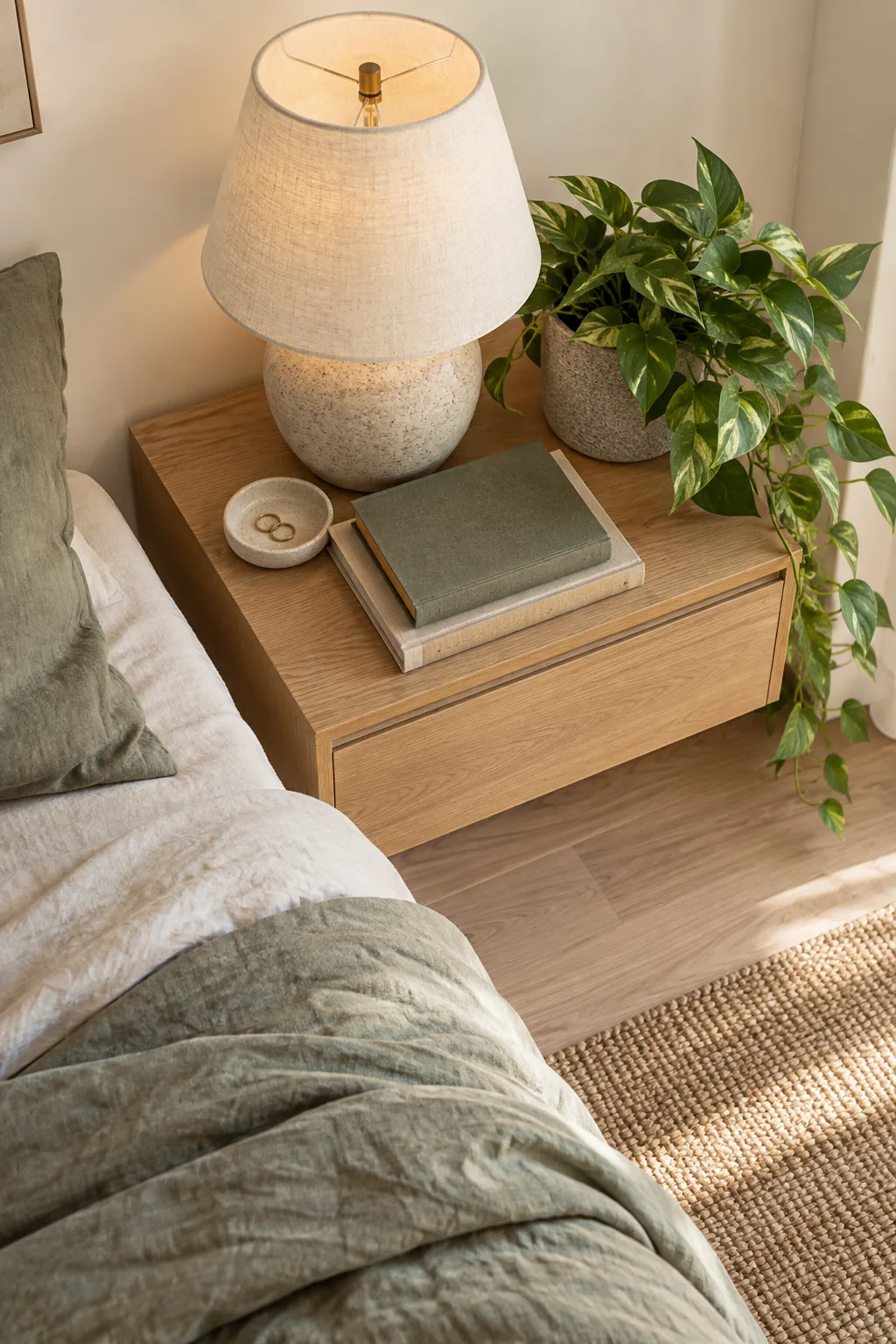
When I installed my own floating nightstands in Denver, skipping the stud anchor caused a terrifying sag within a week. Always secure that primary wood connection before trusting any secondary drywall anchors to bear the daily load.
Understanding Shear Strength
Standard plastic wall anchors simply pull out of drywall under the constant downward pressure of a loaded drawer. You must select appropriate hardware based on the rated shear strength to guarantee your floating furniture remains safely attached to the wall.
| Anchor Type | Wall Material | Shear Strength |
|---|---|---|
| Wood Screw (3-inch) | Wooden Stud | 100+ lbs |
| Steel Toggle Bolt | 1/2-inch Drywall | 50 lbs |
| Threaded Drywall Anchor | 1/2-inch Drywall | 15 lbs (Not recommended) |
| Plastic Expansion Plug | 1/2-inch Drywall | 10 lbs (Unsafe) |
Locating the Wooden Studs
Modern residential framing typically spaces wooden studs exactly 16 inches apart on center. Use a reliable magnetic stud finder to locate the exact edges of the framing, marking the center point with a pencil to ensure your primary mounting screws bite deeply.
Concealing the Mounting Hardware
The beauty of a French cleat lies in its interlocking 45-degree angles, which draw the cabinet tight against the wall as weight is applied. Because the entire mechanism sits behind a recessed back panel, the illusion of a floating wooden box remains completely unbroken.
Managing Floor Transitions
A seamless floor enhances the illusion of boundless space in a minimalist room. Avoid placing small, disjointed accent rugs around the bed; instead, use one large, low-pile wool area rug that extends generously beneath the floating nightstands.
Blending the Wall Outlets
Standard white plastic outlets create harsh visual interruptions on colored or textured walls. Swap standard covers for matte, color-matched outlets that blend into the surrounding paint job, reducing unnecessary focal points in your carefully curated sanctuary.

I recently painted a client’s bedroom in deep sage, and replacing the stark white plates with custom-painted covers completely transformed the wall’s continuous flow. It is the most cost-effective architectural upgrade you can make.
Upgrading to Flat-Profile Plugs
Even with color-matched covers, a bulky lamp plug sticking three inches out of the wall ruins the sleek profile of floating furniture. Replace standard lamp cords with flat-profile, right-angle plugs that hug the receptacle tightly and allow furniture to sit flush.
Managing Bedside Electronics
Keep charging cables out of sight by routing them through a discreet grommet hole drilled into the back of your nightstand drawer. This allows you to charge your phone and smartwatch overnight without cluttering the clean top surface.
Designing for Morning Light
Minimalist spaces interact beautifully with natural morning sunlight, which highlights the subtle textures of your linen and oak. Position your bed so the morning light grazes the textiles indirectly, avoiding harsh direct glare that might interrupt your natural wake cycle.
Selecting Window Treatments
Heavy drapery adds unnecessary visual bulk to a streamlined bedroom. Install inside-mount blackout roller shades paired with sheer linen curtains to control the light perfectly while keeping the window architecture clean and fully visible during the day.
Layering Washed Linen
Minimalism does not mean stark or cold, so build a welcoming bed using washed linen layers that provide deep, touchable texture without requiring fussy ironing or rigid tucking. Natural linen inherently drapes beautifully, creating a relaxed, lived-in aesthetic.
Selecting the Right Sheet Material
Beneath your textured duvet, the base sheets must prioritize breathability and comfort over visual bulk. Opt for crisp percale cotton sheets that sleep cool and provide a smooth, clean contrast to the rumpled linen layers resting above them.
Managing Pillow Proportions
Avoid the common mistake of piling a dozen decorative throw pillows onto a minimalist bed. Limit your arrangement to four standard sleeping pillows and a single, elongated lumbar pillow that spans the width of the mattress to maintain clean horizontal lines.
Selecting the Perfect Insert Weight
To achieve that coveted, cloud-like loft without overheating, choose a medium-weight, all-season duvet insert. The insert must be slightly oversized compared to your duvet cover to ensure the corners remain fully stuffed, visually plush, and structurally sound.
Balancing Texture and Tone
When you remove decorative clutter, the remaining materials must carry the design. Stick to a strict palette of three analogous tones—like sage, oatmeal, and warm oak—to keep the visual weight grounded, cohesive, and deeply serene.

In my own bedroom, limiting the palette to just three natural tones finally cured the restless energy I used to feel before sleep. The resulting harmony allows your eyes to rest completely.
Incorporating Warm Oak Elements
A room composed entirely of soft textiles and painted drywall can quickly feel formless and floaty. Introduce structured elements of warm white oak to provide necessary architectural contrast, ground the softer materials, and introduce an organic, calming wood grain.
Emphasizing Negative Space
Resist the urge to fill empty wall space with a gallery of small, distracting art pieces. Hang one large, heavily textured canvas above the bed to serve as a singular focal point, allowing the surrounding drywall to breathe completely.
Eliminating Visual Clutter
A minimalist aesthetic relies heavily on negative space, meaning the empty areas are just as important as the objects. Restrict your nightstand styling to exactly three functional items, such as a single lamp, a small dish, and your current book.
Establishing a Baseline State
Your bedroom will inevitably accumulate daily detritus like water glasses, jewelry, and discarded clothing. The secret to long-term minimalism is defining a baseline state of order that you can easily return to every single evening before you sleep.
Minimalist Bedroom Variations
Explore how these core architectural principles adapt to four distinct aesthetic moods.
Warm Desert Minimalist: Earthy terracotta tones and raw pine textures bring incredible warmth to a sparse layout.

Moody Charcoal Minimalist: Dark slate walls create a dramatic, cave-like atmosphere that promotes deep, restful sleep.

Serene Japandi Minimalist: Low-profile bamboo furniture and paper lighting merge Scandinavian functionality with Japanese elegance.
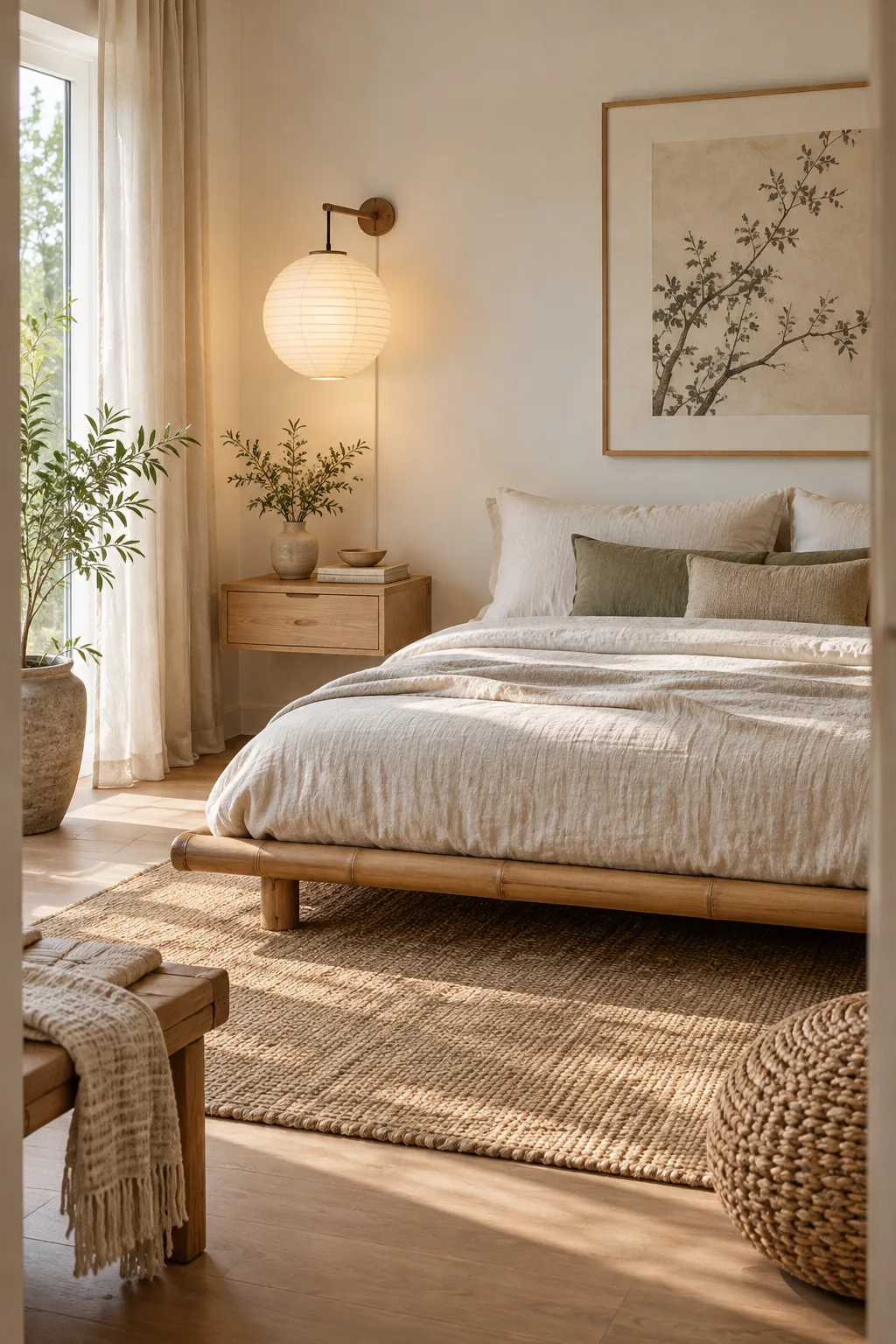
Breezy Coastal Minimalist: Soft sea glass blues and whitewashed wood tones keep the space feeling light and airy.

The Minimalist Room Reset Checklist
A minimalist bedroom only stays calming if you maintain its baseline state. Establish a five-minute daily habit that clears flat surfaces, straightens the textiles, and prepares the room for a restful evening.
Keep this simple daily routine handy to restore your space to its baseline tranquility in under five minutes.