The Kitchen Window Measurement Guide & Material Checklist
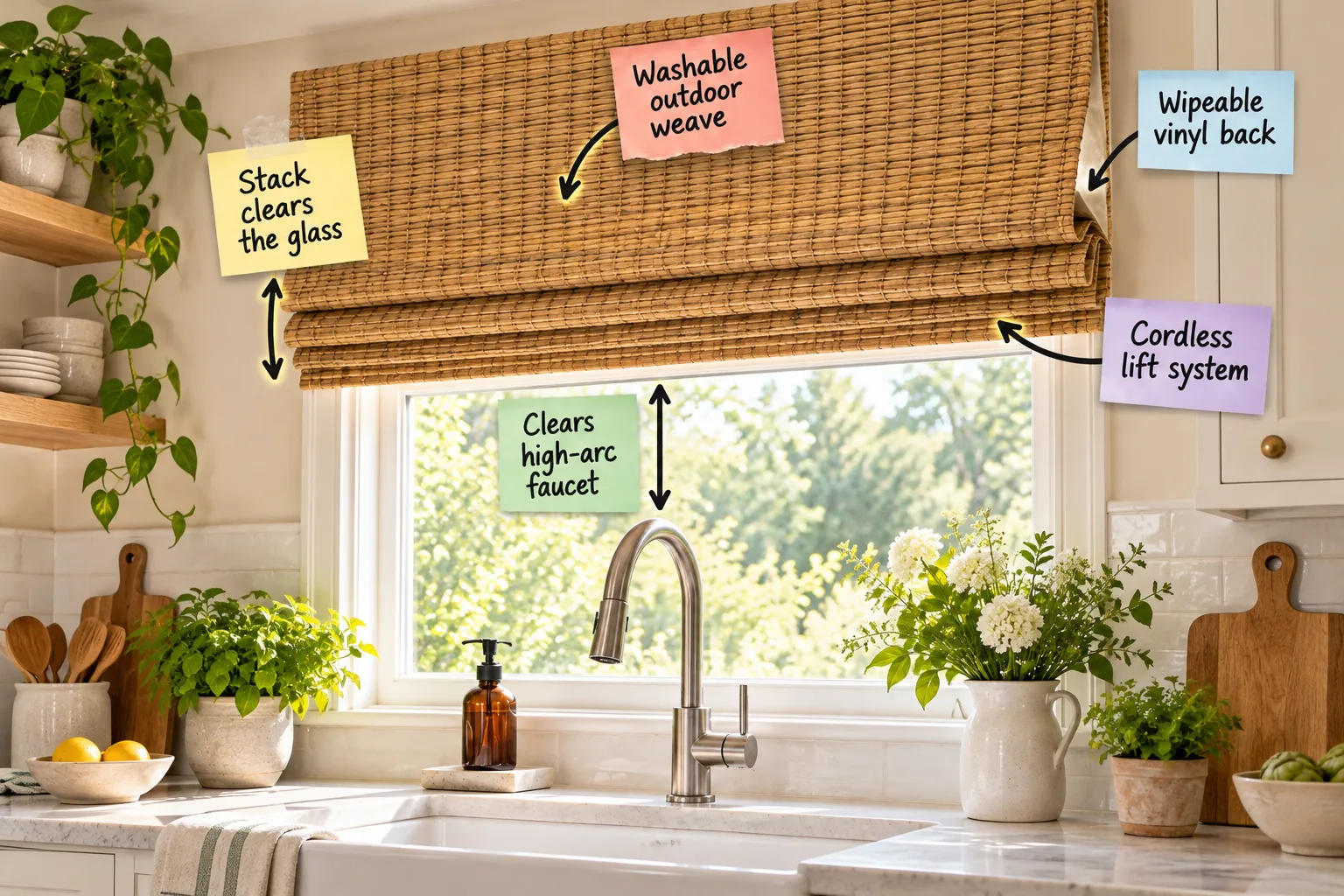
Plan the perfect sink-side Roman shade with this complete designer guide to clearances, durable fabrics, and your essential kitchen window measurement and material checklist. You will be able to measure your space perfectly and select resilient materials that easily survive daily splashes.
The High Outside Mount
Mounting your shade 8 to 12 inches above the window casing draws the eye upward and makes the entire room feel significantly taller. This specific elevation ensures the folded fabric stack completely clears the glass when raised, preventing annoying shadows.
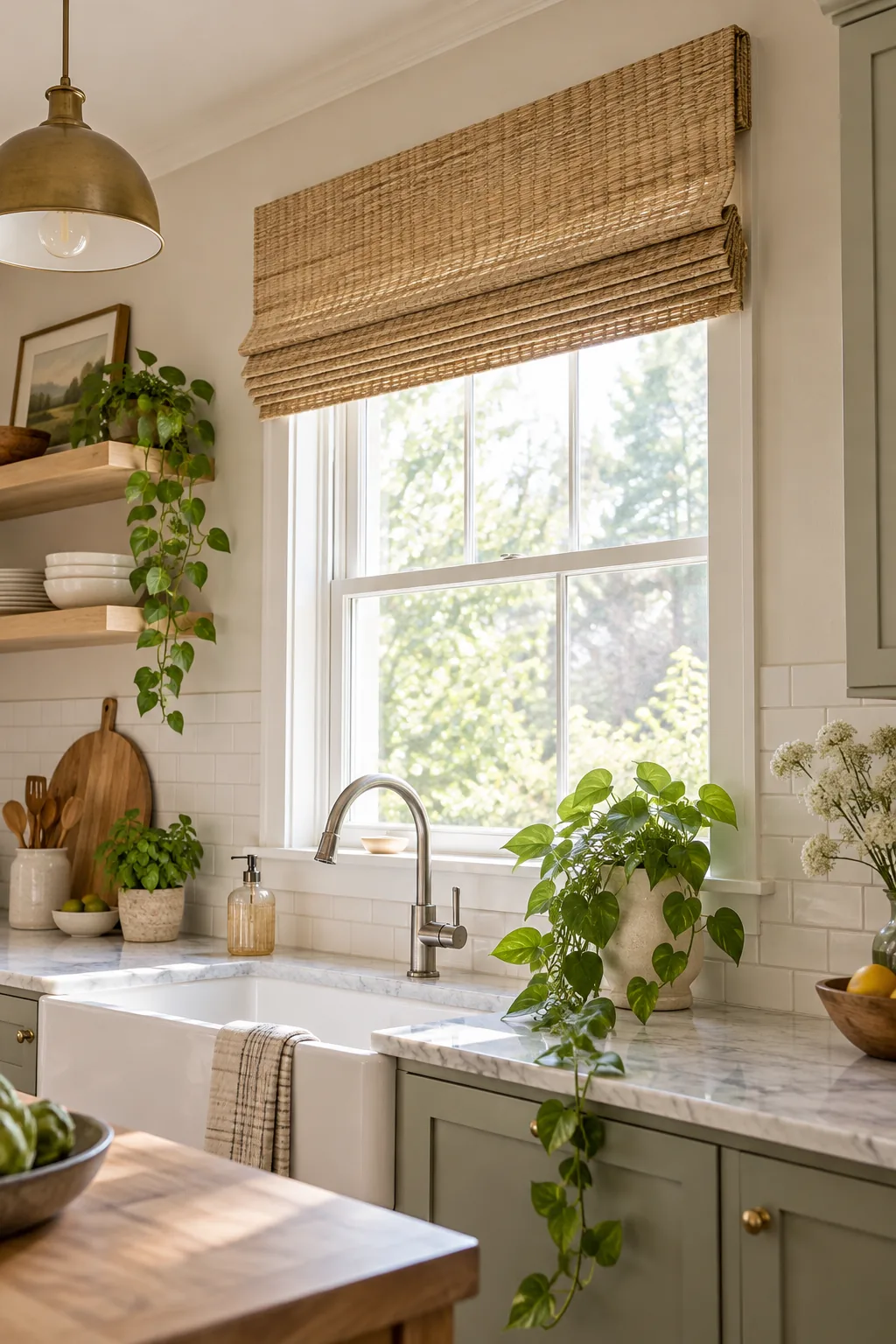
Finding the perfect mounting height requires knowing exactly how much physical space your specific shade occupies when fully raised. You must measure this compressed bundle precisely before drilling any holes to guarantee your final placement looks perfectly intentional.
Defining the Visual Ceiling
Elevating the headrail creates a grander architectural illusion in spaces with standard ceiling heights. By positioning the hardware closer to the crown molding, you establish a continuous vertical line that perfectly balances the heavy visual weight of the lower cabinetry.
Calculating the Optimal Stack Height
Every Roman shade folds differently depending on its material thickness and structural lining. You must account for this compressed fabric bundle to ensure it never blocks your valuable daytime illumination or obstructs your beautiful outdoor views when completely open.
- Raise the custom shade completely and measure the compressed fabric bundle.
- Add two inches to this measurement for necessary visual breathing room.
- Mark this total distance upward from the top of your window glass.
This calculated mark becomes the absolute lowest point where your bottom rail should rest. Using this exact dimension guarantees your expensive window treatment enhances the architecture rather than awkwardly covering the top portion of your valuable glass.
Structural Bracket Placement
Securing the headrail high on the drywall requires robust anchoring since you are bypassing the solid wood header framing. Always use heavy-duty toggle bolts to support the dynamic pulling weight of daily operation and keep the entire system perfectly level.
Choosing a Resilient Face Fabric
Kitchen sink shades demand durable materials like washable outdoor weaves or advanced poly-blends that actively repel water. I recently swapped a client’s delicate natural linen for a resilient faux-bamboo weave after one too many tomato sauce splashes ruined the original.
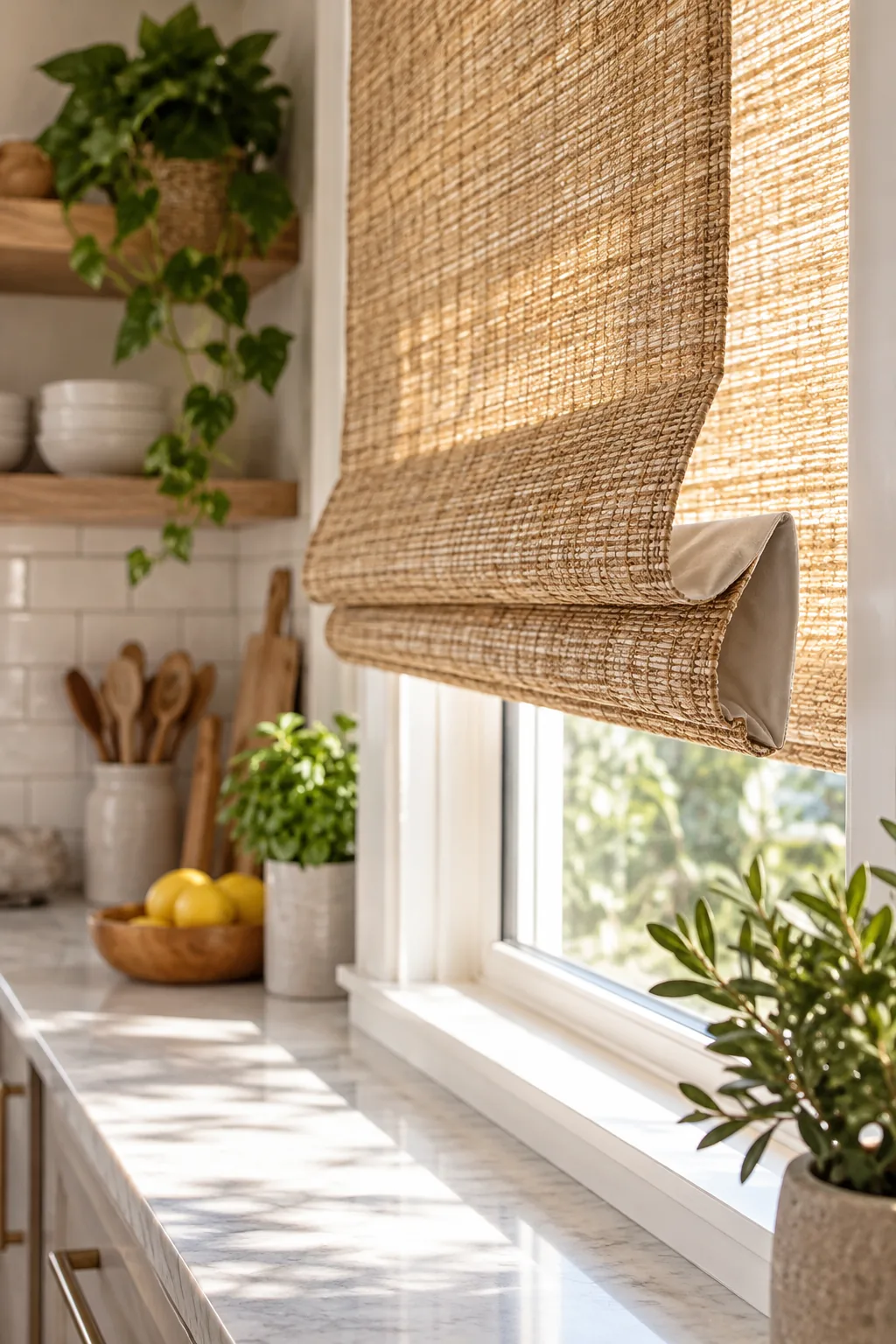
These advanced synthetic textiles wipe clean effortlessly while maintaining the organic, textured appearance of natural fibers. You get the sophisticated visual warmth of a custom woven wood shade without the constant anxiety of ruining it during heavy dinner prep.
Why Natural Linens Fail Here
Delicate organic cottons and pure linens act like sponges in a humid culinary environment. They rapidly absorb cooking odors, trap airborne grease particles, and eventually develop permanent water spots from accidental splashes that simply cannot be removed without professional dry cleaning.
Synthetic Blends for the Sink Zone
Modern performance fabrics bridge the gap between aesthetic warmth and practical survival. Woven poly-blends mimic the nuanced color variations of real grasscloth while offering the crucial ability to be scrubbed with mild soap, making them the ultimate choice for wet zones.
Evaluating Material Textures
Selecting the right weave density determines both the durability and the visual weight of your window treatment. Tighter weaves offer superior moisture resistance, while looser constructions provide a more relaxed, breezy aesthetic that still benefits from synthetic performance fibers.
| Material Type | Moisture Resistance | Cleaning Method | Visual Texture |
|---|---|---|---|
| Synthetic Bamboo | High | Damp wipe | Structured |
| Outdoor Poly-Blend | High | Soap and water | Soft weave |
| Treated Cotton | Medium | Spot clean | Smooth |
| Natural Linen | Low | Professional dry | Slubbed |
Always prioritize materials rated for high-humidity environments when designing treatments that will live immediately adjacent to a busy plumbing fixture. This strategic choice prevents the frustrating cycle of replacing stained window coverings every single holiday season.
The Protective Lining
A wipeable vinyl back or moisture-resistant synthetic layer shields your beautiful decorative front material from the harsh reality of glass frost. In my own Denver kitchen, heavy January ice buildup completely ruined an unlined woven shade in just one season before I learned this lesson.
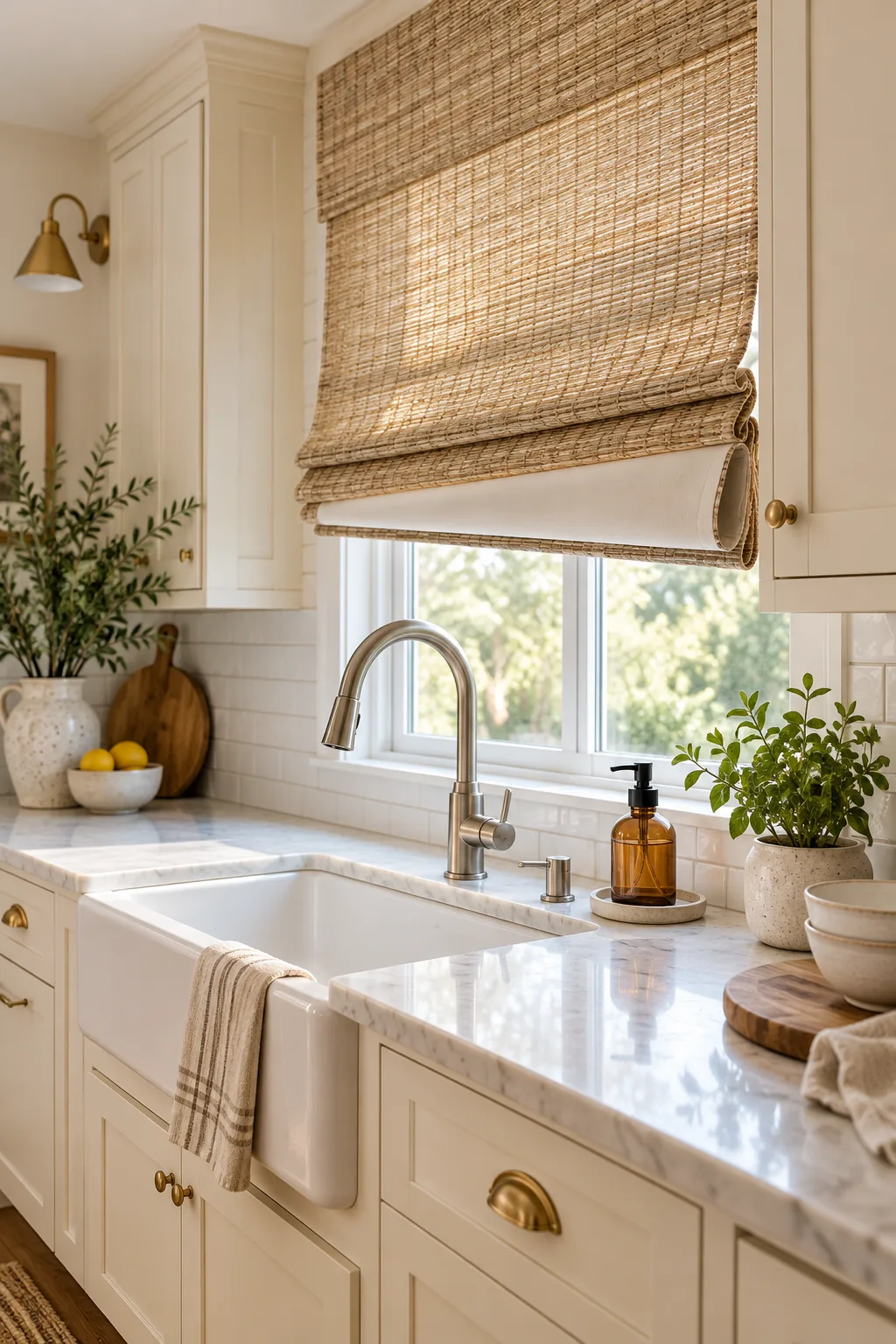
This hidden barrier acts as a crucial shield, ensuring that neither icy glass moisture nor rogue dishwater splashes can penetrate the decorative front layer. It preserves the integrity of the face fabric and extends the lifespan of your investment significantly.
Defending Against Condensation
Temperature fluctuations inevitably create moisture droplets on the interior glass during colder months. A waterproof lining stops this water from soaking into the shade and causing unsightly mold or mildew stains that would otherwise bleed through to the front.
Lining Weight and Drape
Adding a vinyl backing changes how the Roman shade folds and stacks when raised. The added stiffness creates crisp, tailored creases rather than the soft, relaxed swoops typical of unlined treatments, resulting in a much more structured and formal appearance.
Safe and Clean Operation
A cordless lift system removes dangerous pull-mechanisms that can easily fall into a wet basin or catch on dirty dishes. I always specify internal spring mechanisms near sinks after watching my own cat nearly pull down a shade while playing with a loose cord.
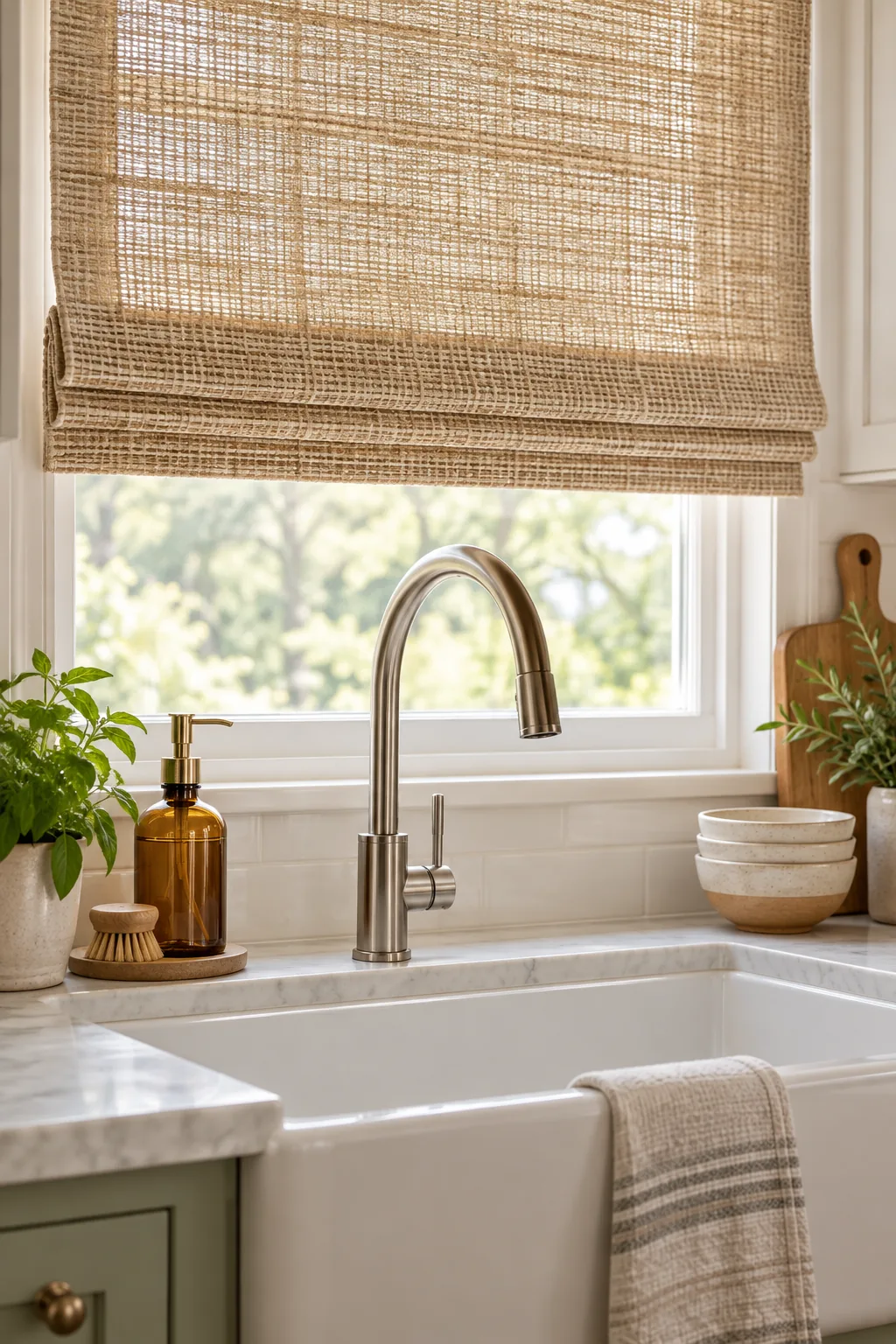
This modern upgrade provides a perfectly clean bottom rail, keeping the entire operating mechanism safely housed within the upper headrail. It removes visual clutter from the window frame and ensures your hands never have to touch grimy lift cords.
Modernizing the Bottom Rail
Removing external cords instantly streamlines the visual profile of your window treatment. You simply push up or pull down on the bottom edge, creating a minimalist symmetry that honors both modern efficiency and traditional woven textures via internal tension springs.
Faucet Clearance Planning
You must carefully measure the peak height of your high-arc faucet to prevent the lowered shade from colliding with the fixture. The bottom rail must maintain a strict two-inch vertical gap above the highest metal point when fully extended.
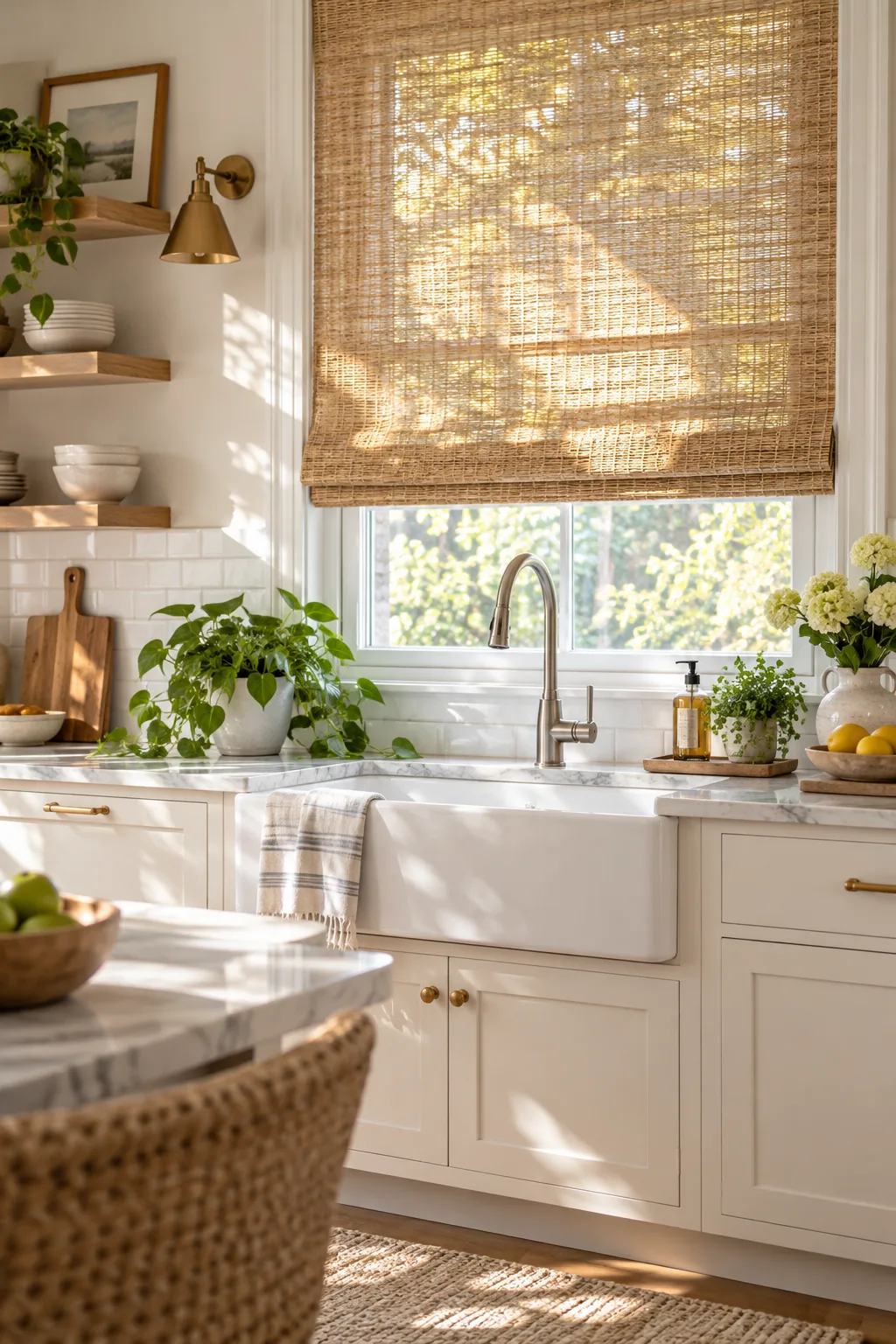
This intentional gap prevents the fabric from resting in puddles on the counter and allows you to operate the faucet handle without obstruction. It ensures the shade looks purposefully tailored to the space rather than accidentally too long.
Measuring the Faucet Peak
Determining your exact clearance requirement starts at the countertop deck directly behind the sink basin. Measure straight up to the absolute highest curve of the metal spout, including any docked pull-down sprayer heads, to find your true vertical obstacle height.
Handling Gooseneck Spouts
Tall gooseneck fixtures demand precise spatial planning to maintain a functional and beautiful wet zone.
- Verify the handle’s full backward rotation arc.
- Measure the undocked sprayer hose extension path.
- Confirm the shade clears any integrated soap dispensers.
If your fixture sits unusually close to the wall, you may need to specify a shallower headrail to prevent the fabric from grazing the metal. This ensures smooth daily operation without constantly bumping the delicate woven material against wet plumbing.
Light Control and Privacy
The opacity of your chosen material fundamentally dictates the atmosphere and functionality of your kitchen. Unlined woven woods beautifully soften direct morning sun rays while still illuminating your workspace, whereas blackout liners provide absolute security for street-facing windows that demand complete seclusion.
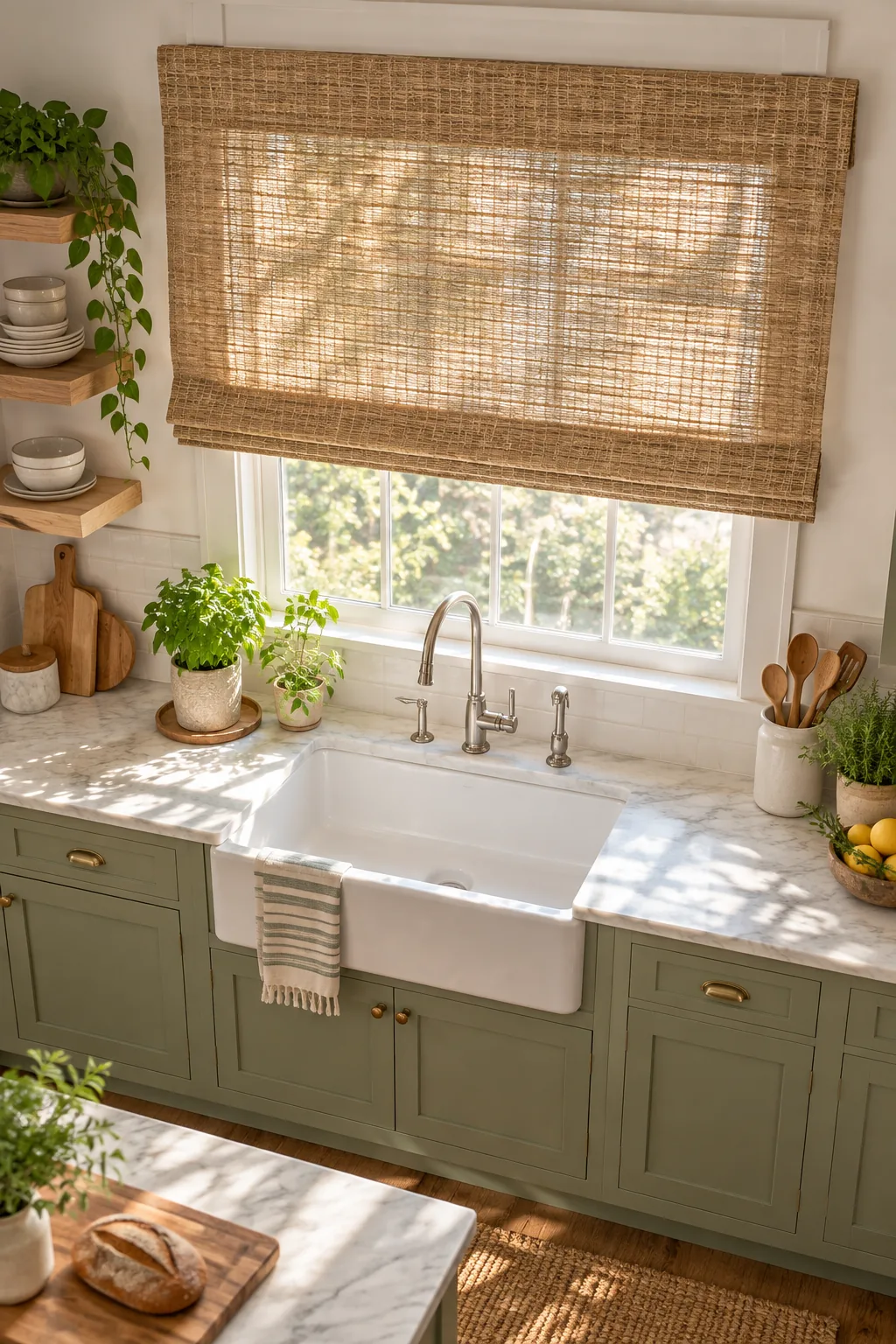
Balancing these two needs requires evaluating exactly when and how the sunlight hits your sink area throughout the day. You must decide whether preserving your morning view or blocking evening sightlines is the higher priority for your specific lifestyle.
Balancing Daytime Illumination
East-facing kitchens benefit immensely from light-filtering materials that soften intense morning rays without plunging the room into darkness. The right semi-opaque weave transforms blinding glare into a warm, inviting glow perfect for enjoying your early morning coffee in peace.
Evening Privacy Needs
When the sun sets and interior lights turn on, sheer fabrics become completely transparent to anyone outside. If your sink faces a busy sidewalk or close neighbor, a solid privacy lining becomes an absolute necessity to maintain your evening comfort.
Finalizing the Outside Width
Extending the fabric past the wooden trim creates a seamless, professional appearance that visually widens the window. This strategic overlap ensures complete edge privacy and beautifully hides the structural metal mounting brackets from anyone looking at the window from an angle.
Calculating the Total Vertical Drop
Determine your total shade length by measuring from your new elevated mounting mark all the way down to your planned two-inch faucet clearance point. This final number dictates the exact finished length required for your custom manufacturing order.
The Kitchen Window Measurement Guide
Your final step is executing the outside mount measurement checklist to guarantee a tailored fit. You must measure the outside width and add 1.5 to 2 inches per side past the casing to successfully block all peripheral sightlines.
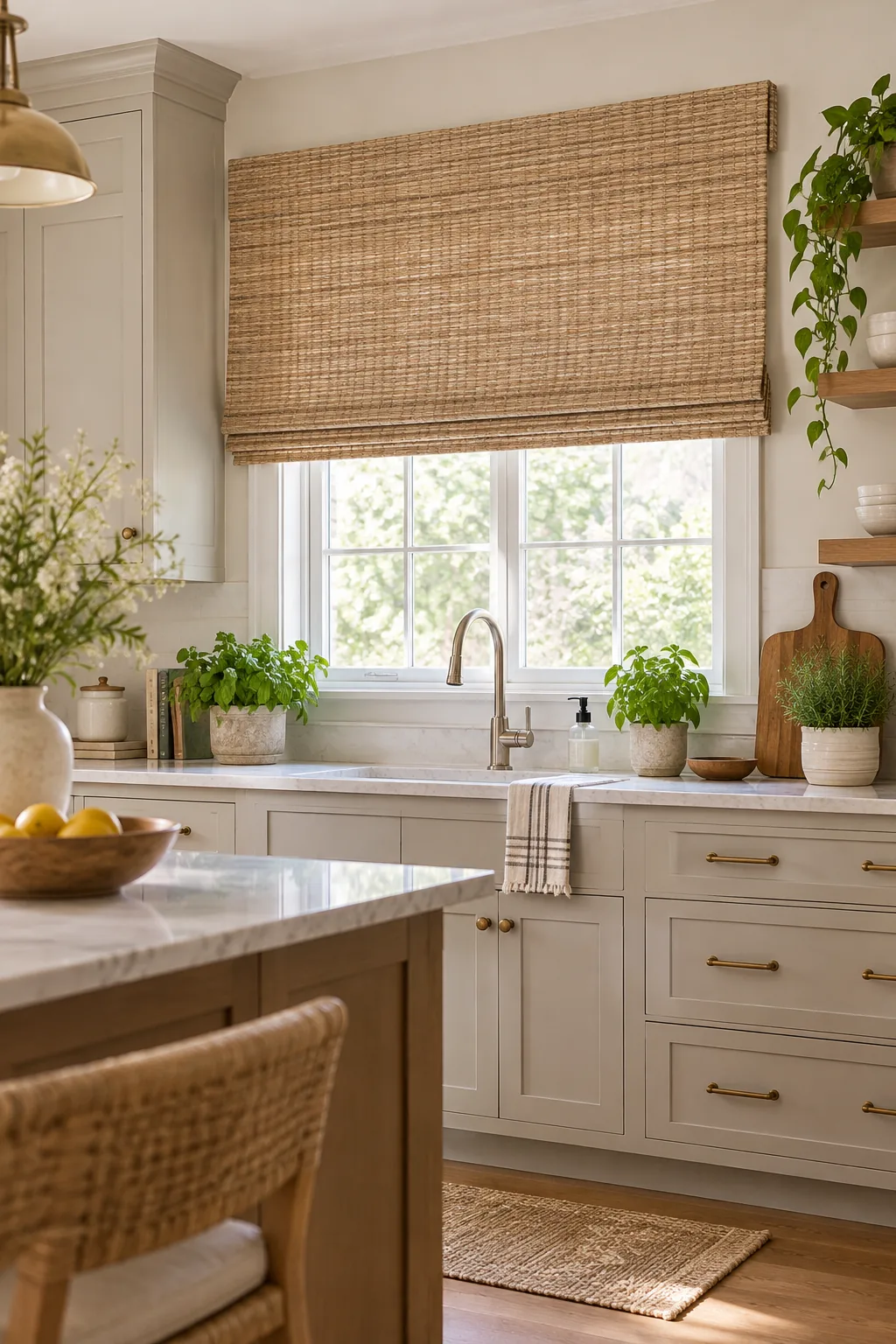
Before ordering your custom shade or cutting any materials, verify these final dimensions against your actual window casing and fixtures. Taking the time to double-check these numbers ensures your expensive window treatment will function flawlessly from the very first day.
Kitchen Window Shade Inspiration
Explore how different shade materials and mounting styles can completely transform your sink area.
Modern farmhouse natural bamboo shade: Warm bamboo tones bring essential natural texture to an all-white modern farmhouse kitchen.
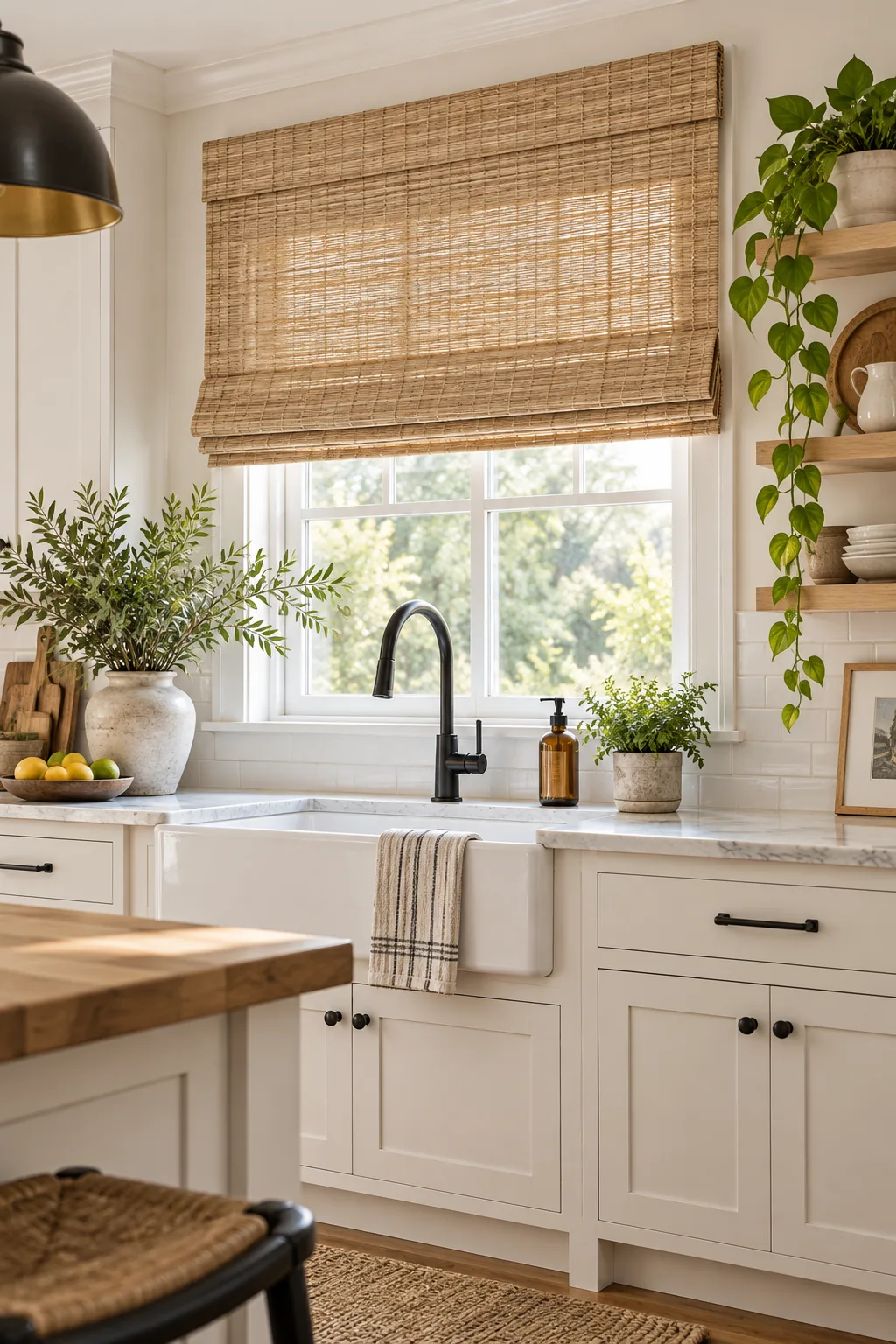
Moody charcoal performance fabric shade: A dark performance fabric adds sophisticated drama while easily hiding occasional splashes and cooking spots.
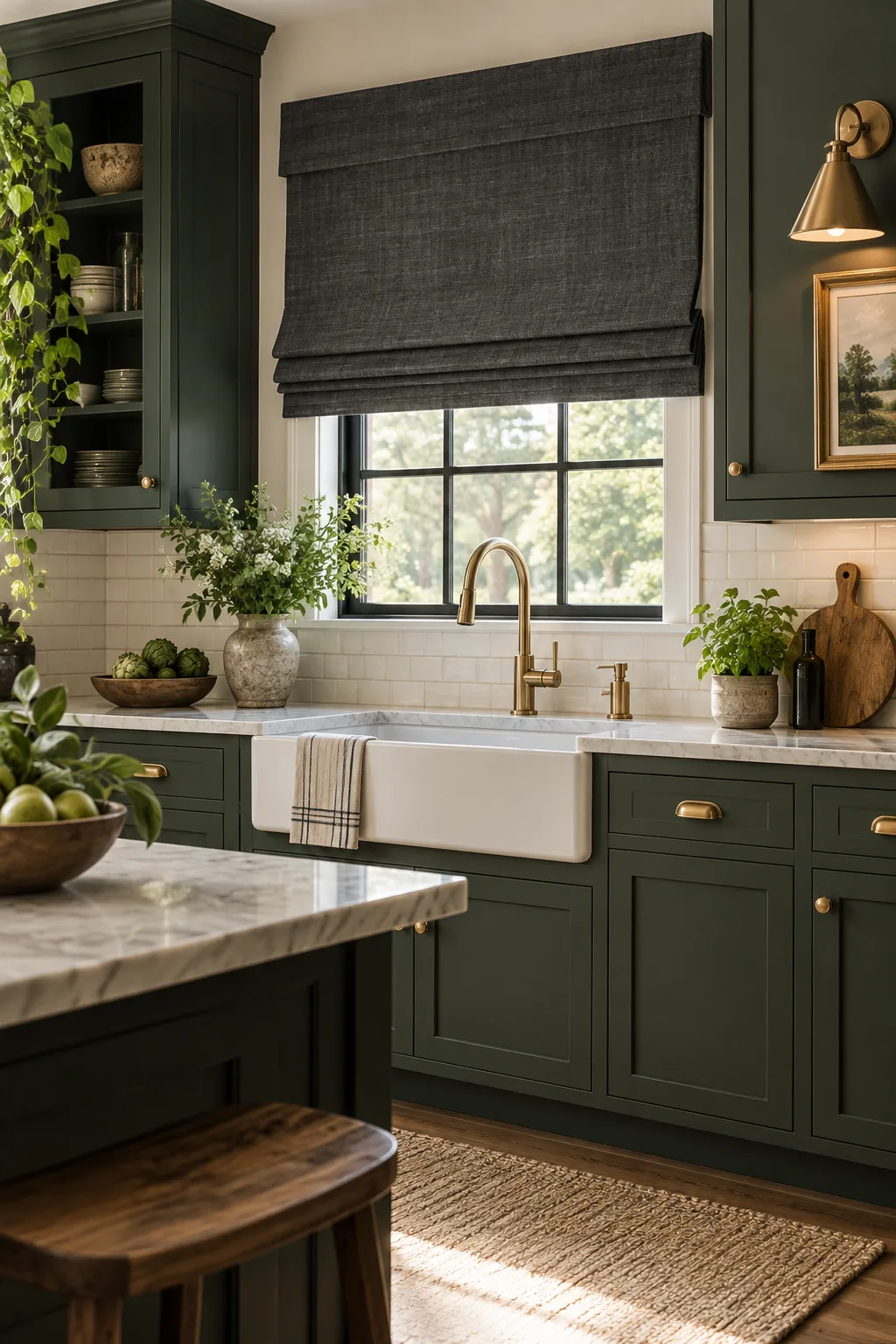
Coastal white synthetic weave shade: Crisp white synthetic weaves offer the breezy look of linen but wipe clean with a damp cloth.
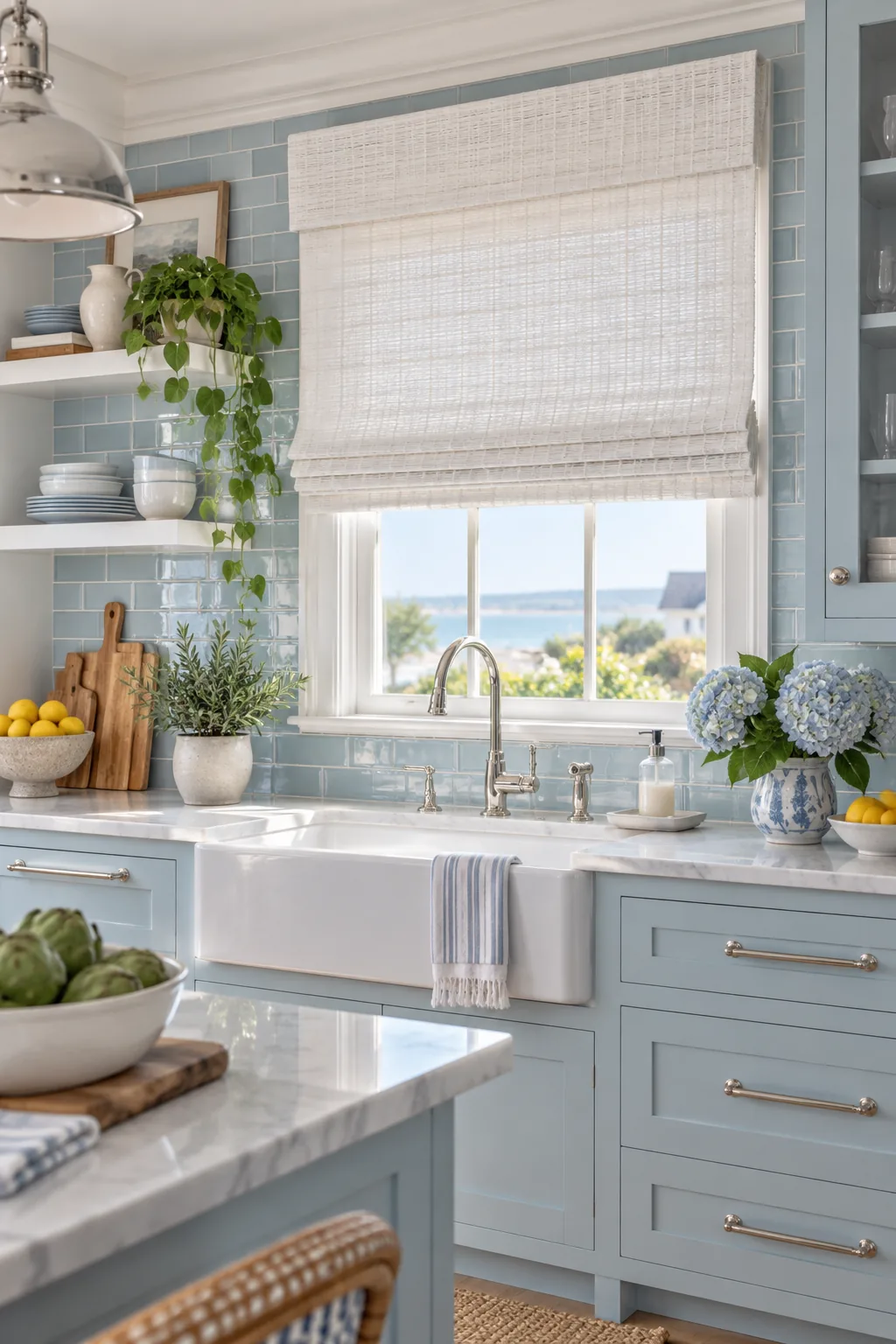
Warm minimalist sheer linen-look shade: Sheer synthetic fabrics soften modern lines while maintaining a bright, sun-drenched atmosphere throughout the day.
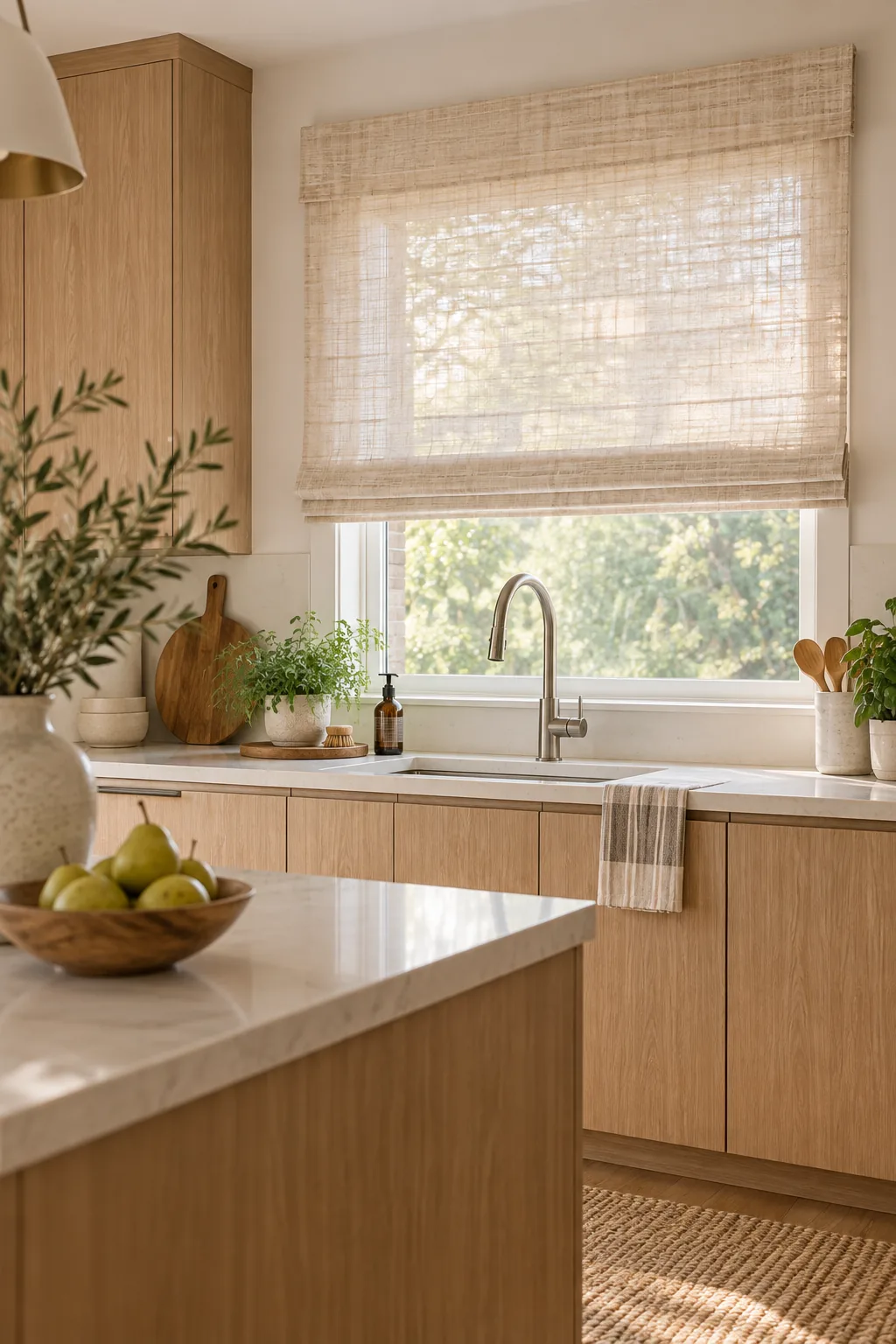
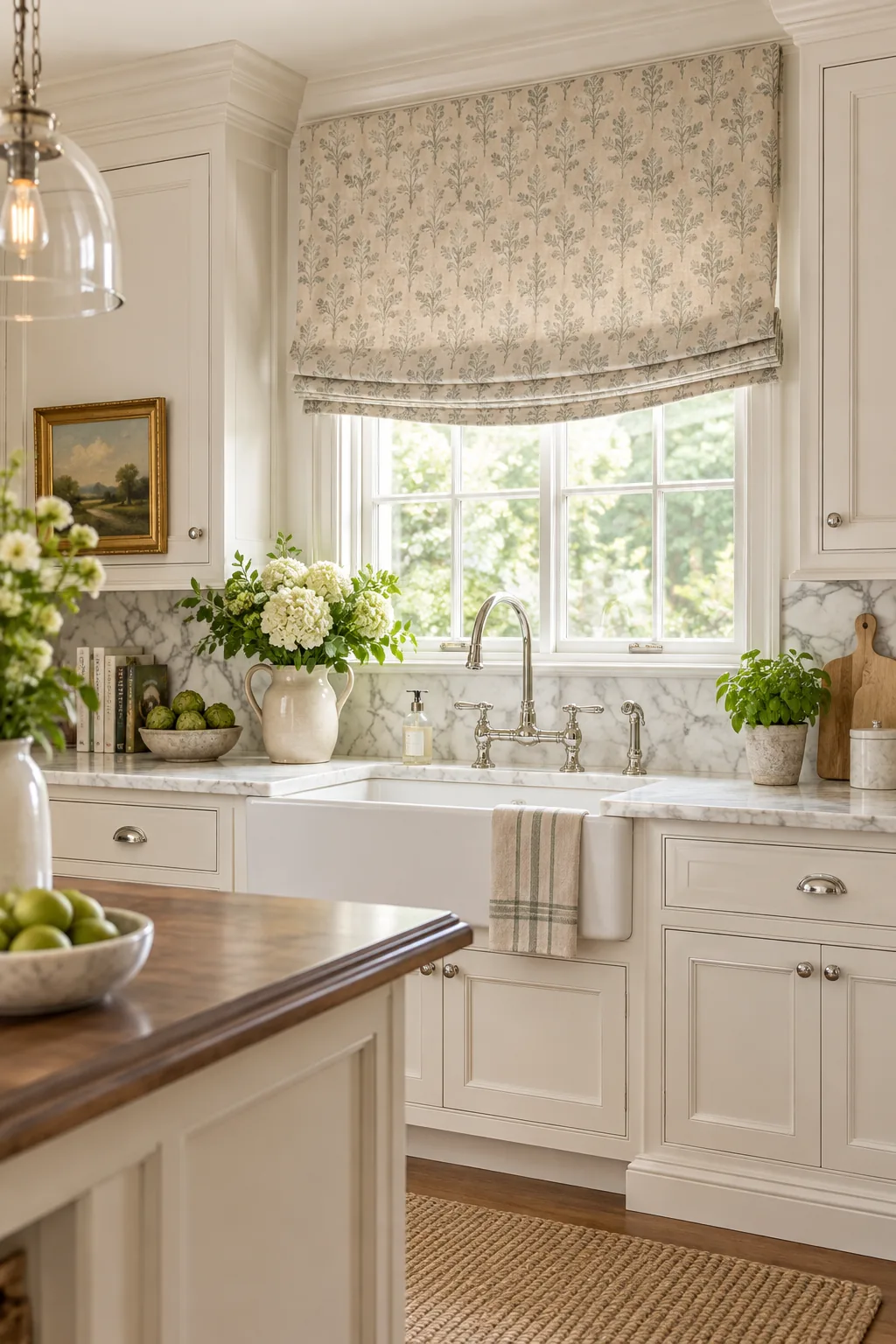
Traditional patterned moisture-resistant Roman: A subtle pattern introduces elegant character to a classic marble backsplash without overwhelming the space.