
16+ Stunning Foyer Design Ideas for Your Home
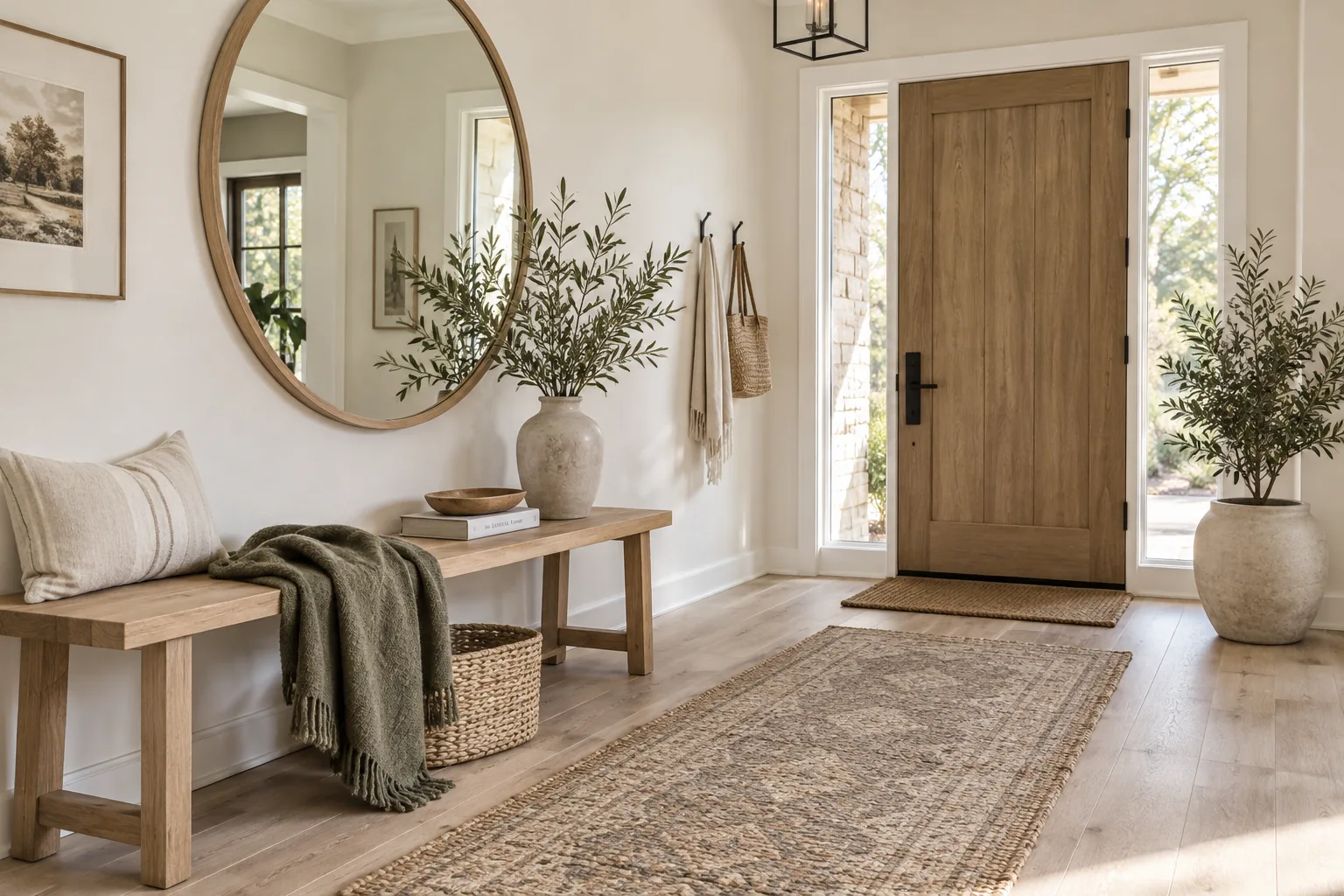
Your entryway sets the tone for the entire house, but it also needs to handle dropped keys, muddy shoes, and heavy coats. I put together these foyer design concepts to help you build a space that looks highly intentional while working hard for your daily routine.
1. The Floating Console
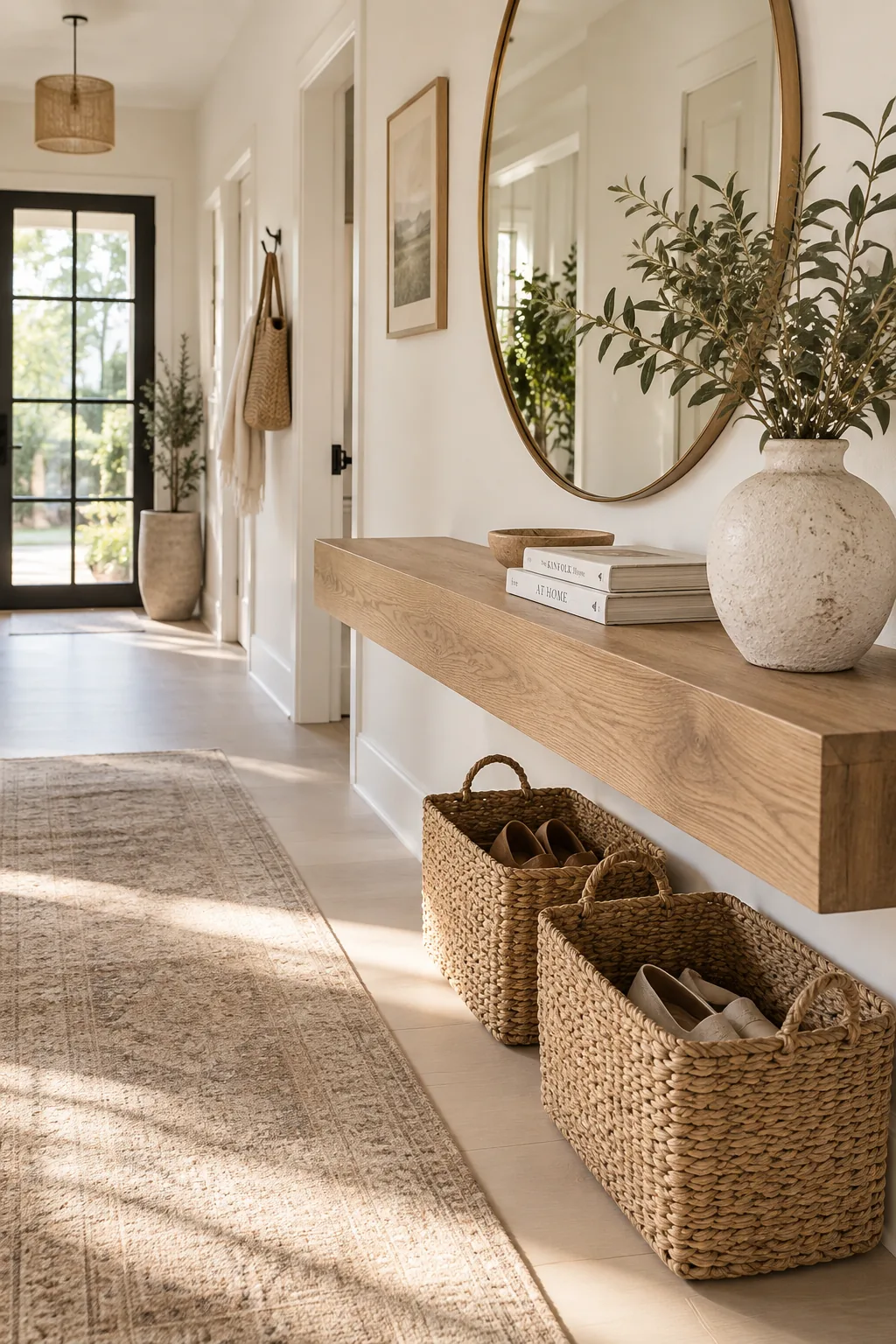
I always use a floating console shelf when working with a narrow hallway.
It keeps the floor completely clear so the space feels much wider than it actually is. You can slide a couple of woven baskets underneath to catch shoes without blocking the visual flow.
2. Oversized Round Mirrors
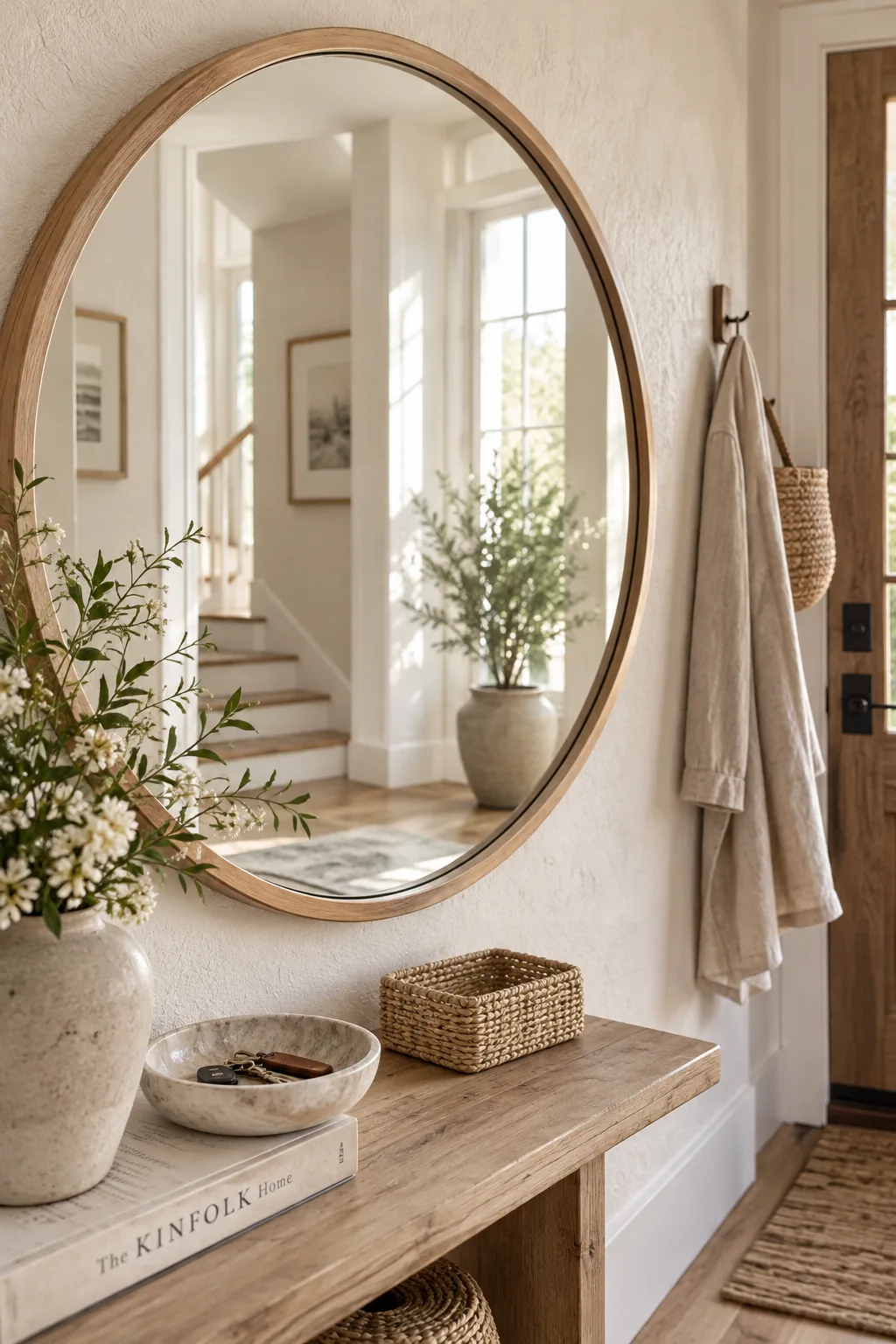
A massive round mirror instantly softens the hard right angles of a standard front door. It bounces natural light from outside into the darker interior corners of the house. You want to hang it so the center hits right at eye level for the average person. This gives you a quick spot for a final check before heading out. The curved frame breaks up the boxy feel of modern entryways.
3. Patterned Floor Runners
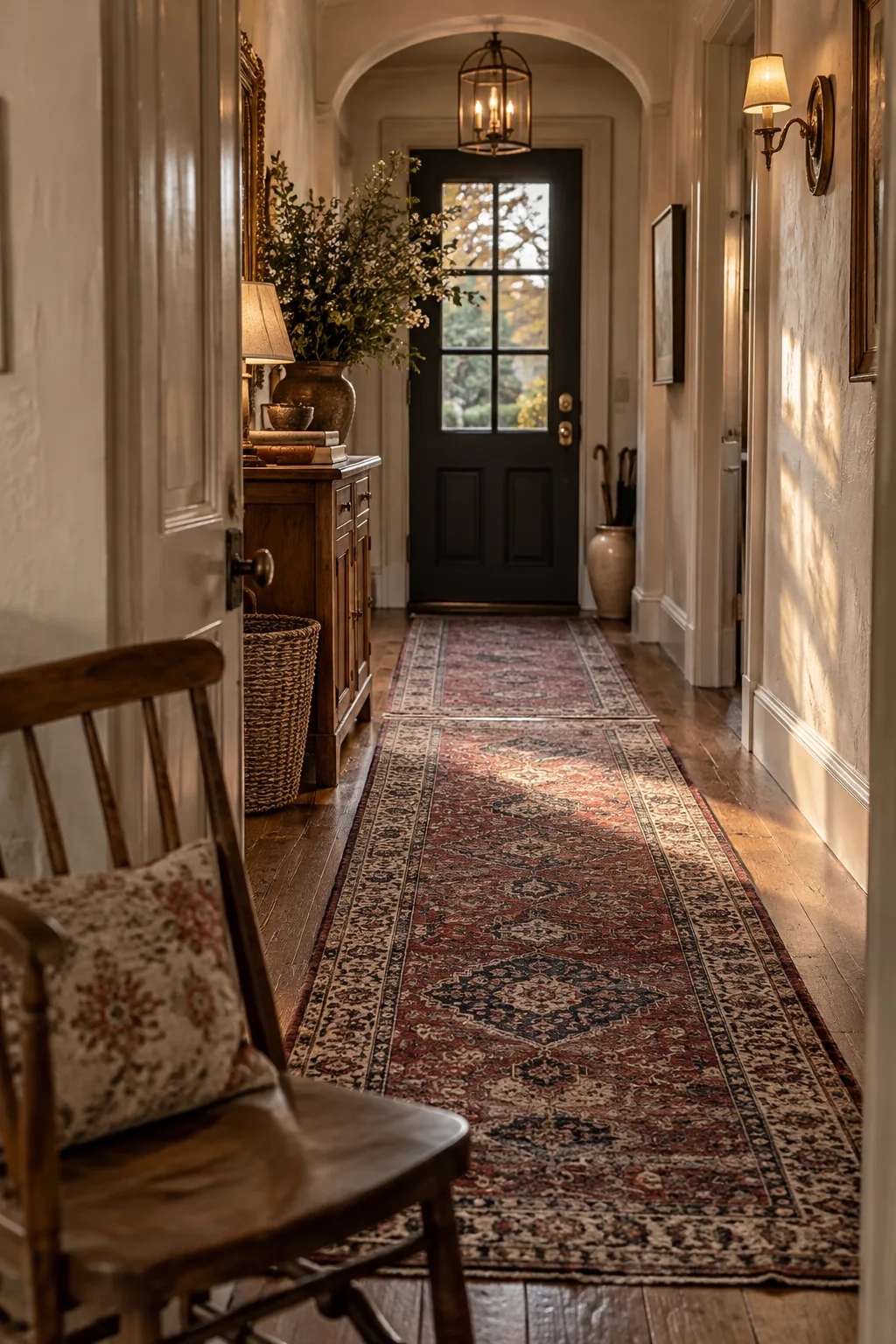
A long vintage runner anchors the space by drawing the eye straight into the house.
The busy pattern hides dirt beautifully between vacuuming sessions. It also warms up cold tile or hardwood floors instantly.
- Distressed wool rugs
- Washable synthetic runners
- Low-pile vintage carpets
4. Symmetrical Table Lamps
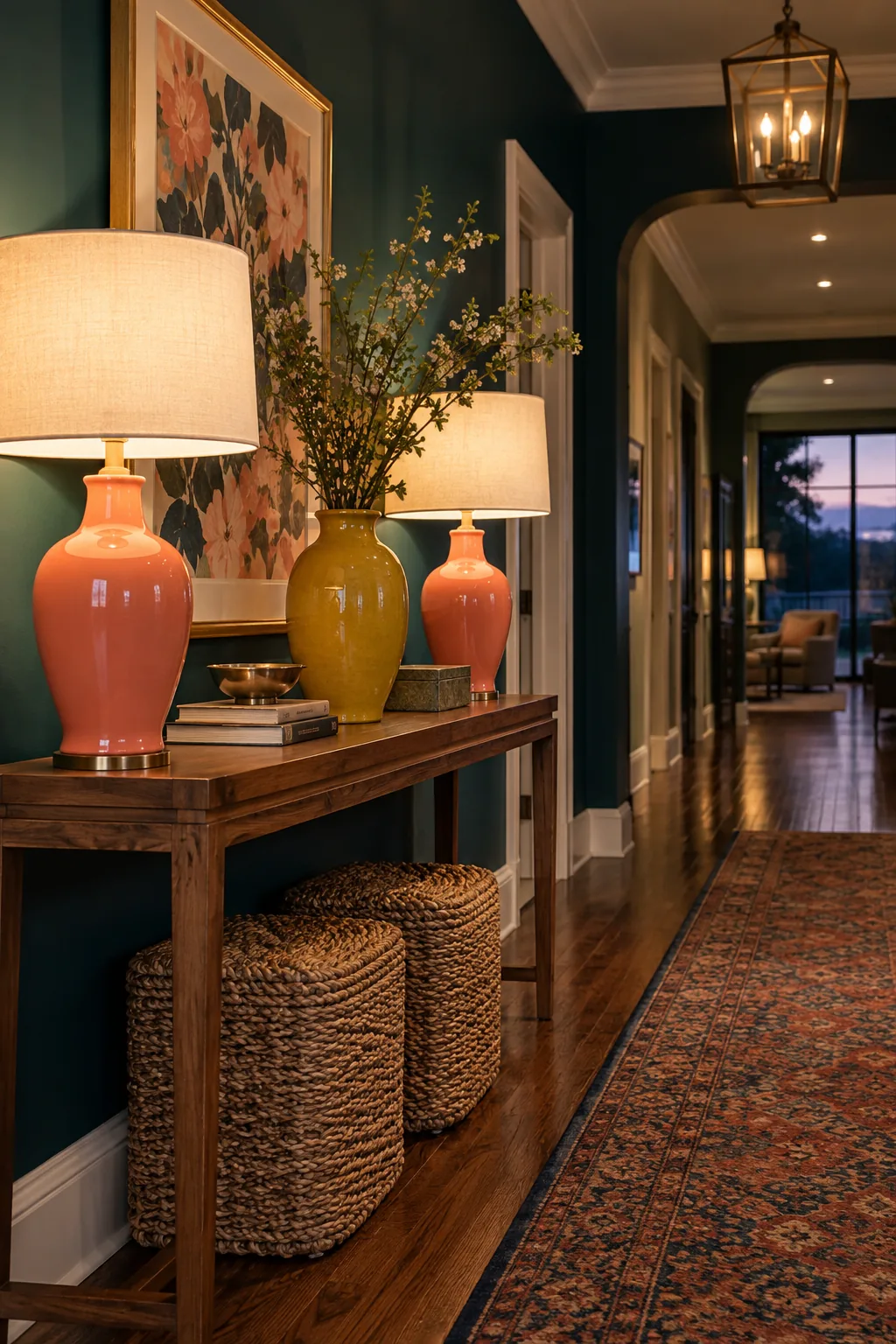
Flanking a console table with matching lamps brings a formal, tailored elegance to the entryway. The twin light sources cast a warm, even glow across the wall that feels incredibly welcoming at night.
5. Built-In Mudroom Bench
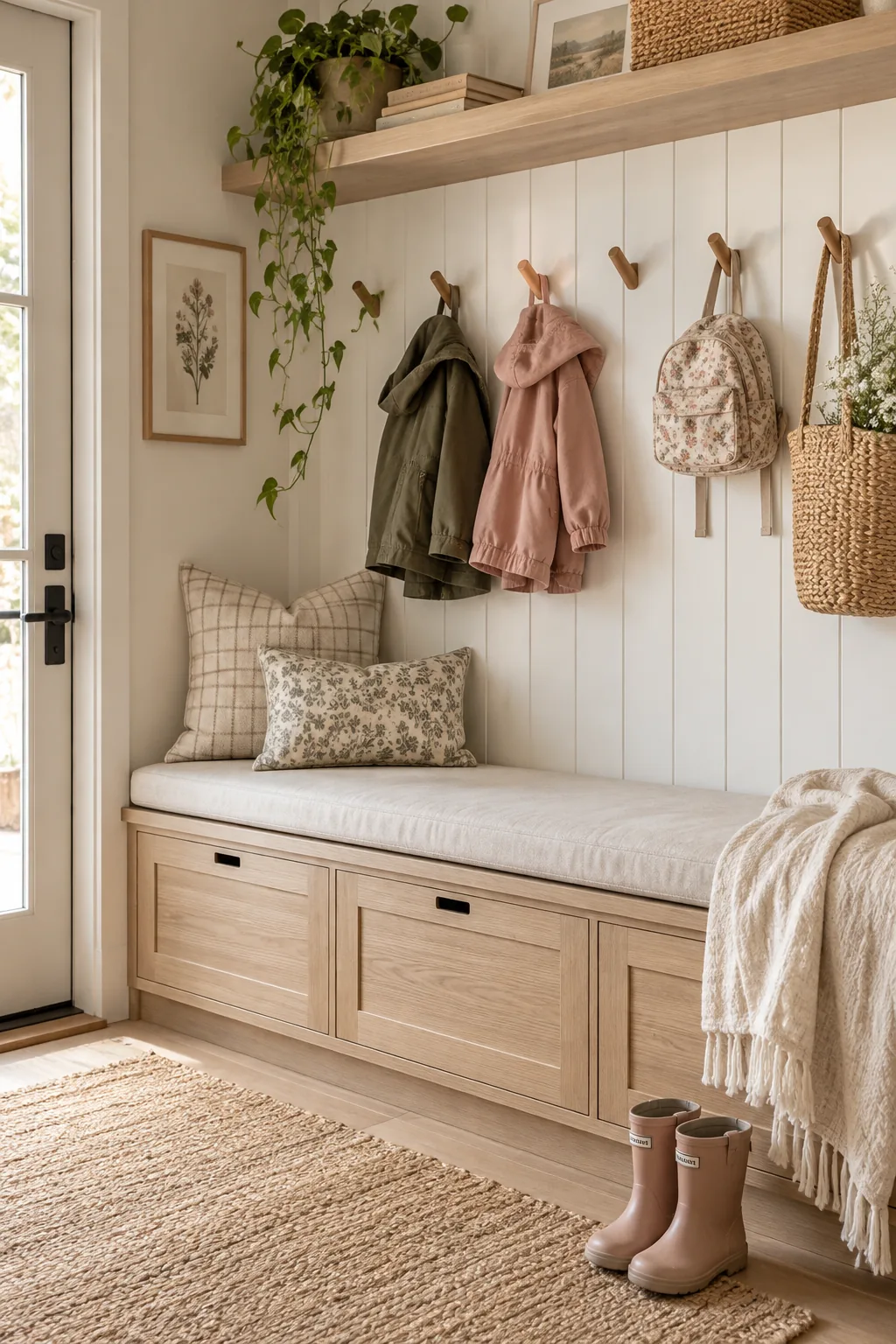
I recently designed a custom mudroom bench for a client with three kids, and it completely changed their morning routine. We added vertical shiplap behind the seating area to protect the drywall from scuffs. The closed drawers below hide the messy stuff while the open hooks keep everyday jackets accessible.
- Heavy-duty coat hooks
- Deep storage drawers
- Durable cushion fabric
6. Dark Painted Ceilings
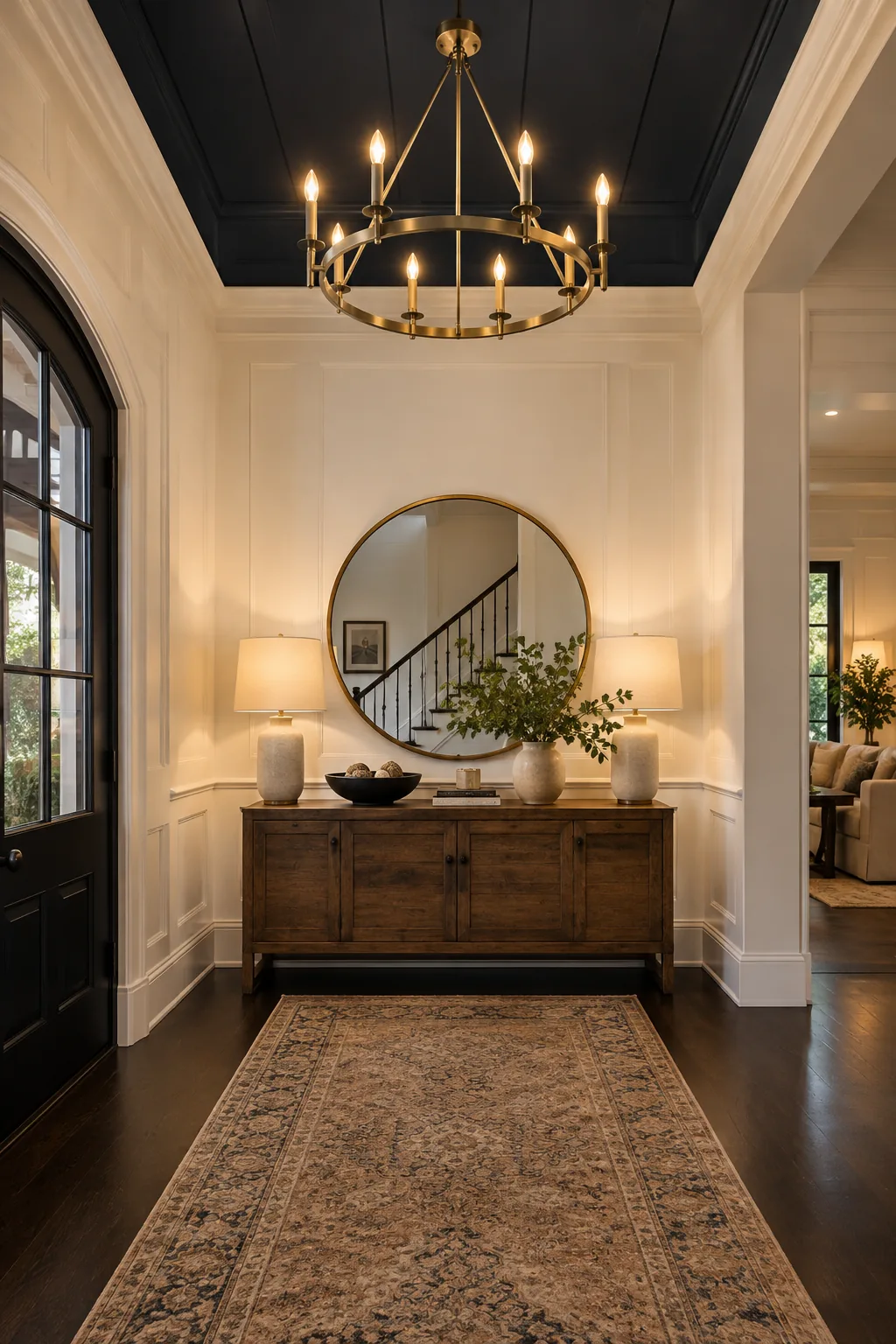
High ceilings in a foyer can sometimes feel cold and cavernous. Painting the ceiling a dark charcoal or navy visually lowers the height to make the entrance feel much cozier. It highlights your chandelier while making the white walls pop.
Just make sure you have enough artificial light to balance the dark paint.
7. The Catch-All Tray
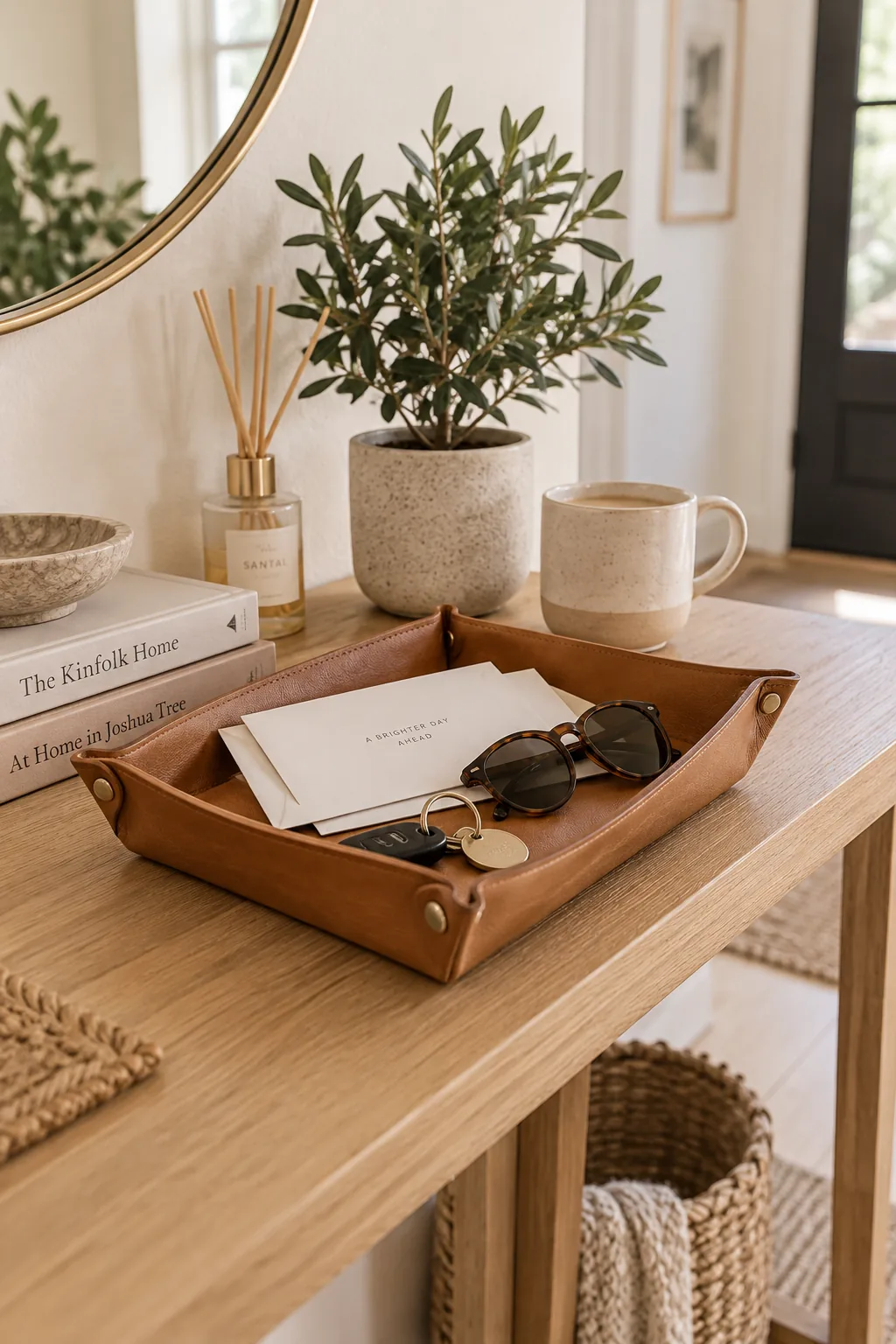
A dedicated leather tray contains the visual clutter of sunglasses, mail, and keys in one specific zone. Giving these small items a defined boundary stops the mess from spreading across your entire table surface.
8. Statement Pendant Lighting
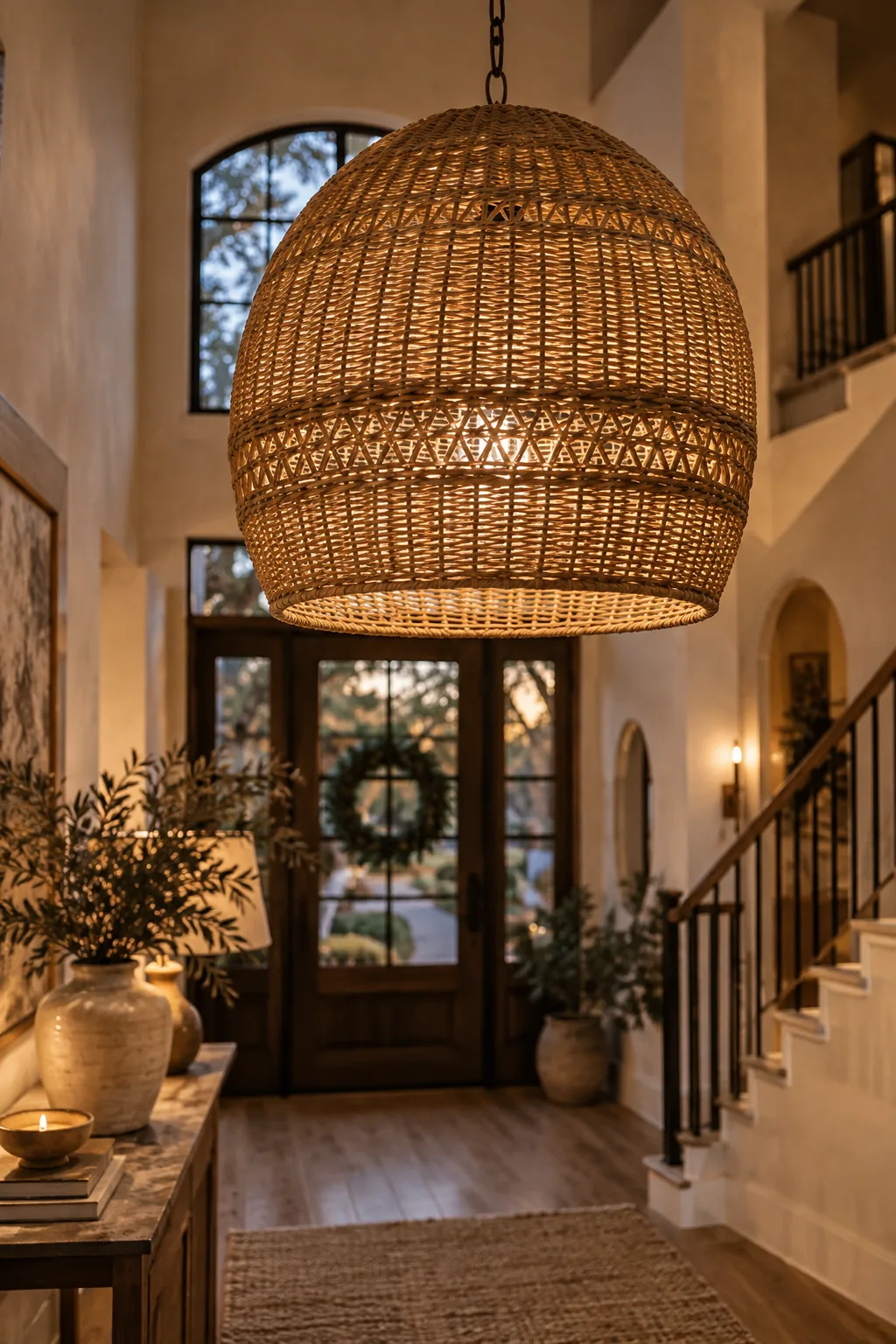
You need at least seven feet of clearance under a statement pendant light to keep tall guests from bumping their heads. Swapping out a basic flush mount for an oversized fixture completely changes the scale of the room. It acts as the primary focal point when you open the front door.
- Woven rattan shades
- Brass geometric lanterns
- Frosted glass globes
9. Hidden Shoe Cabinets
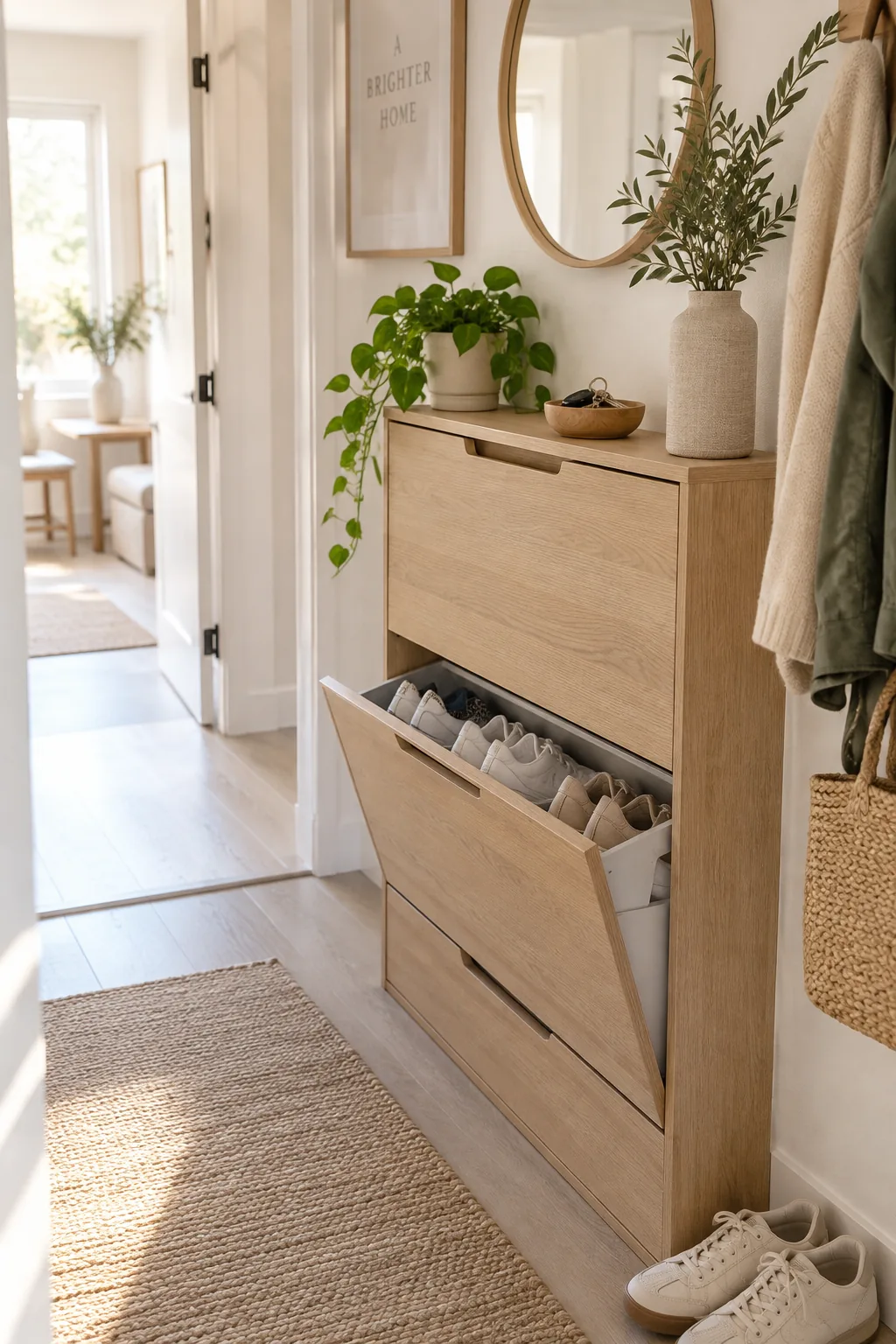
A slim shoe cabinet works perfectly because it utilizes vertical wall space instead of eating up your floor plan. The tilting drawers allow you to store bulky sneakers in a unit that is only ten inches deep. This keeps the walking path totally clear in tight hallways. You can still use the top surface just like a regular console table for your keys and a small plant. It is the smartest way to fake a mudroom in a small house.
10. Gallery Wall Staircase
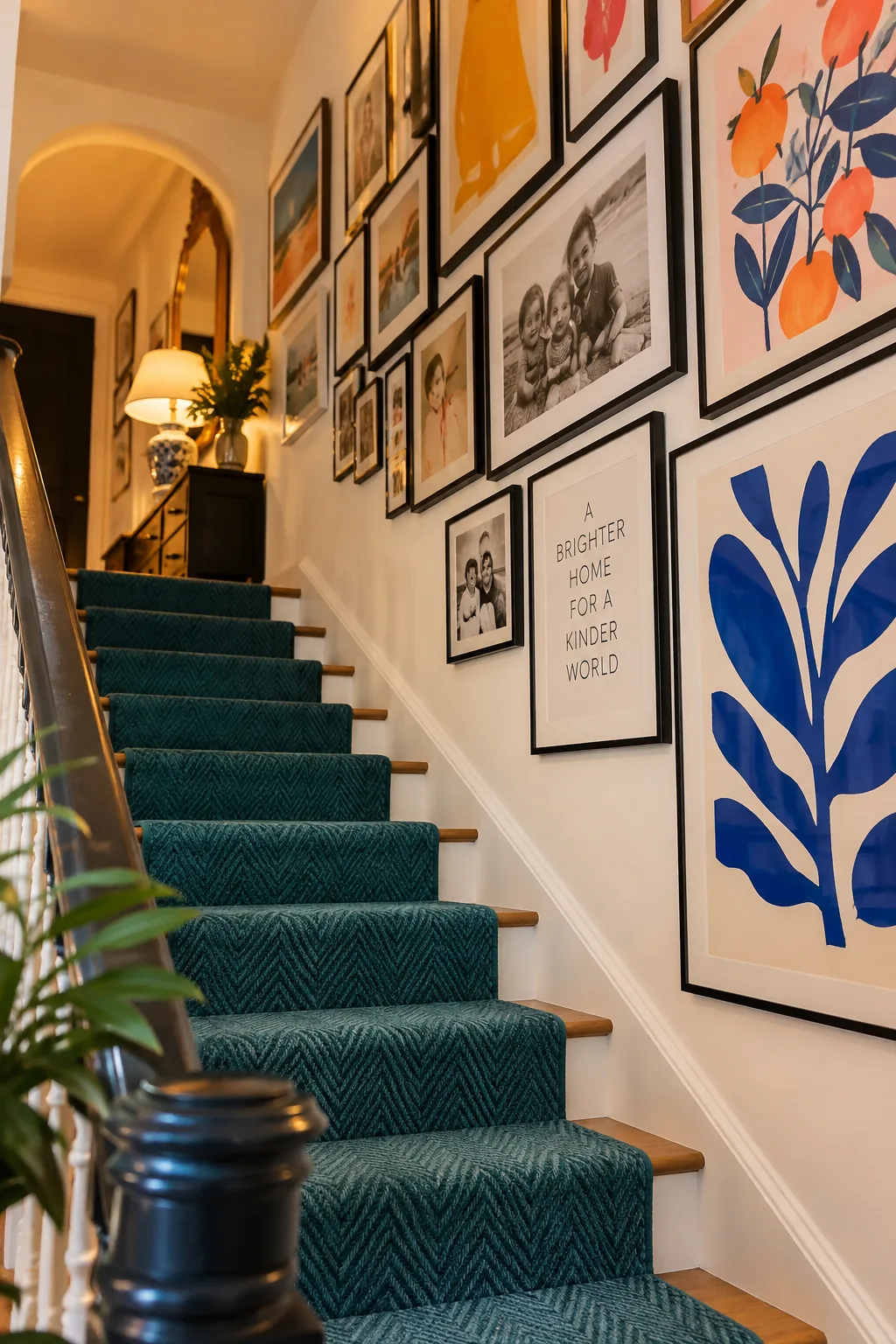
I love extending the foyer design straight up the stairs with a tight gallery wall. Matching black frames keep the collection looking cohesive even if the art styles vary wildly. You can mix family photos with abstract prints to add major personality right at the entrance.
Keep the frames about two inches apart for a modern look.
11. Woven Texture Accents
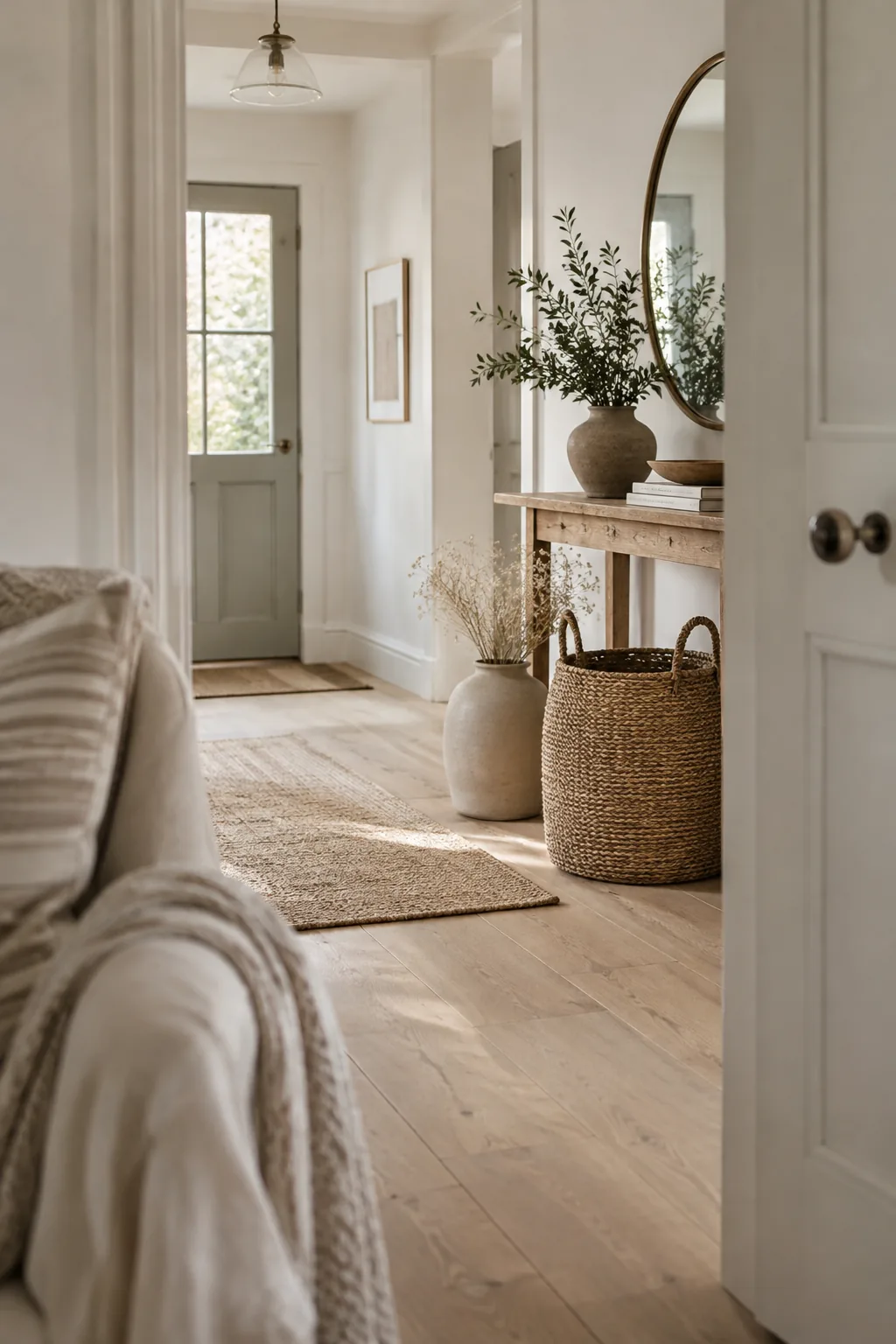
Layering natural textures prevents a neutral entryway from falling flat. A chunky seagrass basket next to a smooth ceramic vase creates instant contrast. These organic materials bring a relaxed, lived-in warmth that makes the space feel approachable.
12. Dramatic Wallpaper Panels
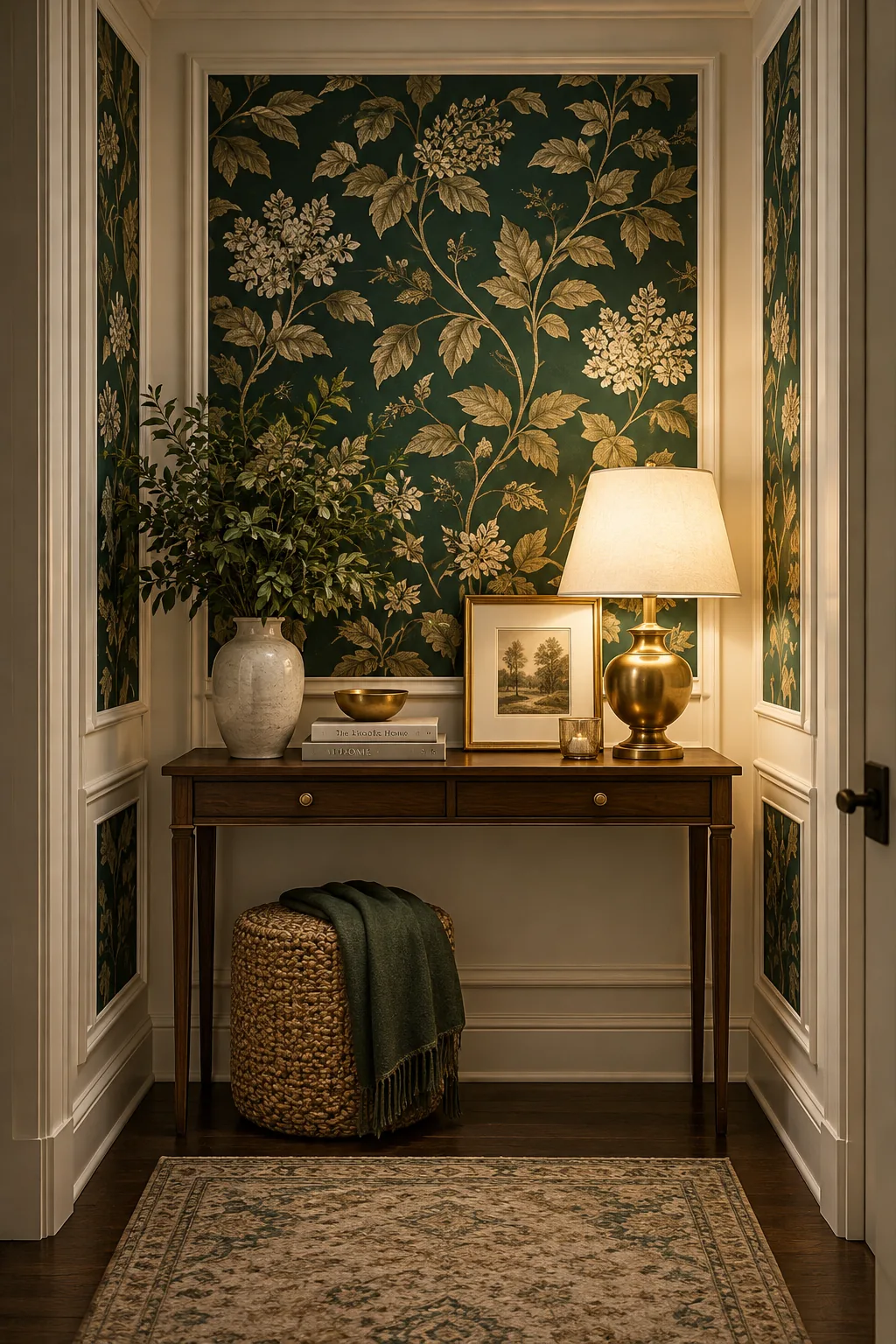
Framing sections of bold wallpaper with picture molding creates the illusion of custom artwork. It delivers a massive punch of color without overwhelming a small, windowless space. You get the high-end look of a fully papered room for a fraction of the cost. The raised molding adds architectural interest to flat builder-grade walls.
Why it works: Why it works: The molding acts as a visual boundary that keeps busy patterns from feeling chaotic.
13. Umbrella Stands
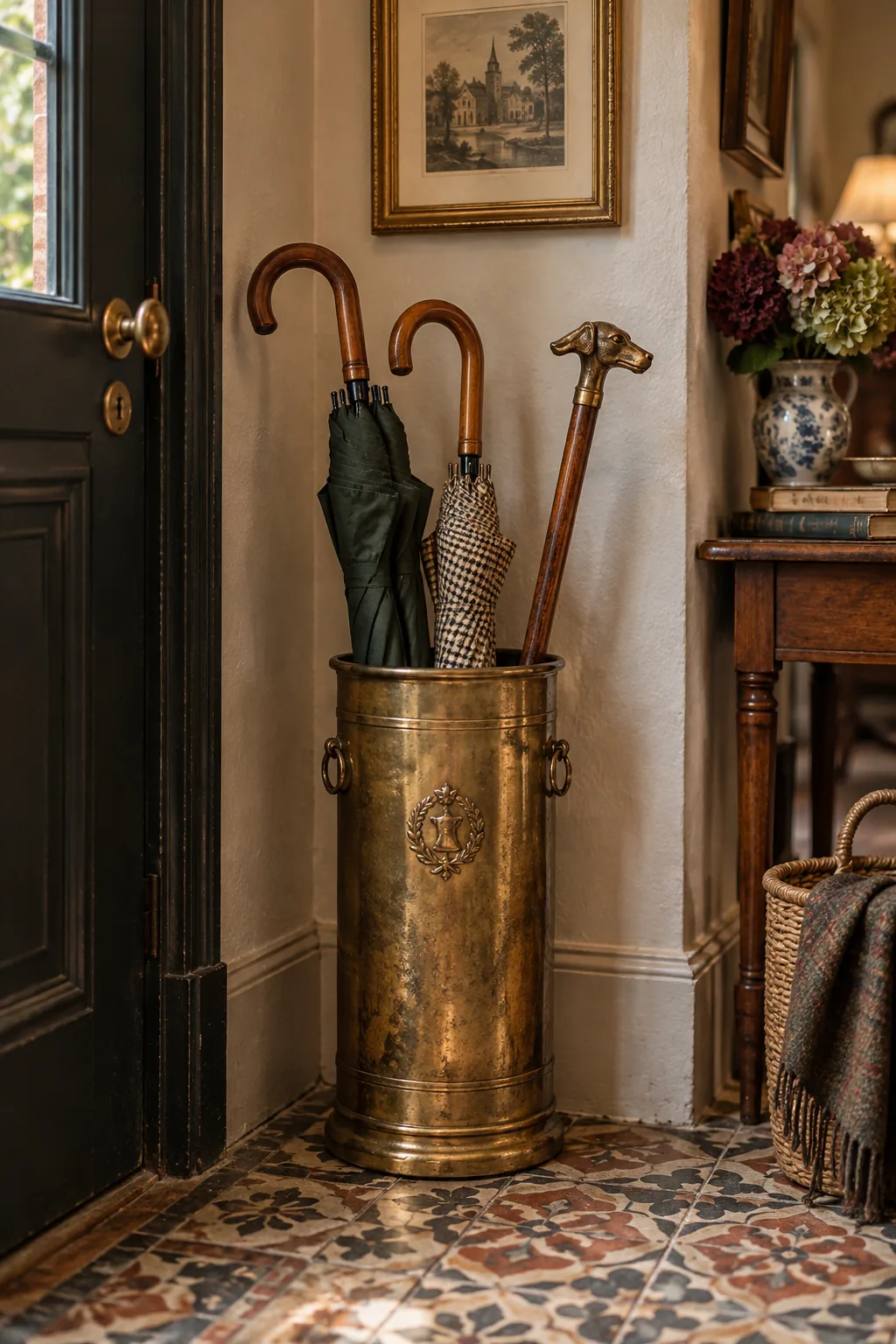
I always hunt for vintage brass umbrella stands at flea markets for my client projects. Tucking one in the corner adds a touch of classic charm while keeping wet umbrellas off your nice floors.
14. Layered Welcome Mats
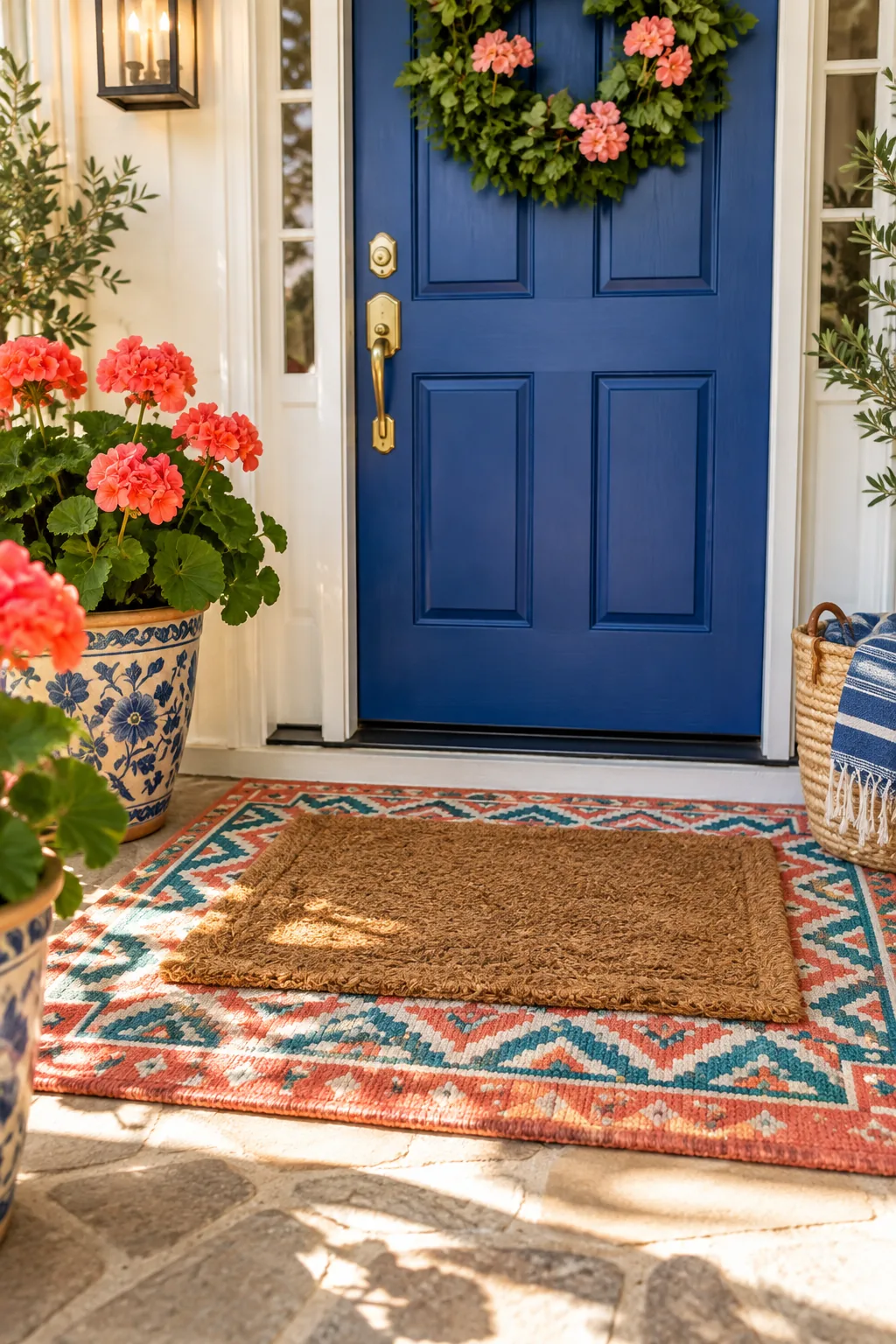
A standard doormat often looks tiny and sad sitting alone on a wide front porch. Placing a slightly larger patterned outdoor rug underneath your coir mat instantly fixes the proportions. It adds a nice border of color and texture right before you step inside.
15. Minimalist Wall Hooks
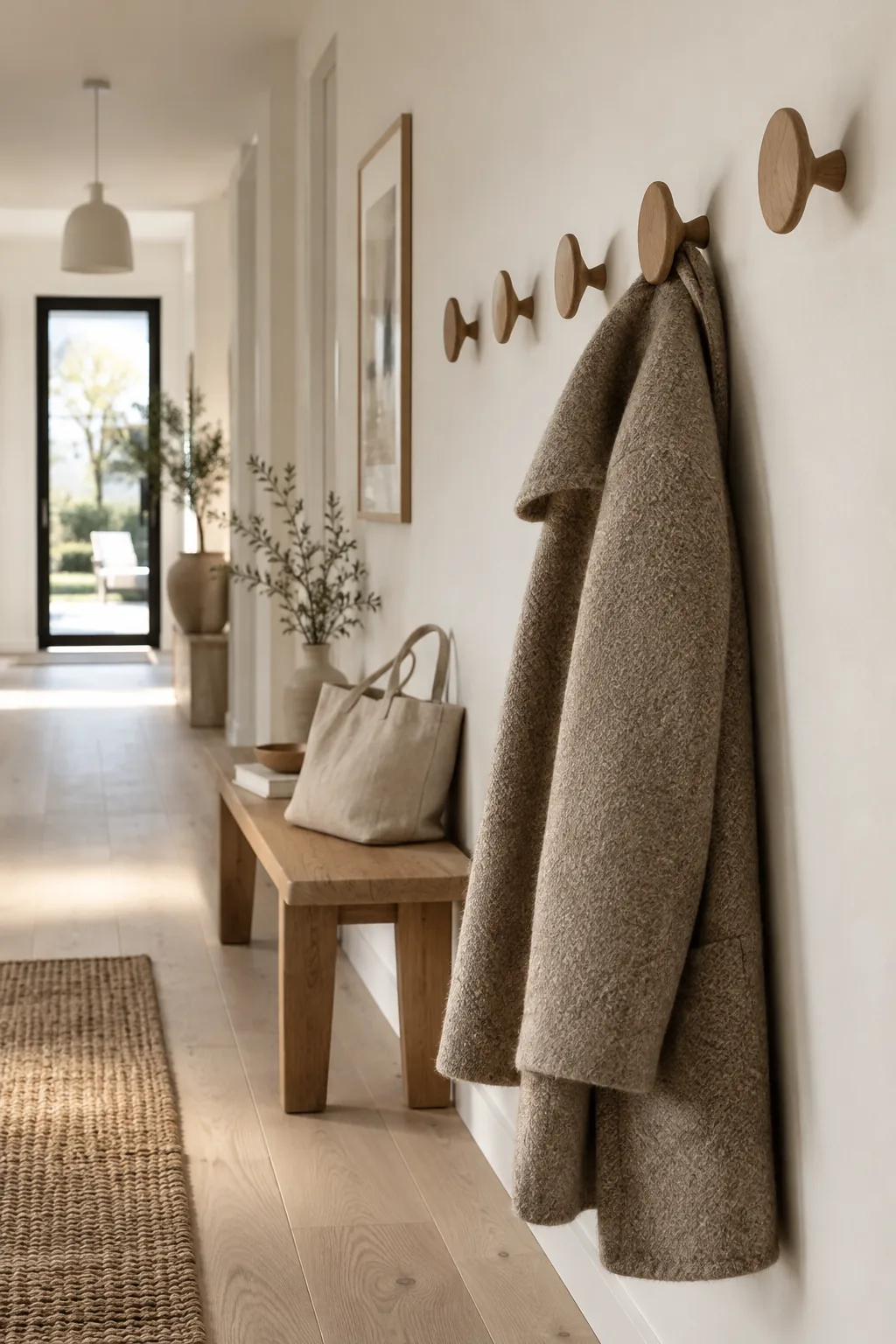
I installed simple wooden pegs in my own hallway instead of buying a bulky coat rack. They look like minimalist wall art when empty but hold surprisingly heavy winter coats when needed.
Why it works: Why it works: Individual pegs let you space out your coats so the wall never looks cluttered.
16. Tall Greenery
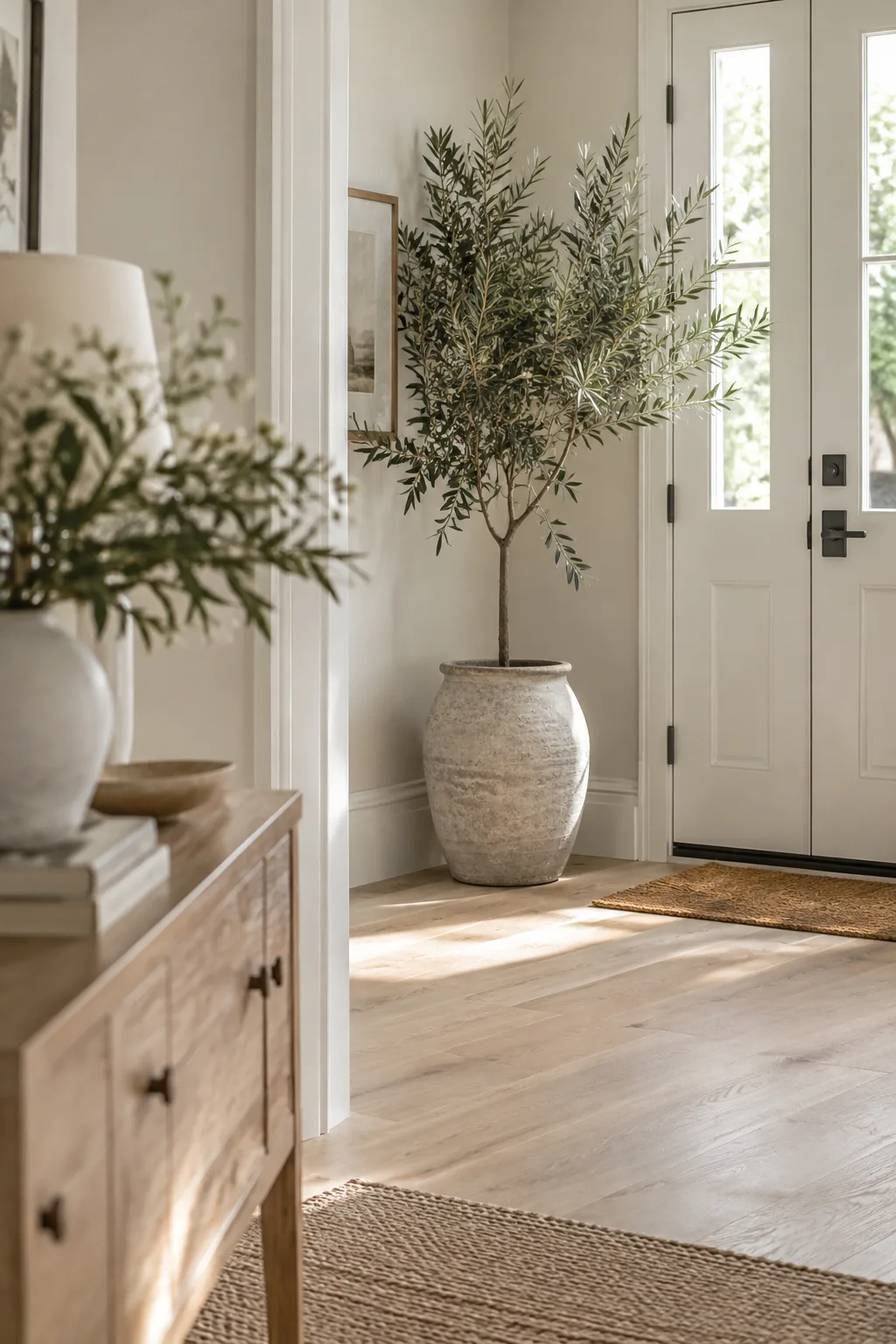
An empty corner behind the front door is usually a dead zone. Dropping a tall olive tree or a large fiddle leaf fig into that spot brings life and height to the room. The organic shape of the branches softens the rigid lines of the doorframe.
Faux plants work just fine if your entryway lacks natural light.
Why it works: Why it works: A large plant fills vertical space without requiring any furniture or wall mounting.
17. Scent Layering
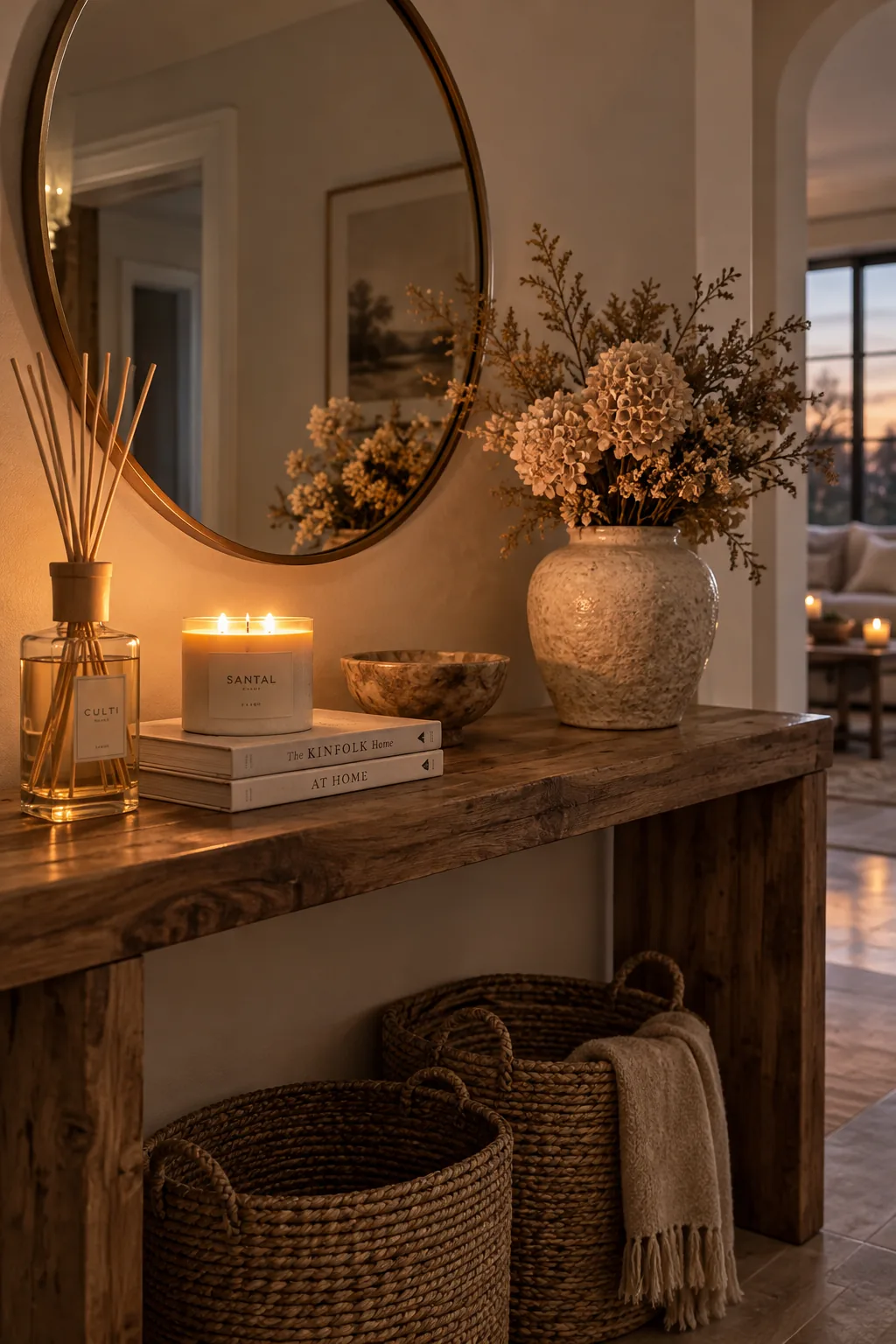
I firmly believe that the way your house smells is a crucial part of the foyer design. Keeping a reed diffuser or a high-quality candle on the console ensures you are always greeted by a beautiful scent.